Category: All About Guns

Deer are the most sought-after big game animal in North America, and many hunters take the sport seriously. Discussions about the best deer-hunting cartridges have been occurring around campfires all over the world for decades.
For that reason, picking the “best” cartridge for deer hunting is sure to evoke strong feelings. Many gallons of ink, and maybe even a little blood as well, have been spilled on this exact topic.
Add to the mix the fact that deer vary significantly in size across their range and are found in a number of different habitats — both often necessitating the use of a different cartridge for optimum performance — and you’ve got a tricky situation on your hands.
However, there are still a few different cartridges that always seem to rise to the top in the debate. Here are my picks for the seven best deer-hunting cartridges.
Before I get started, please understand that the purpose of this article is not to bash anyone’s “pet” cartridge. Just because it does not appear on this list does not mean that I think a particular cartridge is “garbage.” Indeed, there are dozens of outstanding cartridges out there, but not all of them can make the list of the best deer hunting cartridges.
For that reason, picking the “best” cartridge for deer hunting is sure to evoke strong feelings. Many gallons of ink, and maybe even a little blood as well, have been spilled on this exact topic.
Add to the mix the fact that deer vary significantly in size across their range and are found in a number of different habitats — both often necessitating the use of a different cartridge for optimum performance — and you’ve got a tricky situation on your hands.
However, there are still a few different cartridges that always seem to rise to the top in the debate. Here are my picks for the seven best deer-hunting cartridges.
Before I get started, please understand that the purpose of this article is not to bash anyone’s “pet” cartridge. Just because it does not appear on this list does not mean that I think a particular cartridge is “garbage.” Indeed, there are dozens of outstanding cartridges out there, but not all of them can make the list of the best deer hunting cartridges.
.243 Winchester
Developed by necking a .308 Winchester cartridge down to 6.2mm, the .243 Winchester is considered an entry-level deer-hunting cartridge in most states. With bullets available in a variety of weights ranging from 55 to 105 grains, the .243 Winchester is well suited to a number of applications, especially deer hunting.
This little cartridge has developed a reputation for being extremely effective on deer, not to mention being accurate, flat-shooting and having a mild recoil. These attributes make the .243 Winchester one of the best deer-hunting cartridges around for small-framed hunters, such as women or children.
7mm Remington Magnum
The 7mm Remington Magnum is one of the best deer-hunting cartridges for hunters needing to take longer-range shots. Most 7mm Magnum loads feature bullets with high ballistic coefficients fired at high velocities, giving the cartridge a flat trajectory.
While this sort of performance is not needed by the average deer hunter, it gives hunters the ability to take shots with confidence at ranges out past 250 yards. Even with all of that power, the 7mm Remington Magnum has a manageable amount of recoil, which also helps explain its popularity.
.30-30 Winchester
Developed in the 1890s for the Winchester Model 94 rifle, the venerable .30-30 Winchester was one of the first cartridges designed specifically for smokeless powder in the United States. Though the cartridge is pretty anemic on paper by modern standards, the .30-30 Winchester has been cleanly taking deer for more than a century, so it is clearly an excellent deer-hunting cartridge.
At ranges of 150 yards or less, the .30-30 Winchester is one of the best in the business. Combine this with the fact that most rifles chambered in .30-30 are handy, quick-pointing lever-action rifles, and you can see why the .30-30 is so popular among hunters in the southern and eastern United States.
.30-06 Springfield
It’s really tough to determine which cartridge has killed more deer in the United States over the last century: the .30-06 Springfield or the .30-30 Winchester. Regardless of which one is No. 1, it’s pretty clear that the .30-06 Springfield is one of the best deer-hunting cartridges in existence.
It is flat-shooting and powerful with a manageable amount of recoil, and there are dozens of great rifles chambered in this outstanding cartridge. If you had to choose one cartridge to hunt with for the rest of your life, you could do a whole lot worse than the .30-06 Springfield.
.44 Magnum
In a nod to all of the hunters out there who prefer to hunt deer with a pistol, I had to include a good pistol cartridge on this list. It’s hard to think of another pistol cartridge that has accounted for more dead deer in the last half-century than the .44 Magnum.
At one time it was the most powerful handgun cartridge in the world. Even though that is no longer true, it is still one of the best deer-hunting cartridges around for hunters who use pistols or carbines.
The .44 Magnum’s big, slow and heavy bullets deliver bone-crushing power and have plenty of power to ethically take even the biggest deer out to 150 yards or so.
.45-70 Government
A personal favorite of mine, the .45-70 Government is one of the best deer-hunting cartridges for hunters who need a good “brush gun.” While some would criticize the .45-70 Government for being a little on the big side for deer, there really is no such thing as using “too much gun” on any animal.
This is especially true with the .45-70 because not only does it deliver bone crushing power, but it also does so while using a heavy bullet at a moderate velocity. Because of this, the .45-70 does not produce large amounts of ruined, blood-shot meat, like other cartridges (including the 7mm Magnum or sometimes .30-06).
Like the .30-30, the .45-70 Government is most often available in handy lever-action rifles, making it a great choice for close-quarters shooting. Additionally, the .45-70 also has a manageable amount of recoil. At close range, there are few other cartridges that can compare with the .45-70, especially if the owner also wants to hunt larger species such as bear, elk and moose.
12-Gauge Slug/Buckshot
Unfortunately, not everyone in the United States is allowed to hunt using centerfire rifle cartridges. Instead, some states restrict hunters to using shotguns during their modern firearm seasons. That is the reason it is on this list.
Using a rifled slug barrel and topped with a scope, a 12-gauge shotgun is quite the deer slayer out to about 150 yards or so. A 1-ounce (437.5 grains) lead slug is absolutely deadly on a whitetail deer.
Additionally, using buckshot (the name is no accident), a hunter carrying a 12-gauge shotgun is ideally armed for a close range encounter with a deer. Though it is only effective out to about 30-35 yards, buckshot is a great choice for shooting a moving deer (like when using hounds) or when hunting in areas with thick vegetation.

Several times a week you can hear gunfire echoing from Brandi Joseph’s scenic Southern California property. A licensed firearms instructor and dealer, Joseph decided to open Fortune Firearms in December to serve a growing and rapidly changing clientele.
“There is a huge uptick in female owners,” Joseph said. “Women are getting trained; women are carrying… liberal and conservative.”
Proof of that change pulled up Joseph’s long, dusty driveway in the San Jacinto Valley just before 10 a.m. for a Saturday social, of sorts. A group of seven African American women stepped out of their cars seemingly eager to start their first firearms training session.
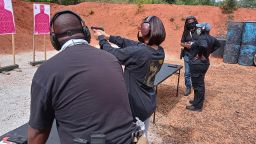
“Our society and climate is changing… it’s just better to be prepared for your own safety and protection. That’s how we feel,” Laronya Day, who organized the outing, said.
Now in their early 50s, the women have been friends since they were kids in Los Angeles, about two and a half hours from Joseph’s business. And most of them acknowledge they lean left politically.
“Do you have some friends who would be totally turned off by this?” we asked Charlean Ward. “Absolutely,” she responded. “That’s their choice; I’m exercising my choice.”
Jamie Beverly looked less certain, if not uneasy. “Seeing all the guns on the table, I was like ‘ugh,’” Beverly said. “Would you ever want to carry?” we asked her. “I don’t think so,” she whispered.
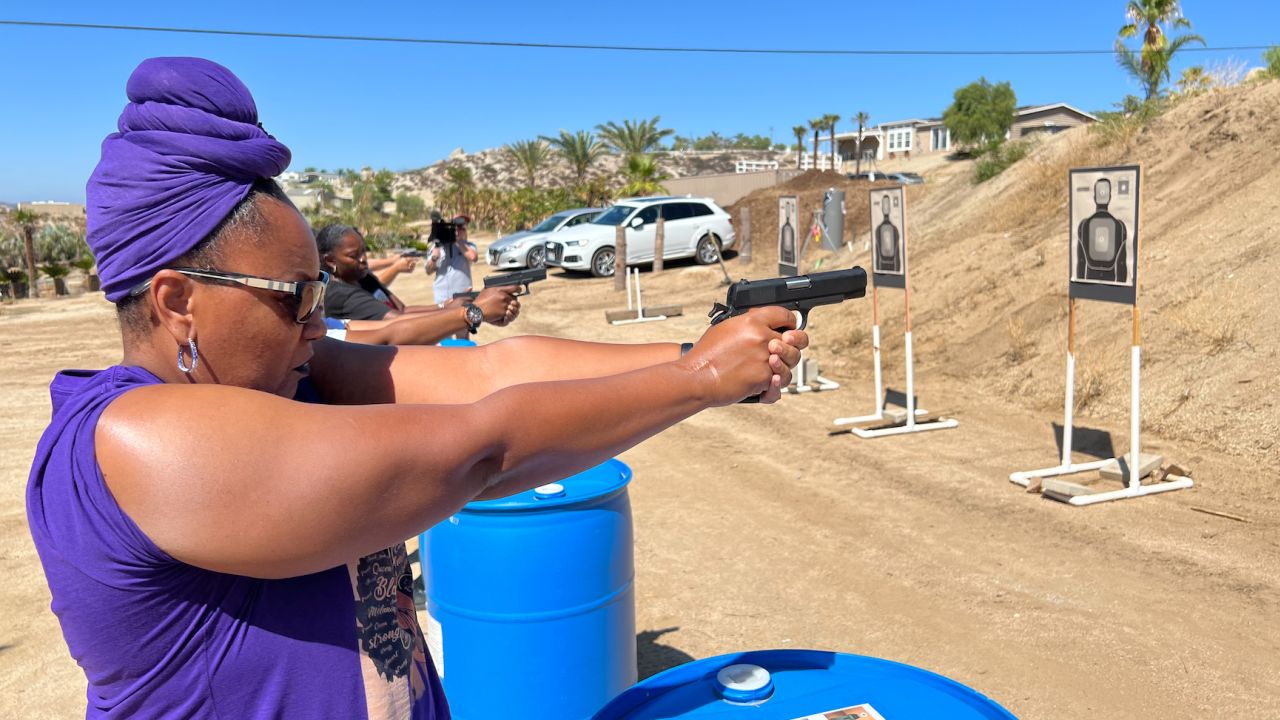
Over the course of nearly two hours, Joseph led a detailed instruction, teaching the women about everything from the types of handguns best suited for self-defense to how to load and disarm a firearm. Only after the women had repeatedly loaded the cartridge, inserted the magazine, chambered the gun, and then doing it all in reverse, did Joseph determine they were ready to fire at their paper targets.
Echoes of gunfire rippled through the rural valley as the women pulled their triggers.
‘I definitely am more closeted being a gun owner’
About an hour east of Los Angeles, Yessica Mendez and her wife Crisia Regalado met with their instructor Tom Nguyen at Burro Canyon Shooting Park. But Regalado, 25, admits she at first wanted nothing to do with guns.
“Just the sounds… the vibrations of each impact… made me very jittery and shaky and I had to excuse myself out of the range,” Regalado recalled. “I don’t know, it just triggered something inside of me and it made me scared.”
Mendez, 30, was equally disinterested in guns at first. But in recent years she’s felt a growing need for self-protection.
“I’m a Mexican woman in a same-sex relationship; I need to feel safe. I need to feel protected,” Mendez said. “And right now the laws and the things that are going on don’t make me feel safe and don’t make me feel protected.”
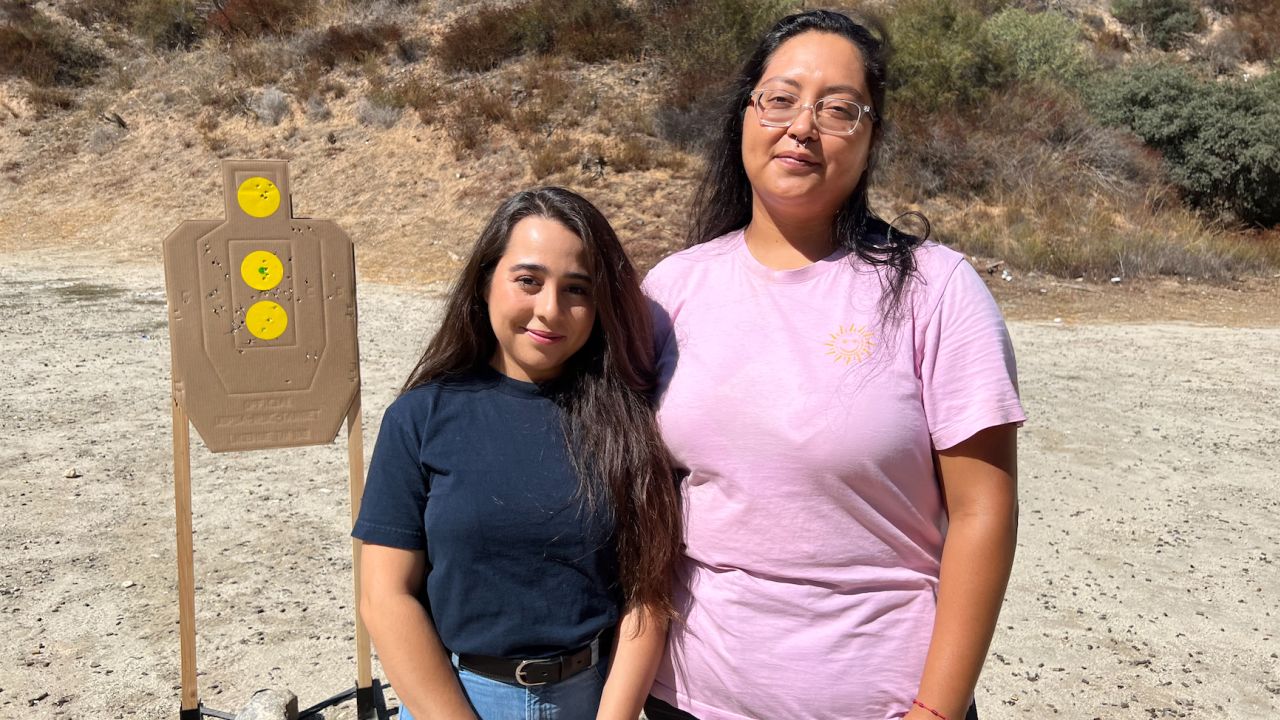
She convinced her wife to join her for a training session with Nguyen, who began LA Progressive Shooters in 2020.
“I never intended to become an instructor, but the need from the community was there,” Nguyen said. “And there’s also folks from my own liberal community who see me as, ‘oh you like guns you must be a gun nut.’ But that’s not really it at all.”
Nguyen says his clients are mostly liberal and from all backgrounds, genders and sexual orientations. He prides himself on creating an inclusive student base.
“The more I educate those who are formally anti-gun the more they actually realize that there’s more nuance to it,” he said.
Both Mendez and Regalado now have their own guns and are working toward getting their concealed carry permits. But they avoid talking about their guns with friends, who they say are firmly anti-gun.
“They’re really not open to understanding,” Mendez said. Adding that she feels more comfortable discussing her same-sex relationship with friends than her guns. “I definitely am more closeted being a gun owner, for fear of retaliation.”
Finding common ground at the range
Both Mendez and Regalado at first worried about the type of people they encounter at the gun range, many of whom, they say, advertise their conservative politics in what they’re wearing or listening to.
“It’s mostly all men, mostly all white men, older men like 70s, 80s,” Mendez said. “Seeing people looking at us, and kind of just staring… It always makes us more uncomfortable. Because we’re like, ‘oh my God are they going to come and tell us, like, get out of here… you don’t belong here.’”
Instead, they’ve gotten a different reaction.
“They’re like, ‘Hey, you’re doing well, but can I show you something that might help you more?,” Mendez said.
Mendez says not only has it changed her impression of those individuals, but she also believes it’s given some a different perception of people like her.
“When I (came) back the next day, (one of the men) was like, ‘Hey! I saw your wife out there – she looks nice. Tell her I said ‘hi’.”
Still, as a Mexican-American immigrant in a same-sex marriage Mendez feels pulled in different directions politically.
“But at the end of the day I have to choose. Am I going to choose guns? Or am I going to choose my relationship? And I will always choose my relationship, but it’s just like a shame that we can’t come together and feel safe,” she said.
De-stigmatizing lawful gun ownership
Gun sales in one of the country’s few black-owned gun shops, Redstone Firearms in Burbank, California, soared post-pandemic and have remained steady, according to co-owner Jonathan Solomon.
“It’s not just one demographic. It’s not just one ethnic group. There’s just not one level of income… it’s a wide variety of folks that come in here now,” he said.
While white men have the highest rates of gun ownership in the US, one survey shows that in the first half of 2021 roughly 90% of retailers saw a surge in gun sales to African Americans. The same survey found that about 80% of retailers reported an increase in firearm purchases by Hispanic and Asian Americans.
Solomon, a former police officer, opened the shop about nine years ago with his wife Geneva. He says his new, diverse customers are primarily buying their first gun for a shared reason: self-protection. But he warns them to pay close attention to the rapidly changing regulations on firearms.
“It’s a consistent education when it comes to gun laws, especially in California,” Solomon said.
California is consistently rated among the states with the toughest gun laws. There are strict policies aimed at dissuading hasty gun purchases, including a 10-day cooling off period from when you buy a gun to when you can take it out of the store. And getting a concealed carry permit in places like Los Angeles can take more than a year and include background checks and interviews.
“It’s really convenient to think that if we just ban an object, if we just ban guns, then all of our problems would be solved – all of society’s problems would be solved – but that’s not true,” said firearms instructor Nguyen.
Nguyen said more and more residents are willing to put in the time and go through the hurdles to legally buy and carry a gun. And he says most of his clients support tough gun regulation so long as there’s clarity, consistency and still a path toward legal gun ownership. He only hopes they incorporate education and training into that process.
“I want to de-stigmatize lawful and responsible gun ownership,” Nguyen said.
‘I just feel liberated’
After completing their two-hour class at Fortune Firearms, most of the group of seven childhood friends were noticeably more comfortable in their new-found knowledge.
“I just feel liberated,” Ward said. “I feel like, let’s move to the next step: license to carry, get the concealed weapon.”
Data from Harvard found that more than half of new gun owners are likely to be women. Joseph says many of her clients are more liberal women who don’t advertise that they’re carrying.
“Most people have (in mind) the cookie-cutter firearm owner… right-wing…. But then there’s the other side that is quiet. They own guns. They’re buying them. They’re stockpiling ammo. It’s just not on their Facebook pages and it’s not their profile pictures,” she said.
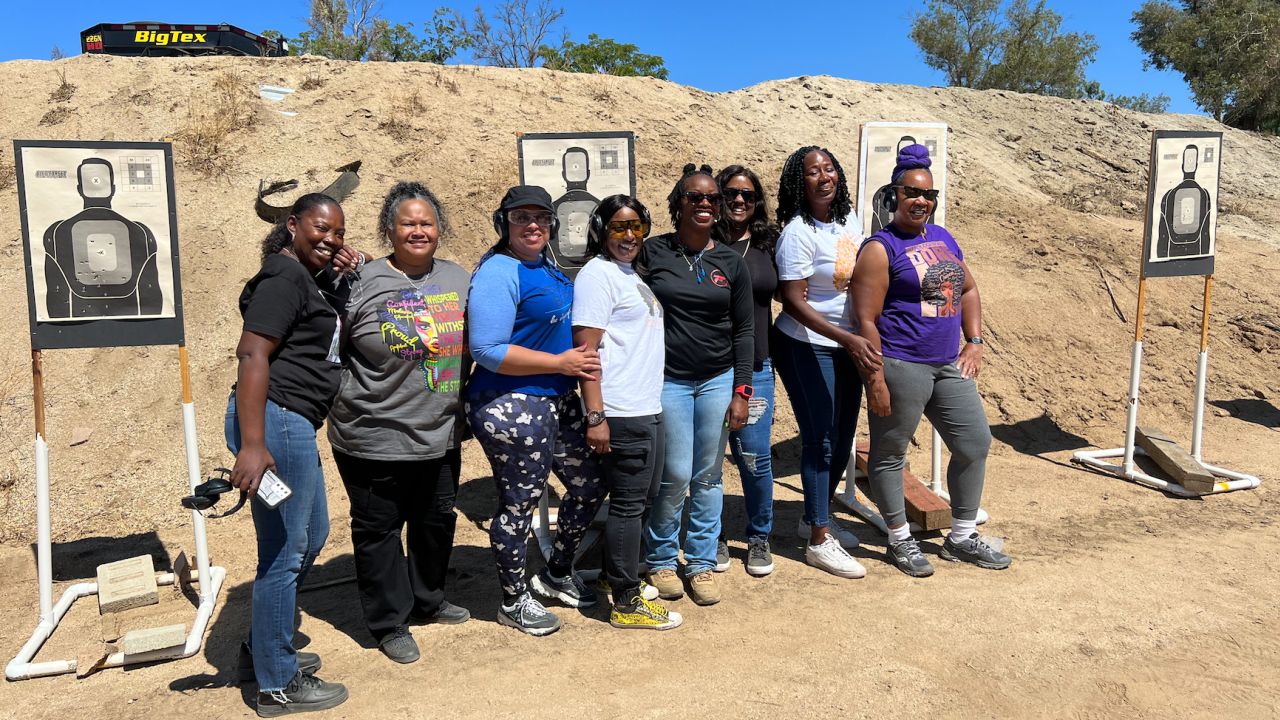
Day is now planning to move forward with carrying after Joseph’s class. “With all the things that you see on the news, things are happening more… in so many public areas, movie theaters, Walmarts, grocery stores…. It’s like there’s no limit now,” she said.
But gun ownership is not for everyone. Even after their course, within the close-knit group of friends there are differing opinions toward firearms.
“I think it’s great that more people are being educated and taking steps to protect themselves and protect their families,” Beverly said. “But for me personally, I’m still leery. I don’t think I would purchase (a gun).”
I can’t speak for the other military branches, but the Marine Corps has a weapons-cleaning problem. When I say that, I mean we clean our weapons too much. Too much, and often incorrectly, to adhere to the strict standards of the Marine Corps. The problem is complicated and tied to both the lower enlisted and the higher-ups. If the Marine Corps wants its Marines to be the most lethal warfighters, it’s a problem it needs to solve. As it’s known in the Marine Corps, weapon maintenance needs to be revised.
THE PROBLEM WITH MODERN WEAPON MAINTENANCE
Keeping a rifle, machine gun, handgun, well, any gun, working relies on proper maintenance. Weapon maintenance is critical to the function of a weapon, especially in austere environments. We’ve fought for two decades in deserts, on snow-covered mountains, and in the worst places possible for modern weapons.
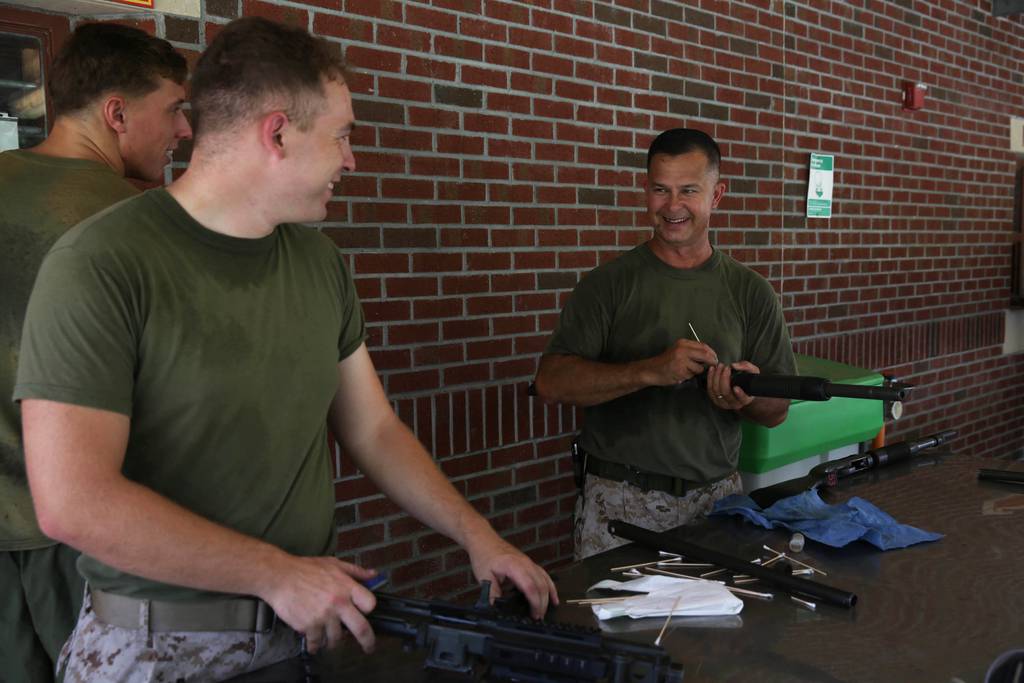
However, the extent the Marine Corps engages in weapon maintenance can be completely detrimental to the weapon. Marines find themselves using improper tools to reach a standard. For example, Marines will often use hard, stainless steel brushes to clean their weapon. When used enthusiastically, these brushes will eventually destroy the finish of the inside and outside of your weapon.
A good finish protects the weapon and helps prevent rust. Without a good finish, the weapon’s long-term reliability will be in question. My issue M9 was almost more silver than black since the finish had been rubbed off over time due to excessive cleaning.
Your average lower enlisted will likely lose or break his issued cleaning kit. This will, in turn, cause them to purchase one, which is often the cheapest one out there. These cheap cleaning kits will often have stainless steel bore brushes that can damage the rifling, making the weapon lose accuracy and consistency over time.
Marines should use bronze bore brushes mixed with bore cleaner in their weapon maintenance.
KEEPING IT SHINY

Even Marines who keep their issued cleaning kits will find them lacking and may supplement them with tools to speed up the chore. This includes Q-tips and baby wipes. I’m guilty of this, as was every infantry Marine I knew. However, Q-tips and baby wipes come with their own problems.
Q-tips break easily and can break off or deposit little bits of cotton in areas that can disable the weapon. They can get stuck in all manner of areas in rifles, but especially in machine guns. However, Q-tips do make weapon maintenance faster, and they can reach into the spots that fingers and AP brushes can’t.
Baby wipes provided the quickest means to remove dirt, dust, and carbon. The problem with baby wipes is their low concentration of alcohol and very high concentration of water which creates rust and oxidation. In time, this gathers in small cracks and pits and eventually causes rust. Rust creates more little places for water and alcohol to gather and rust. The use of baby wipes creates a vicious cycle that will wear the weapon down sooner, creating a need for more weapon maintenance.
Finally, Marines will often turn in their weapons completely dry causing them to rust in the armory. A light coat of CLP prevents rust but can also be the reason a Marine fails inspection as CLP is slightly brown, so the weapon appears dirty when an inspector uses their finger, glove, or white patch.
WHY IS WEAPON MAINTENANCE A PROBLEM?
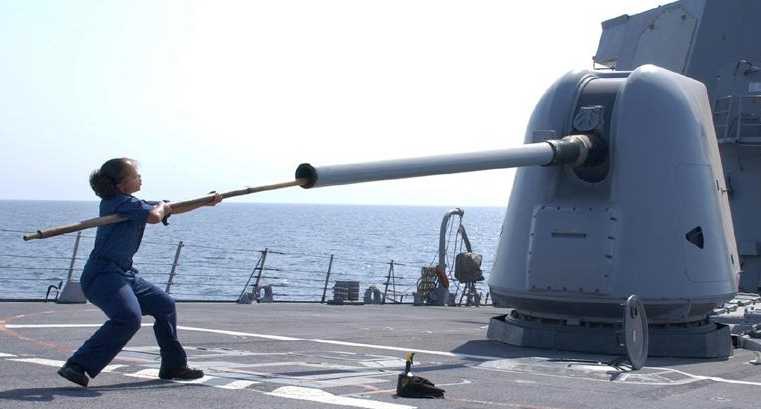
First, the Marine Corps culture demands perfection. If something can be cleaned, be it a humvee, a weapon, or a barracks room, it must be cleaned. This creates strict requirements for cleanliness. A weapon must be inspection-ready at all times. You never know when the commandant himself might bust into the armory and inspect the weapons.
To tap into that, lance corporals and PFCs can be lazy. Without the demand for perfection, things might be really slack. Give ’em an inch, and they’ll take ten clicks.
There is also a lack of education and clear objectives regarding weapon maintenance. You learn a little in boot camp, but it’s often sidelined in favor of drills, classes, and other training. Those cleaning methods are not retained in the feet, especially when the weapons go from rifles to machine guns, heavy machine guns, shotguns, pistols, missile launchers, and more.
HOW TO FIX IT?

The Marine Corps needs to revamp and re-evaluate its weapon maintenance program, tactics, and techniques. It needs to provide modern equipment and do so in bulk. Cleaning kits are cheap, guns are not, and neither is losing a firefight due to a broken weapon.
The Marine Corps should consult with the firearms industry on the most effective means to maintain weapons. They should also ensure that the troops and command are educated on what’s important in weapon maintenance and how to achieve proper weapon maintenance. No one ever told me not to use baby wipes, steel bore brushes, or Q-tips. I learned it from higher-ups.
Ultimately, the Marine Corps needs to accept that parade-ready weapons should be reserved for parades. Additionally, Marines need to accept responsibility for the tools of their trade and treat them as such. It’s a problem that starts at both the bottom and top of the branch and should be fixed before we worry about adopting new weapons.

Maurice Rose was born in 1899 in Middletown, Connecticut, the son of Samuel and Katherin Rose. The son and grandson of rabbis from Poland, MG Rose was ultimately the highest-ranking Jewish officer in the United States Army. From the very beginning, Maurice Rose was a warrior.

Rose edited his high school paper and enjoyed a stellar academic career. In the yearbook published the year of his graduation a cartoon of the paper staff depicted him carrying a rifle. Soldiering was in his blood.

Rose lied about his age and enlisted in the Colorado National Guard hoping to participate in the Punitive Expedition against Pancho Villa. Six weeks later when his commander discovered that he was only sixteen he was discharged. Rose then worked in a meatpacking plant until he turned seventeen and could convince his parents to sign an enlistment waiver.

Once on active duty Maurice Rose’s natural leadership qualities became apparent. He was selected for officer training but had to illicitly alter his Army records to reflect a birthdate of 1895 so he would be old enough to be considered. In August of 1917 Rose graduated from the Officer Candidate Course at Fort Riley, Kansas. He was commissioned a Second Lieutenant just in time to deploy for World War 1.
LT Rose Goes to War

Rose made First Lieutenant in short order. His battalion assumed defensive positions in the vicinity of Toul, France in 1918. Soon thereafter Rose and his comrades found themselves in the thick of the Meuse-Argonne Offensive. This ghastly 6-week operation ultimately claimed a quarter-million casualties on both sides. More than 26,000 Americans were killed.

Rose, for his part, was in the thick of it throughout. He caught a load of shrapnel from a German mortar and suffered a concussion from nearby artillery fire. He refused the medics’ orders to evacuate until he eventually collapsed from exhaustion and blood loss. After a few days in the hospital, Rose slipped away to rejoin his unit.

This tidy bit of subterfuge resulted in his parents being informed that he was killed in action, an error that took a few days to rectify. Rose eventually recovered and served with the occupation troops until the summer of 1919 when he was discharged.
His True Calling

Rose worked as a traveling salesman for a time but returned to the military in 1920, as soon as the Army would allow it. By now he was a Captain and served in a variety of operational and administrative positions. At some point, he altered his military records once again and claimed to be Protestant. Though some biographers attribute this to a religious conversion, more than likely he simply felt that no longer being Jewish would help his career.

By the onset of World War 2 Rose was a Major and a graduate of the Infantry and Cavalry Officer Courses as well as the Command and General Staff College. He was soon promoted to Lieutenant Colonel. A preternaturally handsome man by the standards of the day, a newspaper reporter described him in print as “probably the best looking man in the Army.” That couldn’t do much for a guy’s humility.

In 1940 the US Army was a growth industry. The American military had to expand in an unprecedented fashion, and it needed experienced commissioned officers and NCOs desperately. By the time he saw combat in North Africa Rose was a full Colonel. He negotiated the surrender of German forces in Tunisia under Generalmajor Fritz Krause.

Operation Husky saw Rose promoted to Brigadier General during operations in Sicily. When the commander of the 3d Armored Division, MG Leroy Watson, was relieved in the summer of 1944 General Rose took his place and thrived.
The Character of the Man

MG Rose was known as an aggressive and effective combat commander. He once drove his jeep across a mined bridge to ensure it was safe for his men to follow. On another occasion, General Rose spotted a group of Germans running across a field and dove out of his jeep brandishing a Thompson submachine gun.

Along with his driver, his aide, his DivArty Commander, and a handy PFC this motley band promptly captured a full dozen German soldiers. The Division Commander subsequently marched his POWs back and turned them over to the MPs. Such antics endeared Rose to the troops in his command.

MG Rose indeed insisted on leading from the front but also eschewed the publicity, fame, and glory so many of his counterparts feasted upon. Unlike Generals like Patton, MacArthur, and Montgomery, Maurice Rose was satisfied to avoid the limelight and just do his job. This exceptional military ethic ultimately killed him.
Combat is a Chaotic Thing

On March 30, 1945, just over a month from the end of the war in Europe, MG Rose and his staff were traveling in jeeps at the head of a column of his 3d Armored Division near the city of Paderborn, Germany. The Germans were fighting on their home turf, and the situation was desperate. Armored units on both sides fought back and forth, creating a fluid, chaotic battlefield. When word reached Rose that certain of his units had been cut off by the Germans, he pressed forward to investigate.

Before they could react, Rose and the men of his armored vanguard began taking fire from German tanks, antitank guns, and small arms. The lead Sherman of his column was hit by an enemy tank round and destroyed. In response, Rose and his command team mounted their jeeps and attempted to flee cross-country.

The German tanks soon had the Americans outflanked, and they moved to seal off their escape. The lead jeep accelerated and narrowly avoided a Wehrmacht panzer to reach safety. MG Rose was in the second jeep and found himself cut off. The German Tiger pinned Rose’s jeep against a tree, forcing him to dismount.

While Allied troops had a tendency to describe all German tanks as Tigers, these were the real deal. Surviving American GIs identified the vehicles based upon their distinctive twin exhausts.

The German tank commander opened his hatch and emerged with an MP40 submachine gun. As the Wehrmacht soldier covered Rose and his small party, the American General reached for his sidearm. Whether or not MG Rose was attempting to surrender or intended to fight the German officer has been lost to history. The panzer commander leveled his 9mm SMG and shot Rose fourteen times in several bursts. The American General was dead where he fell.
The Gun

The German MP40 began life as the MP38 designed by Heinrich Vollmer in, you guessed it, 1938. The MP38 was an evolutionary development of the previous MP36. Not more than a couple of MP36’s survived the war. The MP38 featured a machined steel receiver and bakelite furniture. It can be differentiated from the subsequent MP40 by the longitudinal ridges in the receiver and a small hole pressed into each side of the magazine well.

The MP40 was a very similar design and enjoys essentially complete parts interchangeability with the MP38. Both guns feature a novel but unnecessarily complicated telescoping recoil spring system that makes the guns exceptionally smooth in action. The MP40 was the first general-issue Infantry weapon truly optimized for mass production. Around a million copies rolled off the lines before it was supplanted by the MP44 assault rifle. The MP40 soldiered on until the very end of the war.
The MP40 in Action

I have a friend who was walking point with a buddy on a patrol through a German village in the final days of the war. Coming around a corner he and his pal came face to face with a German soldier armed with an MP40. The kraut soldier loosed a burst into the chest of my friend’s comrade. My buddy killed the German with a burst from his Thompson.

Both Americans retreated into a nearby building. The wounded American then leaned heavily against the wall, slid to the floor, and died. Even well into his nineties that remained a difficult story for my buddy to tell. At close range, the MP40 was a proven man-killer.
The Rest of the Story

The victorious Allies undertook an investigation to determine if MG Rose’s death might constitute a war crime. He was the highest-ranking American soldier to be killed in action in Europe, and his Jewish heritage made the circumstances of his killing immediately suspect. However, the light was dim at the time, and when his body was recovered the following day his codebook and maps remained unmolested.


MG Rose was ultimately shot with four separate bursts from that German tank commander’s MP40. The first burst knocked Rose’s helmet off. Four rounds from the third burst struck him in the head and killed him. His helmet was recovered from a nearby ditch about ten feet away. The holes in the helmet resulted from its having been hit as it spun in the air behind the dying General.


The determination was simply that MG Rose tragically fell victim to the fog of war. German troops were frequently inexperienced and terrified at this late stage. That nameless Wehrmacht tank commander likely just saw Rose move for his pistol and fired reflexively. MG Maurice Rose, known to his men as “The Division Point” because of his penchant for leading from the front, was buried at the US military cemetery at Margraten, the Netherlands. 3d Armored Division commanders rendered honors at his grave until the early nineties when the division was disbanded.

