Categories
Category: All About Guns

All right, we’ll address the most-obvious issue right off the bat here: “budget” and “.50 BMG” are two words that probably don’t belong in the same sentence. Any gun that burns a minimum of $3 with each pull of the trigger definitely isn’t what we’d call a “common man’s” rifle, but as with so many things in life, it’s all relative, isn’t it?
When most people think of .50 BMG behemoths, their mind automatically goes to Barrett, particularly the M107 in current use by the U.S. military. Of course, consumers can buy these semi-automatic monsters for the princely sum of $11,914, and those on a budget can get the poor man’s M107 – the M82 – for a measly $8,846. Sounds reasonable, right? Well, we can’t all drive Ferrari Californias or eat gold-flecked caviar, but at least in the case of the .50 BMG, getting a big-bore fix is more attainable than most American shooters think.
Unlike our previous budget-priced roundups, .50 BMG rifles aren’t exactly stacked side-by-side in the storehouse of every firearm retailer from here to Harare. Indeed, many of the guns are sold directly by the manufacturer, which means there isn’t much room for a middleman, so the prices here reflect the suggested retail price set in place by the maker. Here are five of the lowest-priced .50 BMG rifles on the market today, descending by price:
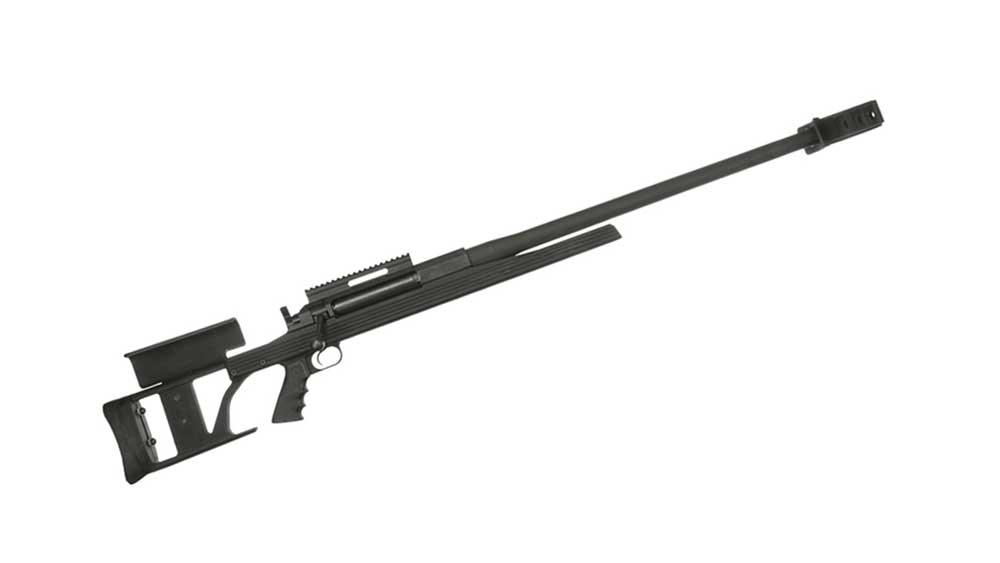
Starting off our list is a company that many probably associate more with the AR-15 than with the .50 BMG. Indeed, the “AR” in AR-15 does stand for “Armalite,” contrary to so many self-ascribed gun experts on the market. However, Armalite didn’t stop at the modern sporting rifle. The company also has a line of bolt-action precision rifles chambered in many of today’s popular long-range calibers, and the AR-50 anchors the top end of the line.
The rifle is a single-shot, bolt-action design equipped with a strong triple front-locking lug complete with a spring-loaded plunger that pops an empty case out of the receiver, readying the gun for the insertion of a fresh round. So, even though it doesn’t feed from a magazine, consumers can still send plenty of rounds at a pace limited only by their wallet. The gun is equipped with a 30-inch chrome-moly heavy barrel, and the whole package weighs in at 34.1 pounds. While the AR-50 is well-built and certainly priced low on the general .50-BMG rifle market, an MSRP of more than $3,000 doesn’t exactly scream “budget-friendly,” so let’s continue on.
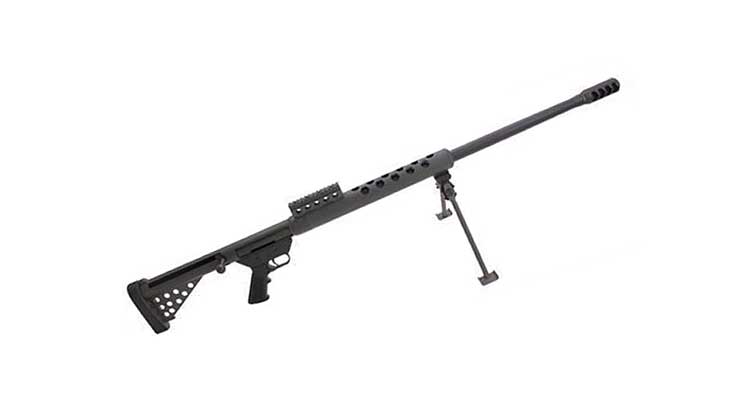
Built since 1999, the Serbu BFG-50 was the first firearm designed by company founder Mark Serbu. Though Serbu has since come out with a host of other unique designs, like its Super Shorty shotgun, the company still cranks out its tried-and-true, first-ever firearm, providing big-bore fans with a fifty they can afford.
Each single-shot Serbu BFG-50 can be had with a number of different barrel lengths, ranging from a 22-inch “Carbine” configuration to a long, heavy, 36-inch-barreled model. The standard rifle ships with a 29.5-inch barrel, though, and each barrel is machined from match-grade alloy steel with a 1:15-inch twist rate. The muzzle end is topped with the company’s Shark Brake, which helps to mitigate the brutal recoil of the .50 BMG, made even more aggressive by the gun’s, relatively speaking, “lightweight” construction, weighing in at 18.75 pounds.
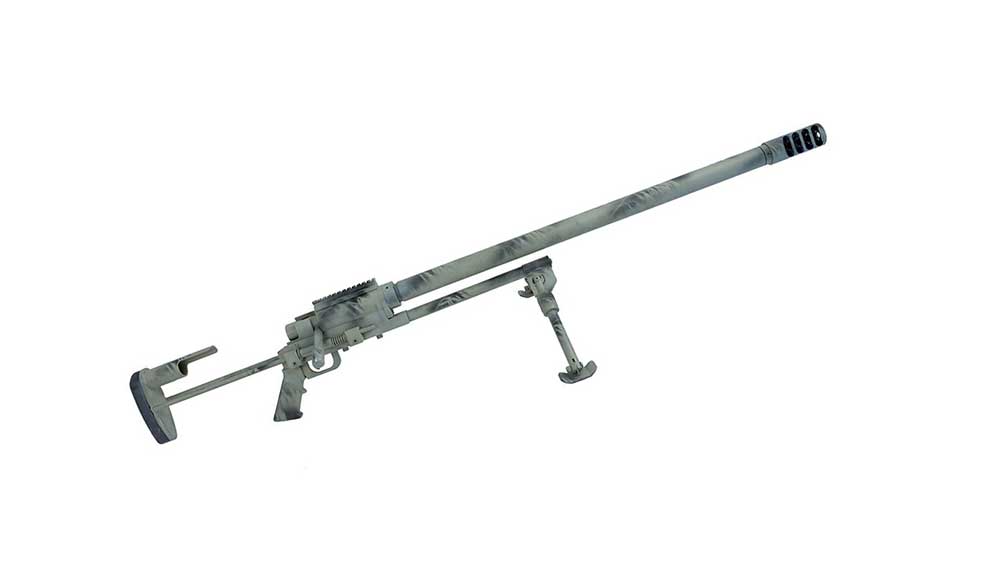
Standing for “Ultra Long Range,” the Noreen Firearms ULR is a simple, basic .50 BMG that has all the features a shooter needs and none they don’t. A single-shot design, the rifle is constructed with a “shell-holder-style” bolt, which requires a shooter to remove the bolt completely from the rifle, slide in a live cartridge, and then return the cartridge-laden bolt to the receiver, locking it into place with a final turn. The rifle doesn’t have any traditional mechanical safeties, so it can’t be carried safely while loaded, certainly a major disappointment for the one person out there who really wants to tote around a loaded .50 BMG rifle. You keep doing you, man.
To enhance accuracy on this precision-oriented long-range rifle, the Noreen team added an adjustable trigger from Timney Triggers, which provides the opportunity for users to fine-tune the pull weight from 2 to 4 pounds, as well as sear engagement and trigger overtravel. To mitigate recoil, the rifle is equipped with a muzzle brake of the company’s own design, as well as a spring-loaded butt stock that absorbs some of the shock of a fired shot. The final recoil-mitigation factor found in the gun is the weight of the rifle itself, clocking in at a weighty 32 pounds.
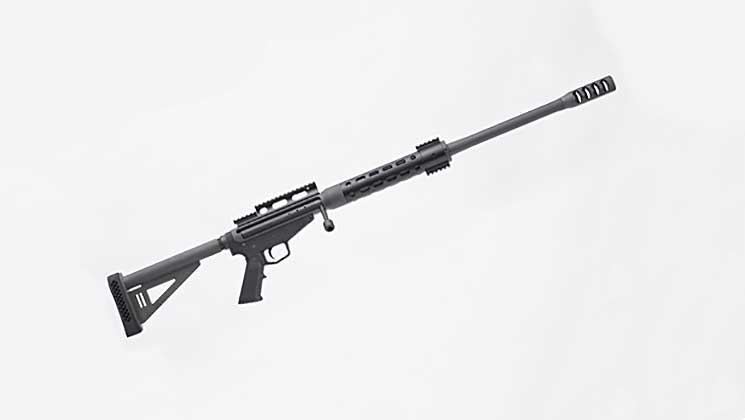
Safety Harbor SHTF-50 Single Shot ($1,850)
Safety Harbor Firearms is probably best-known in the gun world for its AR-compatible .50 BMG upper receiver that pins onto any mil-spec AR-15 lower receiver, but the company also offers complete .50 BMG rifle packages for those in the market for a standalone big-bore rifle. With this package, consumers get the standard SHTF-50 Single Shot upper receiver along with a specially designed lower receiver machined from 4130 chrome-moly steel.
On the upper receiver, consumers will find a 4140 chrome-moly steel barrel available in barrel lengths of 18, 22 and 29 inches long, all with a 1:15-inch twist rate. Mated to the barrel is a two-lug bolt head machined from 4340 chrome-moly steel, along with a bolt body machined from 4130 chrome-moly tubing. The receiver is topped with a Picatinny optics rail, allowing users to pair the high-power rifle with a high-power optic to match. Also, for AR owners with an itch for a mag-fed .50 BMG, the company offers an AR-compatible upper receiver complete with a 5-round detachable magazine for the same price as the complete single-shot rifle.
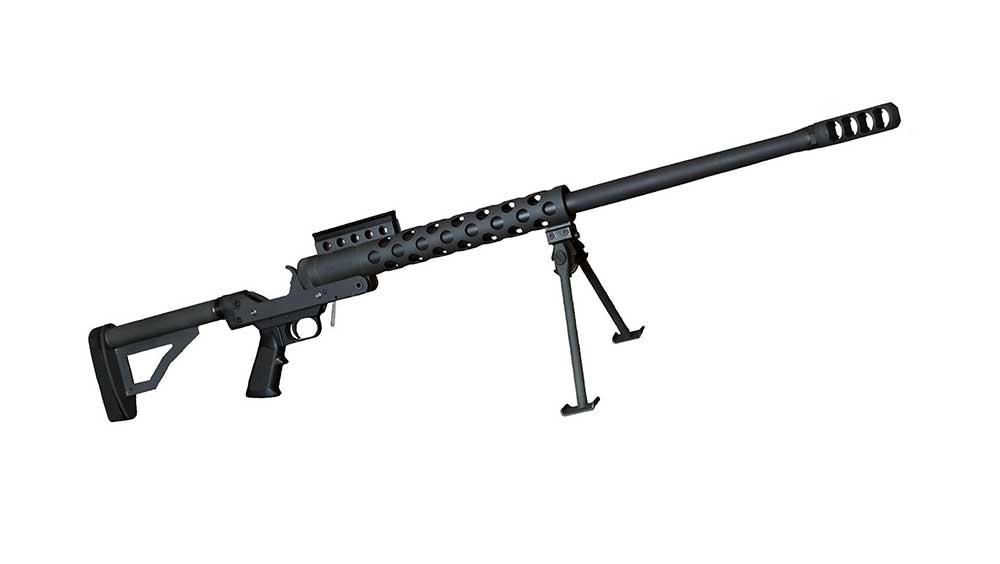
Serbu makes a comeback appearance on our list of budget fifties with one of the company’s latest products released in 2018: the RN-50. Inspired by a social-media campaign, this unique, big-bore rifle offers an extraordinarily accurate .50 BMG precision rifle at prices that most consumers can easily afford.
Unlike many of the other guns on this list, the RN-50 doesn’t use a traditional bolt to lock a round into place on the receiver. Instead, the rifle uses a break-action design paired with a screw-on breech cap. Though this loading method certainly doesn’t provide fast follow-up shots, the simplified design is easy and inexpensive to manufacture and actually provides even greater accuracy than many other .50-caliber guns, because the cap offers symmetrical support to the cartridge.
The standard Serbu RN-50 ships with either a 22-inch or 29.5-inch barrel machined from alloy steel and weighing in at 15 pounds max with the latter barrel attached. For an added cost, consumers can choose either an 18-inch “Shorty” barrel or a 36-inch “Heavy” barrel. At such a low price, the rifle doesn’t ship with a bipod or stock included, but those can be bought for an additional $175 each. Consumers can also add their own, since the receiver plate is compatible with AR-style buffer tubes.
Whatever your choice, it’s clear that the long-range precision game involving .50 BMG is no longer for the fabulously wealthy. There are a number of options for those bit by the big-bore bug that aren’t wildly out of the price range of many of today’s traditional rifles. All that’s needed now is a source of affordable ammo…
Categories
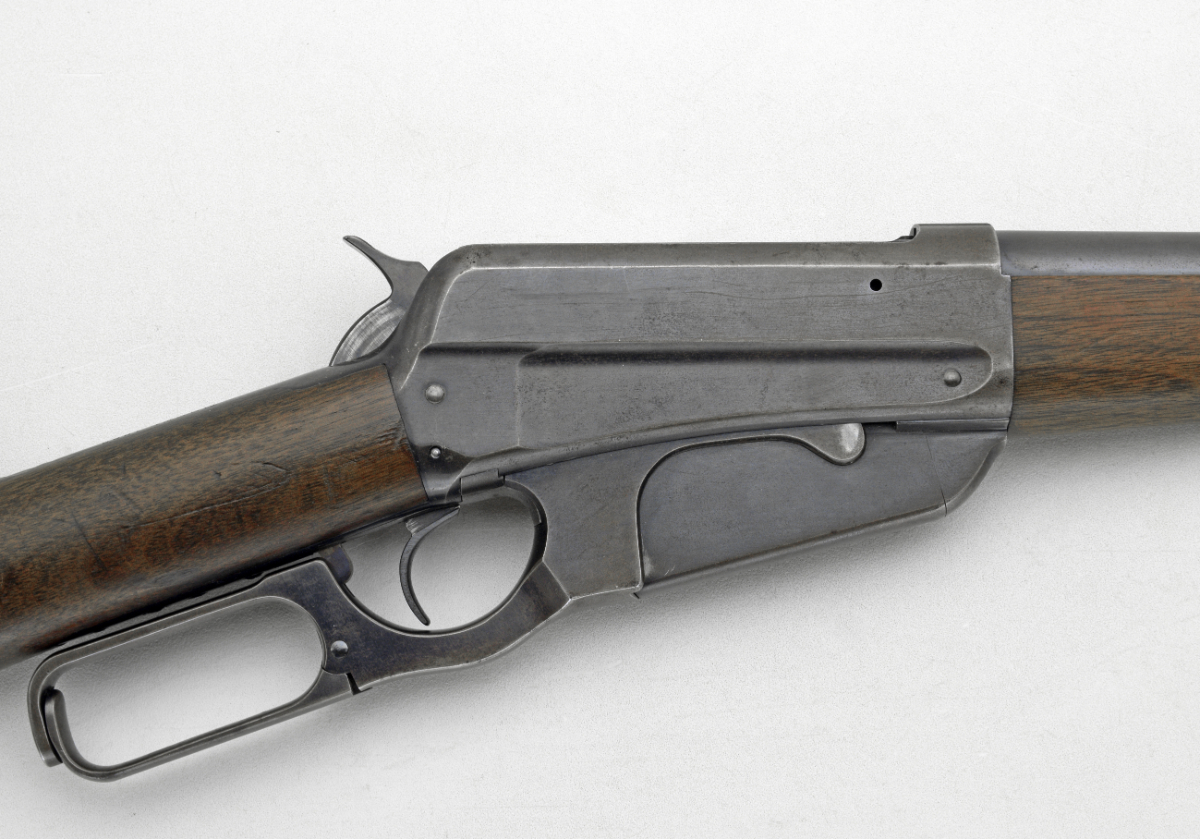
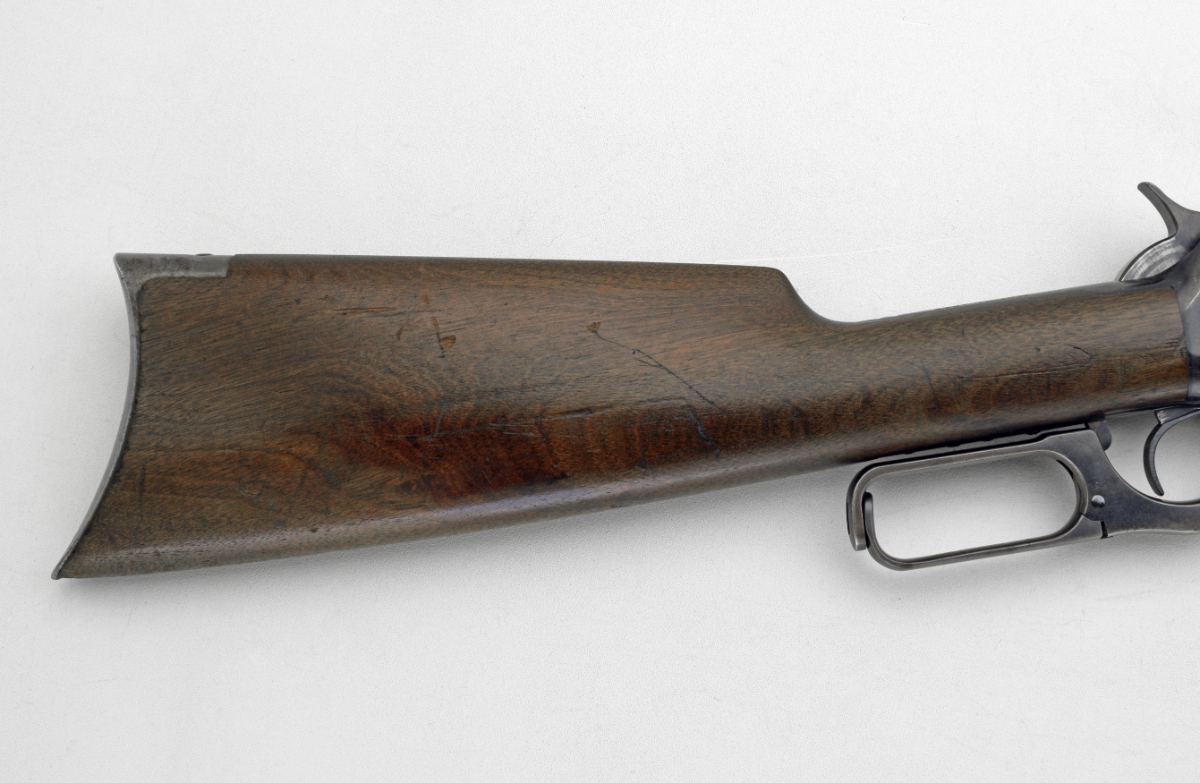
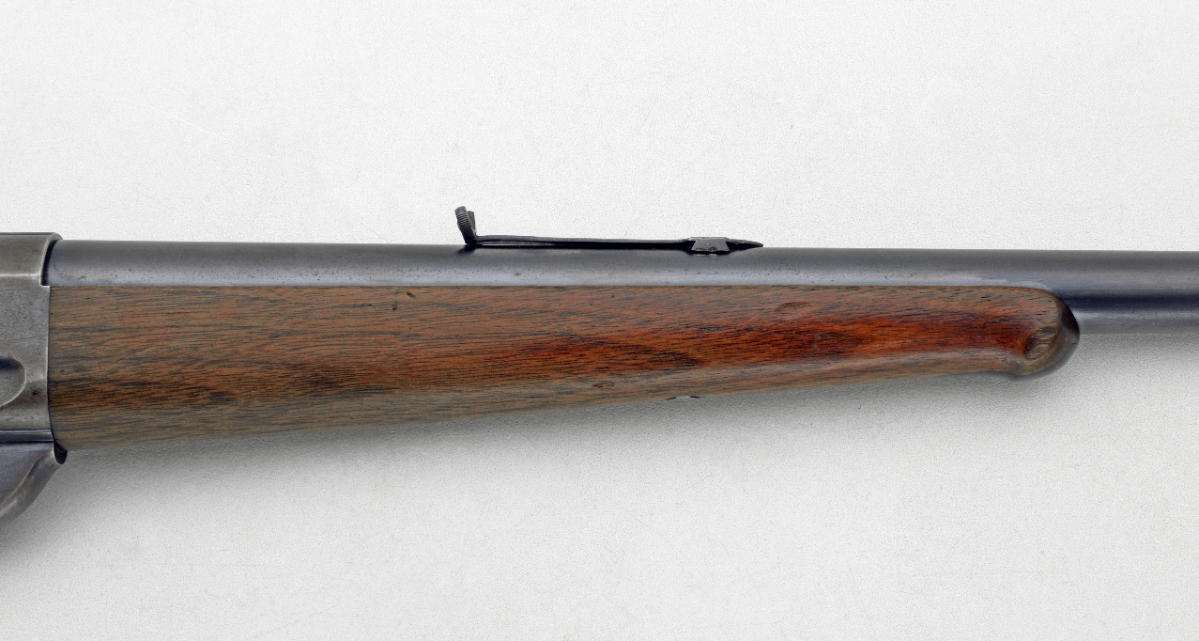
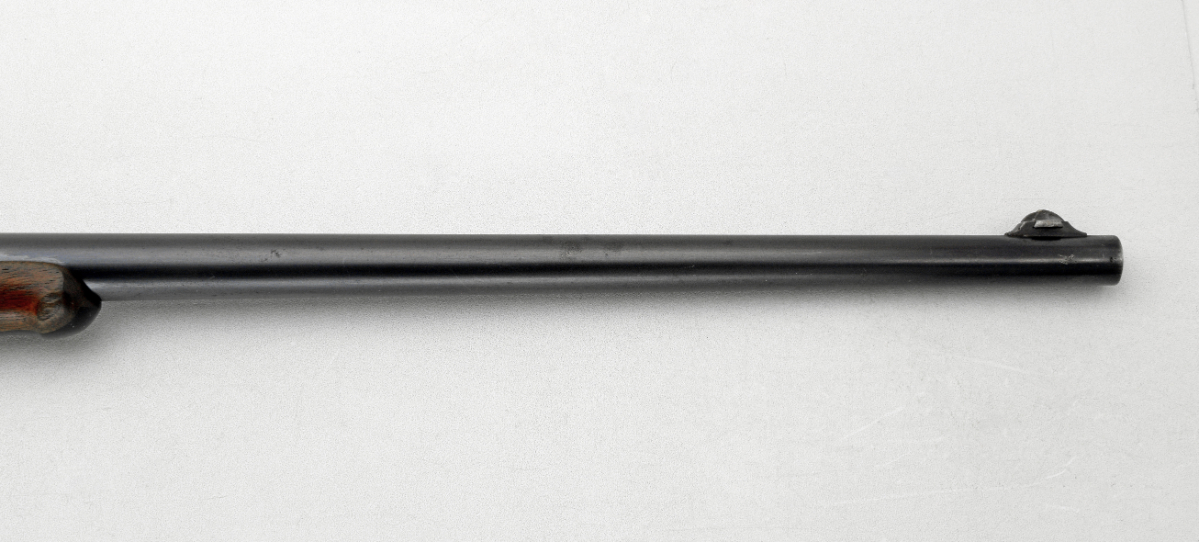
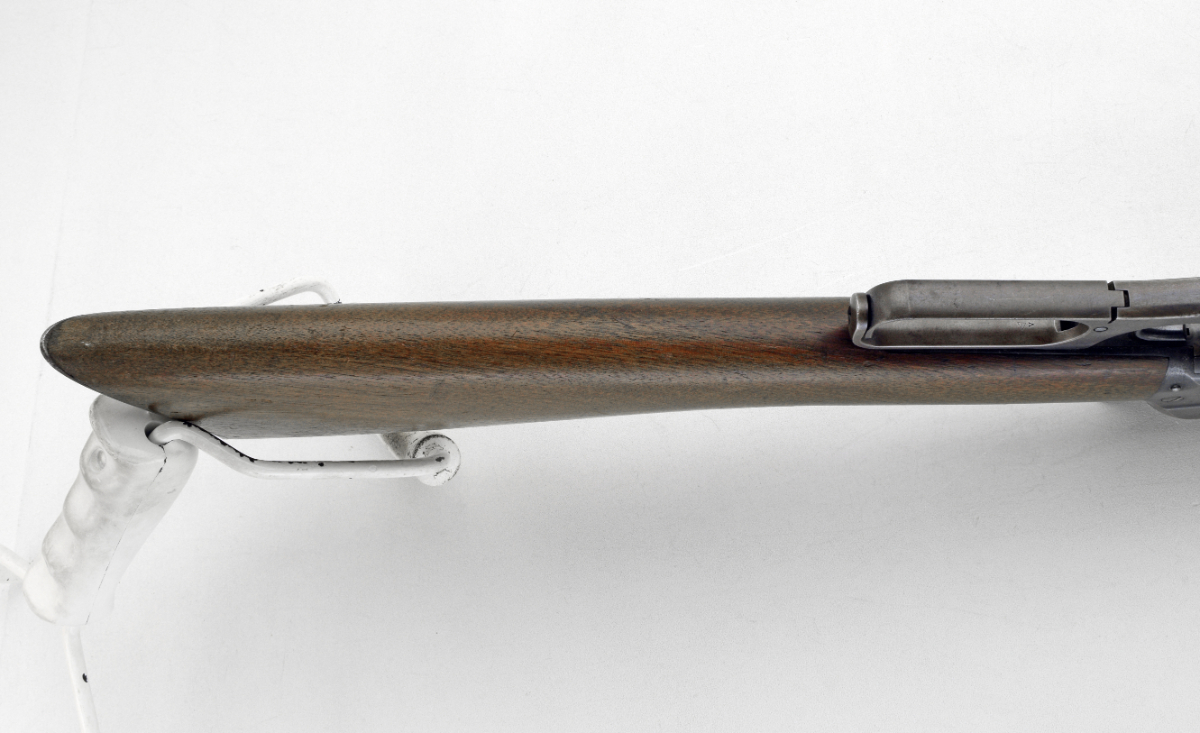
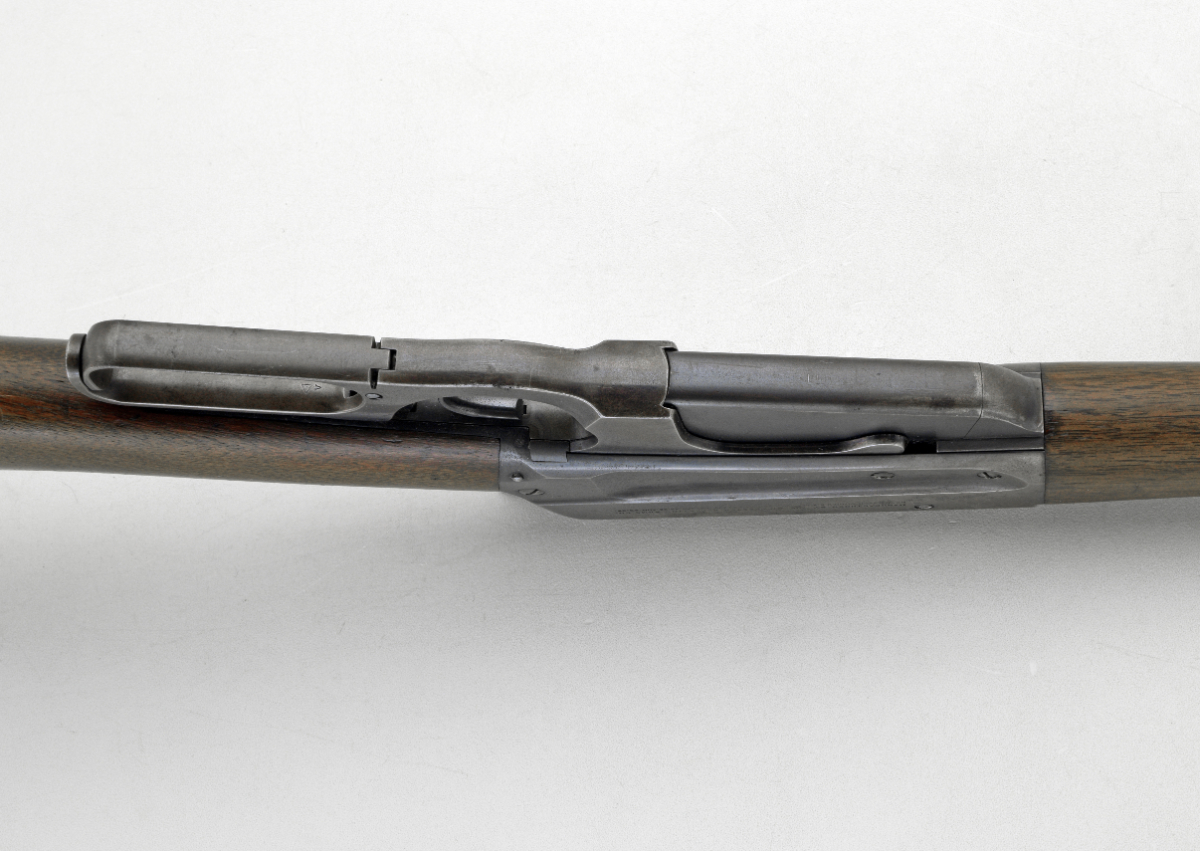
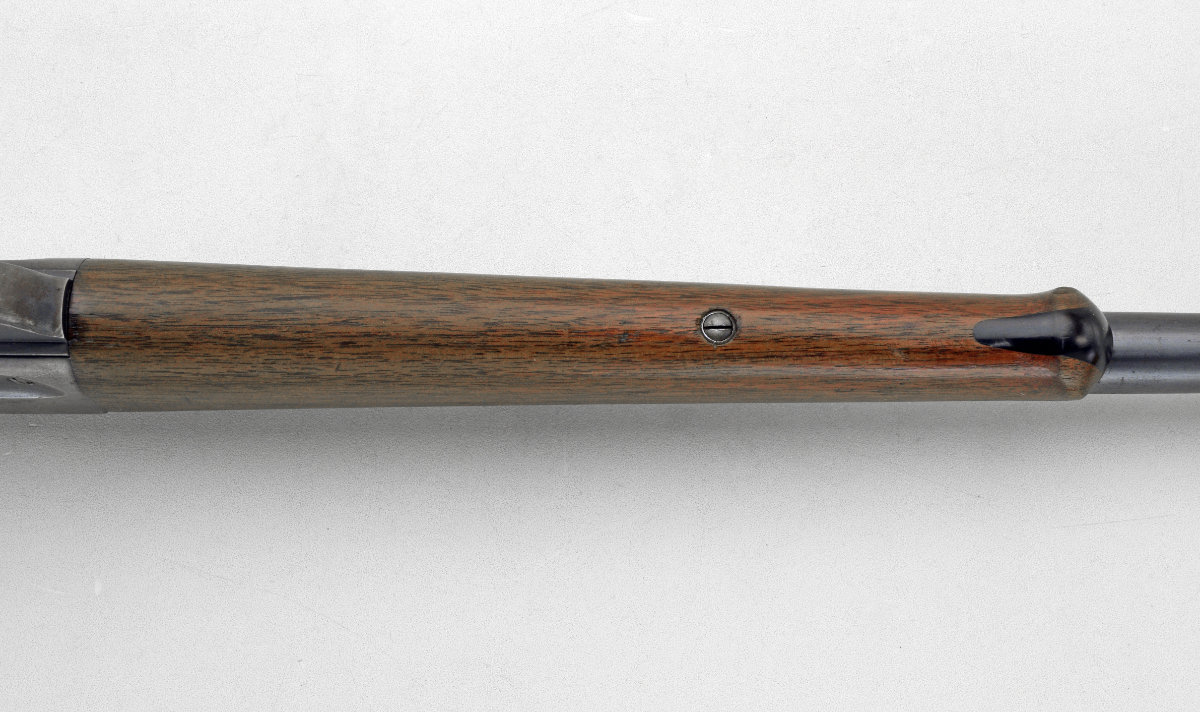
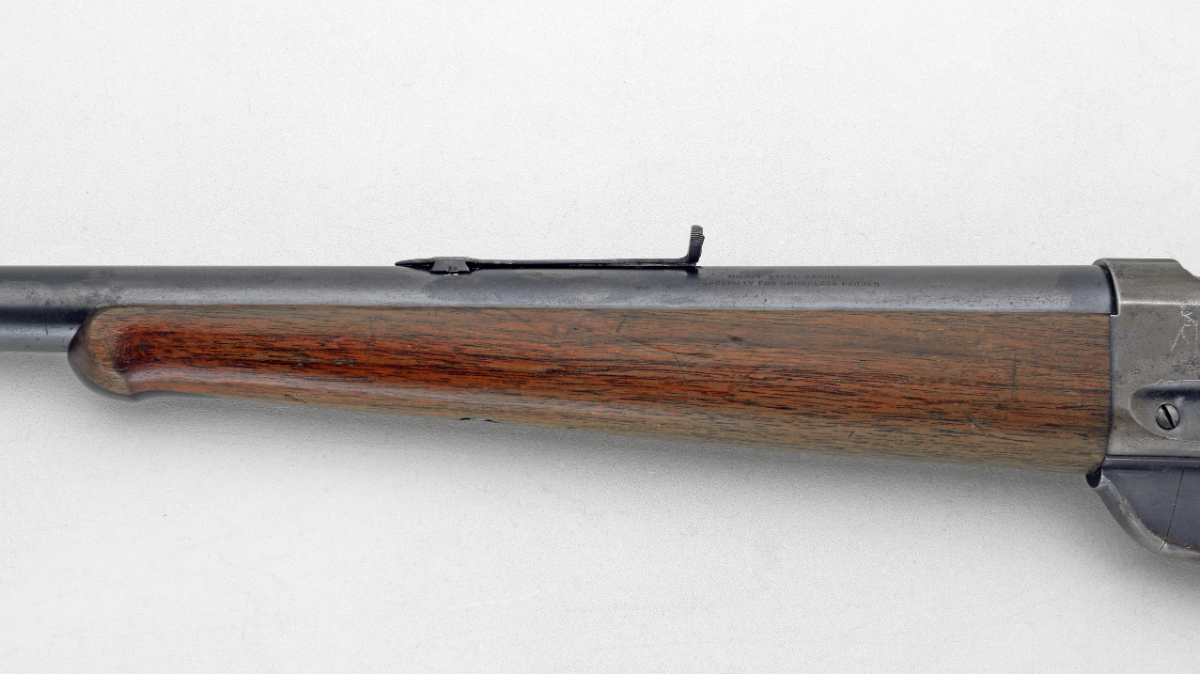
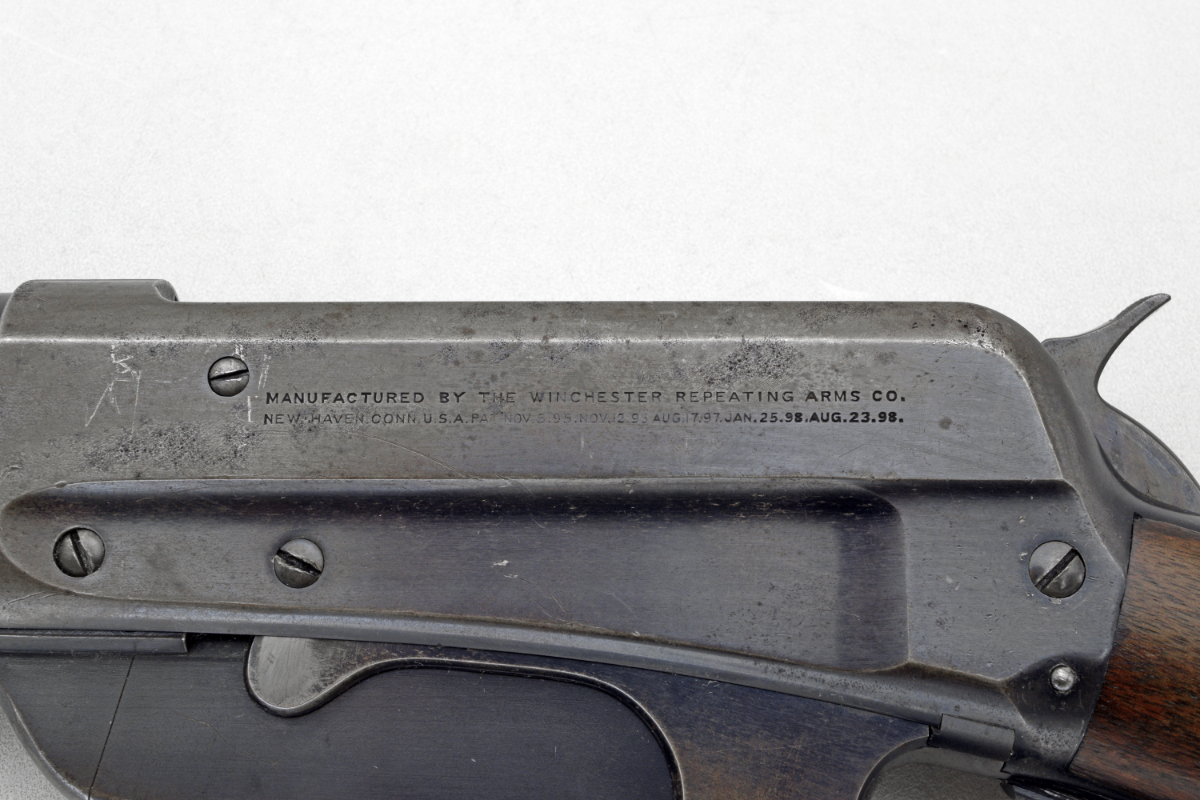
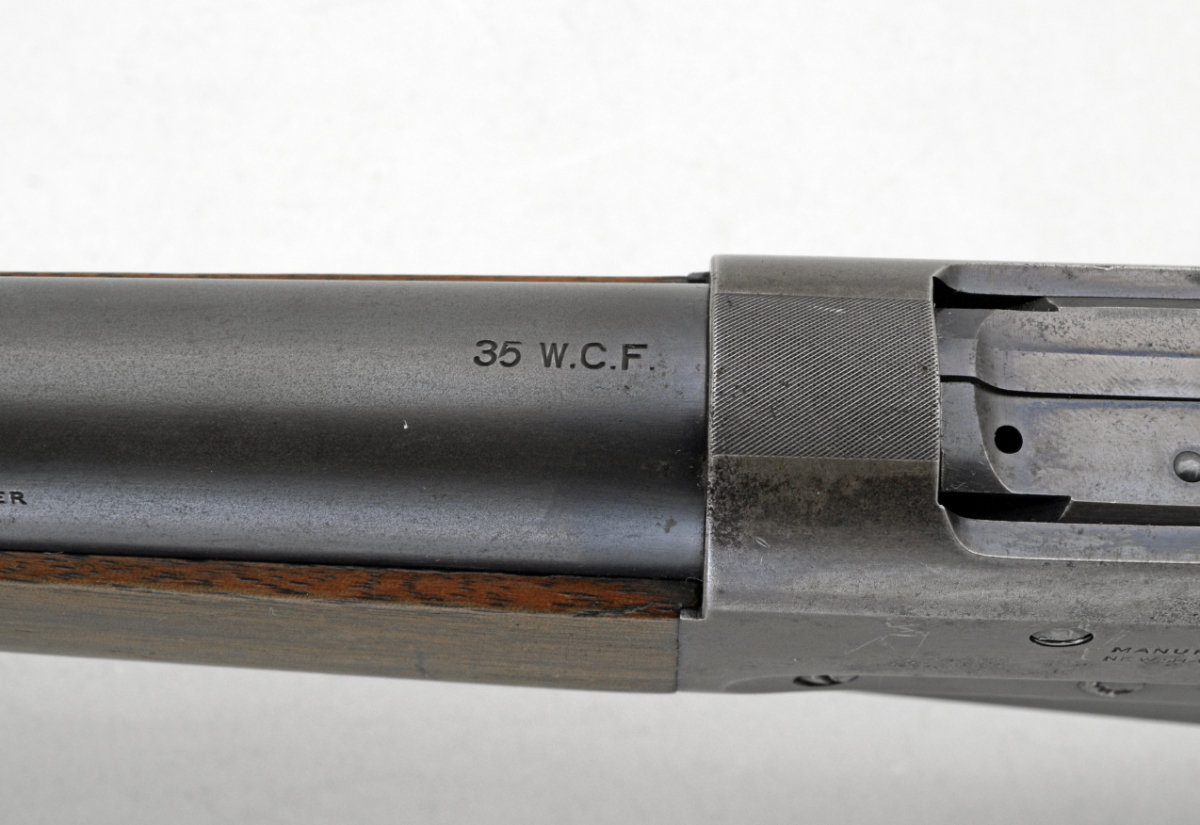
1885 Winchester Rifle in 2021
Categories
The Colt New Police
August 24, 1940, was a Saturday. The Battle of Britain had been roaring in the skies over England for six long weeks. On this particular day a young Luftwaffe fighter pilot named Hans Joachim-Marseille found himself on his first combat sortie over the hostile island.

Joachim-Marseille was 21 years old, little more than a souped-up child. Of French Huguenot ancestry, the boy was the product of a difficult upbringing and a broken home. Influenza had nearly killed him when he was young. Joachim-Marseille went by Jochen to his friends.
Jochen completed fighter pilot school in Vienna in November of 1939. His instructors consistently rated him as a superlative natural pilot, but his social life threatened to put an end to his flying career before it got started. In retrospect, young Jochen was likely trying to fill some kind of void with women and alcohol. There were times he missed missions because of his excessive social pursuits the night before.

Fighter aircraft at the beginning of World War II were terrifyingly dangerous machines. They were immensely powerful, but aviation technology had been advancing at a breakneck pace. Most everything about combat aircraft of this era was still essentially experimental. As a result, young men strapped into these heavily-armed planes ready to meet death.
Fighter tactics were and are learned skills. German pilots fought in pairs called Rotte. Two pairs operated as a four-plane unit called a Schwarm. The lead pilot of the Rotte was responsible for everything out front. His wingman continuously cleared the rear to avoid an airborne ambush. It was beaten into combat pilots that you should never leave your wingman. As soon as young Jochen spotted his first British fighter plane, however, he broke formation and dove in the attack.

Joachim-Marseille had drawn Bf 109 E tail number 3579 for the mission that day. The “Emil” as it was called by its crews represented the state-of-the-art in fighter aircraft at the time. Jochen firewalled the throttle, totally fixated on his target.
The enemy plane was a Supermarine Spitfire. This particular example was flown by an experienced British pilot who was none too keen on falling to German guns. What began as a diving ambush evolved into a free-wheeling aerial melee wherein both pilots fought for their very lives.

The battle lasted a mere four minutes, but four minutes is an eternity in aerial combat. With the nimble Spit vying for position on his tail, Joachim-Marseille pulled a tight chandelle wherein he described his minimal turning radius while climbing. This was a difficult maneuver in combat.
Successful air combat is all about energy management, and a chandelle left the plane relatively slow and disadvantaged. In this case, however, Joachim-Marseille ended his turn at a greater altitude. He momentarily centered the British fighter in his REVI gunsight and squeezed the trigger.
His plane carried a pair of 20mm MG FF cannon in the wings along with a brace of rifle-caliber MG-17 machine guns in the engine cowling. He also carried a third 20mm firing through the propellor hub. The combined firepower of these five guns chewed into the hapless Spitfire. Jochen connected with the Spit’s Merlin engine, and the stricken plane rolled inverted before plunging into the English Channel.
Joachim-Marseille was then bounced by a gaggle of Spitfires bent on revenge. He dove his nimble Messerschmitt down to wavetop level and made a beeline for Calais and home. Once on the ground he was severely castigated. Though he had been successful, his lack of discipline in the air put his mates in jeopardy.
The Rest of the Story
Hans Joachim-Marseille’s patterns of misconduct eventually landed him a posting to North Africa where his Bohemian proclivities might be better muted. While there, he found his stride, ultimately shooting down 158 Allied planes. All but seven of these were scored against the British Desert Air Force. No other Luftwaffe pilot claimed as many Western aircraft downed. All of his combat flying was in Bf 109s.

During the course of three sorties in a single day in September of 1942, Joachim-Marseille managed to down seventeen enemy aircraft. He was eventually awarded the Knight’s Cross with Oak Leaves, Swords, and Diamonds. Joachim-Marseille was arguably the first of the Experten, the cream of the Luftwaffe fighter arm that was to be the scourge of the skies over Europe and North Africa. Thanks in no small part to Joseph Goebbels’ propaganda machine, he became known as Der Stern von Afrika or “The Star of Africa” as a result.
On September 30, 1942, Joachim-Marseille was flying a brand-new Bf 109 G-2 on a Stuka escort mission. His flight encountered no enemy aircraft, but Jochen’s engine began smoking on the return flight. His wingmen guided him back to friendly lines so that he could bail out of the stricken plane.

Jochen rolled his Messerschmitt inverted per protocol and jettisoned his canopy. However, the smoke apparently disoriented him such that he let the plane enter a steep dive. He eventually cleared the aircraft at around 400 mph and struck the vertical stabilizer on exit. The blow either killed him outright or rendered him unconscious and unable to activate his parachute. Hans Joachim-Marseille was 22 at the time of his death.
The Plane
The German Bf 109 Messerschmitt was the most-produced combat aircraft in history. Nearly 34,000 of them were built between 1937 and 1945. The last Bf 109 variants were not retired from combat duty with the Spanish Air Force until 1965.

The Bf 109 incorporated a variety of radically advanced features. The inverted-V Daimler-Benz engine was fuel injected, which rendered the plane immune to negative-G flight conditions. By contrast, the Merlins on opposing Spitfires were carbureted and would therefore lose power in the negative-G flight state. The Messerschmitt also had leading edge slats in the wings that deployed automatically due to gravity and enhanced the nimble plane’s turning radius.
The landing gear mounted to the fuselage. This kept the wings thin and slippery. It also made the wings easier to remove for servicing at the expense of an unusually narrow ground track. An inordinate number of Bf 109s were lost to ground handling accidents as a result.

The Bf 109 advanced through a wide variety of upgrades that increased performance and enhanced armament. Despite its relatively advanced age, the late-war Bf 109K still had a rate of climb superior to that of the American P-51D as well as the British Spitfire Mk XIV and the Hawker Tempest. A total of 25 Czech-built Bf 109s served with the fledgling Israeli Air Force during their War of Independence in 1948.
Hans Joachim-Marseille’s Particular Ride
The Bf 109E Werknummer 3579 that Joachim-Marseille flew on his first combat mission was later damaged in combat with Jochen in the pilot’s seat and bellied in at Calais-Marck. After subsequent recovery and rebuild in Antwerp, the plane was issued to JG77 operating out of Alakutii, Russia. The plane was once more damaged in combat and rebuilt again, this time in Norway, before being returned to the Russian Front.

In August of 1942 with LT Kurt Hammel at the controls, 3579 was forced down near the FLOT (Forward Line of Troops) where it was abandoned. The wreckage was recovered in the Summer of 1992 by the Russian Aircraft Recovery Group and moved to Moscow. It was then purchased by an American company and rebuilt into flying condition. In 2014 the plane was sold and moved to its current location at Biggin Hill Aerodrome outside London.
This priceless aircraft with its extraordinary connection to one of the Luftwaffe’s greatest fighter pilots is awe-inspiring up close. The plane looks like it just rolled out of the factory and is frankly a thing of extraordinary beauty. Special thanks to www.flyaspitfire.com for the priceless opportunity to study it up close.
Categories
S&W Combat Magnum Resurrection
Categories