Category: All About Guns
.jpg)
The deadliest and most violent war in human history led to the production of millions and millions of guns.
Guns like the much revered M1 Garand and M1911 ended up as surplus weapons, distributed through the Civilian Marksmanship program or, like the Garand and M1 Carbine, were sold out of barrels at the local sporting goods and gun stores for hunting.
But some guns ended up as trophies in the homes of the soldiers, sailors, and airmen who fought in the war after being carried home in a duffle bag or foot locker — “the bring back gun.”

War Souvenirs
Napoleon promoted taking war trophies. Today, Ukrainian farmers tow away Russian tanks. The Hague Convention of 1907 put limitations on war trophies including municipal property, religious articles, arts and science related articles, and state property. World War II British Field Marshall Bernard Montgomery discouraged the practice but that didn’t stop his men from doing it.
War trophies could be a patch, a coat, a helmet, a dagger, or, alas, more grisly stuff. Firearms are the focus here — the exotic weapon of a foreign military taken off a soldier, found in a factory, or simply rooting around. Not all of these bring back guns are created equal.
While many were non-descript Luger, Nambu, or Walther pistols or rifles like the Gewehr 41, Karabiner 98k, or Type 38, some rose above. They were special — or infamous — guns due to a historical connection.

WW2 war Trophies
Several Japanese World War 2 era pistols are available in the June 22-24 Sporting and Collectors Auction but one rises above them. More than 400,000 Nambu Type 14 pistols were made for World War 2. A Type 14 surrendered by a general at Ie Shima, off the coast of Okinawa, accompanied by bring back paperwork is expected to draw more interest than the other Japanese pistols in the auction.
In RIAC’s May Premier Auction a pair of engraved presentation Walther PPs that had personal engraving done at the request of GIs at the firearms factory that included soldiers’ names and the 90th Infantry Division’s “Tough Ombre” logo. One was one serial number away from a similar Walther PP given to Gen. George Patton. They sold for $41,125 and $47,000 respectively.
Compare those to Walther pistols connected to Nazi leaders that sold well into the six figures. A Walther PPK carried by Herman Goering at the time of his surrender sold for $230,000 at a Premier Auction in September 2018, but was topped by a chrome-plated and engraved Walther PP attributed to SS Chief Heinrich Himmler that sold for $356,500 at RIAC’s May 2019 Premier Auction.
While many soldiers were simply looking for a memento of their service in the war, be it a pistol, a rifle, a patch, or helmet, some discovered souvenirs with significant history attached to them that can launch a bring back gun into a rarefied class of weapon.

Cold War Trophies
By the end of the Korean War, the U.S. military frowned on war trophies to avoid looking like looters. In recent conflicts the goal is to appear as liberators and not conquerors. Certain items were still allowed but required the approval of a superior officer and a completed DD Form 603-1 to present at customs.
The military also prohibited returning weapons to the United States that were prohibited under the National Firearms Act of 1934. These included items like full-auto machine guns and silencers. That didn’t stop AK-47s and SKS rifles from getting into the United States as contraband during the Vietnam War. However, a person caught with this contraband could face criminal charges. One lot in the upcoming Sporting and Collector Auction includes Chinese semi-automatic rifles brought back from Vietnam.

Prohibited weapons were only part of the concern of war trophies. Items that a soldier might see as a trophy, like a claymore mine or grenade are dangerous to ship, as this U.S. Army fact sheet from January 1968 lays out the dangers of war trophies. One scenario puts soldiers headed home on a Boeing 707 troop flight, and one turns to the soldier sitting next to him and says he’s got an RPG round in his bag as a souvenir.
The fact sheet states: “A Fairy Tale? Not on your life! That’s a scene which has been repeated for real more than once. Customs and postal officials have actually found, among other dangerous items, C4 plastic explosives, claymore mines with arming mechanisms, TNT, rifle grenades, flares, fireworks, and M72 rockets complete with launchers! These things and countless others have been in baggage or mail being flown to the U.S. aboard returning planes carrying 165 happy — and unsuspecting — soldiers home from a year of dodging VC bullets.”
A 1968 amnesty allowed veterans to register NFA items they brought back.
In 1991, the United States rules for engagement during Desert Storm stated “The taking of war trophies (is) prohibited.” During the later Iraq and Afghanistan wars, souvenirs had to go in front of a reviewing officer. Among firearms sold by Rock Island Auction from the Iraq war included a CIA-seized Ruger M77 bolt action Mannlicher rifle of Saddam Hussein and gold-plated pistols attributed to Saddam Hussein and Uday Hussein.

In 2005, a Minnesota National Guardsman was charged with shipping home two AK-47s from Iraq. In 2006, A U.S. Marine was also charged for possessing an illegal AK.
Permissible firearms are still allowed but require proper paperwork, including a receipt showing the date, place, and source of purchase, and the importer’s identity. War trophy firearms that are permitted can’t be mailed or shipped but must be personally transported to the United States.

Martini-Henry Rifles
Gone are the days of the Luger, Walther, or Nambu bring back gun, but that doesn’t mean they no longer exist. It just means they are of a different type. In Rock Island Auction Company’s June Sporting and Collector Auction, numerous lots include bring back guns. Some are World War 2 trophies while a number are antique British rifles acquired in Afghanistan with bring back papers from Bagram Air Force Base.
They aren’t AKs or heavily engraved Walther pistols coming back from Afghanistan, but instead are single-shot Martini-Henry rifles and muzzle loading Enfield rifles. The 19th century guns date back to when the British Empire ruled the region. Most are considered in fair condition and came through Bagram Air Base in 2016.

War trophies are as old as war itself, but as war has changed so has the attitude and ability to take home souvenirs of combat. Fighting isn’t close in like it once was in the jungles of Vietnam or the hedgerows of Europe and countries don’t want to be seen as conquerors that can take whatever they please. Collecting militaria will always exist, but what will be collectible won’t likely be a gun taken from a factory assembly line in Germany, the pistol of a world leader, or the helmet of a fallen foe, making the war souvenirs of World War II and military actions on into the 21st century even more scarce and valuable. Check out the bring back guns in the June 22-24 Sporting and Collector Auction.
Sources
Will New Regulations limit the future of the Hobby, by Peter Suciu
Categories
Randy shooting a Super Enforcer
Sturm, Ruger & Co.’s Mini Thirty enters the books as self-loading rifle, unique and capable, with a piston-driven action reminiscent of J.C. Grand’s famed designs. Though brought to life in the early the late 1980s, Ruger’s Mini Thirty came as an evolutionary step for its parent company and Mini-14 line of investment-cast semi-autos in 5.56×45 mm NATO.
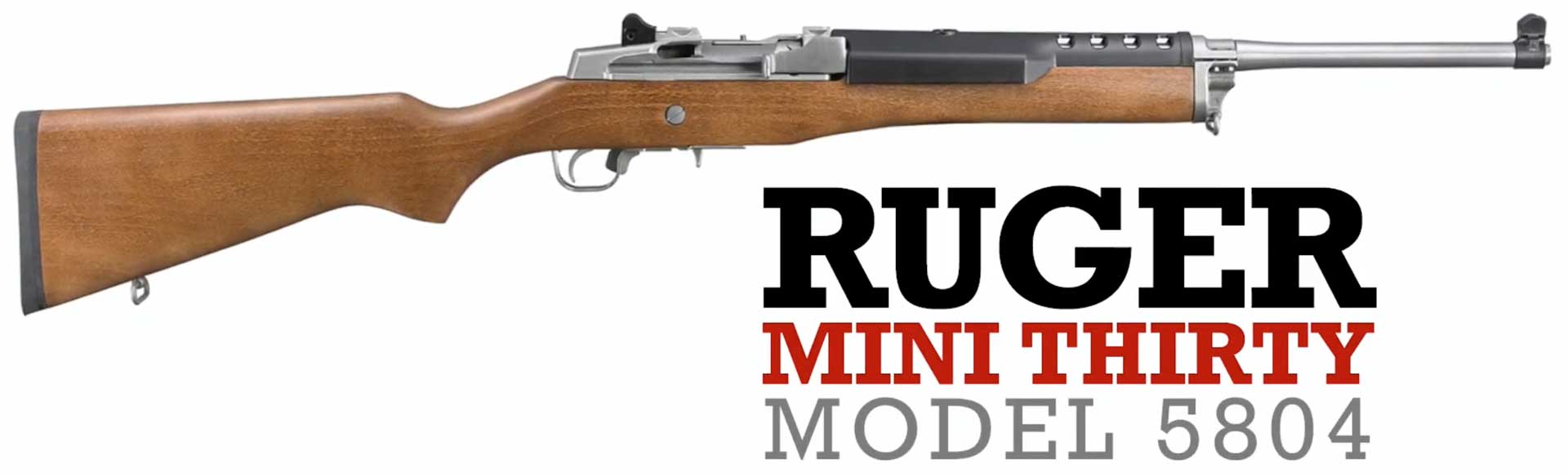
Minis quickly earned their reputation from not just enthusiasts and home defenders, law-enforcement and government-owned armories stock variants of the Ruger Mini-14, some capable of automatic operation. But it’s the .30-cal. Mini Thirty that caught the attention of hunters, it being a lightweight big-game legal hunting rifle with quick-change magazines. In addition to manual, straight-pull mode and adjustable sights, the Mini Thirty offers hunters with a do-all rifle system that is ready for optics straight from the box.
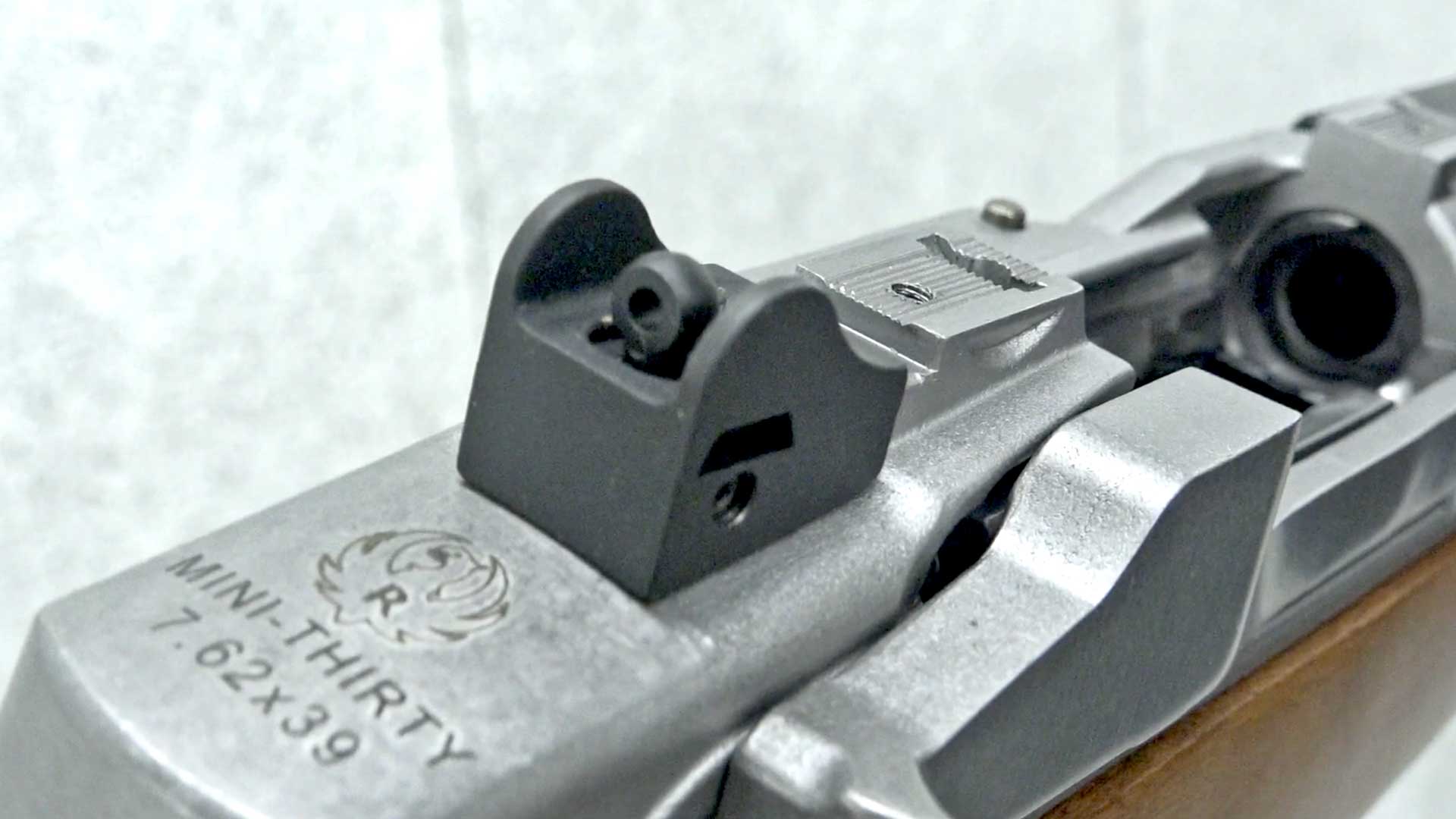
Ruger’s Mini Thirty is a perennial design that has maintained its spot in the company catalog for decades. Today’s Mini Thirty options include plastic and polished-wood furniture with either blued or stainless-steel barrel configurations. The latter Model 5804 can be seen on the range in the video above.
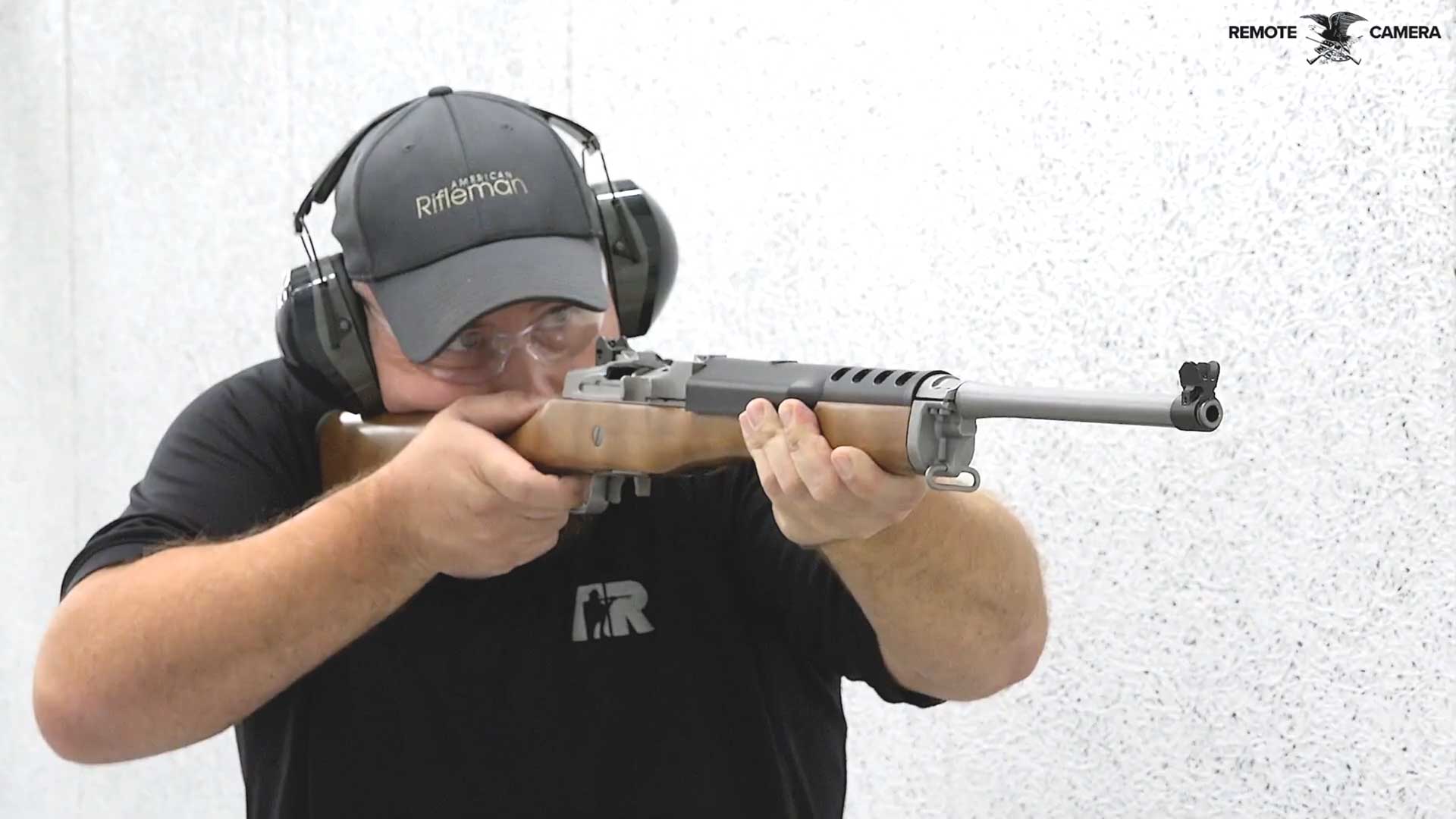
Sporting a cold hammer-forged barrel 18.50” in length and a matte-finished stainless steel receiver, our sample weighed in at around 7 lbs. Load down the magazine, install a well-fit sling and optic and expect to find a fully rigged hunting setup to be just over 8 lbs. The Mini Thirty comes with machined-in scope mounts, is drilled and tapped and supplied with a section of Picatinny rail from the factory. If that’s not enough from Ruger, a set of adjustable sights come fixed to the rifle with a wing-protected rear aperture. The front sight is a simple blade. Two five-round magazines and scope rings come with the rifle.
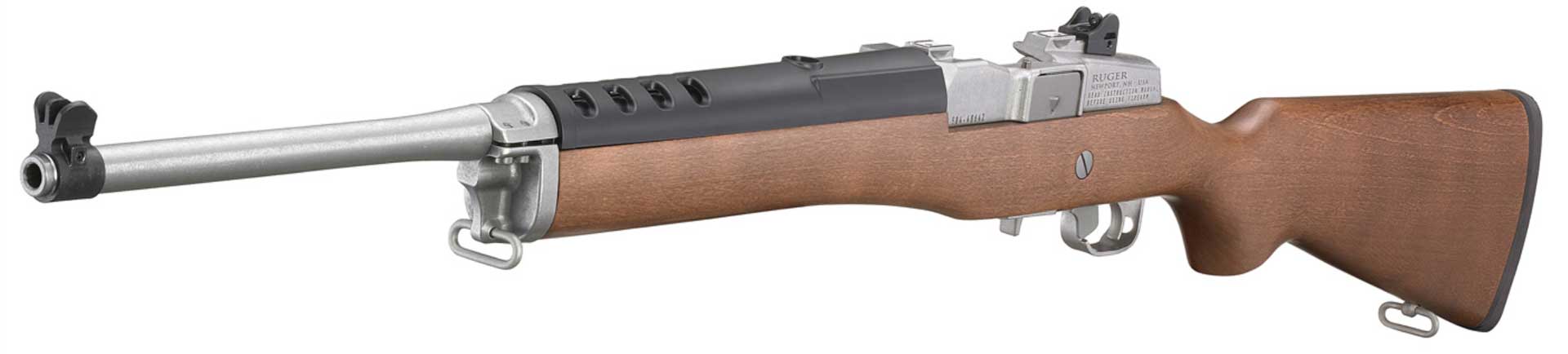
Ruger Mini Thirty Specifications
Manufacturer: Sturm, Ruger & Co.
Action Type: piston-operated, semi-automatic centerfire rifle
Chambering: 7.62×39 mm
Receiver: stainless steel
Barrel: 18.5” stainless steel
Finish: matte
Stock: wood
Sights: adjustable rear aperture, post front
Magazine: five-round detachable box
Length: 37.50”
Weight: 7 lbs.
MSRP: $1,279


This week council members invoked the nuclear option after a pair of businesses applied to open up gun shops in the city, voting unanimously to impose a 45-day ban on gun shops while city attorneys investigate whether the city can make that ban permanent; a tactic that other anti-gun locales are likely to adopt… at least until courts step in.
One of the proposed gun shop locations is at Roosevelt Plaza, which is near Roosevelt Elementary School.
Katie Gaets, a parent who serves as Pastor of Woodside Road United Methodist Church in Redwood City, was among those who spoke in support of the ordinance at Monday’s council meeting.
“Just today a teenager was convicted of killing four people in a school shooting and two more people died in a school shooting in St. Louis,” Gaets said.
“One of the ways we can take a clear and definitive stance of no against such violence, is by taking a clear and definitive step away from firearms dealers in our local community.”
You don’t send an anti-violence message by making it harder for legal gun owners to protect themselves, which is exactly what this gun store ban does. California law already requires every would-be gun owner to go through a background check and twiddle their thumbs for ten business days before they’re allowed to take possession of their newly-purchased firearm, and every time they go and purchase ammunition they’re subjected to additional background checks.
If criminals obeyed the law, these restrictions might actually make a difference. Instead, according to the FBI California had the most active shooter incidents of any state in the Union last year. The real message that Redwood City’s proposed gun store ban sends is that city council members are willing to bend the knee to anti-gun activists at the expense of the rights of the law-abiding.
Unfortunately, as we discuss on today’s Bearing Arms’ Cam & Co, Redwood City isn’t alone in trying to curtail gun purchases. The Los Angeles County Board of Supervisors is also considering a laundry list of new restrictions on current and future gun owners and gun store proprietors, and other communities across the state are taking aim at gun shops that are already in existence. In Torrance, for instance, the owner of Red Rifle Ltd. was originally given approval to move his shop from an industrial part of town to Torrance’s upscale Old Town neighborhood before activists complained and convinced the city’s Planning Commission to rescind the permit they issued to the store.
Now store owner Jack Brandhorst is appealing that decision, arguing that the city’s claim the shop is “incompatible” with the other businesses in Old Town doesn’t fly, and that there’s no reason in state or local law to prohibit the move to a better location.
“Red Rifle is a legal, reputable, long standing business that is not prohibited from opening in Downtown Torrance by any law, statute or rule,” Brandhorst wrote in his appeal, which was filed with a $750 fee on Oct. 11. “Thus, legally we should be allowed to move our boutique to Downtown Torrance.”Brandhorst said in an interview that his store will only serve to elevate the area, with its high end products, personable customer service and smithing services. He said he takes stringent safety precautions, including all mandatory background checks, requiring customers complete a 30-minute gun safety lesson, requiring customers with children to purchase a safe, and securing all ammunition in store.Former Councilwoman Maureen O’Donnell, one of the four residents who filed the initial appeals, said she remains steadfast in her belief that Old Town Torrance is not a safe location for a gun store.“The gentleman is within his rights to appeal and we will go again and present our case before the council as we did before the (Planning) Commission,” she said.“I think that the commission’s decision is the correct one,” she added. “I hope that the City Council will see the reasonableness of that decision and our position.”O’Donnell also said that there are already 12 licensed firearms dealers in Torrance and that regardless of the safety precautions taken by the store, the owner cannot know a person’s true intent in purchasing a weapon.
If that’s her argument then I don’t know how O’Donnell would be okay with any gun being sold anywhere in Torrance, whether in the tony Old Town neighborhood or the grimiest part of town. Regardless of her hostility towards the right to keep and bear arms, it is a right that we’re talking about here, and one that by necessity includes the right to acquire a firearm as well as the right to keep and carry it for self-defense.
As many gun control restrictions are ruled unconstitutional in the wake of the Bruen decision, look for more anti-gun locales to set up as many hurdles as possible for new and existing gun store owners to navigate.
It might be restrictive zoning ordinances limiting gun stores to just a few acres of land in undesirable locations, as we’ve seen in Torrance, or it could be an outright ban on gun stores like the one Redwood City council members are hoping to permanently impose, but either way we have some major legal fights brewing over buying and selling the arms we have the right to keep and bear.
00:00
/
22:18
