Categories
All About Guns This great Nation & Its People War

XM177 — MACV-SOG’s Experimental 5.56mm By Robert A. Sadowski

Military Assistance Command, Vietnam — Studies and Observations Group (or MACV-SOG, for short) was a highly classified U.S. special operations unit that conducted covert operations before and during the Vietnam War.

Members of SEAL Team 4 participate in a training exercise. The sailor in the lead is armed with a CAR-15 assault rifle chambered in 5.56×45 NATO. Image: JO1 Peter D. Sundberg/U.S. Navy

This elite team was a mix of Special Operations forces and CIA guys who performed clandestine operations while sneaking around the jungles. Their tactics were as unconventional as their weapons, and there was no area of Southeast Asia that was out of their area of influence — from North Vietnam and South Vietnam to Laos and Cambodia. We called them advisors. They were the ones that did the work that needed to be done.

Mission-Specific Weapons

The standard-issue M16A1 just didn’t fit the profile of their special missions. Plus, because they fought North Vietnam troops in Cambodia and Laos where they weren’t authorized to be, they needed weapons that weren’t normally identifiable.

Two airmen in a combat control team set marker panels around a drop zone during training in 1979 at Pope AFB. They are armed with XM177 rifles Image: Sgt Rozalyn Dorsey/U.S. Air Force

In some cases, they fielded the same weapons as their enemy, using captured AK-47s. Submachine guns were also carried since they were compact, lightweight and could pack a lot of ammo. Remember, these guys carried in what they needed. They were on their own in a hostile environment. There was no cavalry to come and save them if things went sideways. Suppressed pistols were common. Uzis and Swedish K submachine guns were also popular. This mix of weapons all offered plausible deniability that American troops were there.

There were other advantages. It’s easy to distinguish the sound of an AK from that of the M16. They both have a distinct sound. To a North Vietnamese guerrilla fighter, the sound of an AK meant friendly fire.

An Air Force security policeman aims at a target in training during Operation Desert Shield. Image: Tech. Sgt. Marvin Lynchard/U.S. Air Force

Compact firepower was a must for these warriors. However, the problem with submachine guns was that most were chambered in 9mm, which gave them limited power and range. The solution was a carbine in a rifle chambering.

What resulted in 1967 was the 5.56mm XM177E1. While compact AR’s with collapsible stocks are extremely common these days, this configuration was revolutionary at that time. The XM177 was truly experimental.

XM177: Shorty M16, Commando Approved

The XM177 is a shortened version of the M16. The M16A1 was lightweight, had minimal recoil and offered impressive firepower, but — with a 20” barrel — was anything but compact.

Members of the Norton AFB combat control team hold their XM177 assault rifles out of the water as they swim to shore during an amphibious training mission in 1978. Image: Staff Sgt. Joseph F. Smith Jr./NARA

MACV-SOG needed to be quick on their feet in the deep jungle where they fought. Long, heavy weapons would be a liability.

The main requirement for the XM177 was to be shorter and more compact. The M16A1’s 20” barrel was deep-sixed for a stubby 10” barrel with a “moderator” muzzle device screwed onto the end. A collapsing stock made the XM177 even more compact. The XM177 was basically the size and weight of a submachine gun, but with 5.56, rifle-caliber firepower. It outperformed any submachine gun in use at the time.

Designed for Jungle Warfare

As noted, the basis for the XM177 was the M16A1. The barrel, moderator and stock were the three features that were focused on and modified to create these shorty M16s. The selector switch still offered safe, semi and full-auto modes of fire.

The photo depicts a U.S. Air Force combat control team seated in an inflatable boat during a training exercise, each man armed with a GAU-5 variant of the XM177 carbine. The carbines are identifiable by their short barrels with moderator muzzle devices, collapsible aluminum stocks, and inserted 20-round 5.56mm magazines. Team members wear field uniforms, helmets, and tactical web gear, with radios and equipment visible inside the boat. The inflatable boat is in calm water, suggesting a river or coastal training area. The compact rifles are held at the ready, emphasizing their role in rapid-action maritime operations. GAU-5, XM177, CAR-15 Commando, USAF combat control, inflatable boat training, 5.56mm carbine.
Combat control team members, armed with XM177 assault rifles, maneuver down a river by an inflatable boat during training. Image: Staff Sgt. Ernest H. Sealing/NARA

The two-position collapsible stock was a new concept at the time. Collapsed, the weapon was compact and easy to transport. The buttstock, made of aluminum, shortened the overall length of the carbine to just 28”. The M16A1 as-issued had a length close to 39”. This was long before six-position AR stocks were designed to compensate for body armor, gear or body stature.

There was plenty of experimentation with the M16 during the Vietnam War, and shortening the barrel was one common modification. Since then, we’ve learned a lot about reducing the barrel on an AR platform and keeping the system reliable. Back then, it was trial and error.

The XM177 moderator could not be disassembled to be cleaned, and it became less effective when dirty. Image: Rock Island Auction Company

As noted, the XM177 used a 10” barrel. Of course, the direct gas impingement system needed to be shortened, as well. A long flash-hider with a small diameter exit port was added to the muzzle. During testing, the 10” barrel created a fireball out the muzzle every time it was fired, which wasn’t conducive to clandestine operations. The reworked gas system was reduced to compensate for the short barrel, and reliability was sketchy in the initial guns. The XM177 needed more work to be battle-ready.

Back to the Drawing Board

The result from more testing and modifications was the XM177E2, which used a longer 11.5” barrel and an improved moderator that reduced the noise signature and muzzle flash. The moderators worked, but they could not be disassembled like current suppressors. After extended use, the moderator started to clog up and was less effective. Interestingly, the sound proved to be more like an AK than an M16, which was important for guys running and gunning behind enemy lines.

A typical XM177 rifle with moderator and collapsible stock, as fielded in the late 1960s. The carbine’s lightweight and portable design influenced the later M4 Carbine. Image: Rock Island Auction Company

The XM177E2 was issued in small numbers. It used the standard 20-round steel magazine that was issued during the war, while 30-round magazines were also employed. The E2 wasn’t perfect. The moderator caked up with debris, making it less effective and causing the cyclic rate to vary and causing bullets to yaw. Eventually, the bugs were ironed out.

Conclusion

More work could have been put into the MX177E2 to make the moderator easier to maintain and more effective, but the war in Vietnam was winding down and there was no funding to continue development. However, they were definitely a success in the bigger picture. The XM177 carbines allowed MACV-SOG to be quick on their feet and maneuverable in dense jungle environments, offering impressive firepower in a compact package.

The work and effort put into the XM177E2 was not forgotten, foreshadowing and setting the stage for the development of the M4 Carbine. The XM177E1 and E2 variants were the pioneers of the ultra-compact assault rifle, resulting in the military’s M4 Carbine. — a direct descendant of the innovative XM177.

Categories
All About Guns Allies

4000 Bargain Guns in One Room!

Categories
All About Guns

9mm Sterling SMG Magazines: How Are They Constructed? L2A3 Mk.4

Categories
All About Guns

I Have This Old Gun: Mauser “Cigarette” Rifle by JEREMIAH KNUPP

As collectors know, fine firearms can be a solid investment, but, at times, firearms themselves become a commodity. In post-World War II Germany, the country’s currency had devalued rapidly, and a barter economy replaced traditional money.

Cigarettes, scarce on the civilian market but readily available in the PXs (Post Exchanges) of occupying G.I.s, became a currency of sorts. German citizens would trade household valuables for cigarettes and then trade the cigarettes for food and other essentials on the black market. These household items included firearms, some made specifically for trade, which became known as “cigarette Mausers.” Many of these bartered rifles came back to the states in the duffle bags of returning soldiers.

In collecting circles, the terms “cigarette rifle” and “guild rifle” are often confused. The most agreed-upon definition is that a guild rifle is one that was built pre-World War I or during the interwar period (1919-1939) by small craft gunsmiths using a commercial (or military contract overrun) action, barrel and stock. These rifles are clearly marked by their makers. Not all guild rifles are Mausers, as some were built on actions sourced from the 1888 Commission Rifle or even the Steyr M95 straight-pull.

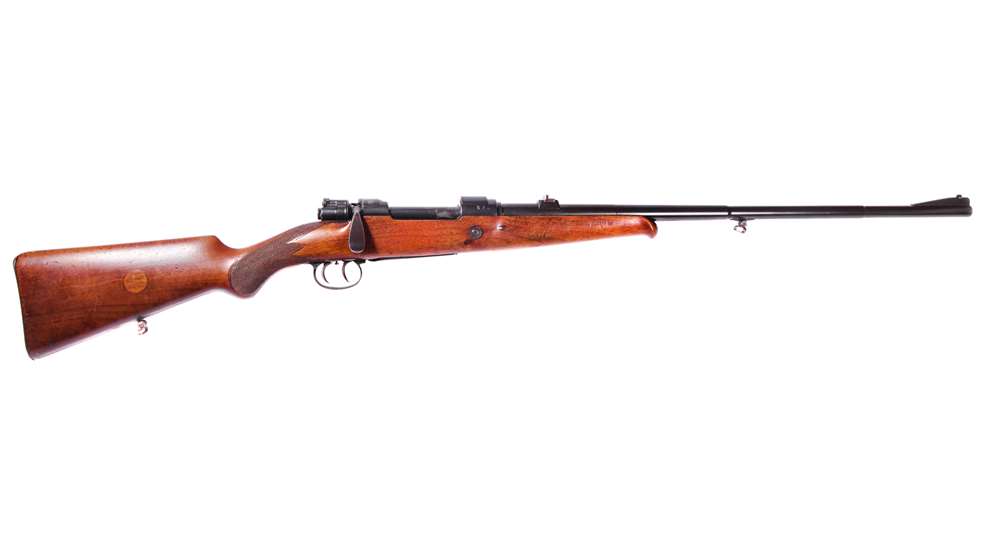
A cigarette rifle was constructed post-World War II using a military-surplus action and usually is not marked with its gunsmith’s name. The rifle pictured falls into this category. The quality of cigarette rifles varies from crude to nearing pre-war commercial quality. This rifle lies somewhere in between those two extremes. It is assembled from a mixture of parts.

The action started life as a World War I-era Gewehr 98. Though most of its original markings have been removed or are obscured by the scope mount, several Prussian imperial proofs remain. The straight bolt handle has been reworked into a turned-down, spatulated “butterknife” design. The original single trigger has been replaced by a double-set mechanism with the original military trigger guard modified to accommodate it. The action has a pair of offset World War I-era claw mount scope bases, but, as is the case with many of these rifles, its rings and optic are missing.

The barrel is from a Karabiner 98k that was manufactured in 1942 by Mauser and was left at its original 600 mm length. Its tangent rear sight and base have been removed and replaced by a two-leaf folding sight, and its banded front sight replaced by an extended and checkered ramp.

The original Gewehr 98 stock and its metal buttplate were retained. The rear sling swivel and bolt disassembly disk have been removed and plugged, and a dished cheekpiece has been grafted into the buttstock. The fore-end is shortened and tapered into a schnabel tip, with a slight remnant of the grasping grooves remaining. Narrow, sporting-type sling swivels have been added to the stock and barrel. The rifle’s overall appearance approximates the style of a pre-war Mauser commercial Type B sporter.

This rifle appears to be in its original, as-built state, though cigarette rifles are often found with an additional step of “customization” that occurred once they arrived in the United States—such as receiver-mounted peep sights or more modern American scope mounts, stock embellishments and rubber recoil pads. Before firing any Mauser sporter rebuilt in Europe from a military rifle, it is advised to have a gunsmith inspect the gun to confirm its chambering.

This rifle, in fair condition, is valued at $450. While cigarette rifles have little collector value, the better-made ones offer an affordable pre- war-style Mauser rifle for the hunter or shooter.

Gun: Mauser 98 “Cigarette” Rifle
Manufacturer: Prussian imperial arsenal
Chambering: 8×57 mm Mauser
Condition: NRA Fair (Modern Gun Standards)
Value: $450

Categories
All About Guns Anti Civil Rights ideas & "Friends" Cops EVIL MF

Rifle in Charlie Kirk killing complicates the usual gun control narrative by Kerry Picket

The single shot that killed conservative activist Charlie Kirk’s last week upended decades of the gun control debate.

As high-profile shootings piled up, activists said the solution lay in background checks and bans on semi-automatic AR-style assault weapons, high-capacity magazines and 3D-printed firearms.

But authorities said the shot that killed Mr. Kirk came from a Mauser bolt-action rifle chambered in .30-06 caliber — a classic hunting gun and the type of weapon that had previously been immune from the gun control debate.

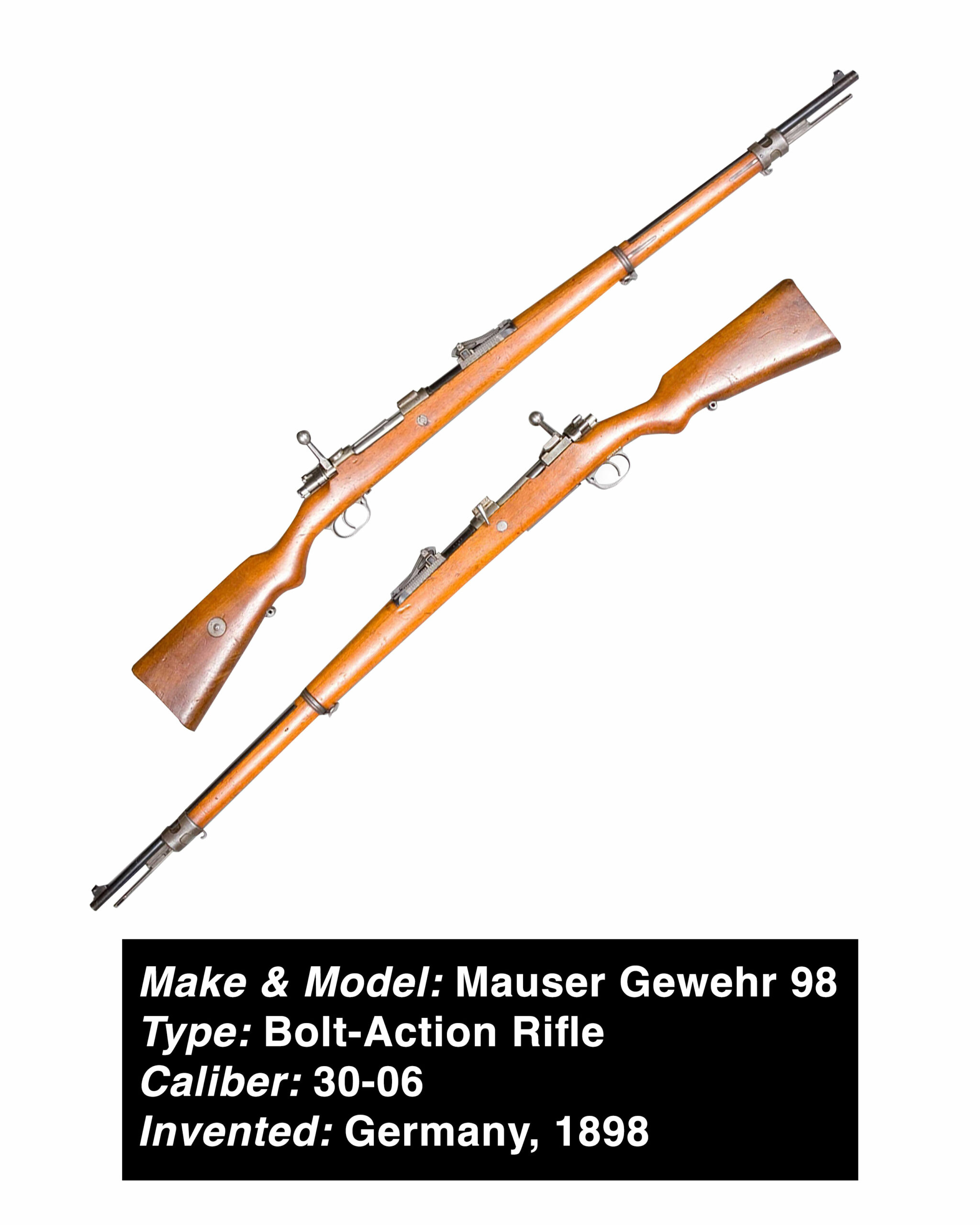
“As usual, the Democrats wasted no time before weaponizing the assassination of Second Amendment advocate Charlie Kirk to promote their unconstitutional gun-grabbing agenda,” said Aidan Johnston, director of federal affairs for Gun Owners of America. “But the murder weapon is a sporterized, Mauser Gewehr 98 — a bolt-action rifle first manufactured in Germany over a hundred years ago in 1898. So, when Democrats call for ‘assault weapons’ bans, every gun owner must realize that means grandpa’s old hunting rifle too.”

Bolt-action rifles load each round one at a time by manually working the bolt.

The rifles usually at the core of the gun debate are magazine-fed semi-automatic guns, in which the firearm itself automatically brings a new round into the chamber after each trigger pull — though, like a bolt-action, each trigger pull fires only a single round.

Automatic rifles, or machine guns, fire continuously until the magazine or belt is empty. They are already heavily restricted under U.S. law.

The ammunition used to kill Mr. Kirk, .30-06, is considered a high-powered cartridge, meaning it can deliver a more powerful punch at a longer range.

The AR-style rifles that have dominated the gun debate in recent years generally use what’s known as an intermediate cartridge, which is a balance between high-power ammunition and lower-powered ammo generally used in handguns.

Using a bolt-action rifle is a rarity in high-profile shooting crimes, though Lee Harvey Oswald used a bolt-action 6.5 mm Carcano rifle to assassinate President Kennedy in November 1963.

According to data compiled by The Smoking Gun website, a bolt-action rifle was present in only five of the 263 deadliest shootings in U.S. history and was almost always a secondary weapon, often never used. So-called assault weapons were used in 71 shootings, with AR-15-style rifles the choice in about half of those.

Mr. Kirk was talking about mass shootings during one of his signature “Prove Me Wrong” events at Utah Valley University on Wednesday when he was fatally shot.

Law enforcement recovered the bolt-action rifle that they say was used in the shooting from the woods near the school campus. It was wrapped in a towel.

A spent round was in the chamber and shell casings left beside the gun were etched with messages. Among the messages were “Hey fascist, catch!” and “If you read this you are gay, LMAO.”

On Friday, police arrested Tyler Robinson, 22, of Utah, in connection with the shooting death.

Mr. Robinson had confessed to a family friend, Utah Gov. Spencer Cox said. The friend contacted the Washington County, Utah, Sheriff’s Office.

Guns quickly became a focal point for many on the left in the wake of the slaying.

Some commenters online suggested a sort of justice in Mr. Kirk’s death, given his vehement opposition to gun control.

A clip of Mr. Kirk talking about the tradeoffs of gun control made the rounds: “It’s worth it to have a cost of, unfortunately, some gun deaths every single year so that we can have the Second Amendment to protect our other God-given rights. That is a prudent deal. It is rational.”

Members of Congress called for a renewed debate on restrictions.

“Pass some gun laws!” shouted Rep. Jahana Hayes, Connecticut Democrat, after the House held a moment of silence and prayer for Mr. Kirk.

Rep. George Latimer, New York Democrat, later told reporters outside the chamber, “Does it take shooting a conservative to start to realize the gun scourge? I hope they realize it.”

Second Amendment Foundation Founder Alan Gottlieb said Mr. Kirk’s shooting upends much of the rhetoric surrounding guns.

“Democrats treat all guns like they are ’assault weapons’ and want to ban them. Guns don’t have brains to hate with or fingers to pull their own triggers. Attacking gun ownership will not solve any problems,” Mr. Gottlieb said.

Originally published by Kerry Picket at The Washington Times.

Categories
All About Guns Well I thought it was funny!

An alternative percussion instrument !

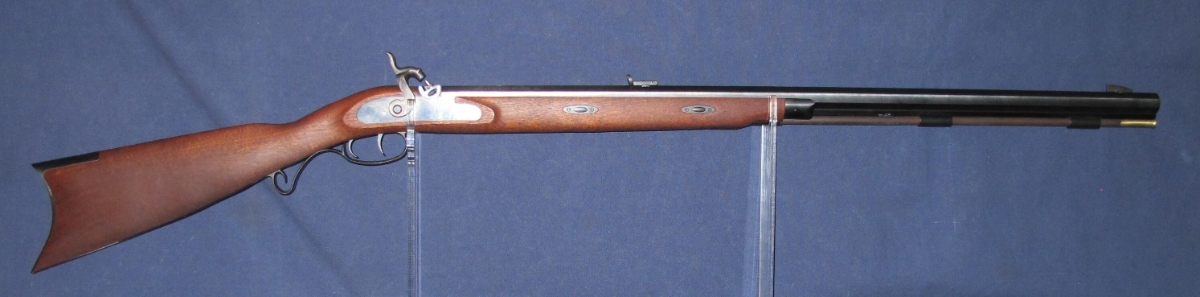
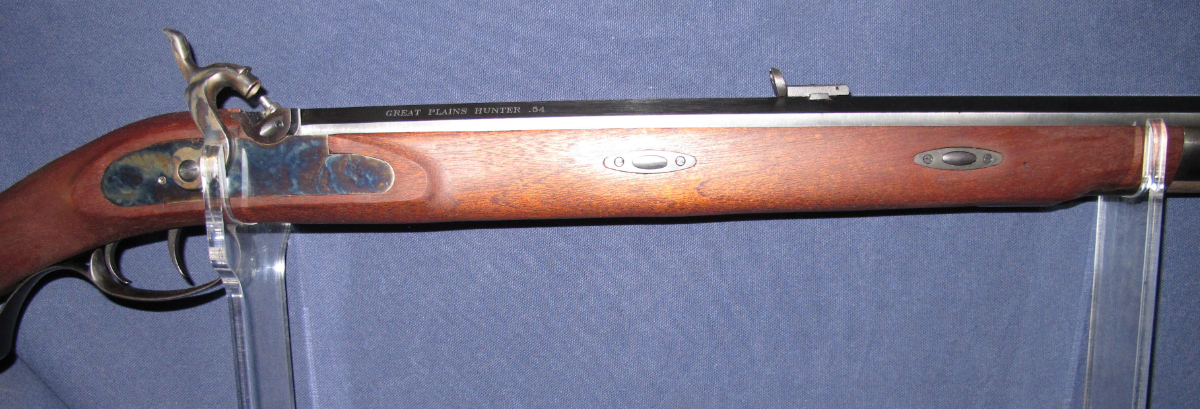
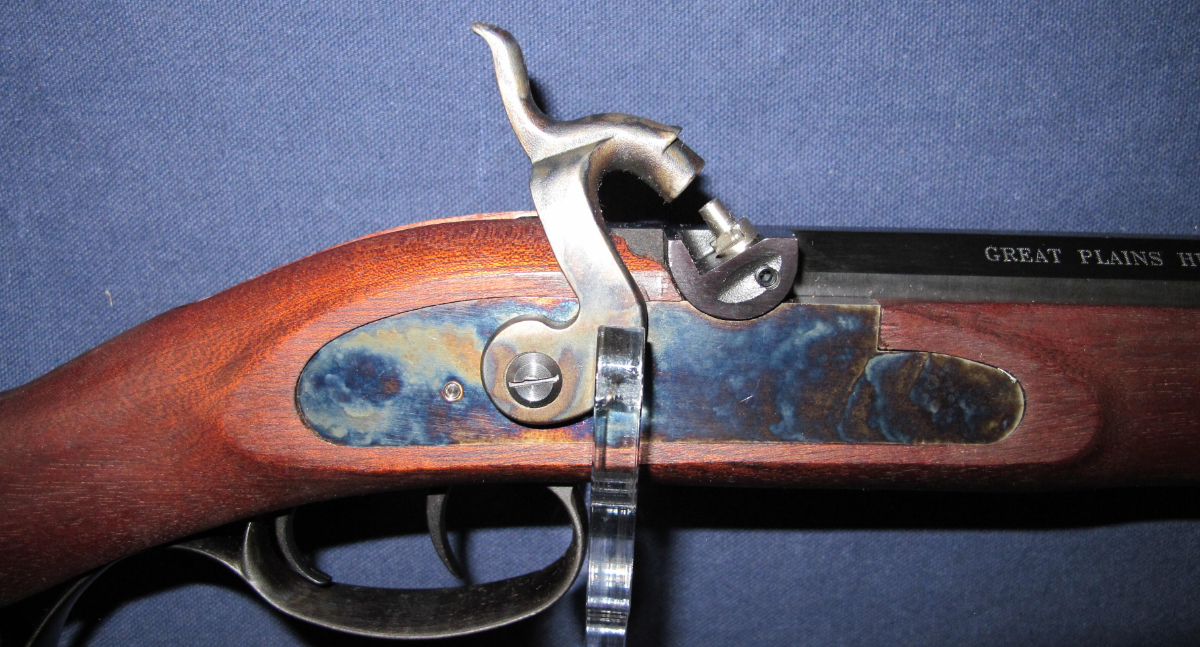
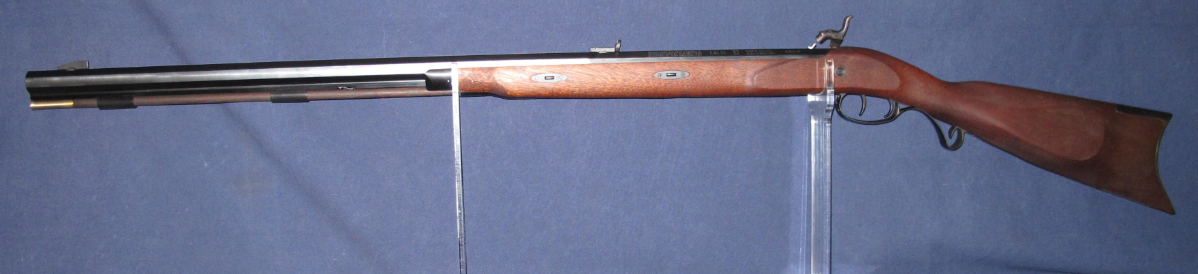
A Lyman Great Plains Hunter in caliber .54 Caliber Ball

Categories
All About Guns

A Winchester Model 70 Super Grade in Maple, Caliber 270 Win, mounting a Tract Toric 30mm, 2.5-15 x 44, SFP

Categories
All About Guns War

The Real Story Of “55 Days At Peking” & The Boxer Rebellion

Categories
All About Guns Allies

Thompson SBR with Drum Magazine

Categories
All About Guns Allies War

Buffalo’s Last Stand: The Biggest Dogfight Over Malaya