Categories
Category: All About Guns

Guiette Mfg., Inc., built this operational Stinger recreation for the upcoming movie “Flags Of Our Fathers.” Sadly, the filmmakers chose not to include the Tony Stein segment in the film’s theatrical release.
This article was first published in American Rifleman, April 2006
On Aug. 7, 1942, Petty Officer 1st Class Saburo Sakai was piloting his A6M2 Zero fighter in the skies over Sealark Channel in the Solomon Islands. He had flown down with another Zero from the Japanese airfield at Kahili, Bougainville, that morning for the express purpose of attacking ships supporting one of the first American amphibious invasions of the World War II: the Operation Watchtower landings at Gavutu, Tanambogo, Tulagi and Guadalcanal.
As Sakai and his wingman approached the skies above Tulagi, he spotted a group of eight American aircraft beneath him at an altitude of 7,800 ft. Assuming they were U.S. Navy F4F Wildcat fighters, Sakai nosed his Zero over to begin his attack, and his wingman obediently followed. Closing in on the American aircraft from behind at full throttle, he assumed that the element of surprise was his. But at a range of just 100 yds., Sakai gazed at his targets through his gunsight and came to a sober realization: These were not fighters. Too late to break off the attack, Sakai realized that he was attempting to pounce on a group of SBD Dauntless dive-bombers. These SBDs of Bombing Squadron 6 from the U.S.S. Enterprise and Scouting Squadron 5 of the U.S.S. Yorktown were circling above Tulagi awaiting orders to drop their bombs on Japanese targets on the island below.

The ANM2 .30-cal. machine gun was designed for aircraft use and could fire 1,350 rounds per minute. Twin ANM2s were mounted in the rear seats of Dauntless dive-bombers Marines used guns salvaged from them as the basis for the ground version of the “Stinger.’’
Unlike the Wildcat, the SBD Dauntless dive-bomber was protected from rear attacks by a tail gunner. In the back seat of the SBD piloted by Ensign E.E. Rodenburg, Aviation Radioman 3rd Class James W. Patterson, Jr., opened fire. “He came in fast! I fired at him, but I just don’t know if I hit him or not,” Patterson said. Sakai attempted to bank to the right, pull up and use the Zero’s horsepower to climb away from the SBDs, but he was too close. In the rear seat of one of the other Dauntlesses, Aviation Ordnanceman 2nd Class Harold L. Jones opened fire with Sakai only 100 ft. directly astern. What Jones saw next was a testament to the firepower available to the tail gunners: “His cockpit exploded, the canopy tore and something flew out. I could see his face clearly, his body and head forced back against the headrest of the cockpit. The plane went almost vertically upwards and then fell smoking. That was the last I saw of him.”
As the eight tail gunners followed the Zero with their machine guns, bullets shattered the canopy glass and hit Sakai, with fragments striking him in the chest, left leg, elbow and face. One tracer round missed his right eye by less than an inch and melted the rim of his goggles. In the brief encounter, the eight tail gunners had expended more than 1,000 rounds of ammunition and seriously injured one of the best Japanese fighter pilots of the war. Although Sakai would ultimately recover from his wounds and live to fight another day, he had been stung by one of the most lethal firearms in the U.S. military’s arsenal: the ANM2 .30-cal. machine gun—also known as the “Stinger.”
The origin of the .30-’06 Stinger dates back to a military requirement issued for an aircraft machine gun shortly after World War I. The first version was produced at the Springfield Armory as the Model 1922. After a series of interwar budget cuts ended government production of the ANM2 .30-cal., Colt Patent Firearms Co. began producing it in 1931 as the M2. For the most part, the ANM2 .30-cal. has the physical appearance of a downsized M1919-series, .30-cal. machine gun because its receiver, barrel and barrel shroud are slightly smaller than the M1919’s. This brings the ANM2’s weight down to a mere 23 lbs. (as opposed to the 31 lbs. of the M1919A4), but the similarities end there.

Resembling a scaled-down M1919 machine gun, the 23-lb. ANM2 could be fed from either the left or right side. Here, the 100-round ammunition box is on the gun’s left side.
In addition to having a different receiver and barrel than the M1919s, the ANM2 has a backplate equipped with spade grips, a different feed cover, extractor, barrel extension and bolt. These parts were specially engineered to allow it to be fed from either the left or right side of the receiver—a versatile feature for aircraft use. In addition, the ANM2’s receiver was produced with mounting holes for cocking mechanisms and/or solenoids for electric firing, features used when the gun was mounted in the cowling or wing of an aircraft. A 100-round, fixed ammunition box can be attached to either the left or right side.
Although the ANM2 .30-cal. machine gun was gradually being eclipsed by the ANM2 in .50 BMG prior to Pearl Harbor, 193,556 were built during World War II. Of that number, 70,000 ANM2s in .303 British were provided to England either through direct sale or the Lend-Lease program for use in the wings of the legendary Spitfire.
All 193,000 ANM2 .30-cal. machine guns made during the war were produced in the state of New York by three companies: Savage Arms in Utica, Buffalo Arms and the Brown Lipe Chapman Division of General Motors in Syracuse. In the service of the U.S. military during World War II, ANM2 .30-cal. machine guns were used by the Navy, the Army Air Forces and the various Air Groups of the Marine Corps. Marine use of the ANM2 included fixed, cowling-mounted armament on aircraft like the SB2U Vindicator, and the flexible single and twin mounts on Dauntless dive-bombers. But the Marine Corps’ use of the ANM2 .30-cal. was not limited to aerial gunnery alone.
The jungle environment often experienced by Marines fighting in the Pacific Theater of Operations in World War II presented a need for a machine gun that was lighter than the standard M1919A4. Between August 1942 and March 1943, the 1st Marine Division had been engaged in heavy combat on Guadalcanal. During that time, machine gunners had found the M1919A4 .30-cal. machine gun to be cumbersome and awkward when patrolling or in meeting engagements in the jungle.
While the M1919A4 was perfectly adequate in a fixed defensive position, it demonstrated itself to be somewhat less than ideal on the assault. The Marines wanted a lightweight machine gun capable of a higher cyclic rate of fire and able to be operated by an individual. Unfortunately, no gun meeting those needs was available at the time. However, the ANM2 offered the higher cyclic rate that the Marines so desperately needed. Several were thereafter salvaged from crashed SBDs (which were abundant on Guadalcanal), and Marines began to experiment with using the Stinger on the ground.
On Nov. 1, 1943, the 3rd Marine Division conducted an amphibious landing at Empress Augusta Bay on the west coast of Bougainville—the beginning of a long and brutal battle for the island. Some of the division’s various assault units carried ANM2s ashore that day and set them up in fixed defensive positions on the beach and inland. Although those Stingers offered high cyclic rate, they were not portable because they were equipped with spade grips, and they were mounted on their buffered aircraft cradles.
The patrol activity and close-quarters jungle fighting that followed the initial invasion of Bougainville underscored the need for a lightweight machine gun capable of greater firepower than both the M1918A2 BAR and the M1919A4. It was at that point that Marines began to modify their Stingers into portable squad automatic weapons. Pvt. William H. Colby of Gloversville, N.Y., a machine gunner in the 9th Marine Regiment, modified his ANM2 by simply adding a bipod to the muzzle. Although it was still equipped with spade grips, it could at least be brought into action without the use of a mount.
On Nov. 25, Colby’s platoon was ambushed by Japanese soldiers while on patrol. As soon as the first shots were fired, Colby dropped to the ground and returned fire with his modified Stinger. With a swarm of .30-cal. bullets, Colby and his assistant gunner, Pvt. Edward F. Crumlish of Wilmington, Del., broke the back of the Japanese attack. Even with only a crude field modification, the Stinger had proven that its high rate of fire could turn the tide of a jungle skirmish.

Marine Sgt. Mel Grevich made up six Stingers before the invasion of Iwo Jima. Modifications included the addition of a Garand buttstock, a BAR bipod, a BAR rear sight and an improvised trigger. The guns were carried ashore by men of the 28th Marines.
Later in the battle for Bougainville, two Marine paratroopers from the 3rd Parachute Battalion assembled a more extensively field-modified ANM2 .30-cal. machine gun. Sergeant Mel J. Grevich of Mountain Iron, Minn., and his platoon leader, Lt. Phillip Gray of Jewell, Ore., began their project with one of the ANM2s brought ashore at Empress Augusta Bay on Nov. 1. Their modification consisted of the addition of an M1 Garand buttstock, a BAR bipod, a BAR rear sight and a fabricated trigger. Although the Stinger that Grevich and Gray assembled was not used in combat on Bougainville; it would ultimately see combat more than a year later.
At the end of the Bougainville campaign, the 3rd Parachute Battalion returned to the United States and was disbanded. The Marines who had been in the unit were then reassigned to regiments in the Fleet Marine Force. At that point, Sgt. Grevich was in the machine gun section of G Company, 28th Marine Regiment, 5th Marine Division. When he joined the 28th Marines in November 1944, the regiment was preparing for the invasion of Iwo Jima, less than three months away. As G Company trained for the operation, Sgt. Grevich grew more and more dissatisfied with the performance of its light machine gun sections, especially when they needed to cooperate closely with the rifle platoons during an assault. He recalled the ANM2 .30-cal. that he had modified on Bougainville back in 1943. With the approval of his company commander and his battalion commander, Grevich began converting Stingers.
Although he worked night and day, he was only able to produce six before the 5th Marine Division sailed for Iwo. Six reliable machine gunners would carry the modified weapons ashore during the assault: One Stinger was assigned to each of G Company’s three rifle platoons, one was assigned to the company’s demolitions section, and the fifth would be carried by Grevich himself. A sixth man was chosen from A Company, 28th Marines to carry the remaining gun. His name was Tony Stein.
Tony Stein was born in September 1921 in Dayton, Ohio, to Austrian and Hungarian immigrant parents. After dropping out of high school during his freshman year, he did what so many young men did in the height of the Great Depression—he went to work. Stein joined the Marine Corps in 1942, shortly before his 21st birthday. After completing recruit training in San Diego, he went on to Marine parachute training at Camp Gillespie. When he completed his training, he shipped out to the Pacific where he experienced combat for the first time in the Solomon Islands of Bougainville and Vella Lavella. He returned to the United States during the summer of 1944, married Joan Stominger and took leave to return home to Dayton. Upon returning to San Diego, Stein was assigned to the 28th Marines and soon thereafter departed again for the Pacific Theater of Operations.

Marine Tony Stein was photographed before the Iwo Jima operation with an M1919A4. On Iwo, he carried “a personally improvised aircraft weapon,” a modified ANM2 machine gun called the “Stinger.” Stein was posthumously awarded America’s highest military decoration—the Medal of Honor—for his unhesitating bravery on Feb. 19, 1945.
When he landed as a part of the first wave on Green Beach 1 at the base of Mount Suribachi on Feb. 19, 1945, Tony Stein provided covering fire with his Stinger, as the rest of the Marines of his platoon moved into position on the beachhead. He then repeatedly exposed himself to a blanket of Japanese machine gun fire, forcing the enemy to reveal their positions. After doing so, Stein personally eliminated several pillboxes, killing at least 20 enemy defenders.
When machine gun fire alone could not neutralize one particularly well-defended position, Cpl. Stein directed the fire of a half-track with a 75 mm gun to get the job done. During this time, his Stinger was twice shot out of his hands. The Stinger’s voracious appetite for ammunition forced Stein to return to the beach eight times to retrieve additional linked .30-cal. During each trip to the rear, Stein was seen carrying wounded Marines to safety. On a day that was characterized by countless amazing acts of bravery, Cpl. Tony Stein’s actions stood out as particularly remarkable.
Grevich, Stein and the other four Marines continued fighting with their Stingers throughout the battle for Iwo Jima. On March 1, Stein volunteered to lead a group of Marines in locating and destroying a complex of Japanese pillboxes. While firing his Stinger at one pillbox, the fire from another pillbox cut him down. At the age of 24, Tony Stein died in the black, sulphurous sand of Iwo Jima. He never knew that he would be posthumously decorated for the unhesitating bravery he had shown on Feb. 19, 1945. One year to the day later, Tony Stein’s widow and his family gathered in the office of Ohio Gov. Frank Lausche to accept the award that he had earned on Iwo Jima: the Medal of Honor.
Tony Stein is one of 464 Americans who earned the nation’s highest award for valor during World War II. Despite the significance of what he did on Iwo Jima, the gun that helped him do it remains relatively obscure. In fact, his Medal of Honor Citation refers to the Stinger he used simply as “a personally improvised aircraft-type weapon.”
Though the Stinger was not standard-issue, it is nevertheless one of the great combat arms that equipped the American military during World War II. The Stinger also stands as evidence of a virtue that U.S. Marines have exhibited since November 1775: the ability to improvise.


Categories
Smith & Wesson Model 14-2 Revolver
By the time Gunnery Sergeant Ernest Janson trudged up Hill 142 at Chateau-Thierry, France, on June 6, 1918, he had already logged fourteen years in uniform. After a decade in the U.S. Army, Janson enlisted in the Marine Corps, serving in the Nicaraguan Campaign. On this fateful afternoon, however, some 26 years to the day before American troops stormed ashore on D-Day, Gunny Janson was neck-deep in the suck.
World War I was well into its fourth bloody year, and the world groaned underneath the unprecedented suffocating carnage. The Russians were bled white and quit the war in May of 1918. This freed up some fifty divisions of battle-hardened German troops to tip the balance of power against the Allies in the West. Now with the Germans within 45 miles of Paris, French troops were in retreat. History has come to refer to this particular tidy little meat grinder as the Battle of Belleau Wood.

The first U.S. Marines had arrived four days earlier led by CPT Lloyd Williams. Upon their initial deployment to the front lines, the retreating French told them to turn around and go home. CPT Williams famously responded, “Retreat? Hell, we just got here!” Now on June 6, Gunnery Sergeant Janson found himself cut off with the battered remnants of his small unit atop the shattered moonscape that was Hill 142.

Janson gripped his M1903 Springfield rifle in a death rictus as he made a quick appraisal of the situation. Hill 142 was a strategic piece of real estate. If the Germans could take that hill they could rain fire down on the French flanks. A full dozen German soldiers were crawling up the hill with five MG08/15 light machineguns in tow. If the Krauts got those machineguns working they could turn the entire line.

Gunny Janson shouted the alarm, affixed his bayonet, and charged down the hill. He emptied his rifle as fast as he could cycle the action until he was eventually standing among the assaulting Germans. He dispatched the two senior German patrol leaders with his bayonet, forcing the remainder to flee. The vaunted German assault troops abandoned all five machineguns and fled back to safety. They had just gotten their rude introduction to the Devil Dogs of the U.S. Marine Corps.
Development of the Rifle
The M1903 Springfield rifle represented leapfrog technology. First adopted on June 19, 1903, the United States Rifle, Caliber .30-06, Model 1903 remained in service in various guises as an issue combat weapon throughout World War II. The M1903 Springfield was designed in response to American combat experience during the Spanish American War.

During the war with Spain in the latter parts of the 19th century, Spanish soldiers reaped a fearsome butcher’s bill with their M1893 Mauser bolt-action rifles. Using the German Mauser Gewehr 98 as well as the Krag-Jorgensen service rifle as inspiration, American engineers at Springfield Armory got to work designing a thoroughly modern bolt-action combat rifle. With the end of the Spanish American War, the U.S. government had thousands of captured Spanish Mausers to use for study.

The primary mission was to contrive an action sufficiently robust to handle high pressure .30-06 Spitzer ammunition. Spitzer simply means pointed. Previous round-nosed bullets fired at lower velocities and subsequently demanded lower pressures.
The prototype developed in 1901 featured the stock and sights from the service Krag, a cock-on-opening action, and a turned-down bolt handle for fast manipulation. Those first rifles had dual locking lugs, a staggered-column magazine drawn from the M1893 Mauser, and a beefy external claw extractor. The barrel was 30” long, and the weapon included a generous safety lug on the side of the bolt behind the extractor. The addition of this safety lug was characteristic of the Mauser design, so much so that Mauser Werke successfully sued the United States for patent infringement. The U.S. government paid Mauser a cool quarter-million dollars to settle.
Perfecting the Legend
The definitive version featured a shorter 24” barrel and was called the “Ought-Three” by those who wielded it. Those early rifles featured a sliding rod-type bayonet. No less an expert than President Theodore Roosevelt was immediately underwhelmed by the design of this appendage.

Soon after the rifle’s adoption, he drafted a letter to the Secretary of War that stated, in part, “I must say that I think that ramrod bayonet is about as poor an invention as I ever saw. As you observed, it broke short off as soon as hit with even moderate violence. It would have no moral effect and mighty little physical effect.” Hard to imagine our current chief executive enjoying such rarefied insights into a modern Army’s implements of chaos. In 1905 the Army introduced a more conventional sturdy blade sort.
The .30-06 round fired by the Ought-Three pushed a 150-gr. Spitzer bullet to 2,800 feet per second. This same round fed the subsequent semi-automatic M1 Garand as well as the Browning Automatic Rifle and M1919-series belt-fed machineguns. When coupled with the superb M1903 rifle and its outstanding combat sights, the .30-06 developed a well-deserved reputation for effectiveness.

The M1903 got its proper introduction to combat during the Punitive Expedition of 1916. American troops armed with Ought-Threes exacted a heavy toll from Pancho Villa and his bandits. However, the real test of the M1903 came two years later in France.
The First War to End All Wars
At the outset of American involvement in WWI, we held some 843,239 M1903 rifles in active service. At the time these weapons were being produced by both the Massachusetts Springfield Armory and the Rock Island Armory. There were some justified concerns regarding questionable metallurgy in those early weapons. Stories made the rounds of receiver failures that resulted in some fairly significant injuries.

The Ought-Three sports a magazine cutoff on the left side of the receiver marked simply, “OFF” and “ON.” This device was a holdover from the days when commanders were concerned their troops might shoot too much in combat. Putting the lever in its center position allows the operator to remove the bolt for servicing. The safety is a pivoting flap on the back of the bolt akin to that of the Mauser. The Ought-Three safety is marked, “READY” and “SAFE.”

The front sight is a simple blade. The rear sight is graduated out to 2,800 yards and is more complicated than the space shuttle. Back then American soldiers were first and foremost riflemen. The Ought-Three was a true rifleman’s tool.
One of the most novel aspects of the M1903 story was the Pedersen Device. Rifles adopted to accept this clever widget featured a small window machined into the side of the receiver as an ejection port and were designated the Model 1903 Mark I. The Pedersen Device was awkward in action but undeniably inspired.

Developed by John Pedersen just before WWI, the Pedersen Device consisted of a drop-in bolt and 40-round magazine that allowed the standard bolt-action M1903 rifle to fire 7.65x20mm pistol cartridges semiautomatically. The awkward box magazine protruded at a 45-degree angle to the top right of the weapon. While a bit cumbersome, the Pedersen Device was purportedly quite effective.
Uncle Sam was taken with the thing and ordered 133,450 copies. The war ended before they could see action, so only 65,000 of these blowback conversions were actually delivered. In 1931 the Pedersen Device was declared surplus and the government grew weary of storing them. In typical government fashion, the entire lot was incinerated in an enormous bonfire. Around 100 copies escaped destruction. As you might imagine, these are fairly spendy today.

Denouement
A fun fact is that Ernest Janson was actually awarded two Medals of Honor, one through the Navy and the other the Army. He was one of five U.S. Marines to be so decorated during WWI. Soon thereafter this practice was discontinued.

Gunnery Sergeant Ernest Janson returned home after the war and served as a Marine Corps recruiter in New York City for a time. He was honored as a pallbearer during the formal burial of the Unknown Soldier on Armistice Day in 1921. He finally retired from the Corps in 1926 at the rank of Sergeant Major. After his retirement, SMG Janson returned to Long Island where he died at age 51, the archetypal American hero.
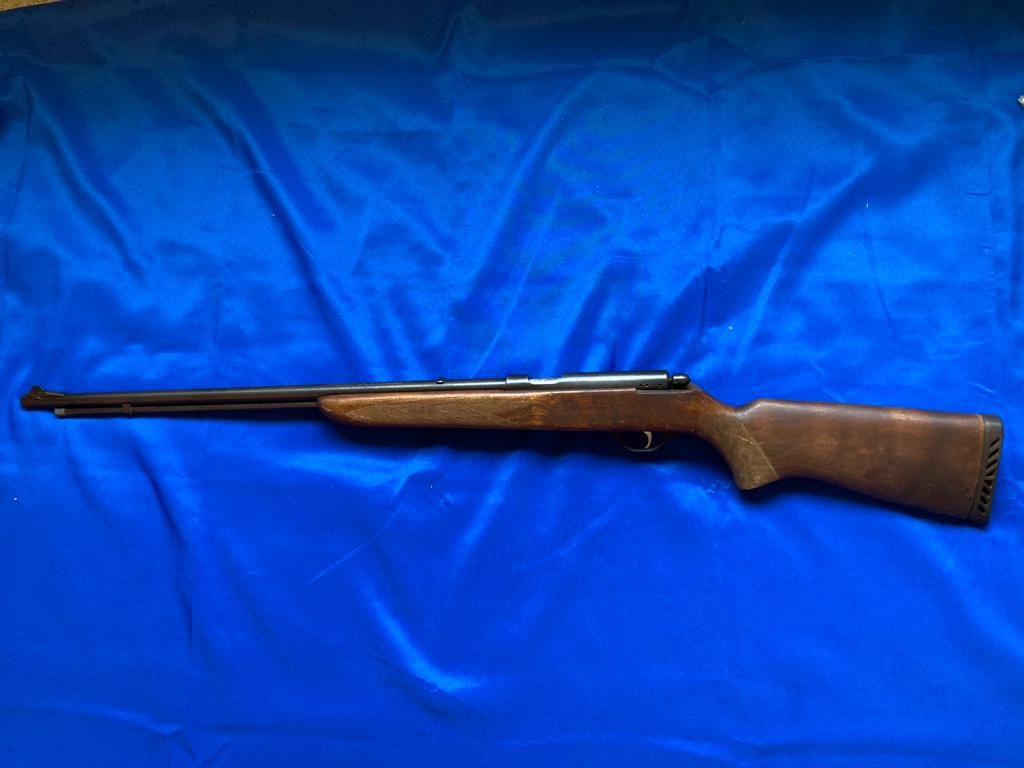
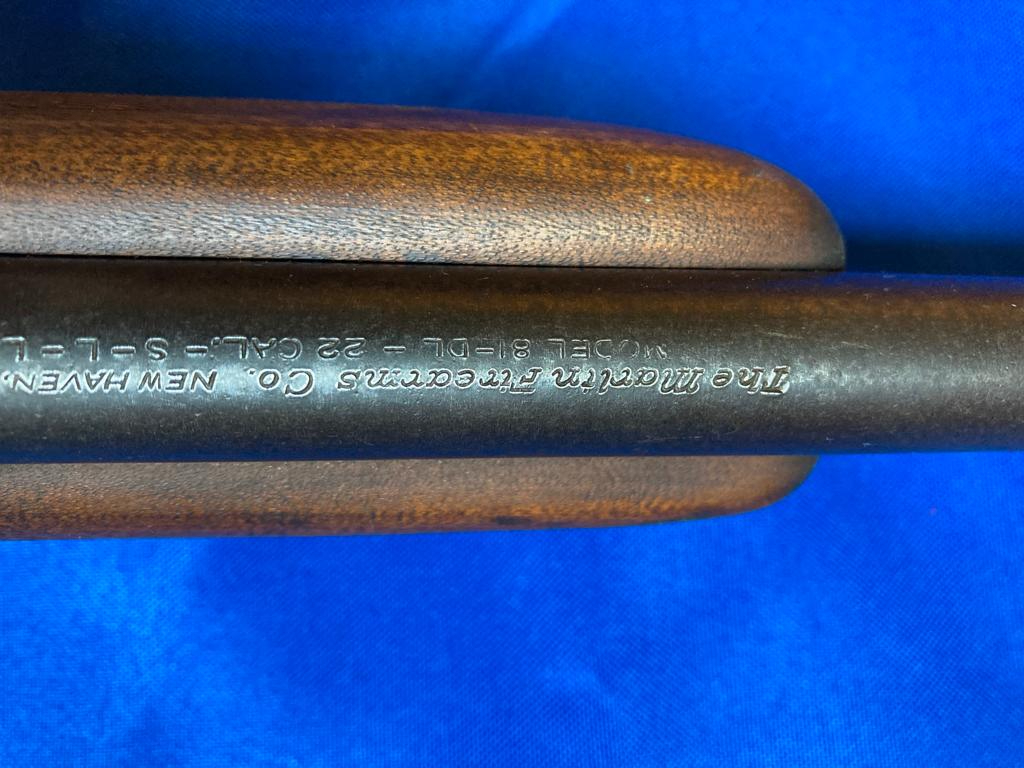
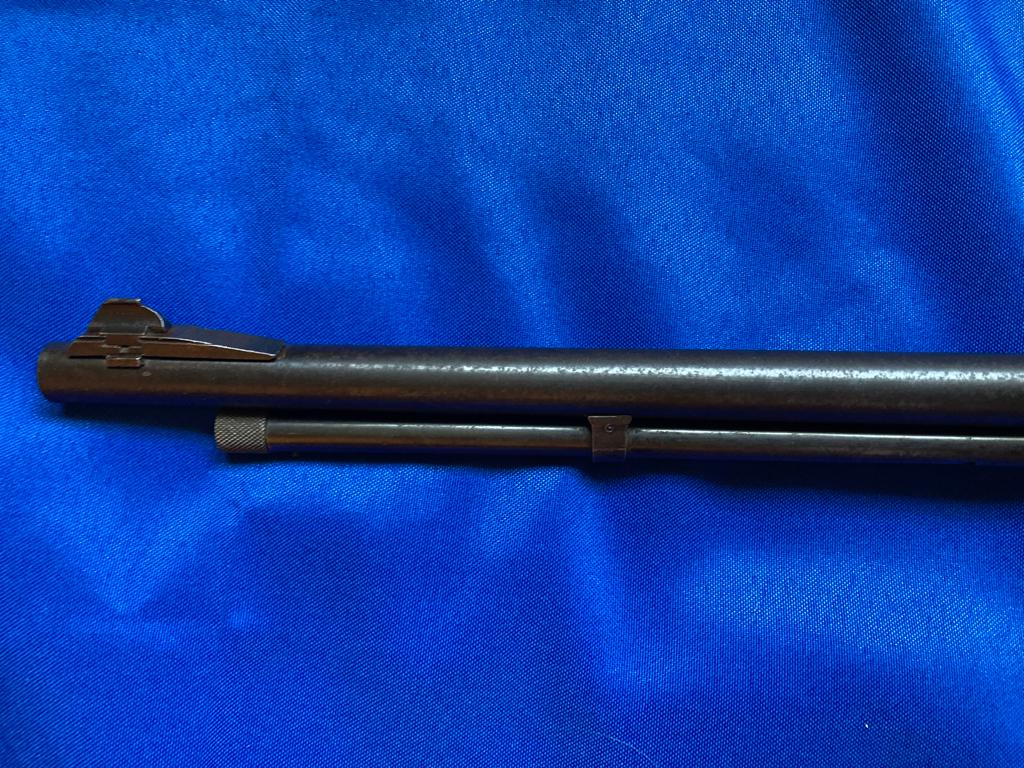
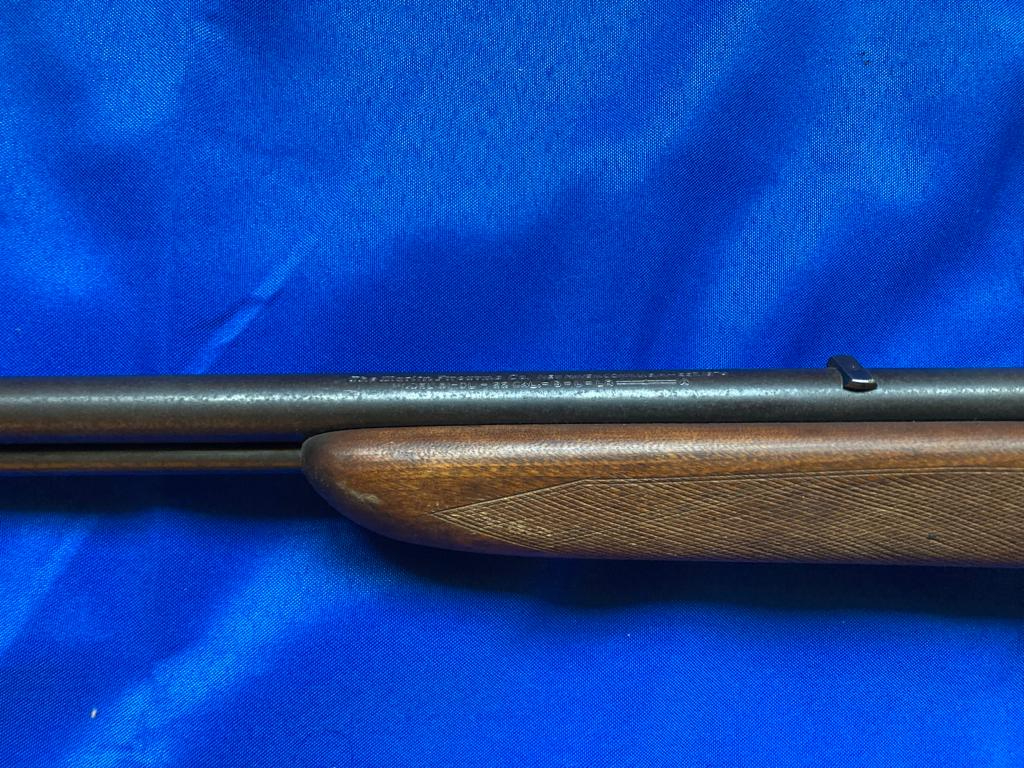
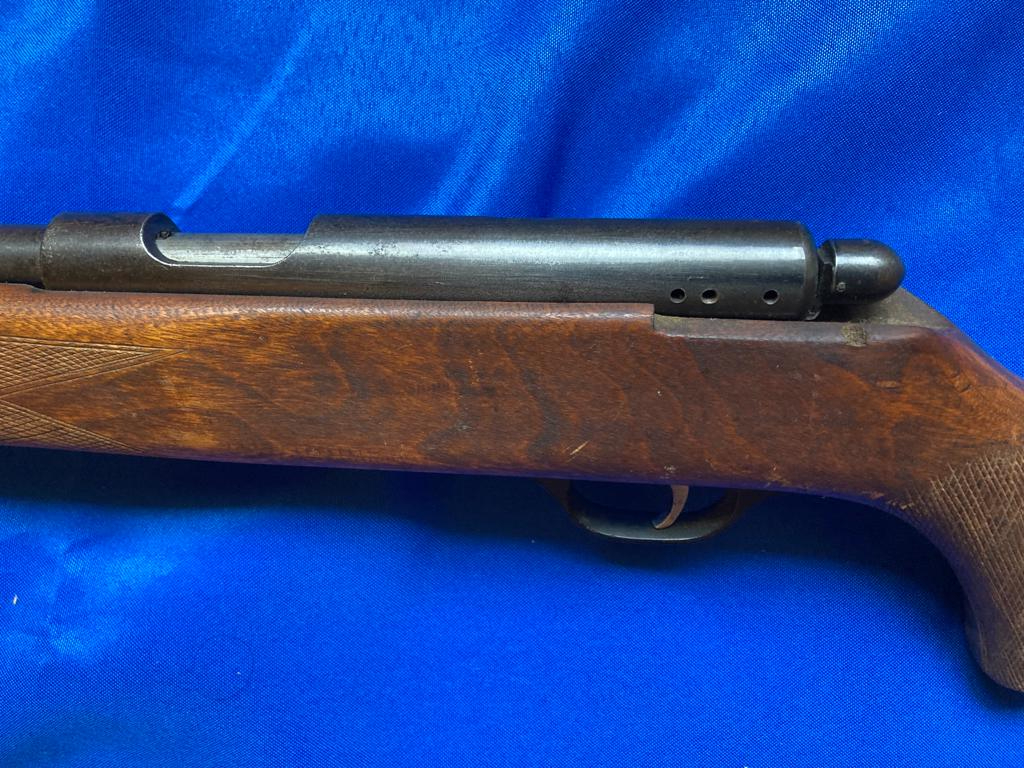
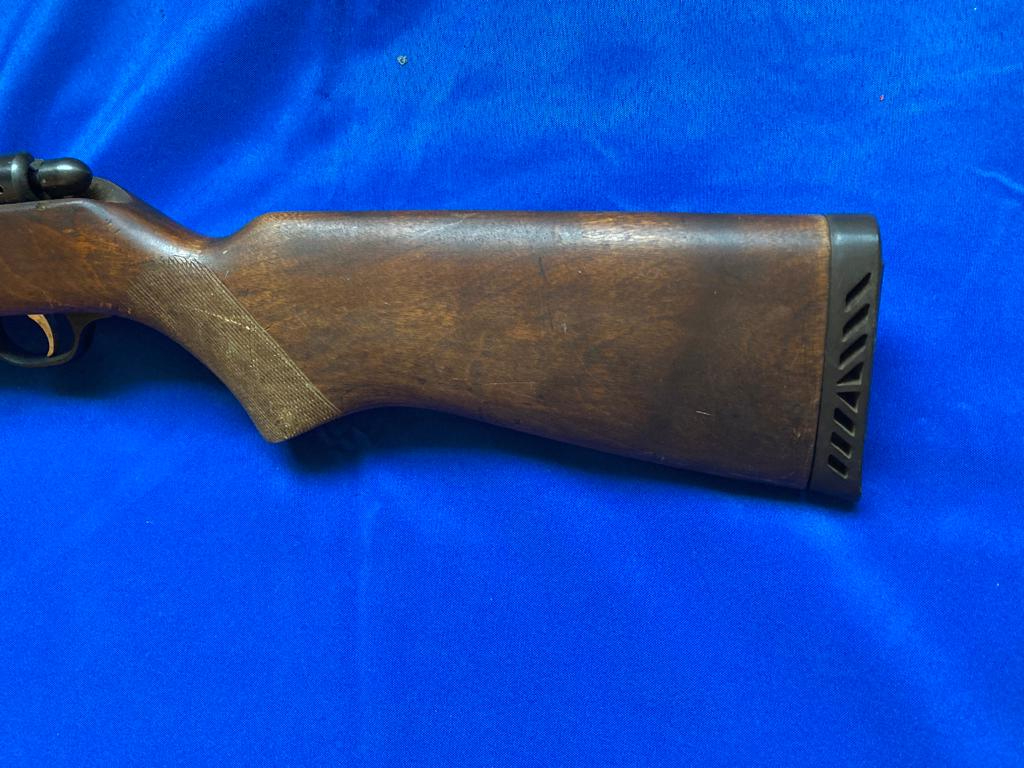
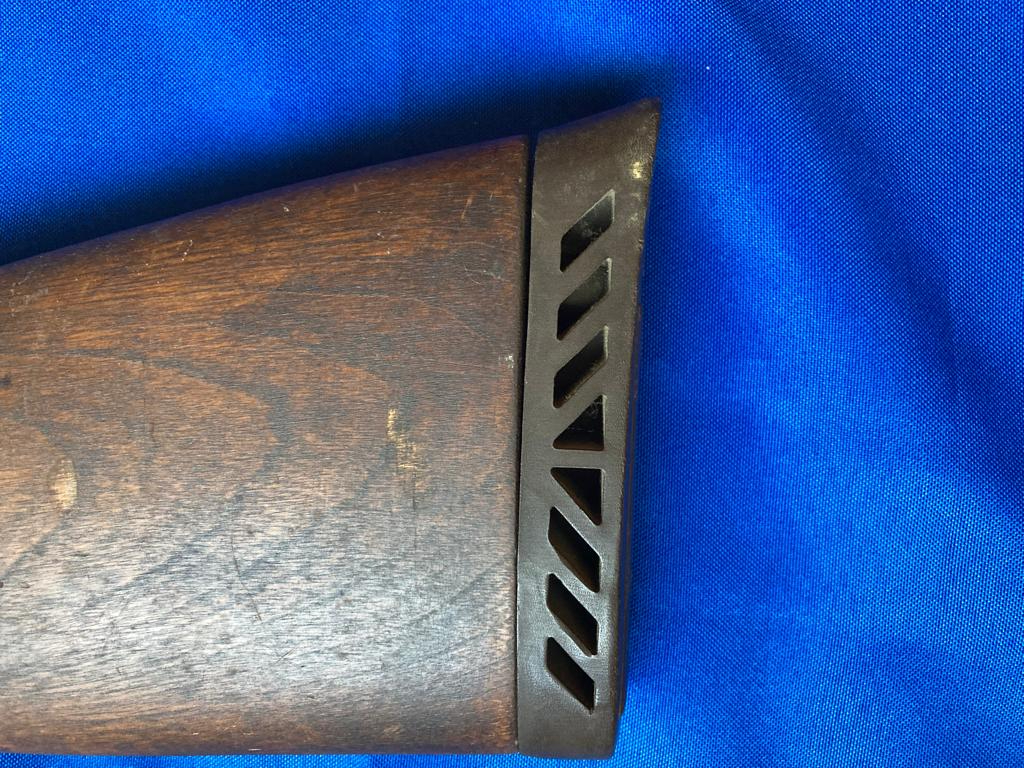
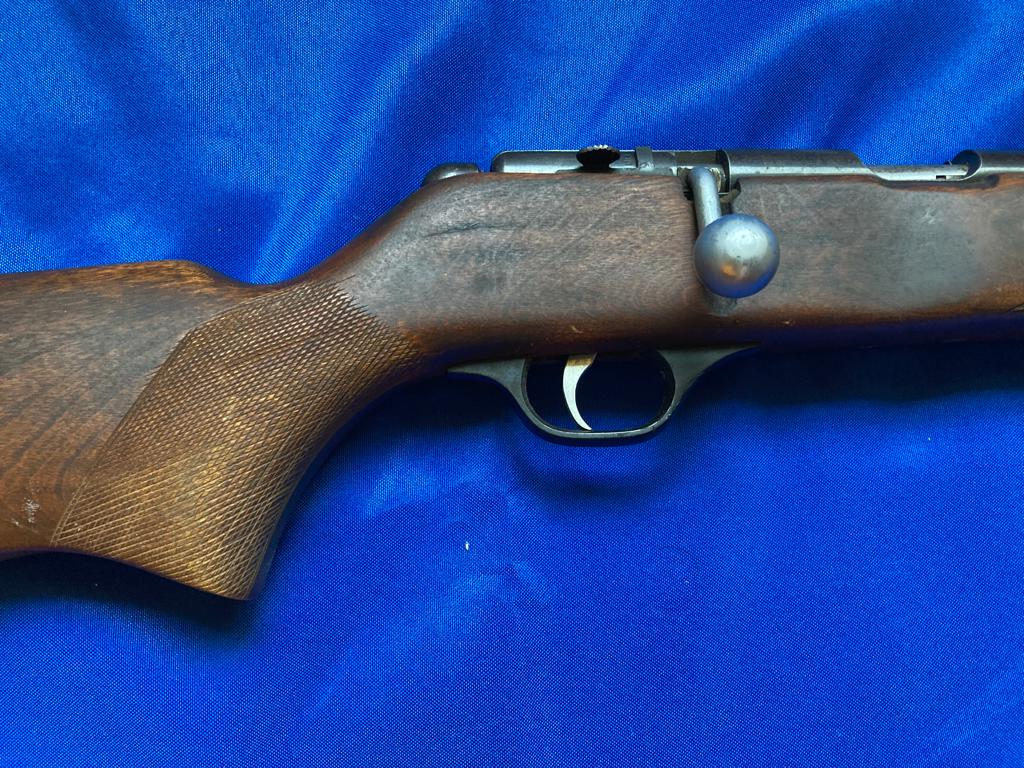
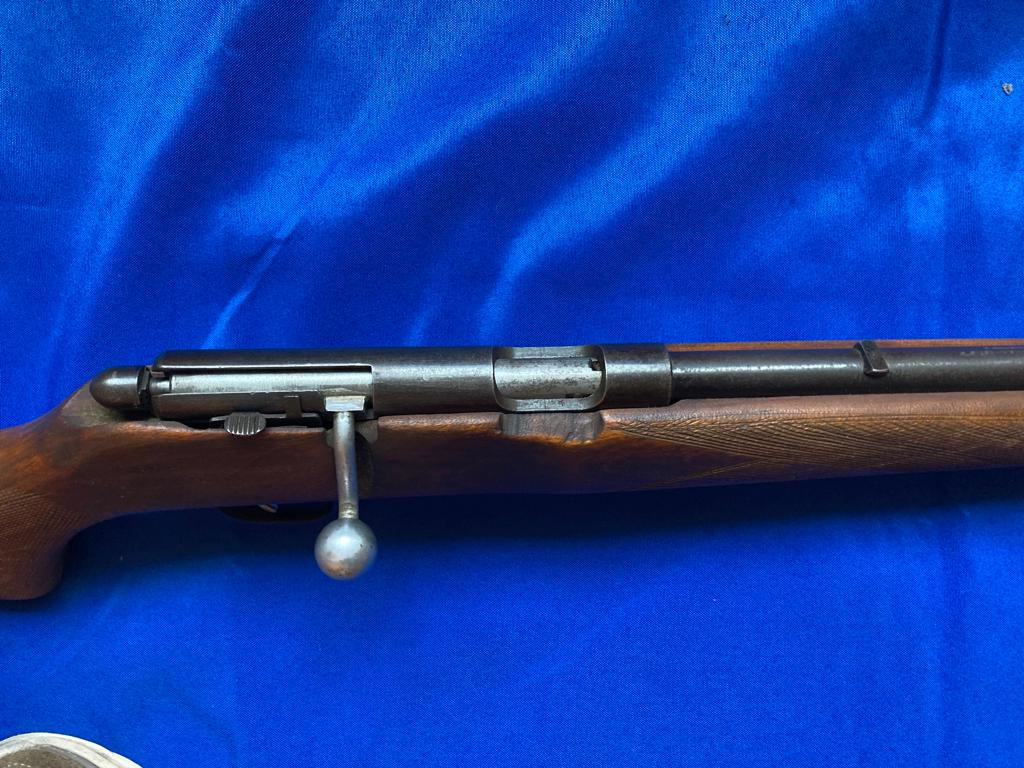
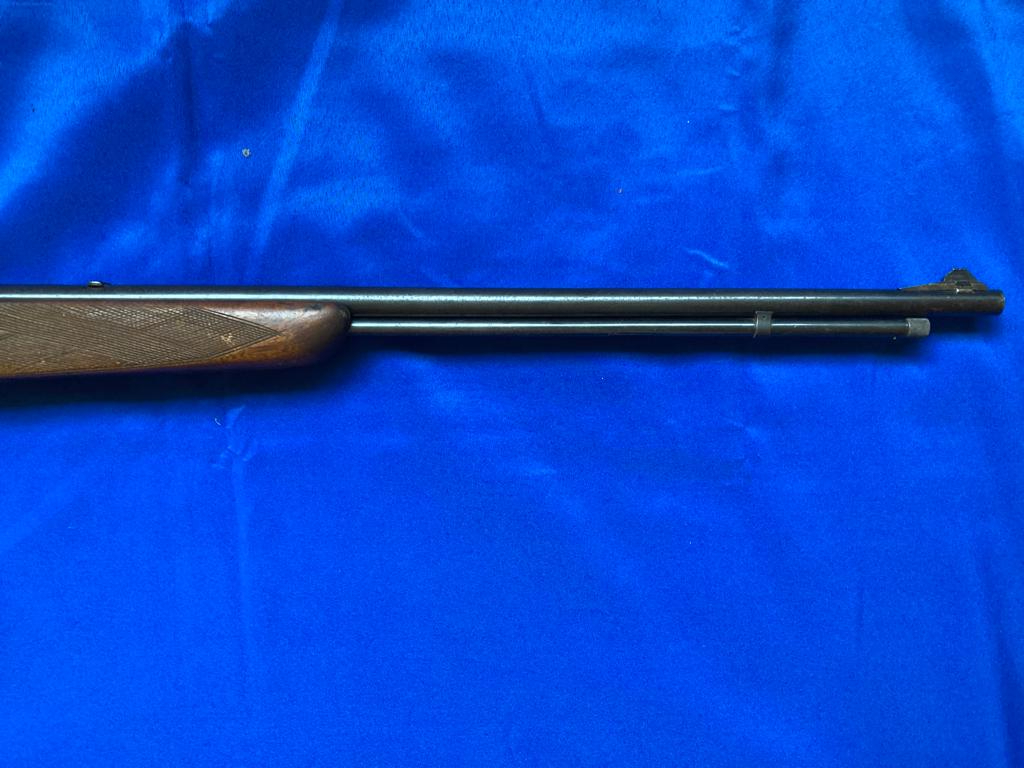
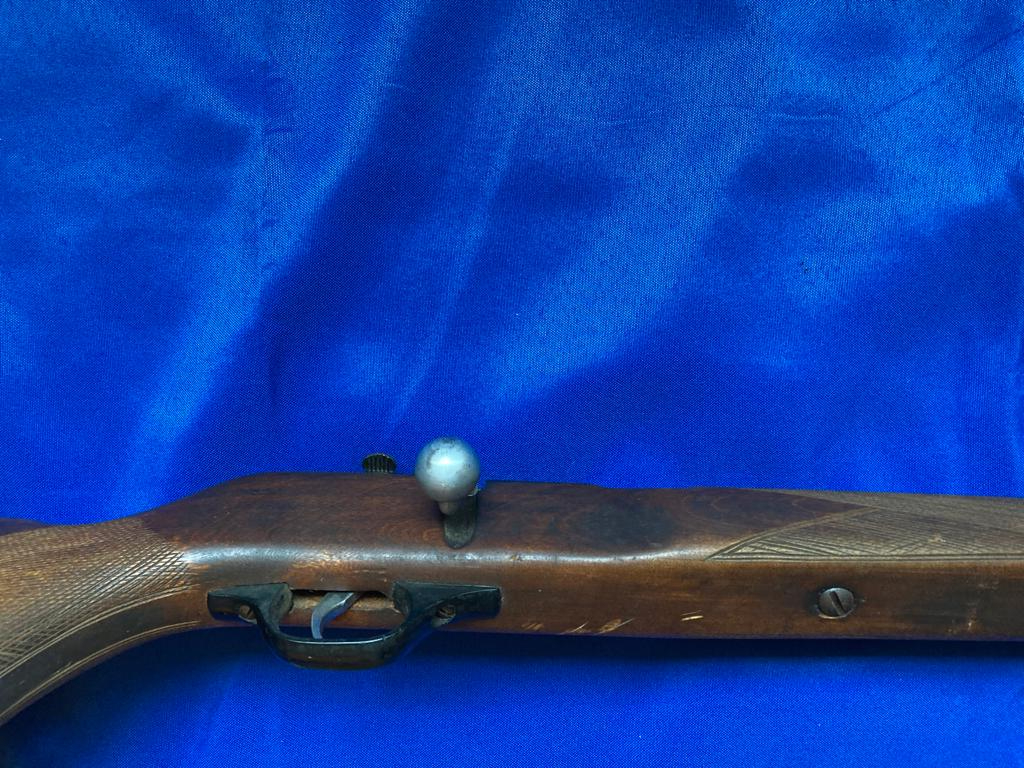
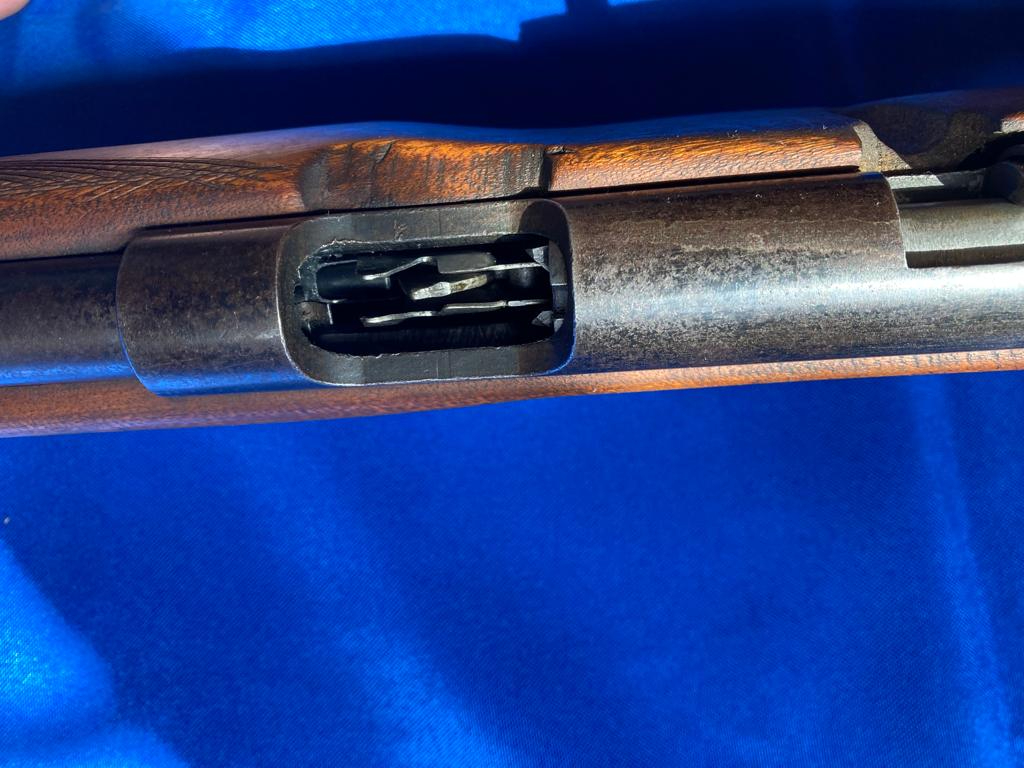


For all the exhaustive evaluation the U.S. Ordnance Department went through before adopting some of its weapons—including testing and retesting the M1 Garand, plus countless field trials that culminated in firing 6,000 rounds practically nonstop through the Colt M1911 before its adoption—it’s a real head-scratcher why the Reising submachine gun was drafted into World War II without so much as a complete physical. But then, we were at war and needed weapons. Besides, its pedigree would seem to include all the credentials the Reising needed.
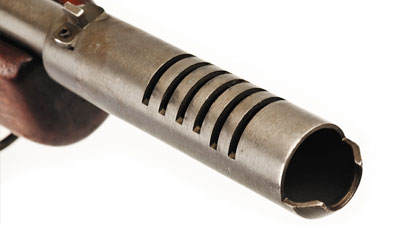
This lightweight, compact submachine gun—capable of both semi-automatic and full-automatic fire—was designed by Eugene D. Reising, a noted competitive shooter and one-time associate of John M. Browning. An ordnance engineer by trade, Reising was the recipient of more than 60 firearm patents and worked with Browning on the development of the M1911. No doubt this was the inspiration for Reising to chamber his new submachine gun in .45 ACP. Moreover, it was manufactured by Harrington & Richardson, a well-respected American firearms company in business, in one form or another, since 1871.
Reising’s basic rifle—the M50—was patented in 1940, and H&R began manufacturing it in 1941. It fired from a closed bolt, sported a Parkerized finish, had an 11-inch finned barrel outfitted with a Cutts compensator, a one-piece wooden pistol grip stock and utilized a detachable 12- or 20-round magazine.
The stamped-steel rear peep sight was calibrated for 50 to 300 yards and centered on a thick steel-post front sight. On full automatic, rate of fire was a healthy 500 to 550 rounds per minute. There was also a selective-fire Reising M55 with a somewhat flimsy folding wire stock. It had a finned barrel, but lacked the compensator, which reduced barrel length to 10.5 inches, in keeping with its intended purpose of being issued to paratroopers and armored-vehicle crews.
Another variant, the Reising M60, was semi-automatic only and had an 18.5-inch barrel. These were intended primarily for civilian, law enforcement, Coast Guard and merchant marine use. A few M60s were also chambered in .30 carbine. Finally, there was a .22 LR semi-automatic M65 meant for training purposes, although how many were actually used in this capacity is open to debate. Some servicemen referred to these rimfire variations as “rat rifles,” which may offer a clue as to their more practical purpose of vermin extermination around the camp mess area.
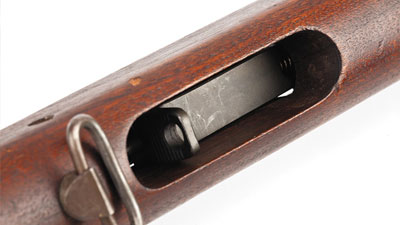
But for all its apparent attributes, the Reising failed to live up to expectations in combat. In-the-field assembly and disassembly tests revealed the Reising was not soldier friendly, which was complicated by a lack of easily interchangeable parts (the Reising was largely a hand-fitted weapon) that proved to be a logistics nightmare for armorers. Moreover, its delayed-blowback operation utilized a receiver design prone to jamming due to frequent internal accumulations of fouling and debris. In addition, the double-stack 20-round magazine—made of thin sheet metal—was easily damaged around the feeding lips, forcing G.I.s to resort to the 12-round single-column alternative, which emptied quickly in full-automatic mode.
Though it balanced well, a notable design flaw of the Reising was its cocking lever, which was inlaid into the underside of the stock, making it extremely awkward to charge the gun. This was usually done by turning it sideways or upside down to reach the cocking lever cutout, then inserting the index finger or thumb against the charging bolt and pushing it against a stout spring. Finally, an 8-pound trigger pull and an easily corroded firing pin—a definite detriment in the humid jungle fighting of the South Pacific—added to the Reising’s maladies.
In the gun’s defense, it should be pointed out the Reising submachine gun was never intended as a battlefield weapon. Its original mission was for the civilian law enforcement community, and in this capacity it served fairly well. Thus, it shared a trait with the Thompson submachine gun, which also used the same cartridge as the M1911. Its .45 ACP chambering may very well have opened the door to the Army’s acceptance of the Reising, in spite of all its shortcomings.
In fact, it was the Thompson submachine gun and the M1 carbine that indirectly paved the way for the Reising’s entrance into the war. The government had been looking for a submachine gun to replace the Thompson, which was heavy at 13 pounds and expensive at $225 apiece. By comparison, Reisings cost only $50 each and weighed 6.5 pounds. In addition, as we entered World War II, there was a shortage of both Thompsons and the new M1 carbines. So, it was decided to issue the Reising M50 and M55 to the Marines, specifically those units bound for the Pacific Theater, where humidity—and its resultant rust—were rampant. Combined with the Reising’s propensity to jam and for the M55s stock to suddenly fold during full-automatic recoil, the Reising quickly earned the wrath of more than just “a few good men.”
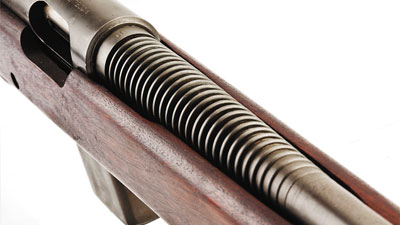
A battlefield weapon has to be pretty bad to have a commanding officer order them dumped overboard. But that’s exactly what then-Lt. Col. Merritt “Red Mike” Edson, future Medal of Honor recipient and President of the National Rifle Association, did with his troop’s Reisings, in the hopes they would be replaced with M1 carbines. Needless to say, by 1943 the Marines cancelled all remaining orders for Reising submachine guns. A few were then redirected to the OSS, Canada and other allies. In all, approximately 120,000 Reisings were manufactured between 1940 and 1945.
After the war, a number of semi-automatic Reising M60s were sold to law enforcement agencies, where many served through the 1970s. H&R made another short run of the M50 for law enforcement use in the 1950s. For all its downsides, the Reising was an accurate rifle, with a high cyclic rate of fire. Those who watched the recent HBO mini-series, “The Pacific,” saw one being used in the second episode. But you don’t see them in movies very often, and there’s a reason. Call it typecasting, but during its first theatrical appearance in the 1944 war-time movie “Marine Raiders,” the Reising jammed.