Categories
All About Guns Cops

The Sordid Tale of Deputy Adam Brown: An Object Lesson by WILL DABBS

Deputy Adam Brown was a good cop who made some really bad decisions.

By all accounts Sheriff’s Deputy Adam Brown was a good man and a committed cop. A Bay County Sheriff’s Deputy in Bay City, Michigan, Brown spent more than 21 years as a Law Enforcement Officer. Most of that time was invested as a school resource officer at Bay City Western High School and Middle School. In 2012 Brown was named Police Officer of the Year.

Guns are inherently dangerous. That’s kind of the point. For those of us who spend a lot of time around them, Adam Brown’s experience serves as an object lesson.

On April 23, 2018, Deputy Adam Brown went to jail. Through a series of events that was most unfortunate, he accidentally shot a teacher named Brenda Amthor in the neck with a .380ACP handgun. Though Amthor’s wound was thankfully superficial, she has justifiably struggled with the subsequent trauma of the event. The circumstances that led up to the shooting stand as an object lesson for anybody who spends time around guns.

The Infamous Negligent Discharge

My transition from this world to being a college student again took about two weeks. It was a weird experience.

After I left the Army, I returned home to finish my prerequisites for medical school. For two semesters I was a 31-year-old former Army officer amidst hundreds of enthusiastic young college students. While I was back in school that year there was an accident involving our local University Police Department.

The Glock 17 is one of the most popular Law Enforcement handguns in the world. However, it has its eccentricities.

The UPD cops carried Glock 17 9mm handguns. They had a professional development class one day on weapons maintenance. I really would have thought that by the time you were packing a gun professionally you would have known all about that. However, one of the female police officers in the second row retrieved her weapon, removed the magazine, and squeezed the trigger to disassemble the pistol without having cleared the gun. The round struck the officer seated ahead of her in the shoulder. He survived, but it was a mess.

These guys are justifiably intolerant of negligent discharges.

There was an understandable furor over this. The UPD chief was interviewed for the school paper and said that essentially accidents sometimes happen and that it wasn’t that big a deal. I had worn the uniform two months before and couldn’t let that go unchallenged. I wrote the paper explaining that a negligent discharge in an operational environment was the unforgivable sin among most serious military units. If you were trusted to carry a weapon among civilians there was an implicit assumption that you would know how to maintain the gun without inadvertently shooting somebody.

The SIG M17 doesn’t require a trigger pull for disassembly.

Most striker-fired pistol designs like the Glock must have their triggers pulled prior to disassembly. All serious gunmen appreciate this as a potential weak link in the safety chain and check our weapons multiple times before pointing them in a safe direction and squeezing the trigger. Those companies whose weapons do not require a trigger pull for disassembly rightfully trumpet this fact as a safety feature.

Carrying a gun for personal defense is a serious responsibility.

The major players in this sad tale eventually got different jobs outside of Law Enforcement, but the teaching point remains. If you’re going to carry a gun then learn absolutely everything there is to know about it and respect the weapon. Personally I would much sooner be helpless in the face of a threat than to cause harm to come to someone I love. That mantra drives my gun handling and my compulsive drive to practice.

The Shooting

School Resource Officers are an unfortunate but vital part of modern life in America.
Serving as a positive role model for kids at an impressionable age is part of the job description for an SRO.

School resource officers are a fairly modern thing. The very fact that we feel compelled to post armed Law Enforcement Officers in our schools is just sad. However, these SRO’s perform an undeniably laudable function. In addition to providing an effective layer of practical security, they serve as positive role models and help the kids come to view cops as the good guys. The SRO who failed to intervene during the critical early moments of the Stoneman Douglas High School shooting was a glaring exception. However, in the case of Adam Brown, all involved attested that he was a pervasive force for good in his school.

I always liked Physics. The Physics lab has some of the coolest toys.

The day in question was a Friday. Deputy Brown was in the robotics classroom alone with the robotics teacher. There were no kids present. Brown had brought a couple of his personally-owned handguns to school that day. His plan was to use a machine in the robotics lab to assess the trigger pulls on a 9mm Springfield Armory EMP as well as an unspecified .380ACP SIG SAUER pistol.

Deputy Brown went back to the Physics lab to fiddle and made a rookie mistake.

Under the robotics teacher’s supervision, Brown tested the trigger on the EMP successfully. They then both left the lab. Brown returned alone later with his SIG and set it up in the machine. However, he had failed to clear the weapon and left a live round in the chamber. When he activated the machine the handgun fired.

As you might imagine, a bullet bouncing around a place like this was fairly disruptive.

The .380ACP round punched through two layers of drywall into the neighboring occupied classroom. Inside were thirty students and Ms. Amthor. The round angled toward the ceiling, scraped a ceiling tile, and hit a cement wall. From there the attenuated bullet zipped across the room and struck Amthor in the neck. Though her wound was subsequently described as a “scratch” that did not require medical attention onsite, the ultimate outcome could have obviously been far worse.

One bad decision followed by another that was epically worse landed this guy in jail.

At this point in our tale things are bad but not yet catastrophic. No one had been irrevocably harmed, and the entire ghastly episode was clearly a horrible accident. What Deputy Brown did next, however, took things to a whole new level.

A spent bullet tells a story. In this case it nailed a cop.

Deputy Brown was summoned and held discussions with school staff regarding the origins of the bullet. They actually gave the spent projectile to Brown for safekeeping. At this point he did not admit to having fired the weapon in question. The school was locked down for obvious reasons. With each passing minute Brown dug himself a deeper hole. By now quite justifiably desperate, Deputy Brown discarded the bullet outside in a grassy space covered with leaves.

Police dogs are so cool. Their senses eclipse our own. If these guys had opposable thumbs we’d be fetching their slippers.

A stray bullet transiting an occupied classroom and striking a teacher in the neck is not the sort of thing that is easily swept under the rug. Cops descended upon the school en masse and began combing the school grounds for evidence. A K-9 officer located the spent bullet in the school yard. Those police dogs are a force of nature.

Once the details came to light Deputy Brown was doomed.

At that point Deputy Brown’s story unraveled. He came clean on the details and submitted himself to the criminal justice system. He subsequently lost his job, paid restitution, and spent 30 days in jail.

The Guns

The Springfield Armory EMP 9mm is a svelte and effective concealed carry weapon.

The Springfield Armory EMP is a concealed carry version of the esteemed 1911 handgun. EMP stands for Enhanced Micro Pistol. The EMP puts the crisp single action trigger and combat-proven controls of the 1911 into a package small and comfortable enough for daily carry. The EMP is designed from the ground up around the 9mm Parabellum cartridge.

The SIG P238 is a trim little single-action .380ACP pocket gun.

I couldn’t find the specific SIG model that was involved in this accident. The SIG 238 is a subcompact single action .380ACP carry gun based upon the basic 1911 action. The P238 feeds from a single-stack 6-round magazine and is small enough to ride in the front pocket of your jeans.

SIG has produced the .380ACP P230 and P232 for years, but they are rare on this side of the pond.

The SIG P230 and P232 are trim .380ACP single action/double action autoloaders made in Germany. Importation of these weapons has been discontinued since 2014. Balance of probability the gun in this instance was actually the single action P238.

The Rest of the Story

The judge in this case seemed like he was going to great lengths to be fair. However, justice was ultimately served.

The judge in the case was clearly sympathetic. He said in court, “For a guy that has spent his adult life concerned about firearms safety, this was a very adolescent act. But there are more important aspects of this case. There are two reasons I would surmise that police officers are in school. One is the obvious one of security, and the second one is as a role model. It appears for many, many years you were exemplary as a role model. You made a very poor decision to lie about what happened. You attempted to destroy evidence, or to hide it. What you did was a very human decision — one that many of us might make.

I like to think I would have handled this situation differently. However, it’s hard to really gauge how you’d respond after a mistake of this magnitude.

“We never know when faced with the decision to do the right thing or the wrong thing what we will do when faced with that pressure. You were under great pressure, you were frightened, you were embarrassed, in fear of losing your job, your reputation, your career. Many of us being human may not have had the courage to do the right thing, but it was the wrong decision. The court needs to take cognizance that it was the wrong decision.

At the end of the day Deputy Brown had to spend a month in jail and find a new profession. One strike and you’re out when it comes to accidentally discharging a firearm in a High School Physics lab.

“I feel that because of the circumstances, it’s necessary I impose some incarceration. I need to show the school community that even good people who make mistakes need to be punished.”

I can’t tell if this guy is a habitual liar or just forgetful. I don’t suppose it makes much difference in the grand scheme.

There are several timeless messages here. From a basic morality point of view it is always better to just face your failings and deal with the fallout. Trying to lie your way out of a problem never works, unless you’re a politician or a lawyer. In that case it is sort of your job (That’s a joke. All the attorneys in the audience please stop sticking pins into dolls bearing my likeness. To the politicians, well, whatever…I call it like I see it).

You never get enough gun experience under your belt to justify overlooking the basics. Treat every weapon like it is loaded, obey the basic gun safety rules, and cultivate a paranoid lifelong compulsion for the details and you’ll never have the sort of experience that torpedoed Deputy Brown’s career.

As gun guys, we always need to appreciate what an awesome responsibility it is to wander about with the means of taking human life tucked into our belts. I am completely comfortable around firearms and thankfully have never had an accidental discharge in hundreds of thousands of rounds fired. However, that doesn’t mean I can’t. Responsible gun ownership is a higher calling. We should remain ever cognizant of that reality.
Categories
All About Guns Gun Info for Rookies

Tips on Buying a Used Defensive Handgun Follow these tips on buying a used defensive handgun. Bargains abound in semiautomatics newer than 40 years old and revolvers newer than 50.

Tips on Buying a Used Defensive Handgun

Most think “new” when buying a defensive handgun, but used can be just as good—and in some cases better. A semiauto’s break-in period is usually over, for example, and some former owners may have upgraded sights or added accessories like custom grips. Plus, the price is generally 20 to 25 percent less than new.

Here are some things to pay attention to when you’re looking at a used gun. If you’re not overly familiar with handguns, it can be helpful to bring along an experienced friend to help explain some of the finer points, and be sure to take your time and not be pushed into a decision.

It’s best to stay with newer semiautos built in the last 30 or 40 years and revolvers up to 50. Modern semiautos are engineered for reliability across a wide range of self-defense ammunition, whereas older ones are often reliable only with full metal jacket ammo. Revolvers have no such issues.

If the prospect is on the far end of two decades or older, ask if it is still in production and if there are new factory magazines and spare parts available. Pass on fully discontinued models. You don’t want to be scouring gun shows and the internet for used magazines or parts.


Current best buys include the many police trade-ins on the market that show carry wear but have been fired little. Many have been certified by the original maker and come with a good warranty.


If it’s not a former police firearm with that paperwork, ask if the gun has been test-fired and if it comes with a warranty. While you can download owner’s manuals for most modern guns—or have the manufacturer mail you one—it’s not a bad idea to find out if a manual comes with the handgun. Either way, you’re going to want one so you can learn how to disassemble and clean it.

Speaking of cleaning, is the gun clean inside and out? The shop or gun show purveyor should have done this, but if not, a dirty gun shows indifference by its previous owner and also makes it harder to assess the gun’s condition.

Take your time examining any prospective purchase. See if you like the way it feels and that it operates easily for you. If it’s a semiautomatic, the slide should run smoothly, and all the controls should function properly. Magazines should go in and out easily, and the slide should lock back on an empty magazine.

Tips on Buying a Used Defensive Handgun

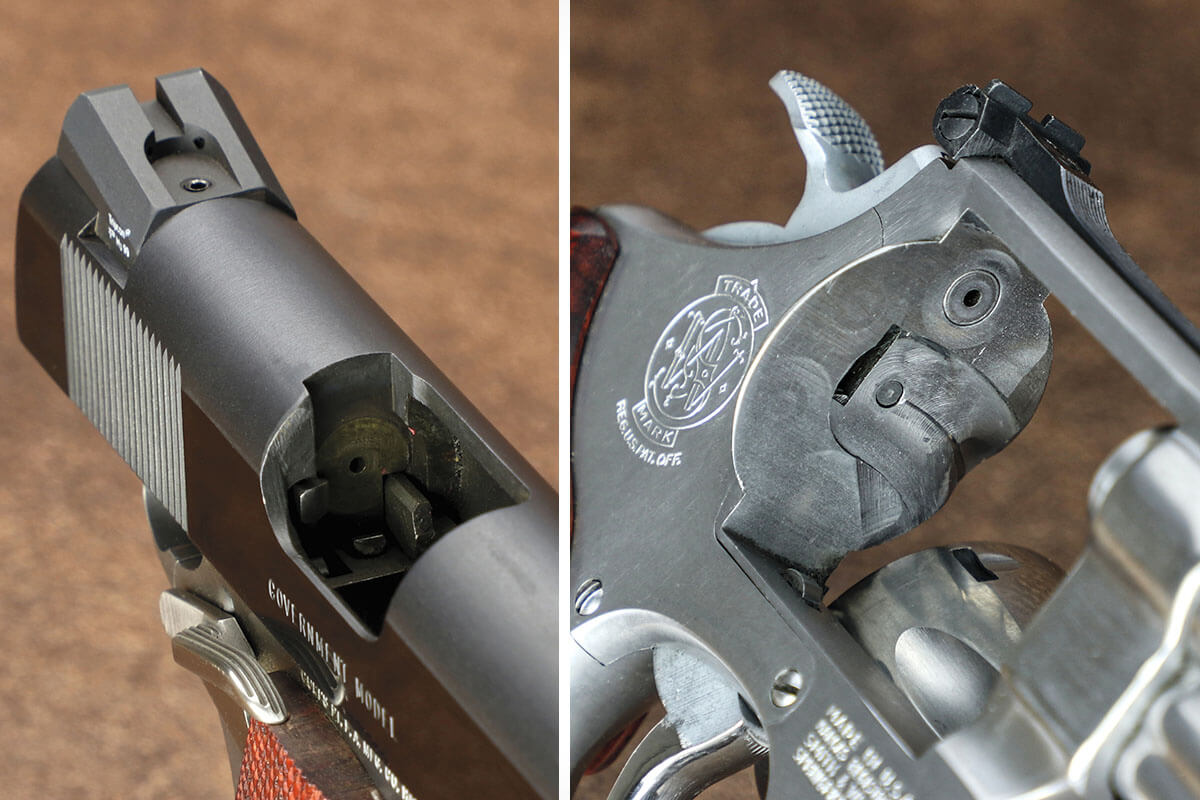
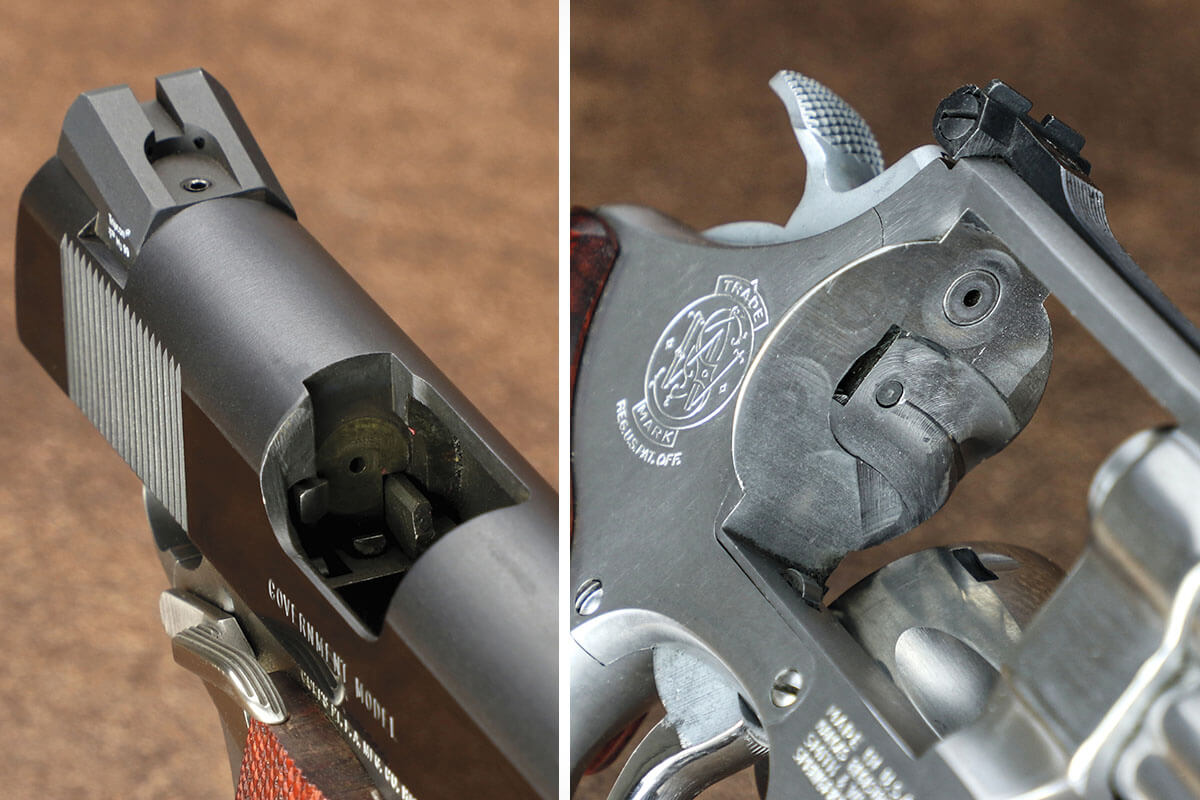
The breech face of both semiautos and revolvers can be indicators of how much the gun has been fired. Be sure to check controls on a semiauto and the cylinder and crane on a revolver.

Magazines need a little special attention. Ideally, the mag will be marked with the pistol manufacturer’s name or logo, which usually (but not always) can be found on the base pad or body. Many companies subcontract out their magazine manufacturing, but they purchase quality magazines built to their specifications, and ideally, that’s what you want.

Inspect the magazine. Especially if the gun was used in shooting sports requiring magazine changes, they were likely dropped and possibly kicked or stepped on. Check the feed lips for damage or burrs, but expect the body to show light scuffing.

If the magazine has far more wear than the pistol, it may not be the one that came with the gun originally. Plan to replace it or its spring. Ask if the gun comes with more than one magazine or if there are any more to be had. It would be best to leave the transaction with more than one mag in hand.

When a cartridge discharges, it leaves a mark on the breech face and will polish this area even if it’s stainless steel. The amount gives you a rough idea of how many rounds have been fired through the pistol.

A police trade-in may show little finish missing here, although the external finish may look very worn. A target pistol may show quite a bit of wear to the breech face but exhibit little wear externally. For business, I’d want the former, since the latter may require service sooner than later—but not always. This is where having an experienced friend along for a second opinion helps.

Final points on semiautomatics. Because they cycle faster, subcompacts may require more frequent recoil spring and magazine spring replacement for reliable performance than would a belt-sized pistol.

And if the pistol has tritium sights, check them in a dark room or at least cup your hand around the sights to see if the tritium lamps are functioning. Even if they are, keep in mind they work only about 10 to 12 years, so be prepared to replace them sooner rather than later on a used pistol.

Revolvers are simple things by comparison, since their working parts are always at rest. Because revolver springs aren’t compressed for long periods, they rarely need replacement.

Look at the breech face and see how much wear is present. Look at the topstrap where the barrel protrudes and see if any cutting is present. The amount and depth of cutting shows if the gun was fed a steady diet of magnum loads for those that are so chambered.

You want to check for any play in the crane, which is the arm that allows the cylinder to open and close. After ensuring the gun is unloaded (yes, even in a gun shop or at a show), close the cylinder, and with the muzzle skyward, look down on the front of the revolver and gently press on the closed cylinder to see if the crane moves.

No play is best, but minor play is okay. A lot of play is a sign of abuse. It can be fixed, but if you’re unwilling to wait for repairs or unsure, pass it by.

Lightly rest—don’t press—your thumb against the cylinder and slowly cock the hammer. The cylinder bolt should still lock into place over each chamber.

If it doesn’t, think of passing it up. It will probably lock properly in double-action firing, but this indicates a timing issue and will eventually require a gunsmith’s attention. Ask if any speedloaders are available for that particular model.

Categories
All About Guns

SIG P365-XMACRO COMP

Categories
All About Guns Real men War

Some WWI British Studs!

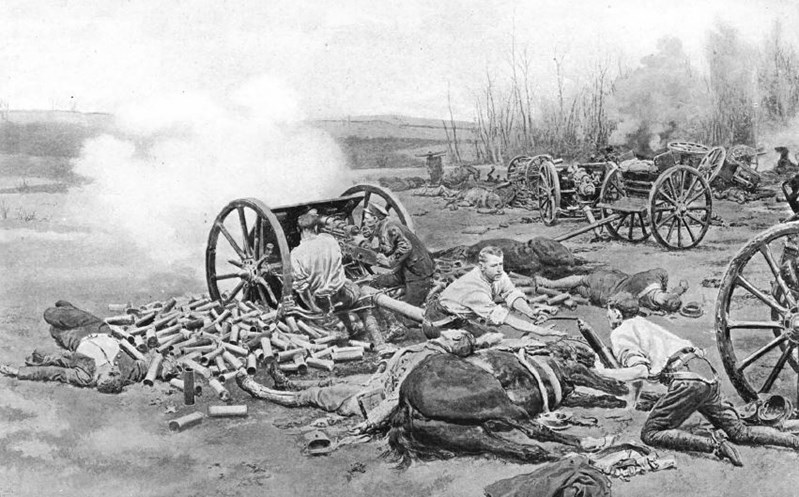
L Battery R.H.A. “How our Gunners Won the V.C. and Silenced the Fire of the German Guns in the Face of Overwhelming Odds.” Print by Fortunino Matania. From Deeds that Thrill the Empire (published 1919).

The Affair of Néry was a skirmish fought on 1 September 1914 between the British Army and the German Army, part of the Great Retreat from Mons during the early stages of the First World War. A British cavalry brigade preparing to leave their overnight bivouac were attacked by a German cavalry division of about twice their strength, shortly after dawn. Both sides fought dismounted; the British artillery was mostly put out of action in the first few minutes but a gun of L BatteryRoyal Horse Artillery kept up a steady fire for two and a half hours, against a full battery of German artillery. British reinforcements arrived at around 8:00 a.m., counter-attacked the Germans and forced them to retreat; the German division was routed and did not return to combat for several days. Three men of L Battery were awarded the Victoria Cross for their part in the battle, the battery was later awarded the honour title of “Néry”, the only British Army unit to have this as a battle honour.

Categories
All About Guns

AR57: Fun Times with a Tiny Carbine (aka FSS Hurricane)

Categories
All About Guns

One really FUGLY “gun”

Babes, Blades, Booze and Bullets

Categories
All About Guns

Well it WAS a SMLE!

Babes, Blades, Booze and Bullets

Categories
All About Guns

Swiss Prototype von Steiger Auto-Ejecting Revolvers

Categories
All About Guns

A 6 Shot K-Model Pre-War Smith and Wesson in .38SPL


Categories
All About Guns

Kimber K6s DASA Combat .357 Magnum Revolver: Full Review The Kimber K6s DASA (double-action/single-action) Combat chambered .357 Magnum is an extremely well-made, good-shooting defensive revolver. Here’s a full review.

Kimber K6s DASA Combat .357 Magnum Revolver: Full Review

By Keith Wood

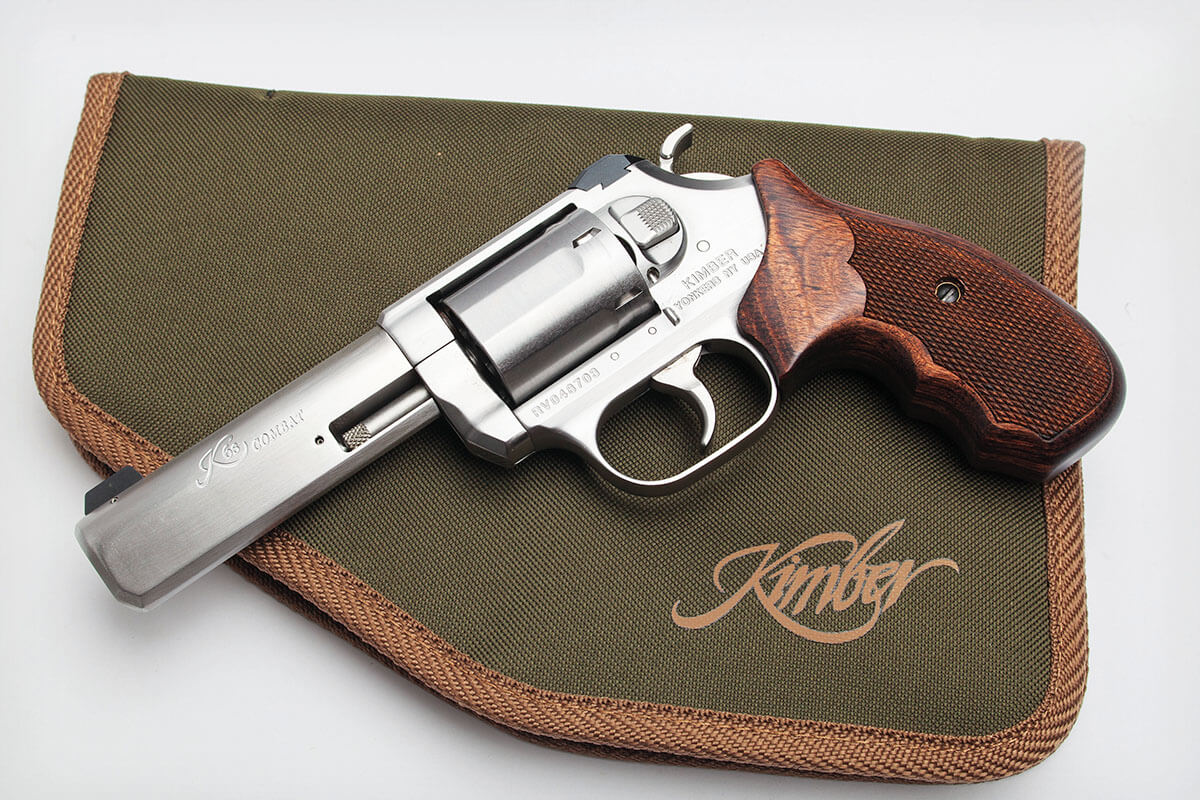
I’ve long been a revolver fan, so when I saw a major U.S. firearm manufacturer engineer a sixgun from the ground up, I was excited. Kimber’s K6s was introduced to consumers in 2016 with much fanfare. Revolvers, long considered dead, were making a comeback, and Kimber appeared to have timed the market perfectly.

The K6s was offered in different configurations, but all of them were snubnose, internal-hammer, double-action-only guns designed for concealed carry. That changed in 2019 when Kimber introduced the DASA, a traditional double-action/single-action revolver available with barrels up to four inches. Though less concealable, the K6s DASA family is far more capable.

The DASA is currently offered in four models. Two of them—the four-inch Target GFO and four-inch Target—have fully adjustable rear sights. The fixed-sight Combat models are available with three- and four-inch barrels, and I tested the latter.

Kimber K6s DASA Combat .357 Magnum Revolver: Full Review

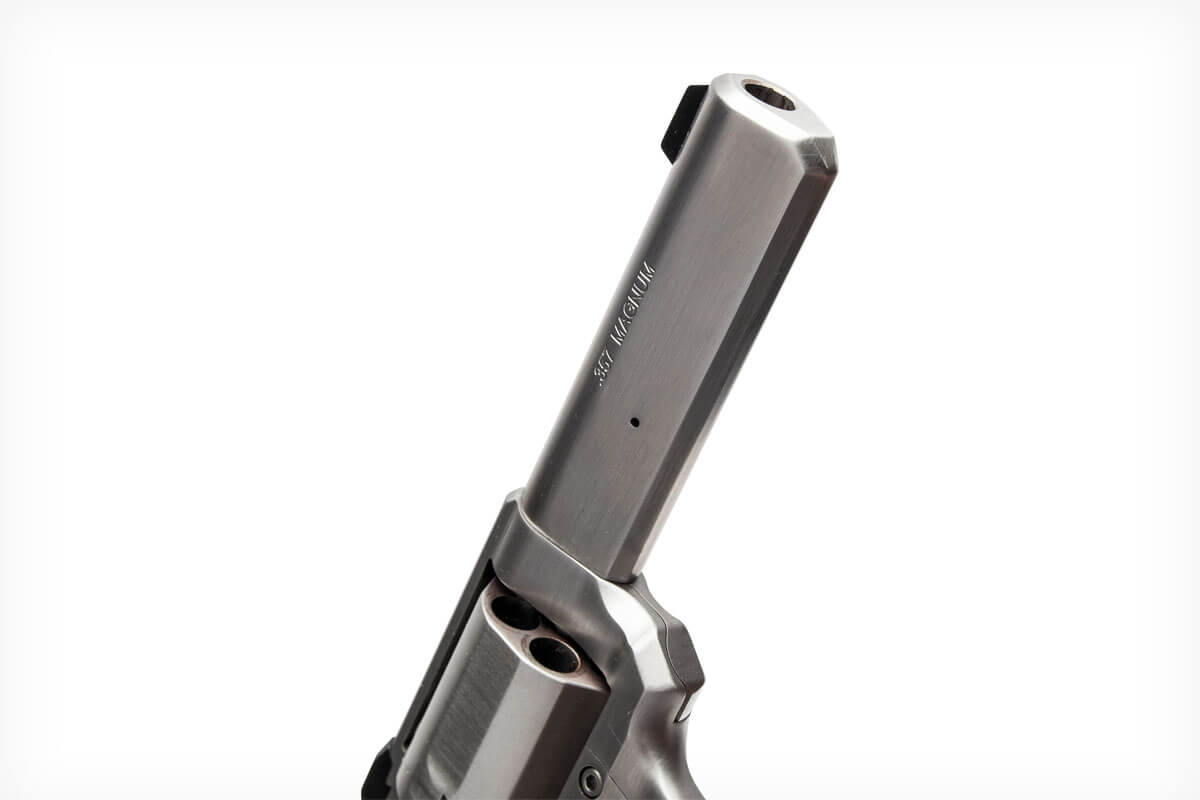
Kimber’s one-piece barrel has a unique ovate profile. A full-length underlug adds a bit of weight out front where it can do the most good.

I recently spent a day in Kimber’s Troy, Alabama, headquarters with a focus on the engineering work being done there. One of the products we focused on was the K6s series of revolvers, which gave me the opportunity for a deep dive into the guns’ construction and features with the team who designed them.

Metal injection molding (MIM) has become extremely popular in the firearm industry due to its ability to produce functional components at low cost. Though there is nothing inherently wrong with MIM parts, particularly if a firearm is engineered with those parts in mind, many purists lament their use. I am neither categorically pro nor anti MIM, but I don’t believe there is any question that fully machined parts, though more expensive to produce, are superior.

The K6s series of revolvers contains no MIM parts whatsoever, instead relying on components machined from bar stock in Kimber’s Yonkers, New York, facility. Manufacturing a revolver is an expensive proposition, made even more so by this type of construction. Everything but the grip panels and sights on the K6s are machined from stainless steel.

Like all K6s revolvers, the DASA Combat is chambered in .357 Magnum. With modern heat-treated steels, such a gun no longer needs to be bulky in order to handle the pressures generated by that cartridge. This model is surprisingly light and trim.

Frame-wise, the K6s is roughly the size of a Smith & Wesson K-frame revolver which makes for a very handy package. When compared to larger N-frame guns, the K6s looks downright tiny. The round-butt frame is just long enough to allow for a full-fingered grip on the gun, reducing another area that can ordinarily add bulk to a revolver.

Finally, the sides of the cylinder are milled flat between the chambers, which cuts down on width. Empty, the K6s weighs 29 ounces. If you were going to conceal a four-inch-barreled revolver, this would be a strong choice.

Kimber K6s DASA Combat .357 Magnum Revolver: Full Review

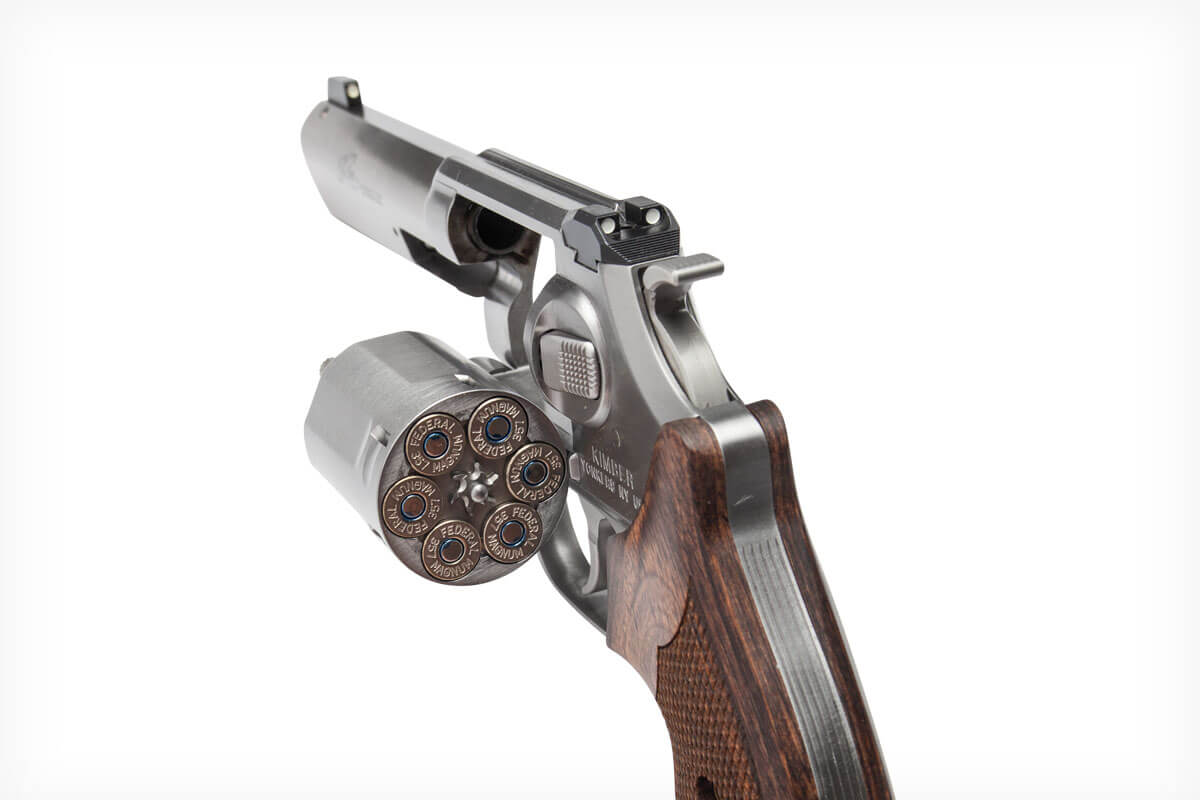
The counter-bored six-shot cylinder means that case rims are recessed within the chambers. The sights are steel three-dot type.

Let’s start with the barrel. Some revolver manufacturers have gone to a two-piece blank-and-sleeve arrangement to eliminate the necessity of timing the barrel to the frame. Kimber opted for a traditional one-piece barrel with a unique ovate profile, another sign that cost-cutting isn’t a priority for the company’s sixguns. A full-length underlug adds a bit of weight where it can be most effective in taming muzzle rise. The barrel-to-cylinder gap on the K6s measured 0.006 inch, which is on the tight side of average.

The six-shot cylinder on the K6s is counterbored, which means it is chambered so the rims of loaded cartridges are recessed within. This has become an unusual feature on double-action revolvers since the 1980s because it requires additional machining operations. Yet another shortcut averted. Cylinders can be charged individually or using machined aluminum speedloaders available from Kimber.

The Combat byname suggests a revolver that will most likely be fired double-action. Firing the K6s in this mode produces a trigger pull that measured 8.75 pounds on my test sample. This double-action pull was smooth. There was no “stacking” of the trigger, and the only indication that the shot is about to break is the bolt locking into the cylinder notch.

The single-action trigger is equally impressive, breaking at a clean 3.3 pounds. Kimber obviously did its homework when it engineered the DASA’s trigger mechanism. I was impressed.

The K6s DASA uses two safeties. Kimber maintained the rebound safety found on the original K6s and added a transfer bar safety, which prevents the revolver from firing unless the trigger is pulled—a dual failsafe system.

Kimber K6s DASA Combat .357 Magnum Revolver: Full Review

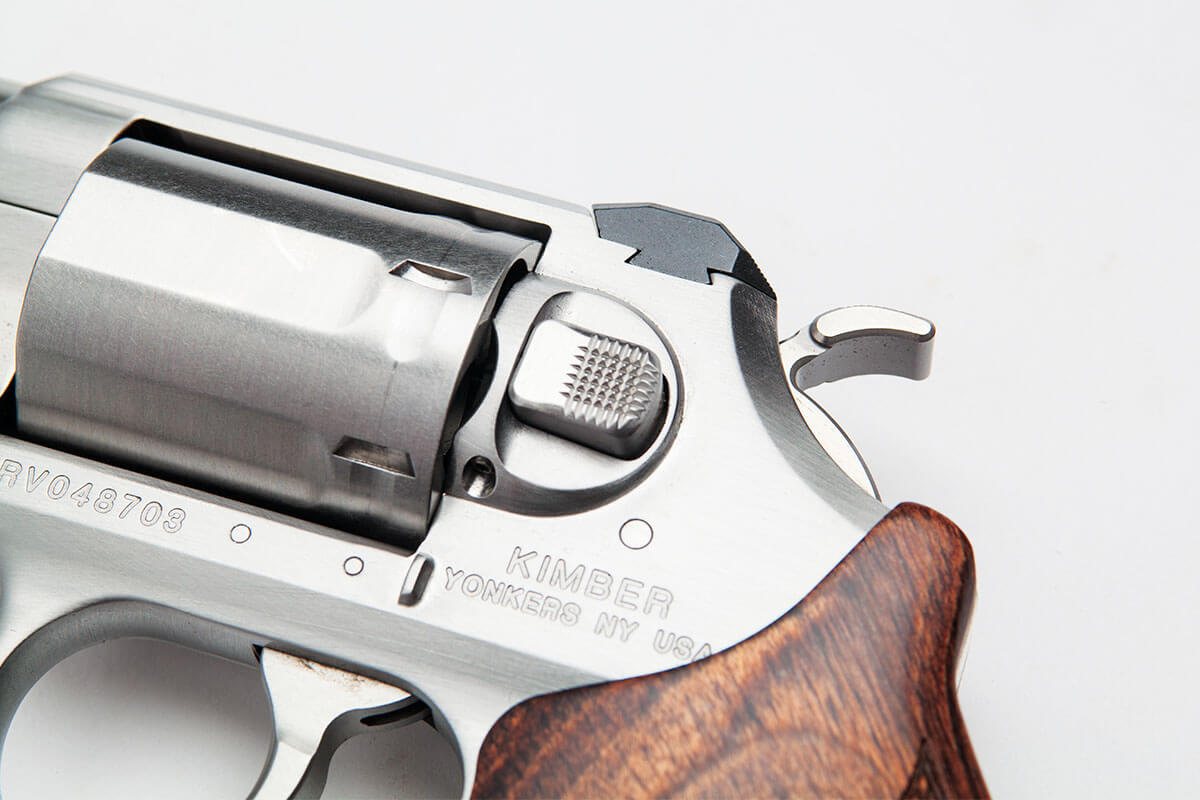
The checkered cylinder release is located on the left side of the frame and is pushed inward to operate.

With the sideplate off the K6s, Kimber engineers were able to show me firsthand how this system works. The transfer bar is the steel part that connects the falling hammer with the firing pin and only actuates with pressure on the trigger. If the transfer bar is not in its raised position, the gun cannot fire. So even if the K6s is dropped and the hammer falls, there is nothing to connect the hammer and firing pin. This is the case when the hammer is forward as well.

These safeties are completely passive; you won’t know they are there unless you look for them. In my opinion, anything that contributes to a safer gun and doesn’t have a negative effect on the trigger pull is a win.

While the K6s Target models come equipped with fully adjustable sights, the DASA Combat uses a more rigid arrangement. The steel front sight is pinned into the barrel and the rear rides in a dovetail. The rear sight is drift adjustable for windage once a vertical hex screw is loosened.

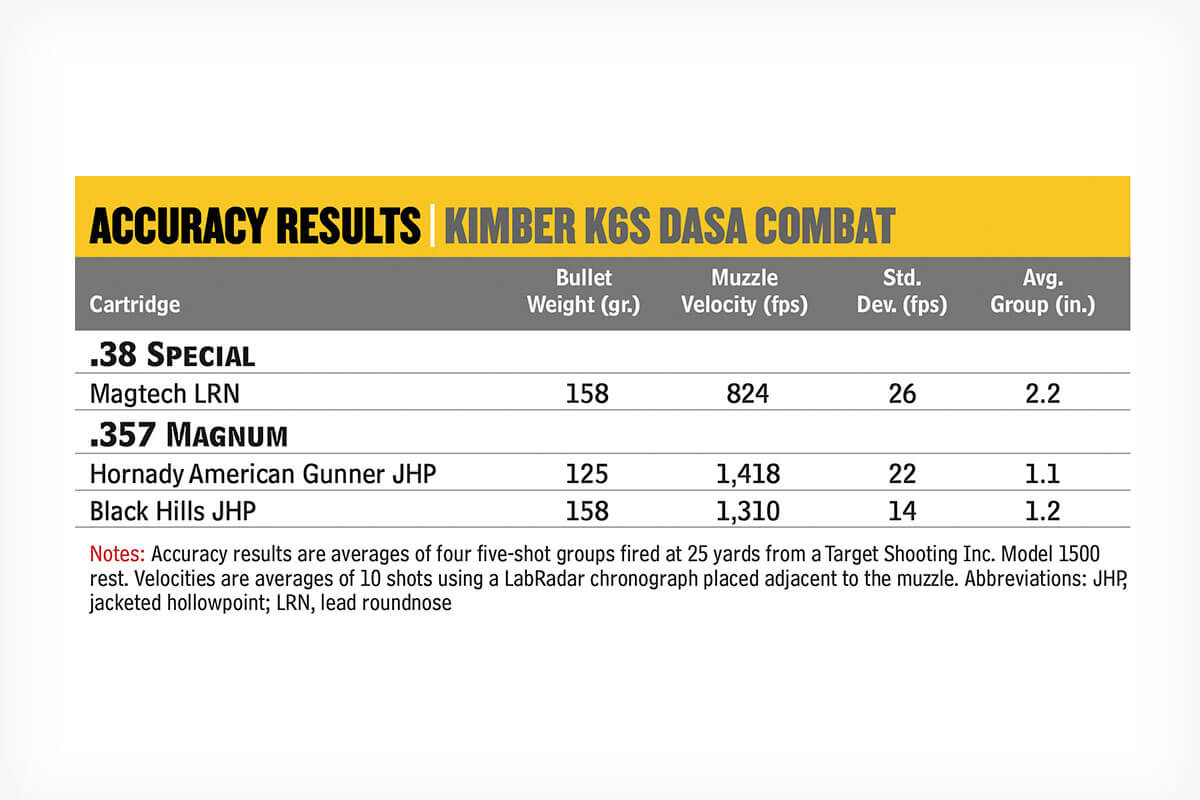
I found the white three-dot sight arrangement to be a good shooting aid, with just enough light visible on either side of the front blade to balance precision and speed. The test sample shot to point of aim with all of the loads tested, which ranged from light .38 Special loads to powerful defensive .357 Magnum ammunition. The lack of adjustability was not an issue.

The trigger on the K6s DASA Combat is smooth, and the hammer is checkered for a positive grip. The port-side cylinder release is checkered as well and is accessible without having to shift one’s grip on the gun.

With the cylinder unlocked, a standard-type ejector rod is used to unload the K6s. The cylinder locks both at the rear and at the front of the ejector rod where it interfaces with a spring-loaded detent in the barrel.

The only non-steel parts on the K6s are the grips. Made from two panels of laminated wood, the stocks on the K6s DASA Combat are functional and attractive. Two finger grooves are located on the frontstrap that, combined with the diamond pattern checkering, help the shooter control the gun in recoil.

My hands are about average in size, and I found the factory grips to be comfortable and functional. At this time, other options are limited because factory grips designed for the double-action-only K6s are not compatible with the DASA. However, aftermarket grips such as those from Hogue are compatible.

Overall, the fit and finish on our sample gun was excellent. The entire K6s DASA Combat is completely de-horned for carry, meaning there are no sharp edges that will cut into skin or clothing. The brushed satin stainless steel finish is even and attractive.

Kimber K6s DASA Combat .357 Magnum Revolver: Full Review

As expected, the DASA Combat proved accurate from the bench, and it excelled at smacking steel plates in shooting drills.

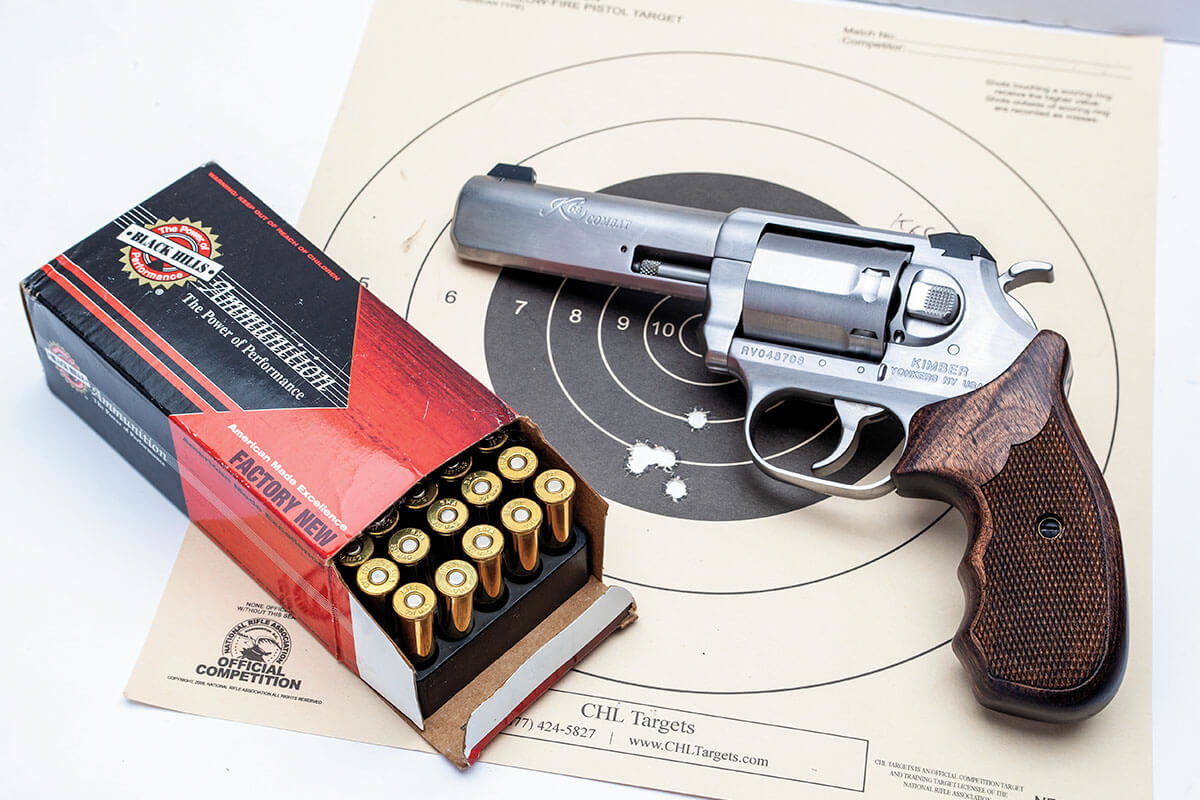
On the day I took the K6s to the range for our formal accuracy testing, it took its place in line behind a handgun that retailed for about five times the Kimber’s suggested retail price. I guess I wasn’t expecting much after shooting the heirloom-priced handgun, which was one of the most accurate guns I’ve ever tested. Imagine my surprise when the first five-shot group out of this Kimber landed in a single ragged hole at 25 yards, nearly besting the high-dollar model. Repeated groups achieved the same result. In terms of its accuracy potential, this K6s takes a backseat to no gun.

Due to the ammo shortage situation when I was testing this gun, I was able to shoot only three loads, but nevertheless, I got a good view of what this gun is capable of. Despite being a relatively light and compact revolver, recoil was not oppressive even with full-power .357 Magnum loads.

Accuracy was great, but that’s not the final answer when it comes to how useful a handgun can be in the practical sense. After the bench testing was finished, I transitioned to steel targets at various ranges. Firing the K6s double-action, I quickly came to appreciate how shootable the gun is. Good sights, a great trigger and controllable recoil were all part of the experience and took me back to my earliest days on the range when my .357 Magnum revolver was my only centerfire handgun.

Revolvers are complicated firearms and therefore not at all inexpensive to manufacture. The suggested retail price on the DASA Combat is $1,046, and street prices appear to hover roughly $100 below that number, even in this market. Put in context, the Kimber splits the price difference between comparable revolvers made by Smith & Wesson and Ruger. Neither of those companies can boast the use of fully machined parts in their models, further demonstrating the value of the K6s series. Once you shoot the K6s, the price begins to look very reasonable.

Kimber K6s DASA Combat .357 Magnum Revolver: Full Review

Experts have been proclaiming the death of the combat revolver since the FBI’s disastrous Miami shootout in 1986. Yes, semiautos have certainly taken over the law enforcement and concealed-carry markets, but revolvers are seeing a comeback. Whether it is nostalgia, fun or just the need to own something that isn’t black and soulless, more and more sixguns are showing up in the market and on the range.

Further, not every shooter is comfortable with keeping a loaded semiauto in their home or on their person. Given the millions of new, inexperienced individuals who have become gun owners since the spring of 2020, we may see an entire new demand for the simplicity and reliability of a defense-oriented revolver. The K6s DASA Combat fits comfortably in that role.

As I learned during my visit to Kimber’s Alabama facility, this is not a product that was rushed to the market to meet the latest trend. The K6s series of revolvers is carefully engineered and refined, and the DASA is the latest evolution of that design and innovation effort. Given the K6s DASA Combat’s range performance, it’s clear that Kimber’s engineers did their job well. I can’t wait to see what the company comes up with next. If a simple, reliable, powerful and well-built handgun piques your interest, this one is worth a long look.

Kimber K6s DASA Combat Specification

  • Type: double-action/single-action revolver
  • Caliber: .357 Magnum/.38 Special
  • Capacity: 6
  • Barrel: 4 in.
  • Weight: 29 oz.
  • Construction: machined stainless steel
  • Grips: laminated hardwood
  • Sights: three-dot steel front and rear, drift adjustable for windage
  • Trigger: 3.3 lb. single-action pull, 8.75 lb. double-action pull
  • Price: $1,046
  • Manufacturer: Kimber Manufacturing, kimberamerica.com