.png)
Category: You have to be kidding, right!?!
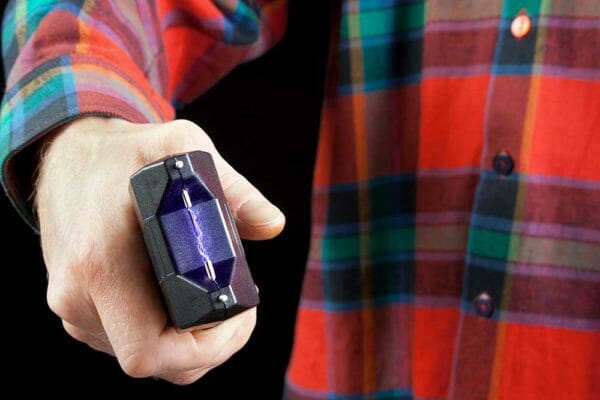
USA – We saw New York State’s blatant defiance of the NYSRPA v. Bruen case when the Democrat-dominant legislature slapped the Supreme Court in the face with the implementation of the Concealed Carry Improvement Act (CCIA) that went into effect in September of 2022. The CCIA was quickly voted on in Albany and signed into law in July of 2022, immediately after the June SCOTUS ruling when they Declared New York’s existing gun laws to be unconstitutional.
Matt Mallory, Founder of Public Safety and Education (psanded.com) / Host of Meet the Pressers (meetthepressers.com) said, “Why is it so hard for NY politicians to just obey the rulings from the highest court of the land? They expect us to obey their laws even though we all know true criminals won’t! Just to show us the distain NY politicians have for it’s legal law-abiding gun owners, the CCIA law could get you charged with a felony and over a year in prison for not being in compliance with the law! I wish SCOTUS could do the same for the Bruen decision. I bet Politicians would be less likely to blatantly defy a SCOTUS ruling ever again.”
Many people are asking, “how is this possible if the Supreme Court declares a law unconstitutional?”
Easy. Albany Democrats do what they want.
We must understand the mind of a tyrant. Although normal people would respect the ruling of the highest court in the land, Democrats spit in the face of our sacred judicial system if it doesn’t suit them politically. We are watching the same scenario play out with a recent 2019 ruling on stun guns.
Although SCOTUS ruled that the Second Amendment applies “to all instruments that constitute bearable arms,” NYS Law S 265.01 remains on the books. The unconstitutional law continues to put New York residents at risk of heavy fines and even jail time for possessing a stun gun.
The law states that a person is guilty of criminal possession of a weapon in the fourth degree, a class A misdemeanor with up to a year in prison, when: He or she possesses any firearm, electronic dart gun, electronic stun gun…
Although some jurisdictions have decided to ignore the State’s unconstitutional law, in support of the 2nd Amendment, Patrolman Zonnevylle arrested Austin T. Johnson for possession of an electric stun gun. This incident occurred in the 100 block of East Garden Street in the City of Rome, New York. Luckily for Johnson, the case was dismissed on a technicality. The law, being in blatant defiance of multiple court rulings, remains on the books today, continuing to put New Yorkers at risk of arrest.
Matt Mallory said, “Before COVID, I met with the NY Senator’s office that put a bill forward in 2019 to reclassify these tools under NY law. That bill, S2421, just keeps getting recycled every session and goes nowhere. This is a perfect example of New York State politicians dragging their feet. Is it on purpose? I leave that for you to decide.”
Our founding fathers would’ve never believed that future Governors and State Legislators would make Americans choose between their own personal safety or jail time. While Governor Hochul lets prisoners out of jail, it would seem those cells will not remain vacant for long as long as there are good people willing to defend themselves against her recently released detainees.
The 2nd Amendment is not a privilege. It’s your right.
Dan Wos
Author – Good Gun Bad Guy
Host – The Loaded Mic
About Dan Wos, Author – Good Gun Bad Guy
Dan Wos is available for Press Commentary. For more information contact PR HERE
Dan Wos is a nationally recognized 2nd Amendment advocate, Host of The Loaded Mic and Author of the “GOOD GUN BAD GUY” book series. He speaks at events, is a contributing writer for many publications, and can be found on radio stations across the country. Dan has been a guest on Newsmax, the Sean Hannity Show, Real America’s Voice, and several others. Speaking on behalf of gun-rights, Dan exposes the strategies of the anti-gun crowd and explains their mission to disarm law-abiding American gun-owners.

Categories
What a dumbsh*t!


Art: Brad Walker
Shortly before his untimely death, I had the chance to interview rebel political analyst and cultural commentator, Andrew Breitbart. We were talking about American exceptionalism and lamenting Hollywood’s antagonism toward our Second Amendment, when Andrew said, “We gave Hollywood up without a fight and we may never get it back.”
His statement has been painfully prescient.
Now, you’ll never recognize my name or face, but I’ve had the chance to shoot movies and documentaries all over the world. I’ve worked on one of the few films reviewed by the U.S. Supreme Court that wasn’t pornography. I’ve even had the honor of sharing a scene or two with some pretty amazing actors, such as Roma Downey and Anthony Hopkins. Though I’m more D-list than A-list, I’ve prowled sets, pulled cable, forgotten lines, been to premieres and said “action!” enough times to have an understanding of “the biz.”
Still, the big career I might have had in mainstream Hollywood was stunted by some of my conservative movie credits. I’ve lost jobs and have been passed over because I didn’t adhere to the left-of-center views of so many in Tinseltown.
Prior to entering Hollywood, I grew up in a culture where guns, and the stories that include them, were a part of everyday life. Stories told by my father, grandfather and uncles fueled my intense interest in the outdoors, fishing and hunting. Stories like the time Uncle Ted went goose hunting with Uncle James, who instructed him to “shoot the farthest goose first. Then, shoot one close in front before they fly overhead. And, finally, turn around and shoot a third as the flock flies away.” When the geese came in, that’s exactly how it played out, with the first goose crashing dead right at Uncle Ted’s feet just as he shot the third. Or the time Grampa killed a bull elk on Diamond Mountain and when they went to the downed bull, they found it behind an aspen stump that had a bullet hole right through it. The “magic bullet” had gone through the aspen before it went through the elk.
I begged to re-hear those stories every time my family got together for a reunion, visited the cemetery on Decoration Day or gathered to hunt. Soon, I was part of those stories, too.

Above is Jennifer Lopez. She has mostly avoided talking about Second Amendment issues, but when she was asked about gun control, she said, “I do feel like entertainment is a separate thing.” Photo: Lionsgate/Alamy
On opening day of the deer hunt, when I was six years old, my dad, uncles and cousins gathered at Gramma’s house long before dawn. After breakfast and a prayer, Gramma sent us off with parched corn and the promise of the world’s best cinnamon rolls upon our return. We piled into our old navy-blue Volkswagen Squareback and bounced our way over the dirt roads into a sunrise of hope and wonder. That day, as I knelt by his side, Dad made a broadside shot on a running muley at well over 200 yards with a Remington 03-A3 and iron sights—a single shot that will live in my mind forever. Dad said he didn’t know who was more surprised, him or the deer. After the hunt, we crowded into the detached garage under a single bare bulb as Uncle James worked his magic with a blade and butcher paper. Stories were shared, relationships cemented, the past relived and the future secured. I can still smell the earthy almond husks in a nearby wooden bushel basket and machine oil from the bolt bucket.
With the influence these stories had on me, I guess it was natural that a “gun story” in a movie would send me down the filmmaking path.
In the fall of 1989, two months before the Berlin Wall came down, I was in Moscow’s Sheremetyevo International Airport surrounded by five Soviet soldiers pointing AK-47s at me. I spoke no Russian. They spoke no English. I was headed to Siberia to give a series of lectures/classes on America (how that came about is another story).
I had the notion that I could best illustrate my lectures through movies, TV shows and homemade videos. I carried a duffle bag packed with close to 100 full-run feature films, popular TV shows and material I’d shot myself, all on VHS (yes, I’m that old). Back then, Soviet law allowed an individual to transport 10 VHS tapes into the USSR—ten blank tapes. Of this fact, I was unaware.
As the stone-faced customs official searched that duffle bag, I became more nervous. Among the various titles was Sylvester Stallone’s Rambo III, in which he battles the Russians in Afghanistan. My intent was to show the students how American media portrayed the Soviet system.
So this is how I end up in the Gulag, I thought.
I held my breath as the guards got to Rambo. One of them quickly reached for the movie, and a grin spread across his face. He flexed his muscles and in his heavy Russian accent exclaimed, “Rahm-bo! Rocky!! Eez beeg, no? Rahm-bo!”
Rather than shooting me on the spot, he laughed! A moment later, he grabbed True Grit with a stoic John Wayne on the box art. “Jon Vayne! Jon Vayne eez cowboyee! Jon Vayne!” A moment earlier, I had honestly feared for my life. Now, we were all just movie fans (albeit some of the movie fans were still pointing AKs at me). There, in the heart of the “Evil Empire,” I saw, up close and personal, how movies created a bridge between the world’s two feuding superpowers at a time when the Cold War was in full swing. That power of shared storytelling—to bring people together in a shared experience—was why I dove headfirst into making movies.
Storytelling is not only how we entertain each other, memorialize great deeds and teach history, but it is also how the cultural needle is moved. While always a safe place for rebels, outsiders and unique perspectives, historically, Hollywood told stories that tended to reinforce traditional values, institutions and culture. Today, however, it’s a badge of honor for storytellers to challenge, mock and tear down the things that have provided societal stability. They consider themselves more sophisticated, intelligent and enlightened than those of us in fly-over country.
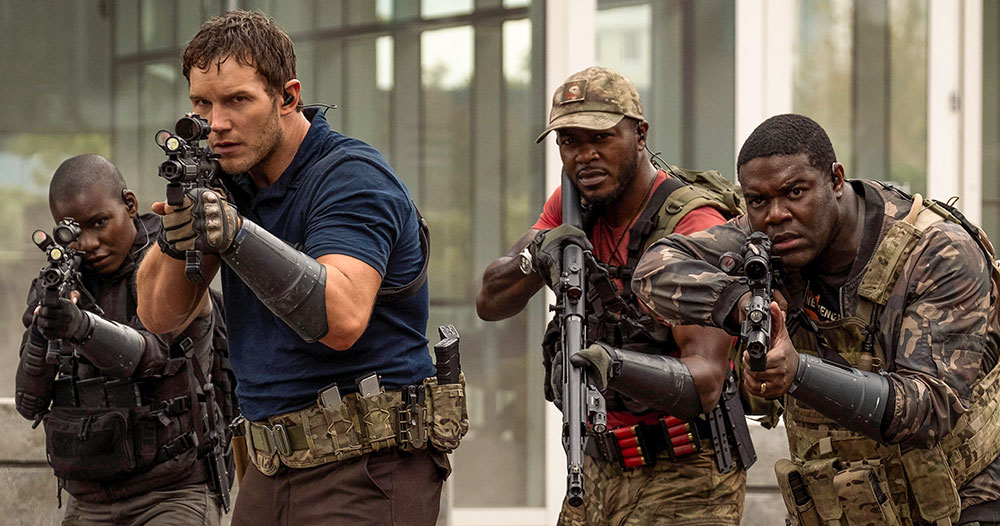
Above is Chris Pratt, whom Business Insider called a “gun collector.” Photo: Alamy
As much as those enlightened elites paint themselves as anti-gun, it is more than ironic that many of the movie industry’s key storytelling archetypes and genres are, in fact, pro-gun. It is a strange Jekyll-and-Hyde contradiction. In the public sphere, in their social media and in front of press cameras, they are constantly virtue-signaling the evils of guns. But, in a glaring disconnect, the stories they tell actually demonstrate that guns are good. And, in the process, they make a lot of money.
Hollywood anti-Second Amendment celebrities would cringe if they really thought about this. Like those tapes picked up by that Soviet soldier, movies like John Wick, The Matrix, Taken, Star Wars, Rambo, Aliens, The Terminator and Avatar venerate protagonists using guns to defend the weak, restore justice and punish evil. You can also pick any Western and you’ll see it.
Likewise, we’ve all watched movies with a battered and abused female protagonist “the system” fails to protect. How does this sympathetic victim overcome the stronger, more powerful, evil opponent? The storytellers don’t send a social worker; they don’t give the murderous bad guy sensitivity training; they don’t organize a protest. No. They give her a gun!
And while they tell these fictional stories all the time, and make themselves rich doing it, Hollywood is blind to the many true-life defensive gun uses that occur daily all around us.
This blindness implies that Hollywood is ignorant. But they’re not—this is merely a willful blindness. Through their public statements, Hollywood and the mainstream media show their true Jekyll activist side. Their carefully crafted narratives advocate that people who use guns (defensively or otherwise) are a dangerous minority. But, though they claim that law-abiding gun owners, like you and me, are a threat to democracy, they also promote the idea that protagonists from Nobody and Peppermint are heroes.
This is only one aspect of Hollywood’s storytelling shortcomings. Andrew Breitbart didn’t foresee that Hollywood might overplay its hand.
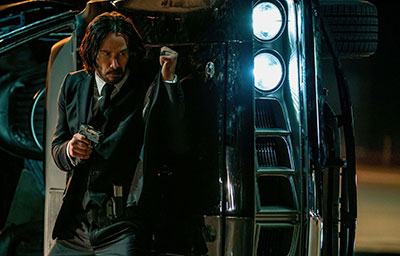
Above is Keanu Reeves, an actor whose videos training at shooting ranges have gone viral. Photo: Lionsgate/Alamy
Recent debacles with Batgirl, The Rings of Power, The Little Mermaid, The Witcher and Willow demonstrate how Hollywood’s commitment to ideology over story is beginning to backfire. Hollywood must be starting to realize they’ve sacrificed good storytelling for their woke politics. But then, many in Hollywood still blame everyone but themselves for their failures.
The result? Look no further than the once-unbeatable Disney, whose stock fell precipitously at the end of 2022, losing $123 billion. Their string of box-office bombs was capped off by having to pull Strange World from theaters early. It’s easy to make a case that their content choices are killing them.
Maybe Andrew Breitbart was right. Maybe we did give up Hollywood. So what? We don’t need them.
And it’s not like Hollywood wasn’t warned. The entertainment world was momentarily stunned by Mel Gibson’s The Passion of the Christ, nearly two decades ago. There is no better example of a Hollywood face-plant. Nobody wanted to make it, but Gibson had the resume to make it happen. Released in 2004 and re-released a year later in a different cut, the film has made more than $700 million on a budget of $30 million. It was the number three moneymaker in 2004. Hollywood either failed to recognize or intentionally ignored this under-served market hungry for content.
Luckily, we don’t have to wait for Hollywood to feed that hungry market. Once upon a time, making a good movie required millions of dollars (if not tens of millions), trailers full of expensive gear, and a crew of dozens. These days, with readily available digital technology, you don’t need the history and track record of Mel Gibson to get something done. Today’s storytellers can create audience-moving, award-winning, money-making films with gear you could fit in a backpack. While Hollywood didn’t get the memo, others did.
The folks behind God’s Not Dead got it right telling a story that didn’t offend its target audience. The reward? A franchise worth more than $100 million from an initial budget of about $2 million.
But it’s not just overtly conservative story tellers with religious content who are finding success. An example that stands out is Taylor Sheridan. I have no idea what Sheridan’s politics are (isn’t that refreshing?), but his storytelling is first-rate and doesn’t ostracize those of us who cherish their freedom. Movies like Sicario, Hell or High Water and Wind River and series like Yellowstone and 1883 just tell good stories. And, unsurprisingly, guns feature prominently in everything Sheridan does.
A familiar, old Hollywood hand, Clint Eastwood, has been making these kinds of films and winning Academy Awards for nearly 70 years.
The Daily Wire sees this potential and is confronting Hollywood head-on. One notable move was engaging Gina Carano after Disney gave itself a black eye in firing her from The Mandalorian. DW recently released Terror on the Prairie starring Carano and Nick Searcy. Daily Wire’s Run, Hide, Fight is their better film. Isabel May’s performance alone is worth the watch. They’ve also announced a $100 million commitment to children’s programming.
Perhaps the best example of the success that can be generated by a well-told “gun” story unburdened by enlightened elitism is this summer’s Top Gun: Maverick, a film with a protagonist we can root for, combined with a story free of ideological messaging.
The fact is, there are over 100 million of us in America that own guns and this number is growing, especially among women. And we crave good stories that include our culture the way we see and experience it. One hundred million people who have firsthand experience with firearms is a lot of cultural influencers.
So, yeah, it’s time for even more of our stories to be told. Stories that show relatable characters who also happen to be hunters. People facing life’s challenges, but who also shoot three-gun on the weekends. Protagonists who battle injustice, but also aren’t afraid of guns.
Maybe Andrew Breitbart was right. Maybe we did give up Hollywood. So what? We don’t need them. Just because Hollywood has a big megaphone doesn’t mean they have the only one. You have a megaphone. Pick it up, tell your story and shake up the market.





Impressive but what is your pattern like afterward? Asking for a friend Grumpy


The law of inverse or unintended consequences refers to outcomes that are the reverse of the planned or expected results. As described in another context, “the law of unintended consequences could create a perverse effect contrary to what was originally intended and ultimately making the problem worse.”
Back in 2015, Pete Holmes, the then City Attorney, wrote about Seattle’s “inventive” new way to address violent crime. “In a Seattle summer marred by random gunfire, the City Council unanimously approved, and Mayor Ed Murray signed, the ordinance that, come January [2016], will levy a $25 tax on businesses for each firearm sold at retail within City limits to provide a sustained local revenue source for research and prevention programs.
In addition, the City will impose a 2-cent tax for every round of .22 caliber ammunition sold and a 5-cent tax for every other round of ammunition sold.” Describing this so-called “common sense step designed to reduce gun violence,” Holmes said, “This City acted to control its own destiny.”
At the time the ordinance was passed, the City Budget Office estimated that the gun tax would generate revenue of “between $300,000 and $500,000 a year.”
Seattle Police Department data on crime shows there were 3,830 violent crime incidents in 2015, of which 26 were homicides. Violent crime incidents have increased each year since, reaching 5,630 in 2022 (including 52 homicides). The department’s most recent annual report reveals that Seattle’s overall violent crime rate reached a 15-year high in 2022, with homicides up by 24% and aggravated assaults (including shots fired and non-fatal shootings) “continu[ing] to be the highest reported in the last 10 years.”
Analyzing the numbers for shootings and shots fired specifically, police data for 2015 indicates there were 54 “shots fired” incidents, 16 shootings (nonfatal) and no shooting fatalities. By 2022, this had climbed to 79 “shots fired” incidents, 34 non-fatal shootings, and six “fatal injury” shootings. So far, 2023 looks to be at least as violent, with 84 “shots fired” incidents, 15 non-fatal injury shootings, and four fatalities already, a scant three months into the year.
Residents who may have looked to console themselves with what, by now, was supposed to be a multi-million dollar stash of cash generated by the gun tax for prevention programs were in for another rude shock. According to one source, the first full year of gun tax collection yielded just $103,766, with $93,220 collected for 2017, $77,518 in 2018, and $85,352 in 2019 – a four-year total that failed to reach the midpoint, even, of the city’s predicted revenue for a single year.
To get the real financial impact of the gun tax, though, Seattle’s extreme overestimates have to be viewed in the larger context of actual lost revenues. At the time the gun tax was proposed, the proprietor of one of Seattle’s gun stores described what he called the city’s “grossly unsound” reasoning and revenue projections. Seattle, he added, had only two dedicated gun stores, plus a few big box sporting goods stores and pawnshops, but had “plenty more” located a short way out of the city. Rather than “just tighten the belt and hand over the money,” consumers would shop elsewhere and “Seattle gun stores would simply go out of business.”
The result? No gun tax income and the city would lose the sales tax, other revenue and jobs the businesses had been generating until then. In his case – because he moved his business to the suburbs outside Seattle when the gun tax was passed – Seattle lost close to $64,000 in sales taxes that his business paid in his new location in 2017.
Another large gun retailer, the owner of Seattle’s Outdoor Emporium, was interviewed in late 2016 and blamed the gun tax for his “$2 million hit” in lost sales, a 32% drop in his customer count, and an estimated $600,000 loss of potential sales tax due to his plummeting sales.
If these figures are accurate, Seattle accomplished the unbelievable financial equivalent of cutting off its nose to spite its face by collecting, in 2016, a little over $100K in gun tax revenue but losing at least seven times as much in sales tax dollars alone. Driving these figures even further into the red, in 2017 the city reportedly spent more on defending a failed lawsuit on the tax (over its refusal to disclose the 2016 revenue collected) than it obtained that year in total gun tax income.
It’s not just a case of the usual wonky progressive math. Civic politicians have hurt city taxpayers, to be sure, but taking “control” of the city’s destiny with this “inventive” ordinance has correlated with violent crime rates reaching record highs. The same ordinance has created an uncompetitive business climate for gun retailers, so residents who need the means to protect themselves and their families from the burgeoning crime wave are forced to go outside Seattle. Even apart from the gigantic question mark on how the gun tax revenues have been spent and to what end, it’s difficult to interpret these outcomes as anything other than a complete and dismal failure.
From The NRA