Category: A Victory!
A masked intruder picked the wrong San Francisco home and brought a husky along for the bad decision.
A 73-year-old Vietnam War veteran shot a suspected burglar during an early-morning struggle inside his Sunset District home, according to CBS News Bay Area.
The break-in happened shortly after 5 a.m. on September 26 near 22nd Avenue and Lincoln Way, along Golden Gate Park.
Surveillance footage reportedly showed the suspect walking around the area about 40 minutes before the burglary. The homeowner said the man drilled a large hole through a wooden door, reached inside and unlocked it.
“A professional burglar cut his way into my home,” the veteran told CBS.
Face-to-Face With a Masked Intruder
The homeowner was sleeping on the third floor when noises woke him. He retrieved a handgun and went downstairs to investigate.
On the second floor, he encountered a man wearing black clothing, a hoodie and a face covering. The suspected intruder had also brought what the homeowner described as a roughly 60-pound husky.
The veteran said the man grabbed him, causing him to fall onto his hands and knees.
“I shot him because I felt really threatened,” he told CBS. “He had already made this deep intrusion into my home.”
The homeowner reportedly fired one shot and believed he struck the man near the hip or buttocks. He suffered minor scrapes to his hands and knees during the confrontation.
The masked man fled, leaving bloodstained shoe prints leading toward Golden Gate Park. He also left the husky behind. San Francisco Animal Care and Control later took custody of the dog.
Police Detain Wounded Man
A short time later, officers found an injured man approximately three miles away near Geary Boulevard and 47th Avenue.
Paramedics transported him to San Francisco General Hospital with a non-life-threatening gunshot wound. Police detained the man while investigators worked to determine whether he was connected to the burglary.
Initial police reporting treated the burglary and the discovery of the wounded man as separate incidents because investigators had not yet established a connection. No charges against the homeowner had been announced.
The veteran withheld his name and face from the CBS report because of safety concerns. He said he remained shaken but was thankful he escaped without serious injuries.
“I had a little help from a friend,” he said, referring to his handgun.
The bizarre details will get plenty of attention. Still, the heart of the story is straightforward: an elderly homeowner reported being attacked inside his own home and used a firearm to stop the threat.
=============================================== I see that San Francisco still has some really tough men around! Grumpy


Here’s a scenario that should make every gun owner’s blood boil. A 22-year-old Oklahoma National Guard member, sent to Washington, D.C., to support President Trump’s crime-fighting effort, now finds himself facing charges. His alleged offense? Carrying a firearm.
What Happened
The Associated Press reports that Spec. Jakob Noonan was arrested Monday, September 29, after U.S. Park Police found a handgun during a traffic stop. Noonan was riding with a fellow Guard member in a Honda SUV when officers pulled the vehicle over for an expired tag.
According to a U.S. Park Police statement, the officer noticed an empty holster in the back of the vehicle and asked whether a firearm was present. Noonan confirmed there was. At the time, he was off duty, out of uniform, and driving his personal vehicle. He told the officer the firearm was registered in Oklahoma — an open-carry, permitless-carry state — and that he was temporarily living in the capital as part of the National Guard operation. A records check confirmed he had no valid District of Columbia concealed-carry permit.
Noonan was charged with carrying a pistol without a license and had his first court appearance in D.C. Superior Court the same day. Notably, his arrest marks the second time in two months that a member of the task force has been arrested — the deployment itself has been contentious since Trump launched it in August 2025 under an emergency crime declaration.
A Joint Task Force-District of Columbia spokesperson told Task & Purpose on Saturday that it knew about the service member’s arrest.
“JTF-DC service members are expected to maintain high standards of professionalism and conduct at all times. This matter will be addressed in accordance with established policies and procedures,” the spokesperson said, pointing further questions toward the Metropolitan Police Department.
The Legal Absurdity
Here’s where it gets ridiculous. In his home state of Oklahoma, Noonan can legally carry without any permit. While he’s on the clock in D.C., he can lawfully carry a handgun or a service rifle. But to lawfully keep a gun in his personal vehicle in the District — one that isn’t locked up, unloaded, and inaccessible — he’d need a D.C. carry permit under the licensing scheme the D.C. Circuit struck down in Wrenn v. District of Columbia back in 2017, before the District rewrote it with new procedural barriers that are just as effective at keeping non-residents out.
Under D.C. statute, he faces a possible five-year prison term.
The question answers itself: does a man suddenly become a danger the moment his workday ends? Of course not. National reciprocity would resolve this absurdity: a lawful carrier shouldn’t become a felon by crossing a jurisdictional line, especially one the federal government ordered him to cross.
Pirro’s Pickle
U.S. Attorney Jeanine Pirro has backed herself into a corner. She’s said she wouldn’t go after D.C. residents for openly carrying rifles or running afoul of the District’s “large capacity” magazine ban.
But back in February she warned in a Fox News interview, “You bring a gun into this District, you mark my words, you’re going to jail. I don’t care if you have a license in another district, and I don’t care if you’re a law-abiding gun owner somewhere else.”
TTAG criticized those comments at the time, and Noonan’s case is exactly why. Pirro drew the hardest possible line against non-resident carry — no exceptions, no discretion, no case-by-case consideration — and now the test case is a Trump-deployed National Guardsman who was lawfully carrying under the laws of the state that sent him.
If she prosecutes Noonan, Second Amendment supporters will raise a stink, and rightly so. If she doesn’t, the left will cry double standard.
Either way, this case is exactly why gun owners took issue with her tough talk in the first place. A U.S. Attorney who publicly commits to prosecuting every outsider who carries into D.C., regardless of circumstance, has handed herself a political problem the moment one of those “outsiders” turns out to be sympathetic.
Here’s hoping Noonan’s attorneys mount a Second Amendment challenge to D.C.’s non-resident carry licensing scheme. The Supreme Court’s post-Bruen framework specifically protects public carry for self-defense, and the District’s effective denial of that right to residents of 49 other states — including an active-duty servicemember ordered to the capital on federal business — is exactly the kind of as-applied challenge the Bruen framework was built to resolve.
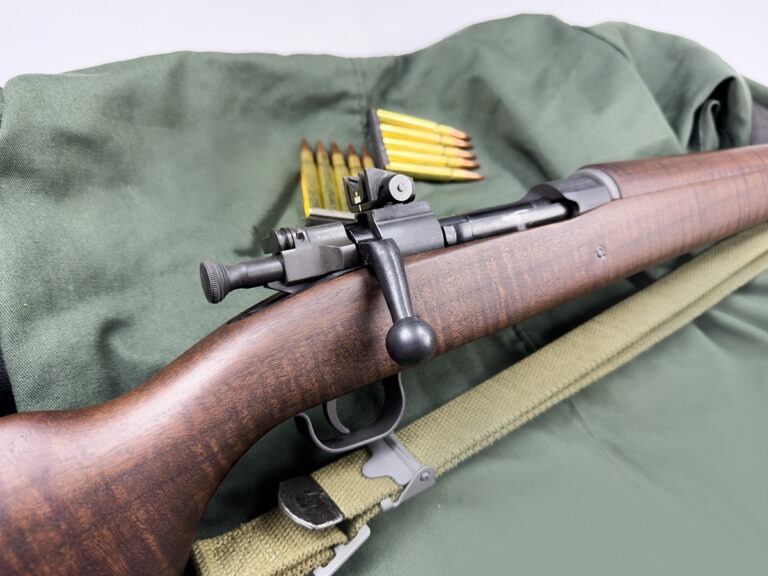
We hit the range to check out the CMP’s M1903A3 Springfield expert reclaimed.
I remember going to gun shows looking for Mosin rifles with $100 in my pocket and the knowledge that I’d be able to walk out with a rifle, a tin of 440 rounds and some change to get a hot dog at the vending booth.
I think a lot of us took those days for granted. The Cosmoline-scented Saturdays and the thrill of finding a gun with the markings you wanted passed like wind in the night.
While we are no longer living in the golden age of military surplus, we are entering an era of rebirth and a desire to do right by these artifacts of a bygone era. As a broad category, the retro theme on new guns has evolved past a fad into a full-blown subset of the industry with a huge amount of effort being made to recreate faithful reproductions of some of our favorite historical guns.
They say legends never die, and in this case, the CMP has resurrected the M1903A3 Springfield in a very surprising way that combines historical parts with modern technology.
A Brief History of the M1903A3
The M1903A3 was one of the last iterations of the venerable M1903 rifle, itself a product of turn-of-the-century thinking surrounding ideal military rifles. While people tend to brush over a few details to separate this rifle from the naughty Germans and their internationally renowned Mauser, the M1903 is effectively a branch of the M98 family.
From a design standpoint, it did not necessarily improve on the mechanical function of the M98; however, it was generally considered to be an improvement in accuracy due to the excellent ammunition of the era and its extremely adjustable and precise rear sight as opposed to the more crude sights on foreign rifles.
The lessons learned in World War I eventually led to the development of self-loading designs, but by the time WWII began, American forces didn’t have nearly enough arms and equipment.
So, many designs intended for WWI, such as the Browning Automatic Rifle (BAR), Thompson submachine gun and the M1903, were put into mass production, many with changes to speed up manufacturing.
The M1903A3 was such a design, and it removed some of the more time-consuming elements from the M1903 as well as some streamlined components, such as a rear sight that was more in line with that of the M1 Garand and M1 Carbine. The M1903A3 remained an accurate rifle, with its optically equipped variant, the M1903 A4 serving as a sniper rifle. The M1903A3 saw action globally and developed a positive reputation that remains to this day.
The postwar years were less kind. Because millions were made and people just had them around, the M1903A3 was nothing special and, as a result, it was consistently used as the base for the crime of sporterization.
Back then, people just didn’t quite understand that these common guns would be extremely valuable one day, and they chopped them up, refinished, re-barreled, and drilled-and-tapped countless rifles to hell. Many of these rifles were also deactivated, welded and chromed and made into parade and drill rifles. Such was the fate for tens of thousands of otherwise good rifles.
The butchery of our national history has thankfully become something of a massive party foul these days. Restorations have become the new hobby for the educated, and a small but dedicated group of companies have rallied to start producing new parts and stocks to get these old warriors back up and running.
The M1903A3 is the subject of this article, but shooters should know that there are new stocks and barrels for dozens of models of military rifles out there, from WWI 1903 sniper rifle variants to British Enfields, American and British P14 and P17 Enfield/Eddystones, Garands and M1 Carbines, and many more. Likewise, barrels are available from companies like Criterion for almost every modern American service rifle from Krags to Navy EBR variants.
The CMP’s Challenge
There have certainly been attempts to revive Springfield rifles. The first major situation that we need to address about this project is what was done to these rifles—in particular, when they were converted to parade and drill configuration.
Yes, it’s true there are plenty of firing examples of drill rifles. Although, over the years, the majority of these have been reduced to the status of a baton for marching bands. They became props, and the only thing that needed to work was the action of the bolt itself. Because these guns no longer needed to fire cartridges, the magazine cut-off selector switch was welded in place.
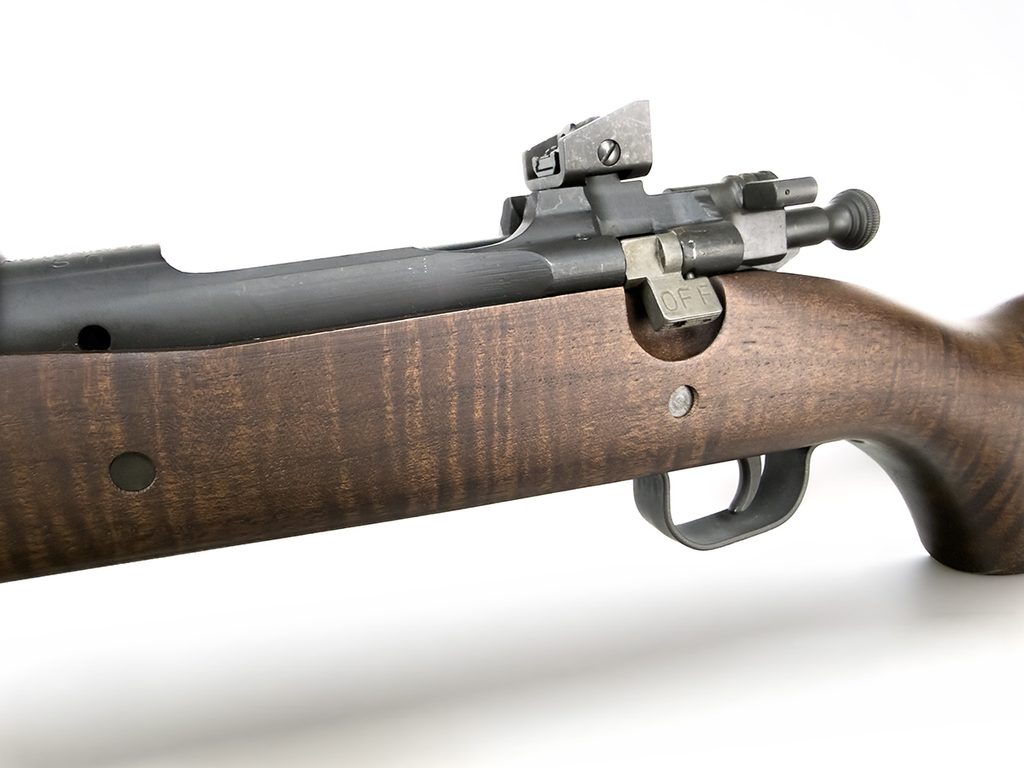
For the unfamiliar, the Springfield rifle features a magazine cut-off designed primarily to help conserve ammunition. The switch, when activated, only allows the bolt to travel partway backward, not enough to actually strip a round from the magazine. The idea was that you would have five rounds in the magazine and turn the magazine off, and for long-range combat, which was one of the general theories of the day, you would single-load individual cartridges into the chamber. If close combat was expected, you would turn the magazine on and allow the rifle to feed as it normally would.
However, in doing this, the people who were disabling the rifles ended up introducing the possibility of uneven heat by way of welding and damage to other places on the receiver. This led to a number of rumors that these receivers were no good … and even dangerous.
That said, there were quite a few of these sketchy projects that did end up being functional, albeit it varied considerably on who was doing the building. Since the metal could not be re-parkerized due to the amount of welding material permanently infecting the receiver, using Cerakote or Brownells Aluma-Hyde spray paint was the order of the day.
But, this wasn’t a true fix, and I’ve never seen one of these turn out looking right. The question of the receiver’s integrity remained, and there are a lot of people who simply avoid reclaimed receivers like the plague.
This stigma has existed for as long as I can remember, and it’s consistent today. When I go through my local gun shops, I’m always hunting for military rifles, and I have passed on a number of rebuilt Springfields just for this reason.
I know plenty of guys have shot these rifles for the past 20 years in competition, with many of the guns seeing thousands of rounds of ammunition after being nice and heated up during rapid-fire stages.
There has been the presence of rumors that suggest you are effectively playing with a hand grenade, but just like so much of the Fudd lore that exists in this culture, I have never been able to track down a single example of this actually happening.
Myth Busting and Modern Magic
I recently had a meeting with my friend Chris Hord, the CMP’s chief product officer. One of the things Hord and I talked about was the persistent stigma against the reclaimed receivers and the possibly dangerous quality of the heat damage. This was the first step in this project. The CMP accumulated massive quantities of deactivated Springfield rifles over the years and needed to figure out a way to get these guns up and running again.
Knowing that their customer is ultimately not just a collector, but a shooter as well, the idea to bring these rifles back started in early 2024. It wouldn’t be good enough to just get the guns physically functional—they also had to look right as well. This began a serious effort to look into not just the mythology around reclaimed receivers, but if there was actually a sliver of truth to the old lore that these were one step away from failing. The thing about old wives’ tales is that there’s usually a small grain of truth buried in there somewhere that is enough to create doubt.
To get this project off the ground, the CMP needed to figure out an R&D process to determine if there was any truth to the rumors and address them in a way that worked on a mass scale. The heat treat on these guns was effectively case hardening. In theory, the high welding temperature could cause cracking. To figure out just what they were working with from a strength perspective, the CMP did some pretty radical test testing consisting of completely removing the heat treat from a number of receivers, making them effectively soft. These are kneeled receivers then intricately measured next to complete receivers that were in original condition. All of the receivers were then test-fired with high-pressure test loads, as well as standard ammunition. They were then measured again.
Even when completely soft, no receivers exploded, and the amount of material distortion was barely noticeable. The idea that they would simply explode because of a weld on the back of the receiver was effectively a busted myth.
To further their testing, the CMP sent out receivers to be sectioned and examined for cracking in the heat affected areas at a special lab in Atlanta. This testing showed that there was risk of damage in these areas, and the metal was affected by the high nickel content.
Welding material needed to be completely removed. To accomplish this, the CMP uses an advanced machine process to remove this material, and it is then replaced with comparable steel and then re-machined to spec. To further prove their dedication to doing this in the best, most thorough way possible, they also magnetic-particle inspect every single receiver.
Each individual receiver that’s built into a rifle is dual-field inspected and certified by serial number. If this doesn’t remove all doubt, I personally don’t know what would.
We’ve Got the Lock. How About the Stock and Barrel?
Criterion is a name that anybody in the competitive shooting world should know already. I’ve been shooting their barrels for national matches for years and have always been impressed. All three of my Fulton Armory National Match rifles (Garand, M1 Carbine and M14/M21) wear Criterion barrels, as does my CMP-restored 1898 Krag. Criterion is a large manufacturer that turns out an insane number of barrels, and I have always enjoyed the fact that they spend the time to deliver products for these older guns.
CMP Springfield here has a standard 1903 A3 barrel; it’s not chrome lined, and it’s chambered in .30-06. These Criterion barrels shoot incredibly well. Right out the gate, I tested this rifle with five different loads and the accuracy was better than I had hoped for across the board.
Off the bench at 100 meters, all of my five-shot groups were under 2½ inches with the standard metallic sites on the rifle. This is definitely 10-ring quality. In theory, with any of the tested ammunition, you should be able to fire a gold medal score if you do your part.
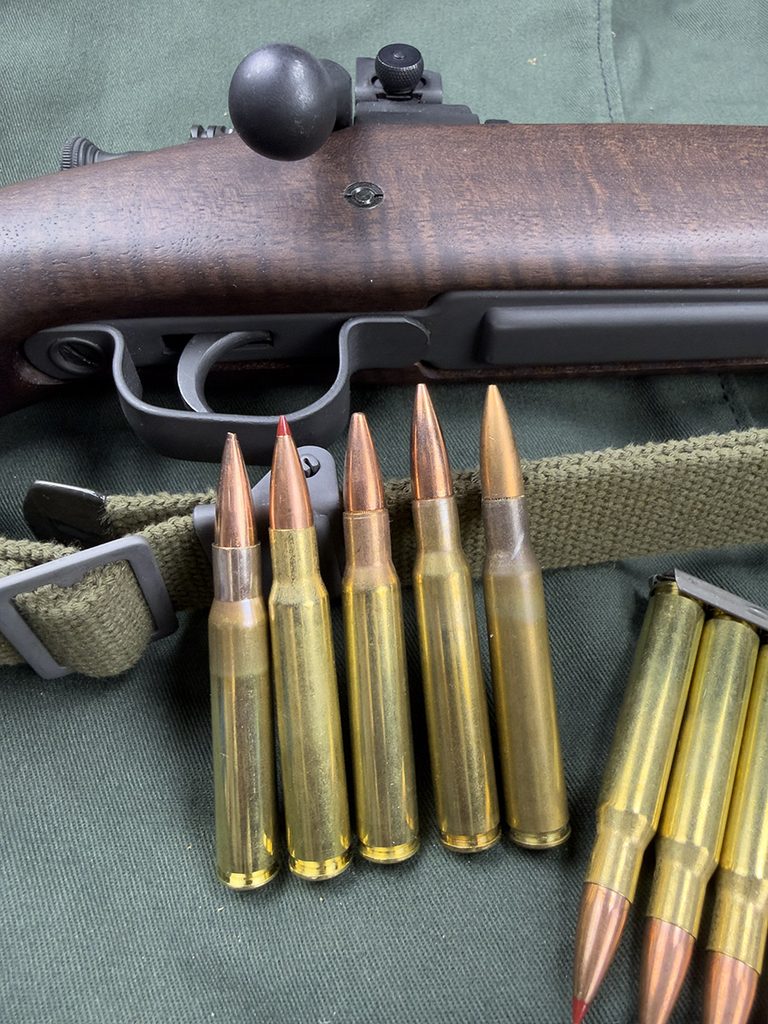
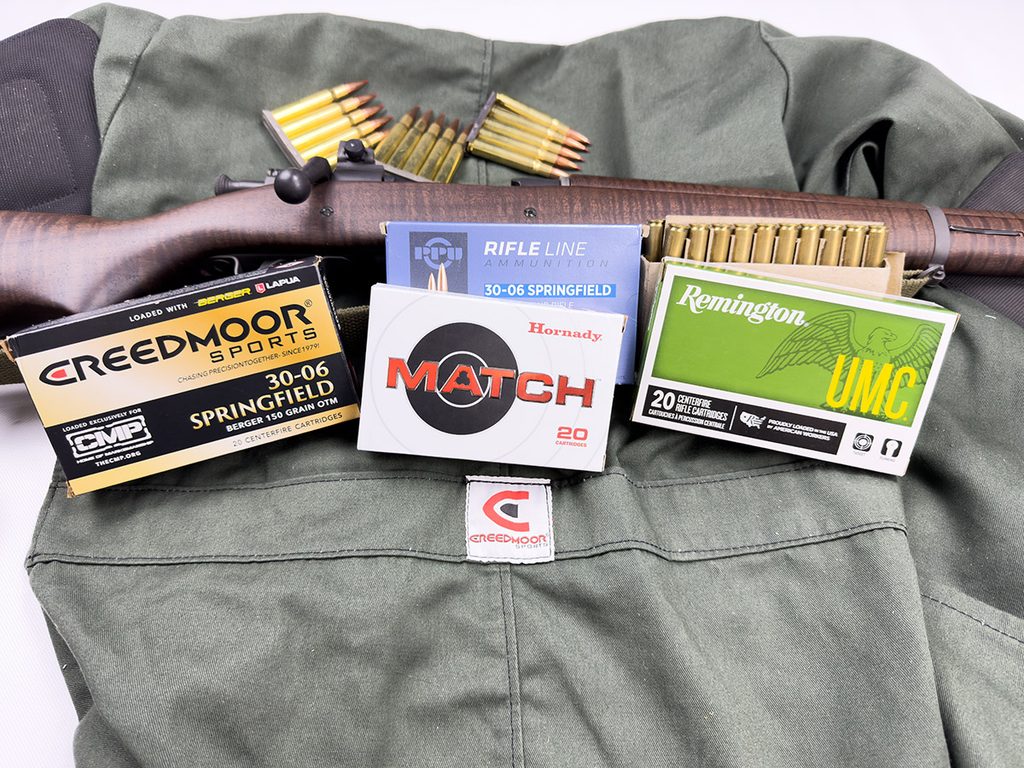
The five ammunition types that I tested were CMP’s 150-grain Creedmoor match load, Hornady 168-grain Garand Match, Remington 150-grain UMC, USGI HXP and PPU 150-grain FMJ. The best groups were a toss-up between the Hornady and Creedmoor, with both averaging 1½ inches for 10, five-shot groups at 100 meters fired in succession. Remington UMC and old HXP still kept groups tight, but I did notice a general difference in the match loads living up to their name. The rifle was easy to operate with all ammunition types. I experienced no failures to feed or fire even during rapid fire simulation.
The stock on this rifle really needs to be experienced to be believed: It’s a copy of the much sought after Keystone C stock, widely considered to be the best stock profile for the Springfield. The manufacturer of this stock is Minelli in Italy—and the grain pattern on mine (featured in the photos of this article) is not special order. A large percentage of the stocks arriving at CMP have incredible grain patterns.

The ergonomics of this stock are incredible, and it feels great in the hand. The profile displays a somewhat flat area ahead of the front action screw that allows the rifle to sit very stable for offhand shots. The fit and quality are topnotch, and most of the stock hardware is original but in completely refinished, like-new condition.
Odds and Ends and Collector Perspective
Reclaimed rifles are usually cheaper than originals on the street, and many people avoid them because of the reasons discussed earlier. The M1903 and A3 have been on a bit of a roller coaster in terms of cost in the last 10 years, and in the same way that I heard moaning from collectors when the CMP released the new M1 Garand, the party poopers are more worried about their collection losing value than getting people on the line at Camp Perry.
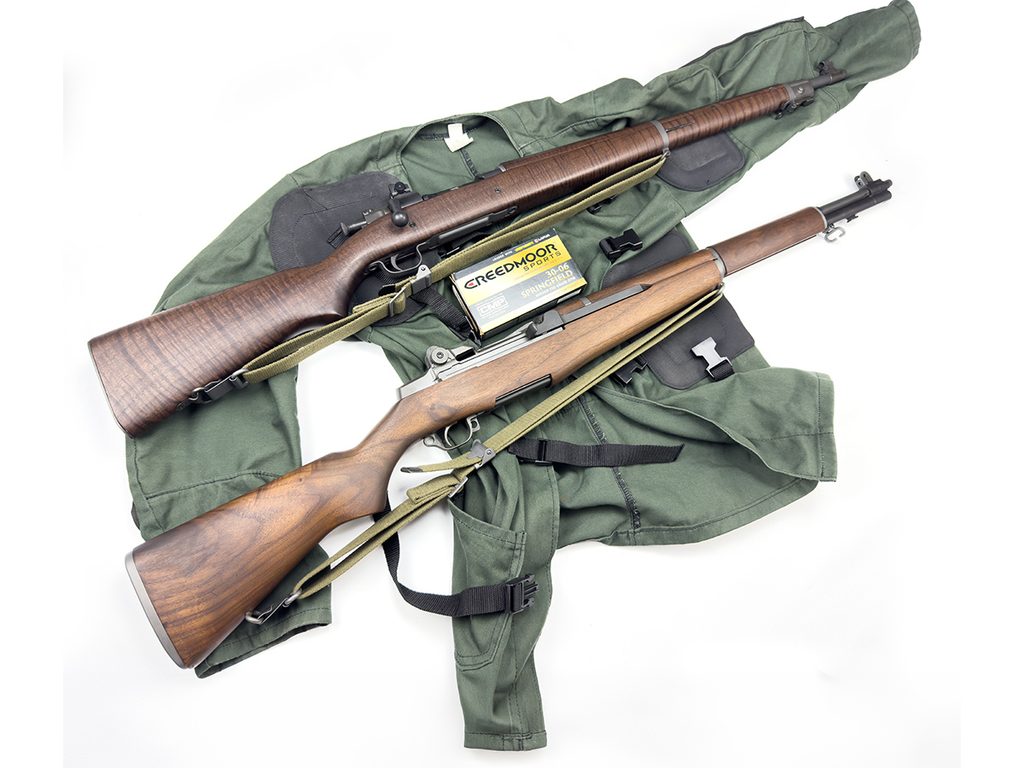
The remarkable part is that this supreme match rifle retails at $1,050, putting it firmly into reasonable territory for most people who want to get to the line. The original guns, even if they have new barrels, are suddenly less appealing. The CMP rifles are effectively “new” guns, and they shoot like it. Factoring in the cost and guesswork of getting an original gun up and running, you’d pay a whole lot more and may not get the results you see here.
I don’t care if my military rifle collection ebbs and flows in value. I want guns I can shoot and have fun with, not just lock up and not hand down to the next generation.
While I’d like to end this on a truly positive note, I’m going to come out and say that the people with 50 Garands and Springfields who are hoarding and sitting on their dragons’ gold have no business complaining about these rifles because it’s this greed and hubris that have robbed future generations of shooters access to these pieces of our American heritage.
Driving up costs by creating scarcity has driven people away from the historical sites like Camp Perry and away from these guns.
The CMP is selling Garands for around $1,000 depending on options. Don’t pay idiot tax to people at gun shows selling these guns for double that; they literally aren’t worth it. Likewise, if you are a shooter who wants performance on the line winning medals, there isn’t a reason to pad some hoarder’s pockets when you can get the new standard in Springfield rifles shipped to you.
Editor’s Note: This article originally appeared in the November 2026 issue of Gun Digest the Magazine.