 Say that this little man likes these?
Categories
Say that this little man likes these?

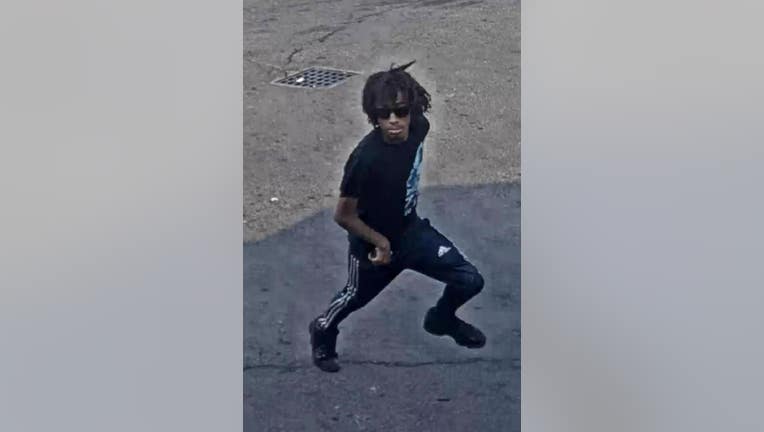
Detroit Police said two men attacked an officer in full uniform Saturday evening at a Detroit gas station.
DETROIT (FOX 2) – An off-duty Detroit Police Officer who was in full uniform and on his way to work the Taylor Swift concert was attacked at a Detroit gas station Saturday evening.
Detroit Police Chief James White said the officer stopped at a gas station on Joy Road around 5:30 p.m. on Saturday for gas and was in full uniform.
According to White, the officer was paying for his fuel inside the gas station when two men attacked him. One of the two was armed with a Glock, White said, and they were able to wrestle the officer’s gun away from him.
The officer fought back and they fought over the gun, which the officer was able to eventually get back.
White said the two suspects then fled from the scene and no shots were fired.
“Mama, sister, auntie, somebody turn them in tonight. We’re not going anywhere,” White said.
According to White, the officer was heading to work the Taylor Swift concert when he was attacked
The police were initially offering a $1,000 reward but upped to $5,000 just a few minutes later.
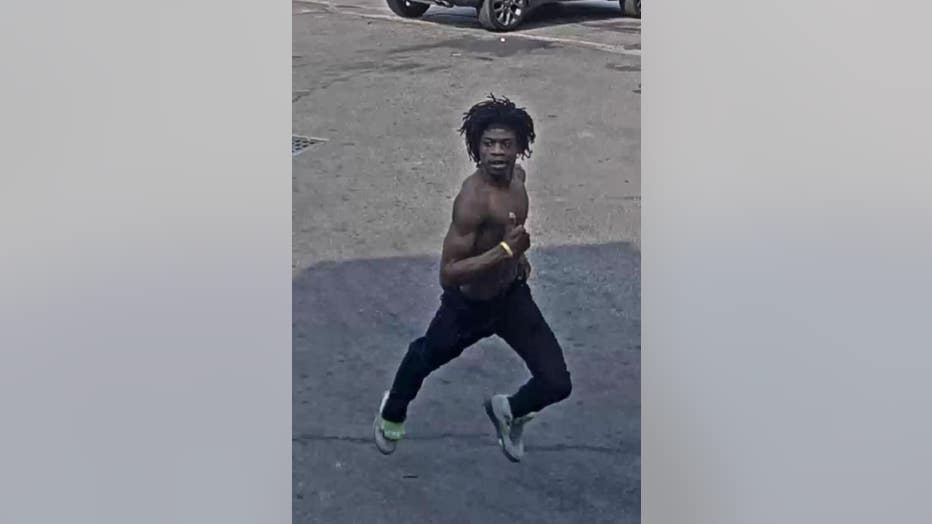
Detroit Police said two men attacked an officer in full uniform Saturday evening at a Detroit gas station.

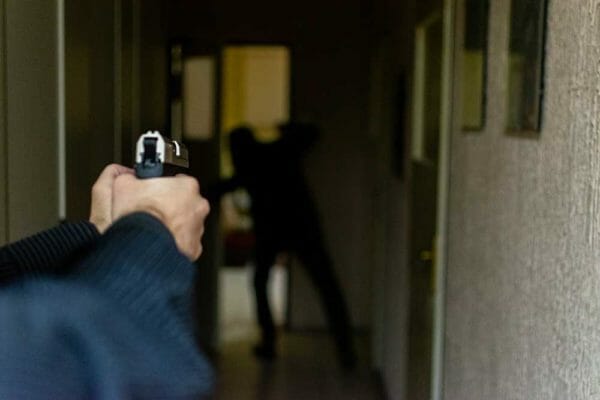
U.S.A. –In an incident that took place in Ascension Parish, Louisiana, a homeowner shot and killed a man who was attempting to break into their residence. The tragic event unfolded early Sunday morning when the homeowner’s swift actions resulted in the death of the intruder, identified as 20-year-old Kameron Serigny from Gonzales, LA.
The Ascension Parish Sheriff’s Office was alerted to the attempted break-in at around 6 a.m. Deputies arrived at the scene and discovered Serigny deceased. The homeowner, whose identity remains undisclosed, reported firing several shots at Serigny in response to his forceful entry.
According to investigators, the chain of events began when the Serigny first targeted a car parked in the driveway, setting off the alarm and drawing the homeowners’ attention. The residence was equipped with multiple security cameras, which captured footage of the suspect engaging in bizarre behavior, such as eating grass and striking his chest.
Video evidence showed Serigny subsequently attempting to break the glass door of the home. At this point, the homeowner discharged a single shot, causing the intruder to collapse. However, Serigny managed to regain his footing, puncturing another hole in the door before eventually breaking it open. The homeowner responded by firing three to four additional shots, ultimately leading to Serigny’s death.
Sheriff Bobby Webre of the Ascension Parish Sheriff’s Office shed light on the incident, noting that Serigny appeared to have been under the influence of psychedelic drugs during the attempted break-in. Witnesses reported the intruder exhibiting erratic behavior, including pulling his hair and consuming grass. Despite repeated warnings from the homeowner, Serigny persisted in his attempt to enter the domicile.
Webre further revealed that the homeowner’s wife had remained on the phone with emergency services throughout the ordeal, providing real-time information on the unfolding situation. When Serigny finally managed to break through the glass door, the homeowner fired shots at him multiple times, leading to his demise inside the living room.
Law enforcement officials have not uncovered any substantial criminal history related to the deceased intruder, suggesting that this was not a premeditated home invasion. While investigations into the incident are ongoing, the evidence thus far has supported the homeowner’s actions as a justifiable response to a threat to their personal safety and property.
By Fred Riehl and AI tools. Note: This article was generated using AI technology and may contain some automated content aggregation and analysis.


He was a prolific writer, the first Briton to be awarded the Nobel Prize for Literature, who nonetheless declined the appointment as Poet Laureate and turned down a knighthood. Rudyard Kipling was feted in his day for his portrayal of stiff-upper-lip Englishness – even though his traditional values and literary reputation are now occasionally vilified by fashionable revisionism. This is the familiar Kipling. However, there was another side to him. The author and poet had a passion that later went on to be shared by millions. He loved motoring.
Kipling was drawn into the fraternity of the road by newspaper magnate Alfred Harmsworth, who drove down to Rottingdean on the Sussex coast in October 1899 to demonstrate his Panhard car to his literary friend. Motoring was “like being massaged at speed”, Harmsworth declared. Kipling and his wife, Carrie, took a 20-minute trip and were equally enthralled. The outing left them ‘white with dust and dizzy with noise – but the poison worked from that hour’, Kipling declared in Something of Myself.
He hired a car he called The Embryo, a Lutzmann Victoria of carriage crudeness with a single-cylinder engine and belt drive, capable of 8mph. The weekly cost, including chauffeur, was 31/2 guineas. When it arrived, it was “pawing the ground before the door” and the children started dancing around it, according to their cousin, Angela, granddaughter of Edward Burne-Jones (who later became the novelist Angela Thirkell).
Kipling promised the children a ride, but “the monster” refused to start. “We sat and sat in it while the chauffeur tinkered at its insides, and then had to get out with a promise for a real ride some day,” Thirkell wrote.

The GWK light car was one of the vehicles Kipling took an interest in
Kipling and his wife used it through the summer of 1900, ostensibly for house-hunting although he admitted that they simply enjoyed the “small and fascinating villages” of England. They were driven 20 or 30 miles after breakfast, lunching in hotels and returning home in the evening on virtually empty roads.
In 1901, Kipling purchased a US built Locomobile steam car that spent much of its time off the road, mainly because the petrol burners habitually blew out in a crosswind. On one 19-mile trip the car “betrayed us foully”, he wrote to a friend. “It was a devil of a day. It ended in coming home by train.” The car was noiseless, he conceded, “but so is a corpse”. Kipling felt he had been let down. “Her lines are lovely, her form is elegant, the curves of her buggy-top are alone worth the price of admission, but as a means of propulsion she is a nickel-plated fraud.”
The underwhelming experience with the Locomobile directed him towards British cars and genuine innovation, qualities that were combined in the Lanchester produced in Birmingham by Frederick and George Lanchester. They were designed as a motor car rather than a carriage adaptation, and with a power train that owed nothing to stationary engines and transmissions. Kipling’s 1902 purchase had a centrally mounted 10hp air-cooled engine with horizontally opposed cylinders. Plus each piston had its own crankshaft and flywheel assembly, and two contra-rotating shafts to provide mechanical smoothness, a solution that later appeared in many modern engines. Unfortunately, this car, too, was trouble. On its delivery trip from the factory to Rottingdean, driven by George Lanchester, it suffered 21 tyre deflations.

A portrait of Rudyard Kipling from 1865
Flats were commonplace at that early stage of motoring. Tyres were poorly constructed and road surfaces were rugged, so a set on a light car was expected to last no more than 2,000 miles and on a large car perhaps 1,000 miles. The Lanchester’s delivery journey proved to be a foretaste. Once in Kipling’s ownership, it broke down so often that he christened it Jane Cakebread after a prostitute notorious for 93 convictions. This is possibly the first recorded instance of a pet name for a car. Kipling became an addict. In 1903, the car underwent a six-month overhaul but still broke down so often that Lanchester provided a full-time engineer at 30 shillings a week, as well as a driver. Only after June 1904, when the firm supplied a new 12hp car that Kipling named Amelia, did the author experience comparatively trouble-free motoring.
Amelia fuelled Rudyard Kipling’s devotion to motoring so much that he said a car was a means of indulging one’s sense of English history. “A time machine on which one can slide from one century to another,” he said. Plus, he added, cars were good for the nation’s temperance and education, since drivers needed to remain sober and to read road signs. After trying a Siddeley in 1905, Kipling bought a Daimler he called Gunhilda. But in 1910 he was won over to what became known as ‘the best car in the world’. Travelling through France with his wife, Kipling encountered two friends in Avignon. These were the motoring peer Lord Montagu, who was trying out a new 60hp Rolls-Royce, and Claude Johnson, managing director at Rolls-Royce and the man known as the hyphen in the brand’s name.
Kipling accepted the offer of a spin and the party drove into the Alps, soaring up winding passes beyond the snowline as mountain panoramas unfolded with a grandeur beyond the expectations of even the much-travelled author. He followed up this experience with a lift to Paris and promptly ordered a Rolls-Royce Silver Ghost with limousine landaulet body by coachbuilder Barker. It was delivered in March 1911 – all for £1,500. He wrote to Johnson: ‘This place, which was reasonably quiet, simply stinks and fizzes with every make of car except R-R. It’s a Christian duty to raise the tone of the community. So when you’re ready, send it along.’ However, a fire at Barker’s and royal requests for coaches for the forthcoming coronation delayed the order.
Rolls- Royce lent him a car, then sent a Hooper-bodied limousine. Kipling rejected it and decided to pull strings through Max Aitken, later Lord Beaverbrook. He was also his friend, investment adviser and a Rolls-Royce shareholder. Aitken wrote to Johnson: ‘I warn you that Kipling is being lost to you entirely through downright neglect and ill usage.’ Johnson’s response was that, because of Kipling’s ‘complaints and wailings’, he would be glad to be rid of him, but the matter was settled amicably and the author took delivery of The Green Goblin. He ran it for two years, then part-exchanged it for another Silver Ghost 40/50hp he called The Duchess, which took the family to France in March 1914. Kipling kept it for seven years and sold it for £200 more than it had cost him, remarking dryly that Rolls-Royces were the only cars he could afford to run.
With their lives overshadowed by the fate of their 18-year-old son, John, unaccounted for after a Loos action in 1915, the Kiplings motored many miles after the war. They hoped to find someone who knew what had happened to him. They travelled many more to cemeteries as part of Kipling’s work as an Imperial War Graves commissioner. However, fast motoring could still enliven their day. Leaving the Villers- Cotterets cemetery where an Irish Guards memorial was mooted, The Duchess ‘broke all modest records… the first 16 miles in 25 minutes,’ he wrote. Then, at 46mph, they were overtaken by ‘a light blue two-seater with lots of luggage behind’.
Kipling ordered his chauffeur to set off in pursuit. The Rolls wound up to 50mph, ‘but even then we could not see him’. However, on a Scottish bend taken too fast, The Duchess came into her own: the car, he wrote, ‘hung on with her teeth and toenails, shattering gravel like shot under her mudguards and literally swearing like a cat on a wall’. Kipling owned three Silver Ghosts through the 1920s. He sold one back to the company, which shipped it to India where it was converted into a mobile temple. In 1928, he bought a Phantom 40/50 with his favourite black-and-green coachwork, dubbed Esmeralda. With blue Windover body, this car passed to the National Trust and is housed at the Kipling family home, Bateman’s, in Rottingdean.
But his enthusiasm was beginning to wane. In 1930, Rudyard Kipling lamented that careless drivers and accidents were taking the fun out of motoring. Nevertheless, in 1932 he bought a Phantom 1 20/25 with body by Abbott of Farnham, specifying that he could wear his top hat in the back. Although trips to the south of France and Marienbad were taken by train, the chauffeur drove the car from England to meet them. The Phantom 1 was Kipling’s last car. He died in 1936, and Carrie three years later. The next reference to it seems to have been a 1963 advertisement in The Times, offering it for sale with the stipulation that ‘only Empire loyalists or persons of similar persuasion need apply’.
Keen on swift regal motoring though he was, Kipling was no driver. Chauffeurs sustained his passion and, for all his writings, a handful of simple lines published in the Daily Mail in 1904 seem to offer his motoring epitaph. It was entitled The Dying Chauffeur: Wheel me gently to the garage, since my car and I must part. No more for me the record and the run. That cursed left-hand cylinder the doctors call my heart Is pinking past redemption – I am done. They’ll never strike a mixture that’ll help me pull my load. My gears are stripped – I cannot set my brakes. I am entered for the finals down the timeless untimed road To the Maker of the makers of all makes.
Acknowledgements: Toni and Valmai Holt, The Kipling Society, Motor Sport
Want to read more motoring content from The Field? Click here. Read about the classical cars being given an environmental makeover here. And click here to read our guide to the best UTVs for rural estates.

“In the poll, Tennessee voters dramatically retreat from their soft support of proposed Red Flag Laws and do not see this as the solution to their safety concerns when informed that Red Flag Laws merely take guns away from dangerous individuals but do nothing to prevent them from causing harm by some other means.
Red Flag Law support erodes even further when informed that there are existing laws to take threatening individuals out of the community right now,” the poll said. “Tennesseans largely support recently passed legislation that puts police officers in schools and believe enforcing the current laws on the books is an effective solution to keeping their families, communities, and state safe.”
Co/efficient surveyed 1,770 likely general election voters in Tennessee. The was conducted between May 30 through June 1 via text message and landline phone calls.
According to the poll, 84 percent of voters say a dangerous individual should be removed from the community rather than taking their guns and leaving the individual in the community.
“Support for Red Flag Laws drops 21% when voters are informed this leaves threatening individuals in the community, failing to prevent harm by some other means,” the summary of the poll says. “Two-thirds of voters say current laws should be enforced to take dangerous people out of the community rather than passing new ones that would leave them in the neighborhood.”
The report also notes that 77 percent of Tennesseeans support a new law to beef up armed security at schools.
In the wake of a mass shooting at The Covenant School in Nashville, Gov. Bill Lee (R) has called for the passage of red flag laws during a special session of the Tennessee General Assembly in August.
“We all agree that dangerous unstable individuals who intend to harm themselves or others, should not have access to weapons,” Lee said in a video posted on Twitter in April, “and that should be done in a way that requires due process, a high burden of proof, supports law enforcement, punishes false reporting, enhances mental health support and preserves the Second Amendment for law abiding citizens.
Throughout the last couple of weeks, I’ve worked with members of the General Assembly, constitutionally-minded, Second Amendment-protecting members to craft legislation for an improved Order of Protection law that’ll strengthen safety and preserve the rights of Tennesseans.”
For its part, the Republican-led Tennessee House GOP said red flag laws are a “non-starter.”
“Any red flag law is a non-starter for House Republicans,” the House majority party said in response to Lee’s proposal. “Our caucus is focused on finding solutions that prevent dangerous individuals from harming the public and preserve the Second Amendment rights of law-abiding citizens. We have always been open to working with Governor Lee on measures that fit within that framework.”
State Senate Majority Leader Jack Johnson (R-Franklin) echoed the sentiment of his House colleagues in a statement to The Tennessee Star.
“I have reviewed the governor’s proposal,” he told The Star. “It’s a red flag law and I have always opposed red flag laws. I do not support it.”
