
Category: A Victory!

“[Minnesota’s] House File 3570 was referred to the House Committee on Public Safety Finance and Policy and would ban so called ‘assault weapons by expanding upon an existing statute used to define these firearms,” NRA-ILA reported Wednesday. “The bill would also prohibit the sale or transfer of ‘assault weapons’, establish a buyback program, and call for an appropriation from the general fund.”
“HF 3570 uses a broad list of different firearms to define ‘semiautomatic military-style assault weapon’,” NRA continued. “Additionally, varying models of a specific gun or models similar to those listed in the bill are prohibited. Modifications and accessories like protruding grips and barrel shrouds, are features that would also cause a gun to be banned. The transfer of semiautomatic military-style assault weapons is prohibited, with very limited exceptions for law enforcement and the military.”
It’s like Minnesota Democratic–Farmer–Labor Party Second Amendment haters have taken all the various iterations of semi auto bans from “by name” to “by characteristics” and added steroids to the mix. Whereas 1994’s federal ban included semi-automatic rifles able to accept detachable magazines with two or more of the “evil” mods like folding stocks, pistol grips, flash hiders and the like, taking a page from California, HF 3570 reduces rejection criteria to “one or more.”
It also lines out a section ceding that “a firearm is not a ‘semiautomatic military-style assault weapon’ if it is generally recognized as particularly suitable for or readily adaptable to sporting purposes under United States Code.” While Jews for the Preservation of Firearms Ownership was the first to warn about the Nazi origins of the “sporting purposes” term, the elimination of even that tells us much about the authoritarian mindset of Minnesota’s violence monopolists.
HF 3570 adds another curious disqualifier, “thumbhole stocks.” That’s because initially, thumbhole stocks were offered as stability and comfort workarounds to the federal pistol grip ban. So, California and other Democrat states decided their priority was for firearms to be less steady and therefore less accurate, ludicrously in the name of “commonsense gun safety.”
And naturally, no attack on armed citizens would be complete without special carveouts for the “Only Ones” expected to enforce the infringements.
There’s one other disqualifier though that should clear up ATF Director Steve Dettelbach’s inability to define what an “assault weapon” is, itself reminiscent of Judge Ketanji Brown Jackson taking a pass on defining “woman.” He should have just said “A Marlin 70620 Model 60 .22 Long Rifle.”Read
After all, the bill text says on line 2.26:
(b) Semiautomatic military-style assault weapon also includes any…
Then go down to line 3.5 and it includes:
…rimfire rifle with a fixed magazine that has the capacity to accept more than ten rounds of ammunition;
And the Marlin advertises a 14 + 1 capacity.
This is what these maniacs are demonizing as a “weapon of war” that “has no business on our streets” and no other purpose but the mass slaughter of innocents. After all, you can’t hunt deer with it! All that’s missing is some lefty vet saying it’s the same gun he carried in Iraq and Afghanistan.
No matter how much they scoff, deny, and lie, of course they’re talking about taking your guns.
And Minnesota’s not alone—California’s right with them on “large capacity magazines,” albeit they exempt “.22 caliber tube ammunition feeding devices or tubular magazines contained in a lever-action firearm” (emphasis added)—at least until the grabbers decide otherwise. And it would appear to be the same in New York, while Illinois, surprisingly, hasn’t “caught up” yet.
It’s interesting to note the backgrounds of the bill’s authors, Leigh Finke, Esther Agbaje, Alicia ‘Liish’ Kozlowski, Larry Kraft, and Samantha Sencer-Mura, DFL stalwarts and darlings of the prohibitionists all, and not a farmer or a laborer in the bunch. (That’s OK—it’s not like Antifa is comprised of those workers” they say they champion.) Ask them about the specifics of what they’re banning, aside from “everything,” and it’s highly likely that an on-the-spot challenge would result in a “shoulder thing that goes up” answer.
While HF 3570 is in its initial stages and has a long way to go, the dominant DFL is using momentum it gained getting due process-denying “red flag” gun confiscations mandated beginning this year. Meanwhile, Minnesota’s denying 18 to 20-year-old adults their right to carry firearms is being challenged.
Don’t look to formerly NRA-endorsed Gov. Tim Walz to honor any of the promises he made before he decided he didn’t need them anymore. That’s what happens when gun owners are led to believe a Democrat Fudd believes in their rights or has anyone’s interests at heart but his own.
The question now is, when is the Supreme Court going to use Bruen to put a stop to this nonsense? They will, won’t they?
About David Codrea:
David Codrea is the winner of multiple journalist awards for investigating/defending the RKBA and a long-time gun owner rights advocate who defiantly challenges the folly of citizen disarmament. He blogs at “The War on Guns: Notes from the Resistance,” is a regularly featured contributor to Firearms News, and posts on Twitter: @dcodrea and Facebook.
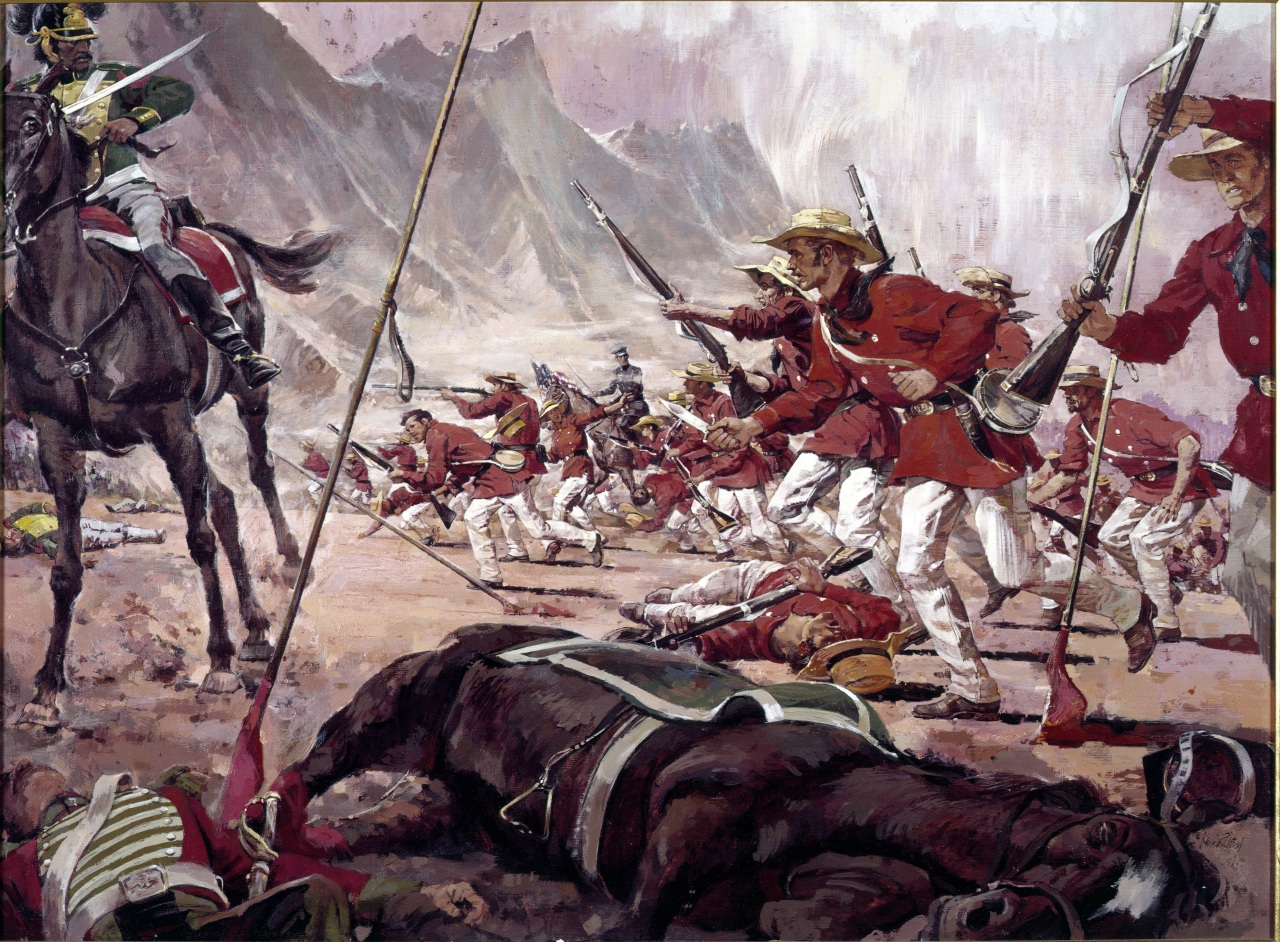
I bet a lot of folks don’t know that he was a West Pointer* too! Grumpy * Class of 1828

Or when you live in the wrong side of the tracks neighborhood! Anyways if you can afford this. Then you can afford to move! Grumpy

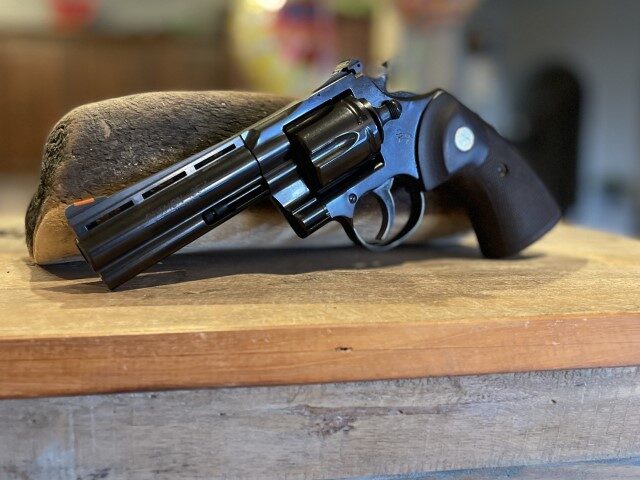
Colt has reintroduced its legendary Python .357 Magnum revolver in a blued finish, and the firearm is perfectly balanced and deadly accurate, as well as legendary.
The Python was launched by Colt in 1955 and it is iconic in the revolver world. It is immediately recognizable via the ventilation rib that runs the length of the barrel.
The reintroduced blued Python comes with either a 4.25″ or 6″ barrel length and holds six rounds of ammunition. The model we shot had a 4.25″ barrel and we shot .357 Magnum and various .38 Special rounds through it.
The trigger pull is smooth in double action and crisp and clean in single action. The weight of the revolver–42 ounces–helps manage recoil and keep the firearm flat while firing the powerful .357 Magnum round. Recoil is even more manageable when shooting .38 Special or .38 Special +P.
The balance of the blued Python is such that just picking it up and holding it delivers confidence. And that balance, combined with the great trigger, manageable recoil, and renowned Colt barrel, is part of a combination that delivers accuracy shot after shot after shot.
There will be many more range days with the blued Python, and it will be carried as a sidearm during hog and coyote hunts, too. Moreover, this handgun will be a perfect companion on camping trips deep in the mountains, where help is far away but threats are very close.
In reality, the blued Python is so gorgeous that gun owners may be temped to put it in shadow box and hang it on the wall like a piece of art. The only problem with that choice is the blued Python’s beauty is more than skin deep.
AWR Hawkins is an award-winning Second Amendment columnist for Breitbart News and the writer/curator of Down Range with AWR Hawkins, a weekly newsletter focused on all things Second Amendment, also for Breitbart News. He is the political analyst for Armed American Radio and a pro-staffer for Pulsar Night Vision. He was a Visiting Fellow at the Russell Kirk Center for Cultural Renewal in 2010 and holds a Ph.D. in Military History, with a focus on the Vietnam War (brown water navy), U.S. Navy since Inception, the Civil War, and Early Modern Europe. Follow him on Instagram: @awr_hawkins. You can sign up to get Down Range at breitbart.com/downrange. Reach him directly at awrhawkins@breitbart.com.
RICHMOND, Calif. (KGO) — California Attorney General Rob Bonta Thursday announced the arrest of a suspect in the city of Richmond with a large cache of illegal firearms.
This includes assault weapons, high-capacity magazines, and approximately one million rounds of ammunition. Officials say the suspect is allegedly not legally allowed to own firearms.
“This arrest demonstrates exactly why the Armed and Prohibited Persons System is vital for the safety of our communities,” Bonta said in a press release. “In our efforts to retrieve guns from a prohibited individual, we found hundreds of allegedly illegal weapons and approximately one million rounds of ammunition.”
Bonta’s office said on Jan. 21, investigators from multiple agencies assisted in serving a search warrant at the suspect’s residence in Richmond. During the search, several suspected grenades were discovered and the Walnut Creek Police Department Bomb Squad and Travis Air
Force Base Bomb Squad were asked to respond. The grenades were found to be inert.
Officials say they seized approximately 11 military-style machine guns, 133 handguns, 37 rifles, 60 assault rifles, 7 shotguns, 20 silencers, 4 flare guns, 3,000 large capacity magazines, approximately one million rounds of miscellaneous caliber ammunition, and dozens of rifle receivers and pistol frames.
In 2006, California became first state to establish the Armed and Prohibited Persons System – which tracks firearm owners who are prohibited from owning weapons.
It is not clear why the suspect in this case is prohibited from owning weapons.
From link – “It is not clear why the suspect in this case is prohibited from owning weapons.”
It’s not clear because they’re blowing smoke up your ass. Here’s some back story from another web site I visit (frugalsquirrels.com) –
Bud was living the dream we all have..
But, there was nothing illegal about his collection. Here is the real story.
This is from a similar article and if true the state is lying to everyone.
My friend is a local FFL that does contract work for the Police Department and Sheriff’s Department where this happened and he gave me some background to this case a few days ago. The man who this stuff belonged to is in his 90s and a relative of his had to obtain legal guardianship over the man because he is suffering from advanced dementia which is why he is no longer legally allowed to possess firearms.
The man has not lived in the house where his collection was stored for the better part of 6 years because he’s living in a nursing home. The majority of the firearms have been owned for more than 40 years well before they were ever regulated in California and the man has possessed a special federal firearms license called a Curios and Relic license for the better part of 60 years that allowed him under California law to possess machine guns.
The actual machine guns that were in the man’s possession are ones that are legally owned and are registered with the NFA and the tax has been paid on them. The authorities have been well aware of what was in his possession because he registered them with the state when they required it. They’re simply pretending like this man is a criminal once they found out he was no longer mentally fit to possess the firearms and gleefully seized his collection.
Seems the state is lying about the circumstances of this case and tried to make it look like they made a huge bust.

For a Throwback Thursday, we’ll roll the time back 110 year ago, when India was a big-game hunter’s heaven on Earth. Deer and blackbuck antelope, ibex and ram, wild buffalo and gaur, leopard and tiger, the Indian Shikar was the principle jewel in every international hunter’s crown. 
Today there’s no hunting in India, as everyone knows. Well, not quite. “Hunting”, in the strict sense of the word, is forbidden by law. But farmers whose crops are damaged by wildlife, can get cull licenses and employ other people to combat the depredations. They say that quite a few fields are only planted to have legit reason to apply for a cull license. Even though gun permits are hard to obtain, there’s still a small but stubborn gunmaking industry, with small shops building double and single barreled shotguns the traditional way. And the game rangers have to track down man-eating tigers and leopards just as Jim Corbett did in the last century.
The hunting ban is there, according to the official version, because Indians used to live in harmony with the nature until the White Man arrived, and taught the Maharajas to hunt for sport. Then the colonizers together with local collaborators destroyed the tigers, leopards and rhinos.
This idyllic vision does not quite explain why, after half a century of hunting ban, the tiger along with a large share of other Indian wildlife, is still endangered. Nor why, under the facade of vegetarian Hinduist paradise, people still have to kill animals – out of necessity and for sport, that’s not always easy to tell apart. And as for how much the official politically correct half-truth matches the historical fact, let’s turn to just one shikar book, Thirty Seven Years of Big-Game Shooting by Sri Nripendra Narayana, the Maharaja of Cooch-Behar (1862-1911).
In Cooch-Behar, Sri Nripendra is still honored as the best ruler of the state ever. His reign saw numerous advances in all areas of life from railroad construction to education and women’s liberation. The only thing that might mar the image of this multicultural and enlightened prince – not in our eyes, of course – was that he was an avid hunter. In the best traditions of the Raj his “shooting parties” featured dozens of elephants acting as drivers and guests included the Viceroys of India.
The elephants – “one always requires a line of at least 40 Elephants to do any good in the jungles I have shot over” , he wrote – were a necessity rather than a luxury, as the “jungle he has shot over” is not the rainforest you see in Disney’s Jungle Book cartoons, but a level plain, intersected by a network of rivers and marshes, and covered by grass and reeds tall enough to conceal an elephant!
On a tour to Britain Sri Nripendra became friends with the cream of the British shooting public, headed by the future King Edward VII, and so impressed them with his stories that they persuaded him to publish them as a book. It runs for nearly three hundred pages, covering methodically almost every beast ever bagged by the Maharaja’s shooting parties – a treasure trove for a researcher – but I fear you, dear reader, are getting bored, so before we turn to the big question, let’s recount a few cases of the Indian classic: a close call with a tiger.
We found a real good fighting Tigress close to camp on the 9th. The day before, we had seen a dead cow and we started operations by inspecting the place. I saw pug marks and fancied they belonged to a Tiger and not to a Leopard as some thought.
The first two beats were blank, and we then tried a small patch on the other side of the nullah, out of which a Tigress came out to Ezra. He fired, and on receiving the shot she charged at once, Ezra’s elephant swinging round and making off. The Tigress then swam the nullah and Burgess and Ashton got shots at her as she was crossing. Believing the beast was wounded and meant mischief, I only sent on four guns as stops, joining the line myself with Smyth, Perree and Ashton.
We hadn’t gone very far when I heard a roar, and the next moment Elephants were flying round in all directions. Unfortunately she had singled out a pad elephant on which to wreak her vengeance and she got well home on him, giving him a nasty bite over the eye. The Elephant carried her on his head for a few seconds and then chucked her off. She next began charging the Elephants indiscriminately and presently came in my direction.
I had her carefully covered with my ‘450, and was just on the point of firing when my Elephant suddenly turned tail and went for dear life, I holding on all I knew. After a bit the mahout managed to get my beast back, and as I did not want any more Elephants mauled, I called in all the howdahs, and forming line moved towards the place she was last seen. I was beginning to wonder if she had managed to sneak off, when, with another roar, she went for Perree and actually scratched old “Sagaria” on the trunk before Perree dropped her; for her size, 8’-4 1/2″, she certainly took a lot of beating as a fighter.
 The Mahajara was keen on every novel invention in hunting guns, although on a few occasions he found himself wishing he’d stuck to older technology.
Khubber of Tiger, which proved good, was brought in on the 12th, and just at the end of the beat she walked out to me and I bowled her over, first shot. She rolled about a good bit, and I kept pulling at the trigger to finish her, not realizing till too late that I was not using a single-trigger gun. Suddenly recovering herself, she dashed down the bank out of sight. I knew she was badly hit, and on the line coming up, told Jemadar Asgar to take it in and, if dead, to pick her up or let me know if she was inclined to be ’ ugly. ”
I was standing on the top of the bank at this time, and “Tangru” called out that the Tiger was lying on its side. I shouted out to them to back out the Elephants and let me have a look at the beast. The words were hardly out of my mouth when the Tigress drove out the elephants and charged home on the Jemadar’s mount. Her teeth were fastened on the pad, and the Jemadar, by the greatest piece of luck, was just clear of her. I told the Jemadar and mahout to jump off, which they did, and I put two shots into the Tigress while still hanging on to the pad.
The second one finished her, and as she dropped off dead, the Elephant set to work pounding her. The men, especially the Jemadar, had a very narrow squeak, but, beyond a scratch in the ear, the Elephant was uninjured. I found my first bullet, a 12-bore Paradox firing 4 drams of powder, had hit her exactly on the right spot, and why it did not kill her dead I cannot understand.
Reading the book, it’s evident that Nripendra wasn’t just monkeying his British “superiors”. He was a true hunter at heart, and second to none in the game – one of the hardest, the Oriental splendor notwithstanding. Try hitting anything with a bullet from a rocking howdah as the elephant is making full steam to or from the quarry it justifiably fears! But the biggest question we have to ask here is, were his hunts responsible for the decline in Indian wildlife?
Thirty-Seven Years of Big-Game Shooting comes with a complete list of trophies by year, and sometimes by trip. If colonial hunts were so devastating, one would expect the number and size of trophies decrease over the years. In fact, the “game book” proves quite the opposite. The years with the record bags are those at the beginning of the new century, but they are intermixed with ‘bad’ seasons. In fact, there’s very little variation in bags over the time frame, and those that are there correlate with time spent hunting, and the usual factors such as weather and plain bad luck.
In short, the Maharaja’s hunts were totally sustainable. As Nripendra himself writes, concluding the record for the year 1902:
We had by this date completed exactly a fortnight’s shooting at Lahapara, and though from 19th to the 22nd little or nothing was bagged, taking the whole 14 days together, thirty-three head of big game were killed. With such a bag one would naturally expect the country to be depleted of beasts worth shooting, but this was not so. So far as one could judge, the district remained full of big game, including a fair number of Tiger.
Indian maharajas could have continued hunting the tall grass jungle for centuries, without any noticeable effect on rhino, tiger, and other wildlife. As is the case in much of the world where wildlife is depleted, it was destruction of the jungle to make room for tea plantations that did the animals in. Wish anti-hunters gave it a thought each time they pour themselves a cup!
Finland has announced it will open 300 shooting ranges in a bid to encourage citizens to take a greater interest in national defence.
A member of Finland’s defence committee said the move would help Finns improve their shooting skills in the face of increased threats from Russia.
Under the Finnish constitution, every male aged between 18 and 60 must complete national army service but the government hopes that civilians will keep their weapons skills after the period of conscription with the new range proposals.
Jukka Kopra, the Finnish politician, said: “The present government aims to increase the number of shooting ranges in Finland from roughly 600-700 up to 1,000.
Increase because of Finnish defence model
“This is because of our defence model, which benefits from people having and developing their shooting skills on their own.”
In 2023, Finland’s new Right-wing coalition agreed plans to increase the number of ranges to 1,000 nationwide by the end of the decade, as well as plans to allow diabetics to serve in the army and encourage more women to join up.
There are currently around 600 ranges in Finland, compared with 2,000 at the turn of the 21st century.
A spokesman for Finland’s defence ministry said it was working to “safeguard the activities of Finland’s shooting ranges and promote the establishment of new shooting ranges”.
In a statement to The Guardian, the spokesman added: “The environmental permit processes and legislation concerning shooting ranges will be streamlined.
“The target for the number of outdoor shooting ranges will be about 1,000 by the end of the decade. The focus will be on establishing a sufficient number of rifle and tactical ranges throughout the country.”