
In 1931, Richard Hollingshead Jr. owned and worked in his own automotive supply store called Whiz Auto Products Company.
Always on the lookout for the next great new idea, Hollingshead noted that even though the Great Depression was in full swing, people still found money to attend movies at their local theater.
He pondered the means to combine his auto parts business with movies and dreamt of opening a deluxe gas station and auto repair shop that featured a restaurant and movies for the customers to watch while they customers waited for their car repairs to be completed.
To bring his dream to fold, Hollingshead began by experimenting with the “outdoor movie” concept (and as he progressed, the concept morphed to exclude the gas station and auto repair business).
Hollingshead tested the outdoor movie concept in the driveway of his home located at 212 Thomas Avenue in Riverton, New Jersey.
He placed a 1928 Kodak projector on the hood of his car projecting the movie onto a white screen nailed to a nearby tree. He tried various placements of speakers behind the screen in an attempt to find the right distance and volume for the soundtrack. His experiments grew in complexity and soon he was testing the sound projection with windows in his car opened at different heights. He even used a sprinkler to simulate rain to see how outside noises would affect the soundtrack of the movie.

Hollingshead soon realized that if several cars were lined in a row, the cars in the rear would not have a clear view of the screen, even as he adjusted the distance of the screen from the ground. To ensure the automobiles had an unobstructed view of the screen, he placed ramps on the ground and drove the cars up onto the ramps to raise the front of the car off of the ground.
He reasoned that a series of ramps placed at taller and taller heights as you got closer to the screen would solve the problem. Soon Hollingshead was comfortable with the setup and filed a patent (United States Patent 1,909,537) for the Drive-In Movie Theater on August 6, 1932.

While he waited for the patent application to clear, Hollingshead began promoting his novel idea and sought investors for the new project.
His cousin, Willie Warren Smith, a parking lot operator, agreed to partner with Hollingshead and the two formed Park-In Theaters Inc. Edward Ellis, a road contractor, was offered a portion of the company’s stock in exchange for paving the lot the theater would be located in Pennsauken Township, New Jersey.
A 4th investor, Oliver Willets, an executive at Campbell’s Soup, was also allowed to provide seed money in exchange for shares of the new company’s stock.

On May 16, 1933, the day the patent was granted, Hollingshead began construction of the world’s first drive in theater on Crescent Boulevard in Pennsauken Township, New Jersey. Construction took three weeks at a cost of $30,000 and included a 40 foot wide by 30 foot high screen located 12 feet off the ground. The screen was enclosed in a mammoth concrete and brick structure that could be seen from miles away.
The drive in theater lot was paved with gravel and oil to keep dust down and discourage mosquitoes. Sound was supplied by three six-foot square RCA speakers (that could be heard from miles around on clear summer nights).

Opening night was scheduled for Tuesday June 6, 1933. The new drive in was to be known simply as “Drive-In Theater”. Hollingshead hammered on the numerous advantages drive-ins provided over indoor theaters.
Drive-in Theaters provided patrons the option of smoking in their own cars, not having to worry about talking and disturbing other movie goers, did not have to worry about finding or paying for parking spots (theaters in the 1930’s were often located downtown where available parking was sparse) and most importantly, children could be taken and allowed to sleep in the backseat of the car while their parents enjoyed the show.
Opening night was a smashing success as 400 car loads of patrons packed the lot to see the 1932 release of Wives Beware.
Strangely, a skeptical movie industry forced Hollingshead to pay $400 for a four day rental of the movie while indoor theaters only paid $20 for an entire week. Admission was 25¢ for each car and an additional 25¢ for each person, somewhat higher than the prevailing price at the indoor houses at the time (who were also offering double features for a lesser price).
Families arrived in droves while teenagers protested with “Down with Drive-Ins, More Work for Babysitters” signs (in the 1930’s, it was common for adults to leave their children with babysitters while they enjoyed a night out to watch a movie). A week later Hollingshead added a concession stand to sell food before and during the show.

Success of the first drive-in theater was short lived. By 1936, Hollingshead was forced to close the theater in Riverton and move his operations to nearby Union, New Jersey. Revenues were good but Hollingshead incurred significantly higher movie rental costs than the typical indoor theater which made it hard to turn a profit.
During that same year, a second theater was opened in Weymouth Massachusetts on May 6, 1936. The owners of the Weymouth Drive-In neglected to purchase licensing rights from Hollingshead (who held the patent for the drive-in movie concept) and Hollingshead filed a patent infringement suit against them.
A settlement was reached and Weymouth Drive-In entered into a licensing agreement with Hollingshead’s Park-In Theater company. Shortly thereafter, theaters began popping up all over the area and legal wrangling lasted for years afterward. So many suits and countersuits were filed that Hollingshead could barely keep up with the legal battles.
One case, involving Leows Theater in the late 1930’s, made its way to the First Circuit Court of Appeals. The courts decision was stunning and crushed Hollingshead’s Park-In Company.
The court ruled that the patent, which was the basis for the licensing fees that Hollingshead collected from other drive-in theater owners, was invalid and should have never been granted in the first place.
The court’s opinion was that the outdoor theater patent was not inventive and was merely a facsimile of the layout of an indoor theater utilizing cars instead of seats. Although a crushing blow to Hollingshead and his Park-In Company, the effect was to open the gates for further drive-in theater development.

By the 1940’s, community complaints concerning the noise that the drive in theaters emanated, spawned the introduction of in car speakers. The innovation was well received by drive-in movie patrons. By the end of 1949 there were 155 drive-ins located around the country. When the “car culture” of the 1950’s roared into full swing, the number of drive-in theaters swelled to over 800. By the end of the 1950’s there were over 4,000 drive in movie theaters in the United States.
 In the 1950 post war years, Americans began to move to the suburbs and everyone owned an automobile. And they loved their cars. Drive ins became particularly popular in rural areas. Parents loved drive-ins because they could take their kids. Teenagers loved them because of the privacy they gave them and their dates. During their height, some drive-ins used attention-grabbing gimmicks to boost attendance.
They ranged from small airplane runways, unusual attractions such as a small petting zoo or cage of monkeys, actors to open their movies, or musical groups to play before the show. Some drive-ins held religious services on Sunday morning and evening, or charged a flat price per car on slow nights like Wednesday.
This boom caused a trend toward ever-larger and more elaborate drive-ins, such as the Bel Air Drive-In in Detroit, built in 1950. This location featured space for 2200 cars, an elaborate concession stand along with a full playground and a train ride for the kids.
Some operators put up amusement parks, boat rides, fishing ponds and added in-car heaters to remain open year-round for their patrons. It was also during this period and into the 1960’s that the drive-in business began to expand beyond U.S. borders, with locations opening in Australia, Great Britain and Denmark among other countries.
| SKS | |
|---|---|

SKS Carbine from the collections of Armé museum, Stockholm, Sweden
|
|
| Type | Semi-automatic Carbine |
| Place of origin | Soviet Union |
| Service history | |
| In service | 1945–present |
| Used by | See Users |
| Wars | See Conflicts |
| Production history | |
| Designer | Sergei Gavrilovich Simonov |
| Designed | 1944 |
| No. built | 15,000,000+[1] |
| Variants | Chinese Type 56; Yugoslavian PAP; Romanian SKS; Albanian SKS; East German SKS; (North) Vietnamese SKS; North Korean SKS |
| Specifications | |
| Weight | 3.85 kg (8.5 lb)[2] |
| Length | 1,020 mm (40 in),[2] M59/66: 1,120 mm (44 in) |
| Barrel length | 520 mm (20 in),[2] M59/66: 558.8 mm (22.00 in) |
|
|
|
| Cartridge | 7.62×39mm M43[2] |
| Action | Short stroke gas piston, tilting bolt, self-loading |
| Rate of fire | Semi-automatic 35–40 (rd/min)[2] |
| Muzzle velocity | 735 m/s (2,411 ft/s)[2] |
| Effective firing range | 400 metres (440 yd)[2] |
| Feed system | 10 round stripper clip,[2]internal box magazine. |
| Sights | Hooded post front sight, tangent notch rear sight graduated from 100 to 1,000 meters.[2] |
The SKS is a Soviet semi-automatic carbine chambered for the 7.62×39mm round, designed in 1943 by Sergei Gavrilovich Simonov. Its complete designation, SKS-45, is an initialism for Samozaryadny Karabin sistemy Simonova, 1945 (Russian: Самозарядный карабин системы Симонова, 1945; Self-loading Carbine of (the) Simonov system, 1945). The SKS-45 was manufactured at Tula Arsenal from 1949 to 1958 and at Izhevsk Arsenal in just 1953 and 1954, resulting in a total Soviet production of about 2.7 million carbines. In the early 1950s, the Soviets took the SKS carbine out of front-line service and replaced it with the AK-47; however, the SKS remained in second-line service for decades. It is still used as a ceremonial firearm today. The SKS was widely exported, and was also licensed for production by then Eastern Bloc nations, Romania and East Germany, as well as China, where it was designated the “Type 56 Carbine”. The East German version was known as the Karabiner S, the Albanian as the Model 561 and North Korean as the “Type 63”. The SKS is popular on the civilian surplus market as a hunting and marksmanship semi-automatic rifle in many countries, including the United States, Canada, and New Zealand. Its age and numbers make it relatively inexpensive to purchase, and steel cased 7.62×39mm ammunition is one of the least expensive center fire cartridges currently on the market. The SKS was the second firearm to be chambered for the 7.62×39mm M43 round, with the first being the RPD.

The SKS can be quickly reloaded using disposable 10-round stripper clips. Note that the safety is in the fire position

SKS with the magazine closed (top) and open. The magazine release is circled.

SKS rear sight

An SKS-type bayonet in its closed (folded back) and open positions

Yugoslavian SKS M59/66 with the muzzle formed into a spigot-type grenade launcher, and folded down grenade sight

Soviet AK-47 without magazine (top), and a Simonov SKS (bottom) with bayonet folded back, both 7.62×39mm.

A field-stripped SKS carbine (disassembled into major components for cleaning).
The SKS has a conventional layout, with a wooden stock and rifle grip. It is a gas-operated rifle that has a spring-loaded bolt carrier and a gas piston rod that work to unlock and cycle the action via gas pressure exerting pressure against them. The bolt is locked to contain the pressure of ignition at the moment of firing by tilting downwards at its rear and being held by a lug pressed into the receiver. At the moment of firing, the bolt carrier is pushed rearwards, which causes it to lift the bolt, unlocking it, and allowing it to be carried rearwards against a spring. This allows the fired case to be ejected and a new round from the magazine to be carried into the chamber. The SKS represents an intermediate step in the process towards the development of true assault rifles, being shorter and less powerful than the semi-automatic rifles that preceded it, such as the Soviet SVT-40, but being longer (10 cm or 4in) than AK-series rifles which replaced it. As a result, it has a slightly higher muzzle velocity than those arms that replaced it.
The SKS’s ten-round internal box magazine can be loaded either by hand or from a stripper clip. Cartridges stored in the magazine can be removed by pulling back on a latch located forward of the trigger guard (thus opening the “floor” of the magazine and allowing the rounds to fall out).[2] In typical military use the stripper clips are disposable. If necessary they can be reloaded multiple times and reused.
While early (1949–50) Soviet models had spring-loaded firing pins, which held the pin away from cartridge primers until struck by the action’s hammer, most variants of the SKS have a free floating firing pin within the bolt. Because of this design, care must be taken during cleaning (especially after long storage packed in Cosmoline) to ensure that the firing pin can freely move and does not stick in the forward position within the bolt. SKS firing pins that are stuck in the forward position have been known to cause accidental “slamfires” (the rifle firing on its own, without pulling the trigger and often without being fully locked). This behavior is less likely with the hard primer military-spec ammo for which the SKS was designed, but as with any rifle, users should properly maintain their firearms. For collectors, slamfires are more likely when the bolt still has remnants of Cosmolineembedded in it that retard firing pin movement. As it is triangular in cross section with only one way to properly insert it (notches up), slamfires can also result if the firing pin is inserted in one of the other two orientations.
In most variants (Yugoslav models being the most notable exception), the barrel is chrome-lined for increased wear and heat tolerance from sustained fire and to resist corrosion from chlorate-primed corrosive ammunition, as well as to facilitate cleaning. Chrome bore lining is common in military rifles. Although it can diminish accuracy, its effect on practical accuracy in a rifle of this type is limited.
The front sight has a hooded post. The rear sight is an open notch type which is adjustable for elevation from 100 to 1,000 metres (110 to 1,090 yd). There is also an all-purpose “battle” setting on the sight ladder (marked “П”, for “Прямой выстрел”, meaning “Straight shot”), set for 300 metres (330 yards). This is attained by moving the elevation slide to the rear of the ladder as far as it will go.[2][3] The Yugoslav M59/66A1 has folddown luminous sights for use when firing under poor light conditions, while the older M59 and M59/66 do not.[2]
All military SKSs have a bayonet attached to the underside of the barrel, which is extended and retracted via a spring-loaded hinge. Both blade and spike bayonets were produced.[2] Spike bayonets were used on the 1949 Tula Russian SKS-45, the Chinese Type 56 from mid 1964 onward, and the Albanian Model 561. The Yugoslavian-made M59/66 and M59/66A1 variants are the only SKS models with an integral grenade launching attachment.[2]
The SKS is easily field stripped and reassembled without specialized tools and the trigger group and magazine can be removed with an unfired cartridge, or with the receiver cover. The rifle has a cleaning kit stored in a trapdoor in the buttstock, with a cleaning rod running under the barrel, in the same style as the AK-47. The cap for the cleaning kit also serves as a cleaning rod guide, to protect the crown from being damaged during cleaning. The body of the cleaning kit serves as the cleaning rod handle. In common with some other Soviet-era designs, it trades some accuracy for ruggedness, reliability, ease of maintenance, ease of use, and low manufacturing cost.
During World War II, many countries realized that existing rifles, such as the Mosin–Nagant, were too long and heavy and fired powerful cartridges that were effective in medium machine guns with a range in excess of 2,000 metres (2,200 yd), creating excessive recoil. These cartridges, such as the 8×57mm Mauser, .303 British, .30-06 Springfield, and 7.62×54mmR were effective in rifles to ranges of up to 1,000 metres (1,100 yards); however, it was noted that most firefights took place at maximum ranges of between 100 and 300 metres (110 and 330 yards). Only a highly trained specialist, such as a sniper, could employ the full-power rifle cartridge to its true potential. Both the Soviet Union and Germany realized this and designed new firearms for smaller, intermediate-power cartridges. The U.S. fielded an intermediate round in the .30 (7.62 mm) U.S., now known as the .30 Carbine; used in the M1 carbine, it was widely used by American forces in WWII but never replaced the .30-06 rifle cartridge.
The German approach was the production of a series of intermediate cartridges and rifles in the interwar period, eventually developing the Maschinenkarabiner, or machine-carbine, which later evolved into the Sturmgewehr 44, which was produced in large numbers during the war, and chambered in the 7.92×33mm Kurzintermediate round.
The Soviet Union type qualified a new intermediate round in 1943, at the same time it began to field the Mosin–NagantM44 carbine as a general issue small arm. However, the M44, which had a side-folding bayonet and shorter overall length, still fired the full-powered round of its predecessors. A small number of SKS rifles were tested on the front line in early 1945 against the Germans in World War II.[4]
Design-wise, the SKS relies on the AVS-36 (developed by the same designer, Simonov) to a point that some consider it a shortened AVS-36, stripped of select-fire capability and re-chambered for the 7.62×39mm cartridge.[5] This viewpoint is problematic, as the AVS uses a sliding block bolt locking device, while the SKS employs a more reliable tilting-bolt design, an entirely different style. The bolt mechanism is one of the defining features of a rifle, having a different bolt means the SKS and AVS merely appear similar in layout, while differing vastly in bolt lockup, caliber, size, and that one has a fixed magazine and the other has a detachable magazine. It also owes a debt to the SVT-40 and M44 that it replaced, incorporating both the semi-automatic firepower of the SVT (albeit in a more manageable cartridge) and the carbine size and integral bayonet of the bolt-action M44.
In 1949, the SKS was officially adopted into the Soviet Army, manufactured at the Tula Armory from 1949 until 1955 and the Izhevsk Mechanical Plant in 1953 and 1954. Although the quality of Soviet carbines manufactured at these state-run arsenals was quite high, its design was already obsolete compared to the Kalashnikov which was selective-fire, lighter, had three times the magazine capacity, and had the potential to be less labor-intensive to manufacture. Gradually over the next few years, AK-47 production increased until the extant SKS carbines in service were relegated primarily to non-infantry and to second-line troops. They remained in service in this fashion even as late as the 1980s, and possibly the early 1990s. To this day, the SKS carbine is used by some ceremonial Russian honor guards, much the same way the M14 Rifle is within the United States; it is far less ubiquitous than the AK-47 but both original Soviet SKS rifles and copies can still be found today in civilian hands as well as in the hands of third-world militias and insurgent groups.
The SKS was to be a gap-filling firearm manufactured using the proven operating mechanism design of the 14.5×114mmPTRS-41 anti-tank rifle and using proven milled forging manufacturing techniques. This was to provide a fallback for the radically new and experimental design of the AK-47, in the event that the AK proved to be a failure. In fact, the original stamped receiver AK-47 had to be quickly redesigned to use a milled receiver which delayed production, and extended the SKS carbine’s service life.

A guerilla of the People’s Liberation Armed Forces of South Vietnam, crouching in an underground tunnel, holding an SKS carbine.
Almost as soon as the SKS was brought into service in 1949, it was rendered obsolete for Soviet purposes by the new AK-47, which was adopted by the Soviet military later that year. However, it found a long second life in the service of other Soviet-aligned countries, in particular the Chinese army, who found it well suited to their own style of warfare, the “People’s War” whose main actors were highly mobile, self-reliant guerrilla bands and rural militias protecting their own villages. In the philosophy of “the People’s War”, the emphasis was on long-range sniping, spoiling attacks, and ambushes. For this the Chinese army preferred its own domestic version of the SKS (the Type 56 carbine) to the AK pattern.[6]
From its introduction in 1956, the Type 56/SKS remained the workhorse of the People’s Liberation Army (PLA) for 30 years. In 1968, the army was briefly re-equipped with the unsuccessful Type 63 assault rifle, which had been intended to combine the sustained firepower of China’s first AK-47 variant (confusingly called the “Type 56 assault rifle“) with the precise semi-automatic fire of the SKS/Type 56 carbine and replace both of those separate rifles. However, by the mid-1970s, all manner of problems were plaguing the unreliable Type 63 rifle. Troops clamored to be given back their carbines, which had been redistributed to local militia units, and the army staff abandoned the Type 63 and returned the Type 56 carbine (SKS) and Type 56 assault rifle (AK-47) back into service. The standard practice was for squad leaders and assistant squad leaders to carry an assault rifle and for most other soldiers to carry a carbine, so that a front-line infantry squad fielded two assault rifles, two light machine guns, and seven carbines.
However, after the beginning of China’s 1979 border war with Vietnam, Chinese combat units found that the SKS carbine’s capacity for long-range precision fire was of little use in the mountain jungles of the border region; as a result those units were hastily re-equipped with assault rifles. Guns of the AK family (including both the Chinese army’s Type 56 auto and the Vietnamese army’s AK-47s and AKM) are for structural reasons relatively inaccurate, and because the Chinese army has historically favored precision fire (despite generally having firearms ill-suited to that task), the Sino-Vietnamese war directly hastened development of the PLA’s Type 81 assault rifle. By the time border conflict broke out again between China and Vietnam in 1983, the Chinese military had already been completely re-equipped with their more accurate, precise Type 81 assault rifle.[7] However the Type 56 carbine still remains in service with Chinese militias and reserve forces. The Type 56 also is in front line use as a drill and ceremony rifle.
Many surplus SKS rifles were disposed of in the 1990s, and photographs and stories exist of SKS rifles used by guerrilla fighters in Bosnia, Somalia and throughout Africa and Southeast Asia[8] during the 1990s and well into the 21st century. Several African, Asian, and Middle Eastern armies still use the SKS.
During the Cold War, the Soviet Union shared the SKS design and manufacturing details with its allies, and as a result, many variants of the SKS exist. Some variants use gas port controls, flip-up night sights, and prominent, muzzle-mounted grenade launchers (Yugoslav M59/66, possibly North Korean Type 63). In total, SKS rifles were manufactured by the Soviet Union, China, Yugoslavia, Albania, North Korea, North Vietnam, East Germany (Kar. S) and (Model 56) in Romania. Physically, all are very similar, although the NATO-specification 22mm grenade launcher of the Yugoslav version, and the more encompassing stock of the Albanian version are visually distinctive. Many smaller parts, most notably the sights and charging handles, were unique to different national production runs. A small quantity of SKS carbines manufactured in 1955–56 was produced in China with Russian parts, presumably as part of a technology sharing arrangement. The vast majority of Yugoslav M59 and M59/66s have elm, walnut and beech stocks. Russian SKS’s had stocks of Arctic Birch (or “Russian Birch”), and the Chinese were of Catalpa wood (“Chu wood”).[9] SKS carbines have also made appearances in recent conflicts in Africa, Afghanistan, and Iraq. Today, the SKS is in service with Cambodia, Laos, China, North Korea and Vietnam, as well as many other countries in Africa. SKS rifles have been seen in the hands of pro-Ukrainian forces in eastern Ukraine as of May 2014.[10]
_-_01.jpg)
After World War II, the SKS design was licensed or sold to a number of the Soviet Union’s allies, including China, Yugoslavia, Albania, North Korea, North Vietnam, East Germany, Romania and Poland. Most of these nations produced nearly identical variants, with the most common modifications being differing styles of bayonets and the 22 mm rifle grenade launcher commonly seen on Yugoslavian models.
Differences from the “baseline” late Russian Tula Armory/Izhevsk Armory SKS:

Chinese Type 56 semi-automatic carbine (Chinese SKS).

Norinco SKS-M with Monte Carlo cheek-piece stock and detachable 30-round AK-47 magazine

Yugoslavian M59/66 with the muzzle formed into a spigot-type grenade launcher and a folding ladder grenade sight behind the front sight.
There is some debate as to the relative manufacturing quality of each nation’s SKS production. The Chinese SKSs varied significantly even among new rifles with some having screwed in barrels, milled trigger groups and bolt carriers with lightening reliefs cut into them being at the top end and cheaper rifles having pinned barrels, stamped trigger groups and slab-sided bolt carriers – though overall quality and serviceability remained high. The main reason for the manufacturing variance comes from differences between rifles made for the Chinese army and those made for export.[18] The Chinese types typically have chrome-lined barrels while the Yugoslav versions do not, resulting in some Yugoslavian carbines having bores in considerably worse condition than even the cheapest Chinese SKSs. The Yugo M59/66 rifles also are unique in having a gas shut off valve for grenade launching, which is a common source of malfunctions. While often encountered in well-used condition, Romanian carbines were as well-built as the Soviet versions. In general, carbines made in the USSR are considered the highest quality.
The interchangeability of many parts has resulted in carbines on the U.S. market that are a mixture of different parts of varying quality, sometimes including parts from different countries, often with non-standard after-market parts. Such rifles are usually referred to as “parts guns” and are generally considered the least-desirable carbines encountered. Even so, they are significantly cheaper than comparable semi-automatic rifles and can be expected to offer reliable performance.
North Korean, Vietnamese, East German, and Albanian SKSs bring a higher price than those of other countries. Soviet and Romanian carbines have largely reached price parity, with Chinese carbines somewhat lower in price. The stock on the Albanian versions is of a slightly different manufacture and these were made in low production numbers. There were approximately 18,000 Albanian SKSs manufactured during the late 1960s until 1978, and of those, approximately half were destroyed. Most of the remaining East German SKSs had been sold/transferred to Croatia in the early 1990s.
 |
show
This article may be expanded with text translated from the corresponding article in Russian. (February 2016) Click [show] for important translation instructions.
|
The following table lists accuracy statistics for an SKS rifle firing 57-N-231 steel core service ammunition. The statistics were computed under the Russian method for determining accuracy, which is more complex than Western methods which usually involve firing a group of shots and then measuring the overall diameter of the group. The Russian method differs in that after a group of shots is fired into the target, two circles are drawn, one for the maximum vertical dispersion of hits and one for the maximum horizontal dispersion of hits. Hits on the outer part of the target are disregarded, while only half of the hits on the inner part of the circles are counted (50% or R50), which significantly reduces the overall diameter of the groups. The vertical and horizontal measurements of the reduced groups are then used to measure accuracy. This circular error probable method used by the Russian and other European militaries cannot be converted and is not comparable to US military methods for determining rifle accuracy. When the R50 results are doubled the hit probability increases to 93.7%.
| SKS dispersion with 57-N-231 steel core service ammunition[19] | ||||
|---|---|---|---|---|
| Range | Vertical accuracy of fire (R50) | Horizontal accuracy of fire (R50) | Remaining bullet energy | Remaining bullet velocity |
| 0 m (0 yd) | 0 cm (0.0 in) | 0 cm (0.0 in) | 2,134 J (1,574 ft⋅lbf) | 735 m/s (2,411 ft/s) |
| 100 m (109 yd) | 3 cm (1.2 in) | 2 cm (0.8 in) | 1,618 J (1,193 ft⋅lbf) | 640 m/s (2,100 ft/s) |
| 200 m (219 yd) | 6 cm (2.4 in) | 4 cm (1.6 in) | 1,226 J (904 ft⋅lbf) | 557 m/s (1,827 ft/s) |
| 300 m (328 yd) | 9 cm (3.5 in) | 7 cm (2.8 in) | 932 J (687 ft⋅lbf) | 486 m/s (1,594 ft/s) |
| 400 m (437 yd) | 12 cm (4.7 in) | 10 cm (3.9 in) | 716 J (528 ft⋅lbf) | 426 m/s (1,398 ft/s) |
| 500 m (547 yd) | 17 cm (6.7 in) | 14 cm (5.5 in) | 559 J (412 ft⋅lbf) | 367 m/s (1,204 ft/s) |
| 600 m (656 yd) | 23 cm (9.1 in) | 19 cm (7.5 in) | 441 J (325 ft⋅lbf) | 334 m/s (1,096 ft/s) |
| 700 m (766 yd) | 30 cm (11.8 in) | 24 cm (9.4 in) | 353 J (260 ft⋅lbf) | 299 m/s (981 ft/s) |
| 800 m (875 yd) | 38 cm (15.0 in) | 29 cm (11.4 in) | 304 J (224 ft⋅lbf) | 277 m/s (909 ft/s) |
| 900 m (984 yd) | 47 cm (18.5 in) | 34 cm (13.4 in) | 265 J (195 ft⋅lbf) | 259 m/s (850 ft/s) |
| 1,000 m (1,094 yd) | 57 cm (22.4 in) | 40 cm (15.7 in) | 235 J (173 ft⋅lbf) | 244 m/s (801 ft/s) |
In general, this is an improvement with respect to firing accuracy to the AK-47 and the AKM. The vertical and horizontal mean (R50) deviations with service ammunition at 800 m (875 yd) for AK platforms are.
| SKS, AK-47, AKM, and AK-74 dispersion at 800 m (875 yd) | |||
|---|---|---|---|
| Rifle | Firing mode | Vertical accuracy of fire (R50) | Horizontal accuracy of fire (R50) |
| SKS (1945) | semi-automatic | 38 cm (15.0 in) | 29 cm (11.4 in) |
| AK-47 (1949) | semi-automatic | 49 cm (19.3 in) | 34 cm (13.4 in) |
| AK-47 (1949) | short burst | 76 cm (29.9 in) | 89 cm (35.0 in) |
| AKM (1959) | short burst | 64 cm (25.2 in) | 90 cm (35.4 in) |
| AK-74 (1974) | short burst | 48 cm (18.9 in) | 64 cm (25.2 in) |
In the more than 70 years of use worldwide, the SKS has seen use in conflicts all over the world.

PLAN sailors at Qingdao, North Sea Fleet HQ, parading with Chinese Type 56 carbines.

Soldiers of Vietnam People’s Army with SKS carbines.

East German Honor Guard in front of the Neue Wache in Berlin on Unter den Lindenwith SKS carbines.
 Afghanistan[39]
 Albania Limited to ceremonial purposes[39]
 Algeria[39]
 Angola[39]
 Armenia[40]
 Australia: Non-governmental users[40]
 Azerbaijan[40]
 Bangladesh[39]
 Belarus[41][40]
 Benin[39]
 Bolivia[39]
 Bosnia-Herzegovina[40]
 Bulgaria:[39] National Guards Unit
 Burundi[39]
 Cambodia[39]
 Canada: Non-governmental users[42]
 Cape Verde[39]
 Central African Republic[43]
 Chad[44]
 Chile[44]
 China[1] Limited to ceremonial purposes
 Comoros[39]
 Congo-Brazzaville[45][34]
 Democratic Republic of Congo)[36]
 Croatia[44] Limited to ceremonial purposes.
 Czech Republic[42]
 German Democratic republic[1] (former user)
 Egypt[39][46]
 Equatorial Guinea[39]
 Ethiopia[42]
 Georgia[39]
 Guinea[39]
 Guinea-Bissau[39]
 Guyana[39]
 Hungary[39]
 India[39]
 Iraq[44]
 Japan[39]
 Kazakhstan[47]
 Kosovo[44]
 Kyrgyzstan[44]
 Laos[39]
 Libya[39]
 Macedonia[44]
 Madagascar[44]
 Mali[44]
 Malta[44]
 Mauritania[40]
 Moldova[44]
 Mongolia[40]
 Montenegro[40]
 Mozambique[39]
 Myanmar[39]
 Namibia[26]
 Nepal[39]
 Nigeria[39]
 North Korea[1][39]
 Oman[46]
 State of Palestine: used by the Palestinian Honor Guard.[44] SKS were also used by PLO troops in the 1970s[48][49]
 Poland[50] (former user)
 Romania[40]
 Russia: Used as ceremonial rifle[51]
 Rwanda[52]
 Sao Tome and Principe[39]
 Serbia[44]
 Seychelles[39]
 Sierra Leone[39]
 Slovenia[44] Limited to ceremonial purposes.
 South Sudan[42]
 Soviet Union
 Sri Lanka[39]
 Sudan[39]
 Syria[44]
 Tajikistan[42]
 Tanzania[39]
 Turkmenistan[42]
 Uganda[39]
 Ukraine[53]
 Uzbekistan[42]
 Vietnam[39] Limited to ceremonial purposes.
 Yemen[46]
 SFR Yugoslavia[1][39] (passed on to successor states)
 Zambia: Zastava M59[54]
 Zimbabwe[44][55]
Chinese Norinco SKS with bayonet removed
The SKS is popular on the civilian surplus market, especially in Canada and the United States. Because of their historic and novel nature, Soviet and European SKS carbines are classified by the BATF as “Curio & Relic” items under U.S. law, allowing them to be sold with features that might otherwise be restricted. Chinese manufactured rifles, even the rare early “Sino-Soviet” examples, are not so classified, though the “Sino-Soviet” rifles qualify for automatic Curio & Relic status due to being manufactured over 50 years ago. Because of the massive size of the Chinese People’s Liberation Army, over 8 million Chinese SKS rifles were manufactured during their 20 years of use making the Chinese SKS one of the most mass-produced military rifles of all time although still far behind its successor the AK-47.
In Canada, the large flux of imported SKS rifles has driven prices down to around $200–$300 per Russian SKS. The Chinese Norinco SKS can be bought for slightly less. As with most military surplus rifles, they are coated in cosmoline for the preservation of the firearm while under storage for decades at a time. Along with a large supply of bulk 7.62×39mm surplus ammunition, SKS rifles have become a popular firearm for civilian ownership.
In Australia, the Chinese SKS rifle (along with the Soviet SKS rifle) was very popular with recreational hunters and target shooters during the 1980s and early 1990s before semi-automatic rifles were restricted from legal ownership in 1996. Since the introduction of the 1996 gun restrictions in Australia, the Mosin–Nagant series of bolt-action rifles and carbines have now filled the void created when the SKS was restricted from legal ownership.

A sporterized SKS carbine fitted with an aftermarket composite stock and weaver rail.
In the early 1990s, the Chinese SKS rapidly became the “poor man’s deer rifle” in the United States due to its low price, lower even than such old favorites in that role as the Marlin 336. Importation of the Chinese SKS into the U.S.A. was banned in 1994.
Due to its relatively low cost and widespread availability and usage, the SKS has spawned a growing market for both replacement parts and accessories. Many aftermarket parts are available to modify the carbine—sometimes so considerably that it bears little resemblance to the original firearm. This may include items such as synthetic stocks, pistol grips, higher capacity magazines, replacement receiver covers (to allow the mounting of scopes, lasers, etc.), different muzzle brakes, recoil buffers, bipods, and more.
The carbine’s integral 10-round magazine is not an issue in those states and nations which prohibit higher-capacity magazines, except Canada,[56] and New Zealand. In the case for Canada, the SKS is classified as a non-restricted firearm and the magazine must be pinned to five rounds or the rifles must be retrofitted with five-shot magazines, while New Zealand’s arm code states that an A class center fire, self-loading rifle must have no more than seven rounds in the magazine (this only applies to guns on an a-cat licence, those on an e-cat have no magazine limit). Where higher capacity magazines are legally permitted, there are a number of secondary market vendors that sell higher capacity magazines of up to 30 rounds (or more). These secondary market magazines may be installed by first removing the fixed OEMmagazine (a process that involves the removal of the trigger group assembly with a pin punch, screwdriver, bullet-tip, or similar device). However, although the 7.62×39mm round is generally compared to the American Winchester .30-30, many states have laws against hunting rifles with magazines of more than five rounds. Magazine plugs limiting the magazine to five rounds must be used for hunting in these states.
While aftermarket detachable magazines may be simple to install, doing so may be illegal under certain circumstances or even in some vicinities. They are also banned in Cook County, Illinois, which includes Chicago and many suburbs, although as of the 2010 McDonald v. Chicago US Supreme Court decision, the City of Chicago ordinance does not disallow removable magazines, creating a confusing situation for firearm owners.
U.S.C. 922 (r), which regulates imported rifles with certain features the BATFE defines as not being suitable for sporting purposes requires seven “compliance parts” (out of a list of 20 possible parts) of U.S. manufacture to be installed on any modified SKS.




 |
USAF SP with Colt Commando. Note: large flash hider
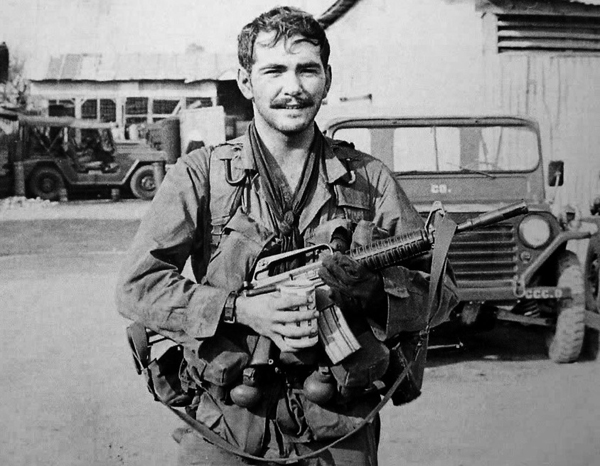
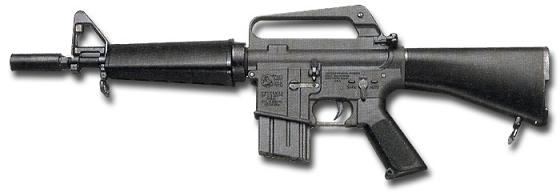
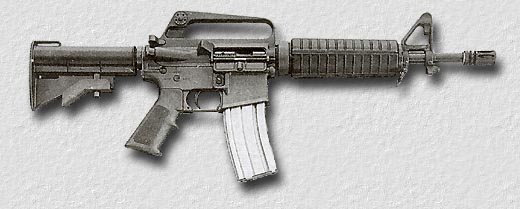
The Colt Automatic Rifle-15 Military Weapons System or CAR-15 was a family of the AR-15 and M16 rifle–based firearms marketed by Colt in the late 1960s and early 1970s. Due to their compact size, the short-barreled Colt Commando and XM177 versions of this family continued to be issued to the U.S. military after the Vietnam War.
The CAR-15 name was an attempt to re-associate the AR-15 name with Colt, since the AR initially stood for ArmaLite Rifle, the original manufacturer of the Armalite AR-15. Colt later abandoned the CAR-15 concept, but continued to make variations, using the M16 brand for military-oriented models and the Colt AR-15 brand for law enforcement and civilian models. However, in present usage, CAR-15 is used as a generic name for carbine-length M16 and AR-15 variants from before the M4.
Specifically, “Colt Commando” currently refers to the ultrashort 10.5″-barreled Model 609 and 11.5-inch (290 mm)-barreled Model 733 series. By comparison, the M4 carbine has a 14.5-inch (370 mm) barrel, while the M16 assault rifleseries has a 20-inch (510 mm) barrel.
[hide]

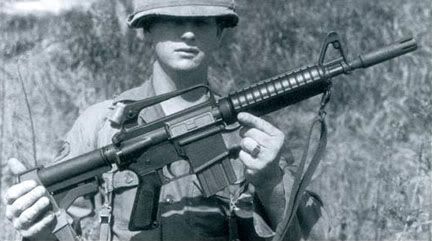
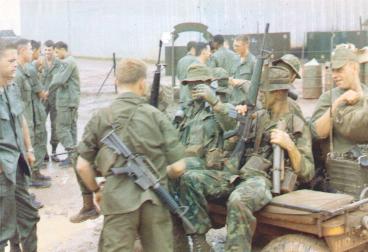
Two 1st Cavalry Division Long Range Reconnaissance Patrol teams, Quang Tri, Vietnam, armed in part with CAR-15s, in July 1968
Following a long series of tests by the U.S. Army and U.S. Air force, resulted in an order for 8,500 AR-15 (redesignated M16) rifles for the Air Force in 1962. About the same time, the Advanced Research Projects Agency of the Department of Defense became interested, and 1,000 rifles were procured for field test in Vietnam.[1] Starting in 1965, Colt attempted to market the M16 rifle as a modular weapons system that could fulfill all of the various needs of an army, similar to the marketing plans for the AR-10, its predecessor, and the Stoner 63, its rival. In order to compete with the Stoner 63 which could be converted into a belt-fed light or medium machine gun, Colt also included the short-lived CMG-1 and CMG-2 machine guns in the CAR-15 Military Weapons System, though the CMG-1 and CMG-2 had few parts in common with the CAR-15s. By using various upper assemblies, buttstocks, and pistol grips, the weapon could be configured as an assault rifle, a heavy-barreled automatic rifle, a carbine, a submachine gun, or as a survival rifle.
Each variation had a Colt model number, meant for internal identification usage. The members of the CAR-15 family, with the exception of the Rifle and Commando, only existed as toolroom prototypes and never entered full-scale production. As a result, wide variation due to experimentation exists within each model. The U.S. military only made significant purchases of the Rifle and Commando versions, so Colt abandoned the CAR-15 family concept. The CAR-15 Rifle was already identified by most users as M16s or AR-15s, and the CAR-15 name was similarly associated with the short-barreled Submachine Gun and Commando models. Because of that, the term “CAR-15” has been used to describe any M16-based carbine, even if the particular weapon is not officially named thus.
The Model 603 CAR-15 Rifle, adopted initially by the United States Army as the XM16E1 and then later as the M16A1, and the Model 604 CAR-15 Rifle, adopted by the United States Air Force as the M16, formed the core of the CAR-15 family. However, the United States military had already committed to purchases before Colt created the concept of the CAR-15 weapons system. The principal difference between the Model 603 and Model 604 is that the former has a forward assist, allowing a user to manually close a stuck bolt.
| CAR-15 Carbine | |
|---|---|
| Type | Carbine |
| Place of origin | United States |
| Specifications | |
| Weight | Empty: 6.0 lb (2.72 kg) |
| Length | 33.6 in (853 mm) |
| Barrel length | 15 in (381 mm) |
|
|
|
| Muzzle velocity | 3,050 ft/s (930 m/s) |
The Model 605A CAR-15 Carbine was a shortened version for situations where longer weapons could be unwieldy, such as aboard vehicles or helicopters. The only significant change from the M16 rifle was that the barrel was shortened to 15 inches (381 mm) in length, so that it ended just forward of the front sight base. Because of the shorter barrel, no bayonet mounting lugs were provided. One prototype used a shorter handguard and a 16-inch (410 mm) long barrel.
The Model 605B had no forward assist, but had a four-position selector switch (developed by Foster Sturtevant in December 1966) so that a user could select safe, semi-automatic, three-round burst, or full automatic modes of fire. Unlike the standard three-position group, the four-position group went from (going clockwise from the 9 o’clock position) safe, fully automatic, semi-automatic and finally burst. The selector itself had 360 degrees of motion, and could be moved either clockwise or counterclockwise, unlike with standard groups. Instead of three-round burst, the burst cam could be modified to two-round or six-round burst. Both versions used the rifle-length buttstock.
As early as 1962, United States Navy SEALs were using the CAR-15 Carbine.[2]
The Model 606 CAR-15 Heavy Assault Rifles used heavy barrels (HBAR) for sustained automatic fire. Like the Browning Automatic Rifle (BAR), the CAR-15 HBARs did not have a quick-change barrel. The HBARs could be fitted with either a Colt XM3 bipod, an M14 rifle M2 bipod, or a modified BAR bipod.
| CAR-15 Heavy Assault Rifle M1 | |
|---|---|
| Type | Automatic Rifle |
| Place of origin | United States |
| Specifications | |
| Weight | Empty: 7.5 lb (3.4 kg) |
| Length | 38.6 in (980 mm) |
| Barrel length | 20 in (508 mm) |
|
|
|
| Muzzle velocity | 3,250 ft/s (991 m/s) |
| Feed system | 20-round box magazine |
The CAR-15 Heavy Assault Rifle M1 used 20-round M16 box magazines, which limited its ability to provide sustained rates of automatic fire. The 30-round M16 box magazine was not available until 1969. The Model 606A had a forward assist. The Model 606Bhad a forward assist and the four-position selector. The Army purchased fewer than 200 Heavy Assault Rifle M1s for use in the Small Arms Weapons Systems (SAWS) tests in 1965.
| CAR-15 Heavy Assault Rifle M2 | |
|---|---|
| Type | Automatic Rifle |
| Place of origin | United States |
| Specifications | |
| Weight | Empty: 8.3 lb (3.76 kg) |
| Length | 38.6 in (980 mm) |
| Barrel length | 20 in (508 mm) |
|
|
|
| Muzzle velocity | 3,250 ft/s (991 m/s) |
| Feed system | 50- or 120-round belt |
The CAR-15 Heavy Assault Rifle M2 was a belt-fed version using heavily modified upper and lower receivers. Colt engineer Rob Roy designed a special ammunition box to hold a 50-round or 120-round ammunition belt as well as the expended links. The belt-fed CAR-15 was similar to the belt-fed AR-10 developed by Eugene Stoner and John Peck at ArmaLite. The Army evaluated its use as a helicopter door machine gun but rejected it, so fewer than 20 of the Heavy Assault Rifle M2s were made.
| CAR-15 Submachine Gun | |
|---|---|
| Type | Carbine |
| Place of origin | United States |
| Specifications | |
| Weight | Empty: 5.3 lb (2.40 kg) |
| Length | Buttstock extended: 28.7 in (729 mm) Buttstock retracted: 26.0 in (660 mm) |
| Barrel length | 10 in (254 mm) |
|
|
|
| Muzzle velocity | 2,650 ft/s (808 m/s) |
The Model 607 CAR-15 Submachine Gun (SMG) was a compact weapon for use by special forces and vehicle crewmen. The dictionary definition of submachine gun is an automatic firearm that fires pistol-caliber cartridges. However, manufacturers such as Colt, Heckler & Koch, and Zastava Arms have referred to compact carbines as submachine guns, to emphasize their short length and to differentiate them from longer carbines.
The CAR-15 SMG was the first AR-15 made with a retractable buttstock, with its overall length being only 26 inches (660 mm) with the buttstock retracted. The retractable buttstock resembled a shortened version of the fixed buttstock, but a two-position latch recessed in the back allowed it to be extended and locked into position, increasing the length of pull by 2.7 inches (69 mm). The barrel is too short to mount a bayonet, so the SMG had no bayonet lug.
About 50 CAR-15 SMGs were made. Most were issued to Navy SEALs and Army Special Forces, though some were also given to Army K-9 units. Since it never went into full production, CAR-15 SMGs were assembled from available spare parts. The first models were made with M16 receivers without forward assists and with shortened pistol grips from the Survival Rifle (see below). The later Model 607A was made with XM16E1 receiver with forward assist and standard pistol grip. The handguard was made from full-length rifle handguard by cutting it in half and using either the fore or aft pair, after machining the ends to fit the slip ring and handguard cap.
Because of the short barrel, the CAR-15 SMGs suffered from a loud and bright muzzle blast, and a number of muzzle devices were developed to reduce this. The SMGs were initially fitted with the standard M16 rifle’s “duckbill” or three-prong flash hiders, which did not alleviate the problem. In September 1966, Colt developed a 3.5-inch (89 mm) long moderator that lessened the noise and muzzle flash, which also increased the weapon’s reliability by increasing the amount of back pressure. However, the moderator created its own problems, such as heavy bore fouling and causing tracer bullets to wildly yaw. A 4.25-inch (108 mm) long moderator with six slots and an expansion chamber, which further reduced noise and flash, replaced the previous muzzle device and became standard for the SMG and the Commando series, but fouling and tracer problems persisted.[3]
| CAR-15 Survival Rifle | |
|---|---|
| Type | Carbine |
| Place of origin | United States |
| Specifications | |
| Weight | Empty: 4.75 lb (2.15 kg) |
| Length | 29.0 in (737 mm) |
| Barrel length | 10 in (254 mm) |
|
|
|
| Muzzle velocity | 2,650 ft/s (808 m/s) |
The Model 608 CAR-15 Survival Rifle was meant for use by downed aircrew. Because of the CAR-15’s modular design, the Survival Rifle could be broken down into two subassemblies and stowed with four 20-round magazines in a pilot’s seat pack. With only a 10-inch (250 mm) long barrel, the assembled weapon was 29 inches (740 mm) in overall length. The Survival Rifle used a fixed tubular plastic-coated aluminum buttstock and a round handguard that were not used on the other CAR-15 versions, and did not have either a forward assist or a bayonet lug. The pistol grip was chopped down, and the muzzle was equipped with either a conical flash hider or the 3.5-inch (89 mm) long moderator.
| CAR-15 Commando XM177 | |
|---|---|

Colt XM177
|
|
| Type | Carbine |
| Place of origin | United States |
| Production history | |
| Manufacturer | Colt Defense |
| Specifications | |
| Weight | 5.35 lb (2.43 kg) |
| Length | 32.5 in (83 cm) (stock extended) 29.8 in (76 cm) (stock retracted) |
| Barrel length | 11.5 in (29 cm) |
|
|
|
| Cartridge | 5.56×45mm NATO |
| Action | Gas-operated, rotating bolt (Direct impingement) |
| Muzzle velocity | 2,750 ft/s (840 m/s) |
| Feed system | 30-round box magazine or other STANAG magazines. |
| Sights | Iron sights or various optics |
The CAR-15 Commando was not initially part of the CAR-15 Military Weapons System, but was added in 1966 in response to the US military’s desire for a shorter M16 and without the Model 607 SMG’s inadequacies. Colt engineer Rob Roy designed a simpler two-position telescoping tubular aluminum buttstock to replace the complicated extending triangular version. The fragile and ad hoc triangular handguards were replaced by reinforced round handguards. Each half of the round handguard is identical, simplifying logistics by not requiring a top/bottom or left/right pair. The Model 609 Commando has a forward assist, while the Model 610 Commando does not. A Model 610B with a four-position selector was available, but not used by the U.S. military. All versions are equipped with the 4.25-inch (108 mm) long moderator.
The XM177 uses a unique flash suppressor sometimes called a flash or sound moderator for its 10-inch (250 mm) barrel. This device is 4.2 inches (110 mm) long and was designed primarily as a counterbalance measure as the shorter barrel makes the weapon unwieldy.[4] This device reduces flash signature greatly and sound signature slightly, making the normally louder short barreled carbine sound like a longer barreled M16A1.[5] Although it has no internal baffles and does not completely reduce the sound signature to subsonic levels, because it alters the sound level of the weapon, the US Bureau of Alcohol Tobacco Firearms and Explosives has declared this muzzle device to be a sound suppressor and regulates its civilian purchase in the United States.[5]
The Model 610 was classified as the XM177[6] but adopted by the Air Force as the GAU-5/A Submachine Gun (GAU = Gun, Aircraft, Unit). The Army purchased 2,815 Model 609 CAR-15 Commandos on June 28, 1966, which were officially designated Submachine Gun, 5.56 mm, XM177E1.[6] As part of the contract, Colt was supposed to supply each XM177E1s with seven 30-round magazines, but Colt was unable to build a reliable 30-round curved magazine that would fit in the M16 magazine well, so most XM177E1s were shipped with 20-round magazines. The exception was 5th Special Forces Group, who received a total of four early 30-round magazines. Colt completed delivery of the purchased XM177E1s in March 1967.
In 1967, in response to field testing, Colt lengthened the Commando’s barrel from 10 to 11.5 inches (254 to 292 mm). The increased length reduced noise and muzzle flash, and allowed fitting of the Colt XM148 grenade launcher. A metal boss was added to the moderator for mounting of the XM148 and rifle grenades.[7] The chambers were chrome-plated. The Commandos with the longer barrels were called the Model 629 and Model 649. The Model 629 Commando has a forward assist; the Model 649 Commando does not.
In April 1967, the Army purchased 510 Colt 629 Commandos for use by troops assigned to the Military Assistance Command, Vietnam Studies and Observations Group (MACV-SOG), and designated them XM177E2.[6] Delivery was completed by the end of September 1967. The Air Force adopted a similar model without the forward assist feature as the GAU-5A/A. Sources debate whether or not this was a Colt Model 630 or 649.[6] According to John Plaster and other sources, the lack of 30-round magazines continued to be problematic and SOG operators resorted to pooling their personal resources and purchasing the larger capacity magazines on the civilian U.S. market.[8] Problems with range, accuracy, barrel fouling, and usage of tracer bullets continued to plague the XM177 series, but Colt estimated that it would take a six-month $400,000 program to do a complete ballistic and kinematic study. There were also recommendations for a 29-month $635,000 research and development program. Both recommendations were declined by the U.S. military as American ground force involvement in the Vietnam War was gradually winding down. Production of the CAR-15 Commando ended in 1970.
It is said that the People’s Army of Vietnam‘s M-18 was designed based on M16 assault rifles seized from dead/wounded American/South Korean and Vietnamese soldiers in the Vietnam War.[9][10] They were first seen in public in 2010,[11]made by Z111 Factory.[12]
After the Vietnam War, Colt abandoned the CAR-15 Military Weapons System concept, but continued to develop heavy-barreled rifles, carbines, and Commandos for military use. These were marketed under the M16 or M16A1 name, while the civilian and law-enforcement semi-automatic counterparts were marketed as AR-15s.
In the mid-1970s, the Bureau of Alcohol, Tobacco, and Firearms (BATF) declared the 4.25-inch (108 mm) long moderator a sound suppressor. During the Carter Administration, the U.S. State Department banned the sale of sound suppressors to foreign countries. Colt therefore designed carbines without the moderator.
The CAR-15 Colt Commando was used in the Salvadoran civil war and Guatemalan Civil War and is still used by the Armed forces of El Salvador and the Guatemalan Armed forces.
.jpg)
Model 603 Carbine’s in the IDF
During the Yom Kippur War, the American government sent arms and equipment, including thousands of Model 603 M16A1 carbines, to the Israeli Defense Forces as part of Operation Nickel Grass. These Model 603s continue to be in use with the IDF today. Some of the Model 603s in Israeli service had their barrels chopped down in length to 13 inches [330mm]; these are nicknamed Menusar (Hebrew for “cut down”). Later the Israeli government purchased Colt Model 653 carbines with 14.5-inch [368mm] barrels; these are nicknamed Mekut’zar or Mekut’zrar (Hebrew for “short”). They are slowly being replaced with M4 carbines or revamped to M4 Carbine standard.
Colt also licensed Elisco Tools to produce the M16A1 carbine in the Philippines, who became a major user of the type, as the Model 653P.
| Colt Model 653 | |
|---|---|

Civilian CAR-15 with scope and 16 inch barrel
|
|
| Type | Carbine |
| Place of origin | United States |
| Specifications | |
| Weight | Empty: 5.6 lb (2.54 kg) |
| Length | Buttstock extended: 33 in (838 mm) Buttstock retracted: 29.8 in (757 mm) |
| Barrel length | 14.5 in (368 mm) |
|
|
|
| Rate of fire | 650-750 RPM |
| Muzzle velocity | 3,020 ft/s (920 m/s) |
In the early 1970s, Colt began development of an M16A1 carbine with a 14.5-inch (370 mm) long barrel. The barrel length was compatible with the existing carbine-length gas system and allowed for the mounting of a standard M16 bayonet. Despite having a longer barrel, it would not be less compact than the previous carbines, as the longer barrel did not require the long 4.5 inch moderator of the XM177 series, only the much shorter birdcage-type flash hider. Depending on whether it had a fixed or retractable buttstock and a forward assist or not, Colt labeled the M16A1 carbines the Model 651, 652, 653, or 654. All models used the M16A1 birdcage flash hider. Only the Model 653 M16A1 carbine, with retractable buttstock and forward assist would be purchased in significant numbers by the U.S. military. The United States Army, Navy and Air Force, as well as the Malaysian Armed Forces and the Armed Forces of the Philippines, purchased Model 653s in small numbers for special operations forces or security forces.

M4 Carbine
In the early 1980s, at the request of the United States Marine Corps, Colt upgraded the M16A1 rifle, resulting in the M16A2 rifle. Among the major changes were a reinforced lower receiver, a case deflector, a birdcage flash suppressor redesigned to be a muzzle brake, and a barrel with a faster 1-in-7 twist. The faster barrel was necessitated by the switch from the 55 grain M193 bullet to the 62 grain M855 bullet. The M16A2 rifle’s barrel was also thicker for the portion in front of the handguard. Colt incorporated these changes into its carbines, which it called M16A2 carbines. The Model 723 M16A2 carbine used the iron sights of the M16A1, but had a case deflector. The barrel had a 1-in-7 twist, but the thinner profile of the older M16A1 carbine’s barrel. As with the Model 653, the United States military made small purchases of the Model 723 for its special operation forces.[13]
In 1983, Diemaco developed a carbine similar to the Model 723, the C8 carbine for use by the Canadian Forces. The original C8s were built by Colt as the Model 725.
In 1984, the U.S. government asked Colt to develop a carbine with maximum commonality with the issue M16A2. Colt named the carbine as the XM4. The project would eventually culminate in the development and official adoption of the M4 carbine in 1994.
The United Arab Emirates (UAE) wished to purchase M16A2 carbines with the thicker M16A2 barrel, but still be able to mount the M203 grenade launcher. The M203 grenade launcher was designed for the thinner M16A1 barrel. A “step-cut” barrel was made, with a portion of the barrel thinned for the M203 mount. M16A2 carbines with A2 upper receivers and the step-cut barrel were designated Model 727. These are often called “Abu Dhabi” carbines, in reference to the UAE’s capital. The U.S. military also purchased several of these carbines prior to the official adoption of the M4.
| GAU-5/A and GUU-5/P | |
|---|---|
.jpg)
GUU-5/P carbine
|
|
| Type | Carbine |
| Place of origin | United States |
| Specifications | |
| Rate of fire | 700-1000 RPM |
| Muzzle velocity | 2,611 ft/s (796 m/s) |
The United States Air Force has made ad hoc upgrades to its GAU-5/As and GAU-5A/As. The barrels and moderators were replaced with the longer 14.5-inch (370 mm) barrel with a 1-in-12 twist, but the weapons retained their original designations. With the change to M855 cartridges, they either received 1-in-7 twist barrel or complete upper receiver assembly replacements. The GAU-5/A or GAU-5A/A markings were removed and the weapons redesignated GUU-5/P. They also retain automatic fire instead of burst.
The new designation more accurately reflected the weapon’s place in the U.S. Air Force Aerospace Equipment Type Designation System (AETDS). The weapons had initially been designated in the same format as aircraft guns, being placed in the GA category (GA designating an aircraft gun, with U meaning unit, representing a complete system and not part of a kit), followed by the /A suffix meaning the system was for aircraft. GUU is the “guns, miscellaneous personal equipment” category, and the /P suffix indicating personal equipment.[14]
| M4 Commando | |
|---|---|
| Type | Carbine |
| Place of origin | United States |
| Specifications | |
| Weight | Empty: 5.38 lb (2.44 kg) |
| Length | Buttstock extended: 30 in (760 mm) Buttstock retracted: 26.8 in (680 mm) |
| Barrel length | 11.5 in (290 mm) |
|
|
|
| Muzzle velocity | 2,611 ft/s (796 m/s) |
Though Colt has focused its attention on carbines with 14.5-inch (370 mm) barrels and rifles with 20-inch (510 mm) barrels, Colt continues to make carbines with 11.5 inches (290 mm) barrels, which it calls Commandos. Originally, Commandos were assembled from whatever spare parts are available, so Model 733 Commandos could have A1-style upper receivers with case deflectors or A2-style upper receivers, and M16A1-profile 1:7 or M16A2-profile 1:7 barrels. Depending on the specific models, Commandos may have had three-position fire control groups (safe/semi-automatic/three-round burst), or four-position having both full-automatic and burst. The modern Model 933 has a “flattop” receiver, with a removable carrying handle and a MIL-STD-1913 Picatinny rail, with semi-automatic and automatic fire. The Model 935 Commando has the features of the Model 933, but has three-round burst fire instead of automatic. Though originally called the M16A2 Commando, Colt now markets them as the M4 Commando.[15] Full automatic will be called the M4A1 Commando.[citation needed]
The Colt Commando’s 11.5-inch (290 mm) barrel creates a substantially lower muzzle velocity and greater muzzle flash, in comparison to longer M16 carbines and rifles. The lower muzzle velocity can reduce wounding effects with certain kinds of ammunition, such as M855 or M193, though rounds like the Mk318 and Mk262 were designed to be more effective from shorter barrels with lower velocities.[16] In 2005, Colt came out with a semi auto only version of the 733. The designation of this rifle is the 6933.
Some American special operation forces, such as Army Special Operation Groups, used the M4 Commando in a limited capacity. Marine Force Recon personnel sometimes used M4 Commandos in place of their US M9 pistols.[17] Currently, the Mk 18 Mod 0 with a 10.3-inch (260 mm) barrel has taken the role of ultracompact carbine with the U.S. Navy SEALs.


 |
Wikimedia Commons has media related to Colt Commando. |


Have a Grand day! Grumpy