
Author: Grumpy
In the world of converted semiautomatic “machine guns,” the Browning 1919 is a happy example of one of the most iconic and historically important US machine guns and also one of the cheapest semiautomatic belt fed guns available. This stems from two factors, primarily. One is that the Browning 1919, being developed from the water-cooled M1917 Browning, is a closed bolt system. Open bolt semiautomatic designs are not allowed by ATF, and so most semiauto machine gun conversions require substantial alteration to convert from open bolt to closed bolt – which the M1919 does not need. Second, the IDF used the Browning M1919 for many years and in large numbers, and surplussed many of them in the late 1990s.
These guns came into the United States as parts kits in large numbers. This meant a glut of cheap guns, easily built as semi autos, and in an easily shootable caliber – 7.62mm NATO (as converted by Israel from their original .30-06 chambering).
Today, we are looking at an example of a semiautomatic converted M1919, and specifically at the various changes made by Israel to both improve the design and convert it successfully to the NATO cartridge.
The Winchester Repeating Arms Model 70 has earned the reputation for being the “Rifleman’s Rifle” and has been improved with qualities that both progressive and purist shooters can get behind. Its design dates back to the early part of the 20th century, and this controlled-round-feed action soldiers on today for good reason. Watch the video above to see a modern Model 70 built for long-distance targets.
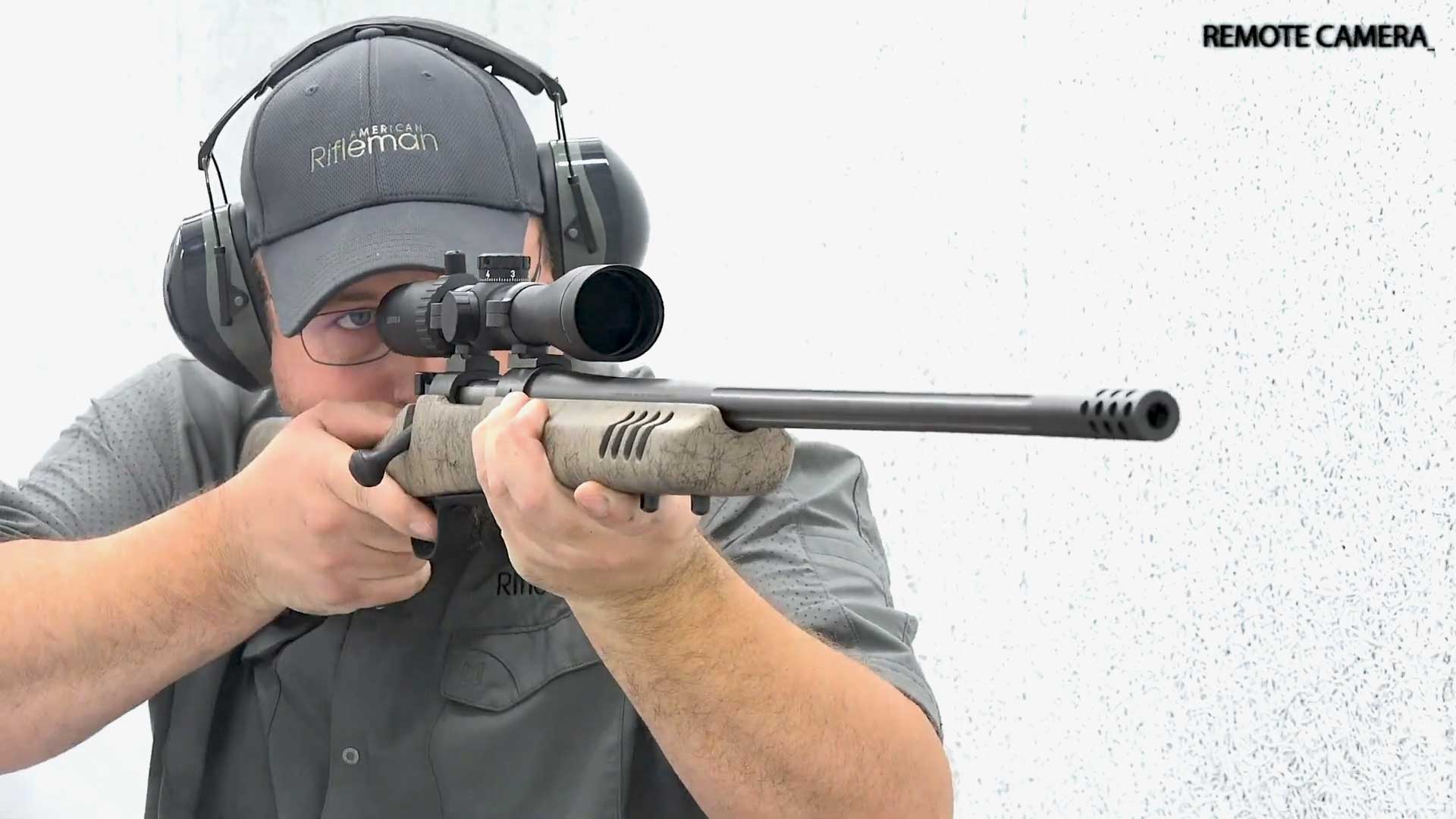
The bolt-action Model 70 Long Range MB is not a lightweight hunting rifle. Rather, it is designed and built for long-range targets and contains the parts, pieces and construction conducive for such pursuits. Whether its with .22-250 Rem. on distant vermin or 6.8 Western on mid-range bugling elk, the Model 70 Long Range MB is available in many of today’s popular short-action cartridges.

Regardless of chambering, Winchester includes a 24” barrel that is matte blued and fluted. Further enhancing accuracy is the free-floating barrel and bedding system within the custom Bell and Carlson Extreme Weather stock, a hand-laid unit that is built of composite materials. The stock’s design features a wide fore-end and flat bottom that is made to ride across benchrest bags with ease.
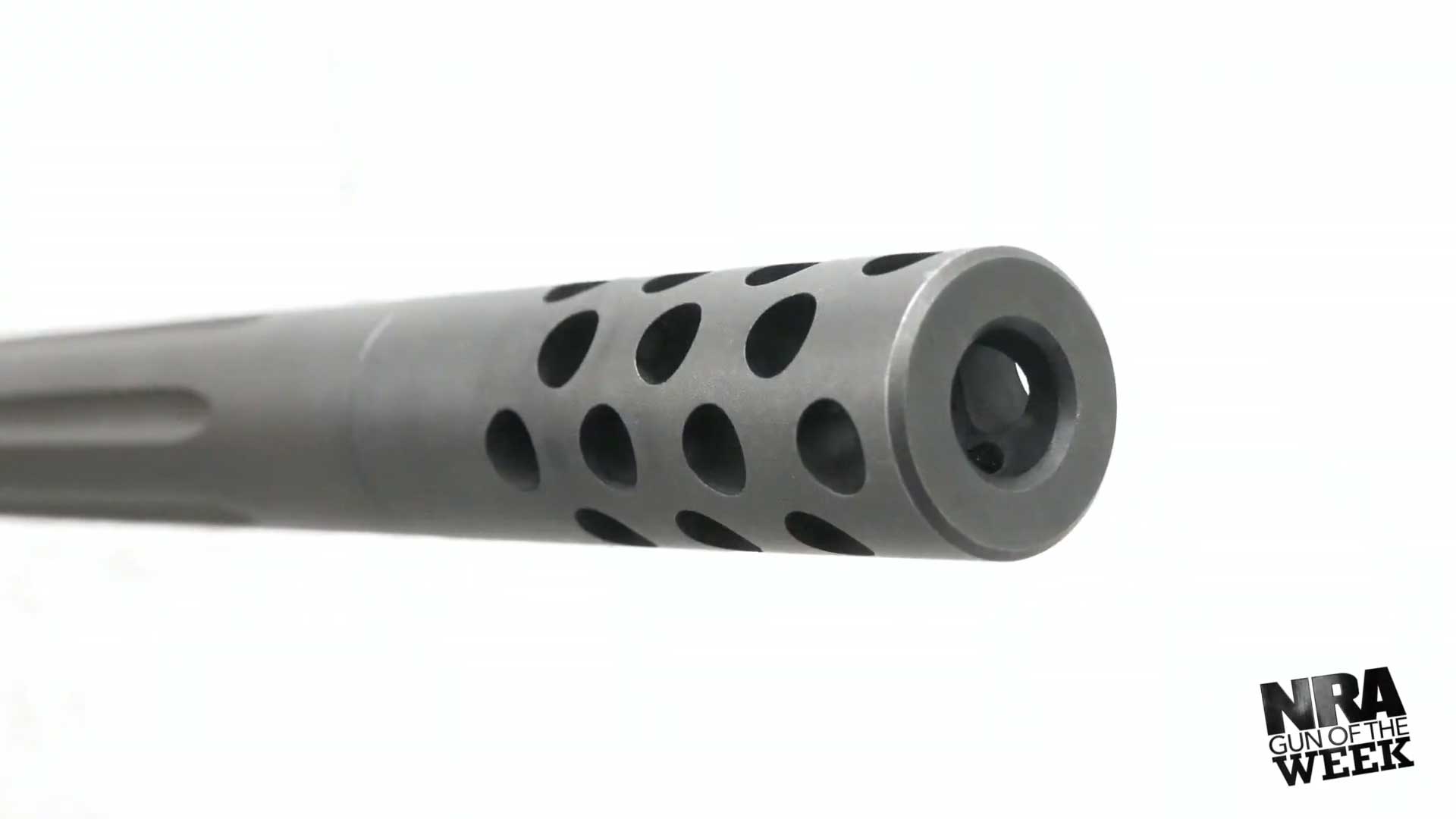
Through and through, the Model 70 Long Range MB provides top-tier components that, in sum, create a capable and fun rifle to shoot. On the range, our testers fired shots from the bench and offhand positions and found the rifle excels at both. Though detachable box magazines are popular today, the gun’s hinged floorplate and four-round magazine is sufficient for most tasks. We found the gun’s adjustable trigger conducive for making tight clusters on target, even in its factory setting.
Specifications
Manufacturer: Winchester Repeating Arms
Action Type: bolt-action, centerfire, repeating rifle
Receiver: carbon steel, matte-blue finish
Barrel: 24″ steel, polished chamber, matte-blue finish
Trigger: MOA adjustable
Magazine: hinged floorplate, four-round-capacity internal box
Sights: none; drilled-and-tapped
Stock: Bell & Carlson Extreme Weather hand-laid composite
Overall Length: 44″
Weight: 7 lbs., 8 ozs.
MSRP: $1,610
Categories
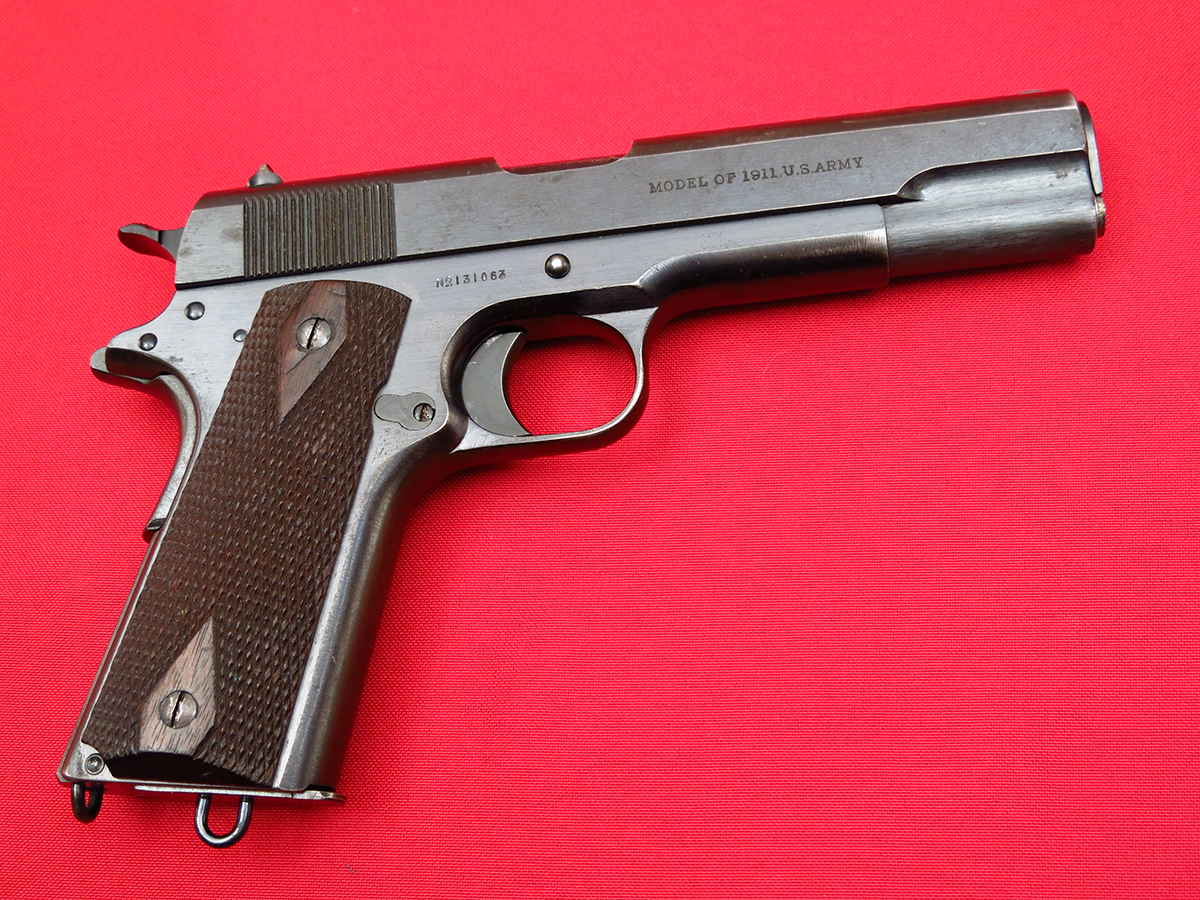
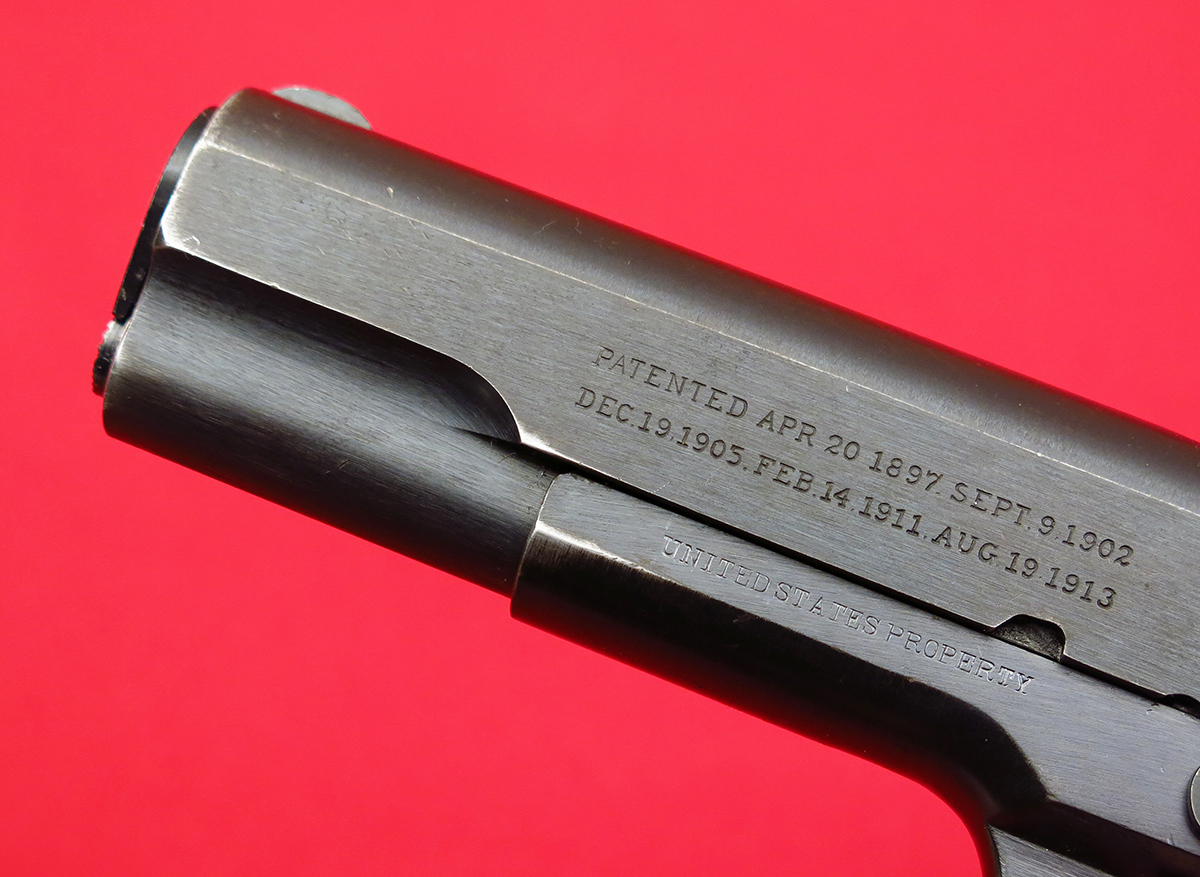
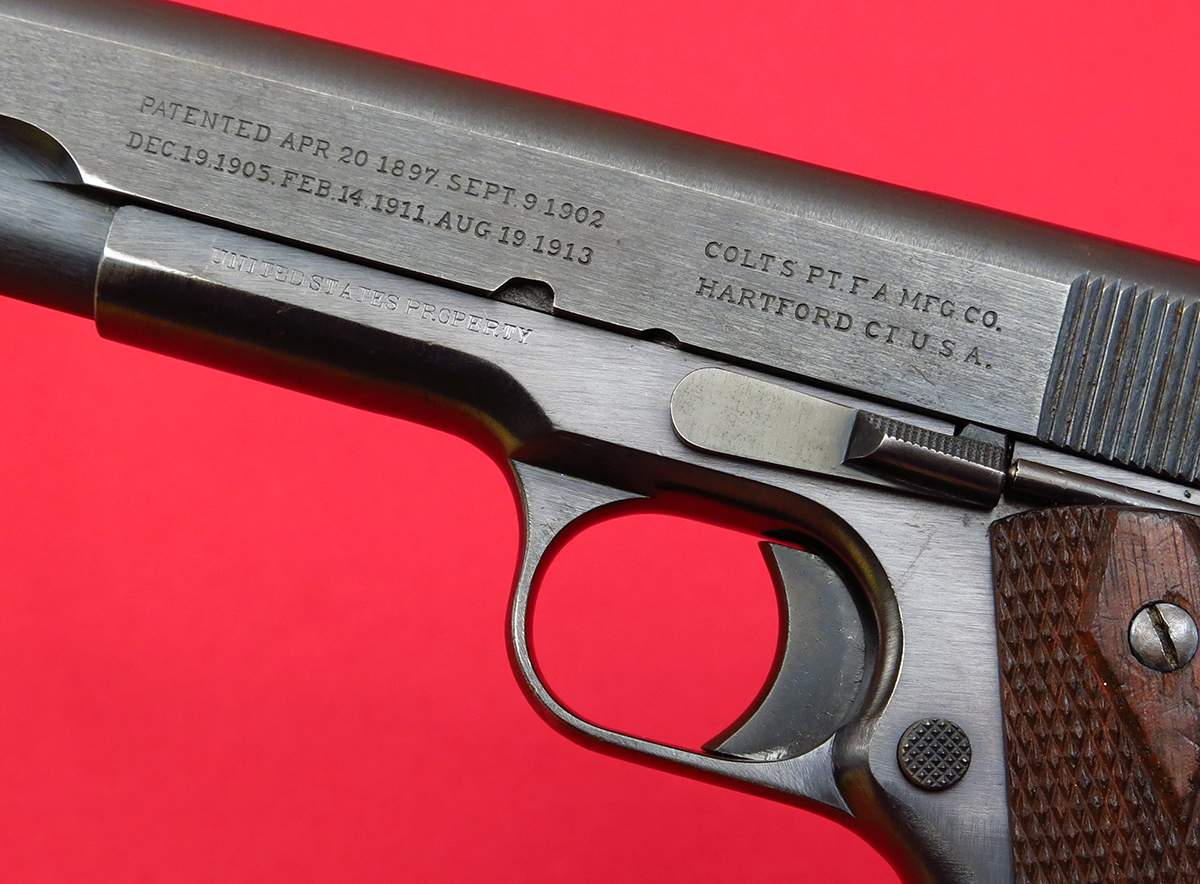
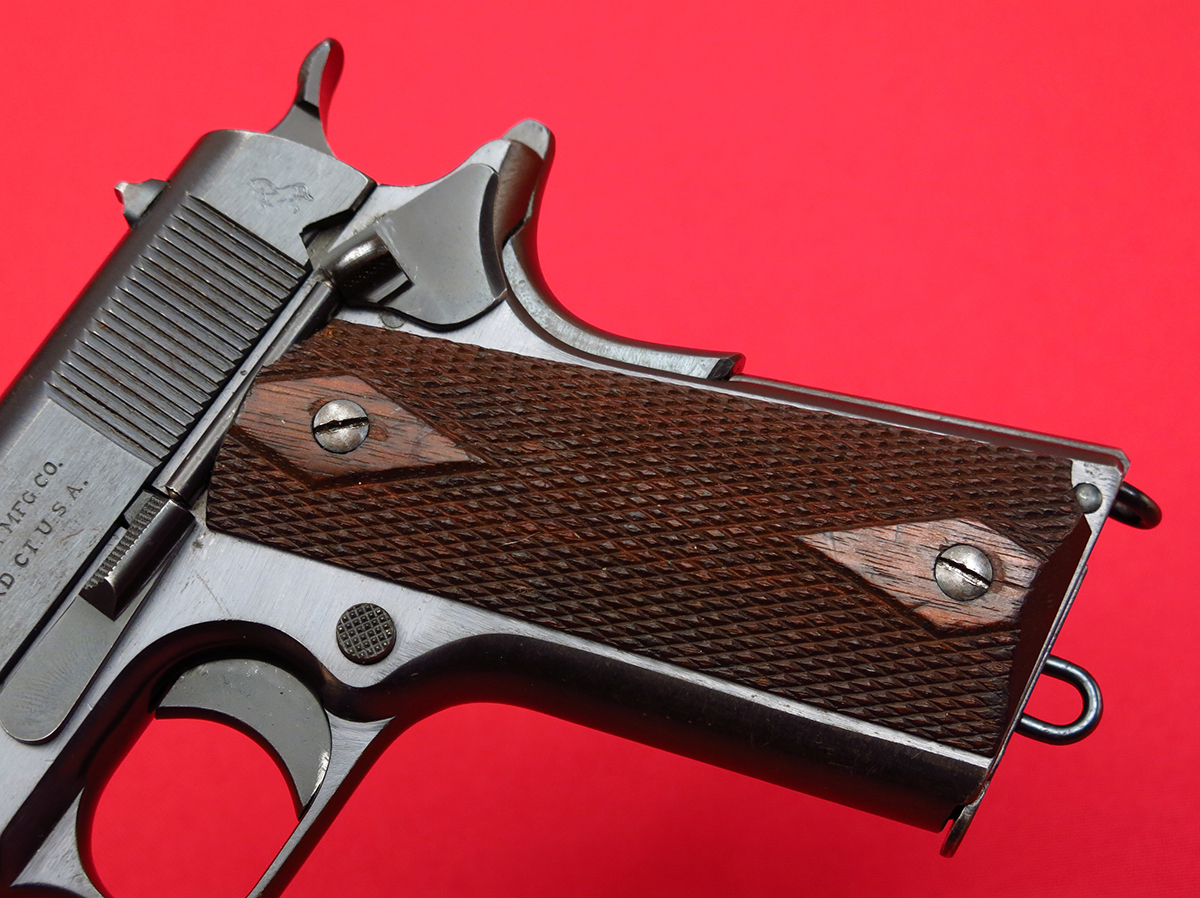
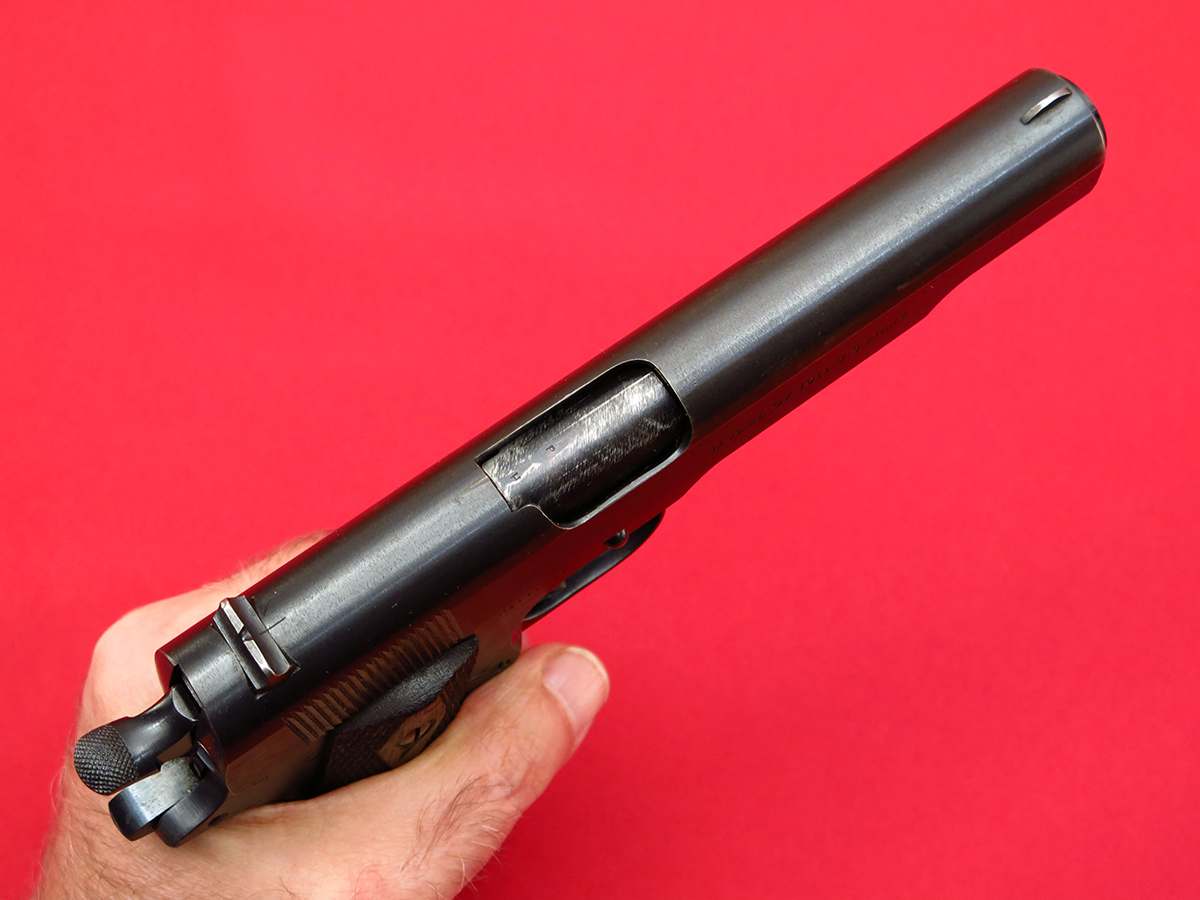
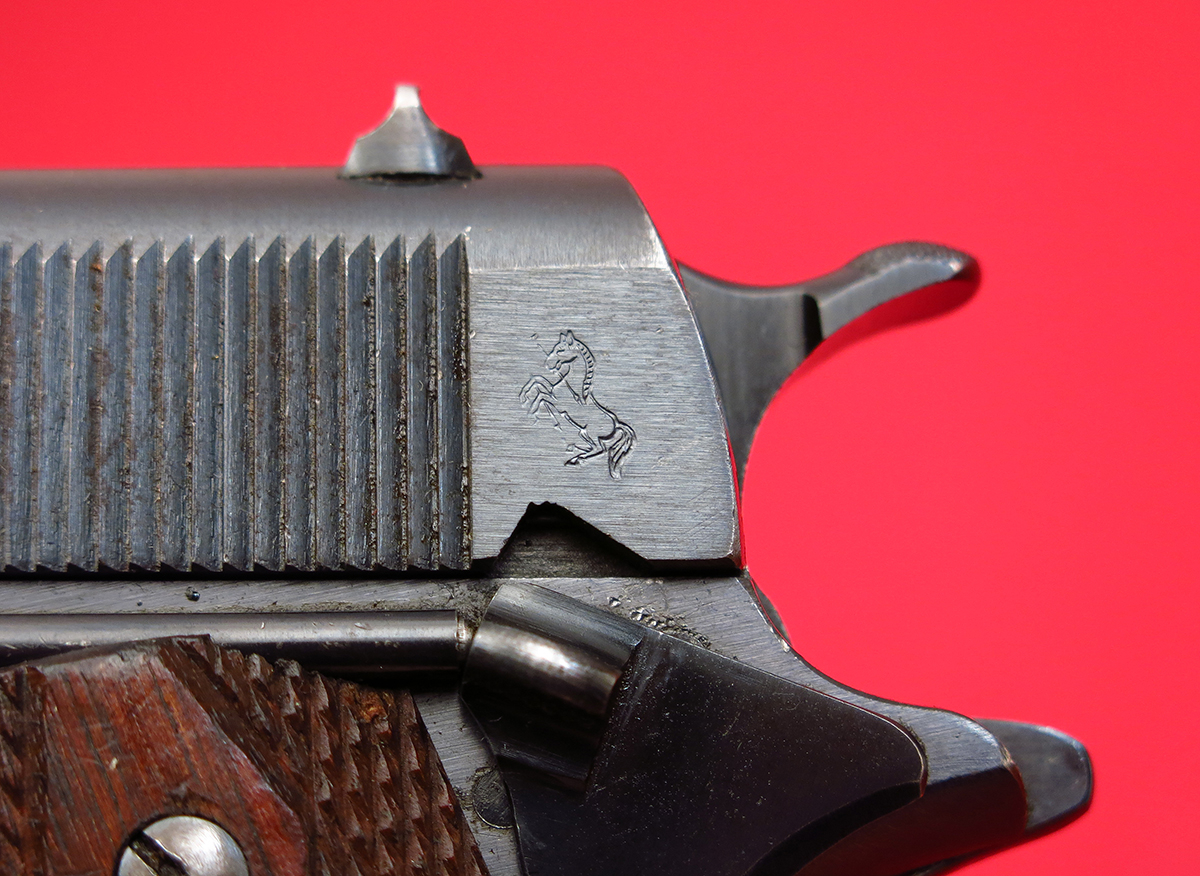
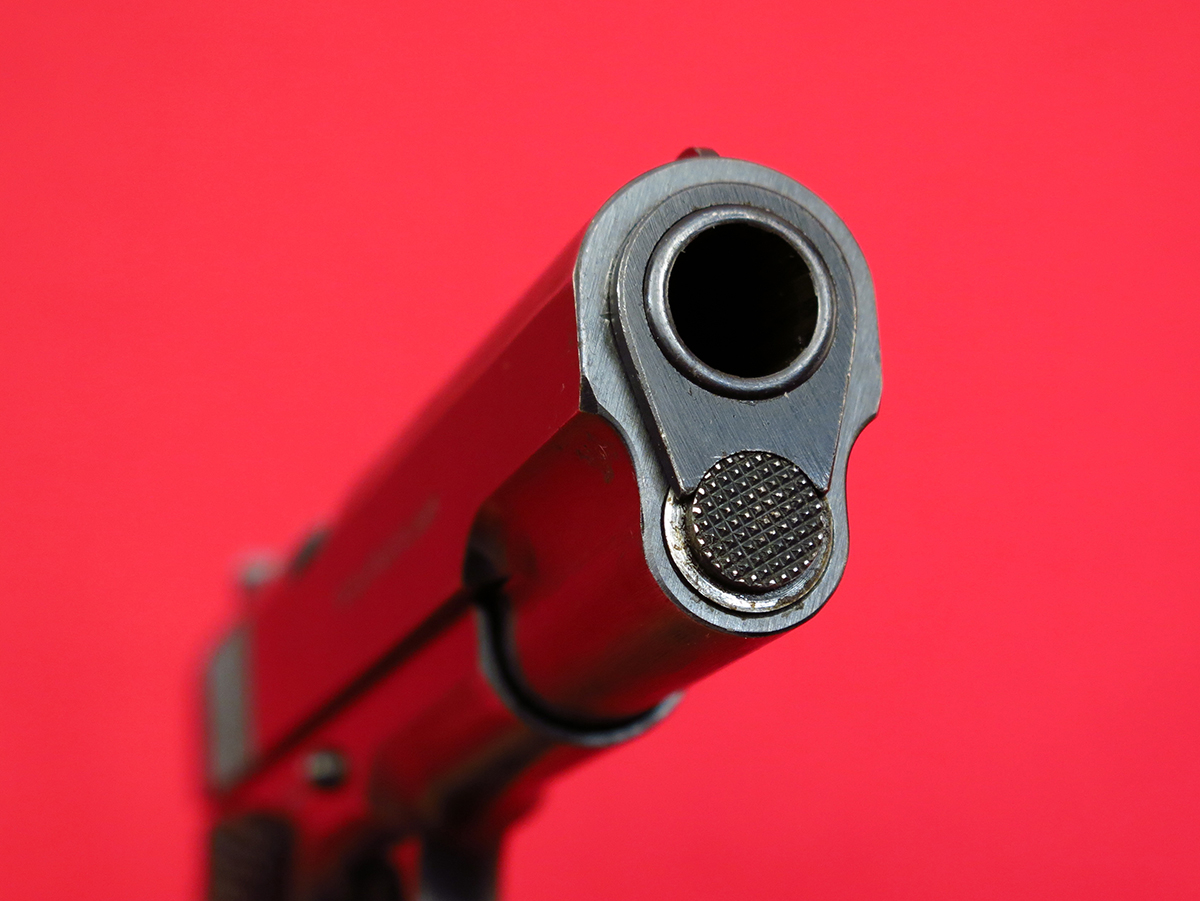
A 1917 U. S. ARMY Colt 1911
Categories
How a COP .357 Derringer works
Categories
C93 Sporter at the Range
Col. Townsend Whelen
BORN TO A PHILADELPHIA FAMILY OF MEANS IN 1877, TOWNSEND…

Born to a Philadelphia family of means in 1877, Townsend Whelen was a thoughtful man with a talent for expression that has made him one of our most-quoted gun writers. My favorite succinct observation is, “Only accurate rifles are interesting.” A close second might be “The .30-06 is never a mistake.”
Although we agree, this last quote should lie in proper juxtaposition to the fact that he spent many decades diligently working to improve the .30-06 cartridge. Colonel Whelen experimented with the GI .30-06 Springfield while commanding Frankford Arsenal in the early 1920s. Frankford machine shop foreman James Howe, later of Griffin & Howe, assisted Whelen in modifying the .30-06 case to fire bullets of different calibers, as he was particularly interested in creating a cartridge to fire heavier bullets from M1903 rifle actions available from the Civilian Marksmanship Program. Although his experiments with the .25 Whelen ultimately lead to the .25-06 standardized by Remington, probably the best-known and all-around-useful big-game round developed by him is the .35 Whelen.
.35 Whelen
The beauty of the .35 Whelen is that it’s a powerful medium-bore rifle cartridge that does not require a Magnum action or a Magnum bolt face. The parent is the .30-06 Springfield, necked-up for a .358 (9.1mm) bullet, originally developed as a wildcat cartridge in 1922 by Col. Whelen and built by Howe. In a 1923 issue of American Rifleman, Whelen referred to it as “the first cartridge that I designed” and in that same article noted, “Mr. James V. Howe undertook this work of making dies, reamers, chambering tools, and of chambering the rifles, all in accordance with my design.” In 1987, the Remington Arms Company standardized the cartridge as a regular commercial round, first made available in the Remington Model 700 Classic manufactured in 1988.
Suitable .358 bullets range in weight from 150 to 300 grains, and this round can use .38/.357 pistol bullets for cheap practice, low-recoil target shooting and varmint busting. With a 250-grain bullet, the .35 Whelen can deliver 3,500 FPE at the muzzle of a 24-inch barrel.
The .35 Whelen amounts to a ballistic twin of the .350 Remington Magnum, and with the right bullet is suitable for virtually all thin-skinned large and dangerous game. The European designation for this cartridge would be 9x63mm.
Note that the “.375 Whelen” (aka .375-06) was developed in the early 1950s by L.R.
“Bob” Wallack and named in honor of Col. Whelen. It comprises a .30-06 Springfield case necked up to .375. The .375 Whelen Improved was later introduced with a 40-degree shoulder angle, providing more case capacity as well as better headspacing.
.400 Whelen
The .400 Whelen was also developed by Col. Whelen while at Frankford. The cartridge resembles a .30-06 Springfield case necked up to .40 caliber to accept bullets made for the .405 Winchester.
In this instance, James Howe necked down cylindrical brass, available in the arsenal manufacturing process, to form cartridges with a .458-inch-diameter shoulder to fit the chamber of his rifles. Quality Cartridge has also manufactured unformed, cylindrical empty brass cases head-stamped for this cartridge. Griffin & Howe chambered custom-built rifles for this cartridge, and used neck-resizing with cases carefully fire-formed to the chamber in which the loaded cartridges were to be used.
Although requiring skill to reload, this round will throw a 300-grain slug at more than 2,300 FPS, which at the muzzle has 3,522 FPE—a very good harvester of elk, moose and bear at ranges up to 400 yards.
Mr. Rifleman
“A good rifleman plus a good rifle will shoot, see straight, think straight and will run our country straight.”—TW, 1932
Whelen’s interests in ammo were egalitarian and open minded, as this accomplished wilderness hunter and competitive rifle shooter was the real deal, with keen objectivity. In Why Not Load Your Own, he noted, “…in 1901 and 1902 I shot many mule deer, sheep, and goats with my .30-30, and very successfully up to about 150 yards, but I also subsisted largely on grouse, rabbit, ducks, porcupine, and beaver shot with reduced loads. The .30-30 is not to be despised as an all-around rifle.”
Whelen was instrumental in all aspects of redesigning ammunition, developing a practical gilding metal to stop metal fouling, researching the boat-tail bullet, and was instrumental in developing the .22 Hornet.
Fortunately for surviving generations, Col. Whelen was not only a well-expressed writer with something valuable to say, but he was prolific as well, writing full-time after his retirement from the Army in 1936. Whelen served as a contributing editor to American Rifleman, Guns & Ammo, Sports Afield, Field & Stream, Outdoor Life, and other gun and outdoor magazines.
He was the author of many highly-regarded books on small arms, including Small Arms and Ballistics, Why Not Load Your Own, Telescopic Rifle Sights and many others. He began an autobiography, Mr. Rifleman, which was finished by his family and published after his death. If you can only have one of his books, try for a copy of The Best of Colonel Townsend Whelen, edited by Bradford Angier. Whelen’s writings are from experience—strong on hands-on and how-to.
Throughout a life involved with the development of technology, Col. Whelen managed to retain a reverential respect for nature, wilderness, and the wisdom of simple living. Whelen’s stories of, or set in, the great outdoors were often a medium to express nuggets of wisdom, philosophy or practical guidance. Although Mr. Rifleman is primarily remembered for his sound advice on the topics of wilderness living, hunting and rifles, many of his pithy observations would be worthy of Thoreau or Emerson.
Philosophic Ways
Three years before his death in 1961, Col. Whelen wrote, “Scientists remind us that nature intended human beings should spend most of their hours beneath open skies. With appetites sharpened by outdoor living, they should eat plain food. They should live at their natural God-given paces, un-oppressed by the artificial hurry and tension of man-made civilization…Yet the mass of city men, stalking their meat at the crowded market instead of in the green woods or the cool marshes, put up with existences of quiet desperation. Their incessant anxiety and strain is a well-nigh incurable form of disease.”
One of the best shots in the Army, Whelen could hit man-sized targets at 200 yards with an open-sighted M1903 Springfield—six hits in 10 seconds flat—and could do it on command. He was also involved with 1,000-yard shooting—with the 1892 .30-40 Krag. Aside from the innate eloquence of his writings, what comes through is the gentlemanly authority of a writer who has learned by doing, not by studying. He once went to British Columbia, bought a mount and pack horses, pots and pans and headed solo for the farthest regions—not to “survive,” just to live and learn from the fauna and locals, if any. Later in Panama, then uncharted and totally inhospitable, the young lieutenant grabbed a pack, a rifle and set out to make maps and learn the environs. The same point-blank “why not” attitude and quiet enthusiasm that served him from his days as a spindly rich kid served him well throughout an interesting and productive life. And the legacy of his writings, and his cartridges, will serve generations yet to come.
Although we agree, this last quote should lie in proper juxtaposition to the fact that he spent many decades diligently working to improve the .30-06 cartridge. Colonel Whelen experimented with the GI .30-06 Springfield while commanding Frankford Arsenal in the early 1920s. Frankford machine shop foreman James Howe, later of Griffin & Howe, assisted Whelen in modifying the .30-06 case to fire bullets of different calibers, as he was particularly interested in creating a cartridge to fire heavier bullets from M1903 rifle actions available from the Civilian Marksmanship Program. Although his experiments with the .25 Whelen ultimately lead to the .25-06 standardized by Remington, probably the best-known and all-around-useful big-game round developed by him is the .35 Whelen.
.35 Whelen
The beauty of the .35 Whelen is that it’s a powerful medium-bore rifle cartridge that does not require a Magnum action or a Magnum bolt face. The parent is the .30-06 Springfield, necked-up for a .358 (9.1mm) bullet, originally developed as a wildcat cartridge in 1922 by Col. Whelen and built by Howe. In a 1923 issue of American Rifleman, Whelen referred to it as “the first cartridge that I designed” and in that same article noted, “Mr. James V. Howe undertook this work of making dies, reamers, chambering tools, and of chambering the rifles, all in accordance with my design.” In 1987, the Remington Arms Company standardized the cartridge as a regular commercial round, first made available in the Remington Model 700 Classic manufactured in 1988.
Suitable .358 bullets range in weight from 150 to 300 grains, and this round can use .38/.357 pistol bullets for cheap practice, low-recoil target shooting and varmint busting. With a 250-grain bullet, the .35 Whelen can deliver 3,500 FPE at the muzzle of a 24-inch barrel.
The .35 Whelen amounts to a ballistic twin of the .350 Remington Magnum, and with the right bullet is suitable for virtually all thin-skinned large and dangerous game. The European designation for this cartridge would be 9x63mm.
Note that the “.375 Whelen” (aka .375-06) was developed in the early 1950s by L.R.
“Bob” Wallack and named in honor of Col. Whelen. It comprises a .30-06 Springfield case necked up to .375. The .375 Whelen Improved was later introduced with a 40-degree shoulder angle, providing more case capacity as well as better headspacing.
.400 Whelen
The .400 Whelen was also developed by Col. Whelen while at Frankford. The cartridge resembles a .30-06 Springfield case necked up to .40 caliber to accept bullets made for the .405 Winchester.
In this instance, James Howe necked down cylindrical brass, available in the arsenal manufacturing process, to form cartridges with a .458-inch-diameter shoulder to fit the chamber of his rifles. Quality Cartridge has also manufactured unformed, cylindrical empty brass cases head-stamped for this cartridge. Griffin & Howe chambered custom-built rifles for this cartridge, and used neck-resizing with cases carefully fire-formed to the chamber in which the loaded cartridges were to be used.
Although requiring skill to reload, this round will throw a 300-grain slug at more than 2,300 FPS, which at the muzzle has 3,522 FPE—a very good harvester of elk, moose and bear at ranges up to 400 yards.
Mr. Rifleman
“A good rifleman plus a good rifle will shoot, see straight, think straight and will run our country straight.”—TW, 1932
Whelen’s interests in ammo were egalitarian and open minded, as this accomplished wilderness hunter and competitive rifle shooter was the real deal, with keen objectivity. In Why Not Load Your Own, he noted, “…in 1901 and 1902 I shot many mule deer, sheep, and goats with my .30-30, and very successfully up to about 150 yards, but I also subsisted largely on grouse, rabbit, ducks, porcupine, and beaver shot with reduced loads. The .30-30 is not to be despised as an all-around rifle.”
Whelen was instrumental in all aspects of redesigning ammunition, developing a practical gilding metal to stop metal fouling, researching the boat-tail bullet, and was instrumental in developing the .22 Hornet.
Fortunately for surviving generations, Col. Whelen was not only a well-expressed writer with something valuable to say, but he was prolific as well, writing full-time after his retirement from the Army in 1936. Whelen served as a contributing editor to American Rifleman, Guns & Ammo, Sports Afield, Field & Stream, Outdoor Life, and other gun and outdoor magazines.
He was the author of many highly-regarded books on small arms, including Small Arms and Ballistics, Why Not Load Your Own, Telescopic Rifle Sights and many others. He began an autobiography, Mr. Rifleman, which was finished by his family and published after his death. If you can only have one of his books, try for a copy of The Best of Colonel Townsend Whelen, edited by Bradford Angier. Whelen’s writings are from experience—strong on hands-on and how-to.
Throughout a life involved with the development of technology, Col. Whelen managed to retain a reverential respect for nature, wilderness, and the wisdom of simple living. Whelen’s stories of, or set in, the great outdoors were often a medium to express nuggets of wisdom, philosophy or practical guidance. Although Mr. Rifleman is primarily remembered for his sound advice on the topics of wilderness living, hunting and rifles, many of his pithy observations would be worthy of Thoreau or Emerson.
Philosophic Ways
Three years before his death in 1961, Col. Whelen wrote, “Scientists remind us that nature intended human beings should spend most of their hours beneath open skies. With appetites sharpened by outdoor living, they should eat plain food. They should live at their natural God-given paces, un-oppressed by the artificial hurry and tension of man-made civilization…Yet the mass of city men, stalking their meat at the crowded market instead of in the green woods or the cool marshes, put up with existences of quiet desperation. Their incessant anxiety and strain is a well-nigh incurable form of disease.”
One of the best shots in the Army, Whelen could hit man-sized targets at 200 yards with an open-sighted M1903 Springfield—six hits in 10 seconds flat—and could do it on command. He was also involved with 1,000-yard shooting—with the 1892 .30-40 Krag. Aside from the innate eloquence of his writings, what comes through is the gentlemanly authority of a writer who has learned by doing, not by studying. He once went to British Columbia, bought a mount and pack horses, pots and pans and headed solo for the farthest regions—not to “survive,” just to live and learn from the fauna and locals, if any. Later in Panama, then uncharted and totally inhospitable, the young lieutenant grabbed a pack, a rifle and set out to make maps and learn the environs. The same point-blank “why not” attitude and quiet enthusiasm that served him from his days as a spindly rich kid served him well throughout an interesting and productive life. And the legacy of his writings, and his cartridges, will serve generations yet to come.