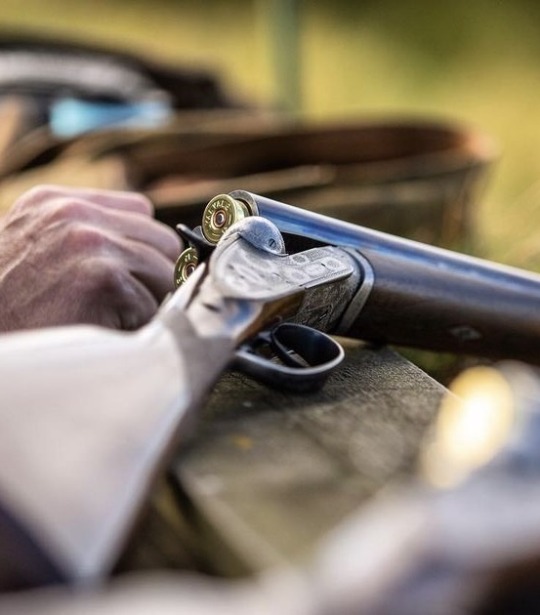
A good Samaritan with a gun saved a woman from an alleged attempted abduction at the Shops of Saddle Creek parking lot Friday at 8 p.m.
The Daily Mail reports that surveillance video shows two suspects allegedly grab the woman as she attempted to get in her SUV. The woman struggled to get free and, as she struggled, a good Samaritan with a gun in his hands ran toward the suspects.
The suspects released the woman, jumped into a silver sedan, and fled the scene.
FOX 13 Memphis described the getaway car as a silver Ford Focus.
There was another suspect inside the getaway car, which means police are seeking three suspects in connection with the apparent attempted adduction, FOX 13 Memphis pointed out.
The woman suffered “multiple minor injuries” in the incident.
AWR Hawkins is an award-winning Second Amendment columnist for Breitbart News and the writer/curator of Down Range with AWR Hawkins, a weekly newsletter focused on all things Second Amendment, also for Breitbart News. He is the political analyst for Armed American Radio and a Turning Point USA Ambassador. AWR Hawkins holds a PhD in Military History, with a focus on the Vietnam War (brown water navy), U.S. Navy since Inception, the Civil War, and Early Modern Europe. Follow him on Instagram: @awr_hawkins. You can sign up to get Down Range
This side of the Berlin Wall was free. Free people were at liberty to deface it as they wished.
I like stuff. At some point my poor kids will have to sort through all my junk. They’ll have a massive yard sale and call in an auction company for the gun collection. Ideally a bunch of up-and-coming gun nerds will be very happy and my family will take a big trip to Australia or someplace similar to celebrate my passing.
It has gone by several names. Tangible atmosphere, priceless collectibles, cool-guy stuff, and the ever-popular Will crap are but a few. My extensive collection of junk fractionates into several tiers.
At the bottom is drink huggies with cool logos, accumulated 1970s-vintage gun magazines, or rechargeable stuff for which I cannot locate the power cords. This is nothing more than rank garbage. It is simply that I lack the personal discipline to just throw it away. On the other end, however, is the proper swag.
If the bottom ever falls out of the gun-writing gig and people suddenly stop abusing their bodies such that the modern practice of medicine is no longer a thing I would obviously begin the Great Liquidation sometime prior to my demise. I’d put the huggies, gun magazines, and derelict electronic gear on eBay and hope for the best. There are a few precious items, however, that they will have to pry out of my cold, dead hands.
One of those holy relics is the Yankee cannonball my dad and I deactivated one sultry afternoon at the base of the Mississippi River levee. As father-son projects go, that was one for the books. You can find the details here.
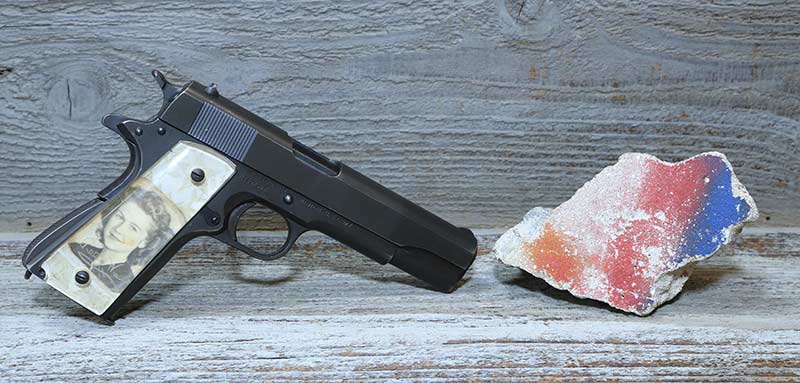
Another is the plexiglass grip my wife’s grandfather made from a downed German Fiesler Storch observation plane during World War II. The great man affixed that grip on the Colt M1911A1 pistol he carried in combat across North Africa, Sicily, and Italy. Throughout it all a photograph of his beaming bride kept him company in the dark places. That rig rides on a proper 1943-vintage Colt pistol today. I’ll literally never let that go.
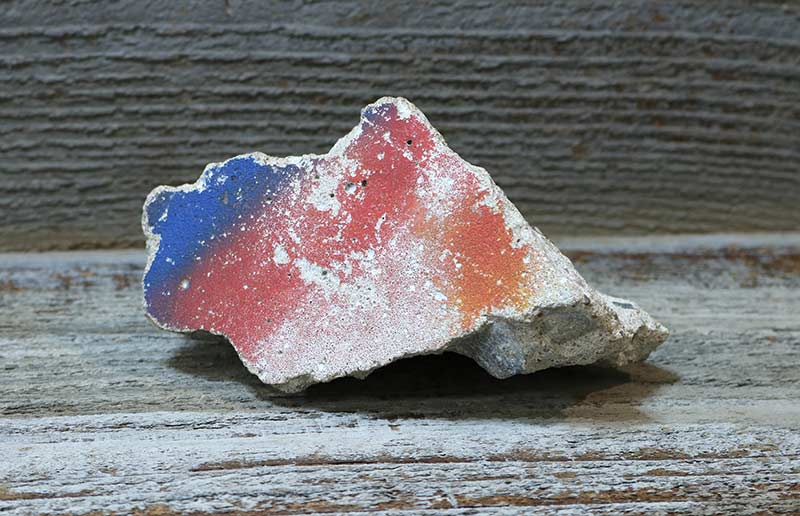
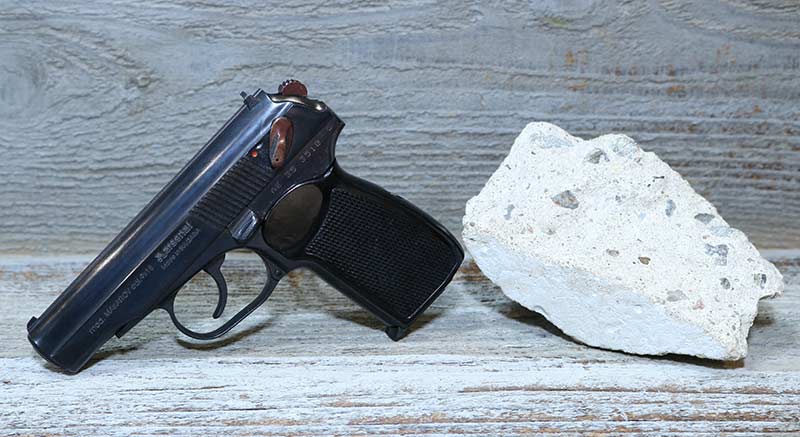
One of the other priceless artifacts in the Will Dabbs military museum is just a rock — concrete, actually. It’s about the size of my fist. The quality is suboptimal — you can scrape bits loose with your fingernail — but that otherwise unremarkable piece of masonry embodies so much more. There is freedom in that old nasty rock.
It’s about four inches thick with two opposing flat sides. One facet is whitewashed and drab. The other is spraypainted a brilliant red and blue. This random chunk of cheap concrete was beaten loose by some nameless reveler with a sledgehammer. This is my own personal piece of the Berlin Wall.
Ours is such a hopelessly confused generation. We so vociferously gripe about the many-splendored warts adorning this grand American experiment. In so doing, we fail to appreciate both context and relativity.
his side of the Berlin Wall was enslaved. Anyone daring to approach had to brave
minefields and machineguns. There is some deep truth embedded in this crumbly old rock.
The Berlin Wall went into service in 1961. The bit separating East from West Berlin was 27 miles long. Each segment was just under twelve feet tall. What made this wall different from so many others was its mission. Most walls are designed to keep people and animals out. This one was intended to keep people in.
The Berlin Wall was part of an ideological cage. It was the physical demarcation between communism and freedom. The practical manifestations of that reality are obvious on the artifact. The white side is drab and dead. If anybody molested that side they were shot. The colorful side, by contrast, was chaotic and vibrant. People on that side of the wall were free to vent their spleens with Krylon any time they wished. The difference between the two competing ideologies simply couldn’t be more stark.
The communists had little patience with those attempting to flee their worker’s paradise. Between 1961 and 1989 at least 140 people lost their lives attempting just that. If you had the audacity to try to leave, they just gunned you down. There was no trial or undue fuss. It didn’t matter if you had a weapon or behaved in a threatening fashion. The youngest was a one-year-old toddler. The oldest was a 90-year-old grandmother. Say what you will about America, that doesn’t happen here.
Sometimes when I’m feeling sorry for myself I like to just fondle that cheap piece of communist concrete. I’ll hold it up to the light, rotate it in my hands, and appreciate it from various angles. The simple act of studying that thing usually helps put my problems in perspective. Freedom is a most precious thing purchased at enormous price. Sometimes you even can find it in a rock.
To everyone bitching about Texas Roadhouse allowing that dog who was deployed twice, to eat a steak in the restaurant on Veterans Day, I’d rather sit next to him than rowdy, bratty kids all day long. I can guarantee that dog is cleaner and more quiet. He isn’t up being allowed to run around like he (and his parents) were raised in a barn!
Petmatchmaker Rescue South supports Texas Roadhouse, Veterans and all Military Working Dogs.
David Niven was an esteemed English actor and novelist. During the course of his long and storied acting career, Niven played a leading man, a world explorer, the villain in a Pink Panther movie, a soldier, a sailor, an action hero, and even James Bond in the first Casino Royale. He won the Oscar for Best Actor in 1958 for his role as Major Pollock in Separate Tables.
Most modern actors are a lot better at looking awesome than actually being awesome.
Today’s crop of actors is, with few exceptions, a bunch of vapid amoral losers. Their standard of accomplishment is running about naked and flying on private jets to A-lister conferences while telling the rest of us what we should be sacrificing to battle climate change. By contrast, David Niven was a real-live warrior.
David Niven had military service in his DNA.
Born March 1, 1910, at Belgrave mansions, Grosvenor Gardens, London, Niven came from a long line of British soldiers. His father LT William Niven was killed in Turkey during the Gallipoli Campaign serving with the Berkshire Yeomanry in 1915. His maternal grandfather, CPT William Degacher, was killed in 1879 at the Battle of Isandlwana during the Zulu Wars. His great grandfather was LTG James Webber Smith CB.
An inveterate prankster, a young David Niven was actually expelled from his first British boarding school.
Two years after the death of his father, Niven’s mother remarried, this time to a prominent British Conservative politician. At age six, young David was remanded to boarding school. His experience there was rocky, predominantly the result of his proclivity toward pranks.
Margaret Whigham was David Niven’s first love. She harbored a deep affection for him throughout her life.
At age 18, Niven impregnated a fifteen-year-old socialite named Margaret Whigham while she was on holiday. Given the puritanical mores of the day this held the potential for great scandal. The young woman’s family arranged for an abortion, but she revered Niven until his death. Whigham was among the VIP guests at his memorial service in London after he died.
Finding Himself
David Niven’s military service played a large part in shaping his gentleman persona.
David Niven was educated at the Royal Military College at Sandhurst, graduating in 1930 as a Second Lieutenant in the British Army. This experience was said to be foundational to his developing the refined unflappable bearing that held him in good stead on the stage and screen. However, the peacetime Army did little to hold Niven’s attention.
David Niven arrived in New York City bereft of both money and a plan.
LT Niven once ditched a lecture on machinegun tactics delivered by a British Major General in favor of a social engagement with a young woman. Niven was subsequently arrested for insubordination but killed a bottle of whisky with Rhoddy Rose, the officer tasked with guarding him. Rose later went on to become a decorated Colonel in the British Army. With Rose’s assistance, Niven escaped out a window and caught a ship for America, resigning his commission via telegram once underway. Upon his arrival in the United States he tried and failed to make a living first selling whisky and then as a rodeo promoter.
In retrospect Errol Flynn was likely a pedophile, but he helped open the door to Hollywood when David Niven was an aspiring young actor.
After stints in both Mexico and the Caribbean, Niven eventually made his way to Hollywood, securing a role as an extra in such films as Barbary Coast and Mutiny on the Bounty. His designation as an extra was, “Anglo-Saxon Type No. 2,008.” More serious roles followed until, by the late 1930’s, he had become an A-lister leading man. Niven and Errol Flynn shared a house for a time. By 1939 David Niven was on top of his game, having earned top billing for big budget Hollywood productions. Then Hitler invaded Western Europe, and Niven gave it all up to return to England and rejoin the British Army. At the time, David Niven was the only British movie star working in America to do so.
The Humble Warrior
David Niven served with the British Commandos throughout most of World War 2.
I watched a couple of interviews with David Niven on YouTube in preparation for this project. Despite his refined, almost haughty British demeanor, you cannot help but be struck by the man’s humility when he was elaborating on his military experience. Once during an interview with Dick Cavett he was asked to relate the most perilous experience he had while serving in World War 2. He prefaced his answer that many other men had done much greater things than had he and that he was likely the most terrified man in Europe during the war. However, cutting through the fluff, David Niven was the real freaking deal.
The British Commandos were some of the hardest soldiers in Allied service.
After being recommissioned as a Lieutenant, Niven was assigned to the motor training battalion of the Prince Consort’s Own Rifle Brigade. The British have some of the most adorable unit designations. Dissatisfied with the pace of that assignment, he volunteered for the Commandos. Niven trained at Inverailort House in the Western Highlands, eventually coming to command “A” Squadron of the General Headquarters Liaison Regiment.
This photo is obviously staged, but the weapons are interesting. The lead Commando sports a captured German P08 Artillery Luger with a 32-round trommelmagazin snail drum, while the trail man carries an M1928A1 Thompson submachine gun.
The British Commandos during World War 2 were an elite light infantry unit specializing in small unit operations. A modern counterpart might be the US Army Rangers. Their training was notoriously grueling, and they were relied upon to execute the toughest missions, often with minimal support. Commando training and operational experience laid the foundation for much of the world’s modern Special Operations capabilities.
Niven’s Commando unit ranged ahead of Allied lines conducting reconnaissance and establishing bombing lines for Allied air power.
Niven was an acting Lieutenant Colonel by the time he landed on the continent several days after D-Day. He served with a unit called “Phantom” that was tasked with covertly locating and reporting enemy positions in the chaos following Operation Overlord. One of the few war stories that he was willing to relate publicly concerned his being shelled while attempting to cross a bridge between the American 1st and British 2d Armies.
LTC Niven Earns the Iron Cross
Bridges are natural choke points in military maneuver. They attract chaos.
LTC Niven was crossing a bridge just as the Germans began dropping artillery on it. He dove out of his jeep and into a nearby foxhole with heavy German artillery fire impacting all around. Amidst the unfettered chaos of the moment he looked up to see John McClain, an old friend and drama critic, hunkered down the next foxhole over.
The Iron Cross was the archetypal German combat decoration.
The Germans obliterated the bridge, but Niven and McClain emerged unscathed. McClain was uniformed as a Lieutenant in the US Navy. After a happy reunion McClain produced a sack filled with German Iron Crosses. The German forces at Cherbourg were cut off and surrounded. Their commander, Generalleutnant von Schlieben, had requested a sackful of Iron Crosses be air dropped into the salient to be distributed to his men in an effort at shoring up their morale. The Luftwaffe attempted to drop the sack from a fighter plane but inadvertently deposited it in McClain’s hole.
This is a scene from The Guns of Navarone. Years before David Niven made this movie he was informally awarded an Iron Cross for bravery under fire.
These men were in show business, after all, and were ever on the lookout for an opportunity at levity. Niven’s friend formally presented him with a German Iron Cross for bravery right there in their foxhole. Niven said that he affixed the decoration to his shirt underneath his combat jacket and wore it for the rest of the war.
David Niven and Errol Flynn were roommates for a time.
Though Niven was tight-lipped concerning the details of his wartime service, it was undeniably extensive. He was evacuated as part of the British Expeditionary Force at Dunkirk. When once he was preparing his men for an assault he attempted to allay their jitters with,”Look, you chaps only have to do this once. But I’ll have to do it all over again in Hollywood with Errol Flynn!”
The Battle of the Bulge was chaos for Allied troops subjected to German attack.
During the Battle of the Bulge, Niven was challenged by a nervous American sentry jumpy over stories of Otto Skorzeny’s commandos infiltrating Allied lines in American uniforms. The trigger-happy American asked him who had won the World Series in 1943. Niven responded with, “Haven’t the foggiest idea, but I did co-star with Ginger Rogers in Bachelor Mother.” The sentry let him pass.
David Niven knew what it was like to be on the receiving end of German fire. Note that the Wehrmacht soldier on the right is packing a Soviet SVT-40 self-loading rifle.
Many Hollywood actors had actively avoided combat. When pressed about his wartime service, Niven said this, “Anyone who says a bullet sings past, hums past, flies, pings, or whines past, has never heard one – they go crack!”
Once the war ended Niven was ready to resume his previous life.
Niven ended the war a Lieutenant Colonel and returned to Hollywood. Among his several decorations was the American Legion of Merit. Like most combat veterans of that era, Niven seemed ready to put the war behind him and move on with his life.
The Rest of the Story
Niven married Primula Susan Rollo soon after he returned from WW2. Her accidental death nearly drove him to suicide.
Soon after his return to Hollywood, the Niven family was enjoying an evening as guests of Tyrone Power. While playing Sardines, a lights-out version of hide and seek with the accumulated kids, Niven’s wife Primmie took a tumble down some stairs, fractured her skull, and was tragically killed. The distraught man immersed himself in his work to compensate. Prominent roles alongside the likes of Cary Grant, Ginger Rogers, and Shirley Temple followed.
Around the World in 80 Days took Best Picture and invigorated David Niven’s film career.
David Niven’s career waxed and waned as is often the custom for movie stars. He played on Broadway opposite Gloria Swanson in Nina as a respite from movies. His fortunes lagged for a time until he was cast as Phileas Fogg in the smash 1956 hit Around the World in 80 Days. Around the World took home Best Picture that year.
David Niven was the very image of a Hollywood leading man.
David Niven holds the distinction of being the only person ever to win a Best Actor award at a ceremony he was hosting. Appearing on-screen for only 23 minutes in Separate Tables, his performance was also the briefest ever to be afforded this honor. Niven’s Oscar proved to be the key that opened all the doors in Hollywood.
Streaking was popular back in the 1970’s. I never saw the appeal myself.
Niven shined in movies like The Guns of Navarone, Death on the Nile, Rough Cut, and Seawolves. While hosting the 46th Academy Awards ceremony in 1974, Niven was interrupted when a naked man went streaking past in the background. Streaking was considered quite the popular pastime in the early 1970’s. His classic off-the-cuff response was, “Isn’t it fascinating to think that probably the only laugh that man will ever get in his life is by stripping off and showing his shortcomings?” David Niven was ever the refined English gentleman.
Despite being part of the most narcissistic profession in human history, David Niven’s wartime service humbled him.
This quote lends insight to this remarkable man’s worldview, “I will, however, tell you just one thing about the war, my first story and my last. I was asked by some American friends to search out the grave of their son near Bastogne. I found it where they told me I would, but it was among 27,000 others, and I told myself that here, Niven, were 27,000 reasons why you should keep your mouth shut after the war.” What a stud.
David Niven excelled at everything he did.
David Niven died in 1983 at the age of 73 from complications of Lou Gehrig’s disease. The archetypal English gentleman on the silver screen, Niven was also quite the British patriot when it counted.



.jpg)