Categories
Author: Grumpy
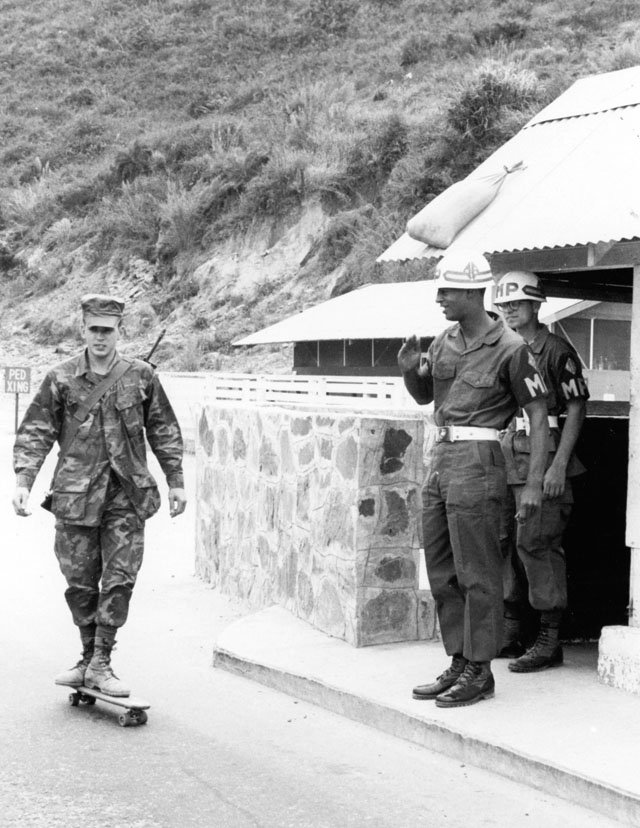
Thanks to movies like Platoon, Americans today think of the typical U.S. soldier in Vietnam as an infantryman on jungle patrol facing death and terror daily. But the reality was somewhat different. (U.S. Army)
IN AUGUST 1970, the Army Reporter newspaper profiled some fun-loving clerks of the 25th Infantry Division in Vietnam. Working far from the fighting, these men would never earn a medal for valor, so they created their own: the Silver Paper Clip. In a ceremony brimming with irony, they bestowed the honor on one of their brethren, along with this citation:
Specialist Howard distinguished himself with conspicuous gallantry and intrepidity at the risk of his life when he single-handedly answered over 200 telephone calls and processed in fifteen new men, exposing himself to a hail of questions. He moved from the relative safety of his desk to the P.X. where he repeatedly bought cases of soda. He organized and led his section as they swept out their hootch. Ignoring the personnel NCO, he cleaned his typewriter, picked up the mail, petted four dogs, ran off three stencils and took his malaria pill.
THANKS TO MOVIES like Platoon, Americans today think of the typical U.S. soldier in Vietnam as an infantryman on jungle patrol facing death and terror daily. But the reality is that most troops were more like Specialist Howard than Oliver Stone’s Chris Taylor. The high-tech nature of America’s war in Southeast Asia and its sophisticated logistics effort meant that some 75 percent of the 2.5 million soldiers who served there worked in supporting roles, out of danger and in relative comfort.
‘Basically there are two different wars here in Vietnam. While we are out in the field living like animals, the guy in the rear’s biggest problem is that he can receive only one television station’
Modern armies have always required mammoth support operations. But Vietnam was different. For the first time, the U.S. military turned its rearward bases into replicas of home, with many of the luxuries and consumer goods that post–World War II prosperity had lavished on America. The abundance had an unintended side effect: The uneven distribution of discomfort and danger stoked combat soldiers’ resentment of support troops, who were derided as “rear echelon motherfuckers.” REMFs and grunts may have served on the same side, but they did not serve in the same war.
AS FIGHTING in Vietnam intensified in the mid-1960s, the American war machine required enormous resources not only to subdue the enemy but also to sustain its fighting men. A legion of butchers, bakers, and ice cream makers fed the troops. Librarians shelved books in base libraries, entertainment specialists planned morale-boosting field trips and talent shows, craft-shop attendants minded the kilns and darkrooms, and lifeguards kept watch at the pools. Military-run retail outlets and bars employed even more personnel to stock the shelves, pour the drinks, book the bands, and count the slugs in the slot machines. On rear bases, an army of plumbers, electricians, and refrigerator repairmen kept the water running, the lights on, and the drinks ice cold.
Identifying REMFs on base was easy. Infantrymen returning from the field were lean and grizzled, their uniforms and boots bleached white from scuffs and sun. REMFs, meanwhile, wore fatigues that were often green and crisp with boots that retained a shine. Rich mess-hall fare and sedentary duty meant that more than a few uniforms stretched tight over paunches. Some newly arrived soldiers felt so self-conscious that they tried to distress their uniforms, especially the boots.
Most support troops worked on rear bases, many of which resembled big American cities. The largest was Long Binh Post, about 20 miles north of Saigon. Built over time for more than $130 million, Long Binh eventually had 3,500 buildings and 180 miles of road covering an area bigger than Cleveland. One colonel joked, “If we ever really got attacked, the V.C. would have to use the scheduled bus service to get around the base.”
Home to the army’s Vietnam headquarters, Long Binh was, in the words of one resident soldier, “a virtual REMF citadel.” The shooting war was far away, and soldiers stationed at the post had plenty of time on their hands. To keep them busy, military authorities provided a full slate of recreational opportunities. As of July 1971, the post boasted 81 basketball courts, 64 volleyball courts, 12 swimming pools, 8 multipurpose courts, 8 softball fields, 6 tennis courts, 5 craft shops, 3 football fields, 3 weight rooms, 3 libraries, 3 service clubs, 2 miniature golf courses, 2 handball-court complexes, a running track, an archery range, a golf driving range, a skeet range, a party area, and an amphitheater for movies and live shows.
By 1972, Long Binh Post even had a go-cart track, complete with a starting stand, a public-address system, and a pit for on-the-spot repairs.
Open mess clubs, which served food and alcohol and often featured live entertainment, abounded throughout South Vietnam. At its peak in 1969, Long Binh’s club system had 40 bars with a net worth of $1.2 million, including $270,000 in cash on hand. If soldiers didn’t like club life, Long Binh’s retail stores stocked food and alcohol to host private parties at the pools, barracks, or barbecue pits. An unofficial brothel, a “male beauty bar” with salon services, and outdoor movies rounded out Long Binh’s offerings.
Construction of new recreational facilities on Long Binh Post continued until the end of the war. As late as 1970, more than a year into troop withdrawals from Vietnam, the U.S. Army was still planning to build two 474-seat movie theaters, additional handball courts, two in-ground swimming pools with bathhouses, and a recreational lake. The military scrapped the more expensive construction projects in response to public outrage, but the post’s amenities were still expanding right through the summer of 1971.
Long Binh and other posts had retail stores that would have rivaled today’s big box outlets for their selection, if not their size. Just one of Long Binh’s P.X.s was ringing up more than $800,000 in monthly sales in late 1971, and it was not even the largest in Vietnam. These stores offered a selection of products that, in pre-Walmart days, was unlike anything most Americans had ever seen. As a reporter for a division newspaper raved about the P.X. at Camp Radcliff in the Central Highlands of Vietnam: “There are a lot of shopping centers—in fact, whole towns—back in the world where you couldn’t find snuff, anchovies, baby oil, dice, flash bulbs, radios, and steak sauce in the same store, or even in the same general area. But at Camp Radcliff you can buy almost anything you want.”
SUCH ABUNDANCE combined with the relative safety of duty in the rear to make the war itself seem like a distant concern. Writing about Da Nang Air Base in his memoir, Vietnam: The Other War, military policeman Charles Anderson reflects on this sense of isolation: “All of these comforts and services made the world of the rear a warm, insulated, womb-capsule into which the sweaty, grimy, screaming, bleeding, writhing-in-the-hot-dust thing that was the war rarely intruded.” William Upton, who served near the R&R center at Vung Tàu, told his mother upon returning home, “Most of the time you didn’t know you were in a war.”
Combat troops frequently passed through rear bases on their way to and from the States, R&R, or the hospital. These encounters left them bewildered by commanders who gave the most to those who risked the least, and resentful of noncombat troops who enjoyed relative comfort and safety.
Though U.S. Army officials denied friction between combat and support troops, front-line soldiers bristled at how their peers lived. In his memoir Nam Sense: Surviving Vietnam with the 101st Airborne, Arthur Wiknik Jr.—an infantry squad leader and veteran of the bloody assault on Hamburger Hill—seethes: “As near as I could tell, the only danger a REMF faced was from catching gonorrhea or being run down by a drunken truck driver. And the biggest hardship a REMF contended with was when a generator broke down and [his] beer got warm or there was no movie that night.”
In April 1969, 30 members of a combat infantry unit aired their grievances publicly. Writing to President Richard M. Nixon, they argued that “basically there are two different wars here in Vietnam. While we are out in the field living like animals, putting our lives on the line twenty-four hours a day, seven days a week, the guy in the rear’s biggest problem is that he can receive only one television station. There is no comparison between the two….The man in the rear doesn’t know what it is like to burn a leech off his body with a cigarette; to go unbathed for months at a time…or to wake up to the sound of incoming mortar rounds and the cry of your buddy screaming, ‘Medic!’”
A year later, retired officer John H. Funston wrote to the New York Times arguing that the army should reward riflemen with extra pay for the hazards they face in the field. The idea of combat pay, he argued, had been trivialized because every soldier received it, “regardless of his rank or whether he is a rifleman being shot at or a lifeguard at a rest area swimming pool.”
SOLDIERS IN THE REAR, meanwhile, regarded combat troops with deep admiration. On his way to an overseas R&R, clerk-typist Dean Muehlberg encountered a company of infantrymen on stand-down at the out-processing center at Da Nang. “We were in awe of the Marines,” he gushed. “We didn’t speak to them or get in their way. We didn’t know their language. You sensed that after the constant threat of death, of terrible harm, nothing else scared them.”
Muehlberg wrote a memoir, REMF “War Stories,” in which he pokes fun at himself, the boring work, and the very idea that he was fighting a war. The quotation marks in the title are deliberate; his 1969 tour was so far removed from combat that his rifle actually grew mold while it sat in its rack.
Muehlberg worked in the Awards and Decorations section, where he processed recommendations for medals and decided what commendation was appropriate. “For the first month it seemed a dirty job,” he writes. “I did not feel worthy! I was sitting in relative security reading grisly, awe-inspiring accounts of the courage of my not so fortunate brothers who were out in the thick of it. And then sitting in judgment on the ‘degree’ of their courage, their deed.”
After the war, enmity between grunts and REMFs persisted in personal memoirs and, later, websites. But in some cases, grunts’ bitterness lost its edge as veterans closed ranks to face a common enemy upon returning home: public and government indifference. Those who joined protests as part of the G.I. movement to end the war and claim federal veterans benefits buried their bad feelings in order to increase their numbers and present a unified front. Thousands of REMFs marched alongside combat veterans. Antiwar veteran groups scarcely acknowledged that the divisions ever existed. To the public, all the returning soldiers were simply “Vietnam veterans.” Only the vets knew that they had served on the same side in different wars.
Adapted from Armed With Abundance: Consumerism and Soldiering in the Vietnam War, by Meredith H. Lair, assistant professor of history at George Mason University in Virginia. © 2011 by The University of North Carolina Press.
This is my rifle. There are many like it, but this one is mine.
My rifle is my best friend. It is my life. I must master it as I must master my life.
Without me, my rifle is useless. Without my rifle, I am useless. I must fire my rifle true. I must shoot straighter than my enemy who is trying to kill me. I must shoot him before he shoots me. I will …
My rifle and I know that what counts in war is not the rounds we fire, the noise of our burst, nor the smoke we make. We know that it is the hits that count. We will hit …
My rifle is human, even as I [am human], because it is my life. Thus, I will learn it as a brother. I will learn its weaknesses, its strength, its parts, its accessories, its sights and its barrel. I will keep my rifle clean and ready, even as I am clean and ready. We will become part of each other. We will …
Before God, I swear this creed. My rifle and I are the defenders of my country. We are the masters of our enemy. We are the saviors of my life.
So be it, until victory is America’s and there is no enemy, but peace!
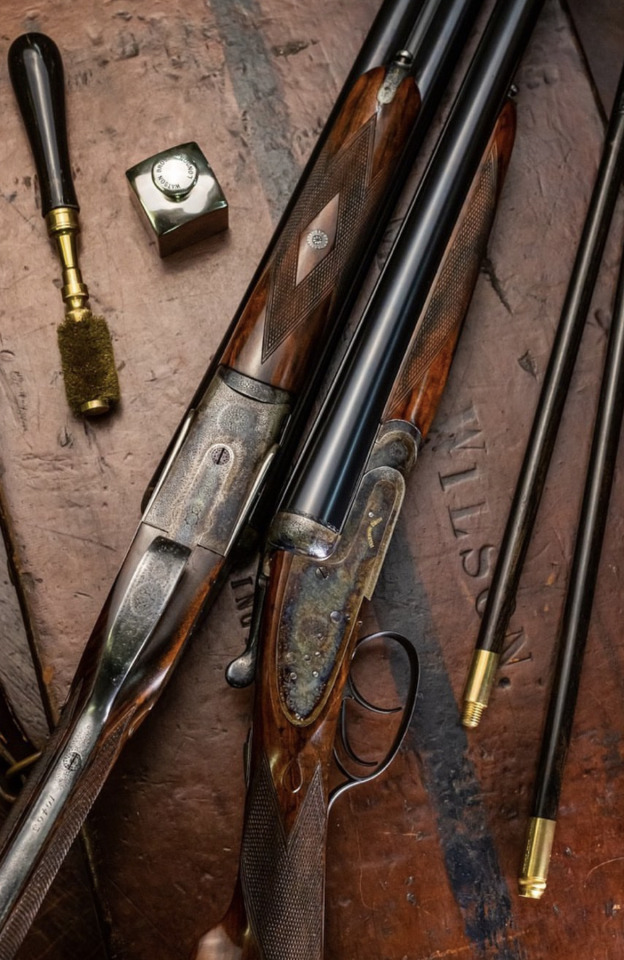


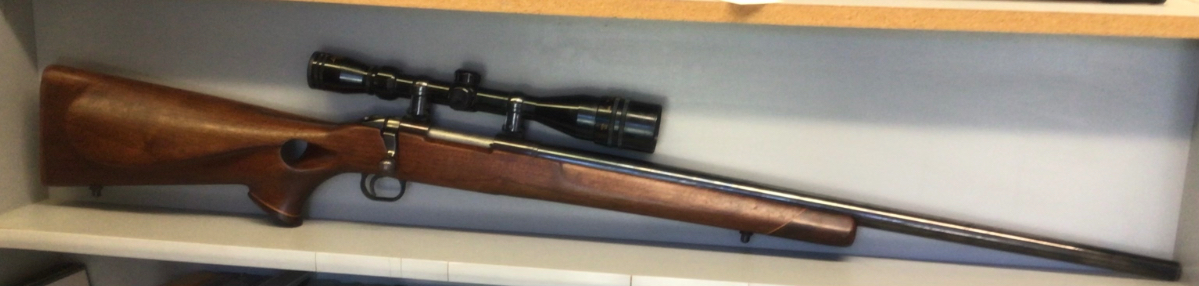
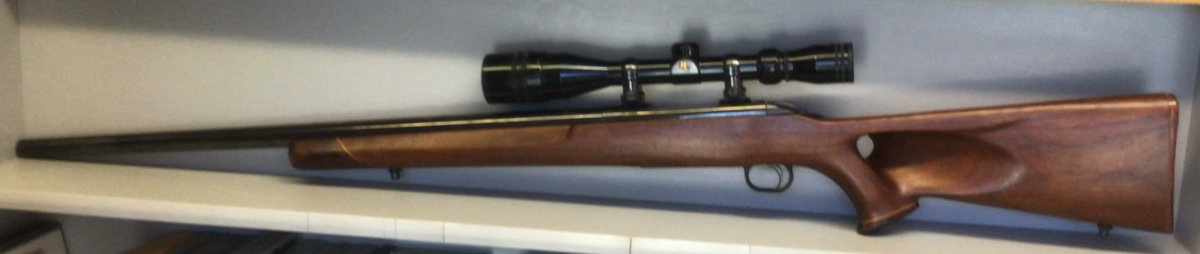
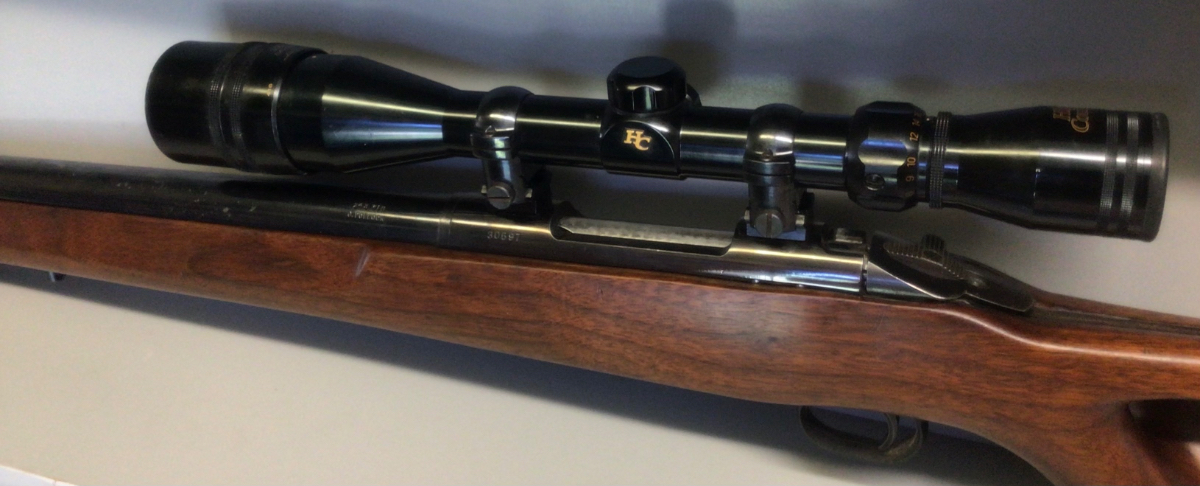

Target Acquisition is the location, detection, and identification of a target in sufficient detail to permit the effective employment of lethal and non-lethal means.
It takes more than a good eye, it takes a combination of vision, resolve and strength. I know that when I first starting shooting rifles, I could do a pretty good grouping for those first few rounds, then it went south. That was simply a matter of muscle strength. I got a couple of five pound weights, holding one out where a support hand would be, one where my grip would be. At home each morning, I’d pull them up, like I was pulling the rifle up quickly to target and hold 30 seconds or so, drop, rest, hold, repeat, 80’s music sounding out a rhythm on the stereo.

“Hammer Time!”
But it’s seeing what you are doing that’s the most important element of target acquisition, not just maintaining it.
When I was a child, we’d take a vacation every year to the Oregon Coast, renting a small cottage with a view of the beach. Coming down a steep hillside into Cannon Beach, the station wagon dissolving into damp grey light, streams of fog pouring over the road to lie like barely congealed oil, we kids would have all eyes glued to the front windshield. It was always a contest to see who first could spot the water and call it out.

There it is! We’ll pull ourselves up in the seat seeing that ocean as if for the first time. You’ve never seen small children so focused, so concentrated. It was something our parents taught us early on. There is fun, and there is play, but there are times, that for your safety, you need to be able to sit still and truly look.
Eighteen years later, I’m in the left seat of a transport, shooting down the barrel of an instrument approach into a tight runway in the mountains. We have enough fuel to give it just one try and then go to our alternate airport. But thanks to a weather system that didn’t bother to read the accu-hunch forecast, there were some serious thunderstorms drifting in that moat between us and our only other option. We needed to get into this airport, now, this once. If we blew it, we’d not get a second shot.
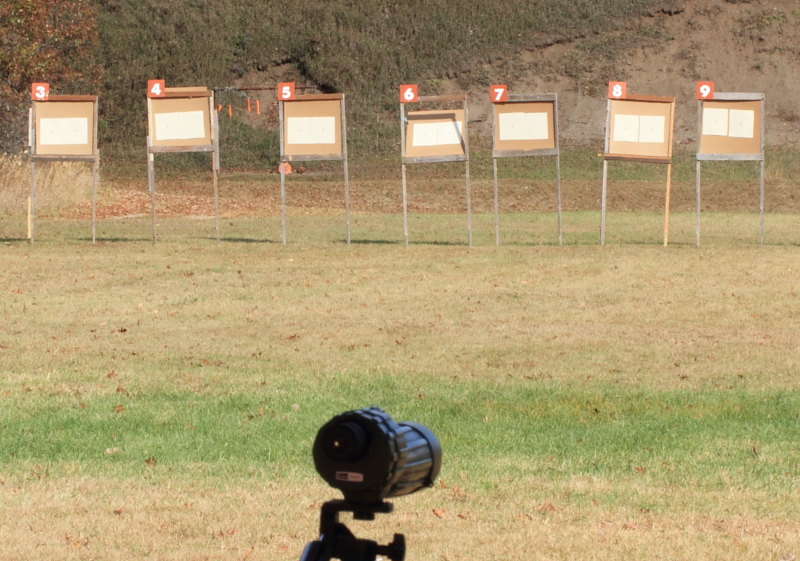
There is no range concentration that can match that of pilots that have just one shot at getting in to land or face a dire horizon. If you’re lucky, you can pick up the tease of the approach lights and stay in the clouds til you’re a hundred or so feet from the ground. But if you break out of that ragged overcast at that point, rain splatting on the windshield like a thousand guppies, doing 130 miles an hour, you’d better have your target in clear view or your day is not going to go well.
As the shotguns and Daisy’s of my youth gave way in my middle years to pistols and AR’s and a cranky Mauser or two, the ability to see and quickly lock on to a target became more of a priority. Things like humidity and breath suddenly become issues, safety glasses fogging up and things like foliage becoming more than shade when hunting from a blind. Even eyewear was an issue. I wear contacts, deciding to get rid of glasses that could be used for vision as well as setting ants on fire. There’s no fogging, and although my vision isn’t as “crisp” as glasses when I’m tired, I have the peripheral vision to see the target coming into view if it’s a moving one. As nearsighted as I am now, a Beluga whale could sneak up on me from the side if I wear glasses.
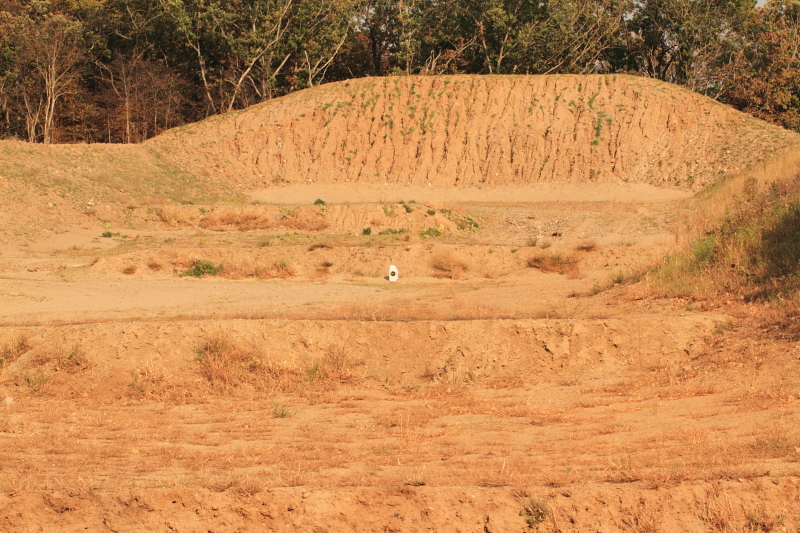
Be sure of your target and what is behind it. Wise words, especially with distance. How often do we hear of someone accidentally shot and killed while hunting because someone mistook them for a moose. Frankly if some someone mistook me for a moose, I’d be visiting Weight Watchers after I wrapped their firearm around their ears. But it happens , first a sound, a rustle of brush, and some muttonhead fires, not waiting to notice that his target is sporting a Cabelas hat, not a full rack.
It is so easy to just react without a true target (patience grasshopper). I’ve sat in more than one blind, feet freezing, stomach growling, just waiting for it. You can hear everything, the retreating darkness, the smell of first light, the delineation of leaves, the Morse code of squirrels chattering their warnings. But you can’t really see. Then the forest emerges into smooth, bright shapes, light and shadow and movement, and your eyes can only scan, looking with that tense, unmoving sobriety that is a blind man listening. If you are lucky you will see it, a flash of fur, a mass of bone that is more fight than surrender. You make sure it is all there, all four dimensions, solidity, mass, a shape that could be no other than an animal, and something else. Not hesitation, not fear, but pure and intent assurance as you draw up your weapon.

If you don’t CLEARLY know what your target is, keep your finger off the trigger. If you do, and ONLY when you do, use the front sight of the gun as a guide to aim. If you are after multiple bogies (i.e. kevlar vested doves) leave your front sight as soon as your next target approaches and as the gun approaches it, sight again and pull the trigger. Always know where your front sight is. It will tell you almost anything you could want to know about a shot. If you’re new to shooting, just practice watching the sight, no targets. When you get used to seeing the sight in recoil, move onto paper. If the shot needs to be dead center precise, the sight needs to be clear.
I know many people that can shoot faster than their sight picture and do so with the accuracy needed to stop a human target in most situations. But that involves the instinct of practice and an intimacy with their weapon that someone that takes that firearm out of the nightstand drawer a couple of times a year is not going to have.
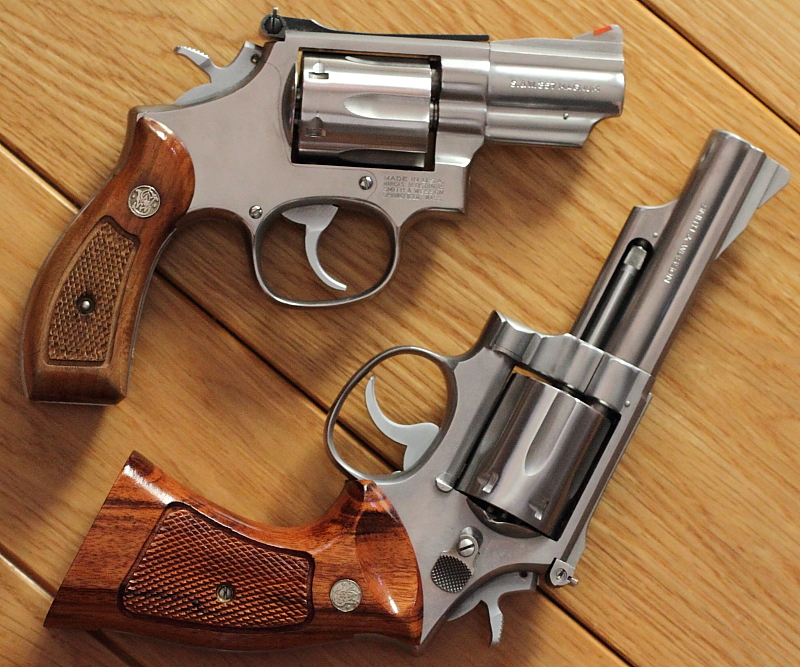
Unless you are being mugged by a 18 inch tall paper squirrel, your target is going to be moving. Remember, as far as triggers- mechanical things all happen at the same speed for each given piece of machinery. You need to learn to act upon what your eyes tell you. Like anything else with shooting, that requires practice and concentration.
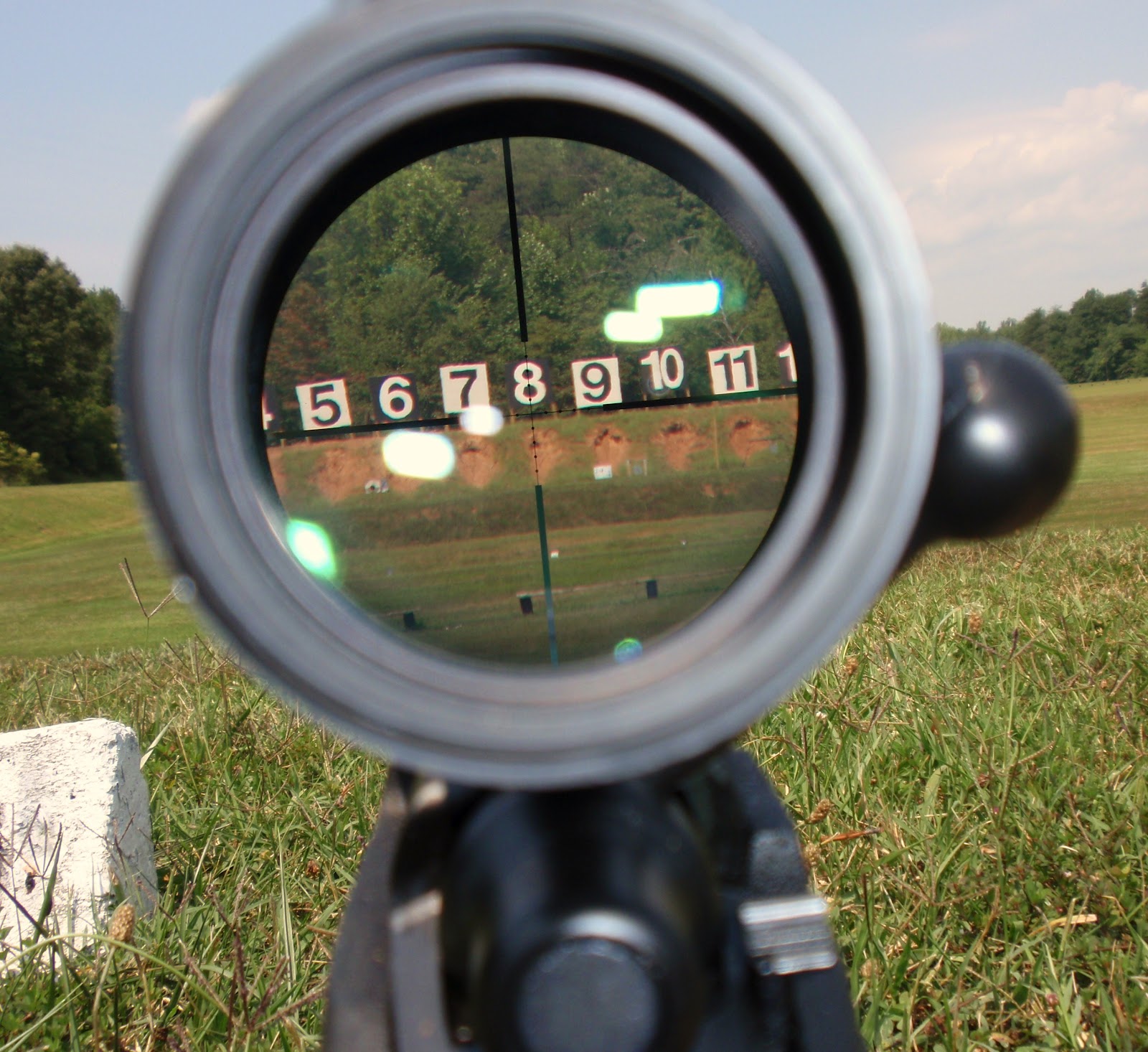
Practice close up. Practice at a distance. If you have never shot long range, you won’t ever forget it, a moment whispered and dreamt about, laid out flat in front of you. In that fleeting moment, you will hold your breath in the presence of power. You count that pulse between heartbeat and breath, compelled into an aesthetic deliberation you don’t quite understand but fully desire, faced for the first time in your living history with something proportionate with your capacity for awe.
Target acquisition is when what you have been waiting for comes from an enormous distance. It sometimes comes directly, sometimes coming as if by magic from no where when you least expect it, giving you a clear view after long dark, days of solitary combat.
My weapons are at rest and dinner is simmering on the stove. Coming up the long road, the sunlight streaming off of it like shining wind, is an SUV, its form and windows giving no hint of what it brings.

Inside, a rescue Lab gives a gentle “woof”, recognizing the sound and what it means before human ears can even hear its echo. We look up through the light, beyond the drive, beyond the wasted years in which we looked, but never really did see.
We stand in the drive as the vehicle comes into view, bringing up an arm in greeting, in that moment between heartbeat and breath.