Categories
Author: Grumpy

On January 12, 1983, on a cluttered street in Memphis, Tennessee, an off-duty police officer happened upon a purse snatching. Unable to apprehend the criminal, the officer did, however, recognize the suspect. The cop subsequently drove to the man’s home in the company of two other patrolmen. Finding the house empty the officers actually contacted the suspect but were unable to understand him on the phone. They subsequently gave up, filed a report, and called it a day.

At the time the suspect in the purse snatching was at another house in North Memphis along with thirteen other African American males. These men had spent the day smoking marijuana and drinking alcohol. They were all members of a nameless religious cult led by a 49-year-old mental patient named Lindberg Sanders.

Lindbergh Sanders described himself as “Black Jesus,” and his was an odd theology indeed. His Rastafarian rites forbade his acolytes from eating pork, drinking water, or wearing hats. He had informed his followers that the world would end on January 10th, two days prior. When he was proved wrong he found himself in a foul mood.

Amongst a bewildering array of nonsensical practices, Sanders also vehemently denigrated the police as tools of Satan. The relatively benign purse snatching query from police catalyzed Sanders’ toxic milieu. The subsequent conflagration was an epic bloodbath.

Sanders had the original suspect anonymously call the police to his North Memphis house ostensibly to discuss the purse snatching. 34-year-old Vietnam veteran Patrolman Bobby Hester and his partner Ray Schwill answered the call. Once they entered the house the two white police officers realized they were both surrounded and outnumbered.

Hester radioed for backup, and the two officers attempted to extricate themselves. The cultists gained control of Officer Schwill’s gun and shot him in the face with it. Schwill nonetheless made it to the door and safety. Patrolman Hester was taken captive. Several members of the cult fled the house and were eventually apprehended.

The first responding officer immediately attempted to enter the home only to be thrown bodily off the porch. The second went in shooting, exiting the house to reload several times. Despite his efforts, they were nonetheless unable to reach Patrolman Hester.

Memphis Police quickly surrounded the house and began negotiations with Sanders. Sanders and his followers had Officer Hester’s radio and used it to communicate with authorities. Sanders announced his intent to murder Officer Hester live over a Memphis radio station. He stated that he held a gun to the patrolman’s head and that any effort to approach the house would end in the lawman’s death. Neighbors and the escaped cult members all claimed the suspects were heavily armed.

What happened next is disputed. Sanders activated the radio as his followers beat and tortured Patrolman Hester. Hester’s pleas could be heard clearly by officers outside the dwelling. His comrades pressed for permission to attempt a rescue. Concerned about Sanders’ earlier threat and still holding out hope for a peaceful solution, administrators dragged out their discourse with Sanders for some thirty hours. This fateful decision has been second-guessed countless times since.

At 0300 on January 13th everything went quiet. Sanders refused to communicate, and Hester could no longer be heard. Microphones pointed at the house detected, “My daddy is dead. My brother is dead. The devil is dead.” Police administrators finally gave the go-ahead for a dynamic entry.
The Assault

The six-man Memphis TACT team deployed tear gas and flash-bang grenades before storming the house. They carried M16A1 rifles and 12-gauge shotguns. The entire operation took some twenty minutes. The tactical team was met with gunfire in the first room they entered. Patrolman Hester’s body had been placed near the front door in a vain effort at slowing their progress.

In the ensuing firefight, the tactical team fired a total of eighty rounds. Sanders and his remaining followers were killed to a man, all but one shot in the head. The suspects fired a total of twelve rounds from the two .38 revolvers taken from Hester and Schwill. These were the only two firearms recovered at the scene. Crime scene diagrams and photographs depicted the dead cult members lined up on the floor in a bedroom.

The tactical team found Hester handcuffed to a chair and beaten to death. He had been viciously tortured with a variety of implements. At the time of the assault, Hester had been dead between twelve and twenty-four hours.
The Weapons

The tactical team carried selective-fire M16A1 rifles and short-barreled Remington 870 pump-action shotguns. I was seventeen years old and living about an hour south of Memphis at the time of this tragedy. I recall seeing news reports of the event.

As the combat inside the house would inevitably be close range, dark, and pitiless, news reports showed that the SWAT officers had secured powerful D-cell police flashlights to the triangular forends of their weapons with tape. Observers outside the house reported hearing automatic weapons fire during the assault.

The M16A1 is a lightweight and maneuverable assault rifle well suited for combat in close quarters. Nowadays everybody mounts tactical lights on the forends of their weapons. In 1983, however, the use of onboard weapon lights was groundbreaking stuff indeed.

The M16A1 was a product-improved version of the original Stoner-inspired AR15. In 1958 the US military first conducted trials of these small-caliber 5.56mm rifles alongside the heavier .30-caliber M14. Initial reports were overwhelmingly positive.

As a result, in 1963 the first batch of redesignated M16 rifles was shipped to Vietnam for combat trials with South Vietnamese Army units and US Army Special Forces.

Soon thereafter the weapon was updated to include an enclosed birdcage flash suppressor, a forward bolt assist device, and a redesigned buttstock with a rigid sling swivel and storage compartment for a cleaning kit. This improved rifle was designated the M16A1 and soldiered on until replaced by the heavier M16A2 in the 1980s.

The Remington 870 slide action shotgun first saw service in 1950 and has remained in constant production until the present day. More than 11 million copies have been manufactured. The 870 is a bottom-loading, side-ejecting slide-action design that feeds from an under-barrel tubular magazine. Literally countless stock, magazine, and barrel options have made the 870 the most accessorized and customized shotgun ever contrived.

The shotguns used in the Shannon Street assault sported wooden stocks, shortened 12-inch barrels, and accessory ammunition carriers. In competent hands and at close quarters this weapon would offer overwhelming firepower combined with respectable maneuverability.

This operation represented a very early example of the tactical use of onboard weapon lights. The trend has subsequently circled the globe.
The Rest of the Story…

Repercussions from the Shannon Street Massacre, as it has come to be called, resonate even today. The decision to delay the assault in favor of negotiations ultimately sealed Officer Hester’s fate. Nowadays Memphis PD tactical doctrine mandates an assault the moment there is evidence of harm to an officer or citizen.

Lindberg Sanders’ family paints an entirely different picture of the events that led up to the bloody nighttime assault at 2239 Shannon Street. They claim that the initial phone call to the police was intended to clear up a misunderstanding over the purse snatching. They say that things spiraled out of control only after Officer Schwill began goading Lindberg and his followers with a faux black accent, something he was apparently wont to do.

Sanders’ surviving children point out that six of the seven cult members were killed with shots to the head despite possessing only the two captured police weapons among them. This observation combined with the orientation of the bodies at the crime scene led them to claim that the suspects were killed execution-style. The pathology report did state, however, that there were no powder burns on the bodies. This would imply that they were all shot from a modest distance.

Most of the sources I could find referred to the seven dead suspects as victims. Given that they tortured a police officer to death I struggle with that characterization. However, in the final analysis, little of it really matters.

Self-serving politicians, a ghoulish media, and our nation’s affinity for remaining perpetually offended continue to fuel tension between the black community and Law Enforcement. According to those who knew him, Lindberg Sanders hated cops no matter their race, age, or gender. In 1983 eight people lost their lives in the early salvoes of a self-sustaining cycle of hatred and violence that persists today.


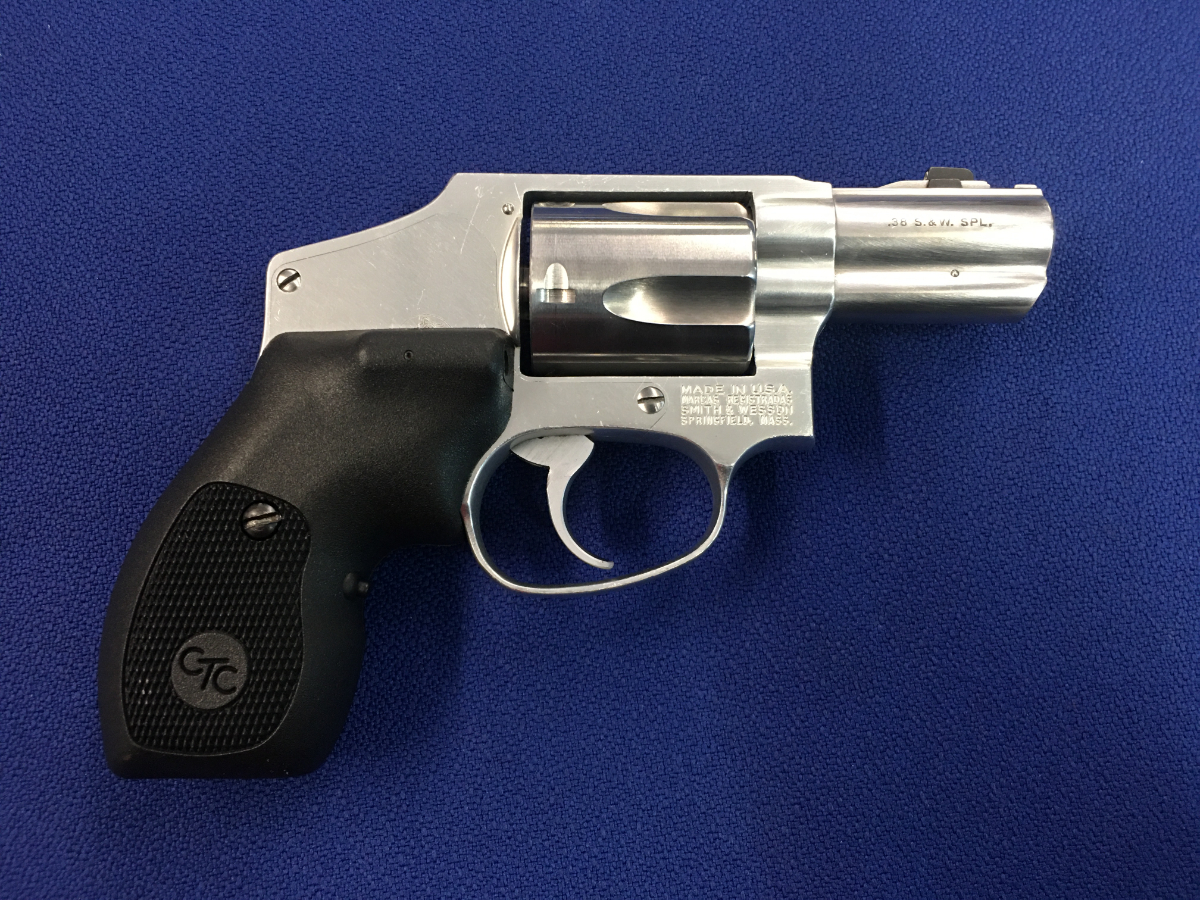
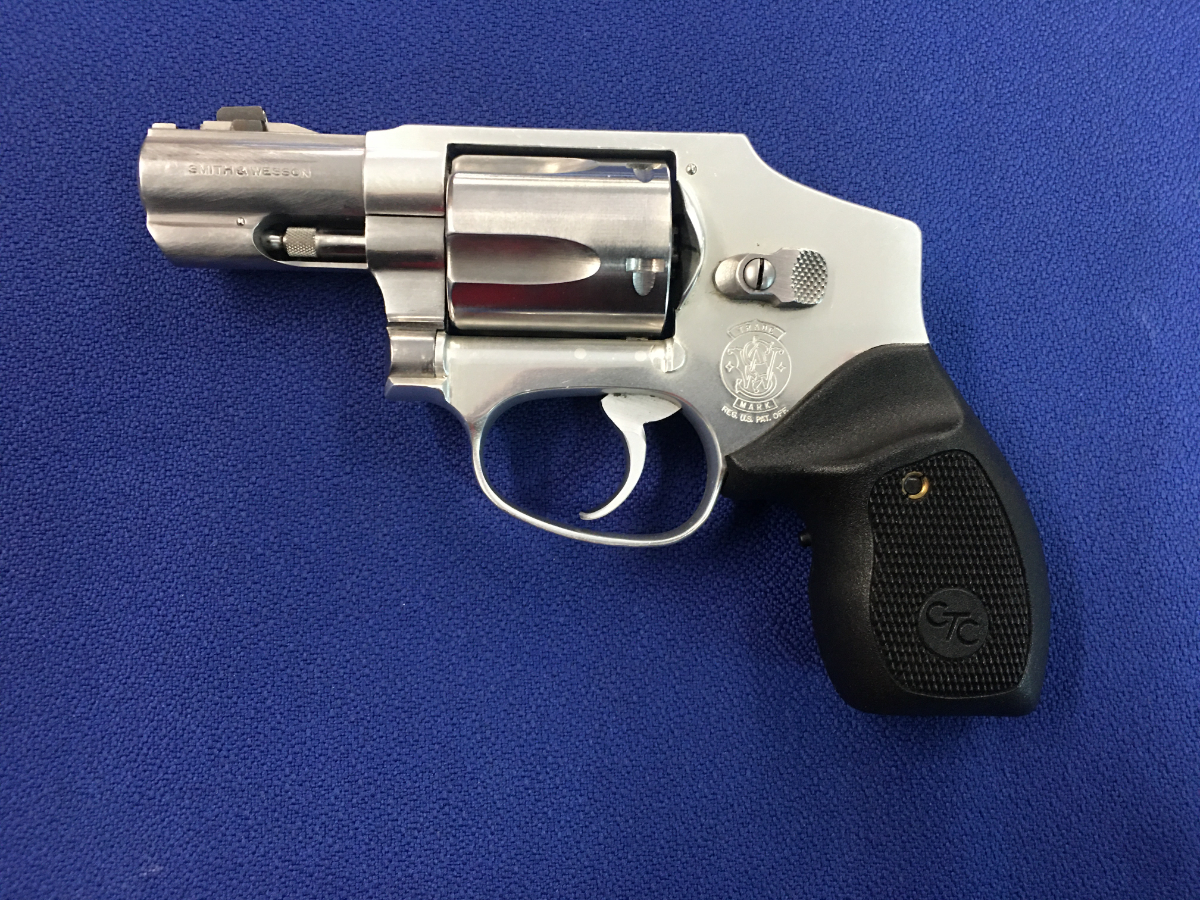
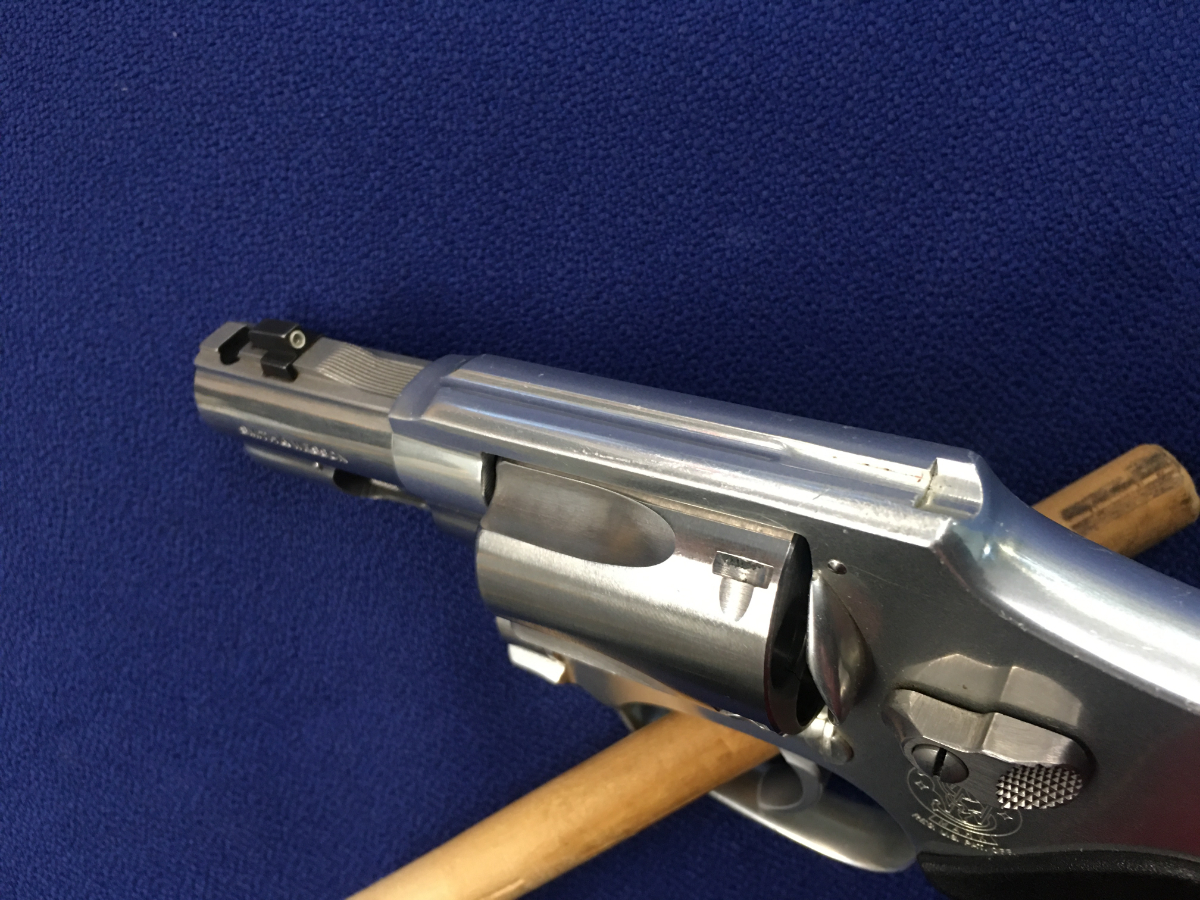
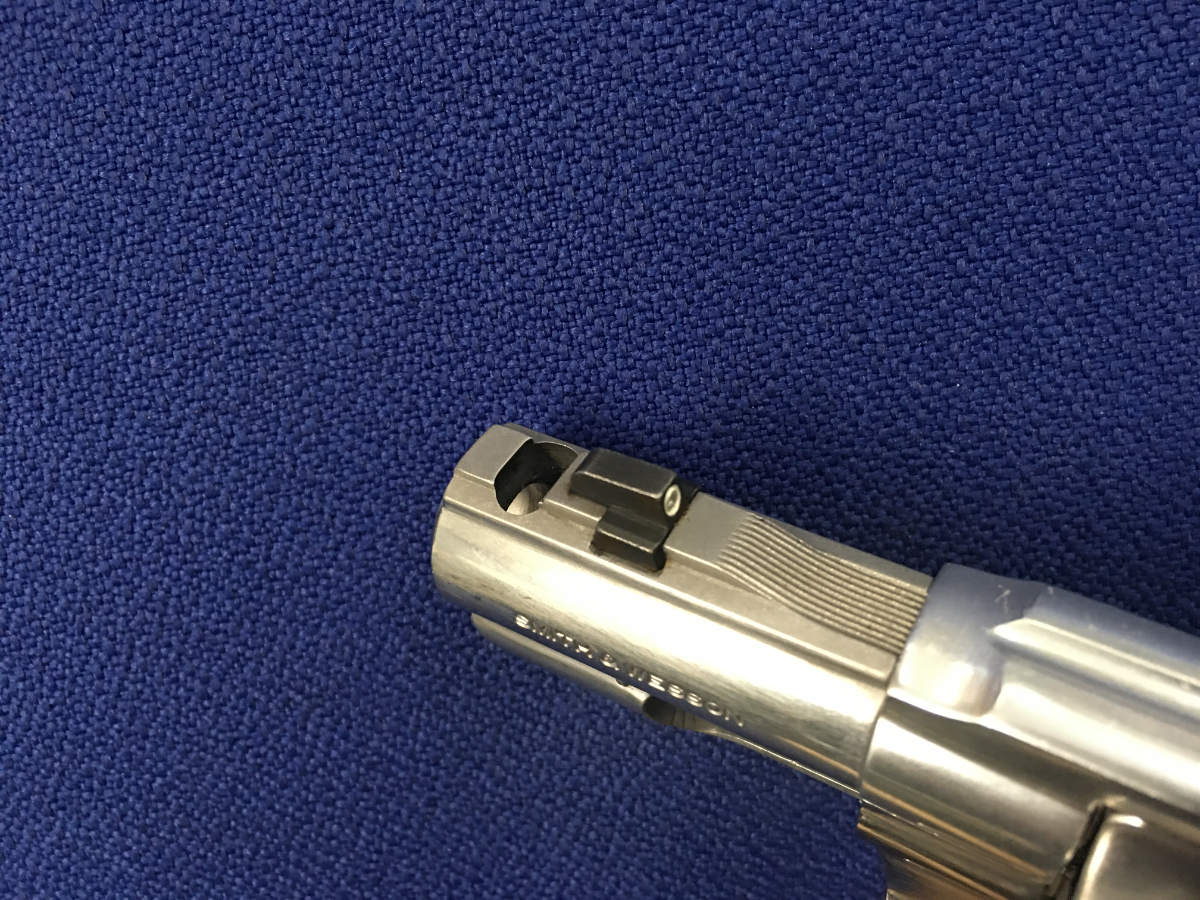
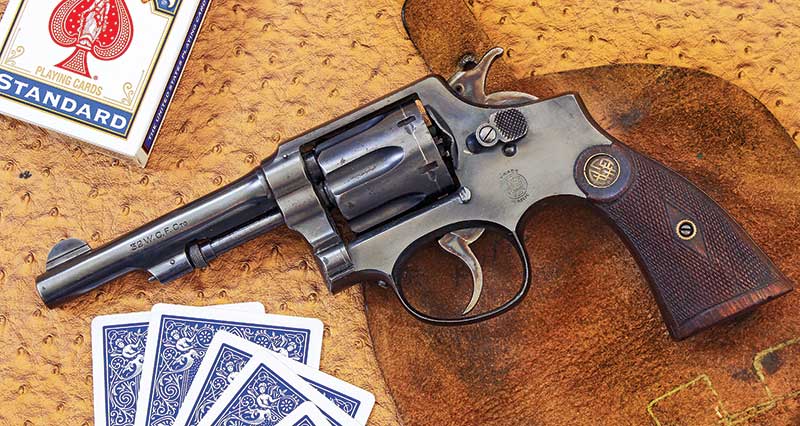
Is it or isn’t it? This Armero Especialistas “Alfa” is a Spanish-made clone of the S&W .38 Hand Ejector
In an effort to piggyback off another’s good fortune, companies will inevitably rush in with similar-looking but inferior products. There’s a thriving black market for fake designer handbags and jewelry that seem like identical copies of their fancier counterparts — at least until they fall apart at the seams or stain your skin green. Your child’s room may have a mimic hiding in plain sight: perhaps a well-meaning relative bought your son a robot “Transmorpher” instead of an honest-to-God Transformer, or maybe your daughter owns a generic “Ice Princess” masquerading as Princess Elsa from the Frozen movies.
We often make the mistake of thinking knockoff goods are a modern problem. In fact, one of the most well-known firearm brands still carries an interesting reminder of a time when its counterfeits saturated the market. On the side of every modern-era Smith and Wesson revolver, you’ll find what collectors call the “four line” rollmark. The first line reads: “Made in U.S.A.” The final two read: “Smith & Wesson” followed by “Springfield, Mass.” But somewhat oddly, the second line is Marcas Registradas. It’s a Spanish phrase translating to “Registered Marks.”
To understand how the line came to be, I call your attention to the “Spanish clones” of the old .38 Hand Ejectors — the parents of the venerable “Model 10” revolver S&W still sells today. My clone, technically known as an Armero Especialistas, “Alfa” model, proves to be an especially fascinating chameleon.
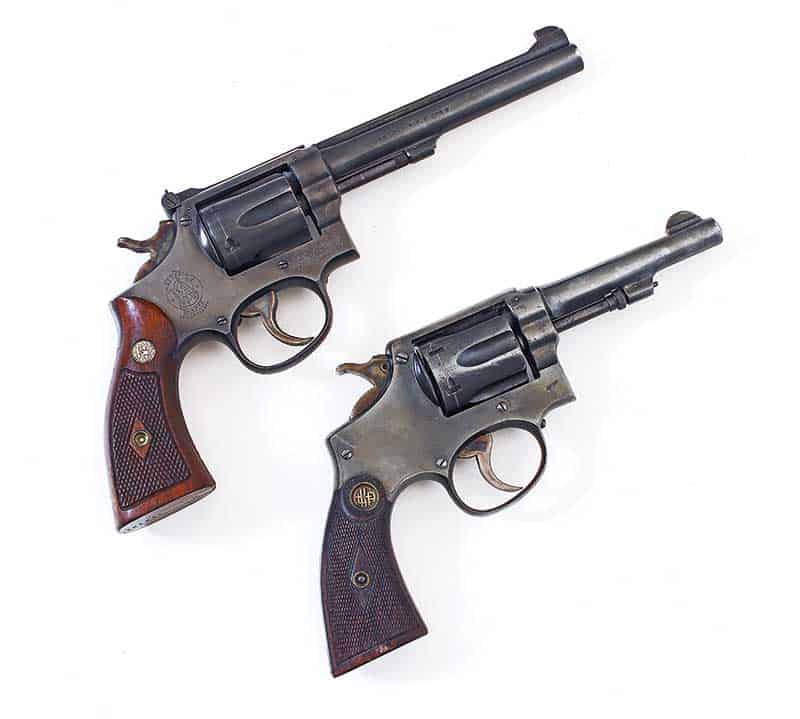
The Alfa below a K-Frame S&W. A convincing fake, no?
History Lesson
Around the turn of the 20th century, Smith and Wesson’s flagship K-Frame became big news and big business for the Springfield firm. Innumerable Spanish competitors decided they wanted in on the action and began producing a bewildering variety of blatant copies in an effort to meet demand for the awesome guns — and undercut the existing market.
Naturally, S&W found out about this skullduggery and attempted to put a stop to things. While they had some legal success going after American importers on the grounds they were intentionally attempting to defraud consumers, the sovereign nation of Spain essentially told them to pound sand — they didn’t recognize their American trademarks. S&W did eventually secure patents abroad but only after the knock-offs existed on the international market for several decades. S&W added the Marcas Registradas as a way of saying “Stop copying this design!” in a language its counterfeiters would definitely understand but by then, the damage was done.
So what to make of these guns as a whole? First, let’s start with the reality many of the Spanish copies were downright janky. On the low end, there are several design elements that stick out even to the casual observer as being not right at all. It’s common to find design details appearing to be sketched out from memory. Cylinder releases can be of strange teardrop or circular contours, dimensions can look squashed or stretched and often hammers tend to have unusual shapes.
Hilariously, some rollmarks claim the guns are made in “Sprangfeld, Mus.” Others attempt to vaguely match the iconic S&W “Trade Mark” logo with a blobby, sloppily rollmarked forgery. Often, the substandard finishes have worn completely away in the last hundred years and metallurgy is so questionable firing the guns is generally regarded as a bad idea. There are many, many unconvincing fakes.
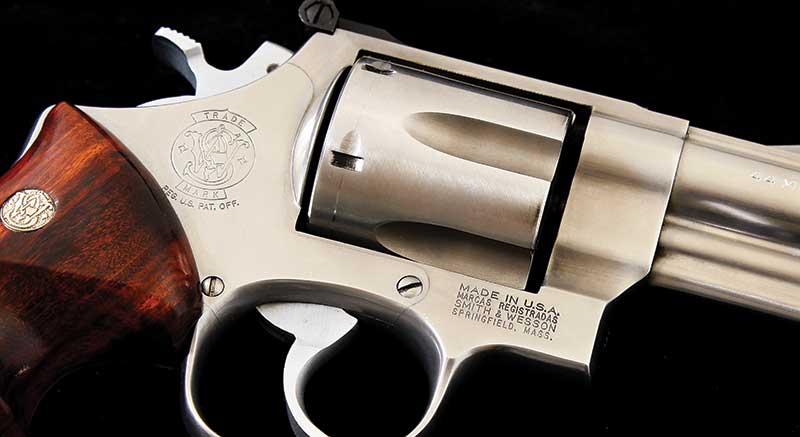
The infamous Marcas Registradas, still present in modern-make Smiths.
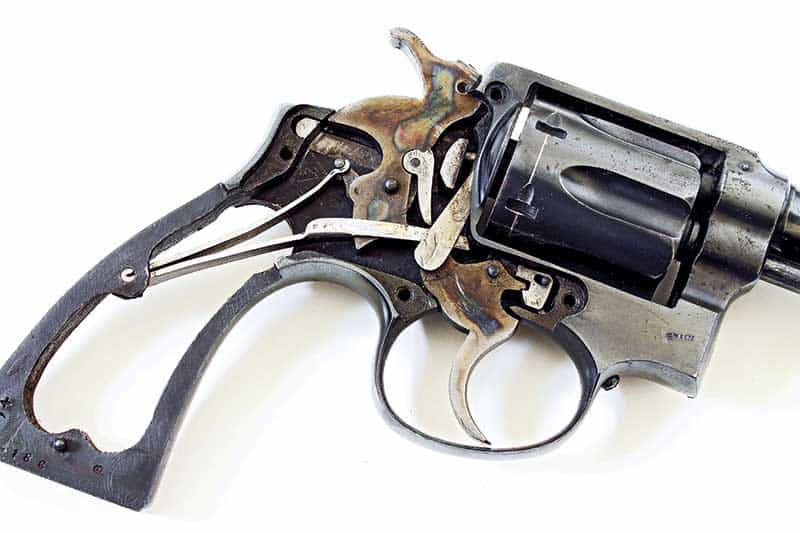
Internally, the Spanish clones are more Colt than Smith, with a massive
V-spring powering the lockwork — and making for a horrific trigger pull.
Some Aren’t Bad
This “Alfa,” however, is a pretty damn successful copy. Every signature contour of the Smith-pattern revolver is mostly intact here down to the smallest of details. The front sight blade, ejector rod, hammer, cylinder release, grip shape, frame dimensions, screw orientation, sight groove and frame detailing are all basically dead ringers for the real thing — it’s almost insidious, really. The barrel appears to be pinned and the quality of walnut stocks are top notch. Even the machining on places like the cylinder ratchet, hand and lockwork is pretty good, and the bluing looks great for being about a century old!
With all this in mind, it helps to remember Spain has a rich history of firearms production stretching back centuries. Consequently, a lot of gunmakers weren’t exactly banging rocks together when they made these guns. There’s clear craftsmanship here — even some “improvements.” For example, many of the Spanish copies used a single beefy V-Spring — not unlike a Colt — in place of three separate springs on the original S&W design. On paper, this made the design slightly less fragile, and in theory, better-suited to military service. The French government went so far as to order many “Spanish Model 92s,” as they were then known, as fighting handguns during World War I.
This robustness, however, has a clear cost. While just about any S&W revolver has a pedigree of being something you can pick up and shoot quite easily, the trigger on this copy flat-out sucks. The double-action mode is easily on par with the worst revolvers I’ve ever shot: the V-Spring stacks for days at the end of an already-stiff travel. But even more impressive in its awfulness is the single-action trigger, which is just as heavy. Mechanically, one spring is both keeping the hammer under tension and pushing the trigger forward, whereas on legitimate S&Ws these are two separate jobs parted out to separate springs.
The effect is a single-action trigger pull in the vicinity of 11 lbs. Yes, 11 lbs. It’s definitely over the 10-lb. limit of two separate trigger gauges I have laying around so the additional pound represents a conservative estimate. I’ll note I can’t attest to mechanical accuracy of the gun: Given my nagging concerns of the metallurgy of any Spanish clone, even one as seemingly well-built as the Alfa, I’ll likely never shoot it. However, given the horrendous trigger, I doubt I’d be fruitful in obtaining any trustworthy data related to how it groups. Also — I have actual Smith and Wessons more deserving of range time.
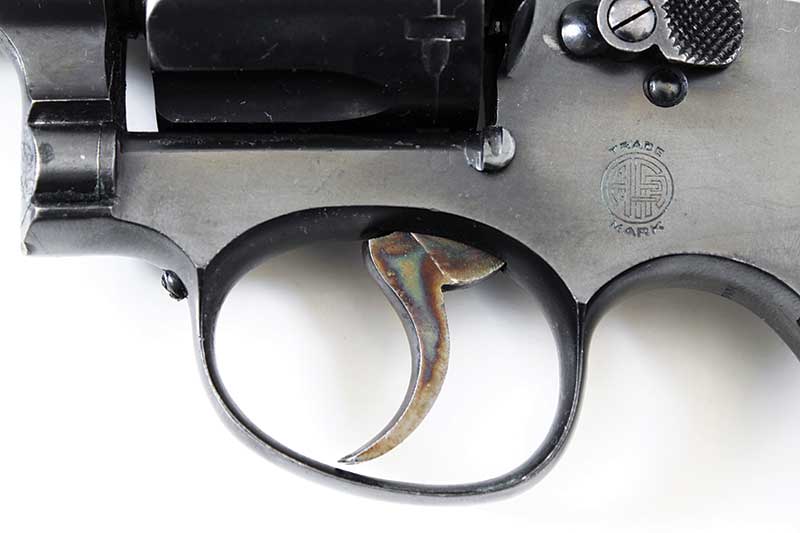
Surprising quality details abound on Clayton’s Alfa, like a case-hardened hammer and trigger.
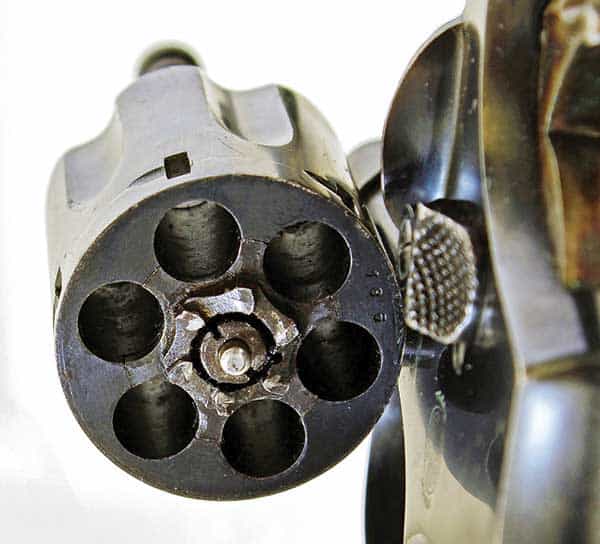
Non-visible machining is decidedly inferior, evidenced by this ugly, rough ejector star.
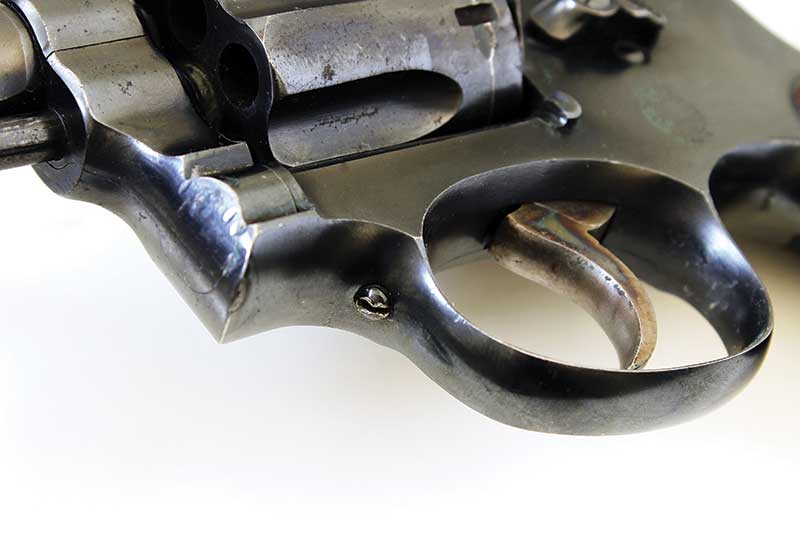
Brutalized screws can be tell-tale signs of softer steels, as much as “Bubba” gunsmithing.
Pop Quiz
Let me end by asking you this: Had I not told you this was a Spanish clone, would you have been fooled? Admittedly, I overpaid to get the best fake I could.
Some eagle-eyed S&W fanatics would have examined the grip logos and the slight, slight difference in the shape of the trigger guard and immediately suspected something was amiss from your standard five-screw M&P. Would-be sleuths also have the internet now, so it’s easier than ever to pull up side-by-side photo references of a legit gun to compare with the copy.
But say you’re a vaquero in the 1920s who goes into a local gun store looking for one of “those new Smith & Wesson revolvers,” and the guy behind the counter says, “Sure, we have those! And at a cheaper price than you were expecting!” Or, maybe you’re an American shooter who wants one of these nifty double-action revolvers with a swing-out cylinder in .38 special. You know, just like the one you shot at your brother-in-law’s last summer — doesn’t the gun behind the counter look just like what you remember? Long story short, I imagine the tricksters at Armero Especialistas were extremely successful at cutting into Smith & Wesson’s business.
Today, the Spanish copies are little more than a historical curiosity. While I would certainly have no qualms taking a well-worn example of an actual S&W .38 Hand Ejector to the range or conscripting it for self-defense if it were all I had, the Spanish clones are a poor choice for sport or social work. That being said, I think every serious S&W collector should have one or two clones in their collection. They are fantastic conversation pieces, not particularly expensive and hearken back to a profoundly interesting time in the company’s history.

The bottom levergun is the elusive .35 Remington straight-gripped Marlin John captured at a
Labor Day weekend sale; the two pistol-gripped versions were added later.
I would’ve been all of 10 years old when Tex Ritter sang the mournful lyrics: “Oh my buckets got a hole in it; Yes my buckets got a hole in it; Oh my buckets got a hole in it …” And who can forget when Jimmy Durante literally kicked the bucket in It’s A Mad, Mad, Mad, Mad, World?
Then there was the more modern bucket scene when Tom Selleck as Matthew Quigley made an unbelievably long shot on a bucket way out yonder with his Sharps. Long before any of these buckets happened I was making lists. I didn’t realize at the time these would be called bucket lists.
“I never did get the Jeep and I was still a teenager when a young girl — the future Diamond Dot — changed my plans for living a solitary life.”
Hard Times
Money did not come easy in the late 1940s, at least not in my family and I often collected old newspapers and pop bottles to make a few pennies. Once I got 25 pennies, I would buy one of the outdoor magazines and read about exotic hunts all over the world. My bucket list consisted of a diagram of my future game room as I planned where each trophy would be hung. This changed virtually every day as my dreams expanded. I made so many lists it was a rare animal I could not recognize and plan where it was to be displayed.
From the beginning, mapping of all my dreamt-about trophies, I expanded to all kinds of lists — future guns I would have, the future places I would live and future adventures I would experience. All of these were bucket lists even though I did not know it at the time. Shortly thereafter we moved from the housing project for returning veterans to a real house where I could have my own bedroom. “This is a great place to hang maps of all the places I would soon hunt around the world,” I thought.
I planned to live by myself in some forest area and I remember drawings of myself, levergun in hand, a loyal malamute by my side and a Jeep parked in the background. I never did get the Jeep and I was still a teenager when a young girl — the future Diamond Dot — changed my plans for living a solitary life.

John’s latest items to be crossed off the bucket list are these SIG SAUER
semi automatic pistols chambered in .357 SIG.
On The List
One searched-after firearm on my bucket list was a Marlin levergun — not just any Marlin but a straight-gripped .35 Remington. In my youth, Marlin issued a special Texan lever action with examples in both .30-30 and .35 Remington but I never saw either one except in pictures. In the early 1980s I started looking for a straight-gripped .35 Remington Marlin levergun with a 20″ barrel and had people around the country looking for me. None were to be found.
At the time we owned acreage in the mountains 100 miles north of town we used for camping with the kids. Eventually, we moved a 70-foot mobile home onto the property and covered it with a snow roof. We had electricity and even a well. It was a great place to just rest and recuperate.
We would often pass a small gun shop on the main highway about 15 miles south of our mountain hideaway. Every weekend when we would go up there, the shop would be closed — at least until one Labor Day weekend. As I drove by I noticed it was not only open but had a large sign saying: “20% off everything this weekend only.” I turned around and quickly went back, feeling I would probably never find anything I really wanted.
I walked into the shop, looked at the rifle racks behind the counter and spotted a straight gripped Marlin levergun. I asked the owner about it and his immediate response was: “Oh, you don’t want that thing. It’s not a .30-30, it is one of those .35 Remingtons.”
I tried not to get too excited as he handed me what he thought was a second class Marlin. I continued to remain very calm as I wrote the check. Finally, the straight-gripped .35 Remington, which had been on my bucket list for decades, could now be crossed off.
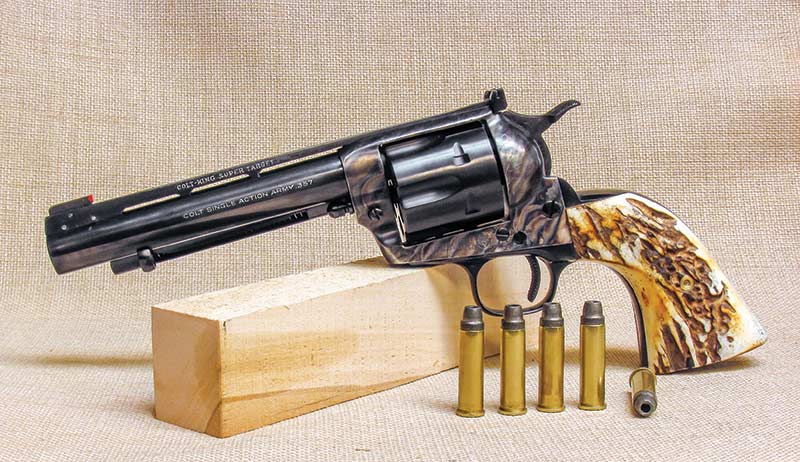
Another important bucket list item for John was this Custom King Gunsight Company Colt Single Action.
A King Custom
Another gun I have dreamed about for even longer was a custom sixgun by King Gunsight Co. D.W. King was a rifle marksman who was not satisfied with the sights available, so he decided to make his own. This was in the late 1920s and he formed the King Gun Sight Co. He not only provided rifle sights but did a brisk business applying custom sights to sixguns, especially for target shooters. The King Gun Sight Co. could not survive after the death of the founder and disappeared in the early 1950s.
Looking at pictures of his custom work will show his ideas were later incorporated into factory guns. King also did custom work such as cockeyed hammers and wide triggers both set up for a short action. Elmer Keith had his 7-1/2″ .44 Special Colt Single Action worked over by King and this classic sixgun was one I lusted after as a beginning shooter. In addition to ivory stocks Keith had his fitted with a barrel band front sight, a fully adjustable rear sight, and a King short action.
One of my best friends works in the local Cabela’s Gun Library and I have come up with some very cool sixguns over the years by stopping in occasionally. This trip he had a Colt to show me. Checking the serial number I found it was a Colt Single Action manufactured in 1921. It was chambered in .357 Magnum, which did not arrive until 1935, meaning sometime between 1935 and the beginning of WWII it was sent back to Colt to be converted to the then-relatively-new .357 Magnum with a 5-1/2″ barrel — but this was only the beginning!
The gun had also been turned over to the King Gun Sight Company for extensive custom work. Just as with Elmer Keith’s .44 Special, this one had the short action, cockeyed hammer, wide trigger, and a full-length rib which contained the King mirrored front sight and adjustable rear sight. Another bucket list firearm had been found!
Our bucket list, as well as life, can often be like the bucket Tex Ritter sang about. Sometimes our bucket is full and overflowing, sometimes it’s half-full, and sometimes it just has holes in it. My bucket list definitely has holes in it and I will never complete the whole list, however, I have been blessed beyond all measure and when I pass, the bucket list will still not be complete — but I have certainly enjoyed the trip.
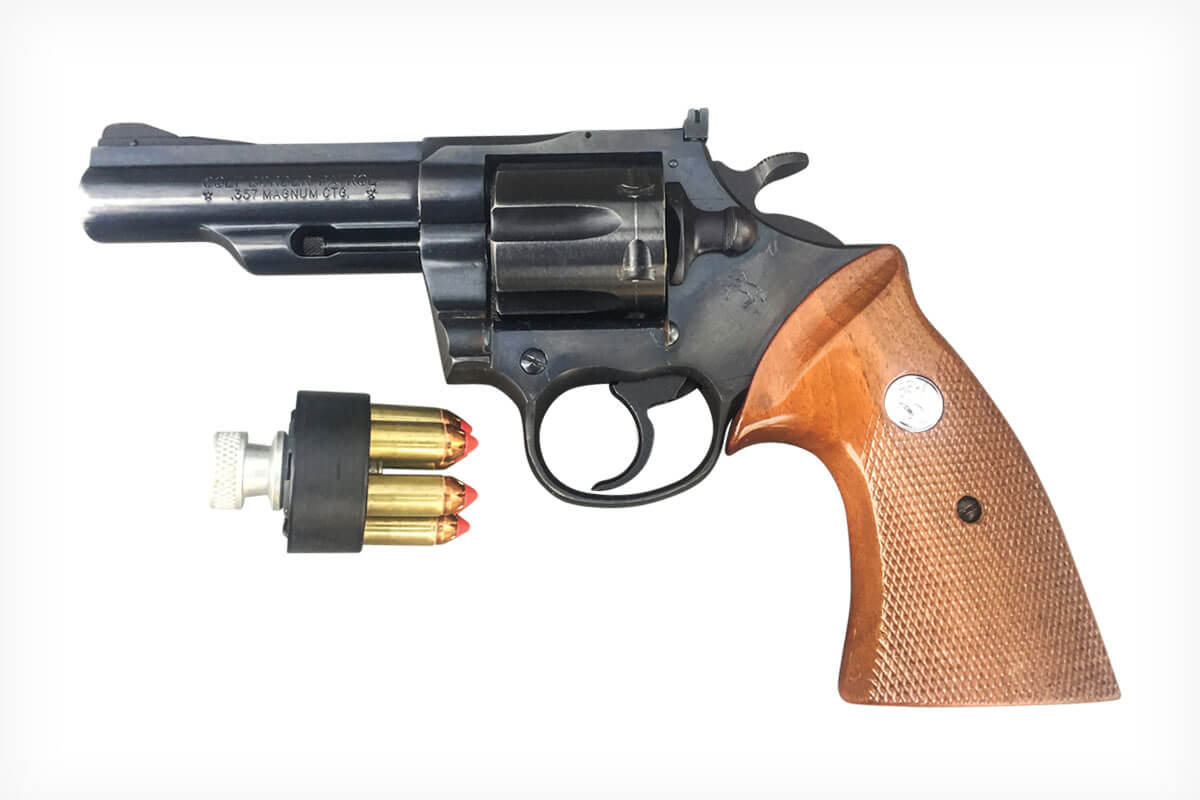
Resurrecting and reissuing a classic handgun is not a new thing. But what Colt did with the Border Patrol double-action revolver was a bit different. Essentially, both the original and the reissue were based on two different models.
The original, or First Issue, was a modified Colt Official Police made for the Border Patrol in 1952. It had a short production life of only 400 to 500 guns, and originals are extremely pricey. A minty 99 percent First Issue—accompanied by the Colt factory letter and original carton—went for $18,400 at a 2013 Rock Island Auction. Essentially, it was a heavy-barreled four-inch .38 Special featuring checkered brown plastic grip panels and stamped “Colt Border Patrol .38 Spec. Heavy Duty.”
The Second Issue was produced from 1970 to 1975 and was slated for both the U.S. Border Patrol and for the general public. Produced in considerably greater numbers than the First Issue (5,356 blued, 1,152 nickel), it was a Colt Trooper Mark III .357—also with a four-inch ribbed barrel. The differences between the Second Issue Border Patrol and the Trooper were minor—primarily a more utilitarian finish and the “Border Patrol” stamp on the barrel.
The similarities were surprisingly analogous to Smith & Wesson’s premium Model 27 and its more service-oriented Model 28 Highway Patrolman. This is not surprising. In those days, competition between our preeminent revolver giants was nothing if not hot and heavy.
Interestingly enough, the Second Issue Border Patrol was built on what Colt referred to as its “J frame”—definitely not to be confused with Smith & Wesson’s snubnose J frame.
Although sufficiently rare enough to command serious money on today’s Colt collector market, this magnum-ized version of the first Border Patrol certainly never replicated the prices an original commands. My test gun, a very clean specimen, comes from my shooting buddy Doug Fee, who fairly recently obtained it at auction for a cool $825.
I shot the Border Patrol from a sandbag rest at 25 yards with three loads—two .38 Special and one .357 Magnum. All were excellent performers. First off, I went to what would have been a state-of-the-art duty load in the early 1970s, which was Remington’s take on the .38 Special FBI load: a 158-grain +P lead semi-wadcutter hollowpoint. It clocked 928 fps on average, and five-shot groups averaged 2.25 inches.
The second .38 load was a Winchester 130-grain FMJ Train and Defend, which averaged 893 fps. This one grouped two inches even.
The lone .357 Magnum entry was a hot one: Hornady’s 140-grain FTX LeverEvolution, which averaged 1,385 fps. Despite the fact that it was a handful, even from the 36-ounce Colt, it grouped just a hair over 1.75 inches
Its true rise to stardom was as the weapon carried by Charles Bronson throughout the tough-as-nails action flick Death Wish.


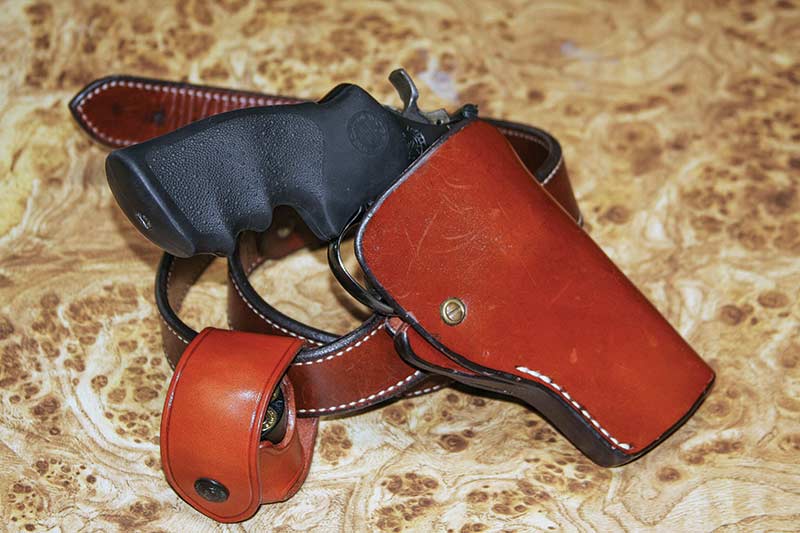
The compact design of the Milt Sparks-style holster allowed Dick to make it comfortably
through a full day of training drills at the Gunsite Academy in Arizona.
While I have long been fascinated with N-Frame Smith & Wesson revolvers, I came to the party only after seeing the movie “Dirty Harry.” Prior to the movie, all my shooting was done single-action, influenced no doubt by having grown up in the 1950s watching cowboy shows on television.
Do You Feel Lucky?
Once bitten by “the most powerful handgun in the world”-bug, I realized double-action revolvers produced outstanding results when first cocked before pressing the trigger. Even with a superb action job, it was difficult to maintain a precise sight picture throughout the long double-action trigger pull of the large-frame Smiths. Much of my handgun silhouette shooting and big game hunting in Colorado and Wyoming during the ’70s and ’80s was done with a 6.5″ barreled Model 29 but always fired single-action.
As the years went by and Father Time reminded me more frequently I wasn’t indestructible, I recalled perhaps the greatest fight-stopping handguns in American history were .45 caliber, not the least of which was the venerable .45 Colt. These were available in N-Frame Smiths and looked exactly like my .44 Mag Model 29s but were easier to handle with factory loads.
Not to sound like a fairy tale, there came a day on one of my frequent visits to the North County Shooting Center in southern California when I saw my future S&W Model 25 with 4″ barrel in the display case. A brief examination of the gun confirmed the finish, timing and double-action trigger pull were excellent.
Negotiations were over in seconds, but of course California required another 10 days to decide I could take the gun home.
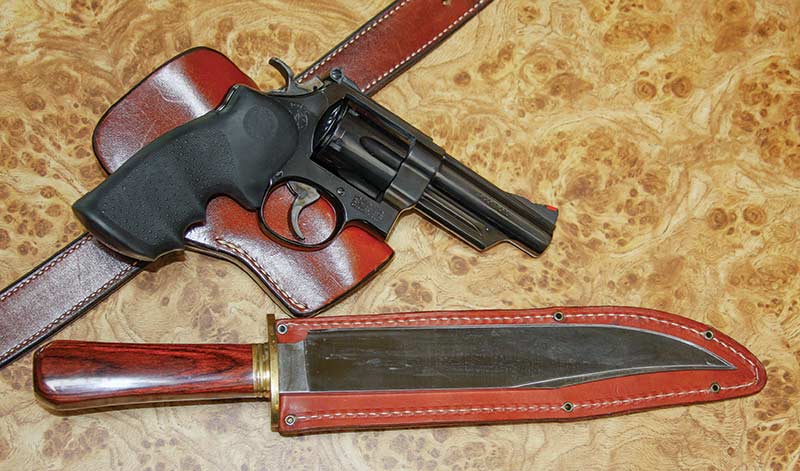
In “Lonesome Dove,” Capt. Augustus McCrea believed the revolver
made the large fighting knife an unnecessary item but Dick thinks
pairing of a big knife and large caliber revolver was rather common —
and comforting — in the old west.
Taking Stock
Except for the action job and the Hogue rubber grips, the gun is “as issued” by Smith & Wesson. The Hogue grips are relatively narrow with an open back and finger grooves. The stippled sides provide enhanced controllability for fast follow-up shots. Most importantly, they fit my hand perfectly with the open back allowing proper finger placement on the wide serrated trigger. If I had ordered the gun from the factory, I would have requested the smooth combat trigger but the double-action pull is so smooth I had no trouble maintaining a good sight picture throughout.
The trigger is slightly narrower than the trigger guard, ensuring it can’t catch the edge of the holster when the gun is returned to leather. “Back in the day” when handgun hunters and recreational shooters fired big bore Smiths single-action, wide checkered trigger shoes became popular as they allowed the trigger to be pressed slightly sideways while still causing the hammer to fall. It made things easier for those with smaller hands to reach the trigger and shoot the guns equipped with the oversize walnut target grips. I heard stories of guns firing when being re-holstered, but I never witnessed such an event — perhaps they occurred when someone mistakenly tried to holster a cocked revolver.
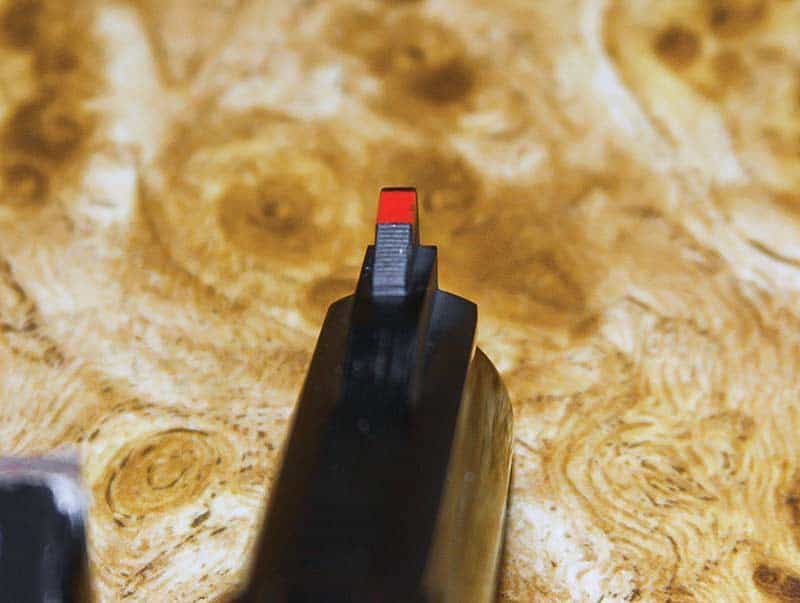
A major factor in successful handgun shooting is seeing the front sight.
The M25’s orange insert helps in the diminished light conditions predators favor.
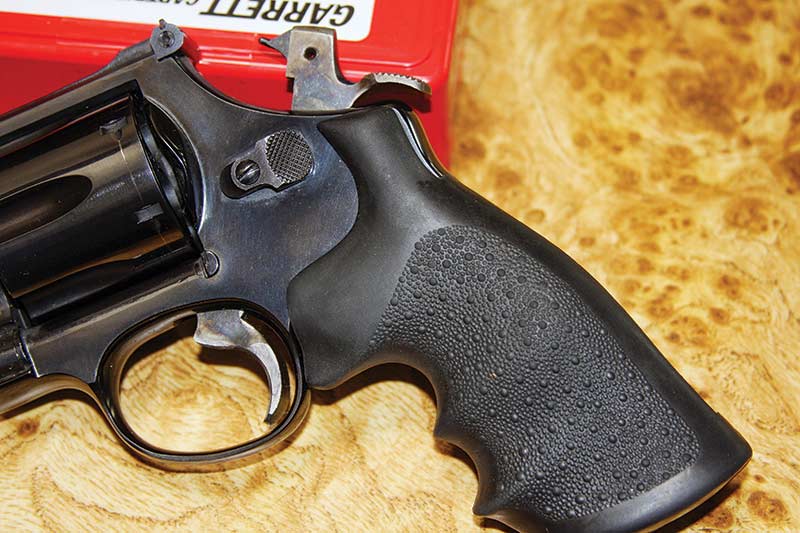
Hammer-mounted firing pin and absence of “key hole” in the frame
reveal some of the old school features of the Model 25, while the stippled
Hogue grips facilitate shot-to-shot recovery.
Sighting In
The adjustable sights are classic S&W. That’s “classic” mid-20th century, not 19th or early 20th century. The fixed front blade has the orange/red plastic insert for enhanced visibility. The rear sight has a white outline around the notch, can be adjusted for both elevation and windage, and features the long tang mounting into a matching machined slot in the frame’s top strap. Windage and elevation adjustment screws take the same-size screwdriver, something I’ve always appreciated in a gun designed to go afield, not just the range.
The hammer is the old-school wide target spur, aggressively checkered to facilitate manually cocking for single-action fire. On an N-Frame Smith, this is an excellent “win/win” feature. Because it’s not a pocket pistol, you don’t need a reduced size hammer, but when you’re out in winter weather at an informal match or a late fall deer hunt wearing gloves, it’s a real asset.
The firing pin is mounted in the hammer rather than in the frame like the pre-“keyhole in frame” Smith & Wessons. When the trigger is pulled fully to the rear, either double- or single-action, the firing pin protrudes through a small hole in the frame striking the cartridge primer. When the trigger is released, the firing pin retreats/rebounds to a safe position behind the breech face. The firing pin doesn’t actually “float,” but it can move vertically. Spring pressure keeps the firing pin low in the hammer. If for any reason the pin isn’t lined up exactly with the firing pin hole when the hammer falls, the pin strikes an angled ramp in the frame that guides the pin up the ramp to and through the hole and allows it to strike the primer.
I’ve been told a frame-mounted firing pin system is stronger and safer but I’m not sure I buy into this. With the hammer at rest, the vulnerable parts are contained inside the frame, so unless you’re walking around with a cocked revolver, everything is protected. The only advantage I’ve found in a frame-mounted system is it’s easier to block the hammer with your support-hand thumb when decocking the revolver or if a game animal moves after you’ve cocked the gun and you’re waiting briefly for a better shot.

The S&W Model 25 (6-1/2″ barrel version shown) is a classic N-Frame
that handles the .45 Colt without manhandling the shooter. Photo: S&W
Back To Sights
Let’s talk a bit more about the front sight. The top surface of the orange plastic is smooth, meaning it’s quite reflective in bright sunlight. On testing day, the sun was extremely bright, causing a glare off the top of the insert and making it quite difficult to see exactly where the upper edge of the front sight ended so groups tended to expand vertically. While shooting long-range steel in Colorado on a sunlit day, I sprayed the front sight black to cover the orange ramp. When handgun hunting deer, I prefer having the orange strip visible since the most productive hunting is in the lower light levels of early mornings or late afternoons. In addition, it was likely I would be moving in and out of timber.
In a recent writers’ event at Gunsite Academy, I had a chance to work the Fun House with the Model 25. I went through all the drills with the big Smith & Wesson riding comfortably in a Milt Sparks-style strong-side holster shooting DoubleTap 255-grain hard cast semi-wadcutters. Although we “cleared” the house during the daylight hours, changing light conditions became a decisive factor as we went from the bright sunlight of an Arizona afternoon in July to the deeply shaded areas inside the house. As we grow older, our eyes need more light to see well plus we adjust to changing light conditions less quickly.
At first, there were dark targets I couldn’t identify at all. As my eyes adapted, I could see some targets but was unable to determine whether they were holding weapons or not. Once I could tell whether the intruder was armed or not, the orange front sight came into play and I could see well enough to make a decisive shot. Of course the best answer is “always have a flashlight.”
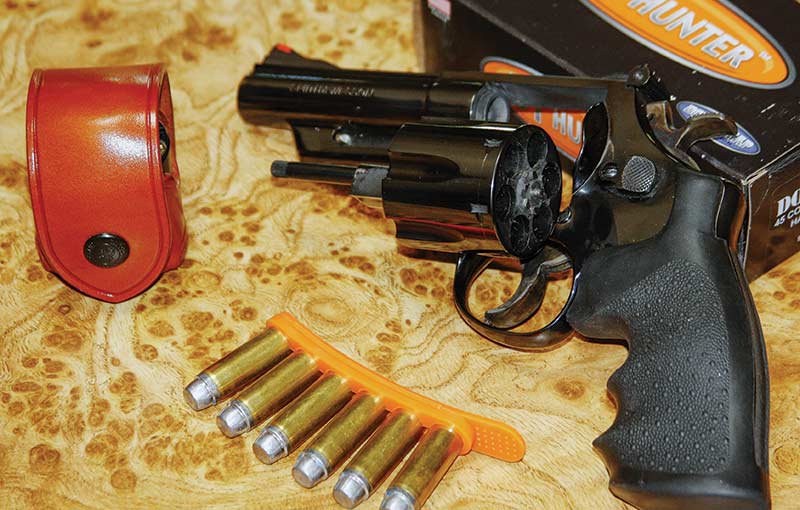
While a speed loader is the fastest way to fully reload a revolver, it
doesn’t allow for partial reloads, the preferred “load as you shoot” technique.
No Regret
While I’ll admit my purchase of the Model 25 was an act of passion rather than careful planning, I would not be reluctant to carry the big revolver full-time for both self-defense and hunting. Had my “attackers” been made of other than paper and steel, there is no doubt in my mind as to the outcome. I don’t think any handgun caliber has decisively ended as many fights over a 150-year time span as the old .45 Colt and most of those were before we learned the advantages of a large meplat making the initial entry.
Old fashioned — yes. Still effective — heck yes!