Author: Grumpy

Elizabeth McHutcheson was a hearty woman of Scottish descent cursed with a terminal case of wanderlust. She married a ship’s captain named Francis Sinclair and eventually produced six children. Elizabeth moved her family to New Zealand and established a farm. However, her husband and eldest son were later lost at sea along with most of the family’s possessions.

Down but not out, Elizabeth relocated to Canada and then Hawaii with the remains of her family. Once settled in she bought the Hawaiian island of Ni’ihau for $10,000. Ten grand was an astronomical sum in 1864, but it turned out to be a fairly prescient investment.

Ni’ihau is the furthest West and second smallest of the primary Hawaiian Islands. Ownership of the island passed down through the family until 1941 when Elizabeth’s great-grandson Aylmer Robinson maintained possession. Aylmer was a Harvard graduate who spoke fluent Hawaiian. He was a benevolent landlord who lived on nearby Kaua’i. His island was accessible by permission only which was seldom granted. Robinson made weekly visits by boat to check on the native islanders who held him in high esteem.

In 1941 one hundred thirty-six native islanders called Ni’ihau home. Among them were three individuals with Japanese ancestry. Aylmer Robinson administered his idyllic little kingdom free from government interference.

In the buildup to the attack on Pearl Harbor, Japanese naval planners mistakenly assessed Ni’ihau as uninhabited. As a result, they briefed their aviators to divert to Ni’ihau in the event of battle damage preventing return to the carriers. The plan was for downed aircrew to survive on the island until they could be retrieved via submarine.
The Plot Thickens

On the morning of December 7, 1941, Airman First Class Shigenori Nishikaichi launched his A6M2 Zero fighter B11-120 from the carrier Hiryu as part of the second wave. Unlike the first attack that achieved complete tactical and strategic surprise, the second element flew into a hornet’s nest. American fighter resistance was negligible, but the warships anchored at Pearl bristled with antiaircraft guns. .50-caliber, 20mm, 40mm, and 5-inch antiaircraft weapons filled the sky with steel.

Nishikaichi’s Zero was badly damaged during a strafing run on Wheeler Field and limped away trailing smoke. Realizing that there was no way his nimble Zero was going to make it home, Nishikaichi diverted for Ni’ihau. Crash-landing his crippled fighter in a field near a local named Hawila Kaleohano, Nishikaichi was briefly dazed but otherwise unhurt.
The Chemical Formula for Awkward

The arrival of Nishikaichi’s Zero was the biggest event on Ni’ihau in collective memory, and the islanders all came out to gawk. They knew that the relationship between the United States and the Empire of Japan was strained. However, the Hawaiians are a naturally friendly people. Hawila Kaleohano relieved the young aviator of his handgun and personal documents, and the rest of the islanders threw the lad a party.

Only the three islanders with a Japanese nexus spoke Japanese, and the rest of the Ni’ihau inhabitants were unable to communicate with their new guest. For ease of explanation we will refer to these three individuals by their first names—Ishimatsu, Yoshio, and Irene. However, the Japanese pilot was becoming ever more agitated about the loss of his maps, weapon, and mission directives.

The island’s residents caught a report of the attack on a battery-powered radio and confronted the Japanese pilot. Their intent was to send him back with Mr. Robinson when he arrived on his next scheduled visit. Their guest now effectively became their prisoner.

Aylmer Robinson failed to arrive on his appointed day, and this unsettled the islanders. Robinson was typically quite punctual. However, the military had banned boat traffic, so Ni’ihau was effectively isolated.

Petty Officer Nishikaichi was remanded to the home of Yoshio and Irene, two of the islanders with Japanese connections, to be overseen by four volunteer guards. Unbeknownst to the rest of the island’s inhabitants, Yoshio and his wife were re-evaluating their loyalties. All the while the pilot’s classified documents remained in the possession of Hawila Kaleohano, the man who had originally encountered the pilot.
A Cold War Goes Hot

These people were not soldiers, and three of the four guards eventually wandered off. Seeing their opportunity Irene turned her phonograph up to cover the sounds of the ensuing struggle, while her husband and the pilot attacked the remaining guard. In short order the two had the man secured in a warehouse and had retrieved Nishikaichi’s pistol as well as a shotgun.

The two men then proceeded to Kaleohano’s home in search of the attack plans. They arrived during the man’s quality time, so he was serendipitously hidden unseen in his outhouse. When the moment was right Kaleohano fled the privy and ran for his life, shotgun blasts chasing him down the trail. Thusly alerted the islanders retreated to caves, thickets, and distant beaches, unable to believe that these people with whom they had shared the island were now actively firing upon their friend and neighbor.

The pilot and his compatriot then stripped a 7.7mm machinegun and ammo from the plane, unsuccessfully attempted to use the radio to contact the Japanese fleet, and set the Zero alight. They then went to Kaleohano’s home and burned it to the ground in a further effort to destroy Nishikaichi’s classified documents.
It Gets Worse…

Kaleohano, his home conflagrated, kept the Japanese military documents in his possession and took to a boat to row to the nearest nearby island. Not realizing he was gone, Nishikaichi and Toshio press-ganged a local couple named Ben Kanahale and his wife Ella into the hunt for Kaleohano. The pair took Ella hostage to motivate her husband to stay on task.

Ben wasted a little time pretended to search and returned to check on his wife. When Nishikaichi realized he was being deceived he pulled his pistol and threatened to kill everyone in the village. At this provocation Ben Kanahale went full Chuck Norris on the man.
The Gun


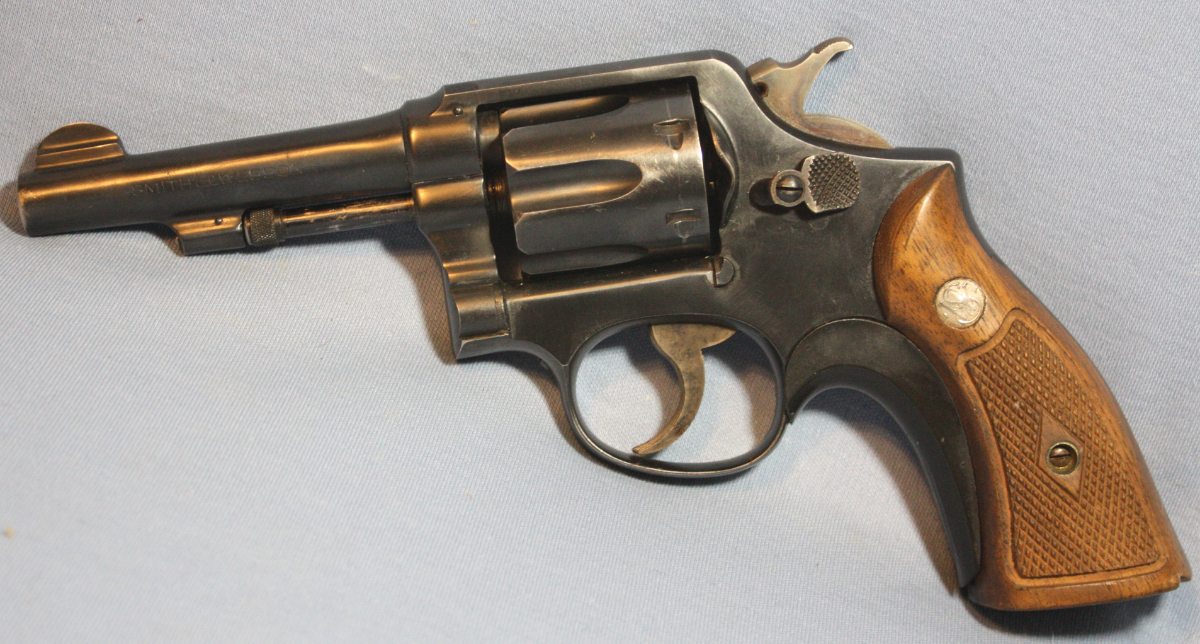
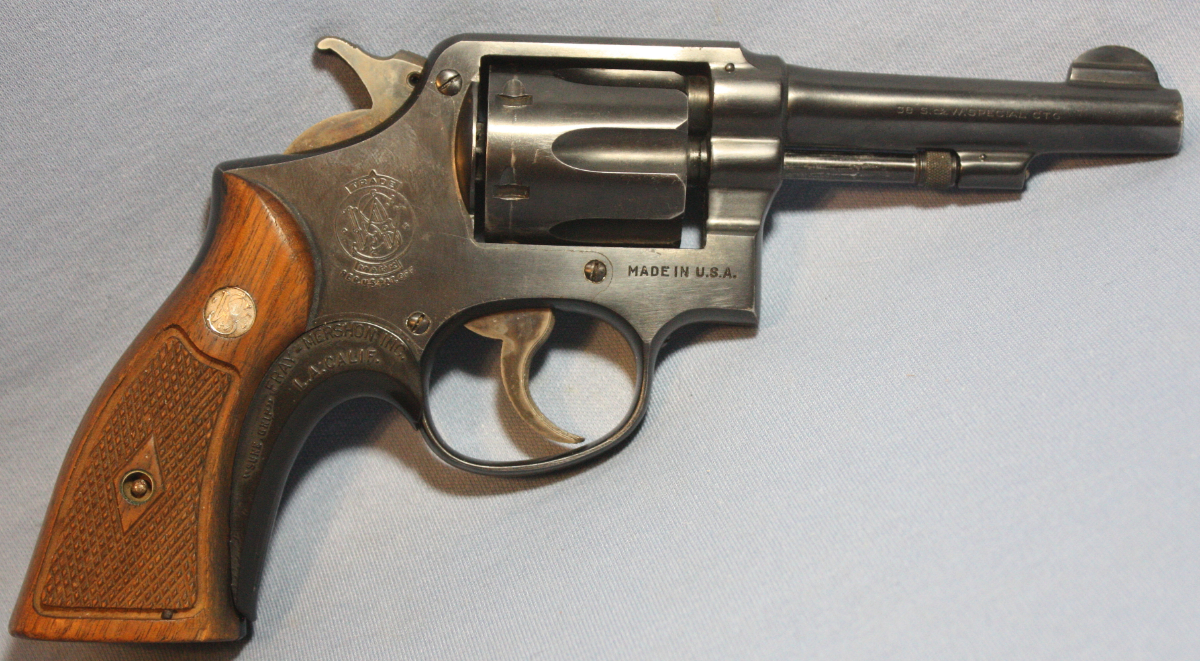
For reasons you will find out momentarily, the exact model of the handgun has been lost to history. However, the three most likely candidates are the 8mm Type 14 or Type 94 autoloaders or the Type 26 revolver. Balance of probability suggests that at the beginning of the war in the hands of an elite Japanese Naval Aviator his handgun was likely a Type 14 Nambu.

The Type 14 is a recoil-operated, locked-breech, semiautomatic handgun whose original mechanism dates back to the late 19th century. LTG Kijiro Nambu designed the weapon along with an array of other Japanese military arms. The locked-breech mechanism favors and was likely inspired by that of the Glisenti Model 1910.

The Type 14 debuted in 1925 and fires the relatively anemic bottlenecked 8x22mm round common to all Japanese wartime autoloading handguns. Considerably less powerful than the 7.62x25mm, 9mm Parabellum, and .45ACP rounds used by other combatant nations, the 8mm Nambu was marginal at best. The Type 14 fed from an 8-round box magazine, sported a 4.6-inch barrel and weighed about 2 pounds. About 400,000 copies were produced.

Japanese officers were expected to buy their own handguns, and the Type 14 was a popular souvenir of combat in the Pacific. As the war progressed and B29 attacks strangled the home islands the quality of these weapons declined precipitously. Bill Ruger bought a Type 14 from a returning Marine in 1945 and used it as a basis for his Ruger Standard pistol that eventually morphed into the Mk I, II, III, and IV .22 handguns so common today.
The Climax

Seeing an opportunity, Ben Kanahele and his wife Ella jumped the distracted Japanese pilot and his turncoat buddy. Ella grabbed his gun arm, but Yoshio Hamada peeled her off. Nishikaichi then shot Ben three times, striking him in the upper leg, groin, and abdomen. This turned out to be a grave mistake.

Kanahele was a sheep farmer and a powerful man. Despite his grievous injuries he took hold of the Japanese pilot, lifted him bodily, and threw him headlong into a stone wall. Ben and Ella then fell upon the dazed Japanese aviator with a vengeance. Ella smashed his head with a rock, and Ben cut the man’s throat with his hunting knife. Overcome by events, Nishikaichi’s ally Yoshio shot himself in the head with the shotgun.

Ella Kanahele snatched up the shotgun and pistol and ran for help. Along the way she inadvertently dropped the weapons. The pistol was never recovered, but the shotgun washed up in a flood some five years later.

Yoshio’s widow spent the next 31 months in prison and was released in June of 1944 despite never being formally charged with a crime. Ben Kanahele was evacuated to a nearby island with a hospital and ultimately recovered, being awarded the Medal for Merit and Purple Heart for killing the Japanese pilot in close combat. The remains of Nishikaichi’s Zero are on display at the Pacific Aviation Museum at Pearl Harbor today.

Categories
Special weapons SW-3 HK-91 Clone

You cannot make this up, and even if you could, the actual facts would read like something out of a really strange movie script about good versus just plain dumb.
When Illinois Gov. J.B. Pritzker last month rushed to sign a brand new gun control bill before the Legislature adjourned (only to re-convene about 24 hours later), something happened nobody saw coming. County sheriffs up and down the Prairie State loudly declared they would not enforce the new law, which banned so-called “assault weapons” and “high-capacity magazines.” It requires current owners to register their guns with the Illinois State Police.
How this may play out is ripe for speculation. By the time you read this, at least one federal lawsuit involving the Illinois State Rifle Association, Second Amendment Foundation and Firearms Policy Coalition will have been filed. There could be more. It all means that the new Illinois law might be headed for a collision with the Constitution’s Second Amendment.
This certainly appears to be what the sheriffs of at least 80 Illinois counties were thinking when they posted letters saying essentially the same thing.
“As your duly elected Sheriff,” the letter says, “my job and my office are sworn to protect the citizens … This is a job and responsibility that I take with the utmost seriousness. The right to keep and bear arms for defense of life, liberty and property is regarded as an inalienable right by the people of this country …”
“Therefore, as the custodian of the jail and chief law enforcement official, I proclaim that neither myself nor my office will be checking to ensure that lawful gun owners register their weapons with the State, nor will we be arresting or housing law-abiding gun individuals that have been arrested solely with non-compliance of this Act.”
Published reports, and reliable sources, confirm Pritzker was furious when the sheriffs went public with their opposition. When he intimated the lawmen would lose their jobs, at least two different Illinois sources told me between laughs that the governor does not have the authority to fire elected sheriffs.
Meanwhile, Out West
When sheriffs in Washington State got wind of the gun control package put forth by Gov. Jay Inslee, which also involves a ban on semi-auto rifles, the Washington State Sheriff’s Association circulated a letter signed by Kittitas County Sheriff Clay Myer —president of the group — and it was not congenial.
“Governor Inslee,” Sheriff Myers wrote, “has announced plans for significant new restrictions on the ownership of firearms by law-abiding Washingtonians. We, members of the Washington Sheriffs’ Association, believe the proposed restrictions will serve to erode constitutionally protected rights without addressing the root causes of violent crime. We are particularly concerned with the proposed so-called ‘assault weapons ban’ and ‘permit to purchase’ laws.”
A few paragraphs later, Myers put it bluntly: “The rise in violent crime that so concerns citizens has happened even as regulations and restrictions on firearm ownership have grown. Of course, this is because the people who commit violent crimes simply don’t concern themselves with obeying rules about guns.”
Murder and mayhem is up in Washington, and so is the number of concealed pistol licenses. As the year wrapped up, there were just short of 697,000 active CPLs in circulation, according to data from the state department of licensing.
It’s not the first time county sheriffs have “just said no.” Back in 2018 and early 2019, many Washington sheriffs announced they would not actively enforce provisions of Initiative 1639, an extremist gun control measure passed by voters.
Some sheriffs in New York State say they will not “aggressively” enforce that state’s new gun law, which is being challenged by at least two federal lawsuits. A few sheriffs in Oregon have said essentially the same thing about provisions of Measure 114, the gun control initiative passed there last November.

A Good Man Gone
The problem with being an old gun guy is that it becomes more frequent we must say “goodbye” to a good friend, who happens to have also been just a plain good person.
Robert E. “Bob” Hodgdon, whose family name is part of the fabric of American metallic cartridge reloading, passed away Jan. 13. Having been born in August 1938, Hodgdon had a good run that covered a lot of ground. He and his brother, J.B. helped build the company founded by their father, Bruce Hodgdon, and today that name is iconic in the industry for the variety of reloading propellants for rifles, shotguns and handguns. According to an obituary the family posted, he “also assisted with the design and lead the team constructing the Pyrodex Plant in Herington, Kan. in 1979 and helped to design and build The Bullet Hole, a 44-station indoor shooting range in 1967.”
I served with Hodgdon on the NRA board of directors more than 20 years ago, and you could not find a more devoted fellow where perpetuation of the shooting sports, and protection of the Second Amendment, was concerned. He was a kind and gentle soul, a person you’d be delighted to share a campfire with, and someone who was as devoted to his family as his professional pursuits. He was father to four children, Chris (Adele) Hodgdon, Heidi (Erwin) Rodriguez, Stacie (Bryant Larimore) Hodgdon and Alisa Hodgdon — and grandfather of 11 and great-grandfather to eight.
A native of Kansas, he grew up in suburban Kansas City. He attended Baker University in Baldwin City, Kan., and graduated Summa Cum Laude from the University of Kansas. He served in the U.S. Air Force and the Air Force Reserves.
He served as president of Hodgdon for more than 20 years and then as board chairman from 2014 to 2017.
Hodgdon volunteered in several civic organizations, and was a member of the Westside Family Church in Lenexa, Kan.
Additionally, he was a founding member of the National Shooting Sports Foundation, a member of the Kansas State Rifle Association, and founding member of the Kansas Sportsmen’s Alliance.
Men like Bob Hodgdon are very rare.

The seriousness of our predicament cannot be overstated. We’re in the clutches of the insane with no institutional integrity, no political allies, no military allies, no cultural solidarity on which to draw. At best we are vindicated in our points of view by scattered media outlets of limited reach. At the same time, we’re being targeted, victimized and pursued by the very bureaucracies we’ve funded and supported through taxes, however unwillingly.
The only means of survival both figuratively and literally is in noncompliance. Easier said than done, because they’re coming at us from every direction with everything they have, all the weight of the federal government, the banking institutions, the medical establishment, the national and international corporations.
Who are we then, the individuals, to stop them?
Understand that you, the individual, is the target, because you are the strength and the soul of America and to that end, the dangerous, rebellious villains in their designs. They think if they can separate you from all others you can be controlled, dominated. They cannot be allowed to separate us. They have already proven that if they spread fear they can drive millions into cages and willfully accept poison as sustenance. This is what the pandemic proved to them and cannot be undone, unproven. Every level of deceit that works, is a level that must be overcome by refusal to accept it.
Those who pretend this is an America that has ever existed before are lying to themselves. Never has there been so many evils among us. Never has there been so much corruption, so much disregard for laws by those entrusted to enforce them. We are lost, cast upon a sea of troubles.
Our only salvation is in each other, taking strength from those who stand solidly and refuse to be dominated and incorporating that strength into our own resistance. You must refuse, no matter what it costs, because the ultimate cost is not only to you, but to your children, if indeed children will be possible in the future. Consider that for the evil that it is. Those alive today might be the last generation to survive the sterilization, the poison injections, the blood clots, the sex trafficking to arrive at adulthood.
The irrational excuses for taking the vaxx are so the victim can enjoy life, take a vacation, go to work, etc. Really? And when the vaxx kills you, clogs your heart with white, fibrous material, stopping the blood in the arteries, what then will be the reason for compliance other than compliance itself? This is the danger of doing as one is told rather than considering what has been told and then investigating the pros and cons of it and coming to a rational decision. If certain death is already on one side of the ledger, the rest need not be so vigorously investigated. The answer is no.
Next up will be the economic crisis where everyone discovers that the money promised to them in their bank accounts is not really theirs, hasn’t been theirs since they opened the bank account, when they gave it to the bank and then was allowed to pull it back out on certain conditions.
Soon, those conditions will no longer exist and when the bank decides it’s time for a bail-in rather than a bail-out, they’ll just take it. It will disappear from the account. Now, if that inspires one to act out in a violent way, there’ll be plenty of cops there to ensure that one does not.
When you talk about criminals, the worst sort are the kind that have police protection. At what point, then do the cops themselves become the criminals? That’s a question they should be asking themselves right now, as individuals, as Americans, as parents.
The only thing that will stop any of this, throw sand in the gears of the New World Order, is to band together and refuse to comply. Do not accept a Central Bank Digital Currency (CBDC) unless you want that threat of a bail-in every time you get a paycheck.
There will come a time when everyone in America has to stop working until they are presented with an acceptable means of compensation. I suggest that CBDC’s are not acceptable, that they should have left the banking system alone, because after they take everything in the checking account one time, the only acceptable means of compensation should be cash, silver or gold.
If we fail that test, too, we will be enslaved by a digital currency able to be withheld at any moment, for any reason and whatever work one has done over the past week or month, will be for nothing. How long will you work, if your compensation is constantly threatened? Not one minute, if you understand the issues being presented.
I have suggested in the past the idea of an Autonomous County, one where the fundamental rights of the individual are secured, where laws and dictates from the WHO and the UN are ignored and repudiated.
To that end, I’ve written up a justification for and explanation of an Autonomous County for those who have requested more information. It’s one tactic that can help individuals band together on a smaller scale, test out the resistance and consolidate influence over the state. At worst, it allows those red counties in blue states the structure by which to entertain the Greater Idaho method of resistance to irrational and largely insane dictates of the high population centers (the true evil of democracy).
We’re on our own, so we better start figuring out how to work together against the massive forces arrayed against us. We have the tools in the fact that they have to commit crimes and act unconstitutionally in order to pursue their agenda, we just need to mark out our territory, find ways to hold them accountable and pursue charges of treason whenever and however we can. There are a lot of good ideas out there, but we need to pick one and start using it. Unless, we’re just going to wait for the nuclear war to do the work for us, but that mentality has gotten us here.

If you had every dollar America spent on defense from the end of WW2 to the end of the Cold War you could raze and rebuild every manmade structure in the United States. Spinoff technologies brought us such stuff as duct tape, GPS, digital photography, and many common feminine hygiene products (first improvised out of cellulose bandages by British and American Army nurses in World War 1).

The Cold War raged from 1947 until the fall of the Soviet Union on Christmas Day 1991. This protracted period of geopolitical tension was characterized by a tit-for-tat arms race that saw each side responding to advances of the other. Military Intelligence was and still remains an inexact science. Sometimes the various thrusts and parries resulted in truly astronomical monetary expenditures.

In few other areas did the arms race achieve more rarefied heights than in the competition over warplanes. Between 1903 and 1943 aviation technology went from the Wright Flier to the B-29 Superfortress. From 1943 until 1956 the state of the art advanced from the lumbering B-29 to the supersonic B-58 Hustler. With each advance in bomber technology came corresponding bounds in fighter tech to counter it. Then came the XB-70 Valkyrie.

The B-58 had a maximum speed of 1,319 mph (roughly Mach 2) and a service ceiling of 63,400 feet. By contrast, the XB-70 topped out at 2,020 mph (Mach 3.08) and could reach 74,000 feet. This put it out of reach of Soviet interceptors. For the Russians this was a world-class crisis.

Paranoia ruled the day. Loss of parity could result in a first strike weapon that would become an existential threat. When faced with a supersonic bomber of unprecedented capabilities, Soviet fighter designers got busy. The end result was the MiG-25 Foxbat.

Developed emergently by the Mikoyan-Gurevich design bureau using radical applications of existing technology, the MiG-25 was Russia’s answer to the XB-70 Valkyrie. First flown in 1964, the type saw its first operational deployment in 1970. On the surface, the MiG-25 was terrifying.

At 78 feet long the MiG-25 was an absolutely massive fighter plane. Additionally, its wings were enormous, intimating a highly maneuverable airframe. The two Turmansky R-15B-300 afterburning turbofan engines on the MiG-25 had originally been designed to power drones and were not intended to have a lengthy service life. The first examples were only good for about 150 hours between engine changes. The final package, however, was the fastest fighter interceptor ever created.
One Disgruntled Pilot Changes Everything

Viktor Belenko was born in Nalchik, Russia, on February 15, 1947. By his 29th birthday, LT Belenko was at the top of his game. He had a wife and a young son and was posted to Chuguyevka Air Base flying the most advanced fighter aircraft his nation fielded. LT Belenko was the poster child for 1970’s-era communism. Under the surface, however, all was not well with the Soviet Air Defense Force’s fair-haired boy.

The CIA and the USAF had an illustrious history of trying to coax communist pilots into defecting with their combat aircraft. Operation Moolah was an unsuccessful effort at bribing North Korean pilots to defect with a then-state of the art MiG-15. North Korean LT No Kum-Sok did land his MiG-15 at Kimpo Air Base in South Korea in 1953, but he had been unaware of the program.

Operation Fast Buck was a similar effort aimed at North Vietnamese pilots. Operation Diamond was an Israeli enterprise that did actually bag them an Iraqi MiG-21. In 1976, however, Belenko’s motivations were a bit closer to home.
Corruption in the System

Communism is based upon a few flawed premises. The most glaring is that Communists presume that people are innately good. Communism asserts that if left to their own devices human beings will sacrifice for the collective. By and large, that’s just not true.

The second orbits around propaganda. Totalitarian regimes must control the flow of information to survive. That goal gets ever more difficult in the Information Age, but Kim Jong Un stands in portly testimony that it can yet still be done.

There is a common thread in every communist sympathizer in the West. That is an assumption that the only reason that communism has failed to improve people’s lives every single time it has ever been attempted is that it was always just done wrong. The reality is that the communist leadership, like most government leaders, eventually evolve to believe that the rules do not apply to them. Vladimir Putin is a product of that defunct system, and he is currently worth some $70 billion.

LT Belenko’s wife Lyudmila had grown unhappy with military life and announced her intent to file for divorce and move back to her parents in Magadan with their three-year-old son. The infrastructure and support facilities at Belenko’s base were also badly lacking. Whenever Belenko would voice his concerns to his political officer he was derided for complaining. All these influences synergistically drove the young Soviet pilot to take some fairly drastic action.
The Event

On the morning of September 6, 1976, LT Belenko launched in his single-seat MiG-25P Foxbat on a training mission alongside several of his mates. When over open water Belenko claimed engine trouble and fell out of formation. He then dropped the massive fighter down to thirty meters and made a beeline for Japan.

Belenko’s maps were sketchy concerning Japanese airfields. His intended destination was a military field at Chitose. However, thick cloud cover, his crummy maps, and a critical lack of fuel drove him to a smaller civilian field at Hakodate.

Belenko circled the field three times, nearly colliding with a civilian Boeing 727 on climb out. The runway was markedly shorter than what the MiG-25 typically required. Despite deploying his drogue chute and standing on his brakes hard enough to blow out the front tire the heavy fighter still overran the runway by 240 meters. Belenko shut down his engines with thirty seconds of fuel remaining. When civilians began to gather around the plane and take pictures Belenko dissuaded them by firing his pistol into the air.
The Gun

LT Belenko almost assuredly packed a Makarov service pistol when he landed in Japan. This compact little handgun is called the PM in Russian parlance. PM stands for Pistolét Makárova or “Makarov’s Pistol.” The PM is a fairly uninspired unlocked blowback handgun designed by Nikolay Fyodorovich Makarov and first adopted in 1951. The PM fires the stubby little 9x18mm Makarov cartridge.

The PM feeds from an 8-round single-stack box magazine retained via a heel-mounted catch. The overall layout and function of the gun strongly favor that of the Walther PPK. Unlike the PPK, the slide-mounted safety is pressed up for safe and down for fire. More than five million copies have been produced.
The Rest of the Story

Belenko was arrested by Japanese police upon his exit from his warplane. He immediately requested asylum in the United States. The Soviets for their part announced that Belenko had gotten lost and had subsequently been drugged by the Japanese. When granted an interview with the young pilot, Russian officials were predictably unable to persuade him to return home.

American and Japanese aviation experts tore Belenko’s MiG apart to learn its secrets only to find that it was a pretty lousy airplane. The Soviets had not yet perfected the capacity to work with titanium for high-temperature applications, so much of the plane was actually formed from stainless steel. This made the aircraft incredibly heavy with a max gross weight of 80,954 pounds. Additionally, the big wings were not designed to enhance maneuverability. The MiG-25 needed these large wings simply to stay aloft given its portly weight. The Russians eventually got their plane back…in forty different boxes after Western intelligence personnel had picked it literally to pieces.

George Bush was director of the CIA at the time and declared the defection of LT Belenko to be an “intelligence bonanza.” In 1980 the US Congress passed S.2961, a specific act that granted LT Belenko citizenship in the United States. Jimmy Carter signed the act into law on October 14 of that year.

Viktor Belenko married a music teacher from North Dakota and fathered two sons. They later divorced. Belenko never divorced his first wife, though he did visit Moscow once on business in 1995 after the fall of the Iron Curtain. The Soviets alternately claimed that Belenko had been killed in a car wreck, repatriated to Russia to be arrested and executed, or otherwise brought to justice. In reality, Belenko served as a consultant to the US government and an aerospace engineer. By all accounts, he still loves it here.

Belenko seldom grants interviews, but he purportedly said this in 2000 during a conversation in a bar, “Americans have tolerance regarding other people’s opinion. In certain cultures, if you do not accept the mainstream, you would be booted out or might disappear. Here we have people — you know who hug trees, and people who want to cut them down — and they live side by side!”

Belenko said he once ate a can of American cat food by mistake. He later claimed, “It was delicious. Better than canned food in the Soviet Union today!”

The XB-70 that drove the whole MiG-25 project was a big nothing burger. Only two prototypes ever flew, one of which was destroyed in a horrible accident. You can see the video of the event here.

The subsequent B1 Lancer was actually designed for low altitude deep penetration missions for which the MiG-25 was utterly unsuited. Spoofing the Soviets into building what was at the time one of the most expensive and strategically worthless warplanes in history yet remains one of the greatest Western intelligence coups of the Cold War.

I read Viktor Belenko’s autobiography MiG Pilot: The Final Escape of Lieutenant Belenko back in the 1980s and loved it.

