Author: Grumpy
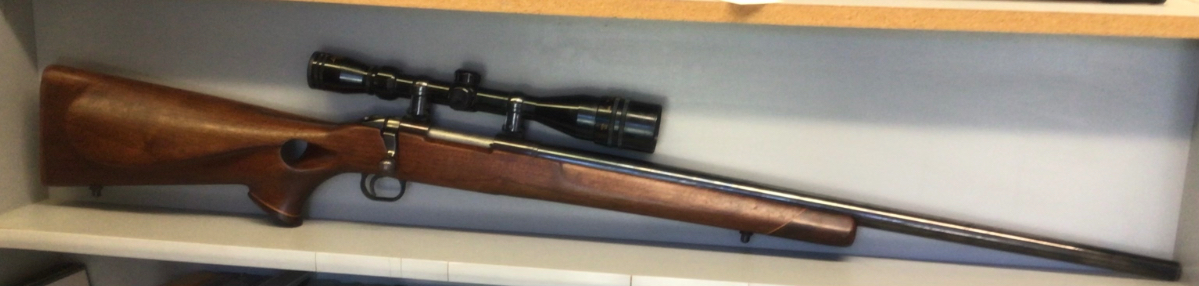
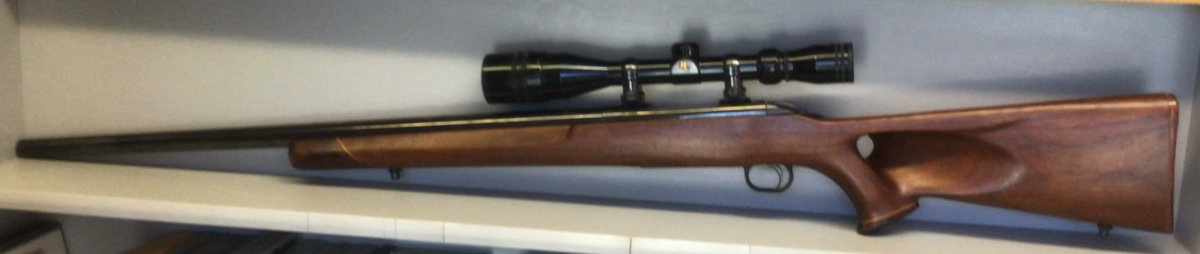
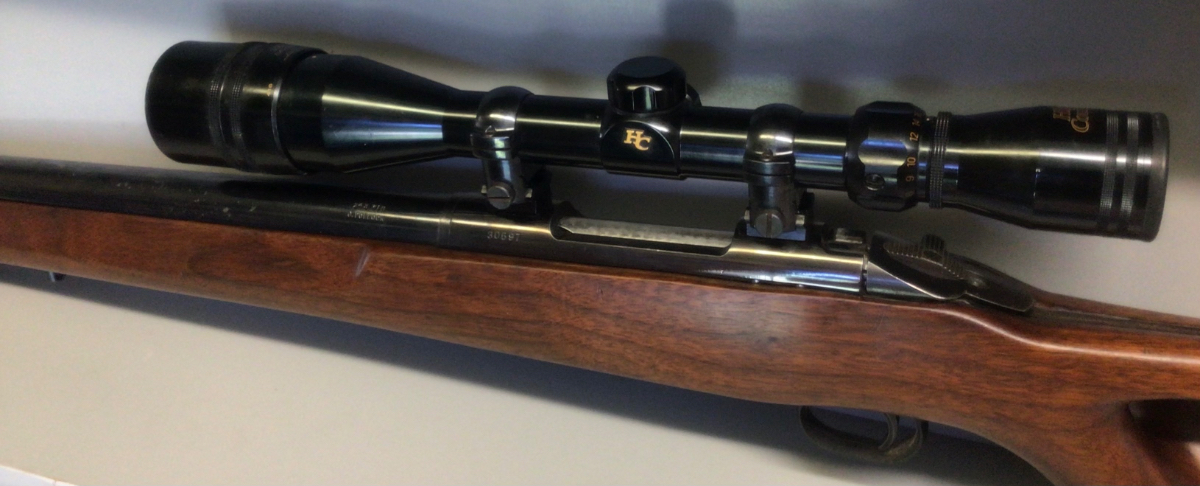
22 WMR ELR Project Update
At the turn of the 20th century, Japan joined the race for the self-loading pistol, but the nation’s history of firearms goes back hundreds of years.
The first guns introduced were Portuguese arquebuses brought by merchants who found their way to Japan. Once Japanese blacksmiths developed and honed their craft they produced native guns. As the 20th century dawned and nations militarized, Japanese gun designers finally were catching up so that there would be less reliance on imported weapons. Kojirõ Nambu would be a key cog in the militarization of Japan.
Rock Island Auction Company’s May 13-15 Premier Auction features a broad array of Japanese firearms, from ornate matchlocks and arquebuses to often scarce and hard-to-find early 20th century pistols, and World War II machine guns.
Guns in Japan
Black powder guns arrived with Portuguese merchants in 1543, selling arquebuses to feudal lords. Arquebuses are an early matchlock firearm that didn’t require the user to manually ignite the powder charge. They were initially given as gifts or used for hunting, but they quickly became important weapons of war during the latter shogunate.

By 1563, guns were widely used in large battles, taken up by samurai’s foot soldiers. The Battle of Nagashino in 1575 was influential for its use of firearms as feudal lord Oda Nobunaga’s 3,000 arquebusiers helped turn the tide, stopping opposing infantry and cavalry. It is considered the first “modern” Japanese battle.
The first Japanese service rifle didn’t arrive until 1874. The first arsenal to produce weapons on a large scale was founded in 1871.

Two arquebuses are on offer in the Premier Auction. One has a number of interesting design elements, including brass, silver, and copper inlays in the breech section in the shape of koi fish, trees, and water while its breech plates form a samurai’s mask and helmet. The second arquebus has a raised mon – or crest – with two birds enclosed in a circle at the breech.

A matchlock pistol that likely dates from the Shogunate’s dominance of Japanese affairs (1600-1868) is also on offer in May’s Premier Auction. It features hammered and engraved silver as well as a gold and silver inlaid dragon in flight amongst silver clouds.
Grandpa Nambu
Nambu, considered the Japanese equivalent of legendary American gun designer John M. Browning, is a bridge between the shoguns and the modern weapons of the 20th century. His designs were a significant part of the Japanese arsenal during World War II. Nambu, whose father fought for a samurai in the 19th century, went to the Imperial Japanese Army Academy and served in the army, assigned to Tokyo Arsenal in 1897. It was at Tokyo Arsenal where he was promoted to major and started developing automatic pistols.

The Nambu Type A pistol was the first solo design undertaken by Nambu. The earliest Type A pistols, to about serial number 2,400, are colloquially known as a “Grandpa” Nambus. The rarest of the Type A pistols, it was produced starting in 1902, and chambered in 8mm. The pistol had a small trigger guard that made it difficult to use while wearing gloves, a fixed lanyard loop at the back of the pistol, and a slot in the back of the grip to accept a shoulder stock that converted to a wooden holster. They often had magazines with wood bases.
Most Grandpa Nambus were sold commercially to China and Siam – now Thailand.
Papa Nambu
The Modified Nambu Automatic Pistol Type A, considered the “Papa” Nambu, went into production in about 1906. They featured a larger trigger guard to accommodate a gloved hand, magazines with aluminum bottoms, and swiveling lanyard loops. It too was chambered in 8mm.

At the time, Japanese military officers were expected to purchase their sidearms, but the production cost of the “Grandpa” and “Papa” Nambus priced them too high for many junior officers. The Type A wasn’t adapted by the Japanese Army.
The Japanese Navy did adopt the Papa Nambus. About 4,600 were made before production ended in the mid-1920s.
Baby Nambu
Hoping to improve the design issues with the Type A pistols, Nambu debuted the Type B pistol or “Baby” Nambu in 1907. Trying to compete with smaller, more compact pistols from Europe and the U.S., the gun is lighter and smaller than the Type A, chambered in 7mm. It improved on some issues but still wasn’t formally adopted by the military despite praise from the army minister. The price remained too high for junior officers but was snapped up by senior officers who bought virtually all of them.
Production on the Baby Nambu ended in 1923 when the Great Kanto earthquake destroyed Tokyo Arsenal. Parts remained available so assembly continued until 1929. About 6,500 were made. The Type 14 pistol, also designed by Nambu and introduced in 1926, did become the standard issue sidearm for the military.

Gun designer Nambu, having been elevated to the rank of lieutenant general, left the military and created his own company in 1927. An example each of the Grandpa, Papa, and Baby Nambus are available in the May 13-15 Premier Auction.
What’s Your Type – of Machine Gun?
Nambu developed several light and heavy machine guns used by the Imperial Japanese Army in World War II.
The Russo-Japanese War of 1904-1905 convinced Japanese military leaders of the importance of machine guns to provide covering fire for advancing infantry. The Nambu-designed Type 11 light machine gun, like many of the Japanese machine guns, follow in the footsteps of the French Hotchkiss machine gun that is air-cooled and gas-operated. The Type 11 fired 6.5mm ammunition.

Adopted in 1922, the Type 11 was the first mass-produced Japanese light machine gun. It featured an oddly-shaped stock and a non-detachable hopper magazine instead of a removable magazine or a feed way for belt fed options. The hopper could hold up to six cartridge clips used with the standard issue Type 38 rifle. Unfortunately the light machine gun had a bad reputation with troops because the open hopper allowed in dust and grit, making it liable to jam in muddy or dirty conditions. To make matters worse, the system also used an integral pump to oil each round which tended to make things even gummier when dirt and grime got in the mix.
The Type 96 light machine gun, adopted in 1936, was similar to the Type 11, but its biggest improvement over its predecessor was that it had a removable box magazine. This improved reliability and lessened the gun’s weight. It also featured a folding bipod. Alas, it too fired 6.5x50mm Arisaka ammunition so it lacked stopping power for a weapon of its type, measuring approximately 1,966 fl/lbf. By comparison, U.S. machine guns firing .30-06 M1 ball at the time enjoyed a muzzle energy of 2,675 ft/lbf.
Despite plans to retire the Type 11, both guns saw action in World War II.

As World War II beckoned, the Japanese army wanted a more powerful light machine gun, so the Type 99 light machine gun was introduced in 1939. The gun was basically the same design as the Type 96 but chambered to handle a larger caliber, firing 7.7x58mm Arisaka ammunition (approx. 2,350 ft/lbf). The Type 99 was often issued to the best marksmen of their unit and occasionally used as a sniper rifle. It arrived too late in the war to have much impact.
The Type 99 eventually found its way into the weapon inventories of China, North Korea, and Taiwan.

The Woodpecker
Dubbed the “Woodpecker” by Allied soldiers for the stuttering noise it made, the Type 92 was a heavy machine gun that followed the Hotchkiss model with its air cooling and gas operation. The gun spit 7.7mm ammunition, but only at a rate of 400 to 450 rounds per minute because it used strip-fed ammo, rather than belt-fed ammo.
The standard heavy machine gun for the Japanese army in World War II, the Type 92 is distinguishable by the larger cooling flanges on the barrel. The gun’s tripod was designed with carrying poles so it could be transported by two to four soldiers. Usually manned by a team of three, the gun could also be fitted with an anti-aircraft sight.

Captured Type 92 machine guns were used by U.S. and Chinese forces. The gun was also used by the North Korean Army after World War II.
Knee Mortar
Japan also developed a grenade discharger in 1929 called the Type 89 that had a pipe-like rifled barrel attached to a small base plate. It was developed to extend the range of hand grenades and could also fire 50 mm artillery shells. Similar to a mortar but more primitive, it used a firing pin striking a primer to discharge the grenade or shell. It has a range adjusting assembly that moves the firing pin housing up and down regulating the weapon’s range by controlling the distance travelled through the barrel.
Japanese manuals captured at the time showed the weapon carried strapped to the leg above the knee, but not fired from it. Learning this, the Allies called the Type 89 the “knee mortar.”

The Type 89 had an effective firing range of about 130 yards. Set on the ground, it was operated by holding it at 45 degrees and the projectile is inserted into the barrel base, then fired. The 50mm shells were either high explosive, smoke, or incendiary versions. A single soldier could operate the Type 89, but a three-man crew could send off about 25 rounds per minute.
The Type 11, Type 92, Type 96, and Type 99 are available in the May 13-15 Premier Auction as is the Type 89 grenade discharger.
Japanese Ambassador Gun
One gun on offer in the Premier Auction this report doesn’t mention is a Colt New Model 1855 Revolving Percussion Full-Stock Military Pattern Rifle presented to Muragaki Norimasa, a Japanese ambassador, in 1858 after exchanging ratified copies of the Harris Treaty which opened up commercial and diplomatic privileges to U.S. trade. This important historic treasure will be touched on separately.

Shogun to Machine Gun
Rock Island Auction Company’s May 13-15 Premier Auction offers an eclectic mix of guns from Japanese history. They include a beautifully made matchlock and equally impressive arquebuses. A number of 20th century weapons show the legacy of weapon designer Kojirõ Nambu and his influence. These include scarce and exceptional semi-automatic pistols to some of the Japanese Army’s hard-to-find automatic firepower of World War II. For a collector looking to fill out some of these niches, the opportunity is yours.
Sources:
A look back at the Japanese Nambu Pistol, by Dave Campbell, www.americanrifleman.org
The Impact of Firearms on Japanese Warfare, 1543-98, by Delmer M. Brown, The Far Eastern Quarterly, 1948
Second World War Combat Weapons, Volume 2 – Japanese, W.H. Tantum IV and E.J. Hoffschmidt (editors)
Japanese Handguns, by Frederick E. Leithe
Type 89 heavy grenade discharger, by Jon Guttman, historynet.com
Japan’s Type 11 Light Machine Gun: The Worst Machine Gun of All Time? by Peter Suciu, nationalinterest.org
Have you ever pondered the miraculous design of the human digits? They are, in general, stubby, crude sorts of things. Anyone who has ever tried to remove a splinter without the aid of tools can appreciate their innate limitations. Human fingers are the archetypal blunt instruments to be sure. However, slave these stubby rascals to the human brain, the most refined computer in the known universe, and you have capabilities most remarkable.
Your brain weighs three pounds and is mostly fat. It consumes one-fifth of your body’s total energy output and contains about 100 billion neurons. With the world as its playground, the human brain has contrived some of the most wondrous machines.

World War I was the species’ rude introduction to warfare on an industrial scale. This unprecedented hemoclysm brought us such rarefied stuff as poison gas, the combat submarine, tactical aircraft, and belt-fed machineguns aplenty. It also saw the introduction of the German MP18, the world’s first viable handheld man-portable submachinegun.

Sixteen million corpses later, the First World War ground to a bloody halt, but not before fundamentally altering the way men killed each other. Absorbing the tactical and strategic lessons learned, all the combatant nations went home to lick their wounds and plan for the next Great War. For the defeated Germans desperate to acquire the refined implements of modern combat, this required some creativity.
Convoluted Origins
The Treaty of Versailles that ended WWI restricted German pistol-caliber firearms to no more than eight rounds onboard and barrels of four inches or less, the specific vital statistics of the infantry version of the P08 Parabellum Luger pistol. As a result, the German weapons manufacturing behemoth Rheinmetall simply meandered over to Switzerland and purchased the Swiss Waffenfabrik Solothurn Company in 1929.

Working in secret, German and Swiss engineers produced the prototype S1-100 submachine gun. As Solothurn was a design outfit without an expansive production base, Rheinmetall then purchased a controlling interest in the Austrian Waffenfabrik Steyr company. The resulting Steyr-Solothurn Waffen AG conglomerate produced the redesignated MP34 for both military and commercial markets.
Technical Details
The MP34 is a blowback-operated open bolt selective-fire submachine gun that weighs 9.9 lbs. fully loaded. The gun was chambered for the 9x19mm Parabellum, 9x23mm Steyr, 9x25mm Mauser, 7.63x25mm, 7.65x21mm, and even .45 ACP cartridges. Most of the guns remaining today fire Georg Luger’s Parabellum round.

The MP34 fed from the left side via 20- or 32-round magazines canted slightly forward for optimal feed geometry. A sliding switch on the left aspect of the receiver selects between semi and fully automatic modes of operation. The heavy steel barrel shroud is an absolutely beautiful thing liberally perforated and sporting a bayonet lug.

The magazine housing incorporated a curious device wherein an empty magazine could be locked in place from the bottom. Ammunition could then be quickly loaded via eight-round stripper clips charged from above. Absolutely everything about the gun is executed to a ludicrously refined standard of fit and finish.

The 2014 WW2 film Fury was one of the finest war movies of the modern era. The narrative followed SSG Don “War Daddy” Collier and his tank crew through the final bitter days of the war in Europe. Crewing their M4A2 HVSS Sherman tank, Collier and his men explore such timeless concepts as fear, comradeship, sacrifice, and loss.

David Ayer directed the movie, and the end result was simply epic. The weapons and equipment were spot on, and the story arc fast paced, poignant, and cool. Fury is the only war movie since 1950 to utilize a genuine German PzKpfw VI Tiger I tank. The previous film was They Were Not Divided, and it featured the same Tiger 131.

Tiger 131 is maintained by the Bovington Tank Museum in Southern England and is the last operational PzKpfw VI in the world. Captured by the British in North Africa in 1942, Tiger 131 is an extraordinary piece of World War 2 history. I’ve run my hand across the side. It was pretty darn cool.

While the movie was indeed compelling, the man who actually inspired Don Collier’s character was all the more so. SSG Lafayette “War Daddy” Pool was a stone-cold warrior. SSG Pool was the most successful US tank commander of World War 2.
Origin Story

Lafayette Green Pool was born in 1919 in Odom, Texas, to John K. and Mary Lee Pool. His twin brother John Thomas joined the Navy and served in every major Pacific engagement from Pearl Harbor until the end of the war. Lafayette attended the Texas College of Arts and Industries and studied Engineering. At six foot two, he was also an accomplished amateur boxer, winning all 41 matches he fought. Pool even once held an exhibition match against famed heavyweight Joe Lewis.

In the summer of 1941 Pool left college and enlisted in the US Army. He was assigned to the 3d Armored Division and married Miss Evelyn Wright while on leave in December of 1942. Pool was known as an aggressive NCO. He refused a battlefield commission so he could stay close to the front, his men, and the action. His troops did indeed call him War Daddy.

SSG Lafayette Pool first entered combat on June 23, 1944, commanding an M4A1 Sherman tank. He was assigned to the 3d Platoon, Company I, 32d Armored Regiment, 3d Armored Division. Pool’s crew was quite the cast of characters.

In his own words, “My driver was PFC Wilbert Richards, five foot four at full attention. We called him “Baby”. He could have parallel parked that big Sherman in downtown New York in rush hour traffic.

“Then there was CPL Bert “School Boy” Close, seventeen years old, still with peach fuzz on his gentle face, co-driver, and machine gunner to the stars.

“T/5 Del Boggs, my loader, had been arrested on manslaughter charges. The court gave him the choice of prison or the military. What could we call him but “Jailbird?”

“CPL Willis Oller was my gunner. I often bragged that he could shoot the eyebrows off a gnat at 1500 yards with our seventy-six millimeter gun. He had seen every mile of the terrain we had liberated between Normandy and the Rhine through the sights of that big gun…The imprint of tanker’s goggles permanently stained his face. We never referred to him by any name but ‘Ground Hog’.”

Pool’s first tank, an M4A1, lasted all of six days in combat. On June 29, 1944, this Sherman was holed by a panzerfaust and written off. The crew escaped unharmed.

Pool’s second vehicle, an M4A1 (76)W, entered service on July 1st and was destroyed on August 17th. Pool was leading an assault into the French village of Fromental when he was mistakenly strafed by an Allied P38 Lightning fighter-bomber. The crew emerged unscathed, but the tank was a write-off.

Pool’s third mount, also an M4A1 (76)W, survived until September 19th of that year. Most accounts I found said it was engaged by a Panther. Pool later described the offending implement as an 88mm high-velocity flak gun. All three Shermans were marked with “In the Mood” across their hulls.
The Vehicles

The M4 Sherman was the most widely used American medium tank of the war. While German tanks were frequently markedly heavier and more formidable, the Sherman was reliable, ubiquitous, and fast.

Early Shermans sported a short-barreled 75mm M3 gun intended primarily for Infantry support. High explosive rounds for the M3 were exceptionally effective against soft-skinned targets. However, in tank-on-tank engagements, short-barreled Shermans were at a supreme disadvantage.

The answer was the M4A1 (76)W. This Sherman variant featured a 76mm T1 gun that was markedly more capable against enemy armor. Despite the similar bore diameter of these two guns the T1 fired a much larger projectile at a much higher velocity. However, the short-barreled M3 still enjoyed greater antipersonnel effects.

The larger T1 gun invariably created a prodigious dust signature on firing that would frequently obscure the gunner’s vision for subsequent shots. The new M1A2 gun featured a muzzle brake that redirected muzzle blast out the sides. Previous variants that lacked this brake were typically still threaded to accept it. These muzzle threads were covered with an obvious thread protector.


The M3 75mm short-barreled gun would penetrate 88mm of rolled homogenous armor (RHA) struck flat-on at 100 meters. The T1 76mm gun could defeat some 125mm of RHA under comparable conditions. In January of 1945 after fearsome tank losses during the Battle of the Bulge, General Eisenhower asked that no more 75mm Shermans be sent to the European theater.

The M26 Pershing heavy tank was developed late in the war and was a proper match for the German Panthers and Tigers. However, General Patton appreciated that a larger volume of the more reliable and more maneuverable Shermans would suit his offensive needs better than slower, more resource-intensive Pershing heavy tanks. While this decision was strategically sound, many a Sherman crew was subsequently lost to German armor overmatch.
The Engagement

On September 19, 1944, SSG Pool’s third “In the Mood” Sherman was riding the flanks of an assault on the Siegfried Line at Munsterbusch, Germany, to the Southwest of Aachen. In 81 days of intense combat, War Daddy had destroyed a dozen German tanks along with some 258 sundry armored vehicles and self-propelled guns in 21 separate engagements. They killed more than a thousand German troops and captured another 250. Pool and his crew were, therefore, due to rotate home for a war bond tour.

Pool later said he was claustrophobic and needed the unfettered visibility that came from being outside the vehicle. As such, even in battle he frequently hung half out of the commander’s cupola. He was in this position when the first shell struck the tank.

Whether the round was a high-velocity 75mm from a Panther or the dreaded 88mm round from the dual-purpose Flak 36 gun doesn’t really matter. The projectile failed to penetrate, but it did cause Pool’s driver to back the tank up in an effort at clearing the kill zone. As the Sherman teetered on the edge of a steep ditch the German crew hit Pool’s Sherman a second time.

War Daddy’s replacement gunner, PFC Paul King, was killed. Pool’s regular gunner, CPL Oller, had been transferred back to the States. The force of the blast blew SSG Pool out of the hatch and rendered him unconscious. A shell splinter split his leg along its length.

When he regained consciousness, Pool injected himself with morphine and started to amputate his own leg with his combat knife. However, support troops soon reached him and evacuated him back to a military hospital. His leg was so terribly mangled that it had to be surgically removed eight inches above the knee.
The Rest of the Story

After 22 months of rehab, SSG Pool was fitted with a prosthetic leg. He opened a gas station as well as several other businesses before re-enlisting under a program that allowed injured veterans to serve on active duty presuming they were not deployed to a combat zone. Lafayette Pool retired in 1960 at the rank of Chief Warrant Officer Two and went to work as a preacher making $25 per week. He died peacefully in his sleep in 1991 at age 71.

The following observations were taken from a paper Pool wrote while in business college. He never intended for these words to be published.
“We were the invincible arm of the Lord’s wrath. We were the battlefield inheritors of the mounted knights of old-Gawain and Galahad and Lancelot. We were the inheritors of their mantle of chivalry, as well. We were fighting a war we saw simply as good against evil.”

Upon finding that his original crew had survived he said, “Tears built up and rolled down my cheeks. I wept unashamedly. These were four men I was closer to than family. We had faced death repeatedly together. We had brought death to countless hundreds of our enemies who had sought to end our way of life. We had given the Nazis pure hell from the beaches of Normandy right to Hitler’s front yard.”

As is often the case, the real story was even more poignant and powerful than the movie.

What makes a person successful in life? It’s not being born into money. The road to hell is paved with rich spoiled kids bereft of initiative or ambition. It isn’t intelligence, either. A genius lacking in common sense will frequently not advance much past, “You want fries with that?” Someone markedly smarter than I am once opined that the best predictor of success in life is the capacity to control one’s emotions.

To use a Star Trek analogy, you want to be more like Mr. Spock than Captain Kirk. Kirk has his place, to be sure. Were it not for Kirk the Kobiashi Maru simulation would yet still be unbested at Starfleet Academy. However, it is the cerebral Vulcan you really want by your side in a proper fight.

Generally speaking, the kinds of folks who stop traffic on the interstate so they can vent their road rage on random drivers are not typically neurosurgeons, billionaires, or captains of industry. If you’re the sort who does stuff like that, then I hate it for you. I just call it like I see it.

In years past there was a formal process by which the more hotheaded among us could vent their frustrations. Dueling as a method for gaining satisfaction or defending one’s honor against perceived affront is as old as mankind. The gory practice was first outlawed by the Fourth Council of Lateran convoked by Pope Innocent III with the papal bull Vineam domini Sabaoth of April 12, 1215. Since then society has strived to suppress dueling with varying degrees of success.

Though executed first with swords and later with pistols, the point of the duel was not necessarily to kill an opponent per se, but rather to satisfy an affront. On many occasions, the participants would intentionally fire wide so that honor could be regained with no harm to one’s person. On September 19, 1827, however, there was a duel staged on a sandbar in the Mississippi River near present-day Vidalia, Louisiana, that did not have such a tidy outcome.
The Background

Wealthy and influential, the Cuny and Wells families were interrelated by blood and a notoriously contentious mob. Central Louisiana was growing during this period, and business and personal interests would inevitably collide. New families would move into the area and find out the hard way that the Wells and Cuny clans could be tough folks with whom to deal.

The details have been lost to history. Allegations of vote-rigging in a local sheriff’s election, bank loans both defaulted and denied, competing business interests, and the honor of an unnamed woman have all been suggested. The end result had already seen multiple duels, uncounted fistfights, and at least one spontaneous exchange of gunfire. The stage was set for a simply epic showdown.

Samuel L. Wells III and Dr. Thomas H. Maddox were the primary players on this fateful day. They were attended, as was the custom, by seconds who helped manage weapons. These intimate supporters also ensured that the exchange remained fair and civilized, within the reasonable limits of the pursuit’s gory nature. The broad sandbar in the river was selected as a location because dueling was manifestly illegal. It was assumed that hosting the event on a sandbar in the river between Louisiana and Mississippi might insulate the players to a degree from the attention of local law enforcement.

On the fateful day, the Wells troupe arrived by boat from the Louisiana side. The Maddox crew forded over from nearby Natchez, Mississippi. There were seventeen men known to be present along with an unknown number of slaves. Included in the group were two nearby plantation owners, a local guide, and a pair of neutral physicians. Several Army officers ranging in rank from Major to General were in attendance as was Jim Bowie, the father of the eponymous Bowie knife. On this particular day, Bowie had one of his big mean knives on his person.
The Duel

The actual duel was a big nothing-burger. There were codified rules governing the prosecution of such an affair that included fairly lengthy periods between exchanges of fire. Both Wells and Maddox fired two rounds apiece to no effect, undoubtedly by design. The primary participants, by now relieved not to have had their brains blown out, approached each other and effectively resolved their disagreement with a handshake. No harm, no foul.

Once the duel formally concluded the two participants, their seconds, and the two physicians, a total of six men, prepared to celebrate the event’s happy resolution. However, some members of the extended Wells mob weren’t quite ready to let things go. The specific details of what happened next are drawn from multiple conflicting accounts.
The Real Fight

Colonel Robert Crain was Tom Maddox’s second and carried the two dueling pistols, by now reloaded. General Cuny, a friend of Sam Wells who had previously gotten sideways with Crain, purportedly said, “Colonel Crain, this is a good time to settle our difficulty.” Crain then fired at Cuny, missed, and struck Jim Bowie in the hip, knocking him to the ground. Cuny and Crain then unloaded on each other with verve. Crain caught a round to the arm, while the belligerent General was shot through the chest and died on the spot. At that point, all decorum was lost.

Jim Bowie, a man’s man if ever there was one, drew his massive knife and charged Colonel Crain. Crain turned and broke his now empty pistol over Bowie’s head, dropping the big man to his knees again. Major Norris Wright, a Maddox acolyte, drew his pistol, fired at Bowie, and missed. Wright then produced a sword cane and attempted to run Bowie through. Wright’s thin blade deflected off of Bowie’s sternum and just left him mad.

Bowie then took a firm hold on Wright’s shirt and yanked him down onto the point of his big knife. The disemboweled Wright bled out in short order. Bowie was subsequently both shot and stabbed again by other members of Team Maddox.

Carey and Alfred Blanchard, both of the Maddox tribe, then fired at the apparently indestructible Jim Bowie, striking him in the arm. Bowie responded by cutting off a major part of Alfred Blanchard’s forearm with his epic knife. Carey fired at Bowie again and missed. Then both of the Blanchard boys ran away screaming like little girls. In the process, Jefferson Wells shot Alfred Blanchard through what was left of his arm.

The entire exchange took about ninety seconds. Sam Cuny and Norris Wright were killed outright. Alfred Blanchard and the apparently unkillable Jim Bowie were grievously injured. One of the unfortunate unarmed attending physicians caught a round in his thigh and another in his finger.

Depending upon what you read, Bowie was shot either two or three times and received between four and seven separate stab wounds. Colonel Crain, the man who shot him in the first place, helped the injured Bowie off of the field. Bowie supposedly said, “Colonel Crain, I do not think, under the circumstances, you ought to have shot me.”
The Knife

The true origins of the Bowie knife are shrouded in controversy. The primary knife Bowie carried to his death was crafted by an Arkansas knife maker named James Black. Black created his knives behind a heavy leather curtain so as to protect his proprietary technique.

The design was described thusly at the time, “The back perfectly straight in the first instance, but greatly rounded at the end on the edge side; the upper edge at the end, for a length of about two inches, is ground into the small segment of a circle and rendered sharp…The back itself gradually increases in weight of metal as it approaches the hilt, on which a small guard is placed. The Bowie knife, therefore, has a curved, keen point; is double-edged for the space of about two inches of its length, and when in use, falls with the weight of a bill hook.”
The Rest of the Story

Sam Wells III died a month later of an unrelated fever. While it took several months, Jim Bowie eventually recovered. A grand jury was convened in Natchez to ascertain the details of this gory exchange, but they returned no indictments.

The Bowie knife subsequently became an international icon. These distinctive blades were manufactured and sold all around the world, most commonly advertised with the Bowie moniker. Jim Bowie subsequently relocated to Texas where he married a wealthy woman and searched unsuccessfully for a lost silver mine. His new family ultimately fell victim to a cholera epidemic.


Bowie later took a leadership position in the Texas Revolution and achieved notoriety thanks to his remarkable knife and rugged frontier swagger. Jim Bowie ultimately died in 1836 at age 40 defending the Alamo. Grievously ill at the time, the most likely version of events had him propped up in his cot with his back to the wall, cut down by the attacking Mexicans after fighting to the death armed with a pair of pistols and his remarkable knife.