|
|
|||||||||||||||||||||||||||||||||||||
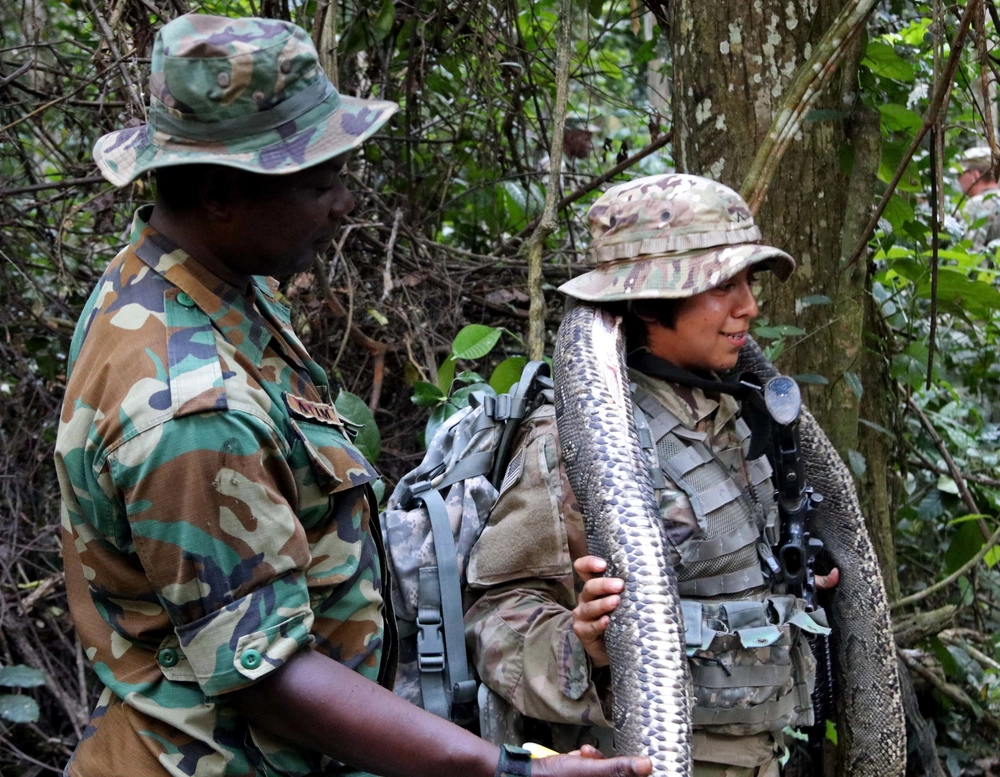
 Bro. Seriously though, bro. Like, a snake is all neck if you think about it. Bro. Seriously though, bro. Like, a snake is all neck if you think about it. |
|||||||||||||||||||||||||||||||||||||
|
Author: Grumpy



UPDATE: Vote YES on the Bylaw proposal.
The Bylaws require a vote of the membership to create a new officer position, and this is one that needs to happen. — Jeff
Four candidates dedicated to reforming the troubled NRA will be on the ballot for election to the NRA Board this year.
The four reform candidates are Judge Phil Journey, Rocky Marshall, Dennis Fusaro, and me, Jeff Knox.
We are encouraging people to vote for only these four and no one else.
Bullet voting for just the four reform candidates gives your votes more weight and increases the odds of us winning seats.
Ballots are supposed to be in the March issue of NRA magazines for those members eligible to vote.
Only NRA Life Members, and those Annual Members who have been members for at least 5 consecutive years, without interruption, are eligible to vote and will receive ballots.
Each year, the NRA sends out around 2.5 million ballots, but only about 5% of those are ever returned, meaning that almost 2 million ballots are never returned. Finding and activating those un-voted ballots this year could be the key to getting the reform candidates elected, so please talk with your NRA member friends and encourage them to vote for the four reform candidates.
No one knows what will happen with the trial now going on in New York. It’s almost certain that the NRA will lose, and LaPierre and former Treasurer Woody Phillips will be ordered to pay some restitution, but there’s just no telling what the judge will decide regarding the NRA itself. He could just order them to clean up their act and sin no more – which would leave the same people in charge who allowed this mess in the first place – or he could go so far as to dissolve the current board, throw out the current election, and order a new election. He could also appoint a Special Master or overseer to take charge of reorganizing the NRA. He has a lot of leeway and we can only guess at what he might do, and try to position ourselves to be able to participate in the resurrection of the Association.
There’s also a good chance that the NRA will appeal any decision that goes against them, resulting in more delays and more NRA member money poured into the pockets of lawyers.
For the time being, our focus must be on getting our four reform candidates elected.

Please look for the ballot in the March issue of your NRA magazine, which should be delivered in late February. As soon as you receive your ballot, please mark Jeff Knox, Phil Journey, Rocky Marshall, and Dennis Fusaro, sign the back of the envelope, and mail it. Then reach out to all of your NRA friends, members of your gun club, and in any online forums you participate in, and encourage everyone to do the same.
Thanks.
The official NRA magazines with the ballots for the 2024 Board of Directors election have started to arrive. The Complementary Spouse and I both received ours today.
I would urge you in the strongest possible terms to bullet vote, i.e, only vote for these candidates and no others, for the Four for Reform. While there are a couple of others deserving of your vote, it is essential that these four get elected.
 All four are on the ballot as a result of your efforts in signing their petition. We need people like them on the Board as they won’t put up and shut up. Indeed, both Judge Phil Journey and Rocky Marshall were retaliated against for standing up for what is right. That retaliation has led to the NRA being charged with violating the State of New York ‘s whistleblower law. This is one of the charges that the jurors in the New York trial are in the process of deciding guilt or innocence.
So few of the eligible voters actually vote that every vote for these four is critical.
We don’t know the outcome of the trial in New York and we don’t know what remedies Judge Cohen will impose if the NRA is found guilty. He could dissolve the current board and reduce it in size. He could appoint a special overseer. He could appoint a temporary board of people who are not tainted such as these four. He could do all of these things and that is why support for clean, untainted candidates is so important.
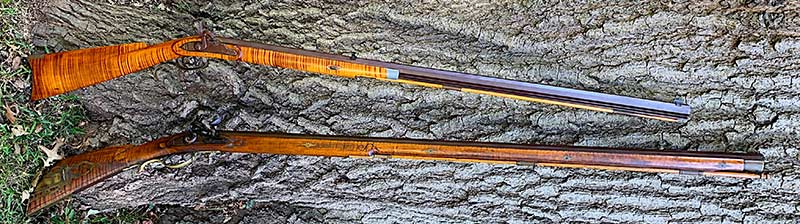
“Watch for sign” you never know what’s coming. Here’s Tank’s
beautiful .45 caliber Kentucky rifles from a dear friend.
The gems I’m about to talk about are usually hidden under a bed, inside a forgotten closet, or perhaps residing at your safe’s rear. They have the uncanny ability of being overlooked but can warm your heart while soothing your soul like no other.
When picked up, their power is not from the caliber they’re chambered in but rather the emotion they stir in the individual holding them. The longer you hold them while caressing and fondling them, the more their superpowers become clear in the form of memories.
Better than any book, these guns tell a story, bonding the current keeper with someone of significant importance from their past. They have “spell-casting” abilities, letting the holder relive special moments from the past. The gun evokes memories of learning to shoot or the excitement of a first hunt with the very gun in their hands.
No matter the occasion, holding it frees the memories from the deep, dark vault of the keeper’s subconscious. Reliving the memories brings a satisfaction the holder appreciates. Therein lies the beauty.
Cursed
The dreaded curse of owning guns such as these is that the previous owner has likely vacated this world. While the body is gone, the spirit is remembered through iron and wood. It’s what makes the bond and kinship of gun cronies special, as only gun people understand this importance. I know you know the feeling.
Holding one jars memories from the place we last stored them. These memorial guns are special indeed. Fortunately, or unfortunately, I have several of these guns. While holding a special place in my heart, I’d much rather have the person here. This leads me to another kind of gun capable of stirring the exact same emotion but without the heartache.
Surprise Guns
I talk to my friend Ted weekly on the phone, and we sound like two enthused 10-year-olds swapping hunting, cop and gun stories. While conversing with him the other day, he gave me this sage advice, “look for sign.”
“What do you mean, Ted?” I replied with confusion.
“Just watch for sign,” he repeated.
A few days later, my wife lugged in a long narrow box she had to sign for. Confused, I wasn’t expecting anything. But it was the proper size for a rifle.
I opened it up as any 10-year-old would and pulled out a bubble-wrapped long rifle. The words “look for sign” go through my head, and I know what it is.
Ted sent me his custom flintlock we have talked about so many times! I was surprised, shocked, dumbfounded, ecstatic and confused. Why would he do such a thing? We’ve swapped books on several gun-related topics about different characters in history. But this? Holy cow! After looking the gun over, I went to throw the box out. It was still heavy. Inside was another muzzleloader — this one a percussion lock. I couldn’t believe it.
I called Ted and said, “Are you crazy? What are you doing?” He just cackled at me, saying, “Remember, I told you to watch for signs.” I thanked Ted profusely, telling him I would take care of them and that we are just keepers of such treasures until they are turned over to another keeper. Ted was able to witness my joy and appreciation in real-time while, thankfully, still being on the same side of the dirt as me.
As I wiped my new treasures down with Ballistol, I asked my wife if she would mind me hanging them up in our living room so I could admire them while working from the kitchen table or watching TV. She agreed, noticing a single tear rolling down my cheek. “Aw, are you crying?” she asked. “Nah, these old guns are notorious for dust,” I replied, leaving it at that. The name stuck.
Name Game
Guns such as these are deserving of special names. But why name such grand rifles “Ol’ Dusty” when they’re meticulously cleaned, oiled and wiped down after each use? It’s simple, really. Every time I shoot them or pick them up, my eyes well up. Must be dust, right? Everyone should own at least one gun they refer to as “Ol’ Dusty.” I have two.
I’ll have to do a full article on Ted; he’s that interesting and worthy for all of you to get to know. He’s a retired cop, was on the Kentucky muzzleloader team and eats fried frog legs every Sunday at the Chinese buffet in his hometown. I told you he was interesting. He’s my kind of guy. Even if his guns are kinda dusty.
Categories
Short Action 284Winchester
 Maybe its time to start shooting some stupid rich folks? Grumpy Asking for a Friend
 A
A