We walk the M1 Garand from history to the firing line, breaking down features, ammo picks, accuracy, and the unmistakable ping that made this WWII icon a must shoot.
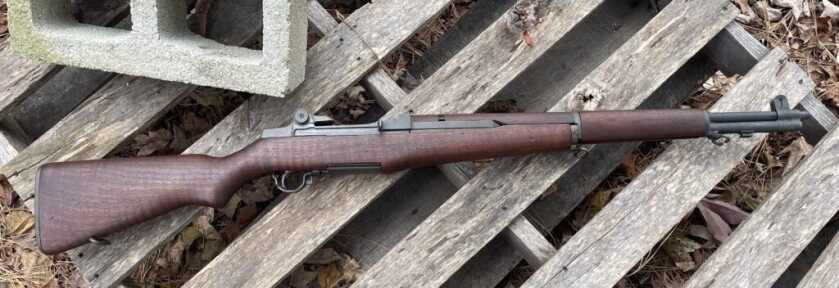
The M1 Garand was radical when it was adopted by the U.S. military in 1936. Every standing army around the globe in the 1930s was armed with manually operated bolt-action rifles; the Garand was a semi-automatic rifle.
The M1 Garand fired eight shots as quickly as the trigger was pressed at a rate of fire of 40 to 50 rounds per minute. At the start of World War II in 1939, it offered superior firepower over Germany’s slower-firing five-shot Mauser K98 bolt action and Japan’s five-shot Arisaka Type 99 bolt action rifle.
Perhaps the M1 Garand’s contribution to the war effort is best summed up by two of the U.S. military’s greatest generals during WWII. Army Chief of Staff General Douglas MacArthur said the “Garand rifle is one of the greatest contributions to our armed forces.” General George S. Patton is quoted as saying the M1 was “the greatest battle implement ever devised.” The M1 is legendary.
Table of contents
- Why The M1 Garand Belongs On Your Bucket List
- Key Features Of The M1 Garand
- What Rifle Did The U.S. Army Use In WWII?
- What Caliber Was The M1 Garand Chambered In?
- What Is Garand Thumb?
- Who Made The M1 Garand?
- How Accurate Are M1 Garands?
- What Is The Best Ammo For M1 Garands?
- Shooting The M1 Garand
- Collecting M1 Garands
- Conclusion: The Ping That Echoes
- M1 Garand Specifications
- Related Reads From GunsAmerica Digest
Why The M1 Garand Belongs On Your Bucket List
The M1 Garand has different meanings to people, depending on who you are, and since some 6.5 million were produced, that equates to a lot of different meanings. For the Greatest Generation and those few remaining veterans of World War II and those veterans of the Korean War, the Garand is a respected weapon spoken with reverence.
The legacy of this combat rifle spans over 80 years, from the beaches of Normandy during World War II to Pork Chop Hill in the Korean War. For shooters who shoot competitive service rifle matches, the M1 is a tool they use to hit a 3-inch bullseye at 200 yards with open sights. Collectors of the M1 Garand covet the history of the rifles.
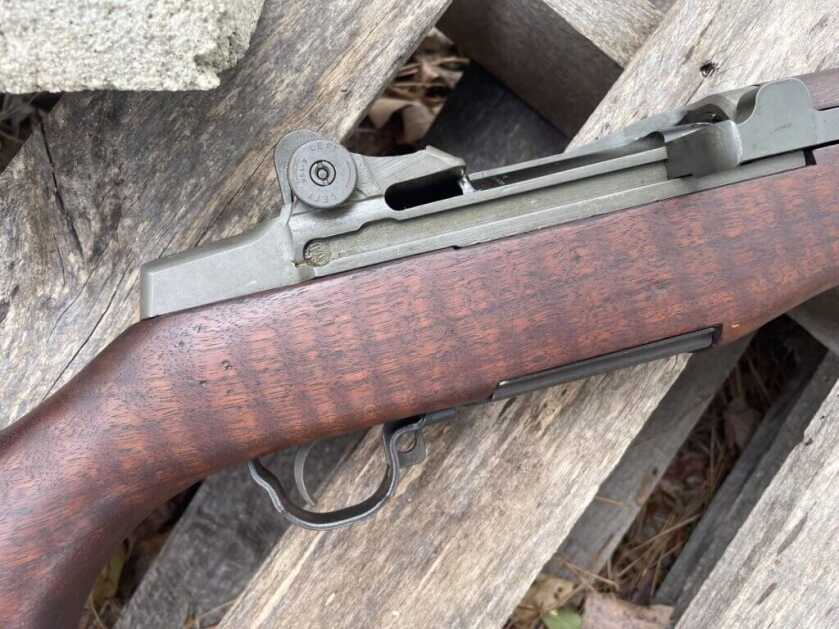
My connection to the M1 Garand takes a lot of different routes, from an uncle who was on Iwo Jima in 1945. He saw a lot of M1s used on that tiny island. A shooting pal who runs a D Day Match in early June at a local rod and gun club. He will let you borrow his rifle, show you how to load it without getting Garand Thumb, and how to shoot. He feels it is important to keep the legacy of the M1 alive. Another pal has a collection of 23 Garands and can tell you in excruciating detail the difference between each rifle, even though they all look the same to me. Another connection with the M1 Garand actually started in Jewett City, Connecticut, a rundown former mill town where I attended grammar school. All the textile mills had left by my time, but in the early 1900s, the town hummed with machines, and that is where John Garand, the inventor of the M1 Garand, combined his love of machinery and shooting. What is your connection to the M1 Garand?

Key Features Of The M1 Garand
The M1 Garand uses a gas-operated, long-stroke piston system. The rifle’s mechanism cycles when expanding gases from a fired cartridge travel through the port and into a gas cylinder holding the long stroke piston. This system is still in use today in M14 rifles and variants, as well as AK-47 and AK-74 pattern rifles.

The rifle weighed about 10 pounds and was 43.5 inches long. The stock was wood, which was the typical material used for stocks in the mid-20th century. The 24-inch barrel generated a muzzle velocity of about 2800 fps with the 152-grain M2 wartime ammo. A well-trained soldier averaged about 45 accurate shots per minute at a range of 300 yards.
The Garand incorporates an en bloc clip that holds eight cartridges, which was a radical departure for combat rifles of the time. This clip allowed a soldier to quickly and efficiently load the M1 by locking back the operating handle and pushing the clip into the M1’s internal magazine.
At the time, the U.S. military believed detachable box magazines were a bad idea. Magazines were not thought of as a disposable commodity as they are today. When the last round is fired, the M1 Garand ejects the clip with a characteristic metallic pinging noise.
A myth was that enemy soldiers waited for the ping to take advantage of GIs reloading their M1s. After WWII, soldiers on both sides were interviewed about the ping sound. Both sides said the chaos of battle was the only sound they heard.
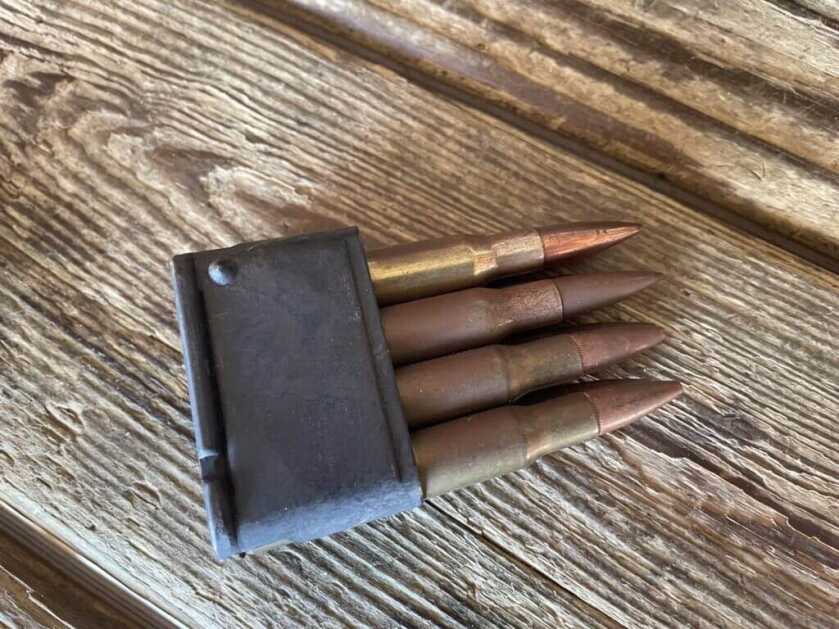
While the clip idea was fast, it was not perfect. The M1 magazine and clip system did not allow soldiers to top off the magazine. A button on the left side of the rifle allowed a clip to be ejected.
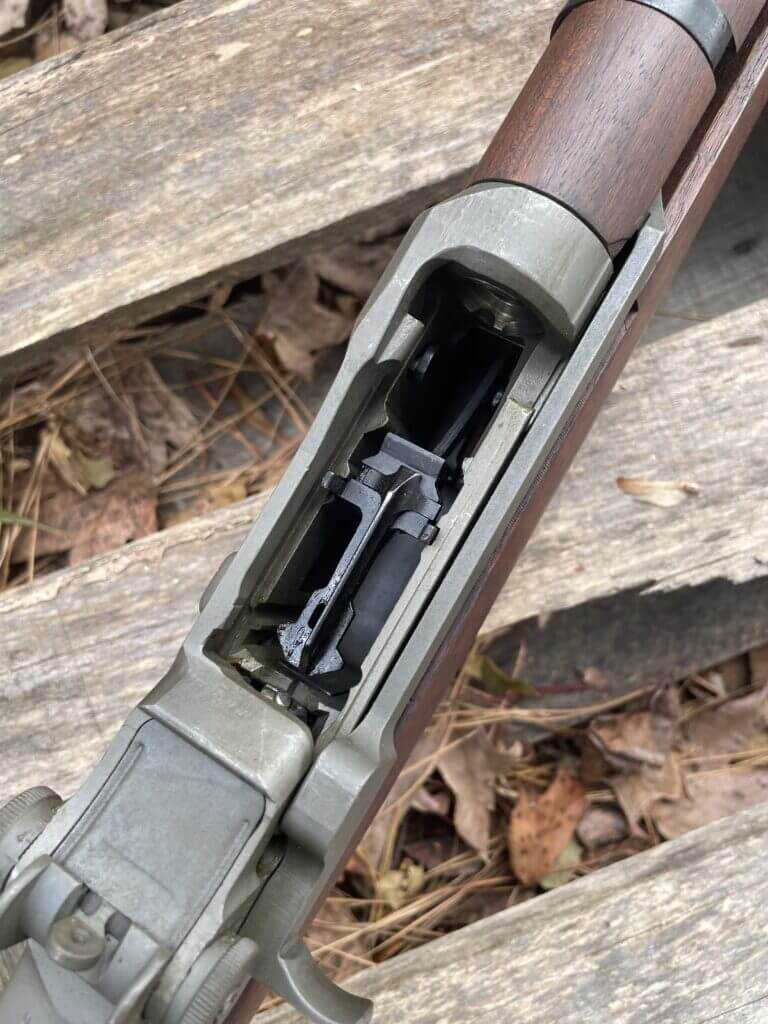
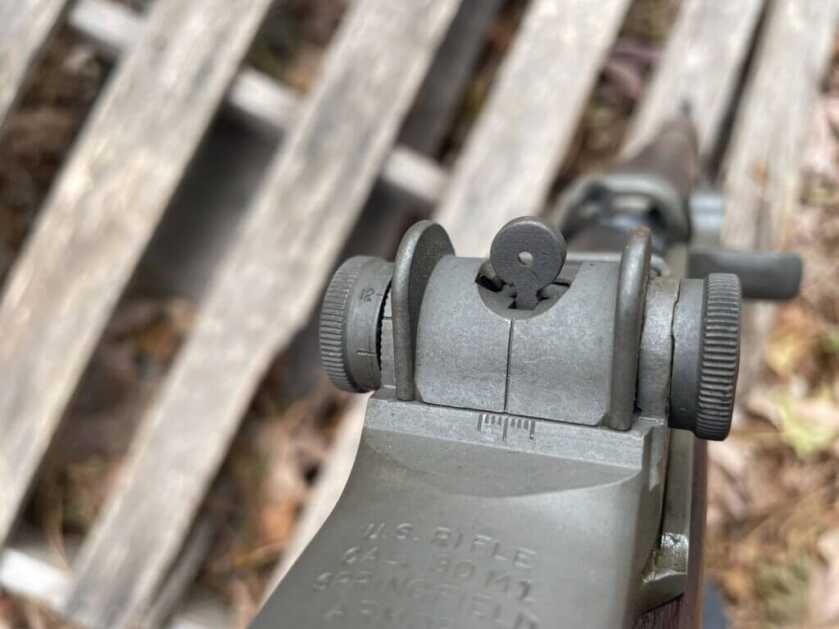
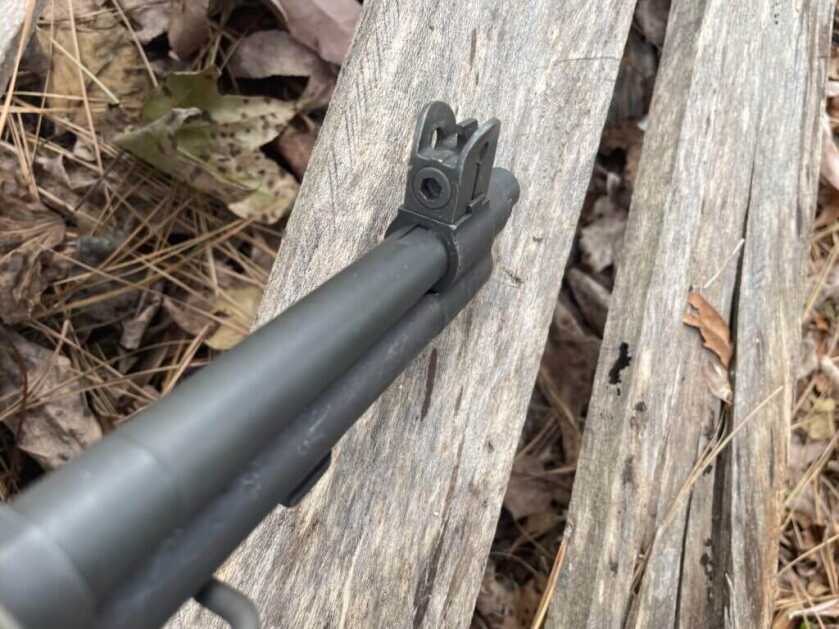
The rear sight of the M1 was a fully adjustable aperture sight. The front sight was a post protected by wings.

What Rifle Did The U.S. Army Use In WWII?
With over a decade of design work and prototyping, the M1 was finally patented in 1934. In 1936, the rifle was adopted by the U.S. military and officially designated: Rifle, Caliber .30, M1.
The M1 Garand replaced the M1903 Springfield bolt-action rifle and was used by every branch of the U.S. military during World War II. During the Korean War, the U.S. government contracted for more rifles in the early 1950s. In 1958, the M1 was replaced by the select-fire M14 rifle.

What Caliber Was The M1 Garand Chambered In?
Part of the M1’s enduring legacy is the rifle’s caliber, the .30 06 Springfield cartridge. In 1938, the .30 caliber, M2 cartridge was developed using a 152 grain flat-based FMJ bullet with a muzzle velocity of 2,800 fps. Veterans of WWI were familiar with the caliber, and like other military calibers, it found its way into hunt camps, becoming the de facto caliber by which all other American hunting calibers were benchmarked. To this day, the .30 06 Springfield is still a popular and enduring hunting cartridge.
What Is Garand Thumb?
When loading a Garand, remember to fully lock the bolt rearward. If you do not, the bolt will slam forward, trapping your thumb between the bolt and the chamber as you seat the clip. That is called Garand Thumb. Trust me, if this happens once, you will soon learn to load the M1 correctly.

Who Made The M1 Garand?
During WWII, the Garand was manufactured by Winchester (WRA) and Springfield Armory (SA), the actual U.S. military armory, not Springfield Armory, the commercial firearm manufacturer. Springfield Armory was the first to start producing rifles and cranked out 100 rifles a day. Winchester followed.
In the 1950s, with the Korean War raging, the U.S. military contracted International Harvester Company (IHC) and Harrington & Richardson Arms Company (HRA) to produce Garands. There have been some commercially made M1s, and those were produced by Springfield Armory, the commercial firearm manufacturer.
How Accurate Are M1 Garands?
The accuracy of a surplus M1 is dependent on the condition of the rifle, the quality of the barrel, and, of course, a shooter’s ability. My expectation with my M1 was 3 to 4 MOA. The bore looked good, but that does not mean a thing. Stocks can contract and interfere with the harmonics of a barrel. A fiberglass bedded receiver and quality barrel can greatly improve the accuracy in these old war horses with accuracy of 1 MOA or even better.

What Is The Best Ammo For M1 Garands?
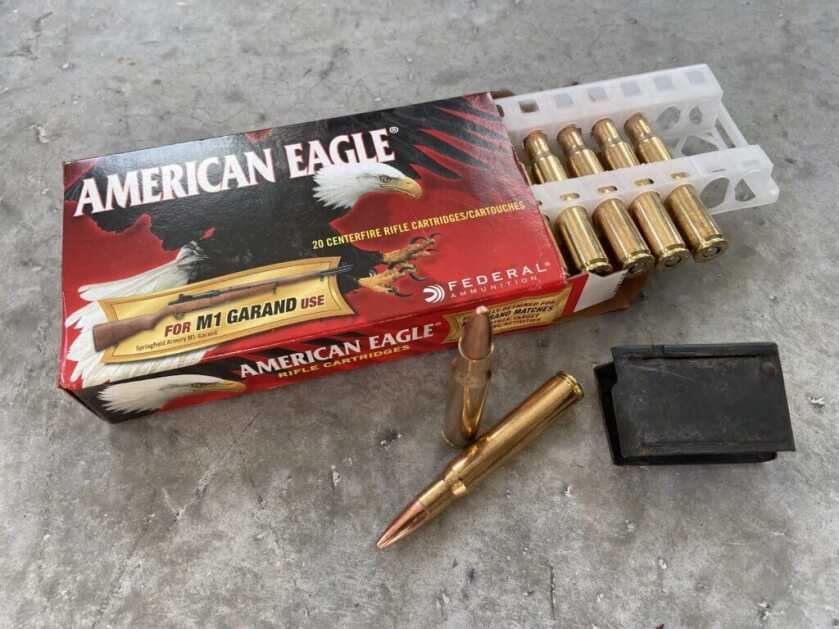
While in service, the M1 Garands ran on 150-grain FMJ M2 Ball ammo with a muzzle velocity of about 2800 fps. Federal American Eagle .30 06 Springfield ammunition is designed to a similar spec and pushes a 150 grain FMJ at 2740 fps.
Hornady’s Vintage Match ammo is also a safe choice. It loads a 168-grain ELD bullet with a 2710 fps muzzle velocity. Be aware of .30 06 ammunition with heavier bullets and higher muzzle velocities. They will fire in a surplus M1, but they can harm an M1’s gas piston system and can bend the operating rods. I use 150-grain FMJ ammo with a muzzle velocity of 2700 fps.
Shooting The M1 Garand
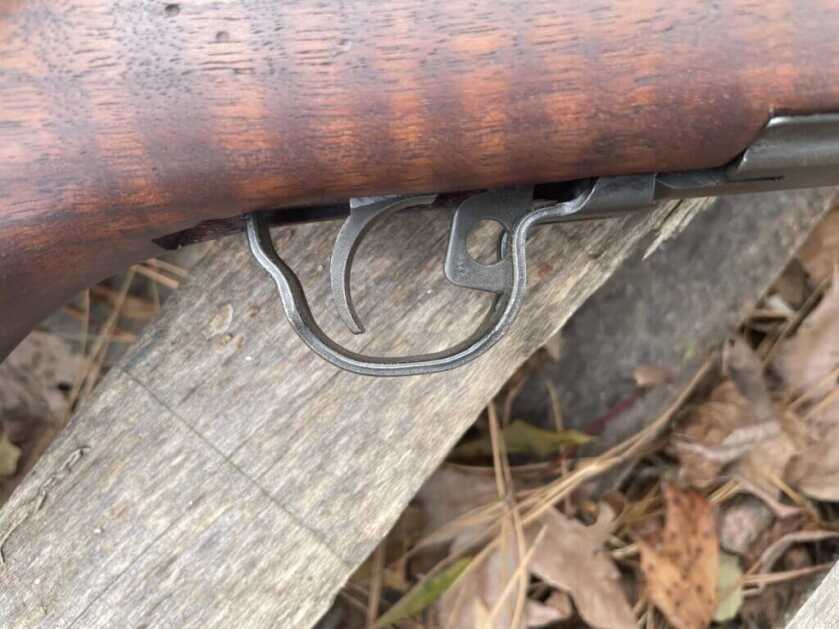
Wrapping yourself in the Garand’s sling, you get the real shooting experience. The heft of the rifle alleviates felt recoil. From the two-stage trigger that allows you to pre-load the trigger for the shot to the break, you instantly find that the M1 is willing to please.
When the mechanism operates, there is a lot of movement and sound. After eight shots, the ping sound of the ejected clip is obvious. From sandbags, my old war horse still has game. My best 5-shot group at 100 yards with Federal American Eagle measured 2.82 inches. I will take that especially with open sights.

Collecting M1 Garands
Most M1 Garands are arsenal rebuilds and may have mixed parts. An M1 with all original parts, or at least most of them, is rare and will fetch top dollar. Things to look for in an M1 are inspector cartouches and proof marks that match the original manufacturer.
Many rifles have been refinished. The barrel throat is usually given as an indication of wear. The throat refers to the area where the lands of the rifling start at the breech end of the barrel. The higher the number, the more wear.
The Civilian Marksmanship Program (CMP) rebuilds and sells M1 Garands by grade. A number of collector websites provide serial number lookup to determine the year the rifle was produced.
Conclusion: The Ping That Echoes
It is hard to believe, but the weapons used during World War II started with bayonets and bolt-action rifles and ended with assault rifles and atomic bombs.
By the end of WWII, the M1 Garand was dated. It was long, heavy, and the caliber was too powerful for full automatic fire. Any shooter’s bucket list should include trigger time with M1 Garand. It is not a perfect weapon, but the rifle is woven into the fabric of our nation. There are millions of M1 Garands. This one is mine.
M1 Garand Specifications
| Model | M1 Garand (Rifle, Caliber .30, M1) |
|---|---|
| Action | 8-round en bloc clip |
| Caliber | .30 06 Springfield (7.62x63mm) |
| Finish | Parkerized |
| Shoulder Stock | Walnut with steel butt plate |
| Front Sight | Fixed, wing protected |
| Rear Sight | Adjustable aperture |
| Barrel Length | 24 in. |
| Overall Length | 43.5 in. |
| Weight | 10 lbs. |
| Capacity | 8 round en bloc clip |