Categories
Fieldcraft Useful Shit War

Individual Fieldcraft

Categories
Cops Fieldcraft

Avoid Being Complacent By Matt Eagleston

After more than two decades in police work, I sometimes struggle not to get complacent on patrol. After you have conducted thousands of traffic stops and, most of the time, nothing bad has occurred, you may not use as much caution as you once would have. After checking your 500th false burglar alarm, do you find yourself nonchalantly checking a business or a residence?


Once, when I was a baby cop, dispatch sent me to a residential burglar alarm. I was walking around the residence, checking doors and looking for forced entry, when I suddenly felt I should look up. I immediately saw a person sitting in a tree behind the house, holding a crowbar. He was taken into custody without incident, thankfully. 

I have heard similar stories from other cops over the years.

What’s more important? Having your gun hand free? Or is it having your ticket book with you?

There were times I wasn’t as switched on as I should have been during a traffic stop or other incident. When I recognize that, I try to raise my awareness and keep it that way immediately. But then, complacency slowly creeps back in.

Have we all done it? Why did we?

So, what can we do to prevent complacency creep? A little mental preparation can help. I will visualize an event, usually a worst-case scenario, and how I will respond. For example, what will my reaction be when I attempt to stop this car, and the driver immediately gets out with a firearm? Do I approach the vehicle? What if they drive off? Doing this keeps the worst-case scenarios fresh in my mind and keeps me on my toes during patrol. And hopefully creates a slightly quicker response to this problem since I’ve already gamed it in my mind.


Teaching recruits will also help keep things fresh. Showing them the right way to do things makes it easier to do them yourself, especially if you just got dozens of repetitions doing it correctly. 

One of the Below 100 tenants is What’s Important Now? Well, is it returning that text? Or paying attention to the world around us?

Oddly, I have some things so ingrained I never forget to do them. I always take my seatbelt off before getting to where I am going. I even do this in my car if my wife is lying waiting for me when I get home. My patrol rifle and shotgun are always accessible, and I check them every payday for lube, problems, battery, etc. I change the batteries in my optics and flashlight every time I change the clocks. I keep my flashlight in my weak hand and carry a spare light with me. I wear my vest and carry a backup gun.

It is easy to get drawn in to our MDCs. What does that do to your awareness?

One instance of a positive outcome – I responded to an attempted burglary in a neighboring town. We have checked numerous buildings throughout our careers, and they are rarely, if ever, an actual burglary. I arrived at the address, a real estate office in a senior citizens community. This community had its own public safety officers who are EMT-trained security guards. They had found an office door that had been partially pried open. The alarm had gone off an hour earlier, but the security officers could not respond because of a medical call. The town police were tied up on a fatal wreck and asked for a state trooper (me) to check the building. While walking the exterior of the building looking for signs of forced entry or damage, I would usually check the property surrounding the building. As I swept the area with my flashlight, I noticed a tree with arms rather than branches. At least, it looked like it had arms because a person was trying to hide behind the tree, and his arms were sticking out both sides of the tree. He was arrested and later admitted to attempting to break into the office. Had I just walked around the building and not been looking and paying attention, I might have missed him hiding in the woods.


If your attention is on the MDC, how much attention are you paying to the world around you?

If you become complacent on patrol or in police work, try a bit of worst-case-scenario planning. You could run through possible issues with your wingman. If you can teach, or be a role player for, recruits, take it. You may find that it helps.

What other things have you tried that worked in keeping complacency at bay?

Categories
California Cops Fieldcraft

Uncle Scotty Stories: Tactical Eating

Categories
All About Guns Fieldcraft

Beginners Guide To The .38 Special Snubnose & .357 Magnum Revolver – Everything You Need To Know !!

Categories
Dear Grumpy Advice on Teaching in Today's Classroom Fieldcraft

Need some help there ma’am?

Hey been there and done that with a Garand! That brass can be mighty hot and can REALLY burn too! Grumpy

Categories
All About Guns Fieldcraft

TRIGGER CONTROL SIMPLE IN THEORY — DIFFICULT IN PRACTICE WRITTEN BY DAVE ANDERSON

Dave needed lots of dry and live fire to instinctively keep his thumb near the trigger finger.
It paid off on a 300+ yard shot at a New Zealand red stag.


Acquiring “good enough” skill with a rifle, at least adequate for big-game hunting at moderate ranges, is actually not terribly hard. Most game animals are shot at ranges under 200 yards, often considerably less, and generally from some sort of rest. It used to surprise me to find many rifle owners, even those knowledgeable and enthusiastic, had little interest in shooting.

For those who do want to be good rifle shots, learning trigger management is essential. Trigger control is the essence of good shooting, the single most important factor. Good trigger management covers a multitude of sins. Don’t misunderstand, proper form and consistency matter. At the highest levels of shooting, competitors train so every aspect of stance, hold, grip and even breathing are as close to exactly the same as humanly possible for every shot. Yet, none of this matters if the last thing the shooter does is yank the trigger.


Dave shoots with this thumb on the same side as his trigger finger. He believes
it keeps the trigger finger straighter, allowing the shooter to press the trigger straight back.

Shooting 101


What is good trigger management? It means pressing the trigger straight back, at constantly increasing speed, without imparting movement to the firearm. Simple enough, but making good trigger control a dependable subconscious skill takes thousands of quality repetitions.

Factory rifle trigger pulls have improved dramatically over the past couple of decades. The 1960s and much of the ’70s were actually kind of depressing years for rifle enthusiasts. An era of manufacturing based on skilled hand labor and relatively simple machine tools was coming to an end, as skilled labor became less common and therefore expensive. The marvelous, extremely precise computer-controlled machine tools we have today didn’t yet exist.

Many of we who lived through the era were left permanently scarred. We were certain quality control was a thing of the past and would only get worse. We’re easily identified because we say “pre” all the time; pre-war, pre-’64, pre-1950, pre-lock, pre-number. Everything used to be better, at least so it seemed at the time.

Trigger quality suffered worst of all, partly I suppose because of the growth of consumer litigation and manufacturers’ fear of lawsuits. From a risk avoidance point of view it made sense to make triggers non-adjustable, with plenty of sear engagement and a 6- or 7-lb. weight of pull. The average once-a-year hunter tolerated such pulls as just the way things are. Those who actually shot a lot simply factored in the cost of a trigger job or replacement trigger.

Rifle quality improved, slowly at first, then more quickly as manufacturers began adopting modern techniques such as computer-assisted design and computer-assisted manufacturing. Improvement in trigger quality seemed to come slowly, at least with the bigger American gunmakers. Some European imports and smaller American makers — Dakota Arms and Kimber come to mind — had decent triggers but were expensive and not widely distributed.


A light Savage rifle in .260 Rem. trigger pull is a couple of ounces
\over 3 lbs., crisp and clean right out of the box.

One of the reasons for the success of the Tikka T3 rifle is the excellent trigger,
which was part of the package right from the beginning.

The Shot Heard ’Round The Shooting World


In a just world, the name Ron Coburn would be as famous and revered in the firearms world as names such as Bill Ruger and Sam Colt. Coburn took over leadership of a nearly bankrupt Savage corporation and turned it into an industry giant. Coburn’s genius was in leading and inspiring creative people to design products people wanted, at a price they could afford. Early in the 21st century he challenged his staff to design a trigger with a quality pull, crisp, reasonably light, adjustable, affordable and safe. The result was the Accu-Trigger, which became standard on Savage factory rifles around 2002–2003. Other manufacturers redesigned their triggers so quality pulls were available to every rifle buyer, not just the wealthy and enthusiastic. I think shooters today are fortunate to have rifles with decent triggers widely available at reasonable prices, providing a headstart in learning good habits.

The old saying “practice makes perfect” isn’t always so. Practice makes permanent. The neural paths controlling the muscles don’t judge. They develop through repetition and will learn bad habits as thoroughly as good ones. Over the years, my views have evolved. I’m not as dogmatic about form and style as I once was, but there are basic elements I think are important. One is to have the trigger finger placed squarely across the trigger face so the pressure is straight back, in line with the axis of the bore. I’ve become more conscious of avoiding any side pressure on the trigger.

I like to have the trigger finger more or less in line with the bore, not angled diagonally as seems to happen with many pistol grip shapes. I keep the thumb of the shooting hand on the right side of the stock rather than wrapped around the pistol grip. This allows a lower grip so the trigger finger doesn’t have to be on a diagonal angle.

It also encourages a light touch with the shooting hand. I find a light touch is more consistent, less prone to “steering” the gun or applying side pressure, plus it allows the trigger finger to move independently. Years ago I thought differently and who knows, I may think differently in the future. But today this is what feels right and more importantly, performs right for me.

Categories
Cops Fieldcraft

Massad Ayoob: Castle Doctrine, The McCloskeys & Why You Should Remain Inside. Critical Mas EP51

Categories
Ammo Fieldcraft

Are Mini Shotgun Shells Viable for Self-Defense?

Categories
All About Guns Ammo Fieldcraft

These are the best deer hunting ammo options Brady Kirkpatrick

With close to a dozen more modern choices, the .30-30 Winchester remains the best deer hunting ammo. If you grew up hunting, you have likely used .30-30 Winchester rounds at some point. It is one of the most used types of ammunition for deer hunting due to its history and reliability. Hunters have used lever-action .30-30 rifles to hunt deer for over 125 years. Yet, a lever action rifle may not be your preferred type of rifle. You may also want ammo suited for longer ranges. Other considerations when choosing the right ammo for deer hunting include muzzle velocity, energy, recoil, and compatible rifles.

Here are the best deer hunting ammo options based on your needs

.30-30 Winchester – Best Overall 

The .30-30 Winchester is the best overall choice when it comes to deer-hunting ammo. It was used in the Winchester Model 1894 lever-action rifle, making it one of the oldest types of ammo still produced. The 30-30 remains popular due to its limited recoil. The average 150-grain or 160-grain 30-30 rounds produces 9 pounds to 11.7 pounds of recoil while the typical rifle produces up to 15 pounds of recoil. The lack of recoil allows you to stay on target. You can also enjoy deep penetration, which is important for taking down your target with a single shot. 30-30 Winchester is a great choice for deer hunting but isn’t ideal for large game hunting, such as moose and elk. It’s also not often used for long-range hunting, as 30-30 rounds are commonly found in lever-action rifles made for close-range and medium-range targeting.

Pros

  • Deep penetration
  • Limited recoil

Cons

  • Not typically used for long-range hunting
  • Offers less stopping power

.243 Winchester – Best deer hunting ammo for Reduced Recoil 

Using .243 Winchester cartridges is a great alternative to the .30-30 Winchester for those with a bolt-action rifle that still want limited recoil. The .243 Winchester rounds are used in bolt-action rifles and offer a little less recoil compared to the 30-30 rounds. You can find .243 Winchester in lightweight, bolt-action rifles with great accuracy. It’s a good choice for younger hunters and those that are new to hunting. However, it lacks the power and energy needed for long-distance shooting. The barrel of the typical .243 rifle is often shorter compared to larger caliber rifles. Yet, the .243 Winchester is a top recommendation for distances up to a few hundred yards.

Pros

  • Significantly less recoil
  • Great accuracy
  • Found in lightweight rifles

Cons

  • Limited stopping power for big game
  • Not often used for long-range targeting

.308 Winchester – Most Affordable Deer Hunting Ammo 

Purchasing .308 Winchester cartridges can save money compared to other rounds. The .308 is one of the most affordable cartridges available. The low cost of this ammo may appeal to those that hunt frequently or spend time honing their shooting skills.

.308 Winchester rounds also produce a lot of energy. They have a total energy of about 2,600 pounds per foot and drop just 15 inches at 300 yards. .308 Winchester rounds may be more accurate in medium ranges of 300 to 500 yards compared to the previous types of ammo.

The drawback to using .308 Winchester rounds is the recoil. These rounds produce more recoil compared to the .30-30 and .243 cartridges, which can slow your firing rate.

Pros

  • Most affordable option
  • Well-suited for medium-range hunting

Cons

  • Produces more recoil
best deer hunting ammo fort campbell
Fort Campbell Public Affairs Office photo.

6.5 Creedmoor

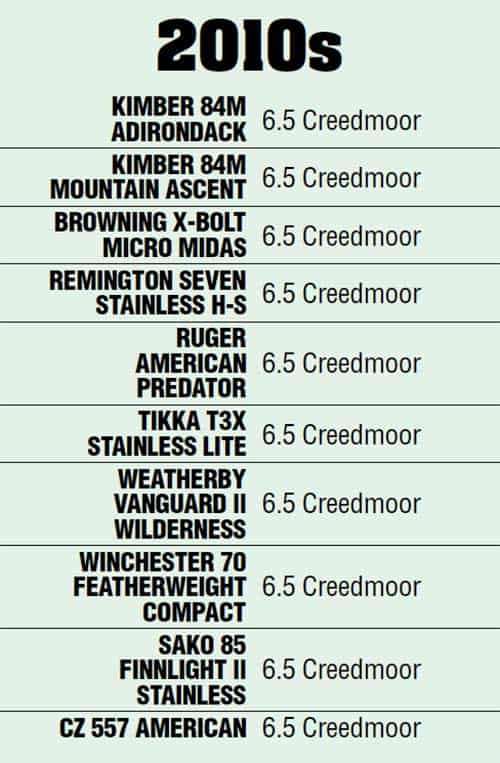
The 6.5 Creedmoor cartridge is manufactured by Hornady, which is an American company based in Nebraska. The company specializes in making high-quality ammunition. 6.5 Creedmoor rifles are suited for big game hunting while the previous options lack the stopping power needed to take down larger animals. These rounds are also made to maintain energy across long distances, making them well-suited for targeting animals at further ranges. A rifle with 6.5 Creedmoor should have an effective range of about 1,000 yards. However, other options may provide a little more accuracy for long-distance shooting.

Pros

  • Suited for deer and larger animals
  • Offers an effective range of 1,000 yards

Cons

  • Less accuracy compared to other long-range ammo

Conclusion about the best deer hunting ammo options

The .30-30 Winchester is a common choice for deer hunting, as it’s the ammo used in one of the most traditional lever-action deer-hunting rifles. It works well for close-range and medium-range hunting but tends to drop significantly at longer ranges. Using .243 Winchester rounds is an alternative to .30-30 rounds. Instead of lever-action rifles, the .243 rounds are often used in bolt-action rifles. Bolt-action rifles tend to offer greater accuracy. 308 Winchester is one of the most affordable options. If you spend a lot of time at the range between hunting trips, you may prefer using cheaper ammo. 6.5 Creedmoor cartridges are lightweight and made specifically for long-range shooting. It’s a heavier caliber compared to the previous options, making it more versatile. Along with deer hunting, you can use 6.5 Creedmoor for hunting larger animals, such as moose.

Categories
All About Guns Ammo Fieldcraft

BETTER SHOOTING: JUST SAY NO TO RIMFIRE DEFENSE WRITTEN BY DAVE ANDERSON

Dave remembers when the original Browning Challenger was introduced.
It remains, in his view, the best all-around .22 pistol ever made.

Rimfire pistols and revolvers are among the most useful tools handgunners can own. They are outstanding for training new shooters and maintaining shooting skills. Ammunition is (or was) relatively cheap compared to centerfire ammunition and with virtually no recoil.

They are excellent for pest control and informal small game hunting around a farm or ranch, or to pack while camping, fishing, or hunting big game. But most of all, .22s are fun to shoot.

In all its forms, the Ruger .22 pistol provides excellent value and performance for its cost.

But What About Carry?


What about .22s as carry guns? I’m not talking about them as backup or last-ditch firearms but as primary personal defense weapons. The short answer is don’t do it. No. End of story.

Except there has to be a story. Yes, any gun is better than no gun. In the vast majority of instances in which a firearm is used defensively, no shots are fired. The person being threatened displays a firearm and the assailant either flees or surrenders. No sensible person wants to be shot. Most foolish people don’t want to be shot either.

The .22LR is no toy. There’s hardly a species on earth that hasn’t at one time or another been killed with a precisely placed .22 bullet. I’ve killed quite a few animals ranging from 300 to 1,200 lbs. with .22 rifles. For years on the farm, we butchered at least two steers and two hogs annually, meat for ourselves and a close relative or two.

Dad didn’t mind shooting vermin from around the barn but found it hard to shoot animals he’d raised. On butchering day, he’d always go to the house for a forgotten knife or sharpening stone, and it was understood the animal would be dead by the time he got back. One shot with the muzzle of the .22 rifle a couple of feet from its head and even a 1,200-lb. steer dropped instantly.

One of the best revolvers for the outdoor person today is the Ruger SP-101 in .22LR.
With stainless steel construction, it is nearly impervious to the elements and is an
accurate, dependable outdoor companion.

Feeding

Don’t think I don’t have respect for the .22LR cartridge. But I cannot recommend a .22 handgun as a primary defensive arm. There are two fundamental reasons: reliability and power. In a semiautomatic action, the .22LR has two strikes against it. It is a rimmed case, not well adapted to being stacked in box magazines. And it is long for its diameter, making reliable feeding more problematic.

I have many .22 rifles, which have been completely reliable. Almost always, they are models with tubular or rotary magazines. Semiauto .22 rifles I’ve used with complete success include the Winchester 63 and 74, Browning takedown model, Remington Nylon 66 and 550, Marlin 60 and Ruger 10/22, among others. Box magazine semiautos have been less reliable.

The standard Remington Nylon 66 is legendary for its reliability, while the Nylon 77 with a detachable box magazine I once owned was nothing but trouble. Among detachable magazines, the only ones I can recommend unreservedly are the Ruger and Browning rotary design

Colt Woodsman’s name suggested the role for which it was intended. This is a Series 3 Target Model.

Ammo Reliability


I believe rimfire ignition is less reliable than centerfire ignition. I’ve had far more misfires with rimfire cartridges. Often, they will fire on a second strike, especially if you rotate the cartridge, so the firing pin strikes a different location. I’ve fired hundreds of thousands of centerfire rounds and can recall only two or three misfires.

There’s very little to go wrong with a centerfire primer other than a missing pellet of priming compound or missing anvil. Quality control is rigorous and the chances of a bad primer are remote. One reason I use Black Hills ammunition whenever possible is they visually inspect every primer before it goes to the loading machines, reducing the chances of a misfire to near zero. The handloader can do likewise by inspecting primers before loading. And do keep your oily fingers from touching the primer. There’s a good chap.

There are reliable .22s, most revolvers, for example. Some semiauto .22 pistols are as reliable as the best centerfires, including, in my experience, the Beretta 70 series, the Ruger .22 model, the S&W, 41 and the Browning Buckmark. I’m sure there are others. But that doesn’t solve the lack of power issue. I’ve conceded the effectiveness of the .22LR with precise shot placement.

Can you achieve such precision on what will likely be a moving target? Can you hit a rolling baseball — make that a golf ball — every time, on-demand, at speed and under great stress? Surviving a gunfight will take all the skill, courage and coolness you can muster, the most effective weapon you can manage and probably a good dose of luck. Unless you have no other choice, don’t handicap yourself with a .22.