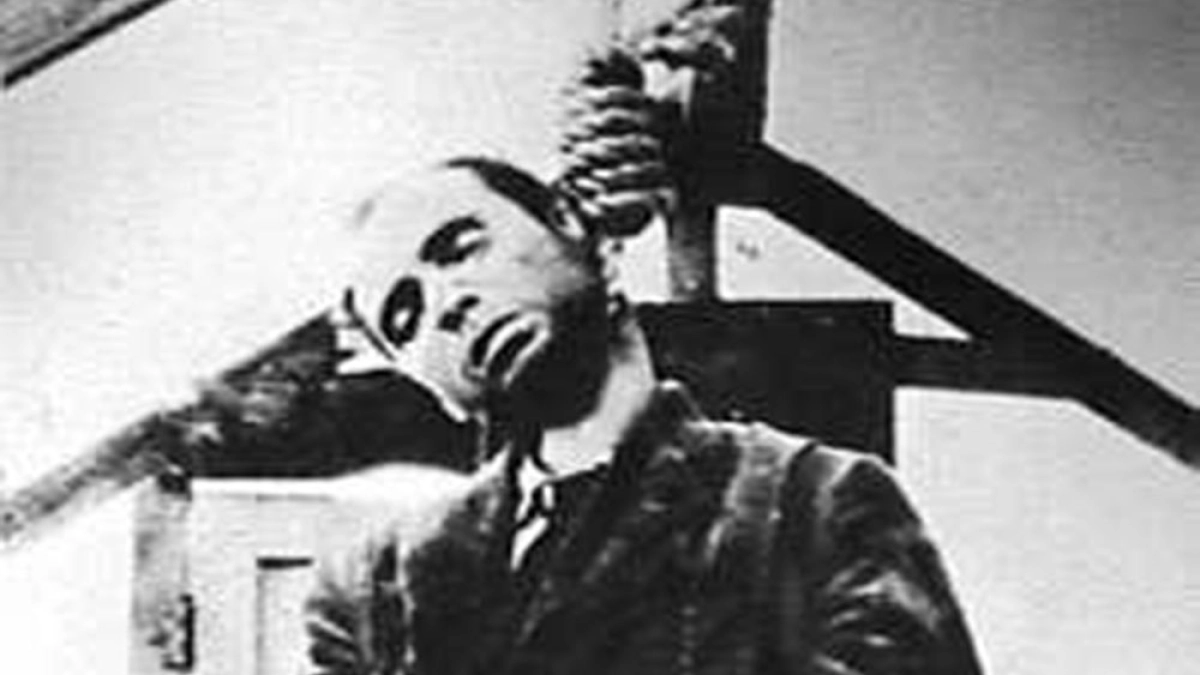
Joseph “Hooch” Simpson holds the distinction of being the last person lynched in California.
On April 19th, 1908 in Skidoo, California, Hooch ambushed and gunned down a respected citizen named Jim Arnold, proprietor of the Skidoo Trading Company in broad daylight and robbing him of twenty dollars.
Hooch has been described in various stories as a hard luck miner, a penniless bum, a scoundrel, an alcoholic and a no good rascal who was bound to be hanged someday.
However, prior to the murder of Arnold, local newspaper accounts described him as a businessman. Hooch was half-owner of the Gold Seal Saloon and involved in several mining ventures. Hooch also had a stable of shady ladies including “Skidoo Babe” and “Blonde Betty.” Somewhere along the way Hooch seems to have acquired a case of syphilis from one of his soiled doves.
(I wonder how that happened to this Pimp?)
Arnold died that evening and three days later a lynch mob hanged Hooch from a telegraph pole.
When Sheriff Nailor from Independence arrived, after a hazardous trip over rough roads via Tonopah and Rhyolite, he made the now famous statement, “It’s the best thing that ever happened to Inyo County; it saved us $25,000!”
That same telegraph line attached to the pole sent the news to the outside world and a few days later reporter from the Los Angeles Times showed up to take a photograph but by the time he arrived Hooch had been pushing up daisies for several days.
That didn’t stop the hospitable locals who obliged him by digging up Hooch, brushing the dirt off and hanging him again.
(I see that even back then Folks wanted their 15 minutes of fame. Plus the couple of bucks changing hands did not hurt either!)
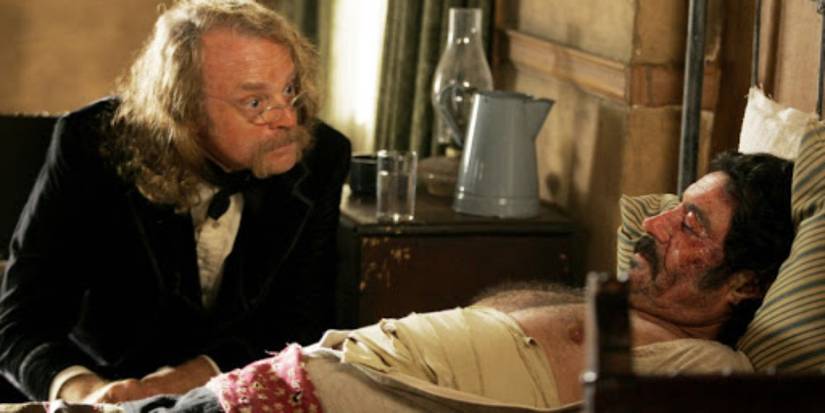
It was said Hooch was a frequent guest of the red light district in Skidoo prompting the town doctor cut his head off to test it for syphilis, thinking that might be the cause of his sudden madness.
(Shades of Deadwood!)
It’s said the twice-hanged, headless Hooch still wanders those lonely hills in Death Valley looking for his missing head.
(How much do you want to bet that it’s at Yale with Skulls & Bones !?!)
Old Skidoo is located near the better-known metropolis of Stovepipe Wells but all that remains of Skidoo is a historical marker.
(In other words it is not in the middle of nowhere but you can see it nearby! Grumpy)
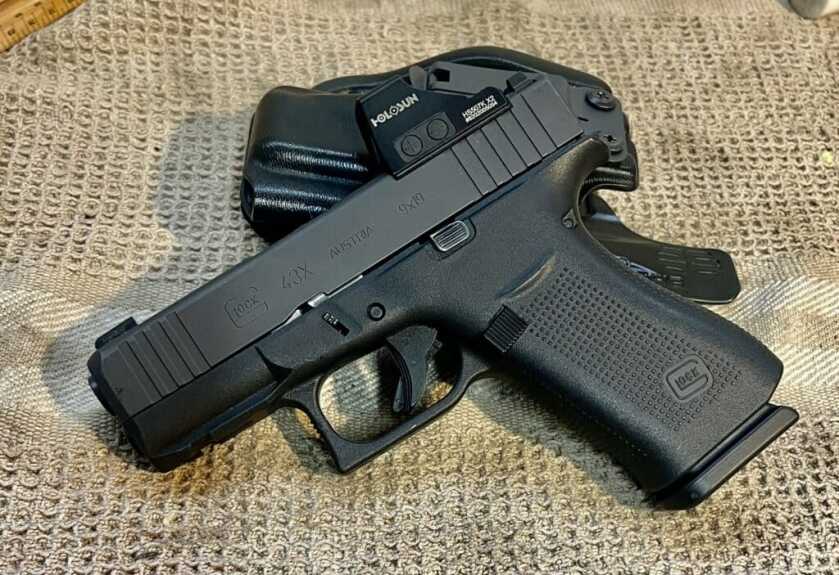
California just put the Glock 43X CA on its handgun roster, giving Golden State Glock fans something many of us thought we might never see again: a genuinely new Glock option.
The Glock 43X roll mark. California’s newly approved model is listed as the Glock 43X CA.
California Just Put the Glock 43X CA on the Roster
Breaking News:
On Tuesday evening, September 29th, 2026, California gun owners were surprised to see a new gun on California’s Roster of Approved Handguns. The Glock 43X, a 10-round micro-compact model from their slimline models, was added.
This means the pistol passed lab drop testing and likely met the state’s requirements for a loaded chamber indicator and magazine disconnect safety. More details will follow on the pistol itself in the coming weeks. There is no specific timeline for its appearance on gun store shelves.
There has not been a new Glock model added to the California Roster since 2006-2008, making the Glock 43X CA the first new Glock added in almost twenty years.
Glock Comes Back to California, and Almost Nobody Saw It Coming
When California’s new restrictions hit Glock in 2026, those of us in the public heard rumors, but nothing from the company, and certainly nothing from our DOJ. California created a new class of machinegun-convertible pistols. If the gun had a cruciform trigger bar and could readily accept an available switch with only the use of household tools, it was pretty much out. We were already limited to Gen 3 guns, as those were the designs we had grandfathered in from back in the day.
Glock brought the “V” series, but due to the state’s layers of laws regarding what guns could be sold here in California, any new design would have to have a magazine disconnect and a loaded chamber indicator, something that Glock had seemed very reticent to do. What happened was the predictable price spike on anything Glock, where I saw Glock 19 Gen 3s selling for $1000 or more.
To be fair, I was very hard on Glock when it appeared they had abandoned the Golden State. Many believed it would be a cold day in hell before we ever saw a Glock of any sort again. We all started looking for options outside of Glock.
Then Hell Froze Over: The Glock 43X CA Appeared
Well, then…hell froze over. We looked at our DOJ website on September 29th, and holy smoke! There, on our screens, was a newly approved gun for the California handgun roster. Not just another Gen 3 or a Gen 3V, no. It was the Glock 43X-CA edition.
I won’t lie, when I saw the rumor, I raced to my computer to see it, because I never believed we would ever see a new version of our Glock on our approved roster. Beyond that, the Glock 43X is one of the more sought-after designs here for the new CCW crowd. It’s also very convenient that the gun is a standard 10-round pistol, which is the legal limit for magazines in the state.
It’s unknown if the 43X-CA will be an MOS model, but most hope it will be. This is a non-Roster version and is used for illustration purposes only.
How California Lawsuits Opened the Door for New Pistols
It should be noted that it’s because of lawsuits like Boland v. Bonta and California firearms rights people like Reno May that we are getting the new pistols in. These lawsuits, championed by the California Rifle and Pistol Association, have forced the state to halt the requirement that all handguns be equipped with Microstamping technology to be added to the Roster of handguns certified for sale.
Per most people who know the industry here, the new Glock 43X CA will likely have the California-required mag disconnect safety and loaded chamber indicator. If that concerns you, remember, before this thing ever made it to the California DOJ, it had to go through Glock’s own testing. Those complaining that the new systems incorporated are somehow going to compromise the safety of the gun, I think, will discover this is not the case.
Why the Glock 43X CA Makes So Much Sense for California
If the state wanted to pick a Glock to approve that could make as many people happy as possible, from the gun control crowd to the gun owners crowd, this was strategically a brilliant move. There is already rumor and scuttlebutt about what California’s move means and whether it signals room for additional Glock models.
I already have a standard model of the 43X. It’s a great CCW weapon, complete with the Glock reputation for reliability. While not as ergonomic as my S&Ws, the slimline Glocks fit nicely in the hand without the blocky feeling.
That is part of why the Glock 43X CA makes so much sense here. California’s growing CCW crowd gets a slimline Glock configuration that many shooters already know, while the standard 10-round format fits neatly into the state’s magazine limit. After years of watching the roster dictate what Californians could choose from, seeing the 43X-CA show up feels like a much bigger deal than one more model number on a government webpage.
Glock USA Is Staying Quiet About the 43X CA
I have reached out to Glock USA for information, but they are being tight-lipped for now, although I suspect they are being inundated by media calls regarding the new 43X-CA. Hopefully, once they get back to me, I can update you all.
Currently, as I’m writing this, the list price is in the $600 range from the big box stores. There are scant details on the pistol, such as whether it will be an MOS setup or not, nor whether this will be a gun made in Austria or Smyrna, Georgia. We will keep you posted as this develops.
Glock 43X CA Specifications and Roster Details
Model
Glock 43X CA
Caliber
9MM
Barrel Length
3.41″
Capacity
10 rounds
California Roster Date
09/29/2026
Current Price Context
List price is in the $600 range from the big box stores
The Big Unknowns: MOS, Production, and What Comes Next
We still don’t know if the Glock 43X CA will be an MOS setup or not, and we don’t yet know whether the California version will come from Austria or Smyrna, Georgia. Those aren’t small details for Glock buyers, especially with optics-ready carry pistols being so common now, but at this point they remain exactly that: unknowns.
What we do know is that a genuinely new Glock has landed on California’s Roster of Approved Handguns after an almost twenty-year drought. That alone is excellent news for California Glock fans. While hopes are high that other Glocks will be added to our Roster of Approved Handguns, potential future models or timing are unknown.
Could the Glock 43X CA Signal Changes Beyond California?
How will this affect you if you’re in a state that banned Glocks? The answer to that is unknown, but you can bet they’re watching this.
California has often been a test case for what manufacturers will redesign, certify, or simply decide isn’t worth the trouble. If Glock has really built a California-specific 43X that satisfies the state’s current requirements, shooters elsewhere will naturally be watching to see whether the same approach opens doors in other restrictive states.
Glock 43X CA Pros and Questions Still Hanging in the Air
Pros: A new Glock option for California buyers, slimline 43X format, standard 10-round configuration, strong CCW appeal, and Glock’s established reputation for reliability.
Cons: No specific shelf date yet, MOS status is unknown, production location is unknown, and full California-specific feature details have not yet been released.
What Happens Next for the Glock 43X CA?
For now, the biggest story is simply that the Glock 43X CA exists on California’s roster at all. A few months ago, plenty of us would have bet against seeing a new Glock configuration make it onto that list. Now it’s there in black and white.
We will continue to monitor this and keep you all posted as Glock USA releases more information, stores begin talking about availability, and we learn exactly what separates the California version from the standard Glock 43X.
A masked intruder picked the wrong San Francisco home and brought a husky along for the bad decision.
A 73-year-old Vietnam War veteran shot a suspected burglar during an early-morning struggle inside his Sunset District home, according to CBS News Bay Area.
The break-in happened shortly after 5 a.m. on September 26 near 22nd Avenue and Lincoln Way, along Golden Gate Park.
“A professional burglar cut his way into my home,” the veteran told CBS.
Face-to-Face With a Masked Intruder
The homeowner was sleeping on the third floor when noises woke him. He retrieved a handgun and went downstairs to investigate.
On the second floor, he encountered a man wearing black clothing, a hoodie and a face covering. The suspected intruder had also brought what the homeowner described as a roughly 60-pound husky.
The veteran said the man grabbed him, causing him to fall onto his hands and knees.
“I shot him because I felt really threatened,” he told CBS. “He had already made this deep intrusion into my home.”
The homeowner reportedly fired one shot and believed he struck the man near the hip or buttocks. He suffered minor scrapes to his hands and knees during the confrontation.
The masked man fled, leaving bloodstained shoe prints leading toward Golden Gate Park. He also left the husky behind. San Francisco Animal Care and Control later took custody of the dog.
Police Detain Wounded Man
A short time later, officers found an injured man approximately three miles away near Geary Boulevard and 47th Avenue.
Paramedics transported him to San Francisco General Hospital with a non-life-threatening gunshot wound. Police detained the man while investigators worked to determine whether he was connected to the burglary.
Initial police reporting treated the burglary and the discovery of the wounded man as separate incidents because investigators had not yet established a connection. No charges against the homeowner had been announced.
The veteran withheld his name and face from the CBS report because of safety concerns. He said he remained shaken but was thankful he escaped without serious injuries.
“I had a little help from a friend,” he said, referring to his handgun.
The bizarre details will get plenty of attention. Still, the heart of the story is straightforward: an elderly homeowner reported being attacked inside his own home and used a firearm to stop the threat.
=============================================== I see that San Francisco still has some really tough men around! Grumpy
California Gov. Gavin Newsom (D) signed ten new gun control bills on Saturday, one of which is designed to block 3D printers from printing firearms.
Mike Bloomberg-affiliated Everytown for Gun Safety cheered Newsom’s signature on The Firearm Printing Prevention Act (AB 2047), describing it as “groundbreaking legislation.”
AB 2047 was fashioned to “stop the next generation of ghost guns before they are made by requiring consumer 3D printers sold in California to incorporate technology that identifies and blocks attempts to print firearms and illegal firearm parts.”
Another one of the gun controls, Senate Bill 948, “dramatically expands California’s Firearm Safety Certificate (FSC) requirements by mandating a minimum four-hour training course beginning in 2029, including live-fire exercises and state-prescribed classroom instruction,” according to the NRA-ILA.
Among the other new controls, AB 1743, “expands the state’s firearm owner’s data-sharing framework by increasing access to information maintained in California’s Automated Firearms System and related databases.”
Senate Bill 1220 “[adds] a new firearm-prohibiting misdemeanor to California’s list of offenses that trigger a 10-year firearm prohibition.”Gov. Newsom’s office put out a press release on the signing the new gun controls, describing California as the “[No. 1] state in the nation for gun law strength and effectiveness.”
His office did not mention FBI figures highlighted by Breitbart News, which show that while California is No. 1 in gun control it was also No. 1 in “active shooter instances” in both 2021 and 2023.
AWR Hawkins is an award-winning Second Amendment columnist for Breitbart News and the writer/curator of Down Range with AWR Hawkins, a weekly newsletter focused on all things Second Amendment, also for Breitbart News. He is the political analyst for Armed American Radio and the director of global marketing for Lone Star Hunts. He holds a PhD in Military History with a focus on the Vietnam War (brown water navy), U.S. Navy since Inception, the Civil War, and Early Modern Europe. He enjoys reading Philosophy and novels by Jack Carr and Nelson DeMille. He is a lever action man in an AR-15 world.
US Army leadership decided the best way to protect the nation from a bioweapons attack was by attempting to poison the American people first
Aerial view of industrial areas and piers near the Embarcadero neighborhood of San Francisco, with the San Francisco Bay and Alcatraz Island visible, likely taken from Coit Tower, 1950.
Morse Collection/Gado/Getty Images
The story spoke of simulated biological attacks on San Francisco that took place over a few days in 1950. No one in the city knew the test was happening, and at least one civilian, a 75-year-old man, died after being exposed to the bacteria. The man’s name was Edward Nevin.
That article was how the Nevin family, scattered across the Bay Area, learned about what actually killed their beloved patriarch decades earlier. And although largely forgotten today, the story set off a firestorm of anger and fear about the U.S. government treating its citizens like a laboratory full of guinea pigs.
The American government has done many evil things in the name of national security, but few were as nefarious as its human experiments during the Cold War. Ordinary people were drugged with LSD, subjected to psychological abuse and pushed to the breaking point and beyond. With paranoia about the Soviet Union at a fever pitch in the 1950s, the government was obsessed with the threat of attack.
In 1950, U.S. Army leadership decided the best way to protect the nation from a Soviet bioweapons attack was by attempting to poison the American people first.
They identified eight cities across the country that were possible targets, among them San Francisco. To see how far deadly particles could spread through the air, scientists suggested the Army use a bacteria called Serratia marcescens.
Serratia first caught the attention of scientists in the early 1800s, when the people of Padua, Italy, saw something unusual: Their polenta kept turning red. Paranoid villagers brought in priests, fearful of a devilish influence on their dinner, but scientists discovered the organisms weren’t satanic. They were bacterial.
A Serratia marcescens colony is seen in a lab. The bacteria is known for its distinctive red color.
Sinhyu/Getty Images
In a healthy individual, Serratia marcescens exposure normally isn’t a problem, but for people who are immunocompromised, and especially those hospitalized, a seemingly harmless infection can become fatal.
Those infected can develop pneumonia, heart inflammation called endocarditis, meningitis or blood poisoning. Serratia marcescens is also largely resistant to antibiotics even today, making successful treatment difficult. But none of this was known to the military officials about to dose San Francisco with the bacteria.
In late September 1950, a warship normally used as a minesweeper was outfitted with commercial spraying equipment. Inside the sprayers was a slurry of Serratia bacteria. As the minesweeper sat a few miles offshore, the sprayers sent the bacteria wafting onto the wind into the city.
On Sept. 27, the final day of the test, like so many mornings in San Francisco, clouds drifted low over the water. A cool wind blew off the ocean, ruffling the hair of bankers hurrying to work in the Financial District, families grocery shopping in the Mission, and tourists taking in the view at Fisherman’s Wharf.
According to a declassified Army report, almost every person in San Francisco that day inhaled 5,000 or more particles per minute over the course of several hours. “San Francisco residents were inhaling millions of bacteria and particles every day during the week of testing,” Leonard Cole wrote in his book “Clouds of Secrecy.”
Government records would later show the bacteria dispersed much farther than the city of San Francisco. Clouds reached Army monitoring stations in Colma, Daly City, Sausalito and across the bay in Albany, Berkeley, Oakland and San Leandro.
‘The scientific method gone mad’
Within days, Stanford University Hospital in San Francisco began seeing a spike in unusual cases: Illnesses caused by exposure to Serratia marcescens. In the history of the hospital, they’d never had a single case. Now, they had 11.
Among them was a 75-year-old retired PG&E employee named Edward Nevin. He’d recently had a procedure for a prostate condition, but there had been no complications and he’d returned home.
Suddenly, though, he took a turn for the worse, experiencing what his son called “intense pain and suffering.” Nevin was rushed back to the hospital. Whatever ailed him didn’t respond to antibiotics, and Nevin languished for three weeks before dying.
A view of the urban skyline of downtown San Francisco on a sunny day, likely taken from Coit Tower, 1950.
Morse Collection/Gado/Getty Images
“The doctors insisted on an autopsy,” his son Edward Nevin Jr. said. “They apparently were as perplexed as we were.”
The autopsy found Nevin had died of a heart infection caused by Serratia marcescens. The San Francisco outbreak was so sudden and mysterious that a group of Stanford physicians wrote up the event for a medical journal.
But although the Army now knew their experiment had likely killed a man, the tests continued for another 16 years in cities across the nation. One so-called “vulnerability test” involved secretly dropping a light bulb filled with bacteria from a New York City subway train. Samples found traces of the bacteria in tunnels spread from 14th to 58th Street.
In 1976, the experiments burst onto the national consciousness as some reports were declassified. The impacts, doctors and scientists feared, were long-ranging.
At San Francisco General Hospital, two dozen patients since 1969 had been diagnosed with endocarditis caused by Serratia marcescens; 13 of them died. A staff physician at the hospital told the Chronicle the cluster was 5 to 10 times the national average, and it was possible the uptick was linked, even years later, to that Army test.
The Embarcadero is seen from a photo taken near Coit Tower in 1950.
Morse Collection/Gado/Getty Images
After learning about the likely cause of his grandfather’s death, Edward Nevin III spoke with the Chronicle. “It is just incredible — the scientific method gone mad — Dr. Strangelove, but it is not fiction,” he said. “The Department of the Army completely disregarded the dignity of the individual.”
Nevin III, who worked as a lawyer, sued the U.S. government on behalf of his family. By then, many of the leaders of the experiment were retired, aging but unrepentant about what they’d done.
The technical director of the government’s biological warfare program during the 1950s testified that “the Bay Area populace should be pleased” that they’d been unknowingly sprayed with bacteria in the name of Cold War safety. Another scientist said if he was put in the same position, with the knowledge he now had, he’d still run the test.
A jet plane from the Naval Air Reserve flies directly above the huge Oakland Naval Supply Center in 1950.
Bettmann Archive
With some government documents still classified — and the only contemporaneous account of Nevin’s death coming from Stanford’s medical journal article — there wasn’t enough evidence to prove the test had definitively caused his death.
A judge ruled against the Nevins, ending their legal quest for justice. But in the court of public opinion, history has joined their side. Nevin is regularly cited as a victim of the test, a death that the government apparently chalked up as a necessary evil to win the Cold War. When his son, Edward Jr., died in 2017, his obituary called it “one of the government’s darkest secrets.”
The long-term impacts
Then, there are the test’s ripples through the 21st century.
In 2001, a Bay Area UPS driver with chronic back pain went to his healthcare provider for a cortisone shot. Two days later, he died of bacterial meningitis. Within weeks, three deaths had been linked to contaminated cortisone shots prepared in a Walnut Creek pharmacy; the shots had all been tainted by Serratia bacteria, which can cause meningitis if injected near the spinal cord.
Much like the 1969 outbreak of Serratia-caused endocarditis cases, scientists wondered whether the 1950 experiment had done something fundamental to the Bay Area ecosystem. An infectious diseases professor at UC Berkeley said scientists could not dispel the theory that pumping millions of bacteria into the air had permanently changed the Bay Area’s microbial ecology.
To prove it one way or another, scientists needed samples of the Army’s 1950 strain of Serratia to compare with modern-day outbreaks. The government has never handed those over, if they were preserved at all.
Although Edward Nevin’s death devastated his close-knit family, his life has reverberated across the generations. He immigrated from Ireland, raised seven children in the Mission with his wife Mary and watched their children and grandchildren become nurses, teachers, police officers, lawyers and even the mayor of Daly City. His life was cut short, but his legacy remains.
Nevin is buried among family in the Holy Cross Catholic Cemetery in Colma. On summer days, soft fog rolls through the graveyard in waves. But now, it carries only the cool mist from the sea, fresh and clean.
The sports fishing charter, piloted by 32-year-old captain Alec Stockfelt, showed up at the docks of the Southern California city earlier this week, wowing onlookers as the nearly half dozen fisherman wrestled the giant fish to a weigh station at Fisherman’s Landing.
The previous blue marlin sports fishing title holder weighed in at 395, caught in the waters off San Diego in 2021.
The previous record at that location for any fish caught was some 598 pounds, the captain said.
An adult male grizzly bear weighs about 600 pounds, for comparison.
Anglers and captains expect 2026 to be a robust year for records due to El Niño weather patterns bringing in more exotic sea life.
Marlin belong to a rare group, less than 1% of fish species, that exhibit regional endothermy. They maintain a “heater organ” near the eyes and brain. This organ keeps neural tissue warm even when the fish dives into cold, deep waters to hunt.
In addition, this warm-blooded adaptation gives them a massive neurological advantage. Their visual processing and reaction times remain sharp at depth. Therefore, they can detect and pursue prey far more effectively than their cold-blooded targets.
The Pacific blue marlin world record, caught off Kona, Hawaii in 1982, stands at 1,376 pounds.
Special state and federal excise taxes drive up the cost of firearms and ammunition for lawful gun owners. Original illustration created for AmmoLand News using OpenAI image-generation
Anti-gun politicians who cannot ban firearms outright have found another way to attack the right to keep and bear arms: make exercising it progressively more expensive.
Applying the historical test required by New York State Rifle & Pistol Association v. Bruen, Moros argues that taxes singling out firearms, ammunition, and related products have no well-established analogue in America’s historical tradition of firearm regulation.
Moros distinguishes special gun taxes from ordinary sales taxes that apply generally to consumer goods. The constitutional problem arises when lawmakers target firearms and ammunition for an additional financial penalty simply because they disapprove of armed citizens.
California demonstrates how quickly those government-imposed costs accumulate.
Using Moros’s hypothetical, a handgun that would ordinarily sell for $500 in Los Angeles rises to $584 after the federal and California excise taxes are included. Add California’s $37.19 background-check charge and the city’s 9.75% sales tax, and the buyer pays $678.13 out the door.
A first-time buyer who also needs California’s firearm safety certificate pays $703.13, approximately 28% more than the handgun would cost with only the generally applicable sales tax.
That burden falls hardest on working Americans who need an affordable firearm for self-defense. Constitutional rights do not belong only to those wealthy enough to absorb every tax and fee a hostile legislature dreams up.
History Does Not Support Taxing Common Arms
Moros’s historical survey found no widespread American tradition before 1900 of imposing special per-unit taxes on commonly possessed firearms.
Founding-era militia laws frequently required citizens to own arms and sometimes protected those weapons from seizure for unpaid debts or taxes. Import tariffs existed, but they applied to broad categories of goods and were intended to encourage domestic arms production—not discourage Americans from acquiring firearms.
The relatively few 19th-century laws that specifically taxed weapons generally targeted bowie knives, pocket pistols, and other arms many people of the period considered “dangerous and unusual.” Those laws were concentrated primarily in Southern states, sometimes applied only when the weapons were carried, and ordinarily left the prevailing military and self-defense arms untaxed.
Some Reconstruction-era taxes were even used to price newly freed Black Americans out of gun ownership. Those racist regional outliers cannot establish the representative national tradition Bruen requires.
Pittman-Robertson Is Not Exempt
The paper’s treatment of the Pittman-Robertson excise tax may be uncomfortable for some gun owners because the money supports wildlife restoration, hunter education, and public shooting ranges. But a popular use of the revenue does not cure an unconstitutional tax.
If the federal government imposed a special tax on newspapers to fund public libraries, the worthy destination of the money would not erase the First Amendment violation. The same rule must apply to the Second Amendment.
Moros does not argue that firearms can never be subjected to ordinary taxation. His position is that the government cannot single out a constitutional right for an additional financial burden.
“A right that the government can price out of reach is not a right,” Moros said.
That is the heart of the issue. Legislatures that cannot constitutionally prohibit Americans from buying common firearms should not be permitted to pursue the same objective through discriminatory taxation. The Second Amendment says the right “shall not be infringed.” It does not contain an exception for infringements disguised as taxes.
About Duncan Johnson:
Duncan Johnson is a lifelong firearms enthusiast and unwavering defender of the Second Amendment—where “shall not be infringed” means exactly what it says. A graduate of George Mason University, he enjoys competing in local USPSA and multi-gun competitions whenever he’s not covering the latest in gun rights and firearm policy. Duncan is a regular contributor and editor-in-chief for AmmoLand News and is responsible for AmmoLand’s daily gun-rights reporting and industry coverage.