Categories
Month: January 2026
Categories
Turkish 1893/33 Mauser POV firing

On an X-ray, dense things are white, while not-so-dense things are black.
The two big round rascals are eyeballs. The other grey spaces are sinuses.
“Doc, I have sinus,” says almost everybody. At that point, I typically smile and inquire about how long someone has felt bad and explore the sordid details. However, “I have sinus” is kind of a nonsensical thing to say if you really pick it apart.
Sinus is a Latin word. Literally translated, it just means cavity or empty space. All normal people have scads of sinuses. In the head in particular, you have eight — two pairs of four. These eight empty spaces accomplish some of the most amazing things.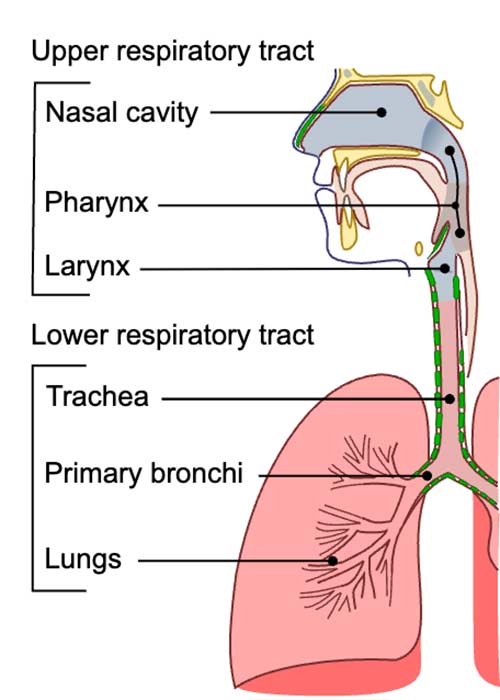
Ours is such an amazing design. Your sinuses actually
do a lot of really important things for you.
Anatomical Details
Your head is really heavy. I’ve actually had the pleasure of hefting a detached example myself. By incorporating these eight empty spaces into the design of your head, God made things considerably easier on your neck.
Your sinuses act as crumple zones for your face, not unlike those of a modern car. When real people get hit in the face it is not much like the movies. The thin, brittle bones of the sinuses and face crunch in on themselves to protect sensitive stuff like your brain and eyes.
Your sinuses serve as antechambers to your lungs. The air that goes into your lungs needs to be clean and warm. Your sinuses take care of that for you. Were it not for this pretreatment, the sensitive tissues of your lungs that facilitate gas exchange would be forever infected and subject to thermal irritation.
That’s actually asking quite a lot. Room temperature air is typically 70 degrees Fahrenheit and 35% humidity. Four inches later, the air headed into your lungs is at 98.7 degrees Fahrenheit and 100% humidity. Your sinuses do that for you, and we don’t even think about it.
To accomplish that mission, your sinus linings are forever secreting mucus, the voluminous, slimy snot that is so delightful in a three-year-old with a head cold. In fact, to process some 20,000 liters of air each day, your sinuses produce roughly half a gallon of snot.
Once that slick, slimy stuff is corrupted with bacteria, fungi, sloughed-off dead skin and good old-fashioned dirt, you simply swallow it so your stomach acid can render everything digestible. Half a gallon. That sounds gross because it is. However, it’s also all pretty normal.
Now Things Get Weird
So, you actually have two separate noses — one on each side of the midline. Each is entirely independent from the other. One of the more frustrating aspects of a typical cold, flu or COVID-19 is nasal congestion. You won’t believe where that actually comes from.
When your head is stuffy, you’ll never actually blow that stuff out. The inside of the sinuses is lined with highly-vascular erectile tissue, not unlike that of the male penis. Don’t think too hard about that. It is this mechanical swelling, not excessive snot, that typically creates the head stuffiness.
The opposite sides of the nose actually become engorged and then relax rhythmically as part of normal everyday life. ENT doctors call this the nasal cycle. At any given time, one-half of your nasal passage is typically kind of sealed off and shut down. If we aren’t sick, we typically don’t notice. Nobody is really sure why this happens, but cats, pigs, rats, dogs and rabbits do it as well. If nothing else, it allows half of the nasal system to rest at a time.
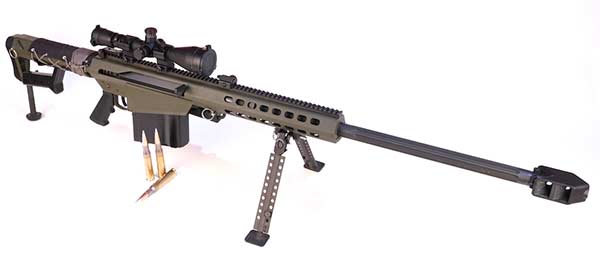 The Barrett M82A1 anti-materiel rifle will clear your sinuses
better than most medications. Standing next to this puppy
when it barks can be a life-changing experience.

Medical Manipulation
Many nasal decongestants don’t actually work. Steroids and Sudafed are fairly effective, but phenylephrine and menthol like Vicks Vapo-Rub … not so much. Menthol actually tricks your sinuses into believing the air they are passing is cold when it really isn’t. That lets you perceive that your stuffiness is better even though the bogginess of your sinus linings and the caliber of the air passages aren’t much different.
Afrin is topical epinephrine. That stuff works like a champ to decrease sinus engorgement and open stuffy sinus cavities. When I used to fly Chinook helicopters to the top of Mt. McKinley, Alaska, back when I was an Army pilot, we always flew with a bottle of Afrin in our helmet bags.
If you were coming down off the mountain at 20,000 feet and found that you couldn’t clear your ears and sinuses, Afrin would reliably do the trick. The same stuff works well if you have trouble with ear pain on commercial airplane flights as well. The problem always seems to be on descent, seldom while climbing.
However, Afrin is also profoundly addictive. It’s not heroin or fentanyl addictive. It is simply that after a couple of days of regular use you won’t be able to decongest without it. Another couple of days and you won’t be able to decongest with it.
The big harmonica muzzle brake on the Barrett M82A1 directs a great deal of the chaos out the sides to help counteract recoil.
Ruminations
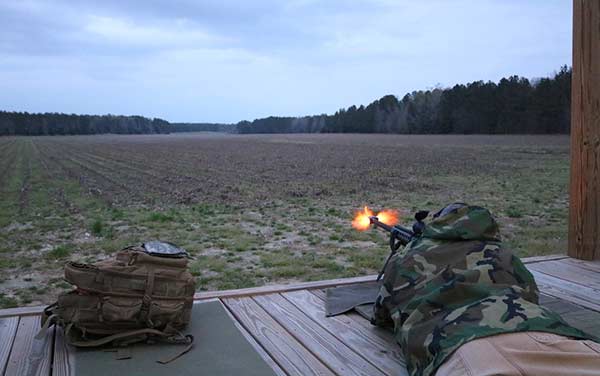
So, why all this jabber about sinus problems in my weekly GunCrank column? I have long asserted that the best way to clear your sinuses is to stand alongside someone firing a Russian AK-74 on full auto or, even better, a Barret M-82A1 .50-caliber rifle.
The blast from those superb muzzle brakes angling out the sides will indeed reliably clear your sinuses. However, if you don’t have one of those awesome rifles handy, you might want to try a little Sudafed. While you’re at it, just take a moment and appreciate the amazing functions of the humble sinuses. Despite being slick, slimy, warm and gross, they’re also actually pretty cool.
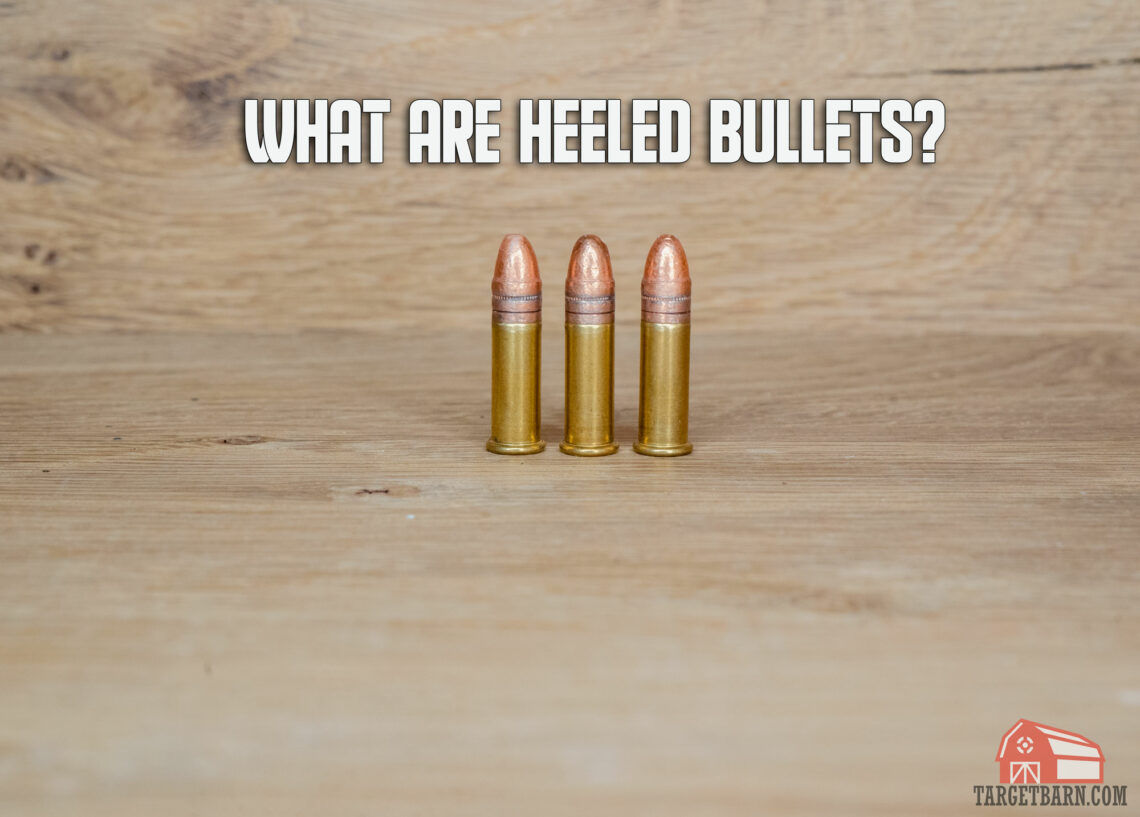
There are many bullet types, like the full metal jacket and jacketed hollow point, but a lesser known type is the heeled bullet. Because ammo terminology can be a little confusing, today we explain what a heeled bullet is and where it originated.
What are Heeled Bullets?
A heeled bullet, also called a heel-base bullet, is a type of bullet that’s body diameter is the same as the outside diameter of the case, while its base has a step, or “heel,” that allows it to sit in the casing. This is opposed to a conventional or non-heeled bullet design. With non-heeled bullets, the projectile sits entirely in the casing. Sometimes, the diameter of the bullet is also the same as the internal diameter of the barrel.
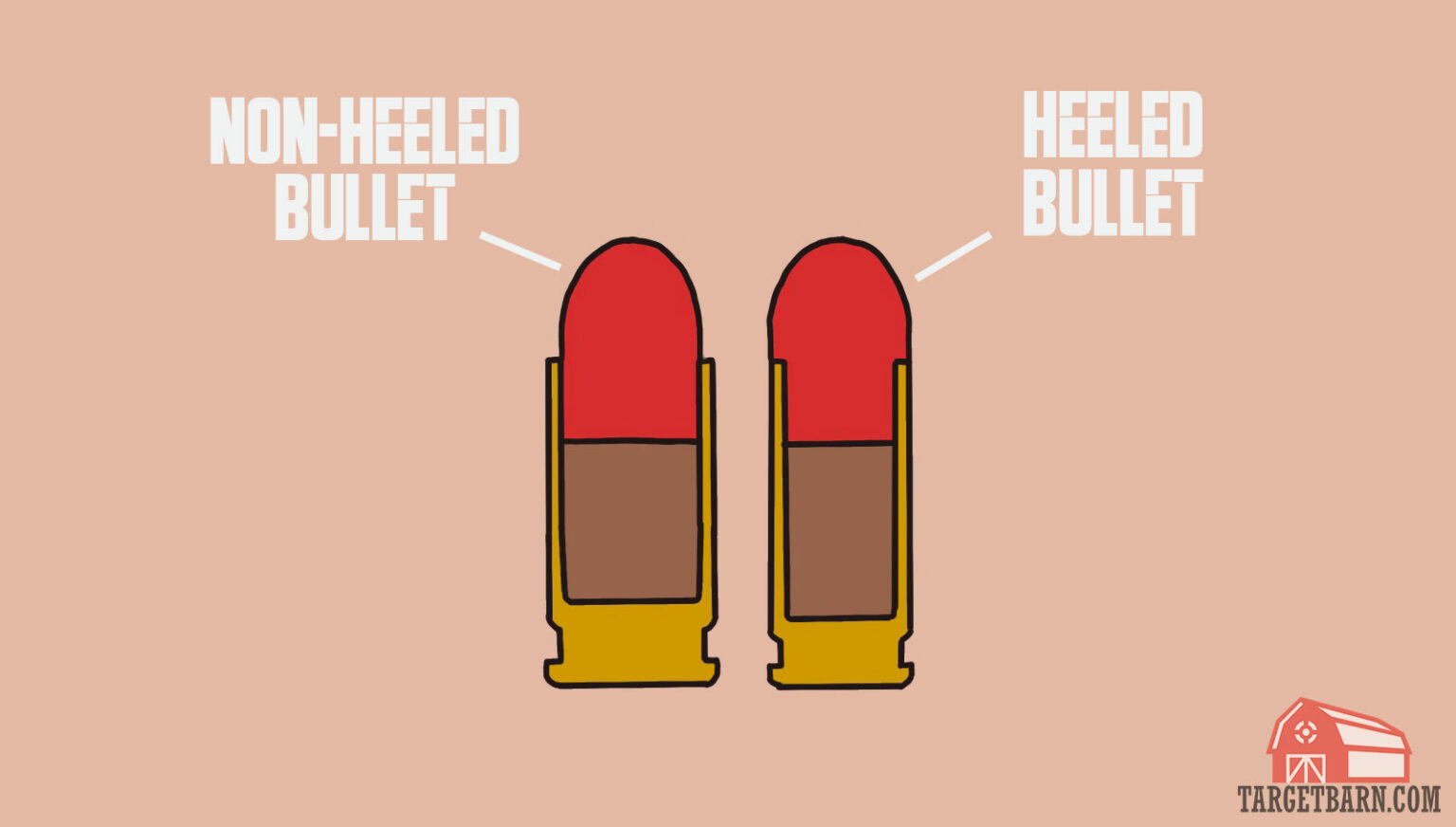 The .22LR is the most popular modern round that uses a heeled bullet.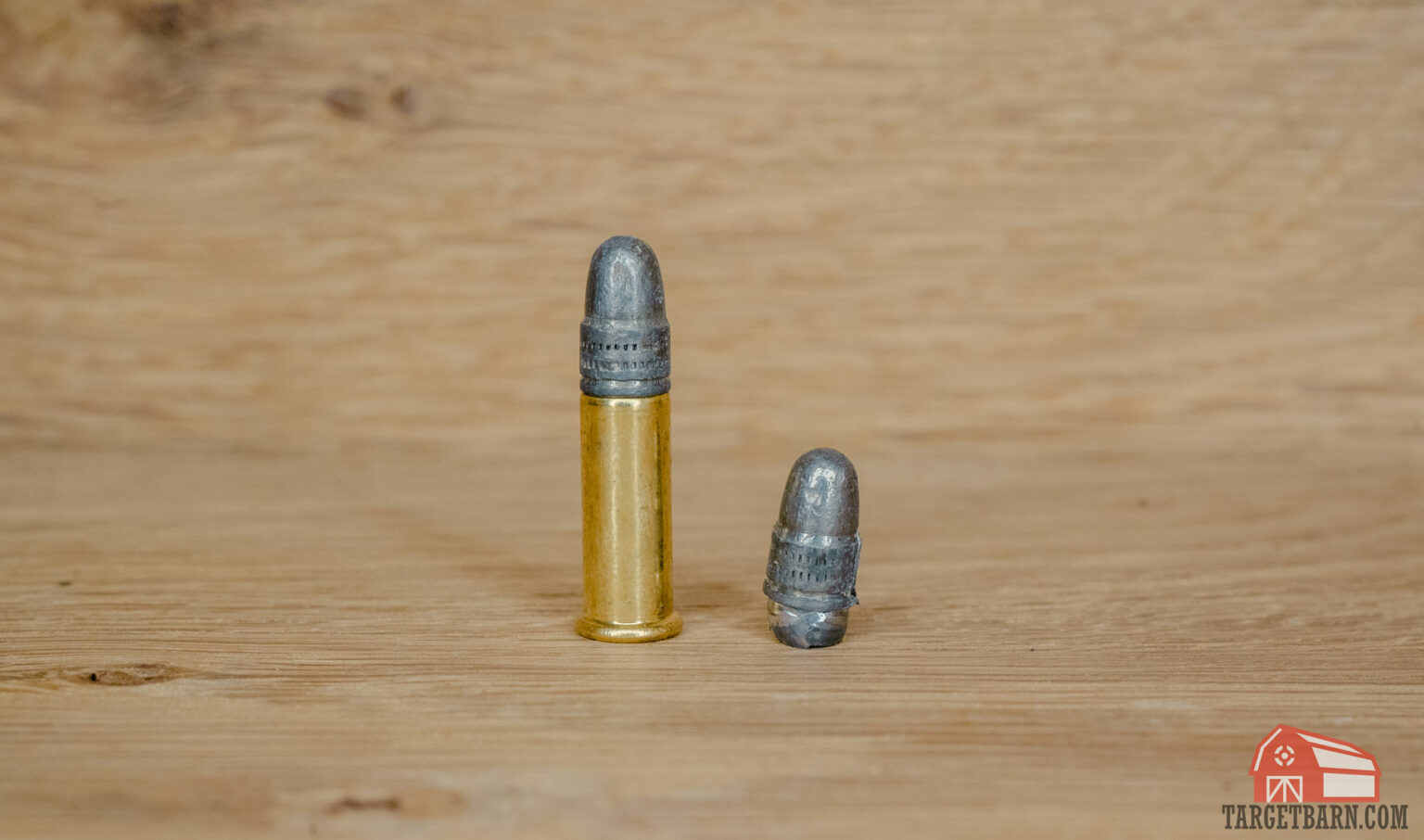
When it comes to the basic parts of ammunition, we know that the bullet is the projectile that sits in the case or casing. With most modern cartridges, the bullet diameter is slightly less than the diameter of the casing. This is so that the bullet sits in the casing. Because a heeled bullet has the same diameter as the casing, it would not fit inside it without the heel.
Cartridges like the .44S&W American and the original .38S&W used heeled bullets, though they’re rare to find today. The most popular cartridge that still uses heeled bullets is the .22LR.
Bullet Lubrication
A major difference between heeled bullets and non-heeled bullets is how they are lubricated. Lead bullets need lubrication to prevent buildup in the bore of the gun. The lubrication sits on the outside of heeled bullets. Outside lubricated bullets have exposed grease grooves and the lubricant is applied on the outside of the bullet. The lubricant sits inside non-heeled lead bullets. Inside-lubricated bullets have grease grooves that are located beneath the mouth of the casing.
If you’ve ever handled .22LR ammo and noticed that your hands were slightly greasy or waxy after, that’s because they are outside-lubricated. It’s one of the disadvantages of outside-lubricated bullets — they pick up dirt and grit much easier. This has the potential to damage the gun’s bore. That’s why why engineers make most modern cartridges inside-lubricated.
History of Heeled Bullets
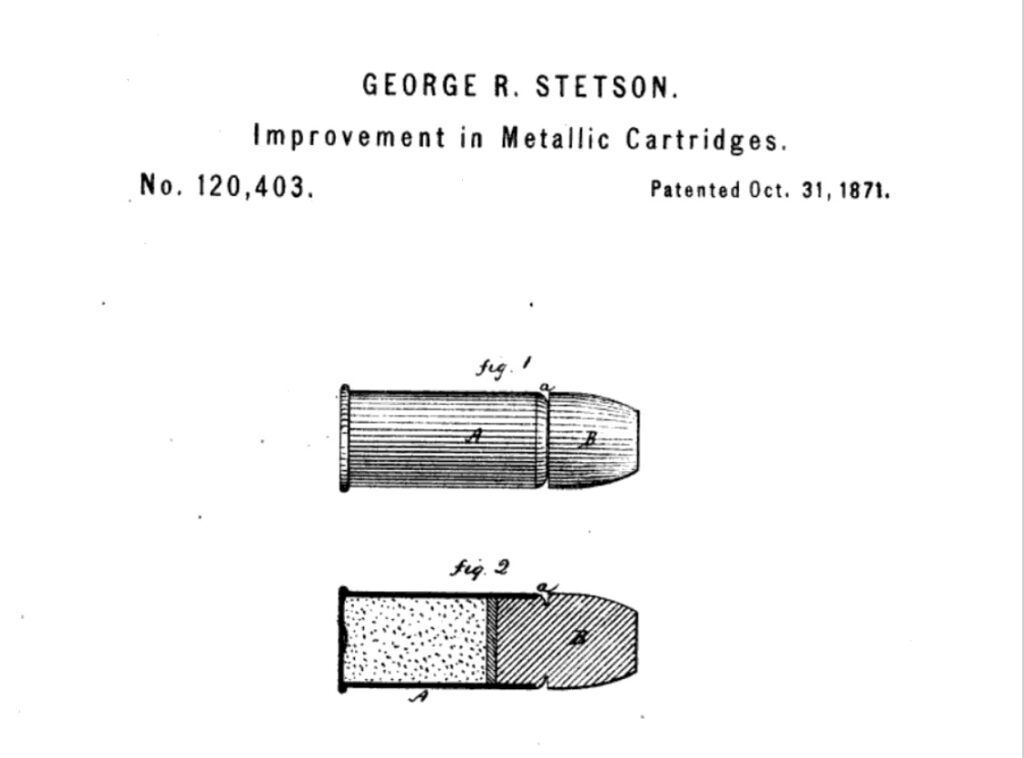 A design from George R. Stetson’s patent on heeled bullets.
Heeled bullets originated in the blackpowder days, with an early example being the .44 Rimfire. Gunsmith Benjamin Tyler Henry invented the cartridge for use in his lever-action Henry rifle. The .44 rimfire cartridge’s bullet has a diameter of 0.445” which is also the same diameter of the outside of the cartridge case. The bullet’s base has a smaller diameter that allows it to fit inside the case.
In 1871, Goerge R. Stetson with Winchester Repeating Arms Company was granted what is likely the first patent of a heeled bullet. His design improved upon the original .44 Rimfire cartridge, specifically in regards to the lubing and crimping of the bullet.
Caliber Confusion
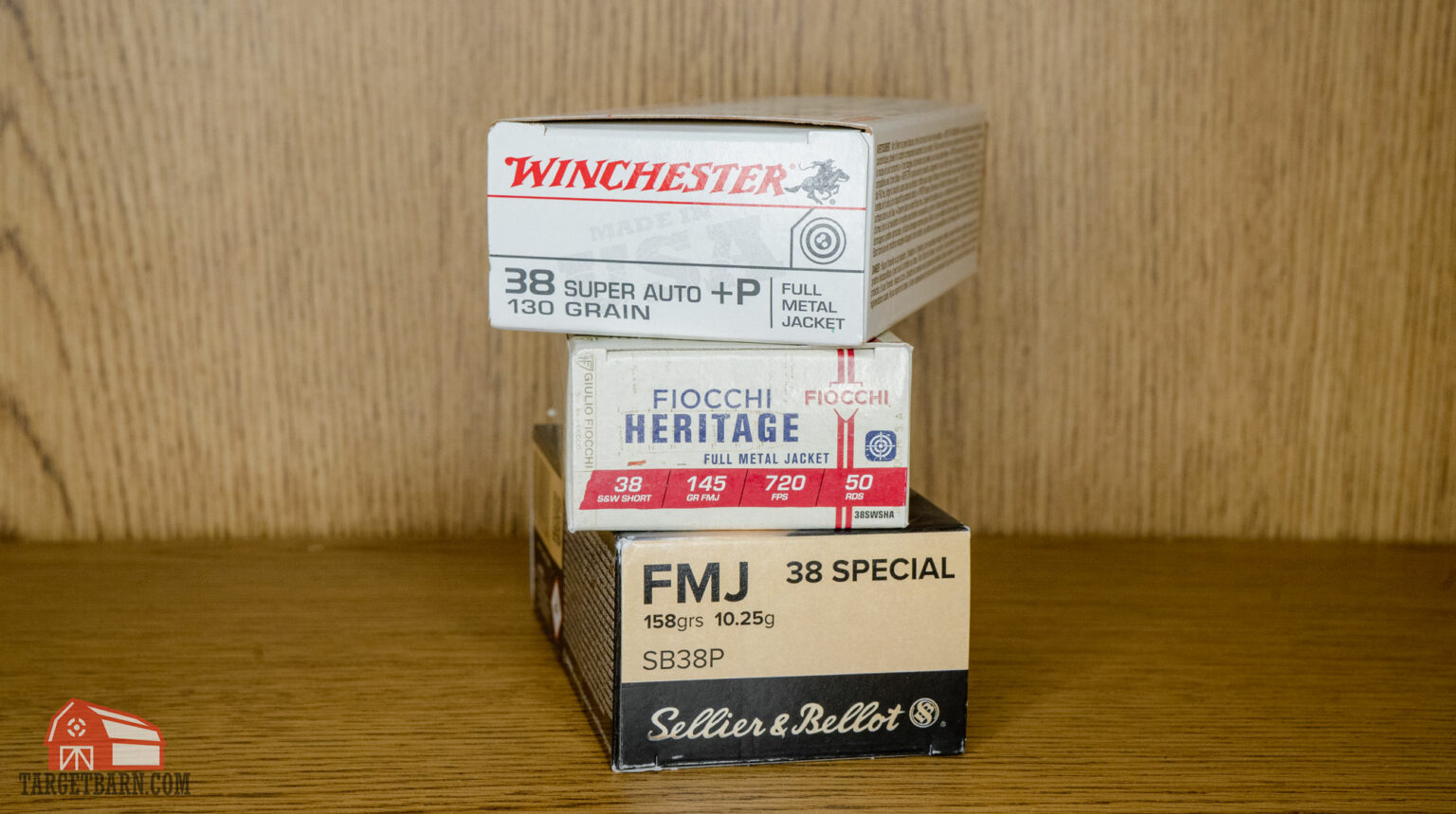
Over time, cartridge designers converted many bullets with heeled designs to non-heeled. In order to do this, they had to either increase the case diameter, or shrink the bullet and bore diameter. This conversion is the cause of much confusion among caliber designations.
For example, many .38 caliber firearms don’t shoot bullets that are .380 inches as their name would imply. This is because older .38 caliber cartridges used heeled bullets. When bullet designers shrunk the bullet diameter to create non-heeled bullets, they kept the .38 designation. That’s why the .38 Special has a bullet diameter of .357 inches and the .38 Super has a bullet diameter of .356 inches.
So, the next time you have to explain why the .38 Special and .357 Magnum have the same bullet diameter, you can thank heeled bullets for the confusion!