Categories
Month: December 2025

Typical GI Humor, Grumpy
Categories
How Dangerous Is This?

The Battle of Beecher Island
So let me start off with the great news! Seeing as that the overwhelming number of folks that love and use guns. Are some of the kindest, friendliest and helpful folks that I have ever had the privilege to know.
As they are almost always open to having helped and encourage this old fart to become a better man and shot. To them I want to say thank you and it has been an honor to have been around you. As to those other folks, well the least said the better I guess.So where to start?
I guess that I should mention my Father and my Mom’s Dad. As they were the ones to infect me with a long slow burning love of guns and shooting. Seeing that I really did not have any hobbies besides reading. Plus my Dad was afraid that I might get into drugs or some nonsense.So one day back in the mid 1960’s. As my folks were driving me home from school. And yes there were schools back then even in California! I noticed a long brown cardboard box in the back of our Volks Wagon Bug. With the large printed word of Ithaca on it.And so started my saga. Now I won’t lie about how I was able to hit the target at 300 yards with this single shot 22.Because frankly I was a really rotten shot to tell the truth. But like all things worthwhile in life with a lot of practice, some good coaching from Dad and my Grandfather. I very slowly started to get the hang of things. But it took a very long time to get my shit together,But let us leave that and move along smartly. My first experience with a pistol was with an Italian reproduction of a Colt Navy that fired a 36 caliber chunk of lead.With a lot of smoke, fire thrown on for good measure. Again I was not very good at first, Seeing that I could not have hit the broad side of the Pacific Ocean on a good day.But not let us belabor the fact. Anyways during this time was the tail end of the really Golden Age of Guns here in California. Seeing that there were a lot of gun shows and a LOT of well stocked Gun Shops. The only problem being that it seemed that I was always broke.But I was able to get some nice toys. One that stuck in my mind was a Winchester Model 94 that my dad & I “bought” together from now get this Sears! Yes back in the bad old days of Politically Incorrect. That Sears actually sold guns!And this is what happens when you do stupid stuff!
The thing about this rifle was for a 8 year old boy was the stout recoil. Which frankly was a huge surprise to me and my Grandfather.For him at least he was a shotgun and 22 rifle man. Which because he owned a nursery in Northern San Diego County came in mighty handy. As the place was just over running with Rabbits, hares and grey squirrels. That and it was a really rural area around the small town called Rainbow.Anyways I was dumped down there as I think my folks wanted some down time from me. So I was allowed to use Grandpa’s single shot 410 shotgun. If my mind is still working right now as I write this weird story. It had the words New England on it and the rest had worn off.


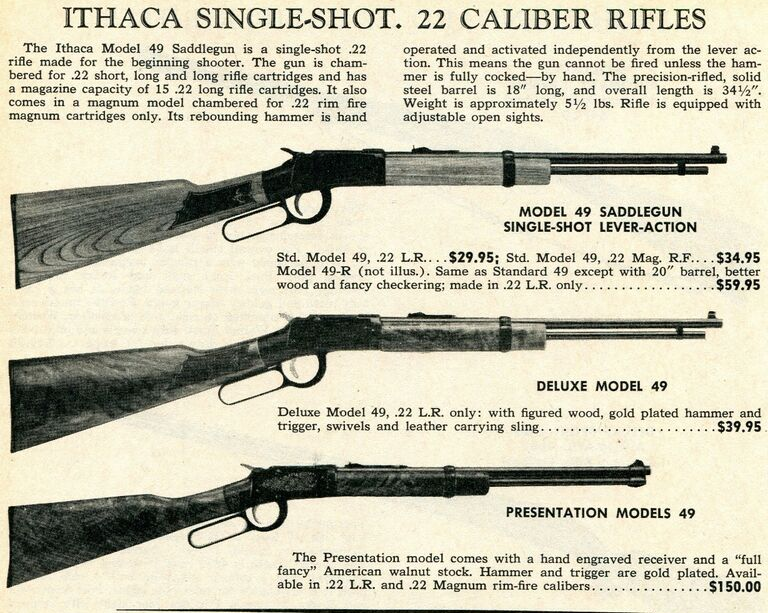

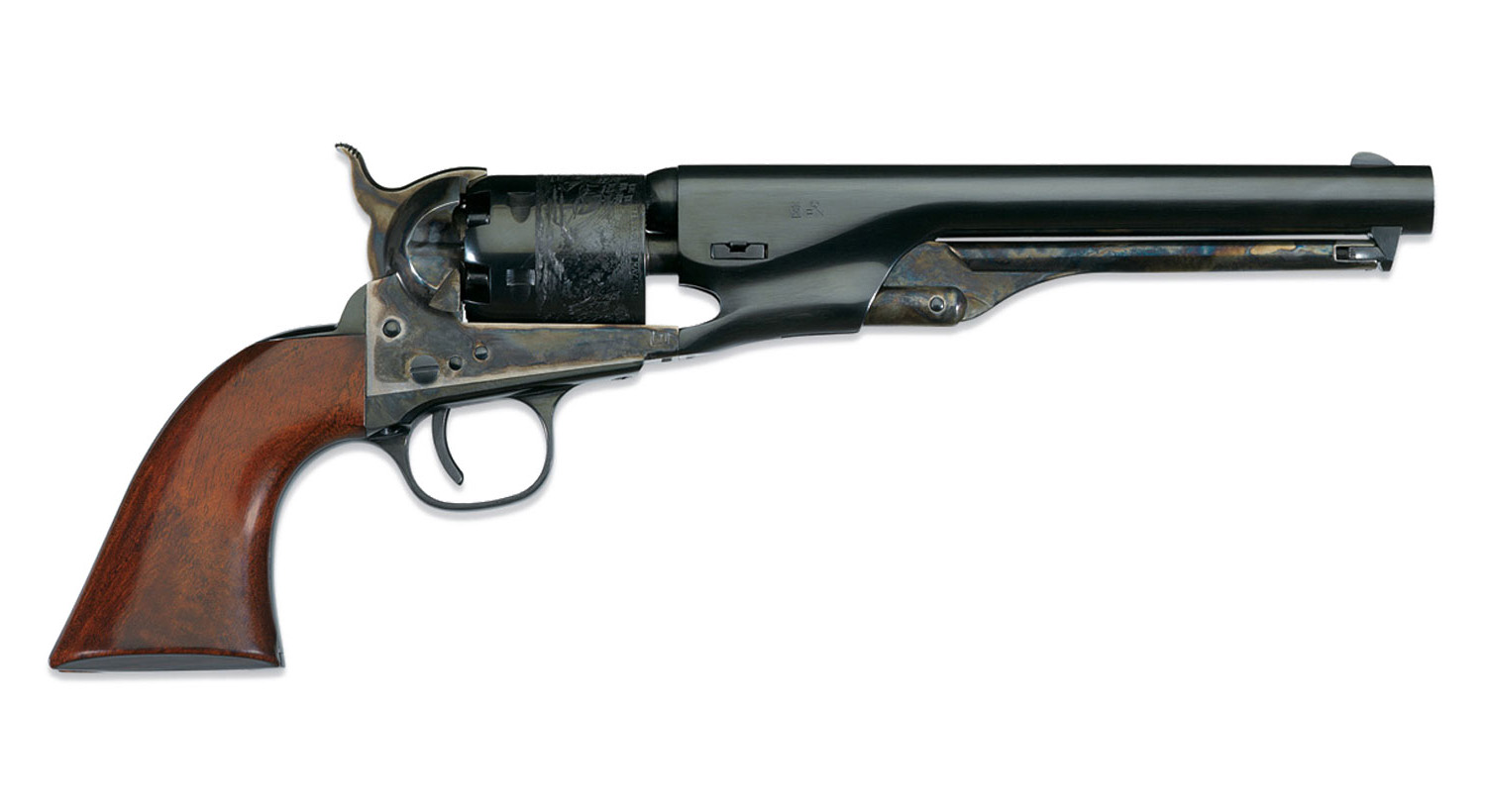

Anyways I am still amazed that they actually trusted me enough for a 14 year old boy to wander around the place after it closed at 5. The only rules being were to not shoot toward Highway 395 or waste ammo.
Otherwise it was a free fire zone for me and I like to think that I put a fair dent in the varmint population over the years down there. But Grandpa sadly died and then my so-called Uncle* ran the business into the ground and that closed that chapter of my life.
* I think he was dropped on his head when he was born. That or Grandpa had tied one on before he was conceived. That & I refuse to acknowledge him as my Uncle. Yes I hold some grudges.
BUT LET US MOVE ON!!!
It was also at the Nursery that I got two of the best presents that a boy like me would’ve gotten. One was a Copy of the book Mr. Rifleman by Colonel Townsend Whelen USA. From my favorite, Uncle Max and my lovely Aunt Doris during Christmas 1969. 
If you do get a chance to get a copy of this book. I most highly recommend getting it, As the Colonel is a master wordsmith.That and every time I reread it I learn something new. Which might tell you it’s either a great book or that I am still mighty slow in learning things.
The other gift was when my Dad and his father Morris bought me a Winchester Model 121 in 22 Long Rifle.
Because that rifle taught me more about getting a good sight pattern and how to squeeze the trigger than any other rifle has. If one has a chance to buy one. I can tell you it will be money well spent. But let us move on.
Now most of my life at the time was my struggle to get thru school and hopefully go to college. But my Dad did his best for me and would take me to the Pasadena Police range and crank off a few rounds.
It is a pity that the city closed it down in the late 70’s. As it was a well thought out and run range. Where I learned a lot about attention to detail and self discipline.Plus I got to spend some serious time with my Dad who was suffering thru a lot of health problems.
Now I am going to skip over College and the Army. Seeing that it was all a big blur to me. But do have to say this about the Green Machine.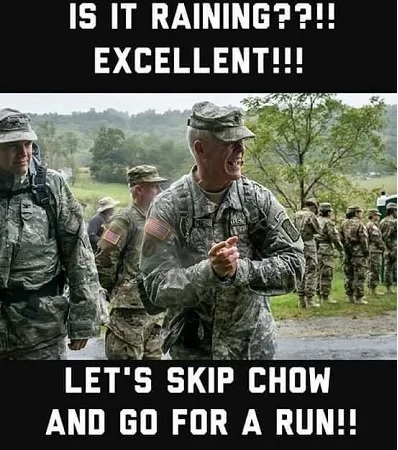
In that it knocked most of the shit out of my head. I also found that I had muscles that I didn’t even know existed. Also your hair can hurt if you are properly motivated. But I was never as good in shape as I was when I was in.
I also got to meet some great folks that I never would’ve met otherwise. I also got to see what real leadership looked like. That and I go to see how the real world works.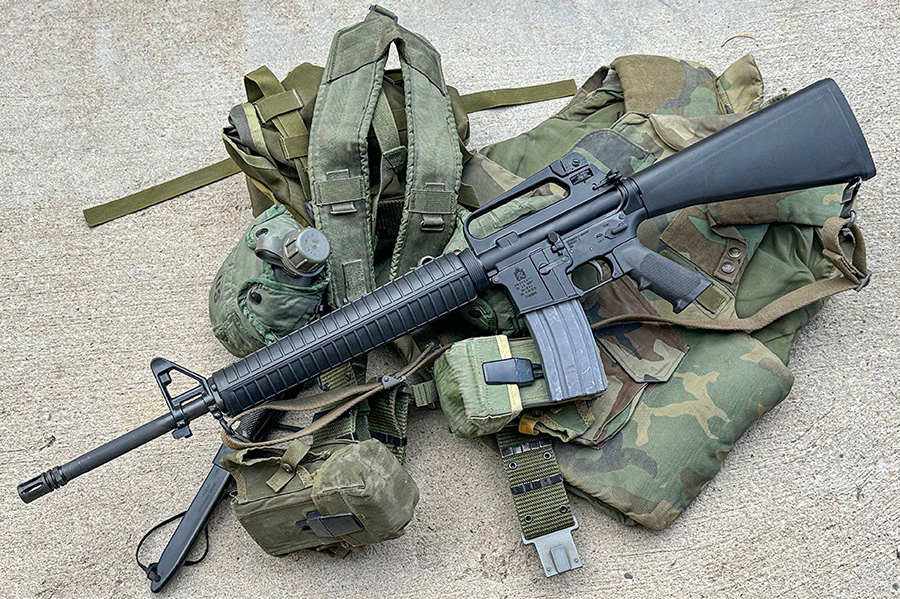
I also found that I really liked the M-16, The Pig (The M-60).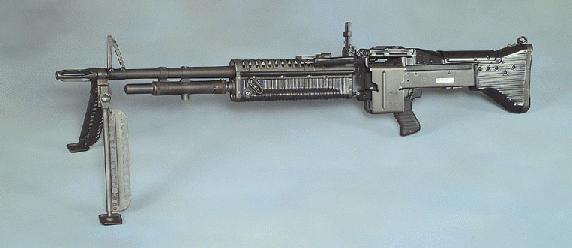 Ma Deuce (M2, HMG)
 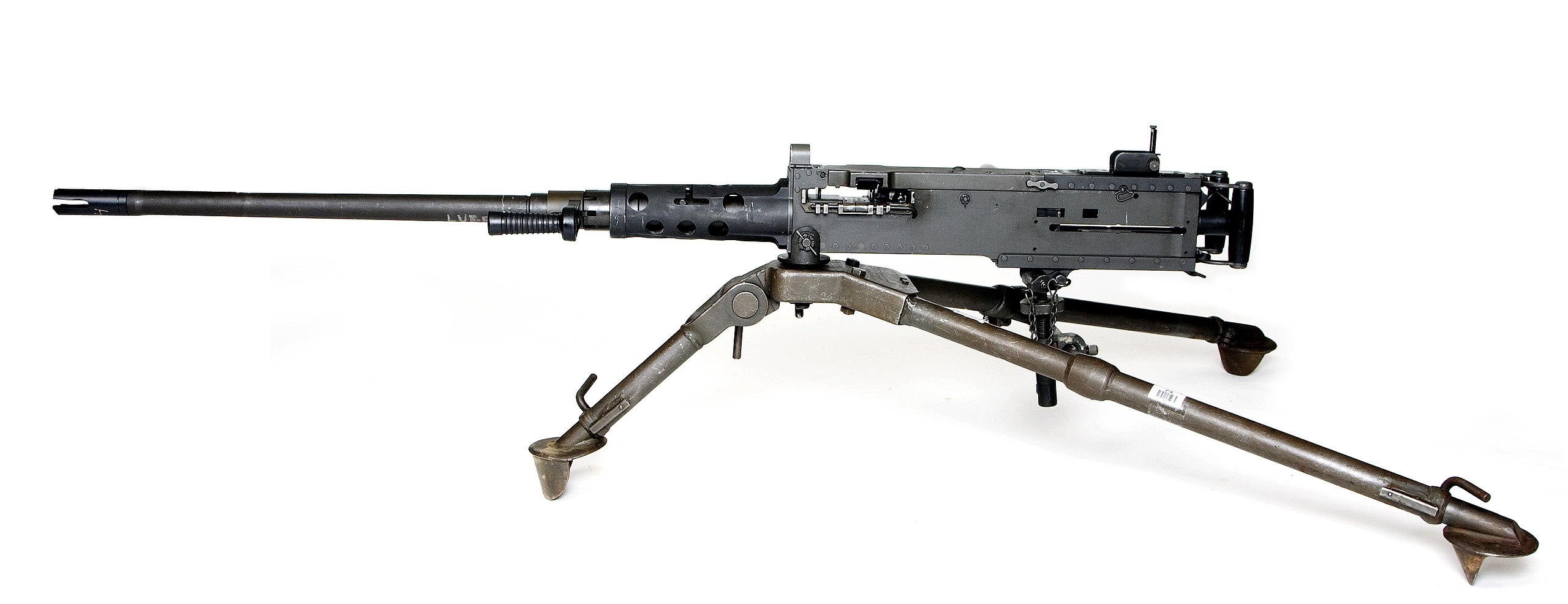 and the Grease gun.
  All in all, my Wise Dad was right about a few things about the service. In that the more you put into it the more you get out of it. Also the Army will make a good man better and a bad man worse.
Ma Deuce (M2, HMG) and the Grease gun. All in all, my Wise Dad was right about a few things about the service. In that the more you put into it the more you get out of it. Also the Army will make a good man better and a bad man worse.But then that man pissed out more brains than I ever will have!! So I could not have asked for a better man for the job of being my Father.
Then I had to get a job and somehow fell into Teaching in the Juvenile Hall Court Schools in Los Angeles. “Yes just because your in jail does not mean you get out of going to school”
Where frankly I had a ball there. Now I don’t know if I taught my thugs anything but I sure had fun! Strangely enough, I still miss my students. Seeing that I never had a bad class while serving there for some reason.
Now for the great news in that the pay was really good and I finally could go out and start building my Gun collection.
One of the first guns that I picked up was a S&W Model 29 with a 6 inch Barrel. 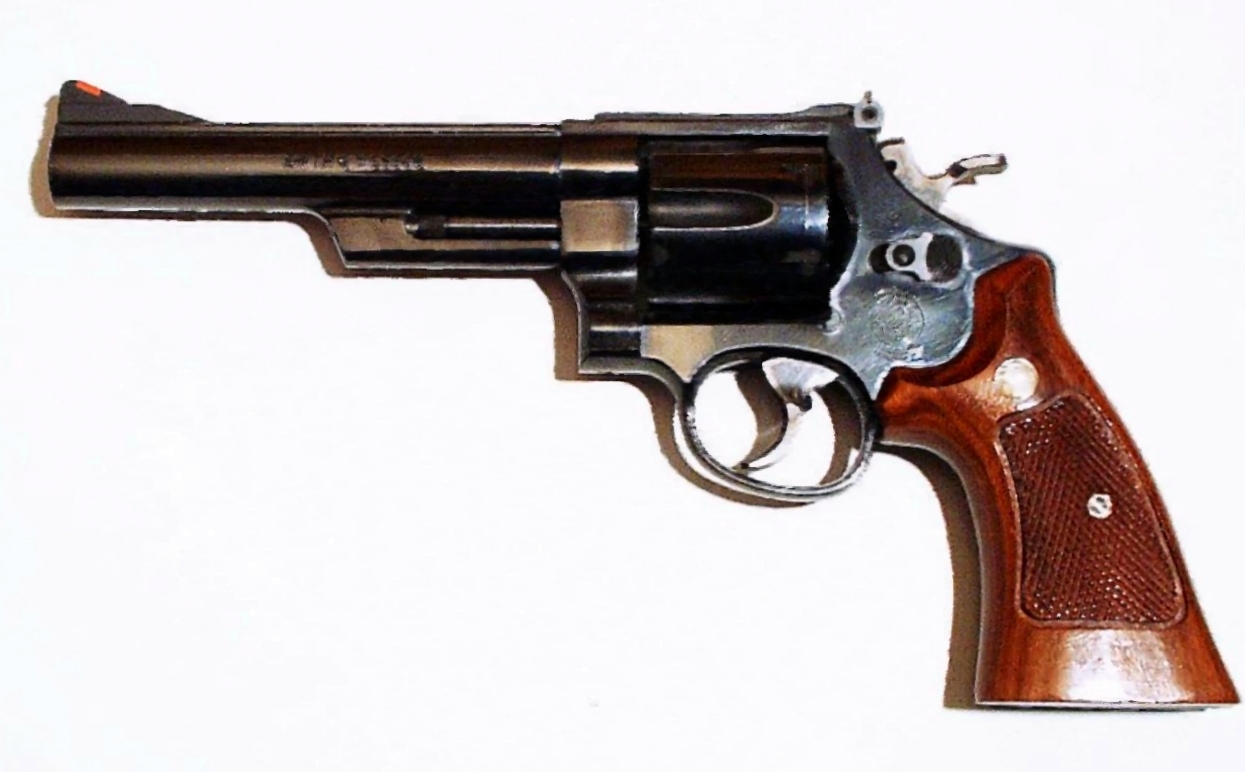 Now like most red blooded men of my generation. I had seen all of the Dirty Harry films and was convinced that it would kick like a mule.
Now like most red blooded men of my generation. I had seen all of the Dirty Harry films and was convinced that it would kick like a mule.Now for me at least that turned out to be a pile of whale manure. Seeing that if one had a good solid grip with it. I would have no real problem cranking off a couple of rounds and have a decent pattern too. I am just really sorry that I had to sell it because of a marital problem.
Which I won’t bore you with. (As I now have the World’s Greatest Wife and I am amazed that we have been married now for over 16 years. God REALLY does move in strange and mysterious ways!!) But let us move on and talk about guns!
But let us move on and talk about guns!I also discovered that I must be cursed or something. As I began to buy quite a few Colt 1911’s and found that they were nothing but trouble for me. And I mean every one of them were a pain in the ass for me. Starting from WWII Surplus 1911’s , a Colt Combat Commander then a mid 1960’s 1911 and even a Colt Gold Cup. Every one of them gave me nothing but trouble.
Even when folks let me try their 1911’s that worked great from them but the curse would follow me.
What with stove piping, failure to cycle, new barrels quickly becoming s smooth bore etc etc. Yeah I know !! But I generally used some better ammo like the Sellier & Bellot , Federal and even CCI with these clunkers.
That and I am convinced that I sent my Gunsmiths kid thru college. What with all the times that I came to see if a miracle could be produced with all the 1911’s that I turned in to be fixed.
(Also I should mention that I earned my Expert Pistol Badge with the Army too. But it took 3 different pistols to earn it at Camp Roberts during one very long hot day.)
So I was on the verge of giving up on the 45 ACP. But the Big Guy upstairs decided to cut me some slack. For some reason a brand new Sig Sauer P220 was up for sale at Lock Stock & Barrel over on Rosemead Blvd in Pasadena. Somehow & I don’t remember how but the really nasty owner was willing to do a lay a way with me.
After 2 months and having gone through the purgatory of California gun requirements / rigmarole. I was the proud owner of a P220. Where upon it & I promptly after school ended that we roared over to the local indoor pistol range in Monrovia.
Now I would not blame you if you cast doubt on what I am going to say. But here goes! After setting things up. I sent the target out about 25 feet away. Pulled the slide back and released it. Then I let fly a round at it.
Frankly, I could not believe what I saw. As I had hit the x in the x ring squarely which I had almost never had before for me. Okay I thought it was a lucky shot right? Nope. As I then proceeded to literally put the entire magazine inside the 10 ring.
As you can guess by now. I REALLY fell in love with this Swiss/German bullet projector!! Then things got better as I took it home and began to field strip it and give it a well earned cleaning.
Now if you have had the misfortune of never dealing with a P220. Let me tell you compared to, oh say, the 1911. It is just a wonderful pistol to clean. None of this messing with the barrel bushing, watching the recoil spring disappear into the twilight zone or pulling the slide release out.
There is none of this my friends. All one has to do is clear the action, pull the slide back in the locked position, take out the magazine. Then you just have to move the switch on the side of the lower receiver. Then just pull the slide off.
Then just tap the barrel and out it comes. Carefully compress the spring and out come with the barrel guide. Then wipe everything down with break free cleaning fluid and then just do everything I just told you in reverse.
Bottom line – I can get the whole pistol done with no rush in about say 10 minutes?
My Son Willie b.t.w. can do it even faster but he is such a show off. But what can one expect with a kid that’s a Lawyer with an MBA & who has only 3 jobs. He is such a lazy kid!
But let us move on!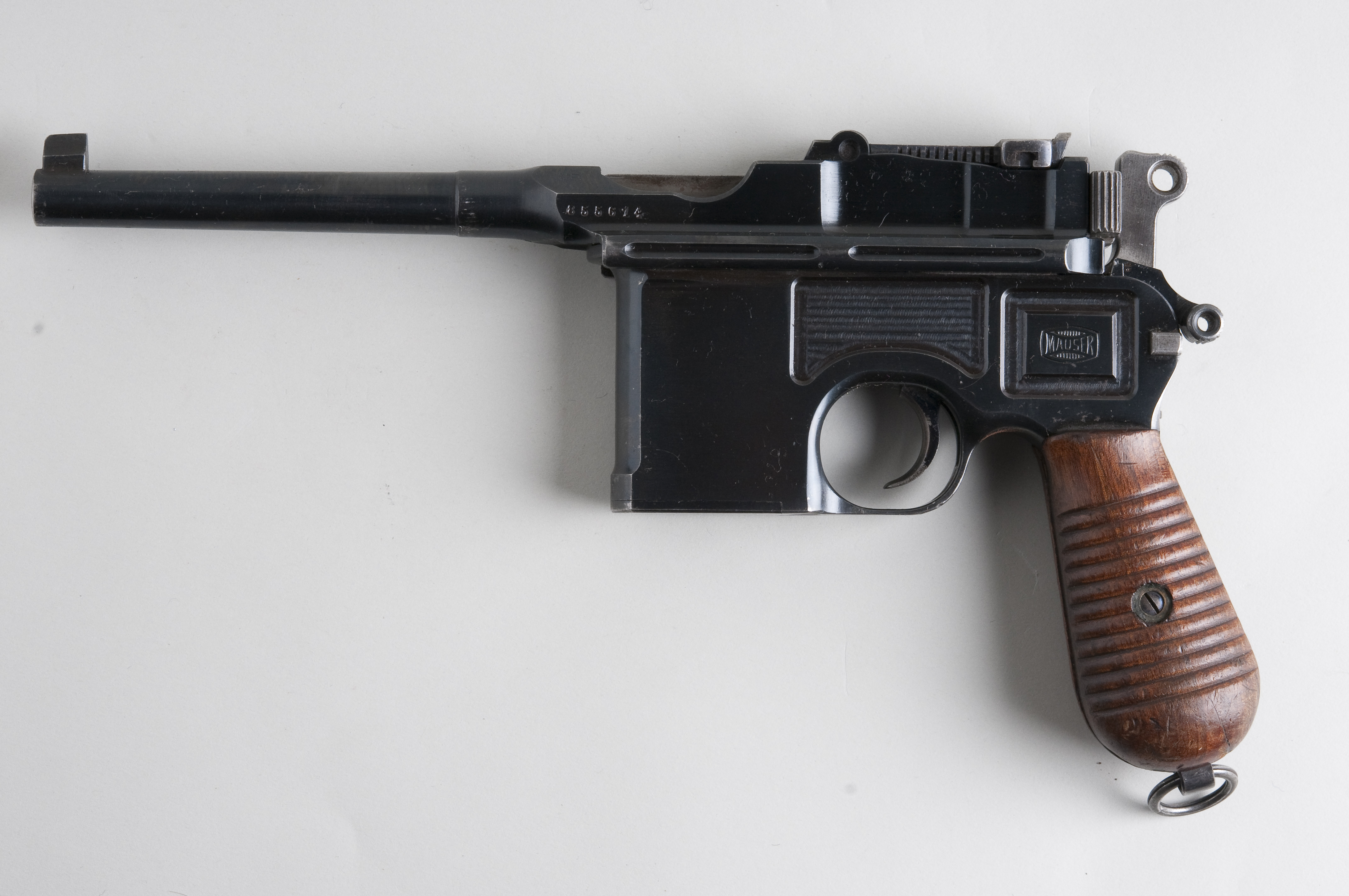
Now try cleaning in that amount of time with say, a Broomhandle Mauser or a P08 Luger. Which can be a real nightmare if the gun does not like you! 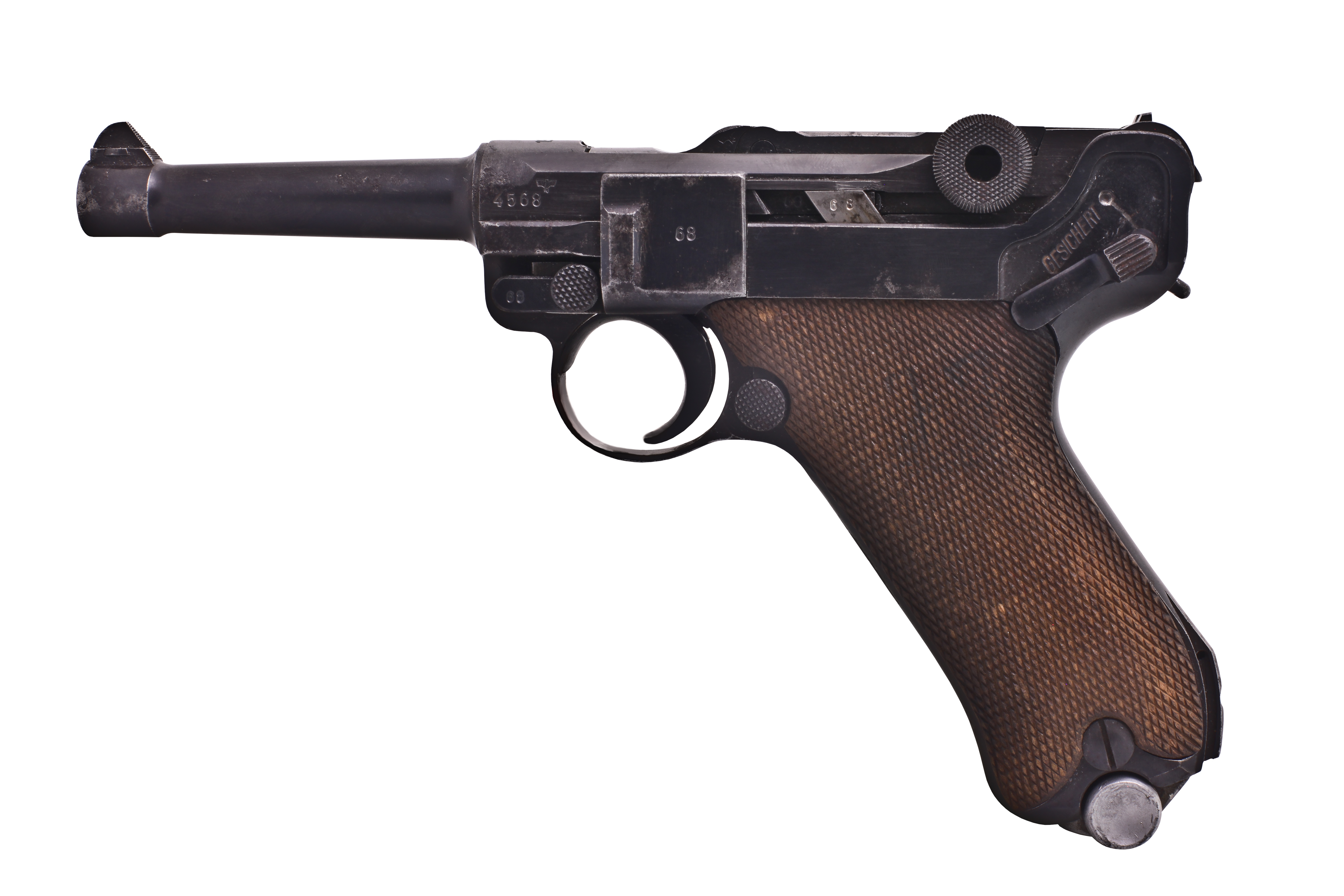 Yes guns have feelings and God help you if your firearm decides that it does not like you in a firefight.
Yes guns have feelings and God help you if your firearm decides that it does not like you in a firefight.But I still think that both of these pistols are REALLY neat and very evil looking.  But I also found that they are also very temperamental and not very accurate. However both are great safe queens and investments.
But I also found that they are also very temperamental and not very accurate. However both are great safe queens and investments.Think I am kidding? Just go look thru oh say Guns America and check out the prices. As you will be looking at a price tag of thousands of dollars just for a beat up shooter.
Machine Guns
Thanks to the Green Machine / 1/18th US Cavalry.
I was able to fire a M-16 several times on full auto and was able to hit almost nothing with it. Big surprise huh? Since the gun was not really designed by Mr Stoner to do that.
Unless of course a horde of barbarians are rushing your position and your claymore mines did not go off in time. Then switching your M 16 to fun mode i.e. full auto / Rock & Roll will come in mighty handy.
I was also able to fire St John of Browning’s masterpiece. The Ma Deuce, which is an awesome weapon IF you have it properly mounted on a tripod. As it is extremely heavy and if you try and do a Rambo with it.
Since in my experience you are not going to hit squat from what I learned about it at Camp Ripley. (Where the Army failed in trying to teach me on how to ski.) I give it an A++ Grade
The M-60 MG – Now this weapon also is really heavy & I still don’t know how those guys in Vietnam were able to hump this beast in that heat and humidity. BUT if you keep it and your ammo belts clean. You are really going to clean somebody’s clock!!! I give it a B++ grade!
The only problem is the barrel as one can really heat it up when you fire long bursts. So you have to swap barrels fairly often. But if you don’t have that Asbestos Glove on your person. Then get ready for some serious burns.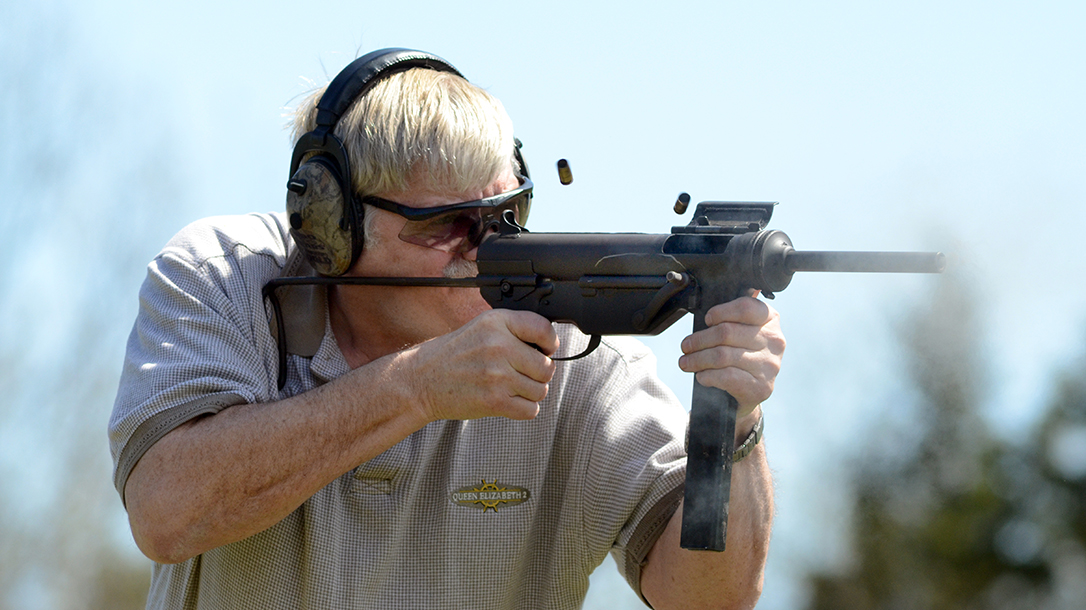
The M-3 “Grease Gun” Now I was really lucky as our Squadron was going to turn in theirs. So of course we took them up to the National Training Center and shot off all the 45 A.C.P. ammo that we had squirreled away over the years.
Granted it is not a very impressive weapon to gaze upon. BUT do not be fooled!! As I found this WWII Veteran to be a gun of beauty. As it was light, simple, rugged, accurate and VERY reliable!!
In other words if God forbid I had to go into a gunfight tomorrow. I would be just delighted to be issued one of these great weapons. I would give it a grade of A++ The Thompson Sub Machine Gun If one is ever in Las Vegas and have some spare time. There are several indoor ranges that rents Machine Guns to shoot. So care to guess who went to one? Yep, Where I was allowed for about $100 to fire off a full magazine of 45 A.C.P.
The Thompson Sub Machine Gun If one is ever in Las Vegas and have some spare time. There are several indoor ranges that rents Machine Guns to shoot. So care to guess who went to one? Yep, Where I was allowed for about $100 to fire off a full magazine of 45 A.C.P.Now the first thing I noticed is how HEAVY this S.M.G. was. Seeing as that almost everything about it was made out of machined steel. Which frankly this makes for one mighty tough gun. As you could probably drove a tank over it and it would still function.
Also when you fire it off, I was really surprised by how much fire came out of the barrel. The other thing that was at least for me was that it shot up and to the right.
So I did the trick that my Dad the former Army Drill Sgt / Survivor of the Korean War told me. I.E. One tickles the trigger so that one will have short bursts. If you do that then you can get some fairly impressive patterns for a machine gun.
So I would have to give this weapon a B- due to its weight. Seeing that I would hate to have to carry one on a route march. But I would be very happy with it if somebody is trying to harm me or my loved ones!
Move later Grumpy

If you’ve been to a natural-history museum (or watched anything from the “Jurassic Park” franchise on the big screen), you know that the period from the time dinosaurs became the dominant life form on the planet until a cosmic fender bender somewhere off the Yucatán Peninsula killed all of them except chickens, cockroaches, parrots and whatever those little brown birds are that sit in the tree over your car and poop on it was called The Age of the Dinosaurs.
Few stretches of dominance have run longer; not the Roman Empire nor even the Brady/Belichick-era New England Patriots.
One stretch of dominance that was nearly as total, if somewhere in between New England’s in the AFC East and Rome’s in Europe and the Mediterranean littoral, was that of the medium-frame, double-action revolver, which reigned supreme in the United States for something like a century.
If we define the Age of the Medium-Frame Revolver as running from the first adoption of Colt’s Model 1889 by the U.S. Military to the abandonment of the Smith & Wesson Model 65 and Ruger Service-Six by the NYPD in favor of semi-automatic pistols, that’s a solid 105 years of duty.
During that era, medium-frame revolvers, usually in some variety of .38 caliber, could be found everywhere in our glorious United States.
The aforementioned Colt M1889 was followed by several other models from Colt and Smith & Wesson as the standard sidearms of the U.S. Military. Even after the military adopted a semi-automatic pistol in the shape of the Browning-designed M1911 in the early years of the 20th century, the medium-frame double-action (DA) .38-caliber revolver remained either the substitute standard or the standard issue for specific services and branches.
The Smith & Wesson .38 Military & Police and the .38 Combat Masterpiece saw service as issue sidearms well into the Atomic Age and, in various logistical backwaters, outlasted the Cold War.
It wasn’t just with the United States military, either. Smith & Wesson alone produced mil- lions of M&P revolvers in the 20th century, and nearly countless numbers went to the armies of the United Kingdom and its empire (some as part of a business deal to salvage the Springfield, MA, arms maker that had originally contracted to develop a compact submachine gun for the Brits).
Many militaries embraced this classic design. From Spain to Brazil to the Philippines and beyond, clones of the Smith & Wesson medium-frame .38-caliber revolver became one of the most common handguns on the planet, in the millions.
On the domestic side of things, the medium-frame revolver was so common that its appearance on the screen, big or small, practically became shorthand for “the good guys.”
Whoever was running around with that swing-out cylinder, double action in their hand, whether they were Barney Fife or the guys from “Adam-12,” was simply and obviously the Good Guy. The characters they were opposing had Lugers or M1908s or whatever and therefore were obviously the bad guys.
On the private-citizen side of things, the medium-frame revolver stood sentry every bit as diligently. In our grandparent’s era and back to our great-great-grandparent’s, the handgun on the top shelf in the closet or in the nightstand drawer (it was a more innocent time; we’ve learned more about good storage procedures and have access to better ready-storage fixtures since those days) kept American private citizens safe from burglars and home-invading bandits.
If I’ve got someone busting into my home downstairs, I’d certainly prefer to have a swing-out cylinder double-action revolver in a medium caliber with a handy reload if stuff goes pear-shaped, as opposed to a single-action .45 Long Colt thumb-buster with only five beans in the wheel in case I dropped it.
On top of that, it didn’t take long before these medium-frame revolvers began to be offered in barrel lengths other than the typical 3 to 6 inches.
Once 2- and 3-inch-barrel, medium-frame revolvers became popular among detectives and other plainclothes police officers, they saw a surge of popularity among private citizens who lived in states where there was a minimum of restrictions on concealed carry by private citizens.
In the earliest days of the Shall-Issue concealed-carry movement (propelled by the NRA) the once-considerable popularity of the medium-frame revolver began to falter. The reasons for this are manifold.
Probably the least serious one is the “outgunned” one. On the one hand, nobody wants to be on the side of a gunfight where you have fewer BBs in your blaster than the other guy, but at the same time, it’s not deniable that the victory tends to go to the participant who can keep their gun in the fight longer.
During the 1980s and ’90s, though, pop culture had everyone convinced that law-enforcement officers were outgunned. A more pertinent and applicable worry was the difficulty of training rank-and-file officers to fire medium-frame, double-action revolvers decisively and accurately.
One problem was that mastering the long and heavy double-action revolver trigger pull was difficult. The temptation was always there to cock the revolver to the shorter, lighter single-action pull, but high-profile court cases caused that option to be eliminated.
By the late 1980s, many large departments had gone over to double-action-only (DAO) triggers on their revolvers. Once this trigger-pull barrier was eliminated, it freed up the possibility of DA semi-automatics with similarly heavy triggers.
The other ding against the classic medium-frame revolver was the size of the handgun itself. Using the Smith & Wesson K-frame (Model 10 and its offshoots) as the test case, this is a frame size that is hard to get a proper trigger reach on unless you wear a men’s size “M” glove. If your hand is smaller than that, well …
An illustration of this is that back in the Age of Disco, when the NYPD authorized the Colt Official Police .38 and Smith & Wesson Model 10 as its official handguns, female officers whose small hands couldn’t handle the reach to the double-action trigger on the medium-frame guns could use a 3-inch, heavy-barrel version of the J-frame Model 36, a smaller five-shot revolver, as a substitute standard-issue duty gun.
Medium-frame revolvers still exist to this day, largely as rimfire, small-game-hunting wheelguns or niche gamer pieces, but it’s kinda sad to see that their frontline service in defense of our nation and cities has largely passed. The passing of the dinosaurs is lamented, too, but I doubt “Wheelgun Park” becomes a franchise.












Townsend Whelen loved the outdoors and lived guns.
An avid outdoorsman, marksman, hunter, soldier, and author, Whelen wrote for numerous sporting magazines and penned several books on topics ranging from gunsmithing to rifle scopes to big game hunting, shooting, and weapon cleaning. A career U.S. Army officer, he served as the commander of the Frankford Arsenal in Philadelphia before retiring as a full colonel after 34 years of active duty. He was 84 when he died in 1961.
 Townsend Whelen in his element.
These are Townsend Whelen’s thoughts on whether or not to hire an outfitter for a hunting expedition that would provide cooks, guides, necessary equipment, and sleeping accommodations:
“The western dude, or the eastern sport, who starts under these present comparatively luxurious conditions does not long remain a tenderfoot,” Townsend Whelen wrote in `On Your Own in the Wilderness,’ published in 1958. “Either he quits the game when he has a few heads to hang on his wall, or he becomes a real hunter, fisherman, and woodsman in his own right.
“If you have red blood in your veins, a love for the beautiful, and a deep-down yearning for freedom and peace, you soon learn to do things for yourself,” Whelen wrote. “You take a more and more justifiable pride in your increasing competence. Perhaps you start out hardly able to step over a picket rope and end by hurdling the mountains.”
An Experimental Springfield 1901 Carbine
An experimental U.S. Springfield Model 1901 bolt action carbine inscribed to Townsend Whelen when he was a lieutenant in the Army will be on auction at Rock Island Auction Company’s Feb. 16-18 Sporting and Collector Firearms Auction. It’s serial number 11. The rifle gauge is .30-03, not the .30-06 he recommended in `On Your Own in the Wilderness’ and throughout his life.
 A view of an experimental Springfield Model 1901 bolt action carbine in Rock Island Auction Company’s Sporting and Collector Auction, Feb. 16-18.
The experimental 1901 wasn’t adopted by the U.S. Army but served as a precursor to the M1903 that proved to be a mainstay for doughboys and GIs through two world wars. In limited production, more tests were done to the 1901, leading to several changes. The rear gunsight was moved back and the barrel was shortened from 30 to 24 inches as it evolved toward the M1903.
The .25 Whelen, .35 Whelen, .375 Whelen, and .400 Whelen cartridges bear his name from when he commanded the Frankford Arsenal.
Townsend Whelen: Tentmaker
He designed a lean-to tent he called, appropriately, the `hunter’s lean-to tent’ in 1925 and David Abercrombie, of Abercrombie & Fitch, manufactured and marketed it as a `Whelen lean-to.” Various versions can still be found for order on the Internet.
 Townsend Whelen’s lean-to tent.
Born of blue blood in Philadelphia in 1877, as a child, Townsend Whelen was gawky and withdrawn, seemingly not cut out for the life of the military nor outdoor adventure. The gift of a Remington rolling block .22 at age 13 changed that. He taught himself to shoot and by 15 he was winning rifle matches.
At 18, Whelen began exercising seriously and gained 30 lbs. of muscle, and joined the Pennsylvania National Guard as a private. Three years later, his unit was called up for the Spanish-American War but didn’t see action. He quickly rose to sergeant, then to lieutenant. As he was promoted, he saw his future as a career military officer and applied for a commission.
Townsend Whelen in British Columbia and Panama
Officer testing wouldn’t be for a year, so Townsend Whelen resigned from his reserve unit, quit his job, and headed for the wilderness of British Columbia, taking little more than the essentials with him. Among the items was a tarp to create his lean-to tent. He spent several months roaming the wilds and hunting game before returning to Philadelphia and the officer exam.
Among Whelen’s assignments as a regular Army officer was the garrison force to protect the Panama Canal as it neared completion. The area his unit was assigned was thick jungle that Whelen traipsed into on weekends. He explored carrying little more than his rifle and what could fit in a rucksack. With his experiences, he trained his men on jungle survival and set the standard for the U.S. Army.
 Townsend Whelen
Townsend Whelen: Top Marksman
Whelen, known as Mister Rifleman, was a superior marksman and served on several Army teams competing against the other branches. He wrote `Suggestions to Military Riflemen” in 1909 and is listed as the winner of the Army Competitions in 1903, Coach of the U.S. Army Infantry Team in 1905, and as a member of the U.S. Infantry National Team in 1903, 1906, and 1907.
 U.S. Springfield Armory 1903 Mark I rifle rig with an original Mark I Pedersen Device.
As the United States entered World War I, Townsend Whelen found himself assigned to the Army General Staff, inspecting camps and creating training regimens.
Whelen found an interest in ordnance after the war, commanding the Frankford Arsenal and serving as director of research and development at the Springfield Armory, working with highly-trained gunsmiths and learning from them.
 Townsend Whelen later in life holds a rifle with a scope.
In his books, Townsend Whelen writes about the proper ammunition and rifle for hunting, to achieve humane kills and preserve pelts. He long promoted the Springfield .30-06 and the .22 long rifle. In the `American Rifleman,’ he wrote: “The .30-06 is never a mistake.”
Whelen explored Canada, the Rocky Mountains, and the Adirondacks, and bagged 110 head of big game during his career. He was a regular contributor for Field & Stream, Sports Afield, Outdoor Life, The American Rifleman, and Guns & Ammo, according to an article about him in Field & Stream.
 Book covers to three of Townsend Whelen’s books. He penned dozens of books and thousands of articles.
Townsend Whelen: Advice for Riflemen
In his voluminous writing, Townsend Whelen offered mountains of advice. Here are just a few nuggets:
First and foremost, clean your firearm. “A firearm is a piece of fine machinery. Like any other machine, if it be treated with the proper care at the proper time it will last a lifetime and always give satisfaction. Fail to give it this care, and it will soon deteriorate.
“In some respects, the care of a firearm is more complicated and difficult than the care of other machinery. It is often exposed outdoors to very severe weather. The firing of the cartridge introduces into the bore a fouling which will most certainly cause rust and deterioration unless it is quickly and completely removed.”
Use the sling. “The advantages of using the gun-sling are: absolute steadiness in the prone position; distribution of the recoil to the entire body; quickening return of the rifle to the target in magazine fire; preventing the rifle recoiling off the target; and minimizing the effect of the wind, fatigue, and breathlessness on holding.”
 The experimental Springfield M1901 bolt action carbine has a leather sling.
Fitness is important in shooting. “A strong, muscular man will always have an advantage over a weak man in military shooting. The weak man may be able to shoot a score or two as well as his stronger brother, but the latter can hold so hard that the recoil is scarcely felt, while the former will be so kicked around that as the shooting progresses his work will fall off. In competitions like those in the regular Army, where the competitor has to compete at his post for top score and then go through two severe competitions of six days’ duration each, strength becomes an enormous factor. So, too, in a strong wind the powerful man can hold his rifle more firmly against the wind than the weaker one.”
Keep a record. “The score-book is not, as its name implies, a record of the score made in points. It is intended as an exact record of the rifle, ammunition, and man under the exact weather conditions existing at the instant the shot is fired, with also a record of these weather conditions. Any score-book which does not contain all this data is useless from the expert’s point of view.”
Your eyes are important. “It well behooves even those with good strong eyes to take extra care of them during the target season. The eyes should never be used any more than is absolutely necessary, and then never for long-continued intervals.”
Clean from the breech, not from the bore. “The only safe way of cleaning is from the breech with a long cleaning-rod. The muzzle cannot be guarded too carefully.”
Aim for the ‘boiler room’ to make humane kills. “The chest, containing the heart and lungs, presents the largest mark. A modern bullet at modern velocity penetrating into this boiler room disrupts so much tissue, and so fills the cavity with blood that the animal either succumbs on the spot or drops after a wild race of perhaps twenty-five to a hundred yards, as soon as the supply of blood to the brain ceases.
“This critical area is not a difficult target. Any hunter who cannot be fairly sure of striking it with the majority of his shots has no moral right to hunt with the rifle, for he will cause too much suffering.”
 The inscription on the top of the receiver of the Springfield M1901 bolt action carbine. It reads “11/LT./TOWNSEND WHELEN/30-03/1901” on the top of the receiver.
Townsend Whelen: A Hunter’s Hunter
The wilderness called to Townsend Whelen and he answered it countless times. He hunted big game and lived off the land. As a soldier, he put his wilderness knowledge to use. As a writer he shared that knowledge.
In the Feb. 16-18 Sporting and Collector Firearms Auction, a seldom seen U.S. Springfield Model 1901 bolt action carbine, inscribed to then-lieutenant Whelen will be on offer. More than just a rare long gun, this Model 1901 is a piece of outdoor writing history and honors a man who lived life to the fullest.
Sources:
`On Your Own in the Wilderness,’ by Townsend Whelen and Bradford Angier
`Suggestions to Military Riflemen,’ by Townsend Whelen
`Rifles and Cartridges,’ by Wayne Van Zwoll, Rocky Mountain Elk Foundation
Historicalfirearms.info
`Great American Hunters: Townsend Whelen,’ by David E. Petzal, Field and Stream
`Colonel Townsend Whelen – American Rifleman and Soldier – Part 1,” frontierpartisans.com