Categories
Month: February 2025
Most of our readers know that Colonel Jeff Cooper loved the 1911 and thought that it was and is the best option for those serious about pistolcraft. There are books about both the man and his love for the 1911. However, while Col. Cooper was a devout worshipper of the .45 ACP, he also expressed an interest in a pistol caliber capable of pushing a 200-grain bullet at 1,200 feet per second. And he thought that such a caliber would be ideal for times where we might require a pistol to reach out to 50 yards.
Pursuant to this goal, Col. Cooper played a prominent role in developing and designing the Dornaus and Dixon Bren Ten. He expressed optimism for both the pistol and the caliber, as he felt they brought a new level of ballistic performance to the pistol shooter. The Bren Ten was a CZ 75-based pistol designed around a new and powerful cartridge, the 10mm Auto. The Bren Ten and the 10mm Auto cartridge enjoyed a surge in popularity in the early- to-mid-1980s, but manufacturing and supply problems doomed the pistol and the cartridge, with both on life support.
Then, on the morning of April 11, 1986, eight Miami FBI agents spotted and approached two wanted bank robbers. In the ensuing firefight, Special Agents Dove and Grogan were killed as well as the two bank robbers, Matix and Platt. The event shocked the nation as well as the law enforcement community.
The autopsies of the two crooks revealed that the then-issued FBI service round, a 9mm, lacked sufficient penetration to readily incapacitate. Had one round penetrated Platt’s body an inch more, it’s likely that the two FBI agents would have survived the encounter. This real-world event became a driving force behind the 10mm Auto and validated Cooper’s idea that magnum-level ballistics in a semiauto had serious application in the law enforcement world.
With the FBI declaring their service handguns deficient in “stopping power,” the search began in earnest for a more powerful cartridge capable of penetrating to incapacitating depths. The FBI selected the 10mm Auto cartridge as its new service round and issued new pistols to all of its agents.
Neutering the 10mm Auto
Even though the FBI shootout in Miami occurred in my youth, as did the adoption of the 10mm Auto by the FBI, I still remember following these developments in earnest. To a young mind, “more power” are the magic words whether we’re talking horsepower or ballistics. The idea of having a semiauto pistol capable of magnum performance seemed like a great idea to me (it still does).
After a series of tests using the 10mm Auto in both pistols and submachine guns, the FBI adopted the cartridge. I don’t know who the agents were who supervised the tests and adoption, but I think those men deserve medals. To a proficient law enforcement officer whose primary and often only weapon is a pistol, the 10mm Auto is the best choice.
The FBI, like any other organization or company, has a few truly brilliant minds desperately trying to shepherd the remaining masses of the mediocre. While the choice to adopt the 10mm Auto was brilliant, the majority of FBI agents are accountants and lawyers by trade. There is no rule mandating firearms incompetence from lawyers and accountants, but in the FBI’s case that is exactly what happened. The 10mm Auto was just too much of a good thing for most of the agents to shoot well, so the FBI neutered the 10mm by loading it down to more manageable velocities. This load became know as the “10mm FBI.” Notice that no ammunition manufacturer wanted to put their name on this most heinous travesty. I applaud the industry’s taste and sound judgment.
In no time at all shooters realized that the 10mm had a lot of unused case capacity when loaded for sissies and decided to shorten it. This abbreviated 10mm Auto became the .40 S&W, which has since become the most prevalent cartridge issued to American law enforcement. If I had to give an award to the .40 S&W it would be “Most Irrelevant.” It doesn’t shoot big bullets like the .45 ACP, pistols chambered in it can’t hold as many as the 9mm, and it can’t come close to the ballistics of the 10mm Auto. It is a cartridge of compromises that makes perfect sense to law enforcement administrators who usually know nothing about firearms and competition shooters looking to make the “major” power factor. For serious business, go with the 9mm, .45 ACP or 10mm.
Guns in 10mm Auto
The pistol that got the whole 10mm Auto movement on its feet was the Bren Ten, later immortalized in the T.V. show “Miami Vice.” Production issues eventually spelled the demise of the Bren Ten, but Smith & Wesson picked up the torch with their Model 1076 — the pistol that the FBI adopted — and the Model 1006. Colt also produced the Delta Elite, the first 1911 pistol to be chambered for 10mm Auto.
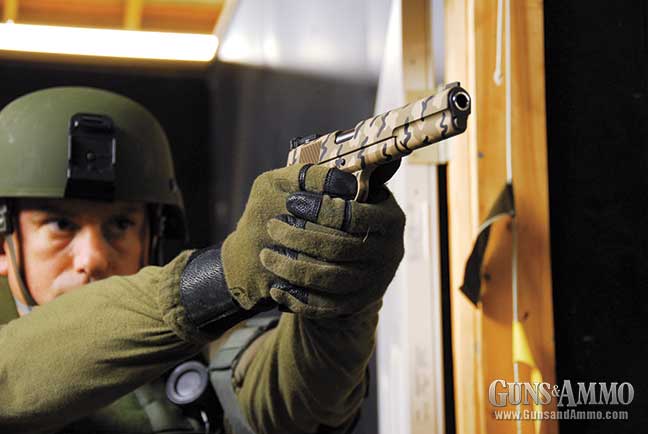
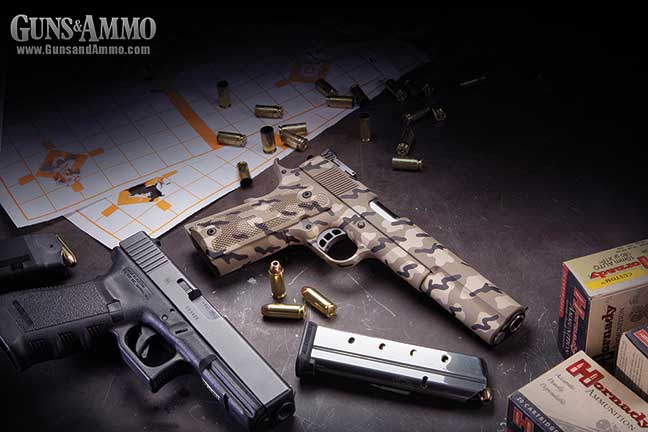
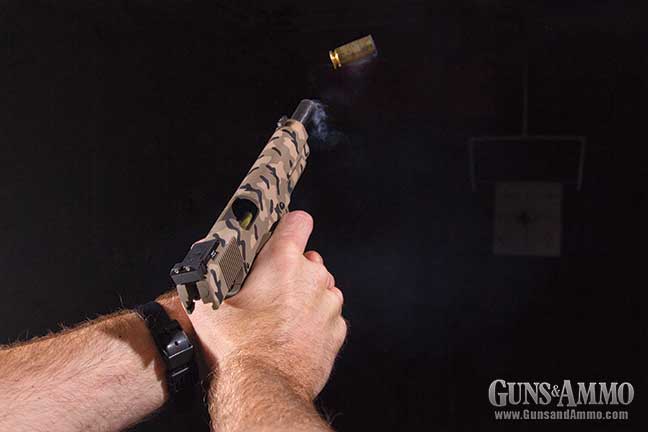
Pistols currently offered in 10mm can be found from the custom 1911 makers of Nighthawk and Wilson Combat. Colt has also returned to offering limited quantities of the Delta Elite each year. The 1911 you see here is Nighthawk’s longslide that features a six-inch barrel. The 1911 is an excellent choice for the 10mm because of its familiar controls and comfortable ergonomics. When combined with the integral feed ramp, a 1911 in 10mm becomes as durable as it is comfortable.
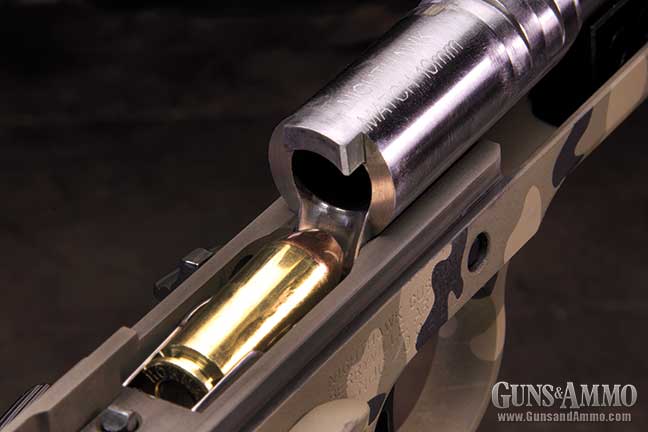
On a normal 1911, there are two ears that protrude from the bottom of the barrel and straddle the link. On this Nighthawk pistol and shown in the photo, the integral feed ramp provides a solid foundation for the barrel link and enables Nighthawk to simply recess the ramp into the frame to accommodate the link. Where there are normally two long ears, there is now a solid chunk of steel.
The ears supporting the barrel link of a custom 1911 are often the first things to fail due to improper fit. It seems that if they’re going to break, it’ll happen in the first 5,000 rounds. With the Nighthawk pistol, there is a solid piece of steel in place of the ears so we no longer have to worry about them shearing off. The 1911s made in this fashion are ideal for the 10mm and ensure that the pistol is capable of handling even the stoutest loads.
Para USA announced at the 2012 SHOT Show that they would be making a long-slide 10mm with a six-inch barrel and a double-stack magazine. It hasn’t made it to production yet, so we’ll just have to keep our fingers crossed for now.
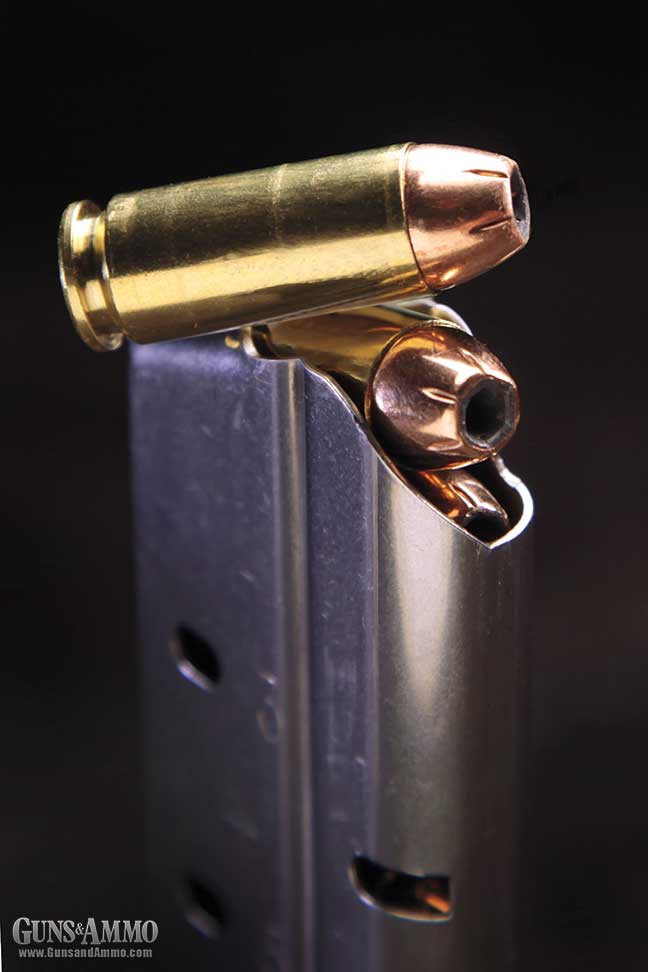
Glock makes the Models 20 and 29 in 10mm and has for a couple of decades. These pistols offer full-size and compact options for those who favor striker-fired polymer pistols. EAA also makes a couple of Witness models in 10mm. The EAA pistol is a large CZ 75 variant for those who favor the ergonomics of that style over the 1911s and Glocks.
Uses for the 10mm Auto
The 10mm Auto closely matches the ballistic performance of the .41 Magnum in bullet weights and velocities. The 10mm is ideally suited and has a substantial edge over any other semiauto caliber in two key domains: hunting and select law enforcement scenarios.
Hunting with a 10mm is a no-brainer thanks to its heavy bullets and high velocities. Many of the longslide 1911s are built expressly for that purpose. Whether it’s hogs or whitetails, the 10mm Auto is the way to go in a semiauto pistol. Hornady has loads with 180- and 200-grain bullets that are exceptional choices for both activities.
I, like Colonel Cooper and straight-thinking FBI agents, also believe that the 10mm round is an excellent choice for law enforcement. We often make most decisions in the aftermath of a crisis. When the FBI wanted their lack-of-penetration problem fixed, they chose the 10mm. Especially when we consider that law enforcement shooting scenarios often involve shooting through barriers, the higher velocity of the 10mm Auto is a real advantage. A quick perusal of officer-involved shooting videos on the Internet shows that many of these fights occur in and around vehicles. The 10mm is our best option in these situations where we might have to shoot through steel and glass and still have lethal penetration on the target.
The sidearm is also the primary and only weapon for many law enforcement officers. As such, it’s important for cops to carry as much gun as they can comfortably handle. I was never a police officer, but I carried a sidearm in Iraq and Afghanistan and can think of a couple of times when I wished I had something bigger, usually when there was a barrier I needed to punch through or the distances to the target increased.
An eternal principle of gunfights reads thus: Bring enough gun. When we’re relegated to only carrying a pistol, we should make it a point to carry as much pistol as possible for those times when the unexpected happens. No other semiauto pistol caliber offers the range or penetration of the 10mm. For law enforcement officers who face the violent and unexpected, the additional performance of the 10mm Auto is comforting.
At the Range
One of the major gripes critics of the 10mm have is the recoil it generates. This was the primary reason the FBI cited when they decided to move away from traditional loading of the 10mm Auto. There was just too much recoil for their agents.
Gauging a round’s potential and success by how marginally trained shooters perform with it is folly, and it’s a shame the reputation the 10mm acquired at their hands. The 10mm recoils no more than a Government-model .45 ACP or a Glock 19 in 9mm. The .45 shoots a much heavier bullet, and the Glock 19 is a lighter gun. Bullet and pistol weight both play a key role in perceived recoil. The longslide 1911 seen here loaded with 180-grain bullets moving at 1,250 fps generates identical amounts of felt recoil as the .45 and the Glock.
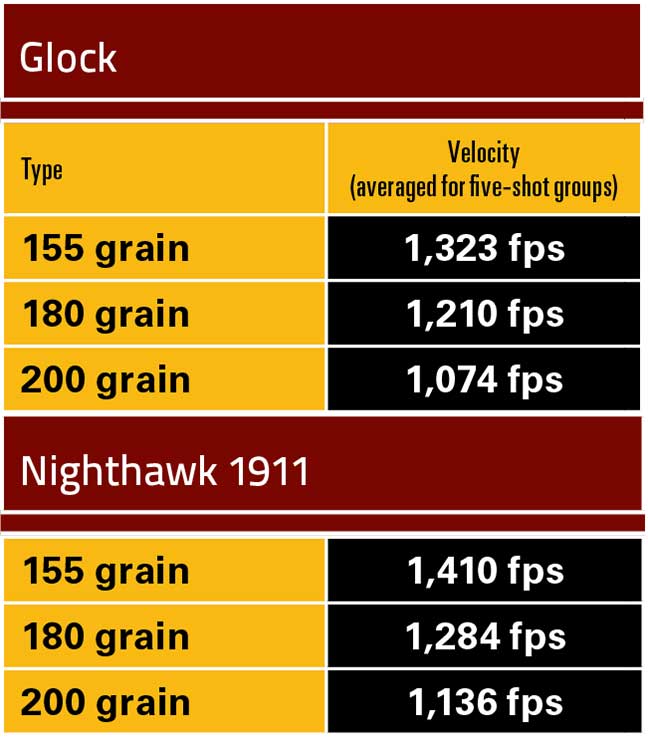
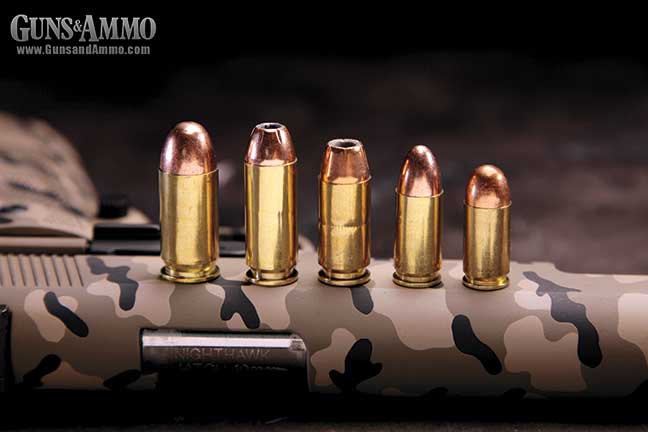
The ammunition I used to generate the data for this article comes from Hornady’s Custom line and had bullets weighing 155, 180 and 200 grains. The XTP bullet is an exceptional choice for the 10mm Auto, as it features a thick jacket that handles the high velocities well and ensures the bullet stays together for deep penetration.
I fired the three Hornady loads through the Nighthawk longslide with a six-inch barrel and a Glock Model 20 with its 4.6-inch barrel. The difference in barrel length generated an approximate 80 fps difference with each load. I collected the muzzle velocity data on an Oehler 35P.
Colonel Cooper and the FBI correctly identified the need for a flat-shooting semiauto pistol cartridge for law enforcement use. A heavy bullet (180 to 200 grains) moving at high velocity (1,200 fps) offers excellent performance for those select times when ranges extend or we need to shoot through a barrier. The 10mm Auto is the cartridge for this application. Hornady’s XTP bullets and their thick jackets are an ideal pairing for the 10mm with their 155-, 180- and 200-grain loadings that allow the 10mm shooter to confidently do everything he needs from self-defense to law enforcement duties.
Categories
BY BOB CAMPBELL

The history of revolvers is long and diverse. It began long before Samuel Colt or DB Wesson. While black powder cap and ball rifles were involved in many battles, I skipped over black powder revolvers as they are of less interest and with less staying power than cartridge revolvers. Just the same, keep watching these pages for more on early revolvers.
Many of the revolvers covered in this report were manufactured in the millions. As an example, the Smith and Wesson Military & Police Hand Ejector has been in continuous production for 124 years. Not to mention the Colt 1873, although it has not been continual production over the last 150 years. Then again, the Colt Three-Fifty-Seven manufacturing only saw 30,000 units. Let’s look at some of the most enduring designs.
Smith and Wesson Hand Ejector
The original Smith and Wesson Hand Ejector was a .32 caliber double-action revolver with a swing-out cylinder. It was among the first of its kind, although Colt had a swing-out cylinder revolver first. The quality and easy operation of the Hand Ejector, and its easy loading and unloading, ensured its success.
The Hand Ejector was built on the I-Frame. It was later modified into the hugely successful J-Frame and chambered first for the .38 Special and later the .357 Magnum. I-Frame Hand Ejector revolvers were offered in .32 Smith and Wesson Long and .38 Smith and Wesson. The latter was released in a five-shot version.
The Hand Ejector was the revolver that changed the world forever. It led to many interesting developments. The Smith and Wesson Chief’s Special .38 is a direct descendant of the Hand Ejector.
Smith and Wesson Military & Police
The .38 Hand Ejector, as it is sometimes referred to, is the single most successful revolver of all time. Introduced in 1899, and in its fifth model version by 1905, the Hand Ejector chambered an improved version of the .38 Colt cartridge labeled .38 Smith & Wesson Special.
The medium-frame medium-power revolver is well balanced, famously reliable, featuring a smooth action. It wasn’t too heavy for constant carry. Chambered in .22, .32-20, .38 S&W, .38 Special, 9mm, and .357 Magnum in different models, the Military & Police revolver has seen more gunfights than perhaps all the other revolvers put together. The K-Frame .38 spun off the Combat Masterpiece, Combat Magnum, Model 13, and various stainless steel revolvers. It is still in production.
Colt 1873
The Colt Top Strap, Single Action Army, Frontier Six Shooter, or simply the Peacemaker is an American Icon. The threat profile of the day was a mounted adversary as well as the many dangerous animals on the American frontier. The .45 Colt cartridge was designed to be effective against an Indian war pony at 100 yards. In many battles of the day, more horses than men died.
The Colt SAA may not have been the most advanced revolver of the day, but it was robust, well balanced, and fast into action. It is still a popular field and trail revolver and among the most popular recreational revolvers in the country.
Chambered for many different cartridges during its long life, the Colt is best associated with the iconic .45 Colt cartridge. So long as Americans love cowboy movies and drovers, the SAA is likely to remain popular.
Colt’s .41 Frame Revolvers
Colt’s revolvers spanned several frame sizes. Among the most popular was the Official Police in .41 Long Colt. The .41 Colt is a lousy, old round firing a .384-inch bullet at low velocity. Just the same, it was superior to the lackluster .38 Colt.
The .38 Special is a good choice for these handguns. Perhaps the finest of these revolvers is the Colt Three-Fifty-Seven. With production beginning in the 1950s and ending in 1963, the Three-Fifty-Seven is a smooth, accurate, and a superbly fast-handling revolver. While it was not as popular as the Smith and Wesson Combat Magnum, a Colt man could do great shooting with this handgun. The fixed sight Official Police was much the same.
Colt Python
The newly reintroduced Colt Python is a shooters dream. The new revolver is stronger than the original and better suited to a steady shooting regimen. Each are deluxe revolvers with a heavy barrel, distinctive barrel rib, and hand honed action. These are fantastic shooting guns for the revolver shooter willing to master their unique action. While the original demands scalper prices, the new revolver is also a great shooter. Nothing has quite the bling of the Colt Python.
The Colt Python is perhaps the most easily recognizable revolver in the world.Smith and Wesson Combat Magnum (Model 19, Model 66)
The late Bill Jordan labeled the Combat Magnum ‘a peace officers dream.’ In the mid 1950s, metal science and heat treating had advanced to the point that a K-Frame revolver could be chambered for the .357 Magnum cartridge. The Combat Magnum is a modified Combat Masterpiece .38 Special revolver with the cylinder lengthened to accept the longer magnum cartridge.
At the time, the training schedule recommended was 20 .38 Special loads for every magnum. The Combat Magnum is relatively light, features a shrouded ejector rod, adjustable sights, and an excellent trigger action. The Combat Magnum was the prestige issue revolver for decades.
Ruger Speed Six
Ruger’s Security Six featured a .41 frame, rugged lock work, and fully adjustable sights. The revolver is nearly as accurate as the Python — according to its many fans. The Speed Six is a .357 Magnum revolver with fixed sights and a round butt — a concealed carry or rough service version of the rugged and reliable Security Six. I have a long history with this revolver. While the later GP100 is doubtless stronger and more durable, the Speed Six is among the fastest handling Ruger revolvers every manufactured.
Ruger GP100
The Ruger GP100 is tank tough. This heavy-duty .357 Magnum revolver offers excellent accuracy fit and finish. The action is smooth. The revolver doesn’t feature the problematic action lock found on some modern revolvers.
The GP100 won’t break the bank, but it will accomplish anything any other revolver will do while refusing to break down or go out of time. The Ruger is also offered in a 10mm version and even a super accurate .22 version. This is among the sturdiest revolvers ever manufactured.
Charter Arms Bulldog, Boxer, and Others
Charter Arms began manufacturing revolvers during the Vietnam War. Good quality revolvers were difficult to come by. Charter Arms offered a reliable revolver at a fair price, allowing many Americans on a budget to own decent home protection. The original product was the Charter Arms Undercover, a lightweight .38 Special using a steel frame.
The Undercover featured a modern, transfer bar ignition action. In the early 1970s, Charter Arms introduced the five-shot .44 Special Bulldog. The Bulldog was a sensation. Later versions were offered in .357 Magnum.
The six-shot Boxer is a light, handy .38 Special version of the Bulldog. The smaller five-shot .38s are more common while the slightly larger handguns are easier to shoot well. These revolvers fill an important niche between expensive but high quality revolvers and rougher cheap guns.
Chiappa Rhino
The Chiappa is a unique, even fantastic, design. The barrel is located low on the receiver. The revolver fires from the lower chamber. The double-action trigger is very smooth. A cocking lever allows the shooter to cock the internal hammer for single-action shots.
The Chiappa Rhino revolver is a modern marvel in many ways.
The revolver is very easy to use well. Despite an unusual appearance, the Chiappa Rhino is among the most ergonomic revolvers every manufactured. This isn’t a traditional revolver, but it is certainly a shooter’s revolver.
There are other revolvers worth study — Colt Detective Special, N-Frame Smith and Wesson revolvers, and Dan Wesson revolvers. Sadly. we don’t have room for every one of these in this article, but which revolver is your favorite?
ABOUT THE AUTHOR:
BOB CAMPBELL
Bob Campbell’s primary qualification is a lifelong love of firearms, writing, and scholarship. He holds a degree in Criminal Justice but is an autodidact in matters important to his readers. Campbell considers unarmed skills the first line of defense and the handgun the last resort. (He gets it honest- his uncle Jerry Campbell is in the Boxer’s Hall of Fame.)
Campbell has authored well over 6,000 articles columns and reviews and fourteen books for major publishers including Gun Digest, Skyhorse and Paladin Press. Campbell served as a peace officer and security professional and has made hundreds of arrests and been injured on the job more than once.
He has written curriculum on the university level, served as a lead missionary, and is desperately in love with Joyce.
He is training his grandchildren not to be snowflakes. At an age when many are thinking of retirement, Bob is working a 60-hour week and awaits being taken up in a whirlwind many years in the future.
Published in
Black Belt Magazine
Combat Handguns
Handloader
Rifle Magazine
Handguns
Gun Digest
Gun World
Tactical World
SWAT Magazine
American Gunsmith
Gun Tests Magazine
Women and Guns
The Journal Voice of American Law Enforcement
Police Magazine
Law Enforcement Technology
The Firearms Instructor
Tactical World
Concealed Carry Magazine
Concealed Carry Handguns
Books published
Holsters for Combat and Concealed Carry
The 1911 Automatic Pistol
The Handgun in Personal Defense
The Illustrated Guide to Handgun Skills
The Hunter and the Hunted
The Gun Digest Book of Personal Defense
The Gun Digest Book of the 1911
The Gun Digest Book of the 1911 second edition
Dealing with the Great Ammunition Shortage
Commando Gunsmithing
The Ultimate Book of Gunfighting
Preppers Guide to Rifles
Preppers Guide to Shotguns
The Accurate Handgun
Black Belt Magazine
Combat Handguns
Handloader
Rifle Magazine
Handguns
Gun Digest
Gun World
Tactical World
SWAT Magazine
American Gunsmith
Gun Tests Magazine
Women and Guns
The Journal Voice of American Law Enforcement
Police Magazine
Law Enforcement Technology
The Firearms Instructor
Tactical World
Concealed Carry Magazine
Concealed Carry Handguns
The 1911 Automatic Pistol
The Handgun in Personal Defense
The Illustrated Guide to Handgun Skills
The Hunter and the Hunted
The Gun Digest Book of Personal Defense
The Gun Digest Book of the 1911
The Gun Digest Book of the 1911 second edition
Dealing with the Great Ammunition Shortage
Commando Gunsmithing
The Ultimate Book of Gunfighting
Preppers Guide to Rifles
Preppers Guide to Shotguns
The Accurate Handgun

Categories
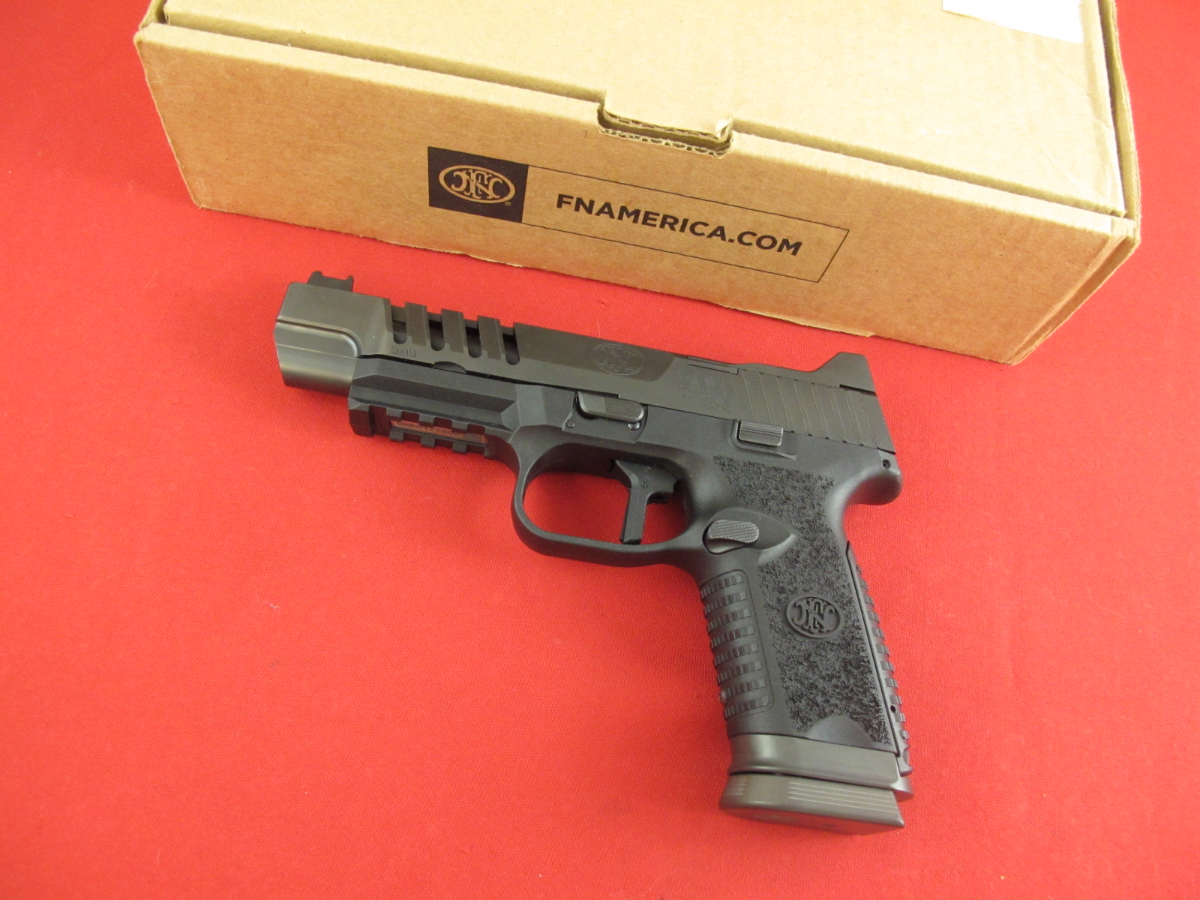
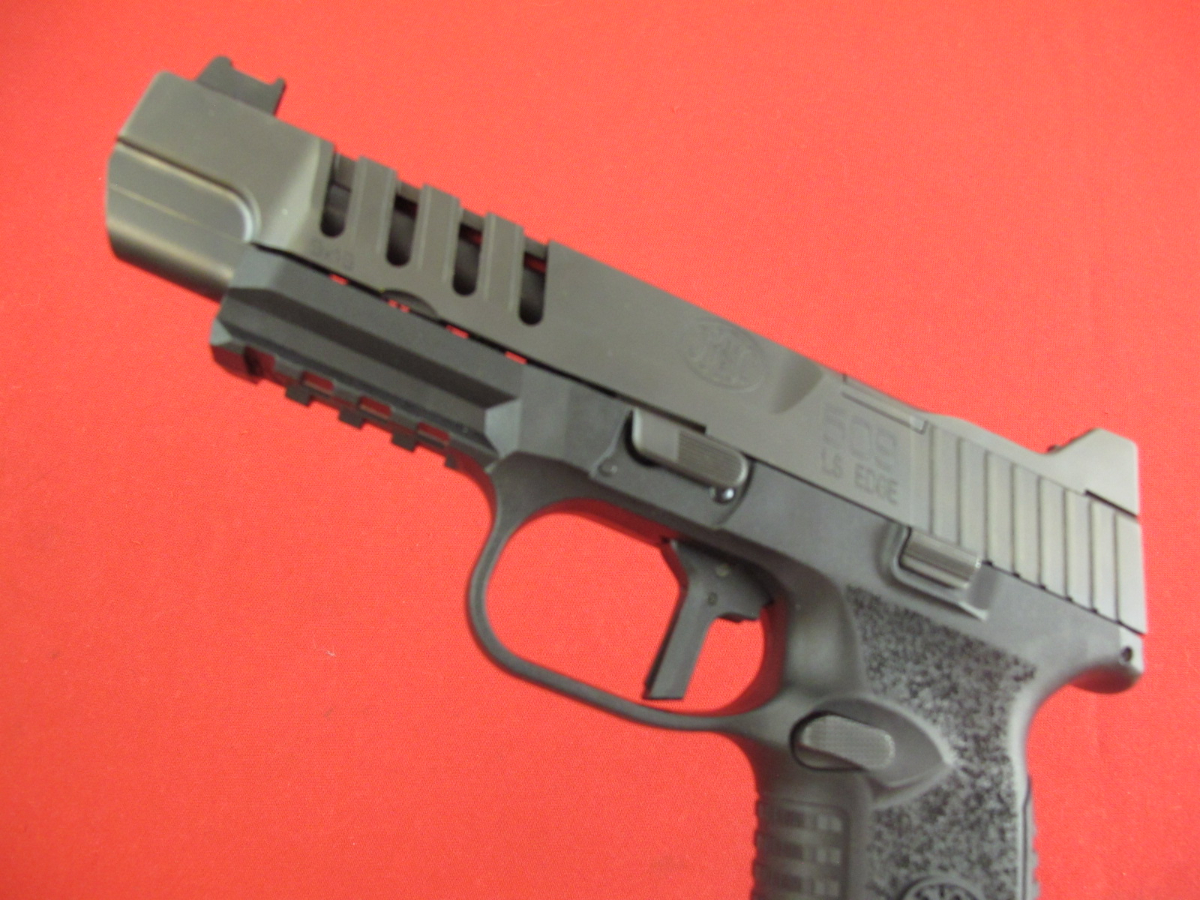
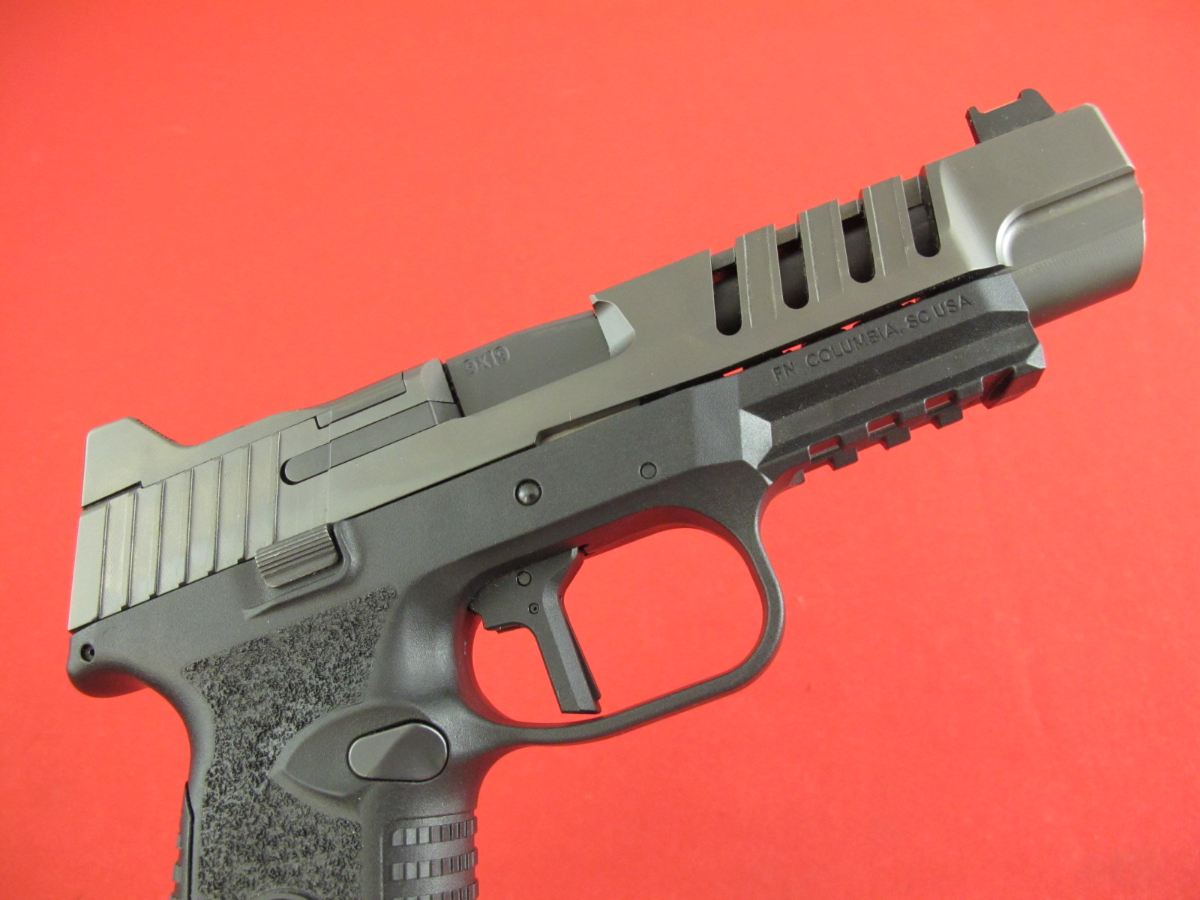
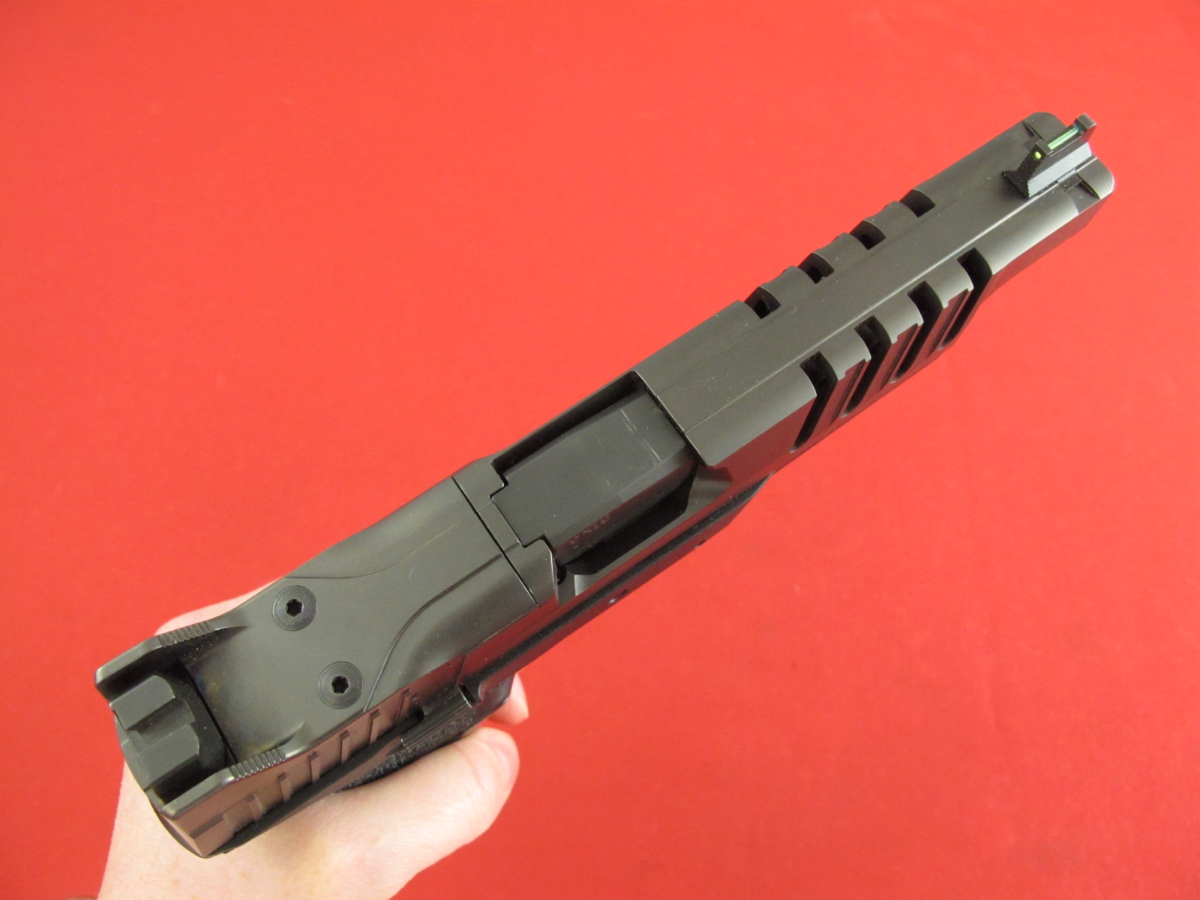
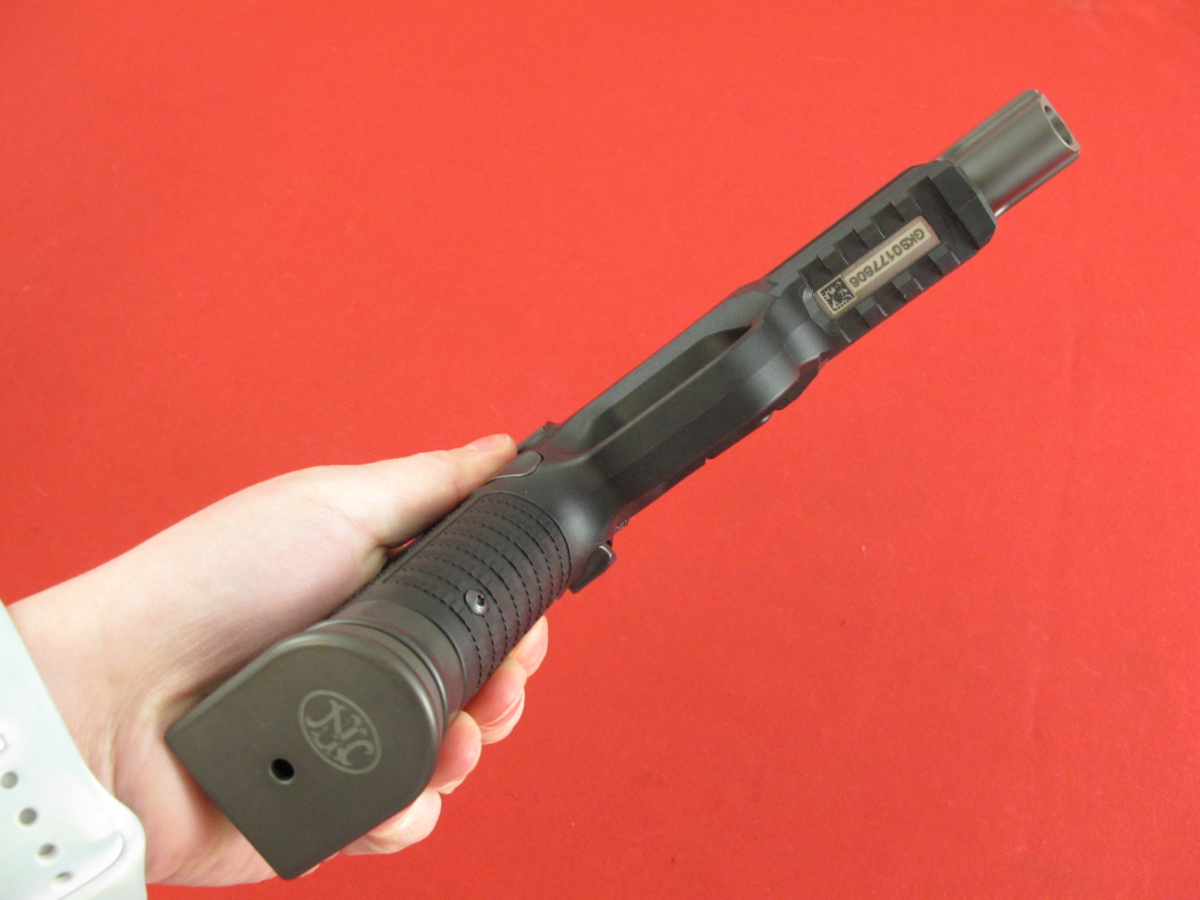
A FN Model 509 LS Edge in 9mm