
Month: August 2024
The pro-gun community has put a lot of time and effort into preventing accidental shootings in America. Unlike other firearm-related incidents, accidental shootings are a category that the pro-gun community has notably influenced over the years.
Despite sensationalized headlines and ongoing advocacy for new legislation, it’s crucial to recognize that accidental shootings are exceedingly rare occurrences. Even in households with unsecured firearms and children, such tragedies are infrequent.
However, it’s essential to acknowledge that these accidents are entirely preventable. The following sections delve into various aspects of accidental shootings in the United States.
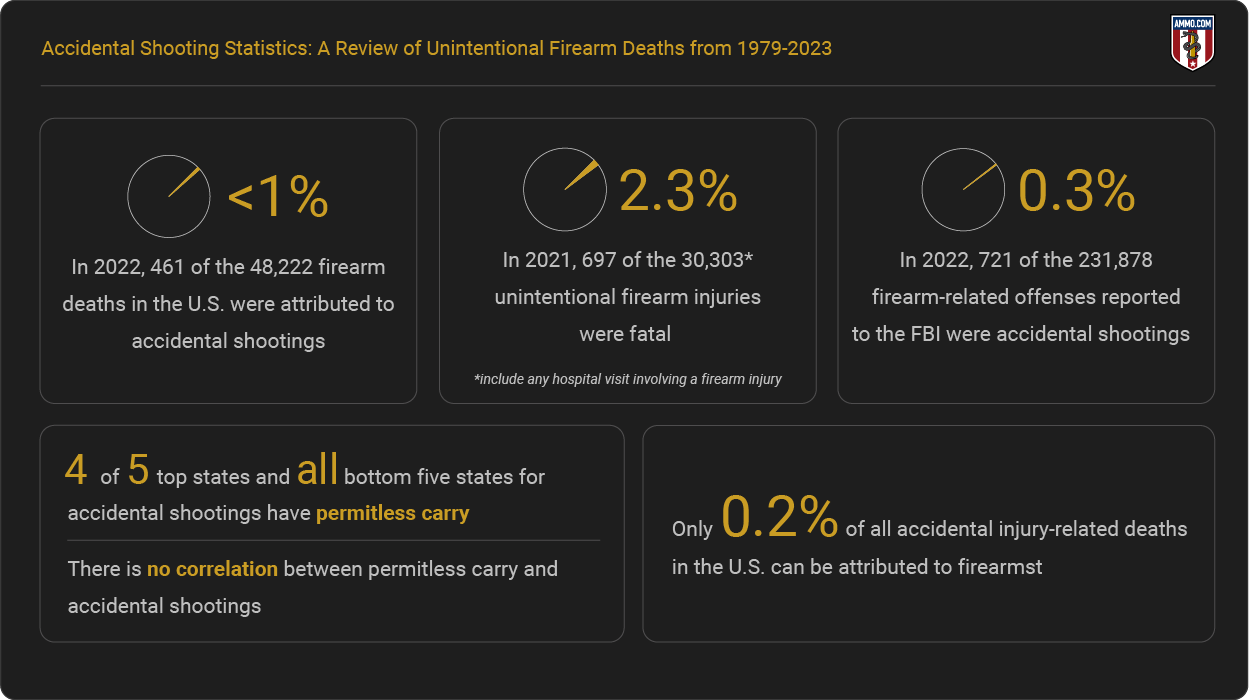
- In 2022, less than 1% (461) of the 48,222 firearm deaths in the U.S. were attributed to accidental shootings.
- 2.3% of the 30,303 unintentional firearm-related injuries were fatal in 2021.
- Of the 231,878 firearm-related offenses reported to the FBI in 2022, only 721 were accidental shootings (0.3%).
- There is no correlation between permitless carry and accidental shootings; only four of the five top states for accidental shootings and all five of the bottom states have permitless carry.
- Only 0.2% of all accidental injury-related deaths in the U.S. can be attributed to firearms.
Note: 30,303 injuries include any hospital visit involving a firearm injury.
Accidental Gunshots Per Year
In total, 673 individuals in the U.S. were victims of an accidental shooting in 2022. Accidental shootings occur in 0.001% of all American households with a firearm annually.
Contrary to claims by Everytown and Giffords, simply owning a firearm does not significantly elevate the risk of danger. In reality, the likelihood of dying from other causes such as fire, drowning, poisoning, falls, or motor vehicle accidents far exceeds that of accidental firearm-related deaths.
Gun Laws and Accidental Shootings
Whenever a tragedy occurs, the anti-gun lobby, media, and many politicians exploit it. Despite an estimated 113,000,000 firearm owners in America, the 673 accidental shooting deaths have spurred discussions about new legislation.
Examining states with existing legislation like safe storage laws and concerns about permitless carry provides insights into the impact of such laws on accidental shootings.
Safe Storage Laws
With limited safe storage legislation in the U.S., accidental shooting deaths declined by 40% between 1999 and 2023. This decline underscores the effectiveness of firearm safety initiatives primarily driven by the pro-2A community.
As of 2024, 26 states have safe storage laws. For instance, in Texas, it constitutes a prosecutable offense if a child gains access to an unsecured firearm. Notably, Texas recorded 61 accidental shooting deaths among individuals aged 1-17 between 2018 and 2023.
Expanding this data reveals that 30% of all accidental firearm-related deaths in this age group occurred in states with existing safe storage laws, whereas nine states without such laws had no accidental shootings involving children during the same period.
Permitless Carry
Another contentious issue for the anti-gun lobby is permitless carry legislation. However, such legislation does not ease firearm access; rather, it allows lawful individuals to carry firearms without a permit.
Analyzing data from states before and after enacting permitless carry laws reveals no significant correlation with unintentional shootings. For instance:
Indiana, Kentucky, and Oklahoma, which passed permitless carry between 2019 and 2021, had accidental shooting deaths, while the other four states (Iowa, Montana, South Dakota, and Wyoming) that enacted permitless carry had none.
In Indiana, there was no notable change in accidental shooting deaths after passing permitless carry in 2021.
Kentucky and Oklahoma also did not experience significant fluctuations in accidental shooting deaths following the implementation of permitless carry laws.
Ultimately, permitless carry legislation neither exacerbates nor alleviates accidental shooting incidents. Firearm safety is primarily an individual responsibility that cannot be regulated effectively.
Accidental Shootings: The Full Picture
Though 2.3% of accidental shootings are fatal, only 0.0001% of all firearms in the U.S. are involved in such incidents, affecting just 0.05% of all households with firearms.
Understanding the causes of accidental shootings is crucial. Regardless of firearm ownership or Second Amendment stance, familiarizing oneself and one’s family with firearm safety principles is imperative.
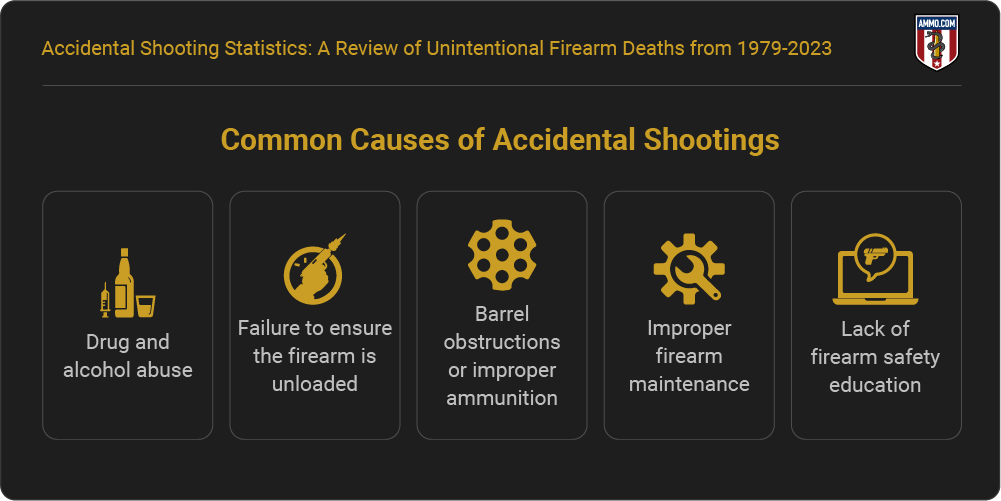
Common causes of accidental shootings include:
Further analysis reveals that a significant portion of unintentional firearm deaths result from mishandling firearms or hunting-related accidents.
From 2005 to 2015, research indicates that 28.3% of unintentional firearm deaths happened when individuals were handling firearms casually. Additionally, 17.2% of deaths resulted from not confirming the firearm was unloaded, while 13.8% of victims were engaged in hunting-related incidents. [Unintentional Firearm Deaths in the United States: 2005-2015]
Accidental Gunshot Deaths and Adolescents
Individuals aged 14 to 30 face the highest risk of accidental shooting deaths. In 2021, 46 small children (aged two to four) and 71 teens and young adults succumbed to unintentional gunshot wounds.
Although accidental firearm-related deaths in the <1-17 age group are relatively low compared to other accidents, they remain preventable. Vigilant gun owners and parents play a crucial role in mitigating such incidents.
Prevention And Safety Measures
Accidents often occur due to carelessness. While some states have safe storage laws, accidental shootings involving minors and adults still happen.
Hence, it’s vital to maintain constant vigilance over firearms. While access to defense firearms should be unrestricted for adults, precautions should be taken to prevent access by children or unauthorized individuals.
Individuals under the influence of drugs or alcohol or those incapable of handling firearms should refrain from doing so. Moreover, hunters must adhere to safety protocols such as knowing their targets and the surrounding environment.
Effectiveness Of Educational Programs
Although the effectiveness of educational programs on accidental shootings warrants further research, increasing education alone may not be enough.
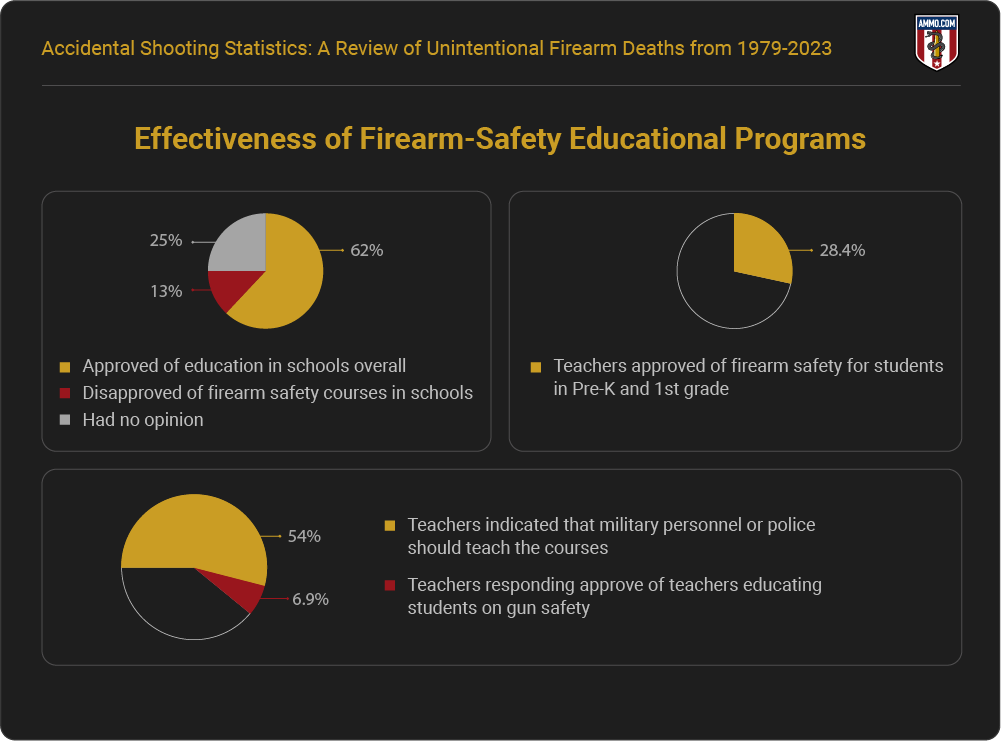
A study found that a majority of teachers support firearm safety education in schools, indicating a potential avenue for disseminating such knowledge.
Study results:
- 62% approved of education in schools overall
- 13% disapproved of firearm safety courses in schools
- 25% had no opinion
- 28.4% of teachers approved of firearm safety for students in Pre-K and 1st grade
- 54% of teachers indicated that military personnel or police should teach the courses
- 6.9% of teachers responding approve of teachers educating students on gun safety
Accidental Shootings vs. Other Accidental Causes
Unintentional falls rank as the most common accident across all age groups in the U.S., followed by incidents categorized as “Struck by or Against” and motor vehicle accidents.
Accidental firearm-related injuries do not feature in the top ten causes of all accidents in the U.S.
In 2021, firearms accounted for only 0.2% of all accidental deaths, with poisoning and falls constituting the leading causes.
The Run-Down on Accidental Shootings
While any firearm-related injury or death is tragic, accidental shootings are rare and entirely preventable.
Legislation alone is insufficient to prevent accidental shootings; proactive firearm safety measures are crucial. Understanding firearm safety principles and identifying high-risk individuals are essential steps in reducing firearm-related deaths in America.
It’s crucial for individual gun owners and parents to take necessary precautions to minimize the likelihood of accidental shootings.
Frequently Asked Questions (FAQs)
What are the most common causes of accidental shootings?
The most common cause of accidental shootings is mishandling a firearm.
What are the most effective ways to prevent accidental gun shootings?
The most effective way to prevent accidental shootings is to follow the ten rules of gun safety and ensure that firearms are inaccessible to prohibited or uneducated individuals.
How do gun safety laws impact accidental shooting statistics?
States with no gun safety legislation take the majority in the top five and bottom five states for unintentional firearm-related deaths.
Sources
- 2005-2015 Study on Accidental Shooting Deaths
- 2005 Protection of Lawful Commerce in Arms Act
- 2010 Survey on Gun Safety Courses in Schools
- CDC WISQARS Accidental Injuries
- CDC Wonder
- NHTSA Motorcyle Fatalities 2021
- Gun Storage Laws by State
Infographics
- Are Guns & Ammo The New Gold? Why More Americans Are Arming Themselves
- The Greatest Gun Salesman In America: President Barack Obama
- Shooting Straight: How Both Presidential Candidates Have Changed On Gun Control
- President Obama: (Still) The Greatest Gun Salesman in America
- An Inconvenient Truth: How The Obama Administration Became Earth’s Largest Arms Dealer
- Armed Drones: President Obama’s Weapon of Choice
- COVID-19 Data Study: Ammunition Sales Continue to Soar in Response to Coronavirus Panic
- Data Study: 18 Months of Ammo Sales during a Pandemic, Protests, and the Biden Presidency
- Data Study: U.S. Ammo Sales Surge Following Russian Invasion of Ukraine
- Most Gun-Friendly States in 2024
- Worst States to be a Gun Owner (2024 Updated)
- Children & Firearms: Definitions and Demographics Make All the Difference
- Urban Violent Crime & Legal Gun Ownership
- Gun-Free School Zone Laws & School Shootings (2024 Updated)
- Gun Control Laws and Enforcement Trends 2024
- Gun Ownership by State (2024 Statistics)
- How Many Gun Owners are in America? (2024 Statistics)
- Concealed Carry Crime Stats 2024
- Accidental Shooting Statistics: A Review of Unintentional Firearm Deaths from 1979-2024
- America’s Stolen Guns: A Silent Contributor to Gun Crimes in the U.S. (2024)
- Gun Violence Statistics 2024: Comprehensive Look at the Data
- Gun Laws vs. Crime Rates in 2024: A Comprehensive Analysis
- Gun Death Statistics by Caliber: A Review of Calibers and Crime in 2024
- Anti-Gun Control Arguments 2024: Facts Gun Control Lobby Suppress
- Guns in the Home Statistics: The Effects of Firearms in the Home in 2024
- Gun Deaths in the US: Analyzing At-Risk Demographics in 2024
Categories
The Bohdana: Ukraine’s Secret Weapon of War

After World War I proved the utility of scoped rifles on the modern battlefield, the U.S. Army realized that it should build off the lessons learned in the mud and blood of the trenches and begin evaluating scopes and scoped rifles for future conflicts. Fortunately, the National Archives have records of some of these tests, both those conducted during the relative peace of the interwar years and the early years of World War II, when the need for a suitable sniper rifle was more acute.
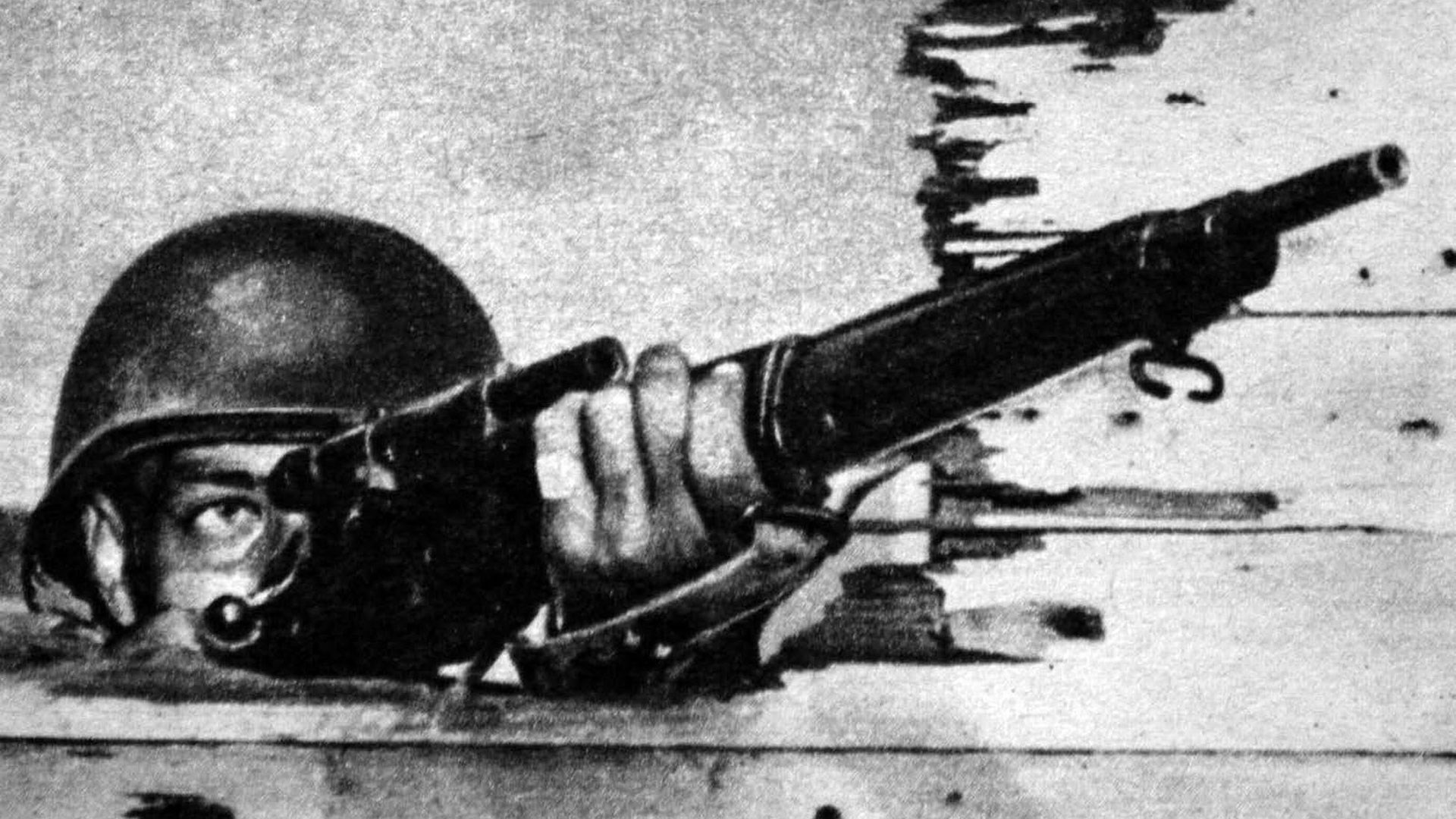 A U.S. soldier takes aim with his M1903A4 sniper rifle.
Even better, the fine folks at Archival Research Group have started the herculean task of digitizing many of these fascinating primary source records for the casual armchair historian to pore over.
The 1925 Test
A test conducted by the Army’s “Department of Experiment” at Fort Benning, Ga., in 1925 determined that a “telescopic sight should be mounted and issued on a specially accurate rifle having a specially constructed stock with high comb and less drop at the heel…” and one also featuring a longer length of pull than the standard service stock. They felt these changes were necessary to get the greatest advantage out of the scoped rifle, and to make it more comfortable for a range of shooting positions.
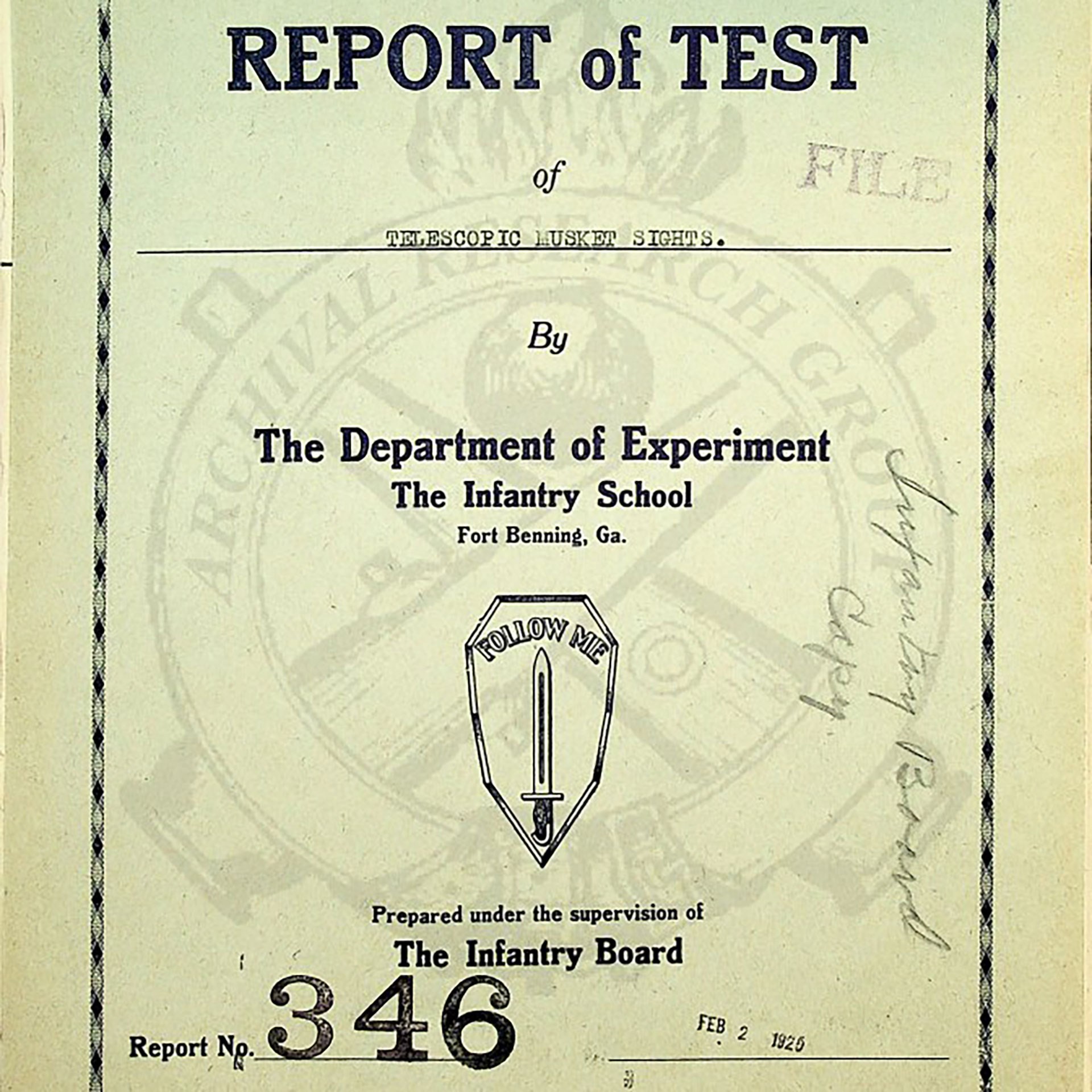 (Photo courtesy of Archival Research Group)
Interestingly, they singled out a weapon already in production at Springfield Armory – the NRA “sporting type” rifle – as the ideal candidate. They noted it as the most accurate of all the Model 1903 rifles (even more so than ones specially selected for the National Matches they claimed), and further stated that “it is provided with the Model 1922 stock, having exactly that high comb, small drop at the heel, and length which experience indicates will be most satisfactory with a telescopic sight.”
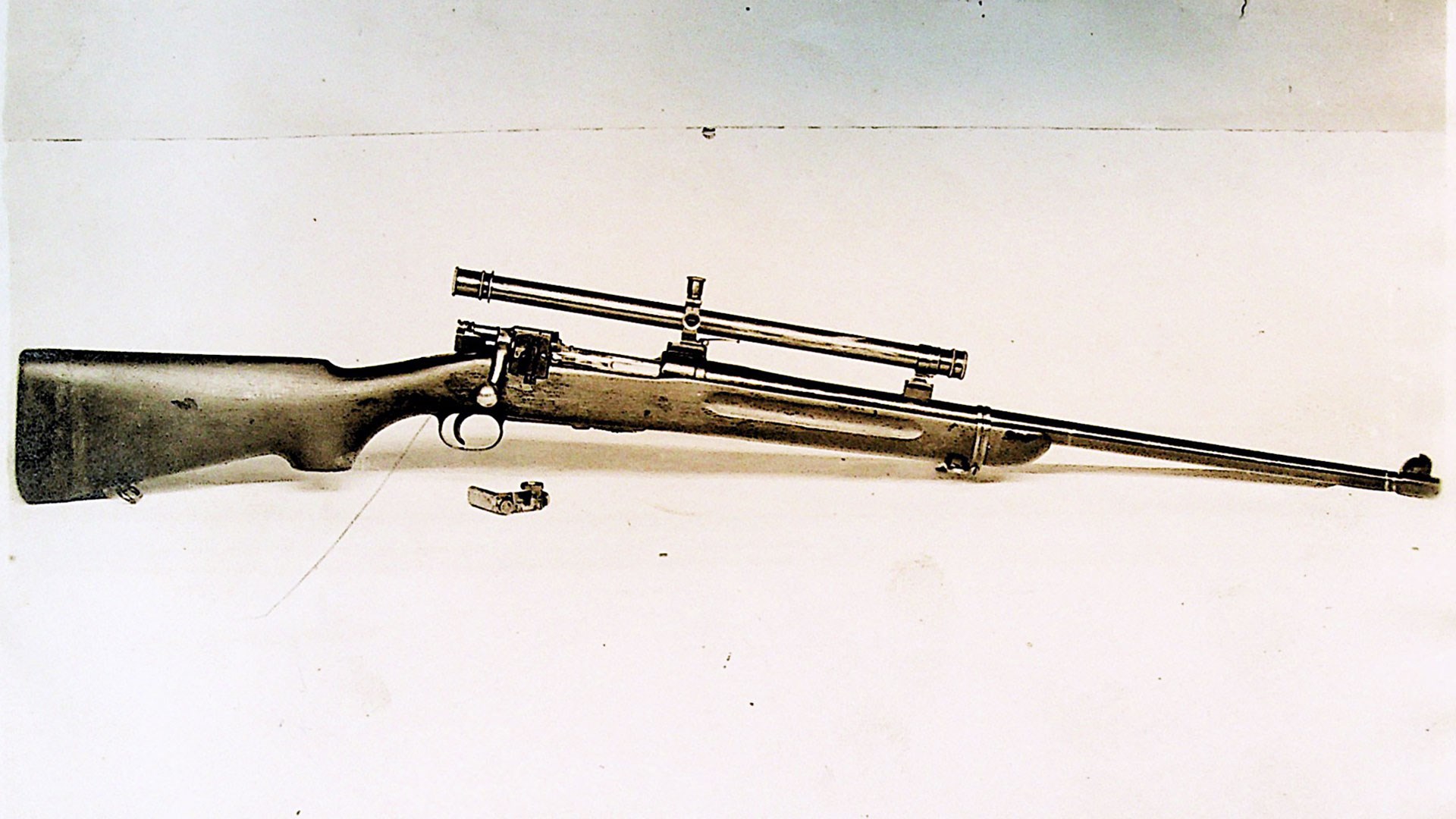 A Springfield Armory Model 1922, .22-Cal., rifle with Winchester A5 Scope mounted. The NRA M1903 “sporting type” rifles looked very similar, and the stock of the Model 1922 was desired. (Photo courtesy of Archival Research Group)
In the end they came down on the side of the sniper rifle, stating that “In any future war it may or may not have a decided usefulness, depending on local conditions. It is therefore felt that this instrument [rifle scope] should be developed to an ultimate successful type”.
Despite this apparent interest in fielding standardized scoped rifles, the U.S. Army allowed its peacetime sniper rifle program to atrophy into functional non-existence. Only the Marine Corps fielded any real number of scoped rifles, and unlike the more compact scopes favored by the Army, they chose to use 16″ long target-style scopes produced first by Winchester and later by Lyman.
The 1942 Test
After the U.S. entry into World War II, the Army once again faced the reality that there was a need for a scoped rifle for use by snipers and other marksman on the battlefield. Unlike 1925, there was a pressing need to get an effective sniper rifle into the hands of soldiers and marines in a timely fashion. To determine what form that rifle should take, they once again embarked upon a series of tests at Fort Benning, now conducted by the Test Section of the Infantry Board. In these tests, dated Nov. 1942, they set out to settle three primary things: the rifle, the optic and the mounting location.
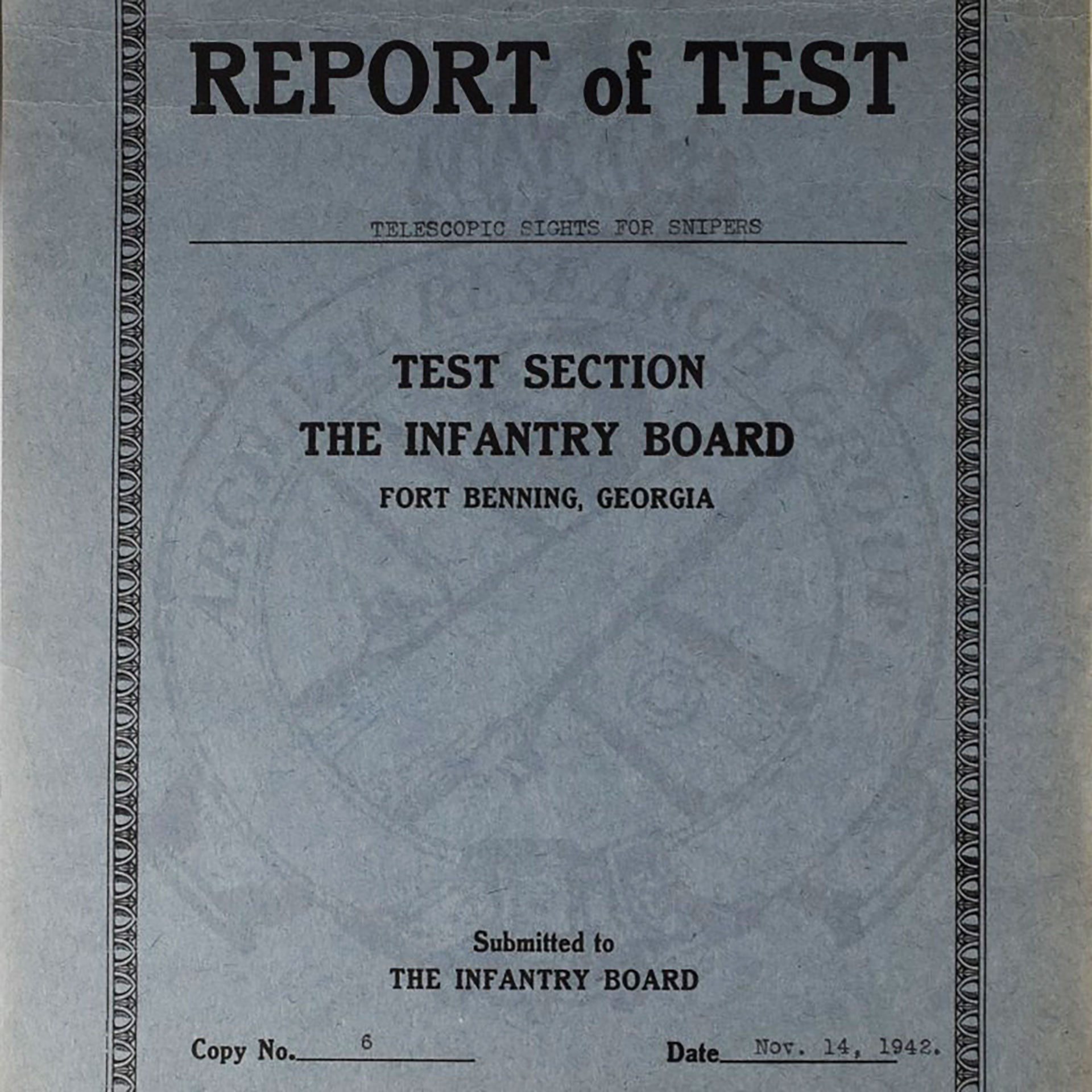 (Photo courtesy of Archival Research Group)
The Rifle
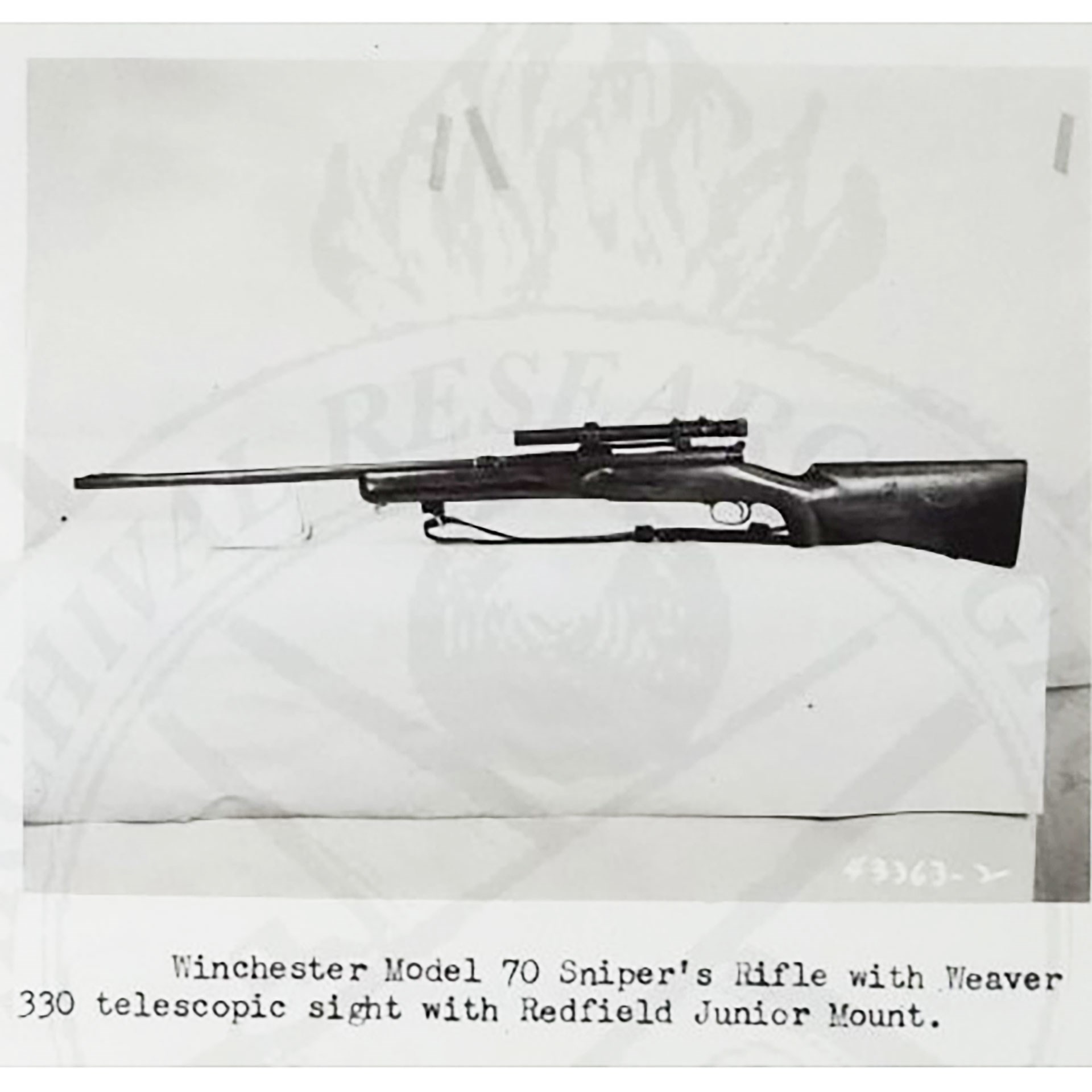
The first task was determining “the type of service rifle most suitable for the use of telescopic sights.” As the NRA Sporters had been discontinued, and the M1 Garand had officially supplanted the M1903 as the Army’s standard rifle, the Army test now considered three contenders: commercial style rifles, the M1903, and the M1. The Test Section received four Winchester Model 70 rifles, which came mounted with Weaver hunting style scopes. While pre-64 Model 70s are beloved and sought-after weapons today, the Army wanted nothing to do with them for simple logistical reasons (although the USMC, and eventually even the Army, would field small numbers of them).
 (Photo courtesy of Archival Research Group)
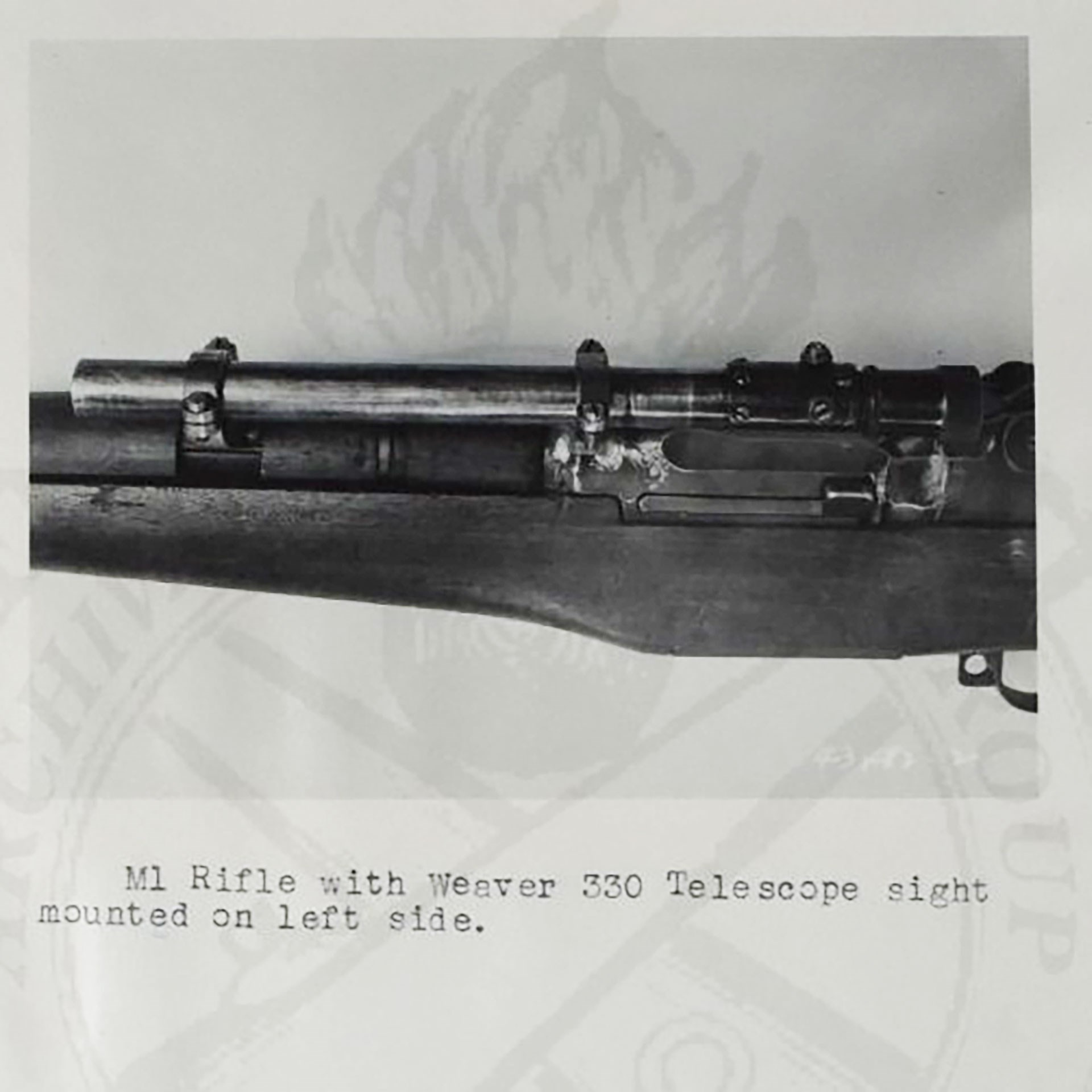
In the 1942 report, they brusquely dispensed with them by stating “Manifestly, this equipment is not what is desired for the reason that the Winchester rifle is not standard and it is not desirable to add another weapon of this type to the rifle company.” Instead, they determined that both the M1903 and M1 were suitable for use by snipers due to them being “extremely accurate” and already part of the standard inventory. They did set forth certain criteria however, and stated that the rifles should be hand selected based on shot group size, and their actions be hand finished.
 (Photo courtesy of Archival Research Group)
While they no longer desired the Model 1922 stocks from the NRA Sporters, they stated that “Stocks should be selected and carefully fitted” and that “In the case of the M1903, the National Match rifles with type ‘C’ stocks would be most desirable.” The “C” stocks featured a full pistol grip, instead of the original service rifle’s straight stock, and had found great favor with competition shooters during the inter-war years. As far as the rifle was concerned, the Test Section’s feelings were summed up when they said “All things should be done to insure smooth operation and greatest accuracy.”
The Optic
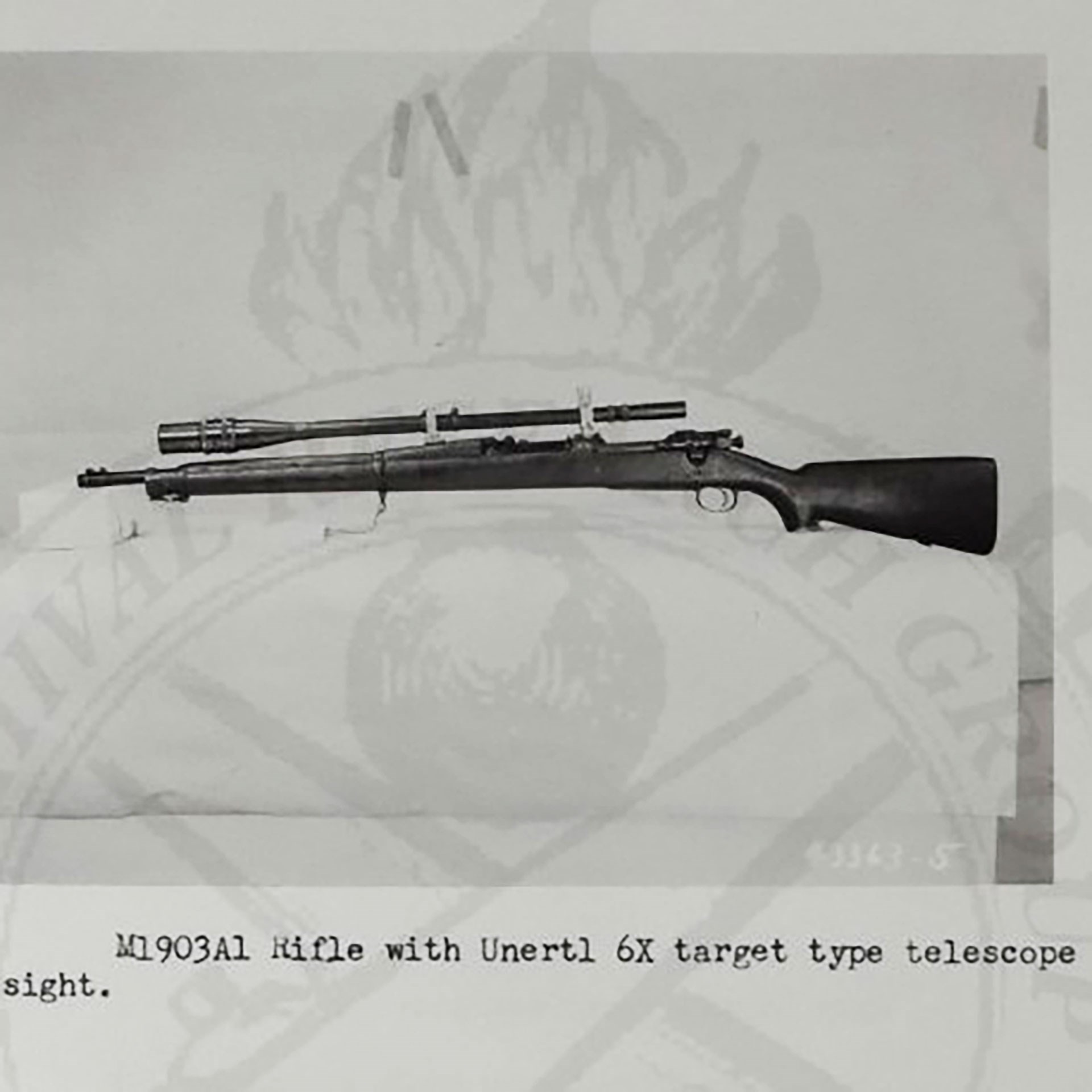
Now that they figured out the platform, they would have to “determine the most satisfactory type of telescope for sniping use.” In the end they would compare two scope designs: the higher magnification target style scopes used by the Marines, and the more compact but much lower magnification hunting type scopes. Alongside choosing what scope to use, they had to “determine the type of reticle to be used in the sniper’s telescope.”
 (Photo courtesy of Archival Research Group)
The target type optic that was tested was a Unertl 6X magnification scope mounted on a M1903A1 rifle (the A1 basically being a standard M1903 mounted in a full pistol grip C stock). The Army testers quickly determined that the target style scope would not fit their needs, and noted two main issues that “preclude[d] its use as a ‘field service’ sight.”
First was the overall bulk and fragility of the scope, which while acceptable for the competition firing line, raised concerns about how they would hold up in harsh field conditions. Second was the size of the objective lens, and the type of mount required to attach it to a rifle. In the view of the testers this combined to force the shooter to adopt “awkward firing positions,” which were “uncomfortable, unsteady and slower” than other designs.
 (Photo courtesy of Archival Research Group)
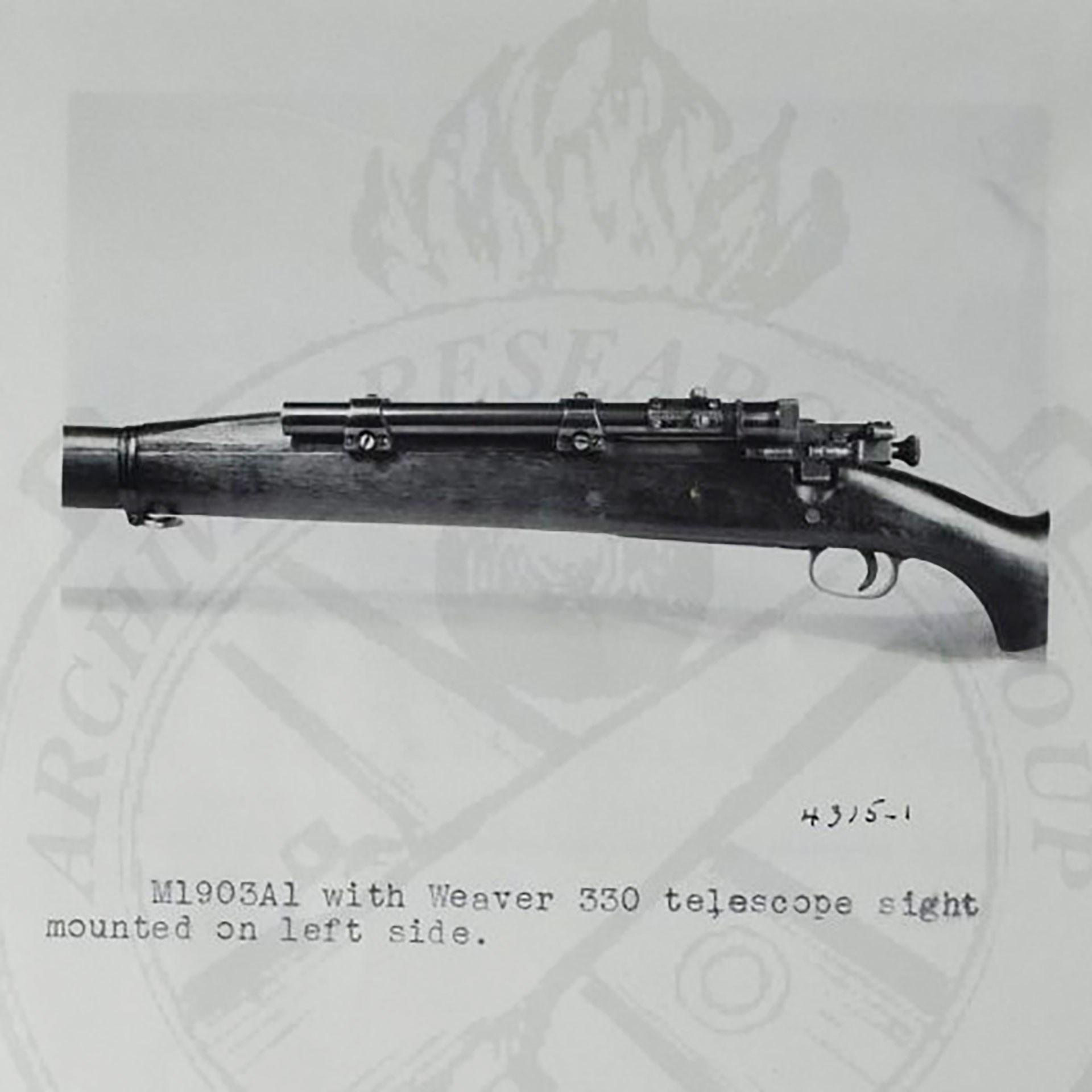
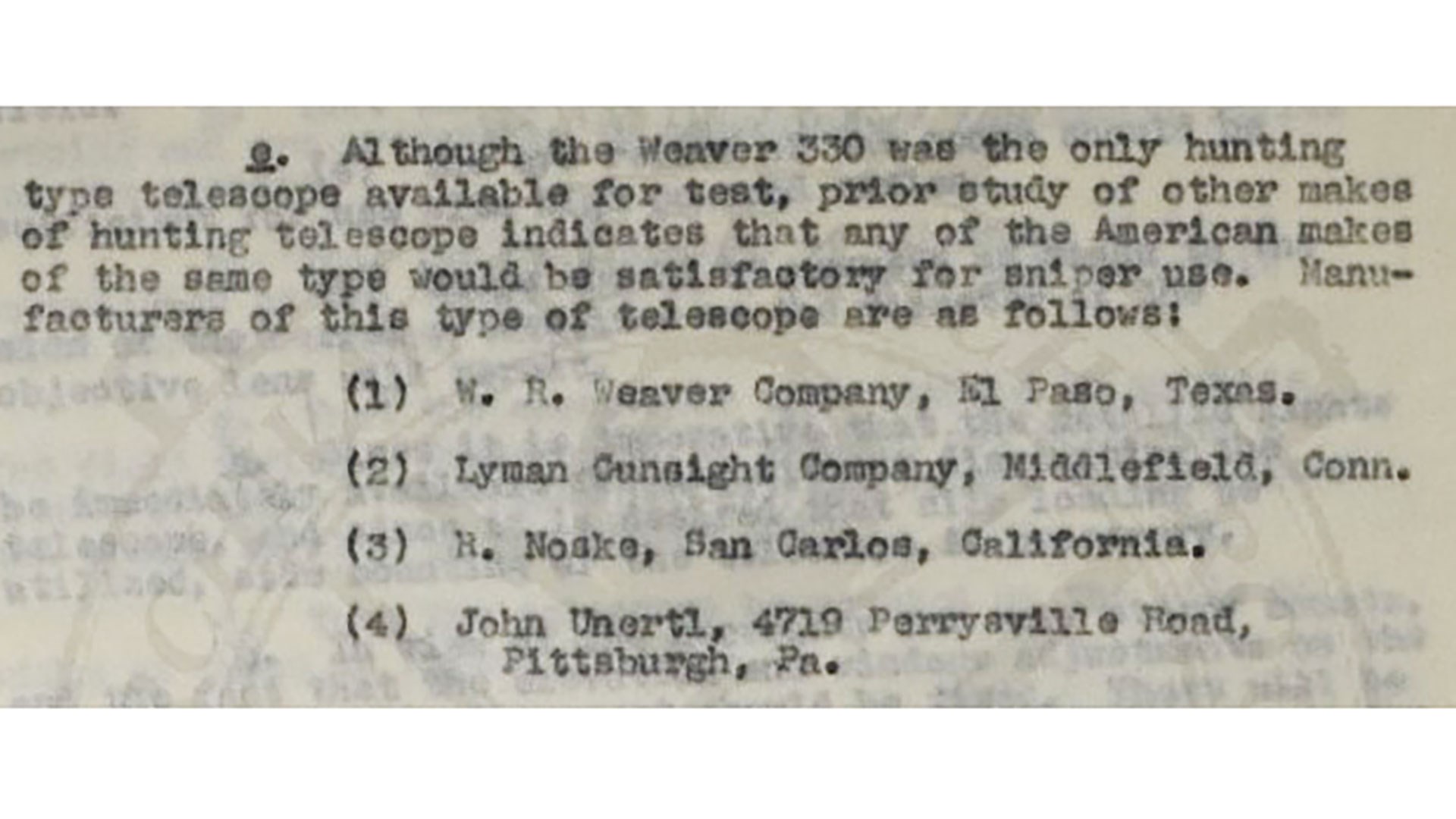
For the “hunting-type scope” however, they had high praise, calling it a “very compact, sturdy sight” which “has been used extensively by sportsmen in all climates and on all sorts of terrain.” The particular scope they used in the testing was a 2.5X magnification Weaver 330, but they noted that “prior study of other makes of hunting telescope indicates that any of the American makes of the same type would be satisfactory for sniper use,” and specifically called out Weaver, Lyman, Noske and Unertl as known suitable manufacturers.
 (Photo courtesy of Archival Research Group)
The testers felt that this simple sight was rugged enough to withstand conditions in the field and, somewhat optimistically perhaps, hoped that “many inducted soldiers will already be trained in its use.” They also specially mentioned that the adopted scope should have “elevation and windage screws [with] knobs and clicks similar to the Weaver 330C,” something that would provide the shooter with tactile feedback when adjusting the scope, and allow them to make adjustments without having to closely eyeball hashmarks as they went.
 (Photo courtesy of Archival Research Group)
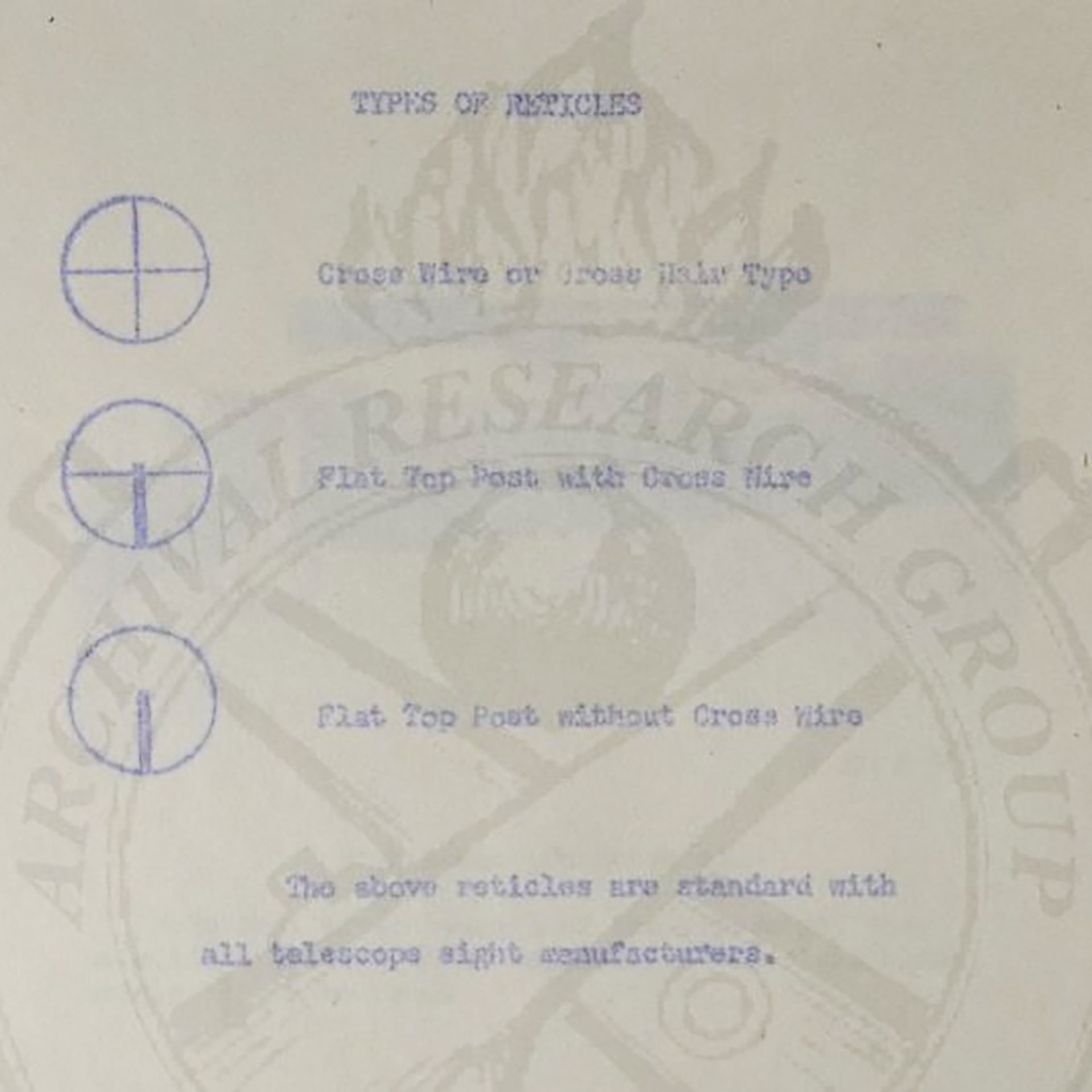
As to the issue of reticle, the Test Section looked at three types: standard crosshair, flat top post and flat top post with a cross wire. While the report notes a preference for the crosshair type with medium thickness wires, it noted that the others would be suitable substitutes.
The Mounting Location
Finally, with the rifle and scope sorted out, the Test Section need to work out the most advantageous way to marry them together. In determined the following factors to be essential:
“(1) That due to the possibility of injury to the scope without disabling the rifle, the metallic sights must be instantly available for use with the scope mounted. (2) Mounts must be sturdy and rigid. (3) Since […] after dismounting and remounting it is necessary to make slight corrections from the former zero, the telescope should not be dismounted in the field. (4) The eye relief of the scope should be sufficient for use with high power rifles. (5) Scope should be mounted as close to the side of the barrel or receiver as the diameter of the objective lens will permit.”
(Photo courtesy of Archival Research Group)
Recognizing that even the hunting-style scopes of the day were still fairly fragile pieces of equipment, and that clip-loading was desirable (and essential on the M1), the Test Section deemed that a side mounted scope was necessary to free up the top of the rifle for aiming with iron sights and loading. They also departed from other nations’ designs by stating that instead of a detachable scope that would be stored in a protective case when not in use, the scope would be permanently fixed in a non-adjustable mount, with all windage and elevation adjustments being internal to the scope itself.
The Birth of the M1903A4 – And Some Significant Deviations from the Recommendations
Like any government acquisitions program, there will typically be some deviation from what the requesting agency asks for and what they ultimately receive. While the reasons for such differences can be legion, so often it boils down to time, simplicity, and money – which appears to be the driving factors behind what became the most common sniper rifle that was fielded to American forces in World War II and Korea.
The Rifle
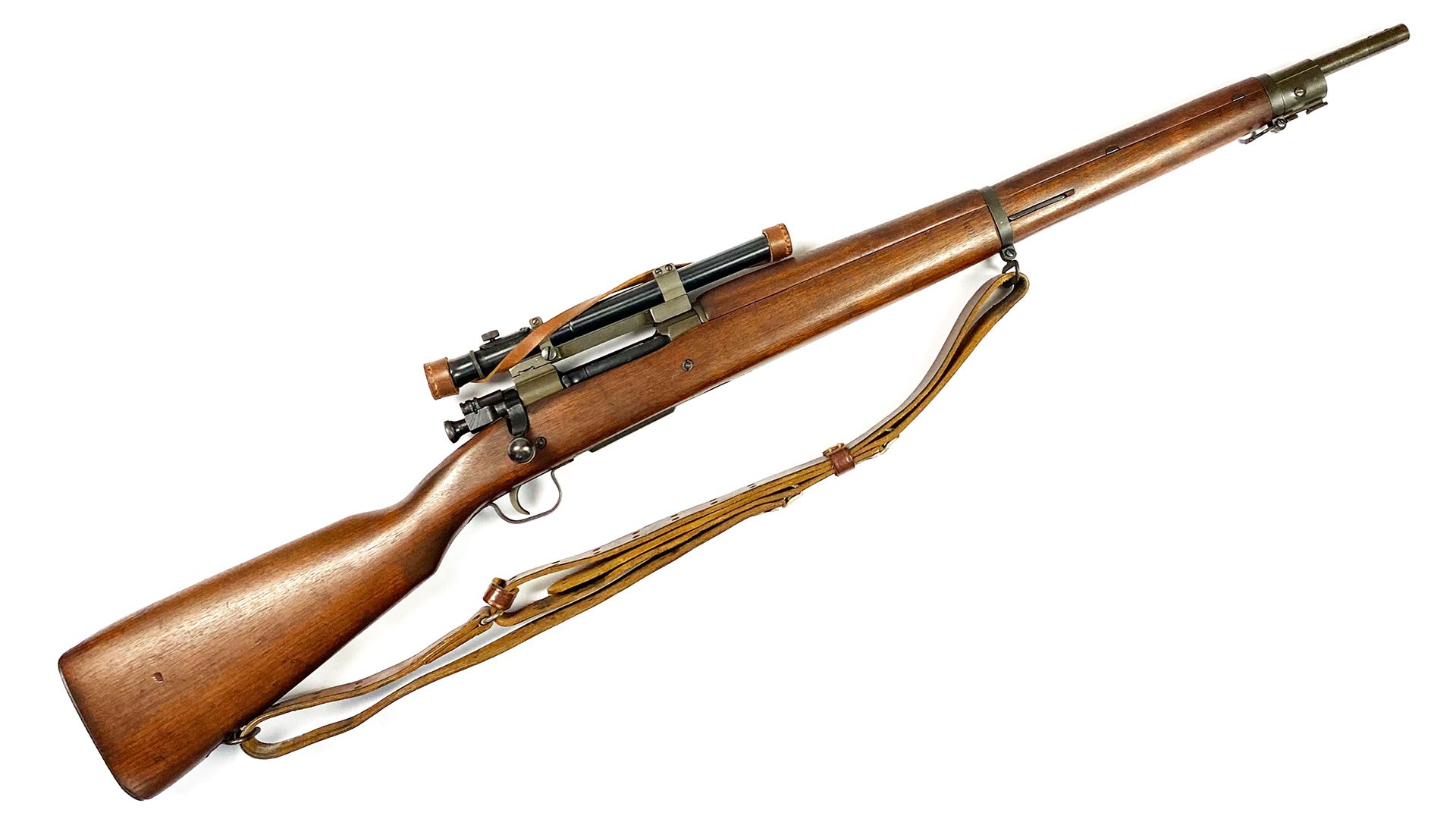
The first concession to ultimately be made when actually producing the new sniper rifle was the selection of the M1903A3 instead of the M1903 or M1903A1 as the bolt-action sniper platform. While a fundamentally similar rifle, the M1903A3 was created an expedient variation to increase production speed and decrease cost during the war, and generally isn’t quite as finely fitted and finished as peace-time production M1903s. In particular it makes extensive use of stamped parts, to include the integral triggerguard and floorplate, barrel bands and sling swivels.
 The Author’s Remington M1903A4 sniper rifle.
The feature most notable from a distance is the substitution of a rear receiver mounted aperture sight, something that removed the need for the traditional ladder-type sight, which had its space filled with an extended hand-guard. And since M1903 production had long since ended at Springfield and Rock Island, two commercial firms had been selected to produce the M1903A3 – Remington and Smith-Corona. In the end, only Remington would be contracted to produce sniper variants, while Smith-Corona only produced the regular service rifle.
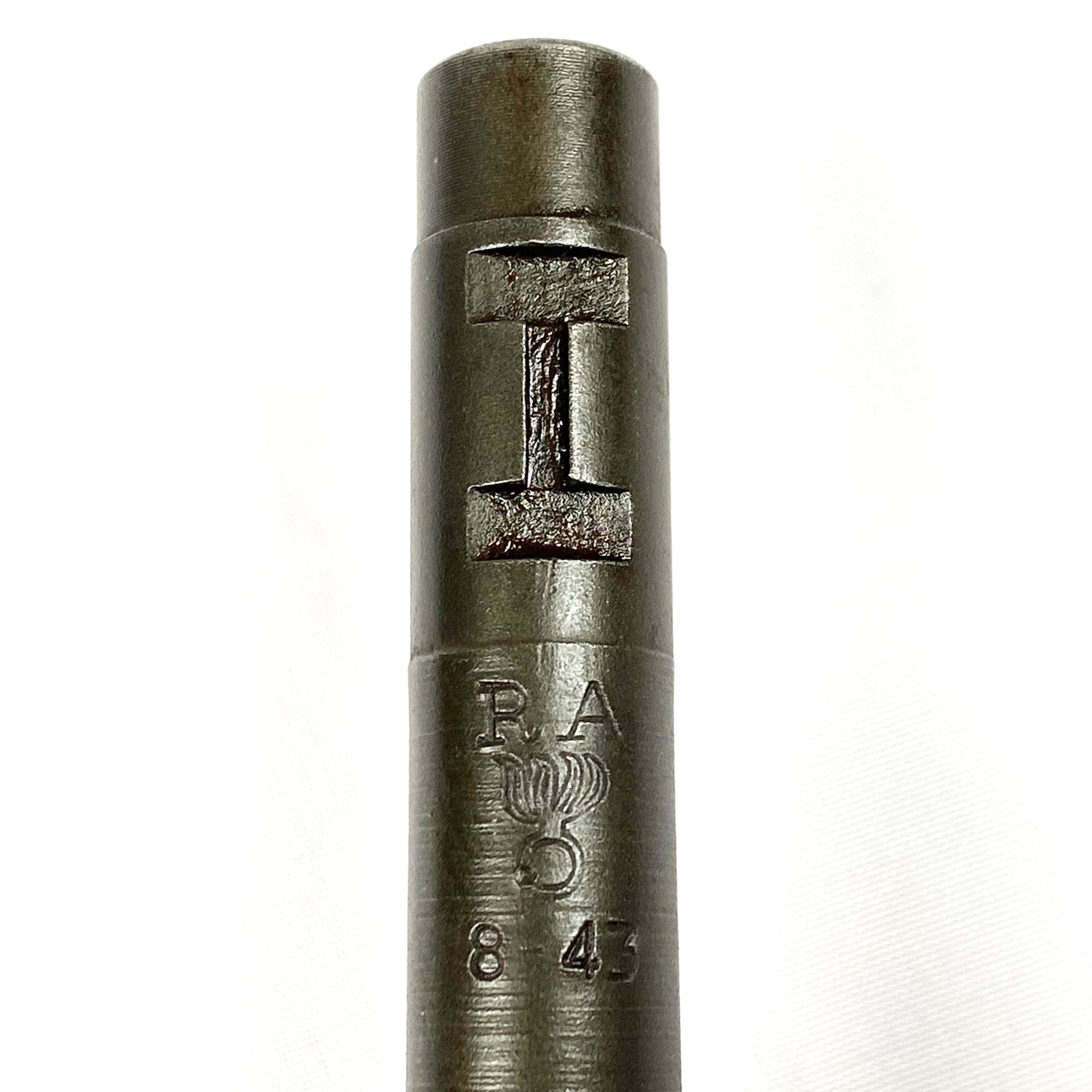 A close-up view of the barrel markings on the author’s M1903A4, with “RA” for Remington Arms, ordnance bomb and Aug. 1943 production date.
Also, despite the recommendations that rifles be hand-selected for accuracy, have their actions hand finished and be carefully fitted with specially selected stocks, there is no indication that any of this was done, with Brophy noting in his seminal work “The Springfield 1903 Rifles,” “[t]he rifle was a Model 1903A3 without any special attention paid to its accuracy, or suitability for such use.”
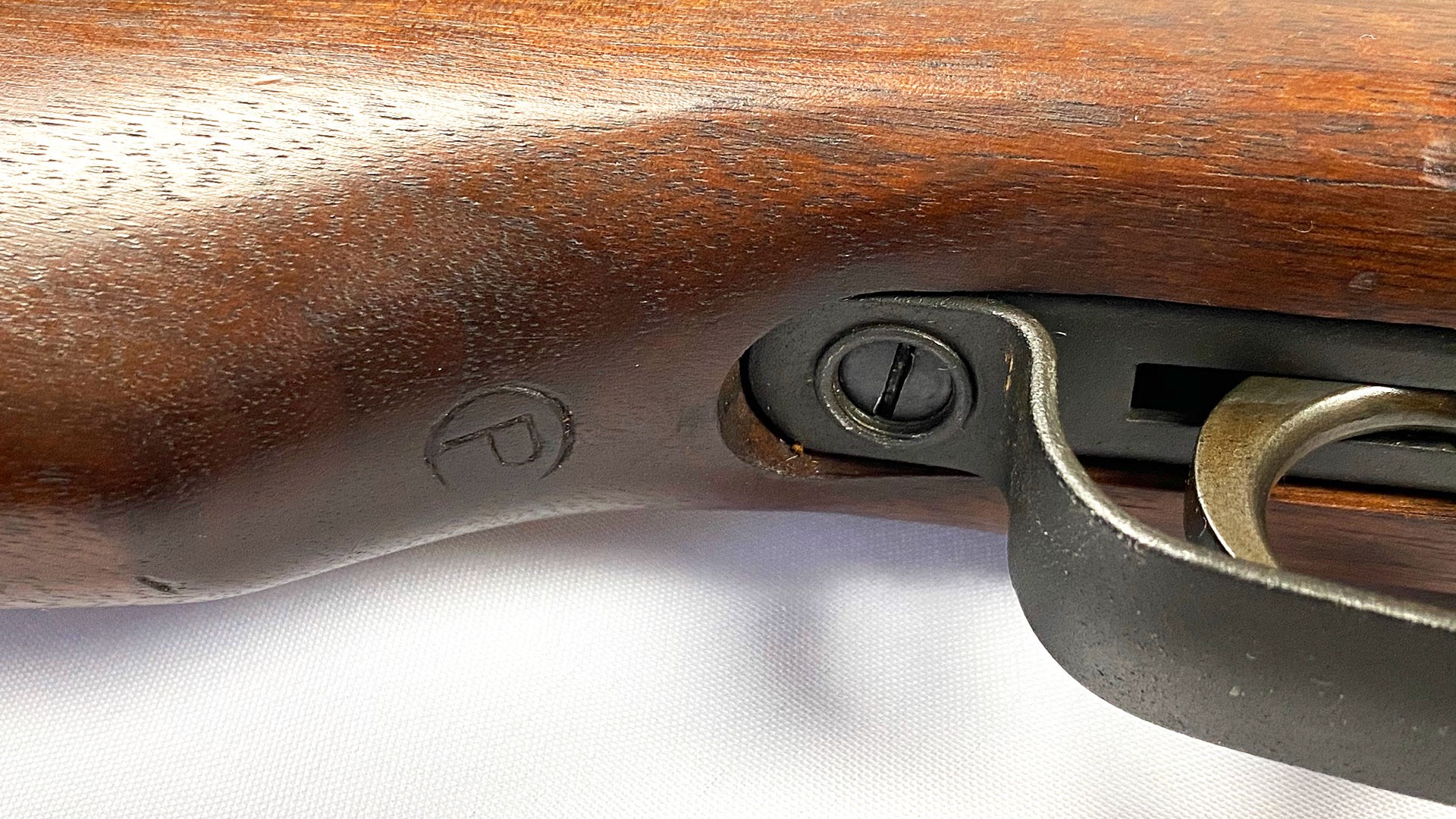 A circled “P” firing proof cartouche at the bottom of the “scant” semi-pistol grip stock.
Additionally, while many M1903A4s were fitted with the full pistol grip “C” stocks as called for, a fair number were (like the main example photographed here from the author’s collection) were placed in the “scant” semi-pistol grip stocks. The stocks had their own interesting story of government frugality and compromise born from stock blanks cut too shallow (in the style of the original straight stocks) to accept a full “C” pistol grip.
The Optic
The scope itself generally followed the specifications dictated, with the final optic being a militarized variant of the Weaver 330C, named the M73B1 (although some standard 330Cs were fitted to the earliest rifles). Having a relatively low fixed 2.5x (some say 2.20x) magnification, and a narrow 0.75″ diameter tube, it is completely archaic by today’s standards both for magnification and light transmission.
Even when compared to the common foreign sniper scopes of the day, it certainly would not come in as best-of-show, but was in the end an available and economic optic. It did however prove to be somewhat fragile in field conditions, prone to moisture seepage and difficult to use in low-light situations.
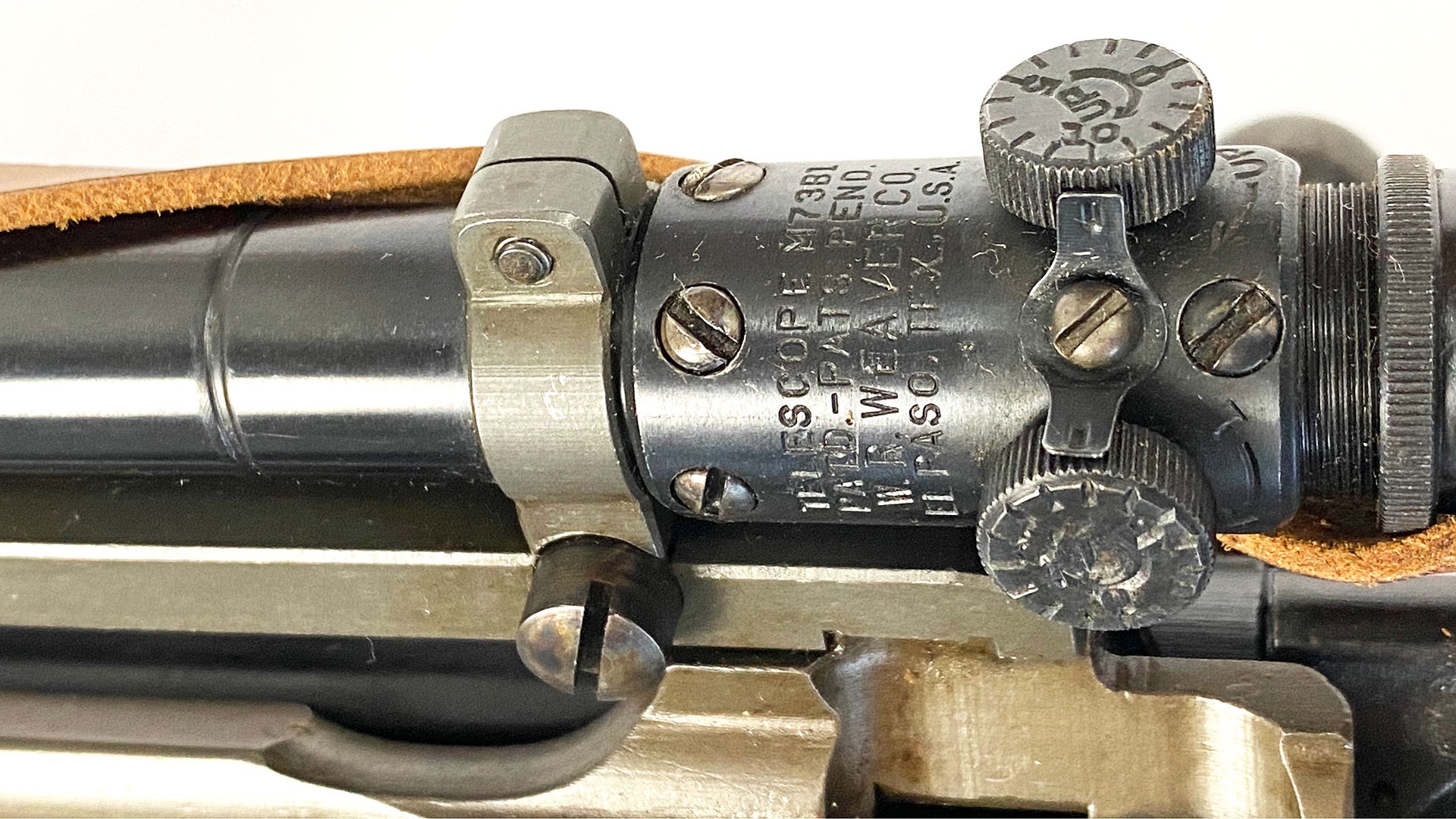 A closer look at the World War II era M73B1, a militarized variant of the Weaver 330C, mounted to the author’s M1903A4.
While the M73B1 would serve as the primary optic for the duration of World War II, as the service life of the M1903A4 continued, it would also occasionally mount the M81, M82 or M84 telescopes. While each was an incremental improvements over the last, they all were narrow-diameter and low-magnification optics that were generally not widely beloved.
The Mounting Location
Probably the most obvious departure from the Test Section’s recommendations was the location of the scope itself. Despite the Test Section stating that a side mounting was “necessary” because “it is imperative that the metallic sights be immediately available for use…,” and that clip loading was desired, the decision was ultimately made to mount the scope in a low “scope over bore” configuration.
The mount chosen was a Redfield Jr. model, which was attached on the front via a hole drilled into the receiver and at the rear via a dovetail type base that is integral to the rifle. The mount and mounting location did present a unique problem to Remington, the solution to which still helps collectors to this day.
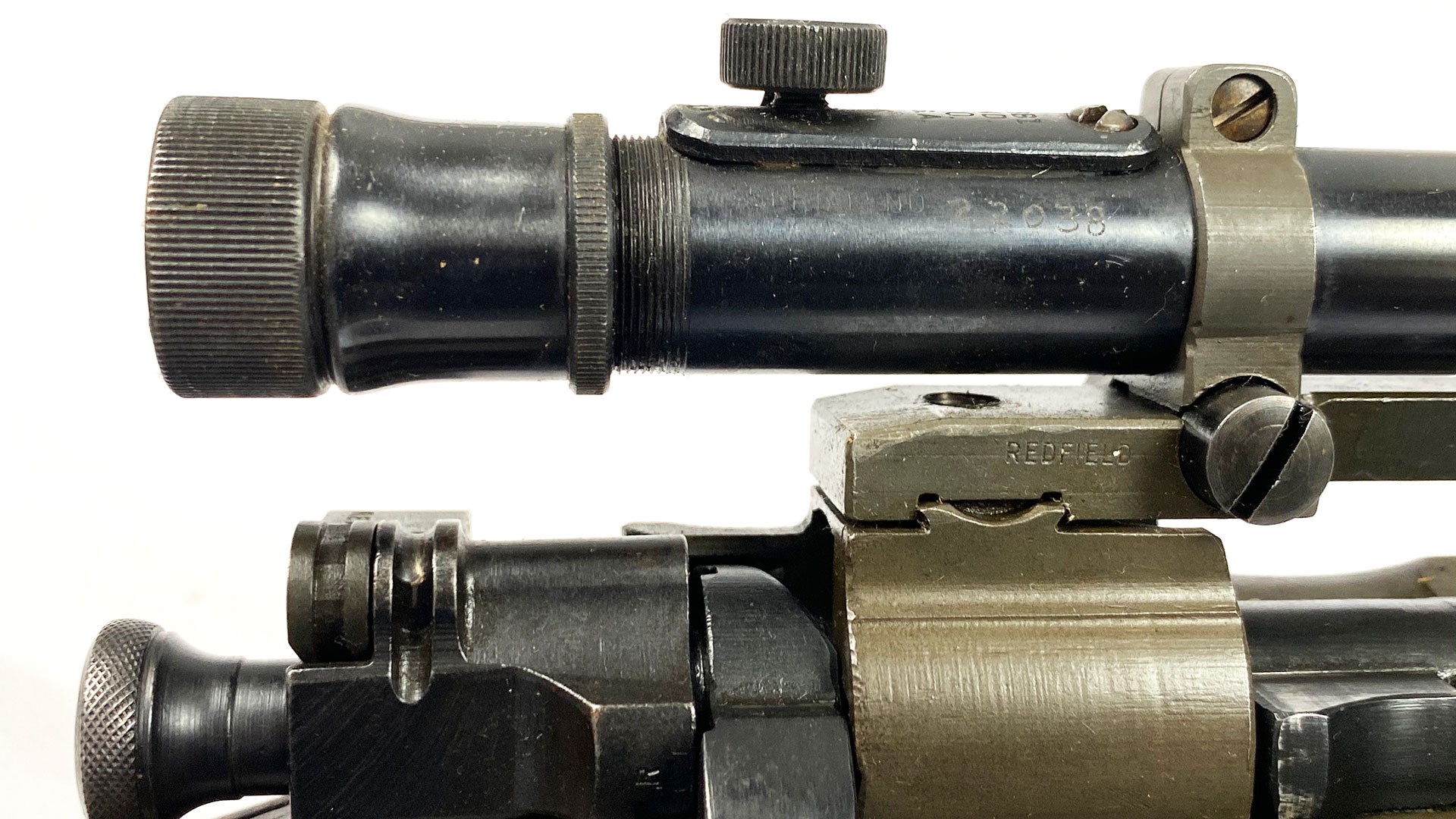 A close-up view of the back-rear portion of the receiver, with the back end of the Redfield Jr. mount dovetailed into what would have been the spot for the adjustable peep sight on a standard M1903A3.
Because the mount would fully obscure the standard service rifle markings, Remington chose to dramatically offset their manufacturers info and rifle model to the left side of the mount, and the serial number to the far right, in order to ensure that all were fully visible. This leaves, when the mount is removed, a large blank space smack-dab in the middle of the receiver (in addition to the mounting hole).
A modern collector can be sure they have a rifle originally configured as a M1903A4, and not a more recent “clone”, if it features this unique stamping pattern. Interestingly, Remington chose not to change the stamped nomenclature on these rifles, and all will bear factory “MODEL 03-A3” markings, although it’s not unheard of for rifles to have a hand-stamped “4”, possibly added later either during the refurbishment process, or by a diligent unit armorer seeking to square his rifles with his supply record.
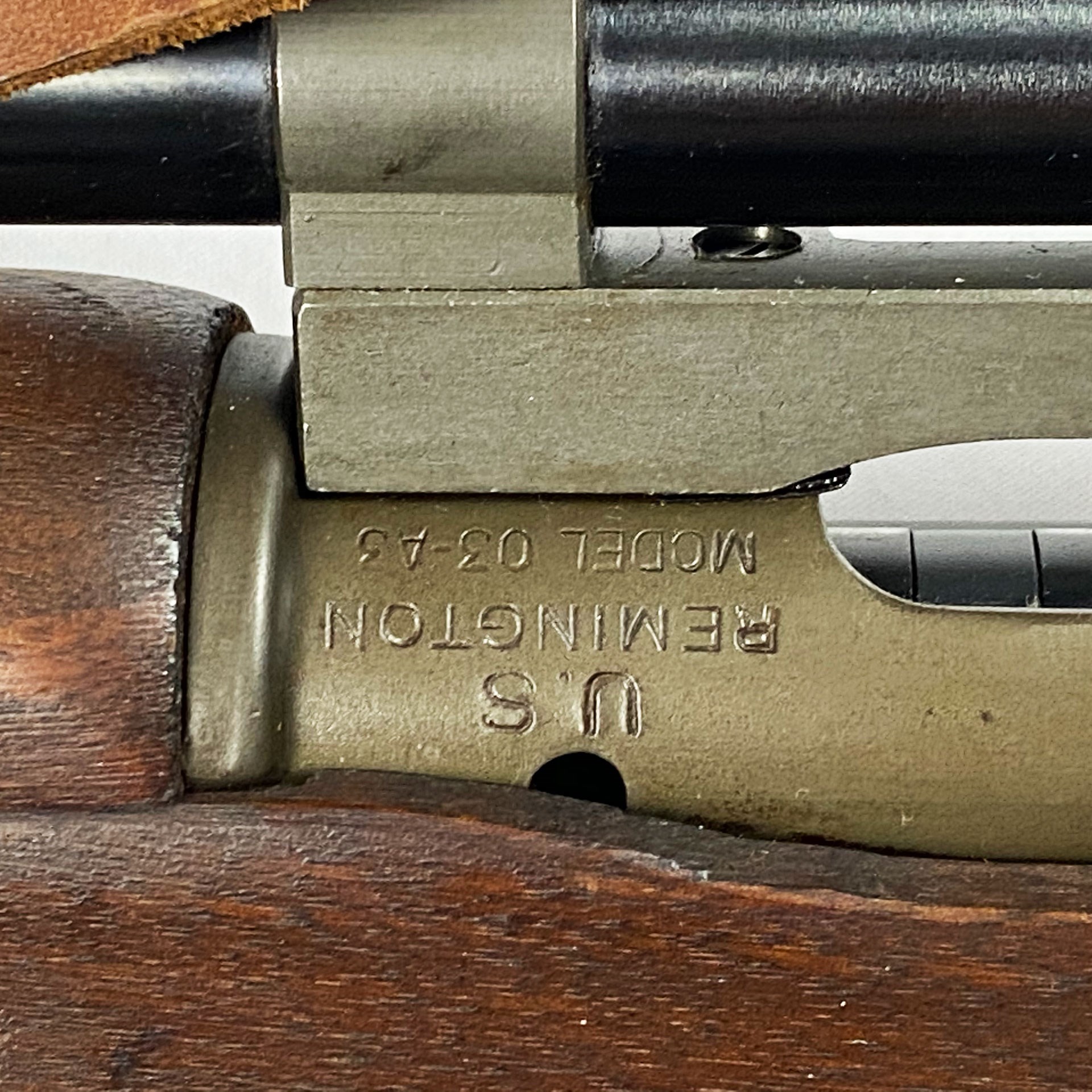 A closer look at the moved receiver roll marks on the left side of the receiver.
While the scope over bore positioning did present less risk of damage when compared to the high mount, it did prevent the use of both the iron sights and clip loading. In fact, on the M1903A4 the Army decided to omit iron sights entirely, leading to the rifle becoming mostly useless if the comparatively fragile scope became damaged by rough handling or environmental conditions. One other interesting side effect of the scope position is that it interferes with the safety operation, while you can wedge the safety into a 3/4 vertical position, it if far from secure or ideal.
This Rifle
The pictured rifle was produced in 1943, with a barrel dated from August of that year. It shows a correct mix of parkerized and blued parts, as well as the “scant stock“ variant that provides a semi-pistol grip. It has a number of clear cartouches, including “RA” – Remington Arms, “FJA” – Frank J. Atwood (the inspector), an ordnance wheel, and “S.A.” in a 3-sided box.
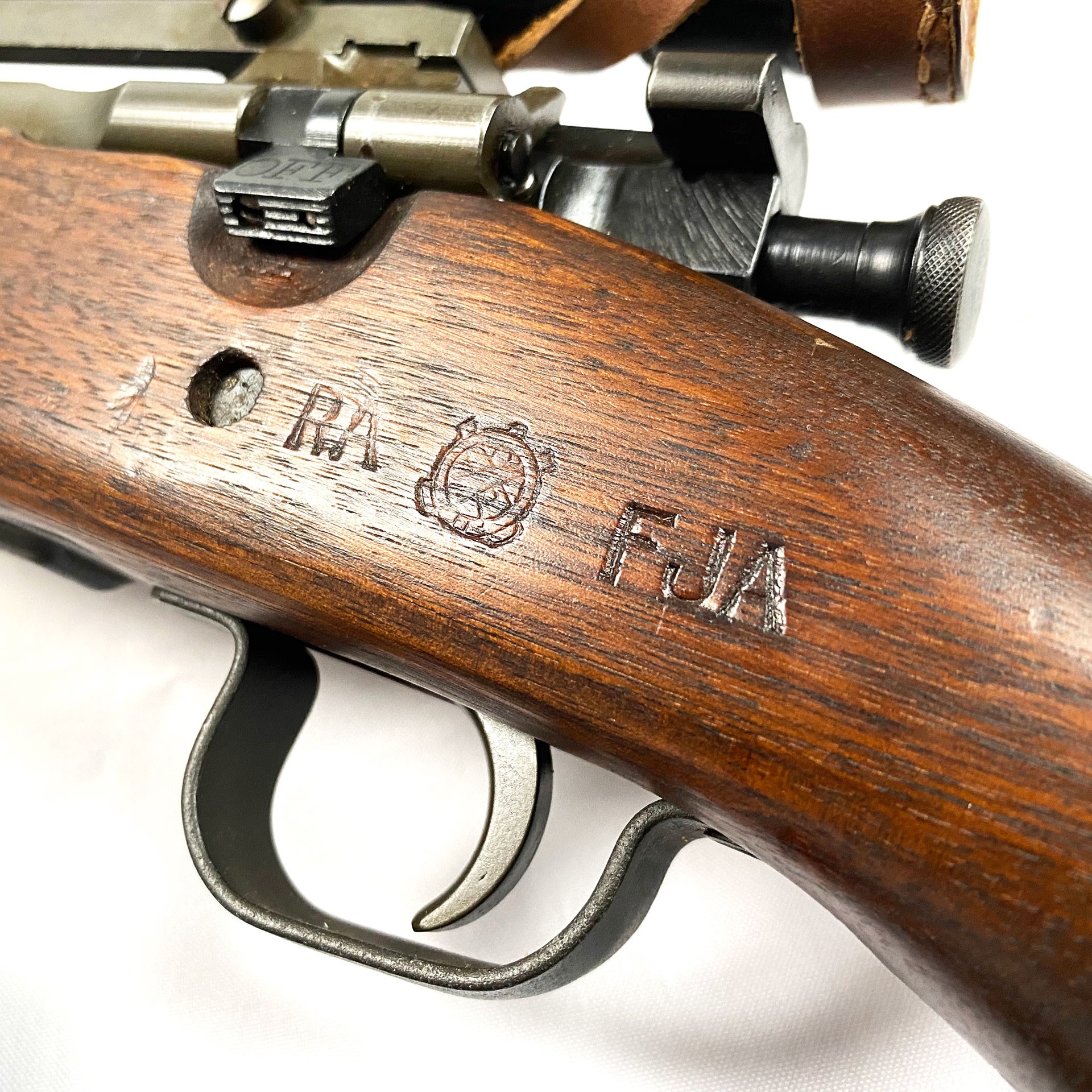 A closer look at the three main cartouches on the left side of the stock ahead of the wrist, with “RA” standing for Remington Arms, an ordnance wheel and “FJA” – Frank J. Atwood – inspector mark.
The final cartouche indicates that it was inspected / overhauled at Springfield Armory post-war, although it doesn’t look like too much refurbishment was done given the condition of the stock and the metal finish being generally consistent with wartime production.
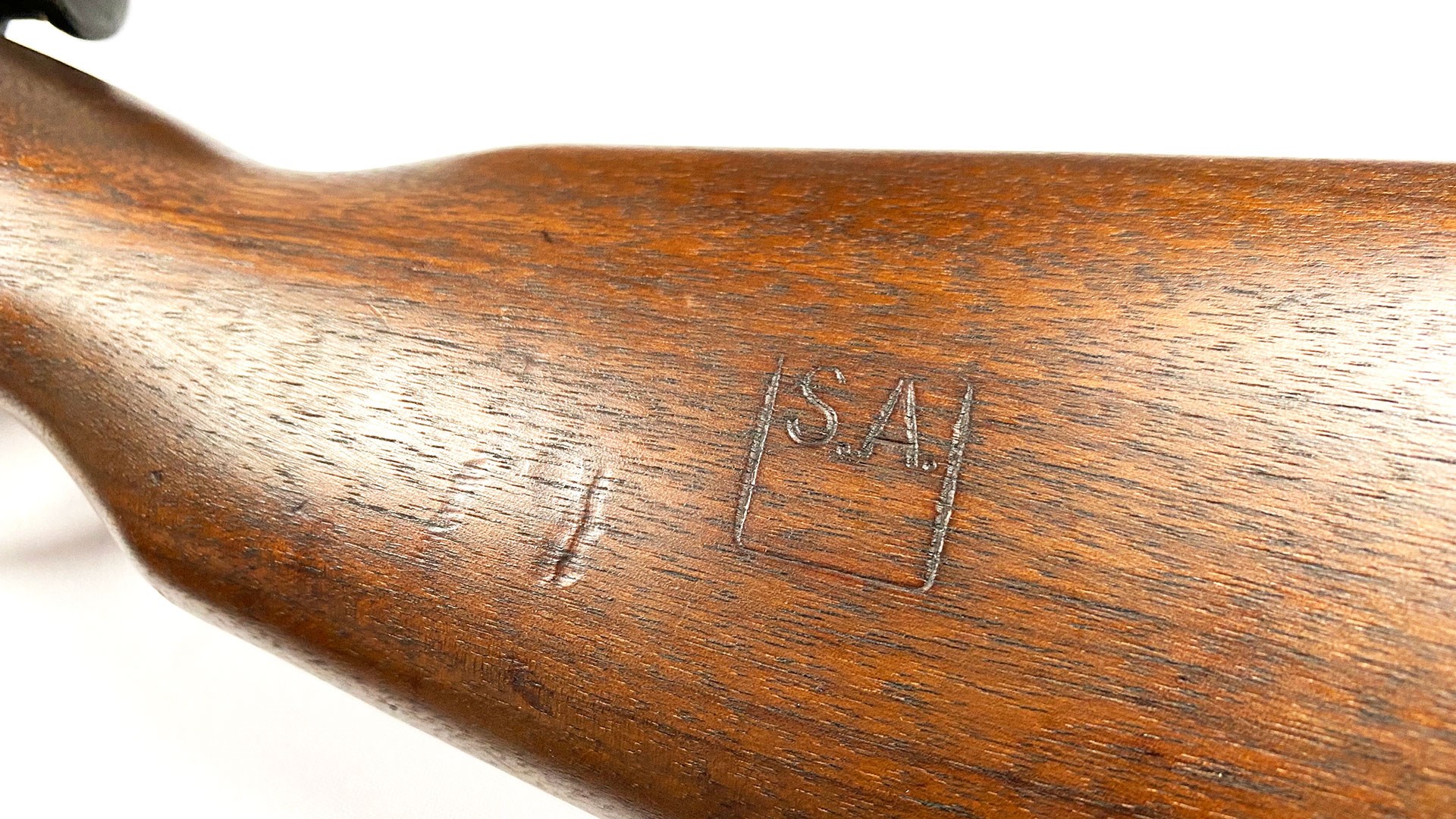 The “S.A.” cartouche inside an open square on the stock, indicating a post-war rebuild at Springfield Armory.
WW2’s Best Sniper Rifle?
Was the m1903A4 the perfect sniper rifle? No, absolutely not. In fact, Colonel Brophy considered it “at best a poor excuse for a sniper rifle”. But I’d suggest that, in light of the failure to adopt a superior sniper rifle and develop a sniper training program during the inter-war years, it was a suitable response by an Army that needed to put functional scoped rifles into the hands of soldiers rapidly and in great numbers.
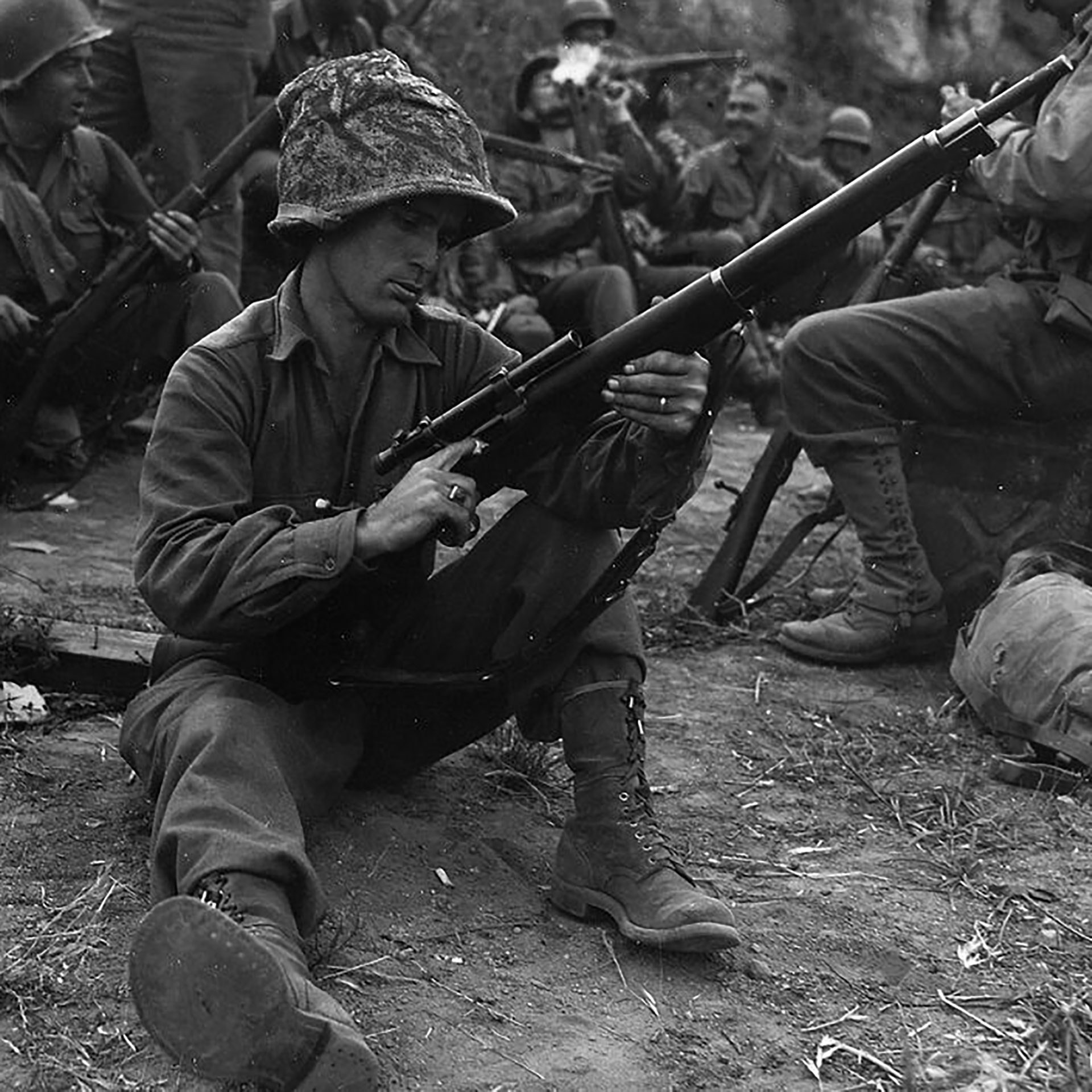 A U.S. soldier cleaning his M1903A4 during World War II. Note the standard M1903 rifles in the hand of the others in the background.
While entering the war with a well-developed and thoroughly tested sniper would have unquestionably been better, having this imperfect but serviceable rifle in the field during the bulk of US combat operations was certainly better than fielding the ultimate sniper system in Aug. 1945.
Categories
Maxim lMG 08/15 Zeppelin Gun







This is me when out in the field tired and sweaty. This was one of the only close-up pictures I had handy.
There is an implicit intimacy to our relationship, you and me. When you pen a lifestyle column like this one, personal stuff invariably serves as fodder for our weekly adventures together. If you have followed this Friday afternoon lunacy for more than a little while, you end up knowing more about me than perhaps you might wish to. That can be a two-edged sword.
Dave Barry is kind of my hero. Second only to perhaps the Apostle Paul, that guy is my hands-down favorite writer. He wrote a regular column for The Miami Herald that would often just leave me in stitches. Dave’s humor column was syndicated in newspapers across the country. I looked forward to each and every one. I own an embarrassing collection of his books.
Even today, whenever I refer someone for a colonoscopy, I encourage them to Google “Dave Barry Colonoscopy” a couple of weeks before. That will put them in the right mindset to have someone ram a giant snake-like medical instrument up their backside. If you have a free moment, check it out. You’ll thank me later.
Dave Barry was a very successful writer. His work was adored by millions. He won the Pulitzer Prize. By contrast, I pretty much write for ammo money. However, a guy can always dream …
Along the way, however, I felt like I kind of got to know Dave. I enjoyed the adventures he had raising his two kids. I knew each of his dogs by name. I followed along through his three marriages via details he shared in his regular columns. Tidbits of his style sneak into my work with some regularity. One of my favorites of Dave’s many inspired references was his use of letters from “Alert Readers” as column fodder. I do that myself from time to time as well.
Most of your letters and emails are kind and supportive. A few are deranged. One guy, and you know who you are, absolutely despises me because I maintained my dog Dog (both her name and her species) outside while living in the Deep South. Dog and I enjoyed each other’s company for 15 years before she died of natural causes.
However, this gent has repeatedly called me a “heartless bastard” for not letting my smelly outside dog sleep inside with the humans. He’s clearly not from the Deep South, where it is so warm and temperate. Alas, we eventually just agreed to disagree.

I recently received a most fascinating email from an alert reader. Paraphrased, it read, “Have an observation for Dr. Will Dabbs: You, sir, bear a strong resemblance to President Grover Cleveland’s wife, Frances … Keep up the great writing and thanks.”
My editor forwarded it on with this addendum, “Not sure if that was meant to be a compliment, an insult, or merely an observation …” As you might imagine, I immediately Googled Grover Cleveland’s wife Frances.
Frances Clara Folsom was born in Buffalo, New York, in 1864. Her dad and Grover Cleveland were law partners. Mr. Cleveland was 27 when she was born. Grover bought Frances her first baby carriage. The girl’s father was killed in an accident when she was seven.
Cleveland wasn’t yet married when he was first elected President at age 48. While rumors swirled concerning his love life — he was, after all, arguably the most eligible bachelor in the country — most enlightened observers expected him to propose to Frances’ mom, Emma. Imagine everyone’s surprise when old Grover proposed to the mere child whose first baby carriage he had purchased many years before.

This is Frances Cleveland. She supposedly died in 1947,
some 19 years before I was born. Or did she?
When they wed, Grover was 49 and Frances was 21. She was the youngest presidential spouse in American history. Yeah, that’s kind of creepy. However, by all accounts, they got along swimmingly. They ultimately had six children, though not all survived into adulthood. Frances was the only First Lady to deliver a baby in the White House.
Grover Cleveland was the only U.S. president to serve as chief executive, be defeated, and then win the same office again later. Frances, therefore, served as first lady of the United States from 1886 to 1889 and then again from 1893 to 1897. Frances was, likewise, the only first lady to serve two non-consecutive terms.
According to Wikipedia, the country adored the president’s radiant child bride. She read all of her letters personally and actually suffered orthopedic injuries from all the repeated handshaking. She maintained a close personal relationship with the White House staff, something that was, at that time, without precedent. When she left the executive mansion for the last time, she wept openly. After Grover’s death in 1908, Frances remarried five years later. By all accounts, she was a fine, upstanding woman who did credit to both her husband and her office.
So, I have now been accused of being a time-traveling transgender first lady. That’s a first for me. My people all hail from Virginia, Alabama and Mississippi. To my knowledge, I could not have been related to Mrs. Frances Cleveland. However, I included pictures of both of us. I think she favors my mom, herself an objectively beautiful woman. Draw your own conclusions …

What if your entire professional career distilled down to a single event? Imagine that you have one of the hardest jobs in the entire world. You have worked, struggled, sacrificed, and bled to reach the absolute pinnacle of your particularly grueling profession. You have toiled and trained countless days, weeks, months, and years so that at that one perfect crystalline moment you would be ready. Then out of the darkness, you place your hand on a terrified young woman who is hurt, sick, and hopeless and you say, “Jessica, it’s okay. I know you’re scared, but you’re going to be okay. We’re the American military, and you’re safe now. We’re gonna take you home.”
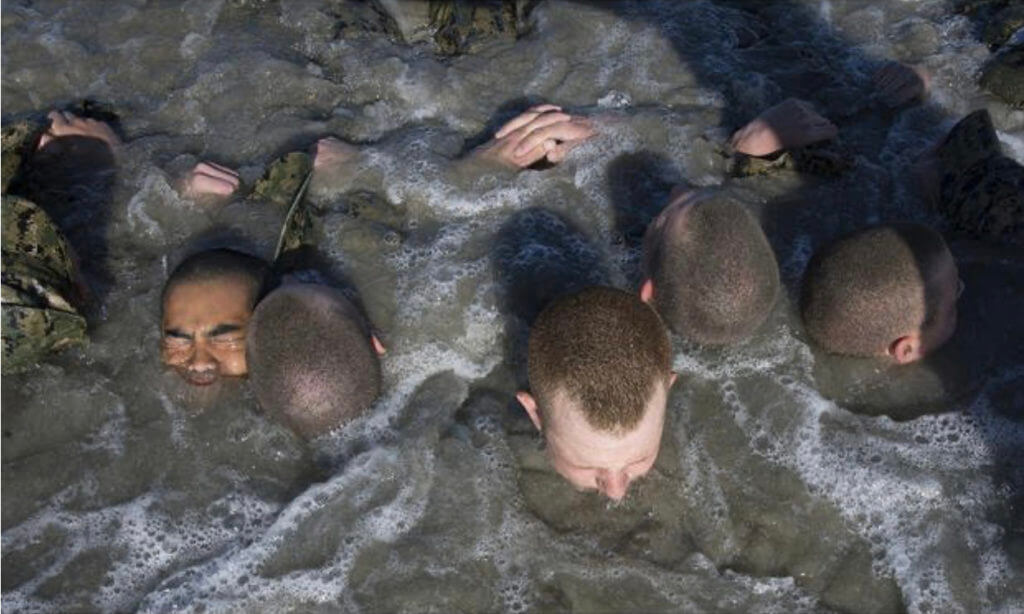
One nameless member of the US Navy’s SEAL Team 6 got to utter those very words on the evening of 25 January 2012. While for Jessica Buchanan that was likely the single most moving thing she had ever heard, that was likely a pretty epic moment for that Navy SEAL as well. Just thinking about it gives me the willies.

The Place
If hopelessness and depravity were minerals you dug up out of the ground, Somalia would be where you’d go to find them. I’m not sure if it is their dark angry religion, their generational legacy of abject squalor, or some heretofore unidentified toxin in the food or water, but something about Somalia just isn’t right. Not meaning to seem all judgy, but we were just trying to keep those people from starving and they fought us like there was no tomorrow. It’s honestly fairly surreal.
The Reality Of It
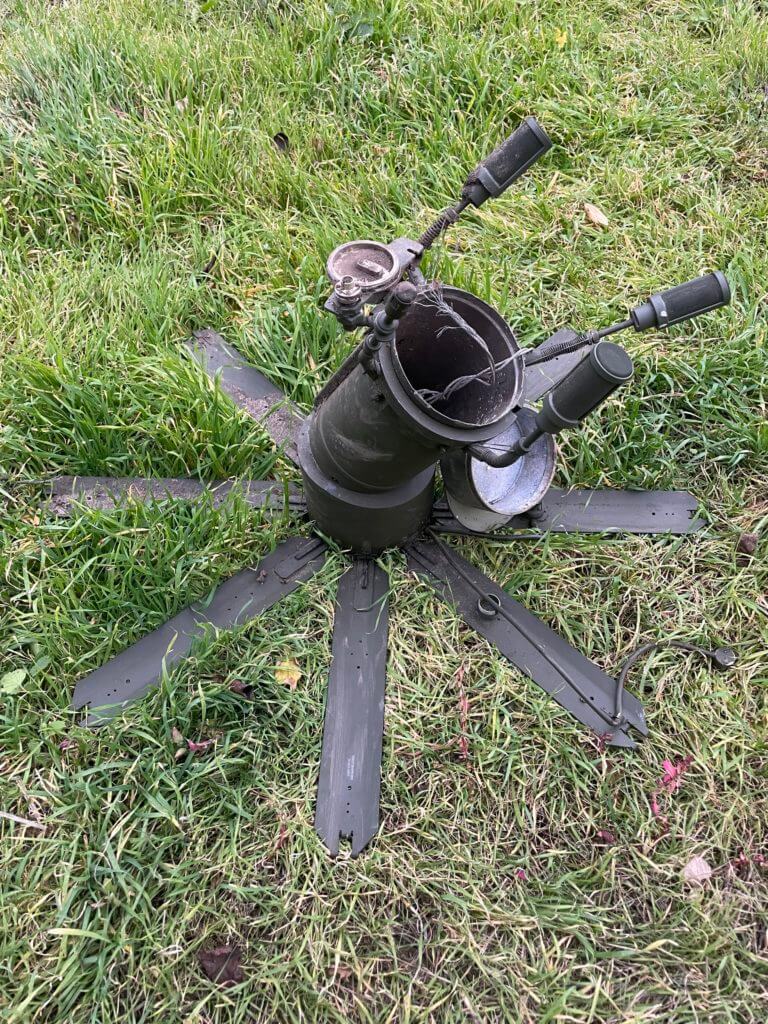
Arguably the greatest scourge in modern warfare is mines. These diabolical monsters are cheap, easy-to-use combat multipliers. It takes literally no talent to sow a decent minefield. Once activated, these things just sit quietly and wait for something juicy to wander by. They kill and maim efficiently, effectively, and indiscriminately. The problem is that in many to most cases there is no way to turn them off.

Mines are emplaced most commonly from a state of desperation. There are seldom accurate maps produced that document their locations. Even if there were, those maps would never be 100% reliable. Older generation mines lack a self-destruct system, so they can remain in place for years if not decades after whatever war that spawned them is complete. At that point, hapless farmers or children playing can trip over the things with predictably horrible results. So it was with Somalia.

Somalia is a simply horrible place in the Horn of Africa. It is home to some 17 million people. The nation’s terribly unfortunate geography synergistically combines with some epically bad governance to produce cyclical famines and friable infrastructure. In 1993 we lost seventeen servicemen killed and another hundred or so wounded just trying to keep local Somali warlords from seizing international food aid and using it to enhance their personal power. Nineteen years later in 2012, you’d think we’d have learned our lesson. However, with the benefit of hindsight, I suppose we didn’t.
The Setting

In October of 2011, American Jessica Buchanan along with a Dane named Poul Hagen Thisted were working through the Danish Refugee Council in Somalia on a wide-ranging demining project. Their stated goal was to teach Somali children how to survive in a mine-rich environment. That seems an honorable pursuit to me. However, one motley contingent of Somali pirates apparently felt otherwise.

With the uptick in maritime attacks off the eastern coast of Somalia, the free world’s navies began patrolling these pirate-infested waters regularly and aggressively. Shipping companies also posted armed security contractors onboard their transiting vessels. As a result, the pirates’ traditional hunting grounds dried up. In response, these bottom-feeding parasites began prowling inland for Western aid workers like Buchanan and Thisted.

Jessica Buchanan was an English teacher from Ohio out to save the world. While traveling cross country in a trio of land cruisers en route to the city of Galkayo, Jessica’s group was attacked by the aforementioned Somali pirates. These modern-day brigands kidnapped Buchanan and her Danish friend before driving them for hours with weapons pointed at their heads. The two captives were later forced to walk throughout the night to a militarized compound in Galguduud some 90 miles inland from the Indian Ocean. There they remained…for 93 days.

It’s not that the United States government had forgotten about Jessica. It is simply that her captors were a bunch of greedy unwashed psychopaths. They demanded $45 million to release their captives. Negotiations eventually resulted in an offer of $1.5 million cash, but the pirates felt that they could do better. Meanwhile, Jessica was getting sick.

Jessica had a thyroid condition that demanded daily medication she was no longer receiving. In addition to inadequate food and unsanitary water, she developed a urinary tract infection (UTI). Out here in the World, that’s a week’s worth of antibiotics and a little cranberry juice. In the desert wastes of Somalia, an untreated UTI meant a slow miserable death. It eventually became clear that something had to be done.
The Op
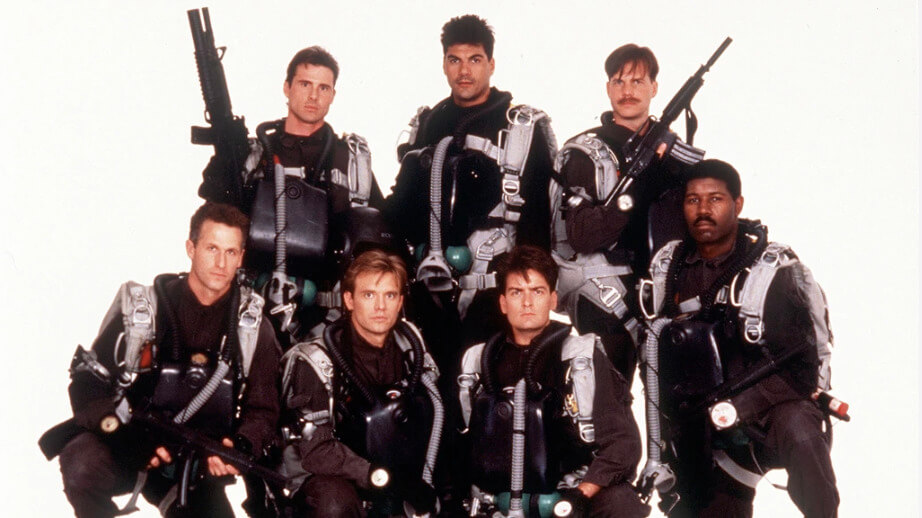
I have it on reliable information that movies are not actually real. However, the rescue of Jessica Buchanan and Poul Hagen Thisted was movie-grade awesome. It all started with a tactical parachute jump out of an American cargo plane.
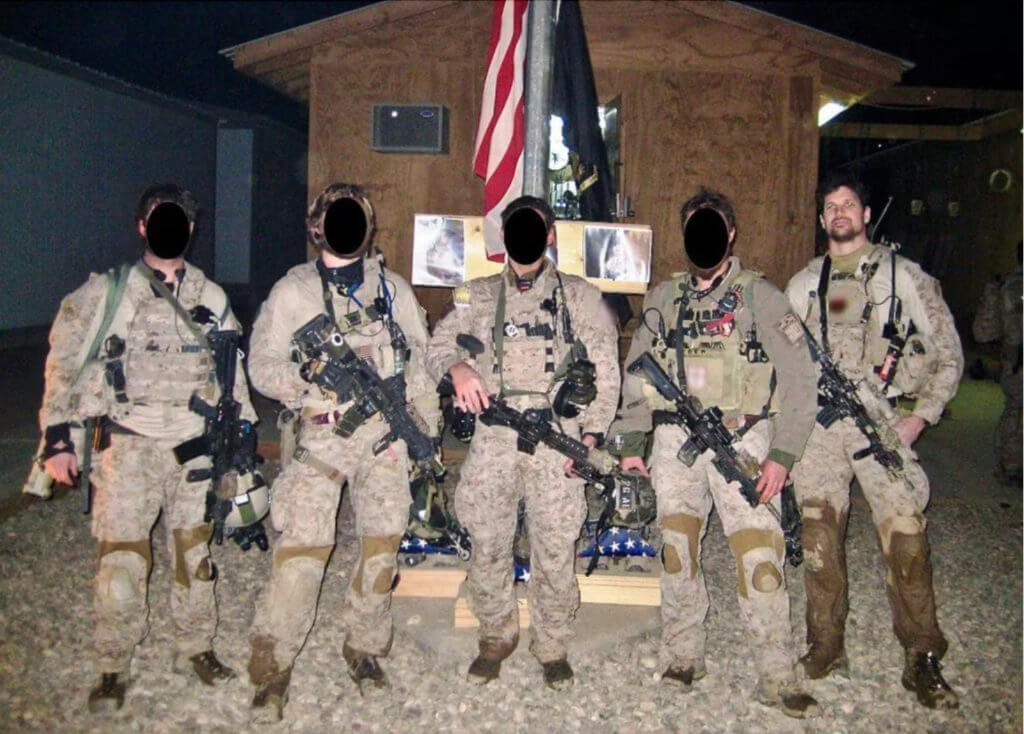
The players were DEVGRU—the US Navy’s SEAL Team 6. These high-speed frogmen were still riding high after having killed Osama bin Laden roughly five months before. Now on the ground in eastern Africa, 24 operators covertly ditched their chutes and formed up for a cross-country march to the Somali pirates’ evil lair.
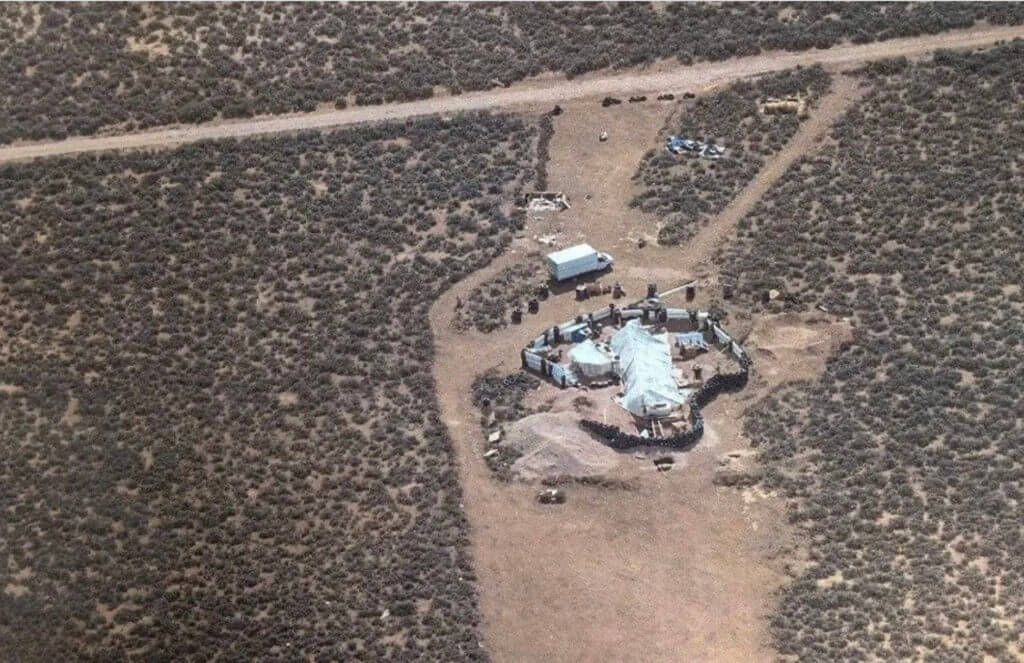
The pirates had done their part to help out. As they were now conducting terrestrial operations, that meant a discrete static compound irrevocably tied to geography. This fact facilitated aerial surveillance. By the time they parachuted out of that airplane, the SEALs knew exactly what they would be facing.
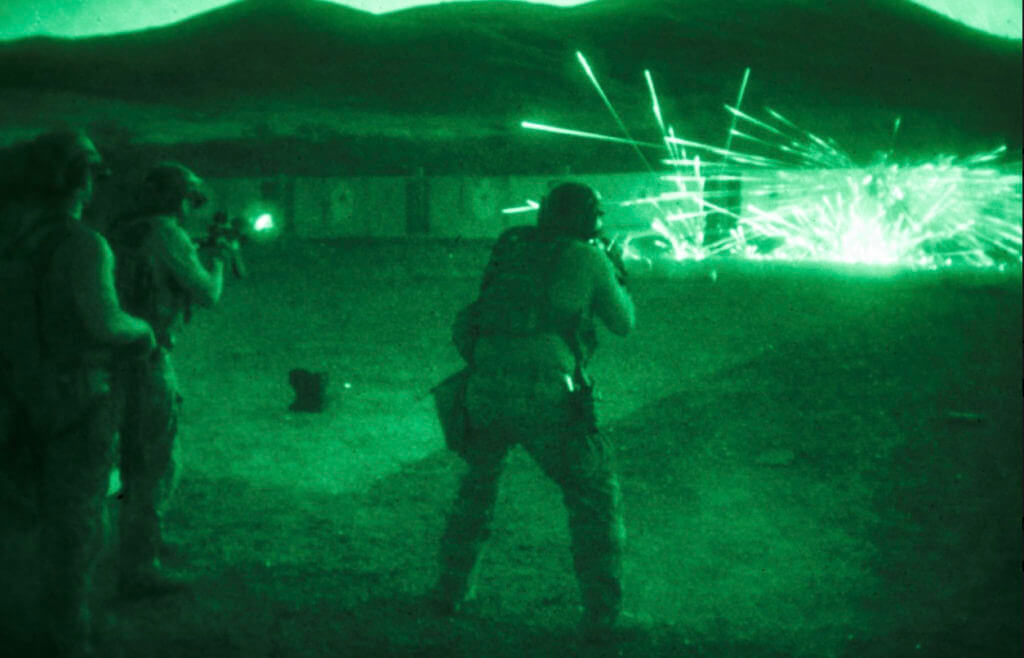
Jessica later said that she and her captors heard what sounded like rodents scurrying in the bush. Her guard shouted an alarm to his comrades, and then the whole world exploded. At this point, Buchanan had no idea that these were American special operators. At the time she feared al-Shabaab terrorists or a rival pirate mob. She later confided that she did not think she could survive being kidnapped yet again.
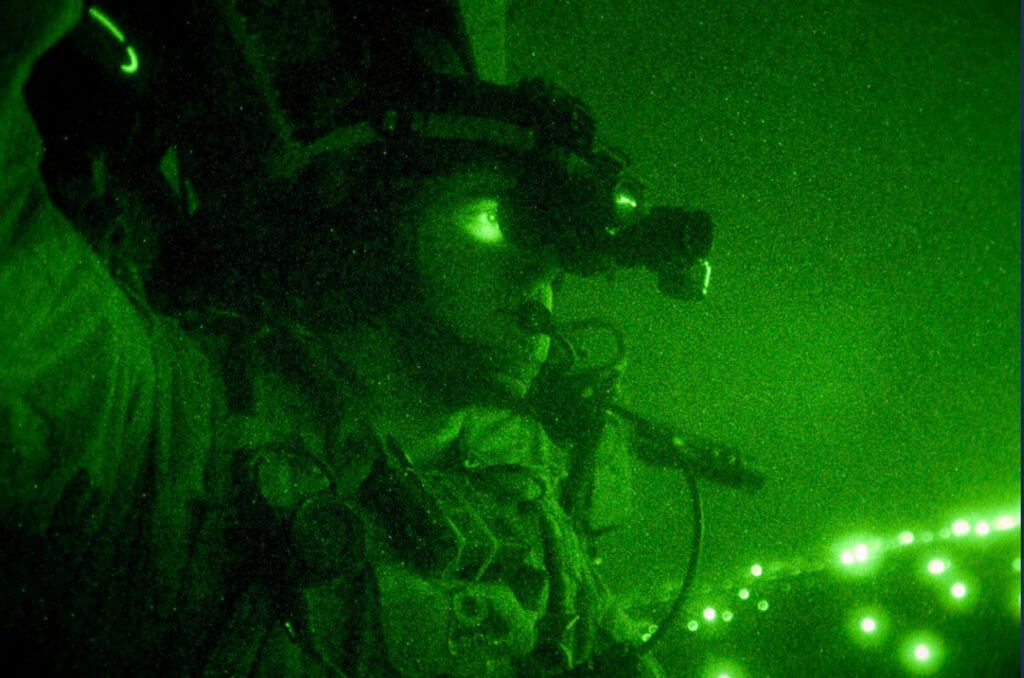
Throughout it all, Buchanan and Thisted just curled up and tried to be small. Now nearly delirious with malnutrition and disease and expecting death at any moment, the American captive heard those words she had long dreamt of hearing. I obviously wasn’t there, but I can guarantee you that whoever first reached Jessica on that horrible chaotic night had trained their entire professional life for that specific moment.
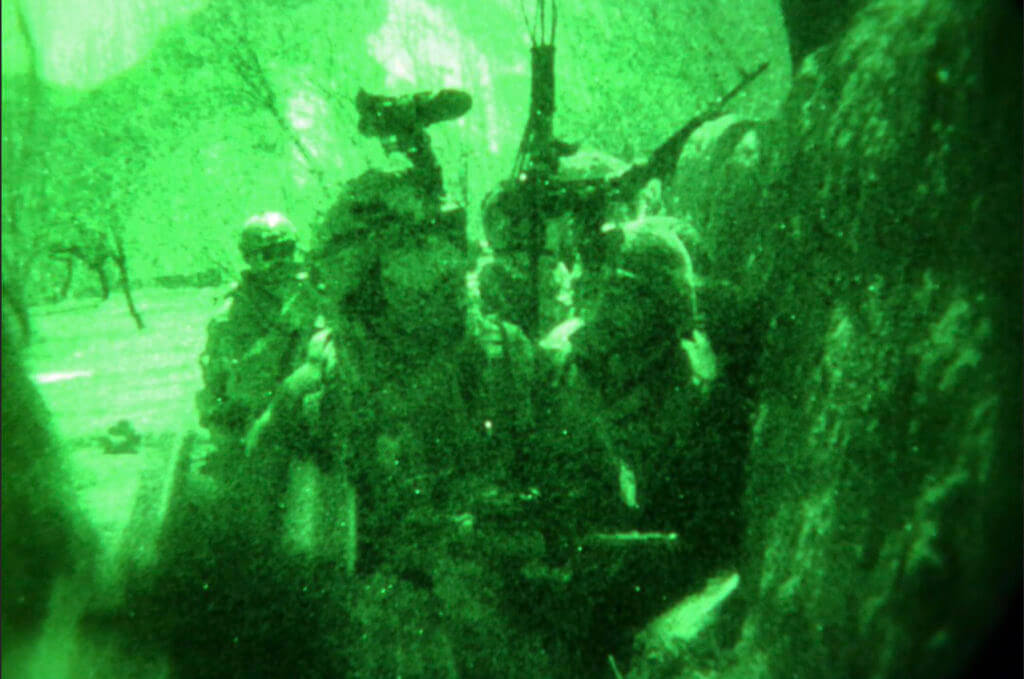
SEALs do their best work at night. The pirates really never had a chance. They unlimbered their AK’s, but the SEALs, equipped with state-of-the-art night vision and the finest intelligence and logistics support on the planet, were an unstoppable force. In moments, the SEALs had killed nine pirates. There were unconfirmed rumors that they might have captured another three, but I couldn’t find any references to what became of them. Piracy as a career path doesn’t offer much of a retirement plan.

When she was rescued, Jessica was shoeless and unable to walk. One of the burly SEALs just threw the thin woman over his shoulder and jogged to safety. As they waited for the exfil helicopters the SEALs made a circle around the captives. When they heard what they thought were pursuing pirates, the frogmen physically shielded them with their bodies.
Once they were safely aboard the helicopter one of the SEALs gave Jessica a folded American flag. She later said, “I just started to cry. At that point in time I have never in my life been so proud and so very happy to be an American.” I hate to tell you this, but if you can read that without being moved then something about you is broken.

Buchanan and Thisted made full recoveries. Thisted later stated that his lucky break was being captured with an American. None of the attacking SEALs received so much as a scratch.
The Weapons
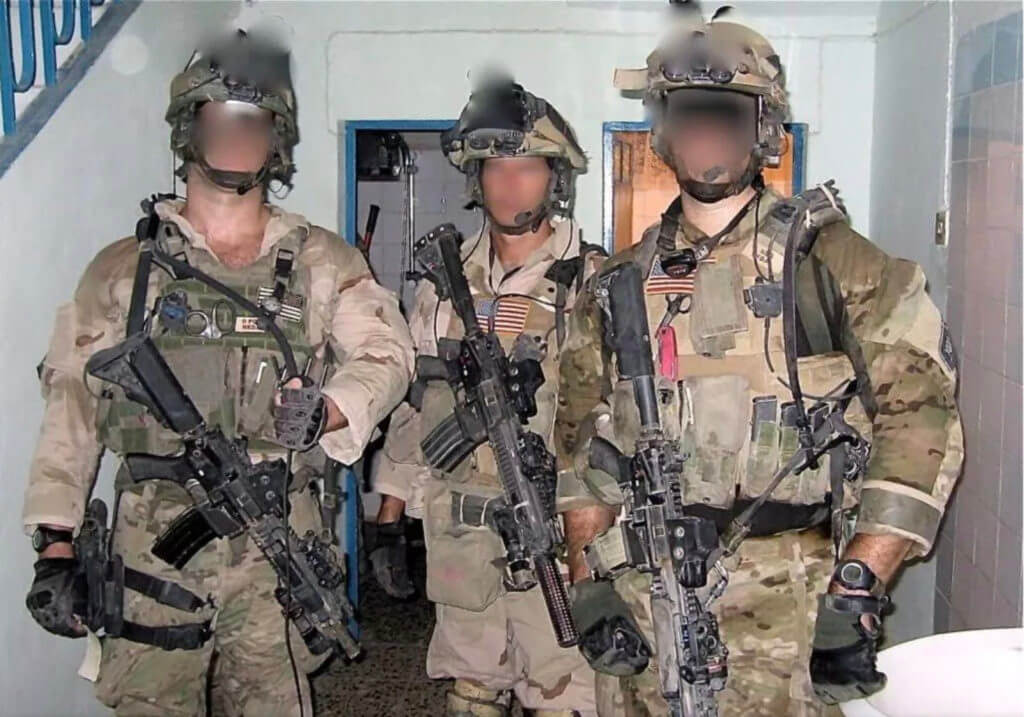
DEVGRU and the Army’s 1st Special Forces Operational Detachment-Delta are our Tier 1 counter-terrorist units. They are as highly trained and exquisitely equipped as our great nation is capable of making them. The end result is the most capable military force in the world. Their standard assault rifle reflects that same rarefied mantra.

The HK416 was a collaborative effort in the late 1990’s between Delta and Heckler & Koch. Representing a holy melding of the M-4 carbine and the short-stroke, piston-driven gas-operated system pioneered in the ArmaLite AR-180, the HK416 combined world-class reliability with superlative ergonomics. The end result changed the game a little bit.
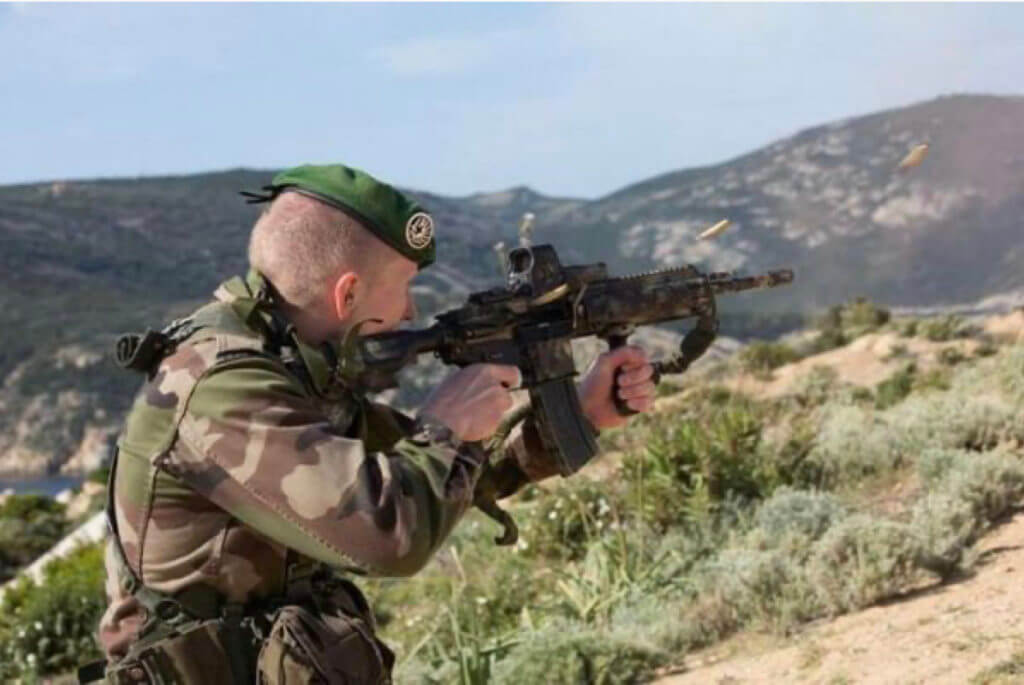
Nowadays the HK416 has been officially adopted by the militaries of France and Norway. The US Marine Corps also fields the weapon in a slightly modified form as the M27 Infantry Automatic Rifle. The HK416 maintains a sterling reputation for accuracy and reliability.
The Aftermath

One of the ways Jessica coped with her protracted captivity was by imagining that she and her husband Erik might someday have a baby. These episodes eventually evolved to the point where she visualized her child, a boy, alongside the two of them in a place of complete comfort and safety. As the weeks stretched into months and her health began to fail this exercise helped keep her strong.


Jessica and Erik were reunited at a military base in Italy. She was thin, emotionally wrecked, and traumatized both mentally and physically. Four weeks later she began throwing up. The nausea got progressively worse until it manifested almost every time she ate. Jessica naturally assumed it was a function of the rich food to which she had become so unaccustomed.
Soon thereafter, she had a positive pregnancy test. 8.5 months after her rescue she and Erik welcomed their son. God’s got a weird sense of humor sometimes, but that strikes me as a pretty cool way to commemorate her rescue.