Month: April 2024
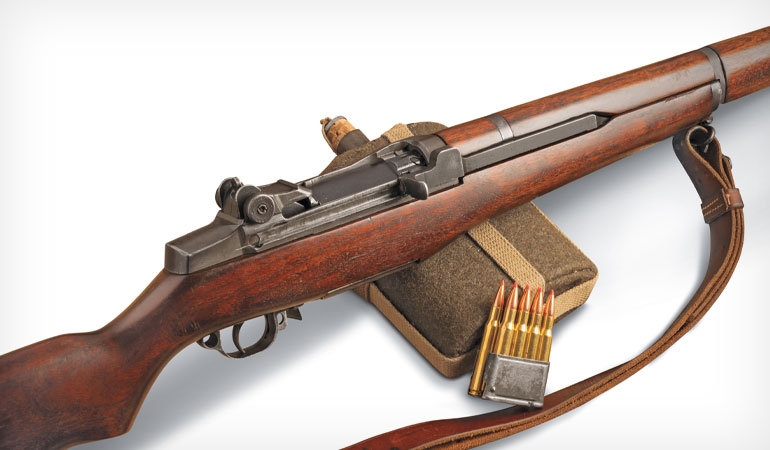
The M1 “Garand” rifle is objectively heavier than bolt-action rifles and specifically all those that fought in the war. But when you have the rifle in your hand, that weight translates into sturdiness. That is the feeling it conveys, that of a strong and robust weapon, not a heavy weapon. That perception is accentuated when shooting with it.
Then everything fits, because that weight and that robustness, which is a perception that you have a lot to do with the forceful design of the weapon and especially the shape of its butt/handle, is perfect to prevent recoil from dislodging you. You get the feeling of shooting a very balanced rifle and then the weight factor is diluted. I say all this by stating that I am by no means a regular shooter, nor an expert on the subject.
Regarding breakdowns, the M1 had some during the war. The biggest was in the design of the gas intake cylinder, which caused the firing cycle to be interrupted and forced it to be completely redesigned. In addition to that and others that I described in the article, which were solved very early on, there were others that came to light during the conflict and were solved along the way.
One of them was that the mounting lever, being integral with the piston, could break at a certain point after too much use. It was not serious at all, but it did mean that almost at the end of the war all field workshops received the order to make a small circular cut at the point where the piston rod joins the lever in all rifles. Received for any type of repair, in order to relieve the tension of the lever. This is why rifles where that cut is not present are somewhat rarer to find.
Another “illness” was that the firing cycle would sometimes stop when exposed to long periods in the rain. The solution was to give the soldiers very small bottles of a special oil called “Lubriplate” that had to be poured around the bolt to lubricate it and that completely solved the problem. The canisters were designed to be stored inside the buttplate of the rifle.
Another relatively notable “failure” was in the finish of the gas cylinder, located in the muzzle of the rifle. Being made of stainless steel, it could not be parked, but a special paint had to be applied. With use in combat conditions, the paint would peel off and the shine on the metal could give the soldier away. The solution was to create a new paint mix that was more durable than the old one.
Regarding the last question, the truth is that the feeling that I have after reading a lot of literature on the rifle is that there was never a very enthusiastic attempt to turn the M1 into a sniper rifle. I get the feeling that this position was well filled by the Springfield M1903 and that the Ordnance Department never made much of an effort to make the M1 its replacement.
Keep in mind that the power system of the M1 prevented putting a scope “as God intended”. I imagine that the sight that was placed on the M1C would not be very pleasing to an elite shooter due to its forced position and surely he had to make some additional correction to compensate for such a strange position. Consider that no M1 modified as a sniper rifle was shipped to Europe during the war. On the other hand, the standard M1 rifle was actually pretty accurate overall if it was in the right hands. No soldier complained that it was inaccurate in combat.
Johnson’s rifle was mechanically just as good as Garand’s, and had even more capacity. However, from what I’ve read, it was somewhat more complicated to mass-produce than the M1, which is another reason it was scrapped. It was also unclear whether it would have been reliable enough in the hands of an infantryman, as only elite troops used it in the war. There is no doubt about the behavior of the M1 Garand, which fulfilled perfectly and demonstrated its qualities and quality during two wars.
It is curious that, like other weapons of its time, the old M1 has continued in the gap, hitting shots to this day, as if it refused to die. That says a lot about its robustness and reliability. As an example, this photo of an M1 captured in Iraq, in the last war.
If you had every dollar America spent on defense from the end of WW2 to the end of the Cold War you could raze and rebuild every manmade structure in the United States. Spinoff technologies brought us such stuff as duct tape, GPS, digital photography, and many common feminine hygiene products (first improvised out of cellulose bandages by British and American Army nurses in World War 1).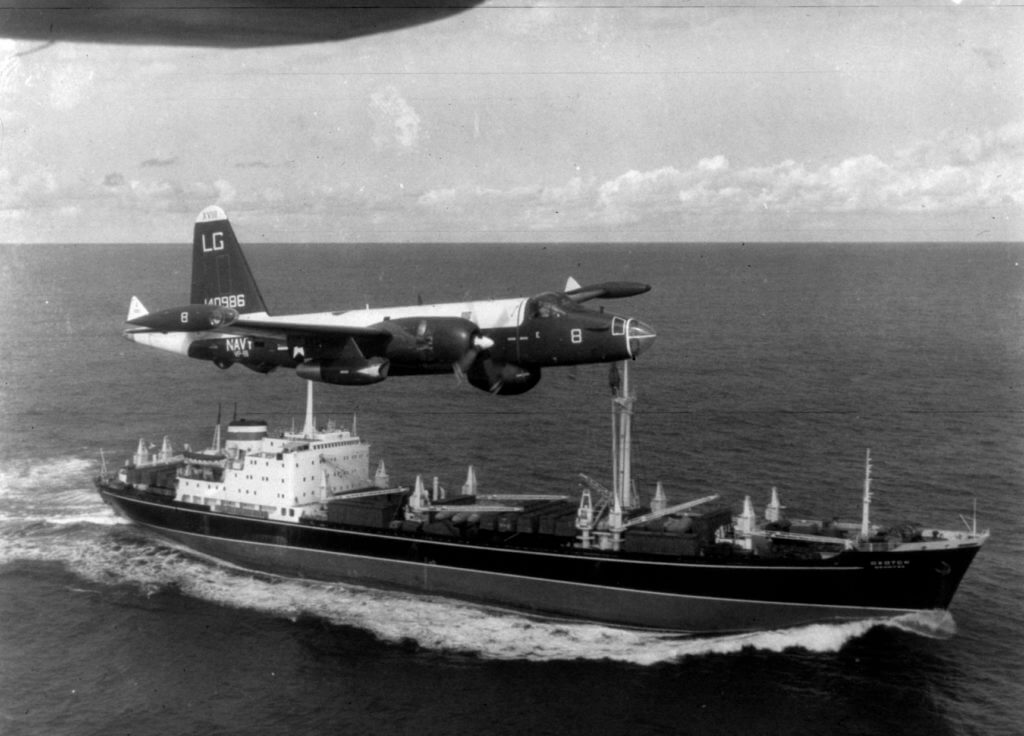
The Cold War raged from 1947 until the fall of the Soviet Union on Christmas Day 1991. This protracted period of geopolitical tension was characterized by a tit-for-tat arms race that saw each side responding to advances of the other. Military Intelligence was and still remains an inexact science. Sometimes the various thrusts and parries resulted in truly astronomical monetary expenditures.
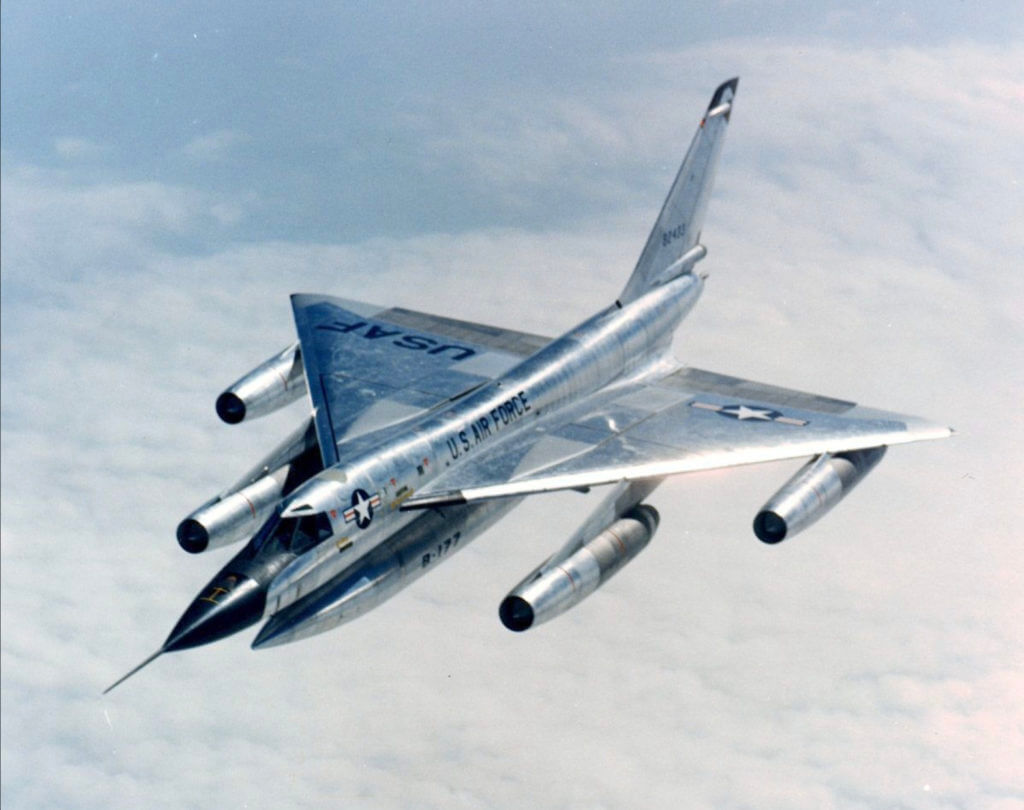
In few other areas did the arms race achieve more rarefied heights than in the competition over warplanes. Between 1903 and 1943 aviation technology went from the Wright Flier to the B-29 Superfortress. From 1943 until 1956 the state of the art advanced from the lumbering B-29 to the supersonic B-58 Hustler. With each advance in bomber technology came corresponding bounds in fighter tech to counter it. Then came the XB-70 Valkyrie.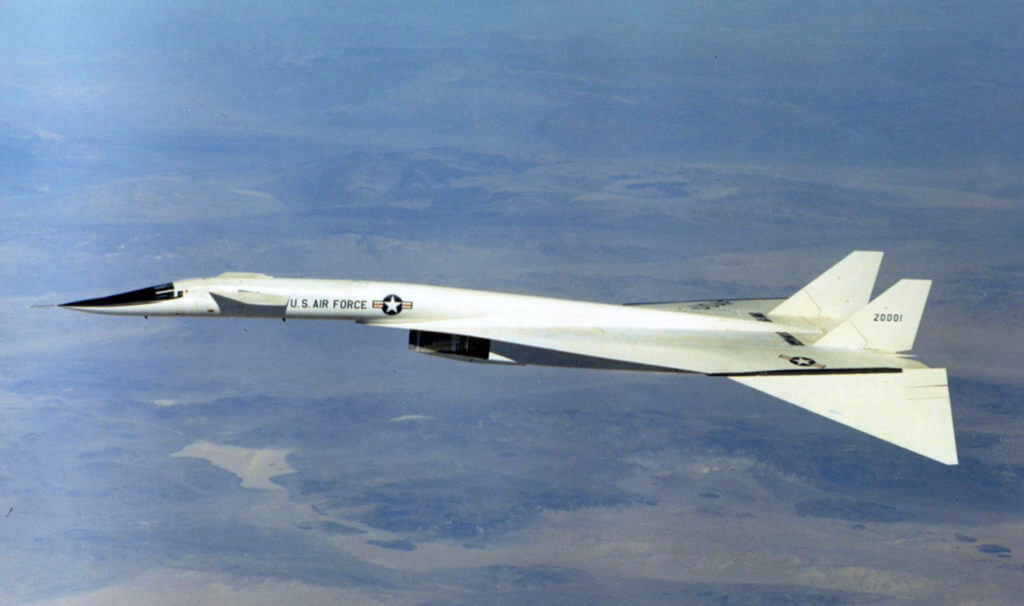
The B-58 had a maximum speed of 1,319 mph (roughly Mach 2) and a service ceiling of 63,400 feet. By contrast, the XB-70 topped out at 2,020 mph (Mach 3.08) and could reach 74,000 feet. This put it out of reach of Soviet interceptors. For the Russians this was a world-class crisis.
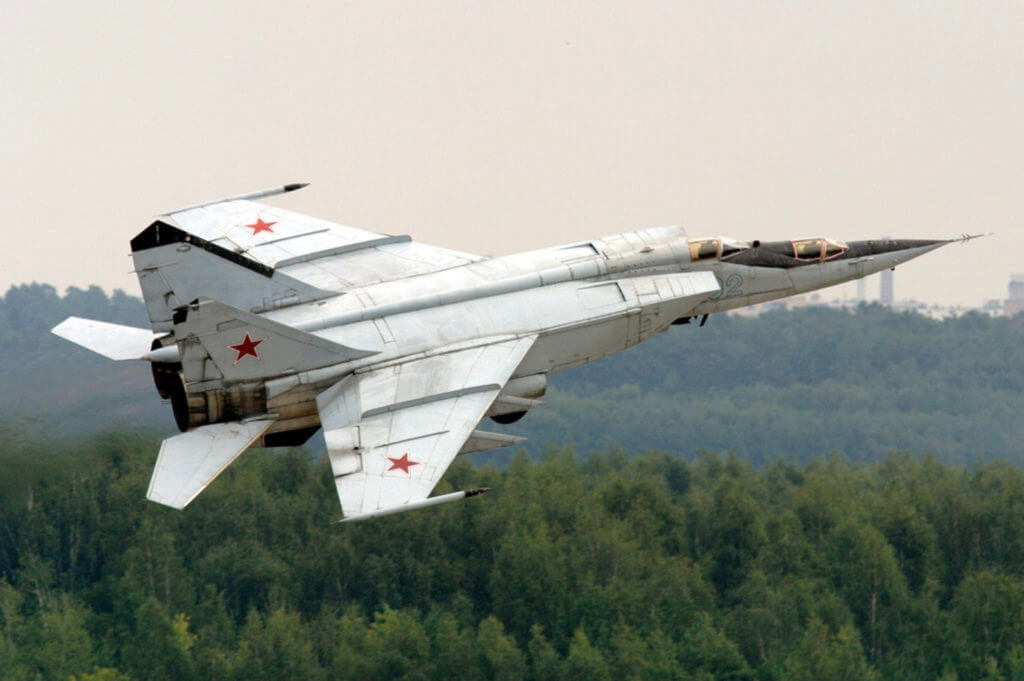
Paranoia ruled the day. Loss of parity could result in a first strike weapon that would become an existential threat. When faced with a supersonic bomber of unprecedented capabilities, Soviet fighter designers got busy. The end result was the MiG-25 Foxbat.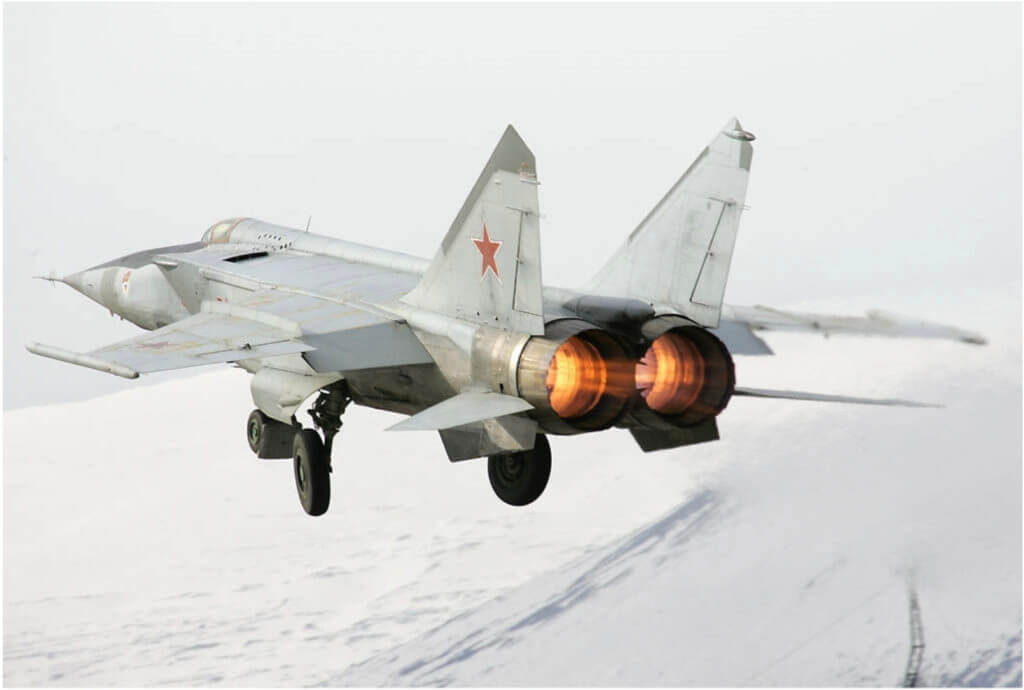
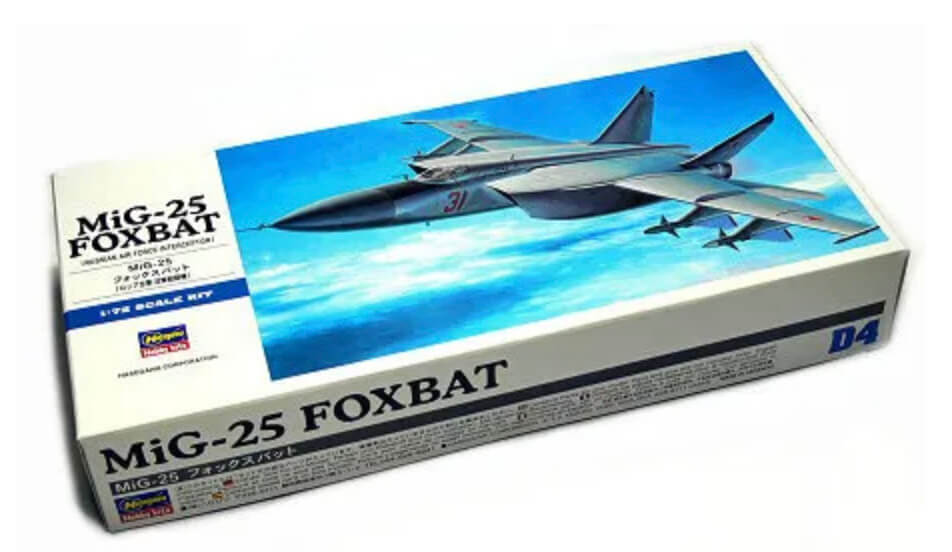
Developed emergently by the Mikoyan-Gurevich design bureau using radical applications of existing technology, the MiG-25 was Russia’s answer to the XB-70 Valkyrie. First flown in 1964, the type saw its first operational deployment in 1970. On the surface, the MiG-25 was terrifying.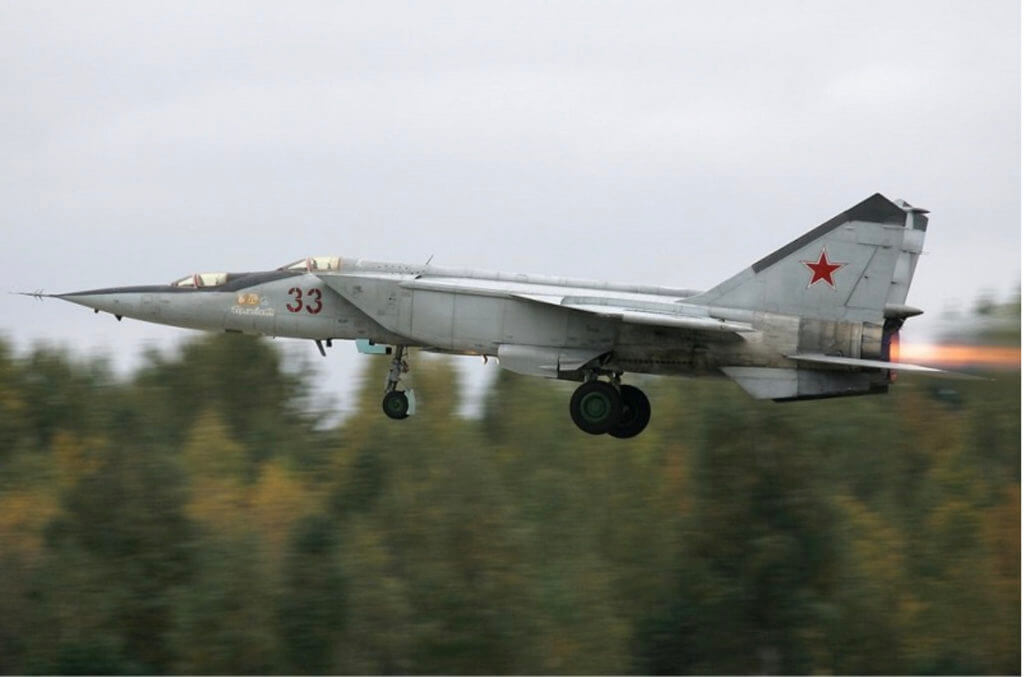
At 78 feet long the MiG-25 was an absolutely massive fighter plane. Additionally, its wings were enormous, intimating a highly maneuverable airframe. The two Turmansky R-15B-300 afterburning turbofan engines on the MiG-25 had originally been designed to power drones and were not intended to have a lengthy service life. The first examples were only good for about 150 hours between engine changes. The final package, however, was the fastest fighter interceptor ever created.
One Disgruntled Pilot Changes Everything
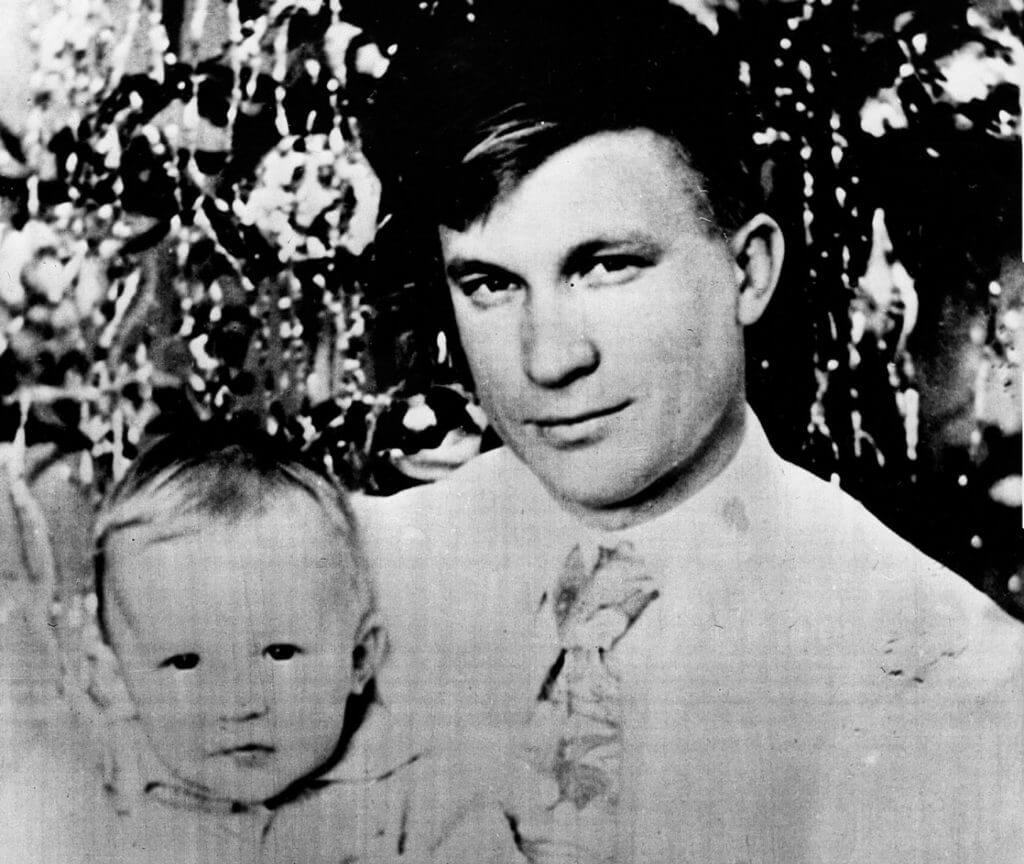
Viktor Belenko was born in Nalchik, Russia, on February 15, 1947. By his 29th birthday, LT Belenko was at the top of his game. He had a wife and a young son and was posted to Chuguyevka Air Base flying the most advanced fighter aircraft his nation fielded. LT Belenko was the poster child for 1970’s-era communism. Under the surface, however, all was not well with the Soviet Air Defense Force’s fair-haired boy.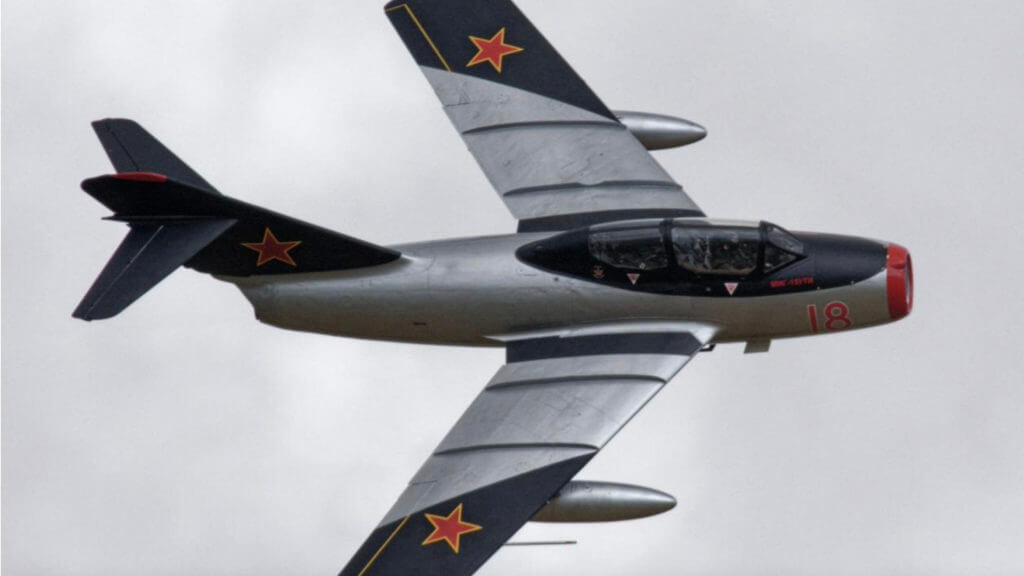
The CIA and the USAF had an illustrious history of trying to coax communist pilots into defecting with their combat aircraft. Operation Moolah was an unsuccessful effort at bribing North Korean pilots to defect with a then-state of the art MiG-15. North Korean LT No Kum-Sok did land his MiG-15 at Kimpo Air Base in South Korea in 1953, but he had been unaware of the program.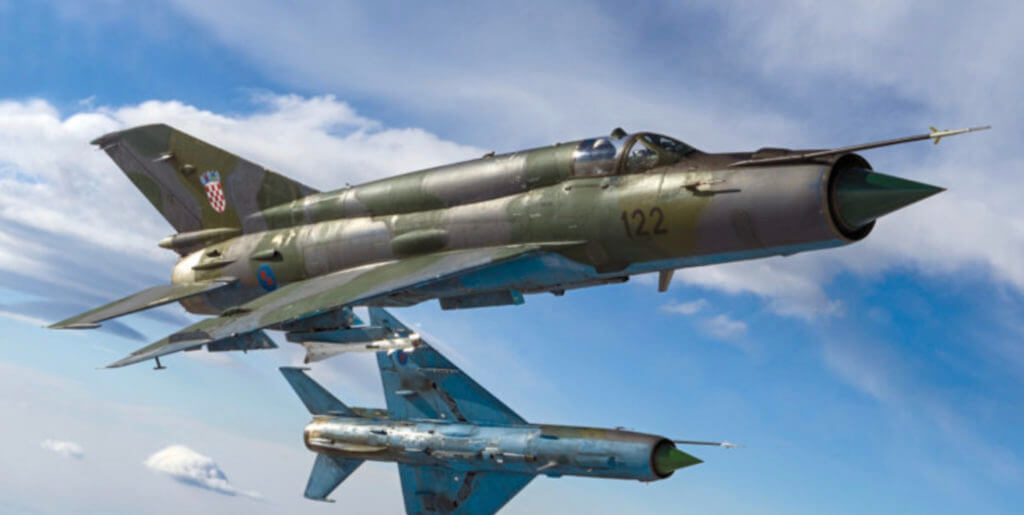
Operation Fast Buck was a similar effort aimed at North Vietnamese pilots. Operation Diamond was an Israeli enterprise that did actually bag them an Iraqi MiG-21. In 1976, however, Belenko’s motivations were a bit closer to home.
Corruption in the System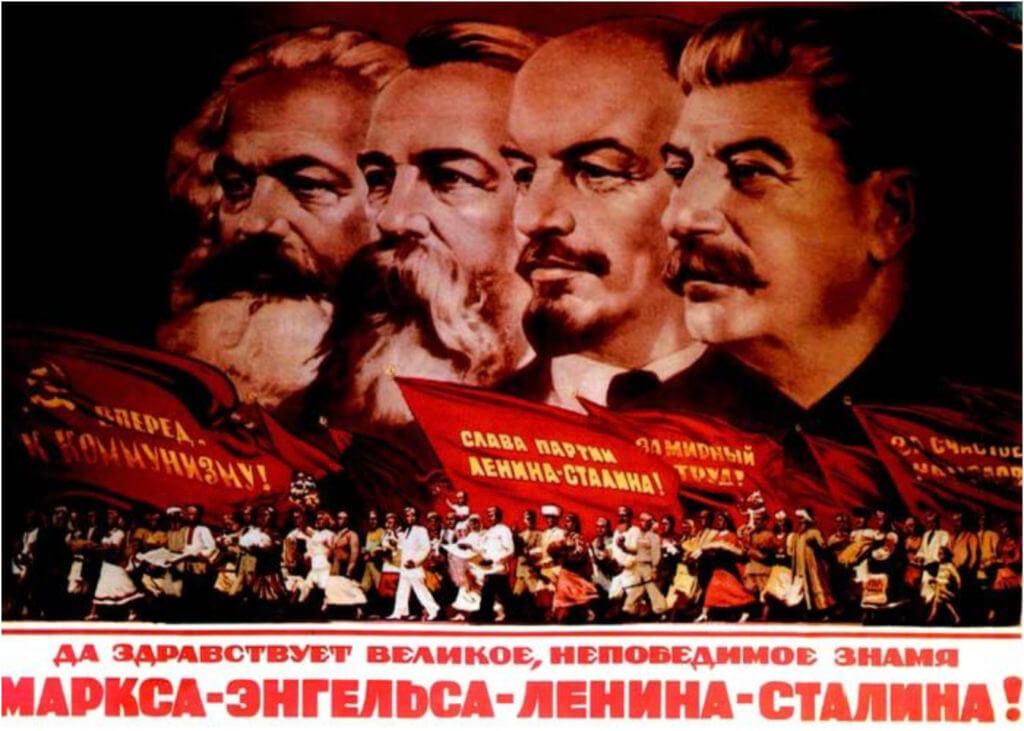
Communism is based upon a few flawed premises. The most glaring is that Communists presume that people are innately good. Communism asserts that if left to their own devices human beings will sacrifice for the collective. By and large, that’s just not true.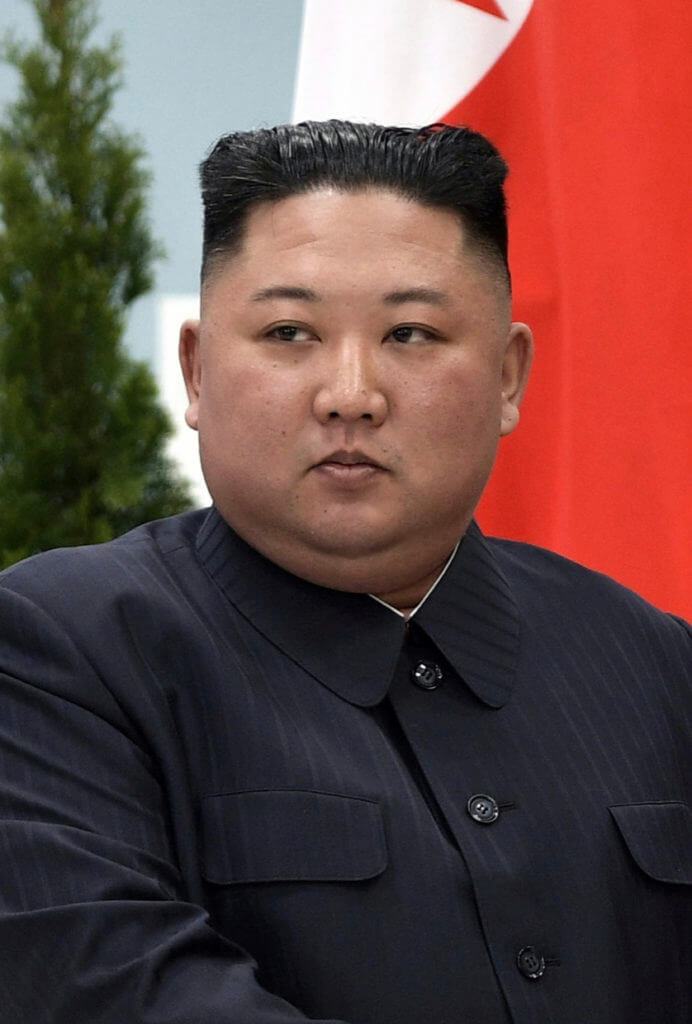
The second orbits around propaganda. Totalitarian regimes must control the flow of information to survive. That goal gets ever more difficult in the Information Age, but Kim Jong Un stands in portly testimony that it can yet still be done.
There is a common thread in every communist sympathizer in the West. That is an assumption that the only reason that communism has failed to improve people’s lives every single time it has ever been attempted is that it was always just done wrong. The reality is that the communist leadership, like most government leaders, eventually evolve to believe that the rules do not apply to them. Vladimir Putin is a product of that defunct system, and he is currently worth some $70 billion.
LT Belenko’s wife Lyudmila had grown unhappy with military life and announced her intent to file for divorce and move back to her parents in Magadan with their three-year-old son. The infrastructure and support facilities at Belenko’s base were also badly lacking. Whenever Belenko would voice his concerns to his political officer he was derided for complaining. All these influences synergistically drove the young Soviet pilot to take some fairly drastic action.
The Event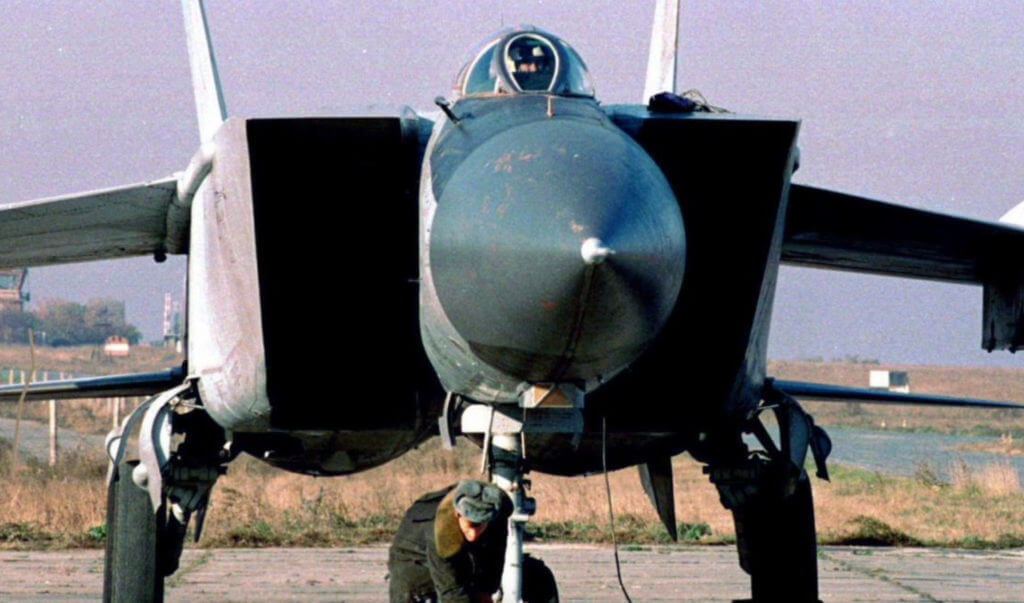
On the morning of September 6, 1976, LT Belenko launched in his single-seat MiG-25P Foxbat on a training mission alongside several of his mates. When over open water Belenko claimed engine trouble and fell out of formation. He then dropped the massive fighter down to thirty meters and made a beeline for Japan.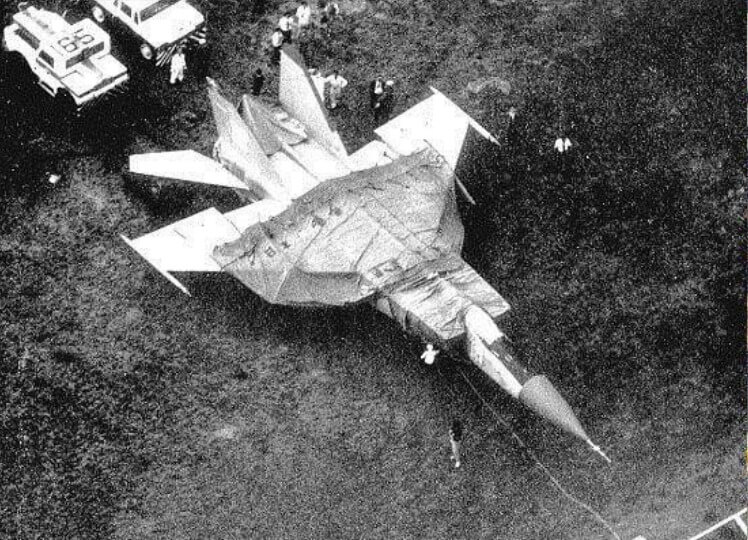
Belenko’s maps were sketchy concerning Japanese airfields. His intended destination was a military field at Chitose. However, thick cloud cover, his crummy maps, and a critical lack of fuel drove him to a smaller civilian field at Hakodate.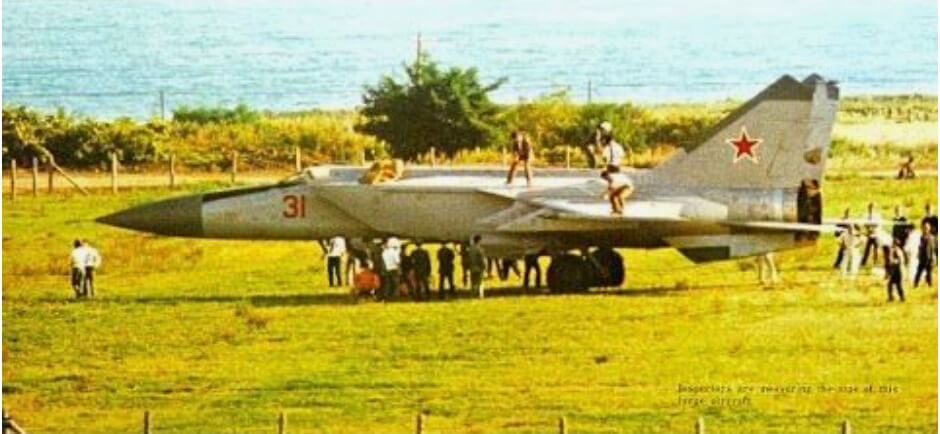
Belenko circled the field three times, nearly colliding with a civilian Boeing 727 on climb out. The runway was markedly shorter than what the MiG-25 typically required. Despite deploying his drogue chute and standing on his brakes hard enough to blow out the front tire the heavy fighter still overran the runway by 240 meters. Belenko shut down his engines with thirty seconds of fuel remaining. When civilians began to gather around the plane and take pictures Belenko dissuaded them by firing his pistol into the air.
The Gun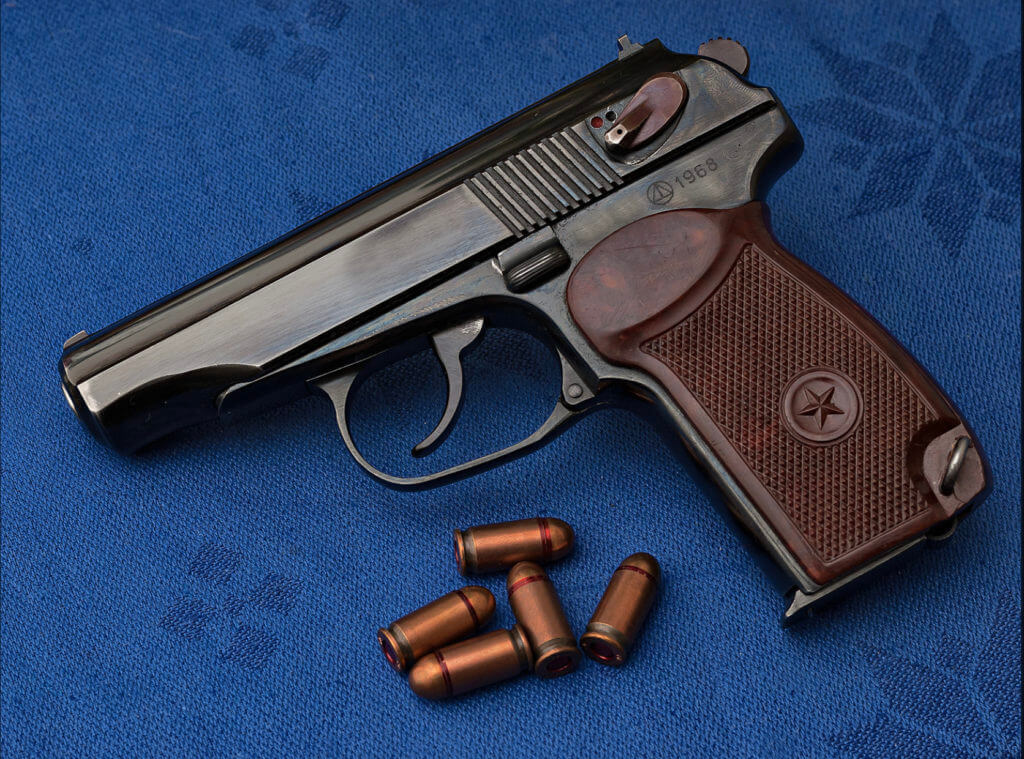
LT Belenko almost assuredly packed a Makarov service pistol when he landed in Japan. This compact little handgun is called the PM in Russian parlance. PM stands for Pistolét Makárova or “Makarov’s Pistol.” The PM is a fairly uninspired unlocked blowback handgun designed by Nikolay Fyodorovich Makarov and first adopted in 1951. The PM fires the stubby little 9x18mm Makarov cartridge.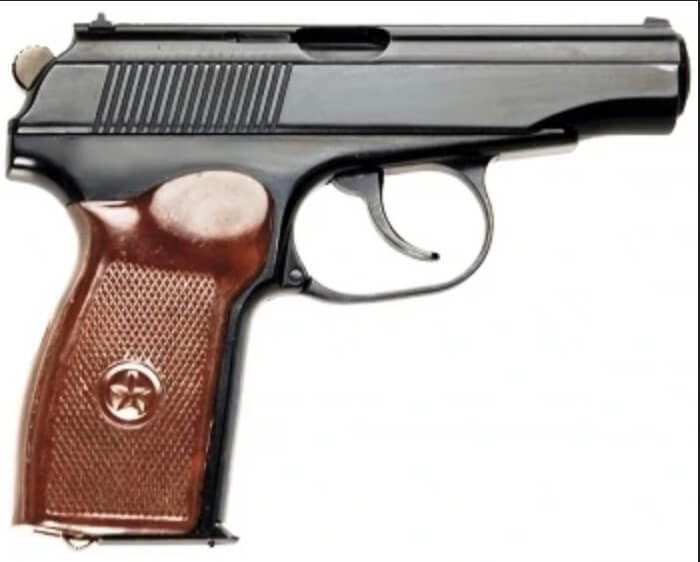
The PM feeds from an 8-round single-stack box magazine retained via a heel-mounted catch. The overall layout and function of the gun strongly favor that of the Walther PPK. Unlike the PPK, the slide-mounted safety is pressed up for safe and down for fire. More than five million copies have been produced.
The Rest of the Story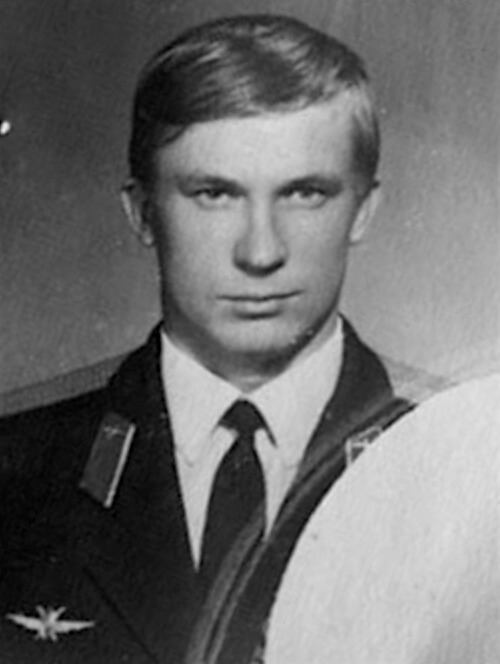
Belenko was arrested by Japanese police upon his exit from his warplane. He immediately requested asylum in the United States. The Soviets for their part announced that Belenko had gotten lost and had subsequently been drugged by the Japanese. When granted an interview with the young pilot, Russian officials were predictably unable to persuade him to return home.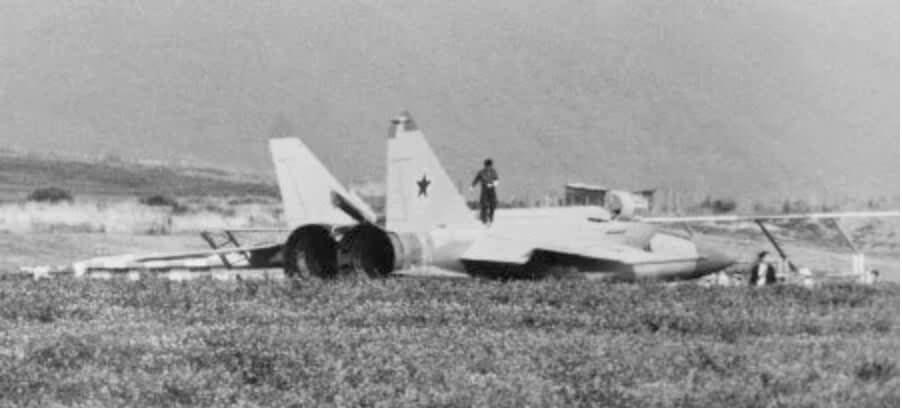
American and Japanese aviation experts tore Belenko’s MiG apart to learn its secrets only to find that it was a pretty lousy airplane. The Soviets had not yet perfected the capacity to work with titanium for high-temperature applications, so much of the plane was actually formed from stainless steel.
This made the aircraft incredibly heavy with a max gross weight of 80,954 pounds. Additionally, the big wings were not designed to enhance maneuverability. The MiG-25 needed these large wings simply to stay aloft given its portly weight. The Russians eventually got their plane back…in forty different boxes after Western intelligence personnel had picked it literally to pieces.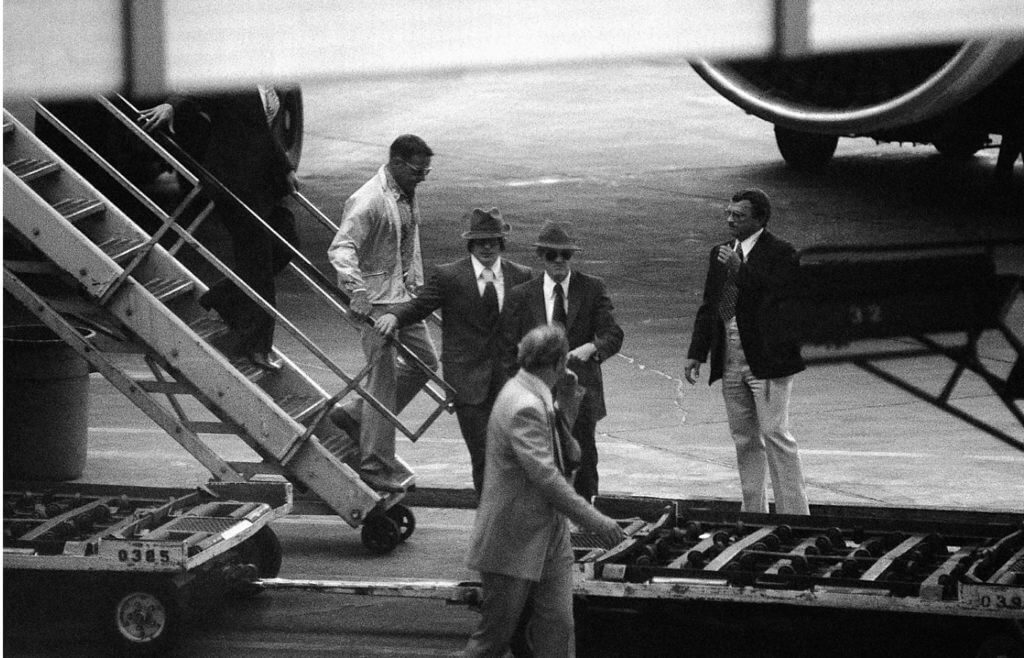
George Bush was director of the CIA at the time and declared the defection of LT Belenko to be an “intelligence bonanza.” In 1980 the US Congress passed S.2961, a specific act that granted LT Belenko citizenship in the United States. Jimmy Carter signed the act into law on October 14 of that year.
Viktor Belenko married a music teacher from North Dakota and fathered two sons. They later divorced. Belenko never divorced his first wife, though he did visit Moscow once on business in 1995 after the fall of the Iron Curtain. The Soviets alternately claimed that Belenko had been killed in a car wreck, repatriated to Russia to be arrested and executed, or otherwise brought to justice. In reality, Belenko served as a consultant to the US government and an aerospace engineer. By all accounts, he still loves it here.
Belenko seldom grants interviews, but he purportedly said this in 2000 during a conversation in a bar, “Americans have tolerance regarding other people’s opinion. In certain cultures, if you do not accept the mainstream, you would be booted out or might disappear. Here we have people — you know who hug trees, and people who want to cut them down — and they live side by side!”
Belenko said he once ate a can of American cat food by mistake. He later claimed, “It was delicious. Better than canned food in the Soviet Union today!”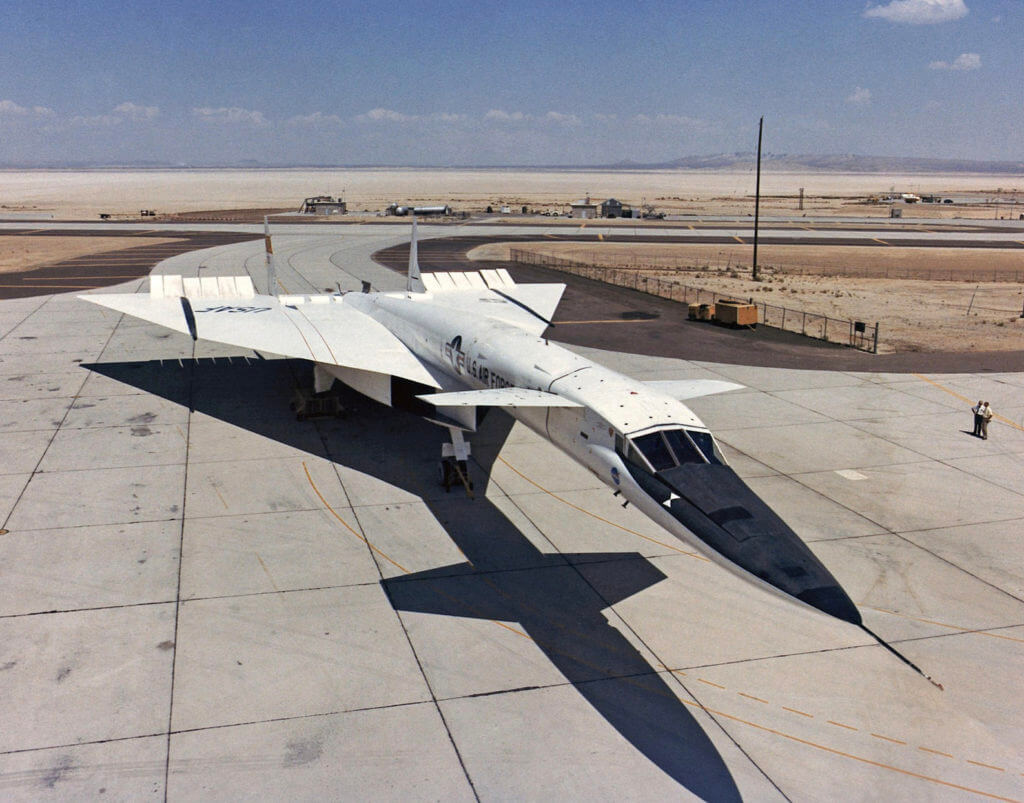
The XB-70 that drove the whole MiG-25 project was a big nothing burger. Only two prototypes ever flew, one of which was destroyed in a horrible accident. You can see the video of the event here.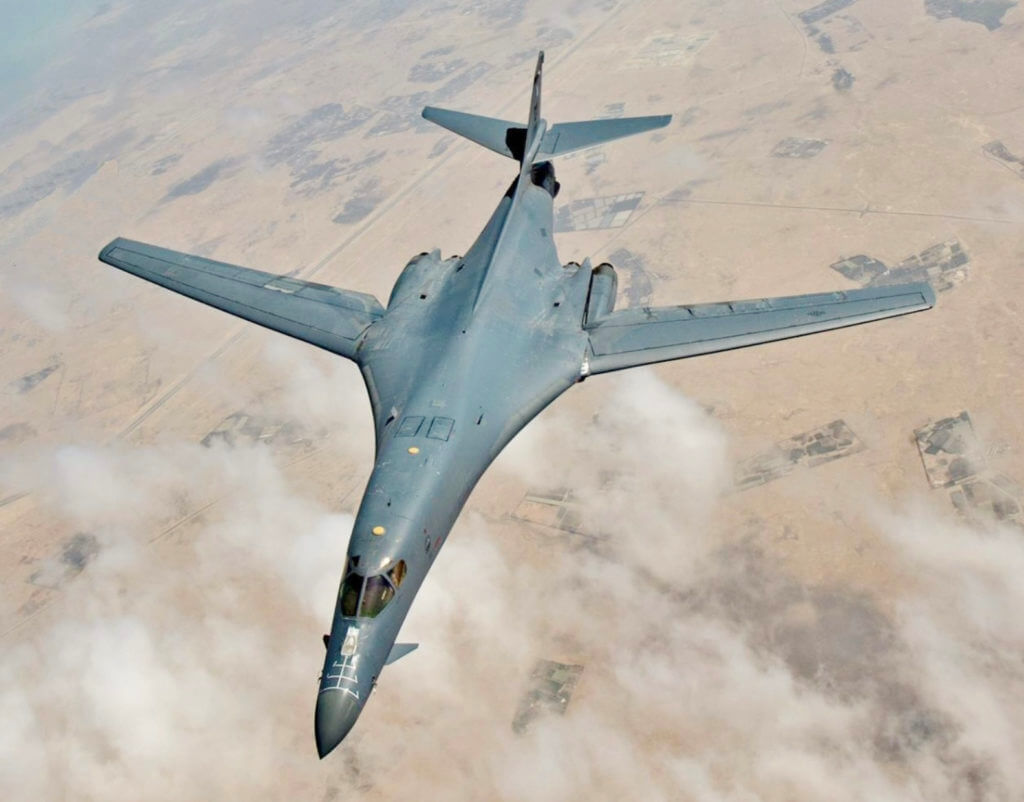
The subsequent B1 Lancer was actually designed for low altitude deep penetration missions for which the MiG-25 was utterly unsuited. Spoofing the Soviets into building what was at the time one of the most expensive and strategically worthless warplanes in history yet remains one of the greatest Western intelligence coups of the Cold War.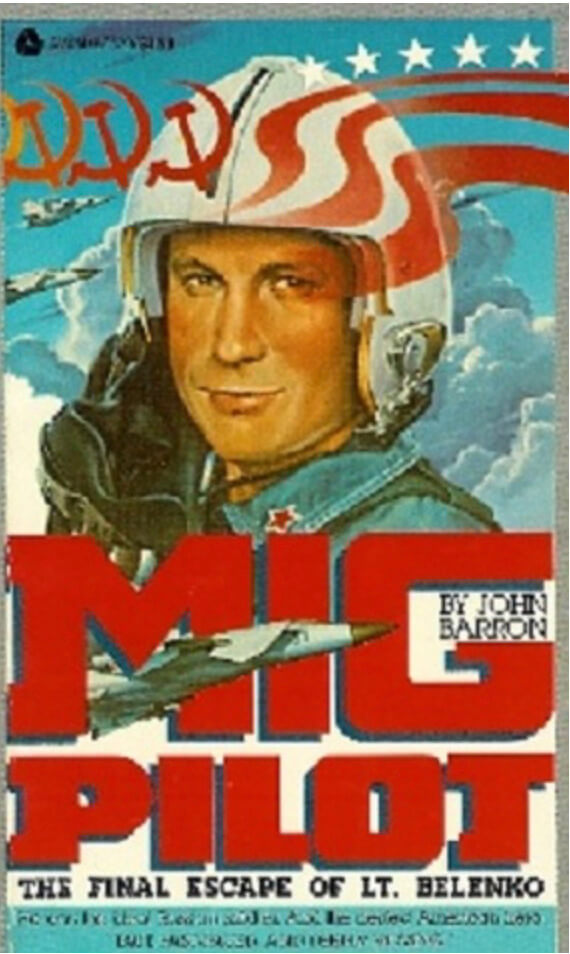
I read Viktor Belenko’s autobiography MiG Pilot: The Final Escape of Lieutenant Belenko back in the 1980s and loved it.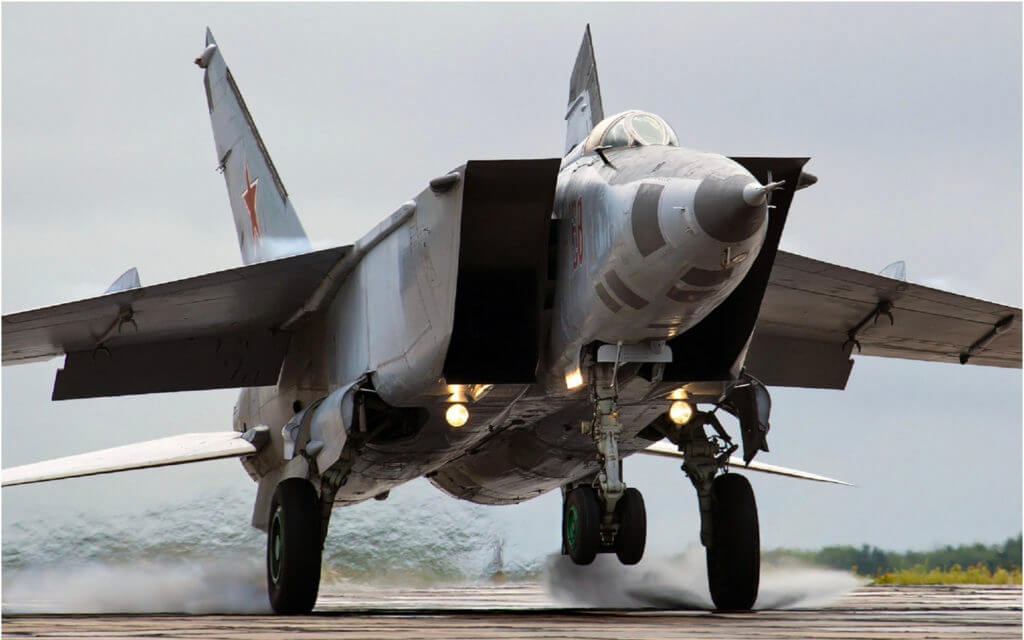
Categories
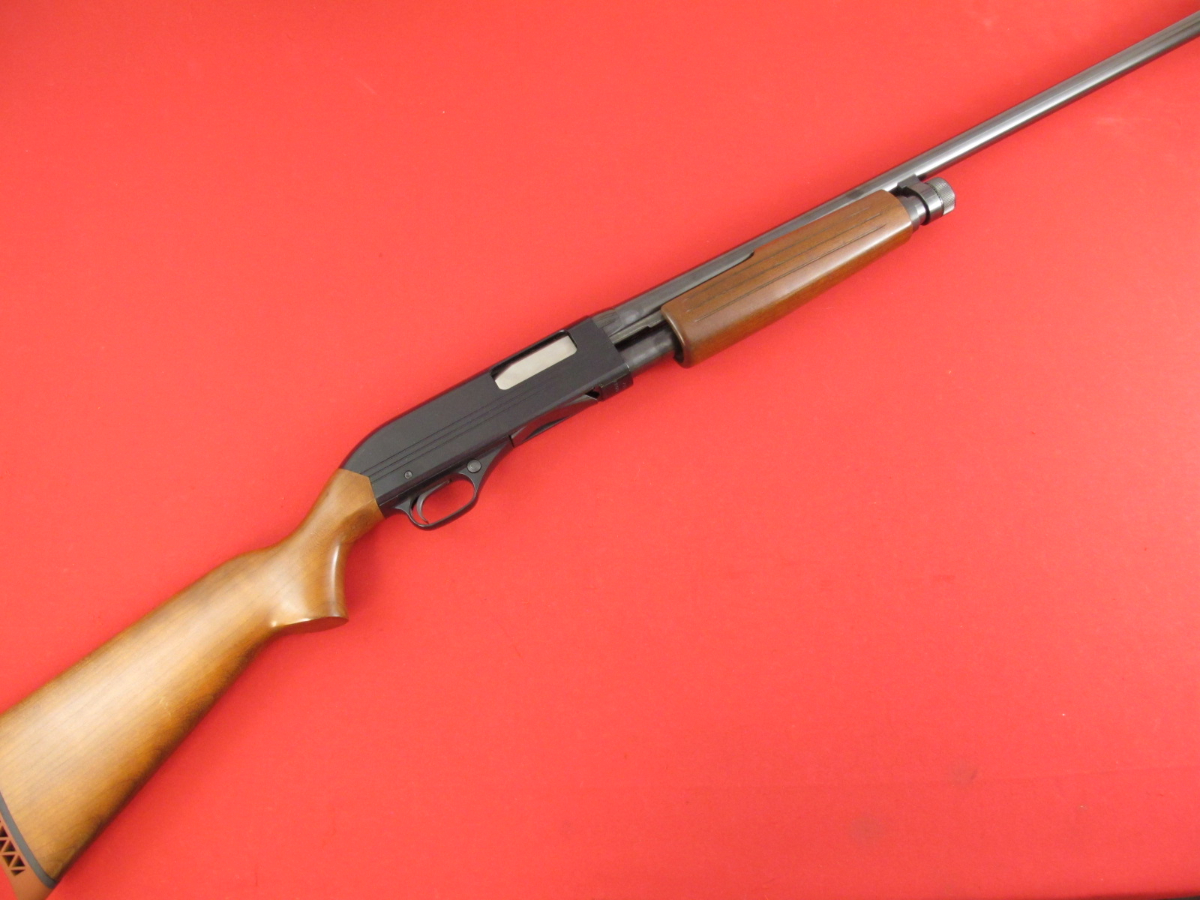
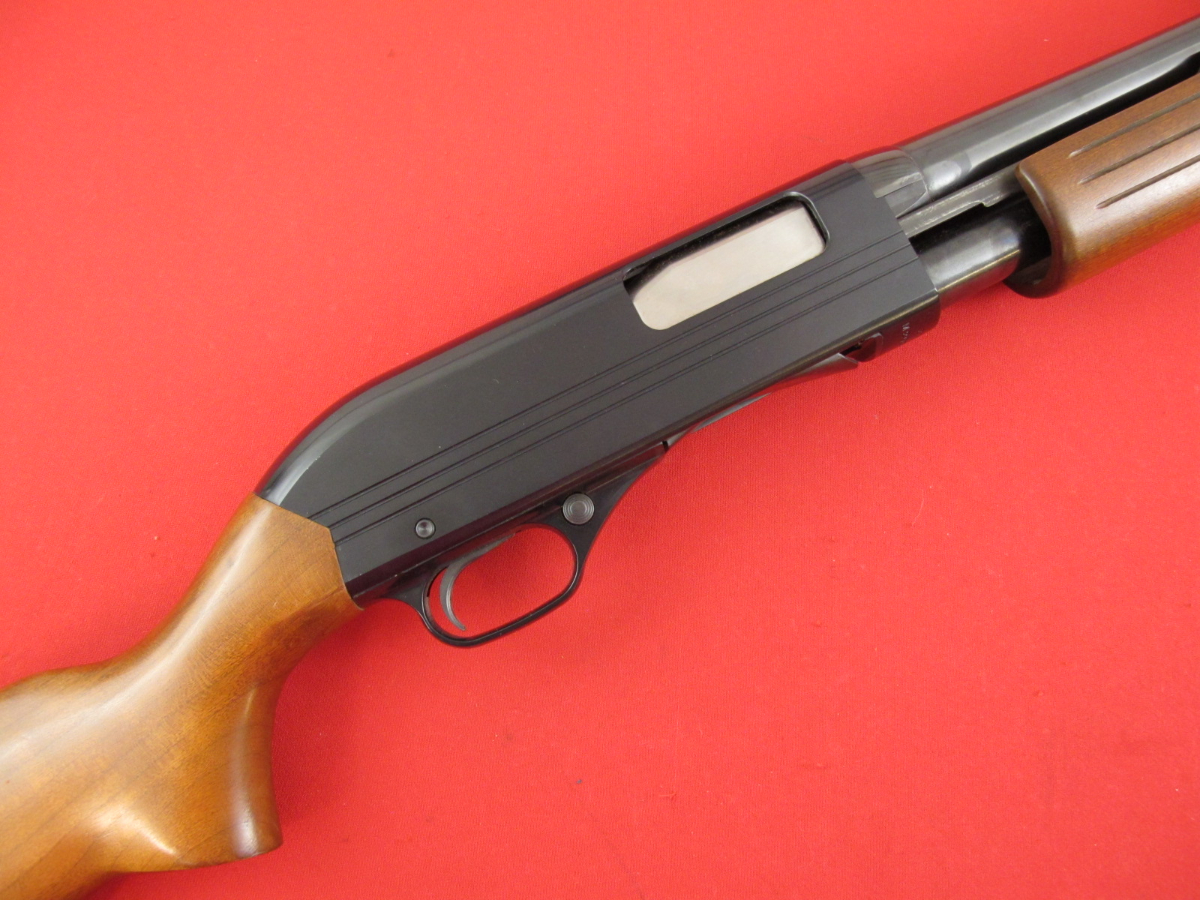
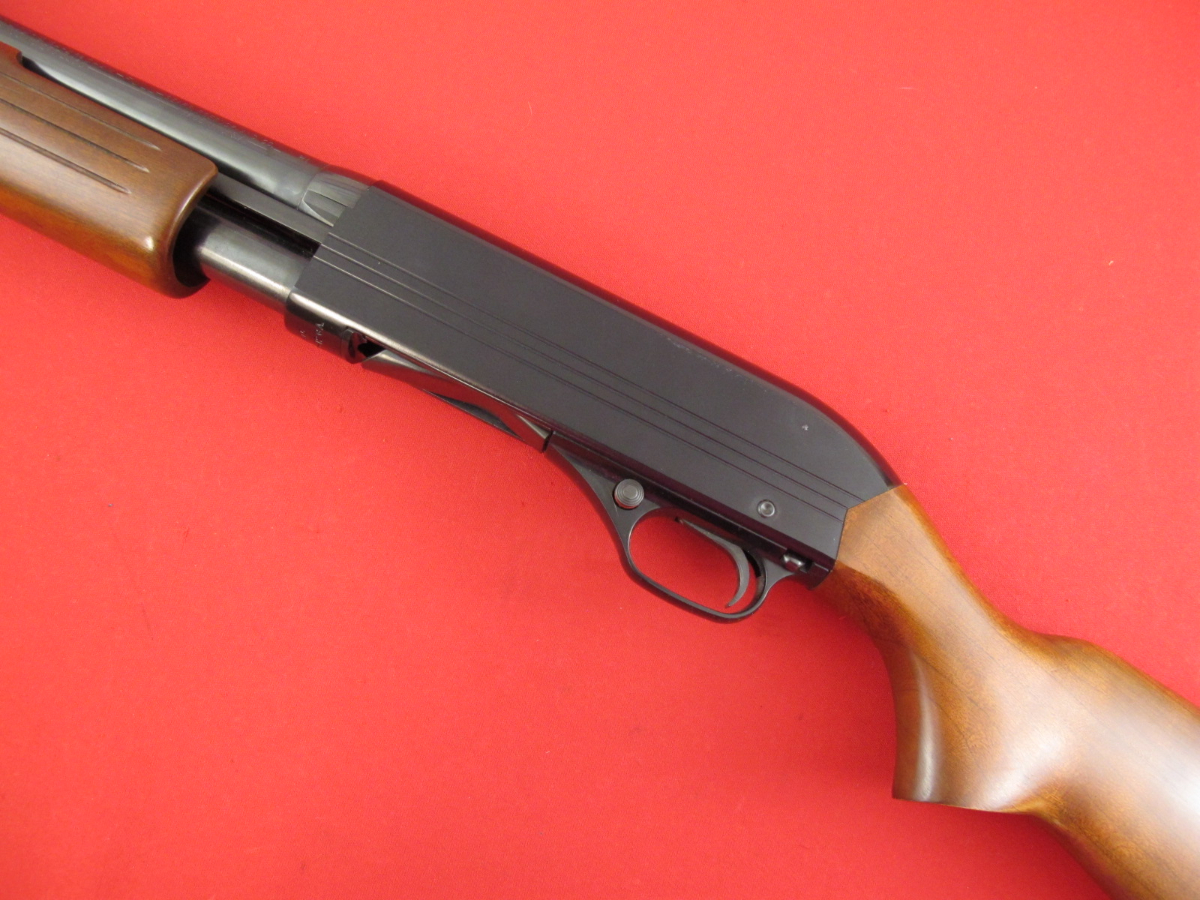
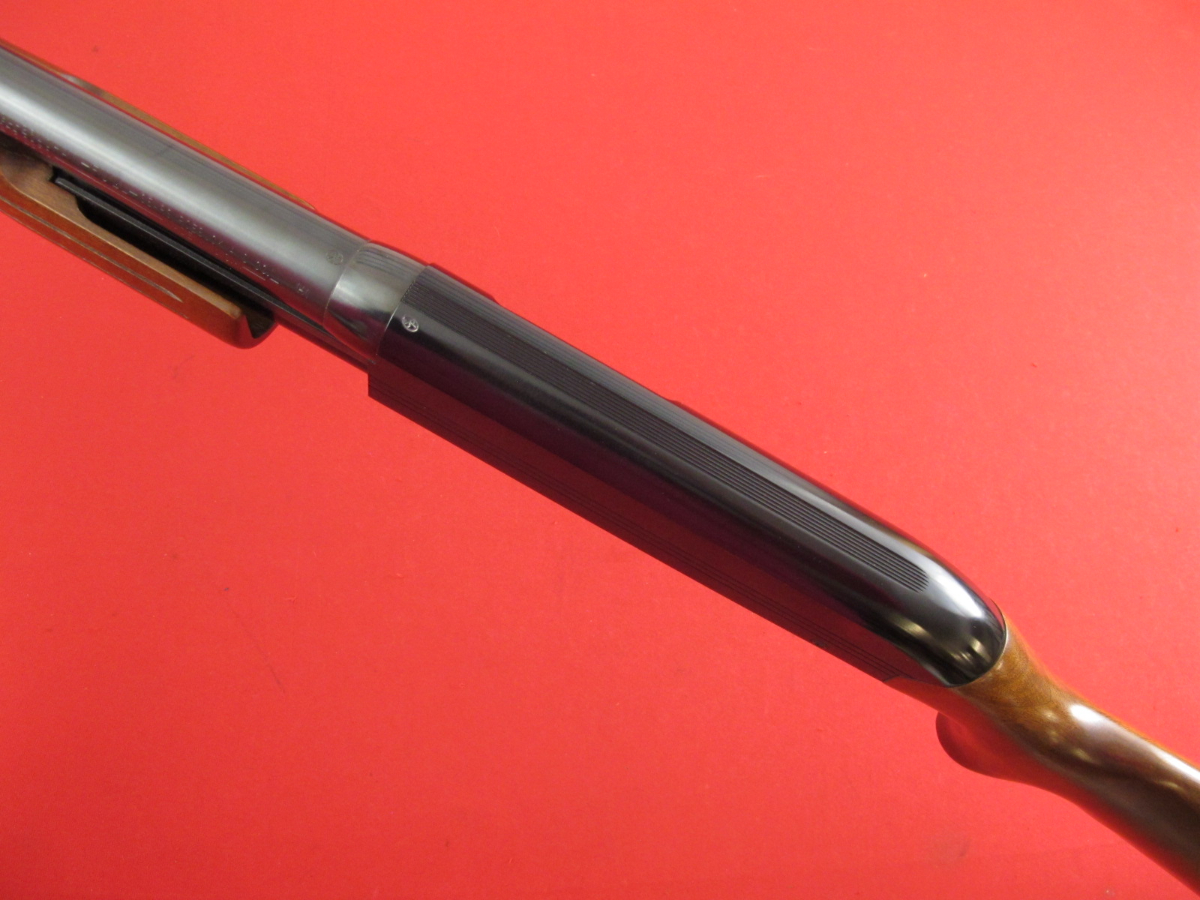
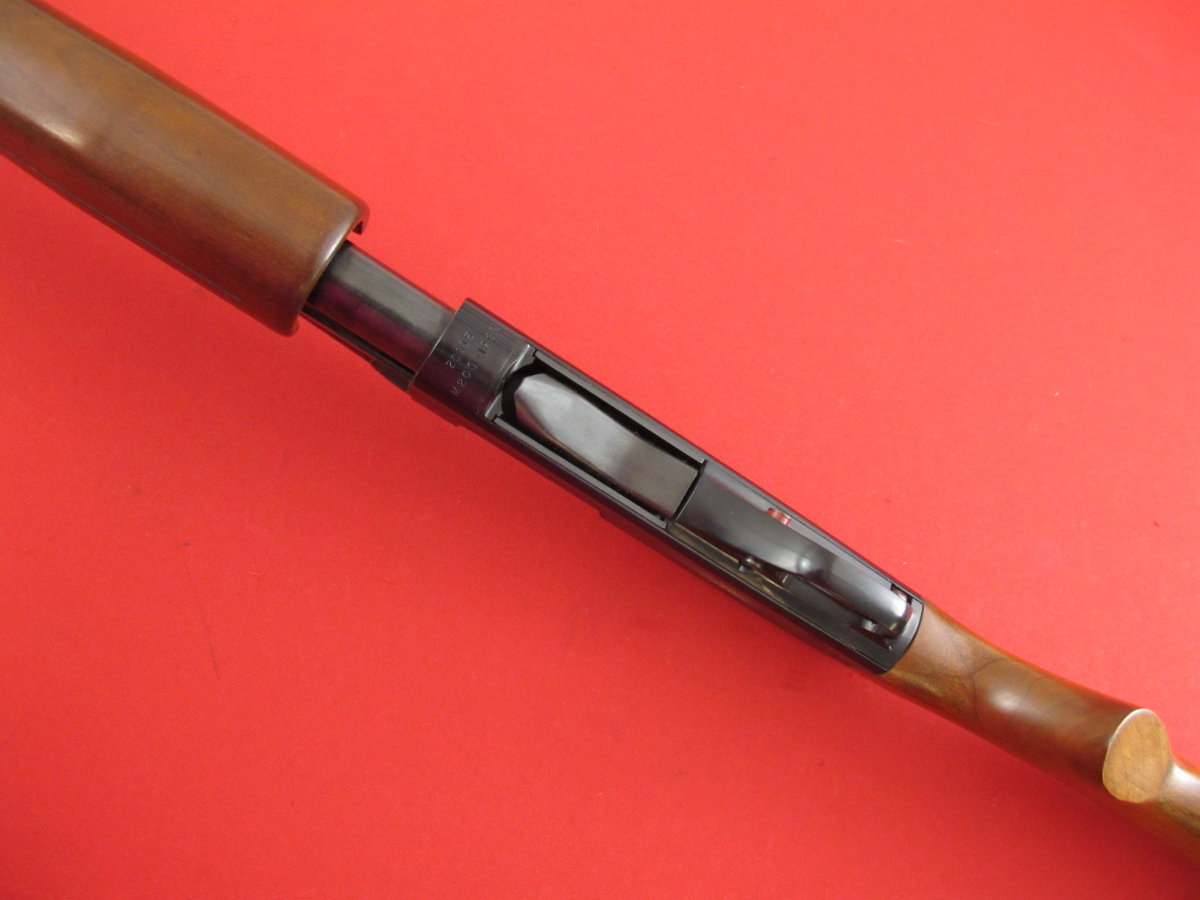
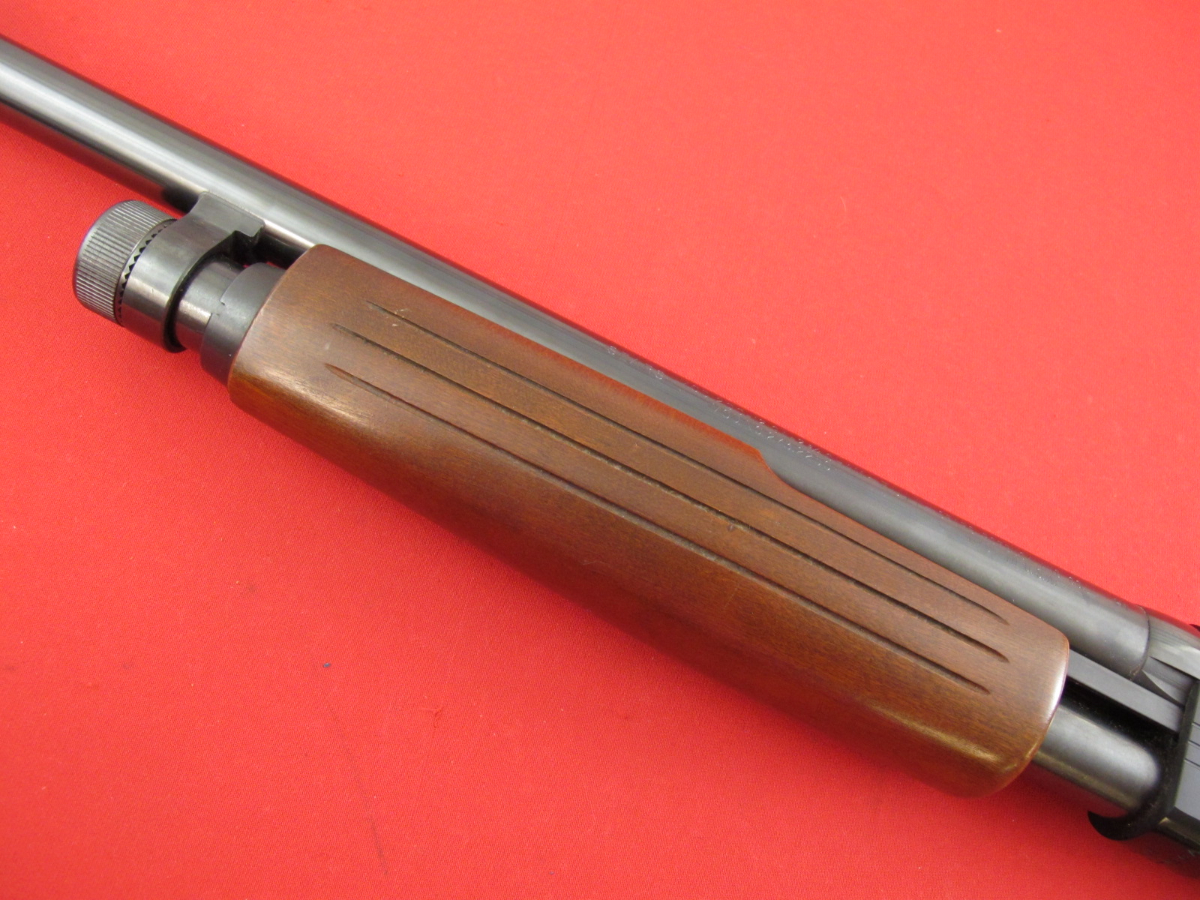
A Sears Model 200 in 12GA

Coyotes will eat just about anything. This makes them a bit
unpredictable at close quarters.
Image: Public domain, U.S. Fish and Wildlife Service
You never really know how you will respond until you get there. Most of us grizzled gun-toting types fancy ourselves amateur heroes. We imagine that should we find ourselves in the midst of some unexpected life-threatening peril, we might rise to the occasion and do something epically manly. And then there was this guy.
Now before you get all judgy, appreciate that this is everyman. He is both a patient and a friend. He looks like us, and he acts like us. His genus is Redneckopithecus Sapiens, as is mine. He likes guns, and he lives for the outdoors. His experience could have happened to any one of us.
Field Philosophy
I don’t hunt anymore. I used to a great deal and certainly do not harbor ill will toward those who enjoy the sport. It is simply that I don’t much care for venison. Additionally, as I get older, it gets harder and harder to strike out in the predawn darkness for anything less than a house fire. However, back when I was a kid, my dad and I hunted together constantly.
My lifelong tally is a pair of deer and 13 wild turkeys, along with squirrels, doves and rabbits uncounted. I shot a yellow-hued coyote when I was about 12, whose pelt produced $15. Those were 1978 dollars, mind you.
I have accounted for 61 water moccasins from my backyard lake. I’ve kept a record, but that’s hardly hunting. My war against venomous reptiles is more of a lifelong existential fight for survival. I’ve had some bad experiences with poisonous snakes.
Of the lot, turkey hunting comes closest to tripping my trigger. Our Easter and Christmas dinners were never without a wild turkey when I was a kid. It was always a bit of a game to see who first discovered a piece of lead shot in their entrée.
Deer hunting always felt a bit too random. It always seemed bitterly cold when we trudged out in pursuit of deer. Success or failure also seemed to be driven more by whether the beast happened to wander by than any skill on my part. By contrast, chasing wild turkey was an art.
Siting your blind was important, but you conversed with the bird. The mission was to convince him to drop by for a visit. As a guy, your tools that involved mimicking his fairer sex always seemed to be drenched in pathos. The poor randy gobbler just wanted a date, and he got a face full of number fours for his trouble. Back in my prime, when I chased girls myself, I suppose something similar could have happened to me.
What made it hard was the quarry. Wild turkeys are either too smart or too stupid to be terribly predictable. However, the inimitable satisfaction of cajoling a bird close enough to make him dinner was indeed unparalleled.

A coyote about the size of a fairly large dog. However, they are
tenacious in close quarters.
Image: Public domain, U.S. Dept. of Agriculture
The Clinical Presentation
Our hero came to see me for an animal bite to his upper arm. I work in an urgent care clinic. Animal parts are background clutter. There was a bit of torn flesh, but it was mostly bruising. He earned the equivalent of a battle dressing, a tetanus shot and some antibiotics. Along the way, I got the story.
This is a big guy. He had been sitting at the base of a tree during the spring turkey season. He was chatting up a gobbler who was now within sight and moseying his way. The man’s heart rate went up commensurate with the moment as he shifted his shotgun behind the cover of his blind. At that very moment, a robust coyote grabbed him unexpectedly from behind and clamped down vise-like onto his left upper arm.
The man said the visceral shock was indescribable. He was utterly fixated on the approaching bird and had apparently exposed part of his shoulder to the predator as he shifted position. The coyote presumably was also on the stalk and simply lunged at the movement.
The hunter reflexively leaped to his feet. The coyote, for his part, clung on dogmatically. The man said the thing was shockingly heavy as it dangled from his injured limb. As I sat mesmerized by his story, I asked the obvious question, “Did you shoot the coyote?”
He responded, “Heck, no. I screamed like a little girl. My turkey call flew in one direction and my shotgun in another. I just ran around in circles trying to get that blasted thing off of me.”
The bird was gone in an instant. Once the coyote realized his mistake, he let loose and beat feet as well. The man was ultimately none the worse for wear save his sore shoulder and a bit of wounded pride. He indeed lost the turkey, but he gained an epic story.
 Situation: The evilest mass murderer on the planet has targeted you. You’ve been furnished security, but you aren’t sure it’s enough.
Lesson: If you can’t take care of yourself, you can’t take care of those who count on you … and the innermost bastion of security is yourself.
The world remembers Sir Winston Churchill as a long-serving British statesman and the Prime Minister who guided an underdog Great Britain successfully through World War II. What few history students learn about him is Churchill was very much a gun guy. He had killed enemy combatants with a pistol, loved to shoot and routinely carried a gun.
Churchill The Gunfighter
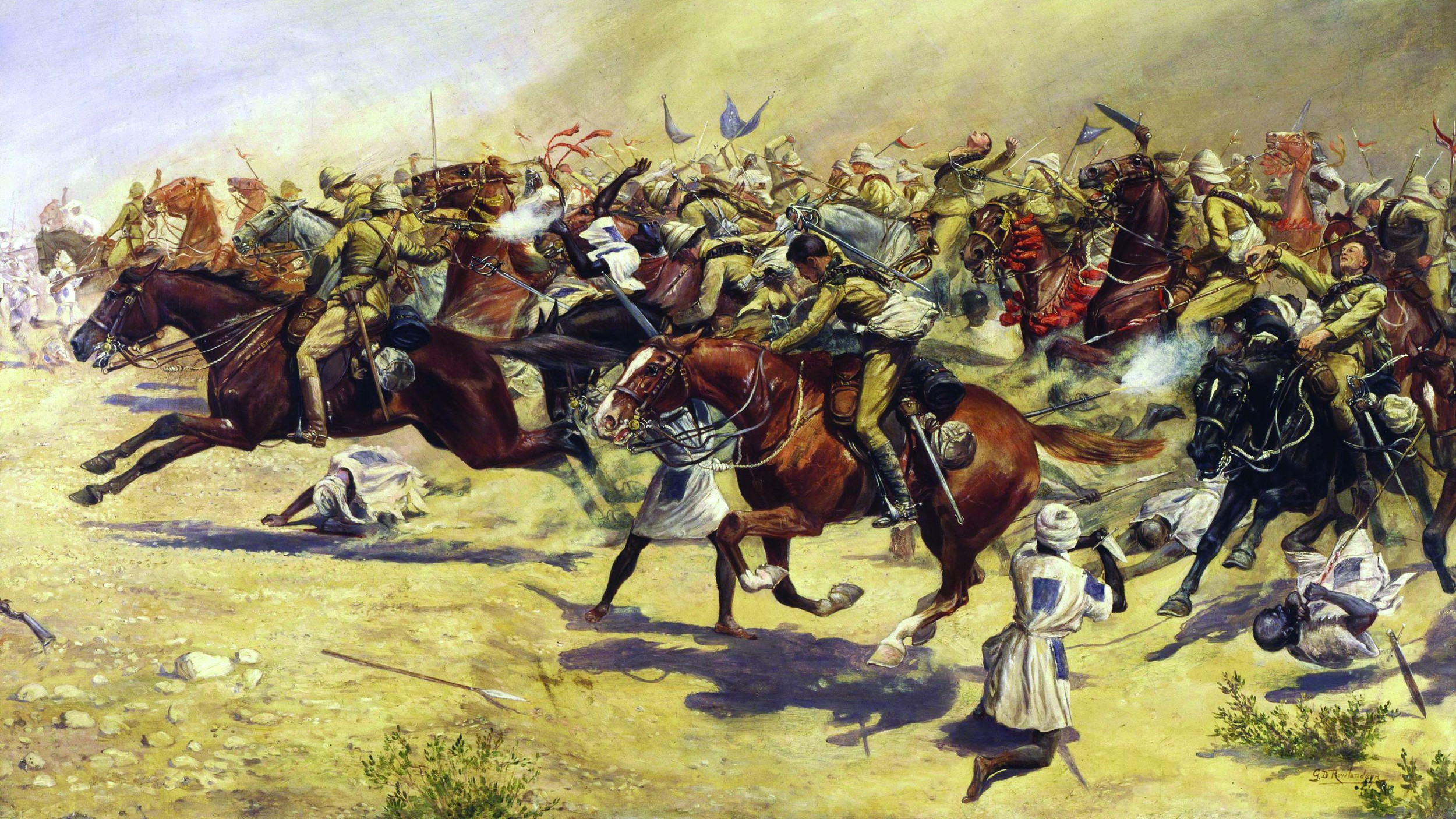
In 1898, at the battle of Omdurman in the Sudan, Churchill was a young cavalry officer. More than half a century later he would tell a biographer, “On account of my shoulder (which had been dislocated in India) I had always decided that if I were involved in hand-to-hand fighting, I must use a pistol and not a sword. I had purchased in London, a Mauser automatic pistol, then the newest and latest design. I had practiced carefully with this during our march and journey up the river.” (1)
Churchill was part of a cavalry charge under way through a gulley when he found he and his comrades were up against a much larger enemy than they had anticipated: an estimated 3,000 fighters who far outnumbered his own contingent. He told one biographer, “I drew my Mauser pistol — a ripper — and cocked it. Then I looked to my front. Instead of the 150 riflemen who were still blazing I saw a line nearly (in the middle) 12 deep of closely jammed spearmen — all in a nullah with steep sloping sides six feet deep and 20 feet broad.” (2)
Churchill was soon amidst a maelstrom of enemy troops, profoundly outnumbered. The great historian William Manchester would later describe what happened to Churchill in those moments, sometimes using Churchill’s own quotes. Churchill saw his men being “dragged from their horses and cut to pieces by the infuriated foe.” Finding himself “surrounded by what seemed to be dozens of men,” he “rode up to individuals firing my pistol in their faces and killing several — three for certain, two doubtful — one very doubtful.”
One was swinging a gleaming, curved sword, trying to hamstring the pony. Another wore a steel helmet and chain-mail hangings. A third came at him “with uplifted sword. I raised my pistol and fired. So close were we that the pistol itself actually struck him.” The dervish mass, he saw, was re-forming. He later recalled, “The whole scene seemed to flicker.” He looked around. His troop was gone. His squadron was gone. He could not see a single British officer or trooper within a hundred yards.
Hunching down over his pommel, he spurred his pony free and found his squadron 200 yards away, faced about and already forming up. His own troop had just finished sorting itself out, but as he joined it a dervish sprang out of a hole in the ground and into the midst of his men, lunging about with a spear. They thrust at him with their lances; he dodged, wheeled and charged Churchill. “I shot him at less than a yard. He fell on the sand and lay there dead. How easy to kill a man! But I did not worry about it. I found I had fired the whole magazine of my Mauser pistol, so I put in a new clip of 10 cartridges before thinking of anything else.”
It occurred to him if he hadn’t injured his shoulder in Bombay, he would have had to defend himself with a sword and might now be dead. Afterward he reflected, “One must never forget when misfortunes come that it is quite possible they are saving one from something much worse.” He wrote his mother Jennie: “The pistol was the best thing in the world.” (3)
Churchill and his biographer were not the only ones to conclude the 10-shot Mauser saved his life, and neither the saber nor a revolver with five or six shots might have sufficed. There had been little time in the melee, needing one hand to control the reins of his horse, to eject spent casings and insert live cartridges into a wheel gun.
Notes another biographer, Martin Gilbert in Churchill: A Life, “The cavalry charge was over, and the troop dispersed. ‘It was, I suppose, the most dangerous two minutes I shall live to see,’ Churchill told Hamilton. Of the 310 officers and men in the charge, one officer and 20 men had been killed, and four officers and 45 men wounded. ‘All this in 120 seconds!’ Churchill commented. He had fired ‘exactly 10 shots’ and had emptied his pistol, ‘but without a hair of my horse or a stitch of my clothing being touched. Very few can say the same.’” (4)
Churchill The Shooter
Winston Churchill owned a substantial collection of fine guns, including magnificent bespoke shotguns from the finest English makers, and loved to hunt.
No one knew his proclivities in firearms better than his long-time bodyguard, Scotland Yard Inspector Walter Henry Thompson. “Churchill offered to pay me five pounds a week as his bodyguard in a purely private capacity. He gave me his Colt automatic to use — and I may say with pride that I am the only man Mr. Churchill has allowed to handle his guns. He is a first-class shot and takes a jealous pride in his personal armory.”
Thompson added, “Although he recognized some measures had to be taken for his security, he was confident in any real pinch he, Winston Churchill, would probably be able to look after himself, personally. When we were at Chequers, the country home of Britain’s prime ministers, he often went to a nearby range and proved himself a first-class shot with his Mannlicher rifle, his .45 Colt automatic and a service .38 Webley. He was particularly deadly with the Colt and there would have been little chance for anyone who came in range of that weapon with unfriendly intent.” (5)
Just what did Thompson mean by “first-class shot”? “We set up an outdoor range at Chequers and to this he would frequently repair and fire a hundred rounds or so with his Mannlicher rifle, 50 rounds from his Colt .45, or an equal number from his .32 Webley Scott. He gets well onto the target with all three, but with the Colt Automatic he is absolutely deadly … A gun is something he understands entirely.”
Adds Thompson, “Near the war’s end, while practicing with me at outdoor targets, with officers of the guard in competition and firing an old Colt .45, only one of Churchill’s bullets was on the fringe of the bullseye, the other nine being dead center. This target was taken down and marked by me and noted by those who were with him then. Later I had it officially entered and dated, and it is now in the Chequers library.” (6)
The Concealed Carrier
Winston Churchill learned early in his adult life the value of a discreetly concealed handgun. In 1899 during the Boer War, he was captured but managed to escape. A sympathizer furnished him with provisions and a concealable revolver before he sneaked onto a train to get farther out of reach of the enemy. He kept the revolver, described as a six-shot pin-fire. A part of his estate, it sold for 32,000 English pounds at auction in 2002.
Richard Law, one of the leading lights fighting for gun owners’ rights in Great Britain, is a prolific writer and skilled researcher. He discovered when he learned Thompson, Churchill’s long-standing bodyguard, carried a .32 caliber mouse gun, Churchill requisitioned a Colt .45 and furnished it to him.
Later, discovering Thompson was still carrying the .32, a disgusted Churchill demanded the .45 back and stuck it in his overcoat pocket to use as his own. Law’s research turned up photos of Churchill in which a remarkably 1911-looking object is printing under his suit coat or his ulster, in the right hip area.
Bodyguard Thompson is our most thorough source of information on the Prime Minister’s concealed carry habits. In Thompson’s autobiography he said of Churchill, “People ask me if Mr. Churchill, in times of danger, was not usually armed, and this is my answer. He was when he remembered to carry his weapon. He was an unusually fine shot, with either rifle or revolver, and later became deadly with some of the most lethal of the automatic weapons that we were to develop, including the Sten.
He loved firearms and I believe loved the sound of them. He practiced target shooting in the basements of his various residences and never refused to ‘have a shoot’ with me when I felt it was time to check his handling of arms.
Being a good shot is like being a good pianist: One cannot grow rusty and return suddenly to dependable controls. One can leave his guns alone for weeks and, by practicing a few hours each day for several days, recover all his skills, but he cannot recover them immediately. So, while it was all right for Mr. Churchill, in periods when he was not a protected public servant in high office, to ignore this somewhat realistic side of survival, I never recommended it, knowing these periods would be brief.”
Throughout his book Thompson constantly describes himself as carrying two handguns, usually two revolvers.
Unfortunately, he seems to have the curious habit of describing all handguns as revolvers. One gets the inference he is often referring to the pistol Scotland Yard issued for such close protection details: the 1914 Webley .32 auto. Heavy-for-caliber at 2.5 lbs. and with the pointing characteristics of a T-square, this rickety-looking pistol had a reputation as a jam-o-matic and remains a contestant for the ugliest handgun of all time. Churchill himself owned one, and perhaps his experiences with it were part of his concern when he tried to switch his bodyguard to a Colt 1911.
Thompson’s remark quoted here earlier indicates the Prime Minister wasn’t strictly consistent with carrying a firearm. “His sense of personal safety had largely left him, to the extent that he would tire of carrying his revolver and forget it. He’d lay it down somewhere and leave it if I didn’t check it each time. Sometimes when I found him unarmed, I’d have to give him one of my own revolvers. I didn’t like to do this and didn’t often have to. I’m very used to the few that I work with, but it was of course essential that he should not be alone at any time — even in the middle of the night in his own bed — without a revolver in reach … He would draw his gun and pop it into sudden view and say roguishly and with delight: ‘You see, Thompson, they will never take me alive. I will get one or two before they take me down.’”
Fortunately, Winston Churchill never got the chance to find out. There were many Nazi assassination plots against him: During the Blitz, bombs fell near his residences, obviously targeted. In at least one case, Nazi agents parachuted into Britain to kill him. None got close. Between Scotland Yard and the military, all were scooped up before they could get in position to take a shot at the great man.
The Heads-Up Gunner
Winston Churchill liked his automatic weapons. In one of his most famous photos, he is wearing a pinstripe suit and chomping on his ever-present cigar as he holds a .45 caliber Thompson submachine gun with drum magazine and pistol grip fore-end. Adolf Hitler, historians say, despised Churchill with a venom exceeded only by the Prime Minister’s hatred of him. Hitler used the photo of Churchill with the “tommy gun” to claim the English leader was merely a clone of a stereotype American gangster.
Churchill was also an aficionado of Britain’s signature SMG, the Sten gun. He had his own Mark III Sten, which had been presented to him personally, as well as a Thompson in his own battery. He reportedly had one or the other in his limousine, depending on his conveyance of the day. And he shared his appreciation for buzz guns with others he knew were at risk of assassination.
In his excellent new book on the time of The Blitz, The Splendid and the Vile, Erik Larson focuses primarily on Churchill and those around him. Larson writes, “The queen began taking lessons in how to shoot a revolver. ‘Yes,’ she said, ‘I shall not go down like the others.’” (7)
Other sources say Churchill arranged for a Thompson — and competent instruction — to be delivered to all the Royal Family. All of them shot it: King George, his consort, and their daughters Elizabeth and Margaret, then 14 and 10 years of age. One source says the Queen Mother liked to shoot rats in the gardens of Buckingham Palace, though presumably not with the tommy gun.
Disproportional Influence
Winston Churchill’s two minutes with a Mauser C96 in his hand during the charge at the Battle of Omdurman had a profound influence that went far beyond his own survival. If you read Churchill, it becomes clear he went to war as a young man seeing combat as a theater for chivalry. The battle of Omdurman changed this for him profoundly. Against a vastly greater force, the English and their allies had decisively prevailed. The enemy had been softened up by massive barrages of British artillery and Maxim machine guns. Winston Churchill rode out of the battle alive only because he had the most modern, high-tech firepower that could be wielded in one hand in the year 1898.
WWI found Churchill as a young member of Parliament, advocating for high-tech warfare. He’s credited with convincing the British government to develop tanks. As Prime Minister in WWII, he consistently funded newer and better airplanes, espionage apparatus and more. The epiphany that brought about those war-winning changes was born in two minutes of shooting the most modern handgun of the day, with his life on the line. And, as we’ve seen, his example of being constantly ready for individual combat against a homicidal foe is an inspiration to every free individual.
Footnotes: (1) Boothroyd, Geoffrey. The Handgun. NYC: Bonanza Books, 1970, p. 397. (2) Manchester, William. The Last Lion: Winston Spencer Churchill Boston: Little, Brown & Co., 1983, pp. 277–279. (3) Manchester, William, Ibid. (4) Gilbert, Martin. Churchill: A Life. NYC: Henry Holt & Co., 1991, p. 96. (5) Thompson, W.H. “I Guarded Winston Churchill,” Maclean’s, 10/15/51, pp. 10–11. (6) Thompson, Walter Henry. Assignment: Churchill. Arcole Publishing 2018 edition, originally published 1955. (7) Larson, Erik. The Splendid and the Vile. Random House, 2020, p. 130.