Higher Command in War
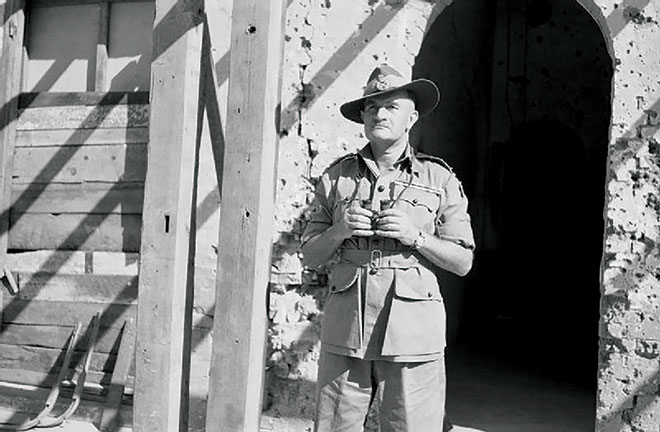
Field Marshal Sir William Slim (1891–1970)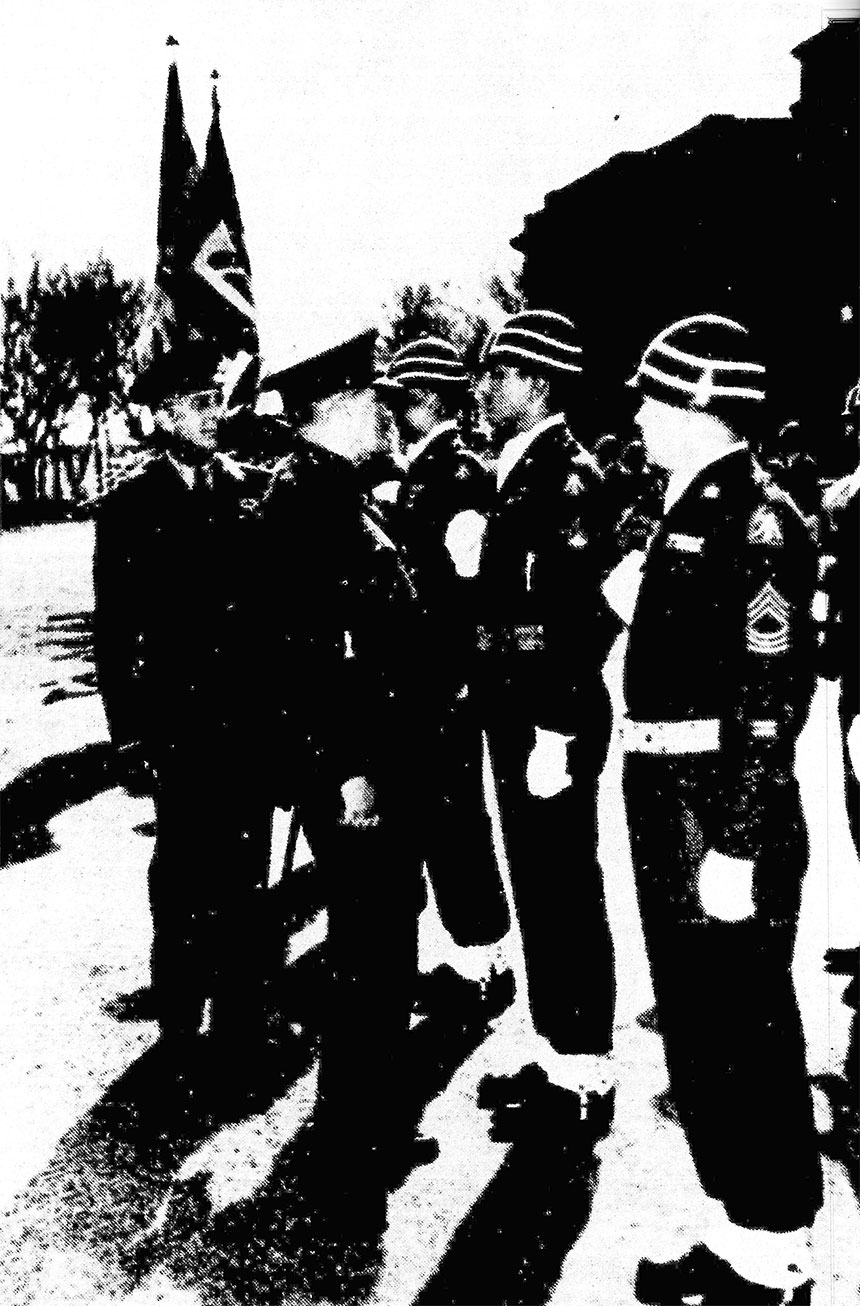
This article was originally published in the May 1990 edition of Military Review and reproduced by permission of the Controller of Her Majesty’s Stationery Office.
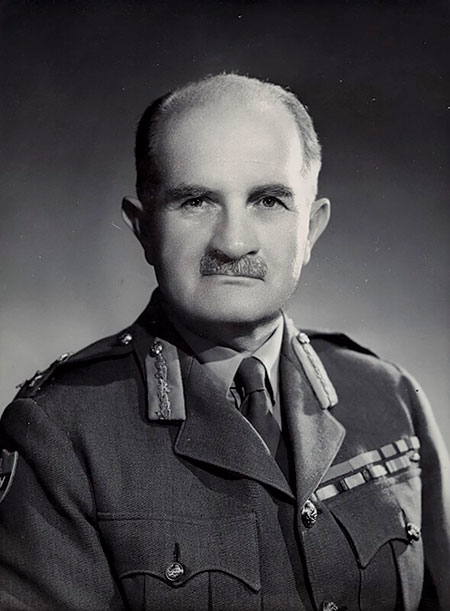
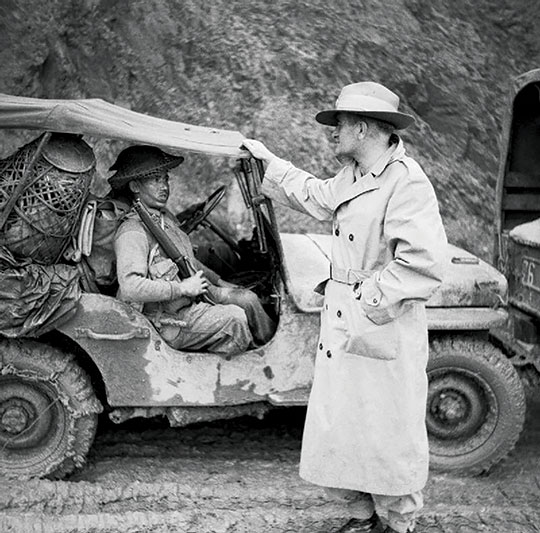
Field Marshal Sir William Slim served in World War I and in the Indian army during the interwar period. As commander of the 1st Burma Corps (1942–1945) and supreme Allied commander of ground forces in Southeast Asia (1945–1946), he was the driving force behind the successful campaign to drive the Japanese out of India and the defeat of the Japanese armies in Burma. After the war, he served as commandant of the Imperial Defense College, chief of the Imperial Staff, British army, and governor general of Australia. The following remarks, delivered to the students and faculty of the U.S. Army Command and General Staff College on 8 April 1952, provide his unique and invaluable insights on the art of command at the senior levels. His remarks have been edited for publication.
You very often hear people say, “So and so is a lucky commander.” Well, you can be lucky once; you can be lucky twice; but I don’t think you will be lucky three times. If a chap is lucky three times, there is something more to it … The commander who always guesses right doesn’t really guess, it is a product of … training, knowledge, observation, and character.
Although I selected the subject of this talk, “Higher Command in War,” I do address you with a certain amount of diffidence. Command is an intensely personal affair; anyone who has exercised it and then goes on to talk about it (which may not be very wise) is bound to base all that he says on his own personal experience. Any man’s personal experience, however wide it may have been, is limited. Another thing that makes talks on command from us old generals sometimes rather a bore is that we are frightfully inclined to sprinkle our talk with a very large number of capital “I”s, and the capital “I” is not really a very elegant letter. I’ll try not to, but I probably shall.
The sort of command that I am talking about, mainly, is higher command—that is, the command of any army or of an army group. Most of the things I shall say hold good, I think, for command at any level. If, when I have finished, any of you care to get up and say, “Well, we know a better way to do it,” I will not contradict you at all—as long as you say, “I know a better way for me to do it, but not necessarily for you,” because I do emphasize throughout that command is a personal thing.
I have been very lucky in my military career—very much more lucky than I deserve. I have commanded everything from a section of six men as a lance corporal to an army group of a million and a quarter, and the conclusion I have come to, after 40 years of doing that, is that command, on whatever level you exercise it, is very much the same thing. It is based on the same qualities.
I had a sort of motto, “No details, no paper, and no regrets.” No details—don’t go about setting machine guns on different sides of bushes. That is done a damn sight better by a platoon commander. Then, no paper. You cannot entirely do without paper, but you can get rid of quite a lot of it. Do not have people coming to you with huge files, telling you all about it. Make the man explain it; and if he cannot explain it, get somebody who can.
Command is that mixture of example, persuasion and compulsion by which you get men to do what you want them to do, even if they do not want to do it themselves. If you ask me really to define it, I should say command is the projection of personality—and like all true art, and command is an art, it is exercised by each man in his own way. But, you cannot be a commander without having certain qualities. In command itself, I think there are three elements. I am talking now, remember, of the command of a big organization. There is, first of all, the commander himself; then there are his headquarters and his staff; and third, there is the way he keeps contact with the people he commands. I will talk about each of these.
The Commander
If you ever have to organize a command or a campaign, believe me, the first thing to do is to select your commander and select him early because he should be the mainspring of the whole enterprise. I said just now that command was the projection of personality. So it is a question of what sort of personality a commander should have. He ought to have a whole lot of qualities, but there are certain ones that are basic and without which, he will never be a commander at all.
Will Power. The first of these is will power, or determination if you like to call it that. Not only does the commander have to decide what is going to be done—that is perhaps one of the easier things—but he has got to see that it is done. I don’t think you really need me to tell you that, because most of you have had experience of command on some level.
You do not need me to tell you, either, of the amount of opposition you will meet. There will be opposition first of all from the enemy. Well, that is fair enough; that is the attitude you expect of the enemy. I can remember in World War I, when I was a very young officer, some fellow at the back started sending up forms and one of the things you had to fill in was the attitude of the enemy. A certain young officer filled in “hostile!” He got it back with a very rude note from the staff saying, “Amplify your answer.” So he sent it back. “Definitely hostile!” So you will meet opposition from the enemy, but there are other forms of opposition. Strangely enough, there will be your own staff. Sometimes I used to get cross with my staff, which was one of the finest Anglo-American staffs you could have had, and I used to say, “You fellows do nothing but tell me that anything I want to do is logistically impossible.” You will get most of the opposition to the things you want to do from the administrative or what you call the logistics staff—and that is very understandable because the one thing that an administrative staff officer wants to avoid is letting down his commander. So he is always a little bit on the cautious side. There is always a tendency on the part of your administrative staffs to say, “Look here, you’re taking too great a risk.” Sometimes you may be, but you must be the judge of that.
It is astonishing how obstinate [allies] are, how parochially minded, how ridiculously sensitive to prestige, and how wrapped up in obsolete political ideas. It is equally astonishing how they fail to see how broad-minded you are, how clear your picture is … and how cooperative and big-hearted you are … Just remind yourself of two things. First, that you are an ally too … If you walk to the other side of the table, you will look just like that to the fellow sitting opposite. Then the next thing to remember is that there is only one thing worse than having allies—that is not having allies.
Then there are your subordinate commanders who probably want to do the thing a little bit differently or have other ideas, and sometimes you will find your superiors have very strong ideas of their own. You have to deal with that sort of opposition. When you get rather high up, there are doubting and interfering politicians. You have to deal with them. They aren’t so hard to deal with when you get down to it; they are not half as tough as they look sometimes. Then, of course, there are your allies.
Now, it is an extraordinary thing that you should meet with so much opposition from allies. Allies, altogether, are really very extraordinary people. It is astonishing how obstinate they are, how parochially minded, how ridiculously sensitive to prestige and how wrapped up in obsolete political ideas. It is equally astonishing how they fail to see how broad-minded you are, how clear your picture is, how up-to-date you are and how cooperative and big-hearted you are. It is extraordinary. But let me tell you, when you feel like that about allies—and you have even worse allies than the British, believe me—when you feel like that, just remind yourself of two things. First, that you are an ally too, and all allies look just the same. If you walk to the other side of the table, you will look just like that to the fellow sitting opposite. Then the next thing to remember is that there is only one thing worse than having allies—that is not having allies. You will get opposition from all those sources. You simply have got to drive through what you want against every kind of opposition, including the opposition of nature. The opposition of nature can be, of course, the worst of the lot. The British army fights all its battles uphill and usually on the junction of four map sheets.
There is an obvious conflict between flexibility of mind and strength of will. You have to be very careful to see that your strength of will does not become just obstinacy and that your flexibility of mind does not become mere vacillation … You have somehow, in yourselves, in your own characters, to strike [a] balance.
To be a little more serious, this determination, this will power, which is the first essential of the commander, is really based on courage. Not so much physical courage; you will have that because, thank God, courage is bred in us. You will have physical courage, but what else you commanders will have to have is rarer—that is moral courage. Moral courage simply means that you do what you think is right without bothering too much about the effect on yourself. That is the courage that you will have to have. You must be as big as your job and you must not be too afraid of losing it. It does not matter what your job is, whether supreme commander or lance corporal, you must not be too afraid of losing it—some people are. So the one quality no leader can do without is determination, based on moral courage.
Judgment. The prime task of the commander is to make decisions. What you have to do is to weigh all the various factors, recognizing that in war half of your information may be wrong, that a lot of it is missing completely, and that there are all sorts of elements over which you have no control, such as the weather and, to a certain extent, the action of the enemy. You have to weigh all these things and come to a decision as to what you want to do. You must have that judgment. Another kind of judgment that you need is the judgment of men. You must be able to select your subordinates. I have known at least one man who had every attribute of the great commander and would have been one of the greatest commanders that we have produced, but who lacked the power properly to select his subordinates. He was too loyal to them sometimes and clung to them when he should have gotten rid of them. Choose your subordinates and then, decentralize to them. Do not try to do everything yourself because you will kill yourself, unless you make somebody so angry by interfering with his job that he shoots you. The motto for a commander who is going to survive the strain of command for any length of time, is “Don’t keep dogs and bark yourself.” Deal, also, with the things that matter and have the judgment to determine which they are.
It is not usually difficult for a commander to know what he wants to do; major tactics will be the basis of that knowledge. The thing that is difficult to know is if he can do it with the resources he has … Unless the commander has a wide knowledge of general administration and logistics, he will find himself much too much in the hands of his logistic experts who will be admirable chaps but who, as I said, will be on the cautious side.
When I commanded, I had a sort of motto, “No details, no paper and no regrets.” No details—don’t go about setting machine guns on different sides of bushes. That is done a damn sight better by a platoon commander. No details.
Then, no paper. You cannot entirely do without paper, but you can get rid of quite a lot of it. Do not have people coming to you with huge files, telling you all about it. Make the man explain it; and if he cannot explain it, get somebody who can.
When I say “no regrets,” that is important. You do the best you can. You may have gotten it wrong; you may have lost a battle. You may even have lost a good many of your men’s lives which hurts more, but do not have regrets. Do not sit in the corner and say, “Oh, if I had only gone to the left instead of the right,” or, “If I had only fought in front of the river instead of behind it.” You have done the best you could—it hasn’t come off. All right! What’s the next problem? Get on to that. Do not sit in the corner weeping about what you might have done. No details, no paper, no regrets.
If you go on that motto and if you combine it, as I did, with going to bed at 10 o’clock every night, getting up at 6 o’clock, and crucifying anybody who woke you up between those hours unless it was for a major disaster, you will probably survive five years of higher command in war as I did.
In the Burma Campaign, very often owing to shortage of air transport, a lot of my troops, my forward formations, had to be on half rations. Whenever they went on half rations, I used to put my own headquarters on half rations. It was a bit theatrical, I admit, but it did remind the young staff officers with healthy appetites what it is like to be hungry, and it perhaps put a little more ginger in getting the supplies forward.
Now in some commanders, the ability to judge correctly seems instinctive. You very often hear people say, “So and so is a lucky commander.” Well, you can be lucky once; you can be lucky twice; but I don’t think you will be lucky three times. If a chap is lucky three times, there is something more to it. I think I can illustrate that to you. I was once having my portrait painted by a very well-known artist. I was not paying for it—the government was doing that. I watched him doing it. He took his little toothpaste tubes and squeezed out blobs of the primary colors all down the side of his pallet. Then he took a brush, dabbed at the colors he fancied and mixed them all together. Then he put his stroke straight on the canvas to give the color of my nose or whatever it was. It struck me as the most extraordinary thing; because if I had been doing that, I should have wanted to try the tone on something first to see if I had it right. I asked him how he did it. He said, quite frankly, he did not know, but he supposed it was practice. Well, of course, it was a good deal more than practice. It was a mixture of training, observation, knowledge and “feel” for his task—and that is what people call luck with a commander. The commander who always guesses right doesn’t really guess, it is a product of all those things—training, knowledge, observation and character. There is only one more point I would like to make about judgment. The stronger a commander’s will power, the more dangerous or even fatal it may become if his judgment is bad. Therefore, when you select your commanders and when you train yourselves as commanders, keep the balance between strength of will and judgment.
Flexibility of Mind. Modern war, tactics and techniques change rapidly. Indeed, the whole background against which you fight a war may change very rapidly. The invention of a new weapon, a political change, a break in the weather and the whole thing may change very rapidly. Unless you can adapt yourself to that—unless your mind is sufficiently flexible—you will not be a good commander. What you have to cultivate is imagination, but a controlled imagination, and a flexibility of mind. There is an obvious conflict between flexibility of mind and strength of will. You have to be very careful to see that your strength of will does not become just obstinacy and that your flexibility of mind does not become mere vacillation. We have, all of us, known the chap who went about thumping himself on the chest and saying, “I am a strong man.” He has a weakness somewhere and, of course, if he never changes his mind, he will be wrong more often than he is right. Then you get the other fellow who has such a flexible mind that he always agrees with the last chap who talked to him, and he’s terrible. You have somehow, in yourselves, in your own characters, to strike the balance between flexibility of mind and strength of will. When you have done that, you will be well on the road to being a commander in quite a big way. But nobody can help you very much, you have to do it yourself.
Knowledge. Another quality you must possess is knowledge. Now, when you command a small unit, if you are a platoon commander, you should be able to do everything that you ask any man in that platoon to do rather better than he can himself. When you get higher up and you command divisions, corps and armies, you cannot, of course, be expected to perform all the operations that everybody under your command performs or to have their technical skill. You can’t take a wireless set to pieces and put it together again like a trained mechanic should be able to do. You can’t take out a fellow’s appendix as well as a doctor would, though God knows, sometimes I felt I could do better than some of them. But you have to know the capabilities of the machines that they handle; you have to know the sort of conditions under which they have to work; and you have to know how long it takes them to do certain things. You must have that kind of knowledge.
When you are a commander, one of the people you want to study very closely is your opposite number—the fellow you are fighting—because battle is largely a struggle between the wills of the commanders … I planned the whole campaign on what I reckoned he would do as a reaction. It did not go right at all; everything went the other way … [later] I discovered that they had told him he could go home, and had produced another commander who had different ideas.
Another kind of knowledge you should attain is the knowledge of your enemy. We, the British, at any rate, are not very good at that. We didn’t study our enemy enough. When you are a commander, one of the people you want to study very closely is your opposite number—the fellow you are fighting—because battle is largely a struggle between the wills of the commanders.
I found it very difficult to get very much information about the Japanese. We were not very clever at it at the start of the war with Japan. I remember, on one occasion, I really thought I knew my opposite number pretty well. I used to keep his photo on my desk. If I couldn’t do anything else, I used to look at him and say, “Well, I may not be much of a general, but I am better looking than you.” I thought I knew that fellow very well. I planned the whole campaign on what I reckoned he would do as a reaction. It did not go right at all; everything went the other way. It was only after I had been fooling around at this game for some time that I discovered that they had told him he could go home, and had produced another commander who had different ideas. The whole tempo of the thing was quite different because they had changed the commander. One of the things you must have knowledge of is your enemy and especially the commander.
Now, it is not usually difficult for a commander to know what he wants to do; major tactics will be the basis of that knowledge. The thing that is difficult to know is if he can do it with the resources he has. But what I do stress and what I think we sometimes (we, the British, I won’t say you do, although I think you do) miss is a general knowledge of administration. The answer to that is the logistic answer, almost always. Unless the commander has a wide knowledge of general administration and logistics, he will find himself much too much in the hands of his logistic experts who will be admirable chaps but who, as I said, will be on the cautious side.
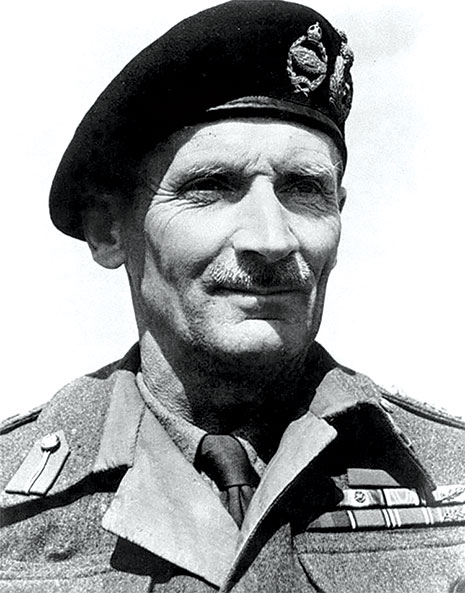
I once had an argument with Field Marshal (Sir Bernard L.) Montgomery—I didn’t have many because I nearly always agree with him on military matters—about what the qualifications of a great commander are. We each tried not to give our own qualifications—but I said (which rather surprised him) that I thought the real test of a great commander in the field was to be a judge of administrative risk. A judge of administrative risk—now you think that over.
I once had an argument with Field Marshal (Sir Bernard L.) Montgomery … about what the qualifications of a great commander are. We each tried not to give our own qualifications—but I said (which rather surprised him) that I thought the real test of a great commander in the field was to be a judge of administrative risk.
Integrity. If you have those qualities that I mentioned—will power, judgment, flexibility of mind and knowledge—you will be a commander. You will be a good commander, you may even be a great commander, but you won’t necessarily have the confidence of your men, especially when things are not going your way. And the confidence of your men is essential. In order to get that, all those qualities must be based on a simple honesty, on integrity. You have to have this massive and simple honesty. All the really great commanders who have held their men have had it because the only foundations under man which will stand under great stress are the moral ones.
You’re all right as long as you’re winning. I’m a hell of a general when I’m winning, anybody is. But it is when you are not winning—and I have not always been winning, if you had been a British general at the start of a war you’d know that—it is then that the real test of leadership is made. It’s a funny thing, but when you are in command and things have gone wrong, there always comes a pause when your men stop and—they look at you. They don’t say anything—they just look at you. It is rather an awful moment for the commander because then he knows that their courage is ebbing, their will is fading, and he has got to pull up out of himself the courage and the will power that will stiffen them again and make them go on. That happens to every commander sometime or other. He will never get over that moment unless he has the confidence of his men.
I can remember myself, I am not telling you this as an example of leadership, but I remember once I stepped out of a tank. I was using a tank because it was the only means of communication I had left. I saw waiting for me two of my subordinate commanders with a couple of staff officers and one or two other fellows, standing in a melancholy group. The situation was just about as bad as it could be. A division was cut off; we had no means of getting it out; and I didn’t think we could last very long or it didn’t look like we could. As I stepped out, those chaps just looked at me and I did not know what to say. So, I put the best face I could on it. I tried to look cheerful, and said, “Well, gentlemen, it might be worse.” And one of those unspeakable fellows said, “How?” The only thing I could think of saying was, “Well, it might be raining,” and in two hours it was.
Now, I don’t hold that up to you as an example of leadership or how to deal with it, but it was a situation that I shall never forget. You, too, will all sometime have to face it and what you have got to do is build yourself up for it, because it will come. The way you will survive it is by having the confidence of your men, which you will get by honesty in dealing and with integrity. Now, to get on to the headquarters, which is the second element in command.
The Headquarters
A headquarters is important as far as the commander himself is concerned, in its effect on him and in its effect on the people who are commanded. I believe that a commander has a right to demand from his headquarters two things—the first is information, and the second is suggestions. The information has to cover a tremendously wide field; his own troops, the enemy, photography, everything. On it, he must form his judgments. Then, I think it is the duty of his headquarters to put up to him suggestions for alternative courses of action, from which he selects one, or perhaps he thinks of one for himself. That is what the headquarters should do for the commander. For the troops, the first essential is that the headquarters should translate to them quickly and accurately the will of the commander. I suppose I have published dozens of operations instructions and orders, and I have never written one myself because I have always had excellent staff officers who could do it. But, there is one part of an order that I have always made a point of writing myself. That is the object. I do recommend it to you, gentlemen, that when long orders are being written for complicated operations, you take up your pen yourself and write the object in your own words so that object goes down to everybody.
If a man loses a battle, or gets a setback, go and see him and find out why. If he did it because he was careless, if he did it because he was stupid or, above all, if he did it because he got cold feet, sack him. Tell him why you sacked him. But if he did it because he was a little bit overeager, because he took just a little bit too much risk, or because he was a little bit too pugnacious, give him another chance. Lots of fellows benefit a great deal by a little setback once.
You must insist that your headquarters regards itself as the servant of the fighting troops. In practice that means that staff members won’t collect to themselves an undue proportion of the amenities, but they will confine themselves or you will confine them to having the necessary degree of comfort for them to perform their duties efficiently. In the Burma Campaign, very often owing to shortage of air transport, a lot of my troops, my forward formations, had to be on half rations. Whenever they went on half rations, I used to put my own headquarters on half rations. It was a bit theatrical, I admit, but it did remind the young staff officers with healthy appetites what it is like to be hungry, and it perhaps put a little more ginger in getting the supplies forward.
You have to see that your headquarters is the servant of the fighting troops. It has to be a friendly headquarters—I don’t mean friendly amongst yourselves, it must be that—but it must be friendly to the people who come to it from outside. If an officer comes to headquarters to find out something, do not keep him hanging about; have somebody ready to take him to the chap who can give him an answer. Do not forget that your headquarters, any headquarters, is always under inspection. Always, it is being inspected by the people who come up from below. Do not bother too much about the people who come down from above, but the headquarters must be efficient and look efficient.
Organization of Headquarters. We organize our headquarters now on the chief of staff system; so do you. Personally, I am not very fond of it—I like the old-fashioned British system before we began to copy the Germans, of the commander dealing directly with his principal staff officers. I know all the arguments in favor of the others and they are very good ones, but I run on the old system. Don’t let that worry you, I am not preaching heresy, I am not asking you to change anything. When you get to a height in command, it really will not matter what the theoretical organization of your headquarters is. By changing the emphasis a little bit, you will have it running the way you want it. Whatever you do, see that in your headquarters there isn’t too much (Erich) Ludendorff and too little (Paul von) Hindenburg.
Choices of Staffs. There are certain key staff officers to whose selection you ought to pay a great deal of attention. First of all, of course, there is your chief general staff officer, or your chief of staff. There is next, and in many ways more important, your chief administrative officer. Then there are two other fellows I would draw your attention to—one is your chief intelligence officer. Now, when you select your chief intelligence officer, do not select him because he is a fellow who can put on false whiskers and go down to the bazaar and pass himself off as Chinese or something. He cannot do it anyway, but you do not want that sort of fellow. What you want first and foremost is a good organizer. A man who can organize the collection and interpretation of intelligence—not necessarily collect it himself. You want an officer who will represent to you the mind of the enemy commander. They are very hard to find, these chaps, very hard to find. They are very rarely regular officers—they are usually university dons or something like that. Get a fellow with the extraordinary flair of being able to put himself in the mind of the enemy commander—get him and put him in your pocket, because he’s very useful.
You want an officer who will represent to you the mind of the enemy commander. They are very hard to find, these chaps, very hard to find. They are very rarely regular officers—they are usually university dons or something like that … get him and put him in your pocket, because he’s very useful.
Then, you want some good planners. They also come from what we might sometimes think strange places. Of two of the best planners I ever had, one was a fellow of All Souls College at Oxford, a son of the Archbishop of Canterbury; and the other one was an American National Guard officer whose profession was selling refrigerators. They were both of them absolutely first class, and you must have high-class planners.
Traveling Circuses. Do not go in for traveling circuses. We developed a very bad habit in the British army. When an officer was promoted, he took all his staff from the lower formation. That meant that you pushed out a lot of really very good fellows to make room for the circus, broke up the staff of the lower formation and it was not good for the commander himself.
Size of Headquarters. All British and all American headquarters are too big and should be cut down. As far as I know, there are only three ways of cutting down headquarters. One is by a flat, overall cut—you reduce your staff by say, 10 percent. I do that about once a year to the War Office, and the excruciating noise of the corks coming out of the bottles is heartbreaking! Another way of doing it is by elimination of complete sections. That is possible because you do find, especially in wartime, that around your headquarters all sorts of fancy sections grow up that you can really very well do without or you can push farther back.
Lastly, a way, which I recommend to your attention, is to cut out one complete tier of the staff hierarchy. That is, roughly speaking you get rid of say, all the captains, and send them back to their regiments where they are very badly wanted, or you get rid of all the majors and you let the captains do their own job and the majors’ jobs. In a big headquarters what you will find is that in effect this merely means that there is one note less on the file, and that’s no harm. Unless you constantly keep your eye on the size of your headquarters, it will grow out of all knowledge and usefulness.
Contact Between Commander and His Command
Now, the third and last element is the contact between the commander and his command. You cannot, when you get a big formation, know more than a very small fraction of your men. But every man in your command—and I don’t care how big it is—ought to know you, at least by sight. As you walk onto any parade or pass any men in your army, they ought to be able to say, “There’s the ‘Old Man,’ I wonder what he’s up to now.” You have to be known to them. You have to show yourself to your troops.
Publicity. Then, there comes this business of publicity. I’ve hardly known a general in the British army and strangely enough in the American either, who has not said that he disliked publicity. I have never yet seen a general in either army who did not rush to the newspaper to see what it said about him. Publicity is with us and it is here to stay. It is necessary, and a good general uses it for his own purposes.
Field Marshal Viscount Slim, on serving with foreign troops in World War II
“Accustomed as I was to Indian battalions in the field with usually only seven or eight Europeans, it [having a large number of European soldiers in native units] struck me as an unnecessarily generous supply. I never changed that view and later experience confirmed it. This I know is rank heresy to many very experienced ‘coasters.‘ I was constantly told that, far from being too many, with the rapidly expanded African forces, more British officers and NCOs [**noncommissioned officers**] were needed. But these large British establishments in African units had great drawbacks. The only way to fill them was to draft officers and NCOs willy-nilly to them, and this did not always give the right kind. The European who serves with native troops should be, not only much above average in efficiency and character, as he must accept greater responsibility, but he should serve with them because he wants to, because he likes them.”
—William Slim, Viscount,
Defeat into Victory, MacMillan Publisher Limited: London, 1986, p. 166
I have only one bit of advice about publicity to give you and that is, if you take over an army or large formation, do not start outside publicity until you are really well known to your own men. I suggest that you don’t start it until you have won a battle or two, and then you won’t have to bother because it will be done for you. Get yourself known to your own men before you start trying to get yourself known to people outside. The best way of getting yourself known to your own men is going about amongst them and actually talking to them. If you want to talk to men, it does not matter whether they are private soldiers or staff officers, if you want to talk to them as a soldier, and not as a politician, there are only two things necessary. The first is to have something to say that is worth saying, to know what you want to say. The second, and terribly important thing, is to believe it yourself. Do not tell men something that you don’t believe yourself, because they will spot it, and if they do not spot it at the time, they will find out. Then you’re finished.
Scapegoats. Do not go chasing scapegoats; if some fellow under your command has made a blob, has lost a battle or done something that is wrong, do not rush off straight away and “sack” him. Some people think that’s big stuff in the way of command. My advice to you is if a man loses a battle, or gets a setback, go and see him and find out why. If he did it because he was careless, if he did it because he was stupid or, above all, if he did it because he got cold feet, sack him. Tell him why you sacked him. But if he did it because he was a little bit overeager, because he took just a little bit too much risk or because he was a little bit too pugnacious, give him another chance. Lots of fellows benefit a great deal by a little setback once—but the thing to do is to find out why—don’t be in too big a hurry to sack people.
If you have to sack anybody, which is the most unpleasant thing in the world because the chaps you have to sack are usually rather nice people, do it yourself. Send for him or go to see him and do it straight to his face and tell him why you have done it. Then push him straight out, put him in an airplane and send him out of your army area. Do not leave it to other people to do and do not do it by letter. Similarly, if a rebuke has to be given to a subordinate commander, even a small one, sign it yourself. There is nothing more annoying if you are a major general, than to get a raspberry signed, “Doolittle, CAPTAIN.”
Finally, when you become great generals, as some of you will, and you have all these publicity merchants rushing about, watch it that they do not make a monkey of you. Watch it, that they do not make you begin to act as they think you ought to act. If you start putting your cap on at a particular slant in front of the mirror before you go out to face the flash bulbs, just watch it, because there has been more than one good chap who has been a little bit ruined by trying to act up to what the publicity boys thought he ought to be. It may even affect your judgment.
Now, all I tell you is this—that command is a completely personal thing. That you must have certain essential qualities: will power, judgment, flexibility of mind, knowledge and integrity. Do not confuse those with the frills that commanders always cultivate—they cultivate them because they want to get known to their troops. If you wear a couple of pearl-handled revolvers, you will not be a Patton; if you put two badges on a beret, you will not be a Monty. Look for the essentials that are in those commanders and copy those. You all have the makings of commanders in you. You wouldn’t be here in this hall if you didn’t. Some of you have already been commanders. You can develop your power of command. The last thing I say to you is this—Command is you. As you develop, be yourselves, because no imitation was ever a masterpiece.