Born out of post-World War I demand for bolt-action sporting rifles, Winchester’s Model 54 proved to be a successful marketplace competitor—one that still performs well.
- LAYNE SIMPSON
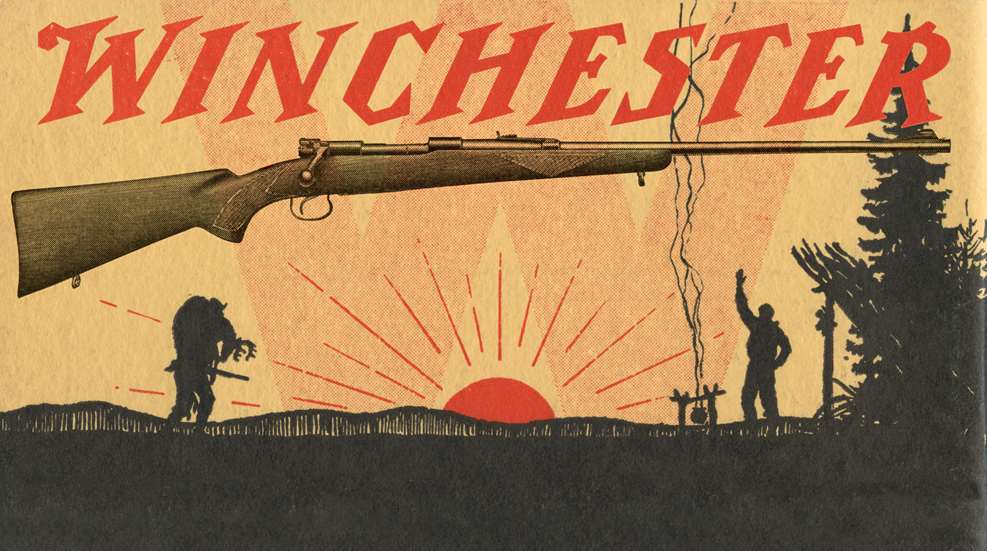
During World War I, Winchester and Remington built more than 2.25 million U.S. Model of 1917 rifles in .30-’06 Sprg. for the U.S. government. Cancellation of contracts toward the end of the conflict in 1918 left them with tons of parts in various stages of completion, not to mention acres of idle production machinery. Soon thereafter, both companies began to explore the possibility of building a bolt-action rifle for sporting use rather than for war. Remington beat Winchester to the punch in 1920 by utilizing modified M1917 parts on hand to create the Model 30 rifle in .30-’06 Sprg.
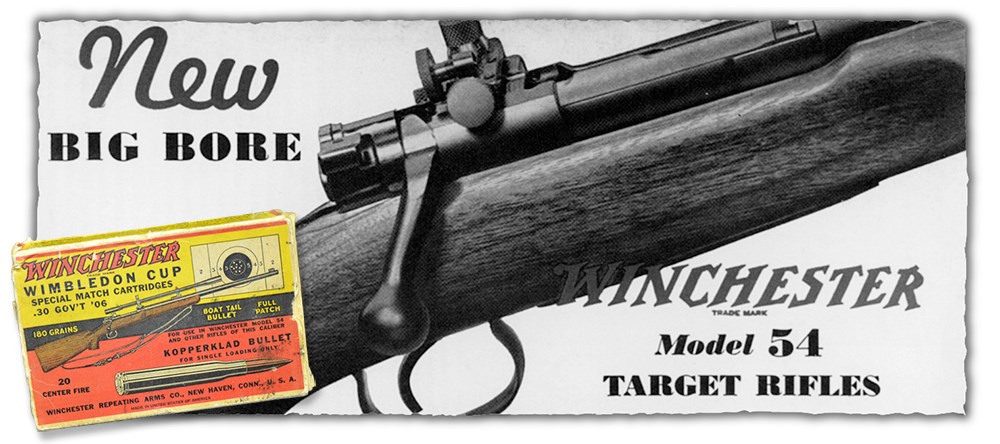
For several years, Winchester had been building target rifles in .30-’06 Sprg. on the Model of 1903 Springfield action for United States military rifle teams. The new Model 54 sporting rifle introduced in 1925 inherited several design details from that action.
The Model 54 was not the company’s first bolt-action rifle, but it was the first designed for use with high-intensity cartridges. Firearm writers of the day praised some of its features, with Philip Sharpe describing it as “standing high in a class by itself.” But other design details were thought to be less than perfect. At the top of that list was a one-piece steel stamping for the trigger guard and magazine cover. Another was the trigger serving double-duty as a bolt stop. As on the Springfield, the trigger was two-stage, and while Winchester claimed it was “necessary for safety reasons,” it did not belong on a target rifle or a rifle to be used for hunting big game.
A two-piece firing pin, much like that on the M1903 Springfield, also received its share of barbs. The same went for a three-position, Mauser-style wing safety on the bolt shroud that disengaged when rotated to the right rather than to the left. Despite those shortcomings, Model 54 sales were not bad until the beginning of the Great Depression in 1929 when many citizens began to become more concerned with putting bread on the table than with buying a new rifle.
The Model 54 was introduced in .30-’06 Sprg. as well as a brand-new cartridge called .270 Win. A young college professor by the name of Jack O’Connor was one of the first to purchase a .270 Win.-chambered Model 54.
Later added were the .30-30 Win. in 1928, the 7×57 mm Mauser, the 7.65×53 mm Argentine and the 9×57 mm Mauser in 1930, the .250 Sav. in 1931, the .22 Hornet in 1933 and the .220 Swift and .257 Roberts in 1936. Special-order rifles were built in .25-35 Win., .32 Win. Spl. and .35 Whelen, the latter making the Model 54 the first factory-built, bolt-action rifle chambered for a wildcat cartridge.
The only .35 Whelen Winchester Model 54 I’ve ever examined was in a collection at a gun show during the 1970s that had all the correct factory-applied markings.
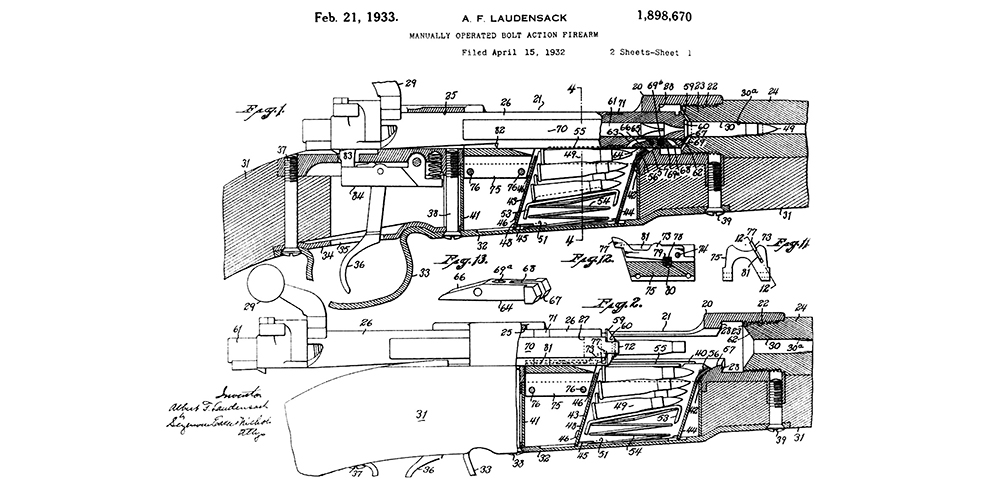 The specification drawing pictured contains the U.S. patent number attributed to Albert F. Laudensack for his modifications to the design of the Model 54 rifle that would allow it to fire the .22 Hornet cartridge.
Model variations eventually offered included the Standard Rifle with 20″ or 24″ barrel (26″ barrel in .220 Swift), Super Grade with 24″ barrel, Carbine with 20″ barrel, Sniper’s Rifle with heavy 26″ barrel, Target Rifle with heavy 24″ barrel and National Match with 24″ barrel.
The Super Grade sporter had a figured walnut stock with good checkering coverage, checkered steel buttplate, hard rubber grip cap, black fore-end tip and quick-detach sling swivels. Unlike the Standard Rifle with a 20″ barrel, the stock of the Carbine had no checkering, but both sides of its fore-end had a finger groove. Also missing were fore and aft steel eyes in the stock for hook-attachment of a sling.
The Carbine was promoted by Winchester as being perfect for carrying in a saddle scabbard while hunting from horseback. The NRA Standard Rifle, introduced in 1931 in .30-’06 Sprg. and .270 Win., had a select-grade walnut stock with checkering, a checkered steel buttplate and a Lyman 48W aperture attached to its receiver.
It was later available in other chamberings. The Lyman 48W was an extra-cost option on other models having open sights. For paper-punchers who used long, high-positioned scopes made by Stevens, J. W. Fecker and others, target rifles were drilled and tapped for a rear mount on the receiver ring and a front mount out on the barrel.
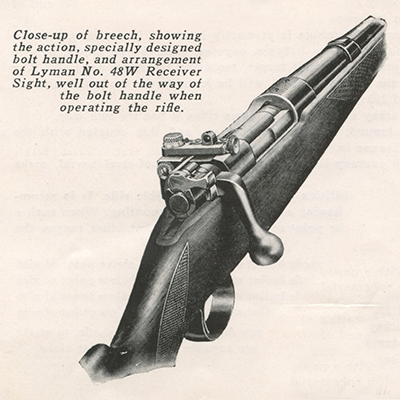 “The receiver has screw holes for attaching a Lyman No. 48W Receiver Sight, which will be furnished on the standard rifle on special order at an extra charge.” [vintage Winchester Model 54 pamphlet]
Like the Winchester Model 70 that replaced it in 1936, the Model 54 has three action bolts.
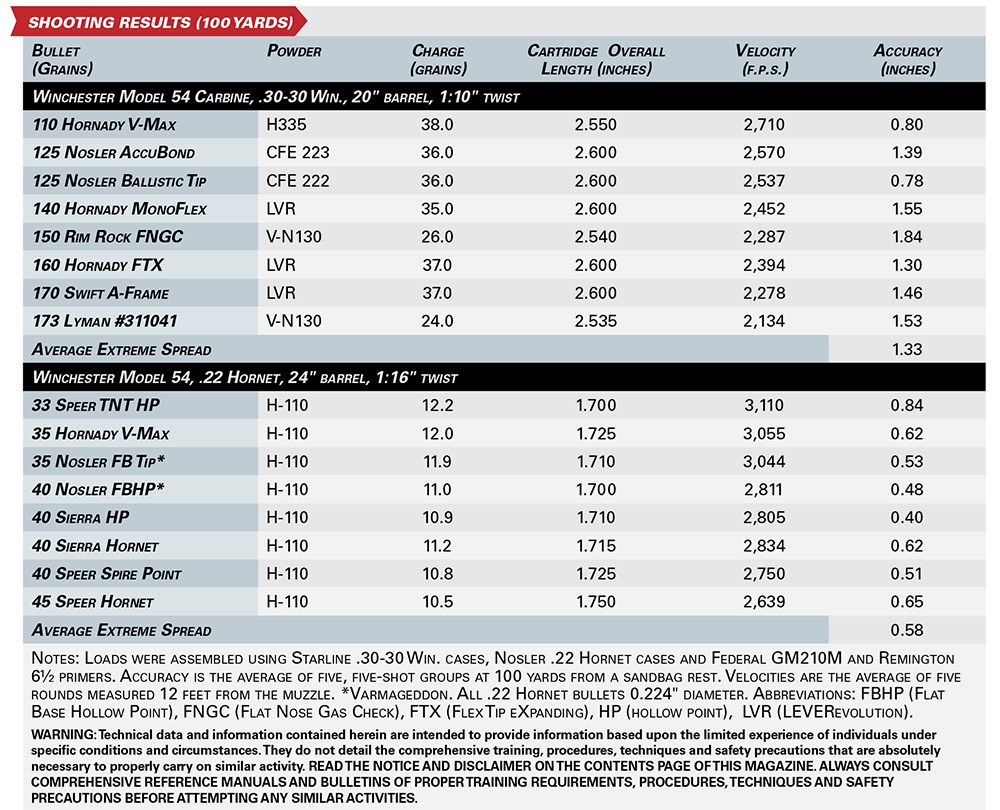
Beginning at the rear, one turns into the tang of the receiver, the next into the receiver just behind the magazine and the third into the recoil lug. Also like the Model 70, a screw out on the fore-end turns into a lug dovetailed to the bottom of the barrel. I have never fiddled around much with Model 54s in other chamberings, but my .22 Hornet is most accurate with the three action bolts tightened to 35 in.-lbs. and the barrel screw at 10 in.-lbs., all with a Real Avid torque wrench.
Once low-mounted, hunting-style scopes began to catch on, a modification made by owners of Model 54s became popular enough to make finding a rifle in totally original condition quite difficult today.
From his basement workshop in 1938, Maynard P. Buehler of Orinda, Calif., began selling a replacement, two-position, low-profile wing safety for the Mauser, Springfield and Model 54 rifles. In addition to eventually selling millions of those, Buehler became even more famous for his streamlined scope mounts.
The Winchester Model 54 action’s original lock time of 5.2 milliseconds was reduced to 3.1 milliseconds with the addition of the .22 Hornet in 1933. Called the Speed Lock, Winchester offered to convert earlier “plain lock” rifles for a nominal fee. This speed was quite incredible for the day, considering that lock time for the latest Model 70 action is 3.0 milliseconds.
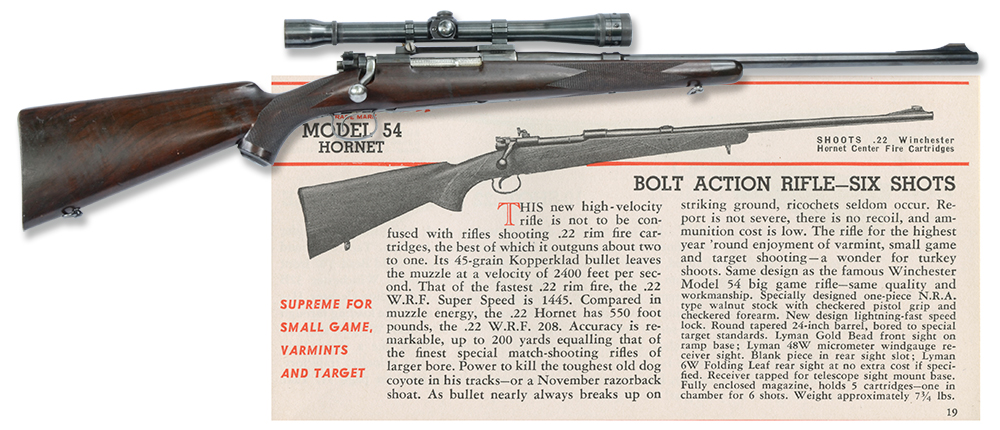 This Model 54 in .22 Hornet was built by Winchester in 1933, the year that cartridge was added. It was re-stocked by Hart Arms Co. of Cleveland, Ohio, during the 1940s, and through the years, it has taken its share of prairie dogs, groundhogs, crows and gobblers.
I used to have a collection of rifles in .22 Hornet from Winchester, Kimber, Brno, Charles Daly, Anschutz and several others. The most unusual was a Herter’s Hornet from the old mail-order firm of that name. My Winchester Model 54 was made in 1933, the year the .22 Hornet was added, and it consistently shot smaller groups than the others.
Except for a Buehler safety and a very good single-stage trigger, its barreled action is factory-original. The rifle was re-stocked by Hart Arms Co. of Cleveland, Ohio, sometime during the 1940s, and like all early rifles in .22 Hornet (including the Winchester Model 70), the rifling in its barrel has a 0.223″ groove diameter and a 1:16″ twist rate. As contrary as it might seem, both rifles are considerably more accurate with 0.224″ bullets than with those measuring 0.223″.
Altering the Model 54 action to handle the .22 Hornet was costly, but the price was the same as for the Standard Rifle chambered for other cartridges. In addition to shortening bolt travel, a five-round, top-loaded, double-column magazine sized for the tiny cartridge was fastened to the inside of the standard internal magazine box.
The follower is machined steel and its spring is of a wire-type rather than a flat-type. The rim of the top cartridge in the magazine rests below the front of the bolt. As the bolt moves forward, a spring-activated lever drops down to engage the head of the cartridge and pushes it far enough forward to allow the face of the bolt to take over and chamber the round.
At that point, the pusher retracts back into its slot in the bottom of the bolt. It sounds a bit complicated, and it is, but cartridge feeding in my Model 54 and Model 70 rifles has always been flawless. A spring-loaded, blade-style ejector is attached to the magazine box rather than to the receiver.
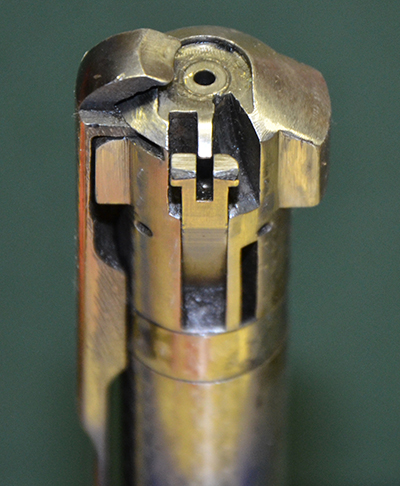 The rim of the top .22 Hornet cartridge in the magazine rests below the front of the retracted bolt. As the bolt moves forward, a spring-activated lever pinned to the bottom of the bolt drops down to engage the head of the cartridge and pushes it far enough forward to allow the face of the bolt to chamber the round. It has always worked flawlessly.
Back when rifles could be legally used for bumping off Thanksgiving dinner in my home state, I preferred the Model 54 because calling a gobbler in close and taking it with a body shot from the .22 Hornet was more fun and more challenging than saturating its head and neck with a swarm of pellets from a shotgun.
Through the years, the rifle has also accounted for its share of crows, groundhogs, prairie dogs and flickertails. For best accuracy, maximum bullet length for its 1:16″ twist has proven to be around 0.590″, but it is more accurate with shorter bullets, such as the Nosler Varmageddon 40-grain hollow point (0.570″), Sierra 40-grain hollow point (0.565″) and the Speer 40-grain spire point at 0.510″.
The basic Model 54 design was also modified in 1928 to handle another popular cartridge not usually chambered in full-size bolt-actions: the .30-30 Win. Mine is a Carbine made in 1929. Bolt throw was shortened and the magazine was blocked for the shorter cartridge. The feed ramp had to be modified to handle flat-nosed bullets commonly loaded in the .30-30 Win.
And whereas Model 54 barrels in all other chamberings have the coned breechface of the M1903 Springfield, it is flat for the .30-30 Win. and fully supports the case with only the rim protruding. As mentioned by Stuart Otteson in his excellent book The Bolt Action, “Smooth functioning from clips and box magazines, and not strength, accounts for the widespread application of rimless cartridges in bolt-action rifles.”
Unlike a .30-30 Win. rifle with a tubular magazine, the Model 54 allows the use of pointed bullets, but its magazine restricts cartridge length to a maximum of 2.60“. When the Nosler 125-grain Ballistic Tip and AccuBond bullets are seated accordingly, the mouth of the .30-30 Win. case is 0.80″ beyond the forward end of their full-diameter shanks.
Cartridges feed from magazine to chamber without a hitch, but the appearance bugs me, so I roll crimp the mouth of the case for light contact against the ogive of the bullet. Another option is to shorten case length to 1.955″, no big deal since the neck of the .30-30 Win. case is considerably longer than it has to be. Regardless of the option chosen, accuracy is quite good.
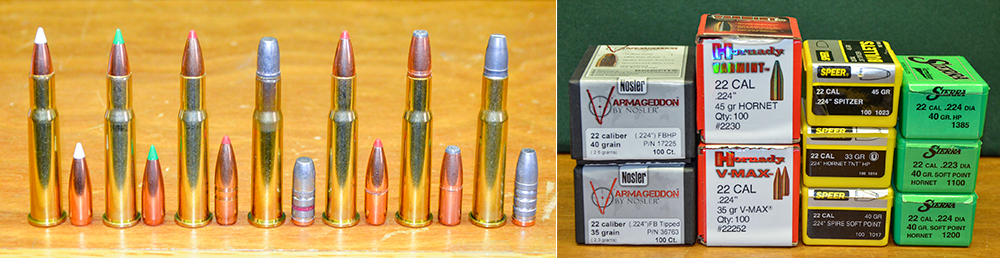 Maximum cartridge length for the magazine of the Model 54 Carbine in .30-30 Win. is 2.6″. The following bullets (l. to r.) are excellent choices for hunting deer and feral hogs: 125-grain Nosler AccuBond; 125-grain Nosler Ballistic Tip; 140-grain Hornady MonoFlex; 150-grain Rim Rock cast; 160-grain Hornady FTX; 170-grain Swift A-Frame; and 173-grain Lyman cast. For best accuracy, maximum bullet length for the 1:16″ twist of the .22 Hornet barrel has proven to be around 0.590″, but it is more accurate with shorter bullets such as the Nosler Varmageddon 40-grain hollow point (0.570″), Sierra 40-grain hollow point (0.565″) and the Speer 50-grain spire point at 0.510″. Despite the barrel’s 0.223″ groove diameter, the rifle is more accurate with 0.224″ bullets.
When I bought the .30-30, it was wearing a Model 330 scope of 2.75X magnification introduced by Bill Weaver in 1933. The rifle was originally purchased by one of my father’s friends in 1935 who installed the scope at that time. Internally adjustable, it has a 3/4″ tube and a 100-yard field of view of 35 feet. The 330 and its 4X mate (the 440) were not the first scopes of American make to be suitable for use on big-game rifles (Rudolph Noske was first in 1930), but a $25 price made them the most affordable.
Not long after buying the Model 54 in 1965, I sent the scope to Weaver for refurbishing, and while the company did a wonderful job, each time it is used, I am reminded of how much riflescopes have improved through the decades. I have taken a couple of deer and several feral pigs with the rifle wearing that scope, but most of my hunting and all group-shooting have been with more modern optics. According to Bob Bell’s Scopes & Mounts (1983), approximately 36,000 Weaver 330 scopes were purchased by the U.S. military during World War II, during which it was known as the M73B1.
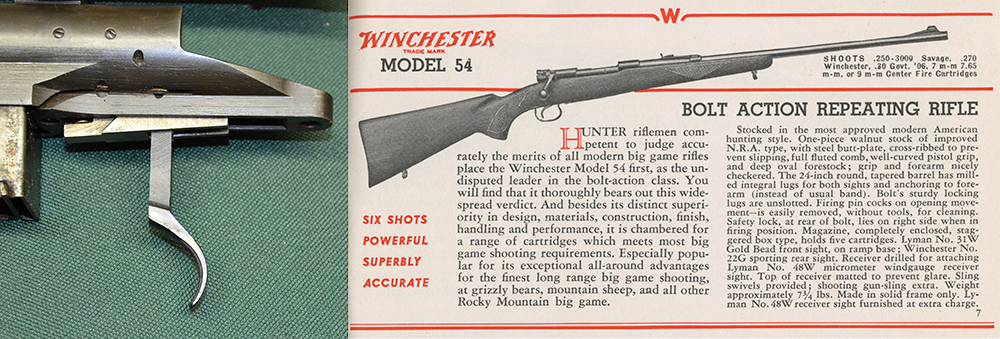 Perhaps the most criticized design detail of the Model 54 action is a military-style, two-stage trigger that also serves as a bolt stop.
The Model 54’s competition was the Savage Model 1920 and the Remington Model 30, both introduced about five years earlier. Having owned and hunted with all three for many years makes it easy for me to compare them. The Savage, with its short Mauser action and feathery weight, was a wonderful little mountain rifle long before hunters added the term to their vocabularies, but its action was too short for the .30-’06 Sprg. cartridge, so the race was lost before it started. Moving to the Model 54’s real nemesis, the safety of the Remington rifle allowed for the mounting of a scope low on the receiver, long before that type of instrument was readily available to the majority of hunters. It mattered not during the 1920s, but it probably began to make a difference toward the end of the production lives of both rifles.
The floorplate of the Remington was not hinged, but a push on its latch with the nose of a cartridge detached it for unloading the magazine. Not so for the Model 54. The Remington is also a bit lighter. In numbers sold, Winchester won, probably because Remington never offered target versions of the Model 30.
When the Model 54 was discontinued in 1936, more than 50,000 had been built versus about half that number for the Model 30 when it left production four years later. Whereas the Remington rifle would never be seen again, the Model 54 was greatly improved and re-introduced in 1936 as the Winchester Model 70.

:max_bytes(150000):strip_icc():format(webp)/Thomas-Byrnes-1574-3x2pd-56a4899a5f9b58b7d0d770a7.jpg)

.jpg)