
Month: July 2023

Gordon Chang: China’s ‘shock troops’ now inside U.S.
‘On 1st day of war in Asia,’ they will ‘poison reservoirs, assassinate officials, create terror’

A Chinese military warrior (Video screenshot)
China’s “shock troops” already are inside the United States.
And “the concern is that, on the first day of war in Asia they will take down America’s power lines, poison reservoirs, assassinate officials, start wildfires, spread pathogens, and create terror by bombing shopping malls and supermarkets.”
That’s the warning from Gordon G. Change, the author of “The Coming Collapse of China” and a Gatestone Institute distinguished senior fellow.
He wrote at the institute, where he is on its advisory board, that Chinese migrants are gaining entry to the U.S. through the southern border, in “unprecedented numbers.”
“Once here, the military fighters can link up with China’s agents already in place or Chinese diplomats,” he said, estimated their numbers already had 5,000 to 10,000.
He cited Richard Fisher, of the International Assessment and Strategy Center, who told Gatestone recently, “When the Chinese Communist Party starts its war against Taiwan and the United States, Americans should expect that Chinese sleeper agents now in America will hit targets like gas stations and military-age Chinese now crossing our border will be mobilized for assassination attacks and assaults on U.S. military bases.”
That means, “The next war in Asia will almost certainly be fought on U.S. soil, perhaps on its first day. Unsuspecting Americans will be in the fight.”
He explained, “U.S. Customs and Border Protection reports that the number of apprehensions of Chinese migrants in the first five months of the current federal fiscal year was more than double that during all of the last fiscal year. The 8,000 Chinese migrants apprehended this calendar year are more than quadruple the number apprehended in the comparable period a year ago.”
They’re flying to Ecuador, which allows entry, and they then make their way through Columbia and Panama.

And he warned, “Some migrants are almost certainly members of China’s People’s Liberation Army (PLA). Representative Mark Green (R-Tenn.), chairman of the House Homeland Security Committee, said at a press conference on the 14th of this month that a Border Patrol sector chief informed him that some of the Chinese migrants at the southern border have ‘known ties to the PLA.'”
On reaching the United States, under Joe Biden administration’s programs, they are simply “released into America.”
He noted China “has already been probing sensitive installations. Chinese agents posing as tourists have, for instance, intruded into bases, including the Army’s Fort Wainwright in Fairbanks, Alaska. There, the suspected Chinese agents drove past a base gate and were later apprehended with a drone inside their car.”
Green explained, “We have no idea who these people are, and it’s very likely, using Russia’s template of sending military personnel into Ukraine, China is doing the same into the United States.”
—————————————————————————————- I am willing to bet that even if this BS is true. In that about 90% of these so called “troops” will be vastly too busy to making money to show up their at target. Hey they are just like everyone else who comes here. I.E. Money talks & Bullsh*t walks.
Also take this into consideration. In that we have a lot of heavily armed folks who would just love for this to happen. As they could then go full Rambo on these “troops”. So bottom line , talk about a suicide mission, this would be it! My money is on it ain’t gonna happen anytime soon. Grumpy


Jordan Williams, a man charged in the fatal stabbing of another rider during a confrontation on a New York City subway train in Brooklyn, will not be prosecuted, according to officials.
A grand jury voted not to indict Williams, a 20-year-old from Queens who claimed he was acting in self-defense, on manslaughter and criminal possession of a weapon charges in connection to the June 13 encounter that left Devictor Ouedraogo dead.
“Our office conducted an impartial and thorough investigation of this tragic case, which included review of multiple videos and interviews with all available witnesses, and that evidence was fairly presented to a grand jury,” a spokesperson for the Brooklyn District Attorney’s Office said on Wednesday. “Today, the charges against Jordan Williams have been dismissed.”
The spokesperson added: “Under New York law, a person is justified in using deadly physical force when they reasonably believe it is necessary to use such force to defend themselves or others from imminent use of deadly or unlawful physical force.”
Jason Goldman, a lawyer representing Williams, had said the “victim was menacing people, as all of us have probably seen on the subway, erratic, deranged, crazy and in many people’s faces before he even encounters my client,” per CBS News.
Ouedraogo, identified as a 36-year-old homeless man with a criminal record, allegedly told riders on the subway car he was going to “erase someone” and asked Williams’s girlfriend, “Want to f***?”, The New York Post reported.
A confrontation between Ouedraogo and Williams ensued in which witnesses said Ouedraogo threw the first punch, a law enforcement source told The New York Times.
Sources told The New York Post that video footage presented to the grand jury allegedly showed Ouedraogo choking Williams and striking Williams’s girlfriend in the face.
The clash allegedly came to an end after Williams pulled out a knife and stabbed Ouedraogo.
After police responded to a 911 call and found Ouedraogo at a train station, Ouedraogo was transported to the hospital with a chest stab wound and pronounced dead. Williams was taken into custody a few stops away and later released without bail.
“I was scared in that situation,” Williams said after the grand jury declined to indict him, according to NBC New York. “I’m happy that I can get on with my life the way I’d like to.”
Ouedraogo’s younger sister Marina said she believes the dismissal was “just wrong,” The New York Times reported. “It is sending a signal that basically any one of us can carry a weapon. That is basically what we are saying here.”
The fatal altercation followed another deadly New York City subway incident in which Marine veteran Daniel Penny used a headlock restraint on Jordan Neely, a homeless man who allegedly shouted and threatened passengers, before Neely passed out and died.
Penny, who claims he acted to defend himself and others, pleaded not guilty to manslaughter and negligent homicide charges on Wednesday and was freed on $100,000 bail.
—————————————————————————————-A. While I deplore anyone getting killed, Devictor Ouedraogo discovered the principle of F*ck around & get f*cked. As he must of missed that class in the playground!
B. This happened in NYC!?! Maybe there is a slight glimmer of hope!
C. Marine veteran Daniel Penny should of taken a long vacation from school in NYC. Then go to a more friendly state that really hates to extradiate to New York. So that he could get at least a shot at a fair trial. Oh well!! Grumpy
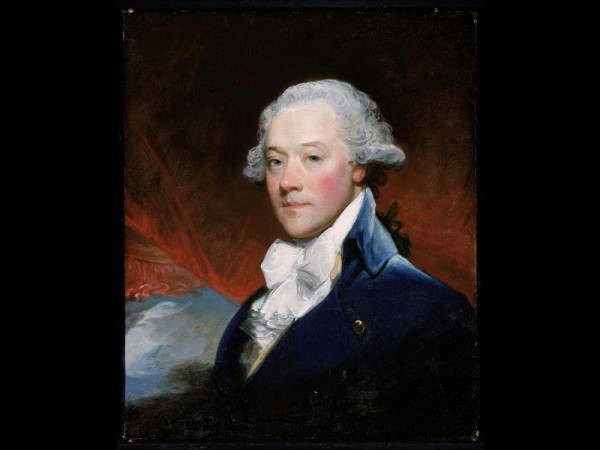
You might be surprised to know that one of the most influential patriots of the American Revolution was once referred to as “a corrupt and unprincipled rascal” by U.S. President James Monroe. Monroe was speaking of James Swan, a name that is virtually unknown today, but one that should be in the panoply of founding fathers for the simple reason that he paid off the extensive American financial debt to France singlehandedly.
Swan was born in Fife, Scotland, in 1754 and emigrated to Boston in 1765. Here he applied himself to his education, essentially teaching himself everything that he could about finance. As a young clerk, he rubbed elbows with many influential Bostonians, including Henry Knox, who would become the first secretary of war. When Swan was barely 19, he penned a work on Britain and the African slave trade. It was published in 1772 and was a scathing rebuke of the practice, written from an economic perspective. Because of his youth,and his anti-British propensities, Swan got caught up in the growing anger in Boston over the unfair British taxation in the colonies. Therefore it was only natural that he take part in the infamous Boston Tea Party of 1773, where presumably the young Scotsman was highly amused to be destroying the king’s tea while dressed as an American Indian.
Swan celebrated his twenty-first year of life as a colonial militiaman, fighting at the Battle of Bunker Hill on June 17, 1775, where he was wounded twice. He rose through the ranks of the colonial militia, eventually being promoted to the rank of major and occupied the position of adjutant general for the state of Massachusetts. Not only this, but he was still an active financier and used his growing wealth to pay for the many military expenses that Massachusetts could not meet. In addition, he shared his economic policies for Massachusetts with neighboring colonies, essentially acting as the Adam Smith of the American Revolution. During the war he also financed several privateers. By the time the war ended in 1783, Swan was a well-respected soldier and was friends with men such as George Washington, Henry Knox, and the Marquis de Lafayette. Married in 1776 to an heiress, he was also incredibly prosperous.
Swan reportedly owned over 2.5 million acres in what is now West Virginia, Virginia, and Kentucky prior to the war. During the war, he sold off this property to finance the Continental Army. When the conflict ended in 1783, a grateful Virginia gave him rights to even more land in the west. He was listed as one of the most wealthy men in Boston at only 29 years of age. An affluent Swan and his family were living the high life in the new United States.
As ever in finance, what goes up must come down. Swan soon encountered financial troubles, and left for France in 1787 to see if he could revive his fortunes working with his old friend Lafayette. He soon obtained government contracts from France for lumber, flour, grain, and other items, which helped him restore his wealth. The French Revolution began two years later, making France a hostile place for those who had been friends of the royalty. Swan somehow managed to navigate the political waters of the revolution and continue to make money.
The United States in 1795 was still struggling to pay off its own debts from the American Revolution. The Continental Congress had borrowed heavily from other countries, namely the Netherlands and France, to pay for its bid for independence. Now the French were calling for all American debts to be paid as they themselves struggled to finance their revolutionary armies. The debt exceeded $2 million and the United States saw no way to immediately pay it off. In stepped Swan, who privately assumed the entire debt. Like the good capitalist that he was, he then sold off the debt to private U.S. investors for a profit. This enabled the U.S. government to avoid the diplomatic embarrassment of being unable to pay off its foreign creditors and to get on a more secure financial footing.
Swan could have retired in the United States at this point, but he went back to France in 1798 to ensure that his business investments there were secure. When the French wanted to make a deal for the Louisiana Purchase in 1803, Swan was able to assist the U.S. in providing capital.
In 1808, a business partner accused him of owing a debt of two million francs. Swan flat out denied any such thing. But at this point his luck had run out and the ever-changing French government threw him into debtor’s prison. He could have paid this debt, but on principle and as a man of honor, he refused. This did not stop him from paying the debts of the other men who were imprisoned with him and he soon became a well-beloved and respected person in the prison. With money sent by his wife, Swan rented out apartments in his name across from the prison, where he held parties and other events for his friends, always with a seat left empty for himself. His family lived comfortably in Boston and Swan contributed to many charities in that city. In 1819, he wrote an address to the U.S. government on the advisability of using paper money rather than gold and silver for national currency, 50 years before this was eventually adopted by the U.S. Treasury. He was far from idle. However, it was not until 1830 that Swan was released from prison. By that time, his wife had died, his children were grown, his fortune had been spent, and most of his friends had either moved on or died.
Now an elderly 67 years of age, without wife, family, or friends, Swan was alone. His one wish was to see his old friend Lafayette, which apparently he did. The following day he died.
Swan is presumably buried in Paris, but the location of the grave of this generous patriot is unknown. His legacy in the history books seemed to disappear with him as well. Monroe had called him a rascal, which may have contained a kernel of truth given the sometimes underhanded nature of business dealings in the 18th century. However, rarely is an individual one dimensional and Swan certainly demonstrated more fine qualities than ill. Without his financial support, the great American experiment may have died in the fire of the war for Independence or fallen apart due to financial insolvency.