Categories
Month: July 2023
Categories
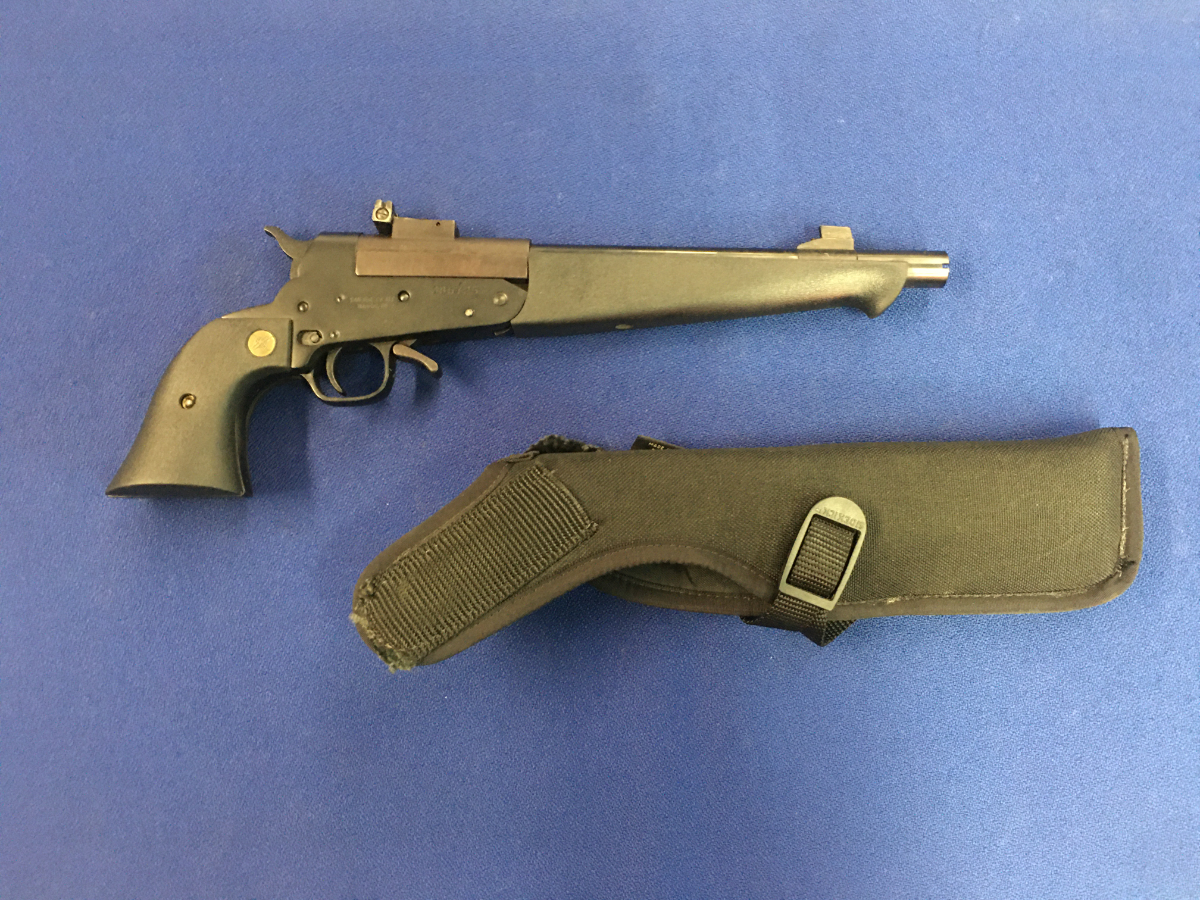
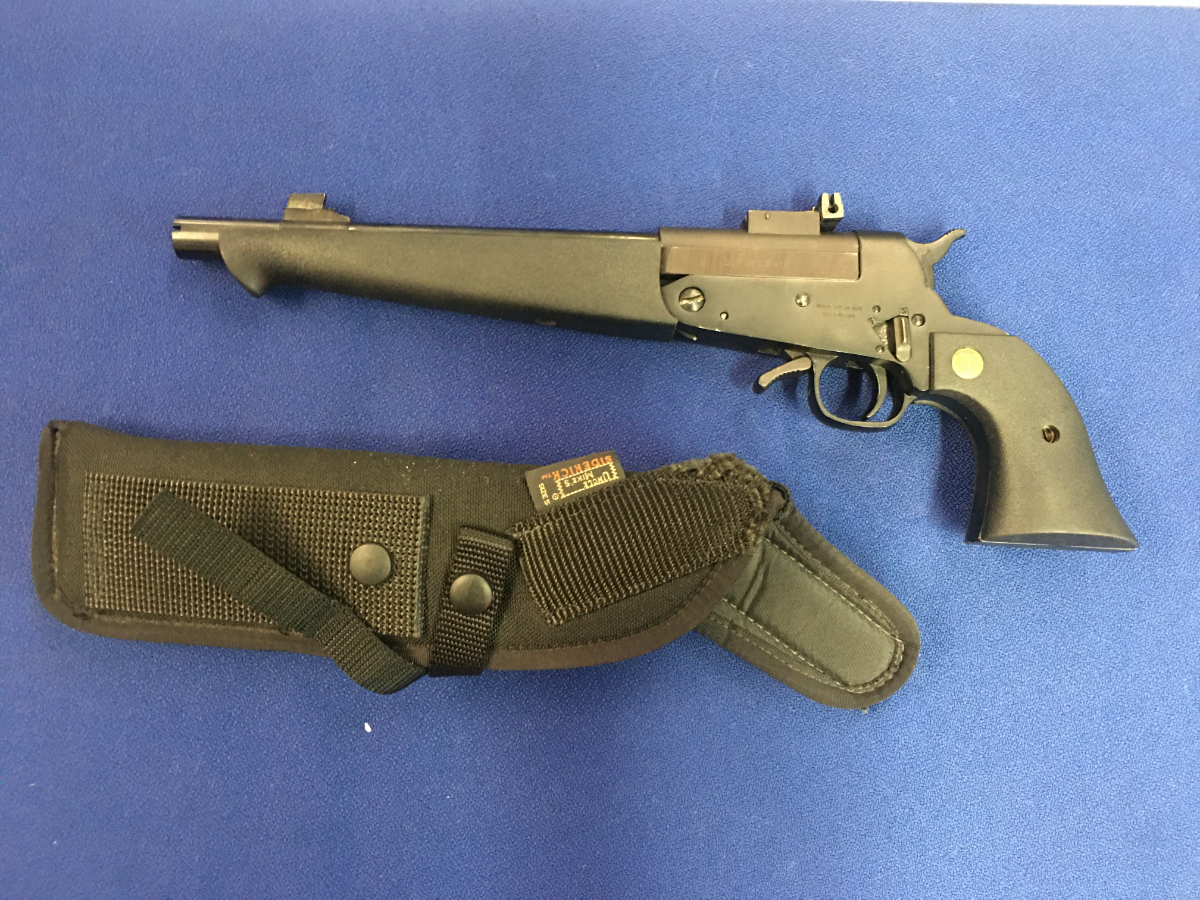
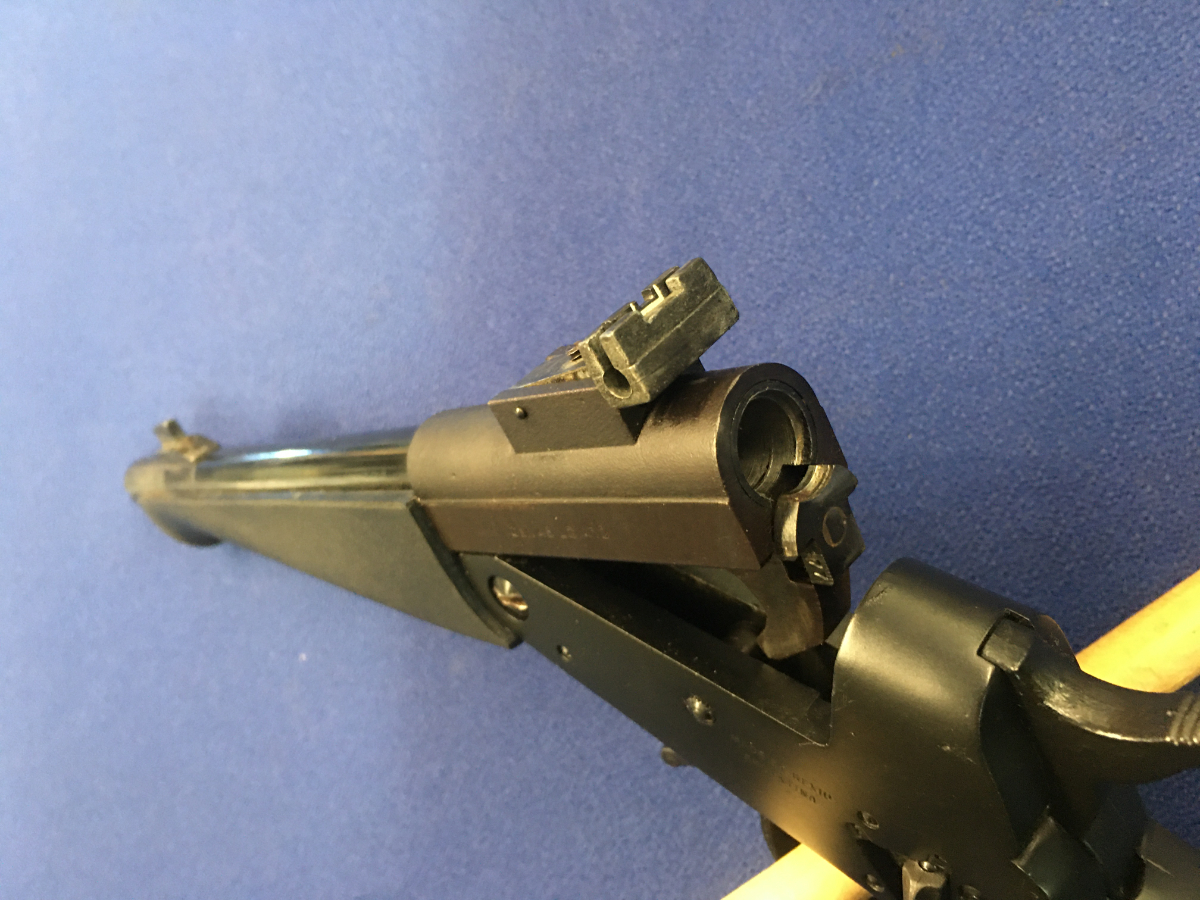
Colt Lightweight Commander (1969)
I am weeping. Weeping with laughter. Former red team planner for the government here. FYI these are the threads they monitor the most
If there ‘was/ a revolution in the U.S. the rest of the world would get involved fast. And depending on the type of uprising, there is a large chance that it would not be a quick affair. It would be brutal, it would be bloody for the U.S. Government and it could start a global scale war. Here are the top ten issues that came up in red gaming
1. The LIS powergrid could be taken down by a series of “surgical strikes” with the exception of the texas grid. By surgical strikes, a few marksmen (IE LIS army tier Marksmen- the min requirement) hitting certain spots on the grid would fuck a lot of the military and government because they
need the grid more than bubba and friends do. Additionally, while ALL government agencies have backup generators- they will be hard pressed dealing with the resultant looting and other madness that would come with power outages. This would effectively create another front for the military. It
would also turn the people against the government quicker and paralyze the government’s propaganda machine. Worse still- the key points of the LIS powergrid are public obtainable information and not only are the points too many to be effectively guarded- they are not guarded anyways. This was always the number 1 issue.
2. An estimated desertion rate in case of a civil war is 75% in the case of a left wing president. 50% of that would be assumed to immediately betray the president. The army would be fighting it’s own. Yet another front created in this war. Additionally, there is an assumed 25-50% desertion or
outright betrayal rate in three letter government agencies. Additionally there is also an assumed 5% of the 50% betrayers would stay in their job and become sabateurs. Additionally 10% of that 50% would contain key information that would be of critical danger to the LIS government. Of that
10%, 1% would be able to deliever that information to the LIS’s foreign enemies. What you should get from this is that the second the LIS declares war on it’s own- is the second it ceases to exist as the state and we know it.
3. “tbaggers” and “right-wing extremists” and “oathkeepers” which are considered untrained racists who arent “good with a gun” often are a) veterans who now have more time to have fun at the range, sometimes more than some army units or marine units. In addition to previous military
training b) often camp and do other outdoor activites, more than many in the military do as the focus has gone away from field exericisec and c) often have better equipment outside of armor and heavy weapons than the military. However c) is kind of irrelevant because many of the places these
people could hide would make the kind of war the LIS fights with the equipment they use pointless.
4. Outside influence is a huge fucking problem. Russia has already stated they would back any texas seperation movement, and right now we already have enough problem keeping radical islam in check. The second the LIS has to fight in a “Civil War” is the second it becomes a proxy war
between NATO and whoever wants to fuck with america. While America has amazing nuclear defence and air defence- if it comes to a civil war you have to assume that in a best cast scenario the LIS military is going to be operating at 75% at best. Shit would go down. Hard. And fast. And if
Russia, spoiler alert one of the best militaries in the world at fighting in an urban environment, sent fucking trainers and helpers to rebels- you can reliably bet that they would also possibly deliver weapons to the rebels. So instead of fighting “Timmy Tea8aggei’ you are fighting “TimmyTea8agger who is buddies with Vlad.”
Based Russia bro has stated the number one reason why a ‘civil war’ is not just the LIS versus the rebels. There will be looting. There will be rioting. Cities will burn. The national guard cannot fight both the rebelions and rioters in a city that would also kill off their supplies. Additionally if you
dont think that the rebels will send in instigators into the cities or worse stand alone actors (A Lone Wolf on steroids. Think Timothy McVeigh but instead of one van they have a whole god damn fleet of them. A good movie example would be Bane) would be god damn mistaken. Additionally, if
the LIS government cannot even help it’s own people, why would it’s own people support it’s military. Worse yet, if someone emptied out prisons (There are a FLICK TON of prisoners in the us, about the size of oh- I dunno THE ENTIRE CHINESE ARMY) you would have more crime than the police could ever handle.
6. Logistics and infrastructure in the LIS are crumbling and failing. Any war fought against a rebellion in the LIS would be a logistical nightmare even before the rebels stated going full Al-Qaida and putting IEDs in the road. A fucking retired general who was contracting with us on the team said
“the only thing holding together the LIS’s interstructure is basically duct tape and the will of the department of transporation. And often enough there isnt enough ductape.” Your most loyal cities to the LIS government, as we polled, are also the most logistically easy to cut off. NY CQ SF? LA?
DC? Baltimore? Most of them require crossing water to get into from certain directions. Most of them have critical air ports. Some of them have critical ocean ports. If anything happened to just Two of the cities on the list it would create a logistical clusterfuck.
7. Your “Johnny Reb” and “Timmy Tea8aggef’ states/ red states all have something most of your “oh so progressive” “Arent we so european” “oh my god we are just like Sweden” blue states are for the most part consumer states and not producer states. Urban areas dont have farms. The second shit goes down- realize a lot of those blue areas are likely to starve. In a civil war scenario we predicted that at least 10,000 people would die of starvation if the war was not finished in a year. The numbers get worse after that.
& The LIS has way too many choke points, and the government forces would often be on the wrong side of them. This ties into the logistical nightmare- but it also has todo with an odd phenomena. Liberals like to live near the ocean. Many of the dividers of the country, like the rocky
mountains, the Mississippi River, Appalacia, The Missouri River (Fun fact: the bigggest choke point for the LIS Government is in Missouri) are red state areas. Sure Air travel is a thing, but a majority of the LIS government’s needs would have to travel by ground and even still many of the major
airports are outside of the city. Of course the LIS would use military base air fields, but if civil war did break out- which bases would be safe? Which ones would have fallen to traitors?
9. PR Nightmare. Every rebel killed on CNN would be spun as “The LIS government killed X Civilians today in a strike.” on RT. That is- as it was pointed out earlier- if the LIS media could even function in a civil war or an uprising. Your “Rebel Scum” know that the main thing that holds together
the LIS, nay life in the LIS as we know it is the 24 hour news cycle and the media. The second it’s gone you are going to have urban anarchy. If you are from America, can you imagine a day without TV, Newspaper or Internet? Your average urban youth cant and if you dont think that isnt
going to cause rioting you must have a real high regard for how much restraint they have. Assume that in a civil war- that your ability to talk to the people is compromised. Also assume that in the case of a civil war- that rebels may know how to monitor conversations like the LIS does- as there
are manuals online on how to do so.
10. This one is either one or ten, depending on who is asked. The LIS will never nuke its own. The Second it does they have lost the civil war and other countries come to “liberate” the LIS from it’s own “repressive regime.” Additionally, if anny general, minuteman, nuke tech, or Nuke sub
captain, decided to side with the rebellion is the second the LIS government is SOL.
tl;dr version, The second that a “civilian uprising” or “extremist group terrorist attack” turns into “Civil War” is the second the LIS loses. As a result you Will never see a “Civil War”. You will see Waco, you will see Bundy Ranch, you will see all sorts of militant group confrontations and maybe even
some skirmishes, but the LIS government fears it’s own people way the fuck too much to ever start a civil war.
Categories
1892 Winchester 25-20 vs 32-20 WCF
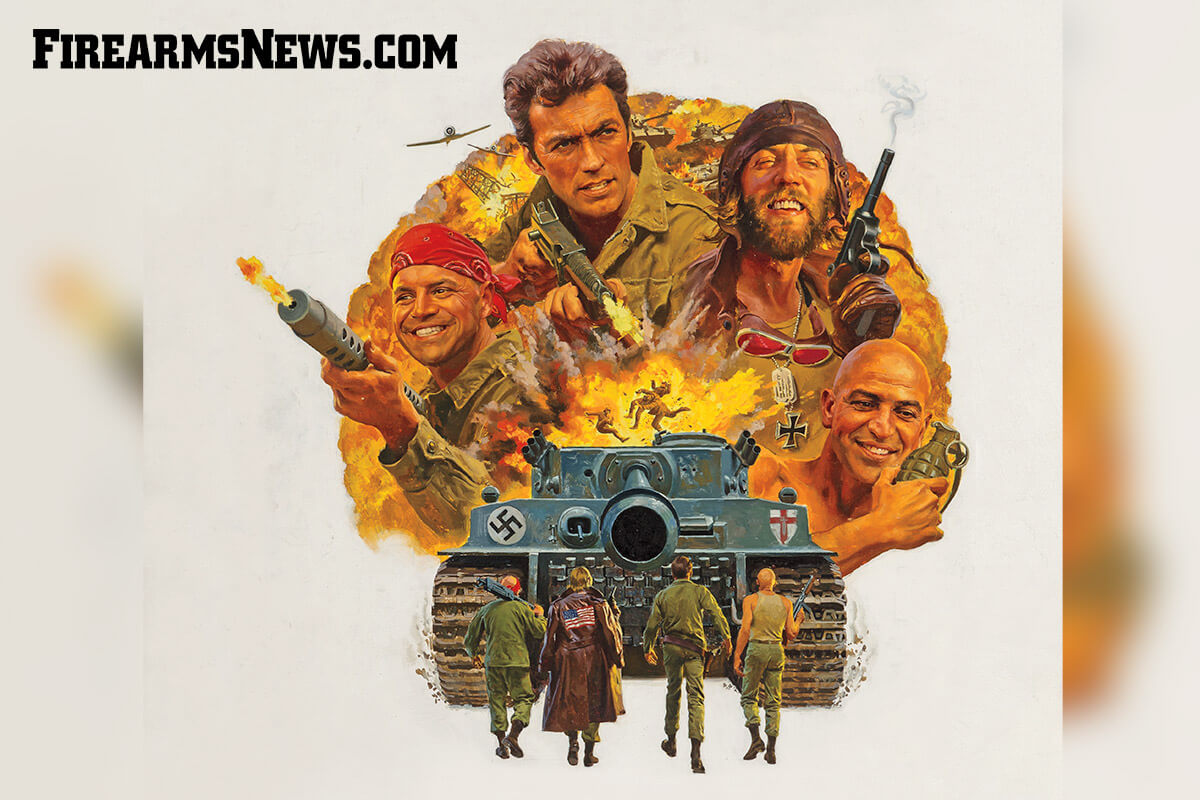
Think you know all the guns from your favorite World War II movie? Think again! Here is a breakdown of the firearms used in Kelly’s Heroes by Clint Eastwood and his oddball team.
January 05, 2023
“Oddball, what’re you doin’?”
“Oh, I’m drinking some wine, eating some cheese, catching some rays … you know.”
“What’s the matter?”
“The tank’s broken, and they’re trying to fix it.”
“Well, why aren’t you up there helping ‘em?”
“I only drive ‘em, I don’t know what makes ‘em work.”
“Creeps … .”
Photo Gallery
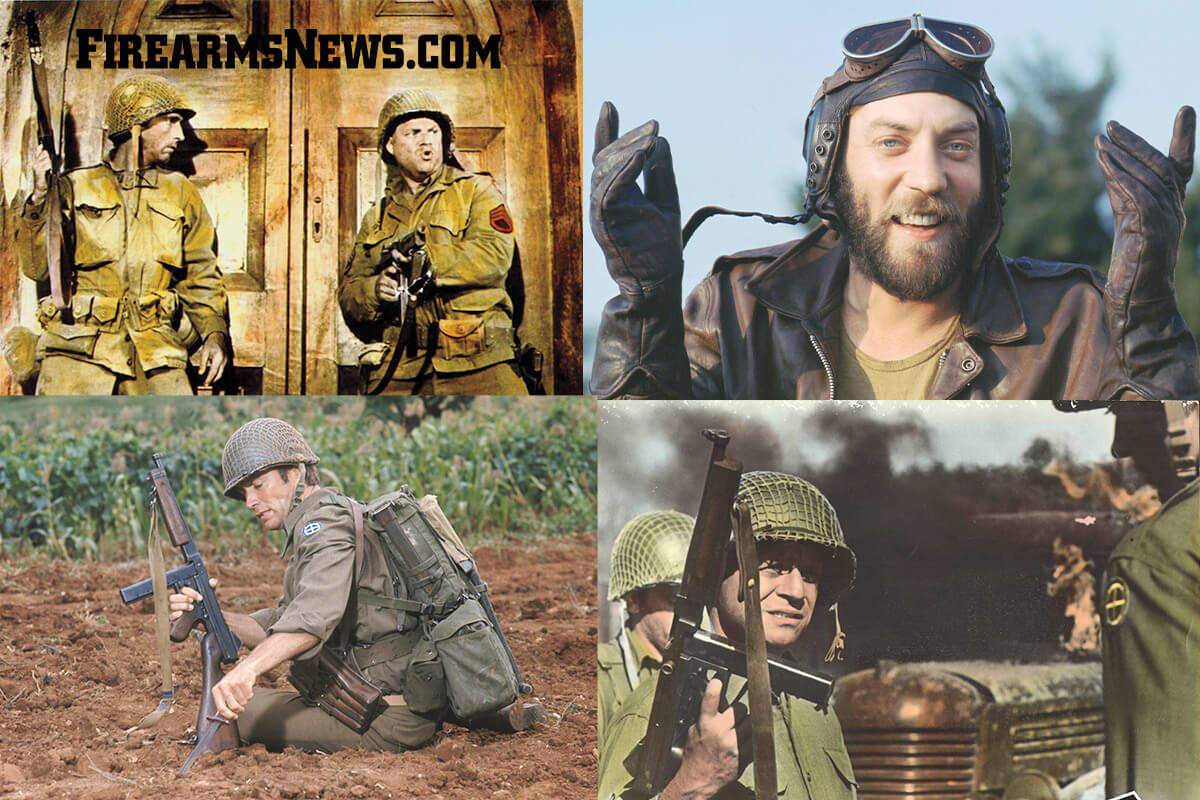
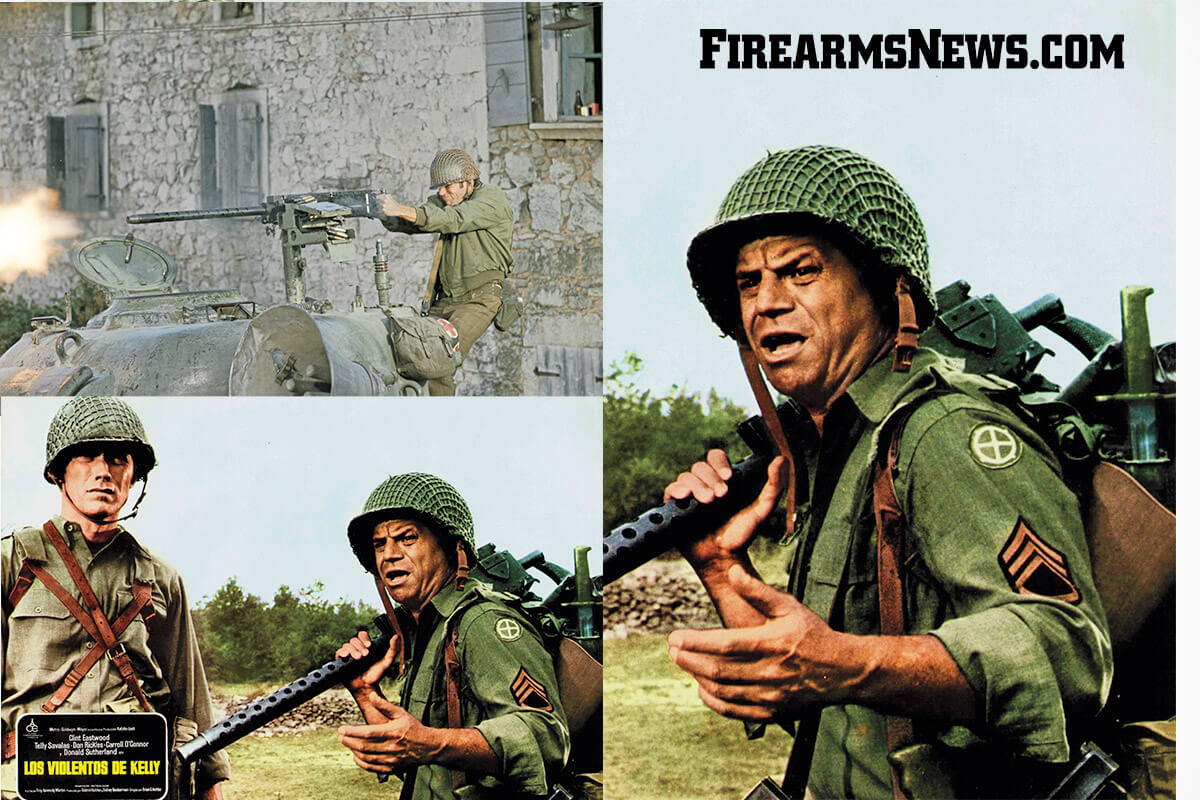
If you don’t recognize that timeless exchange from the 1970 action comedy flick Kelly’s Heroes then you’re missing out on the coolest war movie ever filmed. Sporting a tour de force cast that included Clint Eastwood, Telly Savalas, Donald Sutherland, Don Rickles, and many more, Kelly’s Heroes was the antiwar caper film that set an unassailable bar.
Funny, poignant, exciting, and cool, Kelly’s Heroes is obviously a personal fave. 1970 was a big year for war movies. In addition to Kelly’s Heroes, Hollywood churned out Tora, Tora, Tora, Patton, MASH, and Catch-22. The Vietnam War was still grinding away, and the domestic turmoil it fomented flavored the American film culture. In Kelly’s Heroes we find cinematic perfection.
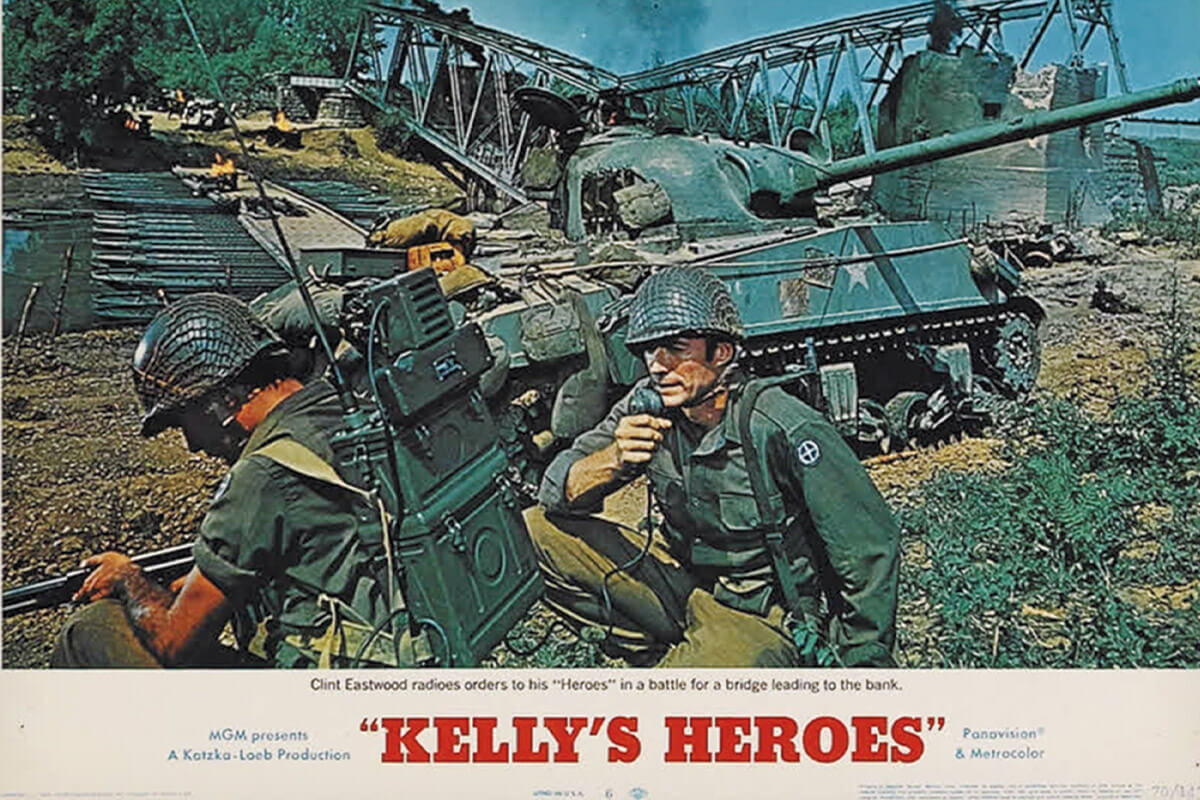
Legit, I found the movie on ROKU for free. If you haven’t seen it yet you are without excuse. I’m about to ruin the plot, so you need to stop what you’re doing, run a bag of popcorn through the microwave, and watch it. I’ll be here when you get back. The narrative orbits around an armored recon unit of the 35th Infantry Division in combat in Europe during World War 2. Clint Eastwood’s character, Kelly, is a former Lieutenant busted down to Private for having attacked the wrong hill on faulty orders. The sharp eye will catch the faint outline of a Lieutenant’s bar still stenciled on the front of his helmet.
Kelly captures a Colonel Dankhopf of Wehrmacht Intelligence in an effort at gathering information on restaurants, hotels, and brothels in Nancy, the next French town on their line of advance. While interrogating the German Colonel, Kelly discovers several gold bars in his briefcase.
Once he gets the kraut good and drunk the Colonel admits that there is actually $16 million in gold stored in a bank some thirty miles behind German lines. Kelley has serendipitously stumbled upon the perfect crime.
What follows is solid action, proper gunplay, a rousing adventure, and some shockingly cool comedy. Big Joe is the battle-hardened senior NCO played by Telly Savalas who really runs everything. CPT Maitland is the feckless Company Commander who warns Big Joe that the penalty for looting is death as he drives off with a pilfered yacht. The hustler Supply Sergeant Crapgame played by Don Rickles is hilariously acerbic throughout.
MSG Mulligan the idiot artilleryman is both manic and criminally irresponsible but rises to the occasion in exchange for a gold bar of his own. Interestingly, Mulligan was played brilliantly by George Savalas, Telly Savalas’ younger brother. Supporting actors like Gavin MacLeod, Harry Dean Stanton, Stuart Margolin, and Jeff Morris each add moments of inimitable levity. The real gem, however, is Donald Sutherland’s stoned dopehead tank commander Oddball.
Oddball’s commander got decapitated by a German 88mm antitank gun six weeks before the story begins, but they never bothered reporting his death. As a result, Oddball and his three Sherman tanks just sort of fell off the grid, setting themselves up in the rear area to avoid the chaos.
When introduced to Kelly, Oddball explains his mindset thusly, “We see our role as essentially defensive in nature. While our armies are advancing so fast and everyone’s knocking themselves out to be heroes, we are holding ourselves in reserve in case the Krauts mount a counteroffensive which threatens Paris … or maybe even New York. Then we can move in and stop them.” Eventually Kelly pulls together a motley band that fights its way to the little French village of Claremont.
There they find the bank guarded by three Tiger I tanks of the 1st SS Panzer Division. A rollicking firefight ensues, some of which is surprisingly funny. Ultimately the Americans strike a deal with the commander of the sole remaining Tiger to blow the door off the bank and get to the gold.
Kelly divides the gold up evenly among everybody, even the Germans. The Americans then strike out for Switzerland with $845,000 each in bullion. That would be about $13.3 million apiece today. As a stinger, Oddball uses some of his share to buy the remaining Tiger tank along with the German uniforms. When last we see him he is roaring off in his new Tiger wearing the German tank commander’s black leather jacket, his loader perched atop the turret with an MP40. Fade to the killer 1970’s folk soundtrack.
The Movie
Kelly’s Heroes was filmed in what was then Yugoslavia. I’m not smart enough to keep up with just what became of Yugoslavia in the aftermath of the Balkan Wars in the early 1990’s. However, in 1970 Yugoslavia was still awash in military equipment left over from World War 2.
It also sported a countryside that aped that of wartime France. At the time of filming operational Sherman tanks could still be found in Yugoslavia. The screenplay was inspired by a supposedly true story. Rumors still abound of an operation conducted by American GIs and German SS officers that spirited away a large portion of the Nazi gold reserves at the end of the war. Investigations into the details were still ongoing into the 1990’s.
Two of the missing gold bars replete with Nazi markings are said to be held in the vaults of the Bank of England today. George Kennedy was first offered the part of Big Joe that was so perfectly done by Telly Savalas, but he turned it down. There was a female part to be played by Ingrid Pitt, the starring actress in the Alistair MacLean war classic Where Eagles Dare. However, her part was cut at the eleventh hour.
The original story arc had all the Americans surviving to escape to Switzerland. However, at some point in production the director added the intense minefield scene wherein three of the platoon members were killed. Donald Sutherland later said he regretted that this was included in the film and felt that it marred the overall performance.
Though the story seems about perfect to me, there were several deleted scenes that didn’t make it into the final cut. Several involve nudity that likely would have earned the film a racier rating and restricted its audience. The most compelling, however, was a scene cut at the very end while Kelly and the survivors are driving away toward the Swiss border. A group of soldiers run up and yell that they are going in the wrong direction.
The Guns
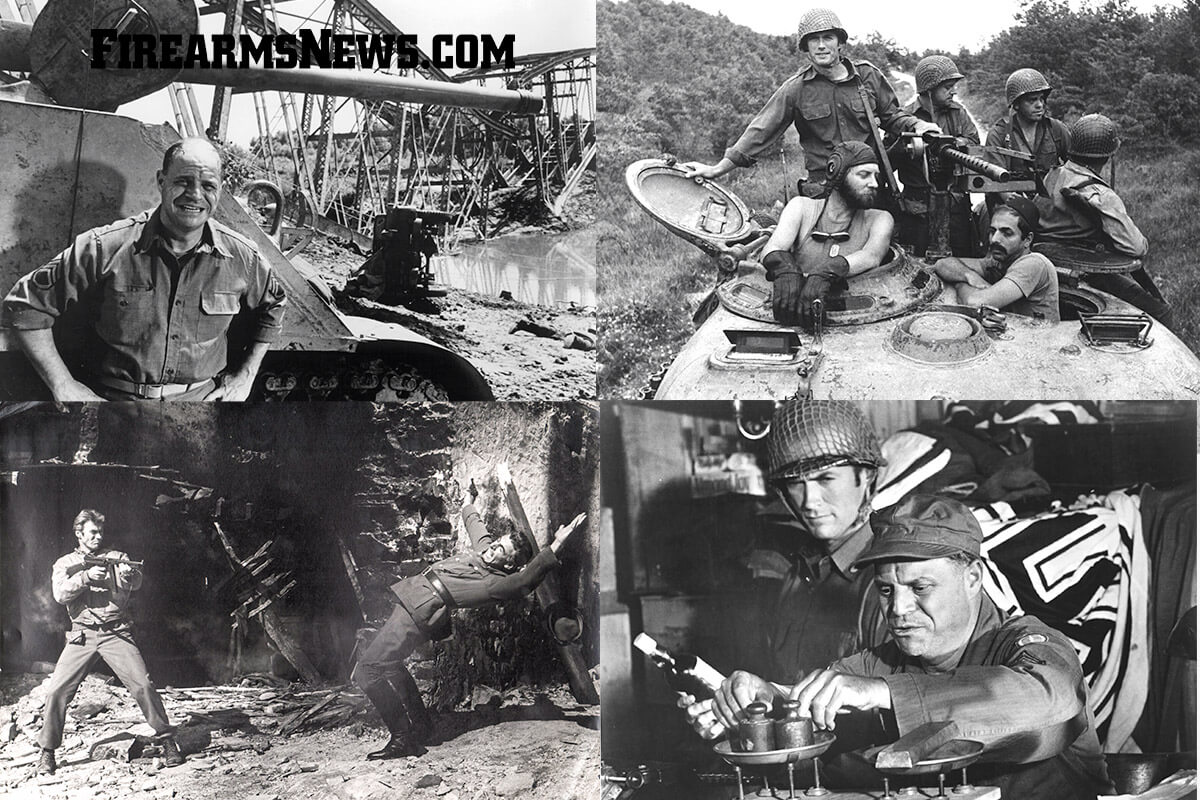
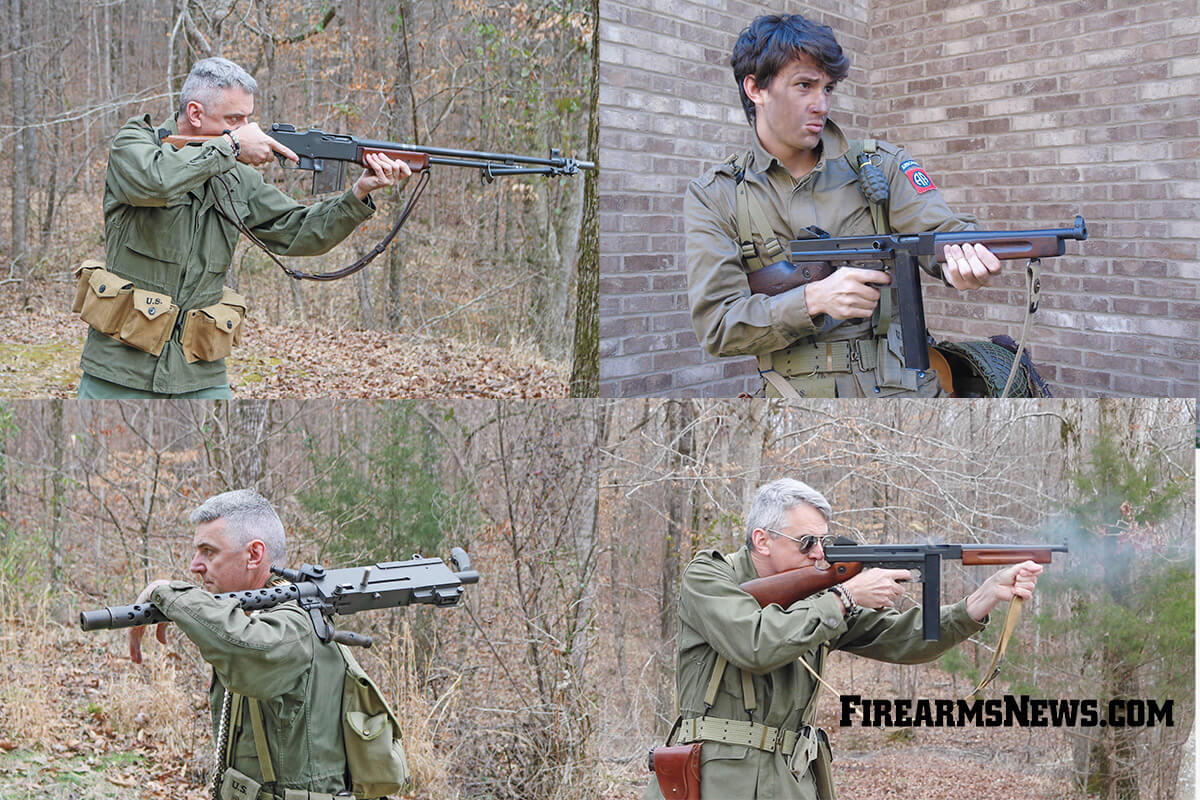
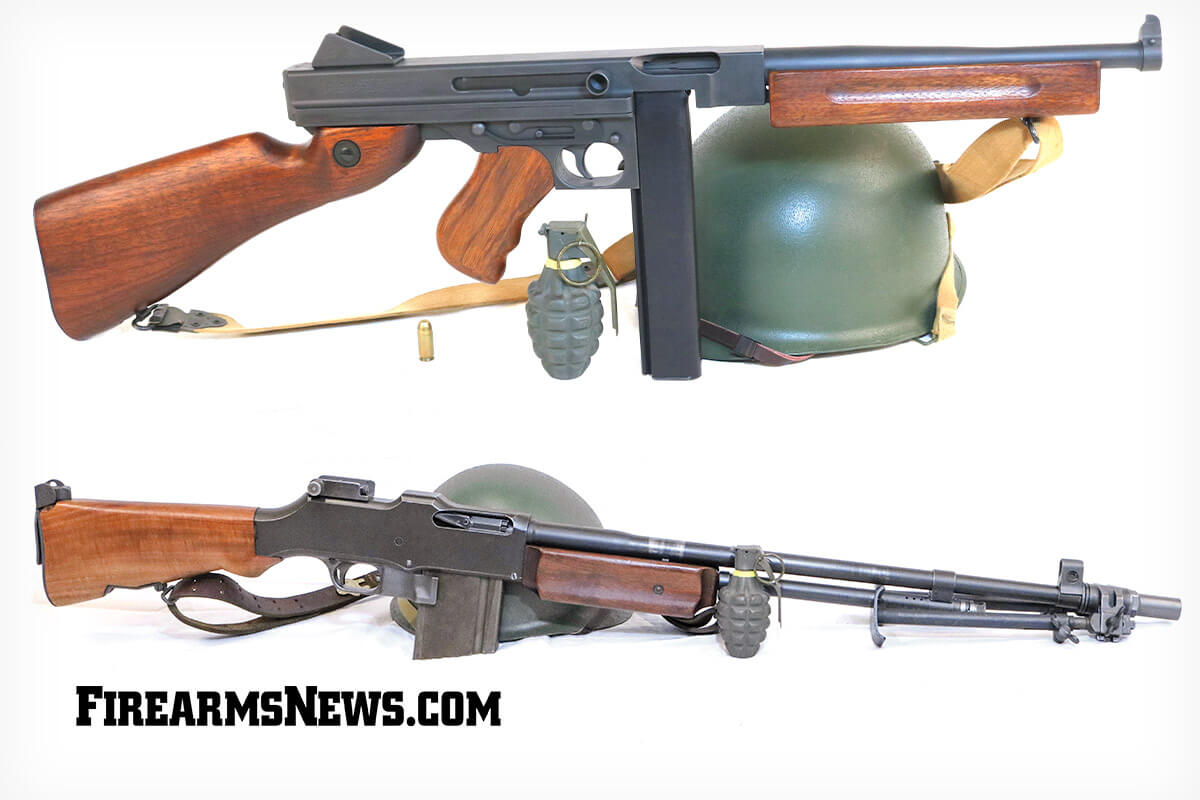
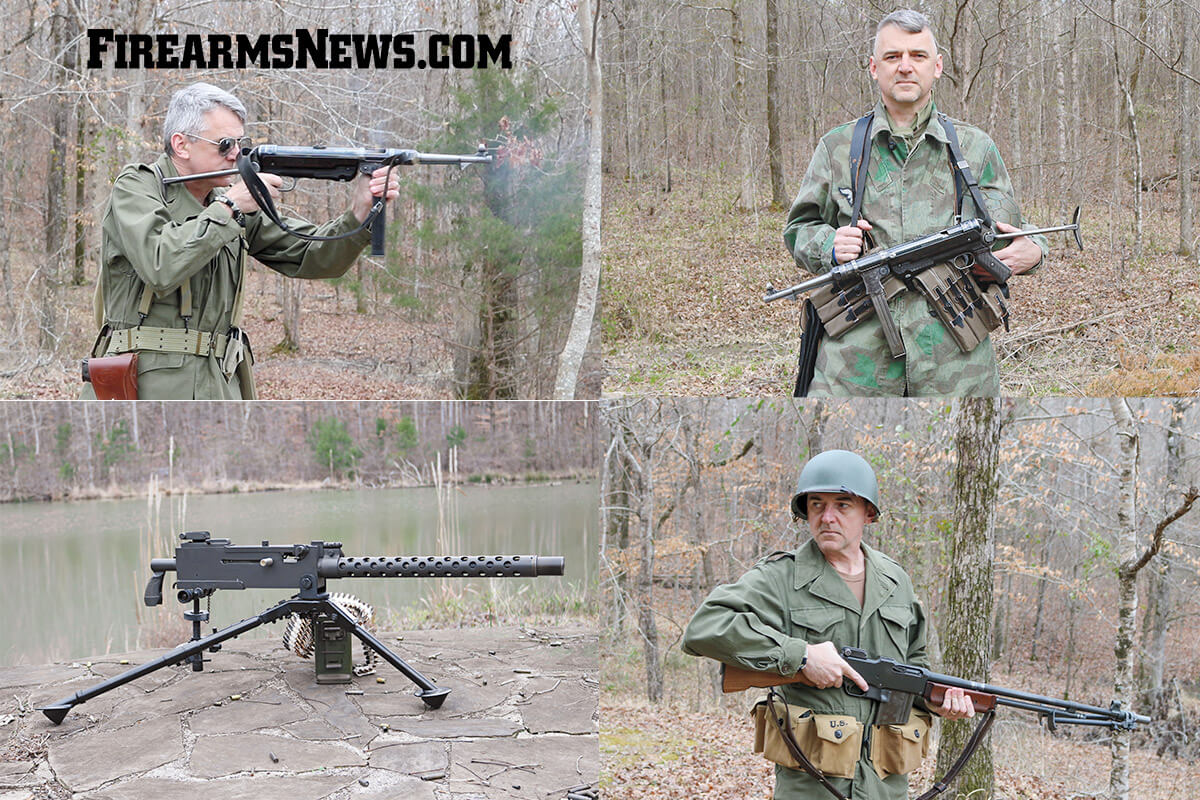
Like most World War II movies, the weapons were chosen for dramatic effect rather than historical realism. Most of Kelly’s platoon carried M1A1 Thompson submachine guns. The full auto fire added to the excitement in ways that semiauto rifles might not. While I don’t recall seeing any tactical magazine changes, the American troops did at least often carry spare magazines on their person. One scene had PVT Grace handing out fresh Thompson mags after an engagement.
The M1A1 Thompson was a simplified version of the earlier 1921/1928 guns that made such an impact during the American gangster era. Introduced in combat in 1943, the M1A1 Thompson had its actuator on the right side of the receiver where previous versions were on top. It sported a smooth barrel and a fixed stamped steel rear sight. The M1A1 also lacked a Cutts compensator. Additionally, the M1A1 was not cut to accept the Thompson drum magazine.
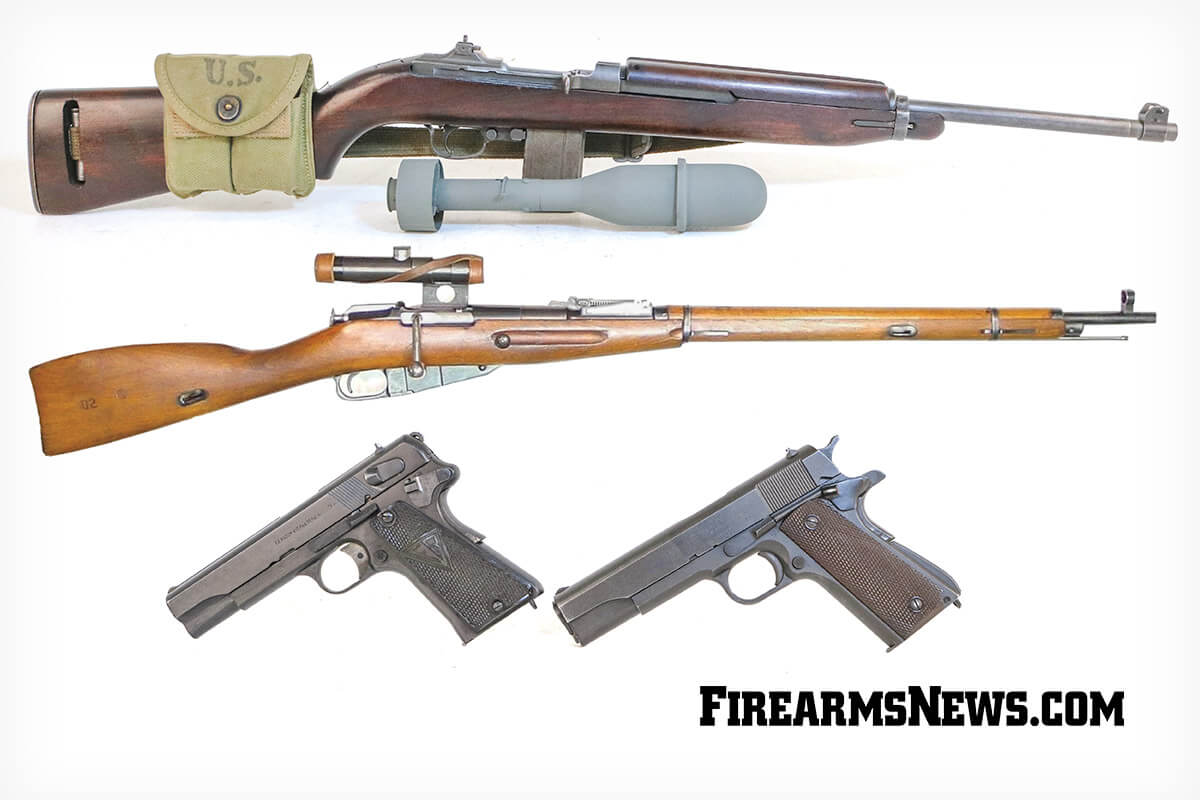
One American soldier named Fisher packed an M1 carbine and used it to fire a rifle grenade through a window during the final battle. To adapt the carbine to fire rifle grenades, the Army developed the M8 grenade launcher attachment. This rig mounted with a wing nut in the manner of the carbine flash suppressor. Rifle grenades could be of both antipersonnel and shaped charge antitank designs.
The M1919A4 Browning Light Machinegun featured prominently in the narrative. The gun’s excessive weight and bulk made for some superb comic relief as Crapgame was forced to carry it after their halftracks were destroyed by friendly fighter-bombers. Speaking from experience, the M1919A4 is indeed a royal pain to hump for any distance.
The M1919A4 was a John Browning design that served in light infantry, coaxial, mounted, aircraft, and antiaircraft roles from 1919 until it was supplanted by the M60. The gun can still be found in action in some of your less wellfunded war zones even today. The M1919A4 is air cooled and fires off a folding tripod. The gun weighs 31 pounds without its mount and is awash in painful square corners.
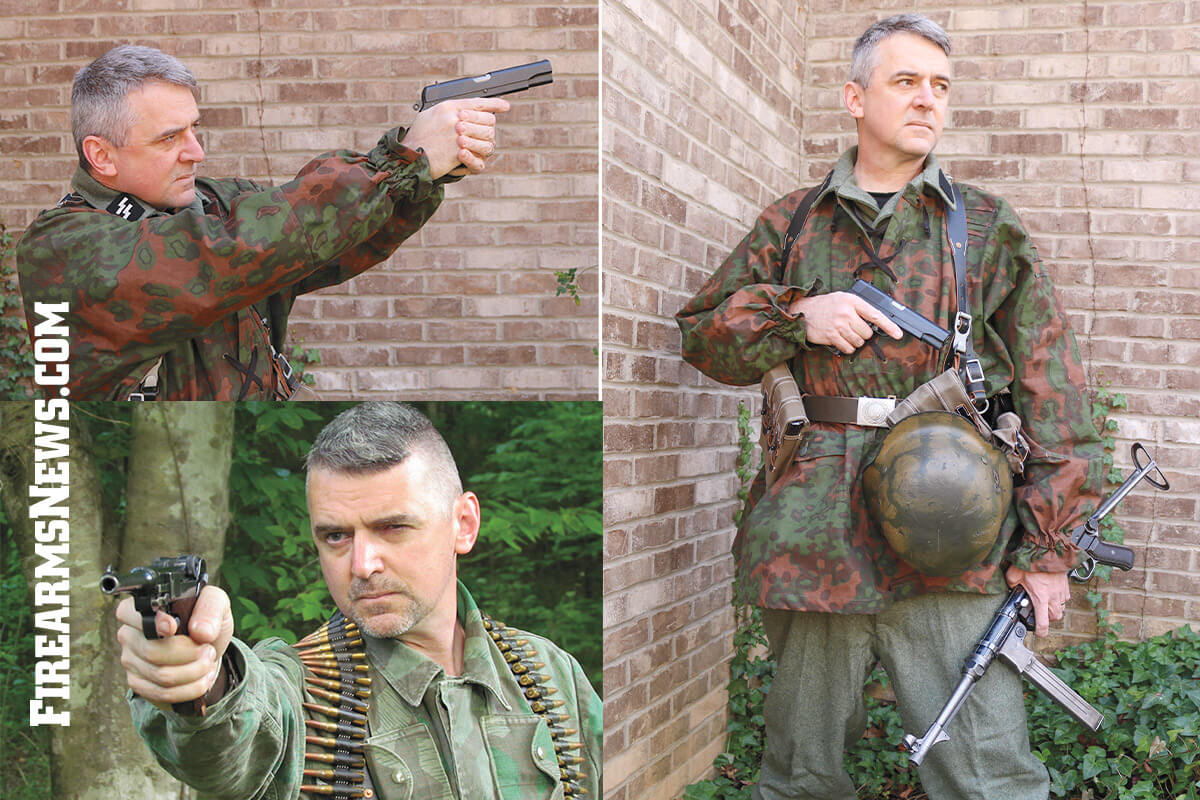
PVT Petuko packed a Browning Automatic Rifle that he used to good effect. However, as apparently there were no original GI BAR’s available, the filmmakers used Polish wz.28’s instead. The wz.28 was actually a clone of the civilian Colt Monitor with an enlarged wooden forearm, pistol grip, and shortened barrel. Normal people don’t care, but I thought that cool. Kelly unleashed the .50-caliber machinegun mounted atop Oddball’s Sherman against one of the Tiger tanks at close range.
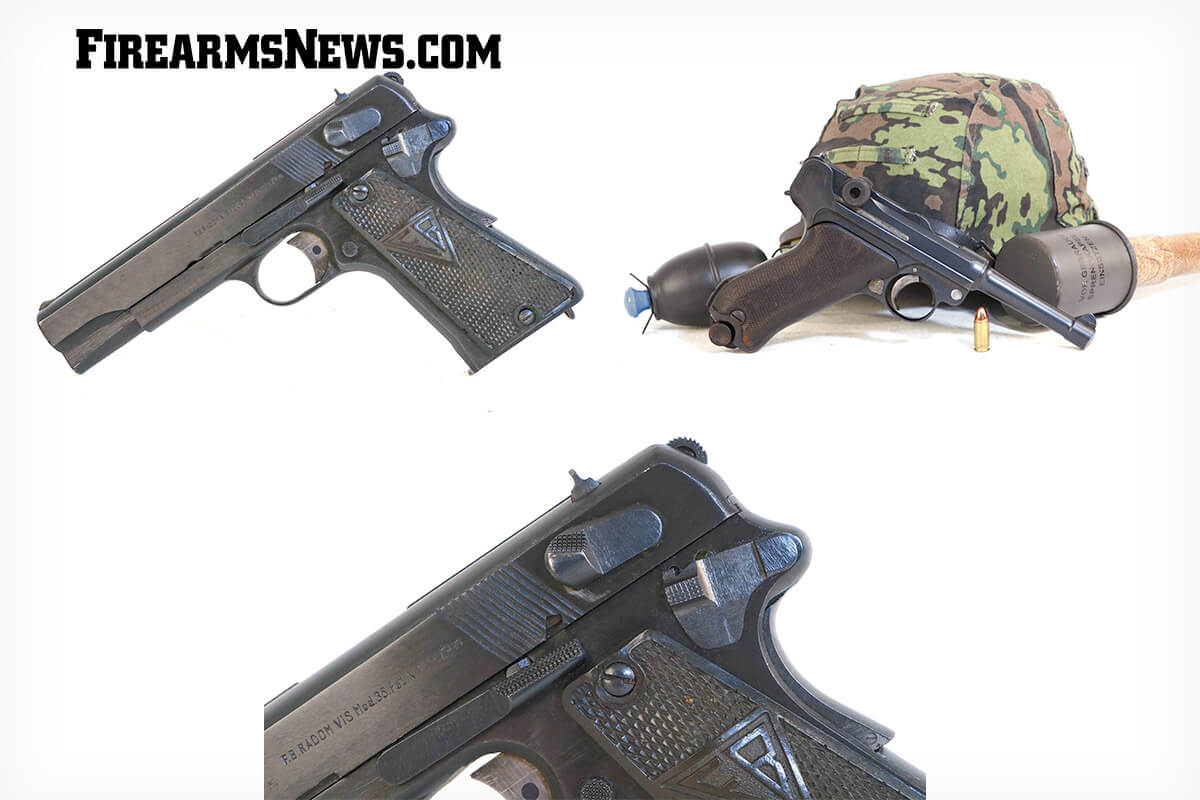
However, for whatever reason this was an AN/M2 aircraft fifty rather than the more traditional M2 Heavy Barrel. You can tell at a glance as the perforated barrel shroud of the AN/M2 extends all the way to the muzzle. With one notable exception, all of the Americans’ handguns were actually Polish Vis wz. 35 pistols used in lieu of M1911A1’s. Sharp eyes can spot these similar guns both brandished and in holsters. We often erroneously call the Vis the Radom on this side of the pond.
The Vis was a Browning-inspired 9mm design that fed from a single-stack eight-round magazine. The gun’s most striking feature was its spare switch on the left side of the frame. This was actually a takedown lever that was dropped on later versions of the weapon. Ever the character, Oddball actually packed a German P08 Luger in his GIissue M1911 leather holster. During the Sergio Leoneinspired showdown with the final remaining Tiger he actually cocked the grip of the gun outside his holster so he could draw it quickly if desired.
The P08 was the alpha souvenir among U.S. troops fighting in Europe and remains a desirable artifact of the war today. PVT Gutkowski was the platoon sniper and therefore should have been equipped with a scoped Springfield M1903A4 rifle. However, he actually packed a Soviet Mosin Nagant M91/30 sniper rifle replete with a 3.5PU scope. At one point he tied an American M7 bayonet to the muzzle with a strip of cloth. We can only presume the filmmakers chose this rifle as it was the closest thing they had available to the period Springfield.
Most of the Germans packed MP40 submachine guns as was so often the case in WW2 films. The MP40 is an iconic weapon which has graced the big screen from The Bridge at Remagen to Raiders of the Lost Ark. Developed from the previous MP38, the MP40 was the first general issue military weapon to be made from stamped steel without any wooden furniture. Though heavy and poorly balanced, the MP40’s modest 9mm chambering and sedate 500 rpm rate of fire make it one of the most controllable SMGs of the war.
The Tanks
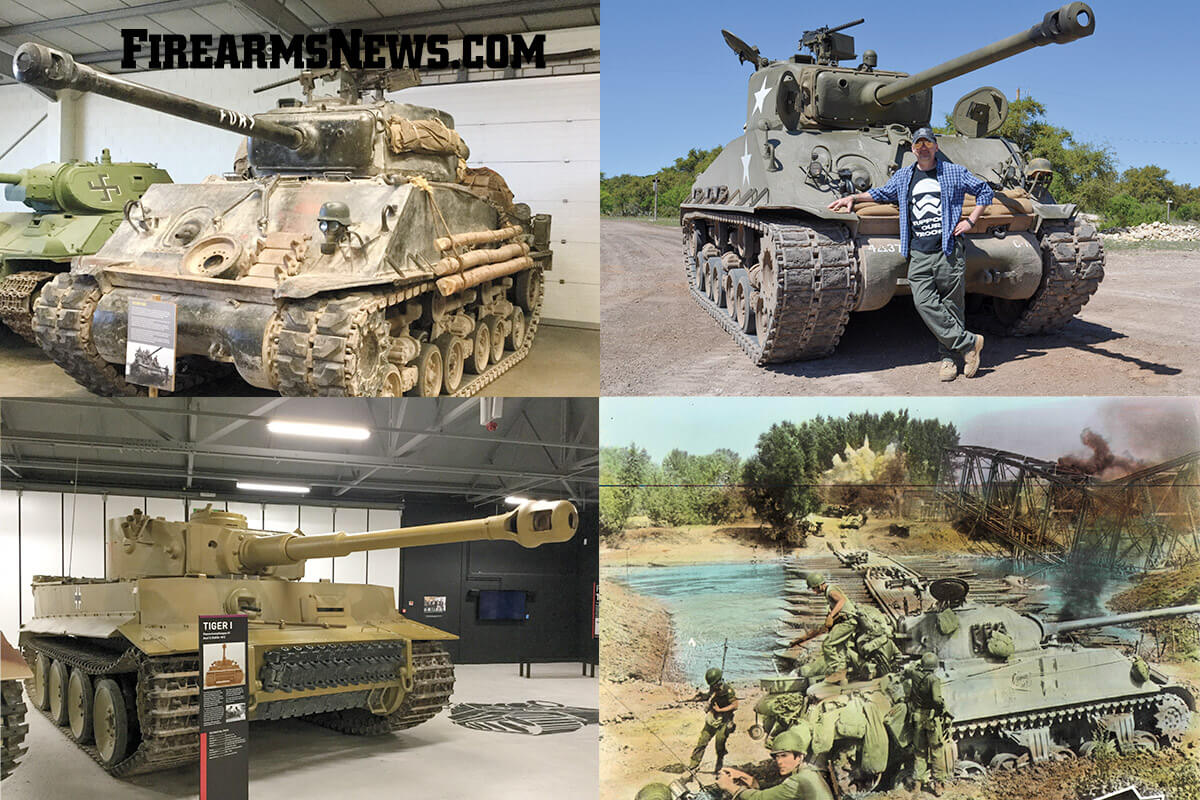
Oddball’s Sherman was an M4A3 variant presumably taken from Yugoslav Army stocks. The M4A3 sported a high velocity 76mm M1 gun that offered markedly better armor penetration than did the previous shortbarreled 75mm M3 weapons on earlier Shermans. The hull on the movie tank was of the welded plate sort where some others were cast.
Oddball boasted that his crew had upgraded the engines and transmissions on their tanks to make them the fastest in the European Theater both forward and reverse. He stated that he liked to think they could get out of trouble faster than they got into it. They also had special shells that fired paint charges and a large speaker on the outside of the turret that they used to broadcast loud music as they headed into battle. One of the many crowd pleasers was I’ll Be Working on the Railroad as they shot up a railway marshalling yard.
Tiger 131 is the only operational Tiger left in the world. It is maintained at the Bovington Tank Museum in Southern England. Tiger 131 has been used for two films since WW2, the 1950 war movie They Were Not Divided as well as the 2015 David Ayer combat epic Fury. As the Kelly’s Heroes filmmakers did not have ready access to original Tigers of their own, they bodged together facsimiles using Russian T34’s. The Kelly’s Heroes Tigers were superb replicas. The turrets sat a bit far forward, and the Christieinspired roadwheels weren’t nearly right, but the general lines were spot on. The addition of mineresistant Zimmerit along with some superb paint helped complete the charade. The end result captured the general power and gravitas of the infamous Panzerkampfwagen VI in action.
Ruminations
Kelly’s Heroes really is one of the greatest war movies ever made. Brian Hutton was the director who also helmed the classic Where Eagles Dare. The film returned $5.2 million for a $4 million investment and was generally well received at the time of its release. A recent ranking listed Kelly’s Heroes 34th on the 100 Greatest War Films of All Time. I would have put it higher myself.
The acting is great, the comic timing superb, and the gunplay frenetic and cool. Additionally, the tanks are enough to give a gun nerd like me heart flutters. If you indeed haven’t seen the movie yet go check it out. You’ll thank me later. Special thanks to WorldWarSupply for the cool replica gear used by our reenactors.
About the Author
Will is a mechanical engineer who flew UH1H, OH58A/C, CH47D and AH1S aircraft as an Army Aviator. He is airborne and scuba qualified and summited Mount McKinley, Alaska, six times…at the controls of an Army helicopter. After eight years in the Regular Army, Major Dabbs attended medical school. He works in his urgent care clinic, shares a business building precision rifles and sound suppressors, and has written for the gun press since 1989.
The North American P-51 Mustang is arguably one of the coolest fighter planes ever flown in the United States military. In today’s article, Dr. Will Dabbs invites you to crawl in the cockpit and learn a few things about the classic plane you may not have known. — Editor
When I was an Army Aviator, nothing was cooler than doing airshows. We’d fly in for a long weekend filled with pressing the flesh and a little gratuitous hero worship. The hosts were invariably gracious and the fellowship with other aviators sublime. It’s tough to do something like that and actually claim it’s work.

Ever since the genesis of manned flight it has always been thus. Cool flying machines invariably draw a crowd. However, there is also great danger to be found there. Most military pilots are, by definition, young, bulletproof and immortal. As a result, there is ever the temptation to push our machines farther than we should for the edification of an adoring public. So it was at a particular English airfield in the lead-up to D-Day.

Overlord and the Mustang
Operation Overlord was the largest amphibious invasion in human history. 156,000 Allied soldiers supported by another 195,700 sailors stood poised to breach Festung Europa while hundreds of dedicated combat aircraft kept the peace overhead. However, with all those guys and all those guns, the potential for fratricide was never far from anybody’s mind.

The Allies would enjoy air superiority over the invasion beaches, but that didn’t mean that a few Axis aircraft might not slip through. As a result, somebody decided it would be a good idea to introduce ground troops to the most common American close support aircraft that they might encounter once they hit the beaches. It was hoped that by letting the G.I.’s see them up close, they might hesitate to shoot if they spotted one of these friendly machines flying over in the combat zone.

The concept of the operation was for one example of each aircraft included to be dispatched from their squadrons to a large British airbase. Several tens of thousands of ground troops would be trucked to the site to paw over the planes and then watch a quick aerial demonstration. The basic idea was quite sound.

The leadership at each of these squadrons was busy planning for the invasion, so they dispatched brand-new Second Lieutenant aviators on the mission. These young pilots knew where to report and when but had no further guidance. They had never met before.

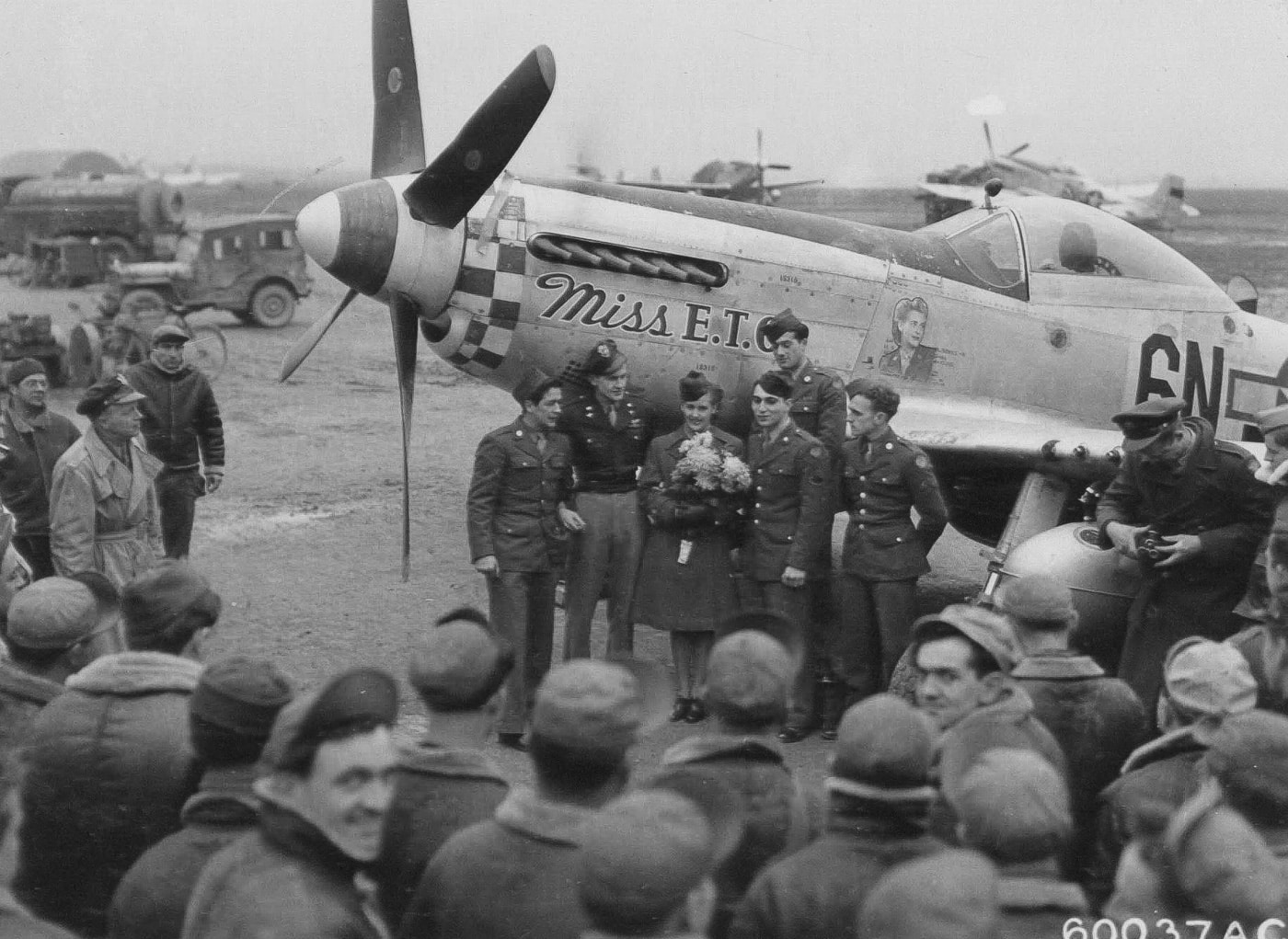
Once on the ground the three pilots held a confab. They were all the same rank, and their specific command guidance was sparse. The P-51 Mustang driver was purportedly a short man who was quite full of himself. He immediately took charge and began issuing orders. They would knock out the static portion of the day and then take off in series.

He would then put on an impromptu aerobatic display above the runway for the accumulated troops while the others loitered nearby waiting their turn to do likewise. They would coordinate cycling in and out of the airspace via radio. The other drivers had no issues with the plan, so they played along.
He would then put on an impromptu aerobatic display above the runway for the accumulated troops while the others loitered nearby waiting their turn to do likewise. They would coordinate cycling in and out of the airspace via radio. The other drivers had no issues with the plan, so they played along.
All went swimmingly right up until the Mustang did an extreme low pass right over the runway centerline. The P-51 pilot pulled up hard at the end of the tarmac into a beautiful vertical climb. He then laid the plane on its back to describe a loop intending to level out essentially where he started. He rightfully assumed the crowd would go wild.

Alas, military aviation can be terribly unforgiving of stupidity. The Mustang driver misjudged his altitude in the loop and ran out space for the pull out, splashing his plane and himself into a zillion tiny little bits amidst a massive fireball of conflagrating avgas. Thankfully no one was injured on the ground.

The other pilots felt that little else could be done to add to the event and, after a brief conference over the radio, wisely just headed home. The accumulated troops returned to their staging areas and did indeed ultimately wrest Europe back from the clutches of a madman. I’m sure the family of the over-zealous P-51 pilot got a somber but sincere letter from his exasperated CO.
The P-51
While the P-51 Mustang was not necessarily the most capable piston-driven fighter aircraft of World War II, it was indeed fast, fuel-efficient and deadly. However, many German fighters packed more firepower, and a few of them were faster both in level flight as well as in the climb.

What the Mustang had that the Axis could not hope to match was numbers, along with exquisitely well-trained pilots. By the war’s end, American industry had built some 15,000 copies of the nimble little plane. Mustangs accounted for 4,950 downed enemy aircraft. Produced by North American Aviation, the esteemed P-51 nonetheless had a rocky start.

In 1940, the British were starving for fighter aircraft. The British Purchasing Commission led by Sir Henry Self scoured the U.S. aviation industry looking for a suitable combat plane that could be produced in America and deployed for RAF service in Europe both in quantity and in a hurry.

At the time the Curtiss P-40 Warhawk was essentially the only show in town, and P-40 production was already maxed out meeting American requirements. As a result, Sir Henry approached North American about producing a fresh new design from scratch. The original discussions orbited around a series of drawings scrawled freehand on a piece of paper.

The first prototype titled the NA-73X rolled out of the factory a mere 102 days after the order had been inked. This radical plane incorporated such advanced features as low-drag laminar-flow airfoils for exceptional performance at high speeds and an unusual single ducted radiator for both oil and engine coolant.

This design took advantage of the Meredith Effect wherein ram air through the radiator provided just a bit of jet thrust to the airframe. Those early machines were armed with a pair of Browning fifties in the engine cowling and four .30-caliber guns in the wings. They were powered by Allison engines similar to those found in the P-38 and P-40.

The resulting plane had much to commend it, but performance fell off badly above 15,000 feet. As the RAF needed a fighter that could hold its own with the Luftwaffe at high altitudes, this was potentially a show-stopper. The answer came from a Rolls Royce test pilot named Ronald Harker. He suggested they fit the Rolls Royce Merlin engine from the Spitfire Mk IX to the new airframe and see how she flew. The resulting hybrid plane could reach 440 mph at 28,000 feet, breathtaking performance for its day.

The American Packard Company began producing Merlin engines under license from Rolls Royce, and the whole world moved just a little bit. The original A, B and C-model Mustangs evolved into the definitive D-model with its distinctive bubble canopy, and North American started churning them out day and night. The final operational versions fitted half a dozen AN/M2 fifty-caliber guns in the wings.
Impressions of the Fighter
The Mustang’s sexy lines and impressive performance create a timeless allure. The P-51 that Tom Cruise flew at the end of the latest Top Gun movie actually belongs to him. He originally christened it Kiss Me Kate back when he was married to Katie Holmes. I suspect he calls it something else these days.

Though I have never had the pleasure myself, I am told that the Mustang is pure joy to fly. The plane has ample power and rolls faster than a Spitfire. However, the Mustang’s turning radius was not quite as tight as was that of the British Spit, the Bf-109 Messerschmitt, or the FW-190 Focke Wulf. The laminar flow wing had its own eccentricities, but the P-51 was a generally stable and forgiving machine.

In addition to pure numbers, when equipped with drop tanks the Mustang enjoyed a simply breathtaking range. It was the P-51 that allowed fighter escorts to remain with attacking heavy bombers all the way to their targets in Germany and back.

Luftwaffe commander Herman Goering purportedly acknowledged to close friends that the war was over the day he saw Mustangs in the skies above Berlin. Nimble, fast, deadly and cool, the Mustang was a critical part of the Allied victory during World War II.
Special thanks to www.flyaspitfire.com for their support with this project.