Month: July 2023
Categories
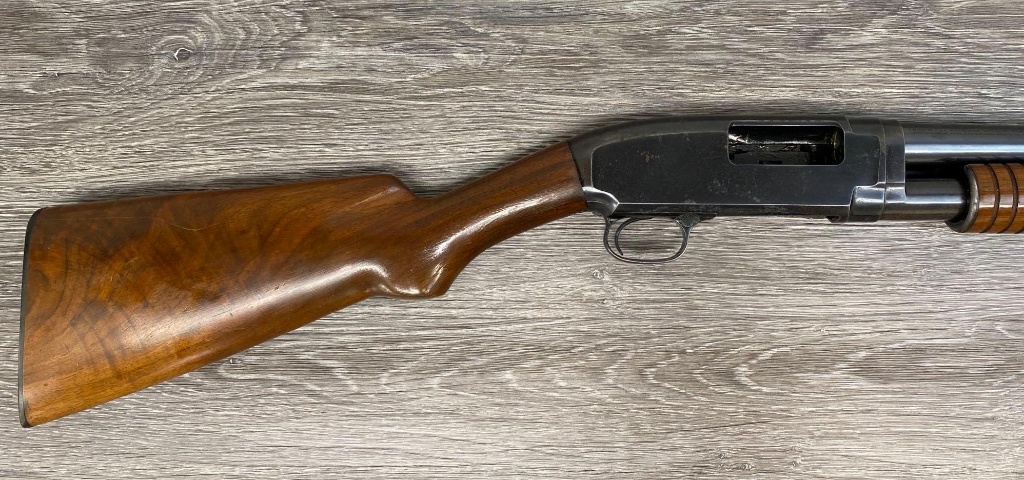
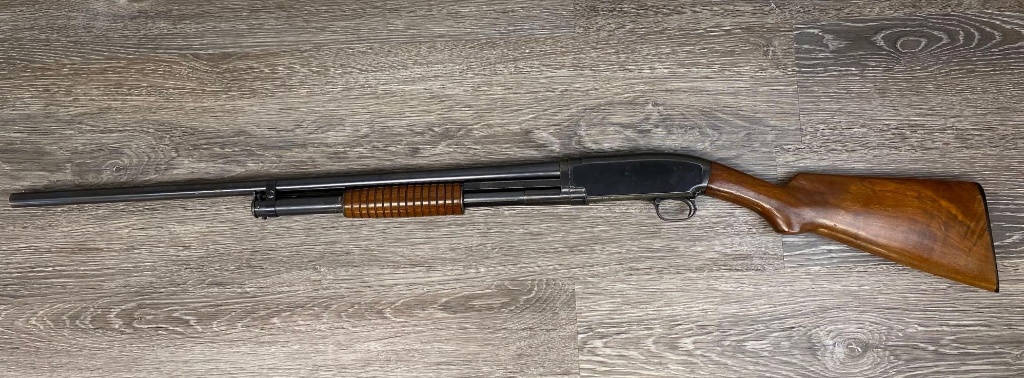
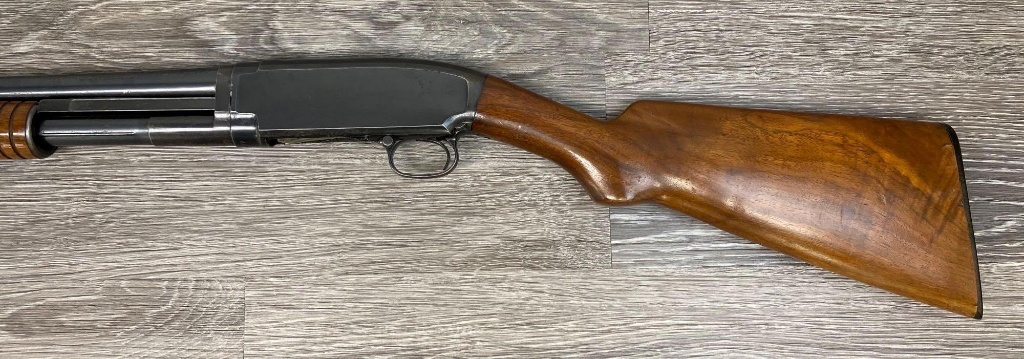
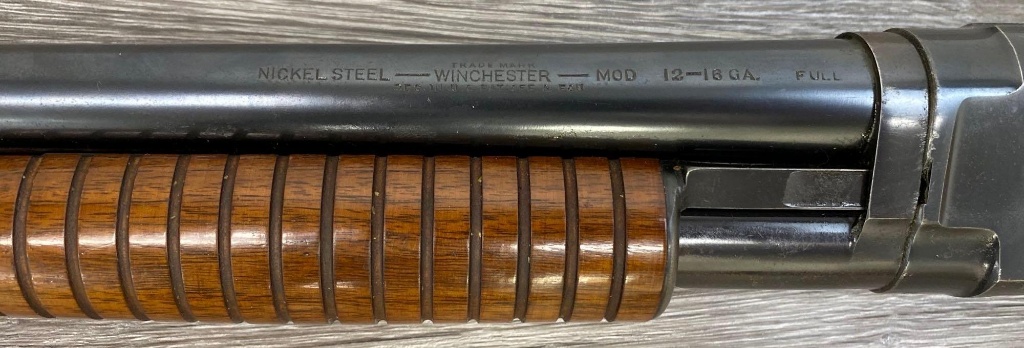
25-20 Winchester Model 53
Categories
9mm vs.38 Special… Bone Test

Many’s the doctor, farmer, or policeman who knew what they aspired to be even at a tender age. For me, I felt I was destined to be a military pilot. I saw my true calling as flying P38 Lightnings over Europe in 1944.

Alas, I was born four decades too late to be screaming over occupied France in a forked-tail devil. That’s just as well. Some Focke Wulf jock would likely have cut me to pieces before my 21st birthday. However, for a guy born in my era Army helicopters seemed the next best thing.

Modern fighter pilots seem like they have an awful lot of technology to manage. I just wanted to wiggle the sticks and feel the aircraft move around me. In modern Army helicopters, I got to scratch that itch.

Training folks to fly helicopters is expensive, so the Army typically slots you into a single aircraft and leaves you there. I actually got to fly four. The most nostalgic of the lot was the UH-1 Huey.

With a max gross weight of 9,500 pounds, the Huey is indeed a fairly big old bird. However, deftly handled that rascal will do some of the most amazing things. On January 12, 1968, a UH-1D Huey piloted by an Air America pilot with the 20th Special Operations Squadron named CPT Ted Moore actually shot down a North Vietnamese AN-2 Colt biplane in air-to-air combat.
The Setting

Lima Site 85 was a TACAN facility located near Phou Pha Thi in the Annamite Mountains in northeastern Laos. I actually have a friend who did a stint there during the war. Desolate and all but inaccessible, Lima Site 85 was manned by Air Force personnel seconded to Lockheed Martin and the CIA as civilian contractors, a practice known at the time as “sheep dipping.” The bomber jockeys who used it for targeting information called the place Station 97.

Local security was courtesy friendly Hmong guerillas and a smattering of mercenaries under Hmong General Vang Pao. The radar site was used to guide American bomber strikes into targets in North Vietnam independent of weather or visibility. LS85 was a mere 125 miles as the crow flies from Hanoi.

The beating heart of LS85 was an old SAC precision bomb scoring radar. This device could locate an aircraft to within a few meters under any conditions. By flying along a given radial outward from the radar site and releasing their bombs on the command of the radar operator USAF bombers could attack targets in North Vietnam day or night in any weather.

By 1967 LS85 was guiding 55% of the bombing missions directed against North Vietnam. The North Vietnamese soon grew weary of this pummeling.

LS85 sat perched atop a desolate 5,800-foot karst peak. In true US government fashion, the facility was kept habitable via resupply by air. The sheer cliffs surrounding the facility helped discourage a North Vietnamese ground assault. Frustrated by their inability to neutralize the facility, the North Vietnamese Air Force marshaled four of their Soviet-supplied AN-2 Colt biplanes for an ad hoc bombing mission.
The Players

The AN-2 was a lumbering beast of a thing first flown in 1947. With a max gross weight of 11,993 pounds and a cruise speed of 100 knots (115 miles per hour), the AN-2 was originally intended as a crop dusting and military utility aircraft. Around 18,000 copies were built.

For this mission, the North Vietnamese Air Force (VNAF) had outfitted their Colts with two 12-shot underwing pods for 57mm folding fin aerial rockets. They had also arranged twenty 250mm mortar rounds configured with impact fuses along the floor of the cabin. These hefty rounds could be dropped like bombs by the pilot by triggering hinged release doors from the cockpit. Thusly equipped the four Colts approached the CIA radar station perched atop this rugged peak.
The Attack

Two of the aircraft started their attack runs while the other two orbited in wait. The AN-2 is a noisy machine, and the LS85 contingent knew they were there before the mortar rounds began to fall. The facility was well camouflaged, so the planes had to get in close to accurately drop their loads.

Four Hmong natives were killed in this initial attack, two men and two women. A Thai mercenary ran outside with his AK47 and opened fire on the lead plane. The big fat slow VNAF biplane shuddered and then descended to crash into the jungle. This took the spunk out of the other VNAF aircraft, and they broke for home.

An Air America UH-1D was coincidentally enroute on a resupply mission when the AN-2’s started their mischief. Confronted as he was by the swirling biplanes on his approach to the site CPT Moore later remarked, “It looked like something out of World War 1.”

As the remaining AN-2 Colts banked for North Vietnam CPT Ted Moore’s UH-1D gave pursuit. CIA operator Glenn Woods rode in the back of the Huey and readied his personal weapon.
The Fight

In short order, the AN-2’s and pursuing Huey were in North Vietnamese airspace. Visibility out of the AN-2 was pretty wretched on a good day. The plane was designed to dust crops, not mix it up in aerial combat with enemy aircraft. As a result, CPT Moore’s Huey was on top of the AN-2 before the communist pilot knew he was there.

These two dissimilar aircraft were about evenly matched as regards performance. They both had a similar top speed, though the Huey was likely much more maneuverable. As a CIA Air America driver, CPT Moore was undoubtedly the markedly more capable pilot as well. This was about to make a huge difference in the day’s outcome.

This AN-2 was flying low, presuming that it had gotten away free and clear. CPT Moore maneuvered his helicopter above and behind the lumbering biplane, using his prodigious rotor wash to stall the plane’s top wing. This caused the confused communist pilot to further reduce speed in an effort at maintaining control. Now with the AN-2 flying slowly and mere meters from the pursuing Huey, Glen Woods leaned out the door of the helicopter and unlimbered his AK47.
The Weapon

We have covered aircrew weapons in the Vietnam War in this venue before. Here’s the link if you’re interested—

For an Air America flight crew in 1968 those guys would pack whatever weapons they could scrounge. Considering they would be operating over hostile territory, a captured AK47 would be a superb choice. This would give a downed aircrew the capability to use locally available ammunition. It also allowed an evading aviator some degree of anonymity as their weapons would make the same noise as those of the enemy.

Mikhail Timofeyevich Kalashnikov was the 17th of 19 children raised by Siberian peasants. He is universally acclaimed as the founder of the ubiquitous communist assault rifle that bears his name. More than 100 million copies make the Kalashnikov the most produced firearm in history.

Vietnam was a proxy war between the two biggest kids on the block. While the United States went all-in with hundreds of thousands of combat troops, the communists responded with untold mountains of military materiel. This meant lots of AK47 rifles.

The Russians and North Koreans did their part, but it was really the communist Chinese who moved the most iron into South Vietnam. Prior to the 1968 Gun Control Act, it was theoretically possible to bring captured automatic weapons back into the country as war trophies. These vet bring-back AKs command astronomical prices on the collector market today.
The Aftermath

At close range, Glen Woods emptied his AK into the cockpit of the big VNAF biplane. The airplane fell into a flat spin and crashed hard into the thick jungle below. While two of the VNAF Colts escaped, CIA ground teams purportedly located both crash sites later and indeed reported copious bullet holes in both aircraft.

Two months later on MAR 10, 1968, communist special forces troops of the Peoples’ Army of Vietnam (PAVN) and Pathet Lao successfully scaled the karst cliffs and infiltrated the LS85 site. A specially selected platoon of 33 PAVN soldiers led by Lieutenant Truong Muc had trained for nine months for the attack. This assault unit carried 23 AK47 rifles, three Chicom Type 54 pistols, four SKS carbines, and three RPG7 rocket launchers along with ample explosives and hand grenades.

They overwhelmed the installation’s meager defenders and slaughtered the poorly armed technicians stationed there. Thirteen American airmen and 42 Thai and Hmong soldiers died, making the battle for LS85 the worst loss of life for USAF ground forces during the Vietnam War. Two sets of remains were not identified until 2013.

Chief Master Sergeant Richard Etchberger earned a posthumous Air Force Cross in 1968 for helping evacuate his troops during the frenetic defense of LS85. This award was upgraded to the Medal of Honor by President Obama in 2010.

:quality(70)/cloudfront-us-east-1.images.arcpublishing.com/archetype/ACV3JOBXXBBODC52GWJMLFKF6I.jpg)
A photo illustration showing a gun tied to four shootings in Albany, New York, an investigative document and surveillance video of one shooting. (AP Illustration)
Pulling a pistol from his waistband, the young man spun his human shield toward police.
“Don’t do it!” a pursuing officer pleaded. The young man complied, releasing the bystander and tossing the gun, which skittered across the city street and then into the hands of police.
They soon learned that the 9mm Beretta had a rap sheet. Bullet casings linked it to four shootings, all of them in Albany, New York.
And there was something else. The pistol was U.S. Army property, a weapon intended for use against America’s enemies, not on its streets.
The Army couldn’t say how its Beretta M9 got to New York’s capital. Until the June 2018 police foot chase, the Army didn’t even realize someone had stolen the gun. Inventory records checked by investigators said the M9 was 600 miles away — safe inside Fort Bragg, North Carolina.
“It’s incredibly alarming,” said Albany County District Attorney David Soares. “It raises the other question as to what else is seeping into a community that could pose a clear and present danger.”
The armed services and the Pentagon are not eager for the public to know the answer.
In the first public accounting of its kind in decades, an Associated Press investigation has found that at least 1,900 U.S. military firearms were lost or stolen during the 2010s, with some resurfacing in violent crimes. Because some armed services have suppressed the release of basic information, AP’s total is a certain undercount.
Government records covering the Army, Marine Corps, Navy and Air Force show pistols, machine guns, shotguns and automatic assault rifles have vanished from armories, supply warehouses, Navy warships, firing ranges and other places where they were used, stored or transported. These weapons of war disappeared because of unlocked doors, sleeping troops, a surveillance system that didn’t record, break-ins and other security lapses that, until now, have not been publicly reported.
While AP’s focus was firearms, military explosives also were lost or stolen, including armor-piercing grenades that ended up in an Atlanta backyard.
:quality(70)/cloudfront-us-east-1.images.arcpublishing.com/archetype/ANTDAVSMBNHOXMGV6GCJLBYWEM.jpg)
Weapon theft or loss spanned the military’s global footprint, touching installations from coast to coast, as well as overseas. In Afghanistan, someone cut the padlock on an Army container and stole 65 Beretta M9s — the same type of gun recovered in Albany. The theft went undetected for at least two weeks, when empty pistol boxes were discovered in the compound. The weapons were not recovered.
Even elite units are not immune. A former member of a Marines special operations unit was busted with two stolen guns. A Navy SEAL lost his pistol during a fight in a restaurant in Lebanon.
The Pentagon used to share annual updates about stolen weapons with Congress, but the requirement to do so ended years ago and public accountability has slipped. The Army and Air Force, for example, couldn’t readily tell AP how many weapons were lost or stolen from 2010 through 2019. So the AP built its own database, using extensive federal Freedom of Information Act requests to review hundreds of military criminal case files or property loss reports, as well as internal military analysis and data from registries of small arms.
Sometimes, weapons disappear without a paper trail. Military investigators regularly close cases without finding the firearms or person responsible because shoddy records lead to dead ends.
:quality(70)/cloudfront-us-east-1.images.arcpublishing.com/archetype/KDMCCEREMRBYFJN6KD72C2YS4Y.jpg)
The military’s weapons are especially vulnerable to corrupt insiders responsible for securing them. They know how to exploit weak points within armories or the military’s enormous supply chains. Often from lower ranks, they may see a chance to make a buck from a military that can afford it.
“It’s about the money, right?” said Brig. Gen. Duane Miller, who as deputy provost marshal general is the Army’s No. 2 law enforcement official.
Theft or loss happens more than the Army has publicly acknowledged. During an initial interview, Miller significantly understated the extent to which weapons disappear, citing records that report only a few hundred missing rifles and handguns. But an internal analysis AP obtained, done by the Army’s Office of the Provost Marshal General, tallied 1,303 firearms.
In a second interview, Miller said he wasn’t aware of the memos, which had been distributed throughout the Army, until AP pointed them out following the first interview. “If I had the information in front of me,” Miller said, “I would share it with you.” Other Army officials said the internal analysis might overstate some losses.
The AP’s investigation began a decade ago. From the start, the Army has given conflicting information on a subject with the potential to embarrass — and that’s when it has provided information at all. A former insider described how Army officials resisted releasing details of missing guns when AP first inquired, and indeed that information was never provided.
Top officials within the Army, Marines and Secretary of Defense’s office said that weapon accountability is a high priority, and when the military knows a weapon is missing it does trigger a concerted response to recover it. The officials also said missing weapons are not a widespread problem and noted that the number is a tiny fraction of the military’s stockpile.
“We have a very large inventory of several million of these weapons,” Pentagon spokesman John Kirby said in an interview. “We take this very seriously and we think we do a very good job. That doesn’t mean that there aren’t losses. It doesn’t mean that there aren’t mistakes made.”
Kirby said those mistakes are few, though, and last year the military could account for 99.999% of its firearms. “Though the numbers are small, one is too many,” he said.
In the absence of a regular reporting requirement, the Pentagon is responsible for informing Congress of any “significant” incidents of missing weapons. That hasn’t happened since at least 2017. While a missing portable missile such as a Stinger would qualify for notifying lawmakers, a stolen machine gun would not, according to a senior Department of Defense official whom the Pentagon provided for an interview on condition the official not be named.
While AP’s analysis covered the 2010s, incidents persist.
In May, an Army trainee who fled Fort Jackson in South Carolina with an M4 rifle hijacked a school bus full of children, pointing his unloaded assault weapon at the driver before eventually letting everyone go.
Last October, police in San Diego were startled to find a military grenade launcher on the front seat of a car they pulled over for expired license plates. The driver and his passenger were middle-aged men with criminal records.
After publicizing the arrest, police got a call from a Marine Corps base up the Pacific coast. The Marines wanted to know if the grenade launcher was one they needed to find. They read off a serial number.
It wasn’t a match.
CRIME GUNS
Stolen military guns have been sold to street gang members, recovered on felons and used in violent crimes.
The AP identified eight instances in which five different stolen military firearms were used in a civilian shooting or other violent crime, and others in which felons were caught possessing weapons. To find these cases, AP combed investigative and court records, as well as published reports. Federal restrictions on sharing firearms information publicly mean the case total is certainly an undercount.
The military requires itself to inform civilian law enforcement when a gun is lost or stolen, and the services help in subsequent investigations. The Pentagon does not track crime guns, and spokesman Kirby said his office was unaware of any stolen firearms used in civilian crimes.
The closest AP could find to an independent tally was done by the FBI’s Criminal Justice Information Services. It said 22 guns issued by the U.S. military were used in a felony during the 2010s. That total could include surplus weapons the military sells to the public or loans to civilian law enforcement.
Those FBI records also appear to be undercount. They say that no military-issue gun was used in a felony in 2018, but at least one was.
:quality(70)/cloudfront-us-east-1.images.arcpublishing.com/archetype/6NOBD4L22ZF45JFUKS7R2TNAFA.jpg)
Back in June 2018, Albany police were searching for 21-year-old Alvin Damon. They’d placed him at a shooting which involved the Beretta M9, a workhorse weapon for the military that is similar to a model Beretta produces for the civilian market.
Surveillance video obtained by AP shows another man firing the gun four times at a group of people off camera, taking cover behind a building between shots. Two men walking with him scattered, one dropping his hat in the street. No one was injured.
Two months later, Detective Daniel Seeber spotted Damon on a stoop near the Prince Deli corner store. Damon took off running and, not far into the chase, grabbed a bystander who had just emerged from the deli with juice and a bag of chips.
After Detective Seeber defused the standoff, officers collected the pistol. A check by New York State Police returned leads to four Albany shootings, including one just the day before in which a bullet lodged in a living room wall. In another, someone was shot in the ankle.
At the request of Albany police, the U.S. Bureau of Alcohol, Tobacco, Firearms and Explosives traced the gun’s story. The ATF contacted Army’s Criminal Investigation Command, and a review of Army inventory systems showed the M9 had been listed as “in-transit” between two Fort Bragg units for two years before police recovered it.
And the Army still doesn’t know who stole the gun, or when.
The case wasn’t the first in which police recovered a stolen service pistol before troops at Fort Bragg realized it was missing. AP found a second instance, involving a pistol that was among 21 M9s stolen from an arms room.
Military police learned of the theft in 2010. By then, one of the M9s was sitting in an evidence room in the Hoke County Sheriff’s Department, picked up in a North Carolina backyard not far from Bragg. Another M9 was later seized in Durham after it was used in a parking lot shooting.
Another steady North Carolina source of weapons has been Marine Corps Base Camp Lejeune, where authorities often have an open missing weapons investigation. Detectives in Baltimore found a Beretta M9 stolen from a Lejeune armory during a cocaine bust. The Naval Criminal Investigative Service found in the 2011 case that inventory and security procedures were rarely followed. Three guns were stolen; no one was charged.
Deputies in South Carolina were called in 2017 after a man started wildly shooting an M9 pistol into the air during an argument with his girlfriend. The boyfriend, a convicted felon, then started shooting toward a neighbor’s house. The pistol came from a National Guard armory that a thief entered through an unlocked door, hauling off six automatic weapons, a grenade launcher and five M9s.
Meanwhile, authorities in central California are still finding AK-74 assault rifles that were among 26 stolen from Fort Irwin a decade ago. Military police officers stole the guns from the Army base, selling some to the Fresno Bulldogs street gang.
At least nine of the AKs have not been recovered.
INSIDER THREAT
The people with easiest access to military firearms are those who handle and secure them.
In the Army, they are often junior soldiers assigned to armories or arms rooms, according to Col. Kenneth Williams, director of supply under the Army’s G-4 Logistics branch.
“This is a young guy or gal,” Williams said. “This is a person normally on their first tour of duty. So you can see that we put great responsibility on our soldiers immediately when they come in.”
Armorers have access both to firearms and the spare parts kept for repairs. These upper receivers, lower receivers and trigger assemblies can be used to make new guns or enhance existing ones.
“We’ve seen issues like that in the past where an armorer might build an M16” automatic assault rifle from military parts, said Mark Ridley, a former deputy director of the Naval Criminal Investigative Service. “You have to be really concerned with certain armorers and how they build small arms and small weapons.”
In 2014, NCIS began investigating the theft of weapons parts from Special Boat Team Twelve, a Navy unit based in Coronado, California. Four M4 trigger assemblies that could make a civilian AR-15 fully automatic were missing. Investigators found an armory inventory manager was manipulating electronic records by moving items or claiming they had been transferred. The parts were never recovered and the case was closed after federal prosecutors declined to file charges.
Weapons accountability is part of military routine. Armorers are supposed to check weapons when they open each day. Sight counts, a visual total of weapons on hand, are drilled into troops whether they are in the field, on patrol or in the arms room. But as long as there have been armories, people have been stealing from them.
:quality(70)/cloudfront-us-east-1.images.arcpublishing.com/archetype/OUECDQCYPJFVHJZLQZTKFZNXA4.jpg)
Weapons enter the public three main ways: direct sales from thieves to buyers, through pawn shops and surplus stores, and online.
Investigators have found sensitive and restricted parts for military weapons on sites including eBay, which said in a statement it has “zero tolerance” for stolen military gear on its site.
At Fort Campbell, Kentucky, soldiers stole machine gun parts and other items that ended up with online buyers in Russia, China, Mexico and elsewhere. The civilian ringleader, who was found with a warehouse of items, was convicted. Authorities said he made hundreds of thousands of dollars.
Often though, recovering a weapon can prove hard.
:quality(70)/cloudfront-us-east-1.images.arcpublishing.com/archetype/VC5AKAPMVJBIRHG5VFAVFK6XHE.jpg)
When an M203 grenade launcher couldn’t be found during a 2019 inventory at a Marine Corps supply base in Albany, Georgia, investigators sought surveillance camera footage. It didn’t exist. The warehouse manager said the system couldn’t be played back at the time.
An analysis of 45 firearms-only investigations in the Navy and Marines found that in 55% of cases, no suspect could be found and weapons remained missing. In those unresolved cases, investigators found records were destroyed or falsified, armories lacked basic security and inventories weren’t completed for weeks or months.
“Gun-decking” is Navy slang for faking work. In the case of the USS Comstock, gun-decking led to the disappearance of three pistols.
Investigators found numerous security lapses in the 2012 case, including one sailor asleep in the armory. The missing pistols weren’t properly logged in the ship’s inventory when they were received several days before. Investigators couldn’t pinpoint what day they disappeared because sailors gun-decked inventory reports by not doing actual counts.
ROOM FOR DISCREPANCY
Military officials shied from discussing how many guns they have, much less how many are missing.
AP learned that the Army, the largest of the armed services, is responsible for about 3.1 million small arms. Across all four branches, the U.S. military has an estimated 4.5 million firearms, according to the nonprofit organization Small Arms Survey.
In its accounting, whenever possible AP eliminated cases in which firearms were lost in combat, during accidents such as aircraft crashes and similar incidents where a weapon’s fate was known.
Unlike the Army and Air Force, which could not answer basic questions about missing weapons, the Marines and Navy were able to produce data covering the 2010s.
The Navy data showed that 211 firearms were reported lost or stolen. In addition, 63 firearms previously considered missing were recovered.
According to AP’s analysis of data from the Marines, 204 firearms were lost or stolen, with 14 later recovered.
To account for missing weapons, the Pentagon relies on incident reports from the services, which it keeps for only three years.
:quality(70)/cloudfront-us-east-1.images.arcpublishing.com/archetype/5RNHGIURC5HDLDQJ453SRTGE4U.jpg)
Pentagon officials said that approximately 100 firearms were unaccounted for in both 2019 and 2018. A majority of those were attributable to accidents or combat losses, they said. Even though AP’s total excluded accidents and combat losses whenever known, it was higher than what the services reported to the Pentagon.
The officials said they could only discuss how many weapons were missing dating to 2018. The reason: They aren’t required to keep earlier records. Without providing documentation, the Pentagon said the number of missing weapons was down significantly in 2020, when the pandemic curtailed many military operations.
The Air Force was the only service branch not to release data. It first responded to several Freedom of Information Act requests by saying no records existed. Air Force representatives then said they would not provide details until yet another FOIA request, filed 1.5 years ago, was fully processed.
The Army sought to suppress information on missing weapons and gave misleading numbers that contradict internal memos.
The AP began asking the Army for details on missing weapons in 2011 and filed a formal request a year later for records of guns listed as missing, lost, stolen or recovered in the Department of Defense Small Arms and Light Weapons Registry. Charles Royal, the former Army civilian employee who was in charge of the registry, said that he prepared records for release that higher ups eventually blocked in 2013.
“You’re dealing with millions of weapons,” Royal said in a recent interview. “But we’re supposed to have 100% recon, right. OK, we’re not allowed a discrepancy on that. But there’s so much room for discrepancy.”
Army spokesman Lt. Col. Brandon Kelley said the service’s property inventory systems don’t readily track how many weapons have been lost or stolen. Army officials said the most accurate count could be found in criminal investigative summaries released under yet another federal records request.
AP’s reading of these investigative records showed 230 lost or stolen rifles or handguns between 2010 and 2019 — a clear undercount. Internal documents show just how much Army officials were downplaying the problem.
The AP obtained two memos covering 2013 through 2019 in which the Army tallied 1,303 stolen or lost rifles and handguns, with theft the primary reason for losses. That number, which Army officials said is imperfect because it includes some combat losses and recoveries, and may include some duplications, was based on criminal investigations and incident reports.
The internal memos are not “an authoritative document,” Kelley said, and were not closely checked with public release in mind. As such, he said, the 1,303 total could be inaccurate.
The investigative records Kelley cited show 62 lost or stolen rifles or handguns from 2013 through 2019. Some of those, like the Beretta M9 used in four shootings in Albany, New York, were recovered.
“One gun creates a ton of devastation,” Albany County District Attorney Soares said. “And then it puts it on local officials, local law enforcement, to have to work extra hard to try to remove those guns from the community.”
Hall reported from Nashville, Tennessee; LaPorta reported from Boca Raton, Florida; Pritchard reported from Los Angeles; Myers reported from Chicago. Also contributing were Jeannie Ohm in Arlington, Virginia; Brian Barrett, Randy Herschaft and Jennifer Farrar in New York; Michael Hill in Albany, New York; and Pia Deshpande in Chicago.
:quality(70)/cloudfront-us-east-1.images.arcpublishing.com/archetype/QDMSOY3IUBBTPGBAHNMIW4RHTA.jpg)
A Marine shoots an M18 pistol aboard Marine Corps Air Station Beaufort on June 9, 2021. (Lance Cpl. Nicholas Buss/Marine Corps)
A Marine unit that made headlines after two of its rifles went missing in 2019 has lost another weapon, a Marine spokesman confirmed to Marine Corps Times Friday.
The 2nd Marine Division infantry unit of 3rd Battalion, 6th Marines, based at Camp Lejeune, North Carolina, discovered Thursday that one M18 service pistol and two pistol magazines were unaccounted for, according to 1st Lt. Mark Grill, a 2nd Marine Division spokesman.
The Naval Criminal Investigative Service is investigating the disappearance, Grill told Marine Corps Times in an email on Friday.
“3/6 and 2d Marine Division will continue to work with NCIS throughout the investigation,” Grill said.
RELATED
:quality(70)/cloudfront-us-east-1.images.arcpublishing.com/archetype/Z7IE2AFQIBC6NE364FHQTIMZFQ.jpg)
Unverified reports of the missing weapon appeared Thursday night on the Twitter account of Terminal Lance, a Marine-related humor site run by Marine veteran Max Uriarte.
“3/6 losing shit again,” Uriarte remarked in the tweet.
The missing firearms saga of 3rd Battalion, 6th Marines, shortly began before Christmas 2019, with the disappearance of two rifles during a training exercise at Camp Lejeune, North Carolina. NCIS soon opened an investigation and Marines were “actively searching” for the weapons, a 2nd Marine Division spokesman, 1st Lt. Dan Linfante, told Marine Corps Times at the time.
Speaking with Marine Corps Times a few weeks later, Linfante also dismissed online rumors that Marines had been denied holiday leave because of the missing rifles.
The battalion’s commander and sergeant major were fired for “loss of trust and confidence” in March 2020.
Meanwhile, 3rd Battalion, 6th Marines — whose name is often shortened to “3/6″ — became the butt of memes about the missing rifles.
A year after the rifles disappeared, NCIS was still investigating with no culprit identified, Military.com reported at the time.
NCIS didn’t immediately provide an answer to a Marine Corps Times inquiry Friday about the status of the investigation into the missing rifles.
In the 2010s, 204 Marine firearms were lost or stolen, and only 14 were later recovered, a 2021 Associated Press investigation found. Some of those stolen military guns ended up being used in street crime, AP reported.
Sig Sauer announced in 2019 that the Marine Corps was adopting the M18, the compact variant of the U.S. Army’s Modular Handgun System, as its official duty pistol, Marine Corps Times previously reported.
All I know is that if the Army was to “lose” a weapon or sensitive item. Then the brown sauce would literally pour down like Niagara Falls during the Spring. So I actually feel sorry for this outfit. So Good Luck guys as you are REALLY going to need it! Grumpy