Day: June 1, 2023
Categories
She kinda looks like THE BOSS

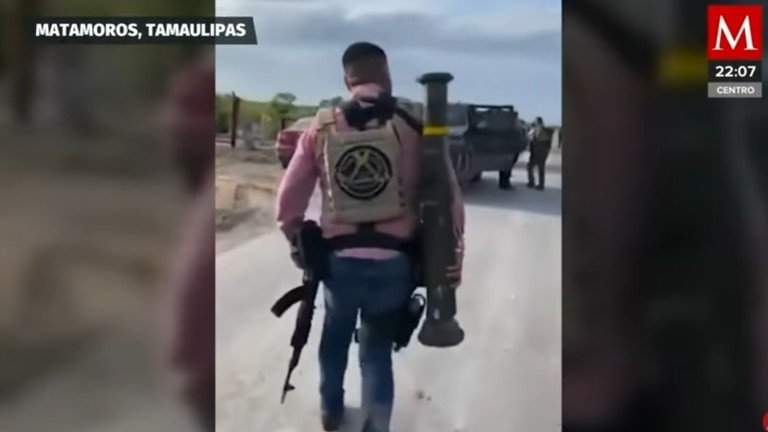
A militant wearing the insignia of Mexico’s notorious Gulf Cartel (Cartel Del Golfo, CDG) was filmed in the state of Tamaulipas carrying a US-made anti-tank missile launcher. Milenio TV identified the weapon as a Javelin, thousands of which were sent to Ukraine by the Pentagon.
Footage filmed in Matamoros on Monday and aired on Tuesday evening by the news channel Milenio TV showed a man with CDG patches armed with a Kalashnikov rifle and a missile they said was the Raytheon-made FGM-148.
Over 10,000 Javelins from Pentagon stockpiles have been sent to Ukraine since last February, to the point where the US military has begun to run out of the missiles itself.
Milenio presenter Azucena Uresti noted on Twitter that the estimated value of a Javelin launcher on the black market was anywhere from $20,000 to $60,000, while the average cost of a missile was about $30,000.
Russia has repeatedly warned the US and its allies not to “stuff” Ukraine with weapons and ammunition, both because this risked a direct confrontation and since nonexistent controls would result in the weapons ending up in the criminal underworld.
A RT investigation in July 2022 found a variety of Western-supplied weapons, including anti-tank rockets, for sale on the “dark web.” Several months later, Russian Foreign Ministry spokeswoman Maria Zakharova warned that $1 billion a month worth of Western weapons was ending up in the hands of “terrorists, extremists and criminal groups in the Middle East, Central Africa, and Southeast Asia.”
Kiev has denounced this as “propaganda” and insisted all were accounted for.

Sure, I totally believe that outright bald faced lie from some Ukrainian media flunky.
Let us not forget that Biden left $85 BILLON dollars worth of American military equipment in Afghanistan for the Taliban to sell off or use as they saw fit also.
I would venture to guess that there is Black Market U.S. Military war fighting equipment all over the entire globe at this point.
The immediate implications of the Mexican drug cartels having a bunch of it ought to cause some ass puckering by the local police and border patrol agents along the wide open Southern border of this country.
It wouldn’t surprise me to see some of this stuff turn up further inland either.
The Cartels have running operations from Mexico to Canada already as it is, you just don’t hear about them from the MSM
Benjamin Joslyn patented this .44 caliber, 5 shot, side-hammer revolver in 1858. He initially contracted with one W.C. Freeman to act as manufacturer and sales agent, but Freeman was unable to actually fulfill the first 500-unit order received from the US military.
The contract was cancelled, Joslyn brought manufacturing in-house, and proceeded to make 2500-3000 of the guns to sell on the commercial market. About 1100 of these were purchased by various units of the Federal military, including 225 bought (and formally inspected and marked) by the US Navy – one of few (if not the only) significant purchase of .44 caliber revolvers by the Navy. The guns did see combat at Shiloh and in other battles, but the records available show a generally poor reputation among troops.
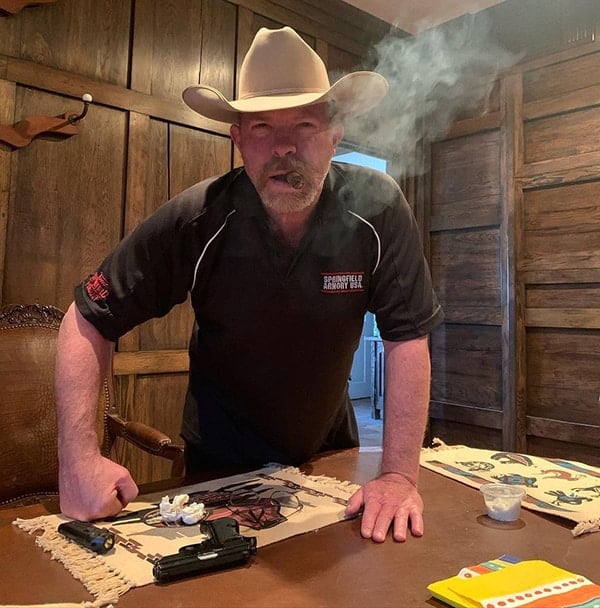
Bart in character, playing the hard guy with a soft heart.
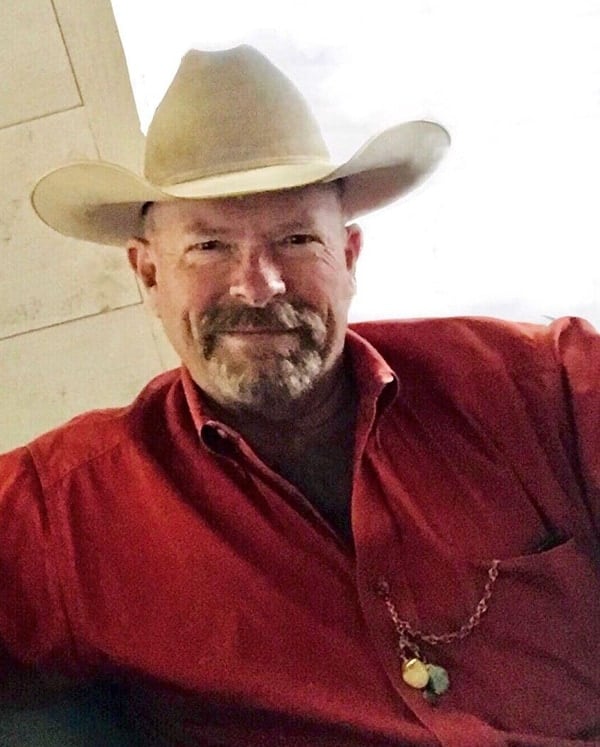
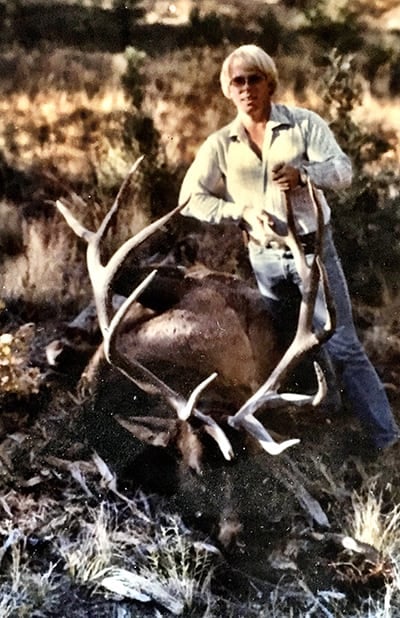
It’s been a sad time indeed for sixgunners. Over the past month, we’ve lost John Linebaugh and then our own Tiger McKee. Now, this past week, I hear mi amigo, Bart Skelton has stepped on the rainbow to the great shootin’ range in the sky.
Losing Bart is especially tough, as I knew him personally and considered him a friend. For the past 10 years, I’d visit him in June when heading to Raton, NM, for my yearly pilgrimage to the NRA Whittington Center.
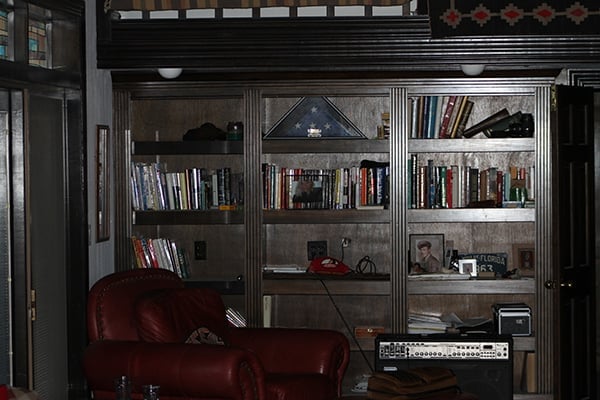
One of the bookcases in the great room.
First Visit
The first time doing most things is always the best, and our first visit with Bart Skelton was no exception. After the flight to Albuquerque, Doc Barranti and I headed south towards Deming, NM, for the 3-plus hour drive.
The dirt lane was a welcomed relief as the Pathfinder turned off the hard pavement. With temperatures hovering at 105 degrees, the hot, black asphalt, mixed with heat mirage, made you feel hot, tired and miserable. The further south we drove, the drier it got. The landscape was brown, vacant and hotter the further south we went. Bart texted final directions to his hidden desert hacienda involving a few turns and a locked gate. He lived 20 minutes from town, in the middle of nowhere.
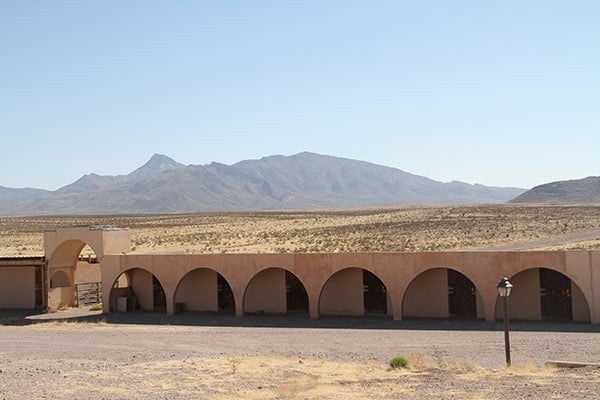
Bart’s backyard view of Cook’s Peak.

Facing Southwest at sunset.
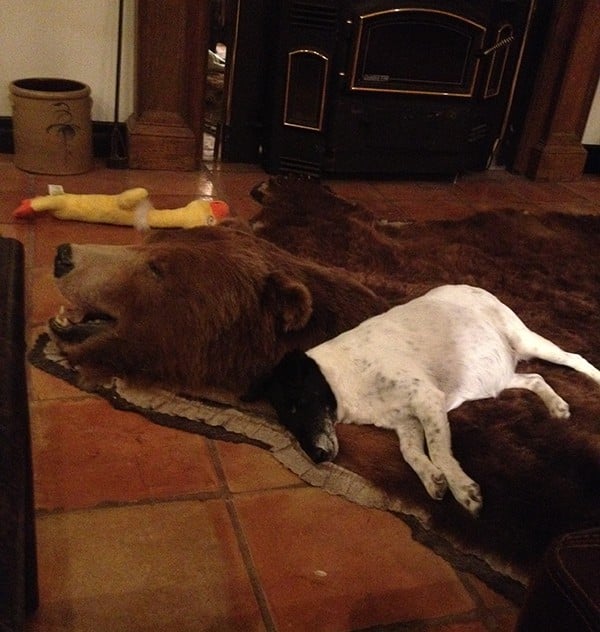
Pippin napping on the bearskin rug dreaming he killed it.
Proper Adobe
The previous owner had the house custom-built. It was a single-story home with Spanish tile floor, high ceilings and a swamp cooler to stifle the heat. The large living room had an expansive bookcase covering most of the adjoining wall of the great room, leading into the dining room.
On the shelves lay the treasures any serious sixgunner would recognize. Various badges, credentials, and memorabilia of Bart and his dads lay scattered. A large wooden box containing several knives belonging to Skeeter from a variety of knife makers, along with a brown bear skull Bart had taken in Canada, were amongst the mix. Indian artifacts Bart found not far from the house, reloading books and old pictures rounded out the treasures.
A bearskin rug lay in front of the fireplace and was a favorite napping spot for Pippin, the incredible Skelton family dog. Next to it were two saddles on stands, with gun leather from various makers. There was also a red felt pool table near the south side of the room.
Looking to the south, one could see three mountain peaks, 35 miles away, called the Three Sisters. The backside of the Sisters is Mexico. A large display of arrowheads Bart and his dad found leaned against the wall.
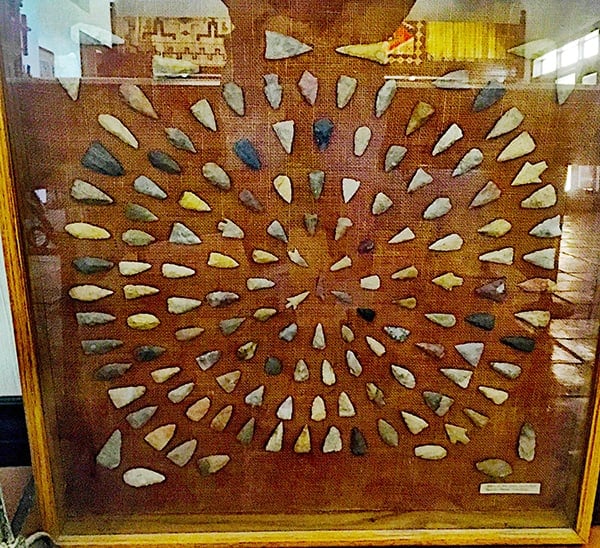
The arrowhead collection Bart and his dad collected.
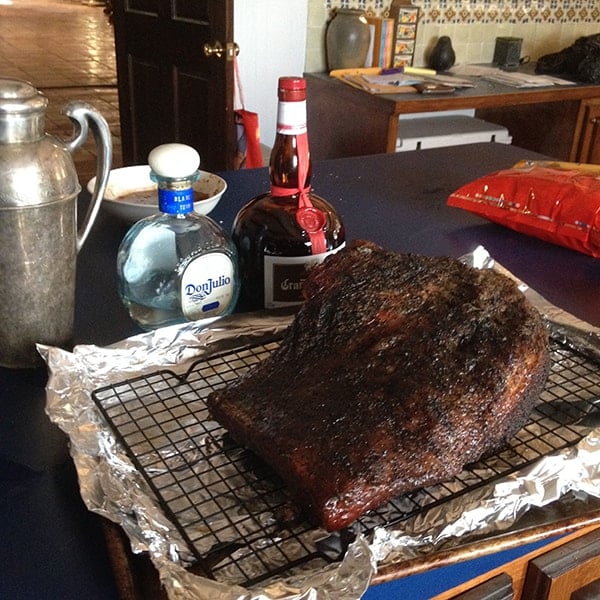
The fixins’ for some fine steak fajitas and margaritas.
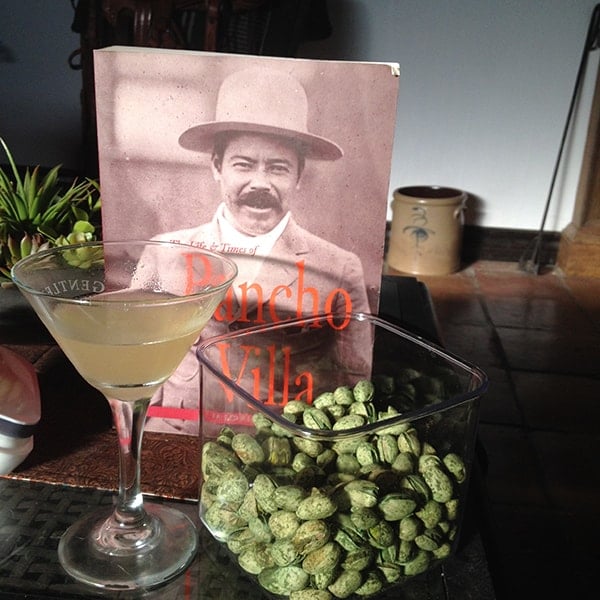
Chile infused pistachios, a margarita and a book Bart
gave me on Pancho Villa during a past visit.
Great Company
The conversation flowed freely and easily. First-hand accounts of Skeeter stories, guns, hunts, and leather dominated the conversation. Show and tell started, with Bart running to the gun room, showing and telling stories along the way as to where the gun came from, who the previous owner was, how it shot, and the condition.
For dinner that night, we were treated to a traditional border meal of grilled flap steak fajitas. The fajitas were the lightest, fluffiest fajitas I ever had. Bart told us the secret was that they were from Mexico.
Doc and I wanted to see more of this beautiful country, and Bart obliged. He took us around to his old stomping grounds. We drove past his childhood home and the mountains he hunted as a boy. He showed us where he killed a few bobcats with his Colt .22 Mag.
In Skeeter’s “Handgun Tales,” there’s a pair of ivory stocks with a bison skull carved on them. They were thick, but Bart really liked them, saying they felt good. One day, Bart came home from school, and Skeeter was sitting at this desk, in his underwear with a glass of Henry McKenna nearby, filing away at the ivory stocks. The buffalo skull was gone. Bart yelled, “What are you doing?” Skeeter simply said,” They were too thick.”
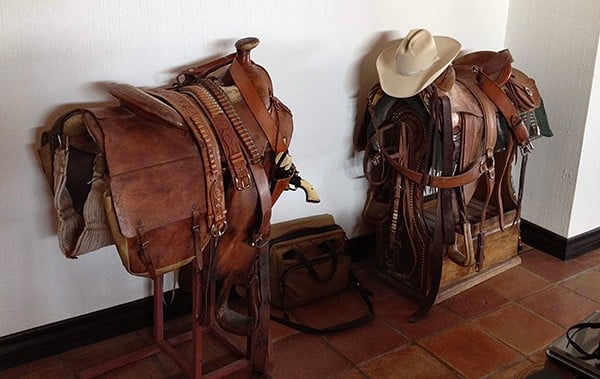
Saddles and leather gear … ”always keep your saddle even if you don’t have a horse.”
A True Gentleman
What can I say about Bart? Hell, the man let me sleep with his dog. Pippin snuck into bed with me that first night. I’m a pretty good judge of character, and Bart Skelton was the real deal. A retired Southwest lawman, gun writer, historian and sixgun aficionado, he was a true gentleman. He enjoyed sharing tales, history, food, and drink about his native Southwest heritage.
He treated Doc and I like gold. He answered every question we had with a smile, telling us Skeeter was the best dad a boy could ever have and that he was a really good guy. Bart followed in his dad’s footsteps in this regard also. Skeeter would be proud of the man he became.
These trips continued for years. Most evenings found ourselves sitting outside the back veranda sipping the famous Skelton margarita as we watched the sun set, telling stories, or just enjoying the moment. Those times will be missed.
Bart’s longtime friend, JoAnna Zurinsky, said it best in describing life lessons she learned from Bart. She has granted permission to share them with you.
Lessons Learned in Life from The Gun Writer and Lawman
• It’s difficult to follow in someone else’s footsteps: If you’re expected to do this, it’s best to do it wearing a custom pair of Paul Bond boots.
• It’s bad luck to put a hat on the bed. It’s bad etiquette to touch another man’s hat, (certain concessions are made if you’re a lady touching a man’s hat.) God help you, if you should ever betwixt the two, hat or no hat.
• Regardless of whether you have a horse, always keep your saddle. A good saddle will get you through some rough rides in life.
• Spurring the wrong horse (Stories of Whistler… If you know, you know!) is akin to telling an already angry woman to: ‘Calm Down!’
• All the world loves you if you have a song to sing, or a story to write: Unless that narrative is a warrant, then expect you will piss some people off, and they will hate you.
• When it comes to Tequila, there is plata, reposado, and anejo. If it’s really good Tequila, it’s all gold, but too much of any kind, turns even the best of the best into a pendejo.
• A good bed roll under the right circumstances will give you a better night’s sleep than the world’s best mattress under the wrong circumstances.
• Even when it appears you’ve brought the only gun to the knife fight, don’t assume your opponent isn’t wearing an ankle holster.
• Finding a good heart in someone is as about as rare as a fine, unadulterated Colt revolver.
They’re out there: It’s a trifecta of sorts … part of finding one involves skill, luck, and knowing the right people.
As I close this chapter in my book of life, I carry each lesson as ‘the most valuable’. Some I will share with others, and the most sacred shall remain private. I am filled with gratitude to have known a person of your caliber, and to have shared a part of my life with you. Thank You for sharing a part of your life with me.
Always, Little Jo
So long, Amigo! Keep the tortillas hot and the margaritas cold. We’ll see you soon enough. In the meantime, we’re sure going to miss you!
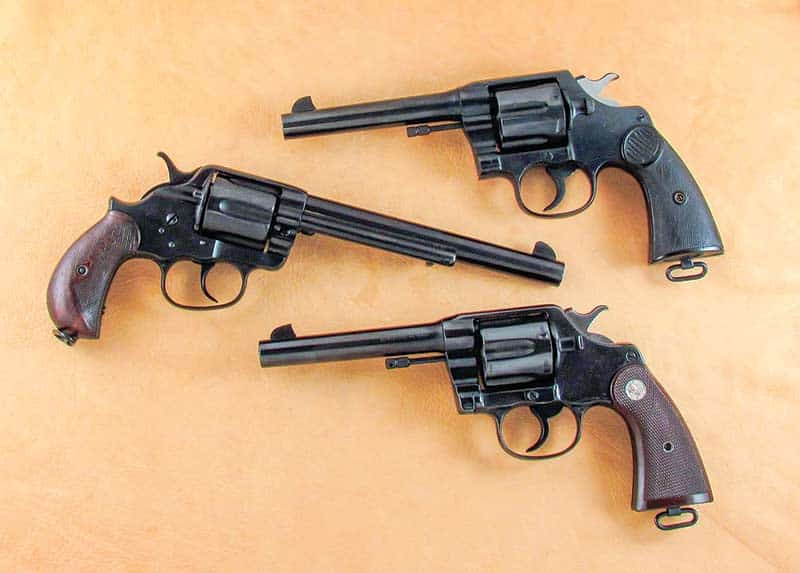
Three Old Classic Colt Sixguns ready for another lifetime of service.
As we look back at sixgun history, we can see a decades-long race between Colt and S&W to be the “firstest with the mostest.”
Colt was the first to offer a viable and truly usable repeating pistol with their 1836 Paterson. This was a percussion pistol — the user had to load powder and ball in each cylinder chamber and then place a cap on each nipple on the back of the cylinder.
Colt officially ignored any thought of fixed ammunition, so S&W emerged in the 1850s with the first .22 pistol — a seven-shot, tip-up pocket pistol. These were used as hideout guns, especially by officers during the Civil War, while Colt sold hundreds of thousands of Dragoons, 1851 Navies and 1860 Army percussion pistols to the military.
After the war, S&W offered the first big-bore cartridge firing sixgun in late 1869 with its .44 American, a top-break design. The United States Army was very interested in this first .44.
Colt countered by converting some of their percussion pistols to Cartridge Conversions, then offered the 1871–72 Open-Top, and then in 1873, one of the grandest sixguns of all time came from Colt — the Single Action Army. S&W also brought out their Model #3 Russian, followed by the New Model #3, both grand .44 single-action sixguns.
Colt began looking at the idea of providing a pistol that could be fired by only pulling the trigger, a design we normally call double action today. Colt was the first with the 1877 Lightning and Thunderer in .38 Long Colt and .41 Colt, respectively. These were basically miniature single actions with a double-action trigger added. One year later, Colt brought out their 1878 Double Action, which was the same size as their single action. It had a double-action trigger, but just like the 1877 Model, cartridges were ejected one at a time with an ejector rod and then replaced one at a time.
Meanwhile, S&W added a double-action trigger to their New Model #3. With its top-break design and simultaneous ejection, the S&W was much faster to load and unload than the Colt.
What we think of as double action sixguns today with swingout cylinders for loading and unloading began to appear in the late 1880s with the Colt Navy and Colt Army sixguns. In 1896 S&W began to produce the double-action revolver, which became the Military & Police in 1899, to be chambered in .38 Special one year later.
While S&W was concentrating on their .38 Special, which we now know as the K-Frame, Colt came forth with the first big bore double action revolver — the New Service — in the late 1890s. S&W would counter in late 1907 with their first N-Frame, the New Century or, as we know it better today, the Triple-Lock. That also brought a new chambering, .44 Special. From that time until the eve of WWII, adherents of each design lined up to proclaim their choice as the best big-bore double action.
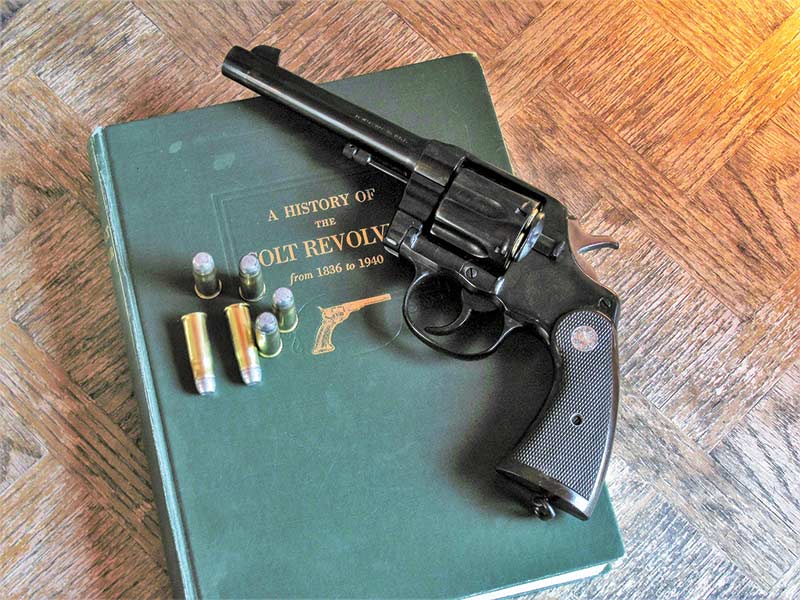
Milt Morrison rescued this New Service .38-40 from the bone pile.
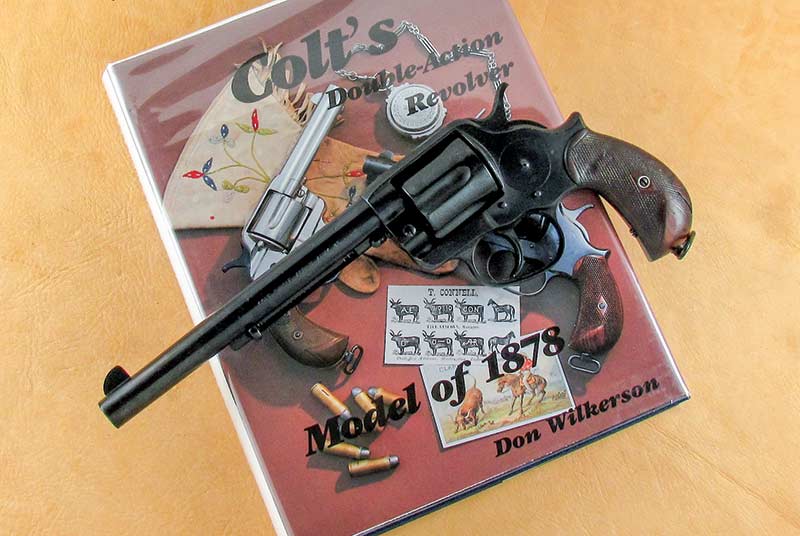
Colt .45 Model 1878 rests on a copy of Don Wilkerson’s excellent Colt 1878
book after Milt Morrison brought it back to a new sixgunnin’ life.
The First Old Colt
Classic sixguns are where you find them, and I watch for the old classics; sometimes, they come my way unexpectedly. When my grandkids were still young and needed someone to stay with them while their parents were gone, Diamond Dot went up to Lewistown, Mont., where they all lived at the time.
They went to an auction sale while there, and Dot was bidding on an old Colt 1878 chambered in .45 Colt. The man bidding against her dropped out, and then someone else joined the bidding. She looked at him and said, “Why are you bidding against me?” He quit, and she got the old Colt for a very reasonable price. It was not in the best shape, and my local gunsmith, at the time at Shapels, had to repair the hand, for which he did an excellent job.
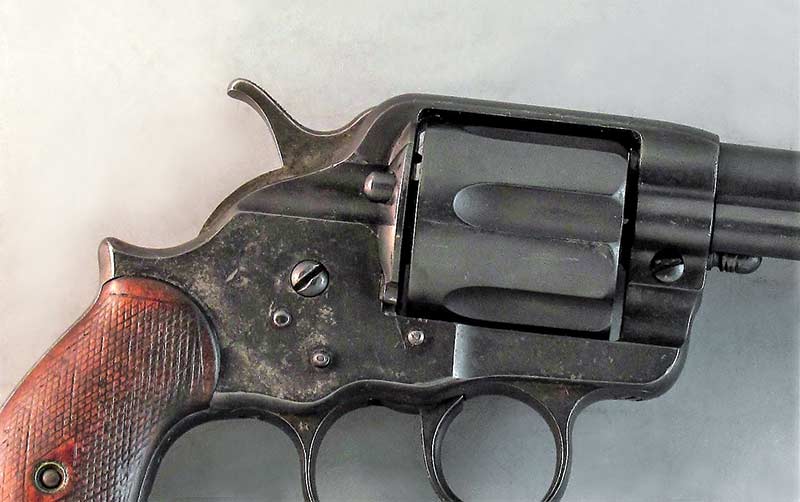
The gun had been poorly re-blued, and the barrel was cut even with the ejector rod and then a brass front sight installed. The grips were well-worn checkered walnut. But after the repair job, it was safe to shoot. It just looked like an old abused Colt.
A couple of years ago, my friend, well-known gunsmith Milt Morrison, moved to my area, and I decided this old Colt and two others could definitely benefit from his talented touch. A look through my parts box revealed a 2nd Generation 7½” Colt Single Action .45 barrel, which was turned over to Milt along with the old 1878 to be re-barreled and re-blued. He first installed the barrel so I could check it for windage and elevation, and then it went back to him to be totally re-finished. It now looks good enough to be out among mixed company.

The cold Montana Auction 1878 Colt before going to Milt Morrison.

Colt New Service .45 Colt re-finished by Milt Morrison rests
on a copy of Tim Mullin’s excellent book.
The Second
The second Old Colt was a 5½” New Service also chambered in .45 Colt and manufactured between the two World Wars. I found this one in Texas at a shoot about 15 years ago, lying on the table and looking almost pristine — until you turned it over! One side of the frame and the cylinder were pitted. Milt said it looked like what he had seen with sixguns soaked in Coke. The barrel and cylinder were both in excellent shape, as was the action. However, the pitting lowered the price substantially.
I purchased this Colt with the idea of turning it into a Fitz Special complete with a shortened barrel, rounded grip frame and cut-out trigger guard. I made one huge mistake. I shot it first. It shot so well I felt it would be a shame to change it. So, for several years I just shot it as it was. However, with the arrival of Milt, this looked like a perfect chance to have it re-blued. He could not get all of the pits out without taking off a lot of metal; however, he did get most of them out, and this is now an excellent looking (as well as shooting) sixgun. With the Oregon Trail 250-grain RNFP over 6.0 grains of Hodgdon’s Red Dot, it clocks out at 800 fps with five shots in 11/8″. That’s why I didn’t turn it into a Fitz Special.
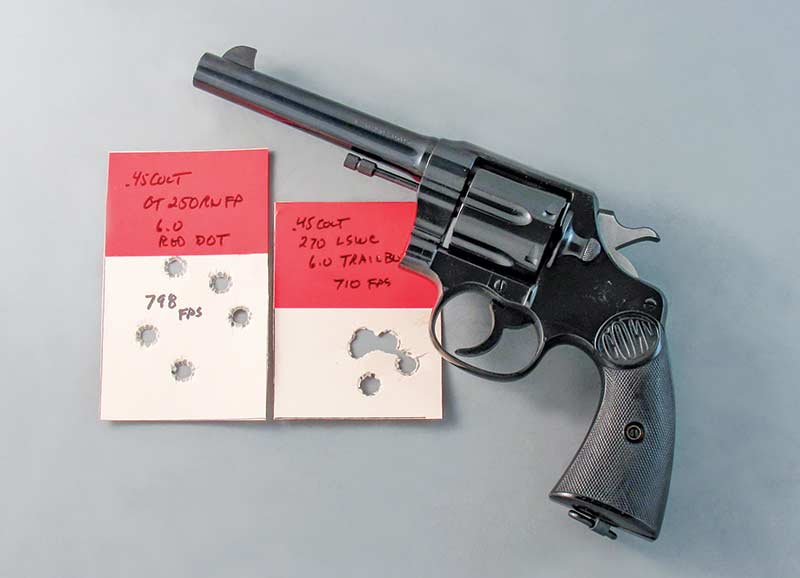
Targets fired with the restored .45 Colt New Service.
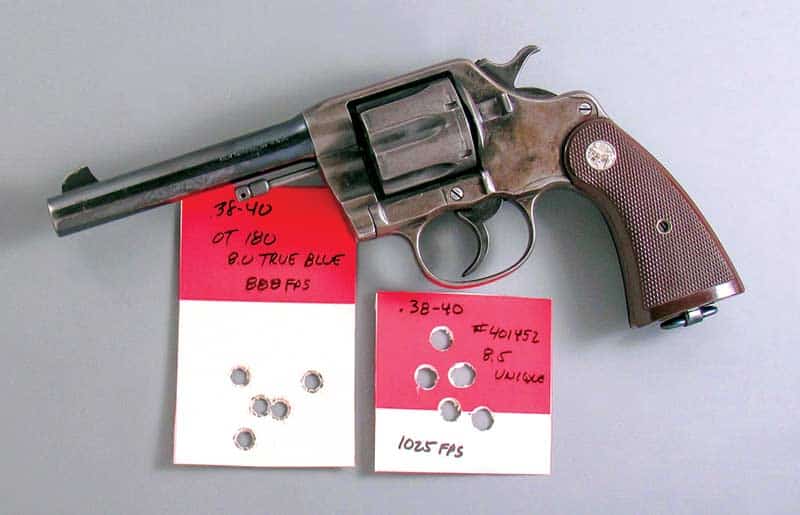
The New Service .38-40 partway through its resurrection process.
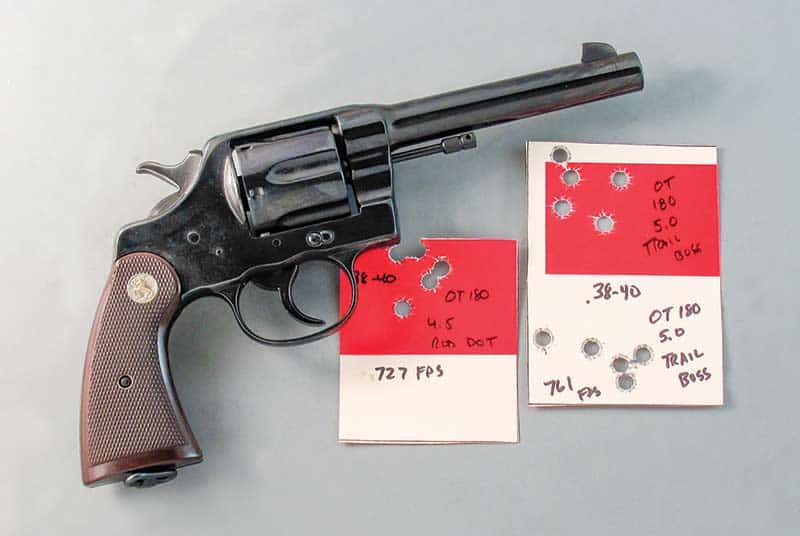
Targets fired with refinished Colt New Service .38-40.
Colt 3
The third of this Trio of Old Colts was also a New Service and quite a bit older than the .45 New Service. Before WWI, the New Service barrels were straight; however, when Colt produced the .45 ACP Model 1917, the government asked for a collar around the barrel where it threads into the frame. This not only locks the barrel up tight against the frame, it also looks much better.
This older New Service had very little finish, let’s say none, and someone had hacksawed the barrel to 2″ and just left it alone — no re-crowning, no installation of a new sight. After this “custom” work, the .38-40 New Service had a price tag of only $200. Usually, this would not be worth buying; however, several years before, I had picked up a collared New Service .38-40 barrel at a gun show for $5, along with a Great Western .45 Colt barrel at the same price. I used the 7½” Great Western barrel on a Great Western movie gun with a shot-out cylinder and barrel, and using a Colt cylinder brought this old gun back to life.
The like-new 5½” .38-40 barrel was installed on the butchered New Service, and I now had a two-tone sixgun with a nicely blued barrel and the rest of the gun with little finish. One positive attribute was that the checkered Colt grips were in excellent shape. It lay in my safe for years, and I only shot it occasionally. Milt re-blued this .38-40, tuned up the action, and the result would make Duke Venturino, who also appreciates .38-40s, really like this sixgun. With Oregon Trail’s 180-grain RNFP cast bullet over 5.0 grains of Hodgdon’s Clays, it clocks out at just over 800 fps and places six bullets in one ragged hole at 20 yards. It was definitely worth purchasing and bringing back from the bone pile.
There is something about the old Classic Colts that just stirs my sixgunnin’ soul, spirit and heart. Yes, today’s guns, in many cases, are better than ever. However, Colt no longer offers a big-bore double-action sixgun, so I am very content with these. Either one of the New Service Colts could easily be used as an everyday Perfect Packin’ Pistol.