Month: April 2023
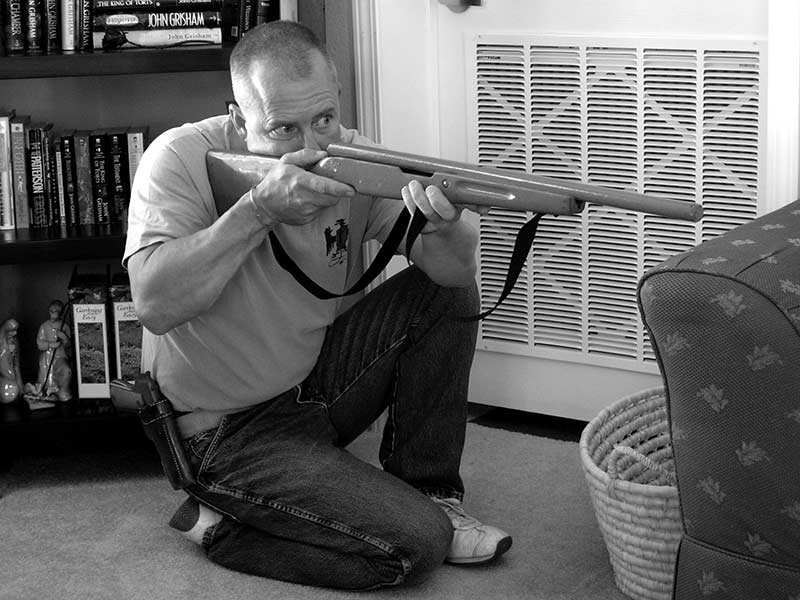
It is with a heavy heart I have to share some sad news. Tiger McKee, long-time author of American Handgunner’s “Tactics and Training” column, has passed away.
While Tiger has graced the pages of American Handgunner and the Tactical Wire with his insightful teachings on personal defense, concealed carry and firearm-related tactics, he’s perhaps best known for his lifelong commitment to being a student. This “always learning” mentality was behind the success and reputation of his ShootRite Firearms Training Academy in Langston, Ala.
Tiger racked up accolades from recognition, including expert ratings on pistol and rifle from none other than Col. Jeff Cooper of Gunsite Academy and teaching certifications from Thunder Ranch and the Federal Bureau of Investigation. But it was always his self-described “lifelong student” approach that made him so relatable.
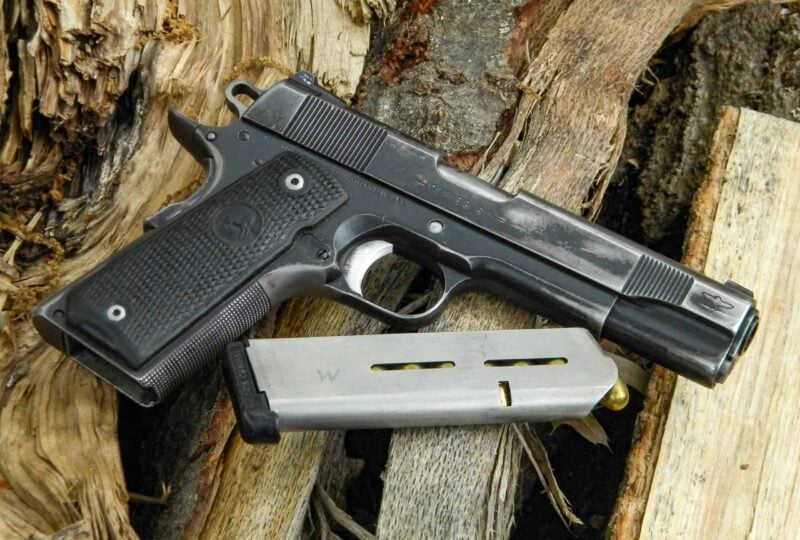
You could spot one of Tiger’s guns a mile away. While well cared for, they were tools, and he used them – a lot.
The cosmetic wear and tear offers plenty of proof.
Tiger has been a prolific writer, publishing hundreds of “how-to” articles on self-defense and shooting techniques. I addition to his magazine and newsletter work, he found time to publish two successful books — “The Book of Two Guns: The Martial Art of the 1911 Pistol and AR Carbine” and “AR-15 Skills and Drills: Learn How To Run Your AR Like A Pro.”
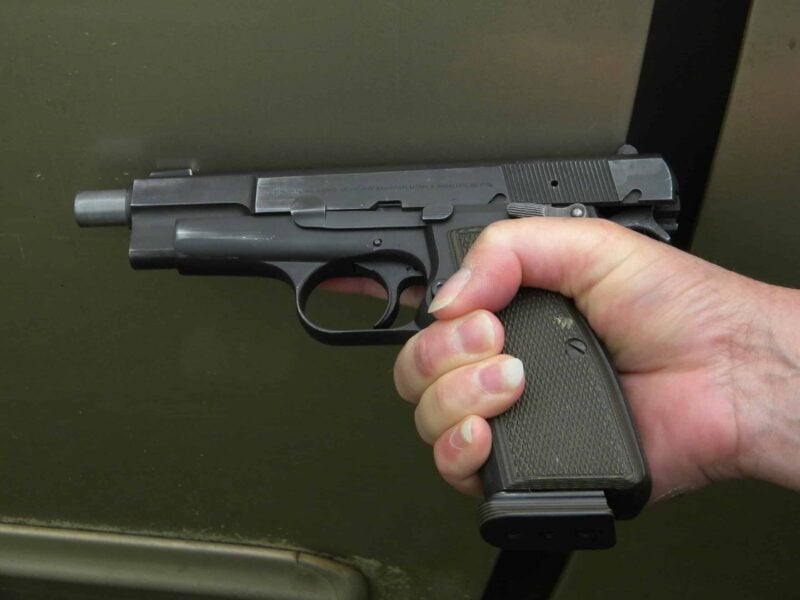
Tiger has been doing lots of work with the classic Hi-Power recently, performing his own customizations
to make it “just right” for his personal tastes. Again, no safe queens in his stable.

Tiger was never afraid to pick up the file and take it to a shiny, brand-new pistol.
Making it “just right” for hard use was always the number one priority.
In recent years, Tiger’s passion expanded to DIY gunsmithing and customization. You may have noticed more and more articles in American Handgunner and some of our special editions highlighting Tiger’s shop work on revolvers, Hi-Power pistols, and more.
We’ve got a couple of articles he’s completed recently that will be highlighted in upcoming editions of American Handgunner, so please keep an eye out. I know of no better way to honor the man than to share his work.
Tiger will be missed. He was a true gentleman who was truly a joy to work with.
This tragic news is just breaking, so we’ll share as we learn more about arrangements and honorarium opportunities.
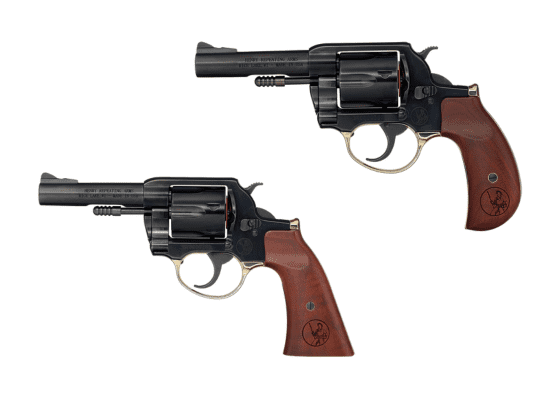
Henry Repeating Arms announced the company’s first foray into the world of wheelguns with the introduction of the Henry Big Boy Revolver.
The perfect sidekick for owners of the Henry Big Boy rifle, the Henry Big Boy Revolver is chambered in .357 Magnum/.38 Special.
The traditional double-action revolver is available in two different grip configurations – the larger, flared Gunfighter style or the more compact, rounded Birdshead style.
The Big Boy Revolver borrows design cues from its rifle counterpart with deep and polished blueing on the medium-sized steel frame, 6-round quick-release cylinder, and 4” barrel, grip panels cut from genuine American walnut, and a polished brass trigger guard that wraps all way around the grip to the top of the backstrap. The fixed notch rear sight and interchangeable front blade sights with different heights provide a traditional revolver sight picture.
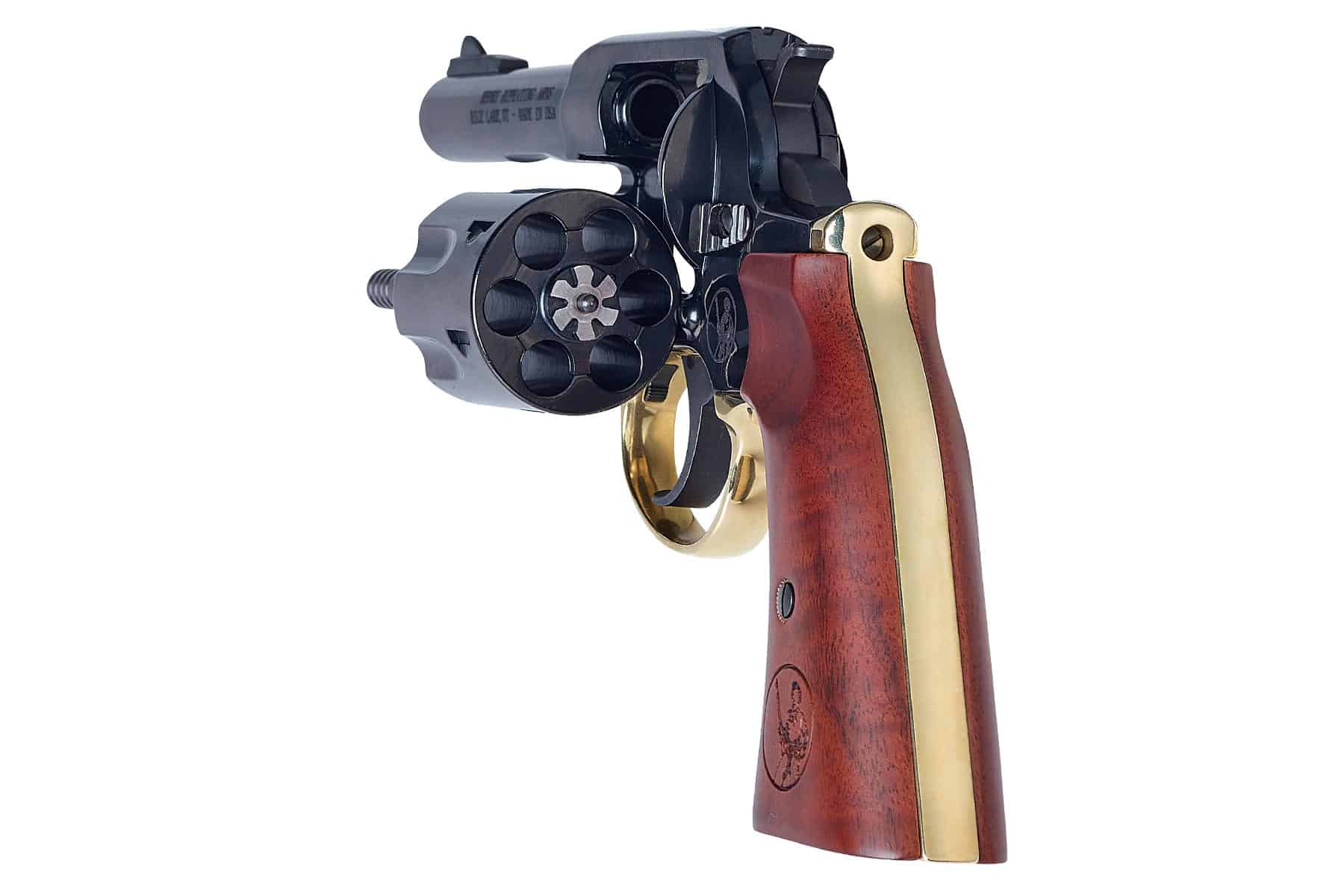
SPECS
Big Boy Revolver w/ Birdshead Grip
• Caliber: .357 Magnum / .38 Special
• Action: Double-Action / Single-Action
• Overall Length: 9 inches
• Barrel Length: 4 inches
• Weight: 34 ounces
• Capacity: 6 rounds
• Sights: Screw-On Post (Front); Fixed Notch (Rear)
• MSRP: $928
Big Boy Revolver w/ Gunfighter Grip
• Caliber: .357 Magnum / .38 Special
• Action: Double-Action / Single-Action
• Overall Length: 9.5 inches
• Barrel Length: 4 inches
• Weight: 35 ounces
• Capacity: 6 rounds
• Sights: Screw-On Post (Front); Fixed Notch (Rear)
• MSRP: $928
For more information on the Henry Big Boy Revolver, visit HenryUSA.com.

LOCALS in Louisiana were left stunned to find one of Putin’s prized T-90 tanks that was seized by Ukranian forces parked at a truck stop.
The monstrous military vehicle was dumped in a parking lot off the Interstate 10 highway after being shipped over to the United States.

6

6

6
Employees at Peto’s Travel Center and Casino in Roanoke were stunned when they saw the terrifying tank plonked outside.
A shipping label on the side of the barrel of the main gun suggests it may have been shipped over from Gdynia, Poland.
Open source intelligence trackers claim the T-90A tank was captured by Ukrainian forces last September amid Russia’s disastrous invasion.
The formidable Russian motor was left unattended at the truck stop for several days, leaving passing drivers baffled.
The state-of-the-art tank was being hauled across the state of Louisiana when the transmission on the truck suddenly went out.
The driver had to go to Houston to replace his mode of transport and asked staff at Peto’s if he could leave the tank there until he returned, according to The Drive.
Assistant manager Valerie Mott said: “I’ve been here seven years. I’ve never seen [a tank] here before.”
She said the truck stop was under the watchful eye of security guards 24 hours a day in case any military fanatics got too giddy.
The T-90 still boasted some explosive reactor armor containers on the turret, but had been stripped of its deadly machine guns.
The tank seems to have sustained some damage to its front and rear fenders, as well as lacking some Western fire control components that they are usually equipped with.
A shipping label suggests it may have been transported from Poland by an organization known as the “multinational assessment field team.”
It is thought the armored vehicle may be headed to the US Army Aberdeen Test Center (ATC) in Maryland for weapons testing or training exercises.
The tank, believed to have been constructed in 2004, is thought to have been captured in Kharviv last September from Putin‘s soldiers by Ukraine’s 92nd Separate Mechanized Brigade.
The Russian troops who ditched their motor were with the 27th Separate Guards Motorized Rifle Brigade, 1st Guards Tank Army.
The tank is expected to be examined by the US military to gain insight into the equipment Russia relies on in battle.
Experts can assess its capabilities and vulnerabilities through reverse engineering.
It is believed that Ukrainian forces may have already stripped some key components after seizing the T-90.
Its sheer presence sparked a panic in Louisiana, as people feared it may have been tampered with while sitting idly for several days.
The trucking company transporting the tank nor military officials have yet to publicly address the incident.
The bizarre guest in the Peto’s parking lot has left many Americans with more questions than answers.
Images of the tank were shared on Reddit by a motorist who lives nearby after he spotted it while driving past.
The post read: “I’m some guy in the south who happens to like tanks from playing War Thunder and stumbled upon this beauty.”
His computer game dreams seemed to have come to life after he extraordinarily found the tank as it made its baffling journey.
Ukraine previously claimed that a T-90 tank they had captured was stuffed with technology made by French firm Thales.
There has been an arms embargo for European firms supplying Russia with equipment since the annexation of Crimea in 2014.
But reports say €346 million worth of military gear was sold to Russia by continental manufacturers after that.

6

6

6
THE United States held the world’s biggest “elephant walk” in a spectacular show of strength to Vladimir Putin and Xi Jinping.
More than 4,000 airmen shared the runway with 80 aircrafts in single file, nose-to-tail take-off positions, which is said to resemble elephants walking.

7

7

7

7
The incredible scenes at Sheppard Air Force Base, in Wichita County, Texas, highlighted the importance of Air Force training and partnerships with allies.
“The key to airpower is exceptional Airmen, and the key to exceptional Airmen is exceptional training,” said General Lyle K Drew.
“That’s what we do here at Sheppard, and this elephant walk was our message to the world that the U.S. and its international partners remain committed to delivering the best-trained Airmen in the world,” he added.
It comes as America sailed a massive warship through the Taiwan Strait in a display of power towards China.
The US Navy described the journey as a “routine transit”, which took place only days after China stopped it’s massive drills around Taiwan.
And US nuclear B-52 bombers were flanked by NATO fighters in V-formation to deliver a similar message to Vladimir Putin last month.
The warning to the tyrant came as jets intercepted a pair of the bombers over the Baltic.
The US demonstrated another ‘elephant walk’ back in December 2020 when a fleet of 30 fighter jets showcased their combat readiness.
I SURE HOPE THAT I AM WRONG ABOUT THIS!!!!!!!!! Grumpy
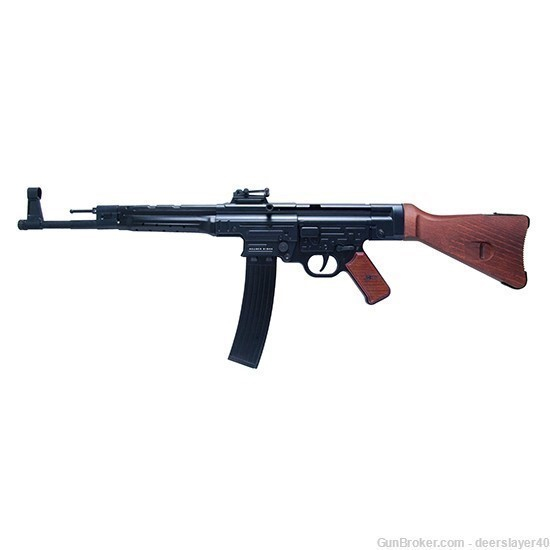
My Granddaugher has one and I can say it is one fun gun to go plinking with! Grumpy

I spent three years living in the Alaskan interior when I was a soldier. It was the prettiest place in the world…for about three months in the summer. The coldest it got while I was stationed there was 62 degrees below zero F. Because of the rugged inhospitable nature of the place not a whole lot of folks actually live there, relative to the rest of the country.

Alaska is crawling with tourists during the summer. Tourism is one of the greatest sources of revenue for the state. However, in the winter the Alaskans pretty much have the place to themselves. Back when we called Alaska home there didn’t seem to be a great many old people living permanently in the interior, either. To thrive in the arctic one has to be hearty. The remote and desolate nature of the land tends to attract some fascinating personalities.

Nobody to this day really knows who Albert Johnson really was. It was estimated that he was born between 1890 and 1900 and lived under a pseudonym. In the summer of 1931 Johnson arrived in Fort McPherson, Canada, after making his way down the Peel River. RCMP (Royal Canadian Mounted Police) constable Edgar Millen had reason to question the man and later reported that he had a Scandinavian accent. He subsequently described Johnson as clean-shaven, stand-offish, and well-funded.

Johnson plied the Mackenzie River Delta aboard a homebuilt raft before building himself a tiny 8×10-foot cabin on the bank of the Rat River. At the time anyone wishing to trap animals for their fur was required to obtain a trapper’s license from the government. Johnson neglected to do so. A great many outsiders had come to these remote spaces fleeing the destitution of the Great Depression. Native trappers frequently resented their presence in a land they had obviously long considered their own.

In December of 1931 local native trappers reported Johnson to the RCMP alleging that he was deactivating their traps and interfering with their livelihoods. A subsequent investigation determined that these allegations were unsubstantiated. When the natives had called on him in his cabin Johnson had run them off at the point of a gun. The guy apparently just really wanted to be left alone.

The day after Christmas a pair of RCMP constables named Alfred King and Joseph Bernard trekked sixty miles to Johnson’s remote cabin to investigate the allegations. For his part Johnson ignored the lawmen, going so far as to hang a sack across the cabin window so they couldn’t see inside. The two policemen eventually returned home in frustration to obtain a search warrant.

Five days later the two Mounties returned with a warrant along with two other men for backup. Johnson still refused to speak to the cops, so Constable King tried to force his way into the cabin. Johnson shot him through the wooden door for his trouble. The Mountie team successfully evacuated Constable King to Aklavik where he ultimately recovered.

Albert Johnson had by now kicked over an anthill. Like governments everywhere, the one thing they cannot tolerate is insubordination. The Mounties therefore returned again, this time with a nine-man posse, forty-two dogs, and twenty pounds of dynamite. However, Albert Johnson had made good use of the intervening time.

The Mounties surrounded the little cabin and demanded that Johnson come out. When he failed to do so they deployed their explosives. It was so cold the Mounties had to keep the dynamite in their coats to thaw it out.

They threw the dynamite onto the roof of the cabin in an effort at flushing Johnson out. One report held that the roof was slightly damaged. Another claimed that the cabin was pretty much pulverized. Regardless, Johnson now opened fire from within a five-foot dugout he had excavated in the floor of his tiny dwelling.

Johnson and the posse exchanged fire for some fifteen hours, during which, miraculously, no one was hurt. However, it was really cold out. At -40 degrees F the cops were growing weary of this exchange. They retreated once again to Aklavik to regroup. By now word of this tidy little war had filtered out to the World via radio.

On January 14, fully nineteen days after their first quasi-amicable encounter, the Mounties returned yet again only to find that Johnson was gone. Considering they had blown his tiny cabin to hell this really should have come as no surprise. Now with ample resources and manpower the Mounties struck out after the fugitive recluse. Roughly two weeks later on January 30, they caught up to him.

The cops surrounded Johnson in a thicket, and a firefight ensued. Johnson shot Constable Edgar Millen, the officer who had first interviewed him some weeks before, through the heart and killed him. The Mounties present at the time reported that Johnson laughed heartily when he realized he had connected with the law officer. In the resulting chaos the cops retreated and Johnson escaped yet again.

By now things were clearly getting out of hand. The Mounties enlisted the assistance of local trackers as well as the services of Wilfrid “Wop” May, a post-war aviator of some renown. May arrived with his ski-equipped Bellanca airplane to help coordinate the search from the air. The Mounties blocked the only two passes through the Richardson Mountains only to have Johnson scale a peak and escape.

The airplane turned out to be Albert Johnson’s undoing. Johnson was a skilled woodsman who would trek along caribou trails to conceal his footprints. This allowed him to move on the compacted snow quickly without snowshoes. Wop May could see that Johnson only left the track to make camp in the evenings. He coordinated with the ground team via radio and directed them along a river to Johnson’s position. By February 17 the Mounties had their man.

The posse encountered Johnson at a range of roughly two hundred yards. Johnson attempted to run, but he wasn’t wearing his snowshoes and got bogged down. In the resulting exchange of fire one Mountie was badly wounded. The law enforcement officers quickly narrowed the distance and killed Johnson at close range.

One round struck the fugitive in the left side of his pelvis, severing a significant artery. Johnson bled out in short order. Subsequent forensic analysis of his corpse showed him to have a fairly severe case of scoliosis as well as asymmetrical feet, one being markedly larger than the other. Over the course of 33 days, this gimpy little man had trekked 85 miles through the arctic wastes. Throughout the exchange, the only sound the officers had heard Johnson make was when he laughed after shooting Constable Millen.

When officers searched Johnson’s body they discovered $2,000 in American and Canadian currency (about $43,000 in today’s money), a small compass, some gold, a knife, a razor, a few nails, some fish hooks, a dead bird, a dead squirrel, and a few human teeth with gold fillings that they suspected were his own. He also had an ample supply of Beecham’s Pills, a type of laxative commercially available at the time. Despite widely circulating photos of the dead man no one ever determined his identity.
The Guns

Albert Johnson had three firearms on him when he died. They included a cut-down Winchester bolt action .22, a Savage lever-action Model 99F in .30-30, and a sawed-off 16-gauge Iver Johnson shotgun. Though his identity was never definitively established, Johnson was clearly adept at running a gun.

Johnson’s Winchester .22 was likely a Model 04 single shot with the buttstock cut into a pistol grip. Winchester offered a variety of these simple single-shot starter rifles over the first several decades of the 20th century. They would have made solid survival arms for securing small game.

The Savage Model 99F was a radically advanced sporting rifle for its day. Available in sixteen different chamberings, the 99F was a hammerless lever-action design that fed from a six-round rotary magazine. This made the 99F one of the world’s first lever-action rifles that could safely feed spitzer (pointed) bullets. Most rifles sporting tubular magazines can be dangerous if filled with pointed bullets that could inadvertently precipitate an unintentional discharge.

Johnson’s single-shot 16-gauge shotgun was mercilessly pruned into a tiny little handgun. Even in a modest 16-gauge chassis, this thing would have sported some impressive recoil. At under-the-table ranges, however, it would have reliably done the deed.
Ruminations

Why the heck couldn’t they have just left this poor guy alone? He lived in a cabin about the size of a large dinner table some sixty miles from civilization. He clearly just wanted to be by himself. Yet the Canadian government just couldn’t stand it. They had to hunt the man, blow his hand-built cabin to pieces, and eventually shoot him down like a dog. It’s a safe bet that no law enforcement officers would have been harmed had they just given the man some space.

This is a ubiquitous government disease. The US government killed Randy Weaver’s wife and teenaged son over the length of a shotgun barrel. They gave him a $3 million settlement afterward, but that pile of money is likely pretty poor company on a cold winter’s night.

In a representative democracy such as ours, the only reason stuff like this ever happens is if we allow it to. We are never more than one headline away from such a tragedy even today. I love my country, but I distrust my government. Live responsibly, love your neighbors, pay your taxes, and practice responsible citizenship. However, never tolerate government overreach or abuse. The line demarcating freedom and tyranny is indeed fine. If my opinion counts for anything, sometimes I think we may already have a few too many rules.

Categories
It must be nice to be that rich!
