Montana – The NRA just sent out a political alert that contained this line about Montana: “Montana House to Vote on Concealed Carry Permit Reciprocity.”
News Flash. The Montana Shooting Sports Association successfully pushed a bill in 1993 that I wrote to give Montana permit reciprocity. That Montana law was improved in 1995 with another bill I wrote. Because of that success, Montana recognizes all other state permits, and Montana permits are honored by 34 other states. Plus, Montana is now permitless for both open and concealed carry, so we even let people from New York and California carry here.
Thirty years later, the NRA comes along with its own bill claiming to create reciprocity for Montana. What’s up with that?
The NRA solicited introduction of HB 674, a bill intended to create an “enhanced concealed weapon permit” here. This bill is alleged to gain recognition of the new “enhanced” Montana permits by five more states. If the NRA had bothered to ask us about this D.C.-centric idea, we’d have told them it is not suitable for Montana and that the bill, as drafted, was seriously flawed, but they didn’t bother to ask. For lack of local knowledge, the bill the NRA introduced had to have a dozen amendments applied to it to fix the drafting errors and make it more compliant with existing Montana law.
But, that heavy fix didn’t complete the repair of the bill.
The five states with which the NRA bill would allegedly get Montana reciprocity all currently disallow Montana permits because they don’t recognize permits of states that issue to persons under 21 years old. Current permits in Montana are issued to qualified applicants who are 18. The touted NRA bill would limit the new “enhanced” permit, after jumping through many more qualifying hoops than existing Montana permits, only to people 21 years and older. That’s a fatal and unrepaired flaw in the NRA bill. Why?
Because the Montana Constitution declares that persons 18 years old are adults and must be allowed all privileges of adulthood.
That section of the Montana Constitution had to be amended to allow the Legislature to restrict possession of alcohol to persons 21 years and older, and again to allow the Legislature to restrict marijuana to persons 21 and older. Without another constitutional change, the NRA bill allowing their “enhanced” permits only for people 21 and older will simply not pass constitutional muster in Montana. In that case, even if the bill passes with a constitutionally-correct age of 18, it will not allow Montanans to use these new “enhanced” permits in the five states alleged to be the reason for the bill.
What a mess! And this mess is because the NRA is so desperate for relevance that it chose to wing this effort without talking to knowledgeable people in Montana about the idea and effort.
Meanwhile, the NRA refuses to acknowledge or support the pro-gun bills MSSA has working through the Legislature. This includes a bill to remove an 1884 Jim Crow provision in our RKBA that says the RKBA doesn’t apply to concealed weapons. This includes our bill to pay court costs for a defender who is prosecuted, pleads self-defense, and is acquitted. It includes our bill to prohibit discrimination because of firearms. It includes our bill to pay court costs and attorney fees if a person wins a suit against a government entity to secure the person’s RKBA.
The NRA is withholding support for all of these good MSSA bills while pushing its seriously flawed “enhanced” permit bill that won’t accomplish its alleged objective because it is constitutionally impermissible in Montana.
Since the 1980s, Montana Shooting Sports Association has gotten 70 pro-gun bills through the Montana Legislature and enacted them into law. None of these were initiated or written by the NRA, although the NRA did support a few of them. Maybe the NRA, in its quest for contemporary relevance, is jealous of MSSA’s record of success and seeks to show what a gorilla it is. If so, it misses its target by a wide margin with its ill-conceived HB 674 in Montana.
Gary Marbut is president of the Montana Shooting Sports Association, the primary political advocate for Montana gun owners. Marbut has served on the Board of Directors of Gun Owners of America and has twice been the recipient of the Second Amendment Foundation’s Grass Roots Activist of the Year award.
The federal government has been using Americans’ income and gun purchases to conduct warrantless tracking and deny Second Amendment rights. Agents from the Bureau of Alcohol, Tobacco, Firearms and Explosives (ATF) gave salary estimates to the Federal Bureau of Investigation (FBI) as the reason to have people’s firearms purchases monitored.
Erich Pratt, senior vice president of Gun Owners of America (GOA), told The Epoch Times that the ATF’s activities “monitoring innocent people” is a serious problem. “Congress needs to rein in this rogue agency by either exercising oversight over it or abolishing the unconstitutional agency altogether,” said Pratt.
These revelations come from new documents, viewed by The Epoch Times which it received from its Freedom of Information Act (FOIA) lawsuit. The latest production from the FOIA has hundreds of pages—many redacted—showing ATF agents requesting warrantless surveillance by the FBI for lawful reasons such as low salaries, past firearm purchases, and sending “bizarre” messages.
The Epoch Times exclusively reported in January about the FBI’s secret monitoring service that tracks people by the National Instant Criminal Background Check System (NICS) for gun purchases for mere “potential violations of law.”
Too Poor to Buy Guns
According to the documents, a man in Arizona was put into the NICS’s daily monitoring because he has a “reported income” of only $2,839. The ATF agent wrote, “In my experience, someone with this amount of income would not be able to afford 20 firearms.”
An Asian man in Texas was put on the manual background check because the ATF said he has “no work history” which “could possibly indicate” that he is “straw purchasing.”
A special agent in Kansas emailed ATF’s liaison at the NICS to flag two purchasers for “potential trafficking.” The agent wrote: “My targets are purchasing an abundance of firearms without a license or known financial means to obtain the product.”
The FBI’s NICS expert instructed the agent in Kansas on what to include to ensure approval for tracking the suspects. “I would suggest covering the lack of income versus expenditures and also if there is substantial make/model duplication,” wrote the FBI. The ATF agent emailed back with the incomes for each man, acquired by the Kansas Department of Labor.
All the cases in the documents are related to the ATF investigating dealing firearms without a license and straw purchasing, which is buying guns for people prohibited from owning a firearm.
Tracking Income
Gun rights activists say federal law enforcement is missing the mark.
“The poor usually live in areas with the most crime and thus have a strong need to arm themselves heavily,” Pratt said. “So targeting the indigent is simply another avenue for gun grabbers to implement a backdoor gun ban.”
ATF headquarters will not disclose how it acquired the other suspects’ incomes, employment information, and past gun purchases found in the FOIA forms.
“We are unable to discuss specific techniques utilized in criminal investigations,” ATF spokesman Erik Longnecker told The Epoch Times. “ATF utilizes a multitude of legal means in our criminal investigations to protect our communities from violent gun crime.”
Longnecker referred The Epoch Times to the National Tracing Center website for information about “several overt programs such as multiple sales and demand letters that can be helpful in identifying illegal firearms trafficking.”
Buying Too Many Guns
A black man in Florida was monitored daily by the FBI for at least 90 days in 2020 because an ATF agent wrote: “Based on my training and experience, I have not seen a legal firearms purchaser purchase approximately 30 firearms in a 120-day window for their personal collection.”
Licensed firearms dealers must report to ATF the sale of two or more handguns to the same purchaser within five consecutive business days. However, there is no federal law limiting the number of guns a person can buy.
“Some agent just decided that is enough Second Amendment for you this year,” Robert Olson, the attorney who filed the FOIA lawsuit for the GOA, told The Epoch Times.
Buying and Selling Guns
A Wisconsin man was put under surveillance in 2020 because an ATF agent saw text messages related to buying and selling guns and suspected dealing without a license. The agent said the man bought guns from the website Gunbroker.com, transferred them through a local gun store, and then resold the firearms “using email, text messaging, and the website Armslist.com.”
There is more redacted black markings than visible information on this form, but it does not disclose the number of guns the suspect bought and sold.
The ATF has an online guide that explains: “If you only make occasional sales of firearms from your personal collection, you do not need to be licensed.” It also says you “will need a license if you repetitively buy and sell firearms with the principal motive of making a profit.”
Too Many Gun Parts
In the secret documents, an ATF agent asked the FBI to flag a man in Arizona suspected of dealing parts of guns. “In my experience, it is common for people to purchase large number of AR-15 style lower receivers, build them into rifles, and sell the rifles for profit,” the agent wrote to get the suspect put into NICS.
A “lower receiver” is the base part of an AR-style rifle which has a serial number on it. It cannot fire without a barrel, trigger, and other parts put on it.
“It is common for people to buy several lower receivers and build them into finished guns. If it’s your hobby, that is not sufficient to prove you are illegally dealing firearms,” said attorney Olson. “How does the agent distinguish between the Second Amendment enthusiast and the criminals?”
‘Bizarre’ Messages
A Missouri man was put into NICS after an ATF agent emailed that a “U.S. Attorney’s Office asked that we monitor his activity due to recent threats and bizarre messages he has been leaving.”
The agent wrote that the man “was recently released from BOP [Bureau of Prisons] and has begun making threats toward the U.S. Attorney’s Office, federal judge, and ATF case agent.” The completed form does not indicate the man has committed a felony, which would mean he would be in the NICS and prevented from buying a gun at the point of sale.
“Sending bizarre messages is not something that makes you lose your Second Amendment rights,” said Olson. “He sounds like a bad guy, but it’s not connected to firearms. That’s a huge misuse of the background check process.”
Anonymous Tips
The ATF’s law enforcement role is to investigate when a prohibited person completes a 4473 gun background check, and the NICS denies the purchase. In one case in the files, the ATF appears to have a woman tracked before the investigation has been done and based on an anonymous tip.
Documents show a Hispanic woman in Texas was put into the NICS because an agent got an “iTip provided by an anonymous person” who related that she had “purchased 10 firearms in the last two weeks.”
The agent wrote that the investigation was incomplete because it did not have the background check forms from the dealer (“4473s”) nor video footage from the store.
ATF and FBI Unbowed
There are no instances of the FBI denying any ATF request to put a person under warrantless surveillance in all the documents released so far. Moreover, there are no documents showing the monitoring periods ended. As we previously reported, the FBI told the ATF that it will renew the NICS flags of 30 to 120 days and limitless times if requested.
“It’s time for Congress to repeal the NICS check. Given that more than 95 percent of the initial stops are for mistaken identity, it is clear that NICS is not keeping guns out of criminals’ hands,” GOA’s Pratt said.
The ATF spokesman declined to say if this monitoring program with the FBI was ongoing. The FBI did not respond to a request for comment for this story.
John Sedgwick was a popular and effective General Officer fighting for the Union during the American Civil War.
John Sedgwick was born in September of 1813 in the Litchfield Hills town of Cornwall, Connecticut. His grandfather had served as a General Officer during the Revolutionary War alongside George Washington. Originally commissioned into the Artillery, Sedgwick graduated from the US Military Academy at West Point in 1837 with a class rank of 24th out of 50.
John Sedgwick, shown here on the right alongside a brace of his staff officers, was a professional American soldier at a time where there weren’t a great many professional American soldiers.
Sedgwick served in both the Seminole and Mexican-American Wars, earning brevet promotions to Captain and then Major. Afterwards, he transferred to the Cavalry and served in the Indian Wars concluding with a punitive expedition against the Cheyenne. By the onset of the American Civil War John Sedgwick was a Colonel serving in Washington DC.
John Sedgwick was a cautious but successful General.
Cholera nearly killed him early in the war. However, he recovered and was promoted to Brigadier General in the summer of 1861. What followed was a successful career involving a series of combat commands and ultimately promotion to Major General.
Stonewall Jackson thoroughly trounced Sedgwick at the Battle of Antietam. MG Sedgwick was nearly killed in the exchange.
During the Battle of Antietam, the Union II Corps Commander MG Edwin Sumner threw Sedgwick’s division into a desperate assault against Confederate forces commanded by Thomas “Stonewall” Jackson without proper reconnaissance. Sedgwick’s troops were engaged from three sides and summarily butchered. MG Sedgwick was himself shot three times–in the shoulder, leg, and wrist–and retired from the field with roughly half his command remaining.
Sedgwick’s men revered him.
MG Sedgwick was popular with his men. His troops affectionately called him “Uncle John.” However, quick to speak his mind, Sedgwick remained a reliably poor politician. He had thrown his weight behind such controversial figures as George McClellan and was a vocal critic of General Benjamin Butler. The Secretary of War Edwin Stanton felt that he should have been a more vigorous proponent of abolition and what was then viewed as the Radical Republican agenda.
By 1864 MG John Sedgwick was a capable Union Corps commander.
By the Spring of 1864, Sedgwick was tired. He had by now been fighting for decades and had been seriously wounded multiple times. He had lost men in combat by the hundreds. He admitted in a letter to his sister that he wished to leave the Army and return home to New England. Despite some of his more unpopular political views, Sedgwick was granted command of the VI Corps holding the Union right during the Battle of the Wilderness in May of 1864 under LTG US Grant.
Fate, Valor, and Snipers
MG Sedgwick is shown here second from the right along with a variety of Union staff officers and generals. Those guys did rock some snazzy uniforms.
The Battle of Spotsylvania was the second major fight in Grant’s Overland Campaign against forces under Confederate General Robert E. Lee. Fighting went on for some thirteen days and resulted in 32,000 casualties on both sides. Spotsylvania was the bloodiest battle of the campaign.
MG Sedgwick had no shortage of courage. His calm demeanor under fire reliably inspired his troops.
On May 9, 1864, Sedgwick’s Corps was tepidly engaging Confederate skirmish lines vicinity the left flank of the Rebel defense. As was his custom, MG Sedgwick was at the front personally directing the placement of his organic artillery assets. John Sedgwick had begun his career as an artilleryman, and he had a gift for the employment of cannon.
Confederate sharpshooters armed with specialized weaponry were remarkably capable for their day.
As Sedgwick and his staff attended to the myriad tasks associated with preparing a Corps for battle, Confederate sharpshooters opened fire from 1,000 yards distant. Soldiers of this era were typically simply cogs in a gigantic machine, the purpose of which was to amass musket fire. Rank upon rank of synchronized fire is what won battles. Individual sharpshooters, particularly firing from such prodigious ranges, amounted to little more than harassment.
Whitworth rifles fired this radically advanced forged polygonal bullet.
The Confederate sharpshooters this day were armed with expensive and rare British Whitworth rifles firing an elongated faceted 530-grain .451-caliber bullet. These heavy but accurate bullets made a characteristic whizzing sound as they passed nearby. Rebel snipers prided themselves on their ability to pick off gun crews at extreme distances. As the Union artillerymen and Sedgwick’s own staff scrambled for cover the General strode about upright and unprotected.
John Sedgwick was not going to let a little sniper fire drive him to ground.
Survivors heard Sedgwick say, “What? Men dodging this way for single bullets? What will you do when they open fire along the whole line?”
Not sure exactly what the hand in the jacket thing meant, but they all seemed to do it. MG Sedgwick on this fateful day let his bravery get the better of him.
Sedgwick’s men were indeed ashamed yet they persisted in flinching at the sounds of the Whitworth bullets flying uncomfortably nearby. The General continued, “Why are you dodging like this? They couldn’t hit an elephant at this distance.” You can likely see where this is leading.
The Rifle
This somber-looking gentleman designed a remarkably advanced rifle during the middle years of the tumultuous 19th century.
The British Whitworth rifle was a product of Englishman Sir Joseph Whitworth, a successful engineer, and businessman. Whitworth did his initial experimentation into polygonal rifling with large-bore brass cannon before shrinking the concept down into something more portable.
These terrifying-looking lads were British officers during the Crimean War.
Whitworth visualized his eponymous weapon as a replacement for the general issue British 1858 Enfield then in use during the Crimean War.
The Whitworth was a markedly better performer at long range when compared to more primitive muskets of the day. However, it was expensive and maintenance intensive.
The Whitworth did indeed significantly outperform the .577-caliber Enfield in both accuracy and range. However, Sir Joseph’s rifle cost four times what the Enfield did at the time. The Whitworth’s radical polygonal rifling was also markedly more prone to fouling than was that of the Enfield.
The Whitworth’s hexagonal bore was its most unusual feature.
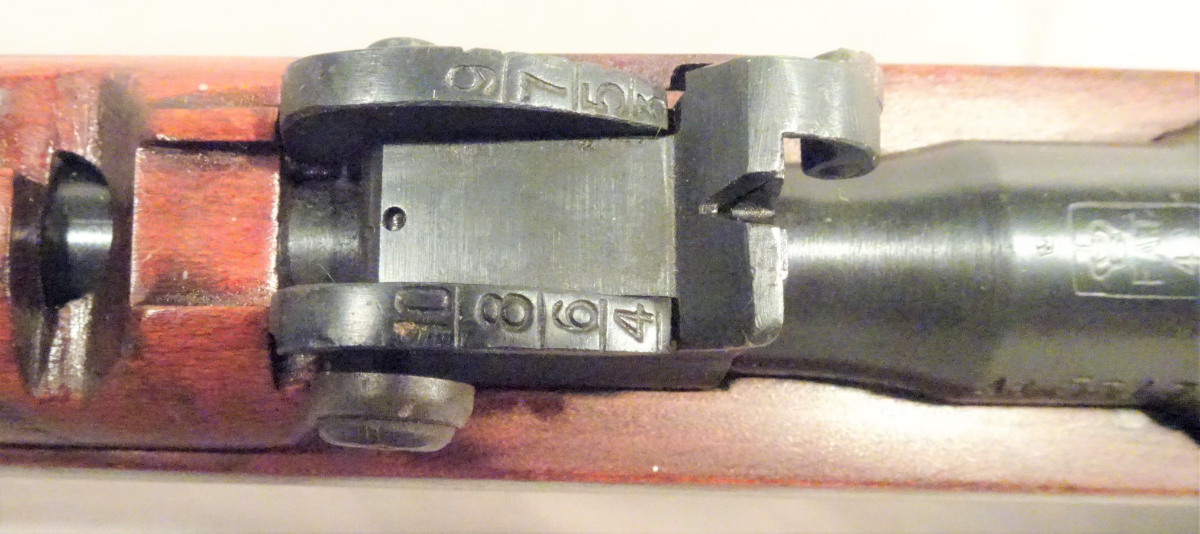
The hexagonal cross section of the Whitworth’s rifling combined with its unique elongated faceted projectile meant that the bullet did not have to bite harshly into the rifling as was the case for the more traditional Enfield. This meant markedly higher velocities. The Whitworth’s 1-in-20 twist was also appreciably tighter than the typical 1-in-78 twist of the contemporary 1858 Enfield. In the hands of a skilled marksman, the Whitworth was known to render accurate fire at up to 2,000 yards.
The lockwork on the Whitworth was of a fairly uninspired design.
While the Whitworth barrel was radically revolutionary, the lock, trigger, and furniture were relatively conventional.
Though rare, these early 4X telescopic sights revolutionized precision riflery.
Some of these early Whitworths were fitted with rudimentary 4X Davidson telescopic sights and fired from log rests or forked sticks carried for the purpose.
Queen Victoria used this counterweighted contraption to hit a bullseye 400 yards distant with a Whitworth rifle.
In 1860 at the first annual meeting of the British National Rifle Association (apparently a real thing back then) Queen Victoria fired the opening shot through a Whitworth in a machine rest and connected within 1.25 inches of the bullseye at 400 yards.
Confederate sharpshooters like this one had an outsized influence on the American Civil War.
Britain technically remained neutral during the American Civil War, but English companies were free to market their wares to the highest bidders. From 1862 until the end of the war, roughly 200 Whitworth rifles were sold to the Confederacy. It is estimated that there were never more than 20 of the Davidson sights in use during the course of the conflict.
Never Taunt Fate
The valiant MG Sedgwick caught a heavy Whitworth bullet to the face, suffering a pathologically unsurvivable wound.
As his staff wisely cowered nearby there was a sound described a “dull, heavy stroke” among all the characteristic whistling. One of the heavy Whitworth projectiles connected with the General on the left aspect of his face just underneath his eye. A shocked look on his visage, MG Sedgwick slowly turned to face one of his closest staff officers before falling forward involuntarily, a great gout of blood streaming from his massive wound.
Medics of this era were helpless to aid the fallen general. Folks with wounds this catastrophic frequently fare little better today.
Medical personnel were summoned immediately, but this wound at this time was invariably fatal. The General never regained consciousness though he continued to bleed for some while. I have myself attended gunshot wounds to the head that behaved similarly. Sometimes despite simply breathtaking damage to the central nervous system the human body nonetheless fails to get the memo for a while.
Denouement
Sedgwick is shown here with his staff officers. His death left a mighty hole in the Union ranks.
MG John Sedgwick was the highest-ranking Union officer to be killed during the American Civil War. Though he had a reputation for being unduly cautious at times in battle, Sedgwick was a soldier’s General who was widely respected. Upon notification of Sedgwick’s death US Grant purportedly asked repeatedly, “Is he really dead?”
The Confederate General Robert E. Lee was a fellow West Point graduate and a personal friend of John Sedgwick. It is stuff such as this that made the American War Between the States so much more poignant.
Robert E. Lee was an old friend from before the war, and he expressed genuine sorrow at Sedgwick’s demise. Union General George Meade publicly wept at the news. LTG Grant later told his staff that Sedgwick’s death was a greater blow to the Union than the loss of a full division on the field.
MG John Sedgwick’s stern visage overlooks the grounds at the US Military Academy even today.
There is a monument to John Sedgwick on the grounds at West Point that includes a massive statue of the General. The likeness was cast from metal harvested from Confederate cannon captured by Sedgwick’s VI Corps. The monument was funded by veterans under his command.
MG Sedgwick’s spurs are said to have been good luck charms for generations of West Point cadets.
Legend has it that any cadet who approaches the statue in parade dress gray over white uniform at midnight under arms may spin the rowels of Sedgwick’s spurs and acquire good luck on any final exam. As a result, General Sedgwick’s influence is still respected within the storied halls of the Military Academy at West Point today.
Skilled marksmen used their expensive Whitworth rifles to sow chaos among critical targets like Union artillery units. Over the course of two hours during one engagement a pair of Confederate snipers armed with Whitworths neutralized an entire six-gun Union artillery battery.
The Whitworth rifle equipped with the Davidson telescopic sight was the world’s first dedicated sniper rifle. At the time these rigs cost up to $1000 a piece (about $16,000 today). Specially-selected Confederate marksmen were trained to use these precious resources sparingly against high-value targets.
President Abraham Lincoln came within a hair’s breadth of being killed by a rebel sharpshooter with a Whitworth in 1864.After the battle numerous spent Whitworth slugs were recovered around where the President had been standing.
On July 12, 1864, during Confederate General Jubal Early’s foray against Fort Stevens on the outskirts of Washington DC, Abraham Lincoln did himself come within moments of falling to a rebel sniper armed with a Whitworth. A Whitworth round killed a Union officer mere feet from the President just before a bystander yanked the lanky Chief Executive to safety. Had that sniper connected with the somber-looking gentleman in the tall top hat the entire history of the planet might have unfolded differently. However, fate is oftentimes like that.
Sometimes the fates of both men and nations turn on some of the tiniest things.The British Whitworth rifle was a generation ahead of its time.