Categories
All About Guns

THE HERITAGE BARKEEP BOOT BECAUSE ANYTHING WORTH DOING IS WORTH DOING EXCESSIVELY WRITTEN BY WILL DABBS, MD

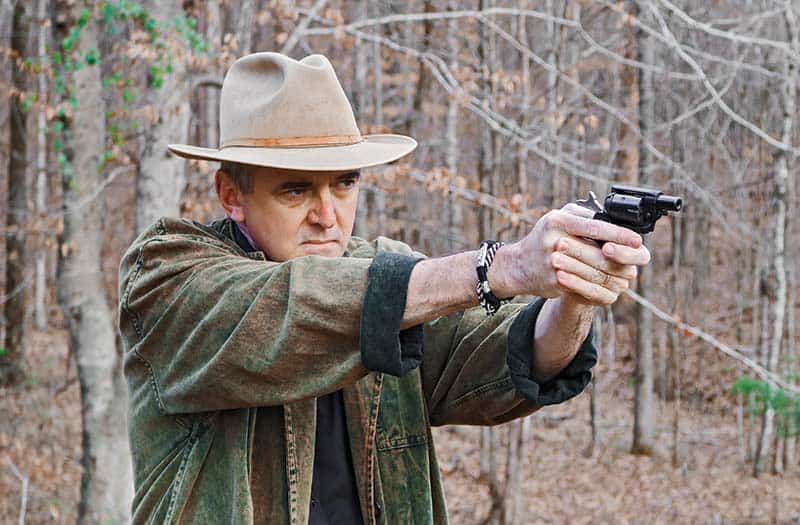
The Heritage Barkeep Boot may not be the first gun you’d choose for home
defense or concealed carry, but it would be pure murder on snakes at close range.


In 2020 Heritage Firearms introduced their Barkeep .22-caliber revolver. Heritage produces all those bargain-basement utilitarian Western-style rimfire wheelguns you see everywhere firearms are sold. The most expensive of the lot, a fascinating revolving rifle version of their basic Peacemaker design titled the Rough Rider Rancher, still sports an MSRP of only $333. The Barkeep was, until recently, the opposite lower end of the spectrum.

All Heritage revolvers sport a common action that apes the timeless Colt Peacemaker. Cast frames keep costs down and there are enough options concerning finishes, grip styles and barrel lengths to entertain the most discriminating narcissistic gun diva. The Barkeep sports either a 2″ or 3″ barrel. For those who feel 2″ might seem excessive, Heritage now offers the Heritage Barkeep Boot.


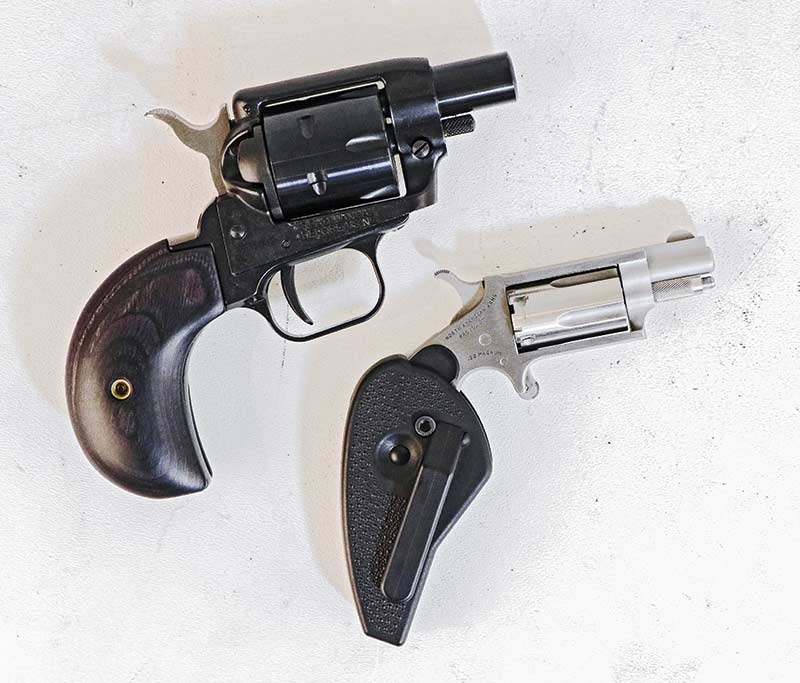
The barrel on the Heritage Barkeep Boot is indeed short, but no
shorter than the adorable little North American Arms mini-revolver (bottom).

Details


The Barkeep Boot uses the same 6-round alloy steel cylinder as the larger Heritage revolvers along with the generous Colt-style spur hammer. There is a classic bird’s head frame along with a bewildering array of grip options. The barrel is a paltry 1″ long.

The Barkeep Boot looks like a gun that had an unfortunate encounter with a meat slicer. It’s not that this barrel is simply short, it’s almost nonexistent. This whole gun will hide in the palm of your hand.

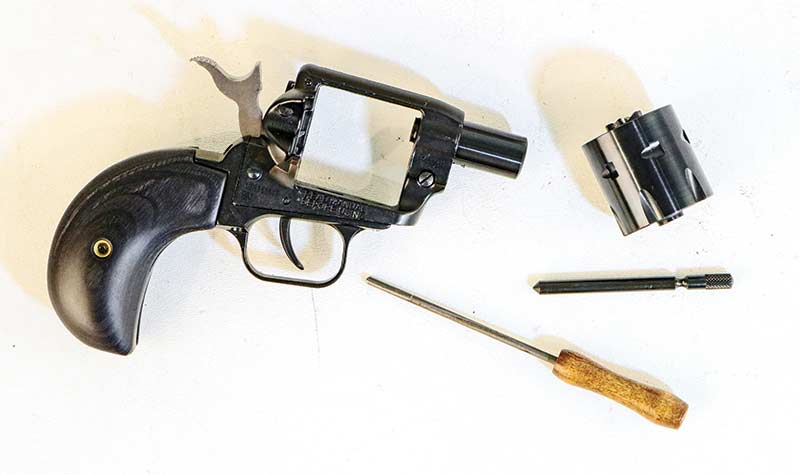
The barrel is way too short to accommodate an ejector rod, so there simply isn’t one. The gun comes with a nifty little wooden-handled tool you can use to push the empties out from the front. If you ever lose it, any handy nail would accomplish the same mission.

Takedown is the same as any comparable Colt revolver. Press the cylinder pin catch, remove the pin and drop the cylinder out to the side. The right-sided loading gate works just as you might expect. The Barkeep Boot will accept the Heritage .22 Magnum cylinder (a bargain at $30) but the stubby little tube is too short to stabilize most .22 Magnum rounds. The gun will run safely with these loads but the promotional literature warns keyholing might occur. I rather suspect the noise it would make thusly charged would be detectable by the Mars Rover as well.

There’s no room for a front sight. The top strap has the expected sighting groove but this is about it. Fret not, you’ll not be ringing steel a kilometer distant with this thing anyway.

The left side of the gun includes an additional manual safety lever ruining the trim little gun’s aesthetics. This rotating lever does indeed make the pistol safer to carry, but it looks about as natural as John Wayne in a tutu. I suspect some lawyer is responsible for it — the manual safety, not the tutu. To my knowledge John Wayne never practiced ballet.


Takedown is straightforward. The wooden-handled tool is used to press out empty cases. A nail or piece of coat hanger wire would do in a pinch.

Trigger Time


To be unrepentantly tasteless, the manual of arms is so simple even Alec Baldwin could manage it. Open the loading gate, put the hammer on half cock and fill the cylinder. Close the loading gate, point the gun at something you dislike, cock the hammer and squeeze. Repeat as necessary.

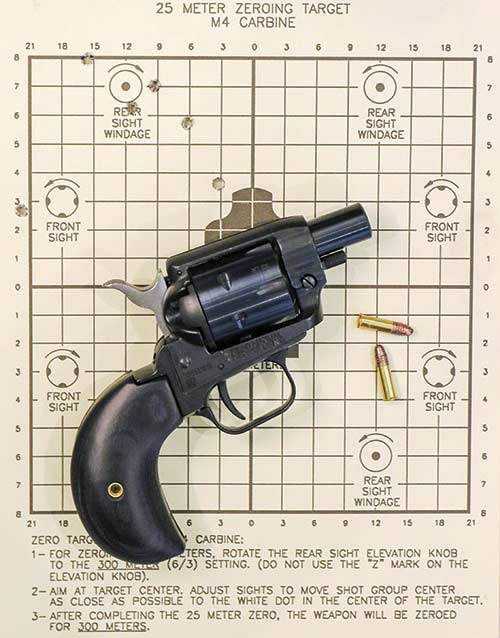
Accuracy is about what you would expect for a pistol with a 1″ barrel and no sights. Out to seven meters or so it shoots fairly straight. At 20 or more it becomes an area weapon system. However, there are lots of well-respected short-barreled pistols in the world. Your typical North American Arms mini-revolver or a Derringer of most any sort is in the same ballpark. Cut the Boot some slack.

The Barkeep Boot is indeed fun to shoot and just stupid loud. It also produces the most delightfully brisk muzzle flash when fired at dusk. With an MSRP of around 200 bucks and the cheap availability of rimfire ammo, the Boot represents an exceptionally cost-effective way to kill time on the range.


This seven-meter group was fired from a simple rest with
an aiming point in the bottom quarter of the target.

So, What’s It Good For?


Honestly, this is a good question. It really would ride in your boot if you were willing to leave the chamber under the hammer empty and didn’t wiggle around unduly. Likewise, the Boot would fit in the pocket of a decent jacket if you just didn’t want to wander about unarmed.

The real practical application I see for the Boot is as a snake gun. If you don’t live in the Deep South, just feel free to skip over to Mas Ayoob’s column now. Down here, however, we are blessed with poisonous snakes aplenty. The Boot is cheap enough to keep in your tackle box. Stoke the rascal with rat shot and it would be just the ticket for sending water moccasins to snake heaven while out drowning crickets for bream.

The Heritage Firearms Barkeep Boot is just weird enough to be cool. It’s not the gun you’d grab if you suddenly saw zombies staggering up your peaceful little cul-de-sac, but it has a legitimate place in a decent working gun collection. Cheap, quirky, cute and neat, the Barkeep Boot is indeed one nifty piece of iron.

Categories
All About Guns

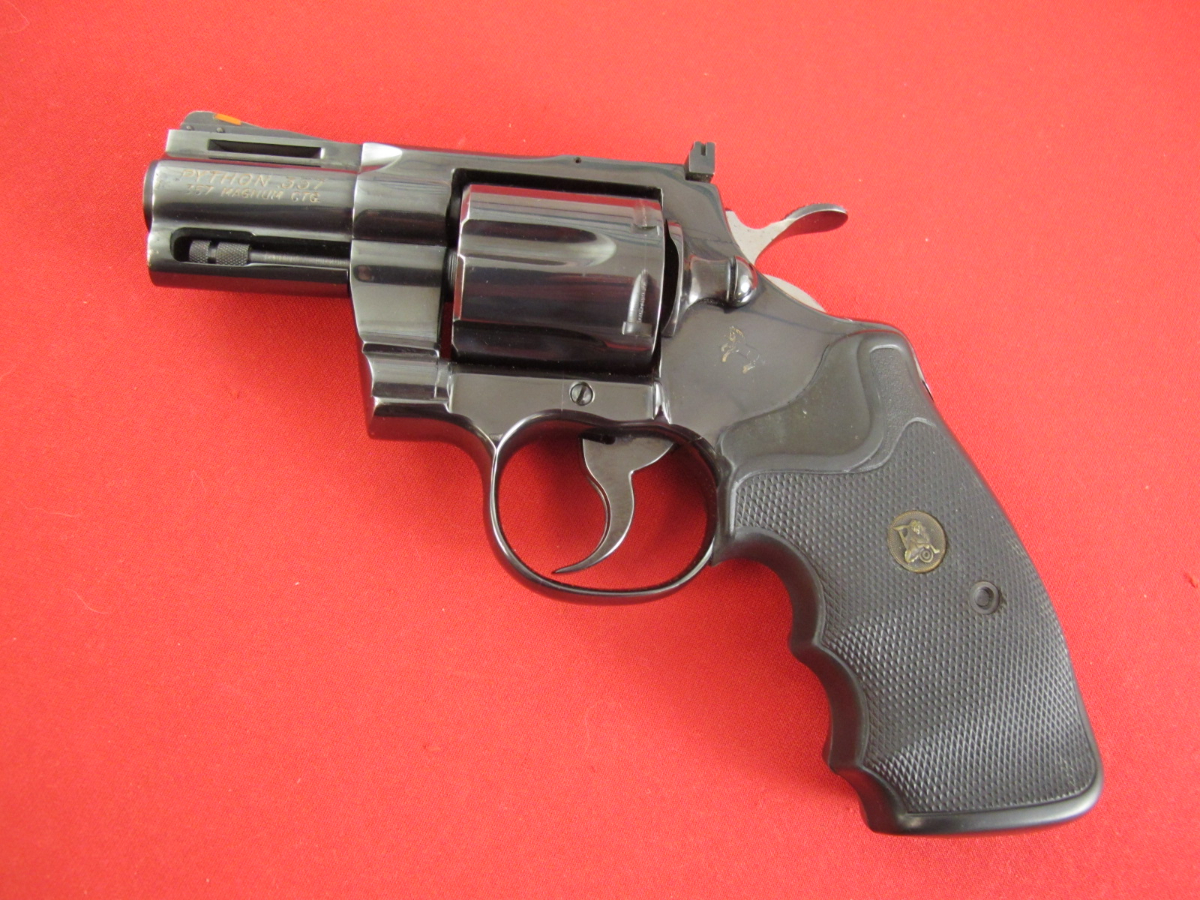
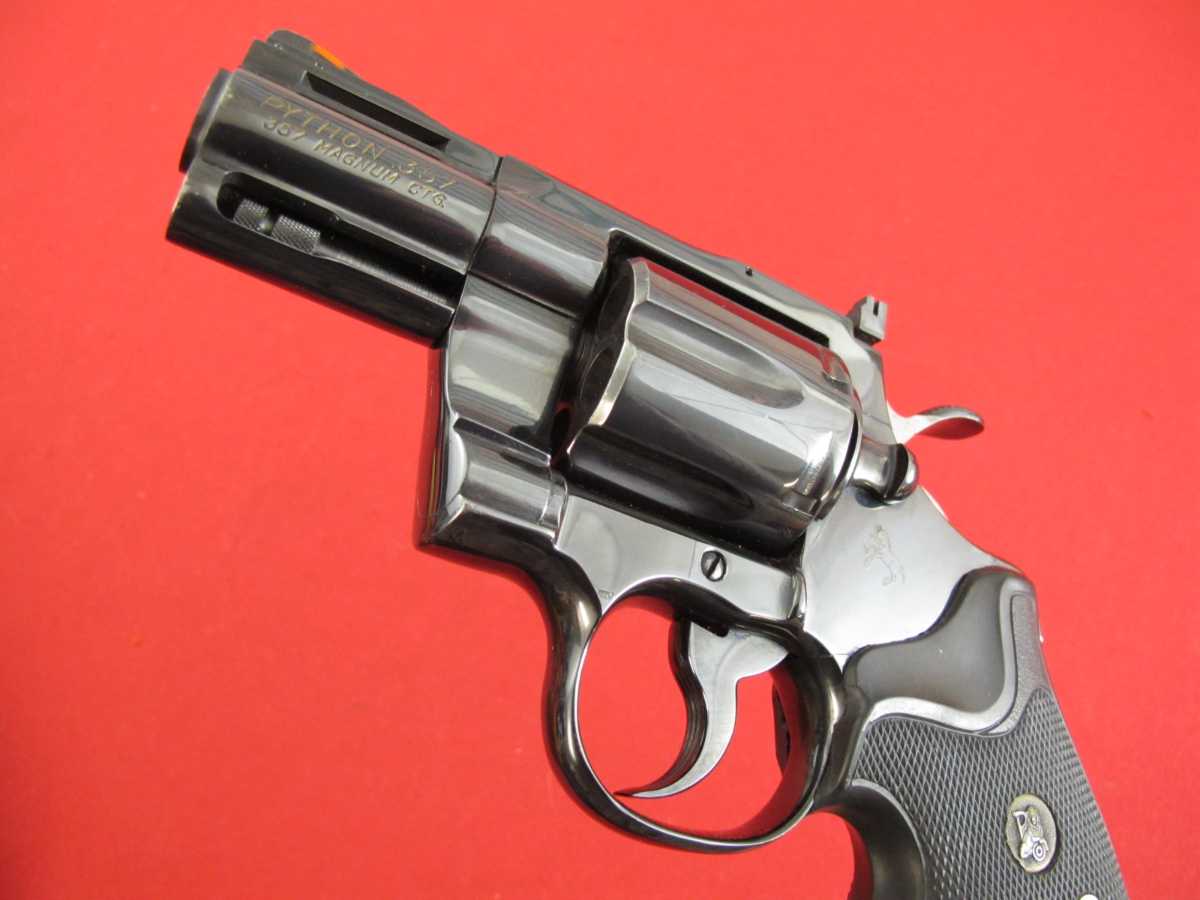
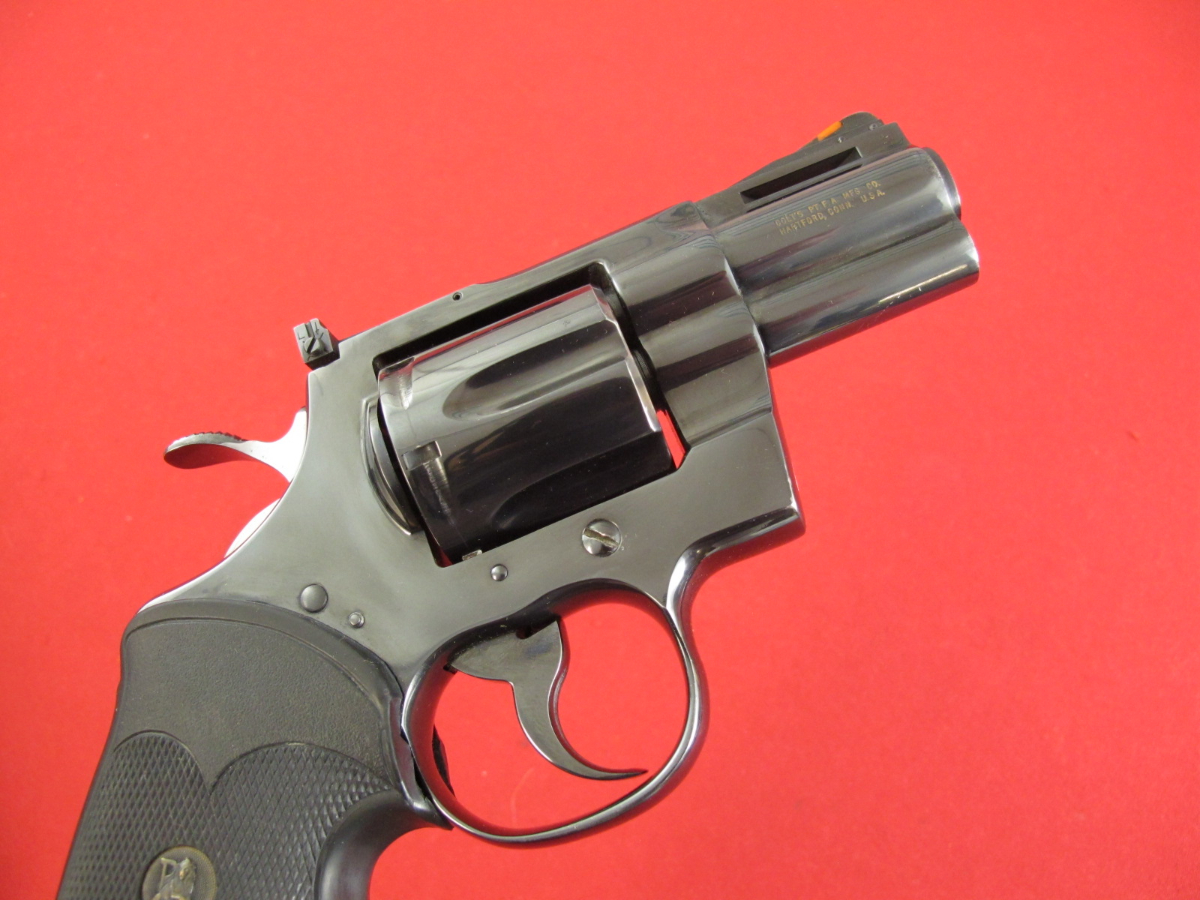
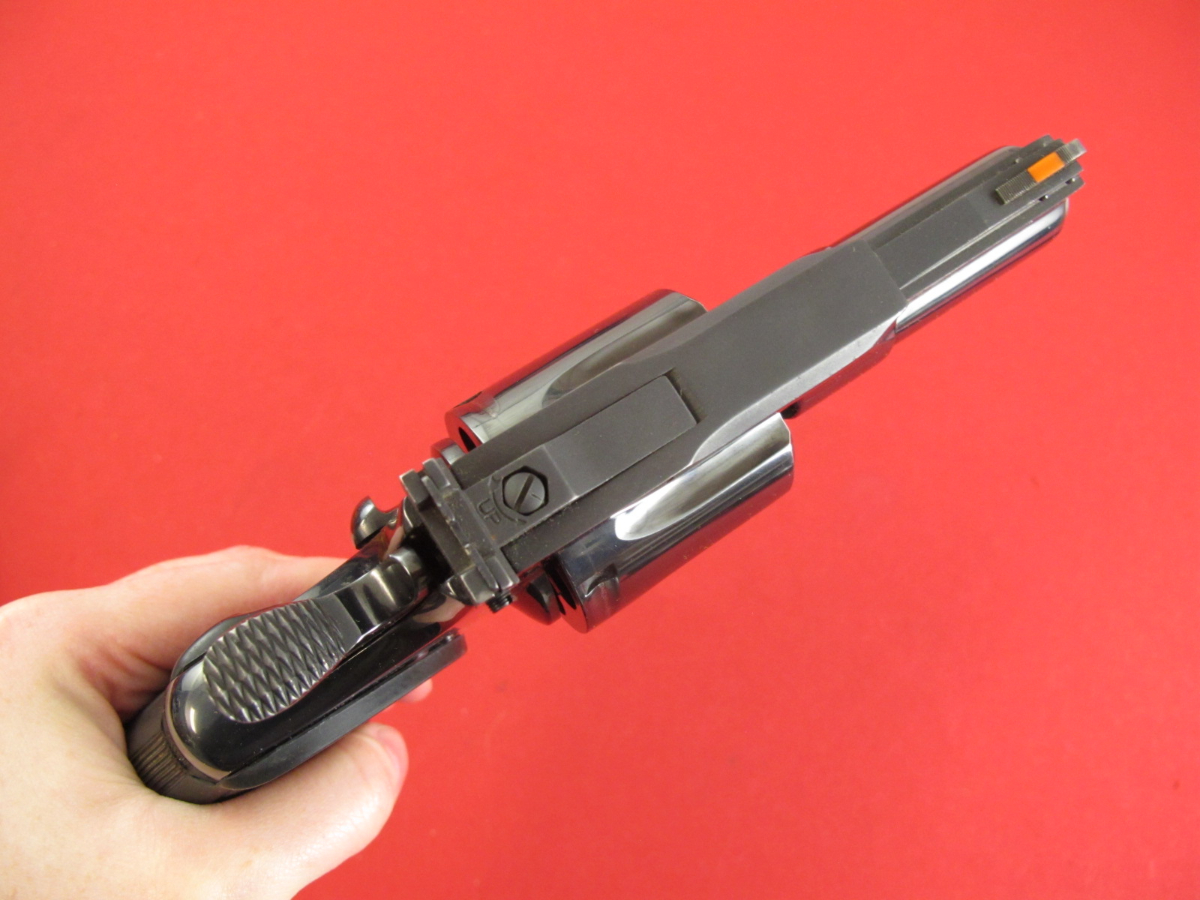
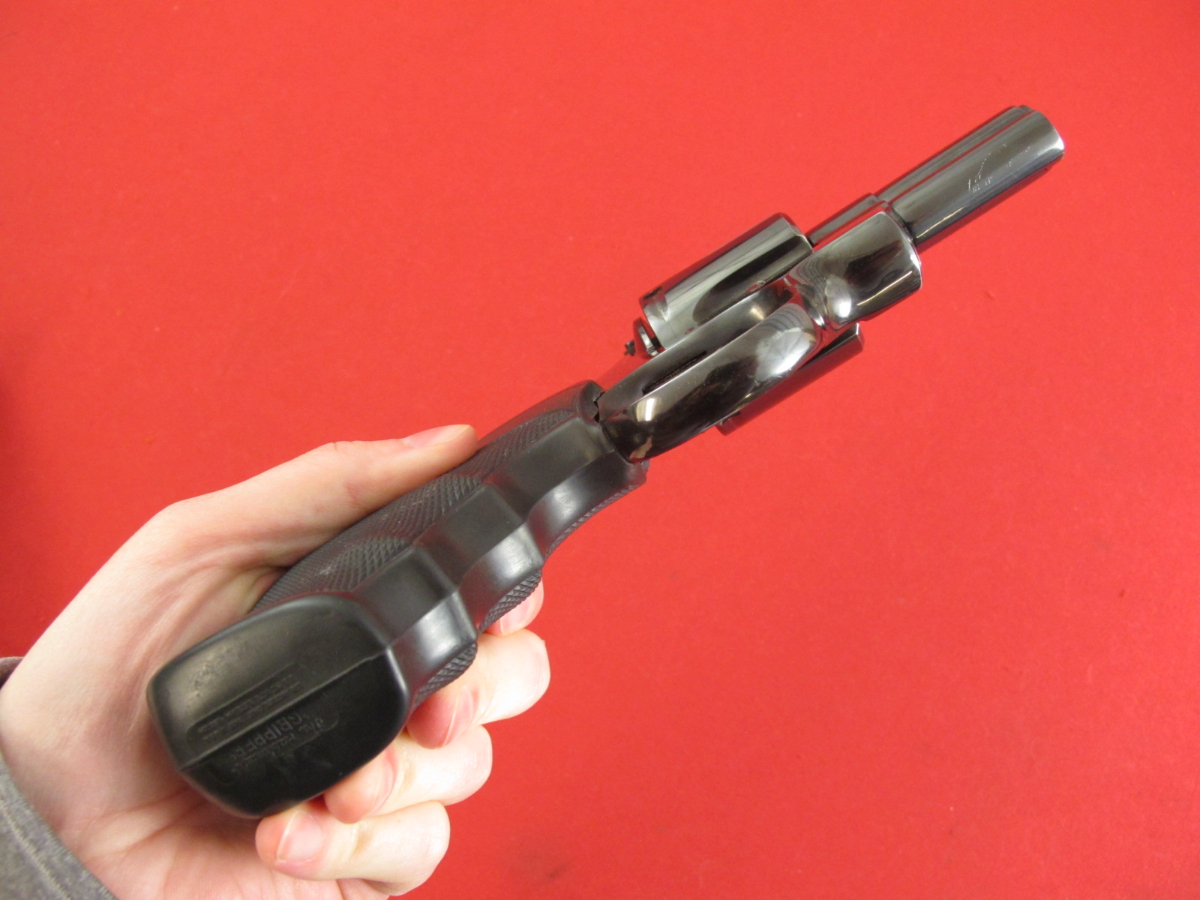
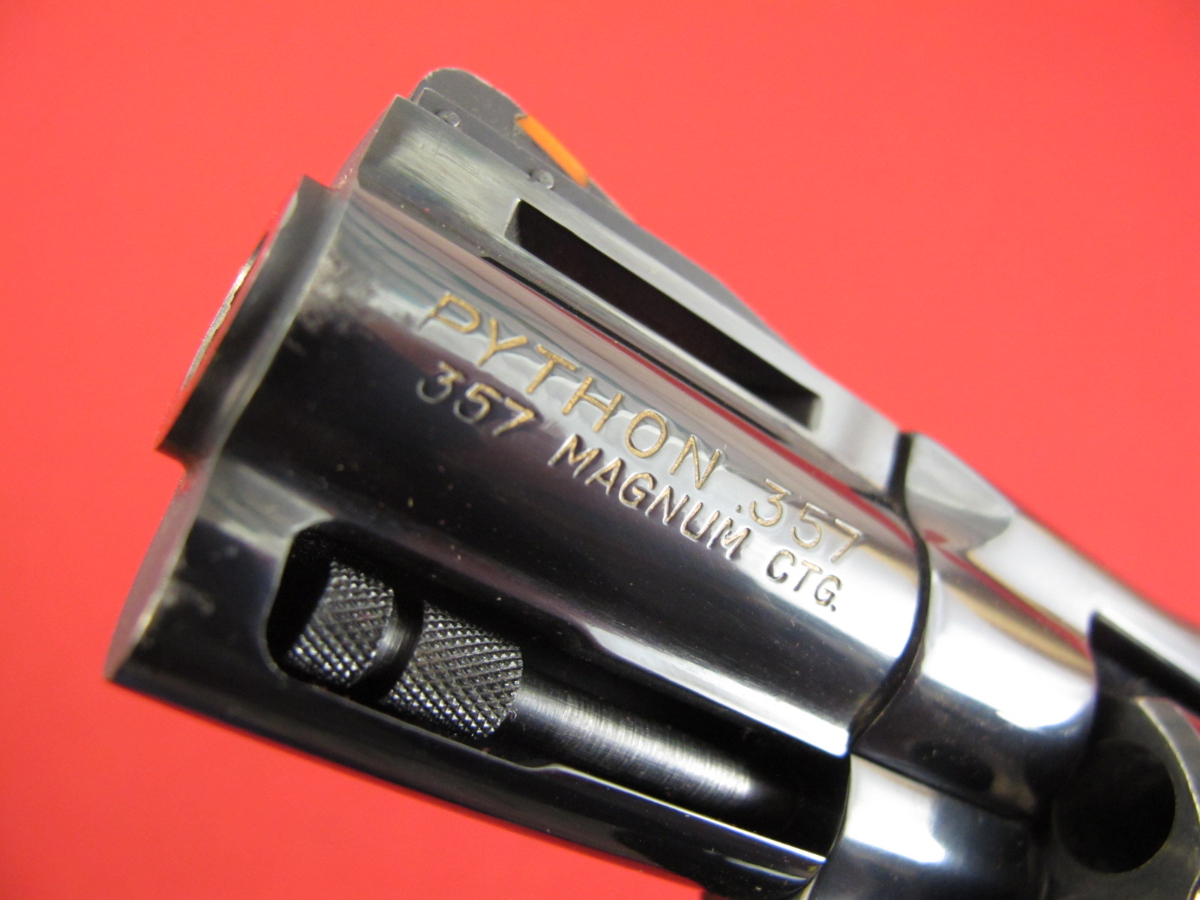
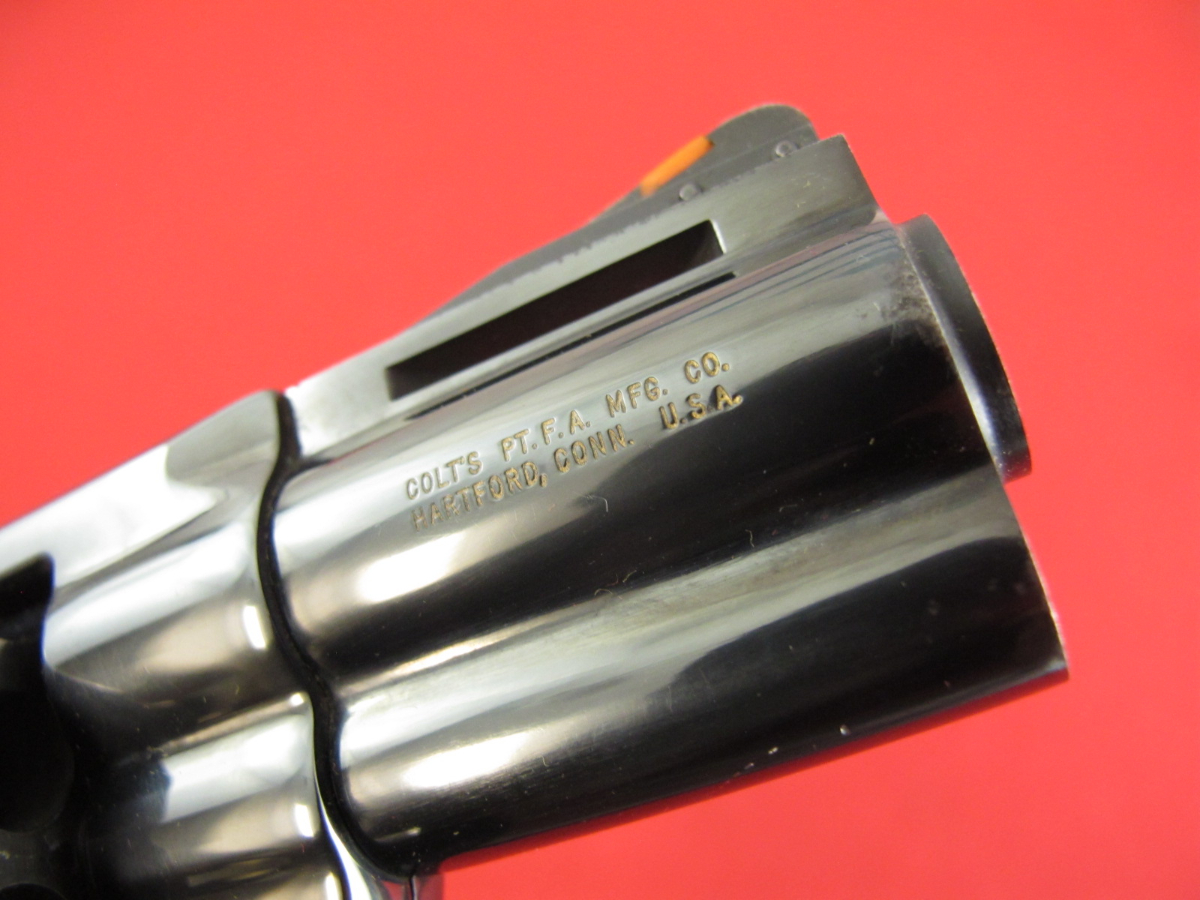
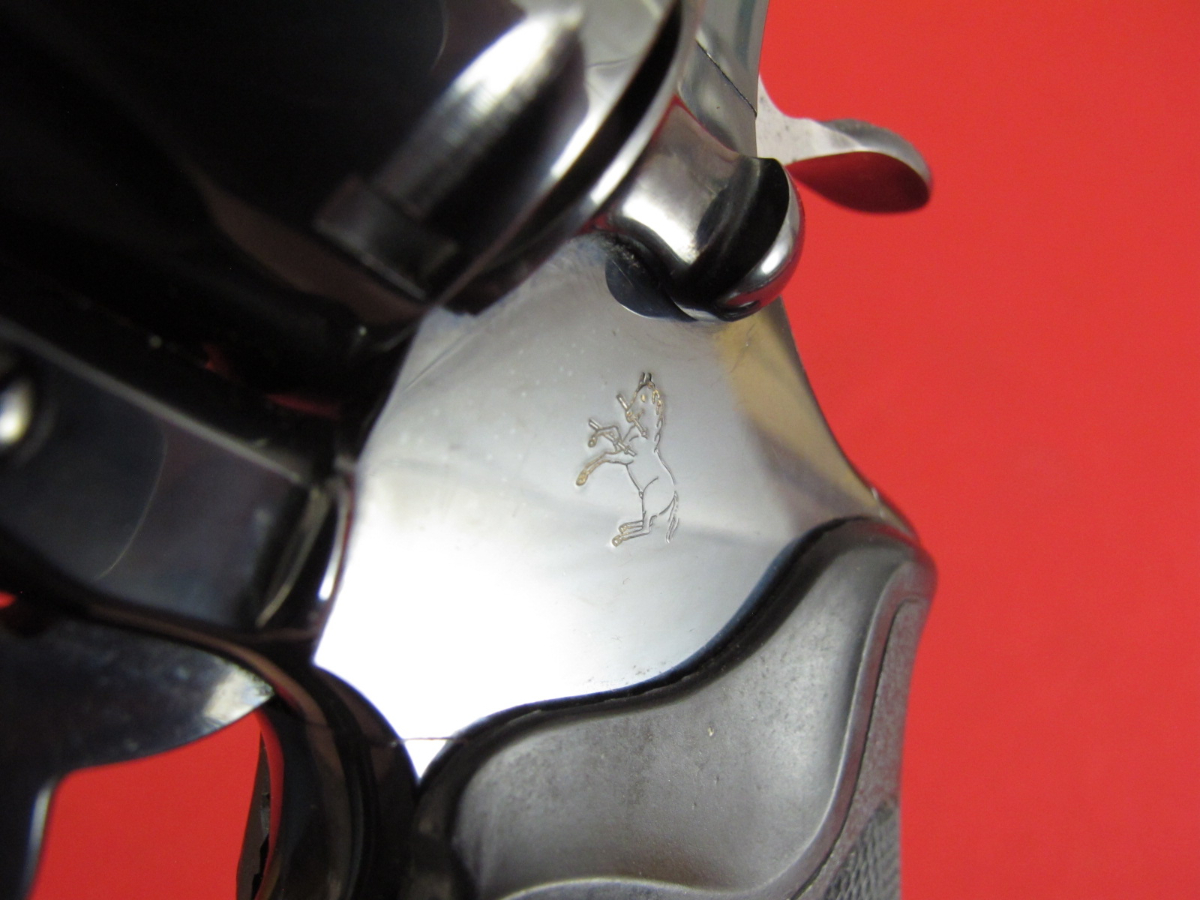
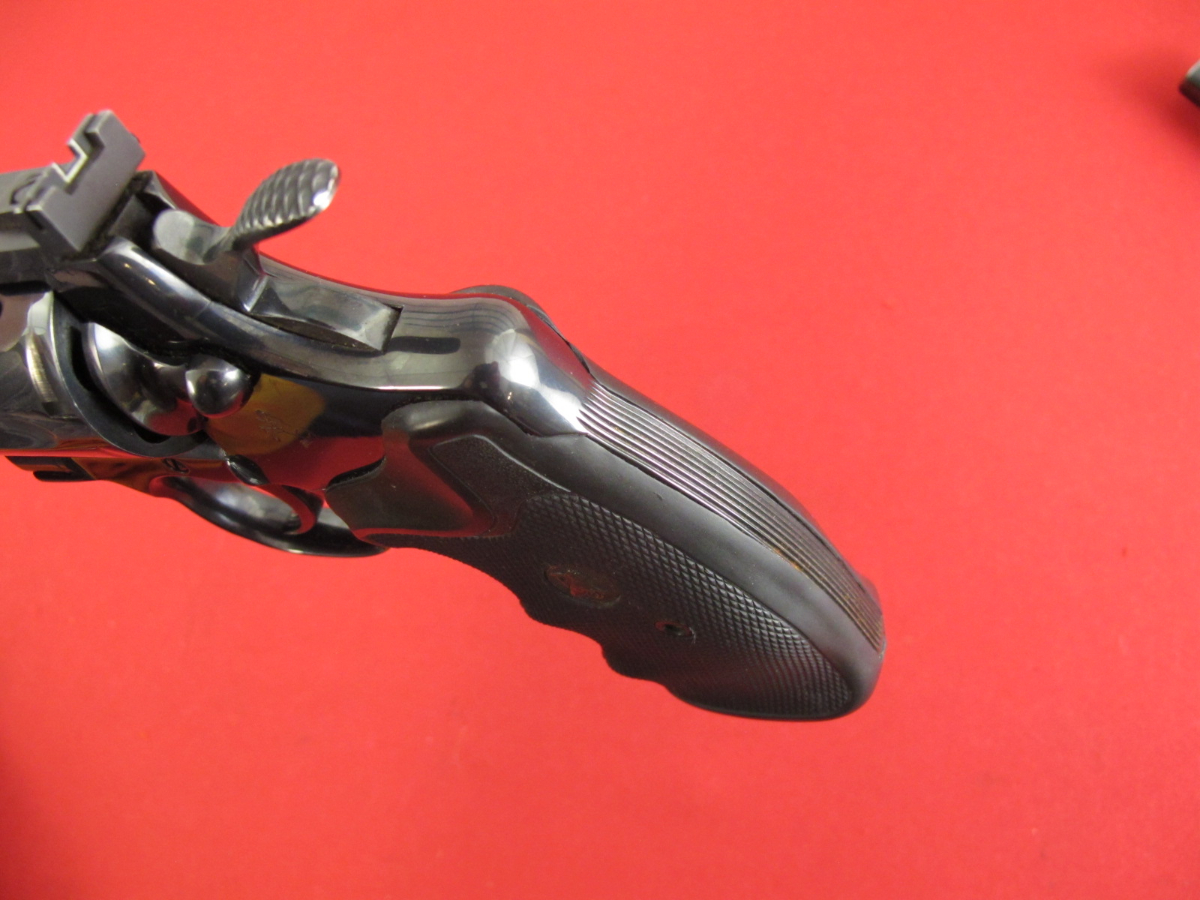
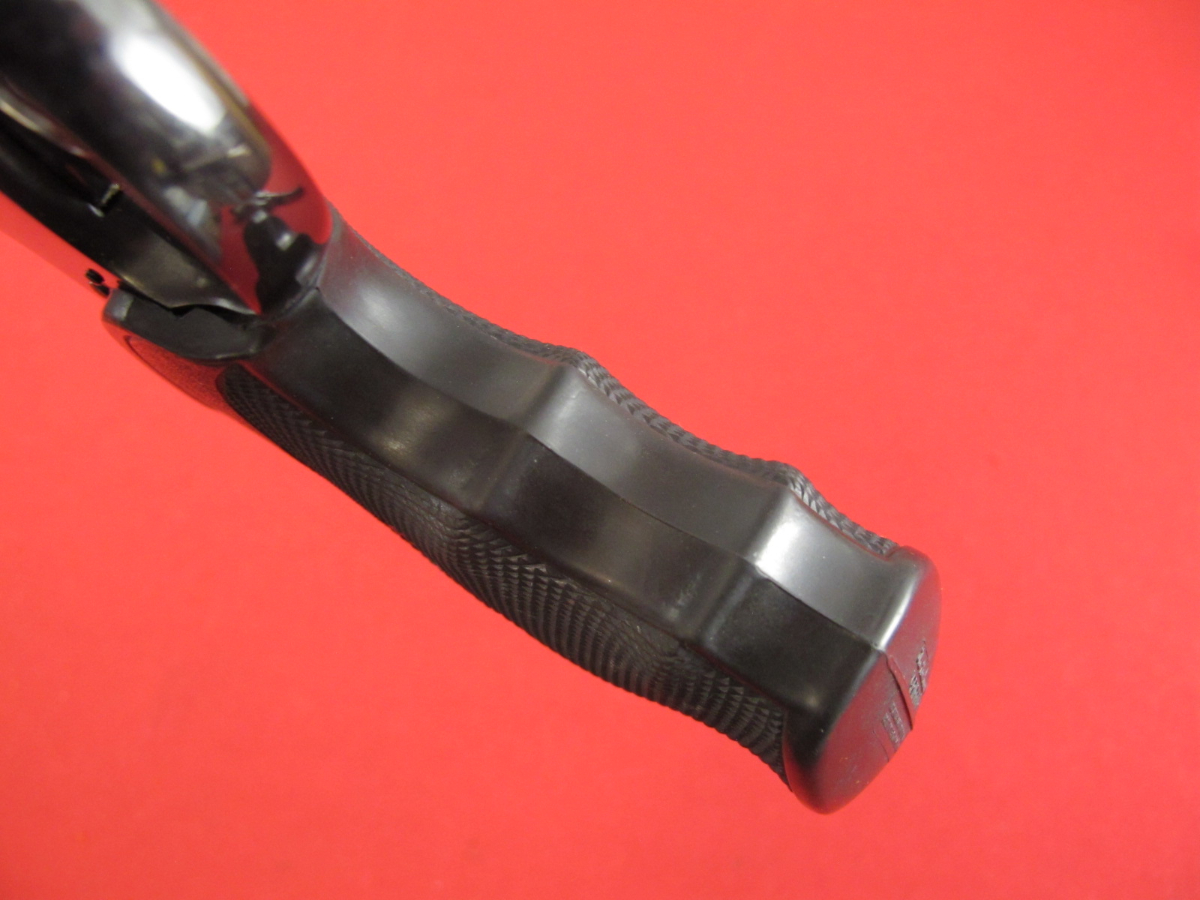
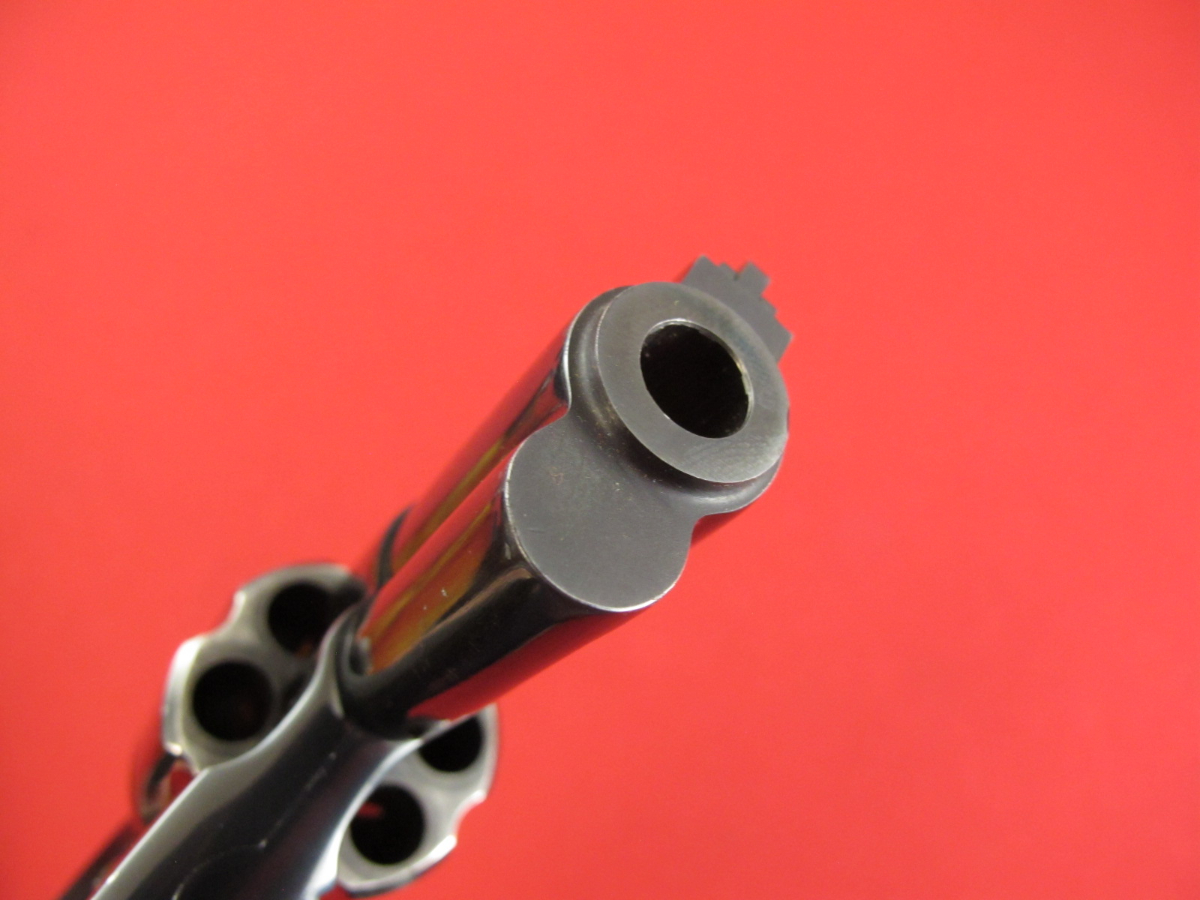
A Colt Python with a 2.5in Barrel in 357mag,

Colt Python 357mg, 2.5in VR Blue, MFG 1976, Pachmayr Grips, NO RESERVE .357 Magnum - Picture 1
Colt Python 357mg, 2.5in VR Blue, MFG 1976, Pachmayr Grips, NO RESERVE .357 Magnum - Picture 2
Colt Python 357mg, 2.5in VR Blue, MFG 1976, Pachmayr Grips, NO RESERVE .357 Magnum - Picture 3
Colt Python 357mg, 2.5in VR Blue, MFG 1976, Pachmayr Grips, NO RESERVE .357 Magnum - Picture 4
Colt Python 357mg, 2.5in VR Blue, MFG 1976, Pachmayr Grips, NO RESERVE .357 Magnum - Picture 5
Colt Python 357mg, 2.5in VR Blue, MFG 1976, Pachmayr Grips, NO RESERVE .357 Magnum - Picture 6
Colt Python 357mg, 2.5in VR Blue, MFG 1976, Pachmayr Grips, NO RESERVE .357 Magnum - Picture 7
Colt Python 357mg, 2.5in VR Blue, MFG 1976, Pachmayr Grips, NO RESERVE .357 Magnum - Picture 8
Colt Python 357mg, 2.5in VR Blue, MFG 1976, Pachmayr Grips, NO RESERVE .357 Magnum - Picture 9
Colt Python 357mg, 2.5in VR Blue, MFG 1976, Pachmayr Grips, NO RESERVE .357 Magnum - Picture 10


Categories
All About Guns War

WW1 survivors. All three original from 1918.

No photo description available.

Categories
All About Guns

Stevens Model 414 Armory Rifle

Categories
War Well I thought it was neat!

The Korean War Iron Cross

Categories
Gear & Stuff

Thompson SMG Cases: Police, FBI, and Secret Service

Categories
All About Guns Ammo

Best Big Game Cartridge: Big and Hard-Hitting, or Small and Sweet Shooting? by ARAM VON BENEDIKT

Choose your big game cartridge wisely: It can make the difference between elk steak or tag soup.

Dawn broke cold over the high country, with a threat of snow hanging in the air. Twelve cow elk grazed in a meadow at 11,500 feet, one small five-by-six bull still sleeping off his night of debauchery. I crept into place, rested my .300 Winchester Magnum atop a lightweight tripod, and squeezed the trigger. The bull never regained his feet.

Two years later I approached the same meadow, this time with a friend who carried a 6.5 Creedmoor on her shoulder and an elk tag in her pocket. Fresh elk tracks showed the way and we flushed another, bigger 5X6 bull. I cow called, my friend pressed the trigger, and another bull lay still in the snow. Both elk succumbed to a single shot. Only the duration of the kill was different. Mine died almost instantly; the other bull stayed on his feet for almost a minute, even though he was hit perfectly.

This bull never gained his feet after becoming acquainted with a 200-grain bullet from a .300 Win Mag. The .300 has long been a favored elk cartridge, and with good reason. It hits hard and penetrates deeply.

IS BIGGER BETTER?

For decades big, hard-hitting calibers held court across America’s hunting grounds. Recoil wasn’t considered the detriment it is today, indeed some shooters and hunters acclaimed hard-kicking rifles as superior, and accused those chambered in more mannerly cartridges as being sissified. This opinion was created by the projectile performance of the day. Simply put, the then-new high-velocity cartridges of the 20th century generated so much speed that traditional bullets struggled to maintain their composure when impacting heavy hide and bone. Bigger, heavier bullets had a better chance of holding together and penetrating deeply.

Modern projectile design offers fantastic accuracy and downrange terminal performance. Those elements can make a difference when you’re hunting the wide-open reaches of the west.

Today the pendulum has swung, and many hunters and shooters opine that bigger, harder-hitting calibers belong with folks of limited intelligence. According to these same hunters and shooters, anyone with enough electronic devices and high enough projectile BC (ballistic coefficient) can kill a mastodon at 1,000 yards with a 6mm Creedmoor. The one thing they do have right is that things have changed. Coming full circle, it’s all about bullet performance. Today’s premium projectiles are incredibly accurate and consistent. More to the point, they penetrate deeply and perform reliably at a wide variety of impact velocities. What this means is that today’s small, recoil-friendly calibers can kill as cleanly as yesterday’s bigger, harder-hitting calibers.

Elk are big, heavy-boned animals. Use a premium, deep-penetrating bullet. This bull was killed with a 6.5 Creedmoor, and bullet performance was good. However, the bull managed to stay on his feet for almost a minute after absorbing a perfect shoulder shot. A bigger bullet would have made quicker work.

IS SMALL AND SWEET SHOOTING BETTER?

Smaller calibers and cartridges kick less. They tend to be accurate and are certainly easier to shoot well. Loaded with a premium bullet they penetrate deeply and create a devastating wound channel. They do everything a big, hard-kicking caliber can do, right?

Wrong. There are two things they can never do as well:

Hit Hard: Two elements affect how hard a bullet impacts. The first is frontal diameter. The greater the frontal diameter, the more surface area and tissue the bullet impacts directly. Remember; surface area in a circle increases exponentially as diameter increases. The second element is weight. The heavier a projectile is the harder it hits. Consider the difference between getting hit by a pencil eraser traveling at 100 feet per second (fps), and a softball traveling the same speed. Neither will penetrate your skin, but the softball will hit much harder due to greater weight and diameter.

Penetrate Deep: In a nutshell, bigger, heavier bullets penetrate deeper than smaller, lighter projectiles of the same design. That said, modern-day bullet design has leveled the scale, to a degree. Projectiles such as Barnes’ TTSX, (a monolithic, solid copper/alloy bullet), and Federal Premium’s Terminal Ascent (built with a rapid-expanding jacketed lead front and a solid copper rear portion) maintain weight and drive deep, even in lighter, more friendly calibers.

The final word, though, is that a 200-grain bullet from a .300 Win Mag will out-penetrate a same-design 130-grain bullet sent from a 6.5 PRC.

This 147-grain “soft” bullet from a 6.5 PRC performed beautifully on this light-boned pronghorn, even with a full quartered-on shoulder shot. Don’t try it on elk, though.

THE UPSHOT

Light/sweet-shooting calibers are easier and friendlier to shoot, and now (with premium bullets) perform and penetrate admirably. Bigger calibers kick harder, but also hit harder and penetrate better. So what is best? The answer is, of course, situation and species specific. The light/sweet crowd will say, “It’s all about shot placement. Just wait for a good broadside shot and place your bullet right in the boiler room”.

To an extent that’s true. But what if your quarry never offers you a broadside shot? Let’s consider a common elk-woods scenario: You’re on a dream hunt in the Rocky Mountains. You’ve hunted hard, and you want to kill an elk in the worst way. On the last day of your hunt, you finally find a bull, a good one with heavy six-point antlers. You’re set up on a little rocky outcropping, using your pack as a dead rest. The bull is going over a thick timbered ridge and isn’t giving you a shot at all. You keep your crosshairs on him, hoping against hope that he steps into a clearing and gives you a shot. Finally, it happens; 350 yards away he stops, turns, and bugles back down the canyon. You can see his shoulder clearly between tree trunks, but he’s steeply quartered toward you. Your crosshairs are steady, your finger on the trigger. But you subscribe to the “wait till they’re broadside” strategy, and inside your rifle’s 6.5 PRC chamber rests a rapid-expansion 140-grain bullet. What do you do?

If you’re honest and ethical, you let the bull walk.

At a hard quartered-on angle there is a fortress of hide, muscle, bone, and sinew that a bullet must penetrate before reaching this elk’s vitals. You need a tough, heavy bullet for this job.

The chance that your soft, rapid-expansion bullet will make it through the many inches of hide, flesh, bone, and sinew protecting the vitals at this angle is remote. You pull that trigger, and you’re likely in for a long, heart-wrenching recovery effort. But if you continue to wait for that broadside shot the bull will likely walk over that ridge and out of your life forever.

Now, hit rewind and change your chosen bullet to a 130-grain Federal Premium Terminal Ascent. Suddenly, you’ve completely altered this scenario. You’re not going to hit a massive old bull elk very hard with a 130-grain bullet at 350 yards, but an accurate shot with this deep-penetrating bullet will kill him, even through the point of the shoulder. And that’s what has changed. That’s the new difference.

Rewind the scenario again, and change your rifle to a .300 Win Mag. Shooting a 200-grain Federal Premium Terminal Ascent bullet, you will hit that bull very hard and kill him very quickly. No doubt about it, this is the better elk round. If you can handle the kick and shoot it well, by all means use it. But if the recoil loosens your fillings and crosses your eyes every time you squeeze the trigger, you better lighten up.

This 155-grain Federal Terminal Ascent bullet from a .280 Ackley Improved was recovered under the skin on the opposite side of an eland. It passed entirely through, breaking a shoulder en route. Stellar performance.

This scenario changes dramatically, of course, if the primary species you hunt is deer, pronghorn, or sheep. For smaller, lighter boned members of the big game family the 6.5 PRC and similar cartridges are optimal. Loaded with one of the premium bullets mentioned above they will penetrate into a deer’s vitals from any angle. Recoil is civilized, and terminal performance all you will ever need. But what if you use one rifle to hunt a broad spectrum of big game – elk one week, deer the next, and moose the third?

The author with a big mule deer harvested with a rifle chambered in .280 Ackley Improved; one of his favorite all-around big game hunting calibers.

In my opinion, the ideal solution for an all-around rifle is a mid-level cartridge like the .280 Ackley Improved, .30-06 Springfield, or 7mm Remington Magnum. Recoil generated by these cartridges will not rattle your teeth or cross your eyes, yet they hit hard enough and penetrate admirably. Loaded with premium bullets, they’re cheerfully adequate for everything from coyotes to Alaskan moose.

Categories
All About Guns

Barn Find Remington Model 12 Pump Action Rifle & Disassembly

Categories
All About Guns

Winchester Model 54 Makes it to the Range

Categories
All About Guns

THOMPSON CENTER CONTENDER AS A MULTI-CALIBER BUG-OUT GUN THIS SHAPE-SHIFTING SHOOTER CAN QUICKLY ADAPT TO A WIDE RANGE OF CALIBERS AND TASKS by MIKE SEARSON

It usually starts with one of those conversations: If you could only have one gun …

Personally, I really don’t want to live in a world where I’d be restricted to one firearm. However, if you go on an extended trip off the grid in a hunting or survival situation, you probably won’t be able to tote your entire collection of firearms with you.

You can pick out a rifle and handgun for your situation, but you’ll still find gaps between the two. Your rifle may be able to reach out at long ranges and your pistol may be enough to keep you safe from two-legged predators, but will either excel at harvesting game, keeping varmints in check, or providing defense against a four-legged predator?

What if you did have one gun that could do it all, or at least get you close to that goal?

THOMPSON CENTER CONTENDER

Caliber(s)
.223 Remington, .45-70, .410 Shotgun/.45 Colt (other calibers available)

Barrel Length(s)
14 inches (other lengths available)

OAL
17.5 inches (as shown with 14-inch barrels)

Weight (Unloaded)
3.5 pounds (without optics)

Capacity
1

MSRP
Starts at $729

URL
www.tcarms.com

When it first debuted in 1967, the Thompson Center Contender was mostly a curiosity. The barrels were all below 10 inches in length, were octagonal, and represented the lower end of the power spectrum (.22 Jet, .22 LR, .38 Special, etc.). They were accurate, but not particularly useful beyond the firing line at the local outdoor range. By the 1970s, the barrels became round and were offered in rifle calibers such as .223 Remington, .30-30 Winchester, .35 Remington, and .45-70. Magnum. Handgun calibers such as .357 Magnum, .41 Magnum, .44 Magnum, .357 Maximum, and .45 Winchester Magnum followed, and the Contender was reborn as a highly accurate long-distance pistol for metallic silhouette shooting and a suitable hunting arm in either rifle or pistol configuration.

Although they were never intended or marketed as a “bug-out” gun, it’s a role at which they can excel.

Part of the beauty of a Contender is that you can change calibers in a matter of minutes. Remove the forend with a screwdriver, pop out the hinge pin, remove the barrel, install the new one, replace the hinge pin and the forend, and you’re done.

There’s no need to fit, check headspace, or set cylinder gap. Additionally, there’s no need to re-sight the Contender, as the sights or optics are mounted on the barrel. Your zero is always maintained.

Because there’s a 52-year manufacturing period with small changes here and there, some older barrel and frame combinations may require fitting. This has mostly been eliminated with the newest incarnation of the Contender known as the G2 frame, which debuted in 1998. However, even the most accurate barrels and custom frames can still be a bit tight-fitting. The biggest complaint outside of being a single-shot firearm is having to slap the barrel down to get it to break open at times with the older models. The older models do have a better trigger than the G2, however.

Rifle length barrels and a buttstock can be attached to the Contender to give the shooter a single shot rifle. We will not delve into this here, as it doesn’t fit the nature of keeping a battery of several calibers in a small package, but the option is there.

The Thompson Center Contender breaks open like an old-school single-shot shotgun.

My personal favorite combination for the Contender as a bug-out handgun is the following three 14-inch barrels: .45-70 Government, .223 Remington, and .410/.45 Colt.

Each one covers a potential need in most survival scenarios, particularly if you’re looking to hunt your own game. Most importantly, Thompson Center Arms still makes these three barrels for the G2 series.

.45-70 GOVERNMENT

When most people think of the .45-70 round, either single-shot rolling block or falling block rifles come to mind, or possibly a 19th-century lever-action carbine.

The .45-70 barrel represents the upper threshold of power for the Contender in a currently produced factory barrel. It’s capable of taking any animal in North America, from feral hogs and whitetail deer to brown bear, elk, moose, or buffalo.

Because of its power level, many shooters are put off by this caliber in a 14-inch-barreled pistol. When I bought my first Contender barrel in this caliber, the salesman at the counter called me “a f***ing nut” and said he saw someone fire it and break every bone in his hand. Like most gun shop sages, I ignored him and found the recoil somewhere between a .44 Magnum and .454 Casull.
I won’t lie; the pistol has quite a bit of kick to it. The high bore axis and the recoil from the large, heavy slow bullet push the Contender back sharply into your hand. My barrel has the factory muzzle brake installed and is topped with a Leupold extended eye relief 2x scope.

As with most Contender barrels of this length, accuracy is outstanding.

Above: The versatile Contender from top to bottom — 45-70 with 2x Leupold scope; stainless 410/45 Colt with ventilated rib and brass bead; .223 with threaded barrel and rail; wood forend and grip on a blued frame.

.223 REMINGTON

This has always been one of the most popular choices for the Contender pistol. It’s an outstanding varmint round, and if you stick to the 14-inch-barreled version, your velocity, accuracy, and power levels will be on par with what you’d get from an AR rifle with similar-length barrel.

I’ve had my barrel for many years and used it on various frames with no problems. My barrel is threaded ½x28-inch and serves well for silencer testing. If you run suppressors, the Contender makes for one of the quietest hosts out there, because it’s a completely closed action for the entire duration of the firing sequence.

Most often, I mount a red-dot sight on the rail. My barrel started life in a factory blue finish that rapidly deteriorated in service as a field gun for over 20 years. Today, it’s coated in a black Cerakote finish by Nevada Cerakote. My next stage in the world of Contenders is to have all my non-stainless barrels coated the same way.

The Contender tool, used to remove the forend, hinge pin, and barrel.

.45 COLT/.410 SHOTGUN

The .45 Colt/.410 barrel for the Contender is a bit controversial, like most firearms that fire this cartridge combination. This is because a sub-16-inch barrel needs rifling or else it’s considered an NFA item, requiring a $200 tax stamp. That rifling doesn’t help the .410 shot pattern at all. Likewise, the 3-inch chamber for the shotgun shell means the .45 Colt bullet has a significant jump in the chamber before it makes contact with the lands and grooves in the barrel. As a result, the accuracy of the .45 Colt will suffer in the Contender. This is a shame, because you can really bump up the power level of the .45 Colt in this pistol to outshine the .44 Magnum.

Still, with the factory choke and the right ammunition, the .410 shotgun round in a Contender is more than adequate for rabbit, grouse, quail, pheasant, and dove within 50 yards. It’s a good option if you find yourself in a situation where you need to forage for small game and neglected to bring a full-size shotgun.

This barrel is legal in every state except California, where a sub-18-inch barrel on any firearm capable of discharging a shotgun shell makes it a short-barreled shotgun under state law.

Above: A well-used 44 Magnum barrel, synthetic forend, and Pachmayr rubber grip can be practical accessories to have on hand.

OTHER OPTIONS

I have other barrels in various calibers, as a lifetime of shooting and hand-loading has gotten the better of me. All the Magnum handgun calibers work extremely well in a Contender. Another surprisingly good round is the old .30-30 Winchester. In the Contender, you can really tap into the accuracy inherent in this round by loading conical, pointed bullets instead of the old round-nosed ammunition designed for use in lever-action rifles.

Ironically, the .300 Whisper designed by JD Jones was not only intended for use in the AR, but in the Contender as well. This round is known today as the .300 Blackout and some folks might prefer this to the .223 or .30-30 chamberings.

Additionally, you can find sub-caliber chamber inserts that’ll allow you to fire .22 LR or .22 Magnum out of your .223 Remington barrels, for example. These inserts are cheap, and although they don’t provide the accuracy of a dedicated barrel in that caliber, they can be fun to play around with.

The .22 long rifle Contender barrels are among the most accurate you can find this side of a European Free-Pistol. I left them out as part of the bug-out barrel battery because I find a dedicated .22 semiauto or revolver more useful for the same amount of weight as the Contender barrel.

HANDLOADING

While the three barrels I specified were chosen because they fill certain needs, another factor was that there’s an abundance of off-the-shelf ammunition choices for those barrels. The real magic of the Contender platform is that you can tailor your handloads to your individual barrel to increase performance.

If you’re not already reloading ammunition, the Contender will easily get you into it as well as turn you into an accuracy nut!

MORE POWER

Thompson Center Arms offers another option if you find these choices lacking, although all three are available in this platform as well in 15-inch instead of 14-inch barrels. It’s called the Encore and was designed to allow the shooter to fire rounds such as .308 Winchester, .30-06, .460 Smith & Wesson, and in the long-gun configuration, shotgun and muzzle-loading options. Barrels don’t interchange between Contenders and Encores, but a battery of potent hunting guns can be built from a single frame.

SHOOTING THE CONTENDER

My way of shooting the Contender is with a standard two-hand grip that you’d use on any large revolver. I’ve mounted bipods on them, shot them across the hood of my truck, or from a rest built into an ATV. I’ve even laid on my back in the Creedmoor position with the side of the forend braced on the top of my boot for long range with open sights.

Some people cradle the forend in their non-shooting hand, and for a flicker in time there were companies making extremely tall scope mounts to allow the shooter to fire from the mid chest area and the ability to get closer eye relief from a more powerful scope. Those particular mounts are no longer made for good reason.

Ignore the forend — it’s there to look nice and protect the hinge pin. You don’t and probably shouldn’t use it for shooting unless you installed a stud to mount a bipod or are using a rest of some sort.

PRICING

The Contender used to be a more affordable firearm in the $400 price range, and the average price of a barrel would run from $50 to $199 with used ones at the lower end of this spectrum. The current MSRP on a new G2 Contender pistol frame runs from $523 for walnut furniture and blue finish to $548 for stainless and synthetic. New pistol barrels are about $229 each. A complete handgun in one caliber starts at $729 from the factory.

IN SUMMARY

I wouldn’t recommend a Contender as an “only gun,” although some old-school preppers have used one successfully as such. I think they have a place as a hunting and varmint gun, especially when keeping your loadout on the lighter side. The single-barrel lockup and single-action trigger make them accurate and very reliable. Their size and weight make them easily portable, whether you add sling swivels to the grip and forend or keep them in a holster of some type on the hip or across the chest. Other firearms may come and go from my collection, but I’ll always make room for a Contender (or two).