
Month: October 2022
Categories
Someday…………


We all have our darlings. You know, those cartridges that our fathers, uncles, grandfathers and heroes have used, and have been written about for decades. But what about some of the former greats that seem to have been forgotten? Someone must champion the unsung heroes. I volunteer to be that someone.
While the .30-’06, .270 Win. and .375 H&H Mag. are favorites, I have a flair for the obscure or obsolete—those cartridges that perform well but are becoming increasingly rare. Here’s my list of the top five most underratedcartridges.
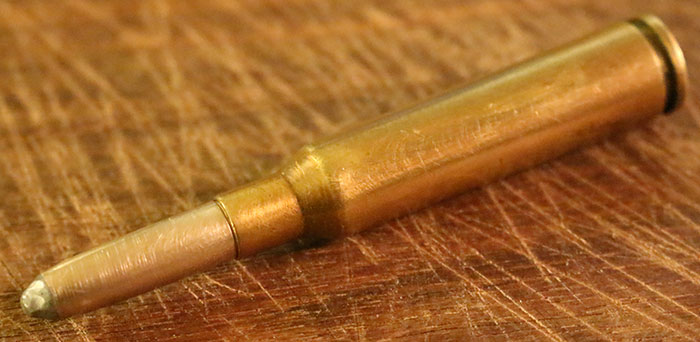
.30/40 Krag
America’s love affair with .30-caliber cartridges started right here, with the Krag. Until the Aught-Six tackled the shooting world, the Krag wore the .30-caliber crown. What few shooters realize is the Krag still makes for a great hunting rifle. Its performance falls smack in the middle of the 30/30 Win. and the .30-’06, and that’s not a bad place to be. It makes a great choice as an all-around North American rifle cartridge and is perfect for African plains game. Plus, it comes in the uber-cool Winchester 1895 lever-action and Ruger No. 3 falling-block, so you can be doubly stylish.
.257 Roberts
Necking the 7x57mm Mauser down to hold .257-inch-diameter bullets was a fine idea, and it produced one of the most useable quarter-bore rifles around. Velocities are better than the .250-3000Savage, yet not quite as hot as the .25-06 Remington or .257Weatherby, giving shooters a cartridge that will perform well with standard cup-and-core bullets but still deliver the flat trajectories we like. The “Bob,” as its aficionados refer to it, is a light-recoiling option that is just about perfect for deer and antelope anywhere. The fact that the Winchester Model 70 and Ruger Model 77 both have models chambered for it is just a bonus.
6.5x55mm Swedish Mauser
To me, there is something magical about 6.5mm bullets. Long and lean, with a high ballistic coefficient that rivals a .30-caliber bullet’s wind-bucking ability, they are the stuff of legend. From Scandinavia to South Africa, many hunters have relied on the 6.5s. The Swede dates back to the late 19th century, and the moderate velocity of that time period is part of the successful equation. I like the 160-grain round-nose bullets at around 2,400 fps (an almost magical velocity when it comes to bullet performance), as they will handle both deer and black bear here in my native New York quite well. Look long and hard at the Norma Oryx 156-grain load at 2,560 fps, which will handle everything up to moose and elk.
9.3x62mm Mauser
Metric cartridges have long perplexed American shooters, but this one needs to be considered. The 9.3s shoot .366-inch-diameter bullets, and shoot them well. The 9.3×62 has a case based on the .30-’06, and it is to the .366 bore what the .35 Whelen is to the .35 bore. But, unlike the Whelen, the 9.3×62 shoots 286- and 300-grain bullets to speeds adequate for all game, save Cape buffalo and elephant, and in some African countries it is legal for those as well. The lighter 250-grain bullets make a superb choice for elk and moose, as well as bears and hogs. Oh, and all this performance comes in a standard long-action rifle.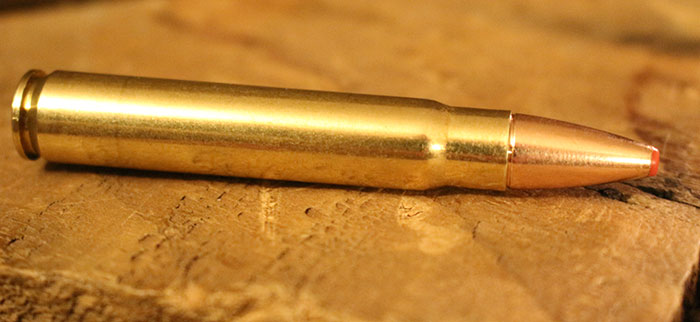
.218 Bee
Finishing up with the smallest of the lot, the .218 Bee is a rimmed varmint cartridge that was originally chambered in the Winchester Model 65 lever gun and suffered from a lack of accuracy in that rifle. That accuracy problem didn’t show itself in the Ruger No. 1 that I carried for a couple of years as 3/4-inch groups at 100 yards weren’t a problem, recoil was nearly nonexistent, and the report was a pleasure compared to my .22-250. The Bee will push 45-grain pills to 2,700 fps, and that makes it a perfect varmint rifle out to 250 yards. The Bee runs on very little powder and does the job well, though the coyotes weren’t big fans!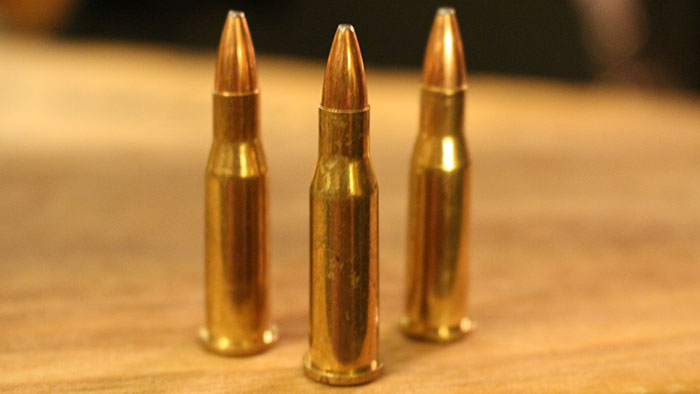
If you’re after something a bit different, that will still be totally useful, give these cartridges a look, and have some fun!
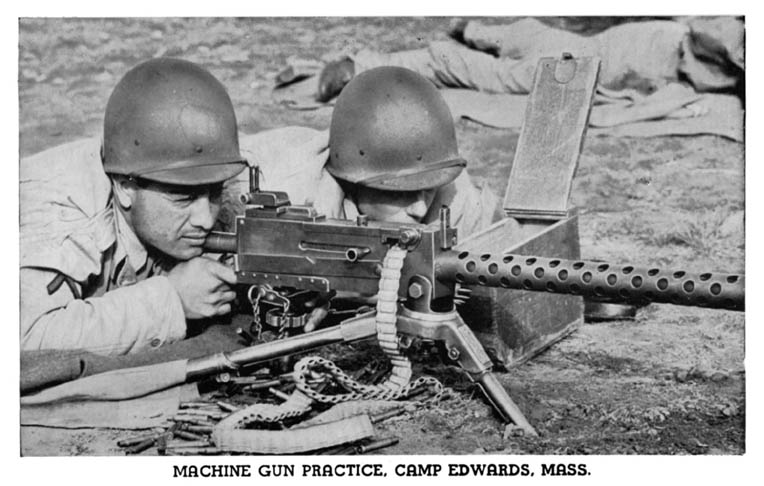
John Browning designed a ton of guns the U.S. military has used and still use to this day. The list includes the M1911 handguns, the M1897 Trench Gun, the M2 Machine gun, and the subject of today’s article, the M1919 machine gun.
In World War I the M1917 came out of Browning’s mind and into the hands of American troops as the .30-06 Springfield heavy machine gun.
The M1919 modernized the M1917 a bit and ditched the famed water jacket for an air-cooled barrel. Originally, the Army wanted something easier to use on tanks but the platforms soon grew into a family of weapons, eventually making the M1919 one of the longest-serving machine guns in U.S. history. As the name implies, the M1919 came to be in—you guessed it—1919.
Related: 5 John Browning firearm designs that changed the world
Inside the M1919 Machine Gun
The M1919 machine gun utilized the Browning-created short recoil system. In a short recoil system, the bolt and barrel move rearward under the force of recoil. After a bit of movement, the barrel stops moving, and the bolt continues to cycle rearward. That rearward motion extracts and ejects the empty case and returns forward to load, fire, and complete the cycle of operations.
A short recoil system gave the gun a very reliable means of cycling rounds while remaining fairly simple in operation. This style of system is extremely popular in handguns to this day and has seen success in machine guns and even a few rifles. The downside of the short recoil system is a slight reduction in accuracy. In handguns and machine guns, this doesn’t cause significant issues.
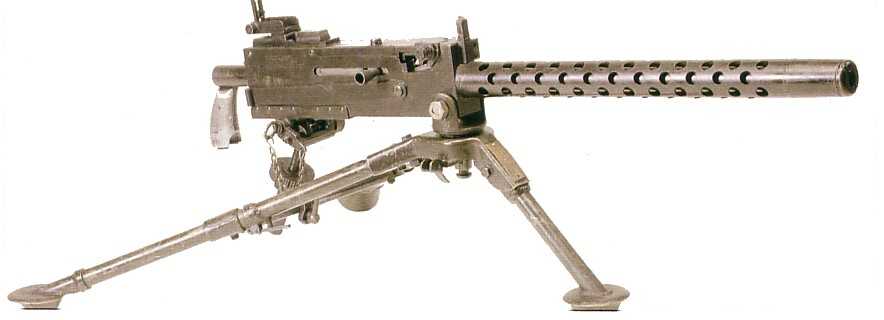
Unlike a lot of modern machine guns, the M1919 utilized a closed bolt system. Open bolts are preferred for machine guns due to heat issues. Machine guns get very hot when fired, especially the barrel and chamber. With a closed bolt system, a round sits in the chamber until the trigger is pulled, but with an open bolt system, the round sits on the belt.
If a round sits in a hot chamber, it can ‘cook off’ and accidentally fire. The benefits of a closed bolt system are primarily reliability.
The biggest change from the M1917 was the loss of the water jacket. This lightened the weapon significantly and allowed for better maneuverability, especially on vehicles. The heavy and bulky water jacket made the gun harder to use on tanks and other vehicles. The M1919 didn’t fully replace the M1917, and the two sister machine guns remained in service alongside the M1919 for some time.
Related: M1917 Enfield: The forgotten rifle that won World War One
The big, heavy M1919
There are more than half a dozen variants of the M1919, and the specifications do vary between them, but this is a general idea of the size and weight of the gun. The M1919 itself weighed around 30 pounds; again, variants would change the weight slightly. Most models of the weapon used the M2 tripod, which added another 14 pounds.

The average firing rate was a very controllable 400-600 rounds per minute with most models, although aircraft models went up to 1,500 rounds per minute. The weapon originally fed from a cloth belt but would later use a metal disintegrating belt known as the M1 Link.
Related: These are the longest serving weapons in the US arsenal
M1919 Variants
There were six total variants of the M1919 used by ground forces. A big focus went to lightening the weapon and making it easier to use for infantry forces with the A1 series. They experimented with shortening and lightening the barrel as well.
Models like the A2 and later A5/M37 were aimed at calvary and vehicular mounted forces, so it allowed for vehicle mounting. The A4 and A6 were aimed at providing a lighter support weapon for infantry forces. They were specifically taking the gun from a company and platoon support weapon and making it a squad support weapon.
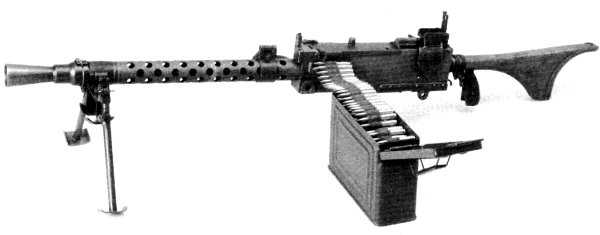
The M19191A6, in particular, wanted to bring automatic fire support to the squad level. Previously the BAR held that role, but it was found lacking. As a rifle, it had limited capacity and couldn’t provide enough accurate fire support.
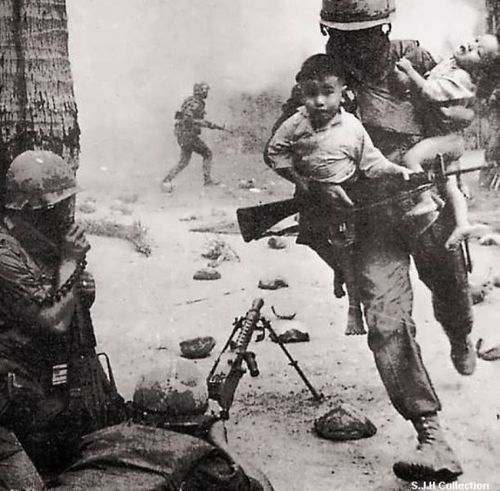
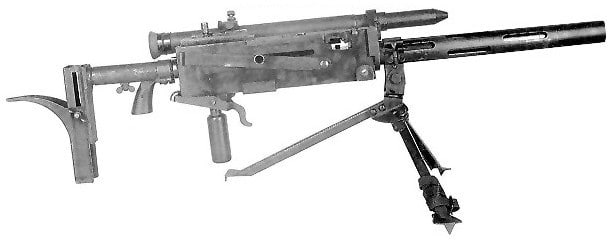
Also, the Stinger bears mentioning. Marines in the Pacific took .30 caliber AN/M2 aircraft machine guns and fitted them with stocks, special triggers, and bipods. The 1,500 RPM fire rate provided a massive amount of firepower per trigger pull. Only a few were made before the war ended and interest in the development dried up.
Related: NGSW: Pros and cons of the Next Generation Squad Weapon entries
The M1919 at war
These guns were crew-served powerhouses that originally required a five-man team to employ. This included a squad leader, gunner, A-gunner (assistant gunner), and two ammo carriers. When the weapon saw employment as a squad support tool, the team shrunk to what was typically a gunner, and A-Gunner with ammo spread out among the squad.

The M1919 performed admirably and became well known for its reliability. The weapon could dispense a lot of lead and run with standard maintenance. A big issue found as the war proceeded was simply weight, bulk, and an awkward barrel system. Swapping barrels required the user to gut the gun and pull out the bolt and backplate, so a quick change in the middle of a fight just wasn’t an option.
The M1919A6 attempted to make swapping barrels easier by doing it from the front, but still, it was awkward and not very fast. Modern machine guns use quick-change barrels to allow for a high rate of sustained fire for an extended period of time without damaging the guns.
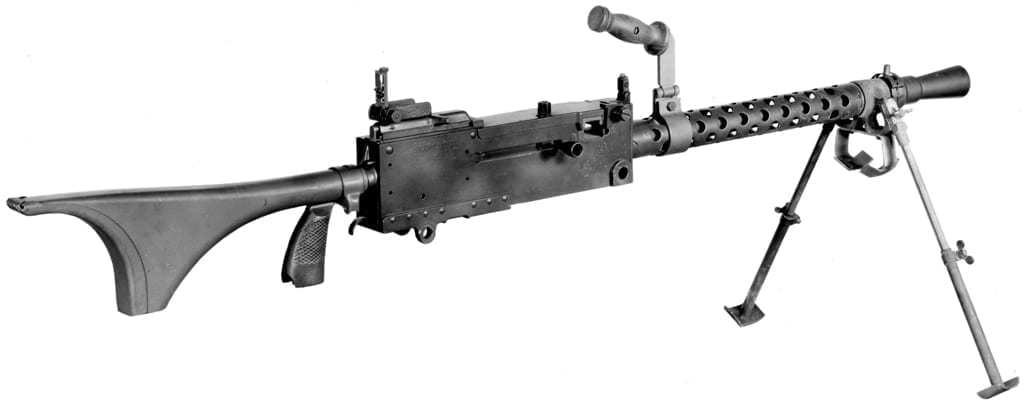
The gun performed well in the small skirmishes before and during World War 2, as well as in Korea, and believe it or not, all the way into Vietnam. The Navy created the Mk 21 Mod 0 for riverine operations, which was an M1919 converted to 7.62 NATO and fed via upside-down M-13 link belts. It was left-hand feed only.

Marines famously do more with less, and they carried the M1919A6 into the Vietnam war early on. Although, at the time, the M60 was slowly replacing it. Vietnam would be the last war American forces would use the M1919 in.
However, to this day, variants of the M1919 actually still see service around the world, especially with nations that have a limited defense budget.
Brrrrppp
The M1919 machine gun served for so long thanks to its rather simple and reliable design. These days, gas-operated machine guns are the modern support weapons, but in 1917 and 1919, that wasn’t an option. The technical know-how and machining technology were still difficult to come by, and needless to say, weren’t cheap. The M1919 met the needs of these troops, served its country with distinction and just wouldn’t stop.

Travis Pike
.png)
Categories