.gif)

.gif)
.gif)
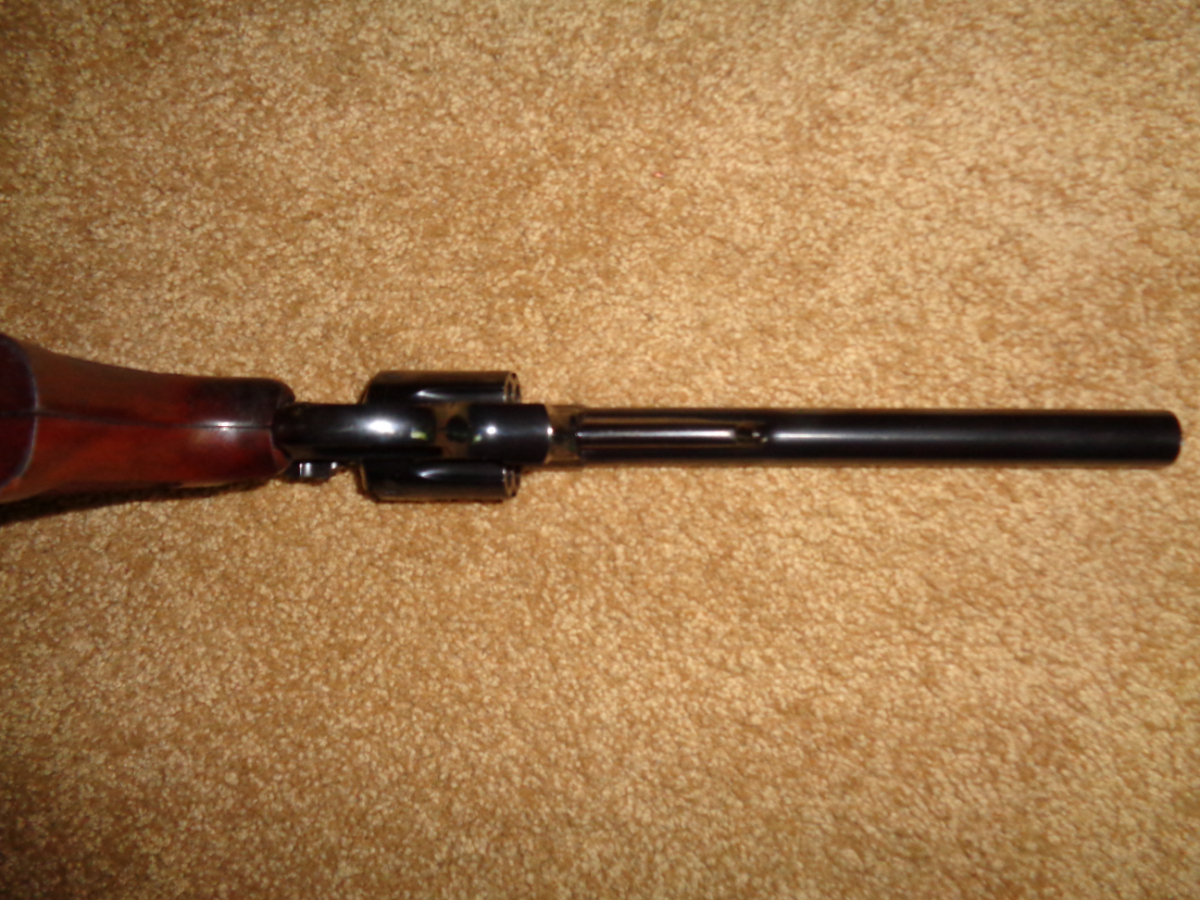
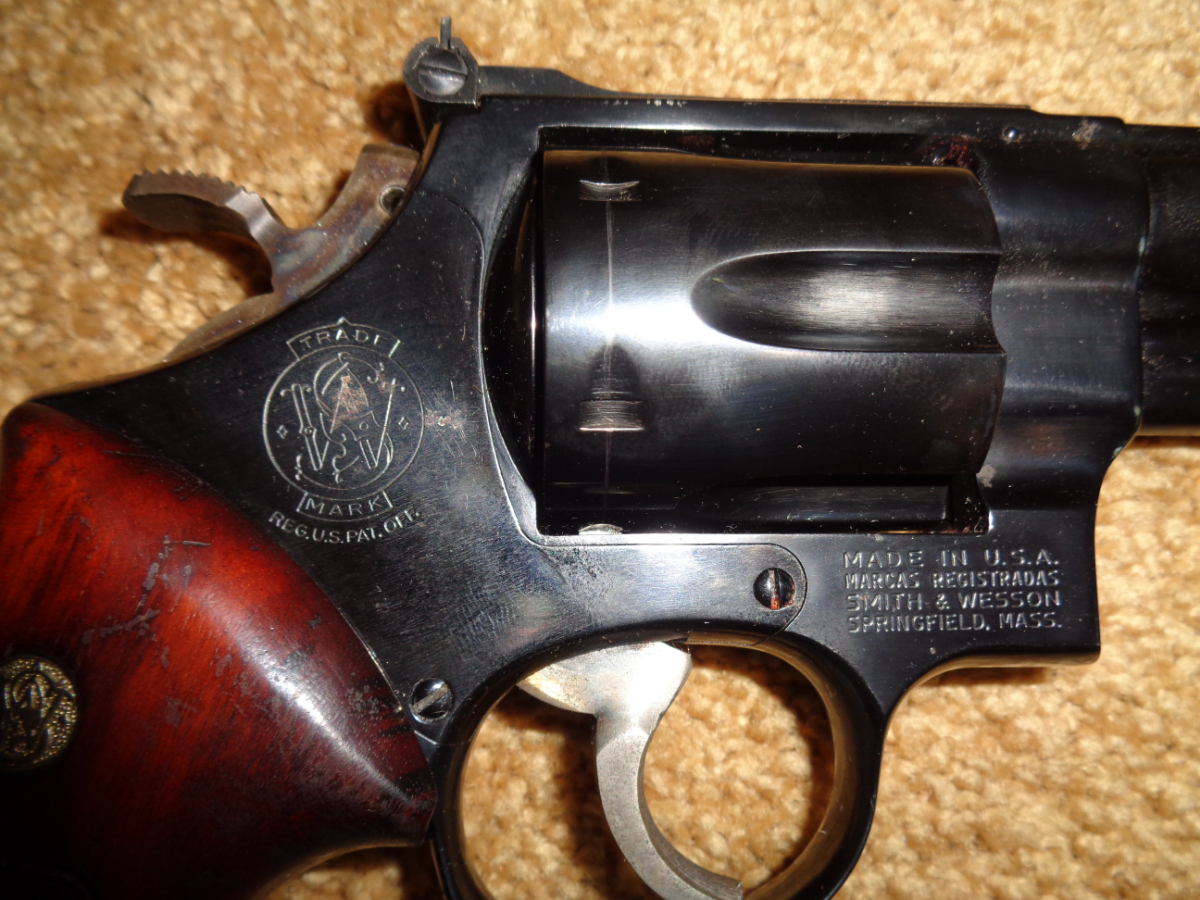
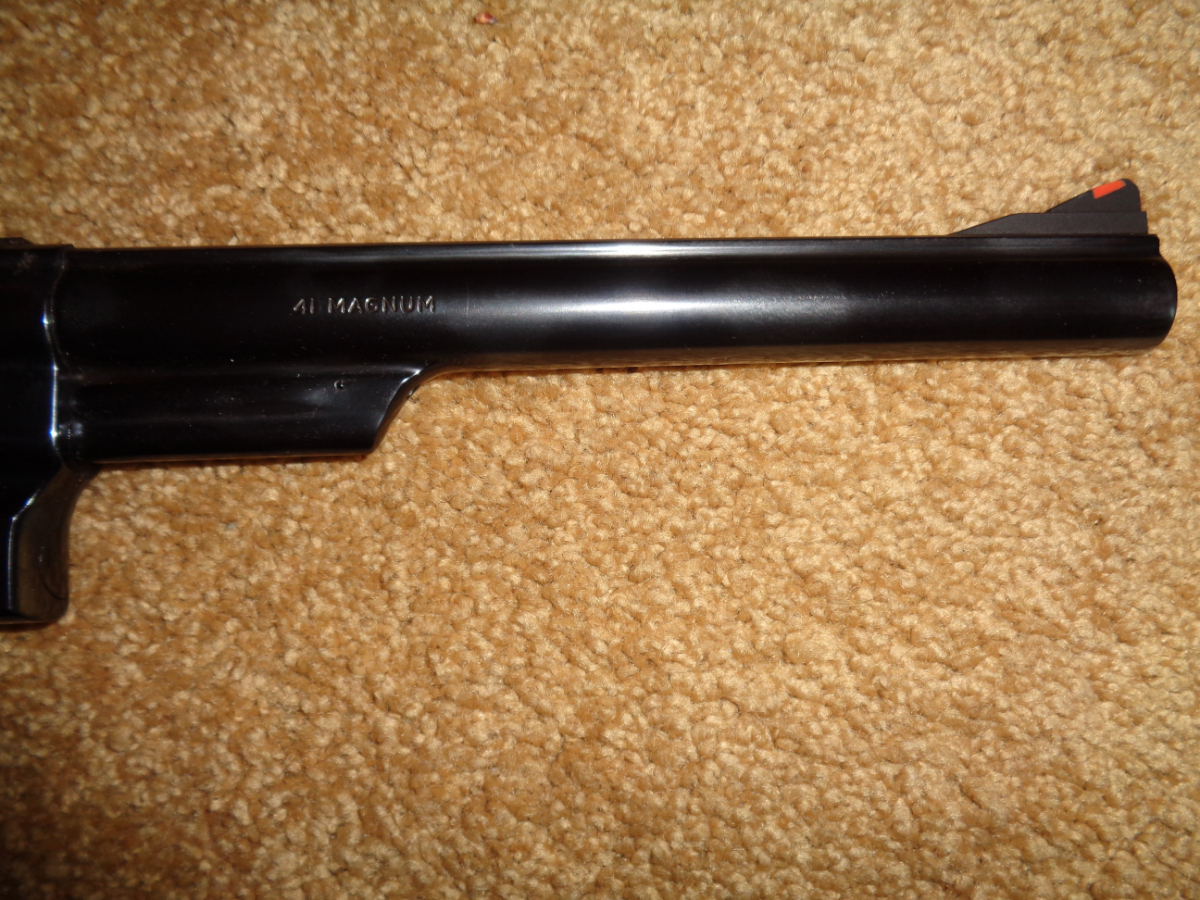
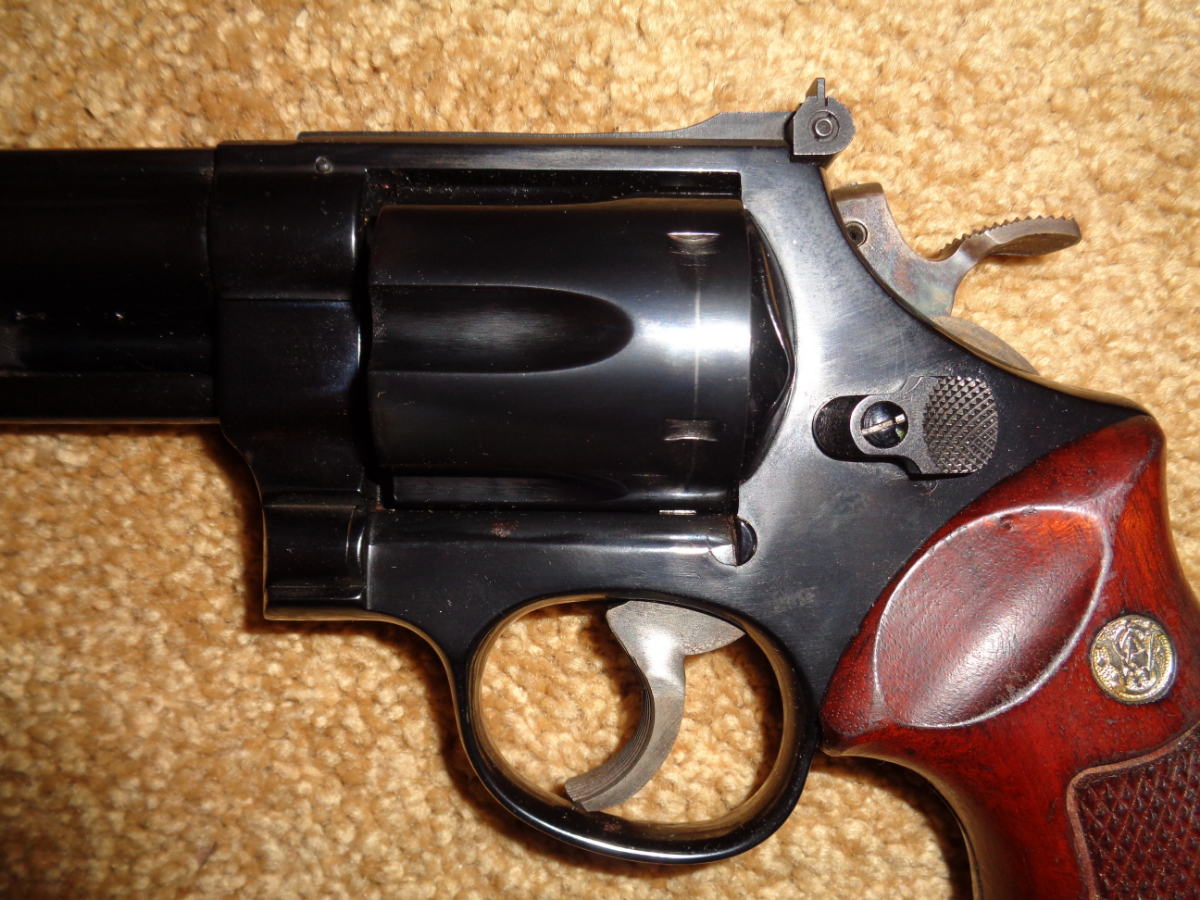

The man lived on his rural farm on the outskirts of his tiny Mississippi town. His yard was meticulously maintained, and Old Glory fluttered quietly in the breeze from an imposing flagpole set in concrete. The flag didn’t stay out overnight…ever. It had been raised and lowered every day on this pole for more than half a century.

He was the very image of a good Christian man of character. He had served as a deacon in his church and teased a modest living out of the farmland that surrounded his modest three-bedroom home. He had raised his kids well and selflessly helped his neighbors. Now well into his eighties, he had agreed to spend an afternoon with me and my young son.

The man was soft-spoken as we nursed our iced tea and soaked up every word. He looked off into nothing as his mind wandered back to very different times. Though we sat in peace, security, and comfort, his memory took him somewhere else.

This unassuming man described being a 19-year-old Infantryman heading ashore in a Higgins boat on June 6, 1944. His destination was Omaha beach. It was about 1400 in the afternoon.

He charged terrified down the open ramp into the very bowels of hell. Wrecked equipment and shredded bodies littered the sand, surf, and shale. The smell of cordite, dirty smoke, ruptured bowels, and death pervaded everything. German mortar and artillery fire still slammed into the beach as well as the advances inland.

The man survived the Longest Day to advance with the Allied vanguard. A product of the Mississippi backwoods and a survivor of the Great Depression, this tough teenager found that he had a knack for soldiering. When his company needed intelligence he and a fellow Southern redneck boy would slip off into the night looking for trouble. Sometimes they came back with a prisoner. Sometimes not. The man told me he got comfortable with a knife in the dark.

By late August the man and his buddies had taken the full measure of the enemy. The hard fighting through the bocage hedgerows had brought him face to face with the Nazi superman. He found the German Wehrmacht to be a hardened professional fighting force.

He called the Waffen SS “those Gestapo men.” Decades later his hatred for these fanatical racist lunatics modulated the timbre of his conversation. He told me unapologetically, “We didn’t take many of those Gestapo men prisoner.”

He explained that the SS frequently left a couple of snipers behind when the Germans finally abandoned a position of strategic importance. The carnage they inflicted made little difference in the grand scheme. They just dealt death whenever they could.

My buddy’s unit was tasked to seize Orly airport outside Paris. The Luftwaffe had used Orly as a fighter and bomber base throughout the occupation of France, and the Allied air forces had pounded it into rubble as a result. In August of 1944, however, the wrecked aerodrome was deceptively quiet.

The company commander called a tactical halt. My friend and his battle buddy crept around the periphery of the wrecked airport before ascending one of the taller structures for a proper vantage. Taking cover such that they could just peer over the edge of the roof they finally saw the two German snipers. Tucked into a pile of debris on the roof of a nearby structure the two SS sharpshooters were well-camouflaged and fixated on the approaches to the aerodrome. The two Germans had no idea that they had only moments to live.

Speaking in hushed whispers my buddy and his comrade estimated the range to their targets and adjusted the rear sights on their heavy M1 rifles to compensate. My friend called the man on the left and his counterpart oriented on the one on the right. On the soft count of three, both men squeezed their triggers.

Both rifles rolled back in recoil as their 152-grain M2 ball rounds covered the distance to the pair of German snipers at 2,800 feet per second. Both of the American grunts had grown up with guns, and they knew how to shoot. Each GI center-punched the coal-scuttle helmet of his respective SS target, killing them both instantly.

In 1936 the United States military was woefully behind those of most other major powers. The Great Depression had ravaged the American economy, and a lack of attention to military readiness had taken a horrible toll on such stuff as tanks and combat aircraft. The gleaming exception was the M1 rifle. American troops entered WW2 with what General George Patton described as, “the finest battle implement ever devised.”

Designed by a Canadian-American inventor named John Cantius Garand (properly pronounced, I’m reliably told, so as to rhyme with “errand.”), the M1 was a .30-caliber, gas-operated, 8-shot, clip-fed, semiautomatic rifle. The weapon weighed 9.5 pounds and was 43.6 inches long. By the time the M1 reached US Army troops in 1937, production at Springfield Armory was ten rifles per day. Two years later output languished at 100 per day. By the end of the weapon’s massive production run, however, some 5.4 million had been made by four major manufacturers.

By modern standards, the M1 was heavy, cumbersome, and grossly overpowered. However, at the outset of the Second World War, the M1 was a wonder weapon. Ammunition was supplied in spring steel 8-round en-bloc clips that were pressed in place from above with the bolt locked to the rear.

En bloc simply means that the ammunition clip became part of the weapon’s action during firing. When loading the rifle, the operator pressed the clip down from above and snatched his thumb clear as the bolt automatically flew home. The clip was ejected out of the top of the action after the last round fired.

An M1 rifle cost Uncle Sam about $85 during the war. That’s about $1260 today. The M1 was rugged, accurate, and powerful. I have never spoken with a combat veteran who carried one who had anything but unvarnished praise for the piece.

There was a still a great deal of fighting left to be done after my friend and his comrades cleared Orly airport. There is no telling how many lives these two young warriors saved just in this one exchange. However, the worst was yet to come.

The Ardennes Offensive has become known as the Battle of the Bulge from the vantage of comfortable hindsight. My buddy said at the time it was pure unfiltered chaos. German Army Group B led by Joachim Peiper and the 1st SS Panzer Division slashed deep into Allied territory, shredding American defenses and scattering combat units randomly among the detritus. The US response devolved into tiny packets of troops fighting for their lives. My pal found himself leading a handful of bedraggled survivors deep behind the German spearheads.

Otto Skorzeny’s Operation Greif involved the insertion of English-speaking Germans in American uniforms to sow confusion in Allied rear areas. The effect that had on the Allied defense was outsized beyond their pure numbers. Suddenly nobody trusted anybody they didn’t already know well, and jumpy sentries shot first and asked questions later.

After a protracted escape and evasion, my buddy’s motley band finally made it back to friendly lines exhausted and spent. The first sentry they encountered covered them with a BAR and demanded to know who won the World Series in a particular year. My buddy not so gently explained that he had no idea. He expounded that while the Yankees were comfortably enjoying their baseball he was out hunting opossums in the Mississippi swamps to keep his family from starving. The sentry let them pass.

My buddy rendered his professional opinion on all of the major US small arms. He explained that there was always only one M1. The M1 Carbine was simply the Carbine, and the M1A1 Thompson was always the Thompson. Nobody used the term Garand. The standard US Infantry rifle was always just called the M1.

He said for an entire year some part of his skin was touching that rifle. Awake, asleep, shaving, eating, or defecating, that weapon was always at arm’s reach. He said that the Carbine was an effective and handy combat tool, but that it did frequently require several shots to take a German soldier out of the fight. By contrast, he said that so long as you caught him center of mass, the M1 would put an enemy soldier down instantly every single time.

We went back to the man’s barn neatly populated with tractor components and the sundry detritus of a working farm. The open building smelled like motor oil, horse manure, and dirt. Hanging obscurely in the corner was a dusty German helmet, the faded SS runes still visible. There was a .30-caliber hole running cleanly in and out both sides. How do we make such men as these?


Hunters and shooters alike have long wished for the ability to better share the moments leading up to the perfect shot. Not only would these moments provide bragging opportunities but they could also be a great training aide for evaluating what caused any missed shots. Aiming to capture what the user sees through their optic, TriggerCam designed their 2.1 action camera to mount on the rear of traditional scope in a way that does not obstruct the users’ field of view. Utilizing a see-through mirror, the TriggerCam 2.1 accomplishes this well.

First and foremost, the TriggerCam 2.1 can record in 4K at 30 frames per second, 1080P at 120fps/60fps/30fps, and 720P at 240fps/120fps. It can also take pictures and comes with a 128Gb SD card. Battery life is listed as 2.5 hours for recording and 10 hours on standby and I found these numbers to be pretty accurate throughout my testing. A neat feature is “advanced video stabilization technology” which “assists in optimal quality videos minimizing recoil effects.”
This feature can be turned on or off and is found on other cameras such as GoPros which help to create a smoother video that is easier to watch. While I have yet to record without the image stabilization turned off, the feature seems to work well as you can see in a video I posted to my Instagram page HERE.

Coming in the box with the camera is a tool for adjustments, a cable, and 8 different shims for fitting your optic perfectly. While designed to fit optics with eyepieces ranging from 32mm – 48mm, using the proper shim perfectly aligns the center of the camera to your scope. While it can be frustrating trying to remember to bring all the shims if you plan to record through different scopes, knowing it will fit perfectly once mounted up makes this acceptable.

To mount the TriggerCam 2.1 to your scope, you need to first slide on the slotted shim over your eyepiece with the flared edge facing forward. When installed over the eyepiece, the slotted shim needs to maintain a small gap so the cut edge does not touch or make a complete circle. After the proper shim has been selected, the camera will slide over the eyepiece as far forward as possible and then be tightened down to clamp to the scope. When installed, the setup will remove about 1” from your eye relief.


The biggest downside I have seen to this design is when it is used with scopes that have a single-piece eyepiece where the whole ocular bell rotates when adjusting magnification. Zooming in or out causes the TriggerCam 2.1 to cant left or right depending on what magnification is being used.
To get a perfect horizontal video, the user will be stuck with one specific magnification where the camera is pointing straight up. For testing on my Eotech VUDU 5-25 scope, I tightened the camera down to be perfectly aligned at around 16X. The workaround I found was to tighten the screw until the camera was snug instead of tight, and that would allow me to rotate the camera to be aligned with whatever magnification I wanted. This was a hindrance if I was trying to shoot quick, but if I was just doing bench rest stuff then it wasn’t a big deal.
The only other downside associated with this rotation was the fact that the camera would hit the raised portion of the eyepiece designed for threading in a throw lever.
This limited me to use only the bottom 60% of the magnification range for both my Eotech VUDU 5-25 and VUDU 1-10. However, a scope such as the Khales K525i would eliminate all of these issues since the back of the ocular bell is fixed, and the magnification ring is decoupled so any rotation is in front of where the camera is mounted. While one of these scopes would pair perfectly with the TriggerCam 2.1, I had to make do with what I already had.

The controls are simple and easy to use. There are two buttons on the left-hand side that power the unit up, start/stop taking videos or pictures, and can turn on onboard WiFi to link up with a compatible smart device such as a cellphone. Once these controls are figured out, the only other thing to do is focus the camera.
The focus is located under the forward cap on the top of the camera. The cap can be removed with the provided tool, a flathead screwdriver, or even just a piece of brass. To focus the scope, you will have to be connected to the TriggerCam 2.1 camera via a smart device with the “TriggerCam 2.1” app downloaded. Once connected through the app, you will see a live stream through your optic. From here it takes some adjustment to fine-tune the clarity to a specific distance.
One thing I didn’t catch my first time out shooting was how narrow the focus was. I dialed it in for 200 yards which was crystal clear, but when I videoed transitioning from 200-500 yards the further targets showed up more and more blurry. There was around a +/- 150 yards that was pretty clear from where the focus was adjusted to. So focused at 200 yards the image looked good from around 100-350 yards.
This can be frustrating since you need a smart device to fine-tune the focus out in the field, but if it is set to an infinite focus the image is clear and acceptable from infinity down to around 150 yards.

The second cap on the top of the camera is used for charging the device, exporting videos, or removing the memory card. The housing is solid and waterproof per IP64 standards. Utilizing aircraft-grade aluminum, the TriggerCam 2.1 comes in at just under 16 ounces which definitely adds some heft to a hunting rifle setup. All you ultralight backcountry hunters counting up ounces may be worried, but having the ability to record your shots connecting is something that makes it worth it for most situations I personally find myself in.
When mounted to a scope, the camera is almost non-intrusive which is vital for maintaining an effective platform. Light transmission through the mirror the camera uses is good, and I can hardly notice it’s there. The housing does add thickness to the sidewalls of the scope to remove a little bit of your field of view outside the glass, so use on an LPVO isn’t ideal but still works just fine for training or running drills. Recording while practicing or hunting is a great opportunity to hold yourself accountable. There is nothing like watching your reticle in slow motion after shooting to see if you jerked the trigger, or had perfect follow through with the shot breaking when the reticle was perfectly aligned to the target. Shown HERE is a video through my LPVO while I take some shots and run around just a bit.


Overall, I think this is a nifty design that allows for recording and sharing hunts or training that traditionally was not possible. While heavy, it doesn’t really hinder performance, especially when shooting while prone or from a bench/blind. In the end, utilizing the TriggerCam 2.1 is situation dependent and can add some cool capabilities. This camera comes in with an MSRP of $565 and can be found at a few dealers within the US or ordered directly from TriggerCam’s website.

Specifications:
| Dimensions L x W x H | 100mm x 50mm x 93.2mm |
| Weight: | 453 grams |
| Rifle Scope Eyepiece compatibility: | 32mm – 48mm |
| Smart Phone APP: | TRIGGERCAM 2.1 APP is available on Android, IOS & Huawei operating systems. Live streaming capability, video gallery, camera control, download and edit videos. |
| Memory: | SD Card up to 128G, Class U3 or Above. |
| Wi-Fi: | Integrated Wi-Fi with live streaming function and instant downloading of videos |
| Quick record: | Switches on power and record function for instant recording |
| Optics: | Multi-coated optical lens for optimal performance. |
| Video stabilization: | Advanced video stabilization technology assists in optimal quality videos minimizing recoil effects. Function can be switched ON/OFF |
| Waterproof: | IP64 rating |
| Battery: | Integrated lithium ion battery with 2.5 hours recording time, and 10 hours standby time |
| High definition slow motion video replay: | 4 x (1080P 100/120fps) / 8 x (720P 200/240fps) |
| True sound microphone: | Able to record high-quality sound 360 degree true sound, able to switch on and off |
| Resolution: | 4K 30fps |
| 1080P 120fps/60fps/30fps | |
| 720P 240fps/120fps |
| USB: | C-type USB, |
| HDMI: | Micro HDMI for TV output |
| Video output: | PAL/NTSC |
| Recording Timing Alarm: | Off/3min/5min/10min |
| Input Voltage: | 5V |
| Other features: | Auto low light function |