Categories
Allies

Gun Control Misfire: Trudeau Pistol Ban Sees Stores Sell Out of Handguns

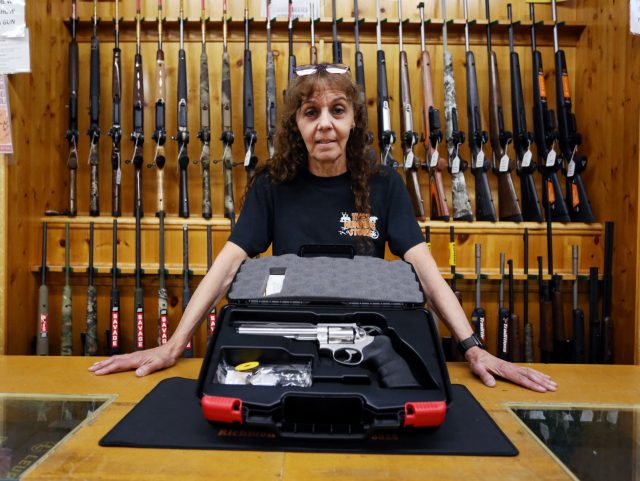
Jen Lavigne, co-owner of That Hunting Store, poses for portrait with a Ruger GP100 Magnum 357, on June 3, 2022 in Ottawa, Canada. - Canadians rushed to buy handguns this week, after Prime Minister Justin Trudeau announced on May 30, 2022, a proposed freeze on sales in the wake of …
DAVE CHAN/AFP via Getty Images
3:11

Gun stores in Canada have seen handguns fly off the shelves, with many selling out altogether after Prime Minister Justin Trudeau announced gun control legislation freezing all pistol purchases.

In what appears to be a seismic political misfire, Canadian gun stores have been reporting a massive surge in handgun sales after the country’s leftist prime minister, Justin Trudeau, announced that he would be implementing gun control laws totally freezing the import and sale of this class of firearm.

Many shops in the country have now reportedly sold out of pistols entirely, despite extremely restrictive laws already in place in the country which can make the purchase of a handgun onerously difficult.

According to a report by the AFP, every gun store owner who spoke to the agency openly derided Trudeau’s declaration that he would ban the sale of handguns, while also saying that they had all seen a massive surge in pistol sales since he made the announcement last week.

Jen Lavigne, co-owner of That Hunting Store, speaks with customers on June 3, 2022 in Ottawa, Canada. - Canadians rushed to buy handguns this week, after Prime Minister Justin Trudeau announced on May 30, 2022, a proposed freeze on sales in the wake of recent mass shootings in the US. "Sales have been brisk," said Lavigne. "We sold 100 handguns or almost our entire stock in the last three days since the prime minister announced the freeze," she said. (Photo by Dave Chan / AFP) (Photo by DAVE CHAN/AFP via Getty Images)

Jen Lavigne, co-owner of That Hunting Store, speaks with customers on June 3, 2022 in Ottawa, Canada. – Canadians rushed to buy handguns this week, after Prime Minister Justin Trudeau announced on May 30, 2022, a proposed freeze on sales in the wake of recent mass shootings in the US. “Sales have been brisk,” said Lavigne. “We sold 100 handguns or almost our entire stock in the last three days since the prime minister announced the freeze,” she said. (Photo by DAVE CHAN/AFP via Getty Images)

“We sold 100 handguns, or almost our entire stock, in the last three days, since the Prime Minister announced the freeze,” said the co-owner of That Hunting Store, Jen Lavigne, before emphasising that the ban would only “hurt legal gun owners”.

Another shop owner, Josko Kovic of DoubleTap Sports, said that the Liberal Party leader’s announcement had “created a panic” and that “people are now rushing out to buy handguns”.

“Almost all stores are sold out, including me,” Kovic noted, with the AFP also reporting that many gun stores saw lines out the door only hours after Trudeau’s anti-gun declaration, and that many sold their entire stock of handguns within a matter of days.


The surge in pistol sales occurred in Canada despite the fact that this class of firearm is extremely difficult to buy in the country, requiring would-be owners to obtain multiple character references and signatures from their partners, on top of obtaining a licence and passing a stringent background check.

According to a Newsweek article on the matter, handgun owners are also compelled by law to register their newly acquired firearms with the local police before even being allowed to take the weapon home.

However, none of these draconian restrictions seem to be enough for Justin Trudeau, who announced that he had brought new legislation to Parliament which would totally freeze the sale and import of pistols in all Canada.

“What this means is that it will no longer be possible to buy, sell, transfer or import handguns anywhere in Canada,” the leftist Prime Minister said, while seemingly using mass shootings in the United States to justify the ban.

Trudeau also claimed that while “gun violence is a complex problem”, the “math” of the issue shows that “the fewer the guns in our communities, the safer everyone will be”.

This is despite the fact that Chicago in the United States operated a handgun ban from 1982 until 2010 and only saw homicide numbers rise within this period of time.
 

Categories
A Victory! All About Guns Anti Civil Rights ideas & "Friends"

Bill that would extend gun prohibitions to people convicted of hate crimes stalled at federal level by Brittany Johnson

One of the bills is known by the authors as the Disarm Hate Act and was introduced last year in both the House and Senate. That piece of legislation hasn’t seen any movement since being introduced. The bill would prohibit someone convicted of a hate crime, or who has received an enhanced sentence because it was a hate crime, from purchasing a gun.

Julia Weber with the Giffords Law Center to Prevent Gun Violence told KCRA 3 that “history” and “research” indicated prohibitions should extend to people convicted of a hate crime at the federal level.

“The relationship between acts of hate, white supremacy, misogyny, ethnic bias, is pretty clear,” Weber said. “The research shows that when people maintain certain ideologies and choose to act on those ideologies, with access to firearms, the outcomes can be incredibly lethal and dangerous for the broader community.”

California and other states have already passed a similar bill.

Weber said the Disarm Hate Bill should be signed into law at the federal level to have consistency across the country. She said without consistency someone can go across state lines and purchase a weapon they may not have been able to purchase in California, for example.

“The majority of states do not have this kind of legislation,” Weber said. “So there’s inconsistency, and that’s one of the biggest problems in the United States is the lack of consistency so that somebody can go across state lines and purchase a firearm, for example, that would be otherwise inaccessible in the state in which they’re living. And as a result, we see inconsistency in application, which makes it very difficult to prevent the kinds of atrocities that we’re seeing across the country.”

Enacting gun control legislation could be tough for Democrats because the Senate is split 50-50, and there needs to be support from at least 10 Republicans to overcome a filibuster.

Categories
Soldiering The Green Machine

The Army Stance: What it Says About You

Shakespeare apparently once said that, “Clothes make the man.” Well, in the Army, we all have to wear pretty much the same thing: colorful pajamas. And there’s not much you can do to accessorize – barring our hair, but that’s another story entirely. Which leaves us only a few ways to express the individuality that we have managed to preserve despite the Army’s best efforts to crush it out of us.

One of the ways we can demonstrate this is how we stand. Consciously or not, everyone displays their personality by their stance. Observe a group of leaders watching training or soldiers attending a briefing and you will see a whole multitude of subconscious attitudes on display. You can learn a lot about a soldier’s personality just by watching the stances. There are five key stances that you will see.

1. The Power Stance

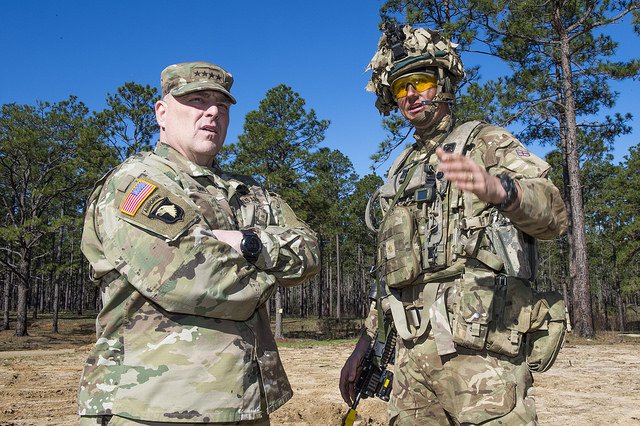
This is most commonly seen from those in command. Feet spread apart, arms crossed, the whole body radiating, “I am in control, I have no emotions, and don’t even think about approaching me to discuss your measly little problems.” This is prevalent among captains in command, lieutenant colonels, colonels, sergeants major, first sergeants, and drill sergeants. Sometimes you’ll even get a whole group of power standers together, vying to see who can look the least approachable. The power stance is perfectly paired with some overpriced Oakley sunglasses and it easily transitions into a knife hand stab.

size0.jpg
Army Chief of Staff General Mark Milley projecting power. (US Army photo)

2. Belt Grip

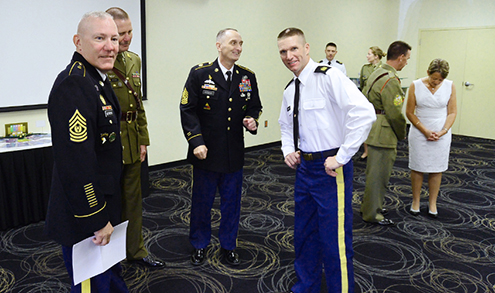
Since the Army says that our pockets are off limits to any part of the body, we’ve taken to a modified position of hands in pockets. The most popular is the belt grip. Assume a wide stance and grab your belt just outside the belt buckle. This is another type of power stance, but more suitable for sergeants, staff sergeants, and sergeants first class. It presents a slightly more approachable demeanor that is also well adapted for leaning forward, spitting, and delivering some choice words on a soldier’s performance during training. It is also handy for keeping one’s hands warm in cold weather, since gloves are for wimps.

090816unitnews2_1FS.jpg
Sergeant Major of the Army Dan Dailey, demonstrating the thumbs-in approach and not thinking about his pockets. (Fort Bliss Bugle photo)

3. Thumbs-In

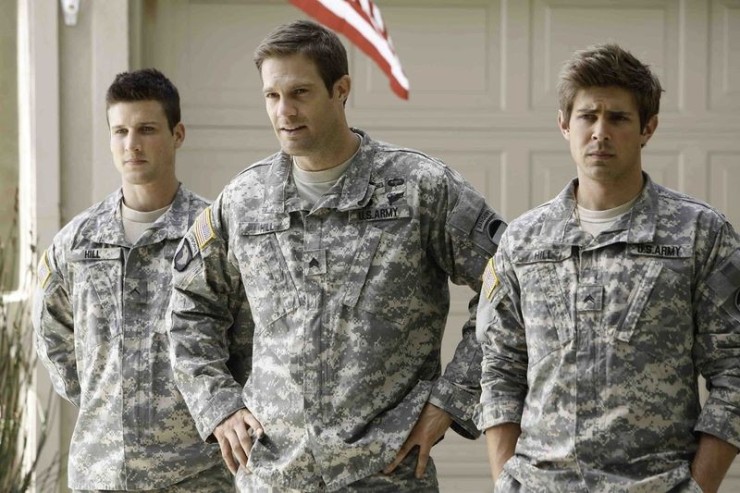
A modified version of the belt grip is the “thumbs in the waistband of the trousers at the hip” stance. This is the preferred version for those soldiers who really wish to use their pockets but are trying to set a good example in case sergeant major comes by. This is most often seen in junior officers who are struggling with their competing wishes to be cool but also toe the line. These soldiers want to show that they are approachable and are listening attentively, i.e., that they still even care.

enlisted1
As always, Enlisted manages to provide me three out of my six examples. Damn you, Fox, for cancelling this show. And for Firefly…#neverforget (Fox)

4. Hands-on-hips

There’s something about the simple act of placing hands on hips that radiates the essence of, “Come at me bro.” This is essentially the most combative of all Army stances. Like the U.S. Army itself, it projects power, confidence, and leadership. Which can be a bit of a problem when the projector has neither power nor confidence nor leadership. Thus, when a private first class attempts to place hands on hips, an NCO will usually catch them in the act and berate them forcefully.

5. Perennial Parade Rest

There are soldiers who just cannot get out of basic training mindset, no matter how hard they try. They are usually privates, who exist in a constant state of confusion and move around with a look on their face that reflects their internal chaos. Upon being interrupted in their attempts to place one foot in front of the other while also trying to remember every word of what their sergeant just told them while also worrying that they might be in trouble, they will default straight to parade rest, no matter who addresses them. They can be seen furtively shifting about at perennial parade rest, guiltily moving their hands, even though they are in the field among their peers. PRR wears off over time as privates advance in rank and confidence. This stance is a source of amusement for all NCOs. It is most often paired with a regulation haircut.

6. Pockets

There’s a part of every soldier’s subconscious that is at all times preoccupied by the awareness of pockets. Specifically, that we have them, but cannot put our hands in them. With the exception of Sergeant Major of the Army Dan Dailey – who has, through superhuman effort, managed to purge all thoughts of pockets from his mind – every single soldier undergoes this struggle. It reaches metaphysical levels, as soldiers project their hopes and dreams on this unattainable prospect. Why are they there? What is their meaning? Why could the Army, in all its infinite wisdom, provide us these glorious assets with which to keep warm, but not allow us to use them? Is there even a supreme being that governs this universe? What is the meaning of life?

hands-in-pockets-5505
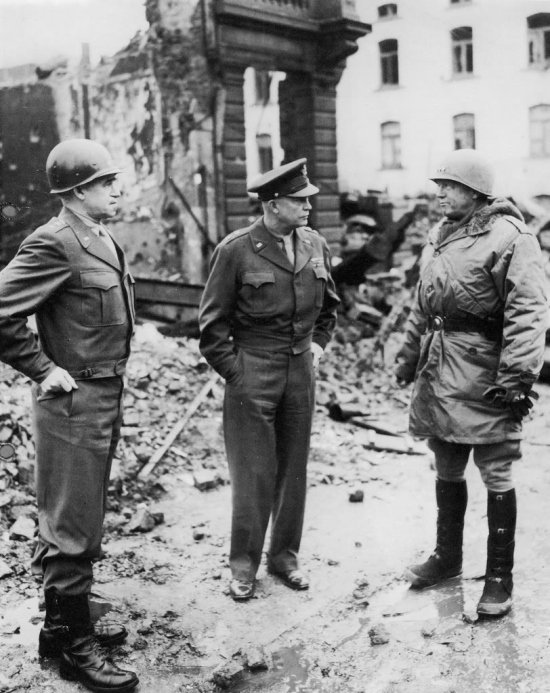
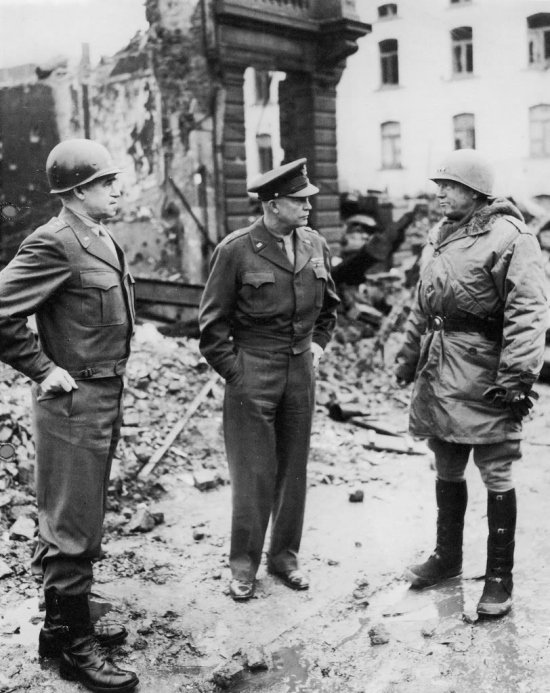
General Dwight D. Eisenhower – the perpetual offender. CSM’s everywhere have epileptic fits of rage at this picture. #Freethepockets (DOD Photo)

Which leads us to our final – and most heinous – stance: hands in the pockets.

This stance is most often found with first lieutenants and specialists. These ranks share a special bond: they have been found capable enough to be promoted at least once, so therefore the Army must really place a lot of trust in us – I mean, them. If soldiers have deployed, this stance becomes even more prevalent. It is carried out with a sardonic lean, as if to say, “Yeah, I know there are rules, but I have superseded these rules: I am become the rules.” In officers, this stance is most often paired with “officer hair,” or “pilot hair,” both being about the same. Like the stance, the hair presses the three inch limit as prescribed in Department of the Army Pamphlet 670-1.

9sj7xy3
Former Army Chief of Staff General Raymond Odierno – hand in pocket. I’m sensing a trend… (US Army Photo)

And speaking of pilots, they treat their hair, their uniforms, their stance, and their pockets as theirs, and theirs alone. For they have broken free from the surly bonds of earth and have touched the face of God.

inthefield_s1_p3_g1.jpg
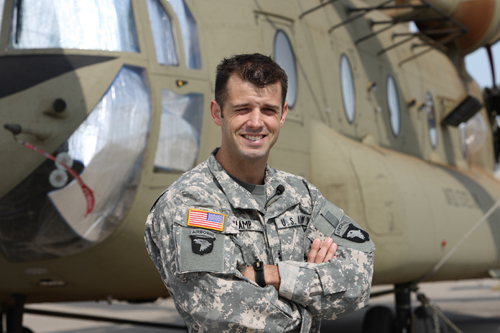
(US Army Photo)

Geez. Pilots.

Categories
All About Guns Gun Info for Rookies

Q&A 59: Questions for a Gun Shop Owner w/ Kurt Stancl

Categories
All About Guns

This Old Gun: Ruger Mini Thirty

Categories
All About Guns

Top 10 Things You Didn’t Know About The AK47

Categories
War

Somebody is getting smarter!

I Want To Know How To Kill': The Training Camp for Ukraine's Future Soldiers
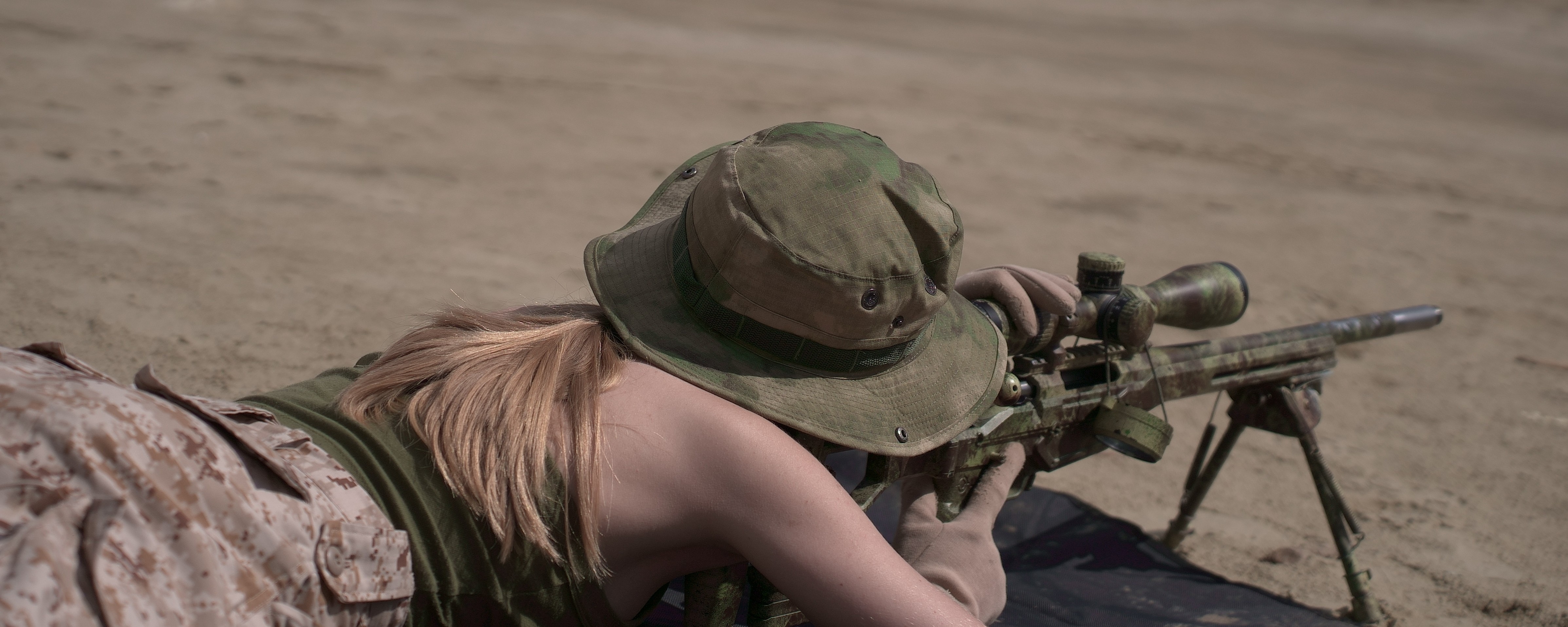
“MILEY” ADJUSTS HER SIGHTS ON HER SNIPER-RIFLE. PHOTO: MIHIR MELWANI

‘I Want to Know How to Kill’: The Training Camp for Ukraine’s Future Soldiers

At a compound in an undisclosed location in Western Ukraine, trainers with codenames like “Charon” and “Prophet” try to psychologically prepare young Ukrainians for the horrors of war.
MM

LVIV, Ukraine – “I’ll put a bag over your head, lead you into the basement, and leave you there. It’s flooded and full of obstacles… and rats,” says a large Ukrainian trainer who goes by the callsign “Charon.” “It’ll also be pitch-black. Your objective is to make it out. Be ready for me to throw simulated grenades at you.”

VICE World News is at “Everest,” a compound at an undisclosed location on the outskirts of Lviv in the west of the country, where Ukrainian Territorial Defence recruits are preparing to be bound and blinded to see if they are ready for war.

Charon, who was given his moniker after the mythical Greek ferryman of the dead, leads recruits individually into the pitch-black basement of a derelict building to see whether they are psychologically resilient enough to be sent to war. Aging remnants of the Soviet-era factory – wires, splintered wood and plastic – litter the uneven ground, while old desks and sharp grates obstruct the maze of corridors and rooms.

Charon – who along with all the recruits and trainers at Everest VICE World News is not naming for security reasons – pushes his cadets, blinded by black bags, through the narrow and obstacle-filled hallway of the basement. “Believe me, the Russians are not gonna be that polite to you,” he jokes. I have also been bound at the wrists with zip ties and blindfolded with a bag over my head to try out the so-called “stress test” that hundreds of Ukrainian volunteers are being put through. After being led through dark passages, I am left on the ground with my hands bound and legs tied. A knife is thrown nearby, the lights are shut off, and the bag comes off my head. The mission: cut myself free and find a way out.

But it doesn’t end there. Without warning, instructors begin tossing practice grenades into the hallway. About 1 second after you hear the pinging sound of a practice grenade bouncing off of the floor, there’s a loud bang and a flash of light. As an instructor throws one into the pitch-black hallway of the basement, the right move is to crouch, cover your ears, and look away. If you don’t, your eardrums start to ring painfully.

"Charon" leads us into a stress test. Photo: Jeremy Chan

“CHARON” LEADS US INTO A STRESS TEST. PHOTO: JEREMY CHAN

The aim of all of this is to simulate the stresses of war, testing the mental capacity of the recruits. The training is based on US specialised military training prep, says Charon, who trains dozens of cadets a month. This psychological test is unique to Everest, and was implemented in response to a lack of mental resilience prep in the standard training regimen.

It’s been over three months since Russian forces began their invasion of Ukraine, and as each day passes, more troops are needed to defend their homeland. Volodymyr Zelenskyy, the Ukrainian president, says up to 100 of his soldiers are being killed every day as fighting intensifies around Donbas in eastern Ukraine, with hundreds more wounded. But the many people who have been psychologically damaged are not counted in this number. As the military is being forced to draft untested fighters to the frontline, a generation of Ukrainians is being scarred by the trauma of battle. With limited time and resources, military boot-camps and training centres are rushing to train civilians on how to handle an AK-47, but few explain how to handle the horrors of war. The new volunteer-run training centre that VICE World News trained at, which is sending troops to both the Ukrainian Army and Territorial Defence Forces, has introduced a stress-test as part of its training to filter out those who are unfit for battle.

And, as VICE World News discovered, blindfolded and unable to find a knife thrown on the floor among shards of glass, the test isn’t easy. “Some of our cadets start singing, some shout, others get violent and start throwing the obstacles out of the way,” Charon explains. It can take hours for some to make it out, but instructors aren’t just interested in whether they succeed. Instead, they’re watching to see whether recruits can keep their composure during the test. Not all are able to.

Trainees conduct a room-clearance exercise at Everest. Photo: Mihir Melwani

TRAINEES CONDUCT A ROOM-CLEARANCE EXERCISE AT EVEREST. PHOTO: MIHIR MELWANI

“We had an example of a person who had a panic attack in there, and we had to stop it,” Charon says.

“[The failure of the test] shows us that in the middle of the battle, when the mines and the missiles are going to be firing and exploding, that the person is going to get too much fear and they’re just gonna get stressed out and panic,” Charon says. And in battle, panic leads to failure.

Newbie soldiers at Everest are put through an 18-day intensive training programme before being sent to fight. Advanced soldiers are sent to the Ukrainian Army, while others are sent to the Territorial Defence Force. But during the three weeks of training, instructors keep an eye out for those showing potential for greatness – they’re placed into an “elite” group, and stay behind at Everest to be trained in specialised tactics and skills.

Everest is sanctioned by the Ukrainian Ministry of Defence, but it’s run by a purely volunteer staff. Nazar, who ran a construction firm before the war, developed the operation in collaboration with two friends. Soon enough, they had former troops with significant combat experience onboard, keen to pass their wisdom on to new soldiers. One of Everest’s senior instructors, known as “Prophet”, injured his spine in combat, and can’t fight on the frontline anymore.

The necessity of psychological preparation is clear when examining what actually happens to young and inexperienced troops in combat. VICE World News spoke with Mykyta , a soldier currently on the frontline in Donetsk. He told us that six of the 30 men in his squad just couldn’t handle the stress.

He says they were “young guys, 22 to 25 years old, who just know about war by watching movies.”

Mykyta, who VICE World News is not naming in full for security reasons, said they were incapable of fighting. “In the time when everything was fine, they [were] fine. When someone was dying nearby, they [were] afraid they would die too, so they [were] just stuck,” Mykyta explained, from his battle position over a shaky phone line. “They [did] nothing when the battle [was] going on.”

Instructors prepare to hand out weapons to trainees. Photo: Mihir Melwani

INSTRUCTORS PREPARE TO HAND OUT WEAPONS TO TRAINEES. PHOTO: MIHIR MELWANI

Mykyta’s commander, an ex-Soviet officer, sent the six soldiers to the rear lines, away from the trauma of the front. “On the frontline, these guys are a little bit useless,” Mykyta said. “We had to spend some of our attention not on the enemy, but on these guys. So it’s better for all of us that the squad is without.”

At Everest, cadets go through hundreds of drills, from shooting practice to mine-clearance. Cadets even get “snake-training,” where they are taught how to deal with Ukraine’s venomous snakes, which are supposedly common in the forests where much of the fighting is happening, and to care for their habitats.

Specialised courses, such as sniper training and air intelligence, are offered only to the elite few who the instructors deem worthy.

Snake training at Everest. Photo: Jeremy Chan

SNAKE TRAINING AT EVEREST. PHOTO: JEREMY CHAN

A young recruit, codenamed “Miley”, is one of these elite trainees. She was chosen to be a sniper.

“I want to know how to kill,” she says. Before joining, Miley contributed to the war effort volunteering by making camouflage netting and molotov cocktails with a friend, who she says describes her as aggressive. “I’m aggressive because they [the Russians] made me aggressive,” she says.

She’s 23, with no combat experience. When she’s not training, Miley works in a beauty call-centre part time. Her dream is to make music – like Miley Cyrus, her favourite singer. But that comes after the war.

“I feel like after this work, I need to go to the psychologist. So yeah, so I’m worried about that,” Miley explains, “but still, I have to do it, because I’ll regret it all my life if I do not.”

Trainees conduct live-fire exercises. Photo: Mihir Melwani

TRAINEES CONDUCT LIVE-FIRE EXERCISES. PHOTO: MIHIR MELWANI

And while Everest places an unusually strong emphasis on the mental preparation required to fight before deployment, there are also serious consequences to ignoring soldier’s psychological needs after they come home. Andriy Sadoyvi, Lviv’s mayor, understands the shortfalls of how Ukraine faced combat trauma in soldiers who fought in Donbas in 2014.

Physical wounds were treated, but psychological wounds were not. “We are aware of some examples of [veterans] dating back to 2015, when wounded people received prosthesis,” Sadoyvi told VICE World News. “But they were not really offered any psychological support, and so quite a few of them committed suicide.”

Sadovyi is planning a rehabilitation centre for victims of Russia’s war on Ukraine.

“Vivaldi” is a more recent case of battlefield trauma. He was critically injured in March when a mortar landed at his feet while he was fighting in Donetsk. VICE World News spoke with him at a military hospital in Lviv, where he is being treated for injuries suffered in the blast.

"Vivaldi" draws a map to help explains the events of the day of his injury. Photo: Mihir Melwani

“VIVALDI” DRAWS A MAP TO HELP EXPLAINS THE EVENTS OF THE DAY OF HIS INJURY. PHOTO: MIHIR MELWANI

“I was afraid that an infantry attack would follow the [mortar] attack,” he said. “I urged my unit to leave me with grenades and fall back.”

His squad refused to leave him. They applied four tourniquets to him – one on each limb – and carried him to safety.

For a month after his injury, he was unable to sleep.

At night, he was stuck in ‘military mode’, hypervigilant to threat. Vivaldi’s doctors continue to prescribe him medication, which he can’t sleep without.

Vivaldi refused the optional psychological consultations offered by the military hospitals, as did two other injured soldiers who spoke with VICE World News about their trauma.

At this time, the typical Ukrainian army training regimen does not emphasise mental health. Beyond an outdated written character assessment, there is little in the way of preparation for the horrors of the battlefield – or the ghosts that inevitably haunt those after the fight.

“I go to the big mountains a lot and I know how difficult it is to prepare and climb to the top,” Nazar says. “I know how it feels when you climb to the top and come back to your family alive.”

Additional reporting by Jeremy Chan, Alicia Chen and Vlad Fisun.

This piece was supported by the Pulitzer Centre.

Categories
Gear & Stuff Gun Info for Rookies

MOA vs. MRAD in Scope Adjustments & Ranging Without a Rangefinder

Categories
All About Guns Ammo

277 Sig Fury: Is it better than what shooters already have? (6.8×51)

https://youtu.be/ALvd7k1Bbpw

Categories
A Victory! All About Guns War

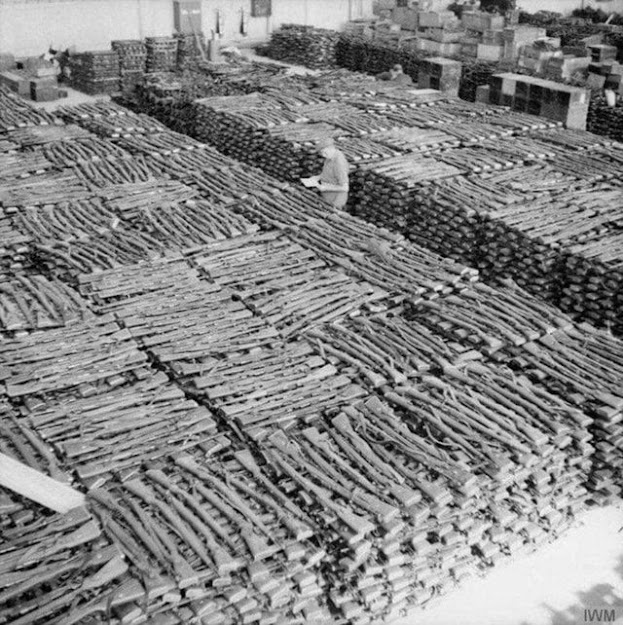
Now that is a pile of Mausers!

Piles of Rifles surrendered by German Soldiers after the End of the Second World War, 1945