


They say every gun has a story. A reader submission series 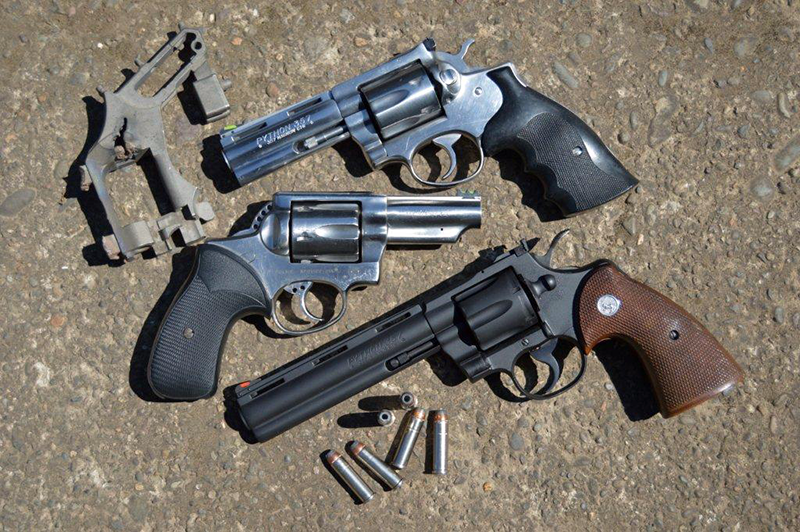
Just read “Taffin Tests” in the last issue (Ed. “The Sixguns of Milt Morrison,” May 2020) and thought you might like a photo of a stainless Couger with Rogers grips.
One apparent fact about the Colt Python that adds to its accuracy is its bores are tapered about one-thousandths of an inch from breech to muzzle, essentially “choked.” Carefully measuring a few barrels in my shop over the last 20+ years has seemed to bear this out.
I’m actually a Ruger revolver lover at heart. You can also see my custom Speed vice-Six I built because I couldn’t stand not having a 3″ round butt Speed-Six. I have a collection of 2-3/4″ Speed-Sixes but always wished they had an extra 1/4″ to make them 3″ even, so a fairly rare, square butt 4″ Service Six was sacrificed to my eccentricity. Apparently Ruger made some 3″ Speed-Sixes for the USPS, but I don’t need an original.
Also shown in the photo is my very early 6” Python with Kensight Elliason sight and early wood grips that look worse in person. Those beat-up grips will give you an idea of just how well-used the revolver was before it was ceramic coated. “Sacrilege!” You say, but hey, it’s mine and I like it this way.
And that other “thing” shown in the photo is a Ruger SP-101 Titanium frame casting. I live in the titanium capital of the Western Hemisphere and obviously S.R. & Co. was experimenting here with the idea of a titanium SP-101 back in the late ’90s. I don’t know why it never came to be but here’s the proof. I have been told that Ruger even owned one of the smaller titanium plants around here at one time.
Jeff Hutchins
Rangemaster Gunworks
Oregon
I was a child of the 1960s. Western movies and television shows were extremely popular. I watched everything from Bonanza to Gunsmoke, Have Gun – Will Travel to big screen Westerns at the drive-in theater. My father loved everything Western, too, as his collection of cowboy fiction paperbacks was quite extensive.
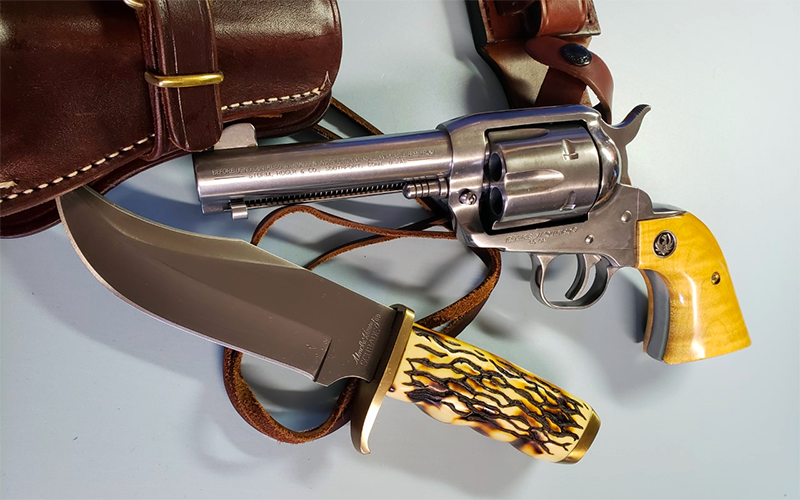
I had chromed cap guns in twin holsters that were my prized possessions and my first real handgun was a Hawes Western Marshall .22LR revolver but I always wanted a shiny .45 Colt single action.
My Ruger Vaquero fits the bill. I love shooting it and almost feel like a cowboy when I buckle on my holster! All I’m missing is the horse.


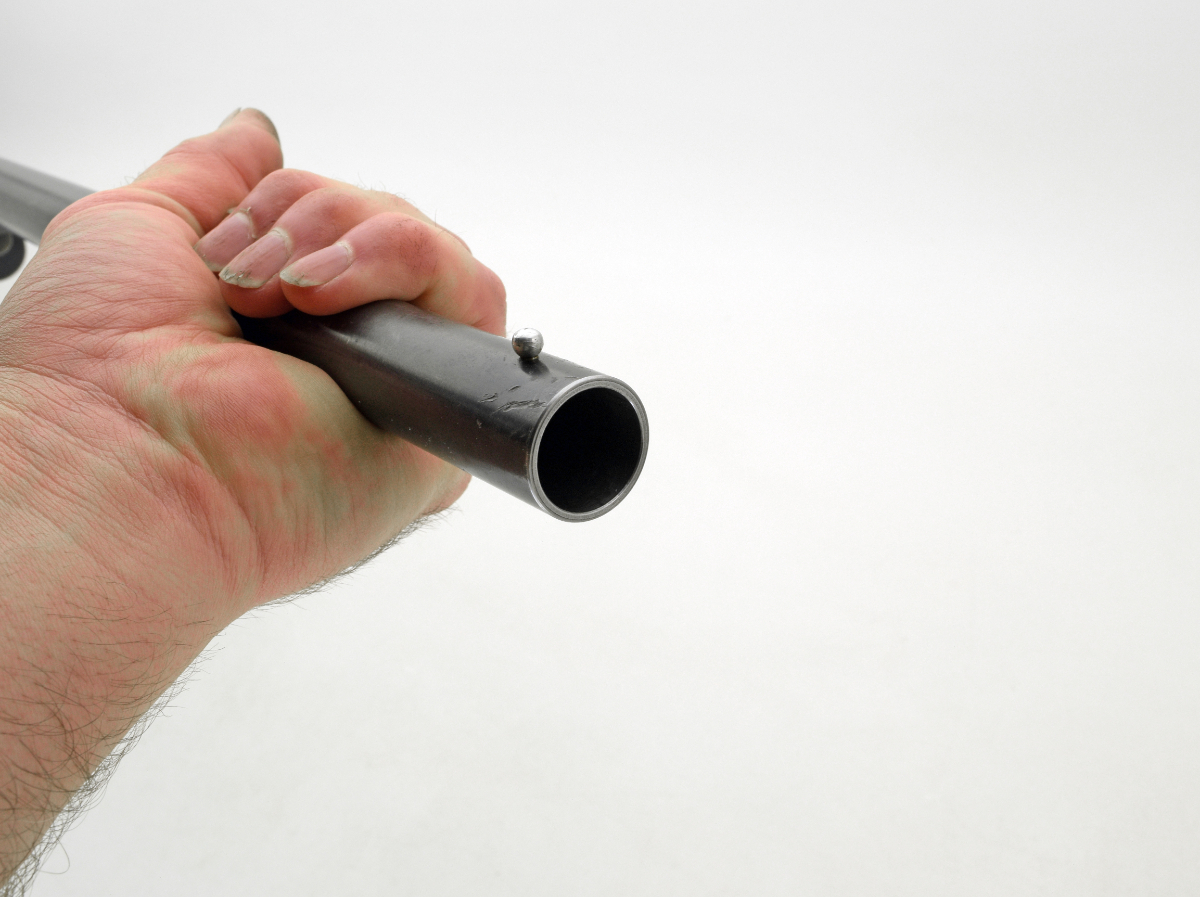
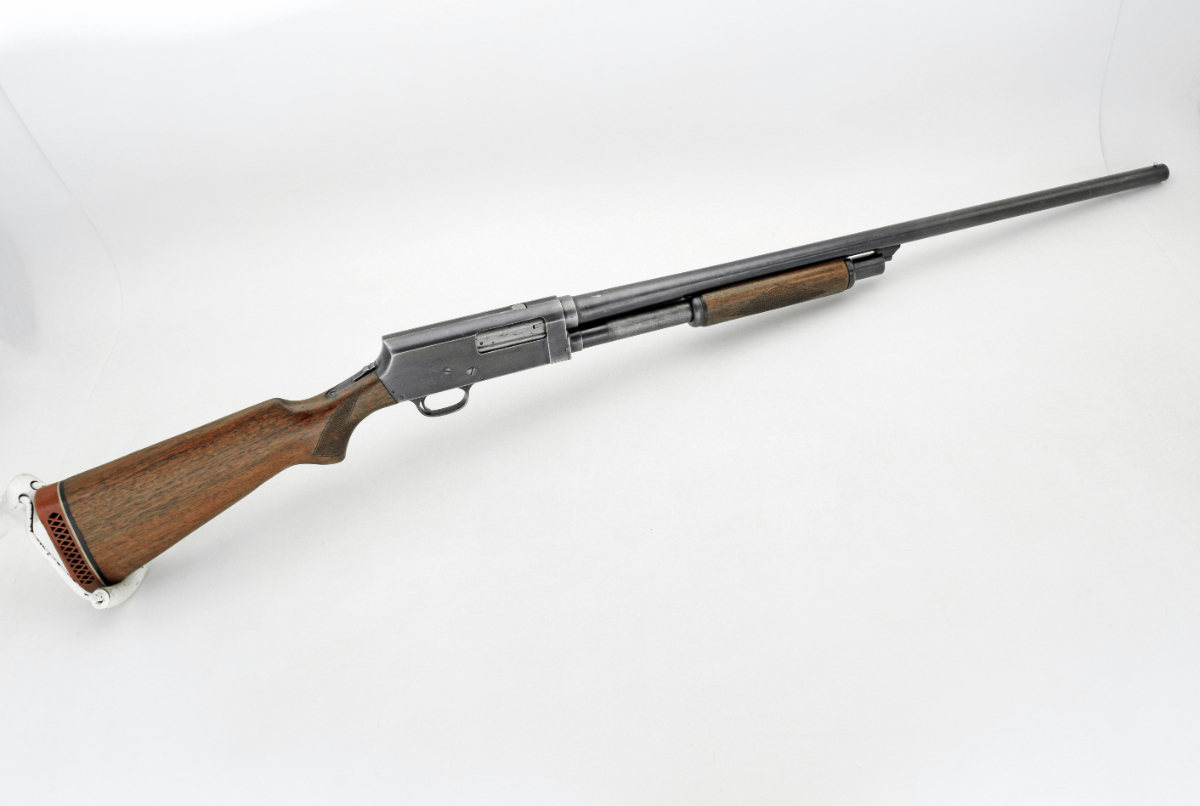

In 1912 the respected British firm Holland & Holland established the future of the belted rifle case with the .375 H&H Magnum. It was not the first belted case, but it was the one that set the dimensions for a century of cartridges to come. H&H’s head and belt design have been used almost unchanged in a staggering number of standard, proprietary, and wildcat cartridges.
In about 1920, H&H applied those head dimensions to a then-new .30-caliber cartridge, first called the “Holland’s Super 30.” The same length as the .375 H&H case, the newcomer had a long, tapered shoulder. Soon its standardized name became the .300 H&H Magnum, and there was a sound reason for that funny-looking shoulder.
I’ve previously written about how handloaders can deal with belted rifle cases, but not so much on why they had to exist. First, let’s reconsider “Magnum” and “belted” for the benefit of our younger or newer readers.
To many shooters, “belted” and “magnum” are conjoined twins, but that cannot be further from the truth. “Magnum” is a non-technical, marketing term. It may imply a performance improvement, but that improvement does not have to be real.
Conversely, the belt has a compelling technical reason to exist. It is a raised ring at the head end of a cartridge case lying where the extraction cannelure meets the case body. The magazine bolt-action rifle and the British love affair with Cordite propellant drove H&H to develop this case.
Magazine rifles function best with rimless cartridges, but those cartridges need a rim substitute for headspacing. Typically, that is a pronounced case shoulder or the cartridge’s case mouth. However, if the bullet will be crimped as with most factory ammo, the case mouth can’t be used. So why not simply use enough shoulder?
That is where the Cordite connection entered. Cordite was an early, high-nitroglycerin-content smokeless propellant. It came in long sticks roughly the diameter of a pencil lead that is cut to a length that fits between the inside of the case head and the base of the bullet or sometimes an over-powder wad. You didn’t pour this stuff into a case; you inserted a bundle of sticks.
The need to insert Cordite bundles resulted in many British-developed cartridges having cases with shoulders that are either a narrow width—like the
.375 H&H—or a shallow angle like the .300 H&H. The latter’s shoulder angle is only 8.5 degrees. Compare that to the .30-06 shoulder at 17.5 degrees.
People think the belt adds case strength at a critical point. I don’t. The critical point is ahead of the belt. I’ve seen belted cases just as mangled as non-belted ones when suffering an 80,000-psi overload.
The .300 H&H was first loaded in the United States in about 1925, but shooters had to wait another decade for a domestic rifle chambered for it: the Winchester Model 70 Super Grade. The .300 H&H supplanted the .30-06 as the most powerful commercially loaded U.S. .30-caliber cartridge. Original H&H specs were close to 3,000 fps.
The .300 H&H ruled the .30-caliber world until the .300 Weatherby came out in about 1944 and held its own for another 20 years until the .300 Winchester Magnum edged it out. Today, the H&H’s published nominal velocity with 180-grain bullets has been downgraded to about 2,900 fps. With safe handloads and current propellants in 24-inch barrels, it can still drive a 180-grain bullet to just over 3,000 fps.
There are not a lot of tricks to handloading the .300 H&H. The complicating factor is cartridge overall length (COL) in custom rifles. COL is a function of both action length and how the chamber’s throat and the bullet’s profile marry up. Custom rifles don’t have to follow industry guidelines. The standard chamber throat drawing shows no freebore and a 2-degree leade that is 0.114 inch long. The industry COL is 3.600 inches; the sample cartridge pictured has a match bullet seated to max COL. It chambered easily in one custom rifle but contacted the rifling in another.
Custom .300 H&H rifles have been built on an array of bolt-action lengths. Some may not eject a live round that is within COL values and chambers normally. With so many custom rifles for this cartridge, the saying, “COLs are guidelines, not gospel,” is important to remember. Determining proper COL for your rifle is your job.
The .300 H&H’s 3,000 fps velocity and more than 3,500 ft-lbs of energy with safe handloads is impressive performance, even considering the handful of newer .30-caliber cartridges that exceed those marks. Not bad for a century-old hunting buddy.

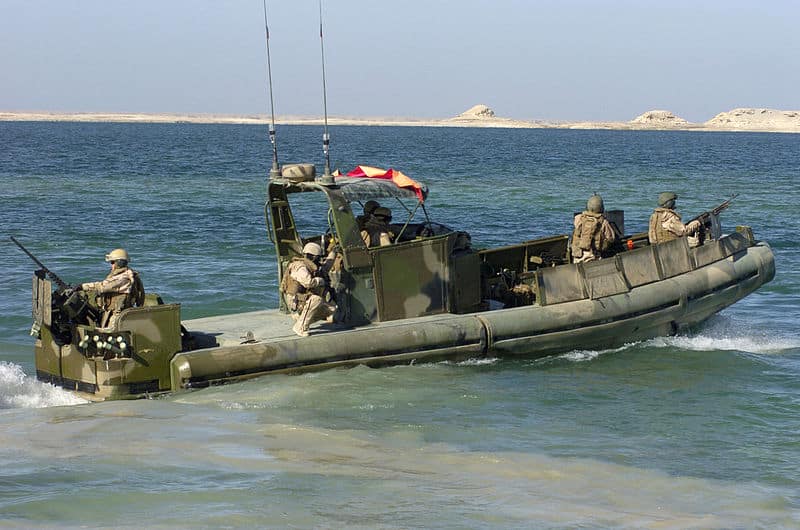
I served as a Marine infantryman for five years. I worked with weapons and line companies, I worked with LAR, Recon, Scout Snipers, and more. It wasn’t until years later I that I became aware of the Boat Marines. By Boat Marine, I mean 0312 Riverine Assault Craft Marine. The Corps dumped the MOS in 2020, but I was on active duty between 2008 and 2013 and never heard of these guys.
RELATED: SDV: THE SECRET WEAPON OF THE NAVY SEAL TEAMS
USMC Boat Marines also include the defunct 0314 and the still-active 0316 MOS. 0316 is an additional MOS and supplements a traditional infantry MOS, and utilizes rubberized small crafts. The 0312 and 0314 Boat Marines operated Riverine Assault Crafts. These ruggedized patrol crafts were used in Iraq to patrol rivers and control these areas.
Boat Marines were a combined effort between the Navy and the Marine Corps and shouldn’t be a surprise. Marines are water-borne infantry by their very nature, so boats have to be a factor eventually.
Have you ever looked at the Marine dress uniform and thought, “Man, it’d look a lot better with a cape?” Of course, it would. Dress blues, a sword, and a cape sound sick. Well, boys, the USMC offers you the Boat Cloak. As far as USMC facts go, this is the most fashionable. Male Marine officers and SNCOs are allowed to wear the Boat Cloak with the Dress A or B blues uniform.

The Boat cloak features a black exterior and red interior with a soft wool-like collar and a button-down design. It’s a special order item and costs about 750 bucks to make and order. Please allow eight weeks for delivery! The Boat Cloak is rarely seen, but come blues season, at least one SNCO will pop up wearing this bad boy.
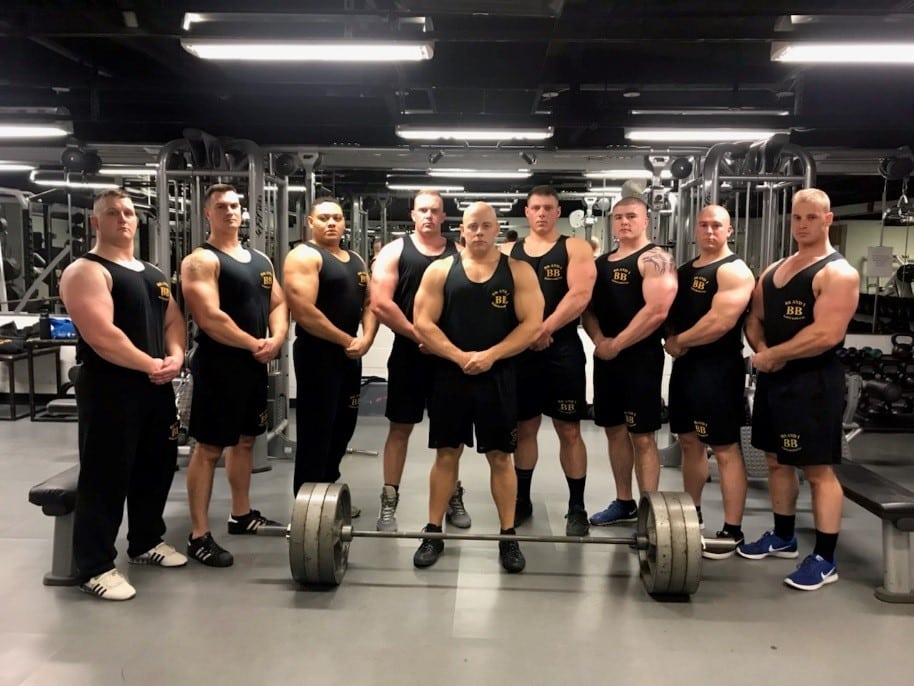
Marine Corps Body Bearers have both the honorable and sad job of carrying Marines to their final resting place. These Marines are subject to strict requirements, including: having a first-class PFT and CFT, being between 70 and 76 inches tall, being within regular Marine Corps height and weight standards, and being a Sergeant or above.
Additionally, they have to pass a Body Bearer fitness test and maintain these weight lifting standards. Body Bearer Marines must be capable of completing ten reps of the following exercises:
RELATED: PT-R WEIGHT KIT – DEPLOYMENT READY FITNESS
Currently, this is the only fitness test the Marine Corps utilizes weight lifting techniques for. This has led to USMC Body Bearers being labeled the strongest Marines in the Corps. These USMC facts help me set my own goals even as a gross civilian.
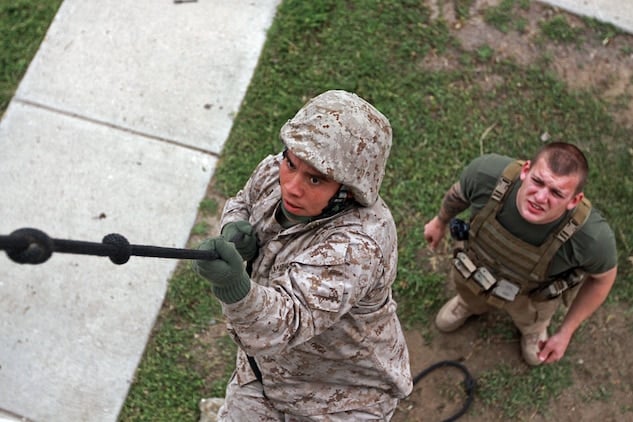
It’s true, of all the USMC facts we have, at least one makes us look like Batman. We use grappling hooks! Marines wield grappling hooks for a variety of reasons. This includes searching for improvised explosive devices (IEDs) and mines. Marines can tuck behind cover, throw and drag a grappling hook through a suspected IED area. It’s like a version of the claw game you see with teddy bears in supermarkets, but it’s for things that explode.

Grappling hooks make an appearance in urban operations and give a means for Marines to climb over walls and into windows. While it sounds like Batman, the grappling hook often gives a holding point and a little boost to the climbing Marine. You aren’t scaling up the sides of buildings like Batman and climbing multiple stories. However, an 8-foot wall or second-story window is easier to get over while wearing full gear with the assistance of a grappling hook.
Finally, we get to the story of the Yucca Man. This is likely the most widespread of the USMC facts on this list. Anyone who was stationed in Twentynine Palms knows the story of the Mojave bigfoot. According to legend, any Marine unlucky enough to find himself on watch in the endless desert of the Twentynine Palms training area may have an encounter with the Yucca Man.
The natives of the area have long told stories about these desert bigfoots and their spread to the Marine Corps. I think it’s due to two main reasons. First, these stories are fun to tell new Marines and work them up a bit before sending them out for some night guard duty or road guard position.

RELATED: THE ‘YUCCA MAN’ IS A BEAST THAT STALKS MARINES AT 29 PALMS?
Second, training at Twentynine Palms for a battalion level combined arms exercise (CAX)/Mojave Viper training event will exhaust the Marines. It’s made to simulate a month at war, and Marines are constantly training and dealing with the desert heat, endless training operations, and sleep deprivation. Sleep deprivation and exhaustion can cause hallucinations, and I’m willing to bet some exhausted Marines have had some visual and auditory hallucinations.
On my first deployment, I remember many nights on post after a 24-36 hour operation guarding the base and having a healthy amount of hallucinations.
America needs an Army, an Air Force, and a Navy, but America wants a Marine Corps. The Marines have long held the heart of the American civilian. A mixture of glory and capability mixed with a perception of a plucky underdog gives the Marine Corps a completely different cultural impact. Part of that impact is the unique culture, roles, and capabilities the Marine Corps has. These small USMC facts are only part of a much richer culture, so sound off below on your favorite USMC facts that we might not know.