Month: April 2022

Categories
#10MinuteTalk – 7mm-08 By Popular Demand
.PNG)

Great news for Gun Ranges in California! CRPA and our attorneys have been working on an issue that many may not know anything about. It has to do with shooting ranges and how they handle contaminated soil. In an abrupt turnaround, the California Department of Toxic Substances Control (DTSC) changed its position on allowing shooting ranges to return residual soil taken from backstops and shot fall zones back to where it came from after lead reclamation projects.
After over seven years of legal pressure, lobbying, and negotiations between the DTSC, CRPA, NRA and their law firm, Michel & Associates, this month DTSC finally adopted EPA’s Guidance Document allowing lead impacted soil to be returned to the range after recycling. This is a huge win for shooting ranges in California and one that should help ranges save a lot of money while staying within the regulatory environmental requirements.
DTSC had initially planned to publish an internal guidance document outlining all the California regulations that apply to the operation of a shooting range including how to dispose of soil after lead reclamation, which they consider “hazardous waste.” In numerous meetings with DTSC personnel on the topic, DTSC confirmed that it initially would not adopt the EPA Guidance Document recommendation as it applies to residual soil. We worked to informed DTSC of the unintended consequences of requiring ranges to dispose of this soil after lead reclamation as hazardous waste.
At first, DTSC was unpersuaded and maintained its position stating that it could not follow EPA’s Guidance Document because of federal pre-emption, which does not allow California to enforce hazardous waste laws in a less stringent manner that federal law, as EPA’s Guidance Document was only guidance and not federal law. Additionally, DTSC cited California law that they understood as mandating soil to be hazardous waste if lead was present.
As a result, our attorneys and filed a petition to change the regulations and DTSC denied it. Then they introduced legislation twice to change the law, but it was shut down both times in committee. Negotiations continued with DTSC to resolve the issue, but every potential work-around on the regulations produced additional red tape and costs that would be prohibitive for shooting ranges.
Not until the recent enforcement push by local state agencies on shooting ranges did the unintended consequences become apparent to DTSC. Again, our attorneys engaged DTSC personnel with the issue and finally DTSC relented and published guidance on its website.
This is a tremendous win for shooting ranges throughout the state as DTSC’s previous position would have forced many shooting ranges out of business because they could not afford to dispose of their residual soil as hazardous waste after lead reclamation. And ranges could not afford to not do lead reclamation because of safety concerns.
These are the types of efforts CRPA continually works on to protect shooting ranges in California from regulatory impacts.
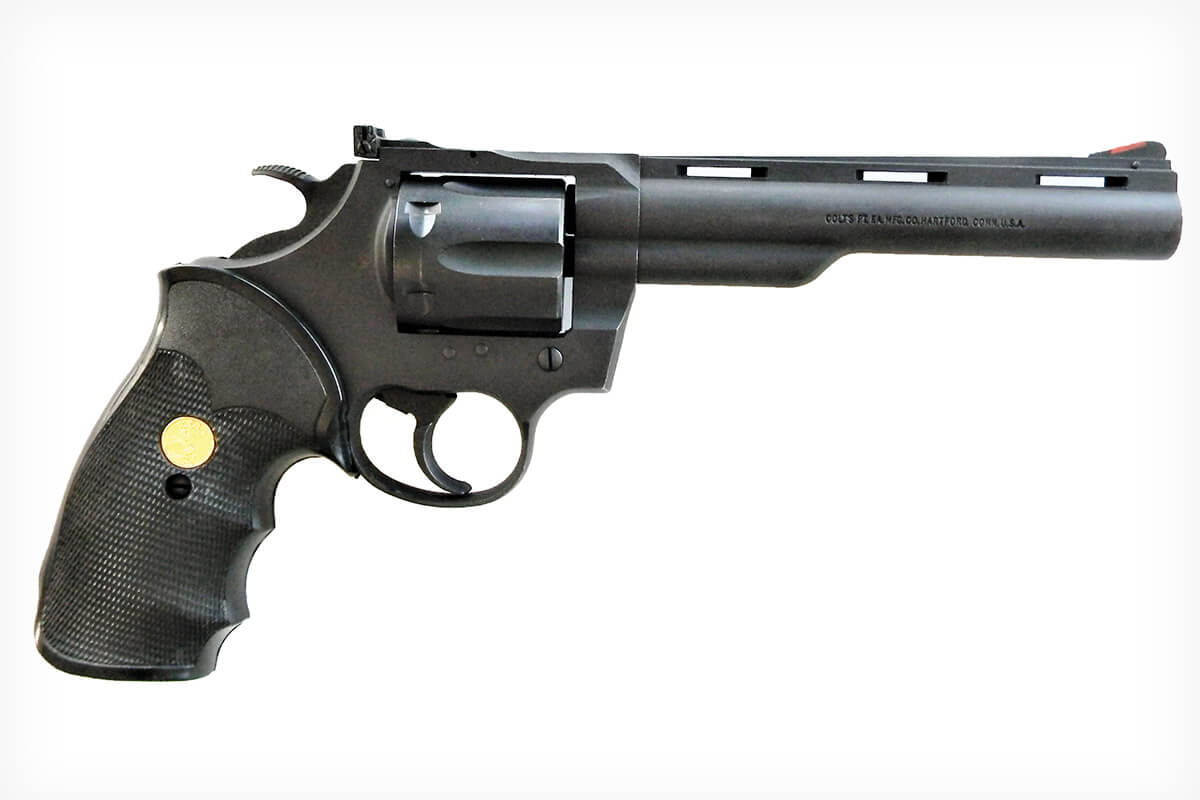
When it comes to collector firearms, quantity and quality mean a great deal. Some handguns made in huge quantities are immensely popular with collectors. A few real rarities are less popular. The Colt Peacekeeper is among these.
A play on the famous Peacemaker name, the Peacekeeper is a variant of the Colt Trooper and Colt MK V. There’s some conflicting information on the gun’s origins. Some point to the 1987 Colt workers’ strike as the birth of the Peacekeeper. Experienced polishers and refinishers were not available, so Colt turned to the matte-finished Peacekeeper. The other theory is that Colt could not compete with Smith & Wesson and Ruger on price, and it offered these revolvers as budget guns. Either theory makes sense, and each is possibly true. Regardless, the budget-grade Colts were not well received, and the Peacekeeper is among the least attractive Colt revolvers ever offered.
Like I said, Peacekeeper was a Colt Trooper with a simple bead-blasted finish. The grips are Pachmayr rubber that cover the backstrap and feature the Colt emblem. The revolver was offered with four- and six-inch barrel lengths. The six-inch barrel seems more common. The Colt Peacekeeper is relatively affordable as out-of-production Colt revolvers go. The Mark V action itself is durable, and the Colt Peacekeeper is among the better performers in double-action fire among Colts of the era. Accuracy is comparable to the Smith & Wesson 686 or Ruger GP100.
I mentioned the Peacemaker was based on the Mark V action. The backstory to this action begins at the end of World War II. At this time, Smith & Wesson’s short action and affordability were powerful advantages as that company introduced redesigned and improved guns. Colt revolvers were based on more complicated designs and were deemed accurate but overall less durable than Smith & Wesson. In the end, S&W captured more than three-quarters of the police market; the civilian market was similar.
In 1969 Colt introduced the Mark III revolver. This was a more affordable revolver with a new design transfer-bar lock work. The revolver was designed to restore parity with Smith & Wesson, but it was still more expensive. The new revolver was completely different from the older Official Police, and both fixed-sight Lawman and adjustable-sight Trooper versions were offered. But the design was criticized for its action and its use of sintered parts, which didn’t bode well for a gun at its price point.
About 1986 Colt introduced the improved Mark V action. This revolver changed the sintered steel hammer and other parts to cast steel—still not forged parts but an improvement. Considerable development went into what was regarded as Colt’s first short-action revolver, and the Mk V is an improvement in every way over the Mk III. Relocated internal parts and a shorter hammer fall made for a more accurate revolver. A vent rib was added to resemble the Python. The square butt grip frame was changed to a more rounded profile.
There are a lot of what-ifs concerning the MK V series. Had it been introduced a few years earlier, Colt may have regained market share. However, the Peacekeeper and the other cut-rate-finished Colt revolvers were not successful, and neither are they at the top of the list among collectors. But if you find an example at a fair price—around $1,000—it is actually a great handgun. Otherwise the Peacekeeper is merely a footnote in Colt history.
Categories
Happy Saturday! NSFW



.gif)