Month: March 2022

Though the U.S. is one of the largest markets for civilian firearms in the world, certain types of guns rarely make it to our shores. Sometimes it’s due to laws and import restrictions. Other times it’s just a combination of features or the cartridge for which the firearm is chambered in, that there isn’t a market for it here. Just because they weren’t actively cataloged or marketed in the U.S. doesn’t mean that some of these models weren’t sold here, or an intrepid collector hasn’t found a way to bring one into this country, but the following is a list of some types of firearms that you’re unlikely to find on the rack at your local gun shop:
One: Handguns In .30 Luger Or 9×21 mm And Rifles In .222 Rem.
In many countries around the world, civilians are not allowed to own firearms chambered in cartridges used by military forces, including 9 mm Luger, .45 Auto and .223 Remington/5.56 mm. Consequently, many popular firearms in which one of these rounds is the standard chambering are offered in an alternative, non-military cartridge.
For 9 mm Luger handguns, the original popular “civilian” alternative was . 30 Luger, or 7.65 mm Parabellum. This bottlenecked cartridge, introduced in 1898, not only predated the 9 mm Luger, it is the parent case for the popular round. This makes adapting handguns designed around the 9 mm Luger to .30 Luger an easy task. Popular 9 mm Luger handguns that can be found in .30 Luger include the Beretta 92, Browning Hi-Power, Colt Commander, SIG P210 and P220, Ruger P-89, Smith & Wesson Model 39 and 59, and Walther P-38. While these designs were rarely marketed in .30 Luger in the U.S., small batches would be sold from time-to-time. For example, Browning imported about 1,500 Hi-Power handguns in .30 Luger in the late 1980s.
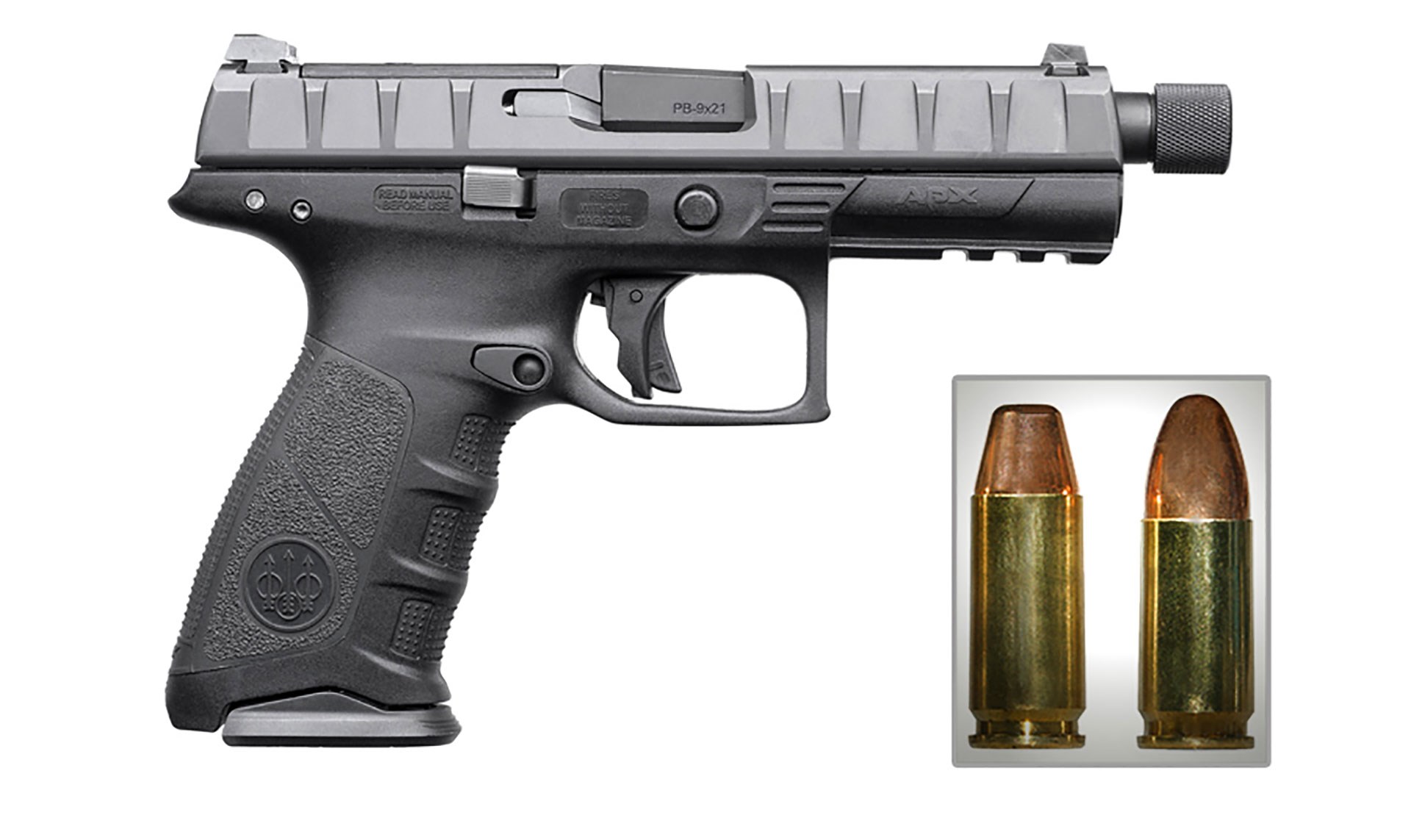 A Beretta APX Tactical chambered in 9×21 mm. Inset: A 9×21 mm cartridge (left) compared to a standard 9 mm Luger (right). Source: APX – beretta.com, Cartridges – wikipedia.com
In 1980, Israel Military Industries (IMI) sought to adapt their 9 mm Luger firearms designs to a caliber that could be purchased by civilians in restricted countries. To this end they developed the 9×21 mm. The 9×21 mm took the 9 mm Luger case and lengthened it slightly. Bullets were seated deeper, so that both rounds had the same overall length. IMI introduced the cartridge to the Italian market in their Micro UZI pistol.
The popularity of the 9×21 mm meant that it eclipsed the .30 Luger as the go-to “civilian legal” handgun round. Nearly every modern 9 mm Luger handgun design has been chambered in 9×21 mm, including the Beretta 92, Glock 17 and the Smith & Wesson 5904. Some 9 mm Luger carbines, such as the Beretta CX-4 Storm and CZ Scorpion, are also chambered in the round.
On the rifle side of things, manufacturers looked to the parent case of the .223 Remington, the .222 Remington, to adapt their rifles for the civilian market. Colt made a small run of SP1 AR-15s in .222 in the late 1970s and later, an AR-15A2 Sporter II in the same caliber. Many classic ‘80s semi-auto military-style rifles, including the Beretta AR-70, FAMAS, FNC, Valmet 62 and 76, and SIG SG-540 were made in .222 Rem. Not limited to military-style rifles, even sporting semi-auto .223s, like the H&K 630 and Mini-14, were also made in .222 Rem. Although increasing restrictions on semi-automatic firearms outside the U.S. mean few recent .223 Rem. semi-automatic rifles have been adapted to an alternative caliber, Heckler & Koch recently made a .222 Rem. version of their SL8.
To a lesser extent, the same process happened to .308 Win. and 7.62 mm NATO rifles with M1A, FAL and SIG SG-540 models made in .243 Win.
Two: A Different Definition Of Short-Barreled Rifle
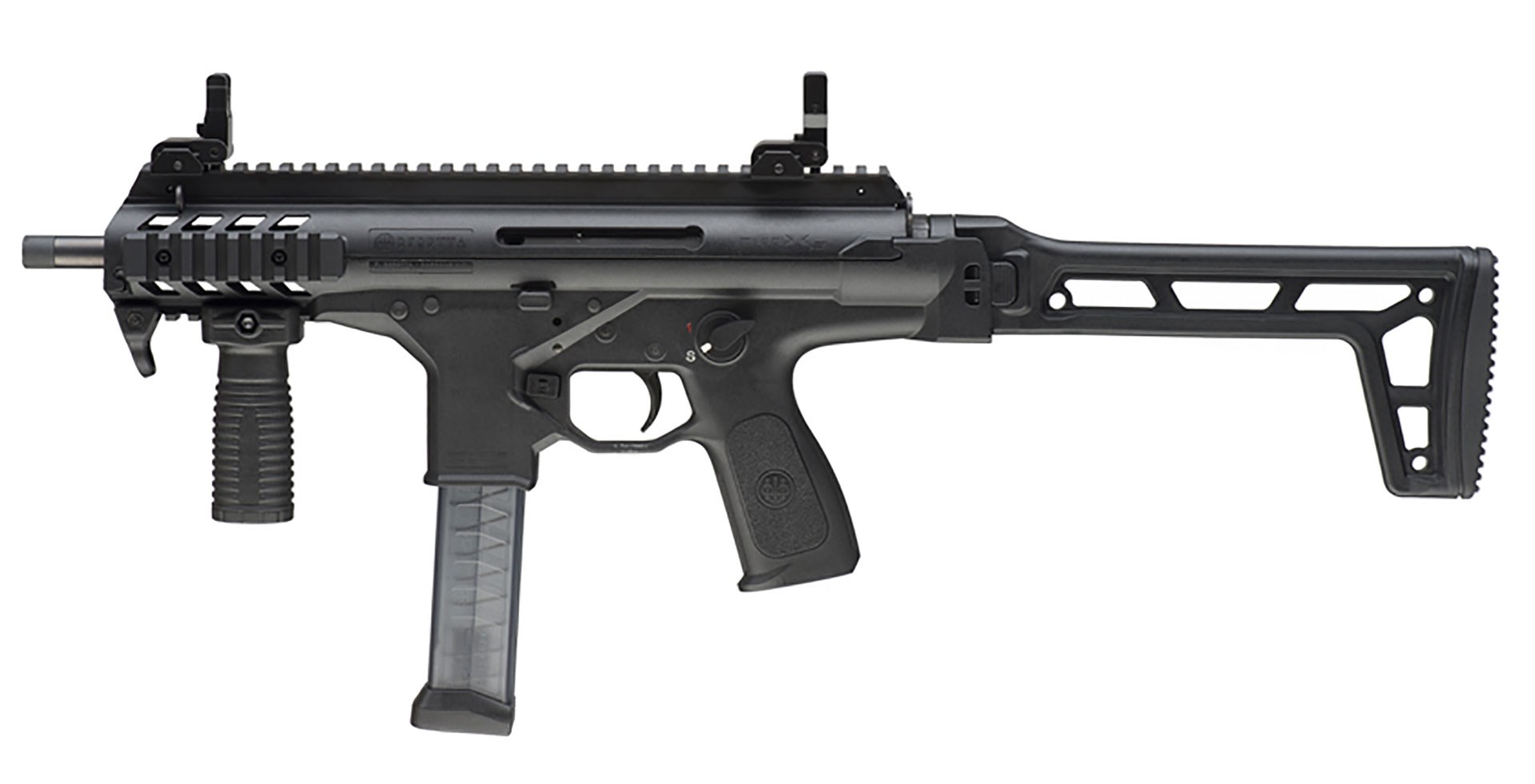 A Beretta PMXs semi-automtatic carbine chambered in 9×21 mm. Source: beretta.com
Here in the U.S,. our laws dictate that a rifle’s barrel must be at least 16” long, so as not to fall within the purview of the National Firearms Act and its associated restrictions on ownership. Many other countries don’t share our arbitrary barrel length standard. For example, the Heckler & Koch SP5 and SP5K are sold in the U.S. as stockless pistols. In Europe, however, they are supplied from the factory with a stock.
Another example is the CZ Bren 2 Ms and Scorpion. In the U.S., versions with a 16” barrel are sold with a stock and those with a shorter barrel are sold stockless as a pistol. Not so in Europe, where all semi-automatic versions of the Bren 2 Ms and Scorpion are sold as a folding stock rifle, no matter what the barrel length. In Italy, Beretta offers a semi-automatic “Pistol Caliber Carbine” version of their PMX submachine gun with a 7” barrel. In some countries, a rifle is simply something you fire from the shoulder. Barrel length is not important.
Three: Most Firearms Made in China, Post-1994
When China began to open its economy and trade with Western countries in the 1980s, among their exports to the U.S. were firearms. Beyond the typical Soviet-designed guns, like the AK-47, SKS, Dragunov, and Makarov and Tokarev pistols, were copies of Western-designed firearms, including the Browning 22 Semi-Auto Rifle, CZ bolt-action .22-cal. rifles, Winchester 9422, Walther TT Olympia, pre-64 Winchester Model 70, 1911, UZI and M14. Some of us remember the heydays of $75 SKS rifles and 7.62×39 mm ammunition that was as cheap as .22 LR.
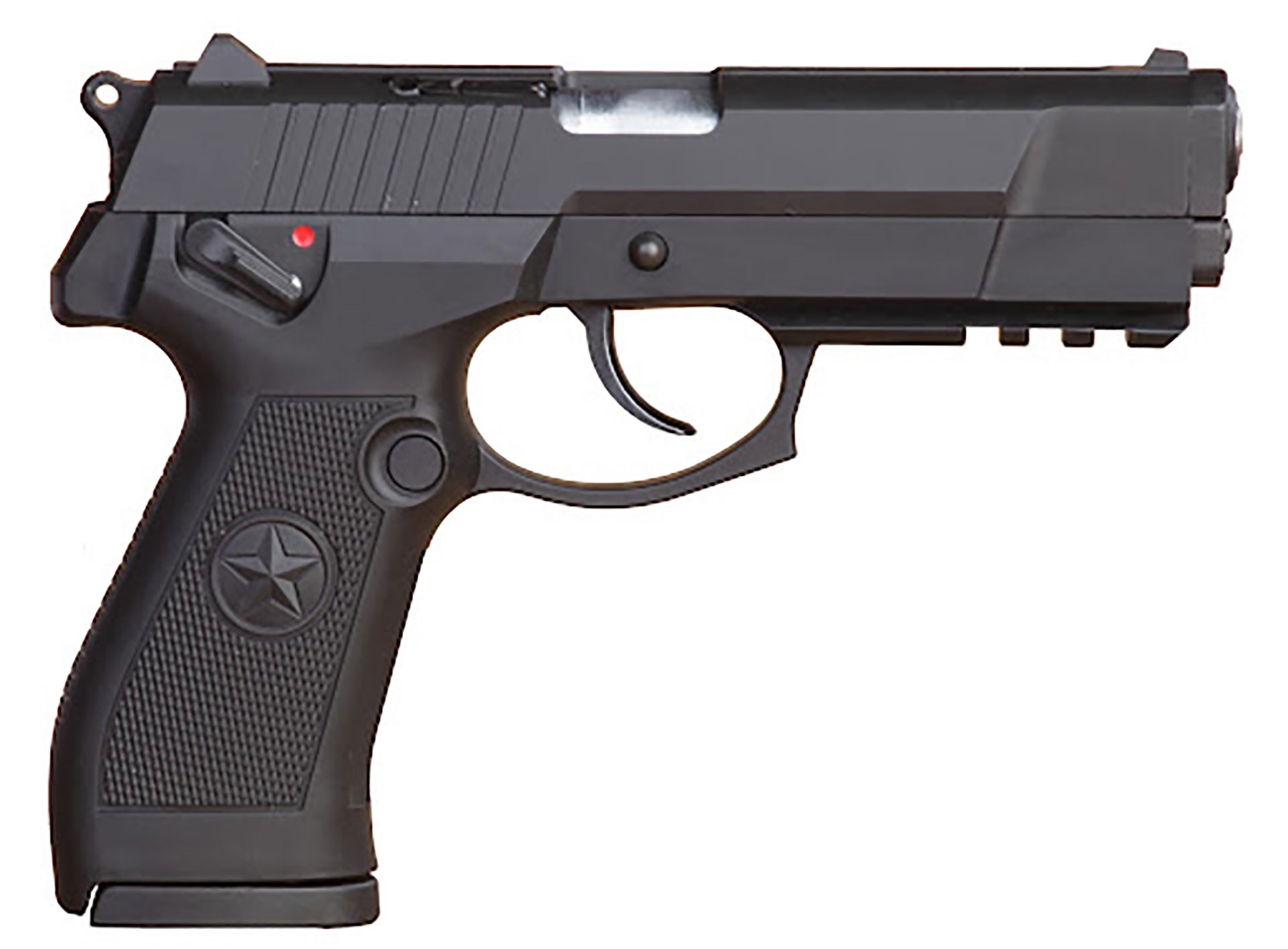 The Chinese CF98, a 9 mm Luger, rotating barrel locking, semi-automatic pistol that is an export version of the country’s service pistol, the QSZ-92. Source:cjaie.com
A series of events ended the importation of most Chinese-made firearms into the U.S., including a ban on Norinco-made products and the 1994 Assault Weapons Ban. At the time, nearly two million Chinese firearms were being imported into the U.S. annually. While the Chinese kept producing (and copying) other firearms designs for export, most have not been allowed to come into this country. Ironically, Chinese-made firearms are sold in many countries that have stricter gun control laws than the U.S., including Canada and Australia.
Here are a few examples of interesting current-production Chinese firearms that aren’t imported into the U.S.:
- AR-15s: The Chinese-version of the M16, the CQ, has been made in semi-automatic form for the civilian market in M16A1, M16A2 and M4 styles.
- M14s in 7.62×39 mm: Known as the Model M305A, this semi-automatic version of the U.S. M14 not only fires 7.62×39 mm, but also uses AK-type magazines.
- JW-105: A bolt-action hunting rifle chambered in 7.62×39 mm and .223 Rem., marketed in some regions as the “Bush Ranger.”
- Copies of handgun designs including the Glock 17, SIG-Sauer P226, CZ-75 and Colt Woodsman.
- Civilian versions of indigenous Chinese designs, including the QBC-97 bullpup rifle and the Type 77 and QSZ-92 handguns.
The exception? Over the years, some Chinese-made shotguns deemed to have a “sporting purpose” have been allowed to be imported, including copies of the Winchester 1897 pump-action shotgun, Winchester Model 1887 lever-action shotgun, a hammered double-barreled ”coach gun” and Remington 870 shotgun. Savage also imports two Chinese-made shotguns, which it sells under its Stevens brand, the 301 and 320.
Four: Straight-Pull Bolt Actions
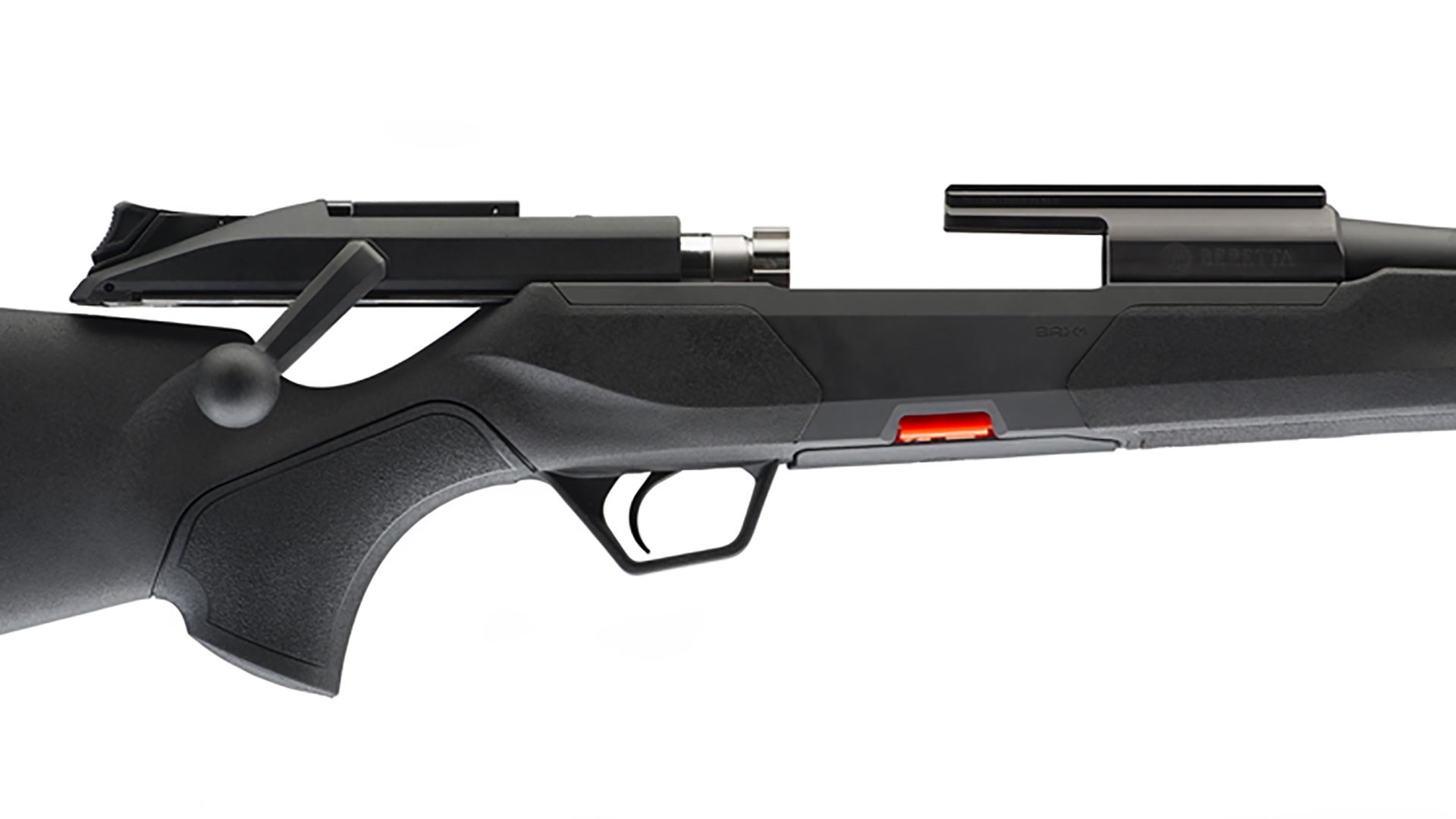 A close-up of the straight-pull bolt action of the Beretta BRX-1. Source: beretta.com
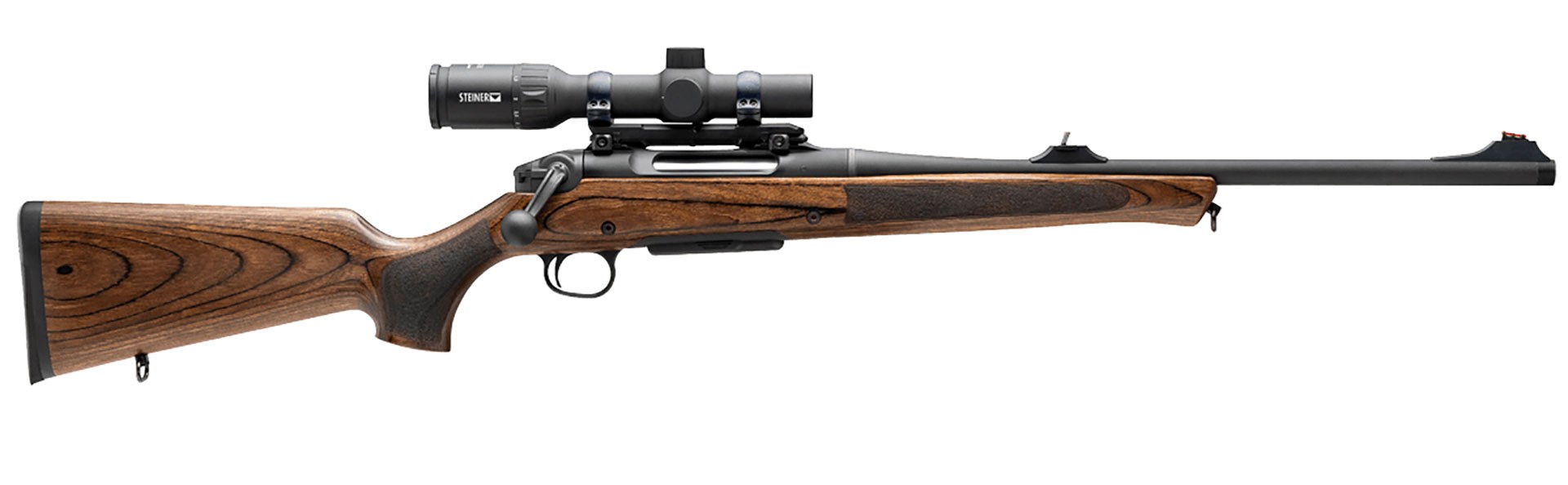 The Haenel Jaeger NXT straight-pull bolt action hunting rifle. Source: cg-haenel.de
Restrictions on semi-automatic hunting rifles have left straight-pulls as the fastest firing firearm for hunting moving game in many European countries. Straight-pull bolt-action rifles have never been as popular in the U.S., though the recently introduced Savage Impulse may change this. Consequently, most American shooters and collectors only know straight-pull bolt actions through military surplus rifles and many commercial straight-pull designs have never been sold here. Companies like Beretta, Chapuis and Haenel make straight-pull bolt-action hunting rifles that they do not sell in the U.S….yet.
Five: “Straight-Pull” And “Release” Versions of Semi-Automatic Firearms
As we pointed out above, many countries outside the U.S. restrict the sale of semi-automatic firearms to civilians. This has led to a creative work-around for those who want a fast-firing firearm for hunting or competition, but aren’t allowed to own a semi-automatic. Popular semi-automatic designs are altered to a “straight-pull bolt-action” system, whereby the action must be manually cycled for each round. Often these firearms are known as “assisted linear reloading,” because the action spring is left in place, so that the charging handle is pulled to the rear and then released to allow the bolt to move into battery under the spring’s pressure, as if you were chambering the first round in a semi-automatic rifle.
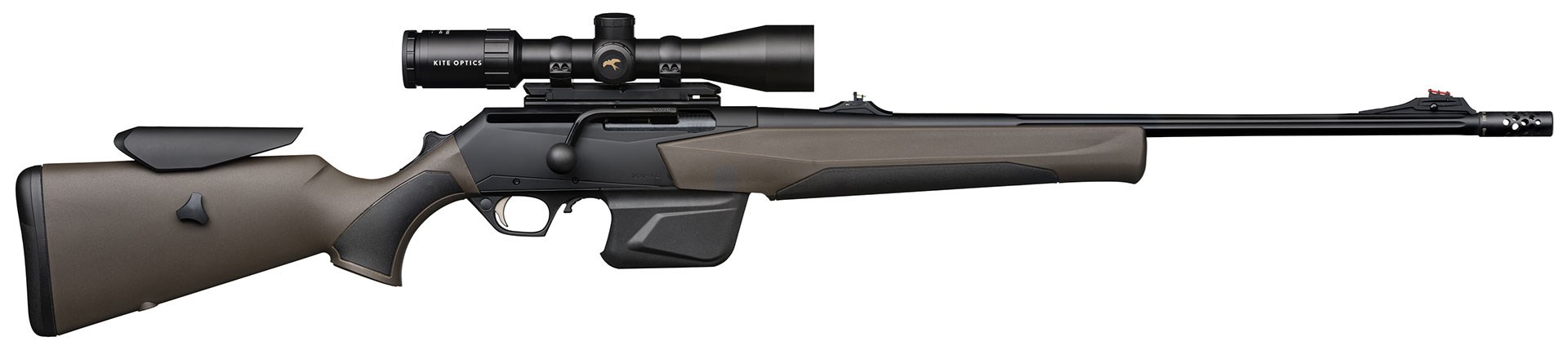
The Browning Maral SF Composite HC straight-pull bolt action. Source: browningmaral.eu
A few examples of these include modified versions of the Ruger Mini-14 and the Heckler & Koch SL8. Browning makes an manually-operated version of its BAR called the Maral. AR-15s are a popular candidate for this “assisted straight-pull” modification, with companies like LMT and Patriot Ordnance Factory, offering versions in .223 Rem. and .308 Win.
Another version of “assisted” loading is a “release” design. In what can only be described as “semi-semi-automatic” firearms, the action fires and ejects the spent case, but the bolt stays locked back in the open position and a lever must be pressed for it to close so that the next round is chambered. Savage makes a version of its A22 and A17 rimfire rifles that uses this system and French manufacturer Verney-Carron offers a “Stop&Go” system on both rifles and shotguns, where a prominent lever, placed where it can be actuated by the thumb of the shooting hand, allows the action to chamber the next round after each shot.
Categories
I myself would not to find out!
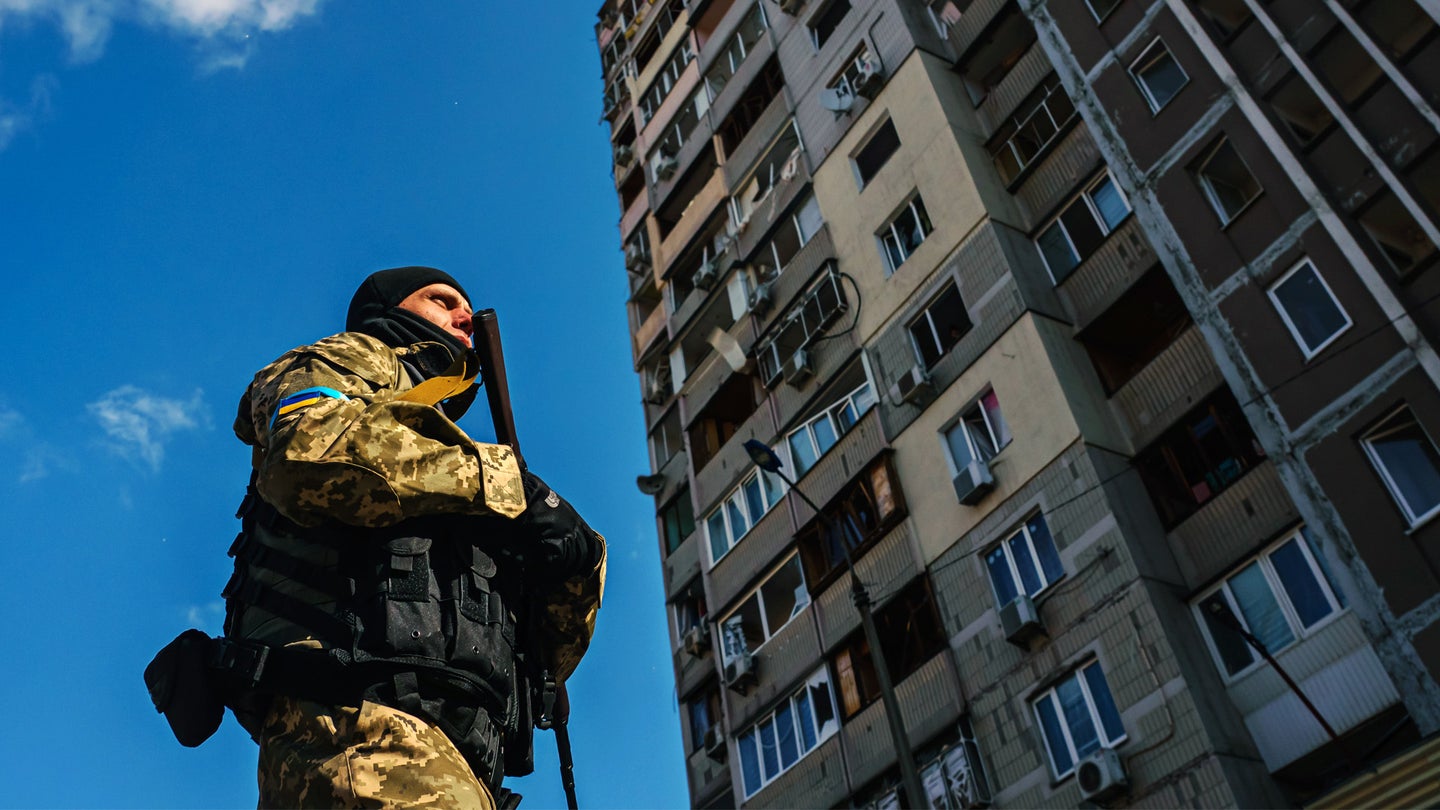
KYIV, UKRAINE — MARCH 17, 2022: A soldier stands guard outside a damaged residential building caused by what authorities say is an intercepted missile that fell from the sky in the Pozniaky neighborhood of Kyiv, Ukraine, Thursday, March 17, 2022. (MARCUS YAM / LOS ANGELES TIMES).
LVIV, Ukraine — “Jesus, what a fucked up country,” John said in exasperation at the vagaries of the Polish rail system. John was one of the latest recruits for Ukrainian President Zelensky’s Foreign Legion, bound for the Ukrainian city of Lviv where his recruiter had told him to report. A rail-thin, 20-something from Mobile, Alabama, John had tried the U.S. Army but left halfway through his enlistment due to “medical problems,” he told me. I wondered if his medical problems had resolved sufficiently for him to be fighting the Russians but said nothing. Sporting woodland camouflage, a scraggly goatee, and thick glasses of the style made famous by Jeffrey Dahmer, John seemed to me to be an unlikely candidate. He soon confirmed that impression.


 “I wanted to fight, see,” he explained, “But my mom said that I wouldn’t be any good at that. So I figured, they are going to need someone to show them the way.”
The Way – it turned out – was not the Way to expel the Russians, but a different kind of Way. John was here to enlist in the Ukrainian Army as a chaplain. I tried to be encouraging but couldn’t deflect an image of John delivering eulogies in broad Alabaman to uncomprehending Ukrainian soldiers as they headed up the line. Sorry about the no-fly zone thing President Zelensky, but we can save the Ukrainian people in other ways.
John, incidentally, was one of the first prospective Legion recruits whom I met, but by all accounts, his story was not unusual. The initial crop of applicants has been a mixed bag – with a swarm of Fantasists for every one candidate with experience in combat. And even combat experience means little in this war – because trading shots with the Taliban or al Qaeda is quite different from crouching in a freezing foxhole being pummeled by artillery fire.
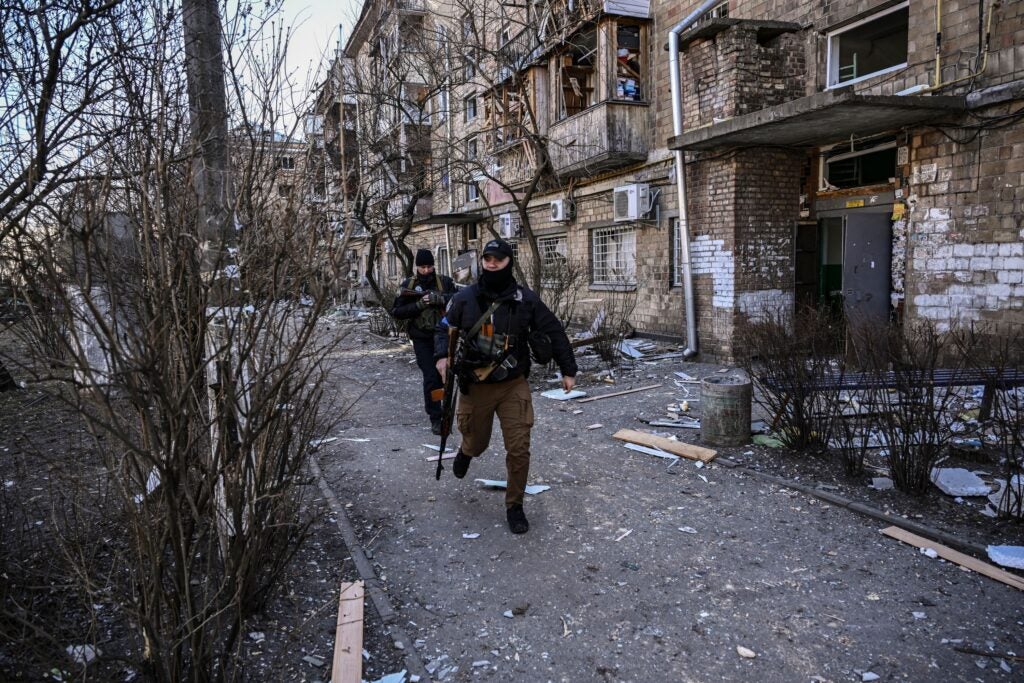
Recruits for the Ukrainian Foreign Legion are invited to apply via the Ukrainian embassy in their country of residence. After a cursory initial interview, they are told to head for Ukraine via Warsaw and overland to Lviv in western Ukraine. The route is so well known that it is heavily monitored by the Russians, according to a Ukrainian special forces officer I spoke with. He was worried that they would soon begin targeting recruits before they reached their destination. After Lviv, the recruits are sent to a camp near the Polish border for selection and training. Selection apparently follows no discernable process other than separating those that don’t have military experience from those that do. The former are put through a 4-week training course — the latter are given a weapon and sent to the front in ad-hoc units with a Ukrainian officer. Some candidates are inexplicably rejected while others – regarded as being eminently unsuitable by their peers, are retained. In any case, the process has some fatal flaws – no one becomes a competent soldier in just 4 weeks, and even experienced soldiers require assimilation training. Every war has its own dynamics which can be equally lethal to veterans and beginners if not properly understood.
In their first trial by fire earlier this month, the volunteers were put into a hasty defense north of Kyiv, as the Russians began their onslaught on the towns lying north of the city. After the initial volley of Ukrainian anti-tank missiles had stopped the attackers in their tracks, enemy soldiers spilled out of their armored fighting vehicles about a quarter-mile in front of the volunteers, and into a withering storm of fire that halted the assault. “Shoot the ones in black uniforms,” a Ukrainian platoon commander is said to have told his foreign charges. “They are Belarusians.” Ukrainians are particularly incensed (but not surprised) at the perfidious complicity of Belarusian autocrat Alexander Lukashenko in taking his stance as a sycophantic second to President Vladimir Putin. Sadly, as with Putin, it is Lukashenko’s soldiers who are paying the price.
Although the Legionnaires helped to halt the attack, their performance that day was uneven — an observation that led the Ukrainians to discharge the surviving members of the initial intake, without any ceremony or official notification. Worse was to come. An unknown number of new recruits were training at a camp near the border when, a strike by Tupolev bombers, carrying Kh 101 cruise missiles, destroyed the camp. The death toll is not yet clear, but Ukrainian officers have told me that it will likely be more than 100.
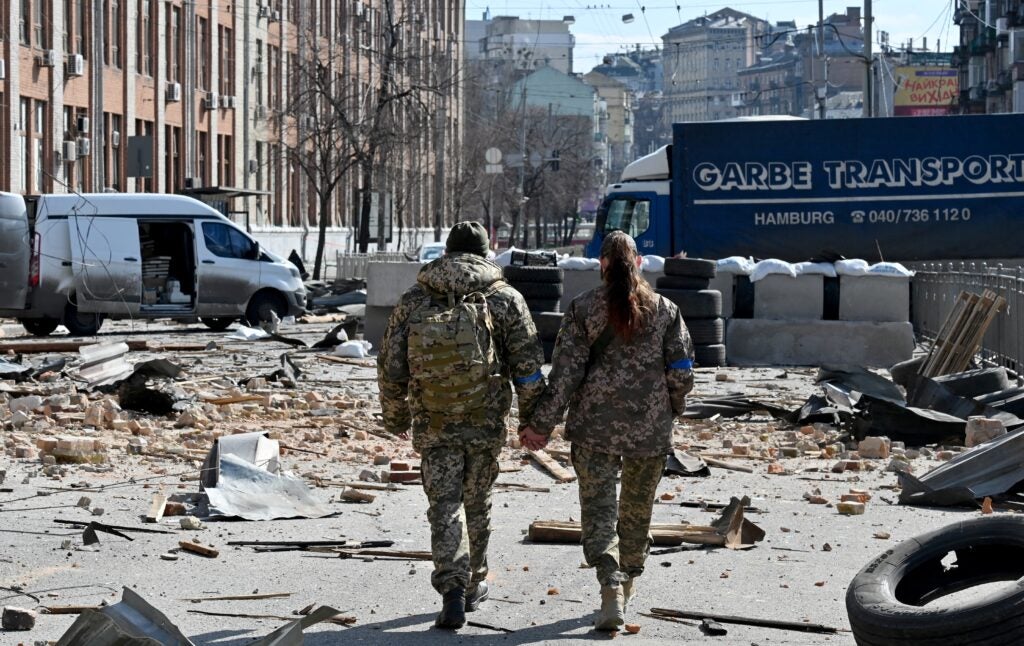
With most of its initial intake now discharged, and many from subsequent intakes killed or wounded, the plan to stand up the Ukrainian Foreign Legion program is one part of the Ukrainian war effort that is definitely not going well.
“We should only take experienced combat veterans — that is the lesson that we are learning,” a Ukrainian general told Task & Purpose on condition of anonymity. “The others don’t know what they are getting themselves into – and when they find out, they want to go home. We need specialized skills – especially snipers.”
Since the well-publicized death of several senior Russian officers, snipers have become in this conflict what fighter pilots were to Britain in 1940. But snipers won’t win the war for Ukraine. “They need to know how to plan,” said one U.S. official here in the country, with long experience of working with the Ukrainian military. “So far they have been in the defense, but if they want to win ground back, they are going to have to come up with a good combined arms plan. That’s not a collective skill that comes after a couple of classes – and the Ukrainians lack experience in doing this sort of thing.” Fortunately, so do the Russians.
John was having none of this. “Yeah, well they gonna need someone to administer to them,” he insisted, before shouting again in frustration at the Poles. “Can’t wait to get out of this shitty country.” I wanted to remind him that the place where he was going was considerably shittier but thought it churlish to do so.
Andrew Milburn retired from the Marine Corps as a colonel in 2019 after a 31-year career as an infantry and special operations officer. His last position in uniform was Deputy Commander of Special Operations Central (SOCCENT), and prior to that commanding officer of the Marine Raider Regiment and Combined Special Operations Task Force – Iraq. Since retiring, he has written a critically acclaimed memoir, When the Tempest Gathers, and has had articles published in a number of national publications. He is currently on assignment for Task & Purpose in Ukraine
Categories
How about some Kimber Porn?