Month: March 2022
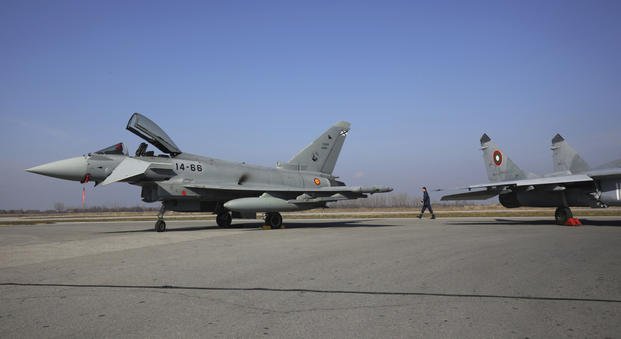
Shortly after the Russian invasion began, unconfirmed rumors spread widely across the internet of a mysterious Ukrainian fighter pilot in a MiG-29 gunning down six enemy aircraft within the first hours of the war.
The unknown military hero, dubbed “The Ghost of Kyiv” on social media, had been taking to the skies since the invasion started and allegedly reached 21 confirmed Russian aircraft kills as of Wednesday, making the pilot the first supposed flying ace of the 21st century.
“The Ghost of Kyiv,” however, is almost certainly a myth, albeit an incredibly useful one as Ukraine tries to rally its citizens to resist Russian conquest.
The majority of the videos and photos of a MiG-29 dogfighting shared on social media have been proven by fact checkers and researchers to be old, outdated and, in one instance, repurposed footage from a popular video game flight simulator.
Additionally, reports of a MiG-29 shooting down multiple Russian aircraft since the invasion began have not been independently verified. But that hasn’t stopped the Ukrainian media, government and politicians from sharing tales of the “Ghost” online in an effort to grow morale and bolster support for the defense of their nation.
“Ghost of Kiev – MiG-29 pilot in the first 30 hours of Russian invasion into Ukraine gained 6 air victories in the sky over Kiev: hit 2 Su-35 planes, 2 Su-25 planes, 1 Su-27 and MiG-29.
The 15th flight already!!! Who is our Hero?” read a Facebook post attributed to Serhiy Borzov, who’s listed as Ukraine’s head of the Vinnytsia Regional State Administration.
On Feb. 25, the Ministry of Defence of Ukraine stoked the rumors by tweeting that “The Ghost of Kyiv” may be one of the reserve pilots who returned to fight after the Russian invasion.
“Dozens of experienced military pilots, from captain to general, previously released from the reserve, are returning to the Air Force,” the ministry tweeted. “Who knows, maybe one of them is the pilot of the MiG-29, which is so often seen by the people of Kyiv!”
The fact that the Russians have not yet established air superiority in Ukraine is helping to keep the myth alive. A U.S. senior defense official speaking on condition of anonymity told reporters Wednesday that “Ukrainian air defenses remain operational” and that the skies are “very contested and very dynamic.”
Additionally, a lack of clear information from the Russian and Ukrainian governments regarding casualties has added to the mystique of the “Ghost.”
The Ukrainian Defence Ministry claimed that nearly 6,000 Russian troops and 30 aircraft had been eliminated by its forces as of Wednesday morning. Later in the day, Russia’s Defence Ministry claimed 500 of its troops had died, but has not shared what aircraft have been lost.
At the moment, it seems the biggest asset “The Ghost of Kyiv” is bringing to the fight is increasing morale among Ukrainians willing to take up arms against the Russians.
Peter Singer, an American political scientist and author of “LikeWar: The Weaponization of Social Media,” told Military.com that “The Ghost of Kyiv” is the latest example of how governments rely on hero narratives to inspire bravery and boost morale when they’re being oppressed.
“It’s a very classic human need to find and search for heroes amidst tales of horror,” Singer said. “It’s something the governments involved need to generate and push.”
Although Russia has long been considered the master of information warfare by many security experts, Ukraine has been effectively utilizing Telegram, Twitter and Facebook to push war narratives that have been shared at unprecedented levels.
“In any information warfare, but all the more in the new social media version of it, you need to supply … a steady diet of surprises,” Singer said.
Other viral tales have included the “Ukrainian Reaper” — a soldier who was rumored to have 20 kills within the first day of the invasion — as well as the fate of Ukrainian soldiers on Snake Island, who at first were reported to have been killed, but it was later announced had been captured.
While the stories have rallied Ukrainians and international support for their defense, it’s less clear whether the myths are having an effect on Russian military forces due, in part, to major censorship by that country’s government.
Emerson Brooking, a senior fellow at the Atlantic Council and coauthor with Singer on their book “LikeWar,” said it’s unlikely that many average residents and Russian soldiers are aware of the myths.
He added that war myths have never been taken up by a broader Western audience quite like the ones happening in Ukraine. Russian meme channels on Telegram siding with President Vladimir Putin have been taking aim at the “Ghost.”
“An example that springs to mind is [the Telegram channel] did have a meme expressly making fun of The ‘Ghost of Kyiv,'” Brooking said. “But the context here was ‘look at the Western media, and Ukrainians inventing something because they have no hope.'”
Brooking added that many Russian citizens didn’t even know about the Ukrainian invasion until last week, and that their own war myths and memes will likely kick into high gear when state media build wider support for the conflict.
In America, many online users were disappointed to find out the “Ghost of Kyiv” is likely not real. Singer added that, while the fighter pilot may not exist, one thing is true: Ukraine is holding its own in the skies.
“Does the ‘Ghost of Kyiv’ have the same kind of mystique that the Red Baron had in World War I when allied pilots were fearful of running into him before they even take off?” Singer asked. “I don’t think we can answer that part. But have the Ukrainian air defenses fought back better than the Russians assumed? That’s a definite yes.”
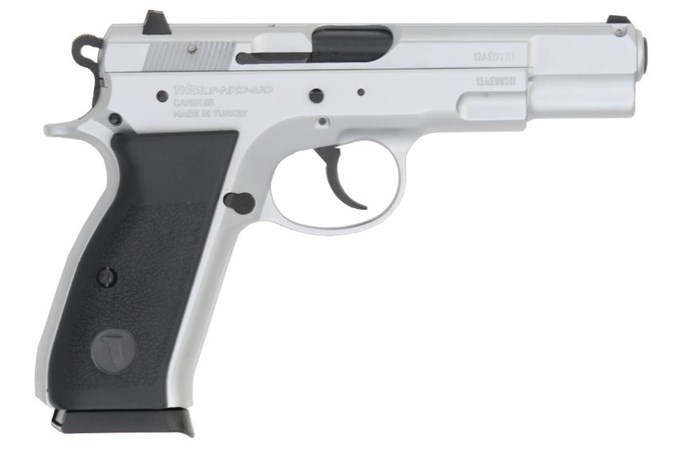


Biden is likely to discuss the $1billion defense package he plans to offer Ukraine on Wednesday, likely to include the Switchblade drones. Volodymyr Zelensky will also address the U.S. Congress on Wednesday, and is expected to ask for more weapons to fight Russia. Ultra high-tech drones could be on his list.
The small, lightweight and comparatively cheap Switchblade weapons are designed by Washington DC-based AeroVironment. The most powerful of the two Switchblades, the Switchblade 600, weighs 50lbs and can hover over a target for 40 minutes before darting down at speeds of 115mph, piercing armor and destroying a tank.
The lighter Switchblade 300 is intended to kill people in the open and passengers in a vehicle. It weighs only 5.5lbs but can travel for six miles, hover for 15 minutes, and then dive down to a target at 100mph. Both Switchblades are designed to be easily portable, fitting into a rucksack and fired from a tube set up in 10 minutes.
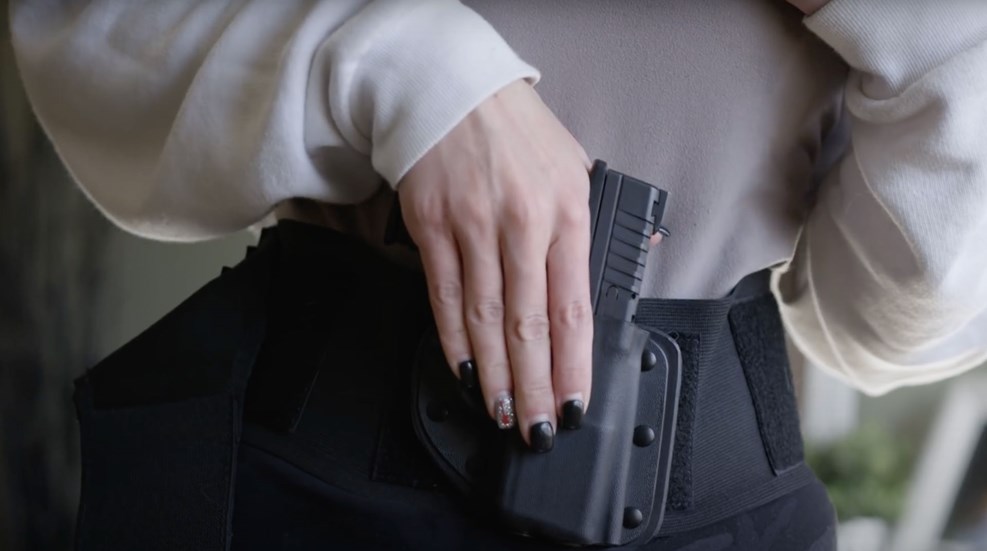
CrossBreed Holsters Modular Belly Band
CrossBreed Holsters YouTube
One of the most common questions I am asked as a firearms instructor is, “What gun would you recommend for self-defense?” As all instructors should, I go through the pros and cons of the different actions, makes and models so that the student can make an informed decision. There is no one-size-fits-all defensive firearm.
The natural follow-up question should be, “What type of holster should I wear?” Unfortunately, that follow-up question is seldom asked. However, there are as many holster options as there are handguns. I now ask that follow-up when I am asked the first question. After discussing the pros and cons of handgun choices, I ask the student or new shooter, “How to you plan on carrying your self-defense gun?” The answer is always the same, “I am not sure,” or “I have not really given it much thought.” Decisions on the right gun and holster type should go hand-in-hand.
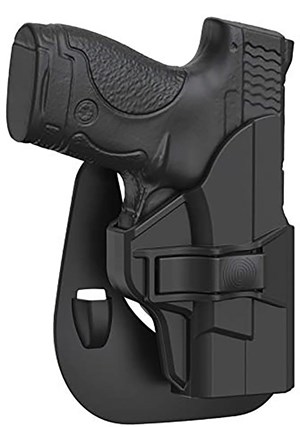
Outside the Waistband Holster
Outside the waistband (OWB) holsters are usually worn on the strong side of the individual. Many individuals who live in open carry states prefer the outside the waistband holster.
The most common OWB holster is the traditional belt holster. This type attaches and secures the holster to the body by sliding through the belt loops or snapping over the belt. The belt holster provides the most secure and strongest base for drawing your firearm.
Another type of outside the waistband holster is the paddle holster. This type of holster is attached to a paddle that slips over the belt and pants with the paddle inside the waistband, and the holster outside the pants and belt. These are beneficial because they can be easily removed and locked in your vehicle if entering a place where firearms are prohibited, such as a U.S. Post Office.
Outside the waistband holsters allow the carrier to access her firearm from a natural position and are easily concealed by an outer garment. This type of carry allows you to easily access the firearm from a natural position. As you walk or if you are just standing, your arms naturally hang to your side with your hand reaching near or about waist level. Carrying a firearm on your belt outside the waistband is also very comfortable. However, during warm weather you’ll have to keep that jacket or coat on if you wish to carry concealed. You’ll also need two hands to draw your firearm; one to clear your clothing and one to draw the firearm.
Inside the Waistband Holster
Like the outside the waistband, the inside the waistband (IWB) holster is usually worn on the dominant hand side of the individual. This type of holster is placed inside the waistband, next to your body. The holster is secured by clips that attach to your pants or belt. The firearm is then concealed by covering it with an outer shirt. A properly fitted inside the waistband holster provides the best concealment of the firearm with minimum printing, or visible outline of the firearm. The inside the waistband holster also usually rides higher on the hip, eliminating the need for special or additional clothing to try and conceal the firearm.
Many people report that inside the waistband holsters are not as comfortable as outside the waistband holsters. The wearer may need to purchase larger-sized pants to accommodate the extra room needed for the holster. Additionally, like the outside the waistband holster, the inside the waistband holster also takes two hands to draw. One hand is needed to clear the clothing from the holster and the other hand is used to draw the firearm.
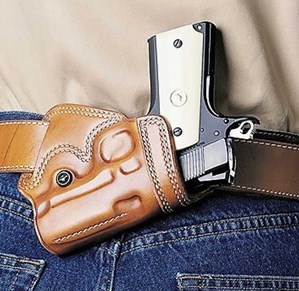
Small of the Back Holster
There are two types of small of the back holsters. One can be worn outside of the belt and the other inside, both sitting in the middle of the small of the back. These holsters are usually attached to the belt. Small of the back holsters are easy to conceal, especially with a jacket. However, they are only comfortable when standing or walking.
The small of the back holster is a less common form of carry because there are many cons. First, it is relatively slow to draw compared to the other types of holsters. This is because your firearm is more difficult to access due to the excessive arm and hand movement needed to reach your firearm. This type of holster also tends to be very uncomfortable while seated and can be almost impossible to draw while sitting in a vehicle.
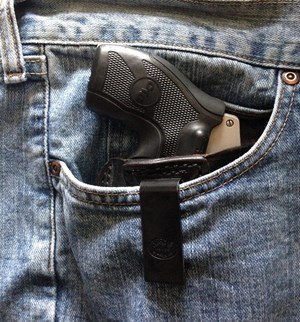
Pocket Holster
Pocket holsters are growing in popularity. Pocket holsters are small enough to fit in the front pocket of your pants. This type of holster allows for quick and easy access to your firearm. It is a very comfortable carry, whether you are sitting, standing or walking. The pocket holster is carried in the pocket on the strong side or dominant hand side. This type of holster is easily concealable, regardless of the outside temperature. It also can be carried in the pocket of any type of clothing, such as suits, jeans, shorts, dresses, etc.
There are a few downsides to using a pocket holster. The number one drawback is that it is only compatible with small-frame revolvers or micro pistols. Small handguns usually mean a small ammunition capacity. Many feel that the limited ammunition capacity is a fair trade-off for always having a firearm for self-defense. Those individuals who use a pocket holster are seldom without protection.
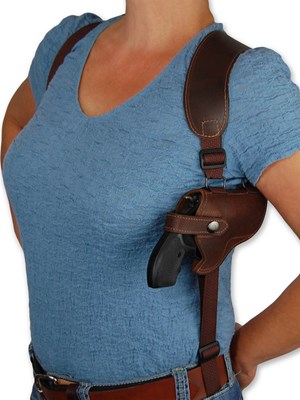
Shoulder Holster
Shoulder holsters are usually carried when wearing a suit, vest, jacket or other type of outer garment. It seems that everyone who has tried a shoulder holster eventually settled on another type of holster. If properly fitted, the shoulder holster can be comfortable to wear. Unfortunately, if it is not properly fitted, it can be very uncomfortable by adding stress on the shoulders or back.
The biggest benefit to a shoulder holster is that it is easy to accessorize with extra magazines, speed loaders, flashlights, etc. Another benefit is that the firearm is easily accessed by the wearer. The firearm is worn opposite of the dominant hand and can be drawn with one hand. The wearer reaches across the body with their strong hand to grip the firearm and draw from the holster.
There are several cons to using shoulder holsters. The most obvious is the need of an outer garment for concealment. The biggest obstacle with the shoulder holster has to do with safety. When teaching firearm classes, we stress muzzle control and keeping the muzzle pointed in a safe direction in every single situation. Shoulder holsters often violate this cardinal safety rule. Most shoulder holsters are positioned so that the barrel is pointed to the rear. This causes the muzzle of the firearm to “sweep” anyone or anything that is behind the wearer. Other shoulder holsters point the muzzle straight down but cause the same safety violation if the wearer bends over.
Some gun ranges and clubs prohibit the use of shoulder holsters while on the premises for this reason. The other safety issue with the shoulder holster is the act of drawing the firearm. As the gun is removed from the holster to cover the target, the firearm can sweep across unintended objects, including other individuals in the area.
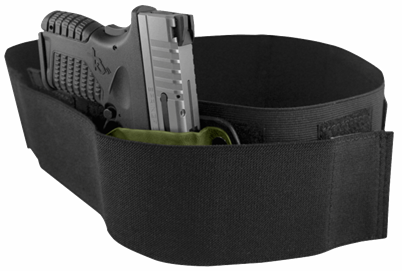 Belly Bands
Belly bands are a unique style of firearm retention holsters. A belly band is an adjustable elastic band that wraps around the waist to fit any body shape or size. They are typically very lightweight and comfortable to wear. Belly bands can hold just about any pistol or revolver that is designed for concealed carry.
The belly band offers great firearm retention and safely protects the trigger. All the wearer needs to do is access their firearm by raising their outer garment with their non-dominant hand and drawing the firearm with their dominant hand. There are also belly bands that not only offer pockets for handguns and extra magazines, but pockets for other items such as a mini flashlight and nonlethal methods of self-protection such as pepper spray.
Like any firearm retention system, there are disadvantages to wearing a belly band. In hotter climates, belly bands can be uncomfortable. Some people who wear a belly band in the cooler months tend to opt for a different holster style in the summer. Another disadvantage to belly bands is that accessing the firearm can take longer than accessing from other types of holsters.
Choosing and training with your holster is just as important as training with your firearm. After all, you can be very proficient with your firearm, but if you cannot access it quickly to defend yourself when needed, you could be in trouble. All shooters, new and old, need to practice drawing from their holster. Also, just like all shooters should try different handguns to find the one that best fits their needs, they should know the pros and cons of different holsters and try out a few different options.
