



1. Arizona
2. Idaho
3. Alaska
4. Kansas
5. Oklahoma
47. California
48. New Jersey
49. Massachusetts
50. Hawaii
51. New York
Each year we provide an update on firearms-related legislative activity and use each state’s laws and rules to create our Best States for Gun Owners rankings. Calling 2020 a “different year” would be a gross understatement. As COVID-19 swept the world and the nation, states suspended or adjourned their legislative sessions midstream. Thousands upon thousands of bills died on the vine as lawmakers vacated their respective state capitols. Some legislatures, including those in Texas, Montana, North Dakota and Wyoming, meet every other year and did not go into session in 2020 at all. The short version is, as a result of these events, very few changes in firearms laws occurred this year.
Due to this unusual set of circumstances, this year’s rankings will be a bit different than in years past. Where states made meaningful changes in law, we will outline those. Where states took no action that would change our scoring, we note that as well. As in previous years, we evaluate each state numerically in each of five categories: Right-To-Carry/CCW, access to “Black Rifles”, the states’ use-of-force laws i.e., Castle Doctrine, the prohibition of items regulated by the National Firearms Act (NFA) and a catchall Miscellaneous column.
States are awarded 0-10 points in each category and ranked according to their total number of points. In the case of a tie, which is common, we dig deeper into the “intangibles” category and rank states accordingly. Please note that while we have done our best to rank states as objectively as possible, reasonable minds disagree with our findings. No article of this length could capture every nuance of a state’s statutory and regulatory framework. Each year I receive comments from readers on individual states’ rankings and, in many cases, I learn something new from that feedback — please keep it coming.
This category is evaluated using the criteria applied in our “Best States for CCW” rankings: standard for issuance, training requirements, cost, reciprocity and the extent of locations where licensees are prohibited from carrying. May-issue states that rarely issue permits are graded accordingly and can receive 1-6 points, depending on the standard review factors. Shall-issue states, states that require that a permit be issued as long as the applicant is qualified, are given 6-8 points. States with legal permitless or “constitutional” carry are given 9 points, whereas states that both issue permits and allow citizens to carry without one are given a full 10-point score. States that issue permits and allow for permitless carry for residents only are given 9.5 points. Open carry laws are considered under the miscellaneous column and can also be used as a tiebreaker.
This category examines whether a state regulates or bans firearms based on their appearance. These laws often require registration of certain firearms and, in some states, ban ownership altogether. Our rankings reflect whether a state regulates any category of firearm by its features or limits magazine capacity.
The National Firearms Act (NFA) regulates the sale, transfer and possession of machine guns, suppressors (actually called “silencers” in the law), short-barreled rifles (SBR), short-barreled shotguns (SBS), Any Other Weapons (AOW), and Destructive Devices (DD). This federal statute allows states to further restrict these items (we use the term “items” since suppressors are not firearms but are covered under the NFA) and some states ban their ownership altogether or piecemeal; we rank each state based on a sliding scale of regulations. This has been an active category in recent years as states have moved to legalize the ownership and use of suppressors.
The term “Castle Doctrine” has become shorthand for a state’s use-of-force laws. Some states require citizens to retreat before the use of deadly force is authorized. We rank states based on the right to use force both inside and outside of homes and businesses. We award maximum points to states that allow the use of force wherever a person has a legal right to be and protect citizens from both criminal and civil liability if appropriate force is used.
This is the most subjective category in our survey but allows us some leeway to quantify the culture and environment in a given state. We use this category to track preemption statutes, laws and rules that fall outside of our other buckets as well as the availability of places to shoot. States with thriving competitive shooting communities are also recognized here and states with laws that allow for gun confiscation without due process, i.e., Red Flag laws, are penalized.
No relevant outcomes in 2020. (2019 rank: 51)
Dozens of gun control bills were introduced in Hawaii this year but only two actually became law. A magazine ban and other bills failed to advance, but the Governor did sign legislation that will make the creation of home-made guns a felony. The other bill requires that gun owners give formal notice when permanently removing a firearm from the state, with financial penalties imposed for non-compliance. (2019 rank: 48)
Gov. Baker closed gun shops as part of his executive powers related to the pandemic, but a Federal Court ruled that the state overstepped its authority and placed an undue burden on the Second Amendment. The court ordered that gun stores be allowed to reopen and the Governor subsequently opened shooting ranges by executive order. A small victory in an otherwise hostile environment for gun owners. (2019 rank: 50)
Governor Murphy shut down gun shops, shooting ranges and firearm transfers in March by executive order. Thanks to action by the Trump Administration and a lawsuit by the Association of New Jersey Rifle and Pistol Clubs (ANJRPC), transfers eventually resumed and outdoor shooting ranges reopened. An attempt by the Governor to exponentially raise the cost of pistol permits and firearm licenses failed when the measure was omitted by the legislature’s budget bill. (2019 rank: 49)
One of the most important Second Amendment cases in recent memory moved closer to resolution this year when a Federal Appellate Court struck down the state’s magazine ban in the Duncan V. Becerra case. The fight isn’t over yet, though, as the state’s Attorney General has petitioned for an en banc review by a panel of judges. The ban remains in place as the court considers the case. If the larger panel upholds the ruling, it will be a game-changer for gun owners, so stay tuned. (2019 rank: 47)
No relevant outcomes in 2020. (2019 rank: 46)
Unlike some of his neighboring Governors, Connecticut Gov. Ned Lamont declared firearm and ammunition retailers as “essential businesses” as part of his pandemic-related executive order. A special session of the legislature is currently underway but, as of now, there are no indications that gun control bills will be pursued. (2019 rank: 45)
2020 was a surprisingly good year for Maryland’s gun owners. Gov. Hogan kept gun stores open despite the state’s shutdown, and vetoed legislation that would have banned the private transfer of long guns. In July, the State Police announced that mandatory handgun training required to obtain a Handgun Qualification License can now take place online due to the pandemic. (2019 rank: 44)
Numerous anti-gun bills, including “assault weapon” and magazine bans, were introduced in 2020, but the COVID-related shutdown prevented any of them from passage. Time will tell whether these issues will see new life in 2021. (2019 rank: 43)
No relevant outcomes in 2020. (2019 rank: 42)
Legislation that would ban private transfers and “reform” the state’s FOID (Firearms Owner Identification) system were been carried over from the 2019 session but did not pass. The Illinois Legislature can meet year-round, so the fight is never over. (2019 rank: 41)
No relevant outcomes in 2020. (2019 rank: 40)
Bills that would ban private transfers and allow for firearm confiscation by law enforcement passed the Democratic-controlled Minnesota House in February but stalled in the Republican-led Senate. (2019 rank: 39)
Magazine bans and other gun control bills failed to make their way out of the Legislature, but three bills did pass. One of the bills, which was signed by Governor Inslee, prohibits carrying a firearm at a daycare center, regardless of whether the individual has a CPL (CCW) permit. Other bills that became law will create an Office of Firearm Violence Prevention and impose additional requirements related to court-ordered surrender of firearms. (2019 rank: 38)
No relevant outcomes in 2020. (2019 rank: 37)
No relevant outcomes in 2020. (2019 rank: 36)
No relevant outcomes in 2020. (2019 rank: 34)
Governor Reynolds signed legislation in June to protect Iowa’s shooting ranges from local ordinances designed to put them out of operation. Access to safe shooting facilities is key to ensuring the future of responsible gun ownership. The bill also preempts municipal governments from imposing their own restrictions on firearms ownership. This important move earns Iowa an additional point in the Miscellaneous category. (2019 rank: 35)
All eyes were on Virginia this January after Democrats took majorities in both chambers of the Commonwealth’s General Assembly. What looked like certain victory for a semi-auto, magazine and suppressor ban took a sharp turn when a handful of Democrats voted against the measure during a Senate Judiciary Committee hearing. Still, the Governor achieved passage of at least some of the items on his gun control wish list. Legislation passed that weakens the state’s preemption laws and numerous municipalities are already acting to prevent firearm possession in public areas. Virginia’s old “one gun a month” law was reinstated, though those with carry permits are exempt. Private transfers were effectively eliminated and a Red Flag confiscation program has been created. Virginia is a shining example of how a single election cycle can drastically change the fate of gun owners in a given state. These actions costs Virginia points in the Miscellaneous category and look for efforts to pass more onerous legislation in 2021. (2019 rank: 31)
Bills that would have gutted Oregon’s preemption law and imposed mandatory storage requirements on gun owners failed when the Republican members of the Legislature staged a walk-out, preventing the body from achieving the quorum necessary to pass the bills. Efforts to put semi-auto and magazine bans on the state’s November 2020 ballot failed, but the proponents will surely be back. (2019 rank: 33)
Since our last report, Pennsylvania Attorney General Josh Shaprio issued an Opinion declaring that partially-manufactured firearm components including so-called “80% receivers” qualify as firearms under state law, and should be regulated as such. A bill that would prevent the Governor from restricting firearm rights during an emergency has passed the House and currently awaits action in the state Senate after advancing from the Judiciary Committee in September. (2019 rank: 32)
No relevant outcomes in 2020. (2019 rank: 30)
Governor Noem signed important legislation protecting gun owners in March, just a day after its passage by the Legislature. This law prevents state and local government from restricting the rights of gun owners during emergencies and took effect immediately. Other bills were signed that increased opportunities for concealed carry, including legislation that specifies that a permit is not required when carrying a firearm on a motorcycle, snowmobile or off-road vehicle. (2019 rank: 29)
No relevant outcomes in 2020. (2019 rank: 27)
Last year, the NC General Assembly passed legislation that would allow concealed carry permit holders to carry in places of worship. Governor Cooper vetoed the bill and the Assembly made an unsuccessful attempt to override that veto in July. All eyes were on North Carolina in the November election where gubernatorial, U.S. Senate and Assembly races all carried serious implications for gun owners. Despite huge advantages in fundraising by out-of-state groups, Democrats were unsuccessful in gaining majorities in the state’s two legislative chambers. (2019 rank: 26)
No relevant outcomes in 2020. (2019 rank: 25)
The biggest news for gun owners in the Sunshine State came in June when the state Supreme Court removed a serious gun control proposal from the November ballot. The measure would have amended the state’s Constitution to prohibit possession of “assault weapons”. The state’s Attorney General challenged the proposal and the majority of the court agreed that the ballot summary was “misleading” and took it out of consideration for this election. (2019 rank: 24)
Governor Edwards proved that protecting the Second Amendment need not be a partisan issue when he signed four pro-gun bills in June. These bills allow permittees to carry in places of worship, protect the rights of gun owners in times of emergency and prevents municipalities from restricting firearm possession. (2019 rank: 28)
No relevant outcomes in 2020. (2019 rank: 23)
No relevant outcomes in 2020. (2019 rank: 22)
Nothing notable happened in Wisconsin’s Legislature in 2020 but the state’s Stand-Your-Ground law made national headlines in the context of the riots and shootings in Kenosha. (2019 rank: 21)
Indiana continued to establish itself as a gun-friendly state this year as laws passed in 2019 went into effect. Those laws protect individuals from frivolous lawsuits related to self-defense encounters, and eliminate fees for concealed carry permits in the state. Additionally, the Governor declared that firearm and ammunition suppliers and retailers could remain open during the COVID-19 crisis. (2019 rank: 20)
No relevant outcomes in 2020. (2019 rank: 19)
An effort to create a lifetime carry permit in the state failed when the Legislature adjourned Sine Die in May. This measure was opposed by the state’s sheriffs, many of whom derive revenue from the issuing of carry permits. The good news was that gun stores remained open during Gov. Ivey’s shutdown of the state. (2019 rank: 18)
Governor Chris Sununu vetoed legislation in August that would have allowed for firearm confiscation without adequate due process protections. An attempt by the legislature to override that veto failed, closing the book on this issue for 2020. (2019 rank: 17)
No relevant outcomes in 2020. (2019 rank: 16)
Governor Justice signed legislation in March that strengthens the state’s firearm preemption statute, making the state even more friendly for gun owners. Attorney General Patrick Morrisey stood up for the Second Amendment once again when he advised Sheriffs that they may accept LCDW/Concealed Carry applications and renewals by mail. Though West Virginia is a permitless carry state, the LCDW is key when traveling to other jurisdictions and also satisfies the background check requirements for purchasing a firearm. I have long lampooned a WV law that prevented guns from being displayed in a store window — thanks to legislation sponsored by Delegate Brandon Steele, that law is off the books! (2019 rank: 15)
No relevant outcomes in 2020, the state’s legislature did not meet in 2020. (2019 rank: 14)
Tennesseans have sought permitless carry for years, but their efforts got a boost in 2020 when Gov. Lee endorsed the proposal. What looked like a sure thing in January fell victim to the COVID shutdown when the bill failed to advance before the legislature’s adjournment. Barring any unforeseen events, we should see passage of this bill in 2021. (2019 rank: 13)
No relevant outcomes in 2020. (2019 rank: 12)
No relevant outcomes in 2020. (2019 rank: 11)
No relevant outcomes in 2020. (2019 rank: 10)
No relevant outcomes in 2020. (2019 rank: 9)
No relevant outcomes in 2020. (2019 rank: 7)
No relevant outcomes in 2020. (2019 rank: 8)
No relevant outcomes in 2020. (2019 rank: 6)
No relevant outcomes in 2020. (2019 rank: 5)
An emergency powers bill designed to protect gun owners was passed during a Special Legislative Session, but the measure was vetoed by Gov. Kelly. Nonetheless, firearms-related businesses were exempt from the Governor’s COVID-19 shutdown order. (2019 rank: 4)
No relevant outcomes in 2020. (2019 rank: 3)
The big news for gun owners in Idaho this year was Governor Brad Little’s signature on a permitless carry bill in March. Permitless carry was already legal for Idaho residents, but this legislation extends the law to cover all U.S. Citizens over the age of 18 to carry, including in the cities. With this slight change in law, Idaho ties the number one state in terms of points. (2019 rank: 2)
No relevant outcomes in 2020. Arizona remains number one on our list due to its thriving competitive shooting scene and firearms industry presence. (2019 rank: 1)

Daniel Greenfield, a Shillman Journalism Fellow at the Freedom Center, is an investigative journalist and writer focusing on the radical Left and Islamic terrorism.
In “Surf City,” the Beach Boys sang that there were two girls for every boy. But in Swamp City, there are four cops for every Congressman.
That doesn’t refer to Washington D.C.’s already huge concentration of law enforcement and multiple overlapping police forces. Washington D.C. has the highest ratio of police to people of any major city in the country. There are 650 officers for every 100,000 residents in D.C. That’s 40% higher than any other major city in America including Chicago and Baltimore. It has a 58% higher police ratio than New York, more than double that of Boston, and triple that of L.A.
But that’s nothing compared to the private police force dedicated only to protecting Congress.
The Capitol Police, which has been in the spotlight since the Capitol Riot, has over 2,000 sworn officers. Pelosi’s private police force is the 19th largest police force in America.
It’s already larger than the police forces of Atlanta, Baltimore, Denver, and Milwaukee.
While Democrats advocated defunding the police, their private police force budget shot up from $375 million in 2016 to $460 million in 2020. And now it’s demanding even more money.
Speaker Pelosi claimed, “It’s going to take more money to protect the Capitol in a way that enables people to come here.”
How much money? Who knows.
Colonel Bowie managed to hold off the Mexican Army at the Alamo for over a week with a few hundred men, but the Capitol Police couldn’t keep Congress for an hour with a thousand.
Acting Chief Yogananda Pittman, told Congress that she needed funding for 212 new sworn officers and 111 dignitary protection agents. That’s a fancy name for the congressional version of secret service agents for “high-profile members of Congress.” Teams of four of these “agents” accompany their important charges. Since then, the number of agents has been increased and there are six dignitary agents protecting every single “high-profile member of Congress”.
(Some dignitary protection agents had even been deployed to protect the homes of “high-profile members of Congress” during the Capitol Riot and weren’t available to help during the fighting.)
That would take the Capitol Police up to at least 2,200 sworn officers. And with 535 elected officials in the House and Senate, that’s a ratio of 4 cops for every congressman and woman.
Meanwhile the high-profile members get a private security detail of 6 cops.
While the names of those high-profile members are not available for security reasons, these likely included senior leadership figures in both parties as well as high-profile politicians who attract a lot of threats. That would likely include some members of the Squad and other Democrat proponents of police defunding. Or defunding other people’s police anyway.
While Democrats have advocated for police defunding, their House and Senate majorities currently enjoy some of the densest possible ratio of police for them and their employees.
House members had 3,695 staffers (total 6,880 nationwide) and Senate members had 2,342 staffers (total 4,120 nationwide) working in their D.C. offices for a combined 6,037 people.
That’s up from 146 in 1891, and 304 in 1943, which is understandable since our government works much better now than when we won WW2.
Between members of Congress and their staffers (not to mention kits, cats, sacks, and wives), that’s over 6,500 people to be protected by 2,200 sworn officers. Or a cop per 3 employees.
Even Vatican City, with the highest police ratio in the world, is more modest than that.
The shopkeepers of Kenosha would have appreciated that kind of police ratio during the Black Lives Matter riots that robbed them of their livelihoods with the backing of the Democrats.
But it stands to reason that the big government elites of the political faction that embraced police defunding not only need their own private police force, but that while the people in the cities whose police forces they want to defund have to make do with 440 officers per 100,000 people in Chicago and 320 officers per 100,000 people Detroit, they enjoy a 1 officer per 3 people ratio.
Police defunding means no cops to answer the call in Seattle or Minneapolis, but 4 cops for every Democrat Congressman whose life is much more important than those of mere taxpayers.
Some might argue that Republicans also enjoy the benefit of a private police force. But that’s not how Speaker Pelosi sees things. According to Pelosi, Republicans are the enemy.
Speaker Pelosi insisted on “more security for members, when the enemy is within the House of Representatives, a threat that members are concerned about.” Who is this enemy within?
“We have members of Congress who want to bring guns on the floor and have threatened violence on other members of Congress,” Pelosi incited. If members have actually threatened violence against other members, why doesn’t she file charges? But Pelosi has admitted that she wants more cops to protect Democrat members of Congress from Republican Congressmen.
If the “enemy is within the House of Representatives”, then the only solution is to turn the Capitol Police into a Praetorian Guard to accompany Democrat police defunders everywhere. And then Republicans can create their own police force to protect them from the Democrats. If America is going to live out the last era of the Roman Empire, we might as well do it in style.
And since history has been cancelled on account of racism, Pelosi will be really surprised when Chief Yogananda Pittman threatens to replace her unless she ups the ‘donativum’ to the force.
Meanwhile the calls for more money and more personnel for the Capitol Police continue to grow.
D.C. is already the most overpoliced city in America. And yet somehow, no one could manage to cope with one day of riots. The Capitol Police, with 2,000 sworn officers, over 1,000 of whom were on duty, claimed that they couldn’t cope with the riot and needed the National Guard.
The D.C. police force, with 3,750 sworn officers, the Park Police, which was also on the scene, and the multitude of other law enforcement personnel and services, some you have heard of, like the FBI, and some which you may have not like the Supreme Court Police (yes, they exist), the D.C. Protective Services Division, and the Federal Protective Service, couldn’t help either.
Washington D.C. is the epicenter of law enforcement in the country. There are more law enforcement personnel in the imperial city than anywhere in the country. And there are more individual agencies, services, and sub-services with armed personnel than anyone can count. Nearly every federal agency has its own private police. Some have SWAT teams. These are often attached to the Office of the Inspector General (OIG) departments based out of D.C.
Four years ago, the Obama administration sent a contingent of heavily armed agents wearing body armor on a Department of Defense plane to Chicken, Alaska, a town of 17 people, on an EPA investigation of Clean Water Act violations that turned up absolutely nothing. If the Democrats could do this to Chicken, Alaska, one of the furthest places in America, they can manage to protect 2 square miles and a handful of buildings with thousands of officers.
Four cops for every Congressman is more than enough in Swamp City, USA.
|
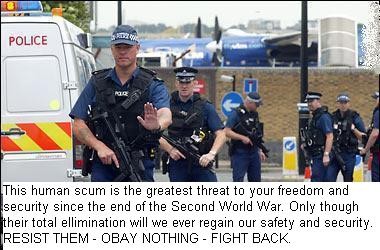
THE HOMEGUNSMITH.COM laws will we ever overthrow Britains anti-gun fascist gun laws. “Vengeance will be mine, one bullet at a time” |
 |
 Home & Intro Home & IntroAbout the Author Family and Friends Book History More Reading  Read This Gun Barrels GREAT GUNS Firearm Archive .22 Silencer (.pdf) Semi-Auto BSP SMG (.pdf) STOP GUNS! New Book     Air Machine Gun Plans! 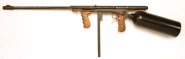 Caselman Air Machine Gun Video! A simple “Zip Gun” design Arrow Rifle Offensive Weapons Videos Links   |
“Securing the Future of Firearms Ownership”
|
Let’s face a few facts. The faceless bureaucrats who are determined to disarm law abiding citizens are not doing so because they are “Nice People” concerned about you or I being the victim of a crook with a gun.
Their Friends in the media who miss no opportunity to churn out the lies, myths and misinformation that have, in the eyes of many, demonised gun owners do not do so because they wish to disarm the local ‘Drug lord’. They do so because they see the private ownership of firearms as a threat to their own power base and an obstacle in the way of their ‘New world order’ mentality. An Orwellian society, nanny state, surveillance society, call it what you wish, they are all part of the same despotic ideas that have, in the last century alone, lead Europe twice down the path of dictatorship and destruction. An armed society is the ‘safety net’, a last wall of defence, the people possess (Possessed?) against the ‘Big brother’ nightmare many see being created all around us. No wonder those with ill intent would like to see the people disarmed!
![Your Country Needs You [helpless]!](http://www.thehomegunsmith.com/pics/kitchener3.jpg)
Some people may find such rhetoric distasteful but it is a truth some find harder to swallow than the cosy ideas we are brainwashed into thinking make our society safer by those who wish to control what we believe, think and do. Some naive individuals adhere to the view that only the police and army should have access to firearms. I call that a police state mentality and a very dangerous mentality at that. History is littered with examples of regimes around the world that have first disarmed their own citizens, always behind the smoke screen of ‘law and order’ and then proceeded to commit atrocities or all out genocide against their own unarmed and helpless citizens. In such circumstances, the ability of the private individual to build his own homemade/improvised gun, or perhaps go into full scale underground arms manufacture, maybe of even greater importance.
My own view is that the gun not only belongs in the hands of the agents of the state (they can never be disarmed) but in the hands of the people as a whole. This is the surest way of maintaining the correct balance of power between state and citizen. The mad rush of government to create a ‘gun free’ Utopia will not, of course, have any effect on the crime rate. The criminal, by definition, does not obey the law and is therefore unaffected by any anti firearms legislation. Gun control will, however, create more and more victims of violent crime as long as we allow ourselves to be disarmed behind the smokescreen of ‘Crime control’. This is the unpalatable truth you will never read in the media or hear from any politically correct politician.
Unfortunately, while we continue to allow the media anti gun propaganda mills to churn out their lies, myths and misinformation we will continue to see the destruction of the ancient liberties and freedoms once securely enshrined under the “Common laws of England”.
When any government deprives a citizen of his freedom or property, the individual must take action to publicise his grievances. To this end, I hope to illustrate in the following pages, the futility of gun control, and that no amount of arbitrary legislation can ever prevent those wanting firearms from owning them. The individual who has the ability to construct his own homemade gun can never be permanently disarmed by any level of gun control legislation.
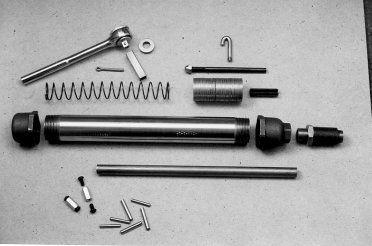
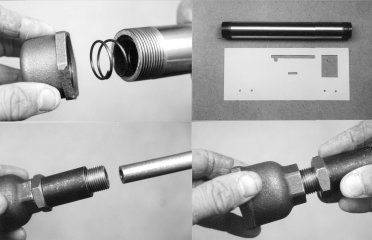
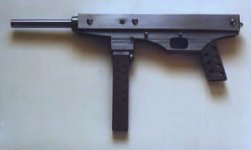
So as to allow you to get a ‘feel’ for the subject of homemade guns, the following pages illustrate how a reasonably light weight and portable homemade Machine gun was assembled from readily available ‘Off the shelf’ materials and components. No lathe or milling machine was required or used.
The firearm that can truthfully be described as “a homemade gun” should be one built using the type of hand tools and materials that the average individual could easily acquire.
 Neither the registered owner or any other person affiliated with this website shall be held liable or responsible, or in any way encumbered by the material posted on this page or any other unit sub-page within this site. Neither shall any material upon this page or any unit sub-page be construed as encouraging persons to engage or partake in, or incite any unlawful activity. With the exception of governments to manufacture weapons of mass destruction (and flog’em to oppressive regimes around the world) be it hereby known that our great and benevolent leaders have decreed that the building of firearms for the protection and security of the individual (or any other reason) is positively forbidden. Anyone building guns, artillery pieces, mortars, rocket launchers, etc, etc does so at his own discretion, risk and enjoyment. |
||
| Honestly!! |