The 1st Combat Aviation Brigade, 1st Infantry Division providing air support at the 7th Army Training Command’s Grafenwoehr Training Area, Germany. (Photo: U.S. Army/Matthias Fruth)
Military leaders are putting new munitions programs into gear to prepare for a bigger fight. The Army, specifically, is canceling hundreds of weapons programs to free up cash for what it’s calling the “Big Six.”
The Army has cut or canceled 186 different smaller weapons programs to focus on artillery and surface-to-surface weapons and munitions, improving their howitzers and rocket systems, developing their next-generation combat vehicles, replacing their vertical lift aircraft, developing a military-wide communications system, shoring up their surface-to-air defense networks and finally, completing their future soldier programs.
All of these are to prepare for war with a near-peer military, such as Russia or China. By focusing on these six major fronts the Army is moving away from its counter-insurgency role.
The Army is now focused more on research and development, and improving its ability to mobilize in large numbers. Part of that will include strategic placement of munitions and how Army depots are organized in the U.S.
“This means having the right munitions – small-caliber to precision munitions – where we need them at the right time and the right place,” said Gen. Gus Perna. “That means we must first ensure that the capability we have here in [the U.S.] can receive, store and issue munitions in a timely, effective manner.”
“We know where they are going to distribute ammunition when the time comes, and we know what they have to replace in time of war. This is the first time this has been done, and I am very proud of where we are at” said Perna. “With that said, we have a lot of work to do.”
A U.S. Army Paratrooper during a live-fire exercise in Postonja, Slovenia. (Photo: U.S. Army/Paolo Bovo)
Perna credited the National Guard for doing the bulk of the lifting. “They are lined up to support us,” Perna said. “They are executing moves around the country as we relocate ammunition … where it needs to be.”
The Army expects to buy 5,112 Hellfire missiles this year, up from 2,309 last year. The Army is also upping its small- and medium-caliber munitions budget from $382 million last year to $508 million this year.
“The Army has had challenges with major defense acquisition programs in the last 20 or so years, because we don’t lock in threat, operating concept and ultimately material and have it all come together,” said Army under-secretary Ryan McCarthy.
“That’s where you see big weapons systems fail, is if the operators aren’t saying how we’re going to use it to prosecute a target in this type of fight,” said McCarthy. Each of the Big Six programs has a 1- or 2-star combat veteran as the lead.
The Army has laid out a five-year plan to heavily invest in those six programs. The long-range precision fire program is their top priority and will receive $5.7 billion over 2020-2024.
The Next-Generation Combat Vehicle program will receive $13.2 billion over the five-year course and the Army has earmarked $4.7 billion for the Future Vertical Lift program.
The network is the biggest expense and will receive $12.5 billion. One important aspect of the network is that the Army is building it in-house using commercial, off-the-shelf hardware and will no longer use government-led IT programs.
The Air and Missile Defense program will get a 90 percent boost and receive $8.8 billion over five years, starting with $1.4 billion in 2020.
The Soldier Lethality program also gets a 90 percent increase to $6.7 billion through 2020-2024.
____________________________________ Sounds like the Snuffies are not going to get any new & improved Rifles soon to me! Grumpy
In the military, personnel are taught to always obey the lawful orders of those placed in positions of command over them. In turn, military commanders are taught the weight of those orders and how they can either save soldiers’ lives or lose them.
Throughout history, men and women have followed orders in combat, but sometimes, an order is given and disregarded when a person decides that their life is less important than the lives of others.
Here are 10 acts of bravery that were performed when someone decided that the order they were given was not worth the potential cost to their fellow combatants, civilians, or humanity.
10 Sergeant Dakota Meyer
US Marine Corps, Operation Enduring Freedom
Sergeant Meyer was serving in Afghanistan in 2009 where, at the Battle of Ganjigal, he was instructed by his commander to disregard a distress call due to an order to fall back. Nearly 100 American troops were pinned down by enemy fire and were repeatedly denied artillery support. Sergeant Meyer realized that the possibility of those troops’ survival was unlikely and took matters into his own hands.After being told by his commanding officer to remain behind with the unit’s vehicles, Meyer refused to follow the order and got into a Humvee with his driver. Under heavy enemy fire, Meyer drove into and out of the battle zone five times and was able to save the lives of more than a dozen fellow Marines.
Meyer’s website describes his actions: Over the course of the five hours, he charged into the valley time and again. Employing a variety of machine guns, rifles, grenade launchers, and even a rock, Meyer repeatedly repulsed enemy attackers, carried wounded Afghan soldiers to safety, and provided cover for dozens of others to escape.
For his heroic actions in the face of overwhelming odds, and in spite of his refusal to follow the orders of his superior officer, Sergeant Dakota Meyer was awarded the Medal of Honor.
9Private Daniel Hellings
British Army, Operation Enduring Freedom
https://www.youtube.com/watch?v=w0gCyB01Bao
Private Daniel Hellings was on patrol with several Afghan soldiers in Helmand Province, Southern Afghanistan, when an improvised explosive device (IED) exploded in a narrow alleyway. The blast severely injured two service members, blinding one and damaging the other’s legs. Shortly after the first explosion, another was triggered only a few meters from Private Hellings, and a third soldier was injured.
Private Hellings’s commander immediately ordered him to withdraw from the alleyway because it was too dangerous. The commander insisted that an alternate route be found so that they could evacuate the injured soldiers. Hearing these orders, Private Hellings got down on the ground and began an hour-long fingertip search for more explosives. A fingertip search is exactly what it sounds like: He prodded the dirt and debris very carefully and methodically so that he could find the IEDs without setting them off. This is accomplished by lying on the ground only a few inches from the explosives.
He was able to uncover four IEDs, one of which had command wires running the length of the alley, but instead of waiting for a bomb-disposal unit, he continued. His fearless act of bravery in defiance of orders helped to save the lives of his three injured comrades. For demonstrating “a level of courage and ability far beyond that which could be expected of his age, rank, and experience,” Private Hellings was awarded the Queen’s Gallantry Medal.
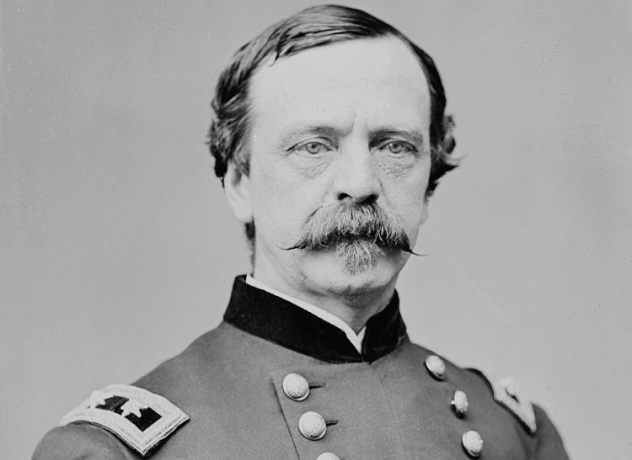
8Major General Daniel Edgar Sickles
Union Army, Battle Of Gettysburg
This one is contentious among Civil War historians and has been since the Battle of Gettysburg. General Sickles was commander of the Third Corps under General George Meade during the Battle of Gettysburg in 1863. After being told to move his unit to Little Round Top, Sickles refused and instead moved his men to Peach Orchard, where they were nearly destroyed.
With the Union forces in the wheat field and peach tree orchard, the Confederates, under the command of General James Longstreet, initiated an attack. The small Union forces were nearly destroyed in the attack. Even though his defiance of orders led to the deaths of many of his men, General Sickles’s choice to fight in the orchard instead of the little hilltops allowed for a counteroffensive along the flanks of the attacking Confederates to succeed, thus routing the Rebels and helping to win the battle.
General Sickles was injured in the battle and lost a leg, which he donated to the Army Medical Museum in Washington, DC. He spent many of his remaining years defending his actions as being instrumental in the defeat of the Confederacy at Gettysburg. He was awarded the Medal of Honor (the only combat medal given at the time) and helped to preserve the battlefield at Gettysburg for its use as a cemetery and national historic site.
7Lieutenant Colonel Stanislav Petrov
Soviet Union
If you don’t recall the time back in the early 1980s when the United States and the Soviet Union fought in a bitter thermonuclear war, then we all owe a debt of thanks to Lieutenant Colonel Stanislav Yevgrafovich Petrov. Colonel Petrov was in charge of the command center for the Oko Nuclear Early Warning System when, on September 26, 1983, he disobeyed a standing order to report the probable launch of American nuclear missiles to his command, suspecting that it was a false alarm. It was.Petrov knew that if he alerted his superiors, they would likely order retaliation with nuclear missiles and begin World War III. Because of his ability to think on his feet and surmise the threat as being a false alarm, he effectively saved the entire world from nuclear annihilation. The incident exposed a flaw in the Soviet Union’s missile-warning system and helped to prevent any future situations. Petrov was neither awarded nor punished for his failure to follow orders, but he is remembered as the man who prevented a nuclear war.
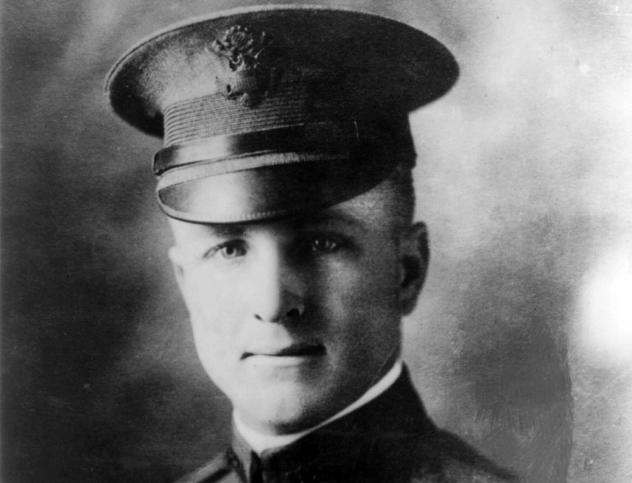
6First Lieutenant Frank Luke Jr.
US Army Air Corps, World War I
First Lieutentant Frank Luke Jr. holds the distinguished honor of being the first aviator in US history to receive the Medal of Honor. The award was given to him posthumously following a daring raid that he undertook in spite of being ordered not to fly.
On September 28, 1918, Luke was grounded by his commanding officer and told that he could not fly and would be charged as being absent without leave (AWOL) if he flew the following day. Disregarding this order, Luke took to the skies in his SPAD XIII (a French biplane used at the time) and went on a balloon hunt. Luke was already considered an ace for having 15 aerial combat victories and was known as “The Balloon Buster” for his skill in taking out German aerial reconnaissance balloons, which were used as spotters for artillery. The balloons were always heavily defended by anti-aircraft guns, but Luke went after them anyway.
On what would be his final flight, he successfully took out three balloons before taking heavy machine gun fire and being forced to ditch his aircraft. He climbed from the wreckage and confronted the German military with his sidearm before finally succumbing to his injuries. Regardless of his failure to follow orders, First Lieutenant Frank Luke Jr. was awarded the Medal of Honor for his remarkable skill in being able to destroy 18 balloons in only 18 days of combat.
5Lieutenant Albert Battel
German Wehrmacht, World War II
Dr. Albert Battel, a lawyer, a member of the Nazi party, and a lieutenant in the German army, was able to block the SS from taking Jews from the Przemysl ghetto to the Belzec Extermination Camp. He was in command of a unit stationed in Przemysl, Poland, and was in charge of monitoring the Jewish ghetto laborers who were working for the army.
On July 26, 1942, Battel ordered his troops to block off and seal a bridge in order to keep the SS from entering the ghetto to remove the prisoners. Knowing that he was not only defying orders, but also putting himself and his men in danger, Lieutenant Battel was able to extract 80–100 Jewish families and move them to his army headquarters to protect them. Sadly, he was unable to prevent the SS from returning the following day and extracting the remaining Jews. While he wasn’t able to save all of them, several hundred people were able to survive the war thanks in large part to the actions of defiance of one German army officer.
Battel was only reprimanded by his superiors for his actions, and he was eventually promoted before being returned to the front lines. He didn’t know that his actions had reached the ear of Heinrich Himmler, who insisted that he be abolished from the Nazi party at the conclusion of the war and arrested. This never came to pass, as Battel was discharged due to a heart condition in 1944.
He survived the war, and his work and efforts in saving the Jews was honored as being “Righteous among the Nations,” a special honor for Gentiles who worked during the holocaust to save Jews from extermination from the Nazis.
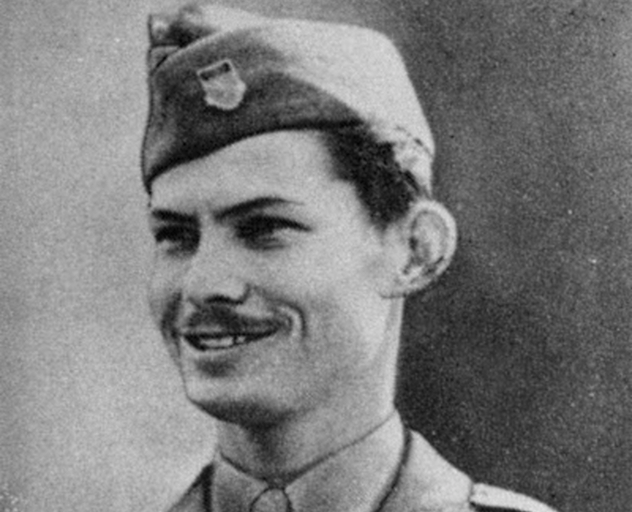
Interestingly, Corporal Desmond Doss defied orders by refusing to carry any weapon into combat, not even a knife. This was the result of his personal beliefs as a member of the Seventh-day Adventist church. Though he was able to join the military and serve during World War II, Corporal Doss maintained his status as a conscientious objector.
His refusal to carry a weapon and his actions as a medic earned him the Medal of Honor. In April 1945, Doss was accompanying the First Battalion as they attempted a summit where they took heavy artillery and small-arms fire. Seventy-five men were wounded in the attack, but Corporal Doss refused to take cover and instead personally moved all 75 men, one at a time and under heavy fire, to a safe area. The following month, he again exposed himself to heavy rifle and mortar fire in the rescue of another man who was severely injured.
On at least five separate occasions over the course of approximately 22 days, Corporal Doss personally rescued dozens of his comrades while under enemy fire. He was finally wounded by a grenade, which severely damaged his legs, and was struck by a sniper’s bullet, which injured his arm. Even then, he insisted that he be taken off his litter in lieu of another man whom he considered to be more seriously wounded. For his bravery in the face of severe enemy opposition and for his refusal to carry even the smallest means to defend himself, Corporal Doss was awarded the Medal of Honor.
3Lieutenant Thomas Currie ‘Diver’ Derrick
Second Australian Imperial Force, World War II
During the Battle of Sattleberg, in New Guinea, Lieutenant Derrick distinguished himself and was awarded the Victoria Cross, the highest military decoration for members of the British and Commonwealth armed forces. The battle was hard-fought and may not have been as successful for the Australians had Derrick obeyed the orders of his commanding officer and withdrawn as he was told.
The Battle of Sattleberg was a push against Japanese forces for control of the town of Sattleberg, in which the Australians slowly saw gains over a period of eight days. As they advanced, the Japanese soldiers pressed hard against them, and the cost was high. On November 24, 1943, Derrick was in command of a small unit and was told to withdraw due to an inability to push for further ground. In response, Derrick said, “Bugger the CO. Just give me twenty more minutes and we’ll have this place.”
He then proceeded to move his men further up the hill toward the city and silenced 10 machine gun posts with accurate rifle and grenade fire from approximately 7 meters (23 ft). His push demoralized the Japanese forces, who withdrew from their position. Derrick then returned to his platoon and pushed them further toward the town before the rest of the battalion joined them the following morning and succeeded in taking the city.
The battalion commander insisted that the flag be hoisted by Derrick, who raised the Australian Red Ensign above Sattleberg, New Guinea, at 10:00 AM on November 25, 1943. For his gallantry in combat and in spite of his refusal to follow orders to withdraw, the king awarded Derrick with the Victoria Cross stating that, “Undoubtedly Sergeant Derrick’s fine leadership and refusal to admit defeat, in the face of a seemingly impossible situation, resulted in the capture of Sattleberg.”
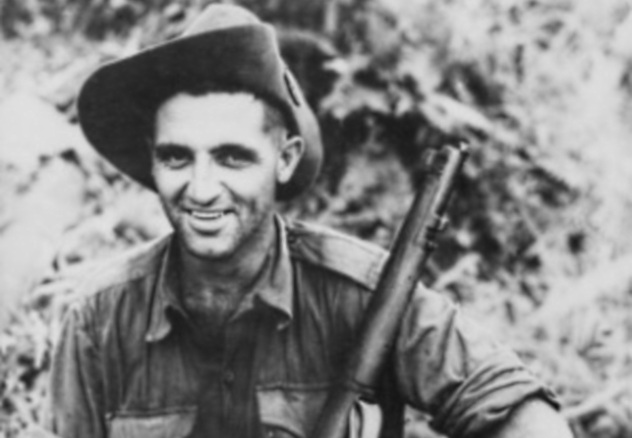
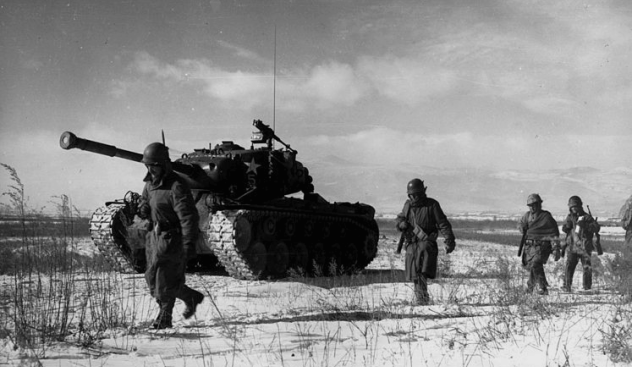
On April 24, 1951, then-Lieutenant David Teich was a member of a tank company that was near the 38th Parallel (the boundary that currently marks the demilitarized zone between North and South Korea) when a weak radio call came in for support. Members of the Eighth Ranger Company were nearby, wounded, and under heavy fire, as nearly 300,000 Chinese soldiers moved toward their position. Having been ordered to withdraw, Teich approached his commander and asked if he and some of his fellow tankers could remain behind and attempt to rescue the Rangers.
The captain replied, “We’ve got orders to move out. Screw them. Let them fight their own battles.” Leich refused to follow that order and manned a rescue attempt anyway. When the tanks approached Hill 628, 65 Rangers climbed the hill under heavy fire and boarded the tanks. So many men were sitting on the tanks that the guns were no longer visible.
Teich’s actions saved the lives of dozens of men who would certainly have been killed or captured had he not disobeyed the orders of his commanding officer. More than six decades after the war, Teich still receives letters from the survivors thanking him for what he did on that day in April 1951.
1General Dietrich Von Choltitz
German Wehrmacht, World War II
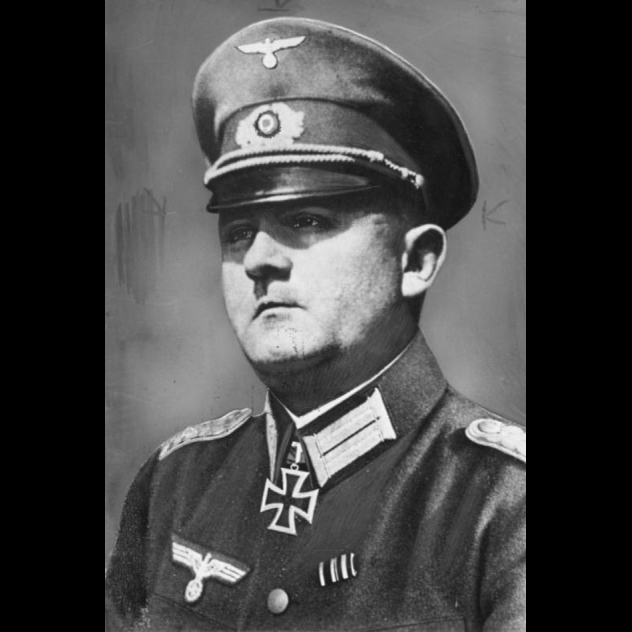
General Dietrich von Choltitz took command of Nazi-occupied Paris on August 8, 1944. When he did so, Hitler told him that he should be prepared to destroy all religious and historic monuments should the city fall to the Allies. At the time, the Allied forces of the United States, Great Britain, and the French Resistance fighters were closing in on the city.
Paris was surrendered on August 25 without a monument or building destroyed. In his memoir Is Paris Burning? Choltitz wrote that the titular question was asked of him by Hitler, but knowing the city was lost and not wanting to cause further destruction, bloodshed, and damage, Choltitz refused to follow the orders of the fuhrer. “If for the first time I had disobeyed, it was because I knew that Hitler was insane.” Choltitz risked the lives of his family and himself by lying to the chief of staff, informing him that the destruction of Paris had begun.
According to both Choltitz and his son, these events played out as he said. The French have never accepted these claims and have instead insisted that over 2,000 French Resistance fighters liberated the city. Even though the French insist that it was the Parisians themselves who saved the city, it is apparent that Choltitz was both ordered to destroy the City of Lights and had an opportunity to do so. He may have chosen to disregard the order from Hitler for his own reasons, but the fact remains that the orders were never carried out, and Paris remains a center for art and culture to this day.
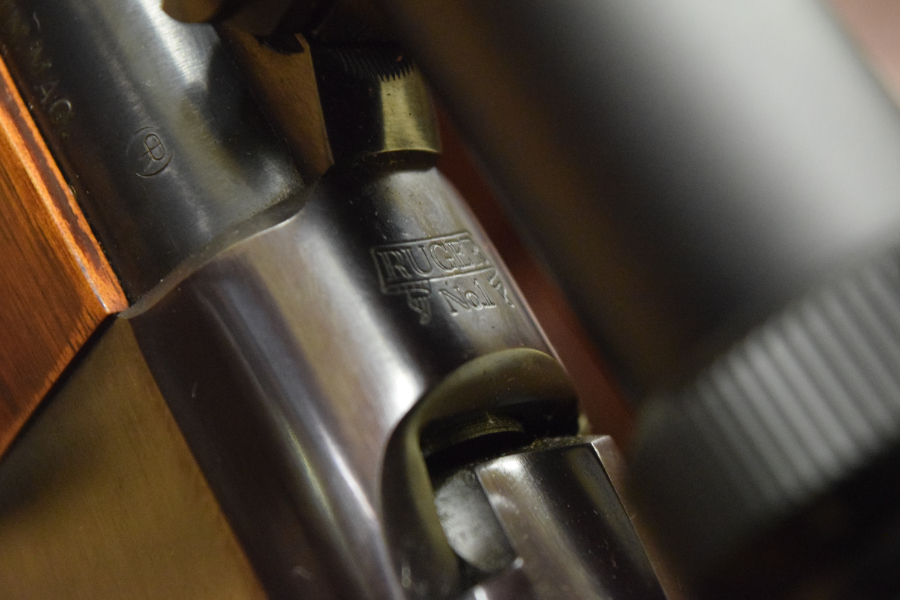
A slowdown in firearms sales is one reason the parent of Chapin-based Ellett Brothers said it was forced to file for bankruptcy.
A South Carolina distributor of guns and other outdoors supplies that was launched during the Great Depression filed for bankruptcy Monday, a few weeks after a financier alleged that the majority shareholder took about $189 million in loans out of the business.
SportsCo Holdings Inc., which owns Chapin-based Ellett Brothers and several other subsidiaries, said it plans to liquidate its holdings, citing excessive debt and inventory.
CEO Bradley Johnson said in a court filing that the company’s prediction that the Democrats would hold onto the White House in 2016 backfired after a projected jump in firearms sales didn’t materialize.
He also blamed SportCo’s downfall on “significant” disruptions within the outdoors retail industry in recent years, including the acquisition of Cabela’s by Bass Pro Shops, Gander Mountain’s bankruptcy and hurricanes that struck the Southeast U.S.
The Midlands company traces its roots to the 1933 founding of Ellett Brothers. SportCo, which is the holding company, has five distribution centers, including one each in Chapin and Newberry, and it employs about 320 workers, according to a bankruptcy filing.
The majority owner is Wellspring Capital Management, a New York private equity firm that’s bought the business in 2008 and is now facing a lawsuit over its handling of tens of millions of dollars in borrowed funds.
Prospect Capital Corp. is alleging that the $160 million in financing to provided Ellett Brothers in 2012 and 2013 was never invested in the business, according to the complaint it filed May 23 in Lexington County.
Sponsored
The 3 Most Important Attributes to Look for in a Lawyer
Finding and hiring a lawyer can be intimidating, especially if you’ve recently gone through a stressful experience, such as an injury.
Instead, Wellspring distributed $134 million and another $54.8 million, with most of the money going to the controlling shareholder. The payouts also included credit from other lenders, Prospect said.
The transfers “provided no value” to Ellett Brothers and its affilates while helping to contribute to “a complete financial collapse,” according to the lawsuit
“Since making the distributions … and despite a historic industrywide increase in sales, Ellett and its many subsidiaries have lost a substantial amount of their assets and business value,” Prospect Capital said.
Wellspring also collected $6 million in management fees from its South Carolina investment between 2009 and 2017, according to the lawsuit. The private equity firm could not be reached for immediate comment Monday.
SportsCo and its affilates sought protection from its creditors in Delaware, listing debts of between $100 million and $500 million and assets of less than $50 million. The companies plan to keep operating during the liquidation process.
The first hearing in the bankruptcy case is scheduled for Tuesday.
Contact John McDermott at 843-937-5572 or follow him on Twitter at @byjohnmcdermott
____________________________________ Also remember that the Gun Industry has literally flooded the Market with Black Guns. Which did not help things. Since no matter what you sell. The Market can only buy so much of one product.
On the other hand there is a steady market for well built Bolt Actions and Old School Pistols like the Python. But that is just my opinion! Anyone out there want to comment on this? Grumpy