Skip to the content
You Will Shoot Your Eye Out
An NSFW Men's Blog
  • .338 Spectre?
  • 14 New Guns For 2022 by B. GIL HORMAN
  • A First-Year Magnum: Shooting The S&W “Pre-29” by JUSTIN DYAL
  • Contact
  • Donate
  • Eye Candy for the Gentlemen out there
  • How to start a career in Education Part One
  • N.S.F.W.
    • N.S.F.W.
  • Privacy Policy
  • Related Links
  • Rock Island Arsenal Bolt action .22 TCM
  • Savage Arms Corp. Model 24 Combination Gun .22LR/.410 GA
  • SMITH & WESSON S&W 14-2 K-38 MASTERPIECE 38 Special
  • So you want to buy a SKS Rifle — Excellent Choice!
  • Some more of my feeble attempts at humor!
  • Some useful phrases for the Modern Teacher
  • Stuff you NEVER do in Class!
  • Sure enough!
  • The Browning Hi Power
  • This really has me intrigued! Does anybody out there have any info about this? Asking for a friend
  • Welcome To My Website & Latest Posts 
  • Why You Should Choose the Taurus 692EG Over S&W 686+!
  • .338 Spectre?
  • 14 New Guns For 2022 by B. GIL HORMAN
  • A First-Year Magnum: Shooting The S&W “Pre-29” by JUSTIN DYAL
  • Contact
  • Donate
  • Eye Candy for the Gentlemen out there
  • How to start a career in Education Part One
  • N.S.F.W.
    • N.S.F.W.
  • Privacy Policy
  • Related Links
  • Rock Island Arsenal Bolt action .22 TCM
  • Savage Arms Corp. Model 24 Combination Gun .22LR/.410 GA
  • SMITH & WESSON S&W 14-2 K-38 MASTERPIECE 38 Special
  • So you want to buy a SKS Rifle — Excellent Choice!
  • Some more of my feeble attempts at humor!
  • Some useful phrases for the Modern Teacher
  • Stuff you NEVER do in Class!
  • Sure enough!
  • The Browning Hi Power
  • This really has me intrigued! Does anybody out there have any info about this? Asking for a friend
  • Welcome To My Website & Latest Posts 
  • Why You Should Choose the Taurus 692EG Over S&W 686+!

Month: October 2018

Categories
The Green Machine This great Nation & Its People War

When the United States Army Went to War Armed with French Weapons by the Angry Staff officer

  • Post author By Grumpy
  • Post date October 17, 2018
  • No Comments on When the United States Army Went to War Armed with French Weapons by the Angry Staff officer
JANUARY 16, 2017ANGRY STAFF OFFICER

When the United States Army Went to War Armed with French Weapons

France. What a silly place, am I right? They eat frogs, they’re on their, like, millionth government since the Revolution, and they keep needing us ‘Muricans to save them during world wars. Well, that is one way of viewing the Franco-American narrative, I suppose, if one were to overlook the incredibly vital French aid during the American Revolution (thousands of troops, a Navy, and literally tons of weapons) and all the French thinkers that influenced the Founding Fathers.
And then there’s that little problem of the U.S. Army using mainly French weapons when it entered World War I.
“But ASO, surely it was only a few weapons, right?” the interlocutor might ask. Sure, gentle reader, just a few weapons: just several hundred thousand automatic rifles, machine guns, grenades, artillery pieces, and tanks. That’s all.
“But how could this happen?” the astonished reader asks.
Simple. It’s what happens when you build a small Army – less than 200,000 men – meant for fighting small wars on small islands and entirely neglect modernization.
On April 6, 1917, when the U.S. declared war on Imperial Germany, the U.S. Army had about 200,000 Soldiers on active service, approximately 80,000 of which were National Guardsmen called up for the 1916 Mexican Border Expedition. Getting the Army up to size wasn’t the problem; with authority of the National Defense Act of 1916, the President and Congress could call up the approximately 350,000 Soldiers in the National Guard and institute the draft. No, the problem was how to arm these Soldiers.
Once upon a time – back in the Spanish-American and Civil Wars – this wasn’t too big of an issue. Regular troops were augmented by units of U.S. Volunteers, most of whom were armed by their states or from stores of small arms kept by the Federal government in arsenals across the country. But that was back when war was relatively simple and you could equip infantry units with weapons like the muzzle-loading 1861 Springfield or the 1873 Springfield trapdoor rifle. With 1,000 men to a regiment, it was pretty simple to do the math: 1,000 rifles, some tents, a small wagon train, a blacksmith forge, and travelling kitchens would get you what you needed. Not so in 1917.
The first problem was force structure. The National Defense Act of 1916 had changed the organization of infantry regiments to reflect the changing nature of war: they now had machine guns and automatic rifles. Further, General John Pershing – Commander of the American Expeditionary Forces – added even more weapons to the list in 1917 to increase a regiment’s lethality: Stokes mortars, 37mm light field guns, and grenade launchers affixed to rifles. He also flexed infantry regiments up to a wopping 3,200 men, arranged in three battalions. The infantry regiment formed the core of Pershing’s main functional maneuver element: the division. Each division contained four infantry regiments, three field artillery regiments, three machine gun battalions, one regiment of engineers, and battalions of support troops. Each of these divisions contained 28,000 men. That was a lot of men to equip. Indeed, the first four divisions to arrive in France in the fall of 1917 -the 1st, 26th, 2nd, and 42nd – numbered over 112,000 men; this was over half the size of the Regular Army when war had been declared. There were simply too many men who needed arms and equipment.
The other problem was modernization. The Army was just not ready for the modern age. Their machine-gun was still the 1895 Browning, nicknamed the “potato digger” because its recoil drove it into the ground. The Army’s field guns were still of Spanish-American War vintage. The 1903 Field Gun was actually quite good, but had been stuck in the development stage for nearly two decades. The Browning Company had manufactured a new machine gun and automatic rifle, but there were barely any models of these excellent weapons on hand when war was declared, and it would take over a year for them to actually get pushed to France in any numbers that would matter. The service’s main rifle, the M1903 Springfield, was excellent, but was also lacking in numbers. Facing the daunting task of equipping the first four divisions to head to France, the War Department turned to its allies for help.
Thus it was that the French opened their stores of weaponry and began arming the Doughboys that were arriving in France by the thousands in the fall of 1917. To the regimental machine gun companies and the machine gun battalions went the M1914 Hotchkiss machine gun. The Hotchkiss was gas-actuated and air-cooled, firing an 8mm Lebel  round and had to be crewed by three men, due to its weight and the need to incessantly feed 24-round strips of ammo into the gun. Its weight – 110 pounds with the tripod – caused it to usually be carried around on carts, adding to the difficulty of getting it into battle. However, U.S. machine gun battalions racked up excellent records using the Hotchkiss and even learned how to use them for laying down machine gun barrages.
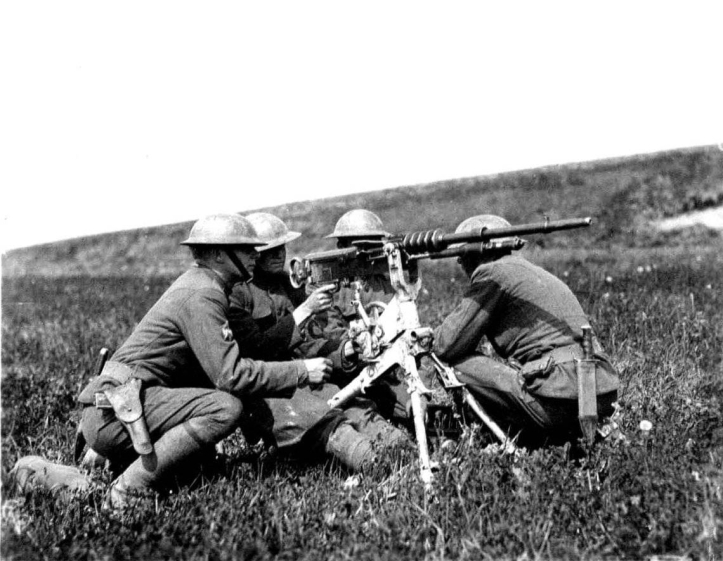
u-s-_hotchkiss_machine_gun
U.S. troops with the Hotchkiss, 1918. (Library of Congress)

Far less popular than the Hotchkiss was the M1915 Chauchat automatic rifle. Now, the concept of automatic rifles was that there would be one auto rifle squad in each infantry platoon, giving that platoon the ability to lay down some serious suppressive fire. And it was a good concept. The problem lay in the Chauchat. It was slow, heavy, and seemed to jam at the worst possible times. The jams were not usually caused by the weapon itself, but by the magazine’s idiotic design that left half of the side open – open to the ubiquitous mud of the Western Front. Small wonder then that it jammed. However, in the hands of well-trained and meticulous soldiers, the Chauchat could be a force multiplier.

WAR & CONFLICT BOOKERA:  WORLD WAR I/CIVILIANS & REGUGEES
An old French couple, M. and Mme. Baloux of Brieulles-sur-Bar, France, under German occupation for four years, greeting soldiers of the 308th and 166th Infantries upon their arrival during the American advance. (Library of Congress)

Another infantry weapon adopted from the French was the Vivien and Bessières – or V-B in Doughboy parlance – rifle grenade. Fitting to the barrel of a rifle, the grenade was projected by the pressure from the bullet going off in the rifle’s chamber. V-B squads could deliver a barrage of deadly grenades on top of attackers or right before entering an enemy trench. There were, however, issues. The V-B was tooled for the French 8mm round, while the American rifles were 7.62mm. This difference sometimes caused the V-B not to go off because the 7.62mm rounds did not carry enough force. Still, the U.S. didn’t have any  rifle grenades at the outbreak of war, so it was better than nothing.
While the Americans would get their primary field mortar from the British with the Stokes Mortar (a few lucky units got the British Lewis machine gun as well, which was very effective), they got their infantry support gun from the French: the Canon d’Infanterie de 37 modèle 1916 TRP, or simply, the 37mm gun. Doughboys, not quick to be wordy, called them “one pounders.” These small guns were crewed by two men and could be quickly moved around the battlefield to knock out machine gun nests or other medium targets. Some men used them as “sniping guns,” rolling them out into No-Man’s Land, firing off thirty-five rounds in a minute, then limbering up and getting the hell out before the Germans could respond with a murderous barrage. But the 37mm was still not a field gun.
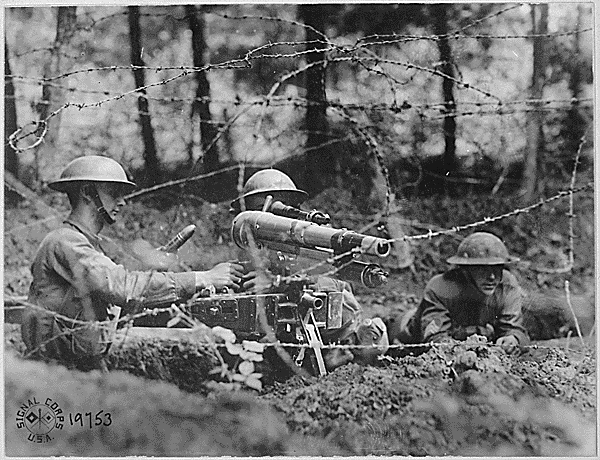
37mm-gun-dieffmatten-19180626.gif
U.S. troops using a 37mm gun near Chateau-Thierry in 1918. (U.S. Army Signal Corps Photo)

Moving from the 37mm to field artillery, the two most striking French gifts to the Americans were the 75mm field piece and the 155mm field piece. The French 75 was possibly one of the most successful field guns of all time. It was deadly accurate and could keep up a high rate of fire due to the pneumatic firing device that absorbed the recoil of the gun and left the barrel sited after every shot. This alleviated the need to re-site the gun after a round was fired. U.S. troops got so proficient with the 75 that they could fire on the recoil, leading to such a high volume of fire that French advisers pulled out their hair in worry and German prisoners demanded to know where the American 75mm machine gun was. The gun even led to its own mixed drink being named for it, the French 75.
Less popular in alcoholic memory, but well-liked by the infantry who followed behind its powerful explosives was the 155mm Schneider howitzer. It provided the heavy type of barrage that Doughboys would need to break a German attack or take apart enemy entrenchments. It was a mix of old and new – pneumatic firing like the 75, but on a rickety gun carriage with wooden wheels that shook and rattled when the gun was fired. The U.S. purchased more than 1,300 of these for the American Expeditionary Force.
Along with the guns came the tanks. One tank in particular: the Renault FT-17. Since at the beginning of the war the U.S. wasn’t even thinking about tanks, they had to borrow the Renault from the French when it came time to think about a Tank Corps. The Renault was small – it could only fit two men: a driver and a commander/gunner. The commander communicated with the driver by kicking him in the head or shoulders, since the tank was so loud that the men couldn’t hear each other. And since the driver couldn’t see anything at all, this type of communication was vital. The U.S. would work on their own tank variant, with supervision by George Patton, but the war would end before it saw action. For more on the Renault, check out this War Stories Podcast.
During the war, the massive U.S. industrial machine would roll into action, turning out millions of small arms, thousands of field guns, and hundreds of tanks. But the fact remains that the first battles fought by U.S. troops in the fall of 1917 and the spring of 1918 were done so with mainly French weaponry, with some from the British. For the most part the equipment was good; but there is no doubt that fewer lives would have been lost had the U.S. fielded the Browning .30 caliber machine gun and Browning Automatic Rifle earlier in the conflict (although loss of life was more to do with poor American strategy and tactics than armaments). This shocking lack of readiness would be seen twenty-four years later, as the U.S. faced the Second World War. While the Army had a massive amount of equipment available, most of it was from the stocks of World War I – and therefore out-of-date. It would take another year and a half before the U.S. Army could begin to bring their weapons on the battlefield in parity against their enemy.
Both of these examples stand as a warning to the current U.S. Army: ignore modernization at your peril, and at the peril of thousands of lives of American service members. Because France can’t always be around to bail us out of trouble.


Enjoy what you just read? Please share on social media or email utilizing the buttons below.


About the Author: Angry Staff Officer is an Army engineer officer who is adrift in a sea of doctrine and staff operations and uses writing as a means to retain his sanity. He also collaborates on a podcast with Adin Dobkin entitled War Stories, which examines key moments in the history of warfare.


Categories
N.S.F.W.

A Refresher Gift for Hump Day! NSFW

  • Post author By Grumpy
  • Post date October 17, 2018
  • No Comments on A Refresher Gift for Hump Day! NSFW
 

Image result for dirty funny meme


Categories
Cops Fieldcraft

Defensive firearms on a bare-bones budget

  • Post author By Grumpy
  • Post date October 17, 2018
  • No Comments on Defensive firearms on a bare-bones budget

Bayou Renaissance Man

Following my article last night on how to prepare for economic hard times, I’ve had a couple of queries from readers about my emphasis on security.
They state that they know little or nothing about firearms, and have very little money to spend, but would like to be able to defend themselves and their families if push comes to shove.  What should they buy?
This is a very tricky question to answer.  Money definitely counts in terms of the quality of the firearms available to us.  Low cost often equals low quality – sometimes very severe safety issues as well.
(For example, I can’t recommend handguns offered under the Lorcin, Jennings, Bryco, Cobra, Raven or Jimenez brand names.  On the other hand, some low-cost handguns have proved surprisingly reliable in operation.)
The first and most important consideration is that it’s pointless to buy a firearm unless you’re prepared to learn how to use it safely, accurately and effectively.
You can literally be more of a danger to yourself and your family than to an aggressor if you try to use a firearm without any training or practice.
For that reason, my initial recommendation to any novice firearm purchaser is to buy a training weapon first.  This will not be a firearm as such, but a BB or Airsoft gun of similar type to what you plan to use for defense.

  • If you plan to purchase a semi-automatic pistol, buy a BB pistol like this one (I’ve bought three of them so far, and highly recommend them) or an Airsoft pistol like this one (which I also know from personal experience).
  • Of course, you don’t have to select one of those – there are many other choices out there.  Do your own research.  Buy also enough air cylinders (for gas-operated pistols) and ammo (BB’s or airsoft pellets) for at least 1,000 rounds of training – I personally prefer 5,000.
  • If you plan to purchase a double-action revolver, buy a similar BB revolver or Airsoft equivalent for training purposes, again with enough ammo as described above.  (I don’t have personal experience with either model, so I can’t make any promises about them.)
  • If you want to buy a pump-action shotgun, try this as a training equivalent.
  • If you’re after a lever-action rifle, how about this one?
  • If you haven’t yet decided what type of weapon you want to buy, start training anyway!  Buy a basic BB or Airsoft handgun or long gun and put it to good use.  You’ll find that basic shooting skills translate relatively easily between weapon types.  While you’re learning the basics, you can save your money to buy the real thing.

You can find equivalent BB or Airsoft clones of many regular firearms, and typically buy one of them and air cartridges and ammunition for well under $100 total.  Use them, plus instructional video clips from YouTube (ignore the ‘tacticool’ over-the-top videos with rock music soundtracks – look for sober, sensible presentations without hype) and the help of friends who know what they’re doing, to get a basic idea of how to aim and fire a weapon.  Concentrate on slow, accurate shooting at first, until you can put all your rounds into the center of a target (I use the cheapest grade of 8″ paper, plastic or foam disposable plates).  Start at close range (10-15 feet) and extend it as you get better, until you can group 10 rounds inside 4″-6″ at 15-20 yards on demand.  (This assumes your training weapon is capable of such accuracy, of course.)
Once you’ve learned the basics of accurate shooting, try to shoot faster without losing accuracy.  Defensive shooting is typically at close range, so set up small targets (e.g. tennis balls to start, later progressing to even smaller table-tennis or squash balls) at varying distances (10-15 feet at first, moving out in stages to 15-20 yards) and try to hit them.  I’ve trained several wheelchair-bound shooters to hit a rolling squash or table-tennis ball (or a target of similar size) with at least 7 out of 10 rounds from a handgun at distances of 10 to 20 feet, all within 5 to 6 seconds.  That may sound daunting, but after a few thousand rounds of practice, starting with a BB pistol and progressing to a .22LR firearm, they didn’t find this too difficult.  As I said to them, if they can hit a small, moving target that often at that range, they should have little trouble hitting someone threatening their safety!
I highly recommend taking a basic training course from a qualified instructor if possible.  Many shooting ranges offer NRA courses, and some police and sheriff’s departments offer firearms training for citizens.  They’ll probably expect you to use a real gun when you attend the course, rather than a BB or Airsoft ‘toy’, but they may be able to arrange a ‘loaner’ firearm for you.  There’s no harm in asking.  Expect to pay $50-$100 for this level of training, plus the cost of ammunition.
All right – you’ve invested in a BB or Airsoft weapon and practiced enough to be able to hit what you’re aiming at.  That’s a great start.  Now, on your very limited budget, what’s worth buying for defensive use?
I recommend a shotgun as a basic home defense weapon.  It’s mechanically simple, usually pretty reliable, and powerful enough to stop most intruders in their tracks if the worst comes to the worst.  I’ve written about shotguns for home defense in a three part series of articles – follow each of those links to read more about the subject.  There’s also an excellent introduction to defensive shotguns here.  You can buy a perfectly serviceable new Chinese-made shotgun for $200-$250, and used models of US shotguns are available for similar prices.  Look for a shorter barrel (18″-20″) and, if possible, magazine capacity of at least 5 rounds – some offer up to 8 rounds.  If you want maximum ammunition versatility, go for the 12 gaugeofferings;  20 gauge is almost as effective (and my recommended choice for those who are new to shotguns), but defensive ammunition (buckshot and slug) isn’t always as freely available.  (You can get reduced recoil buckshot and slug ammo for 12ga. shotguns that’s easier to control than full-house loads.)

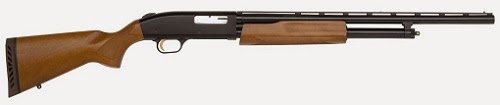
Mossberg 500 Bantam 20ga. youth model shotgun

I recommend any of the following shotguns (if used, have an expert check their condition before you buy them):

  • Remington 870 (manufacturer’s page here);
  • Mossberg 500 (manufacturer’s page here:  I have several of this model of shotgun);
  • H&R Pardner Pump (a Chinese copy of a US design – a bit rough, but serviceable);
  • Norinco 982 (Chinese copy of a Remington design, similar to the H&R Pardner Pump).

There are many others out there that may serve you well;  but in terms of quality and value for money, the four I’ve mentioned have worked for me.  YMMV.  You should be able to get a new or used example of any of the above, plus enough cheap birdshot ammunition to become familiar with it and some buckshot and/or slugs for home defense, for not more than $300 in all.
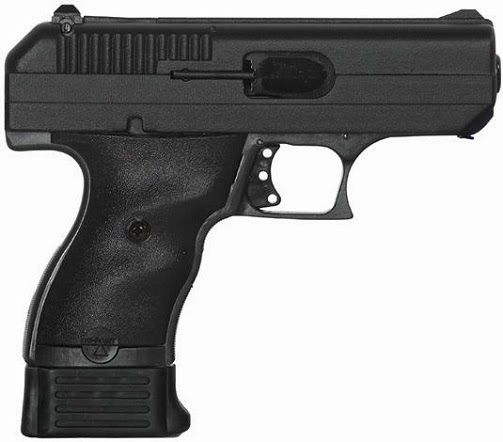
If you want a handgun instead, that can be a problem.  A quality name-brand handgun will usually cost $300-$500 used, and $500-$750 new.  There’s a plethora of designs and variations out there, and choosing the right one can be bewildering.  However, if price is the ultimate consideration there’s one handgun that’s relatively low-cost ($175-$250 retail, depending on model and caliber), but runs surprisingly well in practice.  That’s the Hi-Point range of pistols (manufacturer’s Web site here).

Hi-Point 9mm. pistol

I don’t like them;  they feel over-large, clunky and ungainly in my hands, and give the outward impression of poor quality.  Nevertheless, many people who own them report that they’re reliable and accurate enough for defensive purposes.  Those that I’ve fired have lived up to that reputation.  Therefore, don’t let my prejudices put you off;  try them for yourself.  They’re certainly much more affordable than most of their competitors.  The company also makes a line of pistol-caliber carbines that have earned a reputation for reliability.  (I actually like their carbines much better than their handguns.)  I’d still rather save my money until I could afford something better, but that’s my opinion.  A bad guy will hate to get shot by any gun!
I don’t know a low-cost double-action revolver that’s of adequate quality to satisfy me.  If I’m going to have to spend $300-$400 to buy a Charter Arms or Rossimodel, I’d rather spend as much or a little more on a higher-quality used Smith & Wesson revolver.  (Get an expert to check it out before purchasing it, to make sure you aren’t buying someone else’s problem.)
(EDITED TO ADD:  Reader Sport Pilot has offered one alternative that seems intriguing – see the foot of this article for details.)
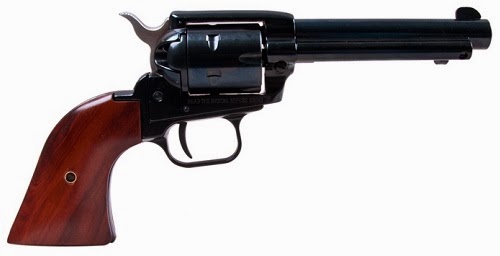
However, there’s one low-cost revolver for trail and camping use that can also serve for defensive purposes in a pinch.  It’s the Heritage Arms series of single-action revolvers, available in rimfire and centerfire calibers.  Their .22LR and .22WMRrevolvers are very affordable, many costing less than $200 retail – I own a couple myself, and like them.  (I agree that .22 rimfire, either LR or WMR, is marginal as a defensive round;  but it’s better than nothing).  Their centerfire models are more expensive, but still offer value for money compared to higher-grade competitors.

Heritage Arms .22LR/.22WMR single-action revolver

Most instructors (including myself) agree that a single-action revolver is slow to reload and not as fast to shoot as a double-action revolver, making it less than optimum for defensive use.  Nevertheless, I can’t help remembering that the Old West was settled with the aid of such revolvers, and their modern users like the members of the Single Action Shooting Society (SASS – also known as ‘cowboy action shooting‘) demonstrate remarkable speed and accuracy with them.  (Look on YouTube for videos of their prowess.)  A single-action revolver will serve you as well as you train yourself to use it.
Whatever you buy, make sure you also purchase enough practice ammunition to familiarize yourself with your weapon of choice, and also buy some premium defensive ammo to take care of “things that go bump in the night”.  In today’s market, ammo can be hard to come by, so don’t buy a gun that uses a cartridge you can’t find for love or money!
In my experience, you can buy a BB or Airsoft training weapon, plus enough gas cartridges and pellets to train yourself to an adequate level of performance, plus a defensive weapon (one of the shotguns or handguns mentioned above), plussufficient practice ammunition to become familiar with it, plus a small quantity of higher-quality defensive ammunition, for a total expenditure of under $500.  If you wish to ignore my advice to get a BB or Airsoft training weapon and/or attend an entry-level training course, you can knock $100-$200 off that total.  I don’t think you’ll be able to do much better than that.
What do you think, readers?  Any suggestions?
Peter
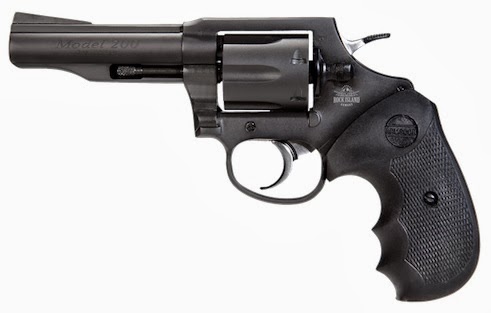
EDITED TO ADD:  In a comment, reader Sport Pilot tells us about the M5 12-gauge shotgun and the M200 and M206 .38 Special revolvers, all made by Armscor in the Philippines.

Armscor M200

I have no personal experience of these firearms, but I found this review of the revolvers that seems positive.  I was interested to read that one can use grips made for the Colt Detective Special to replace those supplied from the factory – an important consideration to improve a revolver’s fit and feel in one’s hand.  I’m going to see about getting one to test in due course.  Thanks for the heads-up, Sport Pilot.  At a retail price that appears to be in the $220-$250 range (if one can find them) these might be a value-for-money proposition.
A couple of readers have suggested single-shot shotguns like these (a review is here).  I like them as ‘fun guns’, but I tend to argue against them for defensive use, because for not much more money you can get a pump-action shotgun with greater magazine capacity.  However, for those with so little money that they can’t afford any of the firearms I’ve discussed above, I suggest these as viable ‘last choice’ weapons.  I’ve found several used examples for disabled students who had less than $100 to spend.  They were able to buy the gun, a 25-round box of birdshot for familiarization and training, and a 5-round box of buckshot for defensive use within that budget.  It’s hard to beat those numbers.


Categories
All About Guns

A Ton Of Rifle For Your Money: Thompson/Center .308 Compass – Full Review by TOM MCHALE

  • Post author By Grumpy
  • Post date October 16, 2018
  • No Comments on A Ton Of Rifle For Your Money: Thompson/Center .308 Compass – Full Review by TOM MCHALE
Thompson Center's new Compass rifle is a bargain considering its performance.

Thompson Center’s new Compass rifle is a bargain considering its performance.

To learn more, visit https://www.tcarms.com/firearms/bolt-action-rifles/t-c-compass-rifles/t-c-compass.

To purchase a Thompson/Center Compass on GunsAmerica.com, click this link: https://www.gunsamerica.com/Search.aspx?T=Thompson%20Compass.

I first fired one of the new Thompson/Center Compass rifles at a pre-release event and was immediately hooked. Why? It’s a very affordable rifle that shoots and handles like a very unaffordable rifle. What’s not to love about that?

Towards the end of my 780-round shooting binge, I might have slipped off the rifle rest...

Towards the end of my 780-round shooting binge, I might have slipped off the rifle rest…

My first impression of the Compass was very favorable. It’s not like I fired a few shots and made some snap judgment. Rather, I came to that conclusion after firing over 780 rounds from the same rifle in just two days.

For a bolt-action rifle, that might qualify as cruel and inhumane punishment, especially considering that the barrel got so hot, I completely melted a rifle rest.

Still no word on whether the gunsmiths back at Smith & Wesson have removed all the melted goo from that barrel… Anyway, I shot the heck out of one of these rifles, chambered in .204 Ruger, and it performed.

As a result, I wanted to get my hands on a more versatile caliber model and give it a more in-depth trial.

Specs

  • Chambering: .308 Winchester
  • Barrel: 22 inches
  • OA Length: 41 inches
  • Weight: 7.25 pounds
  • Stock: Synthetic
  • Sights: None
  • Action: Bolt-action
  • Finish: Blued
  • Capacity: 5+1
  • MSRP: $399

The sample for this review was a Compass chambered in .308 Winchester.

As of this writing, Thompson/Center also offers the Compass in the following calibers: .204 Ruger, .223 Remington, .22-250, .243 Winchester, .270 Winchester, .300 Winchester Magnum, .308 Winchester, .30-06 Springfield, 7mm Remington Magnum, and 7mm-08. During SHOT Show 2017, the company announced yet another caliber option – 6.5 Creedmoor.

The Compass barrel is comfortably free-floated. You can easily slide a business card all the way to the receiver.

The Compass barrel is comfortably free-floated. You can easily slide a business card all the way to the receiver.

The Quick Tour

Let’s start with the barrel as that’s the really important part, at least for accuracy and longevity. This model features a 1:12 twist rate, but that’s caliber specific, so yours may vary depending on which model you choose.

The unique thing is the 5R rifling pattern. The pattern sports more rounded lands and grooves so there’s no “cutting” into the bullet jacket as it’s forced down the barrel. The idea is that less bullet deformation leads to better accuracy.

The other benefit of the 5R rifling is that fewer hard edges in the bore result in less fouling and therefore easier cleaning. One day, I’ll work up the nerve to ask the person who had to clean my very abused Prairie Dog Compass how the fouling was after 780 rounds of .204 Ruger.

The Compass comes with scope ring bases installed, so adding an optic requires only the right size rings.

The Compass comes with scope ring bases installed, so adding an optic requires only the right size rings.

The three-position safety is easy to reach from a normal firing grip.

The three-position safety is easy to reach from a normal firing grip.

So the marketing benefits claim accuracy, but so does everyone. What makes this $399 MSRP rifle stand out is that it comes with something far more rare in its price range, a minute of angle accuracy guarantee.

Simply put, Thompson Center puts in writing that your rifle will shoot three shots into a one-inch group at 100 yards. Of course, you have to use quality ammunition that’s capable of the same accuracy, not junk. I put that to the test, and we’ll cover the results later in this article.

Or you can ask relatives (if there are any left) of the disintegrated Prairie Dogs if this rifle is capable of hitting them from 300 to 600 yards away. The answer is a resounding yes.

There’s one more big thing to mention about the barrel. It comes factory threaded. I love this feature because once you shoot suppressed, you’ll never go back. It’s so easy for a manufacturer to add this at the factory and such a pain to do on your own.

The threading pattern varies by caliber. For example, .204 Ruger, .223 Remington, and .22-250 feature a 1/2×28 TPI pattern while .243 and larger caliber rifles have a 5/8×24 TPI pattern. The Compass comes with a thread protector cap with a knurled surface so you can easily remove it by hand.

For a while, I mounted a Burris Eliminator III laser range finding scope. That made prairie dog hits at 500 - 600 yards somewhat easy.

For a while, I mounted a Burris Eliminator III laser range finding scope. That made prairie dog hits at 500 – 600 yards with the .204 Ruger-chambered rifle somewhat easy.

The timing on an affordable factory rifle with a threaded barrel couldn’t be better. I’m very encouraged by the possibility of the Hearing Protection Act passing and being signed into law something this year.

That means that buying a suppressor will be no harder than buying the rifle itself. No special paperwork, no $200 check to Uncle Spendy, and no waiting period of six to 12 months to get your suppressor. Pester your Congress Critters on this issue now, we’ve never had a better opportunity to get this done.

Moving on, the Thompson/Center Compass employs a detachable magazine. The magazines in all calibers are flush fit with the bottom of the stock, so you don’t have to worry about the rifle getting hung on on gear, rests, or your support hand. Capacity depends on caliber.

Most calibers have a five-round magazine capacity, and Magnum calibers have a four-round capacity. The .308 Winchester model shown here holds five rounds in the magazine plus an extra in the chamber if you like. The magazine drops out the bottom of the stock with the press of an inset lever.

It’s an easy system, and I found the magazine simple to load. Of course, you can leave an empty magazine in place and single feed into the chamber as well. The magazine itself is mostly polymer, so it’s almost entirely rust-proof.

The detachable box magazine holds five rounds of most calibers, four for magnum sizes.

The detachable box magazine holds five rounds of most calibers, four for magnum sizes.

The polymer magazine is ready for field conditions and designed to resist rust and gunk.

The polymer magazine is ready for field conditions and designed to resist rust and gunk.

The bolt operation is smooth and positive. it uses a three-lug design that offers plenty of strength and a solid lockup. The bolt lift angle is 60 degrees.

In plain English, that means that the bolt operates without the operator having to live the handle too high. If you have a scope mounted, that leaves clearance for your hand with less chance of interference from the scope body. 

One of the hidden gems in this rifle is an adjustable trigger. Using a series of three nuts, you can make easy adjustments to both pull weight and over-travel. Just remove the action from the stock, and you’ll see those three nuts behind the trigger assembly. The two on the top adjust the pull weight while the single one on the bottom sets the over travel distance.

It goes without saying to exercise extreme care while tinkering with the trigger. Too light a weight can be dangerous, and the wrong over travel setting can prevent your rifle from firing at all. When finished, apply a couple of drops of nail polish to keep everything locked in place.

From the factory, the trigger weight on this particular rifle measured a consistent five pounds. A little on the heavy side for my preference, but since it’s fully adjustable, I see why the Thompson/Center folks send it out on the weightier side.

The single-stage trigger is grit-free and has a nice crisp break. If I keep this rifle, I might consider adjusting the trigger down to 3 1/2 pounds, but other than that, it’s good to go.

The safety is mounted on the rear right side of the bolt and easily accessible by the firing hand thumb. It’s a three position safety that performs the following functions:

– Locks the trigger and bolt operation. If you’re trekking through the woods, you might use this safety position to ensure no accidental discharges or unplanned bolt openings.

– Load and unload. The center safety position allows the bolt to operate so you can load a shell into the chamber or remove one. This position prevents trigger operation.

– Fire. As the name implies, this one unlocks everything so you can operate the bolt and fire a shot.

One of my favorite features is the factory threaded barrel.

One of my favorite features is the factory threaded barrel.

Shooting the Compass

I mounted a Burris Fullfield E1 3-9x40mm scope to the compass as it seemed an appropriate price point match. The compass includes Weaver-style sight bases, so all I needed was a set of one-inch rings to finish the process.

I fired some shots “as is” to feel the relative recoil of the Compass .308 with nothing done to the muzzle. Recoil was mellow, and the substantial recoil pad was easy on the shoulder. 

The bolt throw is 60 degrees so optics won't get in the way.

The bolt throw is 60 degrees so optics won’t get in the way.

The bolt locks with three large lugs.

The bolt locks with three large lugs.

With that out of the way, I decided to put the threaded muzzle to good use. I mounted a SilencerCo ASR muzzle brake so I could attach a SilencerCo Specwar 762. That made shooting the Compass a whole new bundle of fun, so I kept it on for the rest of the shooting.

While physics is still physics, the addition of the big heavy silencer mellowed out perceived recoil even more and brought the noise down to a much more neighbor-friendly level.

For ammo, I used four different factory loads:

Sig Sauer Elite Performance .308 Winchester Match 168-grain. These cartridges are loaded to exacting tolerances and use the world-class Sierra Matchking projectile.

Federal Premium Gold Medal 168-grain. Also using the Sierra Matchking projectile, this one is an accuracy demon.

Federal Premium Gold Medal 175-grain. For longer range applications, this load uses a slightly heavier Sierra Matchking bullet.

Federal Premium Fusion 165-grain. This load is, for lack of a better word, a bonded type of expanding hunting round where the jacket is fused to the lead core inside. It’s designed for expansion and consistent penetration, not match grade accuracy.

First up I shot for velocity, using a Shooting Chrony Beta Master Chronograph placed 15 feet down range from the now relatively quiet muzzle. I didn’t record velocities without the suppressor attached, but you might assume that the numbers below have a slight velocity boost from the suppressor, perhaps 20-30 feet per second. 

Velocity (feet per second)

Federal Gold Medal Match .308 Winchester 168 grain

2,621.7

Federal Gold Medal Match .308 Winchester 175 grain

2,620.3

Sig Sauer Match Grade OTM .308 Winchester 168 grain

2,638.0

Federal Fusion .308 Winchester 165 grain

2,643.7

For accuracy, I set up targets and 100 yards and fired three shot groups. With a “hunting” rifle like this, I prefer not to heat up the barrel with higher shot volume, and the three-shot approach is more of a realistic indicator of what it needs to do in the field. I fired from a concrete bench using a Blackhawk! Titan III adjustable rest with rear bag. I weighed down the Titan with a 25-pound bag of lead shot to firm things up. I also kept the suppressor attached for all the accuracy shooting. Because fun. Also, while suppressors usually cause a constant shift in point of impact, I’ve not yet seen one that had a negative impact on accuracy, so I didn’t feel like keeping quiet would skew the accuracy measurements of the Compass rifle. 

Here’s what I measured.

Distance

Group Size (3 shots)

Federal Gold Medal Match .308 Winchester 168 grain

100

.58”

Federal Gold Medal Match .308 Winchester 175 grain

100

.92”

Sig Sauer Match Grade OTM .308 Winchester 168 grain

100

.67”

Sig Sauer Match Grade OTM .308 Winchester 168 grain

200

2.16”

Federal Fusion .308 Winchester 165 grain

100

2.01”

So, using match grade ammo, the Compass absolutely lived up to its one minute of angle factory guarantee. As for the Fusion results, that’s consistent with most every other Fusion caliber and load combination I’ve tried from different rifles. It’s designed for penetration and expansion performance, not match accuracy, so the larger group didn’t surprise me.

The Compass had no trouble living up to its one minute of angle accuracy guarantee.

The Compass had no trouble living up to its one minute of angle accuracy guarantee.

The Federal Premium 168-grain match grade load turned in the best 100-yard groups.

The Federal Premium 168-grain match grade load turned in the best 100-yard groups.

Closing Arguments

There’s a lot to like about this rifle. With an MSRP of $399, you’re going to find it for somewhat less than that if you shop for it here on GunsAmerica.com. The accuracy and associated minute of angle guarantee is a rare thing for a rifle at this price point. Then you factor in things like the threaded barrel and adjustable trigger, and you’re quickly getting a lot of value for that four hundred bucks. I’m getting one. Perhaps a 6.5 Creedmoor … .

To learn more, visit https://www.tcarms.com/firearms/bolt-action-rifles/t-c-compass-rifles/t-c-compass.

To purchase a Thompson/Center Compass on GunsAmerica.com, click this link: https://www.gunsamerica.com/Search.aspx?T=Thompson%20Compass.

Related Posts:

  • Thompson/Center 6.5mm Compass & More—SHOT Show 2017
  • General Thompson and The Thompson Submachine Gun
  • New In-Line Muzzle Loaders and SUB MOA Rifles From Thompson…
  • Thompson/Center Strike and Impact Muzzleloaders—SHOT Show…
  • Ultimate CCW 9mm? Smith & Wesson Ported Performance…

Categories
California This great Nation & Its People Well I thought it was funny!

What is like to drive in LA – Enjoy Grumpy

  • Post author By Grumpy
  • Post date October 16, 2018
  • No Comments on What is like to drive in LA – Enjoy Grumpy

https://youtu.be/HdgVcGjzgR4

Goofy Motor Mania 


Categories
All About Guns

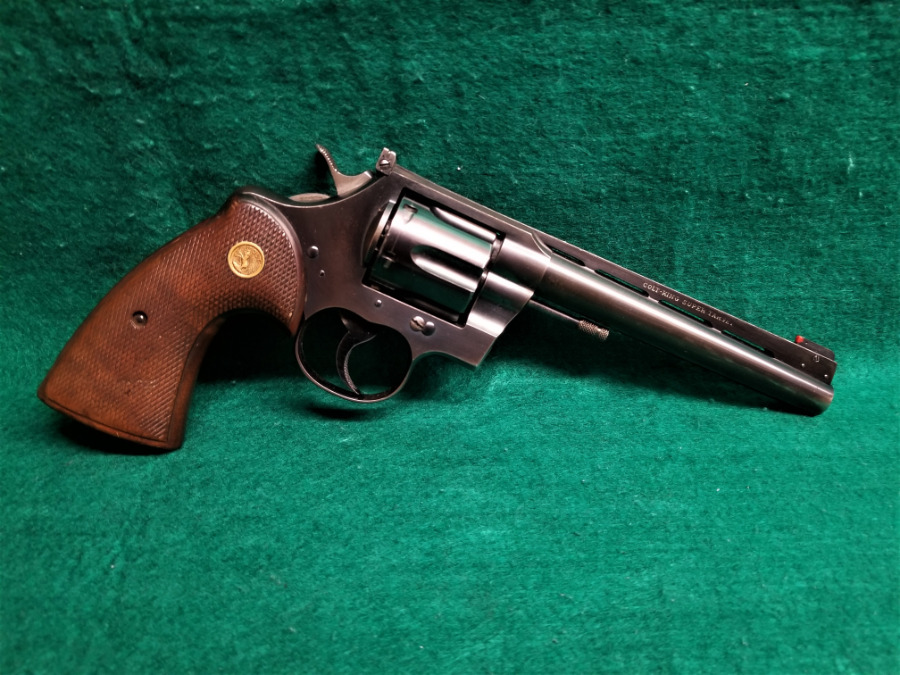
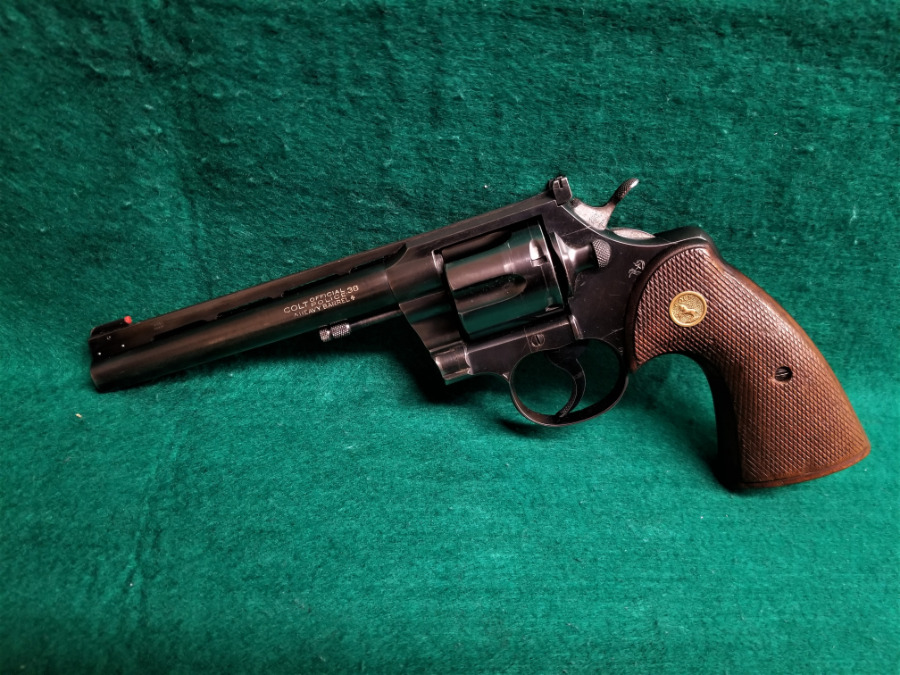
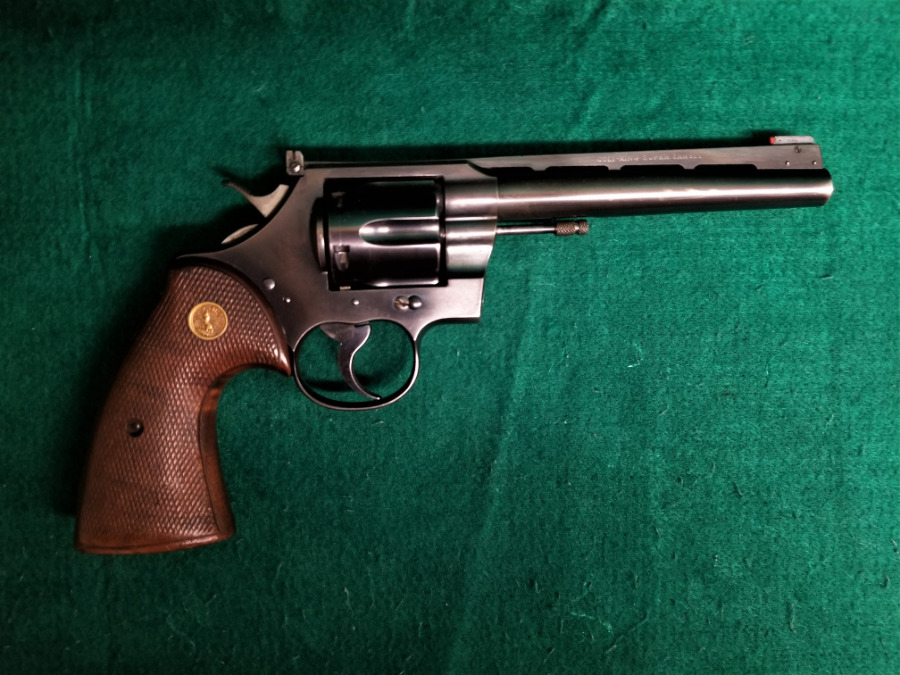
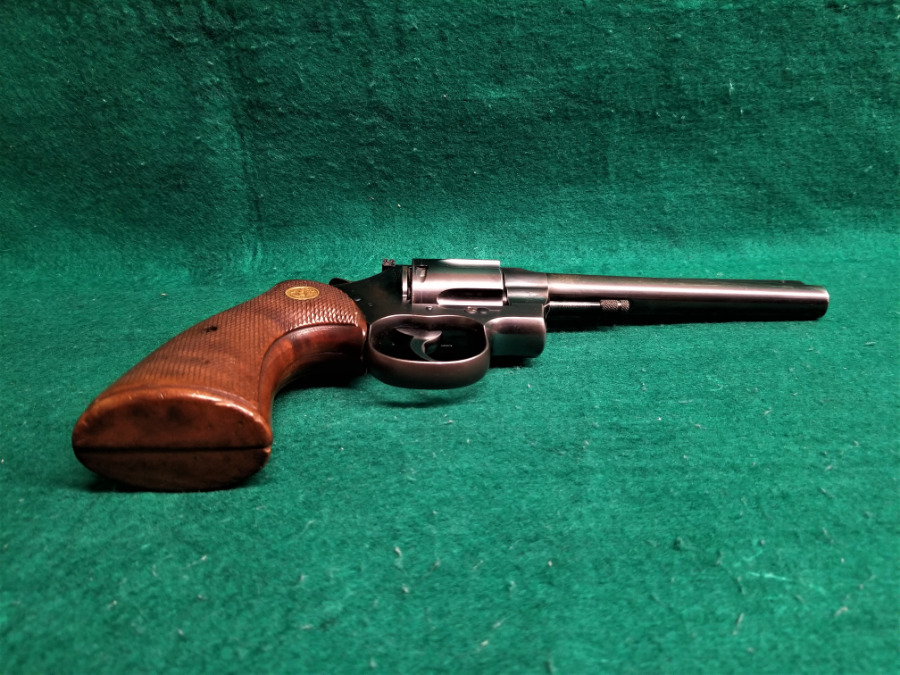
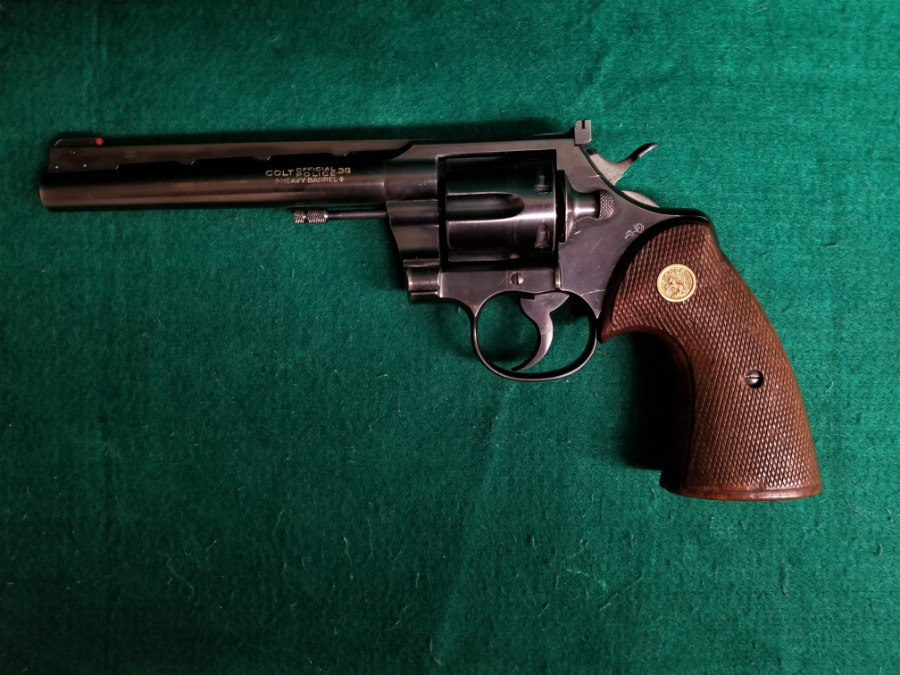
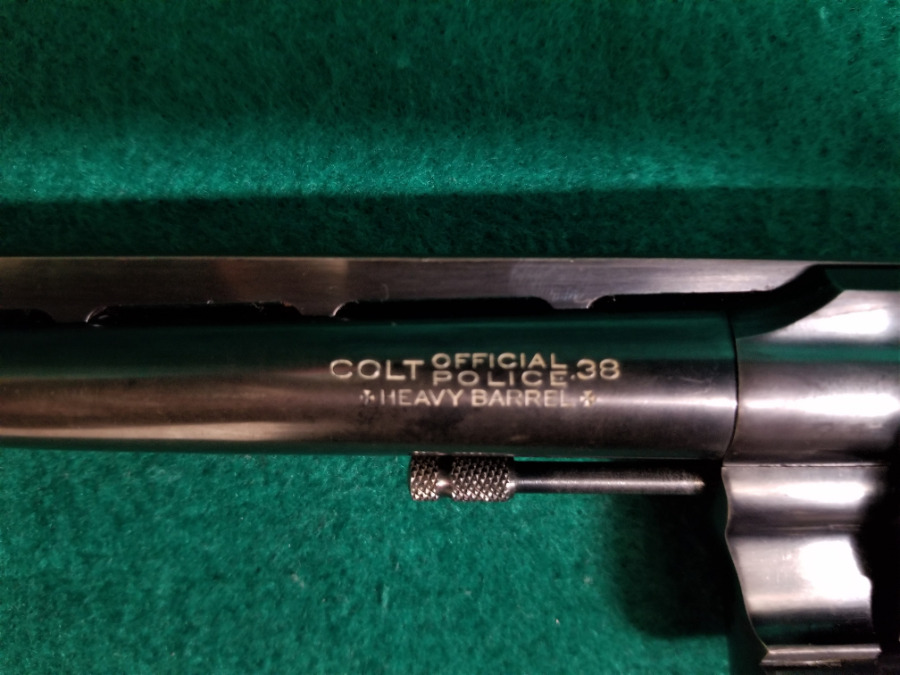
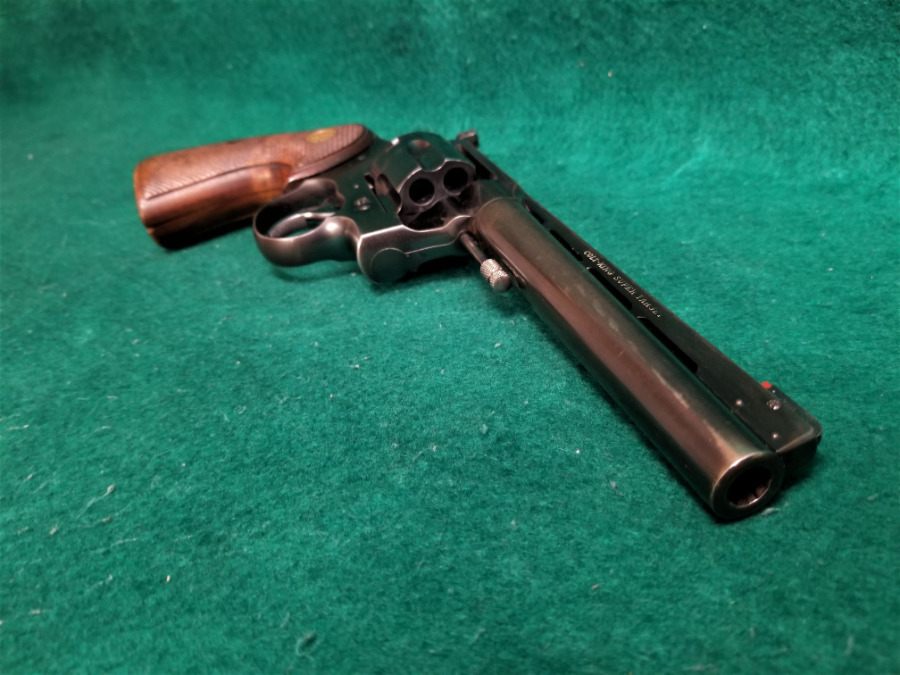
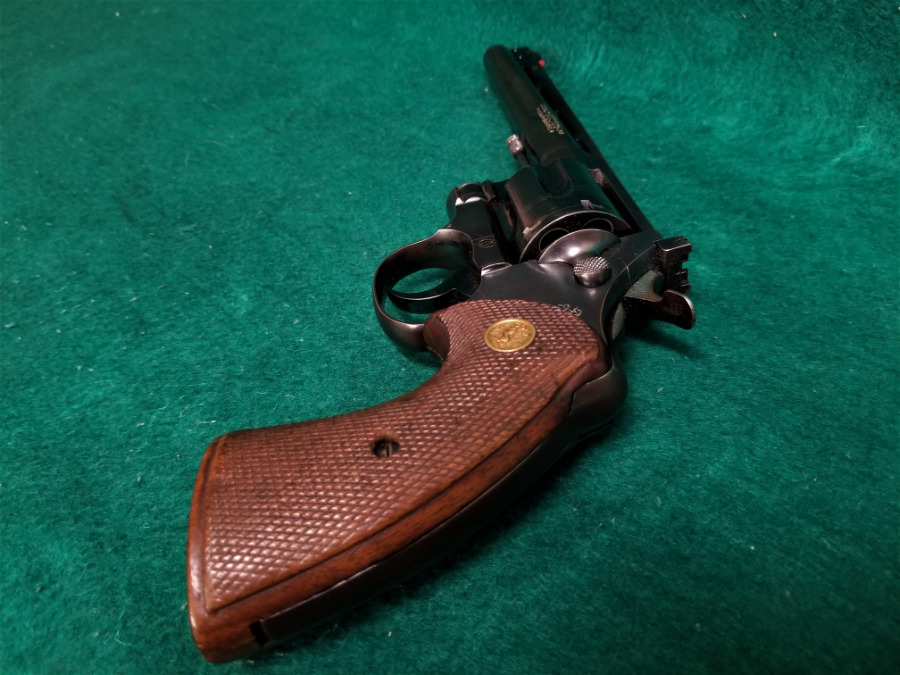
Colts Patents Arms Manufacturing Company Official Police Heavy Bl King Custom Super Target

  • Post author By Grumpy
  • Post date October 16, 2018
  • No Comments on Colts Patents Arms Manufacturing Company Official Police Heavy Bl King Custom Super Target

Colts Patents Arms Manufacturing Company - OFFICIAL POLICE HEAVY BL KING CUSTOM SUPER TARGET - Picture 1

Colts Patents Arms Manufacturing Company - OFFICIAL POLICE HEAVY BL KING CUSTOM SUPER TARGET - Picture 2
Colts Patents Arms Manufacturing Company - OFFICIAL POLICE HEAVY BL KING CUSTOM SUPER TARGET - Picture 3
Colts Patents Arms Manufacturing Company - OFFICIAL POLICE HEAVY BL KING CUSTOM SUPER TARGET - Picture 4
Colts Patents Arms Manufacturing Company - OFFICIAL POLICE HEAVY BL KING CUSTOM SUPER TARGET - Picture 5
Colts Patents Arms Manufacturing Company - OFFICIAL POLICE HEAVY BL KING CUSTOM SUPER TARGET - Picture 6
Colts Patents Arms Manufacturing Company - OFFICIAL POLICE HEAVY BL KING CUSTOM SUPER TARGET - Picture 7
Colts Patents Arms Manufacturing Company - OFFICIAL POLICE HEAVY BL KING CUSTOM SUPER TARGET - Picture 8
Colts Patents Arms Manufacturing Company - OFFICIAL POLICE HEAVY BL KING CUSTOM SUPER TARGET - Picture 9


Categories
Gun Info for Rookies

How to zero a rifle in 30 seconds

  • Post author By Grumpy
  • Post date October 16, 2018
  • No Comments on How to zero a rifle in 30 seconds
https://youtu.be/qwD5zu7yTeI?t=15

Attachments area
Preview YouTube video How to zero a rifle in 30 seconds

How to zero a rifle in 30 seconds

Categories
Dear Grumpy Advice on Teaching in Today's Classroom

Teacher Payback!

  • Post author By Grumpy
  • Post date October 16, 2018
  • No Comments on Teacher Payback!
Related image
Related image
Image result for Teacher Payback! humor

Categories
All About Guns

What ain't necessarily so about the M1 Garand

  • Post author By Grumpy
  • Post date October 15, 2018
  • No Comments on What ain't necessarily so about the M1 Garand


Categories
N.S.F.W.

A Break for my Fantastic & Generous Readers !!- N.S.F.W.

  • Post author By Grumpy
  • Post date October 15, 2018
  • No Comments on A Break for my Fantastic & Generous Readers !!- N.S.F.W.
 
Inline image 3


Posts pagination

← Newer Posts 1 … 10 11 12 … 23 Older Posts →

Recent Posts

  • The Animals-House of the Rising Sun American Civil War Edit
  • A Smith & Wesson 629 because a .44Mag makes for a great car gun!
  • A Armstrong & Co ‘Sidelock’ Ejector Side-by-Side Shotgun in 12 Gauge
  • Shooting an M16 (full auto)
  • Precision Pillar Bedding a Hunting Stock – 375 H&H Magnum – Custom African Safari Hunting Rifle

Recent Comments

  • Grumpy on One of my all time WWII Fighter Planes – The P-47 Thunderbolt
  • Jake C on One of my all time WWII Fighter Planes – The P-47 Thunderbolt
  • Grumpy on I’m willing to bet that he is not the designated sniper
  • Exile1981 on I’m willing to bet that he is not the designated sniper
  • Grumpy on Henry Ziegland The Unluckiest Guy in the World By Will Dabbs, MD

Archives

  • February 2026
  • January 2026
  • December 2025
  • November 2025
  • October 2025
  • September 2025
  • August 2025
  • July 2025
  • June 2025
  • May 2025
  • April 2025
  • March 2025
  • February 2025
  • January 2025
  • December 2024
  • November 2024
  • October 2024
  • September 2024
  • August 2024
  • July 2024
  • June 2024
  • May 2024
  • April 2024
  • March 2024
  • February 2024
  • January 2024
  • December 2023
  • November 2023
  • October 2023
  • September 2023
  • August 2023
  • July 2023
  • June 2023
  • May 2023
  • April 2023
  • March 2023
  • February 2023
  • January 2023
  • December 2022
  • November 2022
  • October 2022
  • September 2022
  • August 2022
  • July 2022
  • June 2022
  • May 2022
  • April 2022
  • March 2022
  • February 2022
  • January 2022
  • December 2021
  • November 2021
  • October 2021
  • September 2021
  • August 2021
  • July 2021
  • June 2021
  • May 2021
  • April 2021
  • March 2021
  • February 2021
  • January 2021
  • December 2020
  • November 2020
  • July 2020
  • May 2020
  • February 2020
  • January 2020
  • November 2019
  • October 2019
  • July 2019
  • June 2019
  • May 2019
  • April 2019
  • March 2019
  • February 2019
  • January 2019
  • December 2018
  • November 2018
  • October 2018
  • September 2018
  • August 2018
  • July 2018
  • June 2018
  • May 2018
  • April 2018
  • March 2018
  • February 2018
  • January 2018
  • December 2017
  • November 2017
  • October 2017
  • September 2017
  • April 206
  • August 205
  • September 202
  • December 201
  • November 201
  • April 201
  • March 201

Categories

  • “Aw shucks
  • A Victory!
  • All About Guns
  • Allies
  • Ammo
  • Another potential ENEMY OF THE PEOPLE
  • Anti Civil Rights ideas & "Friends"
  • Art
  • Being a Stranger in a very Strange Land
  • Blessed with some of the worst luck
  • Born again Cynic!
  • California
  • COOL!!!!!!!!!!!!!!!!!
  • Cops
  • Darwin would of approved of this!
  • Dear Grumpy Advice on Teaching in Today's Classroom
  • EVIL MF
  • Fieldcraft
  • Funny Pictures & Memes
  • Gear & Stuff
  • Good News for a change!
  • Grumpy's hall of Shame
  • Gun Fearing Wussies
  • Gun Info for Rookies
  • Hard Nosed Folks Both Good & Bad
  • HUH!
  • I am so grateful!!
  • I WANT ONE ASAP!!!
  • If I was in Charge
  • Interesting stuff
  • Karma can be a bitch!
  • Leadership of the highest kind
  • Manly Stuff
  • N.S.F.W.
  • One Hell of a Good Fight
  • Other Stuff
  • Our Great Kids
  • Paint me surprised by this
  • Real men
  • Related Topics
  • Soldiering
  • Some Red Hot Gospel there!
  • Some Scary thoughts
  • Some Sick Puppies!
  • Stand & Deliver
  • Stupid Hit
  • Tax Write off / Review
  • that’s too bad”
  • The Green Machine
  • The Horror!
  • This great Nation & Its People
  • This looks like a lot of fun to me!
  • Tips about Gunsmithing
  • Uncategorized
  • Useful Shit
  • War
  • Well I thought it was funny!
  • Well I thought it was neat!
  • You have to be kidding, right!?!

Meta

  • Log in
  • Entries feed
  • Comments feed
  • WordPress.org

© 2026 You Will Shoot Your Eye Out

Privacy Policy

Powered by WordPress

To the top ↑ Up ↑