Categories
All About Guns The Green Machine

How the Army got the M-14 instead of The FAL

AGAINST ALL ODDS – THE MAN BEHIND THE M14 RIFLE: LT. COL. ROY E. RAYLE
By George Kontis P.E.

It was hot and unusually humid in Springfield, Massachusetts during the summer of 1953. Yet, it was not nearly as sweltering as most of the summers he had endured back in his home state of Alabama.

Weather aside, LTC Roy E. Rayle took an early liking to his new assignment. His wife and two young sons were in love with the beautiful on-post housing supplied by the Army, and his new job was challenging, exciting, and important.
He was to direct 350 people in the Research and Development of small arms at the Springfield Arsenal. He had leadership training from the Army and a degree in Mechanical Engineering from Georgia Tech. He felt well prepared for any challenge. 
In his first job briefing, the Colonel in charge updated him on the status of the programs now under his control. It was a glowing report, with no major challenges on the horizon. Two Springfield Armory-designed guns in trials at Ft Benning were reportedly doing very well.

The T161 machine gun and the T44 rifle were both undergoing user tests there. These two would later be designated the M60 machine gun, and the M14 rifle, respectively. Assuming successful trials, these would become the first small arms in U.S. history chambered for the new 7.62mm NATO round. Rayle’s predecessor had decided not to send a representative to the test site for technical support and feedback.
As a result, not much had been heard from Ft. Benning since the testing began. Everyone assumed that the tests were going well. Going so well, in fact, that his new boss spent most of their meeting time reviewing the other developmental weapons now under Rayle’s direction.
LTC Rayle enjoyed a blissful honeymoon that lasted a full two days. Suddenly, the Armory received an urgent and most disturbing phone call from U.S. Army Ordnance’s Chief of Small Arms Research and Development, Colonel René Studler.

The T44 was performing poorly in testing. A Pentagon representative was already on his way to the test site and Springfield Armory was to immediately dispatch a representative to Ft. Benning. Who would they send? The new guy, of course, LTC Roy Rayle.
Once at Ft. Benning, it didn’t take Rayle long to figure out the major problem. The T44 was having cartridge feeding issues that stemmed from too much friction in the magazine. Rayle asked them, “How much time do we have to fix the problem.”

He didn’t like the answer. Only eleven days of testing remained. Results had to be tallied and submitted to Army Field Forces headquarters at Ft. Monroe, VA. Ft. Benning had been directed to follow a rigid timeline.
It wasn’t only the gun that was having a problem. Since his arrival there, Rayle sensed a certain animosity from the test crew. It wasn’t toward him necessarily, but rather it was directed toward Springfield Arsenal.

After he examined the T44 test weapons more closely, he understood why. The rifle was far from production ready. T44 receivers had been made from an earlier prototype, the T20E2 that used the longer M1 round (.30-06). To reduce the bolt travel in the rifle for the shorter 7.62mm NATO round (.308 Winchester,) filler blocks had been placed inside the receiver.
The fix worked well enough. That is, right up to the point where the blocks loosened and caused malfunctions. This was only the beginning. Designers at the Armory had taken other shortcuts that made it blatantly obvious the T44 was little more than a cobbled-up prototype.
In stark contrast was the rifle submitted by the competitor. The entry from Fabrique Nationale (FN) of Belgium was a well-made and well-thought out design. FN’s rifle was designed for in line firing that directed the recoil load straight into the shoulder.
This greatly aided the shooter in controlling the weapon’s hefty recoil. The rifle we know today as the FAL was then designated by the Army as the T48. It featured smooth feeding, and a simple operating mechanism that was easy to field strip and service.
The general consensus at Ft. Benning was that the Belgian design was far more mature than the T44 and better prepared for user tests at Ft. Benning. The test crew welcomed the amiable on-site FN representative and viewed his presence as part of FN’s commitment to winning the competition.
The Belgians had spent their own money on the development of the T48, making numerous design changes in answer to every whim of the American military.

They converted their original design from the .280 British round and developed a simple top loading magazine charging clip that the Americans demanded.
FN spared no expense in producing test prototypes for the Army and arranged for their top designer, Mr. Ernst Vervier, to be on standby at the test site to oversee weapon repair and to answer questions.
American regulations made the testing unfair to FN. As the Belgian company was foreign owned, the company was not allowed to obtain any of the information from the classified test results.

FN was allowed to know how their own T48 was doing, but no information was provided as to how the T44 was faring. In spite of this, FN’s Managing Director, Mr. René Laloux, somehow knew a great deal about how the testing was going, stating at the end of this sequence of testing, “….between the two rifles, T44 and T48 FN, the final conclusions were in favour of the F.N. rifle.”
Before Rayle left Ft. Benning, the Colonel in charge pulled him aside to receive one more embarrassing admonishment.

This time it was for the shabby performance by Springfield Armory on the T161 machine gun prototypes. Like the T44’s, these were failing miserably, too.
There were failures to feed, broken firing pins, and ruptured cartridges that spewed debris all over the test cell. The weapon was not only performing poorly, but engineering support was lacking.
What about that tripod Springfield sent for the machine gun tests, the Colonel demanded? His test crew was expecting a new design but received a cobbled up tripod instead. What was the Armory doing with all of its time and money? Rayle had no answers and none of it was his fault, of course, but now he was in charge of R&D and he now owned all the blame.
Rayle was not even three weeks on the job and his two major programs were already in big trouble. It was an embarrassment; for him, and for the Springfield Armory.
LTC Rayle returned to Springfield on 20 July, anxious to get his team working on solutions to the T44’s problems. He began with a briefing on the history of the weapon. It was not a happy tale.

The original design intent was to develop a .30 caliber rifle weighing no more than 7 pounds that offered semi and full automatic fire. Design goals included: reduce coil, accommodation of a new short round, and firing from a detachable box magazine.
The purpose of the new rifle was to replace the M1 Rifle, the BAR, the M2 Carbine, and the M3A1 .45 caliber submachine gun. Four weapons and three different calibers replaced by a single weapon. This would greatly improve logistic support in the field. Since the end of World War II, numerous rifle designs had been developed and trialed until only the T44 remained.
“Who is the engineer in charge of the T44?” Rayle demanded. There was no single answer. The project started and stopped so often and priorities shifted so much that there really wasn’t one individual who followed the program from the beginning to now.

John Garand had been responsible for some of the early designs, and Earl Harvey for some of the others. Garand had retired only a couple of weeks before Rayle came to Springfield, and was no longer available to the team.
The rifle’s status was a confusing mess that was compounded by the military’s “big picture.” How was the war with Japan brought to an end? It was with the atomic bomb, of course.

There was a new thinking and general consensus by the military’s top brass. Wars would now be fought and won with nuclear weapons. Small arms would only be needed for a short cleanup with rifle wielding soldiers. What rifle did they need? For a totally demoralized enemy, almost any firearm would do.
As Rayle planned the direction forward, more bad news arrived. Classified Ft. Benning test results had been leaked to Newsweek magazine.

The 20 July 1953 issue featured an article claiming that the Belgian T48 was far ahead of the American T44, and predicted it would soon be announced that FN was the winner.
Those at the Armory doubted the veracity of the report. Long afterwards, they learned that the Newsweek article was totally accurate. Ft. Monroe had secretly decided the FN T48 was the winner.
They also decided to allow the T44 to continue with the next scheduled round of testing in Arctic conditions, only to serve as a yardstick to gage how much better the T48 would perform in cold weather conditions.
At the end of August, Rayle gathered his group together and offered them three options: The first one was to build up some repair parts to refurbish the guns after testing and submit the guns for trial in the same configuration.

The second was to address the gun’s major problems so the rifle would not be a total embarrassment to Springfield Armory. The third option was to use the remaining three months to fix everything that was broken. This included testing in both ambient and Arctic conditions with the objective to beat out the FN candidate.
Much was at stake. First and foremost was the avoidance of a huge loss of face for the United States, should a foreign weapon win the competition. Chief of Ordnance, General Ford, was already taking hits from the recent episodes of poor performance of Springfield designs.

The decision of Rayle’s team was unanimous. They would pull out all the stops in order to win the Arctic competition. From what he knew of the two designs, Rayle recognized this would not be an easy task.
The T44 had to overcome major design problems while the major issues with the FN gun were mostly metallurgical problems. From his engineering background he knew these could easily be solved by material or process changes.
Rayle was no stranger to solving difficult technical problems on a tight schedule. He once undertook a wartime assignment where his job was to discover the cause of mid air bomb collisions.

The subsequent detonations, which occurred soon after release, were responsible for downing the very aircraft that dropped them.
Rayle worked around the clock, conducting analysis, as well as filming and retrieving dropped bombs. He expeditiously determined the cause and verified the solution. Many bomb crews owe their lives to his timely solution.
To solve T44’s problems he decided on a direct approach, so he listed all of the technical problems in accordance with their severity. Once identified, they would be addressed one by one. Right away it became evident that he would need personnel and manufacturing capacity.

Even though he had 300 people working for him, redirecting some of them to the T44 improvement would be detrimental to the schedule for the project they were working on. It wasn’t just warm bodies he needed either.
He required top notch design talent – someone with expertise at the level of John Garand. Garand had earlier been approached, but refused after he learned that returning to work at the Armory would require him to give up his retirement pay. Getting Garand back this way was out of the question.
Rayle found a solution that solved both problems at once. A nearby machine shop, Mathewson Tool Company, was well known to the firearms industry for its excellent manufacturing capability.

Their reputation was due, to a large extent, to the manufacturing prowess of its owner, Dave Mathewson. Rayle’s solution was simple.
Mathewson would get a contract to produce any new T44 components that were needed and John Garand would work for him as a consultant. Garand could still collect his Army retirement along with a paycheck from Mathewson.
The T44’s number one problem was feeding cartridges from the magazine. They all knew that proper feeding is the primary key to the development of a reliable semi or full automatic weapon.

Examining the test records, the Springfield team realized that rounds fed poorly from new magazines and much better from ones that were worn in. Their magazine improvement program included some spring and configuration design changes, but the major improvement was the application of what was then a relatively new development; a dry film lubricant called molybdenum disulphide.
The new coating provided lubrication while the magazine was new and wore off at the same rate as the magazine wore in. Problem solved!
The buttstock was reinforced to improve it for grenade launching. For the Arctic testing, an enlarged trigger guard was developed to accept a gloved trigger finger.

New designs were verified by testing in ambient, dusty, and cold conditions, until acceptable function was achieved. More than once, they found that parts that worked in ambient conditions were totally unreliable at low temperature.
Rayle was impressed by the technical expertise of his team. Engineering technicians carefully conducted each test, taking careful notes and changing one thing at a time, so they knew if each individual fix was effective or not.
By mid December the much-improved T44’s were sent to Alaska, meeting up with the T48’s that had been sent from the FN plant in Liege, Belgium.
This time, Rayle decided, the Springfield team would send technical representatives to support the testing, replacing them every two weeks so that a new pair of eyes were available for a fresh look to address every problem that occurred. Rayle had recalled previous mistakes, and was determined not to repeat them.
As testing got underway, the T44’s were not problem free, but worked much better in the cold conditions than the T48’s, which suffered from a loss of power.

These problems were reported to FN who once again dispatched their design expert, Ernst Vervier to witness the problem and hopefully provide a solution. Unfortunately, Mr. Vervier could only come up with one on-site solution to cure the sluggish operation.
His only option was to enlarge the gas port to give the weapon more power. Determining the proper gas port diameter on any weapon is a very tricky undertaking, usually requiring extensive testing.
Mr. Vervier was well aware of the risk associated with changing it, and knew it was a sword that cut both ways. It solved the immediate power problem but the higher bolt velocity worked all of the components harder causing an increased number of broken parts.
Vervier tried to explain them away as normal parts life issues, but the malfunctions stood, counting against the T48 on the competition scorecard.
In spite of the redesigns, there were still plenty of problems with the T44. Those miserable filler blocks that shortened the T20 receiver were continually working loose and grenade launching was still problematic.

At the end of February, it was clear that the T44 had come out ahead and was announced the winner of the cold weather testing. Cautious military commanders at the Pentagon recoiled a bit from this latest development. Had they been too hasty in discounting their own American entry?
To the joy of Rayle’s team, Ft. Monroe announced that the next round of testing would again include the T44. Possibly this time it might be considered as a serious contender.
Rayle’s visit to command headquarters at Ft. Monroe was a disappointment. Rather than showing any enthusiasm for the success of the American weapon, most of the discussion centered on the Americanization of the T48.

It was if the recent T44 success had never happened. The entire U.S. defense industry was based on English inch-system dimensions.
With no easy way to introduce a metric-designed weapon into U.S. production, it would be necessary to convert the entire T48 drawing package to the inch-system.
At the same time, it was also important to convert the European format drawing into one more recognizable in the U.S. The good news was that the Canadians were interested in helping with these tasks, since they had already decided to adopt the FN design as their service rifle.
To his dismay, he learned that Springfield Armory was to assist in the metric conversion. Now his R&D department faced a huge challenge. It would be necessary for them to do a near perfect job with the conversion.

Should even one component be manufactured incorrectly as a result of the conversion, the failure would likely be viewed as an effort to sabotage the competitor. And how would anyone know?
Easy. Competing right alongside the U.S. made T48 would be the same metric guns made at the FN factory in Belgium to assure the American conversion was flawless.
Rayle could not let anything jeopardize the non-metric T48 design and subsequent testing. The Armory was already in trouble with Congress and some branches of the military, accused of being wasteful, inefficient, and some even said incompetent.

Springfield Armory had no friends in the U.S. firearms industry either. Concerned firearms manufacturers had insisted on a meeting with him, displeased that Springfield Armory was taking work they believed could be more efficiently performed by private industry. A mediocre conversion job could sound the Armory’s death knell.
Rayle went back to Springfield prepared for the direction forward. He would farm out the metric conversion to U.S. industry.

The industry would be totally unbiased and if anything, supportive. This would be an opportunity for them to tool up for U.S. production of what might become the next U.S. service rifle. Harrington and Richardson won the contract for the conversion and the production of 500 inch-system T48 rifles.
Undaunted by these new developments, the luxury of additional time and the recent miracle they pulled off with the Arctic testing gave Rayle the time he needed to beat the T48 in the next round of testing.

In June of 1954, Dave Mathewson delivered the first T44E4, a rifle with a proper length receiver that had been designed with the aid of John Garand. The T44E4 looked good and was a full pound lighter than the T48.
Excited about the work done by Mathewson and Garand, Rayle took the rifle home that same night to examine it more closely. Sitting in the kitchen with the rifle in his lap, Rayle thought back on the ease at which the FN rifle could be field stripped.

“The T44E4 was easy to strip too,” he thought. Or was it? He disassembled the T44E4 a couple more times to convince himself.
Then a better idea came to him. Relying on her unfamiliarity with firearms, he asked his wife to leave the dishes for a moment in order to try her hand at it. She succeeded for the most part, but floundered, when trying to remove the bolt.
The next day Rayle called Dave Mathewson and recounted the previous night’s field stripping exercise. Dave agreed to look into it, and sure enough the next models delivered had extra cuts to facilitate disassembly.

After thirteen each of the T48’s and T44E4’s were delivered, the guns were sent in opposite directions. Arctic testing would continue in Alaska while Ft. Benning would be supplied five of each type for user testing.
By the spring of 1955, it was concluded that the weapons had an equal number of deficiencies, but the Board had a clear preference for the T44. At the conclusion of testing in November 1955 the malfunction rates were: T44–1.4%, inch-system T48–2.4%, and FN made T48-2.4 %.
Design refinements of both weapons and testing continued through most of 1956 with the final report indicating that either rifle was suitable for Army use.

The lighter weight, ease of manufacture, non-adjustable gas system, fewer components, and slight edge on reliability gave the Board reasons to make their choice the T44E4.
Official notification was not made until June 1957, but by then Rayle had been reassigned as the Ordnance Adviser to the First Field Army of the Republic of China, in Taiwan.
The teams led by LTC Roy E. Rayle had overcome great odds, beating out one of the finest service rifles ever developed. Without his engineering and leadership skills, the history of U.S. small arms would look quite different than it does today.

This article first appeared in Small 
Categories
Uncategorized

Hopefully this will make this a Great Friday the 13th! NSFW

Related image
Related image
Related image
Related image
Related image
Image result for hd nude women pinterest
Related image

Categories
All About Guns

I found this good article about Snubbies, Enjoy Grumpy!

Snubnose Revolvers: Tried-and-True for Concealed-Carry Use

Snubnose Revolvers: Tried-and-True for Concealed-Carry Use

The continued existence of alligators, when you stop and think about it, is pretty unusual. Scientists say that your basic alligator design is even older than the dinosaurs, and yet the alligator is still with us, even though there are lots of cooler and more-modern predators like bears and lions. Turns out that the alligator may only be good at a couple things, but it’s very good at those things.

I think of alligators when I see the snubnose, small-frame, concealed-carry revolver. In its most-basic form, the small-frame, double-action wheelgun predates the metallic cartridge. There are certainly cooler, more-modern and more-versatile firearms out there. But, when it comes to the couple things for which it’s good, it is very good indeed.

While often foisted off on beginners as a first choice due to perceived simplicity of operation, the small-frame snubby is really not that hot of a choice for the new shooter. Recoil—even with standard-pressure .38 Spl. in a steel-frame Chief’s Special—is noticeable. In the case of magnum loads in the flyweight alloy-frame guns with titanium cylinders, it is downright painful.

Further, snubnose revolvers tend to come with vestigial sights and long, heavy double-action trigger pulls, neither of which help a novice score fast and accurate hits. So why do they remain popular with some very clued-in individuals?

One reason is that they are still excellent pocket-carry guns for a number of reasons. A Smith & Wesson Airweight, with a steel cylinder and alloy frame, tips the scales at about 1 pound even. Some newer designs that make use of titanium or composite materials are even lighter than that. While there are smaller and lighter pocket semi-automatics, they aren’t really any easier to shoot well than the revolver. The .380 ACPs don’t offer any advantage in power and not much of one in capacity, and the 9 mm ones aren’t really that much more pleasant to shoot.

Further, the silhouette of a snubnose revolver is less likely to print an obvious “gun shape” through the fabric of a pocket. Also, the revolver is only wide across the cylinder, while the rest of the gun is slimmer than almost any self-loader.

This is why during the winter months, when I’m out-of-doors in the Indiana cold, there’s a Smith & Wesson 432PD in .32 H&R Mag. in the outside breast pocket of my heavy coat. That way I can keep zipped up against the cold and still have access to a firearm, even when buckled up in my car.

When I attended Tactical Conference 2018 this past March, I twice had the chance to sit in and observe trainer Claude Werner put on a 2-hour block of instruction on the use of the snubnose revolver. This excellent instruction yielded several pertinent nuggets of information regarding its best and most-effective employment.

The point Werner hammered home most was that accurate shooting is crucial. My 432PD holds six rounds, and the far more typical .38 Spl./.357 Mag. has but five. Ammunition management is important; you need to make good hits.

Werner emphasized the importance of getting a good sight picture and using ammunition that shoots to your gun’s point-of-aim. While some newer snubbies come with prominent sights such as the XS Sights offerings, my 432 has the plain ol’ serrated metal ramp found on J-frames since forever ago, so it’s been touched up with fluorescent pink paint to make it stand out.

Every snubnose-revolver drill was done dry first, and then Werner encouraged partial reloads during repetitions, in order to set up “ball-and-dummy” drills, which help develop that crucial smooth and straight trigger pull without disturbing the sight picture.

Werner taught the use of the knife-edge of the hand to operate the ejector rod during reloads, and when he explained why, it made perfect sense. I’d always used either the flat of my palm to smack the ejector or pressed it with my thumb, but both can have problems unique to the snubby revolver. With the thumb, the problem is the ejector rod stroke on a 2-inch gun is not the full length of a cartridge case, so if a case is sticky, it won’t fall free. The problem that can arise with the flat of the palm is—where on a larger revolver your hand will sort of guide along the barrel until it hits the ejector rod—on a snubby the barrel and ejector rod are about the same length. It’s easy to wind up smacking both at the same time and then nothing gets ejected.

There was also an emphasis on practicing reloading with loose rounds from a pocket, in case Murphy shows up and has your speedloader dumping them all out in there.

I came away from the class both more aware of the limitations of my J-frame snubnose revolver, and more aware of how to work around them. All the more reason to practice with it more at the range.

Categories
Uncategorized

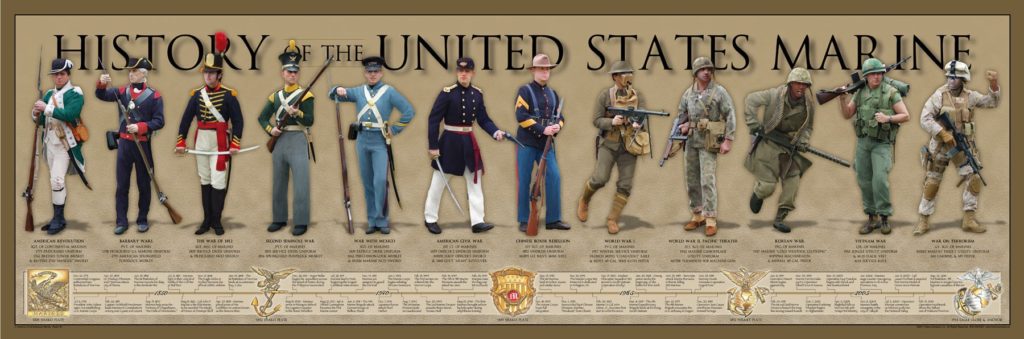
History of the USMC

Categories
The Green Machine War

The SF Folks used this a couple of time In Viet Nam & other places

Categories
All About Guns

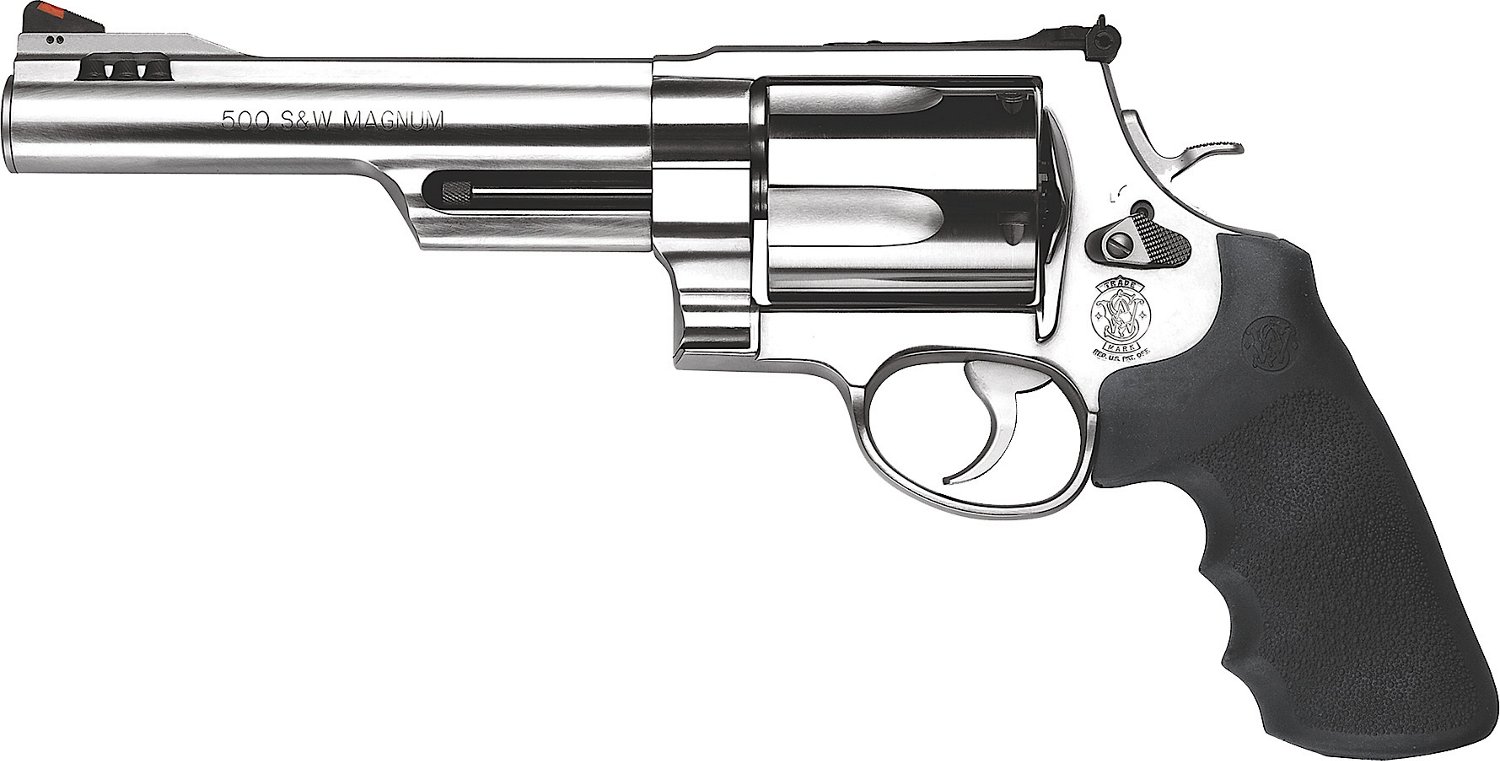
Smith & Wesson 500 or God what a Monster that is!

Image result for 500 S&W Magnum
Lord this thing is huge!
Image result for 500 S&W Magnum
By the Title is this. Outside of being a fisherman up where there are some mighty big bears about. What could you possibly & practically do with this true hand cannon?
But since this America whose real motto is Bigger, Better & More Badass than before. Why not!

 Image result for 500 S&W MagnumImage result for 500 S&W Magnum

.500 S&W Magnum

From Wikipedia, the free encyclopedia
.500 S&W Magnum
44-500comp.jpg

Comparison of the popular .44 Magnum (left) to the .500 S&W cartridge (right)
Type Centerfire (.50 caliber)
Place of origin United States
Production history
Designer Cor-Bon / Smith & Wesson
Designed 2003
Manufacturer Smith & Wesson
Produced 2003 – present
Specifications
Bullet diameter .500 in (12.7 mm)
Neck diameter .526 in (13.4 mm)
Base diameter .526 in (13.4 mm)
Rim diameter .556 in (14.1 mm)
Rim thickness .056 in (1.4 mm)
Case length 1.625 in (41.3 mm)
Overall length 2.300 in (58.4 mm)
Rifling twist 1:18.75 in (476.25 mm)
Primer type Large pistol originally, now Large rifle
Maximum pressure 60,000 psi (410 MPa)
Ballistic performance
Bullet mass/type Velocity Energy
300 gr (19 g) FTX Hornady 2,075 ft/s (632 m/s) 2,868 ft·lbf (3,888 J)
350 gr (23 g) XTP HP Underwood 1,912 ft/s (583 m/s) 2,842 ft·lbf (3,853 J)
400 gr (26 g) PTHP Winchester 1,800 ft/s (550 m/s) 2,877 ft·lbf (3,901 J)
440 gr (29 g) LFN-GC Buffalo Bore Heavy 1,625 ft/s (495 m/s) 2,579 ft·lbf (3,497 J)
500 gr (32 g) FP XTP Hornady 1,425 ft/s (434 m/s) 2,254 ft·lbf (3,056 J)
Test barrel length: 8.375 in
Source(s): Hornady (300 gr),[1] Winchester (400 gr),[2] Double Tap,[3] and Ballistic Supply,[4]

The .500 S&W Magnum (12.7×41mmSR) is a fifty-caliber semi-rimmed handgun cartridge.
Developed by Cor-Bon in partnership with the Smith & Wesson “X-Gun” engineering team for use in the Smith & Wesson Model 500 X-frame revolver and introduced in February 2003 at the SHOT show.[5]
Its primary design purpose was as a hunting handgun cartridge capable of taking all North American game species.

Cartridge history

Smith & Wesson had been at the forefront when developing powerful handgun cartridges such as the .357 S&W Magnum and the .44 Remington Magnum.
However, since 1960 the company’s .44 Remington Magnum, which it had developed in partnership with Remington, was eclipsed by the .454 Casull.
Since then, several other more powerful cartridges had been developed by Action Arms,[6] LinebaughRugerWildey, and Winchester for repeating handguns.
In 1971 Smith & Wesson had experienced a dramatic surge in orders for their Model 29 revolver in the .44 Magnum cartridge with which S&W production was not able to keep up. Available Model 29 revolvers were being sold for two to three times the suggested retail price, due to the low supply and high demand for the revolver.
This surge in demand was due to the Dirty Harry movie, where the Model 29 revolver was billed as the most powerful revolver (The .454 Casull designed in 1955 was not in commercial production until 1997).
With the entry of the .500 S&W Magnum and the Model 500 revolver, Smith & Wesson recaptured the title of the most powerful handgun,[7] and with it an increase in sales.
The .500 Smith & Wesson Magnum was designed from the outset to be the most powerful production handgun cartridge. S&W product manager Herb Belin proposed the idea of developing the revolver and cartridge to the S&W sales team.
With the backing of the sales team, the project was approved by S&W President Bob Scott. The ammunition would be developed by Cor-Bon and Peter Pi in partnership with the S&W X-Gun engineering team of Brett Curry Lead Design Engineer, Rich Mikuta, and Tom Oakley.
Eleven months later on January 9, 2003, the team unveiled the S&W Model 500 revolver and the .500 S&W Magnum cartridge.
According to Belin, the cartridge was designed from its inception to be substantially more powerful than any other production handgun cartridge before it.[5] Cor-Bon would later go on to develop the .500 S&W Special cartridge.

Cartridge design and specifications

The .500 S&W Magnum is a semi-rimmed, straight cartridge optimized for use in revolvers. The cartridge is designed to headspace on its rim.
However, unlike rimmed cartridges such as the .44 Magnum and other cartridges designed for use in revolvers, the cartridge can be cycled more smoothly and more reliably in tubular or magazine rifles, due to the semi-rimmed design.
The .500 S&W Magnum was designed to fire a bullet with a diameter of .500 in (12.7 mm) unlike the .500 Linebaugh, which fires a .510 in (12.9 mm) bullet.
This was done so as not to run afoul of the National Firearms Act and be considered a Destructive Device as had happened to Whildin’s .50 AE cartridge, which at first was designed to fire a .510 in (12.9 mm) but had to be redesigned to fire a .500 in (12.7 mm) instead.

500 S&W Magnum Schematic

SAAMI compliant .500 S&W Magnum cartridge schematic: All dimensions in inches [millimeters].[8]

The .500 S&W Magnum has a maximum working pressure of 60,000 psi (4,100 bar). However, most factory ammunition is limited to 50,000 psi (3,400 bar) to help ease extraction of fired cases.
The cylinders of the S&W Model 500 revolver are engineered to be capable of withstanding 50% over pressure. Regular proof-load testing is performed at 20% overpressure.[5]
Cylinder bore ∅ is given as .500 in (12.7 mm). SAAMI recommends a 6 groove barrel with each groove being .130 in (3.3 mm) wide.
A barrel with a bore ∅ of .4880 in (12.40 mm) and a groove ∅ of .4983 in (12.66 mm) is also recommended. The recommended twist rate is 1 in 18.75 in (476 mm).
While the bore diameter of .4880 in (12.40 mm) is consistent with other firearms which fire a .500 in (12.7 mm) diameter bullet, the groove diameter of .4983 in (12.66 mm) is an oddity as most firearms which fire a .500 in (12.7 mm) will have a groove diameter of equal to the diameter of the bullet.[8]
For this reason regular cast lead bullets should not be fired in the revolver as excessive leading of the forcing cone and barrel will occur, leading to excessive pressures or the deposited lead acting as an obstruction in the barrel or forcing cone.
While the overall length is given as 2.300 in (58.4 mm) by many sources, some revolvers will not be able to accept cartridges with bullets seated to this overall length.
This is because the cylinders of the revolvers are too short to accommodate such cartridges. The now-discontinued Taurus Raging Bull 500 is an example of one such revolver.
It has a cylinder which is about .200 in (5.1 mm) shorter than that of the S&W Model 500.[9]

Performance

The first revolver which could accommodate the large 500 magnum cartridge was the massive Smith & Wesson Model 500Euro coin pictured for scale. (An American quarter is similar in size.)

 
The .500 S&W Magnum is considered the most powerful commercial sporting handgun cartridge by virtue of the muzzle energy it can generate.
Cor-Bon (now a Dakota Ammo brand) who together with Smith & Wesson developed the .500 S&W Magnum cartridge, offers several loads which include a 325 gr (21.1 g) at 1,800 ft/s (550 m/s), a 400 gr (26 g) at 1,625 ft/s (495 m/s) and a 440 gr (29 g) at 1,625 ft/s (495 m/s).
Compared to the next most powerful commercial sporting handgun cartridge, the .460 S&W Magnum, which can launch a 325 gr (21.1 g) at 1,650 ft/s (500 m/s) or a 395 gr (25.6 g) at 1,525 ft/s (465 m/s), the .500 S&W Magnum produces about 15% to 40% more muzzle energy than the .460 S&W.
The .500 S&W Magnum comes into its own when used with heavier bullets, particularly those with weights of 500 gr (32 g) or greater.
When possible these bullets should be seated as far out as possible to take advantage of the complete cylinder length, so as to maximize the powder capacity which the case can provide.
Several manufacturers currently produce the S&W .500 Magnum cartridge, with some of the top-performing rounds delivering 3,031 ft·lbf (4,109 J) of energy with a 350-grain (23 g) bullet traveling at 1,975 feet per second (602 m/s).
It is claimed to be the most potent commercially available handgun cartridge on the market and provides power similar to long-established wildcat cartridges such as the .375 JDJ (J. D. Jones) [10] and pistol loadings of the .45-70 Government.
Indeed, some rounds use bullets weighing almost 1 oz. (28 g ~ 440 gr.), which are sent at about 1,500 ft/s (460 m/s) – essentially the same performance of a 12 gauge shotgun slug.[7]
Bullet weights available for this cartridge range from a 265-grain (17.2 g) jacketed hollow point to a 700-grain (45 g) hardcast lead bullet.
Moderate velocity, heavy bullet loads for the .500 S&W Magnum are similar in performance to the black powder .50-70 Government.

Reduced Recoil Winchester factory load for the 500 S&W Magnum.

Winchester’s 500 S&W Magnum 350 gr. JHP Reduced Recoil ammunition

Low recoil or reduced recoil ammunition is manufactured by the Grizzly Cartridge Company and Winchester.
The low recoiling ammunition reduces the recoil by lowering the velocity of the projectile and/or the mass of the projectile. Winchester’s reduced recoil X500SW ammunition propels a 350 gr (23 g) bullet at 1,400 ft/s (430 m/s).
Although such ammunition is considered low recoiling, due to having about one-third of the recoil energy of full-power .500 S&W ammunition, even these are a significant step up from most of the .44 Magnums, as they produce twice the recoil energy of a latter cartridge.
Cor-Bon introduced the .500 S&W Special in 2004 as a lower energy and lower recoiling alternative to the .500 S&W Magnum cartridge.
This cartridge is compatible with handguns chambered for the .500 S&W Magnum and fires a 350-grain (23 g) bullet at 1,250 feet per second (380 m/s).[11]
These low recoiling alternatives to the full-power .500 S&W Magnum, significantly reduce the felt recoil in the shorter 4-inch-barrel (100 mm) handguns.
At present, only Cor-Bon, manufactures ammunition for the .500 S&W Special in three load configurations.
The .500 S&W Magnum has a very high recoil energy and recoil velocity.
The high energy and velocity of the recoil will cause the muzzle to rise when shooting the cartridge.
Smith & Wesson incorporated design features to help mitigate both the perceived and actual recoil of their Model 500 Smith & Wesson revolver chambered for the .500 S&W Magnum.
The revolver is equipped with a compensator and Hogue Sorbothane grips. The revolver’s considerable weight of 56–82 ounces (1,600–2,300 g)[12] plays a role in moderating the recoil of the cartridge.[13]
A double-discharge effect is sometimes observed with the cartridge.
The heavy recoil causes some shooters to inadvertently squeeze the trigger as a reflexive action to hold on to the revolver soon after the discharge of the previous round.
Furthermore, some shooters have experienced the cylinder unlocking and rotating after the firing of cartridge which is a partial manifestation of the same phenomenon.[14]

Sporting applications

500 S&W Magnum hunting load with 500 gr. SP bullet by Hornady.

500 S&W Magnum hunting load with 500 gr. SP bullet by Hornady.

 
The .500 S&W Magnum was designed to be primarily a handgun hunting cartridge.
It also serves a secondary purpose as a back-up survival handgun cartridge as a defense against the large bears of North America.[15]
Due to its power, recoil and size, the 500 S&W Magnum is a poor self-defense or concealed-carry weapon, especially in an urban environment.
The 500 S&W Magnum is better suited to use in a rifle. Long guns produce 300-500 additional feet per second.
The lack of a cylinder gap and the extra barrel length contribute to the additional velocity.

500 S&W Magnum hunting load with 500 gr. SP bullet by Hornady.

Size comparison of a 500 S&W round and a human hand.

The .500 S&W Magnum’s success with large, dangerous game is in part due to the availability of heavier bullets with exceptional sectional densities.
Bullets above 500-grain (32 g) have the sectional densities required for hunting heavier African dangerous game. As a hunting cartridge the .500 S&W Magnum has been found to be effective against elephant and African buffalo as long as ranges are kept within reasonable limits.[16][17]
Bullet selection is extremely important when hunting thick-skinned dangerous game. Smith & Wesson bills the Model 500 revolver as “A Hunting Handgun For Any Game Animal Walking”.[15]
In North America, it serves the purpose of hunting all North American big game species. The cartridge has had success in taking of Alaskan brown bear, American bison, moose, and elk.
It is also used to hunt black bear, whitetail deer, wild boar, and feral hogs.[17] The cartridge gained some notoriety as being the cartridge which was used to hunt the supposed Monster Pig.
Bullets ranging from 275–325 gr (17.8–21.1 g) can be used for light CXP2 game species. Bullets heavier than 350 gr (23 g), including Winchester’s reduced-load ammunition, are appropriate for use with CXP3 game species.
Bullets over 500 gr (32 g) can be used for dangerous game. Hornady’s 500 gr. SP load is rated for CXP4 class dangerous game by Hornady out to 200 yd (180 m) against dangerous game, based on Hornady Index of Terminal Standards (H.I.T.S.) calculations.
The .500 S&W Magnum is available in firearms more convenient to carry than a full-sized rifle. This lends to its use as a defensive carry firearm in areas where dangerous predatory species may be encountered.
The .500 S&W Magnum cartridge has found use in survival guns such as the NEF Handi Rifle and the S&W Survival Kit. Big Horn Armory’s Model 89 carbine is often carried in Alaska for defense against the bears.[5]
Smith & Wesson manufactures a 2.75-inch-barrel (70 mm) version of the Model 500 revolver (model 500ES, whose production ended in December 2009), which is included in the S&W Survival Kit.
This shorter-barreled revolver is handier, weighing 56 oz (1.6 kg) and has no muzzle brake as are included with the more common Model 500 8.38 in (213 mm) revolvers.

Firearms and ammunition

Currently there are several .50 caliber handguns, which are capable of firing the .500 S&W Magnum.
These types of revolvers normally have five rounds to allow for thicker cylinder walls to accommodate the pressure generated by the large and powerful cartridge.
Big Horn Armory’s Model 89 carbine and rifle are currently the only repeating long guns chambered in this cartridge.
The single shot Thompson-Center Encore, NEF Handi Rifle, and Towner pump rifle are also chambered for this round.[18]
It is currently the most powerful production handgun cartridge available.
Ammunition for the .500 S&W Magnum is available from many mainstream ammunition manufacturers. Recently many of these manufacturers have expanded their .500 S&W offerings, which speaks to the popularity of the cartridge.

.500 S&W Magnum Ammunition
Ammunition Bullet Muzzle Velocity Muzzle Energy
Buffalo Bore 18A 400 gr (26 g) LFN 1,675 ft/s (511 m/s) 2,491 ft·lbf (3,377 J)
Buffalo Bore 18B 440 gr (29 g) JFN 1,625 ft/s (495 m/s) 2,579 ft·lbf (3,497 J)
Buffalo Bore 18C 400 gr (26 g) LFN 1,325 ft/s (404 m/s) 1,715 ft·lbf (2,325 J)
Cor-Bon HT500SW275-12 275 gr (17.8 g) Hunter DPX 1,665 ft/s (507 m/s) 1,688 ft·lbf (2,289 J)
Cor-Bon HT500SW325-12 325 gr (21.1 g) Hunter DPX 1,800 ft/s (550 m/s) 2,338 ft·lbf (3,170 J)
Cor-Bon HT500SW350-12 350 gr (23 g) Hunter JHP 1,600 ft/s (490 m/s) 1,990 ft·lbf (2,700 J)
Cor-Bon HT500SW385-12 385 gr (24.9 g) Hunter BC 1,700 ft/s (520 m/s) 2,471 ft·lbf (3,350 J)
Cor-Bon HT500SW400SP-12 400 gr (26 g) Hunter SP 1,625 ft/s (495 m/s) 2,346 ft·lbf (3,181 J)
Cor-Bon HT500SW440HC-12 440 gr (29 g) Hunter HC 1,625 ft/s (495 m/s) 2,580 ft·lbf (3,500 J)
Cor-Bon HT500SW500HC-12 500 gr (32 g) Hunter HC 1,500 ft/s (460 m/s) 2,499 ft·lbf (3,388 J)
Federal P500XB1 275 gr (17.8 g) Barnes XPB 1,840 ft/s (560 m/s) 2,067 ft·lbf (2,802 J)
Federal P500SA 325 gr (21.1 g) Swift AF 1,800 ft/s (550 m/s) 2,338 ft·lbf (3,170 J)
Hornady 9249 300 gr (19 g) FTX 2,075 ft/s (632 m/s) 2,868 ft·lbf (3,888 J)
Hornady 9250 350 gr (23 g) XTP MAG 1,700 ft/s (520 m/s) 2,246 ft·lbf (3,045 J)
Hornady 9252 500 gr (32 g) FP XTP 1,425 ft/s (434 m/s) 2,254 ft·lbf (3,056 J)
MagTech 500C 275 gr (17.8 g) SCHP 1,667 ft/s (508 m/s) 1,696 ft·lbf (2,299 J)
MagTech 500L 325 gr (21.1 g) SJSP 1,378 ft/s (420 m/s) 1,370 ft·lbf (1,860 J)
MagTech 500B 325 gr (21.1 g) SJSP 1,801 ft/s (549 m/s) 2,341 ft·lbf (3,174 J)
MagTech 500A 400 gr (26 g) SJSP 1,608 ft/s (490 m/s) 2,297 ft·lbf (3,114 J)
Winchester X500SW 350 gr (23 g) JHP 1,400 ft/s (430 m/s) 1,416 ft·lbf (1,920 J)
Winchester S500SWDB 375 gr (24.3 g) Dual Bond 1,725 ft/s (526 m/s) 2,477 ft·lbf (3,358 J)
Winchester S500PTHP 400 gr (26 g) PTHP 1,675 ft/s (511 m/s) 2,491 ft·lbf (3,377 J)
Values courtesy of the respective ammunition manufacturer

In addition to these manufacturers, smaller manufacturers such as Double Tap Ammunition and Magtech Ammunition offer ammunition for firearms chambered for this cartridge.

Categories
Related Topics

HOW TO KEEP YOUR KNIVES BLAZING SHARP

Dull knives are more than just an annoyance, they’re a safety hazard. Don’t believe me? Fine. I dare you to use a dull knife for an entire month. If you actually do this, what you’d find is that a dull knife requires more pressure to get the job done compared to a sharp knife.
And because you’re applying more pressure, you’re at a greater risk of cutting yourself. The safest knife is a knife that does the work for you, not the other way around.
So, what can you do to achieve a hair-splitting knife edge? Well there’s 3 things: honing, sharpening, and stropping. Do these 3 things and dull knives will be a thing of the past! Let’s discuss each of these 3 in greater detail, shall we?

Hone, Hone, Hone Away!

Just what the hell is honing anyways? Without getting too technical, honing is the process of aligning a misaligned knife edge. So, you’re probably wondering how a knife’s edge gets misaligned to begin with. Every time you use your knife to slice, chop, or cut something, you knock your edge off alignment ever so little.
A knife edge is extremely delicate, and even the action of chopping up vegetables can over time result in an edge that is folded over (AKA misaligned). The thing is, we can’t prevent misalignment; we can only correct it. Honing is the process of correction.

This Is What A Honing Rod Looks Like. Make Sure You Get One!

I’m not going to get into the details of how to hone a knife, because that’s a discussion in and of itself. Instead I suggest you check out my honing 101 instructable. It explains how to hone a knife in 3 simple steps.

Get Yourself A Sharpener!

I said it before and I’ll say it again, dull knives are a safety hazard. If you have any reason to never use a dull knife ever again, let that be motivated by the safety of you and your loved ones. Without ranting on too much, my point is this: dull knives suck, so we need to sharpen them. Knife sharpening is an interesting topic. It can be as simple or complicated as you make it to be. I prefer simple. It is the process of slowly abrading material (steel), with the purpose of achieving as sharp an edge as possible. When it comes down to it, you have 3 choices as far as knife sharpeners are concerned:
Electric Knife Sharpeners
Electric knife sharpeners take away most of the skill and technique required to sharpen an edge. They’re typically the most expensive of the three types of sharpeners.

Work Sharp Ken Onion Edition Is One Of The Best Electric Sharpeners On The Market

What I Like:

  1. It’s All About Quick Results—Good electric knife sharpeners can get your blade from dull to finger cutting sharp in about a minute!
  2. Anyone Can Use Them—So easy, even grandma and grandpa can work these. Once you know the basics of knife sharpening, it’s literally plug and play.

What I Dislike:

  1. Can Cost Quite A Bit Of Money—The good ones can be quite expensive. I’m talking in and around the range of $140-250.
  2. Electronics Malfunction—Compared to the other three sharpeners, the electric variations are the least durable.

Pull Through Sharpeners
If you’re looking for the most bang for your buck, pull through sharpeners are your best bet. You can find some awesome ones that cost less than a McDonald’s combo meal!

Brod & Taylor Is The Crème De La Crème Of Pull Throughs!

What I Like:

  1. Not Hard On The Wallet—Unlike the electrics, pull through sharpeners are very reasonably priced. That’s not to say you can’t find a $150 pull through. Price range is about $5-150.
  2. Perfect For Outdoorsmen—The fact that they’re portable, lightweight, manual (no batteries or electricity required), and easy to use, make them the ideal sharpener for camping, hunting, fishing, and hiking trips. You can even toss one in the car!

What I Dislike:

  1. Results Are Average—The only caveat with this are the results are average. It sharpens an edge to the point where you should be able to get the job done, but nothing more.
  2. Wouldn’t Trust Them On My Expensive Knives—Pull throughs are perfect for whipping up a beater knife into shape (I say this from experience). I wouldn’t use them for my expensive collection, and I don’t recommend you do either.

Stone
Old is gold. No seriously, old is gold! It’s no surprise that this ancient sharpening technique is still relevant even today.

You Can Sharpen Just About Anything On This. Talk About Versatility!

What I Like:

  1. You Can Expect Professional Results—If used correctly, sharpening stones can produce results similar to a professional service. Of course, this depends on several different variables: stone quality, sharpening technique etc.
  2. Most “Natural” Way To Sharpen—One thing I dislike about electric and pull through sharpeners is that they can be a little too aggressive on a knife edge, and they strip off too much steel. With sharpening stones, you have full control over how much steel is abraded.

What I Dislike:

  1. Takes Time To Learn—Sharpening using stone requires a little bit of a technique and understanding. In that sense, it’s not everyone’s cup of tea.
  2. Confusing For The Newbie—Sharpening stones are a completely different ball game. Diamond (continuous and non-continuous), water, ceramic, and oil stones are what you can expect to find these days. This is just high level though. The deeper you dive, the more detailed it gets!

Last But Not Least, Stropping!

Stropping is something I usually do after I sharpen. To strop is to polish, coat, and align your edge. Think of it as the final step in achieving maximum sharpness. Wondering how to strop? Here’s an instructable I wrote on the topic. Check it out!

You should be honing every two weeks. When honing is no longer effective, then and only then should you sharpen (and strop).

Categories
All About Guns Allies

Somebody should go & Ring the Liberty Bell & Here's Why!

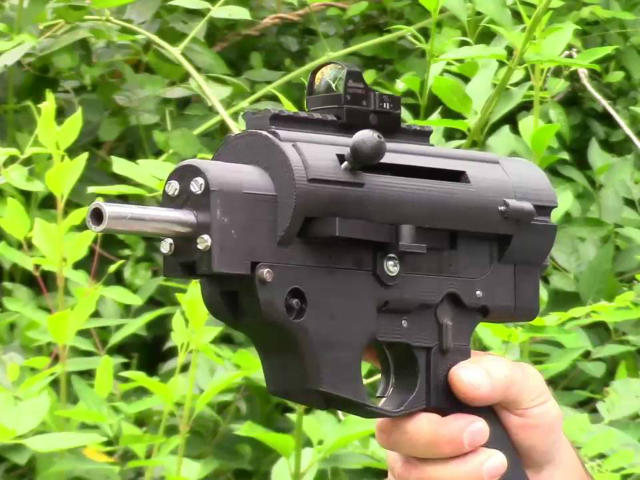
Inventor Wins Free Speech Battle with DOJ to Distribute 3D-Printed Gun Designs

This latest version has the charging handle moved to the opposite side. The Gluty lower has had over 3000 rounds fired with it. The new upper has had 1200 rounds fired through it.
Screenshot

Cody Wilson’s Defense Distributed and Second Amendment Foundation (SAF) reached a settlement with the Department of Justice allowing unfettered publication of 3D gun files and other information in a case centered on free speech.

Breitbart News reported that SAF filed a suit on behalf of Defense Distributed on May 6, 2015, seeking to free Wilson from a federal mandate that he not post blueprints for The Liberator pistol online.
Over three years later, the announcement comes that Wilson and SAF won

SAF sent a press release to Breitbart News, explaining details of settlement, saying, “The government has agreed to waive its prior restraint against the plaintiffs, allowing them to freely publish the 3-D files and other information at issue. The government has also agreed to pay a significant portion of the plaintiffs’ attorney’s fees, and to return $10,000 in State Department registration dues paid by Defense Distributed as a result of the prior restraint.”
SAF founder and executive vice president Alan Gottlieb said, “Not only is this a First Amendment victory for free speech, it also is a devastating blow to the gun prohibition lobby. For years, anti-gunners have contended that modern semi-automatic sport-utility rifles are so-called ‘weapons of war,’ and with this settlement, the government has acknowledged they are nothing of the sort.”
Gottlieb added, “Under this settlement, the government will draft and pursue regulatory amendments that eliminate ITAR control over the technical information at the center of this case. They will transfer export jurisdiction to the Commerce Department, which does not impose prior restraint on public speech. That will allow Defense Distributed and SAF to publish information about 3-D technology.”
Breitbart News spoke with Cody Wilson after the settlement was reached. He said, “Our culture will not just be preserved, but will have a new life in the Internet. The age of the downloadable gun has formally begun.”
AWR Hawkins is an award-winning Second Amendment columnist for Breitbart News, the host of the Breitbart podcast Bullets with AWR Hawkins, and the writer/curator of Down Range with AWR Hawkins, a weekly newsletter focused on all things Second Amendment, also for Breitbart News. He is the political analyst for Armed American Radio. Follow him on Twitter: @AWRHawkins. Reach him directly at awrhawkins@breitbart.com. Sign up to get Down Range at breitbart.com/downrange.

Categories
Cops

How not to react with the cops!

https://youtu.be/QoX-RHjs0jA

Categories
All About Guns

Some advice on the Remington 700 -Video

Attachments area
Preview YouTube video Gunsmithing – How to Assemble a Remington 700 Presented by Larry Potterfield of MidwayUSA