Categories
All About Guns

A .357 Magnum Research Desert Eagle — History, Movies & Action by WILL DABBS

“The fact that you’ve got ‘Replica’ written down the sides of your guns…and the fact that I’ve got ‘Desert Eagle point five O’ written down the side of mine… should precipitate a shrinking of your presence.”
Thus uttered Bullet-Tooth Tony in the Guy Ritchie movie Snatch, generating some of the coolest gun-related dialogue ever put to celluloid. If you haven’t yet seen the movie then stop what you’re doing and surf on over to Amazon.com. They will rent it to you for $3.99.  It will change your life.

Thanks to its broad cinematic exposure in movies, TV, and video games, the Magnum Research Desert Eagle is one of the most recognizable firearms in the world.

Origin Story

The Desert Eagle is a unique and iconic firearm. Though the Deagle, as most die-hard fans refer to the gun, has long been associated with the nation of Israel, naturally a gun this manly was originally born in America. The U.S. patent application for this gas-operated pistol was approved in January of 1983 under the auspices of Magnum Research Inc. The gun earned a second patent in December of 1985. After Israel Military Industries refined the design the gun went into volume production.
IMI built the gun until 1995 when MRI shifted production to Saco Defense in Saco, Maine. In 1998 MRI returned manufacturing back to IMI, now reorganized as Israel Weapon Industries. Since 2009, MRI has produced the Desert Eagle in the United States at its facility in Pillager, Minnesota. If ever there was a better town in which to produce guns than Pillager, Minnesota, I have yet to hear of it. Pillager just looks cool stamped on the side of the piece. Kahr Arms purchased Magnum Research in 2010 and they produce the Desert Eagle to this day.
I am pretty old, and I recall when the Desert Eagle first hit the streets. The first commercial chambering was .357 Magnum followed soon thereafter by .44 Magnum. Interestingly, the gun was actually marketed for military use back in the day. The angle was that this was an incredibly robust gas-operated handgun that offered unprecedented firepower in a handheld package. Nowadays we realize that there really isn’t much practical military application for packing a 4-pound semiautomatic .44 Magnum pistol, but these were the heady days of Dirty Harry so nobody was really thinking clearly.

SPECS

  •  Type: Hammer-fired semiautomatic pistol
  • Action: Gas-operated rotating bolt
  • Cartridge: .357 Magnum
  • Capacity: 9+1 rds.
  • Weight: 4 lbs., 8 oz.
  • Trigger: Single action
  • Barrel Length: 6 in.
  • Overall Length: 10.6 in.
  • Finish: Black oxide with custom finishes
  • Sights: Combat type, fixed
  • MSRP: $1,572
  • Manufacturer: Kahr Arms

Morphology

Like everything else about the Desert Eagle, the controls are massively oversized. Up is fire. Down is safe.

The Desert Eagle was indeed a unique design. Incorporating the rotating bolt from an M16 along with a proprietary piston-driven action, the Desert Eagle did a fine job of taming the magnum cartridges of the day. The mechanics of the gun are simply brilliant.
Gas taps off from the barrel and then feeds into a hole that serves as a cylinder. Into this cylinder slides a piston that is rigidly affixed to the slide. The slide then serves the same purpose as does a bolt carrier in a gas-operated rifle, pushing the slide back to unlock the rotating bolt via a cam mechanism. This rotating bolt has four locking lugs and an extractor on its right aspect. This component strongly resembles the 7-lug bolt from the M16 rifle. The fixed gas cylinder and its captive piston are very similar to those of the Ruger Mini-14 rifle.
The upside to all this complexity is that the Desert Eagle is most at home running heavy magnum cartridges. Over the years the Deagle has been offered in .357, .41, .44, .440 Corbon and .50 Action Express. Swapping between cartridges requires only that you swap out the bolt, barrel and magazine. As the .44 Magnum and .50 AE share a common rim diameter changes between these two calibers require only a new barrel and magazine. The .440 Corbon is a .50AE case necked down to accept a .44-caliber bullet, and it therefore only requires a new barrel on an otherwise-stock .50AE Deagle.

The left-sided magazine release is a simple button in the expected spot. Magazines drop away freely.

The nature of the Desert Eagle’s gas system is such that it should only be used with jacketed bullets. Raw lead bullets can foul the gas port over time. The Desert Eagle barrel sports polygonal rifling that extends barrel wear and offers a modest increase in velocity over more conventionally rifled barrels. Magazine capacity ranges from nine rounds in .357 to eight in .41 and .44 and seven in .50AE and .440 Corbon. The .44 and .50AE guns are the most popular with the .357 pulling up third. .41 and .440 Corbon chamberings are currently out of production and tough to find as a result.

The single column magazine in the .357 Magnum Desert Eagle holds nine rounds.

The single action trigger on the Desert Eagle is creepier than that of your favorite 1911 but still serviceable.

The Desert Eagle sports a fairly crisp single action trigger and a massive slide-mounted manual safety. The trigger is not the equal of that of your favorite tuned 1911, but it gets the job done. The safety and comparably large scaled slide release are designed for shooters with huge monkey thumbs, but they remain serviceable enough. Magazines drop free quickly should you ever find yourself needing to run a Deagle fast.
The Desert Eagle design has evolved over the years offering variegated finishes and optics mounting options. However, throughout it, all the classic trapezoidal cross-section remains unchanged. Regardless of its practical capabilities, no other handgun has attained the level of cinematic popularity as has the Desert Eagle.

Film Credits

There were more than five hundred film and TV credits thus far that I could find. The Desert Eagle has been wielded by some of our favorite stars on both the big and small screens. The gun is also a staple in most first person shooter video games. The combination of the gun’s muscle-bound geometry and its pure unfiltered mass make the Deagle a favorite in the sorts of make-believe spaces where the gun’s bulk and four-pound weight don’t matter so much as might appearance and muzzle flash.
The Agents in the Matrix movies all packed Desert Eagles in shoulder rigs. Arnold Schwarzenegger wielded one in Last Action Hero, an underappreciated action gem that I like to describe as the Thinking Man’s Schwarzenegger movie. Eraser, Rambo III, Red Heat, Assassins, Double Impact, The Last Boy Scout, and Austin Powers featured the Desert Eagle as well along with many more.

Practical Tactical

While the Desert Eagle is indeed everything described above, actual trigger time on the range is fettered by the immutable dicta of Physics. Throwing a 300-grain half-inch bullet at 1,475 feet per second (fps) is going to produce some spunky recoil no matter what sorts of whiz-bang engineering you wrap around it. Pull my man-card if you must, but I have found that running a .50-caliber Desert Eagle loses its allure in fairly short order. Combine this with ammo that wholesales at a buck and a half a pop and you have the perfect recipe for a splendid wall hanger.
The .44 Magnum version is more fun. Ammo is cheaper and the recoil, while still impressive, is more pleasant than punishing. However, for pure unfiltered Desert Eagle shooting enjoyment, nothing beats the .357 Magnum.

The .357 Magnum Research Desert Eagle nicely tames recoil and produces some decent 15-meter groups from a simple rest.

I owned a .357 Magnum Desert Eagle back in the day. In a heady moment of impulsive stupidity, I traded mine to a guy at a gun show for a Beretta 92. The Beretta 92 was the Army’s new handgun at the time and I falsely assumed owning one would make me as cool as Mel Gibson in the original Lethal Weapon film. This is, incidentally, the same sort of irresponsible impulse that drives young American males to get tattoos and see if they can turn a lawn chair and a couple dozen weather balloons into a viable flying machine. Testosterone is the most potent poison known to man. When I tripped across a low mileage .357 Magnum Desert Eagle at a price I could stomach I jumped at it.
The Desert Eagle in .357 Magnum is actually fun to shoot. Recoil is more a pleasant shove than a punch, and with 9+1 rounds onboard the gun actually flirts with becoming a serviceable defensive weapon. When fired at dusk the gun produces a delightful bi-lobed muzzle flash that is visible from the International Space Station. The first piece jets out the muzzle while the second blasts downward from the gas port at the muzzle. Being in its very presence will reliably raise serum testosterone values.

Ruminations

Nobody needs a Desert Eagle handgun. There are countless more efficient home defense platforms, and it is the rare event indeed wherein a typical American might need to drop a charging hippo at bad breath range. Practicality is not what drives one to purchase such a massive pistol.
However, if you do decide you want a Deagle of your own and you can stomach having “.357 Magnum” rather than “.50AE” stamped on the side you will have lots more fun on the range. The bantam-weight Deagle is fun to run and won’t put you in the poor house buying ammo. The .357 Magnum is the Thinking Man’s Deagle.
For more information about the Magnum Research Desert Eagle, click here.
For more information about Winchester ammunition, click here.
For more information about SIG Sauer ammunition, click here.
To purchase a Magnum Research Desert Eagle on GunsAmerica, click here.

Categories
All About Guns

A Full House of Colts

Categories
All About Guns

Somebody's else's thoughts about the Colt Python

Wiley Clapp: This Colt Python Business

Wiley Clapp: This Colt Python Business
I may be dating myself to the detriment of my ongoing credibility, but I do remember the incident. No less of an authority than Maj. Gen. Julian Hatcher, editor of the prestigious American Rifleman, was commenting on a new product of a major American Arms maker. Colt Firearms had just introduced a completely new gun. As was the Colt custom, the gun was a six-shot revolver, but this one was fancy well beyond the norm. So much so that the good general wondered in print whether or not enough shooters would ever pony up $125 for a .357 Mag. revolver.

4″ barrel blued Colt Python
It was the mid 1950s and Colt had just announced a revolver they called the Python. That was better than 60 years ago and public acceptance of the big wheelgun has always been strong. As a matter of fact, General Hatcher would doubtless be completely dumbfounded at what he could get for a mint condition 1955 Python today. It might be as much as $5,000 to $6,000 and sure, a great deal of that differential is what has happened to our money in six decades. But a lot more is because the gun is a classic symbol of the best of old-time gunmaking. Mostly however, the astronomical price tags are a function of the fact that the supply of Pythons is finite. And they’ll never make any more.
There was plenty to get excited about in 1955, as the Python was a hell of a nice revolver. The exotic name might have been questionable in the minds of traditional shooters, but it seems to me that it gave just the right touch of adventure in the outdoors. The name followed the Cobra,  the very successful hideout revolver that was the first to use an aluminum frame. Essentially, the Cobra was a lighter version of the pre-war Detective Special. But the Python was not only a bigger gun, there was a bigger story behind it.
Just before the start of World War II, Smith & Wesson had scored a major coup with the first .357 Mag. known as the Pre-War Registered Magnum. Although Colt made .357s in the late 30s (Peacemakers and New Services), the Python was introduced to compete with a post-war version of the same S&W gun. (In ’55, no one knew what S&W had in store for post-war shooters, but they found out in 1956—the .44 Magnum). Colt management wanted to offer a premium revolver with traditional, visual and practical appeal. In other words, the new Python had to look like a Colt, but with a new sort of updated aspect and it had to shoot as well as anything they had ever made.
Bullseye shooting was very popular in those days and many shooters used special custom revolvers from King’s of San Francisco. These guns were usually medium-to-large frame Colt or S&Ws with longer barrels. They were fitted with precisely adjustable rear sights, ventilated ribs and their lockwork was tuned to perfection. For shooters who wanted a gun with a more forward point of balance, King also offered a weighted tube on the lower edge of the barrel. Originally, the idea was to mount a weight in such a way that it can be moved back and forth to stay at that “just right” point of balance. It worked rather well and was even used on the customized Colt Woodsman .22s. The major visual appeal to the King revolvers was used on the Python—the ventilated rib.
Initially, the Python came with a 6” barrel and weighed 43 ozs. The gun was instantly popular, but there was an almost immediate demand for a shorter version for police holster carry. The factory wasted no time in getting the four” ones in production. Snubbies (2 ½-inchers) came along a little later and Target .38s with impossibly long eight” barrels were sold in the waning years of Python popularity. And there is a handful of almost mystic 3” Pythons that command incredible prices in today’s market. Most Pythons were polished and blued, but nickel plating was also popular. A couple of other rough service plating systems came along and a complete stainless steel Python pleased the growing range of fans at its introduction in 1983.


6″ barrel Colt Python with blued (top) and nickel finishes
Everything about the big revolver was first class. It was polished and assembled by hand and if the action needed a few strokes of a stone, it got them. When the makers determined that the hollow, adjustable-weight barrel lug was not going to be a useful touch, it became solid. In any length, the Pythons had a comfortable, muzzle-heavy feel to them. Even with the hotter loads, there was serious weight to the gun and it did not beat you up with recoil. As pricey as they may have been, Pythons initially sold well and respectable numbers of the guns actually ended up in the basketweave holsters of the nation’s police officers.
It was in the early 1970s that I began to pay attention to combat shooting in general and Pythons in particular. I had taken a job with the Sheriff’s Department in Orange County, Calif., and even managed to geezer my way through their academy. As was the case with most of my fellow deputies, I used S&W revolvers. I grew familiar with the subtleties of that great S&W action and used guns of four different sizes—J, K, L and N. But I also paid attention to the Colts and fired them whenever I could. One of my academy buddies used a 4” Python and I ran over the PPC course with that one once in a while. Eventually, he decided to sell the gun and I was right there with the C-note that he needed. I knew that Dave had the Python come out of a suspicious holster one night and bounce across an asphalt parking lot. He was chasing somebody who richly needed to be chased. The big Colt landed right on the edge of one cylinder notch and it never locked up right—on that chamber—after that. The permanent and positive solution was a new cylinder, which I was saving to have done. It was safe to shoot, so I fired the gun a good bit before I could assemble sufficient bucks to have that accomplished. In the interim, the Python was stolen, along with seven or eight other nice shooters. My learning program with Colts was curtailed. That’s too bad, as I was getting downright respectful of the Colt system.

2.5″ barrel snub-nose Colt Python
Later on, I went into the writing business and got assignments that had me shooting Pythons from time to time. I always came away with respect for their accuracy and performance. As a police officer, I had been one of the fans of the so-called “Smython” revolver, which marries a Python barrel to a Smith K frame. This gives you Python accuracy and heft, plus the Smith action and reliability. A Python barrel cost $35 in those days and when it was mounted on a S&W action, the result was one damned fine PPC revolver. But time passed and most police agencies began to shift to high-capacity semi-automatic pistols. As police weapons, the revolver saw declining interest, even though Ruger’s GP100 and S&W’s L frames were the finest service revolvers ever made. Colt was running to catch up and never really did. Their DA revolvers were eventually all discontinued. Including that magnificent Colt Python.
The Colt Python revolver was made from 1955 ’til 2006, about 51 years. It was a black day for Colt people when the maker was no longer able to offer this gun to the American shooter. This was a firearm that demanded too much time from experienced craftsmen, so much so that its own excellence drove it out of the marketplace. In order to thrive in today’s mass-produced polymer world, a product has to enjoy a steady and continuing demand. Too many up and down spikes in sales send those who count beans into heart palpitations. But what has happened in the firearms second-market defies logic.

4″ barrel Colt Python with stainless steel finish
Some unknown, but relatively small, number of the original 600,000-odd Pythons were never fired. A much larger number of the guns were fired sparingly and most were fired even more. It is rare to see a Python that is worn out, but you do see guns that have been used heavily. I saw one at the Big Reno Show last year that had been through the patrol wars—nicks, small dents and no finish left. The guy wanted $1,300 for it. An early gun, had it been unfired and mint, he could have probably realized three times that. The Colt Python is the hottest gun in circulation.
This unusual and intense demand for pristine specimens has carried over to six other revolvers made by Colt in the latter part of the 20th Century—Cobra, King Cobra, Diamondback, Boa, Viper and the massive Anaconda. An excellent recent book—Seven Serpents—chronicles the production history of the seven. It is, however, with the Python that the values are out of sight. The gun was made in several different barrel lengths and finish variations, as well as specially marked special editions and custom shop engraved. Everything that is done to a Python that makes it different from all others increases its value—as long as the differences are factory original and in good taste. Any new Python lists for at least several thousand dollars. As an example of how crazy this is getting, I recently watched a rare 3” barrel sell on an on-line auction for two grand—just the barrel—not the whole gun.

4″ barrel Colt Python with nickel finish, circa 1975
In the pistolero’s vernacular, these guns are safe queens. Colt made them to be fired in their owner’s service, but shooting a mint or “minty” (whatever that means) Python at this point in time is stupid. It’s just as dumb as lighting your cigar with a C-note. There must be tens of thousands of good used Pythons in circulation, but there aren’t that many of them on the used gun shelf at your local gun store. I am guessing that guys who have one are keeping it to shoot and enjoy. They have doubtless concluded that they will never get another one. They won’t.
We have a major contradiction going on here. Once we had writers hard at work extolling the virtues of the Python as a shooting tool and now they wonder about how much one of these is worth—if they say anything at all. I am a shooter and I want to shoot these grand old guns, not put on kid gloves to admire them once a month when the moon is full. I have discovered a way to create a revolver that has every meaningful shooting characteristic of the Colt Python. Look to the next posting of “Clapp on Handguns” and I’ll explain it in detail. Then … well, we’ll just have to take them to the range … .
Categories
All About Guns

Somebody was a real hard case back then!

Categories
Allies The Green Machine War Well I thought it was funny!

Well I liked it!


Categories
Well I thought it was funny!

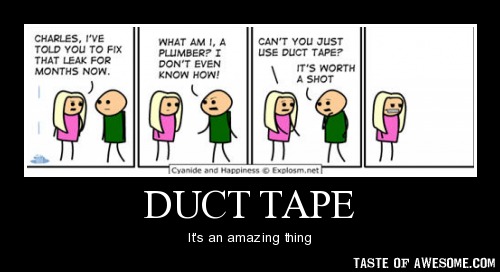
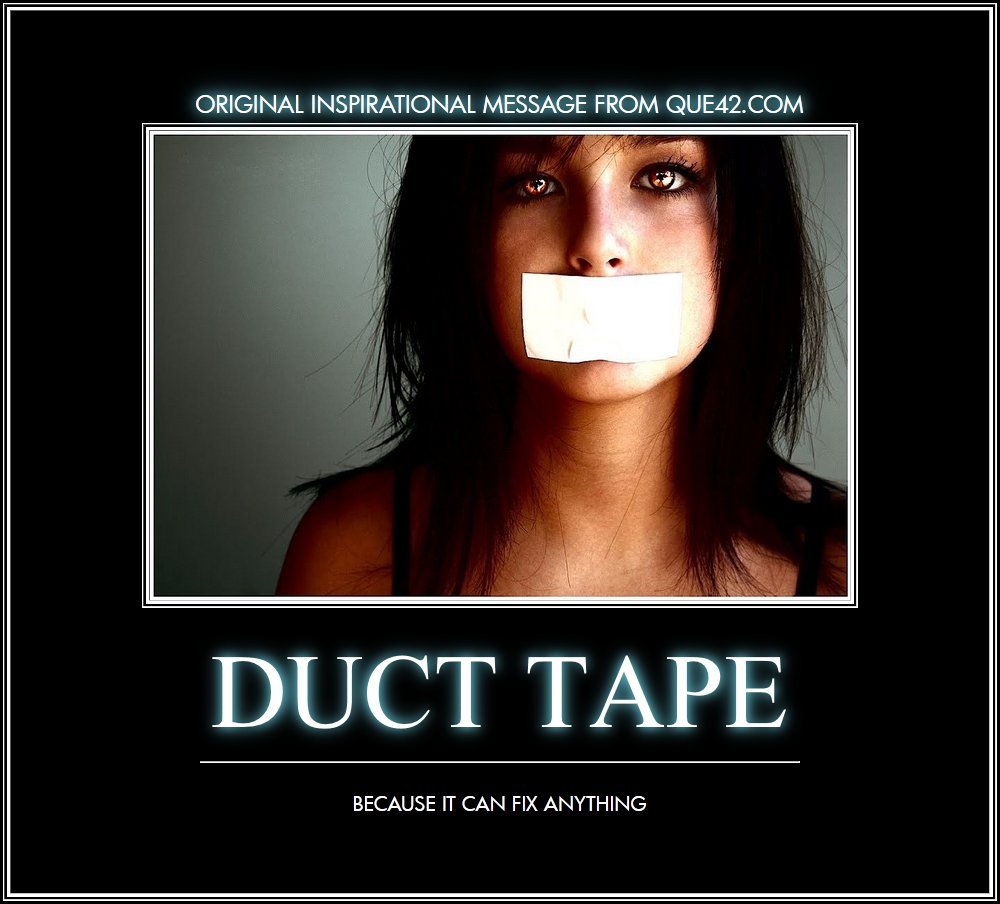
A real mans answer to everything Duct Tape it

Image result for women & duct tape memes
The only thing that it won’t fix is women problems but then we have divorce court for that! Enjoy
Grumpy


Categories
Uncategorized

Another tough Cop from the Bad Old Days

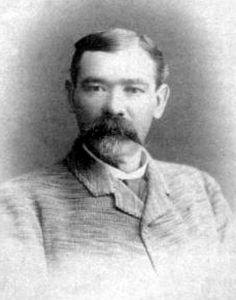
John Peter Gabriel – Lawman & Gunfighter

John Peter Gabriel

John Peter Gabriel

John Peter Gabriel (1838-1898) – A prominent lawman in Pinal County, Arizona in the 1880s, Gabriel pursued the Red Jack Gang and numerous other bandits. In 1888, he barely survived the Florence, Arizona Gunfight with Joe Phy.
Gabriel was born on November 17, 1838 in Kruft, Germany, the fourth of six children to John and Anna Schlauss Gabriel. When he was just nine years-old, he immigrated with his parents to the United States, where the family settled in Grant County, Wisconsin. Two years later, his father died and when his mother was unable to support the family 12-year-old Pete was taken in by a prominent lawyer named Ninian Whiteside, who soon joined the gold rush for California, moving his family and young Gabriel with him. When John grew up he worked in various professions before eventually making his way to Arizona, where he often worked in mining and at other times, as a lawman.
In 1877 , he was running a hotel at Silver King in Pinal County, when Sheriff Peter R. Brady appointed him a resident deputy. Gabriel’s popularity with local Democrats prompted him to run for sheriff against his boss the following year, he defeated Brady at took office in January, 1879.
He quickly established himself as one of Arizona’s finest and most-dedicated sheriffs, fighting lynch mobs and tracking down stage robbers, murderers, horse thieves and cattle rustlers. His skills with a gun were also well known, prompting one observer to say: “Gabriel was the finest pistol shot I have ever known, equaling, I am sure, the best the West ever produced.”
Somewhere along the line, he hired a man named Joseph Phy, an experienced law officer, to become his deputy. The pair who had previously known each other in the law enforcement capacity were friends. However, in 1883 he fired Phy for disorderly and drunken conduct and later arrested him in Case Grande, Arizona for assault.
Gabriel left the office of sheriff at the end of his term in 1886. He spent much of his time at his mine in the Dripping Springs Mountains, only occasionally coming to town to buy supplies and conduct business. That same year, Phy decided to run for sheriff and despite their past differences, Gabriel initially supported him for the job. However, at some point he withdrew his support and the two former friends soon became bitter enemies.

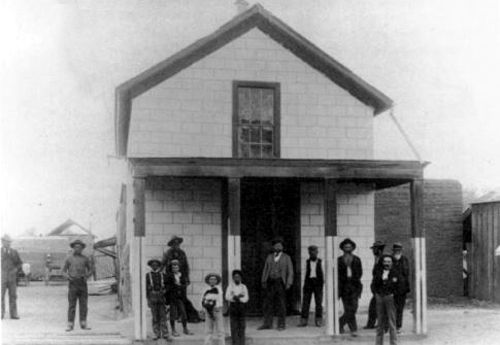
Tunnel Saloon, Florence, Arizona

Tunnel Saloon, Florence, Arizona

After two years of simmering anger, both men were in Jack Keating’s Tunnel Saloon in Florence, Arizona on May 3, 1888. Before long an argument erupted that quickly escalated to the point that Phy went out on the street, calling Gabriel out. Both men went for their guns and a blazing gunfight occurred. After eleven shots had been fired, Gabriel was wounded in the groin and in the chest and staggered to a nearby stable where he collapsed. Miraculously, he would survive. Phy; however, was not so lucky. Also seriously wounded, he lived but four hours. Gabriel stood trial for the killing but was exonerated on the grounds of self-defense.
Peter Gabriel spent the next decade prospecting in Arizona and northern Mexico before returning to work his old claim – the Monitor Mine on Mineral Creek. At the age of 59, he drank some poisonous water, probably laced by arsenic used in mining, and for a week, he lay alone and deathly ill in his cabin. Finally, his mining partner found him there on July 28, 1898. Gabriel died the next day and was buried near the mine.
In reporting his death, the Phoenix Herald said, “He was a bold and fearless man, a good officer … Pete Gabriel probably carried more scars at the hands of the lawless element than any other man in the southwest.”
By Kathy Weiser-Alexander, September, 2017.
Sources:
Auer, L.C.; Gun Grudge in Florence
Boessenecker, John; Pete Gabriel: Gunfighting Lawman of the Southwestern Frontier; The Journal of Arizona History; Arizona Historical Society, Spring, 2012.
Find a Grave
True West Magazine
Also See:
Lawmen of the Old West
Old West Gunfights
Arizona (main page)

Categories
Born again Cynic! California

Just another reason on why I want to leave California !

 Pop goes a tradition: county cracks down on free popcorn in hardware stores
Around San Diego County, a hot, salty, buttered controversy has popped up.
Should hardware stores offer free bags of freshly popped popcorn?

While that may look like a warm, welcoming treat, free popcorn is a threat to public health — or so argue county officials. Last month, health inspectors raided La Jolla’s Meanley & Son Hardware, warning that its old-fashioned red popcorn machine is a germy outlaw.
“They explained we didn’t have the proper permits,” said Bob Meanley, whose shop had handed out 30 to 40 bags every day for about 25 years.
To comply with the 1984 California Uniform Retail Food Facility Law, Meanley & Son would need to install a three-basin sink to clean and sterilize the popcorn popper. Also required: regular inspections, just like a restaurant.
Meanley declined and instead rolled the offending machine into storage. Thus ended a tradition he had started 25 years ago.
“I hate to take away something that our customers really like,” said Meanley, whose grandparents founded the hardware store in 1948. “On the other hand, this whole thing has made me more aware of our liability.”
While closely associated with movie theaters, popcorn is also tightly linked to neighborhood purveyors of hammers and screwdrivers. The connection is seen in shops from Cambridge, Mass. (Tags Ace Hardware) to Lakeside (Payton’s True Value Hardware).
“The little kids get a kick out of it,” said Dianne El-Hajj, co-owner of Payton’s, where the free treat has been a staple since 1997. “They come in for the popcorn and dad comes in for the tools.”
The county Department of Environmental Health, for its part, has a long tradition of cracking down on these scofflaws. Three years ago, inspectors cited Encinitas’ Crown Ace Hardware and San Carlos True Value Hardware.
“The Health Department came in,” said San Carlos True Value manager Danielle Matheny, “and told us if we wanted to continue giving away free popcorn and coffee we’d have to install a bigger vent system, a bigger and better sink in the break room — a lot of rules and restrictions they put on us.”
In both Encinitas and San Carlos, the stores dropped the practice. Inspectors so far have ignored Payton’s, but El-Hajj figures it’s just a matter of time.
“I feel sad,” she said, “that some of the old traditions we have become so regulated.”

Grimy fingers

At the oily heart of this tale, there’s a hard kernel of concern. Food-borne illnesses annually sicken an estimated 48 million Americans, leading to 128,000 hospitalizations and 3,000 deaths.
Food poisoning, the Department of Environmental Health warned, is just one potential problem with free popcorn.
“Potential health hazards include but are not limited to risk of foodborne illness, cross contamination, improper storage of equipment and foods, unsanitary equipment, and vermin,” a department statement maintained. “According to the Center for Disease Control and Prevention, cross contamination of food through unclean equipment and improper food handling or hand washing are major contributors to foodborne illness.”
Yet, none of the hardware store proprietors contacted for this story had heard of customers falling ill after partaking of popcorn.
Still, some worry that this is unsanitary.
“We had a customer complain,” said Martin Lopez, a salesman at Hillcrest Ace Hardware, which abandoned free popcorn a few years ago. “I guess it was because people were not wearing gloves. Anybody could stick their hands in there and take the popcorn.”
Meanley & Son’s fate was sealed with an anonymous tip phoned into the authorities. Employees popped the corn, but the rest of the operation was self-serve, with a scoop and bags set out for patrons. The tipster claimed some folks stuck their bare, potentially grimy, fingers into the machine, plucking out crunchy handfuls.
On a recent afternoon, though, the focus was less on public health than on the public’s loss.
“Because one guy complained,” said Joe Guiney, a regular customer at Meanley & Son, “it was ruined for everyone else.”
“People are very upset,” said Cathy Jones, head cashier at Meanley & Son. “Even if they didn’t eat the popcorn, they appreciated the aroma.”

End of an era

Hardware stores aren’t alone in seeing the customer-pleasing potential of free popcorn. When Rough Draft opened in Miramar in 2012, the brewery’s owner sought — and obtained — official clearance.
“I called the health department and said, ‘Hey, we’d like to serve popcorn but we don’t have a kitchen,’” said Jeff Silver, Rough Draft’s owner and brewer.
“They said, ‘We don’t really consider popcorn food, so you’re fine.’”
Rough Draft now has a kitchen, and the popcorn machine has been transferred to the brewery’s pub on the UC San Diego campus. The machine is still popping, but for a price.
“Our days of free popcorn,” Silver said, “are over.”
Mor Furniture for Less’ four outlets across the county all offer free popcorn. But this chain obtained the proper health certificates and posts its “A” rating, like a restaurant.
San Diego libraries, too, sometimes offer free popcorn at in-house movie screenings, a practice that has gone unquestioned.
“We have not been contacted by anybody either way,” said Shaun Briley, manager of the La Jolla/Riford library branch. “How about we have everybody sign a waiver?”
Briley paused. Then he said, “That was a joke.”
How about the end of the free popcorn era? Is that a joke, too?
“People say, ‘You’ve got to be kidding,’” said Meanley & Son cashier Jones.

Categories
N.S.F.W.

Its almost quitting Time NSFW

Related image
Image result for hd nude women pinterest
Related image
Related image
Related image
Thanks for spending your time with this blog!
Grumpy
 

Categories
Anti Civil Rights ideas & "Friends"

How the British Establishment took away the Guns from their Subjects

Dunblane massacre

The Dunblane school massacre took place at Dunblane Primary School near StirlingStirlingshire, Scotland, on 13 March 1996, when Thomas Hamilton shot 16 children and one teacher dead before killing himself. It remains the deadliest mass shooting in British history.[1]

Dunblane massacre
Dunblane Primary School - geograph.org.uk - 190900.jpg

Dunblane Primary School
Location Dunblane, Scotland
Coordinates 56°11′20″N3°58′27″W
Date March 13, 1996; 22 years ago
c. 9:35 a.m. – 9:40 a.m. (GMT)
Target Pupils and staff at Dunblane Primary School
Attack type
School shootingmass murdermurder–suicide
Weapons
Deaths 18 (including the perpetrator)
Non-fatal injuries
15
Perpetrator Thomas Watt Hamilton

Public debate about the killings centred on gun control laws, including public petitions calling for a ban on private ownership of handguns and an official inquiry, which produced the 1996 Cullen Reports.[2] In response to this debate, two new Firearms Acts were passed, which outlawed private ownership of most handguns in Great Britain.

Contents

ShootingEdit

Deaths[3]
  • Victoria Elizabeth Clydesdale (age 5)
  • Emma Elizabeth Crozier (age 5)
  • Melissa Helen Currie (age 5)
  • Charlotte Louise Dunn (age 5)
  • Kevin Allan Hasell (age 5)
  • Ross William Irvine (age 5)
  • David Charles Kerr (age 5)
  • Mhairi Isabel MacBeath (age 5)
  • Gwen Mayor (age 45) (teacher)
  • Brett McKinnon (age 6)
  • Abigail Joanne McLennan (age 5)
  • Emily Morton (age 5)
  • Sophie Jane Lockwood North (age 5)
  • John Petrie (age 5)
  • Joanna Caroline Ross (age 5)
  • Hannah Louise Scott (age 5)
  • Megan Turner (age 5)

At about 8:15 a.m. on Wednesday 13 March 1996, Thomas Hamilton, aged 43, was seen scraping ice off his van outside his home at Kent Road in Stirling.[4] He left soon afterwards and drove about 5 miles (8 km) north[5] to Dunblane. He arrived on the grounds of Dunblane Primary School at around 9:30 a.m. and parked his van near a telegraph pole in the car park of the school. Hamilton cut the cables at the bottom of the telegraph pole, which served nearby houses, with a set of pliers before making his way across the car park towards the school buildings.[4]
Hamilton headed towards the north-west side of the school to a door near the toilets and the school gymnasium. After entering, he made his way to the gymnasium armed with four legally-held handguns[6]—two 9mm Browning HP pistols and two Smith & Wesson M19 .357 Magnum revolvers.[4] He was also carrying 743 cartridges of ammunition.[3] In the gym was a class of twenty-eight Primary 1 pupils preparing for a PE lesson in the presence of three adult members of staff.[7]
Before entering the gymnasium, it is believed Hamilton fired two shots into the stage of the assembly hall and the girls’ toilet.[4] Upon entering the gymnasium, as he was about to be confronted by Eileen Harrild, the PE teacher in charge of the lesson, he started shooting rapidly and randomly. He shot Harrild, who was injured in her arms and chest as she attempted to protect herself, and continued shooting into the gymnasium.[4][7] Harrild stumbled into the open-plan store cupboard at the side of the gym along with several injured children. Gwen Mayor, the teacher of the Primary 1 class, was shot and killed instantly. The other adult present, Mary Blake, a supervisory assistant, was shot in the head and both legs but also managed to make her way to the store cupboard with several of the children in front of her.[4]
From entering the gymnasium and walking a few steps, Hamilton had fired 29 shots with one of the pistols, killed one child, and injured several others. Four injured children had taken shelter in the store cupboard along with the injured Harrild and Blake. Hamilton then moved up the east side of the gym, firing six shots as he walked, and then fired eight shots towards the opposite end of the gym. He then went towards the centre of the gym, firing 16 shots at point-blank range at a group of children who had been incapacitated by his earlier shots.[4]
A Primary 7 pupil who was walking along the west side of the gym building at the time heard loud bangs and screams and looked inside the gym. Hamilton shot in his direction and the pupil was injured by flying glass before running away. From this position, Hamilton fired 24 shots in various directions. He fired shots towards a window next to the fire exit at the south-east end of the gym, possibly at an adult who was walking across the playground, and then fired four more shots in the same direction after opening the fire exit door. Hamilton then exited the gym briefly through the fire exit, firing another four shots towards the cloakroom of the library, striking and injuring Grace Tweddle, another member of staff at the school.[4]
In the mobile classroom closest to the fire exit where Hamilton was standing, Catherine Gordon saw him firing shots and instructed her Primary 7 class to get down onto the floor before Hamilton fired nine bullets into the classroom, striking books and equipment. One bullet passed through a chair where a child had been sitting seconds before. Hamilton then reentered the gym, dropped the pistol he was using, and took out one of the two revolvers. He put the barrel of the gun in his mouth, pointed it upwards, and pulled the trigger, killing himself. A total of 32 people sustained gunshot wounds inflicted by Hamilton over a 3–4-minute period, 16 of whom were fatally wounded in the gymnasium, which included Mayor and 15 of her pupils. One other child died later en route to hospital.[4]

Emergency responseEdit

The first call to the police was made at 9:41 a.m.[7] by the headmaster of the school, Ronald Taylor, who had been alerted by assistant headmistress Agnes Awlson to the possibility of a gunman on the school premises. Awlson had told Taylor that she had heard screaming inside the gymnasium and had seen what she thought to be cartridges on the ground, and Taylor had been aware of loud noises which he assumed to have been from builders on site that he had not been informed of. As he was on his way to the gym, the shooting ended and when he saw what had happened he ran back to his office and told deputy headmistress Fiona Eadington to call for ambulances, a call which was made at 9:43 a.m.[8]
The first ambulance arrived on the scene at 9:57 a.m. in response to the call made at 9:43 a.m. Another medical team from Dunblane Health Centre arrived at 10:04 a.m. which included doctors and a nurse, who were involved in the initial resuscitation of the injured. Medical teams from the health centres in Doune and Callander arrived shortly after. The accident and emergency department at Stirling Royal Infirmary had also been informed of a major incident involving multiple casualties at 9:48 a.m. and the first of several medical teams from the hospital arrived at 10:15 a.m. Another medical team from the Falkirk and District Royal Infirmary arrived at 10:35 a.m.[8]
By about 11:10 a.m., all of the injured had been taken to Stirling Royal Infirmary for medical treatment; one child died en route to the hospital.[7] Upon examination, several of the patients were transferred to the District Royal Infirmary in Falkirk and some to the Royal Hospital for Sick Children in Glasgow.[9]

PerpetratorEdit

Thomas Watt Hamilton
Thamilton.jpeg
Born 10 May 1952
Glasgow, Scotland
Died 13 March 1996(aged 43)
Dunblane
Occupation Former shopkeeper
Criminal status Deceased

There had been several complaints to police regarding Hamilton’s behaviour towards the young boys who attended the youth clubs he directed. Claims had been made of his having taken photographs of semi-naked boys without parental consent.[10]
Hamilton had briefly been a Scout leader – initially, in July 1973, he was appointed assistant leader with the 4th/6th Stirling of the Scout Association. Later that year, he was seconded as leader to the 24th Stirlingshire troop, which was being revived. Several complaints were made about his leadership, including two occasions when Scouts were forced to sleep with Hamilton in his van during hill-walking expeditions. Within months, on 13 May 1974, Hamilton’s Scout Warrant was withdrawn, with the County Commissioner stating that he was “suspicious of his moral intentions towards boys”. He was blacklisted by the Association and thwarted in a later attempt he made to become a Scout leader in Clackmannanshire.[11]
Hamilton claimed in letters that rumours about him led to the failure of his shop business in 1993, and in the last months of his life he complained again that his attempts to organise a boys’ club were subject to persecution by local police and the scout movement. Among those he complained to were the Queen and the local Member of ParliamentMichael Forsyth. In the 1980s, another MP, George Robertson, who lived in Dunblane, had complained to Forsyth about Hamilton’s local boys’ club, which his son had attended. On the day following the massacre, Robertson spoke of having previously argued with Hamilton “in my own home”.[12]
On 19 March 1996, six days after the massacre, Hamilton’s body was cremated. According to a police spokesman, this service was conducted “far away from Dunblane”.[13]

Gun controlEdit

The Cullen Reports, the result of the inquiry into the massacre, recommended that the government introduce tighter controls on handgun ownership[14] and consider whether an outright ban on private ownership would be in the public interest in the alternative (though club ownership would be maintained).[15] The report also recommended changes in school security[16] and vetting of people working with children under 18.[17] The Home Affairs Select Committee agreed with the need for restrictions on gun ownership but stated that a handgun ban was not appropriate.
A small group, known as the Gun Control Network, was founded in the aftermath of the shootings and was supported by some parents of the victims of the Dunblane and Hungerford shootings.[18] Bereaved families and their friends also initiated a campaign to ban private gun ownership, named the Snowdrop Petition because March is snowdrop time in Scotland.[19]

New bansEdit

In response to this public debate, the Conservative government of John Major introduced the Firearms (Amendment) Act 1997, which banned all cartridge ammunition handguns with the exception of .22 calibre single-shot weapons in England, Scotland and Wales, and following the 1997 General Election, the Labour government of Tony Blair introduced the Firearms (Amendment) (No. 2) Act 1997, banning the remaining .22 cartridge handguns as well.[20] This left only muzzle-loading and historic handguns legal, as well as certain sporting handguns (e.g. “Long-Arms”) that fall outside the Home Office definition of a “handgun” because of their dimensions. The ban does not affect Northern Ireland.[21]

Criticism of the authoritiesEdit

Evidence of previous police interaction with Hamilton was presented to the Cullen Inquiry but was later sealed under a closure order to prevent publication for 100 years.[22] The official reason for sealing the documents was to protect the identities of children, but this led to accusations of a coverup intended to protect the reputations of officials.[23] Following a review of the closure order by the Lord AdvocateColin Boyd, edited versions of some of the documents were released to the public in October 2005. Four files containing post mortems, medical records and profiles on the victims, as well as Hamilton’s autopsy, remained sealed under the 100-year order to avoid distressing the relatives and survivors.[24]
The released documents revealed that in 1991, following Hamilton’s Loch Lomond summer camp, complaints were made to Central Scotland Police and were investigated by the Child Protection Unit. Hamilton was reported to the Procurator Fiscal for consideration of ten charges, including assault, obstructing police and contravention of the Children and Young Persons Act 1937. No action was taken.[25]

Media coverageEdit

BooksEdit

Two books – Dunblane: Our Year of Tears by Peter Samson[26] and Alan Crow and Dunblane: Never Forget by Mick North (the father of one of the victims)[27] – both give accounts of the massacre from the perspective of those most directly affected. On 1 March 2006, Creation Books released Predicate: The Dunblane Massacre — Ten Years After by Peter Sotos.[28]

TelevisionEdit

On the Sunday following the shootings the morning service from Dunblane Cathedral, conducted by Rev. Colin MacIntosh, was broadcast live by the BBC. The BBC also had live transmission of the Memorial Service on 9 October 1996, also held at Dunblane Cathedral. A documentary “Crimes That Shook Britain” featured the massacre.[29] The documentary Dunblane: Remembering our Children, which featured many of the parents of the children who had been killed, was broadcast by STV and ITV at the time of the first anniversary.[30] At the time of the tenth anniversary in March 2006 two documentaries were broadcast. Channel 5 screened Dunblane — A Decade On[31] and BBC Scotland showed Remembering Dunblane.[32]

NewspapersEdit

In 2009, the Sunday Express was criticised for an inappropriate article about the survivors of the massacre, 13 years after the event.[33]

MemorialsEdit

Two days after the shooting, a vigil and prayer session was held at Dunblane Cathedral which was attended by people of all faiths.[3] On Mothering Sunday, on 17 March, Queen Elizabeth II and her daughter Anne, Princess Royal, attended a memorial service at Dunblane Cathedral.[3]

Side view of the nave of a cathedral from outside. Tall arched glass windows run along half the length of the nave from the right. Adjacent to the nave, and to the left of the scene is a cuboid-shaped tower with a conical spire. The foreground is scattered with headstones of a graveyard on green grass.

Numerous memorial services have been held at Dunblane Cathedral.

Seven months after the massacre in October 1996, the families of the victims organised their own memorial service at Dunblane Cathedral, which more than 600 people attended, including Prince Charles who was representing the Royal Family.[3] The service was broadcast live on BBC1 and conducted by James Whyte, a former Moderator of the General Assembly of the Church of Scotland.[34] Television presenter Lorraine Kelly, who had befriended some of the victims’ families whilst reporting on the massacre for GMTV, was a guest speaker at the service.[3]
In August 1997, two varieties of rose were unveiled and planted as the centrepiece for a roundabout in Dunblane.[35] The two roses were developed by Cockers Roses of Aberdeen;[36] the ‘Gwen Mayor’[37] rose and ‘Innocence’[38]rose, in memory of the children killed. A snowdrop originally found in a Dunblane garden in the 1970s was renamed ‘Sophie North’ in memory of one of the victims of the massacre.[39][40]
The gymnasium at the school was demolished on 11 April 1996 and replaced by a memorial garden.[41] Two years after the massacre on 14 March 1998, a memorial garden was opened at Dunblane Cemetery, where Mayor and twelve of the slain children are buried.[42] The garden features a fountain with a plaque of the names of those killed.[42] Stained glass windows in memory of the victims were placed in three local churches, St Blane’s and the Church of the Holy Family in Dunblane and the nearby Lecropt Kirk as well as at the Dunblane Youth and Community Centre.
The National Association of Primary Education commissioned a sculpture, “Flame for Dunblane”, created by Walter Bailey from a single yew tree, which was placed in the National Forest, near Moira, Leicestershire.[43][44]

Commemoration stoneEdit

The Dunblane Commemoration standing stone

In the nave of Dunblane Cathedral is a standing stone by the monumental sculptor Richard Kindersley. It was commissioned by the Kirk Session as the Cathedral’s commemoration and dedicated at a service on 12 March 2001.[45] It is a Clashach stone two metres high on a Caithness flagstone base. The quotations on the stone are by E. V. Rieu (“He called a little child to him…”), Richard Henry Stoddard (“…the spirit of a little child”), Bayard Taylor(“But still I dream that somewhere there must be The spirit of a child that waits for me”) and W. H. Auden (“We are linked as children in a circle dancing”).[46]

Musical tributesEdit

With the consent of Bob Dylan, the musician Ted Christopher wrote a new verse for “Knockin’ on Heaven’s Door” in memory of the Dunblane school children and their teacher. The recording of the revised version of the song, which included brothers and sisters of the victims singing the chorus and Mark Knopfler on guitar, was released on 9 December 1996 in the UK, and reached number 1. The proceeds went to charities for children.[47] Pipe Sergeant Charlie Glendinning of the City of Washington Pipe Band (US) composed “Dunblane,” a tune for bagpipes, which Bonnie Rideout arranged for two violins and viola. It was recorded on Rant, an album produced by Maggie’s Music.[48] Pipe Major Robert Mathieson of the Shotts and Dykehead Pipe Band composed a pipe tune in tribute, “The Bells of Dunblane.”[49]

See alsoEdit

ReferencesEdit

  1. ^ “Mass shootings and gun control”BBC News. Retrieved 12 March 2017.
  2. ^ “Public inquiry into the shootings at Dunblane Primary School”gov.ukScottish Office. 16 October 1996.
  3. a b c d e f The Dunblane Massacre, BBC. h2g2. 15 May 2006. Retrieved 13 March 2012.
  4. a b c d e f g h i The Public Inquiry into the Shootings at Dunblane Primary School on 13 March 1996, 16 October 1996. Retrieved 14 March 2014.
  5. ^ Distance between Stirling and Dunblanedistance.to. Retrieved 14 March 2014.
  6. ^ Britain’s Gun Laws Seen As Curbing AttacksThe Washington PostThe Washington Post. 24 April 2007. Retrieved 13 March 2012.
  7. a b c d Transcripts of Proceedings at the Public Enquiry into Incident at Dunblane Primary School on 13 March 1996, scotland.gov.uk. 18 October 2006. Retrieved 14 March 2014.
  8. a b Barrie, Douglas (11 March 2016). “Dunblane massacre: Timeline of school shooting that shocked a nation”. STV News. Retrieved 12 March 2017.
  9. ^ From the archive, 14 March 1996: Sixteen children killed in Dunblane massacreThe Guardian. 14 March 2013. Retrieved 14 March 2014.
  10. ^ Cullen Report 1996, Chapter 4, paras. 12–15
  11. ^ Cullen Report 1996, Chapter 4
  12. ^ “Dunblane Primary School (Shooting)”UK Parliament. 14 March 1996. Retrieved 16 April 2007.
  13. ^ “Five small coffins laid to rest in Dunblane”The Independent. London: Newspaper Publishing PLC. 20 March 1996. Retrieved 6 March 2016Thomas Hamilton was cremated in secret yesterday far away from the city where he committed mass murder.
  14. ^ Cullen Report 1996, Chapter 8, paras. 9–119
  15. ^ Cullen Report 1996, Chapter 9, para. 113
  16. ^ Cullen Report 1996, Chapter 10, para. 19,26
  17. ^ Cullen Report 1996, Chapter 11, paras. 21, 29–39 and 47
  18. ^ “Gun Control Network, ‘About Us'”. Archived from the original on 6 March 2012. Retrieved 6 March 2012.
  19. ^ http://www.highbeam.com/doc/1G1-61269305.html
  20. ^ “Britain’s changing firearms laws”. BBC News. 12 November 2007. Retrieved 12 March 2017.
  21. ^ “The Firearms (Amendment) (No. 2) Act 1997 (Commencement) Order 1997 (No. 3114 (c.116))”. 1997-12-17. Retrieved 2008-05-28.
  22. ^ Peterkin, Tom (10 February 2003). “Call to lift secrecy on Dunblane murderer”The Daily Telegraph. Retrieved 7 October2012.
  23. ^ Seenan, Gerard (14 February 2003). “Call to lift veil of secrecy over Dunblane”The GuardianGuardian News and Media. Retrieved 7 October 2012.
  24. ^ “Order lifted on Dunblane papers”BBC News. 28 September 2005. Retrieved 7 October 2012.
  25. ^ Uttley (2006), p. 209
  26. ^ “Dunblane: Our Year of Tears”Goodreads. Retrieved 12 March 2017.
  27. ^ “Dunblane: Never Forget”Goodreads. Retrieved 12 March2017.
  28. ^ Sotos, Peter (2006). Predicate: The Dunblane Massacre — Ten Years After. Creation Books. p. 192. ISBN 1-84068-136-5.
  29. ^ “Crimes that Shook Britain”Radio Times. Retrieved 12 March 2017.
  30. ^ Sutcliffe, Thomas (13 March 1997). “TV Review of Dunblane: Remembering Our Children”. The Independent. Retrieved 12 March 2017.
  31. ^ “Dunblane – A decade on”bfi.org. Retrieved 12 March 2017.
  32. ^ “Remembering Dunblane, 20 years on”. Evening Times. 5 March 2016. Retrieved 12 March 2017.
  33. ^ Oliver Luft (2009-03-16). “PCC targets Sunday Express over Dunblane allegations”. The Guardian. Retrieved 2017-03-12.
  34. ^ Dunblane victims to be honoured Prince will attend memorial serviceThe Herald. 7 October 1996. Retrieved 18 March 2014.
  35. ^ Roses named for Dunblane deadThe Independent. 20 August 1997. Retrieved 14 March 2014.
  36. ^ Flower power for Dunblane tributeDaily Record. 20 August 1997. Retrieved 14 March 2014.
  37. ^ Gandy’s Hybrid Tea Roses – Gwen Mayor, roses.co.uk. Cockers Roses of Aberdeen. Retrieved 14 March 2014.
  38. ^ Low Growing Patio Roses – Innocence, roses.co.uk. Cockers Roses of Aberdeen. Retrieved 14 March 2014.
  39. ^ Scotland’s Snowdrop fansThe Herald (Glasgow). The Herald. 1 March 2010. Retrieved 18 March 2014.
  40. ^ Galanthus Sophie North Archived 19 March 2014 at the Wayback Machine., rareplants.co.uk. Retrieved 18 March 2014.
  41. ^ Dunblane school gym reduced to rubbleThe Independent. 12 April 1996. Retrieved 19 March 2014.
  42. a b Dunblane victims remembered, BBC. 14 March 1998. Retrieved 19 March 2014.
  43. ^ “Flame for Dunblane”. Retrieved 11 March 2016.
  44. ^ “Dunblane forest memorial (From Herald Scotland)”. Retrieved 11 March 2016.
  45. ^ “Dunblane Cathedral”Undiscovered Scotland. Retrieved 12 March 2017.
  46. ^ “Dunblane Commemoration Stone”Kindersley Studios. Retrieved 12 March 2017.
  47. ^ “Dunblane children record Dylan song for Christmas (Reuters)”. Edlis.org. 20 November 1996. Retrieved 13 March2012.
  48. ^ “Bonnie Rideout – Dunblane”. Last.fm. Retrieved 25 January2016.
  49. ^ “Bells of Dunblane – Highland Bagpipes traditional tunes’ stories by Stephane Beguinot”. Retrieved 25 January 2016.

Further readingEdit

External linksEdit