

Citing a disturbing trend of new soldiers lacking both proper discipline and physical fitness, senior U.S. Army leaders are calling for a tougher and longer basic training program to prepare troops for combat over the next decade.
“We have every reason to get this right, and far fewer reasons not to,” Secretary of the Army Mark Esper said at the Association of the United States Army’s Global Force Symposium in Alabama on Monday. “That’s why we are considering several initiatives — from a new physical fitness regime to reforming and extending basic training — in order to ensure our young men and women are prepared for the rigors of high-intensity combat.”
While Esper didn’t divulge any details of what an extended Basic Combat Training (BCT) might look like, the Army has already floated the idea of adding two weeks to its 10-week program. A redesigned BCT is expected to be implemented by early summer.
The current BCT involves a three-stage process, the first of which is the “Red Phase.” Comprising the first three weeks of training, it’s where recruits begin to learn drills and ceremonies, the seven “Army Core Values, unarmed combat and first aid. Recruits are also introduced to standard-issue weapons like the M-16 assault rifle and M-4 carbine.
In Phase 2, known as the “White Phase,” soldiers begin target practice with their rifles, and become acquainted with other weapons like grenade launchers and machine guns. The recruits also complete a timed obstacle course and learn to work alongside other soldiers.
The final phase, or “Blue Phase,” sees the soldiers complete the Army Physical Fitness Test (APFT), learn nighttime combat operations and go on 10- and 15-kilometer field marches. After passing all their tests, the recruits graduate from basic training and move on to Advanced Individual Training, where they focus on specific skills in their field.
“The ultimate goal of the military is to strip a civilian of civilian status and to put them in a military mindset,” Mike Volkin, an Iraq war veteran and author of “The Ultimate Basic Training Guidebook,” told Fox News. “So if you were to boil down the goal of basic training to its essence it would be to conform.”

The new BCT will place an added focus on strict discipline and esprit de corps through a greater emphasis on drills and ceremony, inspections and military history. It will also concentrate heavily on crucial battlefield skills such as marksmanship, physical fitness, first aid and communications.
Along with the new BCT regimen, U.S. Army brass is considering a tougher Combat Readiness Test, which would replace the current three-event APFT with a six-event test Army leaders believe better prepares recruits for the physical challenges of the service’s Warrior Tasks and Battle Drills – the key skills soldiers use to help them survive in combat.
“There’s going to be a much greater emphasis on fitness,” Volkin said. “Throughout the history of basic training, it’s always been about push-ups, sit-ups and the two-mile run, and that’s not a true test of fitness. This six-point test focuses more on core strength and cardio.”
Speaking at the AUSA meeting this week, Esper said that to meet the challenges the U.S. military faces in the next decade – both in combating terrorism and potentially facing off against other large and highly trained militaries – the Army must also reverse its 2017 drawdown. The Army requested 4,000 additional soldiers be added to active forces as part of the 2019 fiscal budget – a move that would swell the ranks to 487,000 active-duty soldiers – with the aim of having half a million active-duty soldiers battle-ready by 2028.

“To meet the challenges of 2028 and beyond, the total Army must grow,” Esper said. “A decade from now, we need an active component above 500,000 soldiers with associated growth in the Guard and Reserve.”
But as the Army looks to expand its ranks, it will also become more selective in who becomes a solider.
Gen. James McConville, the Army’s vice chief of staff, told Military.com that the service is considering revising its screening process to better prepare recruits for basic training and beyond.
Besides screening candidates’ physical fitness before they begin BCT, the Army would screen them again at the start of training to make sure they can meet the physical demands, and is even testing the idea of assigning fitness experts to two divisions.
“We are putting physical therapists, we are putting strength coaches, we are putting dietitians into each of the units, so when the [new] soldiers get there, we continue to keep them in shape as they go forward,” McConville said. “We are going to have to take what we have, we are going to have to develop that talent and we are going to bring them in and make them better.”
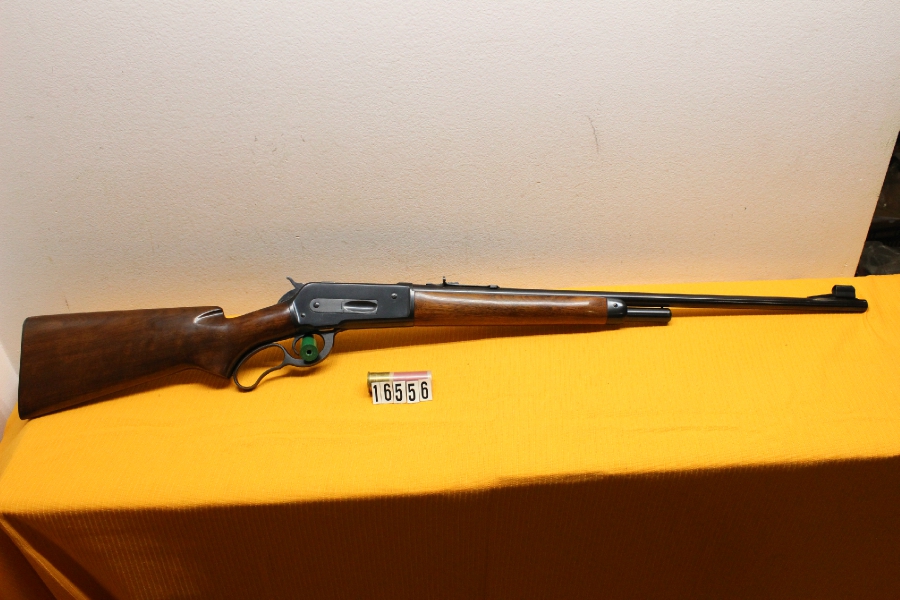
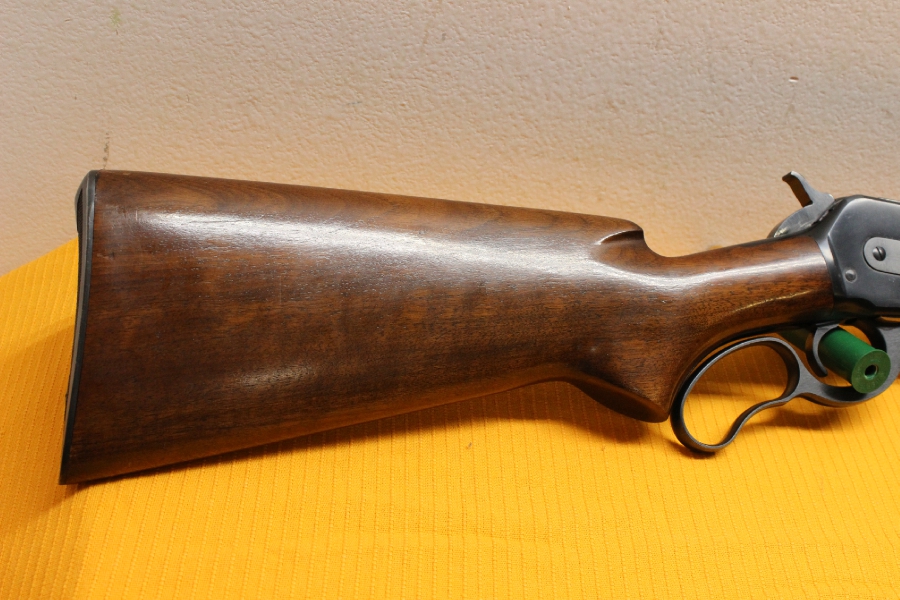
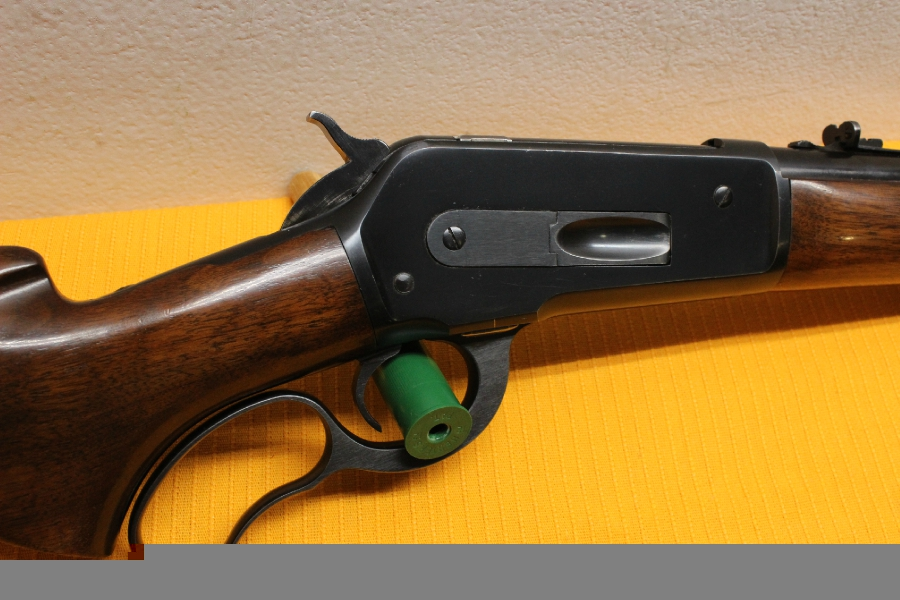
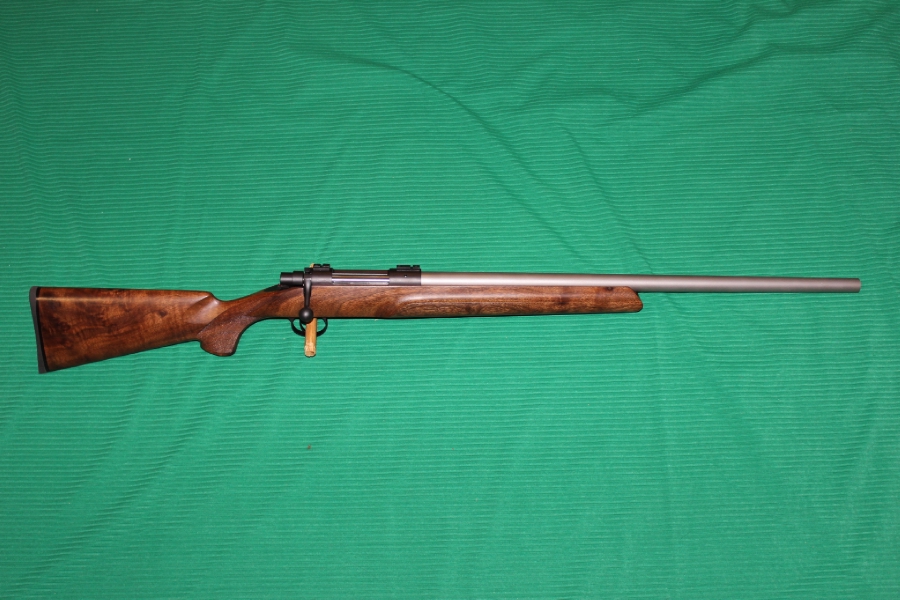
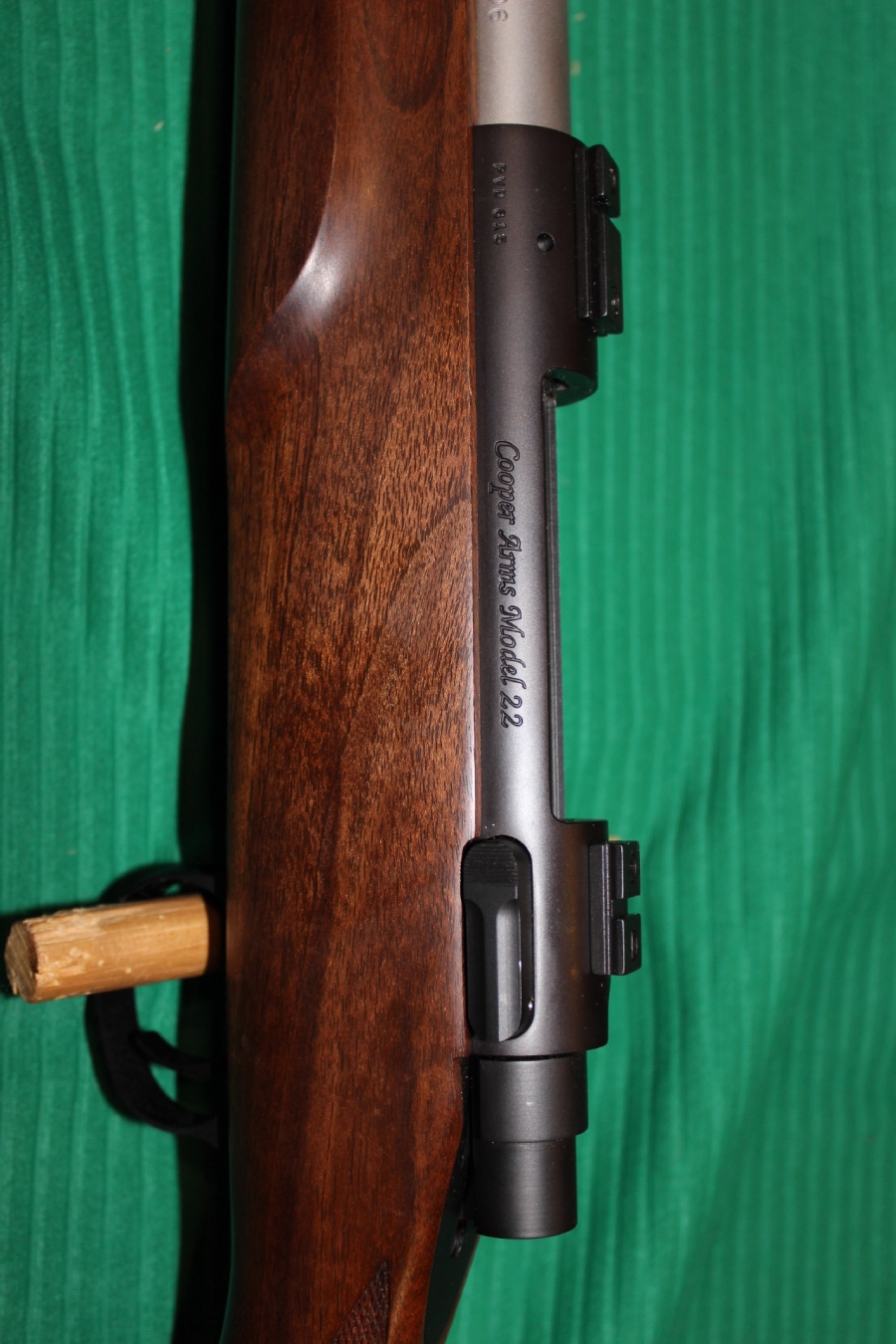
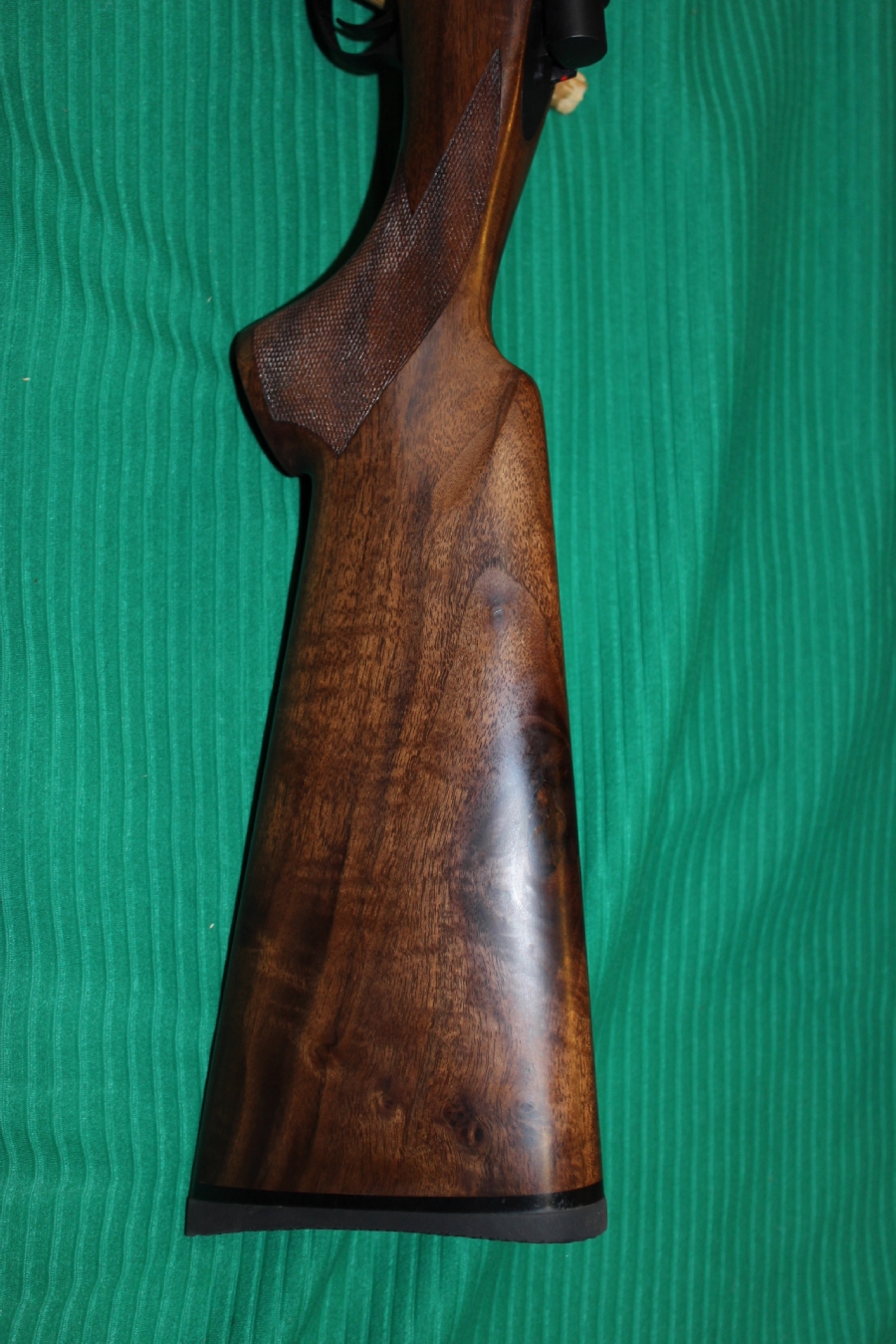
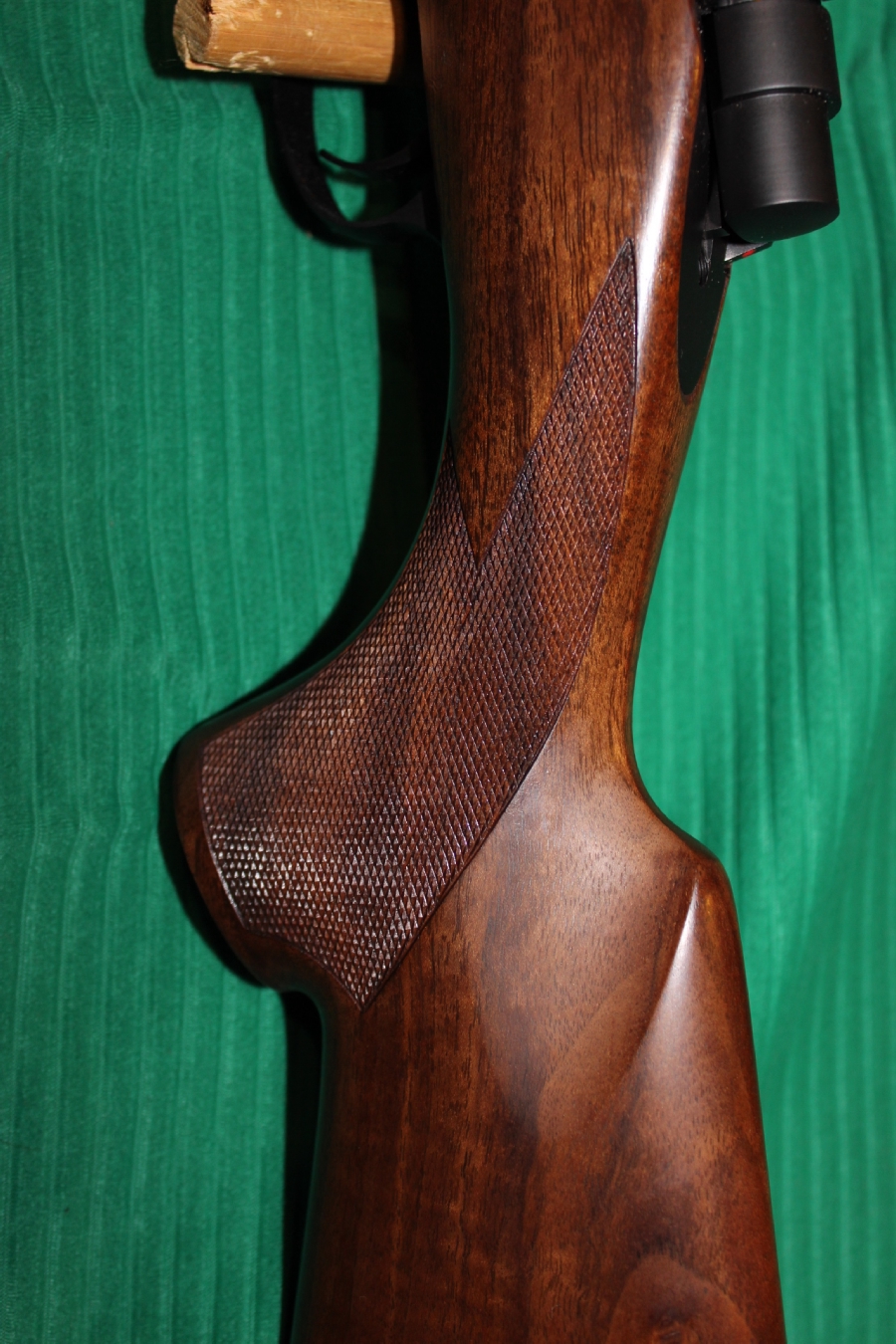
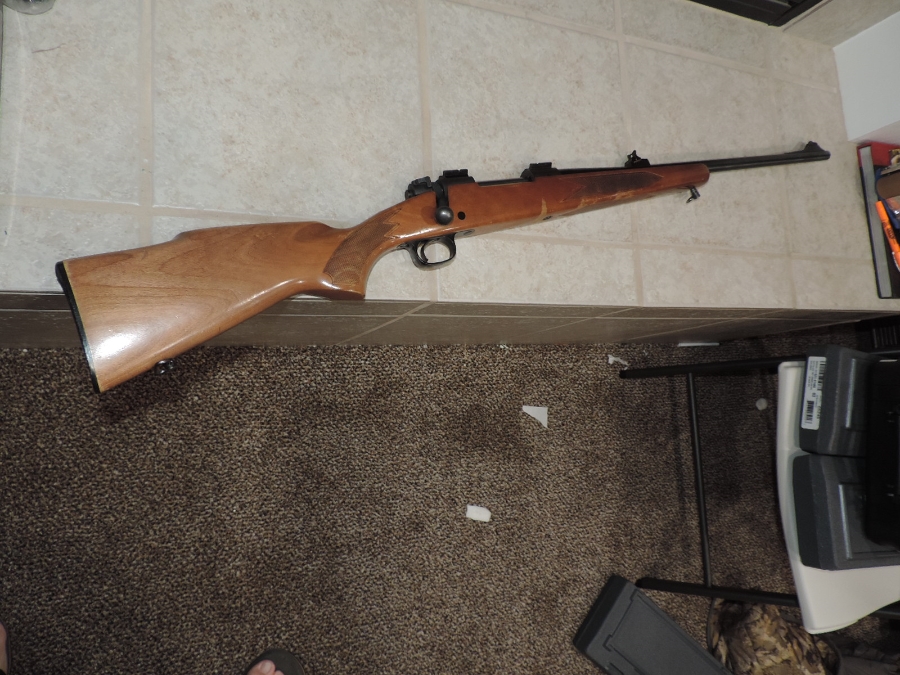
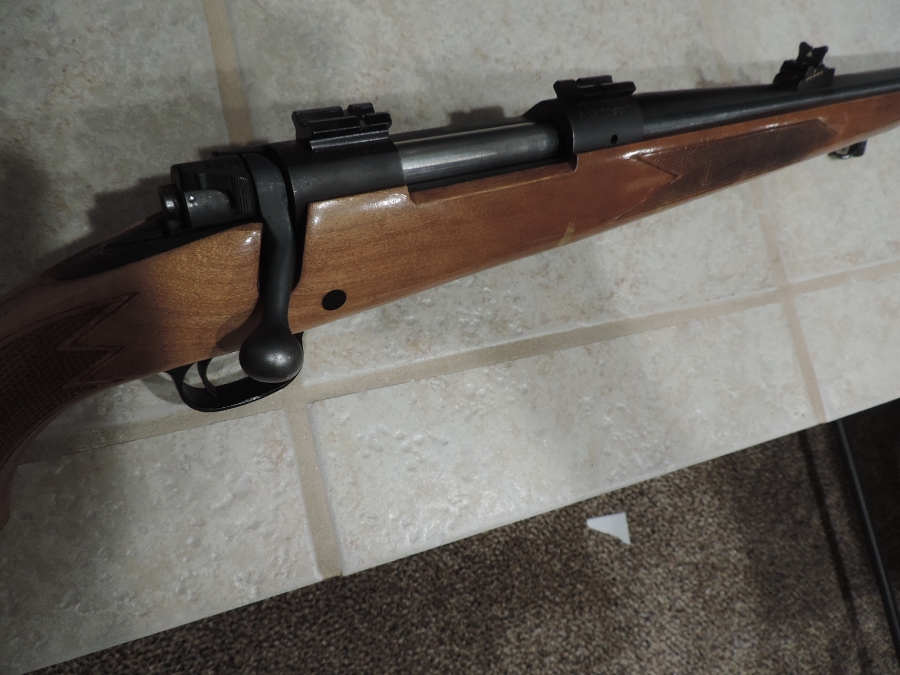
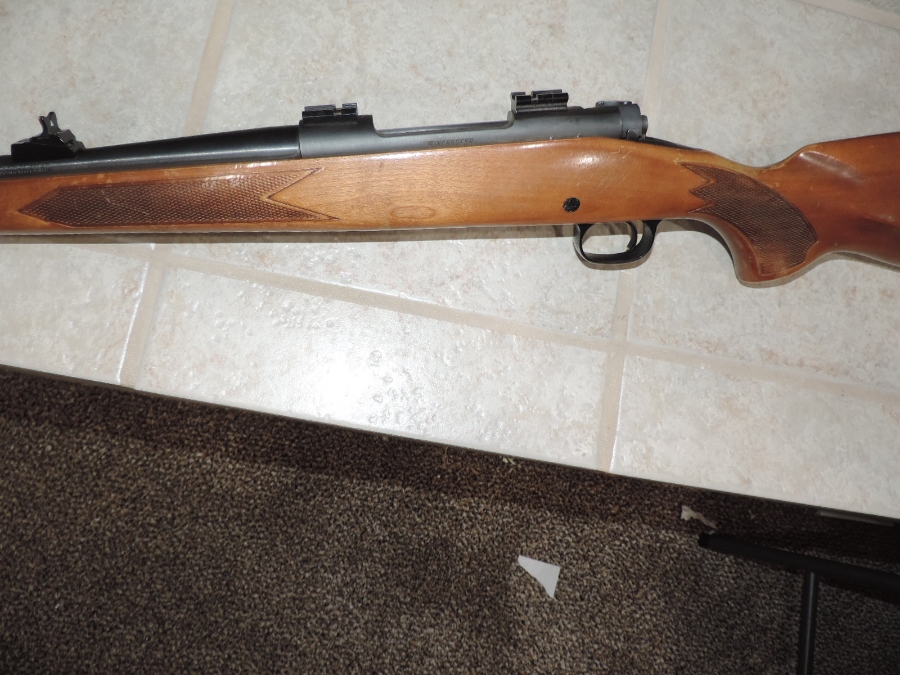
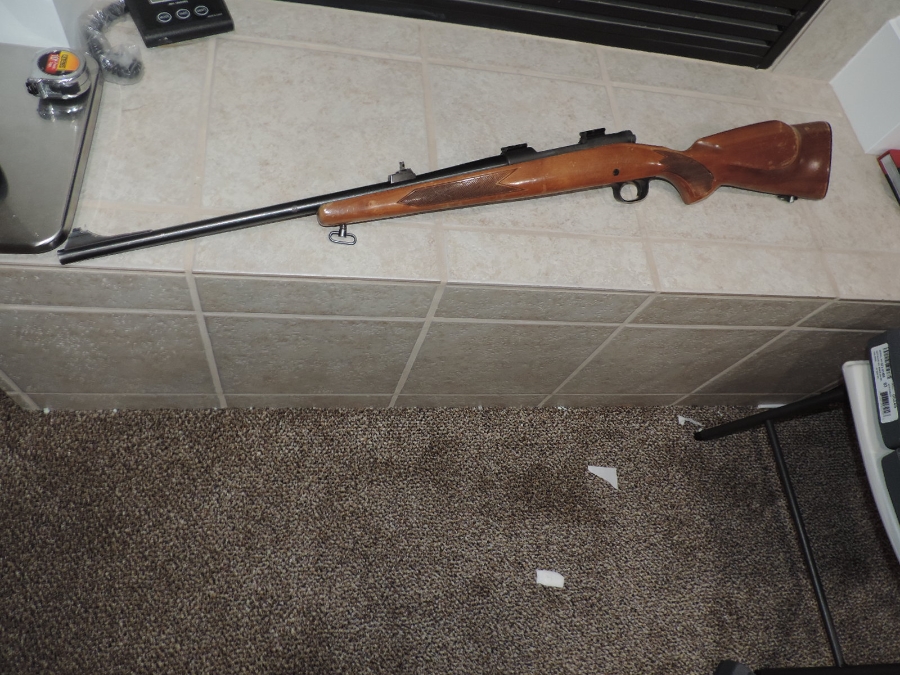
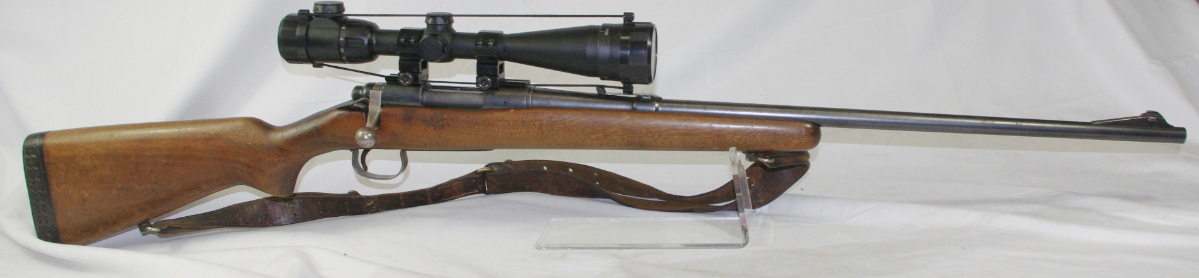
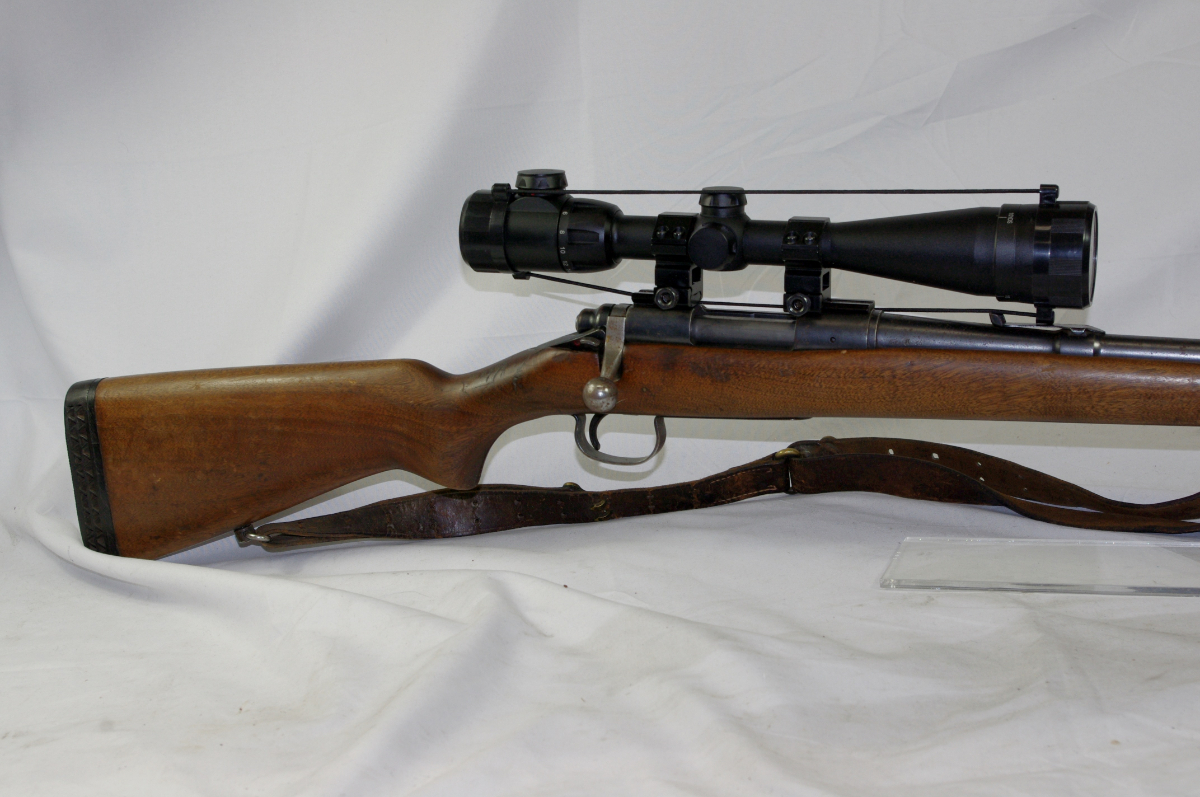
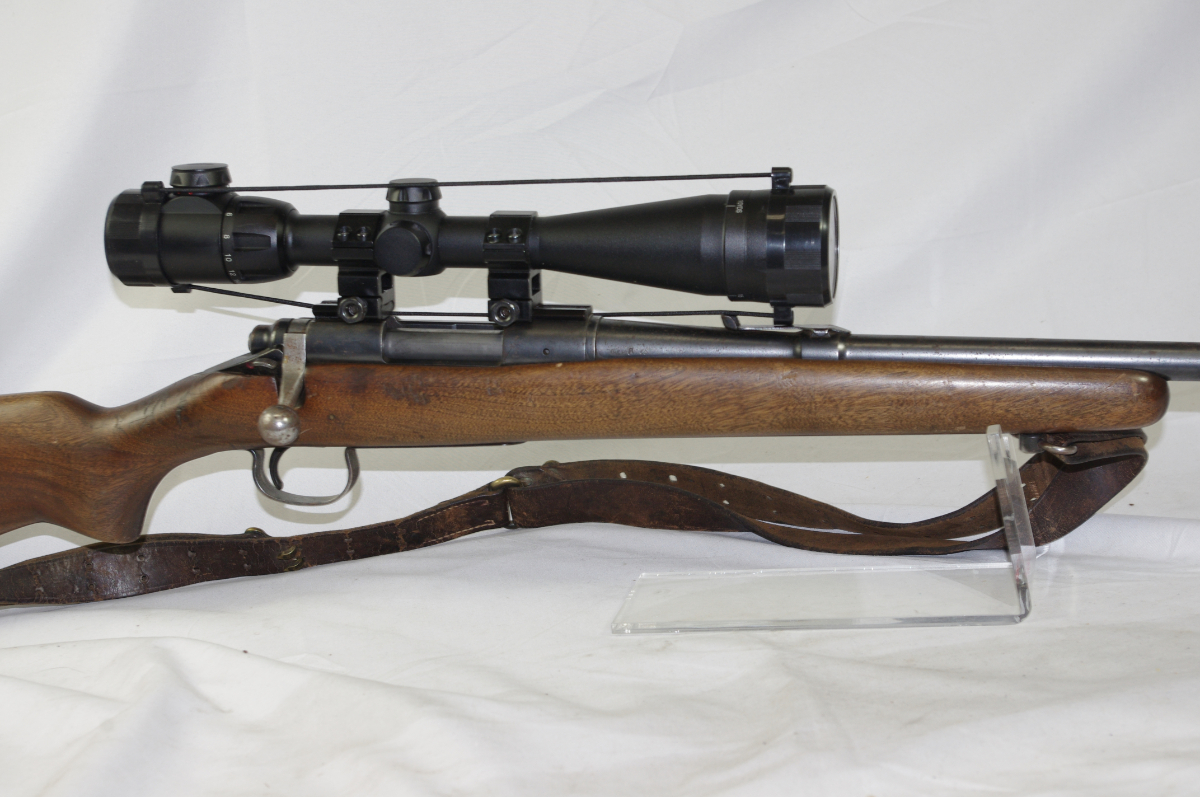
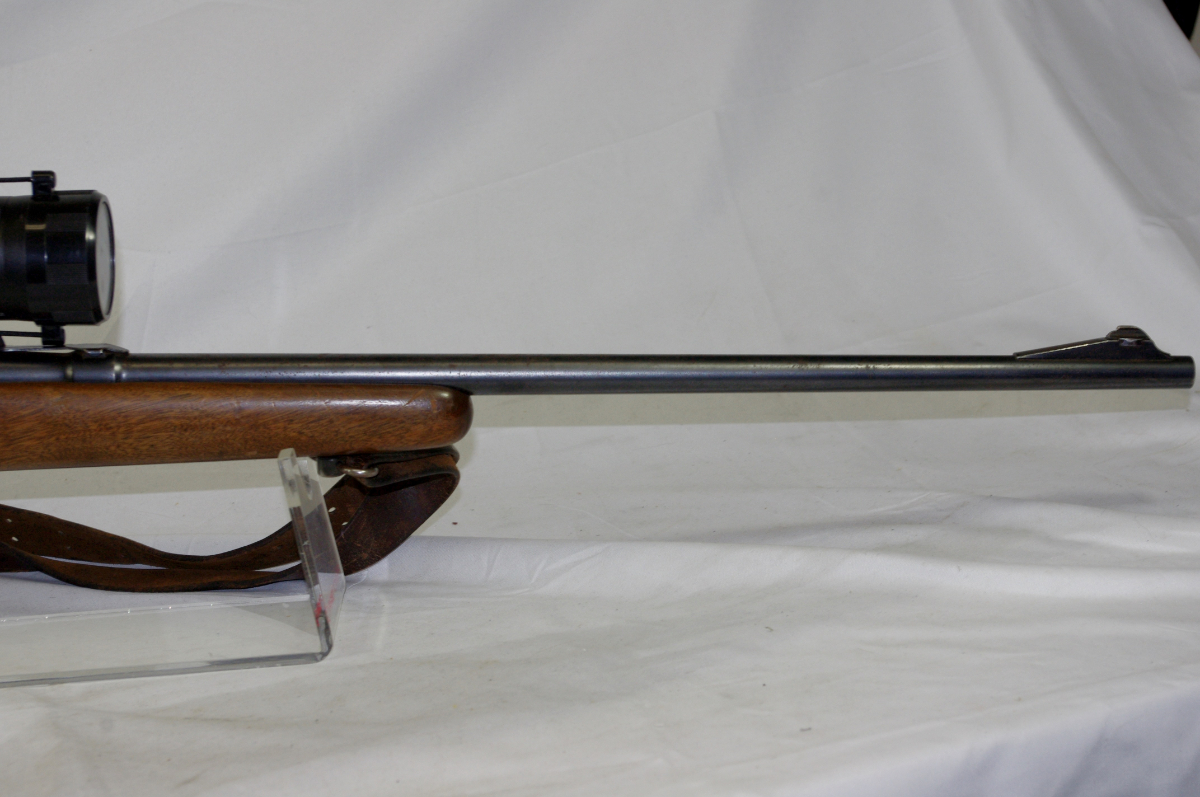
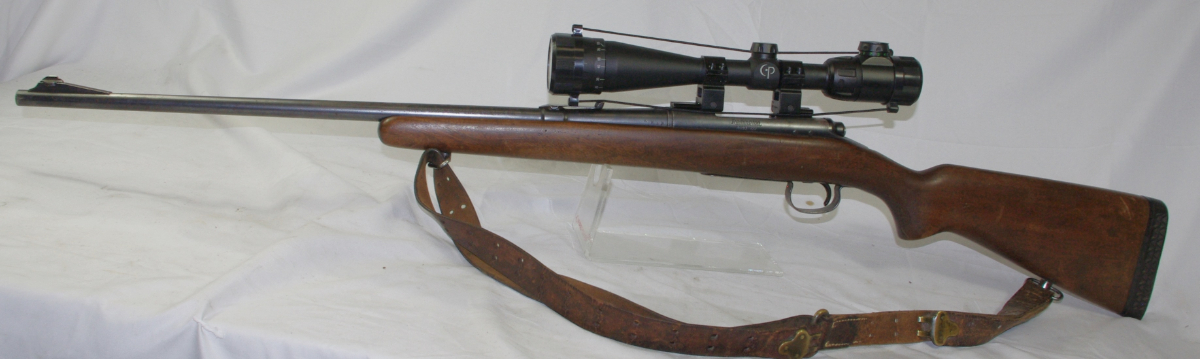
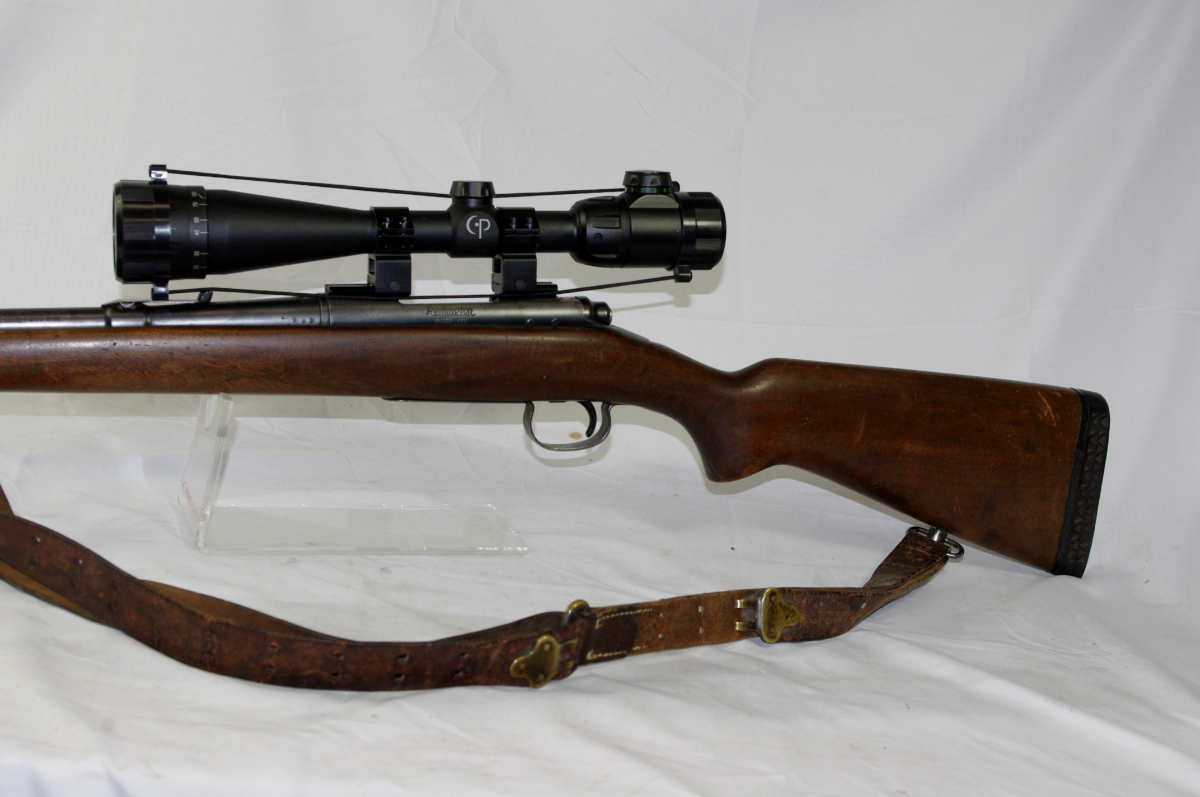
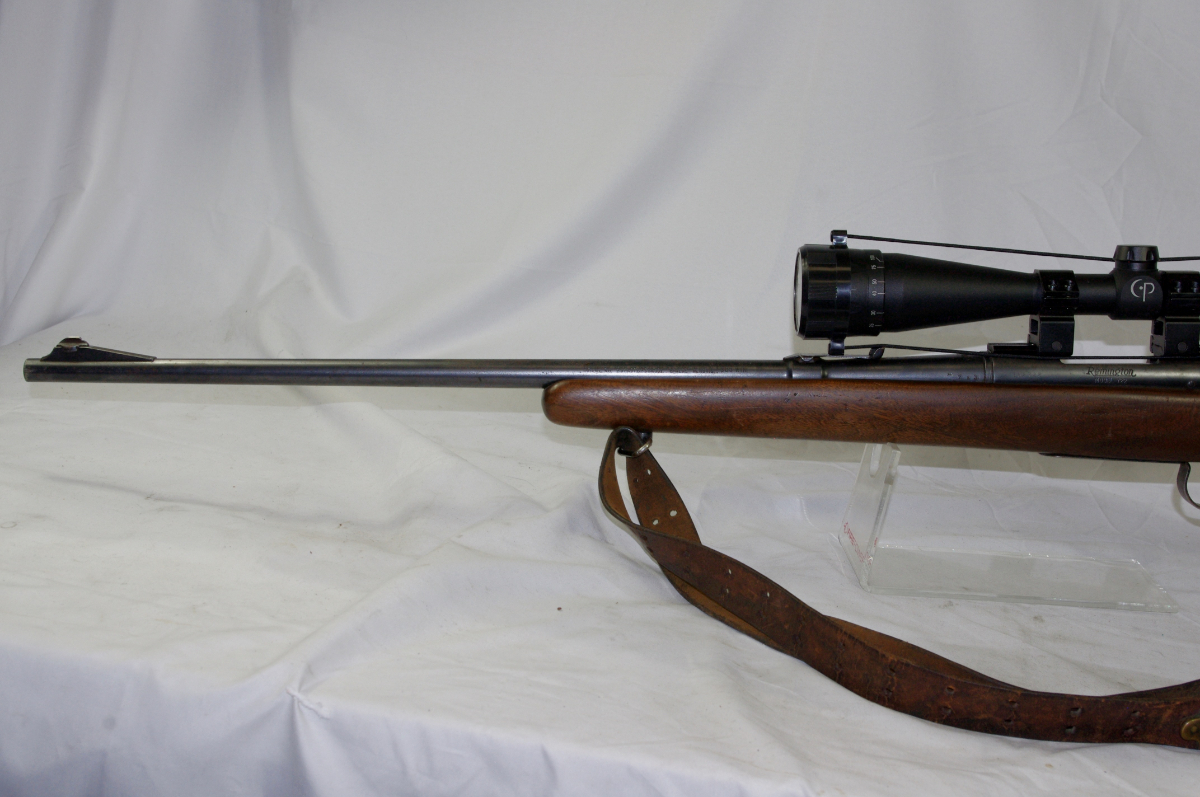
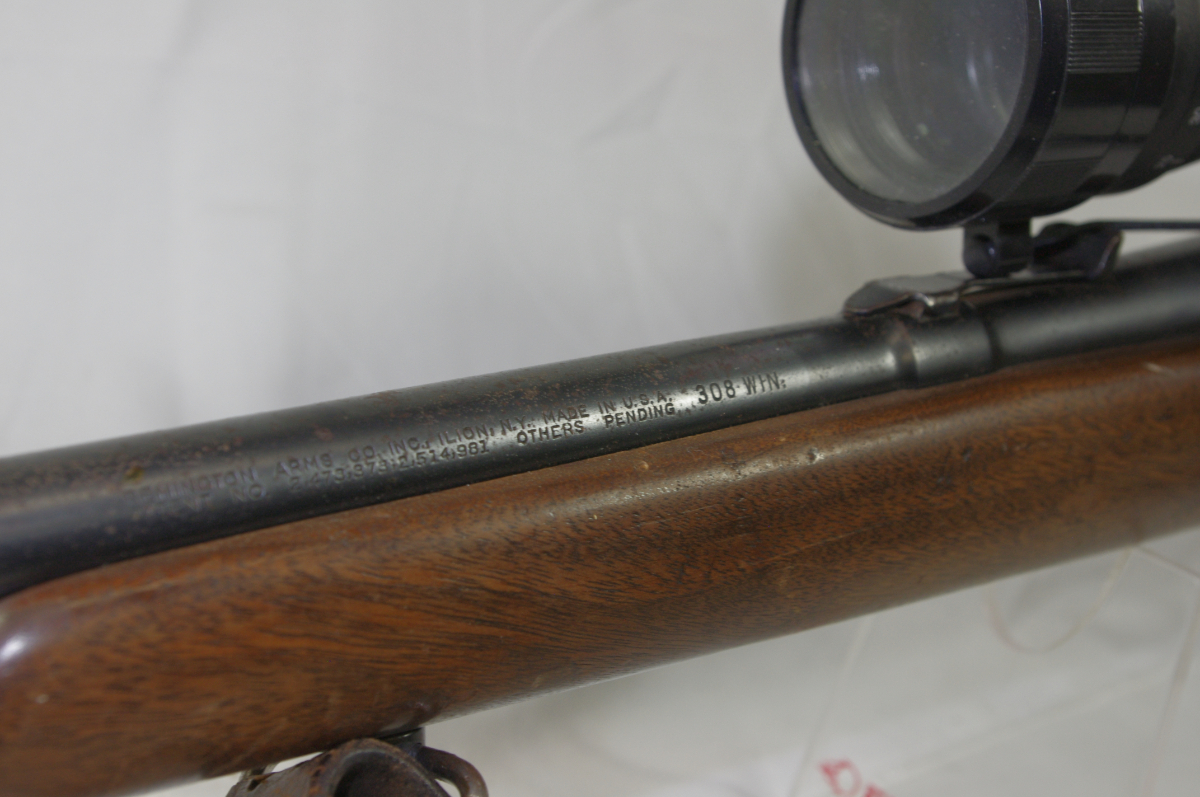
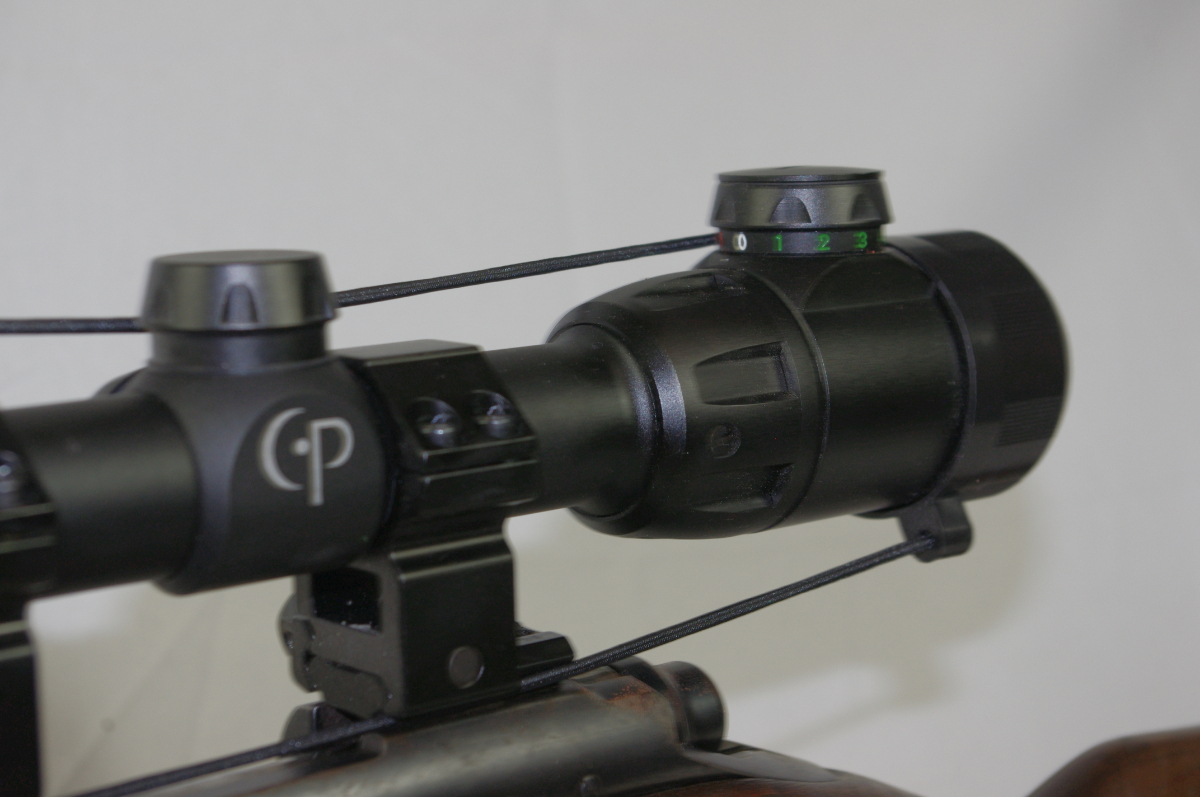
A nice & cheaper version of the model 70 that still shoots pretty well for me at least!
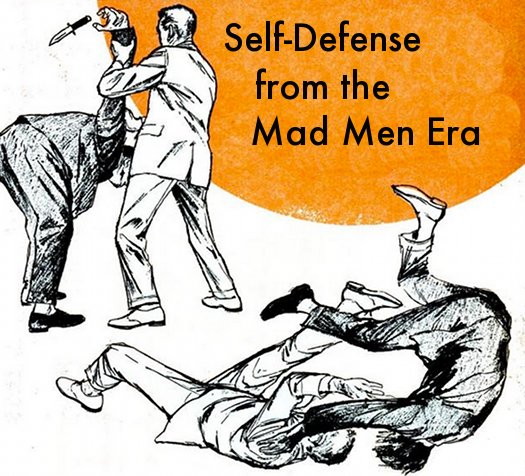
As I was browsing through some old magazines the other day, I came across a fantastic issue of Popular Science from 1962 that contained a feature on unarmed self-defense. The article was adapted from a book entitled Modern Judo and Self-Defense by Harry Ewen, a “police judo” expert. The best part of the multi-page article are the fantastic mid-century illustrations by Dana Rasmussen, featuring a well-dressed judo expert who looks like he might work with Don Draper when he isn’t throwing ruffians over his shoulder. Even the “thug” in the article is pretty dapper, proving once again that everything was just swankier back in the day — even the bad guys.
Below you’ll find step-by-step illustrated instructions on how to defend yourself from chokes, bear hugs, kicks, and knife attacks when you’re unarmed, all while still looking incredibly handsome. Enjoy.
Finger Lock
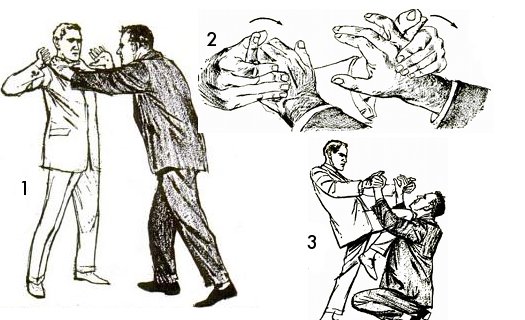
Grab the thug’s little fingers, with your thumbs under the tips (fig. 1). The knuckles of your index fingers should be over the the second joints of his little fingers (fig. 2). Move your wrists in a circular motion down toward your hips. Applied pressure will force the thug to his knees to avoid broken fingers. As he goes down, strike him in the face or jaw with your knee (fig. 3).
Nose Break
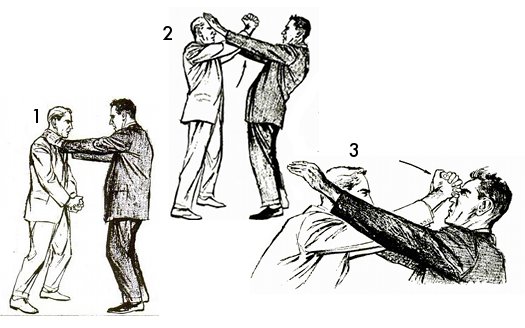
First, clasp your hands (fig. 1). Then, with fingers locked and elbows bent, swing hard from the waist and strike the thug’s forearms with the bony parts of your arms. Follow through until your clenched hands are above your assailant’s head and the choke is broken (fig 2). Finish by bringing down your still-clenched hands, with all the force you can muster, on the bridge of his nose (fig. 3). Stop short of this, naturally, while practicing this move.
Basic Arm Lock
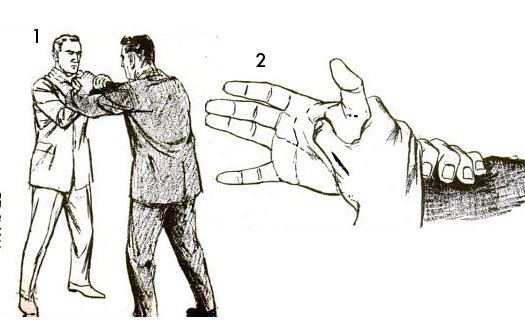
Grasp the thug’s right forearm with both your hands (fig. 1). Holding his right wrist firmly with your left hand, slip your right thumb under his right palm and pull his arm toward you to ensure that it is straight (fig. 2).
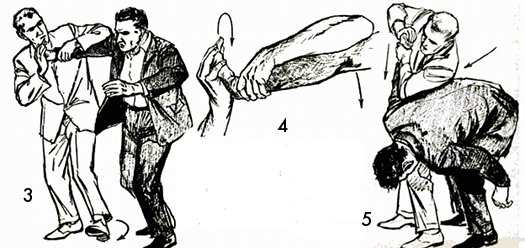
Keep on turning until you are almost at your assailant’s side (fig. 3). Keep his hand elevated above the level of the rest of your arm (fig. 4). Now put all the weight of your body behind your left upper arm and elbow, pushing down on his right arm just above the elbow (fig. 5). Unless he submits, he will end up with a dislocated shoulder.
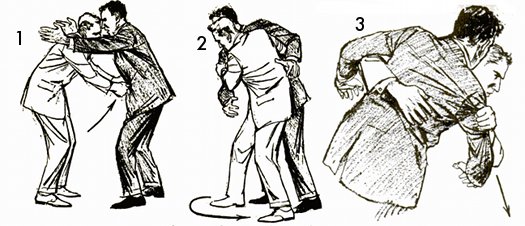
Force the thug to move back by giving him a couple of sharp jabs in the groin with your thumbs (fig. 1). As he draws his hips back, pivot on your left foot and move your right foot across in front of him (fig. 2). You should now be facing the same way he is. As you turn, slip your right arm behind his back and grasp his right sleeve with your left hand to keep his body close to yours (fig. 3)
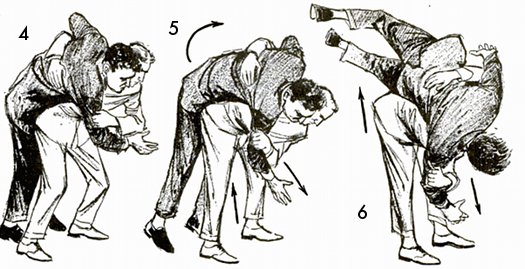
Keep your knees bent slightly, maintain a steady pull on the attacker’s sleeve, and keep your right hand in the small of his back (fig. 4). Straightening your legs will now raise his feet off the ground (fig. 5). Your opponent is now balanced on your right hip, and you can toss him by turning him over as you continue to pull on his right sleeve (fig. 6).
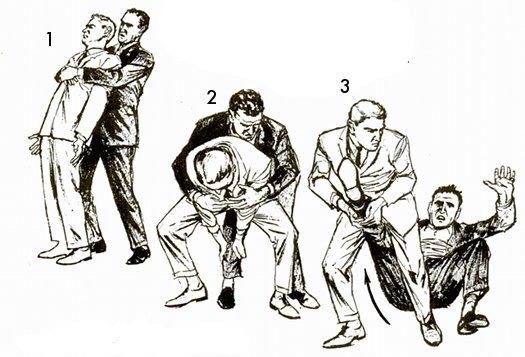
This defense works as well against an overarm grip as against an underarm one (fig. 1). With your feet apart, bend your knees, stoop down, and grab your assailant’s right ankle with both hands (fig. 2). Pull his ankle forward and upward to throw him on his rump (fig. 3).
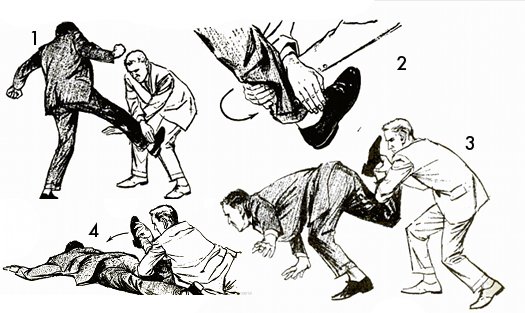
Trap the thug’s foot by bending your knees and crossing your hands in front of you (fig. 1). As the kicker’s shin contacts your wrists, turn your left hand (fig. 2) so that you have a firm hold around his calf. Assuming that the kicker uses his right leg, spin around to your right, throwing him forward on his face (fig. 3). Once he’s thrown, follow up by going down on the ground with him. In the final position (fig. 4), your left forearm is behind his calf, your left hand is on your own right bicep, and your right hand is on top of his foot. Use care when practicing this lock: doing it jerkily could dislocate the leg.
Arm Lock

Grab the choking forearm at the wrist with your left hand and place your right hand under the assailant’s elbow (fig. 1). Pull down with your left hand and push up with your right, turning and bending your body as you do so. This should give you enough space to extricate your head from between your attacker’s elbow and body. Bring your left foot back as you turn, so you are at his side (fig. 2). Twist his right arm behind his back (fig. 3).
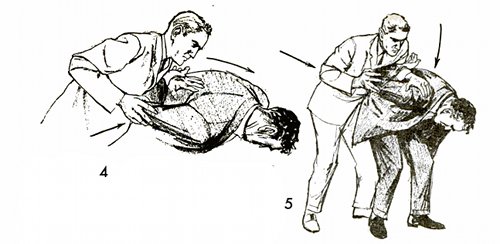
When his right arm is twisted almost as far back as it will go, slip your left hand under his right wrist (fig. 4). Slide your left arm across his back (fig. 5) until your left hand is trapped in the crook of your left elbow. To apply the pressure part of the lock, raise your left elbow in a forward circular motion while holding your assailant’s right elbow steady with your right hand.
Shoulder Throw
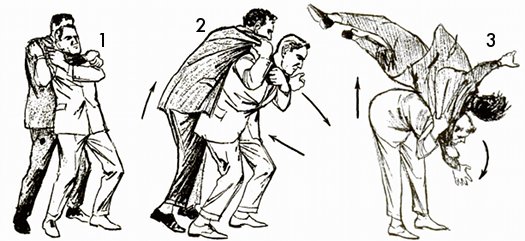
Grab the thug’s sleeve at the elbow with your left hand while your right grips his shoulder (or as high up on his sleeve as you are able to reach) (fig. 1). Bend your knees, but keep your torso upright. Bend your body forward. Pull down and to the left with your left hand, forward and slightly to the left with your right (fig. 2). Push your hips back against your attacker’s thighs as you pull, and he’ll be thrown over your shoulder. (fig. 3)
Shoulder Drop
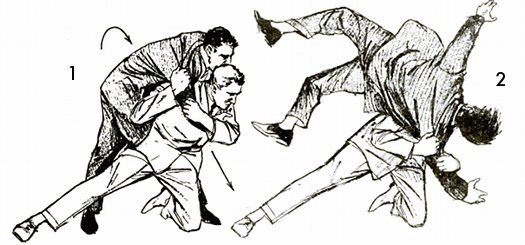
This throw starts the same way as the shoulder throw. You first grab your opponent’s right sleeve at elbow and shoulder. All you have to do now is drop onto your left knee, stretching your right leg sideways as you do so (fig. 1). Pull down with your right hand and the thug is tossed over your shoulder (fig. 2). This and other throws that are shown on these pages should be practiced only on well-padded surfaces or on a soft lawn.
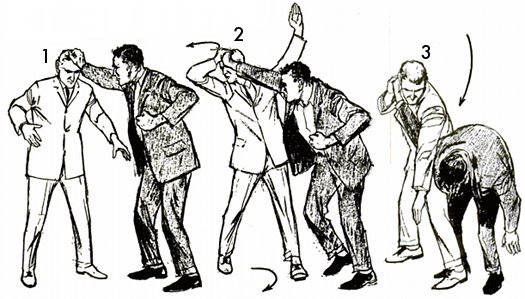
Grab the attacker’s wrist with your right hand. Hold his hand on your head (or throat) as you turn right and raise your left arm high (fig. 2). Bring that arm down upon your foe’s upper arm, placing your left foot in front of him (fig. 3). If you do this swiftly, you may well injure your assailant. Better go slow when you’re practicing, though.
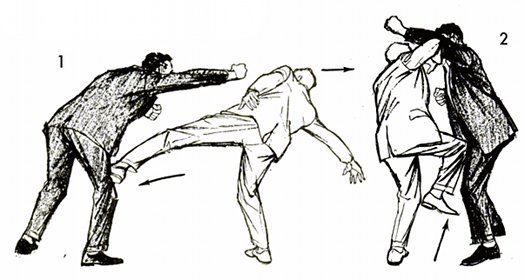
As your opponent aims a blow, spin to your right with your full weight on your right leg. Bend your left knee and then straighten that leg right out at the attacker, catching him just above his right knee with the sole of your left foot, backed by the full force of your body. As your left leg kicks out, jerk your head right. This counter-balances the weight being pushed left. It also gets your head nicely out of the way of the aimed fist of your opponent (fig. 1). An alternate method is to deflect the blow with your right forearm and counterattack with a knee to the groin (fig. 2). Skip the knee jab, however, during practice sessions.
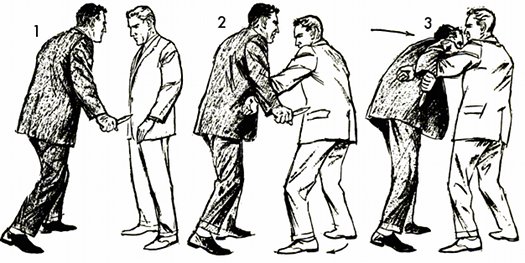
As the knifer raises his blade (fig. 1), parry the blow by striking his forearm with the edge of your own left forearm (fig. 2). Quickly seize his clothing near his right shoulder with your right hand. Then with a strong, but smooth movement, pull his right shoulder toward you while also pushing his right (knife) hand upward and away from your body (fig. 3).
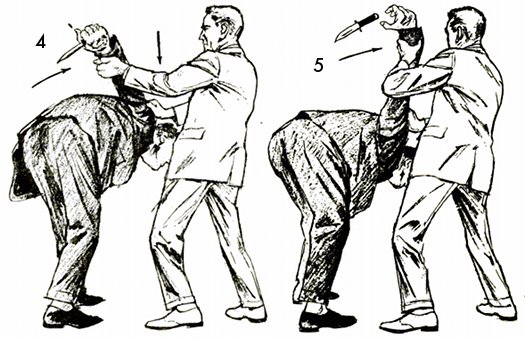
Grab his right wrist with your left hand as you push his knife up, while still holding on to his shoulder with your right hand (fig. 4). Now move your right hand from the knife-wielder’s shoulder to his right elbow. Pushing down on that elbow keeps his knife arm straight (fig. 5). Pulling his wrist toward you applies a very drastic shoulder lock. Unless your assailant drops his knife, you can easily dislocate his shoulder

The government is banning bump stocks. There is no grandfather clause. This is as bad as confiscation, folks. (Photo: SlideFire).
When Wayne LaPierre said on CBS’s Face the Nationthat the ATF needed to “do its job” with respect to bump stocks, one wonders if he was asking the agency to turn thousands of law-abiding gun owners into outlaws. Because that, my friends, is exactly what is happening.
If you currently own a reciprocating stock you will soon be in possession of a machine gun. Unlawful possession of a machine gun is a crime punishable by up to 10 years in prison, according to the DOJ.
This is not a joke. Attorney General Jeff Sessions published a Notice for Proposed Rulemaking (NPRM) last week. (I’ve embedded it below.) If made final, possessors of “bump-stock-type devices would be required to surrender, destroy, or otherwise render the devices permanently inoperable.”
To be abundantly clear there is no grandfather clause in the NPRM. In other words, this is confiscation on a national scale, folks.
“Since the day he took office, President Trump has had no higher priority than the safety of each and every American,” said Attorney General Jeff Sessions in a statement.
“That is why today the Department of Justice is publishing for public comment a proposed rulemaking that would define ‘machinegun’ to include bump stock-type devices under federal law—effectively banning them,” he added.
Even for those of you who said, over and over: Who cares about bump stocks! They break if not the letter of the law than certainly the spirit of the law. They should be banned! Even you should take offense to this NPRM.
At the very least there should be a grandfather clause for bump stock owners. You have to acknowledge that. Because criminalizing the possession of lawfully purchased firearms and accessories is infringement. It is unconstitutional. Period.
Plus, how do you not bristle at the way this whole saga unfolded?! NRA called for “additional regulations” back in October. Trump wasted no time and kicked the movement to ban these devices into high gear. There was no pause to consider the ramifications of the policy change. Even more frightening, Trump seemed enthusiastic about getting it done.
“By the way, bump stocks, we’re writing that out. I’m writing that out myself,” said president Trump in February. “I don’t care if Congress does it or not. I’m writing it out myself, OK.”
And we accused Obama of ruling by executive fiat.
What’s worse is that this NPRM became a reality despite two prior determinations from the ATF saying a bump stock was a “firearm part” and not a “machinegun”; an open letter from the agency’s association admitting that ATF didn’t have the authority to ban the device, only Congress had the power to; and overwhelming public opposition. Remember, when ATF requested public comment on the ban, 85 percent of the more than 32,000 submissions were anti-regulation.
Yet none of that mattered. You know, when many of us screamed that this isn’t just about bump stocks, this is what we meant. It’s about much more: the NRA belying its core mission to protect 2A rights, Trump breaking his promise to gun owners (“I’ll never let you down”), a rule turning law-abiding citizens into criminals, a regulatory agency acting as a legislative body to satisfy a political agenda. Fundamentally, it’s about betrayal.
Some of my friends in the gun community already believe the war is lost. That it’s only a matter of time before our 2A rights are a thing of the past. Looking what has happened under GOP leadership, with a so-called gun-friendly president — at the beckoning of the nation’s preeminent gun rights group, no less — I’m having a hard time disagreeing with that assessment.
Once the NPRM is officially published by the Federal Register, there will be a 90-day comment period. Please take the time to speak up. Let them know that this overreach is unacceptable. Even if you support a ban on bump stock devices, this isn’t the way to get it done. It should have to come from Congress. Not Trump, not Wayne LaPierre, not from the pencil pushers at the ATF.

A really handsome looking rifle that was the latest version of the Winchester Lever Action Rifles. That & the 348 is one hard hitting round to boot! Pity that they are almost impossible to find out here in the People’s Republic!